Category Archives: Uncategorized

French Cakes: Bernard Heberle-2009 Anthology

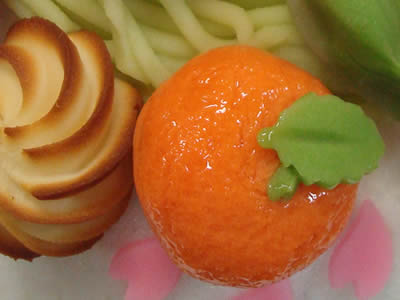
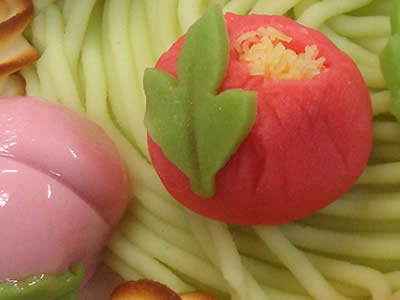
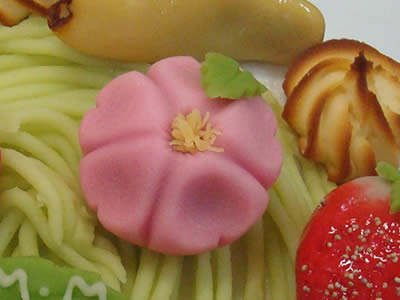
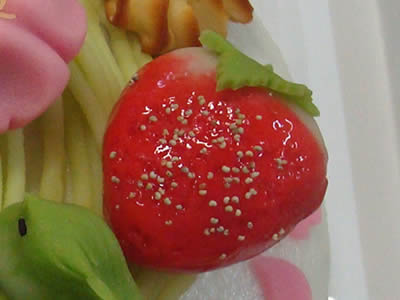
Bernard Heberle is an extremely talented French patissier who after teaching patisserie in Japan for many years, decided to show and market his own creations in Hamamatsu City and Shizuoka Prefecture, rapidly proving he was the undisputed master of French Patisserie to the 4 million souls gracing our Prefecture.

Below is a short anthology of cakes he created during the past year!

4810

4810

4810!
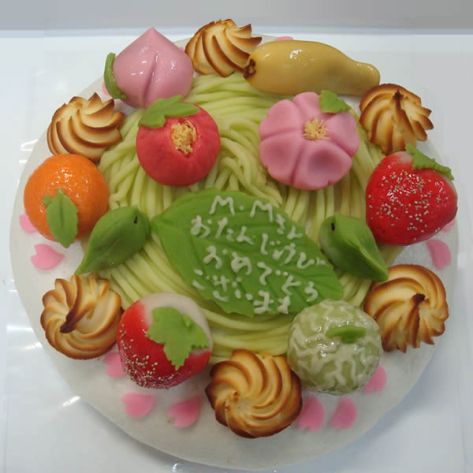
Yes, you read well, this cake’s name is a number!
Can you guess?

In his own words:
“En cette période des Kinmokusei , je te présente ce gâteau bien connu des japonais et peut être leur favori avec les short cake.
Son nom 4810 ( Non , ce n’est pas son prix , seulement l’altitude de notre Mont Blanc )
Celui ci , le notre est une base de meringue au lait avec une crème de marron et une génoise a la vanille , crème pâtissière et crème montée, nous utilisons des marrons italien du Piémont.”

“In the Kinmokusei (fragrant orange-colored olive, the tree of Shizuoka Prefecture. Look below for picture) season, I would like to introduce a cake well known to the Japanese and perhaps their favourite with short cake.
Its name is 4810 (No, it’s not its price, only the height of Mont-Blanc!).
This particular creation rests on a milk meringue, then a marron cream and vanilla genoise. Next a creme patissier and a creme montee.
We use Italian marrons from Piemonte.”

TARTE AUX FIGUES

FIGUES-HEBERLE

Tarte aux Figues/Fig Tart!

In his own words:
“Voici une tarte de saison , la combinaison de figue et de framboise sur un fond de pâte sucrée a l’amande régulée par une douce crème pâtissière , un vrai mélange de saveur et de parfum avec une sensation croustillante et mielleuse a la fois.”

“Here is a seasonal tart. The fig and raspberry combination on an almond pâte sucrée is enhanced by a soft crème pâtissière/custard. A true mixture of savours and perfume with a crusty and honey sensation.”

CASSIS EVOLUTION

CASSIS-EVOLUTION

Cassis-Evolution!

In his own words:
“Une nouvelle création … ” Évolution Cassis ”
C’est un gateau a base de mascarpone avec une douceur myrtille au chocolat blanc sur un pain de Genes et une touche de gelée de cassis. Très frais et de saison, les myrtilles sont excellentes cet été , malgré la pluie incessante. ”

“A new creation…”Evolution Cassis”
It is a cake with a mascarpone base qith a sweet blueberry and white chocolate layer on a Genes bread/short cake and a touch of cassis jelly.
Very fresh and seasonal. The blueberries are excellent this summer, in spite of the unceasing rain.”

TISANE

TISANE

“Tisane”, or herb tea infusion.

In his own words:
“Voici un gâteau au nom de ” Tisane ” et pour cause il est a base d’herbe fraîche et plus spécialement de Verveine.
La combinaison Verveine, crème, oeuf, lait et amour se marie très bien surtout en approche de la saison chaude et humide.”

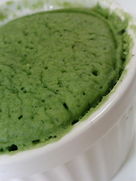
“Here is a caked I called “Tisane” because it is prepared with a fresh herb base, especially Verveine.
The combination of Verveine, cream, egg, milk and love is just perfect as we approach the hot sultry season!”

ELEGANCE

ELEGANCE2

“Elegance”/Elegance

My Good French friend in Hamamatsu City is very busy: His message was very laconic this time. LOL

“Robert
Voici ” Élégance” un gâteau au chocolat , lait et noir 70% avec un biscuit chocolat sans farine…très léger et plein de saveur.
Au plaisir…
Bernard”

“Here is “Elegance”, a chocolate cake, milk, and a 70% black cocolate.
On top of a biscuit. No flour used. Very light and full of flavour”.

He forgot to mention the small macarons!

NOISETTE/HAZELNUT

noisette

“Noisette”, hazlenut

In his own words:
“Voici le gâteau du mois ” Noisette” tout simplement un mélange de chocolat noir et de lait avec une dacquoise aux noisettes torréfiées ainsi que base croustillante le tout surmonte d’une chantilly légèrement chocolatée. Très agréable en bouche , un mélange de saveurs et de texture façon criollo.”

noisette-2 noisette-3

“Here is this month cake, “Noisette/Hazelnut”.
It consists of a simple mixture of milk and black chocolate with a roasted hazelnuts Dacquoise as a crusty base. The whole is topped with slightly chocolate -flavoured Chatilly cream and black chocolate.
Very soft on the tongue. A combination of savours and texture in criollo fashion.

As usual, I doubt I need to add any comment!

TARTE SICILIENNE/SICILIAN TART

tarte-sicilienne

“Tarte sicilienne”/Sicilian Tart

In his own words:
“Voici le gâteau que je te propose ce mois ” Tarte Sicilienne ” qui est une tarte a base de Mascarpone et de pistache avec des Fraises de notre belle région ” 紅ほっぺ” sur un fond de pâte sucrée a la crème d’amande et coulis de fraise. Toute la Sicile dans l’assiette.”

“Here is the cake I would like to propose you this month, Sicilian Tart”, which a tart based on Mascarpone and pistachio with strawberries from our beautiful region called “Behi-Hoppe”/”Red Cheeks” on a bed of pate sucree with almond cream and strawberry coulis/sauce. All Sicilia in the plate!”

Need I comment? LOL

TENDRESSE/TENDERNESS

abondance-tendresse

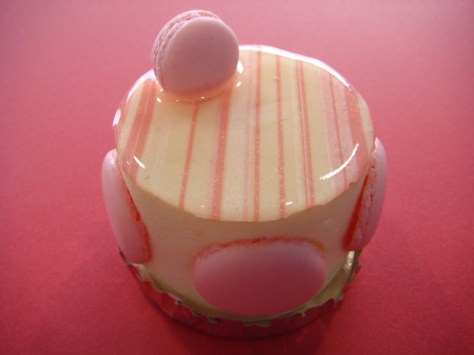
This particular creation is named “Tendresse” in French, meaning tenderness in English.
In Bernard’s French words:

-“Voici le gâteau que je te propose ce mois ” Tendresse ” qui est un gâteau a base de Fromage blanc et de pâte a bombe , très léger et même ceux qui n’aime pas le fromage y trouverons leurs plaisir. Léger et onctueux décoré avec des macarons a la Framboise.”

-“Here is the cake I would like to introduce your friends to this month. It is called “Tenderness” and is made with a very light combination of Fromage Blanc/White cheese and Pate a bombe/very fine sponge cake variety. Even people who do not like cheese will appreciate it. Light and soft, it is decorated with raspberry macarons”.

I’m ready to take the 30-minute bullet train to Hamamatsu to savour it!

Abondance
Address: Hamamatsu Shi, Sumiyoshi, 2-14-27 (in front of Seirei Hospital)
Tel.: 053-4738400
Fax: 053-4738401
Opening hours: 10:00~20:00. Closed on Tuesdays.
Homepage

RECOMMENDED RELATED SITES:
Bread + Butter, Comestilblog, Greedy Girl, Bouchon For 2, Zoy Zhang, Hungry Neko, Mangantayon, Elinluv Tidbit Corner, Maison de Christina, Chrys Niles, Lexi, Culinary Musings, Eats and Everything, Bite Me New England, Heather Sweet, Warren Bobrow, 5 Star Foodie, Frank Fariello, Oyster Culture, Ramendo, Alchemist Chef, Ochikeron, Mrs. Lavendula, The Gipsy Chef, Dodol-Mochi

——————————–
Please check the new postings at:
sake, shochu and sushi

—————————————-
日本語のブログ
—————————————-

Today’s Lunch Box/Bento (’09/1~76): 2009 Compilation

This is a compilation of all the ento that the Missus pepared for me this past year.
I sincerely hope other foodies will find it useful for reference and copying/sharing as all pics and articles in this posting are for sharing!

December 7th, 2009

The Missus had planned a sandwich bento when she belatedly realized she had already prepared for the rice to be steamed when she entered the kitchen!
-“Sorry, very simple bento today!”
-“No worries (no problem!)”!

It was simple, indeed, but as I have to look out for calories (Missus’ orders) these days, It was not an issue. LOL
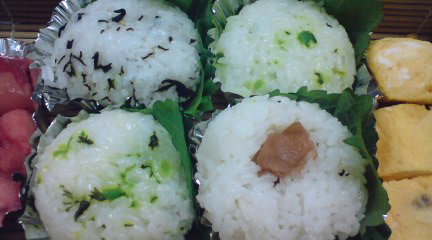
The rice had been freshly steamed together with a piece of konbu/seaweed. She made four musubi/rice balls that she wrapped in shiso/perilla leaves. Twp were rice mixed with Japanese style cucumber pickles (finely chopped), one was mixed with hijiki/sweet seaweed and the last one was topped with a umeboshi/Japanese pickled plum.
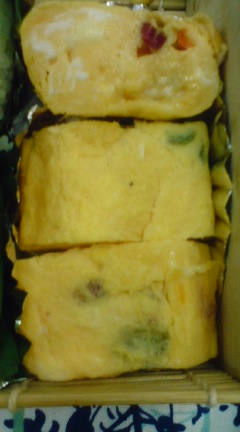
As she can make tamgoyaki/Japanese omelette in a jiffy, she prepared one containing small pieces of cheese and gree/red pimento. Very tasty, actually.

For dessert she included some apple. kiwi fruit and grenadine compote (home-made) from the refrigerator.
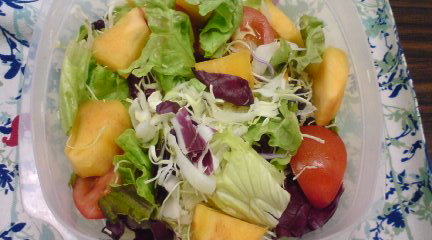
As for the salad, she prepared the usual assortment of chopped greens, hand broken lettuce and cabbage, cut plum tomatoes and bits of jiro kaki/squat persimmon to which I added dressing kept in the fridge in my work place.

Can’t complain, can I?
————————-
December 1st, 2009

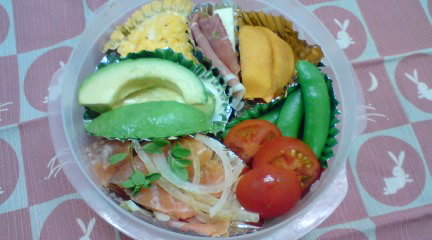
As yesterday’s bento was based on rice,the Missus decided I needed something lighter today, hence her other specialty: “Open Sandwich Bento”!
Talking of rice, the steamed rice leftovers of yesterday’s bento came back onto my plate last night: As we had nabe/Japanese pot au feu, she poured some of the soup stock onto the rice, heated it and added some leaves/herbs to make a simple but great Japanese-style risotto!
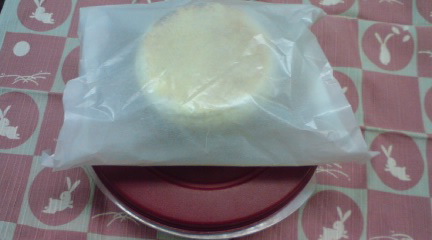
Almost looked like one of those old-fashioned US workers’ boxed lunches!

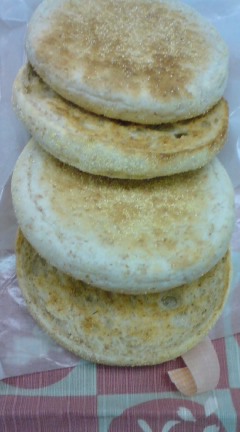
As for bread she toasted (made in Japan) English style barley muffins: light and crispy.

She arranged everything else, main dish, salad and dessert in the same box:
From bottom, clockwise:
Smoked salmon (from Ireland!) seasoned with lemon juice, sliced onons and herbs.
Avocado slices with their dipping seasoning.
Japanese scrambeld eggs.
Smoked ham and cheese.
Jiro kaki/squat persimmon slices (from Kakegawa City)
Pois gourmands/green peas in the pod (boiled).
Plum tomatoes.

Very healthy again!
——————————
November 12th, 2009

It’s been more than two weeks since I last wrote about my bentoes!
Don’t worry, the Missus is still making them!
The reason for this prolonged silence is that we did travel a couple of times on Mondays and Tuesdays. Otherwise the Missus had prohibited me from reporting on them as she did not judge them worthwhile.
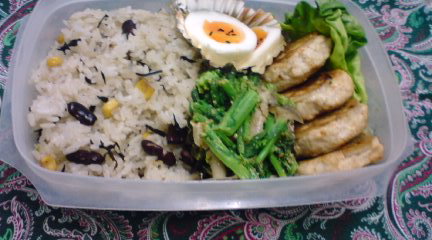
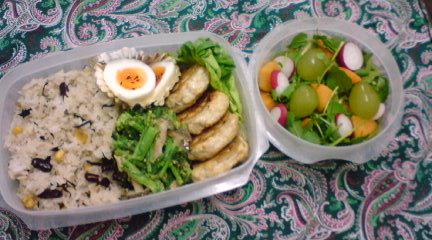
Today’s bento can be considered a classic Japanese beto with steamed rice with various garnishes.
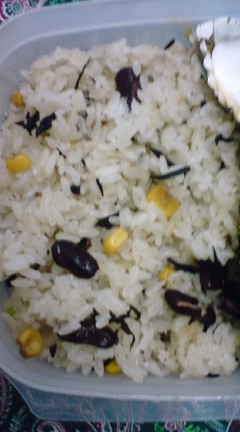
The Missus steamed fresh rice with hijiki/sweet seaweed and beans on top, which she stirred altogether upon being cooked.
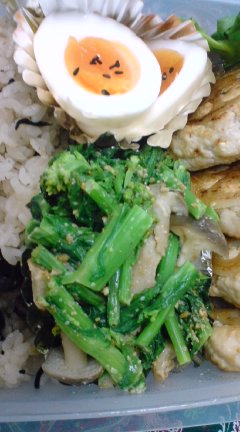
Soft-boiled eggs (meaning that the yolk is still soft) seasoned with roasted black sesame seeds.
The salad consist of boiled na no hana/rape blossoms and fried shimeji mushrooms seasoned with goma tare/sesame dressing.

As for the meat part she fried chicken tsukune/ patties.

Before frying them she made a slice of renkon/lotus root to adhere to once side for added crucnchiness.
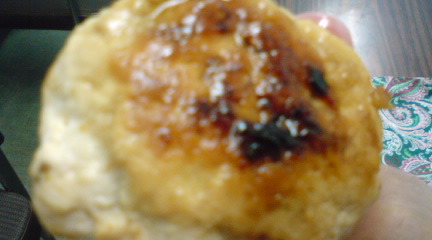
The other side after being fried in a Japanese-style sweet and sour sauce.
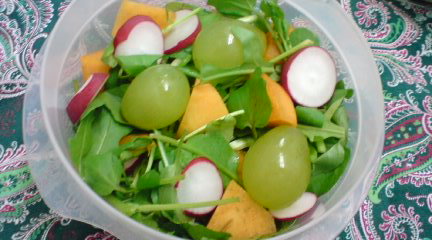
The salad/dessert consisted of pieces of jiro kaki/squat persimmon, sliced radish and muscat on a bed of fresh leaf vege/herbs.

Back onto a healthy road!
————————–
November 11th, 2009

BENTO-09-11-11a

Usually I do not take a bento to with me on Wednesdays, but the weather simply gave us no choice.
With a very unusual warm Fall in Japan this year, we are bound to be assailed by typhoon-like downpours. The bus was going through sheer curtains of water along the round. I found out that we got drenched with 100mm of rain in a single hour! Mind you, it does not compare to what the Philippines had to go through recently.

BENTO-09-11-11b

In such an emergency the Missus usually comes with some kind of sushi and plentyof vegetables.
BENTO-09-11-11c

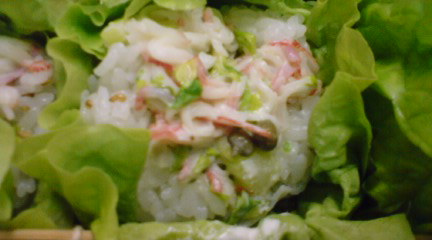
Today’s sushi style was te-nari zushi/手なり寿司, a style very popular in the Kyoto area.
The rice balls are small, round and prepared by wrapping them in a piece of cellophane paper and then topped with various neta/ねた (toppings).
She made two kinds:
the first one with a salad consisting of surimi, shredded lettuce, capers, sesame seeds and mayonnaise. She placed them inside lettuce leaves for easing handling and supplemetary Vitamin C (!).

BENTO-09-11-11d

The second type which could be called Italian-style te-nari zushi were topped with Italian raw ham and Italian parsley (!).
BENTO-09-11-11e

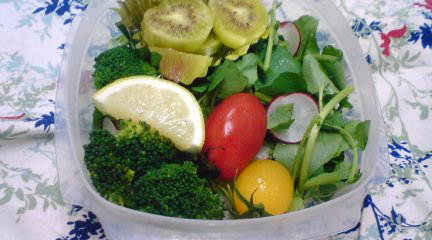
As for the salad side dish on a bed of cress (grown in Shizuoka) she placed boiled brocoli, sliced radishes, plum tomatoes and a dessert consisting of rainbow kiwis (grown in Shizuoka).

Very healthy! I wonder if I should welcome the rain!
———————–
November 9th, 2009

BENTO-09-11-09a

I finally got my laptop back last Wenesday, but I was still left to deal with a big problem: a mail box overloaded with spams.
It took me hours to first download more than 100,000 spams (yes, you read right, one hundred thousand critters), 99% coming from only two single bots (spam robots)!
It took me half an hour to erase them just to sse them coming back!
I was seriously thinking of changing my mail address, a bothersome affair if there is any. Luckily I do have computer-wise (the old geezer isn’t) friends who told me to consult my provider directly. Which I did.
The company taught how to deal with a Japanese language filter box (their services are in Jpanese only), but it still took them almost half an hour to clean my mail box!
Anyway, I’m a bit wiser and cleverer now, and I can resume my blogging activities in tranquility!

BENTO-09-11-09b

Since she also needed to be careful about her own weight, the Missus has decided to maximize the veg part and minimize the high-calories items in my bentoes from now on!

BENTO-09-11-09c

She steamed the rice withn vegetables including mushrooms and carrots that she mixed later with small pieces of fried chicken.
BENTO-09-11-09d

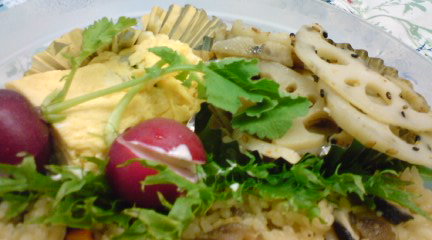
As for the garnish, on a bed of lettuce (grown in Shizuoka) she placed plenty of renkon/lotus root slices fried with black sesame, whole red radish (with their stems) and simple tamagoyaki/Jpanese omelette.
BENTO-09-11-09e

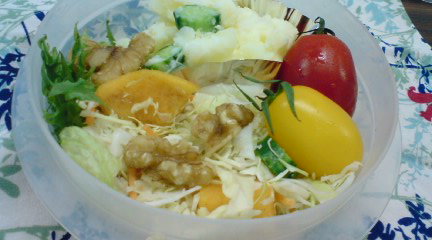
As for the salad cum dessert, on bed of shredded veg she placed a cople of plum tomatoes, pieces of jiro kaki/squat persimmon and some walnuts. She also added some lightly seasoned potato and cucumber salad for supplemetary calories.

Very tasty and just enough to hold on until dinner!
————————-
November 2nd, 2009
BENTO-09-11-02a

As of November 2nd, the Kojima Company had not called me back yet to announce that my laptop was finally ready for me to collect. I had been without it for 11 days by then and for all the time suddenly found to write and read, I was really beginning to suffer from hi-tec retrieval!

BENTO-09-11-02b

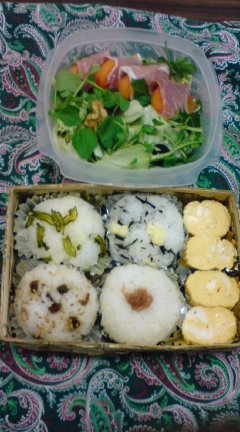
I had requested the Missus to prepare a musubi/rice balls bento that time.
She came up with four different balls:

BENTO-09-11-02c

-One with Japanese-style pickled cucumber
-One with hijiki/sweet seaweed, sesame seeds and cheese
-One with pickled ginger and sesame seeds
-And the last one with umeboshi/Japanese pickled plums.

BENTO-09-11-02d

The tamagoyaki/Japanese omelette was of the plain variety. Just sweet enough.
BENTO-09-11-02e

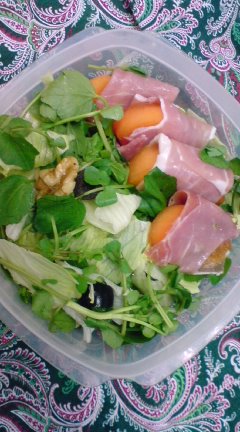
As for the salad/dessert side dish she rolled wedges of jiro kaki/squat persimmon inside raw ham and place dthem over a bed of lettuce, cress, walnuts and black olives.

Very healthy!
———————
October 26th, 2009

BENTO-09-10-26a

My PC (laptop) having crashed for the third time in the last four years, these bento reports are a bit late. This one was due on October 26th!
The PC being brand new at the time I purchased it and still has great speed. I’m reluctant to part from it, but I might soon be forced into a painful reconversion (Microsoft to Mac?).

BENTO-09-10-26b

Therefore I will call this particular lunch box the “PC Crash Bento 1”!
The same bento was consumed on a heavy rainy day to compound my misery, but I must say the meal lifted my spirits somewhat!
BENTO-09-10-26c

For all her grumpiness on that day, the Missus did not disappoint me:
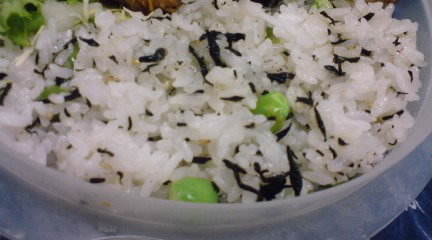
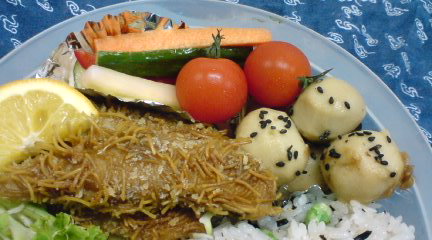
After steaming the rice, she mixed it with hijiki/sweet seaweed, green peas and roasted sesame seeds.
BENTO-09-10-26d

As for the garnish, it came in all kinds of ingredients and colours:
She deep-fried (shallow-fried would be a more precise term) pork fillets sticks she had dipped in batter and then coated with broken fried soba (the soba was purchased fried, then dried and cold in package). She placed the pork atop lettuce and shredded greens.
Hand-made pickles (carrots, ginger, pimento) were added for the vinegary part.
Fresh plum tomatoes for the Vitamin C and the decorative note.
She boiled a few “sato imo”, a kind of sweet tuber typical of Japan. After peeling them, she fried them for a while in sweet sauce and seasoned them with black sesame seeds. Finally, a slice of orange for the finishing touch.

BENTO-09-10-26e

The dessert consisted of jiro kaki/squat persimmon wedges grown in Shizuoka and mini red-haert kiwi fruit, also grown locally.

Certainly a hearty lunch!
—————–
October 20th, 2009

BENTO-06-10-20a

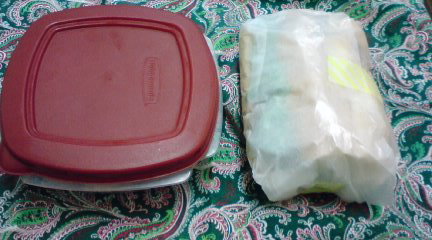
The Missus turned to “Sandwich mode” for today’s bento!
BENTO-06-10-20b

Above pic shows how it was packaged.

BENTO-06-10-20d

Above pic shows it came out of the package.
BENTO-06-10-20e

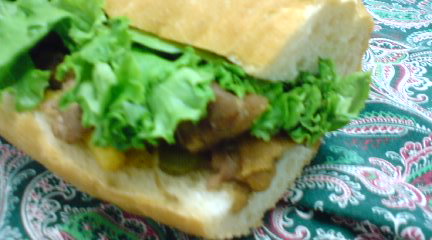
Above pic represents the biting end of the sandwich.
The sandwich itself was at least 15 cm (6 inches) long and thick!
BENTO-06-10-20f

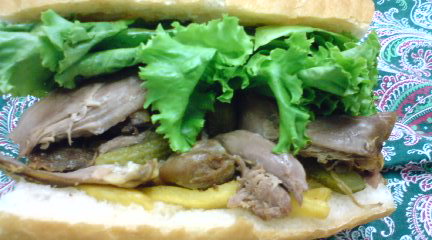
As for the sandwich, the Missus used soft-style (very Japanese!) French baguette she toasted first.
She then fried a whole confit duck leg and shredded it into large enough chunks.
She fried some potato chips in the duck confit fat.
She added lettuce and French pickles for the finishing touch.
BENTO-06-10-20c

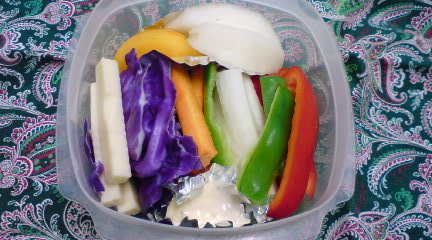
Today’s salad consisted of veg sticks and their dip:
From right to left-red and green soft pimentoes, daikon, carrots, violet cabbage and cheese.

For dessert in-season Asian Pear/Nashi and Squat Persimmons/Jirou Kaki.

It certainly took me quite some time to eat it all!
————————————-
October 19th, 2002
BENTO-09-10-19a

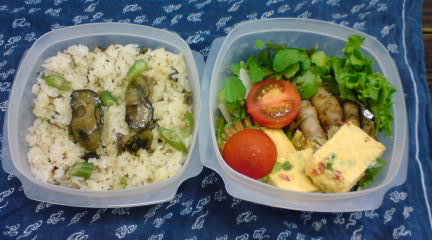
We are witnessing a very mild, if not hot Autumn in Shizuoka which promises to be long and pleasant.
This also means more access to local vegetables and local food in general!
BENTO-09-10-19b

Acually, the rice part was only part local.
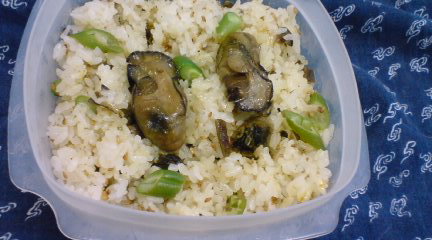
The Missus steamed the rice with chopped konbu/seaweed.
It is certainly more practical than steaming it with a large piece of konbu as the seaweed itself is not only edible but add great taste to the rice.
This time she mixed in canned smoked oysters (this is the “unocal” part).

BENTO-09-10-19c

After keeping two whole oysters for the topping, she vut the rest small enough and add chopped boiled string beans and sesame seeds before mixing the lot together.

BENTO-09-10-19d

The main box was a combination of veg, meat and eggs.
BENTO-09-10-19e

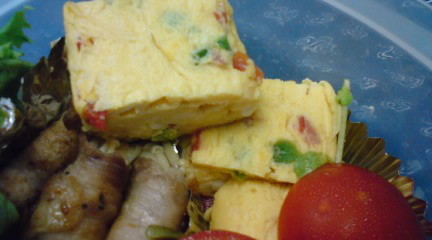
The Missus placed them on a bed of lettuce, cress and thin slices of apple with cut plum tomato.
The tamagoyaki/Japanese omelette contained cut and fried pimetoes and was seasoned with a little Thai sweet and hot sauce.

BENTO-09-10-19f

The meat part was represented by thin pork slices rolled around thin enoki mushrooms and srting beans fried Japanese style.

Good variety and very tasty, I must admit!
—————————
October 16th, 2009

SANDWICH-1

The Missus usually prepares only sandwiches as bento/lunch boxes on Fridays before I leave for University because I have to eat them aboard the train.
Accordingly they have to be kept simple and as a general rule are not really worthy writing about.
SANDWICH-2

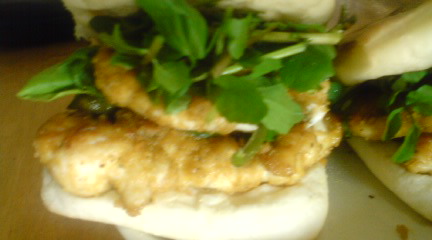
But today’s sandwiches were a bit more sophisticated than usual.
Why? you may ask. Well, Friday is my night out, but for once I invited the Dragon out (we normally eat out on Thursdays9, which might explain the quality of today’s “Train bento”!
SANDWICH-3

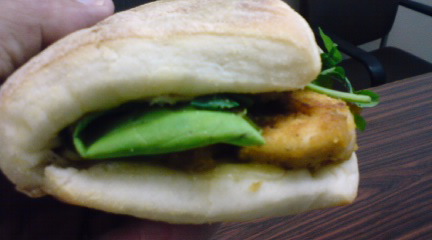
Breads are available in an almost infinite range these days in Japan.
The bread used for these sandwiches are similar to pita bread but square and pre-cut.
Once toasted, they offer a crispy thin surface while the outside is soft and tender.
They are easier to hold, making them very practical to eat on the train where the contents tend to spill out.
SANDWICH-4

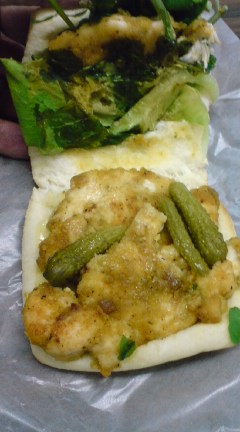
As for the contents, the Missus fried chicken “sasami/fillets” in karaage style with spice mix added.
She added lettuce, cress and French pickles for a great combination.

I can assure you I wolfed them down in a jiffy!
—————————
October 13th, 2009

BENTO-09-10-13a

After a long week-end (yesterday was a national holiday) spent cricket-umpiring and visiting all kinds of museums in Mishima City (where I found an organic restaurant), it was back to usual today.

BENTO-09-10-13b

A Japanese home-style bento with a few twists!

BENTO-09-10-13c

The rice itself is a Missus’ specialty. She had simmered finely cut mushrooms with thinly cut aburaage (fried tofu pouches) the night before. She heated them again in their soup before adding and mixing them (with some of the soup) with the freshly steamed rice.

BENTO-09-10-13d

The garnish came into two disntinct parts:

BENTO-09-10-13e

Pork belly sliced from a large block and fried with yuzu koshio. She fried okra, onions and red soft piments in the juices.

BENTO-09-10-13f

Tamagoyaki/Japanese omelette, plum tomatoes and mitsuba/trefoil and sesame seeds salad.

BENTO-09-10-13g

For dessert Asian pear/Nashi and Square persimmons/Jirou Kaki (originally raised in Shizuoka Prefecture!)

Plentiful, tasty and healthy! I must say the Missus was in a fairly good mood today!LOL
———————————-
October 10th, 2009

BENTO-09-10-10a

Today’s bento was definitely “The Day After Bento”!
Invited as I was lats night by a student of mine, I only managed cycling back home at 2 a.m. to wake up at 7 a.m. and go to work an hour later with a “slight” hangover….

BENTO-09-10-10b

A Working Man’s Lunch!

BENTO-09-10-10c

The double decker sandwiches were actually pretty big:
The first tier was mainly egg sandwich, a Missus’ favourite.
The second tier was a bit more sophisticated with home-made chicken ham, British chutney, French pickles and mustard.

BENTO-09-10-10d

Big salad, too, most it made with local ingredients: shreddedcabbage, leaf vegetables, plum tomatoes, green asparaguses and black olives.

Grapes for dessert. All in all, it proved lighter than it looked!
—————————
October 7th, 2009
BENTO-09-10-07a

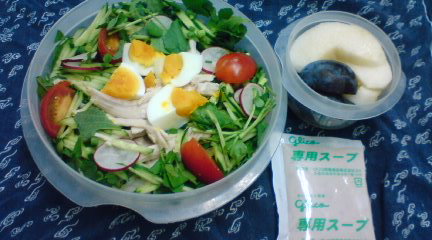
A big typhoon being upon us, Number 18, I had no recourse but to give up on going back home for lunch and “ordered” the Missu to concoct me a quick and healthy bento.

BENTO-09-10-07b

It was very healthy indeed!
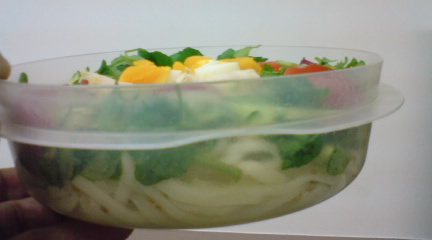
She boiled udon and cooled them under cold running clear water.
She topped it with home-made chicken ham, boiled eggs, cress, finely cut cucumber, sliced radish, pieces of shiso/perilla leaves and cut plum tomatoes.
BENTO-09-10-07c

Side view of the bento!

BENTO-09-10-07d

Soup/dressing I added to the lot later at the office!

BENTO-09-10-07e

Asian pears/Nashi and plums are still in season!
—————————-
October 6th, 2009

BENTO-09-10-06a

Onecould call today’s bento “Another Typhoon Bento”, as after almost 12 weeks of drought the rain is back with a vengeance! The notion of typhoon notwithstanding, the weather pattern are absolutely identical to that of the rainy season/tsuyu in June/July!

BENTO-09-10-06b

The beno the Missus prepared his morning was a very classi one, reminiscent of what children and students can expect from their mothers.

BENTO-09-10-06d

After she had steamed the rice, she mixed still hot with rice vinegar and other ingredients including white sesame seeds to make it sushi rice.
She fried minced chicken with finely cut mushrooms in a comparitively sweet sauce before covering half the rice with it.
She covere the other other with Japanese-style scrambled eggs and separated both with some freshly cut mitubs/trefoil making for an appetizing and colourful dish.
BENTO-09-10-06c

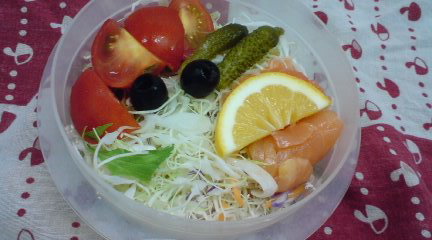
The salad consisted of shredded vegetables, smoked salmon, plum tomatoes, French pickles and black olives. I seasoned the lot with dressing kept in my fridge at work.

For dessert grape jelly.
Very healthy indeed!
———————–
September 29th, 2009

BENTO-09-09-29a

Today’s was also a “Working Man’s Bento”, and the Missus, grumpy as she was (rain outside and so on) certainly couldn’t help pointing it out (she is working, too…)!

BENTO-09-09-29b

It was pretty voluminous, too. I wonder why the Missus is always complaining b\about my bulging waist,…
BENTO-09-09-29c

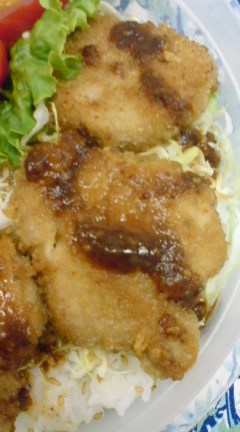
Not only did she steam the rice this morning (complaining I was just lounging around,…) but she also deep-fried fresh Tonkatsu made with pork fillets. Tender and succulent. She topped the tonkatsu with sauce that helped give flavour to the rice, too.
BENTO-09-09-29d

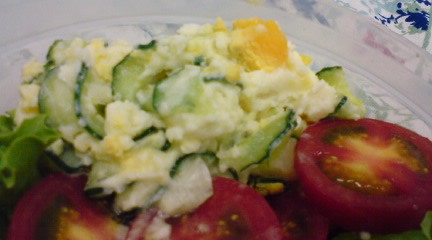
The salad part was the same as yesterday: potato, cucumber and egg salad with plum tomatoes on a bed of lettuce.
BENTO-09-09-29e

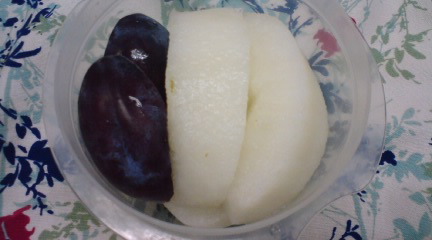
The dessert was the same as yesterday, too, but I’m not to complain as I love those Asian pears/”nashi” and ripe plums, both seasonal and so sweet and juicy!

Did I mention before that the grumpier the Missus, the better?

———————
September 28th, 2009
BENTO-09-09-28a

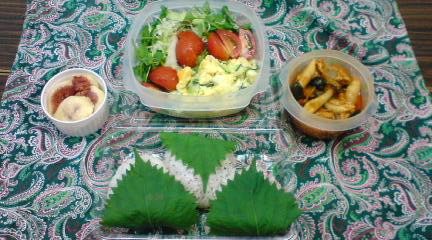
I would call today’s bento/box lunch the “Working Man Bento”!
Simple, hearty and healthy!
BENTO-09-09-28b

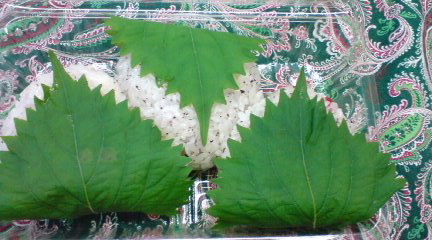
Three large o-nigiri/rice balls made of freshly steames rice mixed later with umeboshi/Japanese pickled plums and aka shiso/red perilla leaves furikake/seasoning and wrappe inside large green shiso leaves (the latter are also caleed “ooba/large leaves”)

BENTO-09-09-28c

Meat garnish was chicken and mushrooms fried in tomato sauce, slightly spicy-style. Actually the Missus made a whole batch of these. I can expect to have some more for dinner!
BENTO-09-09-28d

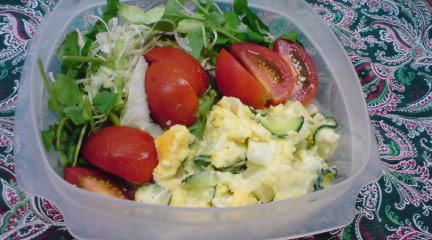
The “salad” consisted of a bed of shredded veg topped with cress and plum tomatoes and a potato, cucumber and egg salad.
BENTO-09-09-28e

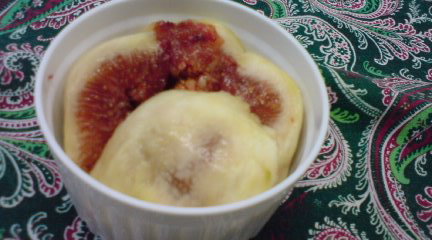
The seasonal dessert was fresh (and peeled) figs!
———————————
September 22nd, 2009

BENTO-09-09-22a

I could with different names for today’s bento:
“Holiday Bento”-Today is a National Holiday, but I’ve found myself working!
“Leftover Bento”-This particular bento has been made up mostly with yesterday’s food cooked by the Missus!

BENTO-09-09-22b

Yesterday the Missus had made “kakuni/stewed pork”. She had added beans and chili pepper during the second cookin.
I inherited the leftovers with boiled brocoli (also prpepared yesterday and a little pasta, the whole in the middle of freshly steamed plain rice.

BENTO-09-09-22c

The salad included yesterday’s curry potato salad to which she added crumbled boiled egg, mini tomatoes and mixed samll leaves.

BENTO-09-09-22d

Simple dessert with cut plum and Asian pear/nashi.

Must admit I felt full and contented!

—————————
September 7th, 2009

BENTO-09-09-07a

The Missus was a “bit grumpy” today.
“Don’t take a photo of that!” she said…
It was a typical, if simple, Summer bento, more aimed at stamina than anything else.

BENTO-09-09-07b

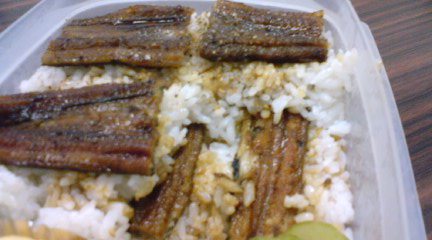
The broiled unagi/eel bento in short!

BENTO-09-09-07c

The unagi had been bought ready-made at the local supermarket.
The Missus coorected the fishy taste by havin the broiled unagi rest in matcha tea for a while.
BENTO-09-09-07d

As for the broiled eel and steamed rice, they were laid in a two-tier style, very popular in Japan.
BENTO-09-09-07e

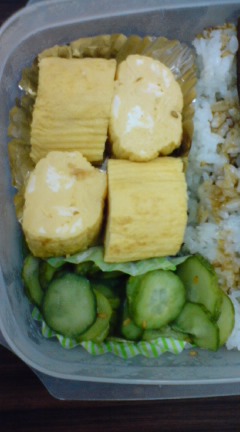
Plain tamagoyaki and home-made cucmber pickles for garnish.

BENTO-09-09-07f

(Shizuoka grown) cress, mini-tomatoes and walnuts for the salad, plums and grapes (grown in Yamamshi Prefecture, our neighbours) for dessert.

Simple but hearty!
————————-
September 5th, 2009

BENTO-09-09-05a

Two days ago, the Missus decreed that from now no I will take a bento to work on Saturdays as we are both too busy to bother with coming home for lunch.
I’m notone to complain as Saturday will see totally different bentoes form mondays and Tuesdays.
BENTO-09-09-05b

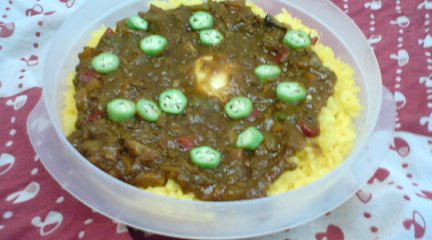
Like I said, Saturday bentoes will be different becaus this is the day of the week when the Missus makes a point to cook stews or curries.
Today’s curry was pork minced meat served with chopped okra from her family’s garden and a whole soft boiled egg on saffron rice.

BENTO-09-09-05c

As for the salad I was offered a selection of raw vegetables sticks with drssing as vegetables sticks. These are particularly welcome in this still hot season!
BENTO-09-09-05d

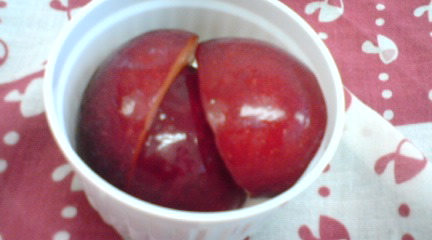
And ripe plums for dessert!

Next Saturday I will be flying to New caledonia for a few days. Therefore the next Saturday bento will have to wait till the 19th. LOL
—————————
September 1st, 2009
BENTO-09-09-01a

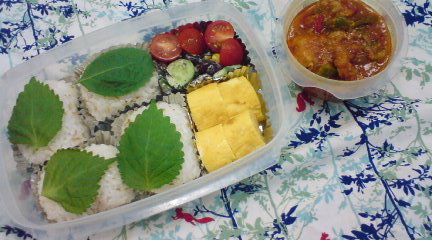
Today’s bento called be called “The Morning After” Bento!
Last night the Missus and I had a long celebration and we had som ediggiculty to wake uo this morning…
At first the Missus told me she would not mind if I bought and ekiben/Railway Station Bento, but she changed her mind after having a look at the fridge.

BENTO-09-09-01b

In the end, it turned out to be an easy classical bento:
BENTO-09-09-01d

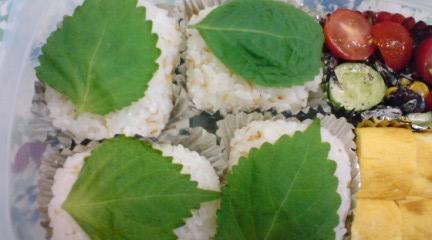
The rice balls/musubi were made of rice freshly steamed together with umeboshi/Japanese pickled plum and then mixed with white sesame seeds and topped by small shiso/perilla leaves we grow on our balcony.

BENTO-09-09-01c

Simple unadorned tamgoyaki/Japanese omelette and a salad made of beans, hijiki/sweet seaweed and cucumbers/mini tomatoes.
BENTO-09-09-01e

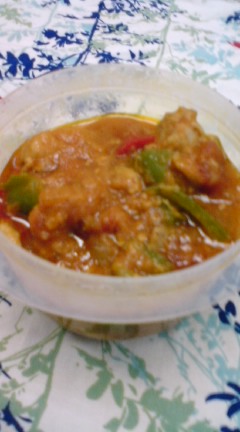
Not “savoury” was chicken ratatouille she had prepared the morning before (not bad at all, actually!).
For dessert I had some cheese that I keep in the fridge at work.
Healthy and plenty actually!

FATHER-COOKING
————————–
August 25th, 2009

BENTO-09-08-25a

When I came back home last night the Missus’ first question (she alway starts conversations with questions, LOL):
-Wha did you have for lunch?
-Ekiben Bento!”
-You went all the way to the station to buy one?
-Yup!
-Which one did you buy?
-Shizuoka Monogatari!
-Hummm….
She didn’t ask me if I enjoyed it, but she was certainly busy in the kitchen in the mirning, grumbling all the time. Well, if she grumbles, so much the better! (she more she grumbles, the better the food, didn’t I say before?)
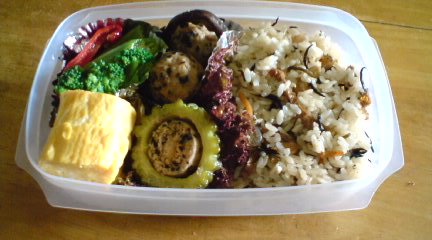
BENTO-09-08-25b

She was still grumbling at her own “mistakes” when the bento finally came up. Taking pity of her, I assured her that her mistakes were delicious, that she should not worry…
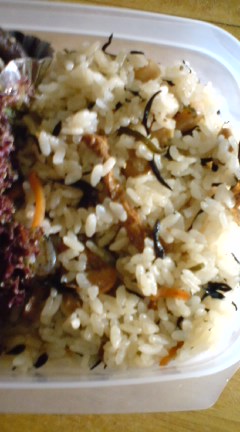
BENTO-09-08-25c

The steamed rice was “maze gohan” style/mixed rice, including beans and sweet seaweed/hijiri carrots and thinly sliced aburaage/fried tofu sheets.

BENTO-09-08-25d

Now, the fried chicken stuffed goya and chicken balls with black sesame seeds were really good. She also made sure I had my favourite tamagoyaki to which she added okra, red pimento, brocoli and lettuce.
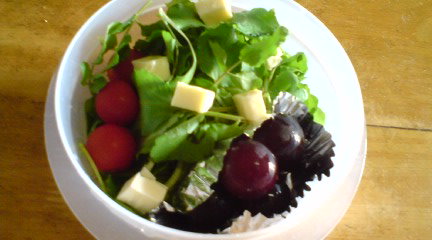
BENTO-09-08-25e

The salad/dessert included cress, mini-tomatoes, cheese cubes and grapes.

I’ll have to find another reason to make her grumble!
——————————
August 18th, 2009

BENTO-09-08-18a

If I had to give a name to today’s lunch box, it would be”General Election Bento”.
The campaign for the Japanese Lower Chamber general elections has just kicked off, and that means that no less than five candidates (in our constituency) criss-crossing in front of my office blaring their inane messages over their campaign car loudspeakers all day long for the next two weeks.
Was this the reason why the Missus felt grumpy this morning? LOL

BENTO-09-08-18b

Today’s bento was (only) slightly bigger than yesterday’s. Tuesday is the day off for my (?) half and she tends to cook more than usual as she prepares her own lunch at the same time.
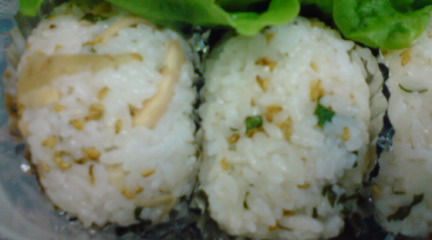
BENTO-09-08-18c

The musubi were made of fresh steamed rice mixed with home-made ginger pickles (sliced thin beforehand), chopped shiso/perilla leaves and white sesame seeds.

BENTO-09-08-18d

For the meat part I got large shrimps wrapped into bacon and deep-fried with lettuce to wrap them in. Mini-tomatoes and beans and hijiki/sweet seaweed salad made up for the rest of the first box.

BENTO-09-08-18e

As for the salad and dessert: baby leaves for the greesn with boiled brocoli and gree asparaguses. Blueberries and fresh figs for dessert!

I suppose I’ll be able to ignore those silly politicians!
—————————–
August 17 th, 2009
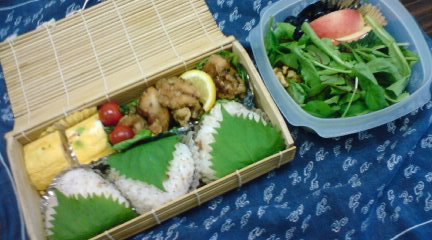
BENTO-09-08-17a

Well, today we did not have to worry about typhoons or earthquakes, although the heat is becoming really severe.
The 20 minutes bicycle ride to work leaves in a pool of sweat.

BENTO-09-08-17b

The Missus fortunately reduced the volume of today’s bento, as I feel quite bloated with all those drinks I guzzled down during my 10-hour cricket umpiring stint yesterday!

BENTO-09-08-17c

The Missus prepared my regular tamagoyaki “fix” with vegetables including pimento and edamame.

BENTO-09-08-17d

I got my other favourite: Karaage chicken/Japanese style deep-fried chicken, seasoned with black sesame seeds before deep-frying. Some lemon for more seasoning.

BENTO-09-08-17e

The three musubi/rice balls containg white sesame seeds were wrapped in shiso/perilla leaves.

BENTO-09-08-17f

A very simple salad with “mixed baby leaves”, peach wedges, blueberries and walnuts.

Back to normal!
——————–
August 11th, 2009
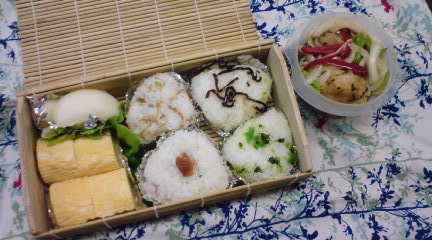
BENTO-09-08-11a

August 11th, 2009, Shizuoka City, 05:13 a.m.
6.2~6.5 tremor with its epicentre bang in the middle of Shizuoka Prefecture.
Positives: Occured at the “best” time of the day when people wake up and react quickly, no one is cooking yet and no communal transport is moving.
Negatives: some stupid “specialists” take the opportunity to announce this is still not the “Big Tokai Earthquake that we (?) are all expecting anytime!”
That did not prevent the Missus to prepare my (and her) bento!

So, this time it is not “Typhoon Bento”, but “Earthquake Bento”!

BENTO-09-08-11b

She used that bamboo box again with its soft lid.
She put in 4 musubi/rice balls instead of the usual 3. She probably though I needed some comfort! LOL
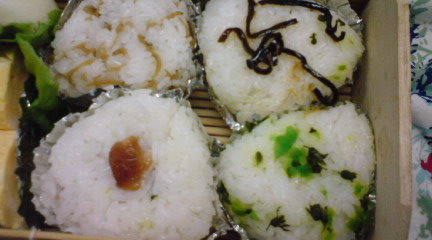
BENTO-09-08-11c

4 musubi then:
Top left: dried shirasu/sardine whitings
Top right: konbu/sweet seaweed
Bottom left: umeboshi/pickled Japanese plum
Bottom right: pickled cucumber

BENTO-09-08-11d

Tamagoyaki. Very simple and sweet. “Nashi”/Japanese pears from Yaizu which was hit by a mini tsunami at 5:30

BENTO-09-08-11e

The side dish was one of the Missus specialties: Deep-fried chicken marinated with vegetables. She deep-fries the chicken first. Then she fries some thinly cut vegetables lightly. She dropped both into a large plate with rich vinegar, mirin, ponzu and I don’t know what and let the lot marinate for at least 30 minutes before transfering it into a tupperware.

BENTO-09-08-11f

A side view of the garnish!

Looking at and eating this bento, I might tempted to wish for a few more (very small) earthquakes!

Here is another picture of my “roots” taken outside my Dad’s house:
———————-
August 10th, 2009

BENTO-09-08-10a

Today’s bento was “Typhoon Bento”! Not the one that crashed on Taiwan last week, but the next one which veered onto Japan today!
I can assure you that the Missus was “pretty” grumpy!

BENTO-09-08-10b

In Summer I very often get these cold noodles/”men-ramen-soba” bentoes. I can keep the in the fridge at the office and eat them chilled.
Very much appreciated in these hot days!

Today’s was mad of ramen first boiled then cooled under running cold water. They were topped with finely choppe veg, pieces of lettuce, boiled shrimp, home-made chicken ham, Soft boiled egg seasoned withblack sesame seeds and steamed edamame.
BENTO-09-08-10c

Here’s a side view!

BENTO-09-08-1033

I was provided with “men tsuyu/cold noodles stock soup) to add to the noodles. I added some dressing from the bottle kept in the fridge.

BENTO-09-08-10d

Great dessert for once: Fresh “nashi/Japanese pears”, figs and blueberries!
——————-
August 4th, 2009
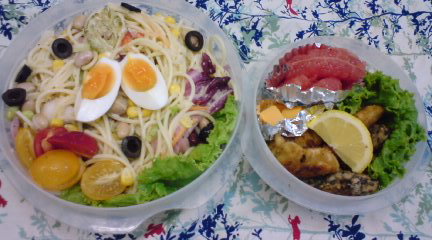
BENTO-09-08-04a

Today was clear and bleeding hot, but contrary to Jenn might think, the Missus came up with the comment this morning: “Kyo wa, te-nuki bento da!/Today, lazy bento!”
I know better than to argue. It is the best way to provoke the Missus into a little more work she had intended first!
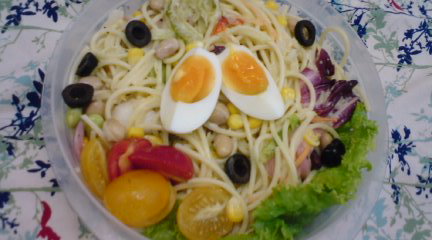
BENTO-09-08-04b

She boiled potatoes, cool then under running cold water and drained them before adding dressing, beans salad and choppes veg to them.
She added red and yellow mini tomatoes from Shizuoka, soft boiled egg, lettuce and olives before closing the box.

BENTO-09-08-04c

For extra garnish, she deep-fried chicken, one plain and the other with black sesame seeds. Lemon for extra seasoning and lettuce to wrap them in.
Red cheddar cheese and red grapefruit for dessert.

Not bad for a lazy bento!
——————
August 3rd, 2008

BENTO-09-08-03a

Monday!
For once it was not raining this morning, meaning that the Missus was in a fairly good mood and accepted my requests for today’s bento!

BENTO-09-08-03b

“Today’s bento might be a bit small. Is that ok?”
“No problem!”. Actually it looked as there was plenty.
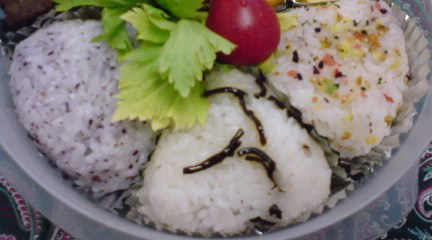
BENTO-09-08-03d

“How many musubi/rice balls do you want?”
“Three will be enough!” (I know how big they come…)
“I include dry nori/seaweed in a separate pack for you to wrap them in!”
“Fine!”
“Three different kinds: one with sweet seaweed, one with minced red cucumber pickles and one with salmon furikake/seasoning powder!”
“Very fine!”
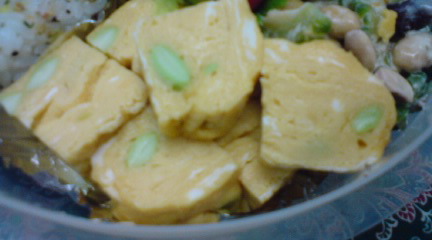
BENTO-09-08-03f

“As you requested, I put edamame tamagoyaki! Is that enough?”
“Sure, as I have already eaten two pieces!”
BENTO-09-08-03e

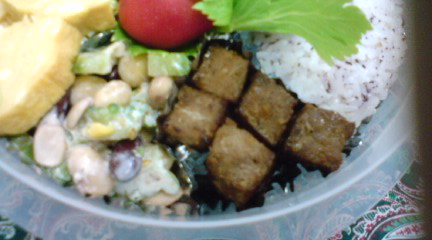
“As for the garnish, gyuniku saikoro/beef dices, beans salad, mini-tomatoes and celery!”
“Perfect!”
“For dessert, nectarine!”
“Thank you so much, dear!”

I wonder how long this fine weather will hold,…

———————-
July 28th, 2009

BENTO-09-07-28a

Since my new Friend Marya has decided to try and make bento for her husband, expect Japanese bentos from two different Foodbuzz members in Shizuoka!

The Missus came up a totally different type of bento today: “Hiyajiru/冷汁/Cold Soup”!

BENTO-09-07-28b

She first prepared a soup with konbu/seaweed stock to which she added Japanese spices and all kind of fresh vegetables including tomatoes, okra, cucumbers and so on. To coll it down quickly she added ice and let chill while she prepared the rest.

BENTO-09-07-28c

She prepared two large musubi/rice balls seasoned with sesame and I on’t know what (secret) and let these cool down two.

BENTO-09-07-28d

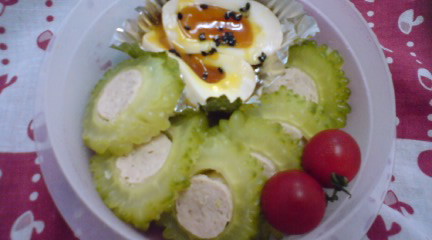
She then steamed goya stuffed with chicken paste.

BENTO-09-07-28e

I put the whole bento in the office fridge first thing.
When I took it out for lunch, I first open the cold soup box which was perfectly chilled by then.

BENTO-09-07-28f

I put the rice balls in the soup. With a spoon I broke them and ate them with the soup.
BENTO-09-07-28g

As for the “salad” I used the miso-pickled soft boiled egg to seaon the chicken-stuffed goya the Missus had cut into slices.

Very good cold bento for this very sultry summer!

————————–
July 27th, 2009
BENTO-09-07-27a

It has been raining for a full week now, and apparently we are in for another week of it.
That certainly does not put the Missus into the right mood, but she somehow managed to prepare my bento this morning after a lot of grumbling!

BENTO-09-07-27b

It was simple but healthu and plentiful (actually she had warned me not to take pics….):
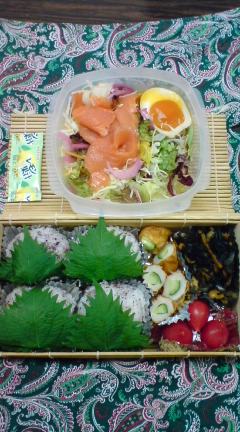
The musubi/rice balls wer mixed with “ume kake/pickle plum seasoning powder and wrapped into fresh shiso/perilla leaves.
The Missus added “chikuwa/fis paste rolls stuffed withe fresh cucumber, fried kinpira including konyaky, carrots, beans and seaweed, and som Renaissance tomatoes grown in Kakegawa City.

BENTO-09-07-27c

As for the salad, it consisted of a bed of chopped veg, some home^made pickles onions, smoked salmon and a soft-boiled egg.

I must admit it was very satisfied in spite of all the grumbles!

———————-
July 21st, 2009

BENTO-09-07-21a

Yesterday’s bento was typically Japanese in concept and ingredients.
The Missus tried to make it more “stamina-like” as they say in Japan, but at the same time, keeping the calories in check.

BENTO-09-07-21e

The “musubi/rice balls” were of two types: one with sweet konbu/seaweed” the other with “sweet umeboshi/pickled Japanese plums”. All balls were wrapped in “shiso/perilla” leaves.
BENTO-09-07-21b

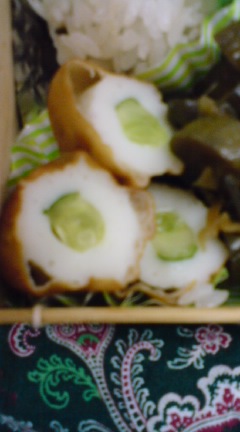
As for the garnish, the Missus aded “chikuwa/fish paste tubes” filled with fresh cucumber.

BENTO-09-07-21c

Sweet and sour chicken “dango/balls” she had coated with black sesame seeds beforehand.
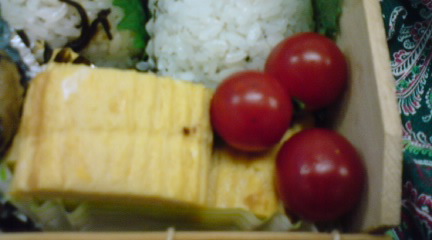
BENTO-09-07-21d

And of course “tamagoyaki/Japanese omelette”!
Mini tomatoes for the Vitamin C and plums (not pictured) for dessert.

Bewteen you and me, I felt pretty satisfied!

—————-
July 13th, 2009

BENTO-09-07-13a

When the very hot days of summer come, the Japanese consume a lot of eel for the stamina they are losing through the enormous amount of sweat.
The Missus thought it was about time to take care of my stamina!
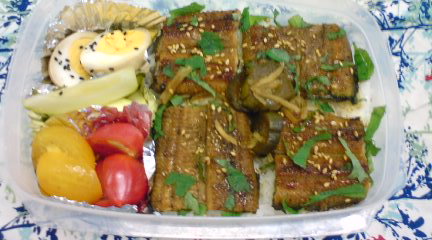
BENTO-09-07-13b

The accompaniment cosisted of boiled egg later marinated in soy sauce and sprinkled with black sesame seeds, home-made pickled mini-melons and local tomatoes (the yellow ones from Shizuoka City, and the red ones from Kakegawa City)

BENTO-09-07-13c

The Missus had bought the broiled eels the day before. The technique is to “soften” them with tea, before putting on top of steamed rice with chopped shiso/perilla leaves, home-made cucumber pickles and white sesame seeds.
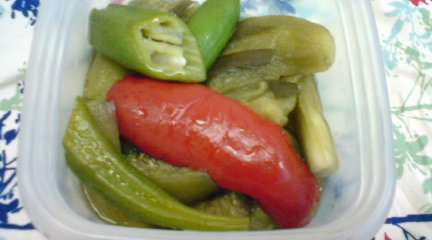
BENTO-09-07-13d

The salad was marinated vegetables. The Missus first grilled the aubergines/egg plants, sof red pimento and okra and the marinated them (secret…) in the fridge overnight.
As I know that she has made a big batch them, I’ looking forward to eat more tonight with some cold sake!
————————–
July 7th, 2009

BENTO-09-07-07a

I think I can safely assume that today’s bento is of the “healthy type”!
Plenty of vegetables and more as you will see!

BENTO-09-07-07e

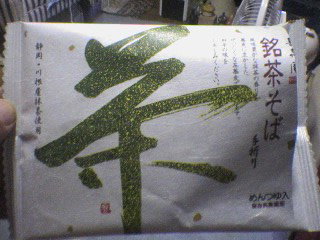
The Missus first prepared konbu soba from Shiretoko. Shiretoko is a great UNESCO World nature Heritage in Northeastern Hokkaido we visited last year. They are famous for their knobu/seaweed and a derivated products such as the konbu soba we brought back. They are green and might look like tea soba, but they aren’t. Extremely healthy!
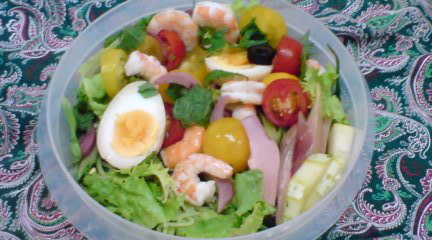
BENTO-09-07-07d

On top she placed hand-broken lettuce and shiso/perilla leaves, home-pickled mini lemons, home-pickled myoga and onions, pickled ginger, red and yellow tomatoes from her family’s garden, boiled shrimps, boile egg marinated in soy sauce, and black olives.

BENTO-09-07-07b

She provided me with “mentsuyu/めんつゆ/cold stock soup for the soba. You just pour them on top as it goes well with the veg, too.

BENTO-09-07-07c

And for dessert red grapefruit, mini kiwi and blueberries!

Simple, tasty and healthy!
————————–
June 30th, 2009

BENTO-09-06-30a

The Missus felt a more grumpy than ususl today. What with my recent antics at cricket and my busy schedule, she feels like a mid more than a partner….

She was in the mood to make something too fancy and had to think about her own lunch.
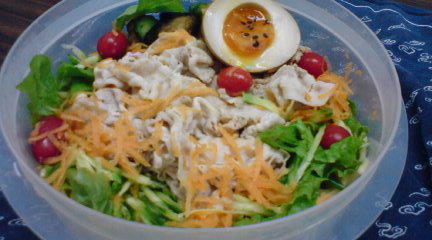
BENTO-09-06-30d

The main dish consisted of cold ramen boiled and lightly seasoned with a little sesame oil and chopped thin leeks. On top she placed pieces of lettuce, thinly chopped carrots, cucumber and string beans, thin slices of pork, first lightly boiled then seasoned with gomadare/sesame dressing, sweet ammera rubbins mini tomatoes and home-made cucumber and aubergine pickles.
The was first soft-boiled then marinated in soy sauce, cut in half and served sprinkled with black sesame seeds.
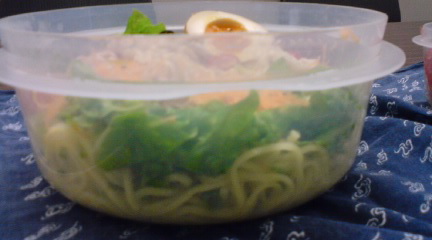
BENTO-09-06-30e

Her is a side-view!

BENTO-09-06-30b

I was provided with men-tuyu/めんつゆ ascold stock soup for the ramen.
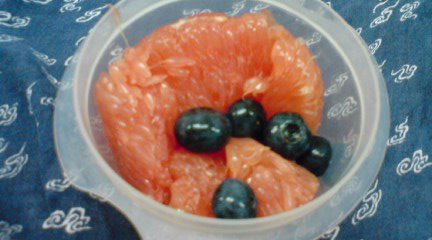
BENTO-09-06-30c

Simple and tasty dessert with South African grapefruit and Japanese blueberries!

I left the whole in the office refrigerator until lunch, making a “cool”/refreshing lunch!
———————–
June 29th, 2009
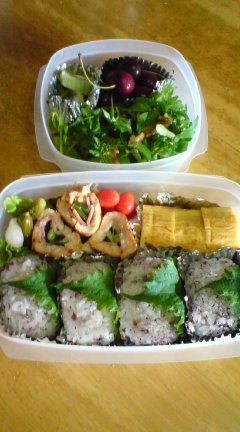
BENTO-09-06-29a

Back to some rice at last! I must confess i eat more rice than the Missus who is obsessed with anything in the shape of pasta or noodles!
BENTO-09-06-29b

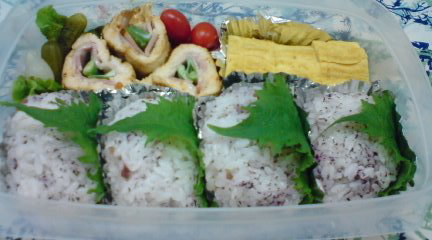
The bento was definitely adult-size (or hungry high school stdent-size!)
BENTO-09-06-29e

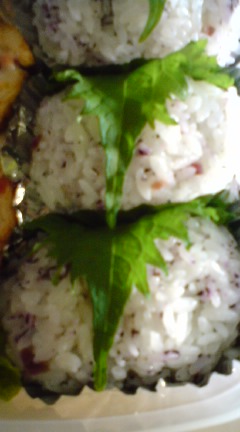
The “musubi/rice balls” consisted of fresh syeamed rice mixed with very tiny pieces of red cucumber pickles and umeboshi/Japanese pickled plums, the whole wrapped inside a shiso/perilla leaf.

BENTO-09-06-29c

The garnish consisted of meat rolls: boiled string beans rolled inside cheese, bacon and chicken, the whole fried with soy sauce and I don’t know what (?). Succulent with the French cornichons and the minuscule and very sweet Ameera Rubbins tomatoes exclusively grown in Shizuoka Prefetcure!

Naturally some feshly-made tamagoyaki/Japanese omelette (beware of the cheap article sold at markets wrapped and all. Thay are full of sugar and preservatives!).
BENTO-09-06-29f

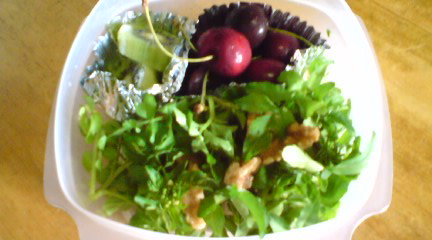
The salad, a very simple affair, consisted of cress (Shizuoka-grown), walnuts, kiwi and American dark cherries!

Alright, I reckon the Missus worked hard on that one!
————————
June 23rd, 2009
BENTO-09-06-23a

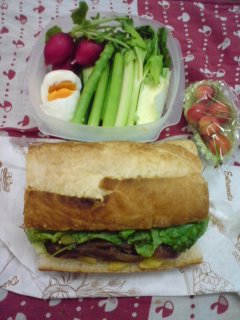
Apparently as far as the Tuesday’s bentoes are concerned, the Missus has turned into “Sandwich mode”!

BENTO-09-06-23b

Now, for the greens, she had come with the interesting notion of a veg sticks dip with celery, boiled asparaguses, cucumber and red radishes (and their leaves). One half-boiled egg for the balance and mayonnaise/mustard dip.

BENTO-09-06-23c

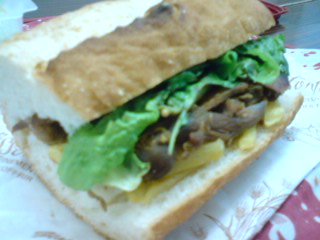
The sandwich, once again, was a big affair.
BENTO-09-06-23d

As for the filling, she first fried duck confit, then potato sticks in the remaining fat and inserted them in the French bread (soft type) with lettuce and French conichons.

This time she didn’t forget the dessert: Japanese cherries!
——————-
June 22nd, 2009

BENTO-09-06-22a

Mondays, for all the Missus’ grumpiness, see typical Japanese bentoes coming my way! Weekends mean busy days at work at my other half works for an orthodontist, meaning that most patients visit the clinic on weekends.
Although I did cook some tasty cold pasta and seafood salad for dinner last night, The Missus hadn’t forgiven me for not checking the wine avaibility!
A back massage this morning did some good in re-establishing a modicum of peace, though!

BENTO-09-06-22b

The main dish did take some work to do:

BENTO-09-06-22e

The rice was steamed with red miso-flavoured konbu/sweet seaweeed mix, making for the unusual colour of the musubi/rice balls.

BENTO-09-06-22d

The Missus’ specialty: Japanese-style (twice) deep-fried chicken with deep-fried renkon/lotus root chips (with some lemon handy).

BENTO-09-06-22c

Homemade pickles: Mini-melon with salt-preserved cherry blossom.

BENTO-09-06-22f

The salad was a very simple affair: lettuce, “grated” carrots, mini tomatoes and walnut (was the last for dessert?)
————————–
June, 16th, 2009

BENTO-09-06-16b

After yestreday’s small tour de force, the Missus wanted to take a break and make things simple!

BENTO-09-06-16a

I think I can qualify today’s “bento” as “American/French Lunch”!

BENTO-09-06-16d

The reason is the enormous sandwich prepared with a French baguette!

BENTO-09-06-16e

Mind you, the filling was a healthy fusion of home-made chicken ham, boiled egg salad and cornichons!

BENTO-09-06-16c

The salad was Japanese in concept: shredded vegetables, deep-fried renkon/lotus root chips, lettuce and mini tomatoes.

American Darkk Cherries for dessert.
Quite voluminous, maybe fitter for a young sportsman!
——————————
June 15th, 2009

BENTO-09-06-15a

I must admit that the Missus worked hard toady to create a slightly different bento, albeit using the same ideas!

BENTO-09-06-15b

She opted for the healthy and fulfilling combination of maki/rolls and tamagoyaki/Japanese omelette.

BENTO-09-06-15d

Having steamed the rice (she added a piece of konbu/seaweed today), stirred and cooled it, she mixed in a generous amount of tobikko/flying fish roe, “white” and black sesame seeds. She then made sushi maki with fresh lettuce instead of seaweed, and placed smoked salmon and avocado in the middle (she had them with lemon juice beforehand). Californian Bento? LOL

BENTO-09-06-15c

As for the tamagoyaki, she made it according to my request: She mixed the eggs with fine pieces of pimento and chopped thin leeks. The result? Spanish Tamagoyaki or Japanese Tapas? I leave it to yuo!LOL
BENTO-09-06-15e

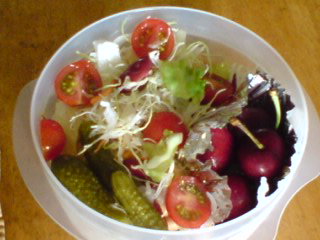
As for the salad: shredded vegetables, mini tomatoes, French cornichons.
Got American dark cherries for dessert!

High-class bento, I must admit!
——————————-
June 8th, 2009

BENTO-09-06-08-a

It was back to classical” bento today!
That is rice topped with all kinds of ingredients!

BENTO-09-06-08-c

For once I managed to steal into the kitchen to take a quick pic of the rice being steamed with the beans!
BENTO-09-06-08-b

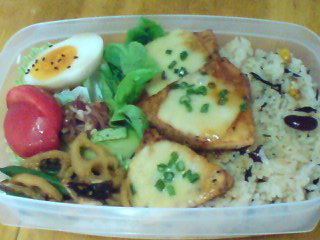
It was a pretty voluminous bento as you can see!

BENTO-09-06-08-d

As for the main meat the Missus fried slices of tuna in soy sauce and covered with cheese and chopped thin leeks.
BENTO-09-06-08-e

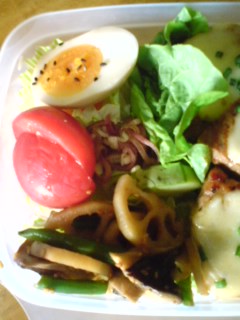
The rest of the garnish consisted of renkon/lotus roots, shiitake and stringbeans fried together in the same pan as the tuna. She added a fresh plum tomato, boiled egg seasoned with black sesame, home-made piclled mini melons and myoga and lettuce. I probably forget something!

BENTO-09-06-08-f

Chopped veg salad with pieces of lettuce and walnuts and cherries from Yamanashi Prefcture for dessert!

I can garantee you I was full after that!
——————————
June 7th, 2009

BENTO-09-06-07a

For once, The Nissus madebento with “men/Japanese-Chinese Pasta”!

BENTO-09-06-07b

The principle is to boil “ramen” and strain them through a “zaru/sieve” for them to become “zarumen”.

BENTO-09-06-07c_0001

At the office I piured the two different sauces and chopped thin leeks on the cole “zarumen” before eating them.

BENTO-09-06-07c

As for the garnish, the Missus prepared “Tamagoyaki/Japanese Omelette, “Chicken Kaarage/Japanese style deep-fried chicken” (note the black sesame seeds coating), boiled “ingen mame/string beans”, a large plum tomato and home-made cucumber and myoga pickles.

She didn’t forget the dessert: banana!
Plenty and enough, I can tell you!

———————-
June 2nd, 2009
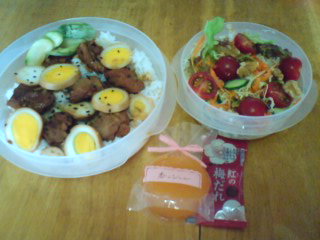
BENTO-09-06-02d

The Missus started devising and prapring today’s bento last night when she stewed the chicken, with the firm idea to taste it herself at home by herself toady!LOL
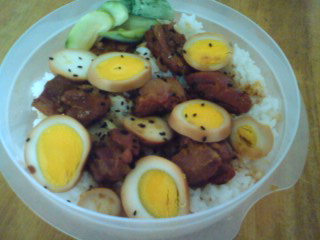
BENTO-09-06-02a

She first boiled eggs before taking care of the chicken. The chicken was first fried then slowly simmered with the eggs in the Chinese shashu pork style with soy sauce, sake, star anise and I don’t know what secret (don’t expect me to ask her, or it will start another argument!). She provided home-made pickled mini melons for the “salty additive”.
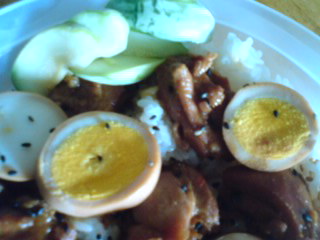
BENTO-09-06-02e

It was basically only light reheated when the chicken and sliced boiled/simmered eggs were placed on freshly steamed plain rice. She added some of the “juices” to season the rice and topped it with a goodmeasure of black sesame seeds.

BENTO-09-06-02b

the salad was a simple affair of chopped greens with mini tomatoes and a few walnuts.
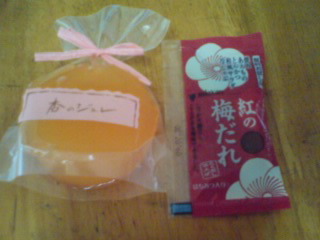
BENTO-09-06-02c

Finallly, I was provided with “ume tare/pickled plum vinaigrette” for the slad, and apricot jelly for dessert.
———————–
June 1st, 2009

BENTO-09-06-01-a

I’m always looking forward to bento on Monday, although the Missus tends to demur, as they usually see some research and new ingredients!

BENTO-09-06-01-b

This time, the Missus opted for “musubi/hand-made rice balls, of two kinds:
BENTO-09-06-01-c

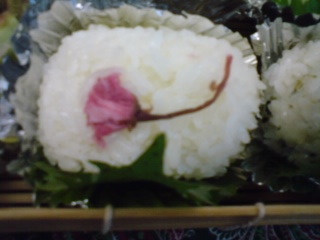
One was plain rice with a whole salt-preserved Sakura no Hana/Cherry blossom (above pic).
The other one was plain steamed rice mixed with chopped shiso/perilla leaves, hijiki/sweet seaweed and white sesame seeds.
All musubi were envelopped in ooba/large perilla variety leaves.
She added home-made pickled myoga and pickled mini-melaons with white sesame seeds.

BENTO-09-06-01-d

As for the garnish, I got renkon/lotus roots fried with black sesame and katsuo bushi/bonito dry shavings, Boiled green and white asparaguses, home-made chicken ham with British chutney and lettuce, tamagoyaki/Japanese omelette (for dessert!) and plum tomatoes.

Plenty to eat!
—————————
May 26th, 2009
BENTO-09-05-26a

Yesterday we had an earthquake in Shizuoka, bu everybody is OK!
Thanks to all for the concern!
A Friend actually suggested to call it the Earthquake Bento of the Day!LOL
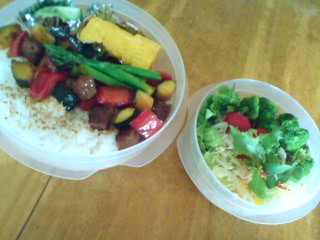
The fact is that it did stimulate the Missus into cooking a lot this morning.
Incidentally, even Kamran could eat it as it was cooked with olive oil!
BENTO-09-05-26b
Please check the new postings at:
sake, shochu and sushi

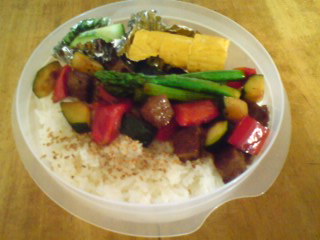
Once again, as there was very little shopping done yesterday, the Missus foraged inside the fridge and came up with the following:
BENTO-09-05-26c

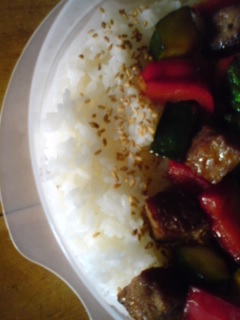
The rice was plain steamed rice but sprinkled with plenty of rasted sesame seeds.

BENTO-09-05-26d

For the arnish, she fried “Saikoro/cubes” of beef, zucchini, red mild pimentoes and mini asparaguses together (in that order?). She prepare “Tamagoyaki/Japanese Omelette” and added some home-made min-melon pickles.

BENTO-09-05-26e
————————
May 25th, 2009

BENTO-09-05-25a

Today’s bento was a bit of a straightforward affair making good use of what was left in the fridge!

BENTO-09-05-25b

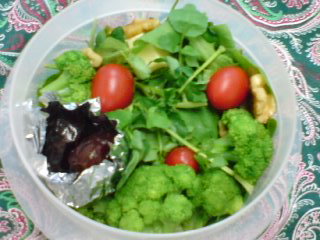
Plenty of steamed later mixed with Japanese cucumber pickles.
Boiled Shrimps and smoked salmon dipped in lemon juice with scrambled eggs, Italian parsley, pickled baby melons and black olives.
BENTO-09-05-25c

Salad, very simple too: Green leaves, boiled broccoli, processed cheese, Ameera Gibbins sweet mini tomatoes and honeypreserved dates for dessert.

What is the Missus cooking tonight, especially after the little earthquake we had?
———————-
May 19th, 2009

BENTO-09-05-19a

After Yesterday’s traditional Japanese bento, the Missus prepared an “open sandwich bento” more reminiscent of European/American packed lunches!

BENTO-09-05-19b

As she is away on a vacation today she did not need to prepare food for both of us.
She toatsed some bread and proceeded to rummage through the refrigerator:
BENTO-09-05-19c

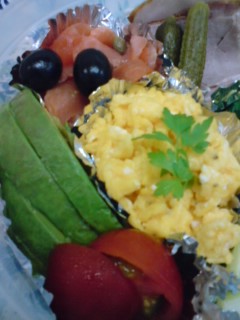
Smoked salmon with capers and black olives.
Japanese-style scrambled eggs with Italian parsley from our verandah for a finishing touch.
Avocado slices.
Sweet plum tomato.
Dip sauce for the vegetables.

BENTO-09-05-19d

Smoked pepper ham and cornichons.
Lettuce.
Cucumber and celery sticks for the dipping sauce (or is this the other way round?LOL)
Honey-pickled dates for dessert.

Very healthy!

————————–
May 18th, 2009

BENTO-09-05-18a

Today’s bento was probably the most “traditional” the Missus prepared this year. It is very reminiscent of high school students can expect from their mothers.

BENTO-09-05-18b

The rice part is a double-decker. That is soy sauce will be brushed on a first layer of plain steamed rice and covered with dry seaweed. The operation is repeated to form the two-tier rice dish.

BENTO-09-05-18c

As for the garnish the Missus made small “sandwiches” with slices of zucchini intersped with a chicken paste she made with minced chicken, a lttle sake and what else before rolling them in cornstarch and frying them. Served with lettuce and fresh cress, it made for the vegetable part.

BENTO-09-05-18d

As for the “salad” part, she included mimosa-style boiled egg halves, “yama imo/taro roots” (raw) salad with two kinds of sesame seeds, pickled Japanese gourd and pickled Japanese cherry blossom, and a plum tomato for dessert.

Not as big as usual, but I have to lose weight!LOL
———————-
May 11th, 2009
BENTO-09-05-11a

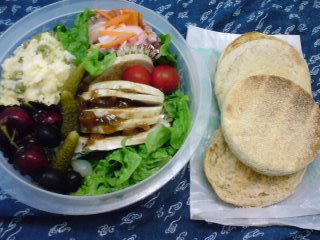
Today’s bento was a simple affair or quick fix: Open Muffin Sandwiches.

BENTO-09-05-11b

The Muffins were “English” made in Japan. They had been toatsed for consistency.
As for the filling: lettuce almost everywhere, potato and green peas salad, home-made chicken ham with British chutney, French pickles, black olives, mini tomatoes, and dark cherries (imported)

Was still a bit hungry after that!

—————————
May 1st, 2009

bento-09-05-01a

Today’s bento was “Catch the Train Bento”!
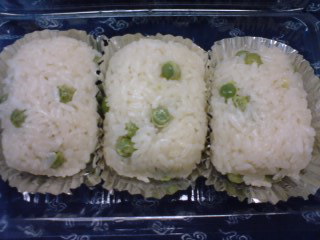
I have to take the train to go and teach at University on Friday afternoons. Usually the Missus makes sandwiches for my trip. But she had forgotten to buy bread! Therefore I ended up with a classic trip bento!
bento-09-05-01b

She steamed the rice with large fresh green peas to make big musubi/rice balls.
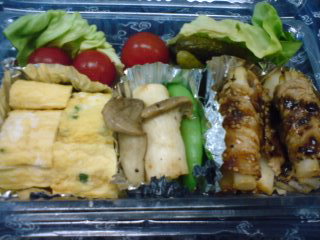
bento-09-05-01c

As for the accompaniment, she improvised with was left inthe refrigerator:
Lettuce, mini tomatoes, French pickles, tamagoyaki containing finely chopped thin leeks, fried eringi mushrooms, boiled sweet peas intheir pods, and fried bacon and white asparagus rolls.

A quick fix, maybe, but a pretty satisfying bento!
————————–
April 30th, 2009
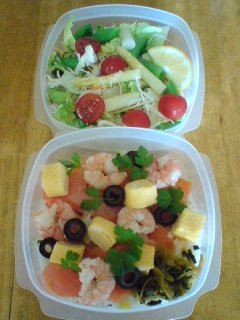
bento-09-04-30a

Yesterday was a National Holiday in Japan, and we took the pportunity to share dinner at Lojol‘s place. We certainly ate (and drank) a lot as usual.
As the Missus was busy today, she prepared me a healthy lunch box to help my body ease up a bit!
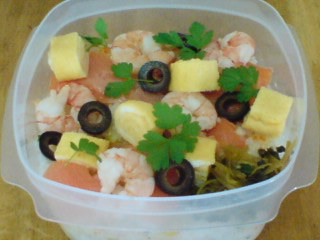
bento-09-04-30b

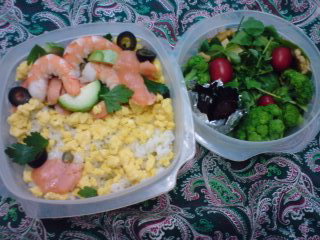
The main dish was very Japanese in concept: “Chirashizushi/Decoration Sushi”:
The rice had been steamed with a piece of konbu/seaweed and later mixed with dickled Japanese cucumber and daikon as well as with “Tobikko/Flying Fish roe”.
She then placed lemon juice-seasoned smoked salmon, boiled shrimps, square cut tamagoyaki, sliced black olives, Italian parsely from the verandah and home-made wasabi pickles.
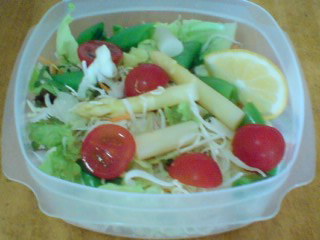
bento-09-04-30c

As for the salad: on a bed of shredded veg, cut mini tomatoes, boiled white asparaguses, lettuce, lemon and shredded cheese on which I poured dressing kept in the fridge at work!

Very healthy indeed, but quite a lot in fact!

———————
April 28th, 2009
bento-09-04-28-a1

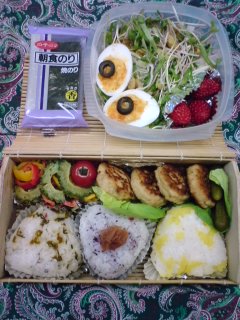
I had a little argument with the Missus this morning when she refused to tell me what was included in one of the nigiri/rice balls.
-Secret! In any case, you should be able to find out when you eat it!
-Kudaranai!/Silly answer!, I replied.
-I’m silly! Fine, you can make your own bento next time!
-No problem!, I replied knowing fully well this was the best way to provoke her into making the next one. LOL

bento-09-04-28-b

The main part consisted of three nigiri: one containing seaweed, the second one umeboshi/pckled Japanese plum and pickled cherry blossom, the last one takuan/pickled daikon.
bento-09-04-28-d

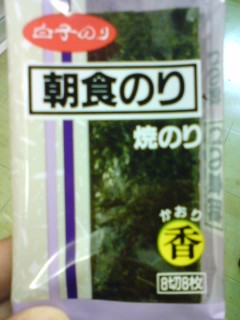
The Missus had included a small pack of nori/dry seaweed.
bento-09-04-28-e2

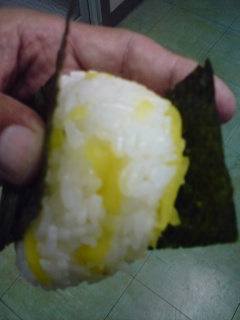
This way, the nori would be dry and crispy when eaten. The idea is either to wrap around the nigiri, or just hold it as a “sandwich”.

As for the garnish, the Missus prepared a small salad of lightly fried pimento and goya, mini chicken patties from last night dinner, tomato, lettuce and French pickles.
bento-09-04-28-c

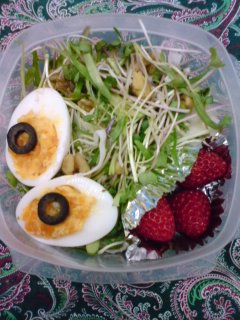
As for the salad I got Japanese-style mimosa eggs on a bed of greens and Shizuoka “Beni Hoppe/red cheeks” strawberies for dessert.

Don’t to have another argument! LOL
————————-
April 27th, 2009

bento-09-04-27a

This morning The Missus said that I ate too much rice for my comfort, meaning it was fattening me!
Therefore she declared that I was going to have sandwich Bento today!
Actually, I’m pretty sure that bread contains more calories than rice!

bento-09-04-27b

The sandwich was double-decker with three slices of bread.
bento-09-04-27d

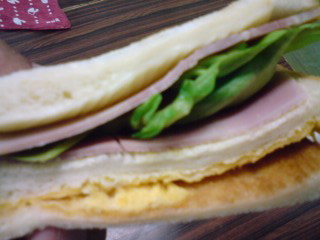
Fairly simple in concept (and probably healthier!), it was laid with a very thin omelette on the first deck, then cheese (toasted), ham (seasoned with mustard) and lettuce for the second deck.
bento-09-04-27c

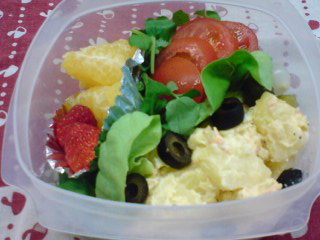
The Salad dish was pretty voluminous:
Bed of cress.
Plum tomatoes.
French pickled cucumbers and onions,.
Lettuce.
Black olives
Potato salad.
Oranges and strawberries for dessert.

Quite big in the end! LOL

My good friend Elin nicely asked me to include some pictures of flowers as it is Spring in Japan:

flower-tree2

That flowering tree is a Dogwood Tree or Hanamizukira in Japanese!
—————————-
April 25th, 2009

bento-09-04-25a

Saturday is definitely not a “bento day”, but with the storm announced for the whole day by the weather forecast, we decided it would be more practical for both of us instead of having to travel inside stuffy slow buses!

bento-09-04-25b

The Missus kept things simple:
She already had ready to fry thin pork slices in the fridge.
She placed them on a bed of teamed rice first overlaid with finely chopped greens. She had seasoned the pork with bbq sauce and sprinl\kled them with white sesame. She added “takuan”/yellow pickled daikon and home-made wasabi flowers and stem pickles.

bento-09-04-25c

The side dish was fairly simple, too:
Plenty of “kawaire daikon” for vitamin C, mini tomatoes, simmered black beans and tamagoyaki.

Plenty enough!

My good friend Elin nicely asked me to include some pictures of flowers as it is Spring in Japan:

flower-tree1

Last Cherry blossoms in Shizuoka City!
—————————-
April 22nd, 2009

bento-09-04-22

Wednesday is usually not a “bento day”, but since I will be very busy this afternoon conducting a video interview of a local sake brewery, I simply will have no time to go back home for lunch.

The Missus this time came up with her own “classic”, pasta salad bento:
Boiled, drained and cooled spaghetti to which she added some dressing before laying them inside the box. She then sprinkled them with a little grated parmegiano cheese.
She added smoked salmon, pink pepper, Italian parsley from our verandah, boiled slice, Sliced plum tomato, boiled broccoli, Some cut cucumber, French flageolet green beans, French pickles, small herbes and lettuce. As for dessert, oranges from her family’s garden.

My good friend Elin nicely asked me to include some pictures of flowers as it is Spring in Japan:

cherry-blossoms

Cherry Blossoms in Shizuoka City.

atami-plum-garden

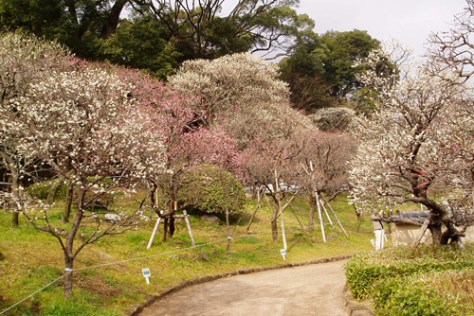
Plum Trees in Atami City.

fuji-miho

Shizuoka is also famous for its ornages!
This picture was taken from Miho, Shimizu Ku, Shizuoak City, a place which is considered as “one of the best three Mount Fuji Viewspots in Japan”!
—————————
April 21st, 2009
bento-09-04-21a

For today’s lunch box, the Missus decided to make it very “traditional”!

bento-09-04-21b

Even the lunch box was tradional lacquerware!
bento-09-04-21c

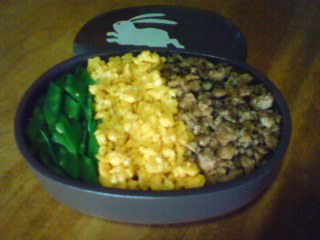
The three-coloured style bento is a classic here:
The green colour is achieved with boiled flat ingenmame/green string beans cut at a slant and small enough to form a “bed of green”.
The yellow part is iri-tamago, a form of sweet Japanese scrambled eggs.
As for the brown part, it is made up of tori-soboro. Minced chicken was first seasoned, including black sesame seeds, and then fried as to form small “clumps” and then laid on top of the rice, which had been steamed with a seasoning (the Missus wouldn’t tell me what!)
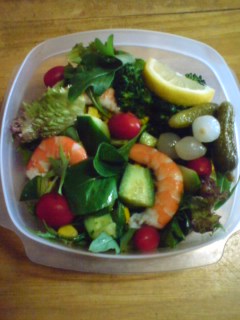
bento-09-04-21d

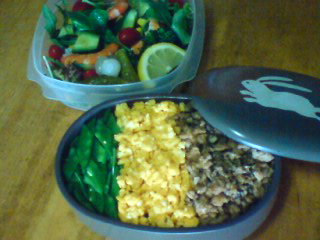
As for the salad, the Missus made a bed of mixed herbs and added cut cucumber, Ameera Rubbins mini tomatoes, corn, boiled broccoli, boiled shrimps and French pickled cucumbers and mini onions.

I might ask for that again soon!

—————————-
April 2oth, 2009

bento-09-04-19a

The Missus has this peculiar habit of teasing me (very) early in the morning by asking me:
-How would you like your rice for your bento today?
-Well,…
-You should have answered at once, since you know I was going to cook rice since last night!
-???…

Then, as I was finishing my coffee:
-How big do you want it?
-Just the usual!
-All right,…

I should have known better, because she did come with a big one!
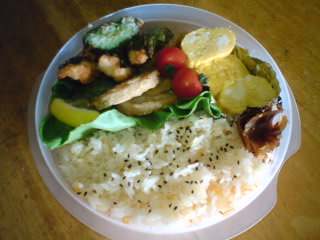
bento-09-04-19b

She steamed the rice with shredded carrots and served it with black sesame seeds and some home-made sweet ginger pickles.
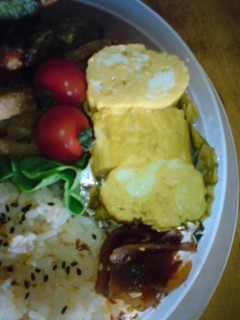
bento-09-04-19c

She has just bought a new large tamagoyaki fry pan, so I know she will cook my favourite bento item for some time. A couple of Shizuoka-grown mini-tomatoes were added.

bento-09-04-19d

Then she came up with deep-fried renkon/lotus roots, Chicken sasami/breast fillets deep-fried with shiso/perilla leaves dry seaweed.. Some lettuce and lemon finished the lot.

bento-09-04-19e

As for the salad (-eat it before the rice!, she ordered):
On lettuce leaves, cucumber, boiled brocoli, Japanese processed cheees, walnuts and strawberries!
—————–
April 16th, 2009
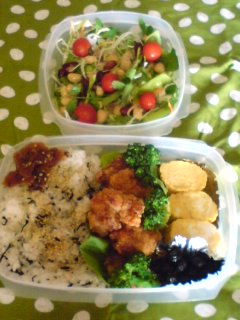
bento-09-04-16-a

Today Missus was still recovering from a bad fit of viral flu and it was her day-off from work. Moreover I was having a busy day. We agreed that a lunch box was on order, the more for it that it would become part of the Missus’ lunc, too!

bento-09-04-16-b

I hadn’t been eating much for the last three day, so she made quite a big bento!

bento-09-04-16-c1

The “main dish” consisted of some of my favourites: Deep-fried garlic chicken (thigh parts off the bone) and tamagoyaki/Japanese omelette with boild brocoli, lettuce and home-stewed sweet blak beans.

bento-09-04-16-d

The steamed rice had been mixed with “hijiki/sweet seawedd” after cooking and sprinkled with plenty of white sesame seeds. The Missus added some pickled ginger as well.

bento-09-04-16-e

As for the salad, on a bed of chopped veg, canned beans, mini tomatoes, fresh cress and boiled pois gourmands/green peas in their pod.

It did take me some time to eat it all, but who am I to complain! LOL
———————–
April 13th, 2009

bento-09-04-13a

Today’s bento was “small” and could become a good suggestion for a small appetite!
The reason? The last few days I overate and overdrank myself and had been physically and mentally (that happens) very busy. When I woke up 5:30 the body just screamed a loud and painful “NO!”. This is a very rare occurrence and I will spare you form the details!

bento-09-04-13b

Only two (fairly big) nigiri/rice balls of freshly steamed rice and shopped fresh ginger covered with white sesame seeds.
Very tasty, actually!

bento-09-04-13c

The very simple salad consisted of my comfort food, tamagoyaki/Japanese omelette, Mini tomatoes, pois gourmands/wholly edible green peas, cress and pepper ham on a bed of chopped veg.

Large enough, I can guarantee you!

——————–
April 7th, 2009

bento-09-04-07a

Yesterday’s bento was a simple sandwich pack as I wa too busy to eat a proper bento in tranquility.
Today’s lunch was definitely of the traditional kind:
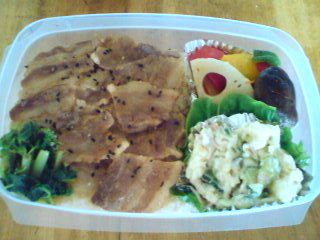
bento-09-04-07c

I’ll talk about the rice later.
The meat are thin slices of pork oven-cooked in sauce and sprinkled with black sesame seeds. The sauce was typical Japanese soy based and spicy.
The “greens” you can see in the left bottom corner are actually wasabi pickles.
I bought some fresh wasabi leaves and flowers last night and the Missus pickled them immediately. They have a nice hot spicy taste, but not as strong as the root. Scooped little by little with rice,they are simply succulent.
The vegetables were cooked in the oven (3 minutes): renkon (lotus roots, which are just in season), shiitake, three color pimentoes.
The salad is a potato-pepper ham-cucumber-capers combination with a lettuce leaf.

bento-09-04-07d

The rice was “shooga maze gohan”/rice steamed with shredded fresh ginger (which are just appearing on the markets!) and later mixed with white sesame seeds. I must admit it is particulary delicious, and I often request it in season!

bento-09-04-07b

The extra salad consisted of smoked salmon on a bed of shredded veg and some fresh cress.

No dessert… oh well, the Missus has started that habit of fondling my love handles!
——————–
March 31st, 2009
bento-09-03-31a

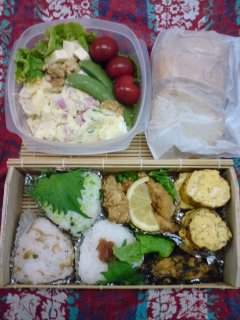
Today saw a rare occurence in that the Missus prepared a double bento for me!
Let me explain: As I have to submit to a camera scan of my stomach (you know, those long thin things they force through your gullet!) I’m not allowed to eat anything after 9:00 p.m.
As I usually have dinner at around 9:30 due to late work hours, the Missus included a small “6:00 p.m. dinner” (I can’t really call it a lunch box! LOL).

bento-09-03-31d

Lunch was served in that interesting box with a bamboo lid I have described before:
Three different “o-nigiri/rice balls”, one with an umeboshi/pickled Japanese plums, another one with Japanese cucumber (both wrapped in fresh shiso/perilla leaves) and the third one with fried “shirasu/Sardine whitebait”.

bento-09-03-31b

Two kinds of deep-fried chicken fillets cuts were provided with some lettuce. One kind was fried with white sesame seeds, the other with bits of shiso/perilla leaves.
The tamagoyaki/Japanese omelette came in a cylindrical shape instead of the usual rectangular one. This done is done by “rolling” it into a sushi roll bamboo sheet just after it has been cooked and kept pressed inside until it has completely cooled down.

bento-09-03-31c

As for dinner I was provided with potato and ham salad to which the Missus added plum tomatoes, cut processed cheese, walnuts, sweet peas in their pod and more lettuce!

I’ll be hungry tonight!
———————–
March 30th, 2009

bento-09-03-30a

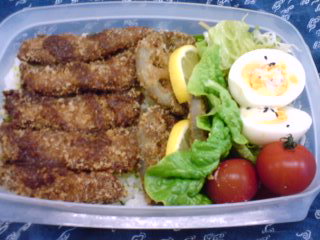
The Missus did not want to take a picture of today’s bento because, as in her own words, it looked too “brown”.
I ignored her protests because bentoes are simply looking brown sometimes,e specially when you include deep-fired items.
bento-09-03-30b

She deep-fired first soft pork strips after dipping thme into a sauce mix of hers and breadcrumbs, and then slices of renkon/fresh and peeled lotus roots in exactly the same way.
bento-09-03-30e

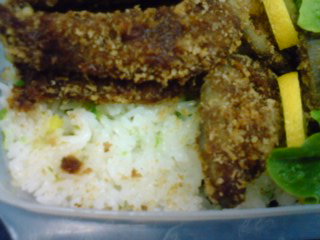
As for the rice it was plain steamed rice with which she later mixed chopped Japanese pivkled cucumbers.
A boiled eggs, plum tomatoes, lettuce and shredded veg completed the lunch.
bento-09-03-30c

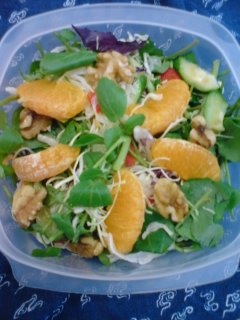
For more salad and dessert, shredded veg, “tankan” oranges from Yakushima island and walnuts!

Simple, tatsy and very satisfying!
————————-
March 24th, 2009

bento-09-03-24a

Our little “differences” of the past two days seem to have spurred the Missus into a creative mood as far as my bento was concerned (Elin and Lojol are going to throw things at me!).
bento-09-03-24b

I will talk about the rice later.
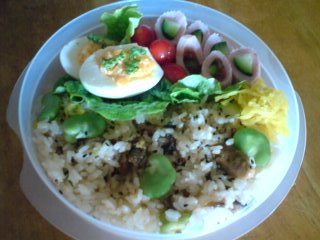
The boiled egg appeared as “mimosa egg” this time. Some lettuce, “ameera rubbins” tomatoes (sweet and small, only grown in our Prefecture) and some shredded “takuan”/yellow pickled daikon.

bento-09-03-24e

The pinky things are “Chikuwa/Fish paste steamed around a stick to give them their tube shape”.
These particular ones are called “Sakura Chikuwa” because of their pink colour.
The Missus pushed some cut cucumber into two four cut pieces of them. As for the other two she pushed in a combination of shiso leaves, cucumber stick and “umeboshi/pickled Japanese plum” flesh. Similar to some sushi maki!

bento-09-03-24d1

Now for the rice.
The Missus steamed the rice with a little dash of dashi stock, soy sauce and sake. She placed the contents of a tin of smoked oysters in oil on top before closing the lid and steaming the whole. Once ready, she mixed the contents inside the pan while they were hot (important!). She later added boiled broad beans/”sora mame”, Chinese pickled veg and black seame seeds.
bento-09-03-24c

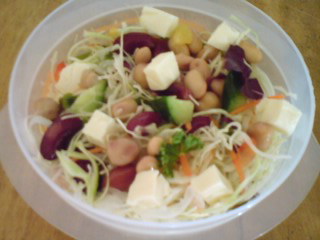
As for the salad (to which I added dressing stored at work): on a bed of shredded veg, cheese, salad beans and more cut veg.

Took a big bottle of liquid yogurt for dessert.
Might as well as have an argument every Sunday evening!
———————-
March 23rd, 2009

bento-09-03-23a

Today’s bento had a little “history” behind it.
To tell the truth, the Missus had gone to bed in a real bad temper the night before (why? Don’t ask me,…). So, Missus or not, I still need my bento (mind you, I could always buy it, but that would make things even worse!). So I cooked the rice myself. That seemed to appease the Missus (after all, if a man starts cooking, a Japanese wife feels pretty useless,…), and when I realized I hadn’t put enough water and came up with rice a bit too hard, she took over.
-“Don’t worry, I’ll fix it. I’ll make Oomuraisu/Omellette Rice!”
I’m not one to argue in such moments!
bento-09-03-23b

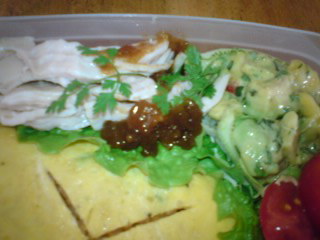
As for the garnish, she put some salad I had made the night before consisting of cut avocado, mango and pieces of broad beans (boiled) with a mixture of mayonnaise, Thai spicy sweet sauce, basil, parsley and Italian parsley on small leaves of chickory/endive. She added home-made chicken ham (chicken breast first boiled, then marinated overnight) with English chutney pickles, lettuce, tomatoes and walnuts.

bento-09-03-23c

She fried the rice with some bits of chicken ham, veg, ketchup and spice before envelopping it into a thin omelette!
With yogurt for dessert, it made for a big hearty meal!
——————————
March 18th, 2009

bento-09-03-18a

Today Wednesday is not a usual “Bento Day”, but sudden commitments making it impossible to come home for lunch, I asked the Missus to prepare a bento. She did not seem to mind and actually appeared content to enjoy a day (morning) in tranquility!
bento-09-03-18b

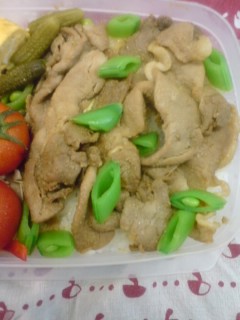
Becsue the rice was plain steamed rice, she fried plenty of thin soft pork slices in sauce and added some boiled and cut salad green pea pods.

bento-09-03-18c1

As for the garnish, on top of a bed of shredded vegetables (you cannot really see them), she placed cornichons, large plum tomatoes, boiled broccoli, tamagoyaki and Na no Hana/Rape flowers and boiled shirasu salad sprinkled with black sesame seeds.
“Shirasu” is a local Shizuoka fish, a kind of sardine consumed vey young.
bento-09-03-18d

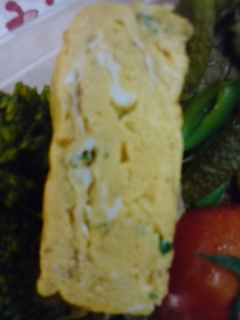
Today’ tamagoyaki/Japanese Omelette contained shredded cheese and parsley!

bento-09-03-18ebento-09-03-18f

In place of dessert (I still have Yakushima oranges at the office!) she included some “mozuku-su/もずく酢”, seaweed preserved in sweet vinegar for a healthy additive!

A healthy, fullfilling bento!
———————
bento-09-03-16a1

After that long trip in Yakushima ( 2 more postings to come!), the Missus concocted a “simple” traditional bento keeping the calories in mind!

bento-09-03-16c1

Therefore the three nigiri/rice balls were of medium size, one with umeboshi/Japanese pickled plum and a little black sesame, and two with fried salted salmon. She added a few cornichons.

bento-09-03-16b1

As for the “garnish”, she included boiled brocoli, fresh pimento, a plum tomato, and her excellent Tamagoyaki/Japanese Omelette. She had added sweet pork miso to the eggs, thus creating a new and interesting taste.

No need for dessert!

Please check the new postings at:
sake, shochu and sushi

—————————————-

March 2nd, 2009

bento-09-03-02a1

Today’s bento could have been called “leftovers bento”!
And for once I did participate to its making, unwittingly I must admit!

bento-09-03-02b

First the rice part consisted of rice steamed with curry powder, spices and a little olive oil. The Missus mixed it with some of the fine ratatouille salad I had made for last night dinner! Quite tasty, I must admit! LOL

As for the garnish, she provided me with a boiled egg, plum tomato, cornichons, trevise, lettuce, and water cress.

bento-09-03-02c

The meat part was a bit of an innovation. The Missus thawed pieces of frozen tuna, seasoned them a little first, then fried them on one side, turned them over and while they cooked she placed cheese on one and spiced veg tomato sauce on another one. Once cooked they formed an interesting “sandwich”!
No dessert this time. I expect a big dinner back home tonight! LOL
————————
February 25th, 2009

bento-09-02-2a

Three bento in a row! Some people are going to get fed up with reading these articles! LOL
The reason was that we saw heavy rainfor the third day, and I did not feel like having to come back home and travel back to work four times in one of those rancid-smelling buses!
Just to tell you how inclement the weather is, I actually ran out of umbrellas at home and had found myself carrying no less than three of them back home fromthe office last night!
bento-09-02-25b

So I put the poor Missus at work. Actually I suspect she was not so unhappy about that, what with being given an easier day at home before going to work in the afternoon!
She checked what was in the fridge this morning and came up with a real sandwich bento (yesterday’s was an open-style one!). The meal still qualified as a packed lunch as the sandwich was wrapped into sandwich paper and a box of salad was added. LOL
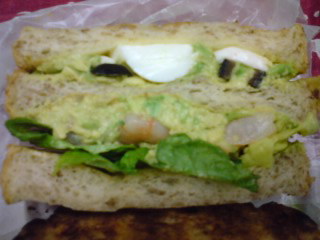
bento-09-02-25c

She came up with this hearty double-decker fit for a big (I’m big only around the waist! ) man’s appetite (mind you, some youngsters might be left still hungry after that!):
On the first slice of toasted bread she lay some lettuce, then a thick layer of avocado salad paste she made when she discovered the one left in the fridge. She added some small shrimps (found frozen in the fridge) she had fried beforehand. On the second layer more avocado paste with sliced boiled egg and black olives.
She closed the lot with one more slice of bread toasted with cheese (the other two slices had been toasted as they were).

As for the salad box, boiled broccoli and plum tomatoes on a bed of Trevise lettuce.

I’m not going to complain!

———————
February 24th, 2009
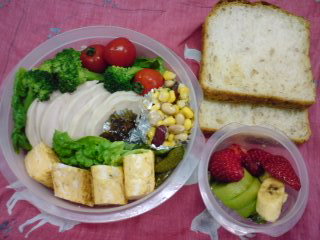
bento-09-02-24a

Yesterday’s bento having been a solid one, the Missus kept the calories in mind when she prepared today’s bento this morning while I was having my morning (Japanese) bath!
The bread had been bought at the local supermarket (soft English style with “seeds” ) and toasted.
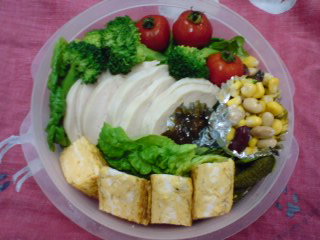
bento-09-02-24b

As for the main dish:
Beans and corn salad like yesterday.
Boiled broccoli, plum tomatoes and lettuce (hand-broken).
Home-made chciken ham slices, a specialty of the Missus) with English sweet pickles.
French pickles
Tamagoyaki/Japanese omelette. Since the Missus made the make to say she wanted to experiment, I ask for it every time!

For dessert, a mixture of fresh strawberries, kiwi and mini banana.

Still got full!LOL
—————————–
February, 23rd, 2009

bento-09-02-23a

Today’s lunch box was devised for a big appetite!
Just in case you make a mistake, the banana featured in the picture is a mini banana from Ecuador, not a full-sized one!

bento-09-02-23c

As for the rice part, the Missus first made fairly large nigiri/rice balls with steamed rice mixed with Japanese cucumber pickles and black sesame seeds. She them wrapped them into thin pork slices, brushed the pork with a tare/sauce she had prepared beforehand and fried the the balls whole. She let them cool down before wrapping them in a shiso/perilla leaf. She provided me with some French pickles for the final touch.

bento-09-02-23b

I needed a fork to eat the salad as chopsticks would have taken a bit too long (or was it planned?): on a bed of finely chopped vegetables (mainly cabbage) she placed boiled broccoli (flowers and stems), lettuce (hand-broken, not cut) beans and corn mix, Ameera Rubbins mini tomatoes (very sweet, grown exclusively in Shizuoka), a half half-boiled egg sprinkled with black sesame and black olives. Made for some appetizing colours, I must admit!

A very satisfying bento, I agree!
————————
February 17th, 2009

bento-09-02-17a

With temperatures falling back to normal in somewhat (comparatively) cold weather, The Missus kept to the classic kind of bento this morning.
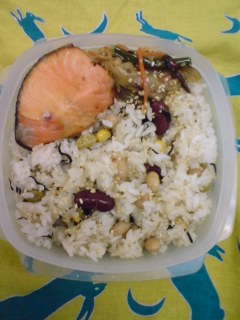
bento-09-02-17b

The staple part was rice steamed with beans (including the beans juice/soup) and hijiki/sweet seaweed, to which she added fried “shiozake/salmon preserved in salt and Chinese pickles.

bento-09-02-17c

As for the accompaniment, it was mixture of European and Asian fare:
From left to right: Aubergines/egg plants and pimento fried in Chinese spicy sauce with white sesame seeds, “tamagoyaki/Japanese omelette containing cheese and tobikko/flying fish roe (quite tasty!), small fried spicy chorizo sausages, mini tomatoes, boiled Romanesco broccoli and cress (all vegetables grown in Shizuoka).

A hearty and tasty lunch (I will have to an official compliment one day! LOL)
————————
February 10th, 2009

bento-09-02-10a

Today’s bento was definitely on the classic side!

bento-09-02-10b

Four big nigiri/rice balls, two them mixed with chopped Japanese-style oickles, the other two for once wrapped inside a band of nori/dry seaweed comtainig each a sweet-style umeboshi/Japanese pickled plum.
Tamagoyaki/Japanese omelette, chicken dango/meat balls (explained later), cress and mini-tomatoes and home-made pickled daikon.
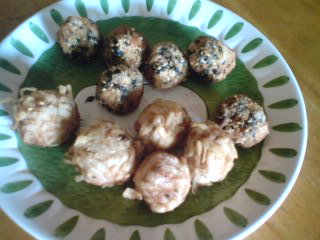
bento-09-02-10c

As for the chicken meatballs, they came in two varieties:
-minced chicken mixed with salt, pepper, spices, Japanese sake and chopped leeks, the whole rolled into black sesame seeds.
-Minced chicken mixed salt, pepper, different spices, Japanese sake, the whole rolled in chopped raw wantan skins.
Both times were then rolled into cornstarch and deep-fried.

bento-09-02-10d

As for the salad, it included two kinds of broccoli:

bento-09-02-10e

That picture is for Corre who lives in Japan, but does not believe such vegetables are grown in Japan! LOL.
Green Romanesco Broccoli and Violet Broccoli, which turn blue upon being boiled!
On a bed of chopped greens.

Quite a big bento, actually!
——————
February 9th, 2009

bento-09-02-09a

The Missus might have got wind of (I’m sure she hasn’t, LOL) my proposal to Foodbuzz for a Budget Lunch idea as today’s bento was definitely on the budget line!

Both of us had got up late, and the Missus was not in the mood to make anything elaborate. I just told her that sandwiches would be fine.
I’m not one to complain, what with my bulging waist!

bento-09-02-09c

Mind you, when I opened the sandwich package, I noticed that my (?) half had added a little twist. She devised the sandwich as a “double-decker” with three pieces of toasted bread.
The first deck consisted of a layer of guacomole-style avocado paste with tobikko/flying fish roe, lettuce, and plenty of smoked salmon.
The second deck was filled with egg salad. It made for a hearty sandwich.

bento-09-02-09b

As for my dose of Vitamin C, I was served the usual bed of chopped greens with boiled violet broccoli (grown in Shizuoka), small pieces of violet lettuce (same grower as for the broccoli), cress, mini-tomatoes, and strawberries for dessert.

I was still hungry past 5 p.m. Oh, well…
————————————-
February 3rd, 2009
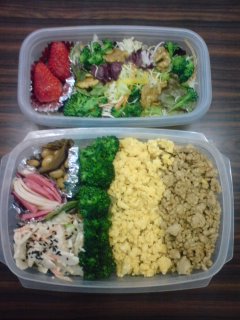
bento-09-02-03a

Today’s Bento could called “traditional” or “claasic”. At least in its concept and presentation, but with a little twist!

bento-09-02-03b

The rice is concealed by a topping made of Japanese-style scrambled eggs and a fried mixture of minced chicken and tofu (combined as a paste first, then fried). On the left, a trio of accompaniments: renkon (lotus roots) and tea-smoked chicken ham (bottom), home-made daikon pickles (one plain, the other marinated in umezu/Japanese plum vinegar-middle), and stewed soy bean salad by the Missus’ mother.
The rice dish and the garnish are divided with a line of broiled broccoli.
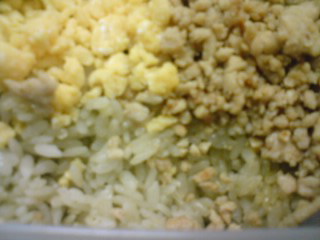
bento-09-02-03c

The little twist was the Missus steamed the rice with green tea powder. If you want to try it (very tasty), sprinkle the rice (in water) with plenty of green tea powder before steaming. Mix the lot only once the rice is properly cooked.

bento-09-02-03d

As for the salad, simple affair: On a bed of shredded greens more greens, walnuts and Shizuoka-grown strawberries for dessert1

Had a little problem standing up after that!
————————
February 2nd, 2009

bento-09-02-02-a

The days are still (relatively at 11 degrees!) cold in Shizuoka City, and the Missus thought of providing me with the right kind of needed calories.

bento-09-02-02-b

Therefore, I was offered 4 fairly large “nigiri/rice balls” containing “hijiki/sweet seaweed” topped with “soft” umeboshi/Japanese pickled plums, the whole wrapped into “shiso/perilla” leaves.
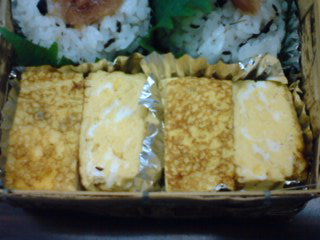
bento-09-02-02-c

The plain “tamagoyaki/Japanese Omlelette” arrangement drew my attention as she alternated them upwards and sideways.
My compliment only drew a hiding (-“I always present them so!”-“Sorry, girl! I was too hungry to notice it before!”) from my (?) half. LOL
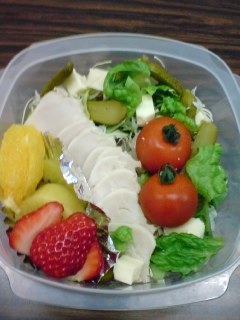
bento-09-02-02-d

As for the “accompaniment”, I was served, on a bed of chopped greens, home-made “chicken ham” later smoked with tea leaves. I refrained from complimenting as I had my dose of hiding for the day. Then some lettuce (not cut, but hand-shred), cornichons, plum tomatoes and fruit for dessert: Shizuoka-grown orange, golden kiwi and strawberries.

If I can’t compliment, I can’t complain, either! LOL
——————————
January 27th, 2009
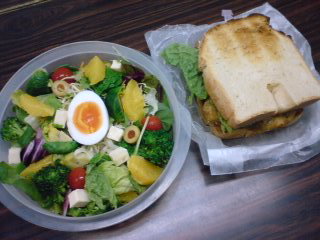
bento-09-01-27a

For once, my Tuesday’s Sandwich Bento featured a real sandwich!
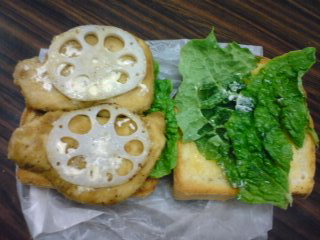
bento-09-01-27c

The Missus had baked new bread last night. She toasted two slices of them and inserted in between lettuce, fried slices of tuna she had covered with deep-fry powder mix and cornstarch seasoned with pepper and a little salt, and two slices of “renkon/lotus roots” she had fried to a crisp.
Afairly big sandwich that took me some time to finish!

bento-09-01-27b

The “salad” had enough vitamin C and iron to lastme a week:
on a bed of shredded greens, a half egg, brocoli, mini tomatoes, Brussels sprouts, cheese, olives, and orange (i must have missed somthing!) on which I poured dressing from the fridge!
Incidentally I keep not only chopsticks at work, but also a fork, spoon and a knife! LOL
——————————-
January 26th, 2009
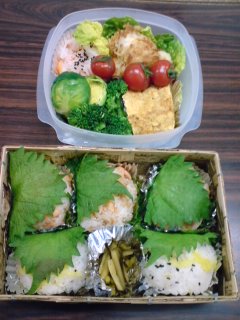
bento-09-27a

The weather has unseasonably cold these in Shizuoka. The water outside even froze outside during the night, in a region where it prctically never snows!
The Missus felt I was in the need for a few more body-warming calories!
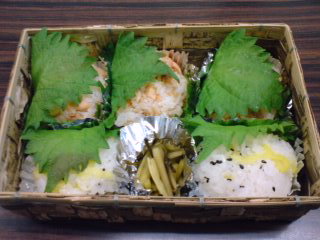
bento-09-27b

Consequently she prepared no less than five “nigiri/rice balls”, three containing fried salmon and two mixed with “takuan/pickled daikon” and black sesame. She wrapped each in a large “shiso/perilla” leaf and added some pickled wasabi stems.

bento-09-27c

As for the “main dish”, she made some fresh “tamagoyaki/Japanese omelette”, fried a few “ika shumai/cutttle fish dumpling” over small lettuce leaves, boild brocli and Brussels sprouts (to which I added dressing at work), Home-made shredded daikon and carrots sweet pickles and a few mini-tomatoes.

Mind you, I still felt hungry in late afternoon!
——————
January, 20th, 2009

bento-09-20a

Today was Tuesday, the day after Monday, both days when I can expect a bento by the Missus!
She had quite a battle this morning as things seem to drop or fly all the time!
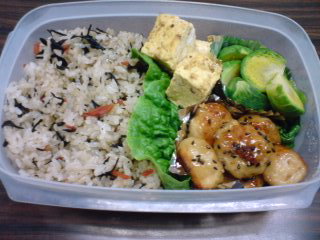
bento-09-20b

Now, for the main dish, she steamed rice with hijiki/sweet seaweed and Kyo-ninjin/Kyoto-style deep red carrot and a couple of secrets she would not reveal.
She prepared tamagoyaki/Japanese omelette and chicken balls she fried with a seet and sour sauce containing thinly sliced kinkan/kumquats (in season right now/which reminds me I marinated some in vodka last year!) and served with black sesame. Plenty of lettuce and boiled Brussels sprouts.

bento-09-20c

As for the salad and dessert she included some yellow and violet yams/sweet potatoes salad, a plum tomato, boiled broccoli, shredded vegetables and cress, and finally a couple of “kinkan amani” (“kinkan” for kumquat, “ama” for sweet, “ni” for simmer) prepared by Lojol‘s wife!

Before I left she enquired if I was going to drink tonight (I didn’t last night). When I asked why, she replied she would have to take it in account before preparing dinner.
Stupid question!
————————-
January 19th, 2009

bento-09-19a

The Missus has decided to expand here bento repertoire and to experiment with design and ingredients!
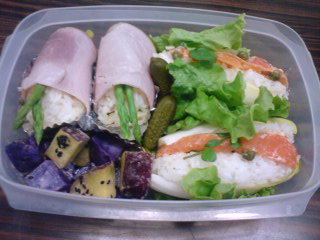
bento-09-19b

She devised two types of “nigiri/rice balls”:

bento-09-19e

Two were wrapped in a thin ham with a pair of mini-asparaguses. I ate them wrapped again inside lettuce provided together in the box.
As for the rice, it had been mixed withn white sesame.

bento-09-19d1

The other two “sandwiched” a slice of seasoned smoked salmon and were wrapped again between two chickory/endive leaves and topped with cresson and capers.

I was provided with some cornichons and yam/sweet potato (yellow and violet) salad with black sesame in lieu of dessrt.

bento-09-19c

As for the salad dish, it contained a boiled half egg, boiled Brussels sprouts, brocoli and broad beans, cut plum tomatoes on a bed of shredded vegetables, to which I added dressing I keep in the fridge at work!
——————————-
January 13th, 2009

bento-09-01-13a2

Yesterday was a National Holiday in Japan, and instead of going to work with a bento, I ended up eating and drinking too much with the Missus at a friend’s home!
I requested for a light bento and was offered the following:
bento-09-01-13b1

Vegetable quiche leftovers (I cooked it myself yesterday). and plenty o vegetables including yellow cauliflower locally grown, lettuce (local,too), midi tomatoes, cornichons and walnuts.

bento-09-01-13c1

And the last (toasted) slice of home-baked bread (containing walnuts)!
Simple and ample!
—————————
January 6th, 2009

bento-2009-01-06b

Yesterday’s bento did not qualify as this year’s first as the Missus refused to let me take a picture of the sandwich she had made!
Today, she came back with a vengeance, concocting a lunch fit for a man’s (or big teenager’s) solid appetite!

bento-2009-01-06a

She also used a wooden box with a bamboo “curtain” lid for the “maki”/rolls.

bento-2009-01-06d

I can already hear Rick moaning at the look of those rolls! LOL
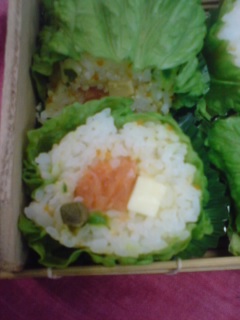
bento-2009-01-06e

The rolls were wrapped in lettuce instead of “nori”/dry seaweed.
The “shari”/sushi rice was mixed with “tobikko”/flying fish roe.
The filling consisted of smoked slamon and Japanese processed cheese with capers for decoration. These rolls were definitely American-sized!

bento-2009-01-06c

As for the accompaniment the Missus worked hard (she actually threw me out of the kitchen!):
Boiled egg seasoned by leaving it overnight in the coca cola sauce of simmered pork she had made the day before, boiled Brussels sprouts, black olives, cornichons, carrot sticks, chickory/endive leaves, celery sticks (with leaves), Ameera Rubbins tomatoes (as sweet as strawberries!), and mayonnaise/black olives dip.

For dessert, winter mandarine (“mikan”) from her family’s garden!
Pretty full for the whole day, I can guarantee you!

RECOMMENDED RELATED SITES:
Warren Bobrow, Bread + Butter, Zoy Zhang, Hungry Neko, Think Twice, Frank Fariello, Mangantayon, Hapabento, Elinluv Tidbit Corner, Tokyo Terrace, Maison de Christina, Chrys Niles,Lexi, Culinary Musings

Please check the new postings at:
sake, shochu and sushi

—————————————-
日本語のブログ
—————————————-

Vegetables Facts and Tips 2: Tomatoes (amended & expanded)

tomato1

SYNOPSIS:

I started this series (14 articles so far) quite some time ago to help my vegan and vegetarian (I’m not!) friends and omnivores as well because of the obvious health benefits.
Since then, I’ve learned and discovered a lot more information that could not ignored.
Therefore I plan to amend and expand all 14 former articles before I can continue introducing a lot more vegetables!
Incidentally、 nothing, pictures included, is copyrighted in my food blogs, so please feel free to use anything!
1) POTATOES

1) Potatoes

Tomatoes have laid on our tables for so long that we have almost forgotten they came from South America. The Spanish and the Portuguese ignored them. The British studied them. The French brought them to Europe under the name of “Love Apple”, a name still existing in Italy. So it is said,…

tomato-fruit
“Fruit Tomatoes”

This summer-maturing fruit can be bought all year round with the interesting consequence that tomatoes ripened in winter are sweeter than their summer cousins as they contain less water, earning themselves the name of “fruit tomatoes”, a great oxymoron, if there was one!

Thanks to consumers’ insatiable appetite for novelty, tomatoes are grown into all kinds of size, shape and colour.
Just to cite a few, the following are the most popular in Japan:

tomato-momotaro
“Momotaro Tomatoes”

-Momotaro (after the Japanese “Peach Boy” tale), which becomes “Fruit tomato” in winter.


“Momotaro Tomato/Gold Variety”

tomato-midi
“Midi Tomatoes”

-Midi Tomato (sometimes called “Plum tomatoes”), a larger cousin of the “Mini tomato”, is very sweet and very high in nutrients. Its aroma has a particularly long life.

tomato-italian
“Italian tomatoes”

-Italian Tomato: mainly used for cooking, it may often come in a comparatively elongated shape.
It contains less water and reveals both large amounts of sweetness and acidity, making it very conducive to long cooking with the extra bonus of actually improving in taste upon heating.


“Sicilian Rouge”,both for cookingand salads.

tomato-mini
“Mini Tomatoes”

-Mini Tomato: one-bite sized, it is also called “Petit tomato”. It contains twice as many Vitamin C, and it is very rich in beneficient ingredients.

tomato-yellow-mini
“Yellow Mini Tomatoes”

-Yellow Mini Tomato: characteristic for a lot of sweetness and very little acidity. Very handy for children who dislike vegetables!

rubbins
“Ameera Rubbins”

-Ameera Rubbins: with its larger Ammeera tomato, it is grown exclusively (until now, but they are bound to expand beyond our borders!) in Shizuoka Prefecture. They are the sweetest of all, tasting like strawberries, and very firm, making them ideal for decoration, notwithstanding their nutrient value. The smallest variety called “Rubbins” is grown by only two farmers near Iwata City!

tomato-micromini
“Micro Mini Tomatoes”

-Micro Mini Tomatoes: increasingly popular, they are only 8~10 mm and look somewhat like redcurrants. Very tasty with a beautiful acidity, the Japanese use them not only in salads, but also as the final touch on a plate of sashimi!


“Fruit Yellow”, a small variety popular with kids!


“Fruit Gold”, sweet and rich in vitamins!


“Nitakikoma”, a Japanewse variety which does not break away even after long cooking.


“Green Zebra”, Japanese name for green heirloom tomato

AGRI-TOMATO1
Heirloom Tomatoes grown in Shizuoka City!


“Green”, stays green when ripe


“Cindy Sweet”, well-balanced and sweet


“Aiko”, Japanese variety. Exists both in yellow and red. Eaten cooked or raw.


“Tomato Berry”, small, sweet and well-balanced.


“Campari”, grown in Hokkaido, Japan, originally from Holland. Fruity!


“Piccola Rouge”, japanese version of an Italian Mini-tomato variety.


“First”. Appears in Winter. Grown in Iwata City, too! Beautil pointed shape. Juicy!


“Piccola Canaria”, an orange variety of the Piccola.


“Black”, as it is called!


“Kisu”. Beautiful colour and very sweet!


“Zeitaku Tomato”, meaning “Extravagant Tomato” in Jpaanese! Fruty, juicy and sweet!


“Guppi”, a tasty tomato apt for cooking.


“Carrot Tomato”. High in carotens, taste similar to carrot. Appreciated raw.


“Orange Banana” from Russia! Very sweet!


“Evergreen”. Versatile, can be eaten raw, cooked or pickled.


“Tokutani Tomato”. Fruit tomato, especially grown in Shikoku Island. Brand Tomato. Very expensive!

FACTS:

-Season: All year round
-Main elements: Licopin (Ricopin), Vitamin A, Beta, C, B1, B2, B6, Potassium, Pectin, Luchin (Ruchin), Maggnesium.
Licopin is a carotene variety particularly beneficial in fights against allergies and ageing. The Potassium and Vitamin C and Pectin help control cholesterol in blood.
Luchin reinforces capillary veins and arteries.
Recent researches in Germany and China have proven that tomatoes help control high blood pressure.

HEALTH FACTS:

-Combined with Potatoes, or Broccoli, or garlic, or onion, helps combat ageing.
-Combined with cabbage, or chilies, or spinach, helps combat cancer and helps blood flow.
-Combined with lemon, or cauliflower, or pimentoes, or parsley, helps lower blood pressure and improve blood flow.
-Combined with vinegar, or oranges, or apples, or strawberries, helps recovery from illness and injury, helps combat stiff shoulder.

Who said that the Italians look healthier than everybody else? LOL

TIPS:

-Choose tomatoes with a deep colour and healthy strong skin!
-Preservation: before storing them into the vegetable compartment of your fridge, wrap themin newspaper or put them inside a vinyl bag, or even better, inside a rigid plastic sealed box.
-Peeling: better than boiling water, direct contact with a flame! Make a very shallow cut near the stem area, firmly stick a fork or thin skewer into the stem area, hold the tomato directly over the gas flame for a few seconds, then plunge it into cold water. Skin should come off very easily.

RECOMMENDED RELATED SITES
Not-Just-Recipes, Bengal cuisine, Cooking Vegetarian, Frank Fariello, Gluten-free Vegan Family, Meatless MamaFrank Fariello, , Warren Bobrow

Please check the new postings at:
sake, shochu and sushi, Le Petit Cuisinier, Vegan Epicurean, Miss V’s Vegan Cookbook

—————————————-
日本語のブログ
—————————————-

Tofu Chawan Mushi: Japanese Steamed Tofu Flan

Here is another simple tofu recipe you can either serve hot (great in winter) or chilled, although I would go for the former.
Chawan Mushi/Chyawanmushi/茶碗蒸し is a Japanese way to steam a flan/pudding that is not sweet. It makes for great appetizers or full meals if served aplenty.
Great for kids and waistline-conscious people!

Tofu Chawan Mushi!

INGREDIENTS: For 4 ramequins/cups

-Tofu: 1 cup:200 cc/ml (untreated, light type)
-Eggs: 3 medium-sized ones
-Egg yolk: 1
-Dashi (fish or seaweed): 1/2 cup/100cc/ml
-Salt: 1/2 teaspoon
-Soy sauce: 1 teaspoon
-Mirin/sweet sake: 2 teaspoons
-Chicken soup stock: 50 cc/ml
-Water or dashi: 150 cc/ml
-Cornstarch: 1/2 tablespoon
-Water: 1 tablespoon
-Grated fresh ginger (or yuzu kosho): enough for decoration and taste

RECIPE:

In a bowl beat the eggs and egg yolk. Add tofu, dashi, salt, soy sauce and mirin. Mix well with an electric whisker.
Pass through a thin sieve/chinois.
Pour mixture inside ramequins/cups.

You can either steam it in a steamer or cook in a bain-marie.
Or proceed as shown in picture above.
Oncethe water has ben brought to boil, switch down heat to low and steam for 12~15 minutes.

While you are steamig the tofu chawan prepare the topping sauce.
In a pan pour the soup stock and water/dashi.
Bring to boil.
Mix cornstarch and water, and add it little by little to soup until you have reache da satisfying consistency.

Check if the tofu chawan mushi is well cooked.
Pour sauce over each cup.
Serve with a little lump of grated fresh ginger.
Serving with chopped thin leeks also makes for good combination in looks and taste.
One can also season the sauce according to one’s taste and priorities!

RECOMMENDED RELATED SITES:
Bread + Butter, Comestilblog, Greedy Girl, Bouchon For 2, Zoy Zhang, Hungry Neko, Mangantayon, Elinluv Tidbit Corner, Maison de Christina, Chrys Niles, Lexi, Culinary Musings, Eats and Everything, Bite Me New England, Heather Sweet, Warren Bobrow, 5 Star Foodie, Frank Fariello, Oyster Culture, Ramendo, Alchemist Chef, Ochikeron, Mrs. Lavendula, The Gipsy Chef

Please check the new postings at:
sake, shochu and sushi

—————————————-
日本語のブログ
—————————————-

Vegetables Facts and Tips 1: Potatoes (amended & expanded)

potatoes

I started this series (14 articles so far) quite some time ago to help my vegan and vegetarian (I’m not!) friends and omnivores as well because of the obvious health benefits.
Since then, I’ve learned and discovered a lot more information that could not ignored.
Therefore I plan to amend and expand all 14 former articles before I can continue introducing a lot more vegetables!
Incidentally、 nothing, pictures included, is copyrighted in my food blogs, so please feel free to use anything!

POTATOES

danshaku-potato
“Danshaku”

Potatoes were first introduced to Japan in 1910 by Baron Kawata from Great Britain/Ireland giving the name of “Danshaku/Baron” to the most commonly used potato in Japan, especially in croquettes and salads.

The biggest potato exporters to Japan are China and India, although more and more grown locally.
Over the years Japanese farmers have greatly expanded the number of varieties, and it has became an embarrassment of choices.
Below are varieties found in Japnese supermarkets:

kitaakari-potato
“Kita Akari” used for mashed potatoes and croquettes.

mayqueen-potato
“May Queen” used in stews.

toyoshiro-potato
“Toyoshishiro” used for fried potatoes.

redandespotato
“Red Andes” used for croquettes and Pot au feu.

incanomezame-potato
“Inca No Mezame” used for stews.


“Inca No Hitomi”. Also called “Inca no Mezame”, they are popular for their nutty taste.


“Hokkai Kogane”. Grown mainly in Hokkaido Island, they have the particularity to oxydize and change colour a lot later than other potatoes.


“Tokachi Kogane”. Can be stocked and preserved a long time. Make for great fried potato chips!


“Mathilda”. Fine-grained and usually vey regular-shaped, theycan be presented whole for good effect.


“Touya”. Very good for long cooking as they don’t break away easily.


“Star Ruby”. A relatively new viety very apt for stews.


“Cynthia”. Recently imported vaiety from France. Very fine grain. Does break up even after being cooked long time.


“Kita Murasaki”. Very unusual potato with skin and flesh of the same colour. Better fried than boiled as wate will get couloured.


“Red Moon”. Also called “Red May Queen”, great for stews.

Potatoes are available all year round, but are at their peak from May to July in Japan when new potatoes can be eaten whole!
New potatoes can be found from Februray to June.

FACTS CARD:

-Season: All year round
-76 kcal per 10 g
-Main elements: carbohydrates (high energy), Vitamin C1, B1, B2, B6 (thanks to a large amount of natural starch in potatoes, the vitamin C will resist heating!), Potassium, Magnesium, Iron.
-Preservation: Wrap potatoes inside newspaper and keep them in a dark, well-ventilated place away from the sunlight.

TIPS:

-Choose specimens well-rounded and with healthy skin. Avoid specimens with buds or of greenish colour (risks of diarrhea). Cut out all “dark spots”!
-Preserve them together with apples to prevent buds from coming out!
-To avoid a change of colour, wash potatoes in water after peeling or cutting.
-If you want to keep your potatoes for a while after boiling them, plunge them in (change it as many times as necessary) cold water until completely cooled down. They will not break or crumble when used later.
-After boiling cut potatoes, throw away water and keep heating them until they have lost a great part of their moisture. They will attain a crispy enough nature without resorting to deep-frying!

HEALTH FACTS:

-Combined with kiwi fruit or cucumber, or green tea, or mayonnaise, they help combat cancer, high blood pressure and ageing.
-Combined with Chinese cabbage, or peach, or banana, or honey, they help combat digestive disorders.
-Combined lemon, or strawberries, or spinach, or broccoli, they help combat stress, constipation and cancer.
-Combined with vinegar, or chicken, or bonito (katsuo), or oysters, they provide extra body stamina.

RECOMMENDED RELATED SITES
Not-Just-Recipes, Bengal cuisine, Cooking Vegetarian, Frank Fariello, Gluten-free Vegan Family, Meatless MamaFrank Fariello, , Warren Bobrow

Please check the new postings at:
sake, shochu and sushi, Le Petit Cuisinier, Vegan Epicurean

—————————————-
日本語のブログ
—————————————-

Ramen: Basic Noodles Recipe

After all the recipes on ramen, my new friend, Tracey, justly pointed out that they were all recipes for broths, accompaniments and seasoning, but that the actual basic recipe to make the noodles was missing!

Here is a basic home-made Japanese recipe, a bit similar to udon. Keep inmind it is not suitable for vegans, vegetarians and wheat flour allergics!

INGREDIENTS: For 5 servings
-All-purpose flour:300 g
-Thin flour: 100 g
-Salt: 8g
-Eggs: 2
-Water: 160 ml

RECIPE:

Mix both flour well in a large enough bowl.
Beat the eggs and mix well with water and pour in the center of the flour

Mix wit a spoon by scooping and “cutting” through until you obtain a fairly homogeneous bunch of lumps.

Knead well with your closed fist and putting your weight behind it until you obtain a homogeneous ball.

Wrap inside cellophane paper, then inside a newspaper sheet.
Like for the udon, press it flat with your foot (left or right does not matter!). Once you have flattened it, take it out (with clean hands), shape it into a ball, wrap it again and repeat the same process for at least 10 minutes (a little longer in winter).

Now, you do not leave the dough inside the fridge!
Keep it wrapped in cellophane paper and leave it between two cushions to rest for at least 30 minutes in summer or two hours in winter.

On a working table, sprinkle a little flour.
Press the dough inside the cellophane paper with your foot to spread it.
Take it out the cellophane paper and roll it thin on your working table.
The dought must be thinned down to between 1 and 2 mm.
Bear in mind these are fresh noodles. If they are too thick they will swell to the szie of udon! The thinner, the better!

Sprinkle both sides of the dough sheet with flour (important! otherwise the noodles will stick to eac other).
Fold the sheet as shown in the pic above and cut noodles within 2 mm thickness.
Once cut, separate the noodles with the tip of your fingers over whatever flour is left on the working table. This will further prevent the noodles from sticking to each other!

Bring to boil a large pan filled with plenty of water.
Drop in the noodles (coated with their flour).
The water will come to boil again and the noodles will rise to the surface of the water.
let them cook for 2~3 minutes. Check if they are cooked properly as you would do for pasta.
Drain the noodles and wash them under clear cold running water.
Drain well and keep aside.

Before serving them, plunge them in hot water for a few seconds and place them in a bowl. Pour the broth over them and here you are!

RECOMMENDED RELATED SITES:
Bread + Butter, Comestilblog, Greedy Girl, Bouchon For 2, Zoy Zhang, Hungry Neko, Mangantayon, Elinluv Tidbit Corner, Maison de Christina, Chrys Niles, Lexi, Culinary Musings, Eats and Everything, Bite Me New England, Heather Sweet, Warren Bobrow, 5 Star Foodie, Frank Fariello, Oyster Culture, Ramendo, Alchemist Chef, Ochikeron, Mrs. Lavendula, The Gipsy Chef

Please check the new postings at:
sake, shochu and sushi

—————————————-
日本語のブログ
—————————————-

Today’s Lunch Box/Bento (’09/76)

The Missus had planned a sandwich bento when she belatedly realized she had already prepared for the rice to be steamed when she entered the kitchen!
-“Sorry, very simple bento today!”
-“No worries (no problem!)”!

It was simple, indeed, but as I have to look out for calories (Missus’ orders) these days, It was not an issue. LOL

The rice had been freshly steamed together with a piece of konbu/seaweed. She made four musubi/rice balls that she wrapped in shiso/perilla leaves. Twp were rice mixed with Japanese style cucumber pickles (finely chopped), one was mixed with hijiki/sweet seaweed and the last one was topped with a umeboshi/Japanese pickled plum.

As she can make tamgoyaki/Japanese omelette in a jiffy, she prepared one containing small pieces of cheese and gree/red pimento. Very tasty, actually.

For dessert she included some apple. kiwi fruit and grenadine compote (home-made) from the refrigerator.

As for the salad, she prepared the usual assortment of chopped greens, hand broken lettuce and cabbage, cut plum tomatoes and bits of jiro kaki/squat persimmon to which I added dressing kept in the fridge in my work place.

Can’t complain, can I?

RECOMMENDED RELATED SITES:
Warren Bobrow, Bread + Butter, Zoy Zhang, Hungry Neko, Think Twice, Frank Fariello, Mangantayon, Hapabento, Elinluv Tidbit Corner, Tokyo Terrace, Maison de Christina, Chrys Niles,Lexi, Culinary Musings

Please check the new postings at:
sake, shochu and sushi

—————————————-
日本語のブログ
—————————————-

Japanese Cuisine: Ebi Furai/Deep-fried Prawns

The Japanese love to deep-fry their food to the point that many izakaya propose full deep-fried food sets including vegetables and seafood and the ubiquitous prawns.
The Japanese will usually utilize kuruma ebi/Imperial prawns or Black Tiger variety for the latter.
There is nothing complicated about preparing deep-fried prawns. The key is to use fresh ingredients and serve as soon as ready.

INGREDIENTS:

-Imperial Prawns/Black Tiger Prawns
-Salt and pepper: to taste
-All-purpose flour
-Egg (s)
-Breadcrumbs or panko (the rough style). Real fresh breadcrumbs are the best.
-Tartare sauce for serving. or tare/bulldog sauce and mustard.

RECIPE:

If the prawn is absolutely fresh take the shell off leaving the head and tail on.
If not, tail the head off but leave the tail on for “handling” when eating it.

Take off the innards with a toothpick by inserting under and pulling it out. Don’t worry about “breaking the back” of the prawn. Actually this is the trick which prevents the prawn from from bending upon frying!

Actually, continue with the trick by making a few shallow cuts acrosss the back of the prawn to make sure it will not bend at all!
Sprinkle with salt (a little only!) and pepper to taste.

Roll prawns in flour.

Then in the beaten eggs.

Apply plenty of breadcrumbs/panko all over the prawns, head and tail included. Pat them lightly between you palms to help breadcrumbs to adhere.

Heat the oil at 170 degrees (less is unsuitable, 180 degrees is the very maximum). Drop the prawns gently into the oil head first.
Avoid manipulating them while frying.
Don’t fry too many at one time as the temperature of the oil will suddenly decrease.
Take them out with chopsticks. Place them on a grill for a few seconds to get rid of excess oil.
Serve with sauce and eat at once!

RECOMMENDED RELATED SITES:
Bread + Butter, Comestilblog, Greedy Girl, Bouchon For 2, Zoy Zhang, Hungry Neko, Mangantayon, Elinluv Tidbit Corner, Maison de Christina, Chrys Niles, Lexi, Culinary Musings, Eats and Everything, Bite Me New England, Heather Sweet, Warren Bobrow, 5 Star Foodie, Frank Fariello, Oyster Culture, Ramendo, Alchemist Chef, Ochikeron, Mrs. Lavendula, The Gipsy Chef, Spirited Miu Flavor, Social Culinaire

Please check the new postings at:
sake, shochu and sushi

—————————————-
日本語のブログ
—————————————-

Food Humour: Odalisque Daikon

Who said vegetables were not sexy?

RECOMMENDED RELATED SITES:
Bread + Butter, Comestilblog, Greedy Girl, Bouchon For 2, Zoy Zhang, Hungry Neko, Mangantayon, Elinluv Tidbit Corner, Maison de Christina, Chrys Niles, Lexi, Culinary Musings, Eats and Everything, Bite Me New England, Heather Sweet, Warren Bobrow, 5 Star Foodie, Frank Fariello, Oyster Culture, Ramendo, Alchemist Chef, Ochikeron, Mrs. Lavendula, The Gipsy Chef, Spirited Miu Flavor, Social Culinaire

Please check the new postings at:
sake, shochu and sushi

—————————————-
日本語のブログ
—————————————-

Vegan Recipes: 2009 Compilation

This is a compilation of all the vegan recipes I have either come across or written recipes about this past year.
I sincerely hope other foodies will find it useful for reference and copying/sharing as all pics and articles in this posting are for sharing!

VEGAN TOFU CUISINE: AGEDASHI TOFU

“Agedashidofu” or (Tofu first deep-fried, then served with dashi soup” is a very popular Japanese dish that can easily be adapted to fit vegetarian and vegan priorities!
Moreover, whatever dashi/soup is left can be poured onto a bowl of freshly staemed rice for a fillingand healthy suppelementary dish!

Veagn Agedashidofu!

INGREDIENTS: For 2 people

-Tofu (momen tofu) 1/2 a large piece (can of course be increased!)
-flour: 1 tablespoon (whatever flour as this could add an interesting variation!)
-Cornstarch: 1 tablespoon
-Oil for deep-frying
-Freshly grated daikon (to taste)
-Thinly chopped leek (to taste)

-Dashi (konbu/seawed dashi): 100 ml
-Soy sauce: 2 tablespoons
-Mirin/sweet sake:2 tablepoons

-You may add spices of your choice, especially grated ginger and hot chili powder!

RECIPE:

1. Pressas much water out the tofu as possible.
Cut the tofu into large pieces. Take as much as humidity off their surface by wrapping inside a clean cloth for a while.
Mix the flour and cornstarch.
Roll the tofu pieces into the flour and cornstarch so as to cover all sides.
If you don’t have enough flour/cornstarch, prepare more.

Drop in deep-frying oil at 170 degrees.

2. Prepare the dashi soup by heating the konbu dashi with the soy sauce and mirin (and extra spices if wanted).

3. Pour the dashi in individaul dishes.
Place fried tofu in the middle.
Top tofu with freshly grated daikon and chopped leek.

SUGGESTION:

Boil some cut mushrooms in the dashi before serving them together with the tofu!

Easy and healthy, isn’t it?
————
VEGAN SMOKED TOFU

It is sometimes a hard world for vegans when it comes to find new ideas and recipes, even you love tofu!
Here is a simple way to prepare and enjoy tofu as it was a big piece of cheese!

Vegan Smoked Tofu!

INGREDIENTS: for ? People

-Tofu: a large piece 300~400g or more
-Miso of your liking, as much as you wish
-Soy sauce, not too much (beware the salt)
-Sake or mirin, a little just for the taste
-Spices, if you wish!

RECIPE:

-As the tofu shouldn’t be too soft, choose “momendofu”, or slightly solid.

-Place the tofu on a clean cloth.
-Top it with a clean plate or board.
-Put a heavy weight on top.
-Leave it like this for half a day. The tofu will reduce to half.

-Smear the whole tofu on every face with plenty of a mixture of miso, soy sauce and other ingredients of your choice. The more, the better.

-Wrap it carefully in cellophane paper and leave it in the fridge overnight.

-Take it out of the fridge and take off the cellophane paper.
-Let it dry for 2 hours at room temperature over a piece of kitchen paper.

-Smoke inside a Chinese smoking set for 1 hour.

-Very practical for smoking small quantities!

-Here you are! Enjoy!
———————–
VEGAN RICE CUPCAKES

VEGAN-RICE-CUPCAKES1

Just discovered this cupcake recipe for my vegan (I’m not) friends with the extra bonus of possible variations!

Japanese style vegan rice cupaakes!

INGREDIENTS: For 1 mug cup (arrange quantities accordingly for a greater number)

-Rice powder (Ris Blanc): 4 tablespoons
-Cornstarch: 1 tablespoon
-Sugar (of your choice, honey might be feasible): 1 tablespoon
-Baking Powder: Half a teaspoon
-Olive oil: 1 tablespoon
-Soy milk: 4 tablespoons

RECIPE:

VEGAN-RICE-CUPCAKES2

-In an oven ramequin or mug cup first pour rice powder, cornstarch, sugar and baking powder and mix well.
Next add olive oil and soy milk and mix well.

VEGAN-RICE-CUPCAKES3

-Depending on the kind of rce powder and soy milk you use, you may have to increase the amount of one or both for a smoother mixture. Experiment!

VEGAN-RICE-CUPCAKES4

-Cook insid emicrowave for 2 minutes or more. Check by pushing a thin wooden or meddle stick. It should come out clean. The taste is light. You may add sugar.

-Have a good look at the cake while it cooks. It should not be more than 2 minutes 30 seconds.
If you use kabocha powder, you will need 1 small teaspoon plus 1 teaspoon of water.

VEGAN-RICE-CUPCAKES5

-The above green cupcake was made by adding 1 teaspoon of spinach powder and 1 teaspoon of soy milk!

VEGAN-RICE-CUPCAKES6

-Add 1 teaspoon of cocoa powder and 1 teaspoon of soy milk for a cocoa cupcake!

VEGAN-RICE-CUPCAKES7

-Add 1 tablespoon of carrot powder and 1 teaspoon of soy milk for a carrot cupcake.

VEGAN-RICE-CUPCAKES8

-Add crushed apple for the above!
—————————
VEGAN TOFU LEMON CUPCAKES

VEGAN-TOFU-LEMON-CUPCAKE

This is a slightly different version of the Japanese style vegan tofu cupcake I introduced a couple of days ago. It will give you an idea of how to play on that idea!

INGREDIENTS: For about 16 cakes

-Tofu (kinu tofu): 180 g
-Sugar (of your choice): 0 g
-Soy milk: 3 tablespoons
-Lemon juice: 1 tablespoon
-Olive oil: 2 tablespoons

-Flour (use chestnut flour if you are wheat allergic): 160 g
-Baking powder: 2 teaspoons

-Grated lemon skin: 1 whole lemon
-Dried English tea leaves, finely chopped ( the contents of 1 tea bag is adequate)

RECIPE:

-Mix flour and baking powder well.
Mix soy milk and lemon juice separately and and set apart.

-In a large bowl drop in the tofu and sugar. Mix well until you obtain a smooth paste. Add the soy milk, lemon juice and olive oil. Mix the lot thoroughly with a whisker.

-Add the all flour and baking powder mixture and mix in with a spatula until floury lumps have disappeared, but don’t mix too much!

-Pour mixture into cups and sprinkle them with grated lemon skin and dried tea.

-Bake inside oven for 16 minutes at 190 degrees Celsius.
If you make mini cupcakes, 12 minutes should sufficient.
keep looking at the colour of your cupcakes!
——————
VEGAN TOFU CUPCAKES

VEGAN-TOFU-CUPCAKE-1

Cupcakes are the norm all over the world when it comes to bakery and tofu is a must for vegans.
Now, it is possible to make very simple cupcakes for vegans!
Wheat flour allergics can replace the wheat flour with chestnut flour like the Corsicans and Portguese do in their traditional food!
This is only the basic recipe to which you can add fruits and vegetables!

Vegan Tofu Cupcakes!

INGREDIENTS: For 5~6 cupcakes

-Tofu (kinu toufu): 300 g
-All-purpose flour (for substitutes, read above): 100 g
-Sugar (white, cane, or even honey): 30 g

RECIPE:

VEGAN-TOFU-CUPCAKE-2

-Get ingrediens ready and pre-heat oven to 200 degrees Celsius.

VEGAN-TOFU-CUPCAKE-3

-Mix tofu and sugar. Mix well.

VEGAN-TOFU-CUPCAKE-4

-Sprinkle flour over tofu and mix roughly so as to leave a little flour on the surface.

VEGAN-TOFU-CUPCAKE-5

-Bake for 25~30 minutes at 200 degrees Celsius or until desired colour.

VEGAN-TOFU-CUPCAKE-6

-Dead simple, aren’t they?
Now your skills will reside in what you add!
——————–
VEGAN TOFU CARPACCIO

TOFU-CARPACCIO

I’ve been in tofu recipe search mode for quite a while, and I finally found one to please my vegan friends who can’t boast a carpaccio of their own!
It is ridiculously easy, but it makes for great impression!
Choose the best ingredients!

Vegan Tofu Carpaccio!

INGREDIENTS:

-Tofu (kinu tofu/silk tofu): as much as you like?
-Salt (Guerande for example): to taste
-Black pepper (freshly ground only, please!): to taste
-Lemon juice (organic lemon, please!): to taste
-Olive oil (EVO): to taste
-Pink pepper/baies roses: to taste

As you can see, it is basically up to you!

Look for some great organic green leaf vegetables to make a “bed” for the tofu.

RECIPE:

-Wrap tofu inside a large piece of kitchen paper.
Put the wrapped tofu inside a tupperware box (no lid, please) and top the tofu with a light weight.
Leave overnight (a full day, if you can) inside the refrigerator.

-Take out the tofu (discard the water).
-Cut it slices and plave it on a bed of leaf vegetables.
-Sprinkle in that order with salt, pepper, lemon juice and olive oil.
-Srop a few pink pepper grains for decoration and taste.

Simple, ain’t it?
————————
VEGAN ITALIAN TOFU SALAD

TOFU-VEGAN-SALAD

The Japanese come with some simple and tasty new ideas for Vegans and Vegetarians!
I just discovered this recipe. It is basically a Cabrese-style salad.
The twist is that the cheese is replaced by tofu!

Vegan Italian Tofu Salad:

INGREDIENTS:

-Tofu (kinu dofu): half/200g
-Tomato: 1 large
-Sweet basil: 10 leaves

-Dressing:
Wine vinegar (white): 1/4 cup
White wine: 1/4 cup
Salt: 1/3 teaspoon
Whole black pepper: 3 grains, crushed
Garlic: 1/2 clove
Fresh red chili: 1/2

Olive oil (EVO): 1.1/4~ tablespoon
Onion: 15 g, grated

RECIPE:

-Cut tofu into 1 cm thick slices.
-After taking out the stem part, cut tomatoes into half moons.
-Leave tofu tomatoes in a bowl full of iced water.
-Crush and mince garlic. Mix it with the wine vinefar, white wine, salt, pepper and chili. Cook in a pan until the lot has reduced to half. Let cool.
-Take tomatoes and tofu out the iced water (drain as much water as possible) and drop them in a large bowl. Add onion and olive oil. Mix well.
-Place tomatoes, tofu and basil alternately as shown in picture on a srving dish. Pour dressing all over.

NOTE:

-For calorie conscious vegetarians, tofu has almost none while chesse has loads of them!
———————–
Vegan Japanese Dessert: Tofu Puddings!

TOFU-PUDDING-1a

It’s been some time since I have featured a recipe for the Tofu Tribe, (Terecita, Elin, Jenn and Jennifer !
I though it was about time I introduced them to a very easy way to make a dessert with tofu!

TOFU PUDDING!

INGREDIENTS: for 5 ramequins

-Water: 100 ml
-Agar agar powder: 3 g
-Tofu: 400 ml
-Sugar: 30 g
-Lemon juice: 1 lemon

RECIPE:

-Heat the mashed tofu without bringing it to a boil. Add sugar and let it dissolve into the tofu. Mix if necesary.

-In a deep pan pour the water and add the agar agar. Mix well as you heat on a medium fire. Once cissolved continue mixing until the water has become transparent.

-Take off fire. Add tofu to agar agar water little by little and mix well. Add lemon juice and mix. Wait for a little while. Pour in ramequins or recipients of your choice.
Chill well before serving!

TOFU-PUDDING-1

Same recipe as above but replace water with English tea!
Vegan should make the tea with soy milk or water only!

TOFU-PUDDING-2

Same with orang juice!
In this case use 100 ml of water and 200 ml of organice orange juice!

TOFU-PUDDING-3

For this one replace orange juice with pineapple juice!
————————–
Vegan Japanese Dessert; Fruit Jelly

VEGAN-FRUIT-JELLY-1

The Japanese do have some simple ideas to please vegans and vegetarians alike, especially when it comes to simple, tasty and healthy desserts.
Here is a simple fruit jelly dessert you can adapt according to seasons and availability (try it with your kids!):

INGREDIENTS: For 2 large cups
1)
-100% orange juice (organic if possible) 200ml
-Water: 200 ml
-Agar agar: 2^4 g (depending how solid you like your jelly)
2)
-100% apple juice (organic if possible): 200 ml
Water: 200 ml
-Agar agar: 2~4 g
-Grapefruit: 1 peeled and and quartered (all skins off)
-Mint leaves and blueberries for final touch

RECIPE:

VEGAN-FRUIT-JELLY-2
-Pour water in a pan. Add agar agar. Heat a little to dissolve agar agar. Add orange juice. Pour into two glass cup of your choice and leave inside the fridge until it solidifies completely.

VEGAN-FRUIT-JELLY-3
-Add grapefruit.

-Reapeat with apple juice: pour water in a pan and add agar agar. Heat slowly to dissolve agar agar. Add fruit juice. Pour the lot over the grapefruit.

VEGAN-FRUIT-JELLY-4
-Add grapefruit and mint to your liking and put inside refrigerator to solidify.

VEGAN-FRUIT-JELLY-5
-Variation with 3 layers!

VEGAN-FRUIT-JELLY-6
-As it appears on your spoon!

VEGAN-FRUIT-JELLY-7
-The other way round!

———————–
Vegan French Cuisine: Green Peas & Mint Chutney

PEAS-MINT

I’ve said before that the French are also fond of vegetarian and vegan cuisine and are always ready to adapt their traditional rcipes to different priorities.

Here is a French-style chutney that even my Indian friends will appreciate:
Green Peas & Mint Chutney!

INGREDIENTS: for 4~6 persons

-Fresh green peas: 300 g
-Small new onions: 2, thinly sliced
-Olive oil (EV): 2 tablespoons
-Brown sugar (light brown variety if possible): 1 tablespoon
-Freshly grated ginger: 1 teaspoon
-Mint: 3 large sprigs, finely cut (reserve a few leaves for decoration)
-Green lemon juice: 1
-Salt & pepper to taste

RECIPE:

-Cook the gree peas (out of their pods!) in a pan full of boiling salted water for 4~5 minutes. Try and preserve some firmness. Cool completely.

-At the same time cook the onions in the oive oil for 2~3 minutes, taking car not to “colour” them.
Add grated ginger, sugar, lemon juice, salt and pepper. Let simmer for 2~3 minutes.

-Mash the green peas (keep some whole for better effect the you will add at the end) and add to the onions. Let simmer for 2^3 more minutes. Lats add the finely cut mint and transfer the chutney into a bowl.
Serve cool or slgtly chilled.

NOTE:
You can mash all the green peas, but keeping a few whole added with a few mint leaves will look great!
—————–
LEEKS MARINATED IN PONZU & MUSTARD

LEEKS-PONZU

Sorry Holly , but I will have to take a (very small) break away from leeks after this article, otherwise Comestiblog will really think I’m leaking from everywhere!

This is a very easy recipe that you can use as an appetizer or on top of freshly steamed rice.
“Ponzu” is a kind of light Japanese sweet rice vinegar based dressing one can use instead of soy sauce with the immediate result of reducing salt intake.

Leeks Marinated with Ponzu & Mustard!

INGREDIENTS: For 2 persons

-Long leeks (Japanese style): 1
-Ponzu: 3 large tablespoons
-Mustard (containg seeds)/You can improvise here and introduce various kinds of mustards, such as cassis mustard and so on!

RECIPE:

-Cut the leek in 5~6 cm long pieces

-Fry the leeks in oil of your choice until they change colour a little.

-If you wish to eat it hot, season with mustard and ponzu, saute just a little and serve.

-If you wish to eat it cold, Mix with mustard and ponzu in a bowl, let cool and place in the fridge.

-One can improvise the amount of sauce to one’s liking.
I personally like it served as in above picture.

Simple and healthy!
—————————-
LEEKS & SHIITAKE MUSHROOMS

LEEKS-MUSHROOMS

Here is another posting for Holly who has showed such an enthusiasm for leeks. This mini-series of very simple recipes on leeks will also please vegans and vegetarians!

Leeks and Shiitake Mushrooms!

INGREDIENTS: For 2~3 people

-Shiitake Mushrooms: 6~8 fresh
-Leeks: 2~3 depending on their size. Choose them long and mostly white
-Sesame oil: to taste
-Salt & pepper: to taste
-Soy sauce: to taste

RECIPE:

-Chop the leeks fine and mix with sesame oil in a bowl

-Take the stems off the mushrooms. Sprinkle mushrooms with salt and pepper. Fill with plenty of chopped leeks.

-Bake in oven for 4~5 minutes until they acquire a pleasant colour.

-Season with soy sauce before serving.

NOTE:

You ca easily bring variations with chili pepper, Thai sweet and hot sauce, and chopped herbs of any kind!
Eat as soon as out of the oven (with a beer?)

———————-
LEEKS & MISO SAVOURY SAUCE

LEEKS-MISO

Here is the next posting for Holly who has showed such an enthusiasm for leeks. This mini-series of very simple recipes on leeks will also please vegans and vegetarians!

This particular recipe can serve as an accompaniment for many things, especially rice!

Leeks & Miso Savoury Sauce!

INGREDIENTS: For one serving
-Leek/green outside layer is best: 2 or 3 layers/chopped very fine
-Garlic: 2 cloves/crushed and finely chopped
-Fresh ginger: same volume as garlic/grated
-Miso (of your choice. I like it fairly strong): 150 g
-Sugar: 2~3 large tablespoons
-Japanese sake (cooking sake is fine): 2 large tablespoons
-Mirin/sweet sake: 1 large tablespoon
-Sesame oil: 1 large tablepoon

RECIPE:
-Heat sesame oil in frypan. Throw in chopped leeks, grated ginger and chopped garlic and sautee over a medium fire.

-Once the leeks are cooked soft, switch off fire. Add miso, sugar, Japanese sake and mirin and mix well.

-Put back onto fire. Taking care not to “boil” it, cook it for a while stirring regularly.

-Pour it inside a glas jar and securely close it. Can be kept safe for up to 2 months.

NOTE:
Choose your leeks as fresh as possible.
Check the sugar for taste.
—————————-
LEEKS & TOFU

LEEKS-TOFU

Since Holly has showed such an enthusiasm for leeks, I had a look in my Japanese recipe notes and came with a mini-series of very simple recipes on leeks that will also please vegans and vegetarians!

As it is also very easy tofu recipe, he “Tofu Tribe” (Terecita, Elin, Jenn and Jennifer should be interested!

Leeks 6 Tofu!

INGREDIENTS: for one hungry person

-Tofu: 1 cho: 250 g
-Leek: 1 (choose it long and thin)
-Salt: a big pinch
-Sesame oil: 2 large tablespoons

RECIPE:

-Take as much water off the tofu as possible.
This can be done by envelopping it into a clean cloth and putting a weight on top.

-Chop the leeks very finely, as much a syo like (the more the better) and drop them into a bowl. Add the salt and sesame oil.
Mix well and delicately pour it on top of the tofu you will have place on a serving plate.
One may season it with a little chili pepper or black pepper.

Eat it with a spoon and have a beer with it!
—————————–
Vegan French Cuisine: Crunchy Quinoa and Seasonal Vegetables in Honey

QUINOA-VEG

French Cuisine can easily be adapted to vegan priorities and needs.
Quinoa is an excellent source of proteins, making it more valuable for vegans!
Note: Rinse quinoa just before usng it to eliminate its tartness.

Crunchy Quinoa and Seasonal Vegetables in Honey!

INGREDIENTS: for 6 persons

-Quinoa: 300 g
-Fennel bulbs: 2
-Carrots: 3
-Turnips: 2 large
-Onions: 2 large
-Honey (liquid): 4 large tablespoons
-Soy sauce: 4 large tablespoons
-Fresh coriander: enough to taste and chopped/thinly cut
-Olive oil (EV)
-Pepper

RECIPE:

-Cook quinoa in 700 ml of boiling salted water for 10 minutes. Drain and keep warm.

-Peel and clean all the vegetables. Cut the fennel, onions and turnips into small wedges and slice carrots. This is where you can improvise!

-Heat 1 large tablespoon of olive oil (EV) in a large frypan (a wok would be best!). First drop the carrots and turnips and fry them on a strong fire for 3 minutes. Add 1 tablespoon of liquid honey and cook on a medium fire for 7 minutes, stirring from time to time.

-Transfer the vegetables into a large plate. Wipe the frypan with kitchen paper. Heat 1 large tablespoon of olive oil (EV). When it is hot enough drop in the fennel and the onions and fry over strong fire for 3 minutes.

-Add the turnips and carrots with 2 more large tablespoon of honey. Let cook over a medium fire, stirring form time to time for 5 minutes.
Add the soy sauce and the last large tablespoon of honey. Fry over a medium fire, stirring from time to time, for 5 more minutes.

-Season with pepper and mix. Sprinkle with plenty of fresh coriander.
Serve immediately over the crunchy quinoa and eat while it is hot.

Simple ane easy, isn’t it?
Bon appetit!
——————————
Japanese Vegan Udon, Dried Shiitake and Konbu Salad

SHIITAKE-UDON-UMEBOSHI-SALAD-1

I’ve been looking around me recently for ideas so as to help my vegan and vegetarian friends with new ideas. Here is a simple one I just found for a healthy and tasty salad:
Japanese Vegan Udon, Shiitake and Umeboshi Salad!

INGREDIENTS: For one dish

-Udon: 1 pack of boiled udon ready for use
-Dried Shiitake Mushrooms: 4
-Konbu/seaweeed
-Salad Oil: 3 large tablespoons
-Soy sauce: 50 ml
-Mirin/sweet sake: 50 ml
-Real mineral water: 100 ml
-Cucumber, lettuce, mini tomatoes: as per taste

RECIPE:
SHIITAKE-UDON-UMEBOSHI-SALAD-2
-In a pan, drop cut dried shiitake, cho@@ed konbu/seaeed and oil. Fry gently.

-On a low fire add soy sauce and mirin.

SHIITAKE-UDON-UMEBOSHI-SALAD-3
-When you are satisfied that the shiitake are soft enough, drop the whole into mixer,nlender. Add water and process unti you obatin a sauce like in the picture.

-Boil udon quickly. Cool them under running clear water. Drain throuroughly and place on a dish.

-Arrange lettuce, cucumber on top of udon as on the picture, showing up enough of the udon.

SHIITAKE-UDON-UMEBOSHI-SALAD-4
-pour the sauce on top and decorate with mini tomatoes.

Enjoy!
——————————-
Easy Vegan Tomato Appetizer

TOMATO-KANTEN

Just found the idea in a Japanese cookbook for an easy vegan/vegetarian appetizer based on tomato:
Agar agar Tomato Jelly!

INGREDIENTS:
-Tomato Juice: 300 ml (make your own juice form tomatoes freshly bought or picked!9
-Orange Juice: 250 ml (same a for tomato juice. Choose biologically grown ones!)
-Sugar: 3 large tablespoons
-Agar agar powder: 4 g

RECIPE:
-Pour all ingredients into pan. Het until suagr and agar and agra are completely dissolved.
-Pour into recipients o your choice and let cool.
-Put inside the fridge and serve when the jelly has completely solidified.

NOTES:
This is a very basic recipe, which calls for variations and ideas:
-If on a diet, discard sugar, and add a lttle celery salt, white pepper and spices of your choice. ecorate with basil leaves.
-Can be used as solid base under fruit or vegetable salads!
-Mixing alcohol with it, vodka for example, and you have jelly cocktail.

Have some good fun!
———————-
Japanese Vegan Snack: Ume-Shiso Kyuuri/Cucumber, Pickled Plums & Perilla Salad

CUCUMBER-SHISO-UME

Here is one simple recipe I consider as a Japanese “National” snack that will have all vegans and vegetarians rushing for:
Ume-Shiso Kyuuri/Cucumber, Pickled Plums & Perilla Salad!
Ingredients might not be easy to find, although they are probably available on the Internet under various forms.

INGREDIENTS:
-Cucumbers. If possible, Japanese style, long, thin and crunchy
-Shiso/perilla leaves: 4
-Umeboshi/Japanese pickled plums (there are salty and slightly sweet varieties. Either is fine!)
-Salt: 2 small pimches
-Sesame oil: a little

RECIPE:
-Wash cucmbers under running clear water and wipe them thoroughly with kitchen paper.

-Cut both ends of cucumbers and discard. Tight-seal cucumbers inside a vynil pouch and break (instead of cutting) them roughly into bite-sized pieces by hitting them with pestle over a kitchen wooden board.

-Discard pip/stone inside umeboshi and cut into small pieces.
Cut the shiso into very thin strips.

-In a bowl, mix thoroughly by hand cucumber, umeboshi and shiso.
Add salt an sesame oil. Stir and serve.

Note: Will be very tasty after being chilled inside the fridge.
The best umeboshi for this recipe are the sweet ones pickled into honey.
Make sure that the cucumber are dry after first washing them or the dish will be running with water.
I personally add some sesame seeds for effect and taste!
—————————-
Seaweed-pickled Cucumbers

SEAWEED-PICKLED-CUCUMBERS

Cucumbers are in season, and the Japanese pickle a lot of them before they become scarce and more expensive!
Here is a very simple recipe to preserve them and enjoy them anytime (with a cool drink?):
Seaweed-pickled Cucumbers!

INGREDIENTS: For 1~2 persons
-Cucumber: 1 fairly long. Japanese cucumbers are comparatively thin and crunchy. Be aware that the large soft cucumbers found in “Western” countries might not be appropriate. Moreover, the Japanese eat the cucumbers whole.
-Salt: a pinch
-Salted seaweed (shio konbu): to taste. I personally like quite a lot!
-Sesame oil: to taste (do some pesonal research/experiments as to how much you would fancy!)
-White sesame seeds: to taste. i use quite a good amount myself!

RECIPE:
-Cut both extremities of the cucumber and discard.
Wash rapidly.
Close inside a vynil pouch and strike cucumber with a wooden pestle or the equivalent to break cucumber in uneven pieces.

-Take out. Drop cucmber pieces into a bowl. Add salt. Stir with yoyr hand. Let rest for a while.
Discard water which has seeped out of the cucumber.
Add salted seaweed. Stir the whole gently by hand for a little while.

-Transfer onto a dish. Arrange it for presentation. Sprinkle with sesame oil, then sesame seeds.

Note: Some people like it without the salt.
Washing the cucumber will take acidity out.
Breaking the cucumber by beating it will allow other ingredients to penetrate it more efficiently. If you don’t like the breaking method and prefer to cut the cucmber instead, let it rest for 10 minutes before adding the salt.
—————————
Zucchini and Potato in Soy sauce Marinade

ZUCCHINI-POTATO-SALAD-1

As Lojol rightly said, zucchini is a very versatile vegetable that can be paired with all kinds of other ingredients.
Here is a simple recipe to illustrate:
Zucchini and Potato Soy Sauce Marinade!

INGREDIENTS: For 3~4 people
-Zucchini: 1 medium large, 200 g
-Potatoes: 2 small, 200 g
-Olive Oil (for frying)
-Salt and pepper: a little to taste
-EV Olive Oil: 1 large tablespoon
-Soy sauce: 2 large tablespoons

RECIPE:
ZUCCHINI-POTATO-SALAD-2

-Withe a vegetable peeler, peel small strips of zucchini skin for better pattern.
Cut Zucchini into 8 mm thick slices and again across to create “half moons”.
Peel skin off potatoes, cut in 8 mm thick slices and clean in clear cold water.

-Drain potatoes (don’t wipe them) and put them inside a heat-resistant bow. Cover bowl with cooking cellophane paper. Leave 4~4:30 minutes inside Microwave oven at 500W.

-Pour soy sauce and EV oil in another bowl and mix well with an electic whisk.

-Heat olive oil in a frying pan and fry zucchini over a fairly fire.

-When the zucchini has aattained a satisfying color on both sides, add potatoes. Fry for 1~2 minutes. Add a little salt (not much needed there) and asome pepper ( a little more might be welcome.
Mix and drop everything into the soy sauce-olive oil marinade while it is still hot.

-Turn over for time to time until it has completely cooled down.

-Serve with a few small tomato slices for better colour presentation!
————————
Non-Mayonnaise Avocado and Soy Beans Coleslaw

AVOCADO-CLOESLAW-1

Here is a simple coleslaw recipe that vegans, vegetarians and omnivores alike can enjoy in Summer:
Non-Mayonnaise Avocado and Soy Beans Coleslaw!

INGREDIENTS: For 4 people
-Cabbage: 4~5 leaves
-Onion: half a large one, shredded, washed in cold water and drained before usage
-Avocado: 1 large
-Lemon Juice (or apple vinegar): 1 large Tablespoon
-Soybeans: 100 g. Boiled in water, cooled and drained (if uanavailable, can be replaced with any kinds of beans or chick peas)
-Salt and Pepper: to taste

RECIPE:
Cut the cabbage in vey thin strips (chopped). Drop into a large bowl. add a little salt. Mix and little while.
As explained above, mince onion, washi in clear cold water and drain thoroughly to take off the onion acidity.

AVOCADO-CLOESLAW-2

Once the cabbage has become softer, mix with onion, cut avocado and lemon juice. Mix the whole, crushing/mashing the avocado in at the same time.

Once mixed to you liking, add soy beans and check taste. Rectify if necessary.

AVOCADO-CLOESLAW-3

Note: Put chopped onion inside a stocking-style fined netting piece. Keeping it close with your hand, dip it in cold clear water for a while, then take out and press water out. If you do it stongly enough, no need to waste kitchen paper!
Careful about the amount of salt added to the cabbage. Too much and the cabbage will become soggy. If there is too much salt, watch it with clean cold water. The cabbage will taste and feel better if still a little crunchy.
Serve inside a half avocado “skin” (keep some sprinkled with a little lemon juice and securely closed inside a Tuperware box in side the fridge until usage).
———————-
AVOCADO AND WATERMELON SALAD

WATERMELON-AVOCADO-SALAD

Here is a very simple and basic recipe for a summer snack or starter that should please vegans, vegetarians and omnivores alike: Avocado and watermelon sala!

INGREDIENTS: For 2 ~3 people
-Watermelon flesh without skin or pips/seeds: 50~60 g
-Freshly pressed lemon juice: half a large tablespoon
-Avocado: 1 whole, ripe
-Thinly chopped onion: 1 large tablespoon
-Shiso/perilla leaves: 2~3
-Salt: 1 pinvh
-Soy sauce: a little (according to taste)
-Coarsely ground black pepper: a little (according to taste)

RECIPE:
-Cut watermelon in 7~8 mm cubes and sprinkle with lemon juice.
Chop shiso/perilla thinly after having rolled them together.
Take meat out of avocado and mash it.

-In a bowl mix avocado, chopped onion and shiso together. Add salt and soy sauce. Mix well.

-On a plate place avocado mix first. decorate with watermelon. Last sprinkle the coarsely ground black pepper on the watermelon.
Serve.

This still leaves you with plenty of leeway for improvisation and variation!
Enjoy!
————————-
TOFU AND WAKAME SALAD

TOFU-WAKAME-SALAD-1

Here is another very easy recipe to help you and the “Tofu Tribe” (Terecita, Elin, Jenn and Jennifer modify and preserve tofu for all kinds of usages!
I’d like to take the opportunity to apologize to Tinako for my past mistake!
Tofu and Wakame Salad!

INGREDIENTS: For 2~3 people
-Tofu: 300 g
-Salt-preserved wakame: 20 g
If bought dried, let it “come back” in lukewarm water first.
If you are worried about the salt, let them rest in water for a while first and drain.
-Kawaire daikon, or any fresh sprouts available: To taste.
-Ponzu: 2 large tablespoons
-Sesame oil: half a large tablespoon
-White sesame seeds: to taste

RECIPE:
TOFU-WAKAME-SALAD-2

Leave tofu in clean cold water for 30 minutes. Wash and clean wakame seaweed and cut in bite-sized pieces. Cut sprouts in thirds.

TOFU-WAKAME-SALAD-3

In bowl mix seaweed, sprouts, ponzu and sesame oil.

TOFU-WAKAME-SALAD-4

Drain tofu and cut in bite-sized pieces. Mix in.
Place salad in serving bowls and sprinkle white sesame seeds.

Note: You can use either kinu tofu or momen tofu.
You may use green shiso/perilla leaves vinaigrette instead of ponzu.
In summer add cut plum tomatoes.
I personally like to add a little sweet umeboshi/pickled Japanese plums!
—————————
TOFU SHIOZUKE/SALT-PRESERVED TOFU

TOFU-SALT-1

Here is an easy recipe to help you and the “Tofu Tribe” (Terecita, Elin, Jenn and Jennifer modify and preserve tofu for all kind of usages!
Tofu Shiozuke/Salt-preserved Tofu!

INGREDIENTS:
-Tofu: 1 “cho”/200 g (Kinu or Momen type)
-Salt: 2g

RECIPE:
TOFU-SALT-2

Take tofu block out of its package and put it kitchen working plank. Sprinkle it with 1 g of salt.

TOFU-SALT-3

Cover with a sheet of kitchen paper.

TOFU-SALT-4

Cover the tofu and its kitchen paper with a plastic Tupperware-type box.

TOFU-SALT-5

Turn box and plank over holding them together.

TOFU-SALT-6

Take off plank and sprinkle the tofu bottom face with 1 g of salt.

TOFU-SALT-7

Close paper kitchen over tofu.

TOFU-SALT-8

Close the box and leave inside refrigerator in the evening.

TOFU-SALT-11

Next morning there should be about 20cc of water having seeped through the kitchen paper. Discard water.

TOFU-SALT-12

Wrap again in new clean kitchen paper. Put back into dry Tupperware-type plastic box and close. Put back into fridge until the next morning.
The tofu will have reduced size by half by then.

TOFU-SALT-13

That’s how it would look. Smaller and firmer. More water should have seeped out. Discard it.

USE SAMPLES:

TOFU-SALT-14

On a bowl of freshly steamed rice serve with with thinly sliced raw okra, preserved chrysanthemum leaves. Then pour hot tea on top!

TOFU-SALT-15

Pickle it with fresh miso for one night and eat it as a snack!

TOFU-SALT-16

Beautiful in salad with avocado slices!

TOFU-SALT-17

Served with chopped vegetables and garlic chips!

TOFU-SALT-18

Stuffed inside Aburaage with boiled beans then grilled and seasoned with seaweed dashi/stock and ponzu!
——————————
TOFU RECIPES: TIPS FOR EASY SNACKS

TOFU-OIL

I was thinking of the “Tofu Tribe” (Terecita, Elin, Jenn and Jennifer) when riding the bu to work this morning. No bicycle these days as we are in the midlle of the rainy season!

The day before the Missus had served a quick snack (see pic above) consisting of tofu on which she poured extra virgin olive oil, coarsely ground black pepper and a little salt.
Very simple. Not very artistic, I admit, but the idea was there.

Now, many vegans and vegetarians like their tofu, but are running out of ideas…

How about, for example, creating a plate (use a large one with “compartments” for better effect!) with an assortment of tofu pieces seasoned with different varieties of oils, ground peppers and other spices, finely chopped vegetables such as carrots, cucumbers for good colouring. I love my tofu mounted with chopped shiso/perilla leaves, umeboshi/Japanese pickled plums meat and a dash of ponzu!
And what about natto/fermented beans with chopped shiso leaves and grated fresh ginger?

You could do the same thing with fried tofu, deep-fried tofu and aburaage.
How about a piece of fsh tofu mounted with freshly cut and fried aburaage, wasabi, grated fresh ginger and ponzu?

Endless bliss!

Will be introducing oils in my next posting!
————————
Tofu recipe: Tofu Manju with Ankake Sauce/Tofu Dumplings in Sweet and Sour Sauce

TOFU-MANJU-1

Here is another simple tofu recipe dedicated to Elin, all tofu lovers, vegans and vegetarians:
Tofu Manju with Ankake Sauce/Tofu Dumplings in Sweet and Sour Sauce!

INGREDIENTS:
-Tofu (momen tofu style9: 1 “Cho”/200 g
-Carrot: one fifth
-String beans: 2~3
cornstarch: 1 large tablespoon
-salt: a pinch

For sweet and sour sauce:
-Dashi (Konbu dashi/seaweeed stock): half a cup/100 ml
-Soy sauce: half a large tablespoon
-Sugar:2 large tablespoons
-Rice vinegar: 1 large tablespoon
-Cornstarch dissolved in water: to one’s personal liking

RECIPE: For 2 people

TOFU-MANJU-2

Press water out of tofu. Sift it completely. Boil finely cut carrots and string beans until soft enough. Drain all water.

TOFU-MANJU-3

drop tofu and vegetables in a mixing bowl. Mix in cornstarch and salt. Divisde in 4 and make balls. Wrap each individually in cellophane paper. Twist cellophane warap and secure with rubber band or string.
Steam for at least 4 minutes.

Sweet and sour sauce:
Heat dashi stock, soy sauce, rice vinegar and sugar, stirring all the time. Mix in cornstarch dissolved in water.
The sauce is ready.

Serve dumplings on plate and cover them with the sauce!
Enjoy!
————————

Vegan/Vegetarian Recipe: Japanese-style String Beans and Tofu

INGEN-DISH-1

Here is a simple and popular Japanese recipe that can please anyone, vegans, vegetarians and omnivores alike: String Beans and Tofu!

INGREDIENTS: For 2 people
-String Beans, 5~6
-Tofu: half a block
-Miso (of your choice), 1 teaspoon
-Mirin/sweet sake, half a teaspoon
-Sugar, half a teaspoon
-Freshly crushed Sesame seeds (do it in a mortar with pestle)

RECIPE:
-Drain water form tofu and roughly mix with miso, mirin and sugar.
-Peel away strings if any, cut beans into 4cm trunks and boil for 40 seconds. The beans should still be a bit crispy. Drain and let cool.
-Drop beans into tofu. Mix roughly with a spoon, cutting the tofu into small bits as in above pic.
-Sprinkle with sesame powder before serving.

Enjoy!
Naturally, this could be one of a whole plate of vegan/vegetarian snacks.
One can also add lightly boiled carrots. The combinations are endless!

—————–
Vegan & Vegetarian feast at Tomii: Sansai/Japanese Mountain Wild Plants

tomii-veg1

It seems I can’t away from Tomii these days!
The reason (s) is (are) pretty simple:
This Japanese restaurant not only offers the best value for food (although a little expensive), but they scrupulously serve only seasonal culinary marvels!

tomii-veg2
“Sanbo”

Its young (33) second-generation chef-owner, Kazuya Tomii, has always been surprised to hear that many expat vegans or vegetarians had a hard time to find appropriate food in restaurants or even markets.

tomii-veg4
Vegetables and fruit from Shizuoka Prefecture

Having spent 6 years learning his trade in Tokyo, Kyoto, Gifu and Shizuoka before taking over in 2004, he knows very well there is plenty to savour for non-meat eaters!

tomii-veg3
Sansai/Japanese Wild Mountain Plants from Yamagata Prefecture

When I went there for dinner last Friday, he had just received a whole batch of “Sansai” from a relative in Yamagata Prefecture who owns a mountain (no joke) awash with these succulent wild plants!
I don’t have to tell you that I went vegetarian on that particular night!
I asked him to just prepare them away as he deemed best with some great local Shizuoka Sake!

Here is what I was served (I keep all the items in Japanese in case you have the occasion to find them. Asking in English would be very complicated. If needed, I will send a glossary to any friend who asks for it!):

tomii-veg5

Hors d’oeuvres/starter:
From top clockwise
-Ginbo
-Ukogi
-Ichiya Kogomi

tomii-veg6

Top: Amadokoro with white miso sauce
Bottom: Aka Kogomi

tomii-veg7
A better view of the sansai from Yamagata Prefecture!

tomii-veg8
Nice ware to serve hot sake in!

tomii-veg9

Udo and konyaku kimpira!

tomii-veg10

Sansai Tempura!
From left to right:
-Aka kogomi
-Tara no me
-Udo leaf
-Amadokoro (long stem)
-Koshiabura

Note: vegans, when making tempura, should use cornstarch instead of egg whites!

tomii-veg11

Agedashi yasai with mochi!
Now, this particular dish is absolutely vegan and vegetarian. Very satisfying!

I guarantee you I was full!

TOMII
Shizuoka City, Aoi Ku, Tokiwa-cho, 1-2-7, Tomii Bldg, 1F
Tel.: 054-274-0666
Business hours: 17:00~22:00
Closed on Sundays
HOMEPAGE (Japanese)
———————
New Vegetable: urui/Hosta Montana

urui-61

Last Sunday, while visiting my favourite supermarket inside the Shizuoka JR Station in search of unusual vegetables I had the pleasure to re-discover that increasingly popular Japanese vegetable, namely urui.
Its Latin name id Hosta Montana. If someone knows the English name, I would be very grateful to be enlightened!
Now, originally this vegetable was a “sansai/wild vegetable” until it has been successfully grown almost all over Japan.

urui-1

The real name of this mountain plant is Oobagibooshi, too long a name to be marketed, hence the “new” name “urui” for the cultivated species.
At full maturity it can reach imposing height and width.
Like asparaguses, it is harvested early before it extends over a foot/30 cm height.

urui-2

The leaves are still small, thin and tender then.
The whole plant, unless cooked as tenpura or fried, needs to be lightly boiled in lightly salted water beforehand.

urui-31

To prepare the plant for the evening snack I had in mind for the Missus (Natasha, Tangled Noodle, do you remember? LOL) I cut the plant into 3 equal lengths and boiled the two bottom ones first as they would take longer. Once boiled to satsifaction I took theme out and cooled them under cold water, cut them lengthwise to thin enough strips and laid them onto a sheet of kitchen paper.
I boiled the leaves just long enough to make them tender, cooled them under cold water and spread them on a sheet of kitchen paper.

fine-ratatouille

I had cooked a fine ratatouille beforehand, let it cool completely and added a dressing of my making with soft Dijon mustard, tarragon white wine vinegar, walnut oil, pepper and salt.
Now vegan and vegetarian friends should proceed directly to the dish I created as the rest ill not suit them!

seafood

Next I lightly fried small scallops (after marinating then in lemon juice for a couple of minutes) just enough to keep them almost raw inside and put them aside to cool. I did the same, marinade included with some white shrimps.
Note: to attain their “standing shape” is very easy. First “peel” them leaving the tail ends for better “handling”, make a shallow cut along their back, take out the innards and fry just enough to cok both sides to a nice color and keep them almost hlf raw inside. This way they will be firm but extremely tender.

snack

As for the dish itself, vegan and vegetarian friends can forget the seafood and replace it with more ratatouille and edible flowers for example.
I built an “enclosure” with the cut urui stem, filled it with ratatouille. I placed the seafood geomatrically above the ratatouille. Around it I alternately placed urui leaves, trevise with edible flowers and watercress.
I made a point to take a pic before we sprinkled the lot with dressing (I leave the choice to you!)
Great with a Blanquette de Limoux sparkling wine!
——————-
Vegan/Vegetarian Japanese Dressing: Gomadare/Sesame Dressing

fig-sesame

Following a few queries about gomadare/seasme dressing I (and the Missus) use a lot, I felt a little information and a simple recipe would come in useful.

Gomadare is a great tasty dressing that can be used indifferently with cold dishes as a normal dressing, or in and with hot food, especially nabe/Japanese pot-au-feu, shabu-shabu and any meat or veg actually.
The problem that the gomadare sold over the counter is not vegan, or even vegetarian for that matter (it usually contains egg white and I don’t know what!)

Now, here is a simple recipe that will add that little zest and “consistency” to your favourite food:
Ingredients (for about 2 people):
white sesame seeds: 2 large tablespoons
soy milk: 4 large tablespoons
miso: 1 teaspoon
soy sauce: a little (up to taste)
sugar: a little
ground white sesame: a little

First ground together with a pestle the white sesame seeds, soy milk and miso until it has attained a nice smooth consistency.
If have difficulty mixing it, heat it a little.
Add soy sauce, sugar and ground white sesame to taste.
A little experimentation will work wonders.

Tip: my favourite dish is to peel ripe figs (see pic), cut them in quarters and pour a generous amount of gomadare over it!

Enjoy!
——————————
Japanese Vegan & Vegetarian Delicacy: “Sea Grapes/Umibudou”

umibudou-11

Although not from Shizuoka, this Okinawa delicacy regularly appears in good supermarkets such as Shizuoka JR Station Supermarket and in good Japanese restaurants.

Although called Sea Grapes (Umibudou) for their shape, it is a saweed variety!
Its Latin name is “Caulerpa lentillifera” for the purists.

umibudou-2

Apparently they can be found in some islands an seas in South Eastern Asia and Oceania. World vegetarian and vegans, look out for them (I mean discovere and eat them! LOL)!
The whole seaweed can reach betwen 2 and 5 metres, but only the extremities including the “grapes” are consumed.
In Okinawa where they have been eaten eons, they are also called “green caviar”!
You can eat them raw of course with soy sauce or rice vinegar mixed with mustard.

umibudogunkan

In sushi, as “gunkan/maothership”, they certainly make for great fun and taste!
Beware of counterfeits! No less than the JAS was recently caught selling them in August 2008!
Growing them in Japan has apparently been successful, great news for vegans and vegetarians who will find a great source of iodine and other beneficial elements!
Didi I say it? They are delicious/”oishii”!
————————–
“Mukashi Mushi Pan”/Old=fashioned Steamed Bread

Although I’m neither a vegetarian or vegan, I make a point to introduce anything I discover here which might help friends out!

Fukasawa Foods in Shibakawa Cho at the foot of Mount Fuji produces all year round an incredible array of soba/buckwheat noodles, udon/wheat flour noodles, ice-creams, cakes and I don’t know what else.

Now, all their food is organic. No artificial fertilizers are used for whatever they grow or buy, and no additives or preservatives are used in any of their product, which means all have to be properly stored and eaten quickly.

Vegans will be happy to know they use tofu instead of any dairy product.

This particular cake called “Mukashi Mushi Pan” or Old-Fashioned Steamed Bread was made with wheat flour, tofu, brown sugar, raisins, salt, vegetable oil.
That is all!

One cake could have easily been held inside your palm, but it was very fulfilling and delicious!
They have other varieties made with pumpkin and other vegetables.

Fukasawa Foods
Fuji Gun, Shibakawa Cho, Naibo, 3895-8
Tel.: 0544-65-0143
Closed on Tuesdays
HOMEPAGE (Japanese)
—————————–
Ginger as a Vegetable

Ginger when eaten outside Japan generally comes under its semi-dry or dry root.
Actually here, and in Shizuoka especially, fresh ginger or “Ha Shoga”/Leaf Ginger comes into some great recipes to please any one who does not consume meat (of course ginger is used in many meat recipes!)

Extensively grown in our Prefecture, it can be bought fresh in season in any Supermarket:

There are many ways to prepare and eat it:


Fresh Ginger pickled in miso.
Very practical when you can buy loads in season. Choose your miso paste well so as avoid too much salt!


Everyone knows pickled sliced ginger (use fresh plants only!) served with sushi!


Ginger can be steamed with rice or served very finely cut on top of a bowl of steaming rice!


Ginger is great finely chopped and fried with egg-plant/aubergines, soy sauce and mirin!
(Plan to introduce recipe!)


Fresh thin ginger roots are simply beautiful fried/sauteed with othe vegetables!
(Plan to introduce recipe!)

Enjoy!
————————-
Myoga as a Vegetable

Myōga (茗荷) or myoga ginger (Zingiber mioga, Zingiberaceae) is an herbaceous, deciduous, perennial native to Japan that is grown for its edible flower buds and flavorful shoots.

As a woodland plant myoga has specific shade requirements for its growth. It is frost-tolerant to 0F, -18C possibly colder.
Some constituents of myoga have shown promise for potentially anti-carcinogenic properties

A traditional crop in Japan, myoga has been introduced to cultivation in Australia and New Zealand for export to the Japanese market. I’ve always wondered if it were available on American and European Markets.
It is a great plant for use in vegetarian and vegan dishes as it adds lots of soft flavors.
Flower buds are usually found finely shredded raw in Japanese cuisine as a garnish.
But there are many other possibilities:


Tenpura.
Actually some Japanese restaurants will prepare the flowers as well as tenpura.
Vegans should replace the egg white included in the batter with a little cornstarch.


Myoga in Miso Soup.
Cut the myoga into thin strips and just add them to the miso soup inside bowls before serving it.


Myoga Gohan/Myoga Rice.
Cut the myoga in very thin strips and put it on top of the rice before steaming it. When the rice is cokked, mix in the myoga with rice and serve.
Vegetarians and Vegans may use genmai/whole rice for higher nutritients.
Beautiful when freshly cooked!


Myoga Pickles
Wash myoga quickly under running water. Drain and take excess water with kitchen paper.
Best pickled with amazu/sweet rice vinegar. If not available use rice vinegar, sugar and soft umeboshi/Japanese pickled plums.

Enjoy!
————————
Edamame/Japanese Green Soybeans

I’ve always been somewhat puzzled to find the word “edamame” in my U.S. (and European) friends’ blogs. This conspicuous vegetable seems to conjure grand images of Japanese gastronomy in spite of its almost base status in this country.

After all, “edamame” (枝豆/branch bean in Japanese) is nothing but green soybeans, a food mass-produced and heavily exported by North American farmers.
Or, is it that the soybean’s image has fallen so low on the other side of the Pacific because some people grow it for bio-ethanol that restaurateurs feel more comfortable with a grand-sounding Japanese name?

Alright, before I get collared by Foodhoe or Gaijin Tonic for indulging into a cheap rant, let me introduce my own recipe for preparing the “delicacy”:
One does not have to boil it, cool it and serve it sprinkled with salt. This is probably the worst and least healthy way to consume it!
If you can, choose them fresh on the branch(es). This will guarantee they haven’t lost any of their nutrient qualities.
Cut out all the pods and throw away the branches (or re-process them inside your fertilizer box!).
Clean the pods under running water.
Drain water, but do not wipe them dry.
Drop them in an appropriate-sized non-stick pan and hand-rub them in a little coarse salt. The less salt, the better, but enough to season all pods. Experience and personal preferences will tell you how much you need.
Cover pan with a glass lid and switch on fire to medium-low. Cook until water seeps out of the pods. Switch off fire and keep inside covered pan (do not take the lid off!) for a good 5 minutes. By then, they should be sufficiently cooked.
Serve immediately.

In Japan there exists another variety called Kuro Edamame/黒枝豆-Black Edamame.
Actually they are a light brown-green soybean grown in Shizuoka Prefecture and elsewhere. They are definitely tastier and deserve the title of “delicacy”.
The beans out of their pods also make for great addition to salads, artful presentation with meat dishes, and are great mixed inside “nigiri”!
———————————–

VEGETABLES AT YASATEI

yasai-sashimi1.jpg

It was another one of my quick “evening breaks” this evening, and I just decided to pop up at Yasatei as I knew I would be able to nibble on a great morsel or two.
Now, what I ordered should please vegetarians and vegans alike (I’m neither), but I suspect Simaldeff (because of his weight problems). Allison (she loves her veg) and Lindsay (always keen on Healthy food) would particularly be curious to find out what I ate.

Well, I ordered “yuuki yasai no sashimi”.
Translation: bio vegetables sashimi.

From left to right:
“Eshyaletto/Japanese echalottes”, “daidai piman/soft orange pimento”, “myoga/ginger sprouts”, “aka radisyu/red radishes”, “shiso/perilla”, “daikon/Japanese long radish”, and “kyuuri/cucumber”.
All vegetables, except for the orange soft pimento also have the merit to be grown in Shizoka Prefecture!

yasai-sashimi2.jpg

As for “seasoning”, I was offered “goma abura/sesame oil” from Kyoto (see pic) with salt and miso paste.

Yasaitei
Shizuoka City, Aoi Ku, Tokiwa-Cho, 1-6-2 Green Heights Wamon 1-C
Tel.: 054-2543277
Reservations highly recommended

———————————
Sushi Iroha Restaurant

iroha-2.jpg

Although I’m not a vegetarian nor a vegan, I do understand the needs of people with different regimen and always try to inform them about gastronomic options available in Japan and Shizuoka Prefecture.
Now, sushi for strict vegetarians or vegans exist as sown in those two pictures I took yesterday in a very small but famous Sushi Restaurant called Sushi Iroha in Iwata City, south of Toyoda JR Station.

The picture above features vegetables all grown in then neighbourhood Which were first cooked or/and marinated:
From left to right and top to bottom:
Konnyaku/Devil’s Tongue Yuber Paste (nigiri)
Celery marinated in Amazu/sweet vinegar and Umeboshi/salted Japanese plum (nigiri)
Shiro Negi/white leek (nigiri)
Na no hana/Rape Blossoms (nigiri)
Gobo/Burdock Roots (nigiri)
Satsuma Imo/Yams (gunkan)
Daikon/Japanese Long Radish (gunkan)

iroha-3.jpg

Next I was served a sublime creation concocted with Ebine Imo/Ebine Tuber served mille-feuilles style intersped with sushi rice and presnted with dashes of olive oil, seame oil/goma abura and soy sauce/shoyu.

HOMEPAGE (Japanese)
——————-
VEGAN SUSHI

sushi-vegetarian-set1.jpg

Here are other very typical examples of sushi fit for Vegetarians and even vegans!
So next time you are planning to eat sushi, come armed with your knowledge and tease your favourite sushi chef with it!

Top picture:
From right to left, top to bottom:
Yuuba (tofu sheets), Takenoko (bamboo shoot), Myoga (ginger sprout), Gobo (burdock roots)
Ki no mi (leaf vegetable variety), Awafu (cooked tofu), Kamo Nasu (pickled eggplant/aubergine variety), Hakusai Maki (Chinese cabbage roll)

sushi-vegetarian-set3.jpg

From top to bottom:
Sugiku no Ha Maki ((pickled chrysanthemum plant roll), Kabu Tsukemono (pickled turnip), Takenoko (bamboo shoot)
————————
Tea Buckwheat Noodles/”Tya-soba”

cha-soba1.jpg

Shizuoka Prefecture is celebrated for its green tea all the World.
Vegeterians (and vegans!), rejoice! A company called Ikejima Foods in Hamakita Ku, Hamamatsu City has come up with Tea Buckwheat Noodles/Tya-soba!.
Tea comes from the Kawane area which produces some of the best tea in the Prefecture.
The noodles contain no preservatives and neither the noodles, nor the tsuyu/soup contains any animal extracts whatsoever (no milk or egg products).
One pack contains enough for 4 small or 2 medium portions.

cha-soba2.jpg

As for cooking, here are simple instructions:
Cold Noodles style:
Dilute tsuyu/soup in 100 ml of clean water.
In one big pan heat 2 litres of water. Bring to boiling point. Drop in noodles. Lower fire to samll. Stir with long chopsticks. The noodles are ready when they readily come to the surface. Wash them rapidly under running cold water inside a “zaru”/small basket or inside a bowl full of cold water until noodles are cool enough. Drain water and place on a flat dish over a bamboo net if possible. Eat noodles by dipping them in tsuyu/soup to which you can add freshly cut raw leeks and wasabi (or any spices you fancy!)

Hot noodles style:
Dilute tsuyu/soup into 230 ml of hot water.
Cook noodles as for cold style. Drain and drop into bowl full of tsuyu/soup. Add vegetables, freshly cut raw leeks and spices to taste.

“Meicha Soba”
Ikejima Foods
Hamamatsu City, Hamakita Ku, Terajima, 2351
Tel.: 053-587-1025

RECOMMENDED RELATED SITES
Not-Just-Recipes, Bengal cuisine, Cooking Vegetarian, Frank Fariello, Gluten-free Vegan Family, Meatless MamaFrank Fariello, , Warren Bobrow

Please check the new postings at:
sake, shochu and sushi

—————————————-
日本語のブログ
—————————————-
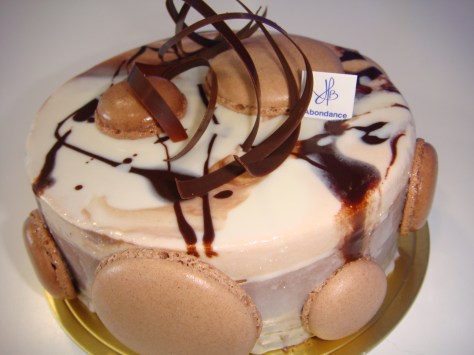
Udon: The Professional Basic Recipe

Udon/饂飩/うどん, although not suitable for wheat allergics, can be easily turned vegetarian or vegan, depending on the soup and seasonings/accompaniments.
It is fullfilling and healthy and can be eaten hot in soup or fried, or cold, especially in salads!

INGREDIENTS (basic):

-Wheat flour: 1 kg (fine, light type)
-Salt: 40 g (can be reduced to 30 g)
-Water: 460 ml

RECIPE:

Dissolve salt in water first.
Pour flour in an all-purpose large bowl.
Pour the water onto the flour little by little.

Mix and knead little by little until all the water has been used.
At that time you may think you haven’t added enough water. Don’t worry. Just keep kneading for 10 minutes. it will eventually become smooth.

The following is interesting. In restaurants it is done with a special wooden lever with the chf standing on one end!
Wrap the dough in a cellophane paper and press the whole (wash your feet!) with the whole foot until the dough has spread somewhat flat. Take the dough out of the cellophane paper, shape it into a ball, wrap it again and press with your foot.
Do that for 15 minutes.
Do not skip that step!
Ask hubby or (big) kids to help if necessary!

Shape the dough in a ball, wrap it in cellophane paper and leave it to rest for a while.

Sprinkle flour on a working table.
Roll the dough out into a 3 mm thick sheet.

Sprinkle flour on the dough sheet surface, fold the dough as shown on pic above and cut every 3 mm to obtain square section noodles/udon.

Shake and separate the udon and gather them as in picture above.
They are ready!

Throw the udon in water heated just before boiling point. Cook (make sure the water does not boil) for 6 minutes.
You can use the udon just after after but it is better to go through the next step:

Drop the udon into a strainer and wash them quickly under cold clear water. They will look far more appetizing this way and easy to conserve until you drop them into soup, fry them or dress them into a salad!

As for the soup, there are many ways to make it, whereas you are vegan, vegetarian or omnivore. If you use dashi, use konbu/seaweed dashi if you are not an omnivore. One can add soy sauce, mirin/sweet sake and sugar.
Serve the udon as they are or with chopped leeks and aburaage tofu and so forth!

RECOMMENDED RELATED SITES:
Bread + Butter, Comestilblog, Greedy Girl, Bouchon For 2, Zoy Zhang, Hungry Neko, Mangantayon, Elinluv Tidbit Corner, Maison de Christina, Chrys Niles, Lexi, Culinary Musings, Eats and Everything, Bite Me New England, Heather Sweet, Warren Bobrow, 5 Star Foodie, Frank Fariello, Oyster Culture, Ramendo, Alchemist Chef, Ochikeron, Mrs. Lavendula, The Gipsy Chef, Spirited Miu Flavor, Social Culinaire

Please check the new postings at:
sake, shochu and sushi

—————————————-
日本語のブログ
—————————————-

Tofu Recipes: 2009 Compilation

This is a compilation of all the tofu recipes I have either come across or written recipes about this past year.
I sincerely hope other foodies will find it useful for reference and copying/sharing as all pics and articles in this posting are for sharing!

PREPARATION

zarudofu
“Zarudofu”, my favourite variety of tofu just filtered out in a “zaru/basket”. You just eat it with a spoon on its own. No seasoning needed!

As promised, here is the first posting about tofu.
This article concerns the home-making of it.
The next article will introduce different kinds of tofu and recipes!

Ingredients (for one large piece, one cho/丁in Japanese)

Soy beans: 2 cups (360cc)
Nigari: 2 large tablespoons
(Magnesium chloride is an important coagulant used in the preparation of tofu from soy milk. In Japan it is sold as nigari (the term is derived from the Japanese word for “bitter”), a white powder produced from seawater after the sodium chloride has been removed, and the water evaporated. In China it is called “lushui”.. Nigari or Lushui consists mostly of magnesium chloride, with some magnesium sulfate and other trace elements. It is also an ingredient in baby formula milk).
Water: 5 cups (twice and a half the volume of soy beans)

Utensils:
One large pot
One large clean cloth pouch to press tofu through
One bowl
One mixer
One thermometer
One large piece of gauze to filter water off shaped tofu
One large wooden spoon
One wooden tofu-shaper case

RECIPE:
toofu-1
1) Preparation: soak soy beans in water overnight

toofu2
2) Preparation: Mix nigari with 1 cup of water and set aside

toofu-3
3) According to its size, Pour the whole or part by part soy beans and water (1) and make paste as fine as possible. If mixer runs at an even pace without crushing beans into paste, add more water. The paste obtained is called “namago” (生呉)

toofu-4
4) Pour the bean paste into a large pot with an equal amount of water. Heat stirring all the time. The paste will come to a boil suddenly. Switch off fire. Switch on low once the paste has settled for 10 minutes and take off fire.

toofu-5
5) Pour paste into the cloth pouch and press. Right of the picture is tofu paste before pressing. Left is pressed out tofu

toofu-6
6) Solidifying (coagulating) with nigari.
Stir tofu over light fire. When the temperature has reached 75~80 degrees Celsius pour in nigari slowly and stir all the time. The solid matter will sink to the bottom and accumulate. The coagulation will be complete when liquid above tofu has become transparent. Stop the operation and let rest for 15 minutes.

toofu-7
7) Arrange the gauze inside tofu a tofu shaper case which should have small holes to let excess water run out.

toofu-8
8) Cover with lid with a weight (or glass of water) of about 250 g and further press out water for 15 minutes

toofu-9
9) Delicately empty tofu in basin filled with called water and leave it there for an hour to take out excess nigari. Store in refrigerator.
————————
VARIETIES

zarudofu
“Zarudofu”, my favourite variety of tofu just filtered out in a “zaru/basket”. You just eat it with a spoon on its own. No seasoning needed!

This is the second article dedicated to some of the many varieties of that celebrated food, tofu. A third article is in preparation as for recipes!

tofu-kinds-10
Okinawa Tofu

Tofu comes in various degrees of firmness.
The softest are “Zaru dofu” (see pic above) and Okinawa-style tofu.

tofu-kinds-7
“Kinu Goshi Tofu”

Next come “Kinu Tofu/Kinu Goshi Tofu”/Silk-sieved tofu. It can be used for almost any recipe, although you might have to press it as it contains a lot of water.

tofu-kinds-9
“On Tofu”

“On Tofu” is similar to “Kinu tofu”, but it has been conceived as it its name indicates for being eaten hot or warm instead of cold.

tofu-kinds-6
“Momen Tofu”

“Momen Tofu”/”Wool Tofu” contains less water, is firmer and is perfect for “Nabe/Japanese Pot-au-feu”.

tofu-kinds-8
“Yaki Tofu”

“Yaki Tofu/Grilled tofu” (not to be confused with deep-fried tofu) is usually “Momen tofu” grilled to give it the “gratine” look. Tasty, it is particularly interesting when sauteed with vegetables and so forth in Japanese, Chinese, Korean or Thai food.

tofu-kinds-1
“Yawarakaage or Yawarakai Aburaage”

Tofu can be bought cooked/deep-fried in many manners.
“Yawarakaage” is tofu deep-fried into a thin sheet which can be opened as a pouch like in:

inari-tofu
“Inari”

“Inari” is “Yawarakaage”, which has been first marinated in mirin, soy Sauce and sugar. Do ask about its preparation as some companies or individuals add dashi, which is usually not vegan or vegetarian!

tofu-kinds-2
“Namaage”

“Karaage Tofu/Deep-fried Tofu” comes in many forms.
The above “Namaage/Deep-fried raw” is the most common.

tofu-kinds-3
“Kinu Namaage”

“Kinu namaage” is great for the contrast between a solid outside and vey soft inside.

tofu-kinds-4
“Ganmo” and “Kyo-Ganmo”

“Ganmo” is Tofu that has pressed to almost dry, then broken into very small lumps to which one added cooked carrots, Hijiki sweet seaweed, grated yam, a little sugar (not always), shaped into a ball and lightly deep-fried. Great, heated again with vegetables and a swet and sour sauce, or in whatever recipe you might imagine. “Kyo-Ganmo” is the smaller Kyoto-Style variety. Ganmo should be made exclusively with vegetal matter, but do ask if you are not sure!

tofu-kinds-5
“Tofu Doughnuts”

Yes, you have read it, “Tofu Doughnuts”, very popular with kids!

Other varieties:
-“Okara” is hard-pressed, almost dry tofu sold broken into very small lumps.
-“Yuba” is the “skin” appearing on top of the pan when tofu is being prepared. Very popular served cold with all kinds of ingredients.
-“Koya” is hard-pressed tofu sold marinated. Now, as it contains fish stock dashi, it is not suitable to vegans or vegetarians.
-“Kuro goma tofu” or “Shiro goma tofu” (Black and white sesame curd) are not made with soy beans but sesame, although they make for great food for vegans and vegetarians.

There are many other “fancy” varieties, but I cannot guarantee their suitability to vegans or vegetarians!
——————————-
tofu-kinds-5
“Tofu Doughnuts” at Shizutetsu Supermarket in Shizuoka City

Following a kind message from Dawn Figueroa who after returning from Japan could not find the tofu donuts back hoem, nor their recipes.

There are many recipes indeed, most of them including eggs, milk, wheat flour, pancake mix and what not.
Moreover I discovered that the stores in Japan use wheat flour, too.
Although this would be enough for vegans and vegetarians (I’M not), I decided to introduce an easy recipe which non-gluten, nor containing wheat flour.

For people who want to start from scratch, check tofu preparation recipe below!

HOME-MADE TOFU DONUTS

TOFU-DONUTS-1

Ingredients: For 3 donuts (multiply accordingly!)

-Rice powder (riz blanc in French): 45 g
-Cornstarch: 15 g
-Baking powder (non-gluten): half a teaspoon
Sugar beet: 10 g (optional/use a little salt if you want to prepare appetizer donuts)
-(Kinu tofu) Silk Tofu: 60 g
-Deepfry oil

Recipe:

TOFU-DONUTS-2

-In a large bowl, mash/crush the tofu

TOFU-DONUTS-3

-Add rice powder, cornstarch, baking powder and sugar beet. Mix well.Form a ball.

TOFU-DONUTS-4

-Shape three donuts by hand and place them atop pieces of cooking paper. Shape the central hole large enough.

TOFU-DONUTS-5

-Preheat oil to 160 degrees Celsius.
Drop the doughnuts into the oil with their cooking paper.
Take paper out with tongs as soon as the oil “boil”around the donuts.
Fry the donuts until they attain a nice “fox”/brown colour.
Turn the donuts over halfway for an even cooking and colour.

NOTES:

-If you use too much tofu in the recipe the donuts will be difficult to shape.
-Proportion between rice powder, beet sugar and baking pwder is based on the following:
Rice powder: 100 g
Beet sugar: 10 g
Baking powder: 3 g
-You can add taste to the donuts according to your preferences.

————————

TOFU CHOCOLATE CAKE

As I said before, tofu has the great quality that it makes all things lighter, especially cakes.
have you ever thought of combining it with Chocolate?

Tofu Chocolate Cake!

INGREDIENTS:

-Light flour: 80 g
-Baking powder: 10 g
-Cooking chocolate or normal chocolate (the higher percentage in cocoa, the better!): 1 standard tablet/bar
-Eggs: 2
-Margarine or butter: 1 tablespoon
-Cocoa powder: 20 g
-Rum: to taste
-Tofu (light/kinu tofu): 300 g
-Sugar: to taste (depends on people!)

-Fresh cream: 100 ml
-Jam: 1 tablespoon

RECIPE:

-Whip the tofu until smooth. Pass it through a fine mesh sieve.

In a separate bowl pass the flour and baking powder through a fine mesh sieve.

-Melt margarine/butter and chocolate on a bain-marie (put the bowl inside a larger one over a fire.
Add 50 ml of hot water and the coca powder. Keep mixing until misture thickens.

-Separate egg yolks and whites.
Beat the whites in to solid meringue.

-Add flour and baking powder, egg yolks, rum and sugar to chocolate mixture. Mix well. Fold in the egg whites in.

-Check taste. Add flour and cocoa powder if necessary. mix in quickly.

-Line your rice-cooker with a little oil. Pour in the whole mix and switch on the rice-cooker.
If you do not have a rice cooker, pour the mixture inside a mold and bake for about 20~25 minutes at 180 degrees Celsius (check from time to time.

-Wait until cooled down completely before taking out.
Serve with whiiped cream mixed wit a little jam of your choice.

Plenty of variations possible!
———————–
VEGAN SMOKED TOFU

It is sometimes a hard world for vegans when it comes to find new ideas and recipes, even you love tofu!
Here is a simple way to prepare and enjoy tofu as it was a big piece of cheese!

Vegan Smoked Tofu!

INGREDIENTS: for ? People

-Tofu: a large piece 300~400g or more
-Miso of your liking, as much as you wish
-Soy sauce, not too much (beware the salt)
-Sake or mirin, a little just for the taste
-Spices, if you wish!

RECIPE:

-As the tofu shouldn’t be too soft, choose “momendofu”, or slightly solid.

-Place the tofu on a clean cloth.
-Top it with a clean plate or board.
-Put a heavy weight on top.
-Leave it like this for half a day. The tofu will reduce to half.

-Smear the whole tofu on every face with plenty of a mixture of miso, soy sauce and other ingredients of your choice. The more, the better.

-Wrap it carefully in cellophane paper and leave it in the fridge overnight.

-Take it out of the fridge and take off the cellophane paper.
-Let it dry for 2 hours at room temperature over a piece of kitchen paper.

-Smoke inside a Chinese smoking set for 1 hour.

-Very practical for smoking small quantities!

-Here you are! Enjoy!
———————–
TOFU POUND CAKE

Tofu has the great quality that it makes all things lighter, especially cakes.
Have you ever thought of making a pound cake with it (with a twist added!)?

Tofu Pound Cake!

INGREDIENTS: For a cake 16.5 cm long and a square cut of 7 cm sides

-Egg whites: 2
-Egg yolks: 2
-Sugar: 30 g
-Tofu (after taking some of its water off): 120 g
-Honey (liquid): 2 tablespoons
-All-purpose flour: 50 g
-Baking powder: half a teaspoon
-Soy sauce: 1 teaspoon
-Mirin/sweet sake: 1 tablespoon
-Milk: 2 tablespoons

RECIPE:

-Mix flour and baking powder well.
-Preheat oven to 180 degrees Celsius

-In a bowl drop the egg whites with half of the sugar. Beat until solid. Beat 30 more times with a whisk.

-In a separate bowl drop in the tofu, rest of the sugar and egg yolks. Beat with a whisker until smooth. Do not mix too much!

-Add honey, soy sauce, mirin and milk in that order to the egg yols mixture and mix in one each at a time.

-Add and mix in the flour and baking powder mixture little by little with a spatula.

-Add the meringue (beaten egg whites) by folding them in with a spatula in 2 or three sessions.

-Line the mold with baking paper and pour in the whole mixture.
Bake for 40 minutes (the picture above shows the cake baked after 10 minutes)

-Leave the cake inside the oven for 10 more minutes after the oven has switched off after the 40 minutes of cooking. Open the oven, but leave the cake inside for an extra 10 minutes before taking it out.

-Let cool down completely.
Leave inside the fridge for half a day before serving.

NOTE:

You can replace the soy sauce and mirin with cocoa powder (1 tablespoon)!
————————-
TOFU YOGHURT CAKE

TOFU-YOGHURT-CAKE-1

Tofu and yoghurt are two very healthy ingredients that can be easily magicked into a cake for the delight o children and calories conscious adults:

Tofu Yoghurt Cake!

INGREDIENTS: For an 18cm-diameter mold

-Plain yoghurst:500g
-Tofu (kinu tofu or soft tofu): 300 g
-Eggs: 2
-Sugar: 80 g
-Flour: 30 g
-Lemon juice: 1 tablespoon

RECIPE:

TOFU-YOGHURT-CAKE-2

-Place a sieve over a bowl. Pour the yoghurt in. Let it drain naturally in the refrigerator for a day.

TOFU-YOGHURT-CAKE-3

-Place the tofu in a bowl (no need to cover it). Leave it in a microwave oven (500 W) for 3 minutes.
Place a sieve over a bowl. Pour the tofu inside the sieve. Let it drain naturally in the refrigerator for a day.

TOFU-YOGHURT-CAKE-4

-Next day, pre-heat oven to to 180 degrees Ceslius.
Throw the yoghurt and tofu water away.
Drop all the ingredients inside a food processor.

TOFU-YOGHURT-CAKE-5

-Blend until smooth. Switch off halfway and stir with a spatula to even up the mixture.

TOFU-YOGHURT-CAKE-6

-Pour the mixture inside a mold lined upwith cooking paper. Bake at 180 degrees Celsius for 30 minutes.

TOFU-YOGHURT-CAKE-7

-Take mold and cake out. Let it cool completely. Chill it inside the refrigerator together.

TOFU-YOGHURT-CAKE-8

-Take the cake out of of its mold only when it has chilled well.

TOFU-YOGHURT-CAKE-9

-Cut, serve and enjoy!
You can of course serve it with jam and other toppings.
You can also add liqueurs, fruits and so on to the recipe!
——————-
TOFU LEMON CUPCAKES

TOFU-LEMON-CUPCAKE

Here is another simple Japanese style cupcake recipe made with tofu!

Tofu lemon Cupcakes!

INGREDIENTS: For about 16

-Tofu (kinu tofu or soft tofu): 100 g
-Sugar: 70 g
-Egg: 1
-Grated lemon pel: 1 lemon
-Flour: 160 g
-Baking powder: 1 and a half teaspoons
-Milk (or soy milk): 3 tablespoons
-Lemon juice: 1 tablespoon
-Olive oil: 2 tablespoons

RECIPE:

-Mix flour with baking powder. Mix grated lemon juice and milk in a separate bowl.

-In another bowl drop tofu and sugar. Mix thoroughly into a smooth paste. Add egg and mix well with a wisker.

-Add lemon juice and milk and mix well until smooth. But don’t mix too long!

-Mix in flour and baking powder with a spatula until the floury look has disappeared but don’t overmix.

-Fill cups (previously oiled) and bake at 190 degrees Celsius for 16 minutes. If the cups are really small 12 minutes should be enough.
——————————
TOFU TERRINE

TOFU-TERRINE

Tofu does have to be food exclusively for vegans, vegetarians and people with special priorities.
I can assure you that monivores like I are very fond of any any combination including tofu!

Here is a simple recipe that will impress your friends:
Tofu Terrine!

INGREDIENTS: For 4 servings

-Tofu (momen tofu, a bit mopre solid than kinu tofu): 300 g
-Wakame seaweed (salted preserves): 15 g
-Carrots: 30 g
-Sugar peas in their pods (or their equivalent. They are called pois gourmands in French, or kinu saya ingen in Japanese): 8
-Salt: a pinch (for boiling the veg)
-Mushrooms (white agarics): 3
-Broad beans (boiled or steamed) for decoration: 4

-Eggs: 2
-Soup stock: 2 tablespoons
-White wine: One and half tablespoons
-Salt: 1/3 teaspoon
-Pepper: to taste
-Salad oil for brushing

RECIPE:

-Break the tofu in large pieces. Boil lightly. Transfer into a large clean cloth and press as much water out as possible.

-Wash the wakame in clear cold water. Boil for a little while. Take out and press water out. Put it inside a clean cloth and press out as much water as possible.

-Chop the carrot fine. Boil a little and take water off as above.

-Take the “thread” off the sugar peas, boil in salted water. Let cool completely. Take off water and chop finely.

-Cut the mushrooms very fine (you may fry or boil them a bit if you wish to).

-Work the tofu in a suribachi (mortar and pestle) to obtain a smooth paste. Add eggs and mix with the pestle (food processing is fine, too). Add wakame seaweed, carrot, sugar peas, mushrooms, soup stock, slat and pepper, and mix.

-Coat the insides of 4 ramequins/oven cups with a very thin layer of salad oil and pour 1/4 of the mixture in each. Flatten the surface with a spatula.

-Place ramequins inside a steamer. Steam on a medium fire for 5 minutes, then 10 more minutes over a low fire.
Let cool down completely.
Wrap them in cellophane and keep in refrigerator until you serve them
Decorate with broad beans.

NOTE:

This is the basic recipe. It is open to all inds of variations!
—————————-
VEGAN TOFU LEMON CUPCAKES

VEGAN-TOFU-LEMON-CUPCAKE

This is a slightly different version of the Japanese style vegan tofu cupcake I introduced a couple of days ago. It will give you an idea of how to play on that idea!

INGREDIENTS: For about 16 cakes

-Tofu (kinu tofu): 180 g
-Sugar (of your choice): 0 g
-Soy milk: 3 tablespoons
-Lemon juice: 1 tablespoon
-Olive oil: 2 tablespoons

-Flour (use chestnut flour if you are wheat allergic): 160 g
-Baking powder: 2 teaspoons

-Grated lemon skin: 1 whole lemon
-Dried English tea leaves, finely chopped ( the contents of 1 tea bag is adequate)

RECIPE:

-Mix flour and baking powder well.
Mix soy milk and lemon juice separately and and set apart.

-In a large bowl drop in the tofu and sugar. Mix well until you obtain a smooth paste. Add the soy milk, lemon juice and olive oil. Mix the lot thoroughly with a whisker.

-Add the all flour and baking powder mixture and mix in with a spatula until floury lumps have disappeared, but don’t mix too much!

-Pour mixture into cups and sprinkle them with grated lemon skin and dried tea.

-Bake inside oven for 16 minutes at 190 degrees Celsius.
If you make mini cupcakes, 12 minutes should sufficient.
keep looking at the colour of your cupcakes!
——————
VEGAN TOFU CUPCAKES

VEGAN-TOFU-CUPCAKE-1

Cupcakes are the norm all over the world when it comes to bakery and tofu is a must for vegans.
Now, it is possible to make very simple cupcakes for vegans!
Wheat flour allergics can replace the wheat flour with chestnut flour like the Corsicans and Portguese do in their traditional food!
This is only the basic recipe to which you can add fruits and vegetables!

Vegan Tofu Cupcakes!

INGREDIENTS: For 5~6 cupcakes

-Tofu (kinu toufu): 300 g
-All-purpose flour (for substitutes, read above): 100 g
-Sugar (white, cane, or even honey): 30 g

RECIPE:

VEGAN-TOFU-CUPCAKE-2

-Get ingrediens ready and pre-heat oven to 200 degrees Celsius.

VEGAN-TOFU-CUPCAKE-3

-Mix tofu and sugar. Mix well.

VEGAN-TOFU-CUPCAKE-4

-Sprinkle flour over tofu and mix roughly so as to leave a little flour on the surface.

VEGAN-TOFU-CUPCAKE-5

-Bake for 25~30 minutes at 200 degrees Celsius or until desired colour.

VEGAN-TOFU-CUPCAKE-6

-Dead simple, aren’t they?
Now your skills will reside in what you add!
——————–
Tofu & Chicken stuffed Green Peppers

TOOFU-CHICKEN-PIMAN

Tofu when mixed with other ingredients opens a door on an infinite number of easy recipes!

Here is a very simple Japanes-style snack:
Tofu & Chicken stuffed Green Peppers!

INGREDIENTS: For 4 people

-Green peppers: 6
-Kinu tofu: 400 g
-Minced chicken: 175 g
-Japanese Sake: 1 tablespoon
-Soy sauce: 2 teaspoons
-Cheese powder: 1 tablespoon
-Salt: 1/2 teaspoon
-Black or white pepper: to taste
-Cornstarch: a small amount according to preferences

RECIPE:

-Leave a weight on top of the tofu to drain water and reduce it about two thirds of its volume.
-Wash the green peppers, cut in halves and wipe off humidity.
-In a bowl drop the tofu and minced chicken. Mix well by hand until you obtain a soft smooth paste.
-Add Japanese sake, cheese powder, salt and pepper and mix well.
Sprinkle insides of peppers with cornstach and fill each pepper half with tofu/chicken mixture.
-Place on oven plate and cook at 200 degrees Celsius for 15 minutes.
Serve with a little salt or soy sauce.
——————
VEGAN TOFU CARPACCIO

TOFU-CARPACCIO

I’ve been in tofu recipe search mode for quite a while, and I finally found one to please my vegan friends who can’t boast a carpaccio of their own!
It is ridiculously easy, but it makes for great impression!
Choose the best ingredients!

Vegan Tofu Carpaccio!

INGREDIENTS:

-Tofu (kinu tofu/silk tofu): as much as you like?
-Salt (Guerande for example): to taste
-Black pepper (freshly ground only, please!): to taste
-Lemon juice (organic lemon, please!): to taste
-Olive oil (EVO): to taste
-Pink pepper/baies roses: to taste

As you can see, it is basically up to you!

Look for some great organic green leaf vegetables to make a “bed” for the tofu.

RECIPE:

-Wrap tofu inside a large piece of kitchen paper.
Put the wrapped tofu inside a tupperware box (no lid, please) and top the tofu with a light weight.
Leave overnight (a full day, if you can) inside the refrigerator.

-Take out the tofu (discard the water).
-Cut it slices and plave it on a bed of leaf vegetables.
-Sprinkle in that order with salt, pepper, lemon juice and olive oil.
-Srop a few pink pepper grains for decoration and taste.

Simple, ain’t it?
————————
VEGAN ITALIAN TOFU SALAD

TOFU-VEGAN-SALAD

The Japanese come with some simple and tasty new ideas for Vegans and Vegetarians!
I just discovered this recipe. It is basically a Cabrese-style salad.
The twist is that the cheese is replaced by tofu!

Vegan Italian Tofu Salad:

INGREDIENTS:

-Tofu (kinu dofu): half/200g
-Tomato: 1 large
-Sweet basil: 10 leaves

-Dressing:
Wine vinegar (white): 1/4 cup
White wine: 1/4 cup
Salt: 1/3 teaspoon
Whole black pepper: 3 grains, crushed
Garlic: 1/2 clove
Fresh red chili: 1/2

Olive oil (EVO): 1.1/4~ tablespoon
Onion: 15 g, grated

RECIPE:

-Cut tofu into 1 cm thick slices.
-After taking out the stem part, cut tomatoes into half moons.
-Leave tofu tomatoes in a bowl full of iced water.
-Crush and mince garlic. Mix it with the wine vinefar, white wine, salt, pepper and chili. Cook in a pan until the lot has reduced to half. Let cool.
-Take tomatoes and tofu out the iced water (drain as much water as possible) and drop them in a large bowl. Add onion and olive oil. Mix well.
-Place tomatoes, tofu and basil alternately as shown in picture on a srving dish. Pour dressing all over.

NOTE:

-For calorie conscious vegetarians, tofu has almost none while chesse has loads of them!
———————–
Tofu and Egg Dumplings in Sweet and Sour sauce

TOFU-EGG-1

Here is another very easy tofu recipe for the “Tofu Tribe” (Terecita, Elin, Jenn and Jennifer and all tofu lovers!

INGREDIENTS: For 4 people
-Tofu: 350~400 g
-Eggs: 2
-Soy sauce: 1 large tablespoon
-Dashi/Japanese stock soup. Add a little sy sauce and mirin/sweet sake for taste
-Cornstarch: 1 large Tablespoon
-Trefoil (mitsuba) or available leaves: enough for decoration and taste

RECIPE:

-Drain water from tofu. Put in a bowl and break it up. Break eggs in and add soy sauce. Mix well.

TOFU-EGG-2

-Divide into 4 bowls. Cob\ver ach bowl with kitchen cellophane paper (30 cm wide square).

TOFU-EGG-3

-Turn over bowl and wrap tofu inside cellophane paper. Secure with a rubber band.

-Bring water to boil inside a lare dep pan. Drop tofu dumplings in boiling water and cook for 15 minutes to make sure they properly coked inside.

-Place each dumpling inside its cellophan paper in a serving dish. Cut top of the cellophane paper and carefully pull out the cellophane paper or turn over (whatever way you feel comfortable with.

-In a separate pan prpare the sweet and sour sauce.
Pour in dashi to which you would have added soy sauce and mirin (Taste varies with individuals. Need for a lttle experimentation!).
Heat sauce.
Mix cornstarch in some water and then add to sauce.
Once ready pour over dumpling and serve it decorated with trefoil cut to size.

NOTE:
Take care that cellphane paper does not get in contact with bare parts of the pan as the cellophane paper might melt on contact!
—————————
TOFU AND WAKAME SALAD

TOFU-WAKAME-SALAD-1

Here is another very easy recipe to help you and the “Tofu Tribe” (Terecita, Elin, Jenn and Jennifer modify and preserve tofu for all kinds of usages!
I’d like to take the opportunity to apologize to Tinako for my past mistake!
Tofu and Wakame Salad!

INGREDIENTS: For 2~3 people
-Tofu: 300 g
-Salt-preserved wakame: 20 g
If bought dried, let it “come back” in lukewarm water first.
If you are worried about the salt, let them rest in water for a while first and drain.
-Kawaire daikon, or any fresh sprouts available: To taste.
-Ponzu: 2 large tablespoons
-Sesame oil: half a large tablespoon
-White sesame seeds: to taste

RECIPE:
TOFU-WAKAME-SALAD-2

Leave tofu in clean cold water for 30 minutes. Wash and clean wakame seaweed and cut in bite-sized pieces. Cut sprouts in thirds.

TOFU-WAKAME-SALAD-3

In bowl mix seaweed, sprouts, ponzu and sesame oil.

TOFU-WAKAME-SALAD-4

Drain tofu and cut in bite-sized pieces. Mix in.
Place salad in serving bowls and sprinkle white sesame seeds.

Note: You can use either kinu tofu or momen tofu.
You may use green shiso/perilla leaves vinaigrette instead of ponzu.
In summer add cut plum tomatoes.
I personally like to add a little sweet umeboshi/pickled Japanese plums!
—————————
TOFU SHIOZUKE/SALT-PRESERVED TOFU

TOFU-SALT-1

Here is an easy recipe to help you and the “Tofu Tribe” (Terecita, Elin, Jenn and Jennifer modify and preserve tofu for all kind of usages!
Tofu Shiozuke/Salt-preserved Tofu!

INGREDIENTS:
-Tofu: 1 “cho”/200 g (Kinu or Momen type)
-Salt: 2g

RECIPE:
TOFU-SALT-2

Take tofu block out of its package and put it kitchen working plank. Sprinkle it with 1 g of salt.

TOFU-SALT-3

Cover with a sheet of kitchen paper.

TOFU-SALT-4

Cover the tofu and its kitchen paper with a plastic Tupperware-type box.

TOFU-SALT-5

Turn box and plank over holding them together.

TOFU-SALT-6

Take off plank and sprinkle the tofu bottom face with 1 g of salt.

TOFU-SALT-7

Close paper kitchen over tofu.

TOFU-SALT-8

Close the box and leave inside refrigerator in the evening.

TOFU-SALT-11

Next morning there should be about 20cc of water having seeped through the kitchen paper. Discard water.

TOFU-SALT-12

Wrap again in new clean kitchen paper. Put back into dry Tupperware-type plastic box and close. Put back into fridge until the next morning.
The tofu will have reduced size by half by then.

TOFU-SALT-13

That’s how it would look. Smaller and firmer. More water should have seeped out. Discard it.

USE SAMPLES:

TOFU-SALT-14

On a bowl of freshly steamed rice serve with with thinly sliced raw okra, preserved chrysanthemum leaves. Then pour hot tea on top!

TOFU-SALT-15

Pickle it with fresh miso for one night and eat it as a snack!

TOFU-SALT-16

Beautiful in salad with avocado slices!

TOFU-SALT-17

Served with chopped vegetables and garlic chips!

TOFU-SALT-18

Stuffed inside Aburaage with boiled beans then grilled and seasoned with seaweed dashi/stock and ponzu!
——————————
TIPS FOR EASY SNACKS

TOFU-OIL

I was thinking of the “Tofu Tribe” (Terecita, Elin, Jenn and Jennifer) when riding the bu to work this morning. No bicycle these days as we are in the midlle of the rainy season!

The day before the Missus had served a quick snack (see pic above) consisting of tofu on which she poured extra virgin olive oil, coarsely ground black pepper and a little salt.
Very simple. Not very artistic, I admit, but the idea was there.

Now, many vegans and vegetarians like their tofu, but are running out of ideas…

How about, for example, creating a plate (use a large one with “compartments” for better effect!) with an assortment of tofu pieces seasoned with different varieties of oils, ground peppers and other spices, finely chopped vegetables such as carrots, cucumbers for good colouring. I love my tofu mounted with chopped shiso/perilla leaves, umeboshi/Japanese pickled plums meat and a dash of ponzu!
And what about natto/fermented beans with chopped shiso leaves and grated fresh ginger?

You could do the same thing with fried tofu, deep-fried tofu and aburaage.
How about a piece of fsh tofu mounted with freshly cut and fried aburaage, wasabi, grated fresh ginger and ponzu?

Endless bliss!

Will be introducing oils in my next posting!
————————-
Tofu recipe: Tofu Manju with Ankake Sauce/Tofu Dumplings in Sweet and Sour Sauce

TOFU-MANJU-1

Here is another simple tofu recipe dedicated to Elin, all tofu lovers, vegans and vegetarians:
Tofu Manju with Ankake Sauce/Tofu Dumplings in Sweet and Sour Sauce!

INGREDIENTS:
-Tofu (momen tofu style9: 1 “Cho”/200 g
-Carrot: one fifth
-String beans: 2~3
cornstarch: 1 large tablespoon
-salt: a pinch

For sweet and sour sauce:
-Dashi (Konbu dashi/seaweeed stock): half a cup/100 ml
-Soy sauce: half a large tablespoon
-Sugar:2 large tablespoons
-Rice vinegar: 1 large tablespoon
-Cornstarch dissolved in water: to one’s personal liking

RECIPE: For 2 people

TOFU-MANJU-2

Press water out of tofu. Sift it completely. Boil finely cut carrots and string beans until soft enough. Drain all water.

TOFU-MANJU-3

drop tofu and vegetables in a mixing bowl. Mix in cornstarch and salt. Divisde in 4 and make balls. Wrap each individually in cellophane paper. Twist cellophane warap and secure with rubber band or string.
Steam for at least 4 minutes.

Sweet and sour sauce:
Heat dashi stock, soy sauce, rice vinegar and sugar, stirring all the time. Mix in cornstarch dissolved in water.
The sauce is ready.

Serve dumplings on plate and cover them with the sauce!
Enjoy!
————————
ABURAAGE RECIPE

ABURAAGE-1
(Aburarage Soup)

Aburaage is basically a deep-fried thin slice of tofu.
It does offer a very versatile option as it can be used as it is, or open as a pouch it becomes the base for inari sushi and many other variations!

Here is a simple recipe:

INGREDIENTS:
Tofu (firm Momen tofu type): 1 large piece/block (Icho in Japanese)
Thick Towel
Cellophane paper
Long wooden disposable chopsticks (wari-bashi)
“Piano string”, or the equivalent
Water drainer
Oil
Oil thermometer (up to 200 degrees Celsius)

RECIPE:

ABURAAGE-2
Make identations or marks on the chopsticks every 5 mm up to the height of the tofu block.

ABURAAGE-3
Tie “piano string” around chopsticks as shown on pic first at 10 mm height (or higher up to 15 mm if you wish), and cut tofu by sliding chopsticks along the cutting table (it should easy, but make sure you cut tofu evenly!)

ABURAAGE-4
Tofu being soft, it is not easy to manipulate.
Later, when you will manipulate it, the best way is to first turn over the whole onto your open palm and have each slice slide away.

ABURAAGE-6
Before manipulating the tofu, first put a 500g weight (anything over a thin wodden plank if you don’t have asushi weight) on top of the tofu for 2 hours to get as much water off as possible.
Transfer slices onto thick towel and leave them there for an hour.

ABURAAGE-7
First frying step: fry tofu slice at 130 degrees Celsius (make sure to keep the temperature constant!) for 6 minutes. This will allow for a uniform heating.

ABURAAGE-8
Second frying step: bring oil temperature to 160 degrees Celsius.
If tofu contains too much water or if you fry in a single step, it will fail to achieve the right shape and quality.

ABURAAGE-9
Aburaage will usually be a bit hard upon frying.

ABURAAGE-10
To make it soft, wrap it in xellophane paper and and heat inside electric oven. As soon as water comes out of aburaage inside the cellopahne paper, take the whole out and unwrap aburaage.

ABURAAGE-11
The aburaage should be soft by then.

ABURAAGE-12
Check if the aburaage needs a second frying (according to your liking).
if you fry it at 130 degrees, it will reduce as the one on the right in the picture.
If you fry it at 160 degrees you will obtain an aburaage like the left one on the picture (longer one).

ABURAAGE-13
To properly open it, cut in half, and then cut inside to form a pouch!
——————————
Vegetarian Japanese Cuisine: Fried Tofu and Vegetables

tofu-recipes-home

The other night, the Missus thought that some healthy food was in order, that is as much for herself as for me, what with her drinking wine and me savouring my Japanese sake!

She used already deep-fried tofu cubes called “nama-age” bought at the nearby supermarket, cut them to bite-size, saute them on a non-stick frypan as they were (no need for oil) with a liberal amount of pizza cheese and served them with a good measure of freshly chopped thin leeks. All the while on another pan she fried slightly boiled renkon/lotus roots slices with eringi mushrooms cut lengthwise and half-cut Brussels sprouts with some olive oil, a litle salt, pepper and a spicy seasoning mix.
Once ready she added themhot on the same plate.

So simple and tasty!
————————–
1): Fried Namaage with Cheese and Ponzu

toofu-recipe-1

This is I hope the first installment of a long series of simple recipes with tofu. Some will be vegan and vegetarian, some vegetarian like this one, others for omnivores!

tofu-kinds-21

This particular one is one one of the Missus’ favorites.
She uses on full “namaage tofu”, tofu that was deep-fried whole and that you can buy either fresh at a Japanese market or packaged.

She cuts the tofu in equal-sized bite pieces about 1 cm thick and fry them in a non-stick pan. No real need for any oil as what is contained in the surface of the tofu will be sufficient.
The point is that she fries them only on side. While they cook she lay a thin piece of mild/processed cheese over each tofu piece, add some black pepper, and cover with a glass lid. When the cheese has nicely melted over the tofu, she takes off the lid, sprinkles the whole with ponzu and fries for another minute. She serves on a dish with the sauce and liberally sprinkles the lot with chopped thin leeks!

Great snack with Japanese sake or beer!

RECOMMENDED RELATED SITES:
Bread + Butter, Comestilblog, Greedy Girl, Bouchon For 2, Zoy Zhang, Hungry Neko, Mangantayon, Elinluv Tidbit Corner, Maison de Christina, Chrys Niles, Lexi, Culinary Musings, Eats and Everything, Bite Me New England, Heather Sweet, Warren Bobrow, 5 Star Foodie, Frank Fariello, Oyster Culture, Ramendo, Alchemist Chef, Ochikeron, Mrs. Lavendula, The Gipsy Chef, Dodol-Mochi

——————————–
Please check the new postings at:
sake, shochu and sushi

—————————————-
日本語のブログ
—————————————-
Foodbuzz: Blogspot/WordPress Comment Box Compatibility (reminder)

1-sake

Greetings again!

As I noticed that many new friends on Foodbuzz have not realized this “little problem”, I decided to re-post the original article in an appeal to Blogspot users to try and publish a Comment Box that is compatible with other systems, in particular Wodpress and Internet Explorer. It certainly will add to comments on your postings and new friends in your mail list!

Thanks to Jenn for helping!

I could not think of a better system than taking pics with my mobile phone as I don’t have a scanner in my office!

WHAT WORKS:

commentbox1

Jenn‘s comments:
“I have this comment box for my blog: it is called “Full Page.” It’s in the comment form placement section in the comments tab under setting. In the “who can comment” section under the same tab I selected “anyone” and used the word verification setting. ”

Bear in mind that it must include an “Open ID” to allow access to other systems!

WHAT DOES NOT WORK:

commentbox2

This is the main culprit!
For all its simple design and the fact it says it allows other systems in, it just does not! Full stop.

Sincerly hoping this will help everyone!
Cheers,
Robert-Gilles Martineau

Please check the new postings at:
sake, shochu and sushi

—————————————-
日本語のブログ
—————————————-

Bryan Baird’s Newsletter (2009/12/06)

Baird Beer & Taproom Events Bulletin
bryan-sayuri.gif

Dear Taproom Friend & Baird Beer Enthusiast:

The season for potent and warming beers designed for leisurely sipping is once again upon us. Baird Beer is kicking it off with the release of our 2009 version of West Coast Wheat Wine.

*West Coast Wheat Wine 2009 (ABV 9%):

Wheat Wine is a beer style born on the U.S. West Coast in the 1980s. It has as its progenitor the English Barely Wine style. A Wheat Wine, generally, is characterized by a massively rich and hearty complexity that is lightened and made a touch sprite through a predominantly wheat rather than barley malt base. It is a style representative of the irreverent creativity and unrelenting passion that are the hallmarks of craft brewing on the West Coast of the United States. Baird West Coast Wheat Wine is crafted in annual homage to the skilled brewing artisans and fearless beer entrepreneurs who have pioneered craft brewing on America’s great West Coast!

This 2009 version of West Coast Wheat Wine is a touch darker than previous due to additions of caramel wheat malt. A lusciously lip-smacking maltiness is complemented beautifully by a fruity West Coast American hop character. Three yeasts (Scottish, English and American) combine in three stages of fermentation to produce a piquancy in the depth of flavor that is most interesting and uncommon. Perhaps still a touch young, West Coast Wheat Wine 2009 promises to condition in the cellar quite well over time.

We now are pouring West Coast Wheat Wine from the taps of each or our Taproom pubs. It will be available on draught and in bottle-conditioned form (633 ml) from other Baird Beer retailers in Japan as early as Tuesday, December 8.

Another early winter seasonal treat that we have begun to pull in Real Ale form through the English hand-pumps at our three Taproom pubs is Inaka Smoked Porter.

*Inaka Smoked Porter (ABV 5.5%):

This soft and chewy robust porter is imbued with a magnificently balanced smoke character through additions of Bamberg smoked malt. U.S. Golding hops contribute a delicately earthy character. Fermentation with our Scottish Ale yeast accentuates the malty richness. This brainchild of our Lead Brewer, Chris Poel, is being poured exclusively at our Taproom pubs. Stop in for a pint or two while quantities last.

Cheers!

Bryan Baird
Baird Brewing Company
Numazu, Japan
HOMEPAGE


The Japan Blog List

———————————
Must-see tasting websites:
-Sake: Tokyo Through The Drinking Glass, Tokyo Foodcast, Urban Sake, Sake World
-Wine: Palate To Pen, Warren Bobrow, Cellar Tours
-Beer: Good Beer & Country Boys, Another Pint, Please!
-Japanese Pottery to enjoy your favourite drinks: Yellin Yakimono Gallery
——————————–
Please check the new postings at:
sake, shochu and sushi

—————————————-
日本語のブログ
—————————————-

Vegan Cakes: 2009 Compilation

This is a compilation of all the vegan cakes I have either come across or written recipes about this past year.
I sincerely hope other foodies will find it useful for reference and copying/sharing as all pics and articles in this posting are for sharing!

VEGAN RICE CUPCAKES

VEGAN-RICE-CUPCAKES1

Just discovered this cupcake recipe for my vegan (I’m not) friends with the extra bonus of possible variations!

Japanese style vegan rice cupaakes!

INGREDIENTS: For 1 mug cup (arrange quantities accordingly for a greater number)

-Rice powder (Ris Blanc): 4 tablespoons
-Cornstarch: 1 tablespoon
-Sugar (of your choice, honey might be feasible): 1 tablespoon
-Baking Powder: Half a teaspoon
-Olive oil: 1 tablespoon
-Soy milk: 4 tablespoons

RECIPE:

VEGAN-RICE-CUPCAKES2

-In an oven ramequin or mug cup first pour rice powder, cornstarch, sugar and baking powder and mix well.
Next add olive oil and soy milk and mix well.

VEGAN-RICE-CUPCAKES3

-Depending on the kind of rce powder and soy milk you use, you may have to increase the amount of one or both for a smoother mixture. Experiment!

VEGAN-RICE-CUPCAKES4

-Cook insid emicrowave for 2 minutes or more. Check by pushing a thin wooden or meddle stick. It should come out clean. The taste is light. You may add sugar.

-Have a good look at the cake while it cooks. It should not be more than 2 minutes 30 seconds.
If you use kabocha powder, you will need 1 small teaspoon plus 1 teaspoon of water.

VEGAN-RICE-CUPCAKES5

-The above green cupcake was made by adding 1 teaspoon of spinach powder and 1 teaspoon of soy milk!

VEGAN-RICE-CUPCAKES6

-Add 1 teaspoon of cocoa powder and 1 teaspoon of soy milk for a cocoa cupcake!

VEGAN-RICE-CUPCAKES7

-Add 1 tablespoon of carrot powder and 1 teaspoon of soy milk for a carrot cupcake.

VEGAN-RICE-CUPCAKES8

-Add crushed apple for the above!
—————————
VEGAN TOFU LEMON CUPCAKES

VEGAN-TOFU-LEMON-CUPCAKE

This is a slightly different version of the Japanese style vegan tofu cupcake I introduced a couple of days ago. It will give you an idea of how to play on that idea!

INGREDIENTS: For about 16 cakes

-Tofu (kinu tofu): 180 g
-Sugar (of your choice): 0 g
-Soy milk: 3 tablespoons
-Lemon juice: 1 tablespoon
-Olive oil: 2 tablespoons

-Flour (use chestnut flour if you are wheat allergic): 160 g
-Baking powder: 2 teaspoons

-Grated lemon skin: 1 whole lemon
-Dried English tea leaves, finely chopped ( the contents of 1 tea bag is adequate)

RECIPE:

-Mix flour and baking powder well.
Mix soy milk and lemon juice separately and and set apart.

-In a large bowl drop in the tofu and sugar. Mix well until you obtain a smooth paste. Add the soy milk, lemon juice and olive oil. Mix the lot thoroughly with a whisker.

-Add the all flour and baking powder mixture and mix in with a spatula until floury lumps have disappeared, but don’t mix too much!

-Pour mixture into cups and sprinkle them with grated lemon skin and dried tea.

-Bake inside oven for 16 minutes at 190 degrees Celsius.
If you make mini cupcakes, 12 minutes should sufficient.
keep looking at the colour of your cupcakes!
——————
VEGAN TOFU CUPCAKES

VEGAN-TOFU-CUPCAKE-1

Cupcakes are the norm all over the world when it comes to bakery and tofu is a must for vegans.
Now, it is possible to make very simple cupcakes for vegans!
Wheat flour allergics can replace the wheat flour with chestnut flour like the Corsicans and Portguese do in their traditional food!
This is only the basic recipe to which you can add fruits and vegetables!

Vegan Tofu Cupcakes!

INGREDIENTS: For 5~6 cupcakes

-Tofu (kinu toufu): 300 g
-All-purpose flour (for substitutes, read above): 100 g
-Sugar (white, cane, or even honey): 30 g

RECIPE:

VEGAN-TOFU-CUPCAKE-2

-Get ingrediens ready and pre-heat oven to 200 degrees Celsius.

VEGAN-TOFU-CUPCAKE-3

-Mix tofu and sugar. Mix well.

VEGAN-TOFU-CUPCAKE-4

-Sprinkle flour over tofu and mix roughly so as to leave a little flour on the surface.

VEGAN-TOFU-CUPCAKE-5

-Bake for 25~30 minutes at 200 degrees Celsius or until desired colour.

VEGAN-TOFU-CUPCAKE-6

-Dead simple, aren’t they?
Now your skills will reside in what you add!
——————–
Vegan Japanese Dessert: Tofu Puddings!

TOFU-PUDDING-1a

It’s been some time since I have featured a recipe for the Tofu Tribe, (Terecita, Elin, Jenn and Jennifer !
I though it was about time I introduced them to a very easy way to make a dessert with tofu!

TOFU PUDDING!

INGREDIENTS: for 5 ramequins

-Water: 100 ml
-Agar agar powder: 3 g
-Tofu: 400 ml
-Sugar: 30 g
-Lemon juice: 1 lemon

RECIPE:

-Heat the mashed tofu without bringing it to a boil. Add sugar and let it dissolve into the tofu. Mix if necesary.

-In a deep pan pour the water and add the agar agar. Mix well as you heat on a medium fire. Once cissolved continue mixing until the water has become transparent.

-Take off fire. Add tofu to agar agar water little by little and mix well. Add lemon juice and mix. Wait for a little while. Pour in ramequins or recipients of your choice.
Chill well before serving!

TOFU-PUDDING-1

Same recipe as above but replace water with English tea!
Vegan should make the tea with soy milk or water only!

TOFU-PUDDING-2

Same with orang juice!
In this case use 100 ml of water and 200 ml of organice orange juice!

TOFU-PUDDING-3

For this one replace orange juice with pineapple juice!
————————–
Vegan Japanese Dessert; Fruit Jelly

VEGAN-FRUIT-JELLY-1

The Japanese do have some simple ideas to please vegans and vegetarians alike, especially when it comes to simple, tasty and healthy desserts.
Here is a simple fruit jelly dessert you can adapt according to seasons and availability (try it with your kids!):

INGREDIENTS: For 2 large cups
1)
-100% orange juice (organic if possible) 200ml
-Water: 200 ml
-Agar agar: 2^4 g (depending how solid you like your jelly)
2)
-100% apple juice (organic if possible): 200 ml
Water: 200 ml
-Agar agar: 2~4 g
-Grapefruit: 1 peeled and and quartered (all skins off)
-Mint leaves and blueberries for final touch

RECIPE:

VEGAN-FRUIT-JELLY-2
-Pour water in a pan. Add agar agar. Heat a little to dissolve agar agar. Add orange juice. Pour into two glass cup of your choice and leave inside the fridge until it solidifies completely.

VEGAN-FRUIT-JELLY-3
-Add grapefruit.

-Reapeat with apple juice: pour water in a pan and add agar agar. Heat slowly to dissolve agar agar. Add fruit juice. Pour the lot over the grapefruit.

VEGAN-FRUIT-JELLY-4
-Add grapefruit and mint to your liking and put inside refrigerator to solidify.

VEGAN-FRUIT-JELLY-5
-Variation with 3 layers!

VEGAN-FRUIT-JELLY-6
-As it appears on your spoon!

VEGAN-FRUIT-JELLY-7
-The other way round!

———————–
“Mukashi Mushi Pan”/Old=fashioned Steamed Bread

Although I’m neither a vegetarian or vegan, I make a point to introduce anything I discover here which might help friends out!

Fukasawa Foods in Shibakawa Cho at the foot of Mount Fuji produces all year round an incredible array of soba/buckwheat noodles, udon/wheat flour noodles, ice-creams, cakes and I don’t know what else.

Now, all their food is organic. No artificial fertilizers are used for whatever they grow or buy, and no additives or preservatives are used in any of their product, which means all have to be properly stored and eaten quickly.

Vegans will be happy to know they use tofu instead of any dairy product.

This particular cake called “Mukashi Mushi Pan” or Old-Fashioned Steamed Bread was made with wheat flour, tofu, brown sugar, raisins, salt, vegetable oil.
That is all!

One cake could have easily been held inside your palm, but it was very fulfilling and delicious!
They have other varieties made with pumpkin and other vegetables.

Fukasawa Foods
Fuji Gun, Shibakawa Cho, Naibo, 3895-8
Tel.: 0544-65-0143
Closed on Tuesdays
HOMEPAGE (Japanese)
—————————–
WAGASHI-VARIETIES-1

Here is an example of what could be done by a Japanese chef as Wagashi/Japanese Cake!
This particular Birthday Cake creation is the work of Chef Maeda at Kouseido in Osaka City!
Will look around and post other creations whenever I can!

Here is a breakdown of the above:

WAGASHI-VARIETIES-MOMO

“Momo”/Peach

WAGASHI-VARIETIES-MIKAN

“MIkan”/Orange

WAGASHI-VARIETIES-TSUBAKI

“Tsubaki”/Camelia

WAGASHI-VARIETIES-SAKURA

“Sakura”/Cherry Blossom

WAGASHI-VARIETIES-ICHIGO

“Ichigo”/Strawberry

WAGASHI-VARIETIES-MELON

“Meron”/Melon
———————————-
WAGASHI-SAKURA-MOCHI-2

Sakura Mochi (桜餅) is a variety of wagashi, or Japanese confectionery consisting of a sweet pink mochi (rice cake) and red bean paste, covered with a leaf of sakura (cherry blossom).

Sakura Mochi (桜餅) or Cherry Blossom Mochi has been popular all over Japan since the beginning of gastronomy in the Land of the Rising Sun.
The style of Sakura Mochi differs from the regions in Japan.
Basically, the east of Japan such as Tokyo uses shiratama-ko (白玉粉/ rice flour) and the west side such as Kansai uses dōmyōji-ko (道明寺粉/glutinous rice flour) for “batter”.

WAGASHI-SAKURA-MOCHI
Anko is folded inside a mochi sheet and again inside an edible cherry tree leaf.

WAGASHI-SAKURA-MOCHI-3

Here the anko is inside white mochi, then folded in cherry tree leaf and topped with an edible cherry flower.

WAGASHI-SAKURA-MOCHI-4

A smaller, very cute Sakura Mochi: the coloure mochi contains anko and is presented inside an edible cherry tree leaf.

WAGASHI-SAKURA-MOCHI-5

Sakura mochi as sold over the counter in the Kansai/West Japan Region.
They are also called Sakura Dango/Cherry Balls (no comment, please!LOL)

SIMPLE RECIPE
This recipe is for making Western-style sakuramochi. Serves 8.

INGREDIENTS:
3/4 cup glutinous rice flour
1/3 cup sugar
1 cup water
3/4 cup red bean paste
red food coloring (optional)
8 sakura leaves pickled in salted water

PREPARATION:
Wash pickled sakura leaves and dry.
Boil water in a pan.
Mix glutinous flour in the water.
Cover the pan with a lid and leave it for 5 minutes.
Place a wet cloth in a steamer and put the dough on the cloth.
Steam the dough for about 20 minutes over medium heat.
Remove the steamed dough to a bowl.
Mash the dough slightly with a wooden pestle, mixing sugar into the dough.
Dissolve a little bit of red food color in some water.
Add some of the red water in the dough and mix well.
Divide the pink mochi into 8 balls.
Flat each mochi ball by hands and place red bean paste filling on the dough.
Wrap the filling with mochi and rounds by hands.
Wrap each mochi with a sakura leaf.
—————————-
WAGASHI-HANABIRAMOCHI

Here is another traditional Japanese Cake/Wagashi: Hanabira Mochi (菱葩餅 in Japanese)!
Hanabiramochi is a Japanese sweet usually eaten at the beginning of the year. Hanabiramochi is also served at the first tea ceremony of the New Year.

The name “hanabiramochi” literally means “flower petal mochi”. The original form of Hanabiramochi is Hishihanabira, a dessert that was eaten by the Imperial family at special events coinciding with the beginning of the year.

Hanabiramochi was first made in the Meiji Era (8 September 1868 – 30 July 1912), but it is now a familiar New Year wagashi.

The exact shape of hanabiramochi is strictly defined by tradition. The white mochi covering is flat and round, folded over to form a semicircular shape, and must have a pink color showing through in the center of the confection, fading to a white at the edge. Unlike a daifuku the mochi must not completely seal the insides.

In the center of a hanabiramochi is a layer of anko, a sweet bean paste, commonly the white kind made from sweetened mung beans. In the very center is a thin strip of sweetly flavoured gobo (burdock root) which protrudes from the mochi on both sides.

Each element of the hanabiramochi is significant.

The red colour showing through the white mochi is not only appropriate to the celebration of the new year but also evokes the Japanese apricot/plum (ume) blossom, which in turn represents the purity, perseverance, and renewal associated with the New Year.

The gobo represents pressed ayu, a fish exclusive to East Asia, and a prayer for a long life.

A vegan way to celebrate the New Year!
——————————
BENI-MOCHI-1

Here is a simple Japanese Cake/Wagashi Recipe that can be adapted to all shapes by vegans and vegetarians! Beni Mochi.
Beni Mochi, or 紅餅 in Japanese, means “Red Mochi”.

INGREDIENTS: 16 pieces

-Rice flour: 250 g
-White sugar: 80 g
-Water: 100 ml/half a cup (for white mochi)
-Brown sugar (take care in choosing the colour): 80 g
-Water: 100 ml/half a cup (for red mochi)

RECIPE:

BENI-MOCHI-2

Divide rice flour into two equal parts (125 g) and pour into two different bowls.

BENI-MOCHI-3

In a deep pan, drop red sugar and add water. Heat over fire until completed melted. Switch off fire. Add rice flour and mix well.
Repeat same procedure with white sugar.

BENI-MOCHI-4

In a steamer, put mochi pastes (take care no to mix them) on a steaming paper and steam for 10 minutes.

BENI-MOCHI--5

Take out. Let cool. Make two balls and keep in different bowls.

BENI-MOCHI--6

Shape the mochi as above or according to your preference. Put them back inside the steamer on steming paper and steam for 10 more minutes.

BENI-MOCHI--7

Let cool and serve!
Are best enjoyed with Japanese tea, hot or cold!
————————-
MIZU-YOKAN-1

Youkan come in many guises. Here is an easy and ver basic recipe for “Mizu Youkan” that you will be able to adapt into many creations of yours! For vegans, vegetarians and omnivores!

INGREDIENTS:
-Boiled azuki beans: 1 can (430 g)
-Brown sugar: 60 g
-Salt: a pinch
-Agar agar Powder (“kanten” in Japanese): 4 g
-Water: 300 ml + 300 ml

RECIPE:

MIZU-YOKAN-2

Blend beans and 300 ml of water until smooth.

MIZU-YOKAN-3

Pass mixture through fine sieve.

MIZU-YOKAN-4

In 300 ml of water drop agara agar. Bring to boil, stirring at the same time. Then keep stirring vern medium fire for 1 minute.

MIZU-YOKAN-5

Switch off fire. Pour sugar and salt. Mix well. Add bean paste. Mix well.

MIZU-YOKAN--6

Pour in recipients of your choice (that is when the fun starts!) and let cool completely. Keep in fridge (not too cold, please). Take out of recipient and serve!
———————-
DANGO-1a
(Mitarashi Dango)

Dango (団子) is a Japanese dumpling made from mochi-ko (rice flour), related to mochi. It is often served with green tea.
In Edo times, they were very popular at tea stands along the country roads.

Dango are eaten year-round, but the different varieties are traditionally eaten in given seasons. Three to four dango are often served on a skewer. One variety of dango from Hokkaidō is made from potato flour and baked with shoyu (soy sauce).

Types of dango:

There are many different varieties of dango which are usually named after the various seasonings served on or with it.

DANGO-2
Chadango: Green-tea flavored Dango.

DANGO-4
Dango served covered with anko

Actually, if you want to write all about Dango, you’d need to publish a whole book!
———————————-
DANGO-1a
(Mitarashi Dango)

This simple recipe is particularly dedicated to my friends at Bouchonfor2, Bread + Butter, Eeyoreblues 27 and The Sophisticated Gourmet!

Japanese dango are not complicated, although it might be better to make a lot at a time!

INGREDIENTS:
-Rice (“Uruchi Kome”/normal Japnese round rice): 200g
-Water (for dango): 130cc
-Water (for sauce): 60cc
-Cornstarch: 1 teaspoon
-Sugar: 1 teaspoon
-Soy sauce: 2 teaspoons

RECIPE:

DANGO-RECIPE-1

Wash rice thoroughly.
If rice is no-wash type, skip 3 first steps.

DANGO-RECIPE-2

Once the rice washing water is coming out clean, drain rice and spread ontowel. Take off all excess humidity.

DANGO-RECIPE-4

Let the rice dry for two hours.

DANGO-RECIPE-3

Pour rice in Blender/mixer. First work the blender for only a few seconds at a time until all the rice has been broken completeley. Then blend three times 15 seconds at a time.

DANGO-RECIPE-5

If the rice does not turn into powder easily, sift rice as many times as necessary until all rice has been reduced to powder.

DANGO-RECIPE-6

Finish the job with mortar and pestle.

DANGO-RECIPE-7

Once the rice has been reduced completely topowder, work the pestle in for 5 more minutes.

DANGO-RECIPE-8

Add water and mix well with spoon.

DANGO-RECIPE-9

Divide into small portions and steam for 15 minutes.

DANGO-RECIPE-10

In a pan add cornstarch to water (for the sauce). keep stirring over a low fire. once the water has been become transparent add sugar and soy sauce and mix well until you obtain a smooth syrup. take off fire.

DANGO-RECIPE-11

Fill a glass with water and keep within arm’s reach.
Drop all the steamed dango paste into mortar.
Work dango paste with a wet wooden pestle.
Once the paste ahas been become sticky and elastic, form small balls (the operation should not last more than 10 minutes).
Wet them to prevent them from sticking to each other.

DANGO-RECIPE-12

Push a wet (important!) stick through the balls (4 or 5 at the most).
Grill the balls (or not) for better effect.
Serve them smeared with syrup.
————————–
WAGASHI-PUMPKIN-1

Just found this recipe to please vegans (and others) with a sweet tooth:
Japanese Cake/Wagashi: Pumpkin/Kabotcha Wagashi!

INGREDIENTS: For 5 cakes
-Pumkin paste: 20 g
-Rice flour: 30 g
-Sugar: 12 g
-Water: 50 ml
-Sweetmeats/Anko (See Recipe here)
-Cornstarch: enough for operation
-Pumpkin seeds or pine nuts: 5 (for decoration)

RECIPE:

WAGASHI-PUMPKIN-2
-Peel skin from pumkin and heat pulp inside microwave oven until soft enough to make paste. Let cool down completely.

WAGASHI-PUMPKIN-3
-In an oven bowl mix well punpkin paste, rice flour, sugar and water until it becomes bubbly. Cover with cellophane paper and heat for 40 seconds at 700W inside microwave oven.

WAGASHI-PUMPKIN-4
-Work the paste until smooth.

WAGASHI-PUMPKIN-5
-Using cornstarch to work paste more easily as it will easily stick to yor fingers, divide the paste into 5 identical portions.

WAGASHI-PUMPKIN-6
-Divide sweetmeats/anko into 5 identical parts and fashion them into small balls.
Coat your fingers with a little cornstarch and completely wrap sweetmeat/anko ball with pumpkin paste as shown in picture.

WAGASHI-PUMPKIN-7
-Make indents around the ball with a wooden sticks to shape the ball into a small pumpkin.

WAGASHI-PUMPKIN-8
-As soon as the ball is finished, gently brush away whatever cornstarch is left on the surface.

WAGASHI-PUMPKIN-9
-On top of each pumpkin cake place a seed for decoration and effect!

WAGASHI-PUMPKIN-10
-That is how your “pumpkin” will look when you cut it!

NOTE:
You can sieve the pumpkin pulp first for a finer texture.
————————-
SATSUMA-WAGASHI-1

Satsuma Imo or Sweet Potatoes are often used in Japanese cakes/Wagashi.
The great advantage is that it makes for completely vegan cakes with an almost endless source of variations.

Here is the basice recipe from you will be able to improvise!

INGREDIENTS:

-Satsuma/Sweet Potato: 400g (peeled)
-Sugar: 75 g
-Agar agar powder: 3 g
-Salt: a pinch
-Water: 20 ml

RECIPE:

SATSUMA-WAGASHI-2
-Cut the sweet potato into small pieces and wash under clear cold water to take off astringency.
Boil in a pan with 20 ml of water until soft.

-Just before the potatoes are completely cooked, add sugar agar agar and salt. Bring to boil and swith off fire. Bear in mind there will is very little water. Do not burn the poatoes!

-Transfer potatoes into a frying pan and fry until they get smooth..

-Return to boiling pan and heat to get all excess water out.

-Pass through a sieve, or process.

-Wet the inside of a refrigerator recipient before spreading cellophane paper inside. Pour the potato puree into the recipient and fold the cellophane paer on top, leaving no air between cellophane paper and potato. Chill inside refrigerator.

SATSUMA-WAGASHI-3

Before eating unwrap cellophane paper and cut into preferred shape.
This is where the fun begins!
—————————
DAIFUKU-1

Daifukumochi (大福餅), or Daifuku (大福) (literally “great luck”), is a Japanese confection consisting of a small round mochi (glutinous rice cake) stuffed with sweet filling, most commonly anko, sweetened red bean paste made from azuki beans.

The traditional daifuku, like all Wagashi are vegan in concept.

But Daifuku comes in many varieties.
The most common is white, pale green or pale pink colored mochi filled with anko.
These come in two sizes, one approximately the diameter of a half-dollar coin, the other palm-sized.
Some versions contain whole pieces of fruit, mixtures of fruit and anko or crushed melon paste.
Nearly all daifuku are covered in a fine layer of corn or taro starch to keep them from sticking to each other, or to the fingers. Some are covered with confectioner’s sugar or cocoa.

DAIFUKU-2

HISTORY:
Daifuku were originally called Harabuto mochi (腹太餅) (belly thick rice cake) because of its filling nature. Later the name was changed to Daifuku mochi (大腹餅) (big belly rice cake). Since the pronunciation of Fuku (腹) (belly) and Fuku (福) (luck) is the same in Japanese, the name was further changed to Daifuku mochi (大福餅) (great luck rice cake), a bringer of good luck. By the end of the 18th century, Daifuku were gaining popularity and people began eating them toasted. They were also used for gifts in ceremonial occasions

VATIETIES:

DAIFUKU-3
Yomogi daifuku (蓬大福)
A version made with kusa mochi (草餅), which is mochi flavored with mugwort.

DAIFUKU-4
Ichigo daifuku (イチゴ大福)
A variation containing strawberry and sweet filling, most commonly anko, inside a small round mochi. Creams are sometimes used for sweet filling. Because it contains strawberry, it is usually eaten during the spring time. It was invented in the 1980s. Many patisseries claim to have invented the confection, so its exact origin is vague.

DAIFUKU-5
Mame daifuku (豆大福)
Another variation made of mochi mixed with red peas or soy beans.

RECOMMENDED RELATED SITES
Not-Just-Recipes, Bengal cuisine, Cooking Vegetarian, Frank Fariello, Gluten-free Vegan Family, Meatless MamaFrank Fariello, , Warren Bobrow

Please check the new postings at:
sake, shochu and sushi

—————————————-
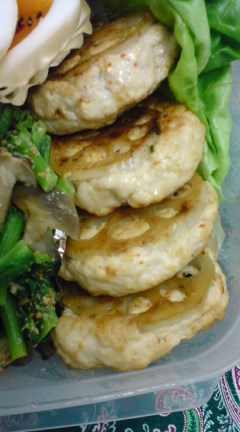
日本語のブログ
—————————————-