Please check the new postings at:
sake, shochu and sushi
—————————————-
日本語のブログ
—————————————-
Here is another fish, second only to tuna, so popular in Japan!
Anago/Conger Eel
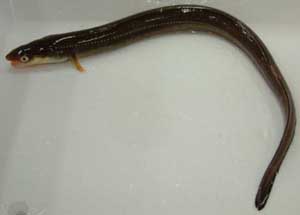
Anago or Conger Eel, a favourite all over Japan, does come in many varieties, some edible, some not.
The most popular conger eel in Japan is “Maanago” (“True Conger Eel”).
It is also called “Anago”, “Hakarime” and “Hamo” (although this particular kind should be treated separately)
Summer is the best season, although they are available all year round in Sushi restaurants.
They are mainly caught in Tokyo Bay, Jyowata Bay and Seto Sea.

Most Japanese appreciate them first boiled in broth then cooked on a grill over charcoal fire and then dipped in “tare/Japanese grill sauce”.


As for nigiri, they come in many guises: topped with “tare” (sauce) or just with a light brush of shoyu (see above pics)


Or a bit on the crispy side, or on the very soft and melting one (see above pics)
It basically depends on the chef’s skills and preferences.

One should not forget they also taste great as tempura, including the bones, a particular favourite of mine!
Samples with bright skin transaprent flesh are the best.
Imports from China and Korea have increased recently, although Japan is starting putting strong regulations to protect the species.
As for Shizuoka Prefecture, we do have access to fresh fish. Select your sushi restaurant accordingly!
———————————
Unagi/Common Eel
Unagi or common eel is fish which made Hamanako/Hamana Lake famous in western Shizuoka Prefecture.
As summer approaches, the Japanese are looking forward to eat the delicacy as it is supposed to revitalize your body on very hot days.
Also called “Kayoko”, “Subera” or “Aobai”, it is farmed mainly in Shizuoka, Aichi and Gifu Prefectures.
It is only in the Edo Period that the Japanese starting it after they realized it could not be eaten raw as opposed to anago/conger eel or hamo/pike conger eel (coming soon!).
Japan presently produces more than 24,000 tonnes and still imports 14,000 tonnes whole and 71,000 tonnes cooked, most of it from China.

It is quite popular as nigiri in any part of Japan.

But the Japanese are simply crazy about “kabayaki”, which requires to grill and baste the fish at the same time, a fairly tedious process. It is a bit of an acquired taste as the connoisseurs eat the skin, which a bit oily to my liking.
In Hamamtsu, it is possible to eat the real wild fish in a very few restaurants, but you will know the difference when the bill comes!

 SHIZUOKA GOURMET