Tag Archives: Cooking

Vegetables Facts and Tips (3): Broccoli


The Japan Blog List

Please check the new postings at:
sake, shochu and sushi

—————————————-
日本語のブログ
—————————————-
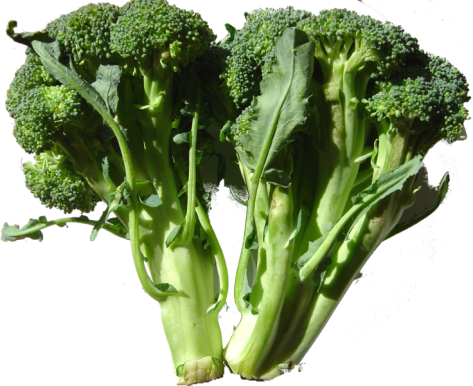
broccoli-1a

In a recent National Geographic Magazine survey, Broccoli was at the very top when considering nutrients beneficient to humans in our everyday food!

Vegans, Vegetarians and Omnivores, rejoice! Doctors, start moaning!
A cousin of cabbages and cauliflowers, the flowers are the mainly consumed part, but people forget that the stems are great, too (explained later)!

FACTS:
-Season: November to January and March to April in the Northern Hemisphere.
-Main elements:
Carotene, Vitamin C and Vitamin E in very large amounts. Together they combine as an elixir to fight ageing and stress.
Potassium
Iron, which helps increase red blood cells and control cholesterol.
Calcium
Fibers, which help digestion.
Sulforafan which helps fight poisonous intruders.

VARIETIES:
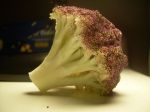
broccoli-2
Italian red broccoli

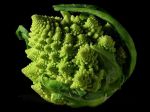
broccoli-romanesco
Broccoli Romanesco, a favourite of mine!
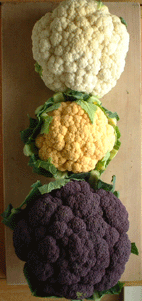
broccoli-colour
In Japan, a violet variety (bottom) is becoming popular, making for some great combinations with white and yellow cauliflower,
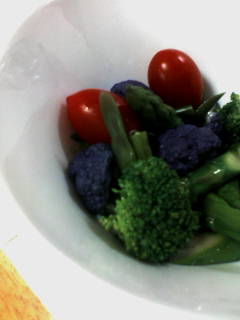
broccoli-dish
and other dishes!

TIPS:
-As I said above, the stem is not only edible, it is succulent, with a taste between avocadoes and asparaguses! Peel the skin, cut it in any shape you wish and boil it for a while in slightly salted water. let cool and use for salads, stews and gratins!
-Choose specimens with big and dense buds, shiny and fat stems. Check whether the cut at the stem looks fresh!
-After boiling in slightly salted water, plunge into cold water immediately. The colour will not change!
-Preservation: Wrap in wet paper towel, seal it inside a polyester rigid box and keep inside refrigerator’s chilled compartment away from light.
As it will change in contact with natural light, better to cut it, boil it, cool it, seal it inside vinyl pouches and freeze if you have too much of it!
Vegetables Facts and Tips (2): Tomatoes


The Japan Blog List

Please check the new postings at:
sake, shochu and sushi

—————————————-
日本語のブログ
—————————————-

tomato1

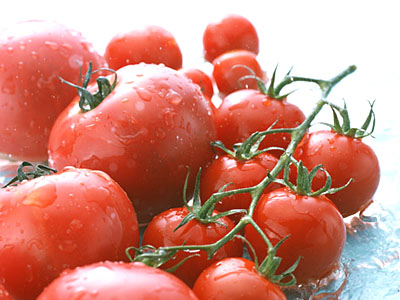
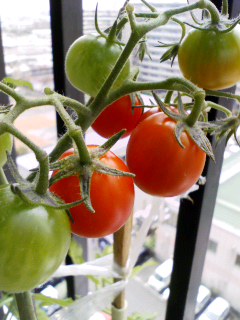
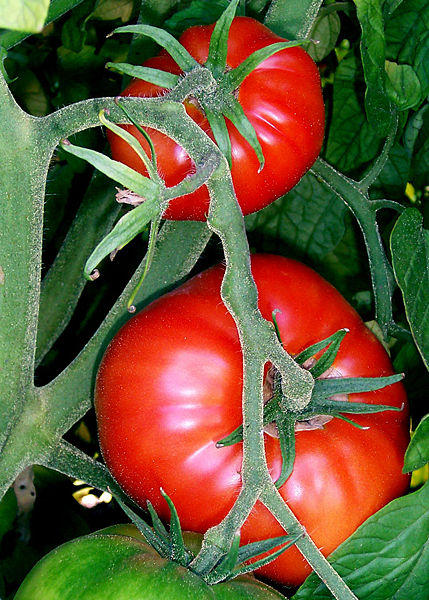
Tomatoes have laid on our tables for so long that we have almost forgotten they came from South America. The Spanish and the Portuguese ignored them. The British studied them. The French brought them to Europe under the name of “Love Apple”, a name still existing in Italy. So it is said,…

tomato-fruit
“Fruit Tomatoes”

This summer-maturing fruit can be bought all year round with the interesting consequence that tomatoes ripened in winter are sweeter than their summer cousins as they contain less water, earning themselves the name of “fruit tomatoes”, a great oxymoron, if there was one!

Thanks to consumers’ insatiable appetite for novelty, tomatoes are grown into all kinds of size, shape and colour.
Just to cite a few, the following are the most popular in Japan:

tomato-momotaro
“Momotaro Tomatoes”

-Momotaro (after the Japanese “Peach Boy” tale), which becomes “Fruit tomato” in winter.

tomato-midi
“Midi Tomatoes”

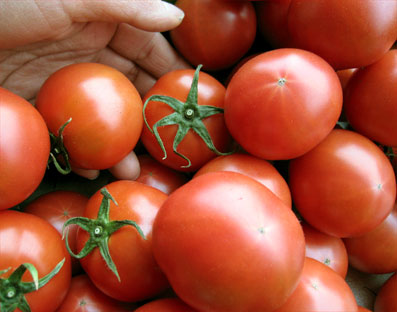
-Midi Tomato (sometimes called “Plum tomatoes”), a larger cousin of the “Mini tomato”, is very sweet and very high in nutrients. Its aroma has a particularly long life.

tomato-italian
“Italian tomatoes”

-Italian Tomato: mainly used for cooking, it may often come in a comparatively elongated shape.
It contains less water and reveals both large amounts of sweetness and acidity, making it very conducive to long cooking with the extra bonus of actually improving in taste upon heating.

tomato-mini
“Mini Tomatoes”

-Mini Tomato: one-bite sized, it is also called “Petit tomato”. It contains twice as many Vitamin C, and it is very rich in beneficient ingredients.

tomato-yellow-mini
“Yellow Mini Tomatoes”

-Yellow Mini Tomato: characteristic for a lot of sweetness and very little acidity. Very handy for children who dislike vegetables!

rubbins
“Ameera Rubbins”

-Ameera Rubbins: with its larger Ammeera tomato, it is grown exclusively (until now, but they are bound to expand beyond our borders!) in Shizuoka Prefecture. They are the sweetest of all, tasting like strawberries, and very firm, making them ideal for decoration, notwithstanding their nutrient value. The smallest variety called “Rubbins” is grown by only two farmers near Iwata City!

tomato-micromini
“Micro Mini Tomatoes”

-Micro Mini Tomatoes: increasingly popular, they are only 8~10 mm and look somewhat like redcurrants. Very tasty with a beautiful acidity, the Japanese use them not only in salads, but also as the final touch on a plate of sashimi!

FACTS:

-Season: All year round
-Main elements: Licopin (Ricopin), Vitamin C, B Vitamins, Potassium, Pectin, Luchin (Ruchin).
Licopin is a carotene variety particularly beneficial in fights against allergies and ageing. The Potassium and Vitamin C and Pectin help control cholesterol in blood.
Luchin reinforces capillary veins and arteries.
Recent researches in Germany and China have proven that tomatoes help control high blood pressure.
Who said that the Italians look healthier than everybody else? LOL

TIPS:

-Choose tomatoes with a deep colour and healthy strong skin!
-Preservation: before storing them into the vegetable compartment of your fridge, wrap themin newspaper or put them inside a vinyl bag, or even better, inside a rigid plastic sealed box.
-Peeling: better than boiling water, direct contact with a flame! Make a very shallow cut near the stem area, firmly stick a fork or thin skewer into the stem area, hold the tomato directly over the gas flame for a few seconds, then plunge it into cold water. Skin should come off very easily.

Vegetables Facts and Tips (1): Potatoes


The Japan Blog List

Please check the new postings at:
sake, shochu and sushi

—————————————-
日本語のブログ
—————————————-

potatoes

This is the first of a series of articles on vegetables, which I hope will help my vegan and vegetarian (I’m not!) friends.
Incidentally、 nothing, pictures included, is copyrighted in my food blogs, so please feel free to use anything!

POTATOES

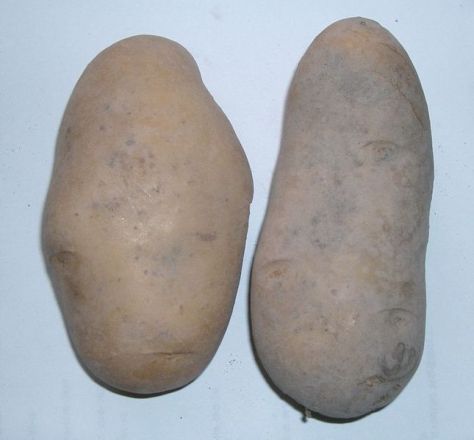
danshaku-potato
“Danshaku”

Potatoes were first introduced to Japan in 1910 by Baron Kawata from Great Britain/Ireland giving the name of “Danshaku/Baron” to the most commonly used potato in Japan, especially in croquettes and salads.

The biggest potato exporters to Japan are China and India, although more and more grown locally.
The varieties found in supermarkets are:

kitaakari-potato
“Kita Akari” used for mashed potatoes and croquettes,

mayqueen-potato
“May Queen” used in stews,

toyoshiro-potato
“Toyoshishiro” used for fried potatoes,

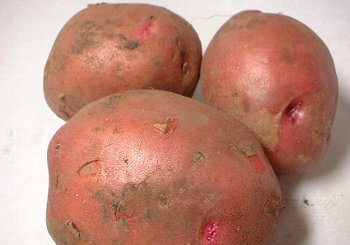
redandespotato
“Red Andes” used for croquettes and Pot au feu,

incanomezame-potato
“Inca No Mezame” used for stews.

Potatoes are available all year round, but are at their peak from February to May when new potatoes can be eaten whole!

FACT CARD:

-Season: All year round
-Main elements: carbohydrates (high energy), Vitamin C1, B1 (thanks to a large amount of natural starch in potatoes, the vitamin C will resist heating!), Potassium
-Preservation: Wrap potatoes inside newspaper and keep them in a dark, well-ventilated place away from the sunlight.

TIPS:

-Choose specimens well-rounded and with healthy skin. Avoid specimens with buds or of greenish colour (risks of diarrhea). Cut out all “dark spots”!
-To avoid a change of colour, wash potatoes in water after peeling or cutting.
-If you want to keep your potatoes for a while after boiling them, plunge them in (change it as many times as necessary) cold water until completely cooled down. They will not break or crumble when used later.
-After boiling cut potatoes, throw away water and keep heating them until they have lost a great part of their moisture. They will attain a crispy enough nature without resorting to deep-frying!

Japanese Fast Food

Please check the new postings at:
sake, shochu and sushi

—————————————-
日本語のブログ
—————————————-

jap-fast-1

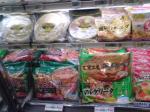
Fast food is not an American invention. And our friends on the other side of the Pacific Ocean may not even boast the dubious title of the biggest junk food producer. The Chinese and Japanese are way ahead!

jap-fast-4 jap-fast-5 jap-fast-6 jap-fast-7

Italian “invented” slow food, but as far as as fast food is concerned, the French may claim to be the initiators when Napoleon ordered the production of the first-ever canned food in 1810!

junk

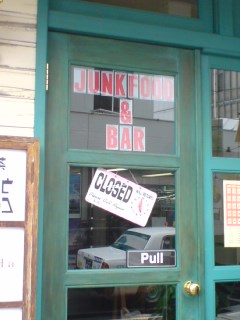
Japan, as demonstrated in other firleds, is a living contradiction. Here you have nation which prides itself, deservedly, in creating arguably some of the best gastronomy in the World. On the other hand, it has become a paradise for junk food packet collectors!
Some establishments go as far as advertising their food as “junk food” (see pic above taken in Shizuoka City)!
An interesting twist is that the Japanese make a point of advertising their “fast food” as “instant food”!

jap-fast-8

Americans have the hamburger, which incidentally could make for a properly balanced meal if fries (don’t call them French, they are Belgian!) and soda drinks (no names here as someone might sue me!) were not adding as many calories (empty) on top of the most popular meat contraption (no names, either!) in The US and the World.
jap-fast-2
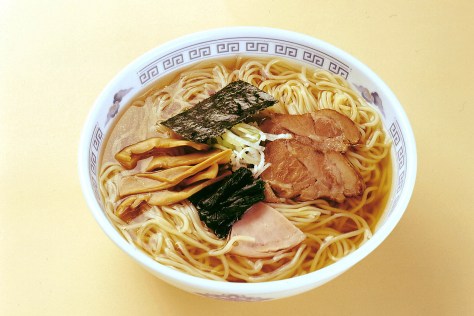
Ramen is the exact replica in Japan when it comes to unwanted salt, empty calories and what else when served at cheap food stands, or dehydrated in “convenience stores” and supermarkets.
Do not misunderstand me: ramen can make for a great meal too with the correct addition of fresh greens, fresh meat or fish!

jap-fast-3

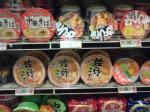
But more dangerous, because they are the epitome of practicality, are the notorious “Cup Noodles” whose concept has been adopted under many guises all over the World, even on planes!
Next time you order or buy one cup for a quick fix, ponder a while on the amount of salt, preservatives, additives and more that you are going to inject into your system!

N.B.: Whereas I’m careful about citing American brand names, “Cup Noodles”, although a brand name, is considered as a variety of food, not a particular brand.
That is unless someone somewhere begs to differ!