Tag Archives: レシピ

Japanese Cuisine: Kakuni-Recipes 2

KAKUNI-RECIPE-2-a

Here the second of a series of recipes for Kakuni, a bit more sophisticated than the first one, but still very easy!

INGREDIENTS: For 4 people

-Large raw pork belly lumps: 1 kg
-Fresh ginger: choose a root (or part of), about 5cm long and 2 cm thick/Sliced
-Brown sugar: 50 g
-Honey: 50 ml (liquid)
-Japanese sake: 60 ml
-Soy sauce: 120 ml
-Water: 600 ml
-Star anise: 1

RECIPE:
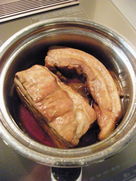
KAKUNI-RECIPE-2-b

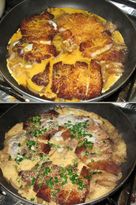
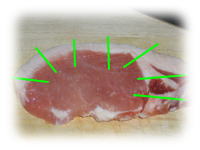
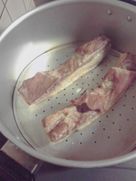
-Steam pork in steamer on a low fire for 2 hours.
KAKUNI-RECIPE-2-c

-Cool down pork completely. This is important as this will help tenderize the meat!
Cut in bite size.
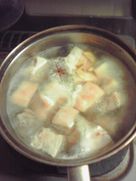
Put all the pork in deep pan. Add water, Japanese sake, sliced ginger, brown sugar and honey.
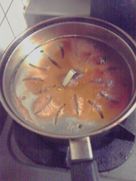
KAKUNI-RECIPE-2-d

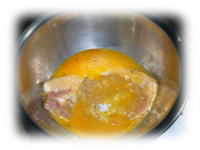
-Add soy sauce and star anise. Simmer on a low fire for 30 minutes. Keep taking out the foam to remove harshness.
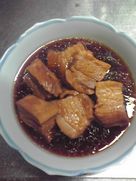
KAKUNI-RECIPE-2-e

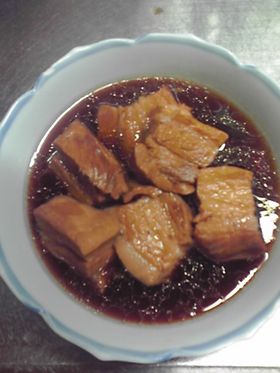
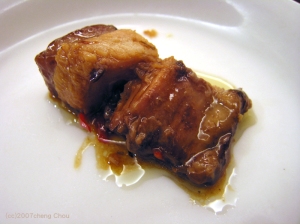
-When ready serve with its juices/soup and strong mustard.

NOTE:
Do not add star anise at once as the taste might become overwhelming for some people.
Of course, this recipe is adapatble.
You may add chili pepper and other spices of your preferences, or even Chinese ingredients!

Please check the new postings at:
sake, shochu and sushi

—————————————-
日本語のブログ
—————————————-
Japanese Cuisine: Kakuni-Recipes 1

KAKUNI-RECIPE-1-a

Here the first of a series of recipes for Kakuni, that is a very basic one!

INGREDIENTS: -Large raw pork belly lumps: 1 or 2 (depending on thickness and width)
-Fresh ginger: 1 or 2 pieces (5×5 cm)
-White leek: 1
-Rice vinegar: 50 ml
-Soy sauce: 50 ml
-Sweet sake/mirin: 50 ml
-Honey: 1 tablespoon
-Water: 4–~500 ml

RECIPE:

-Thinly slice the fresh ginger. Cut the leeks into small trunks. Punch holes in the pork with a fork to help “taste going inside”.

KAKUNI-RECIPE-1-b

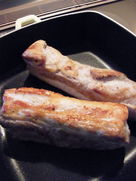
-Fry pork on a frypan on all sides on a strong fire until all colour has completely changed and fat has changed colour.

KAKUNI-RECIPE-1-c

-In a large pot, drop/pour all ingredients, add por, cover with lid and simmer over low medium fire for 60 minutes.
If meat does not cook as quickle as wanted, raise fire after 30 minutes.
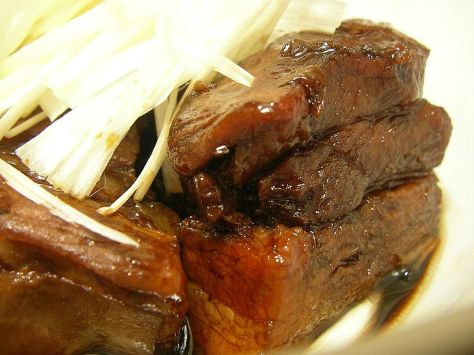
Simer until juices have reduced as low as on pic.

-Cut the pork into large size bites and simmer again for 5 minutes.

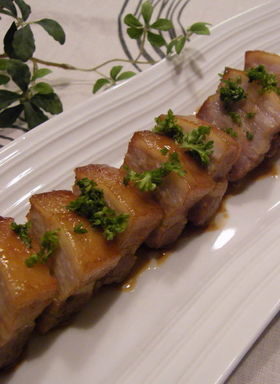
-Place on a serving meat cuts on a serveing dis. Pour juices/sauce all over and add some chopped thin leeks.

Please check the new postings at:
sake, shochu and sushi

—————————————-
日本語のブログ
—————————————-
Today’s Lunch Box/Bento (’09/59)

BENTO-09-09-01a

Today’s bento called be called “The Morning After” Bento!
Last night the Missus and I had a long celebration and we had som ediggiculty to wake uo this morning…
At first the Missus told me she would not mind if I bought and ekiben/Railway Station Bento, but she changed her mind after having a look at the fridge.

BENTO-09-09-01b

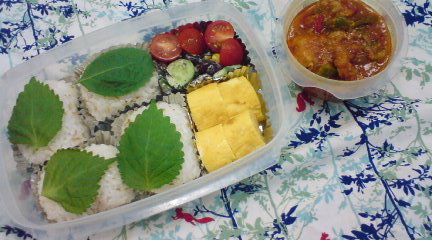
In the end, it turned out to be an easy classical bento:

BENTO-09-09-01d

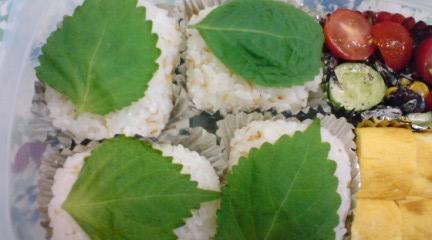
The rice balls/musubi were made of rice freshly steamed together with umeboshi/Japanese pickled plum and then mixed with white sesame seeds and topped by small shiso/perilla leaves we grow on our balcony.

BENTO-09-09-01c

Simple unadorned tamgoyaki/Japanese omelette and a salad made of beans, hijiki/sweet seaweed and cucumbers/mini tomatoes.

BENTO-09-09-01e

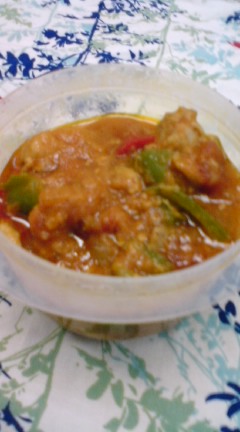
Not “savoury” was chicken ratatouille she had prepared the morning before (not bad at all, actually!).
For dessert I had some cheese that I keep in the fridge at work.
Healthy and plenty actually!

FATHER-COOKING

here is another pic of my “roots”:
My 85-year old Dad cooking his favourite turkey steaks!

Please check the new postings at:
sake, shochu and sushi

—————————————-
日本語のブログ
—————————————-
Japanese Cuisine: Kakuni

KAKUNI-1

Kakuni (角煮) is a Japanese braised pork dish which literally means “square simmered”.

Kakuni is a meibutsu (名物/famous regional product) of Nagasaki.
Actually this is not a strictly traditional Japanese dish as its most likely Chinese, similar to Dongpo’s pork, though not as heavy in sauce.

KAKUNI-2
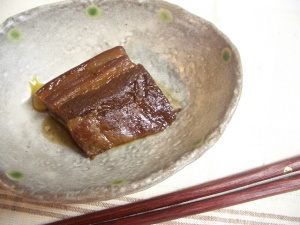
Kakuni as served in some restaurants cut and cold

During the Ming Dynasty and Song Dynasty, the main Sino-Japanese trading route existed between Hangzhou and Kyūshū. Many Chinese lived in major Kyūshū port cities, such as Nagasaki and Japanese in Hangzhou. Therefore pork, was popularized in major Kyūshū cities.
These days kakuni is popular all over Japan with very many varieties depending on the region, climate and prevailing tastes.

KAKUNI-RAFTI

Okinawa, probably the region in Japan consuming the largest quantity of pork in Japan has its own recipe called “Rafti”!

PREPARATION:
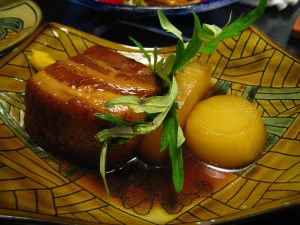
Kakuni is made of thick cubes of pork belly simmered in dashi, soy sauce, mirin, sugar and sake. By cooking it for a long time over a low temperature the collagen breaks-down into gelatin keeping the meat moist while becoming extremely tender allowing it to be consumed with chopsticks easily. The dish is often served with scallions, daikon and karashi.

Will publish a recipe soon!
——————————————

DONG PO ROU

KAKUNI-DONGPO

For the record, as it is the origin of Kakuni, Dongpo’s pork is a famous Hangzhou dish which is made by pan-frying and then red cooking pork belly. The pork is cut to around 2 inches square in dimensions, consisting of half fat and half lean meat. The mouth feel is oily but not greasy, with the fragrance of wine.

ORIGINS:
Legend has it that while Su Dongpo was banished to Huangzhou, in a life of poverty, he made an improvement of the traditional process. He first braised the pork, added Chinese fermented wine and made red-braised pork, then slowly stewed it on a low heat. This dish was first launched in Huangzhou, then spread to Hangzhou, the capital of the Southern Song Dynasty, flourished, and then became one of Hangzhou’s most famous dishes.

Please check the new postings at:
sake, shochu and sushi

—————————————-
日本語のブログ
—————————————-

Japanese Cuisine: Chazuke

CHAZUKE-1

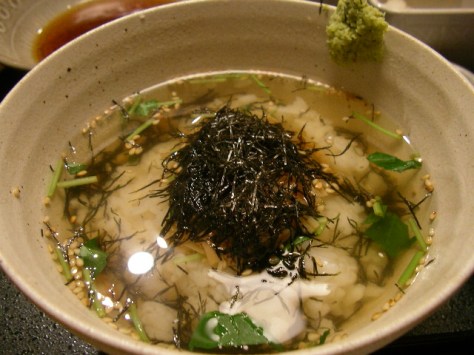
Chazuke (茶漬け, ちゃづけ) or o-chazuke (お茶漬け, from o + cha/tea + tsuke/submerge, marinate) is a simple Japanese dish made by pouring green tea, olong tea, dashi, or hot water over cooked rice roughly on its own or accompanied by all kinds of toppings.
It is very popular in izakaya at the end of the meal, or in homes in the evening making use of the rice steamed in the morning.
As Shizuoka is the largest grower of tea and wasabi in Japan, it is a very common way of eating and seasoning leftover rice here!

It is also known as cha-cha gohan.

Common toppings include tsukemono, umeboshi (both types of pickles), nori (seaweed), furikake, sesame seeds, tarako and mentaiko (salted and marinated Alaska pollock roe), salted salmon, shiokara (pickled seafood) and wasabi.

This dish first became popular in the Heian period, when water was most commonly poured over rice, but beginning in the Edo period, tea was often used instead.

In Kyoto, ochazuke is known as bubuzuke. When a Kyoto native asks if a guest wants to eat bubuzuke, it really means that the person has overstayed and is being politely asked to leave.

Since the 1970s packaged “instant ochazuke”, consisting of freeze-dried toppings and seasonings, have become popular.

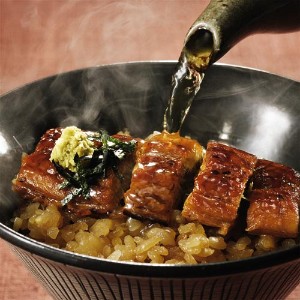
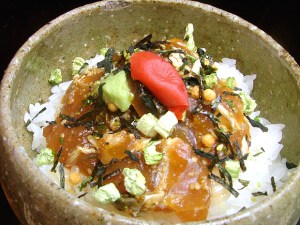
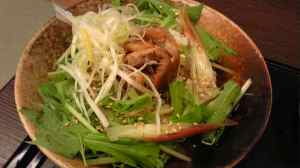
Chazuke, for all its humble origins can become a fairly sophisticate dish of its own as shown by a few examples below:

CHAZUKE-2

In Shizuoka we pour hot green tea over a bowl of rice and broiled eel!

CHAZUKE-3-TAI

Over Tai/Seabream sashimi!

CHAZUKE-4-SALMON

With salmon, especially in Hokkaido!

CHAZUKE-5-ABURI-MAGURO

Even more sophisiticated with aburi maguro/seared tuna, and chopped fresh vegetables!

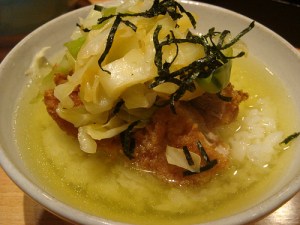
CHAZUKE-6-TONKATSU

With tonkatsu for the big appetites!

CHAZUKE-7-MUSUBI

With a grilled “musubi” for more rice!

Please check the new postings at:
sake, shochu and sushi

—————————————-
日本語のブログ
—————————————-
Japanese Cheese: Tokachi Millenium Forest

TOKACHI-CHEESE1

The Japanese have been steadily increasing their own cheese production for the last 10 years or so with some reamarkable results.
Moreover, these cheese have slowly but steadily become available over the whole country at specialised shops and department stores.

TOKACHI-CHEESE2

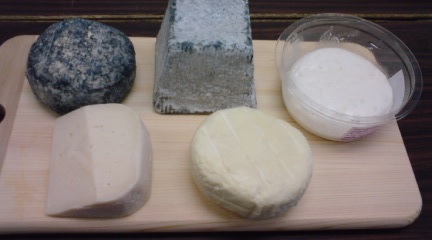
My last discovery concerns a whole range of goat cheeses created by Fran Fran Farm under the name of Tokachi Millenium Forest Company. The company was founded on September 21st 1996 with the idea of producing local products and promoting the environment.
The cheeses, if somewhat mild in taste, are definitely worth exploring!

Here is what I found about them:

TOKACHI-CHEESE3
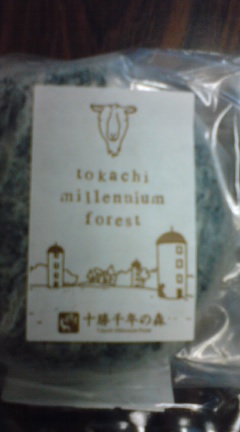
http://www.tokachi.com/

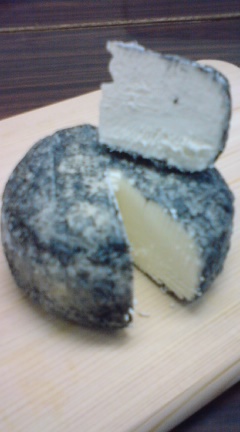
This cheese is inspired by, if not the shape, French Saint-Maure, a fresh goat-cheese type covered with wood ash.
Firm, but easy, it is very mild. To be savoured on its own.
Pasteurized.

TOKACHI-CHEESE4

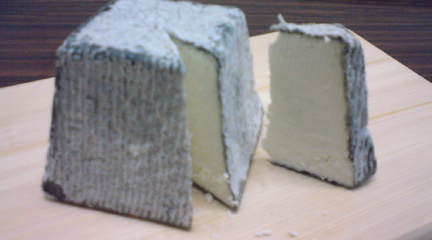
This particular cheese has the shape, colour and texture, and the taste of a French Valencay. Solid but soft on the tongue. Great on its own or with a salad.
Pasteurized.

TOKACHI-CHEESE5

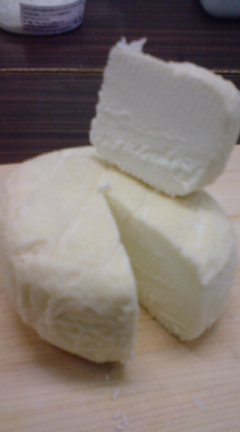
This cheese is semi-hard type, very reminscent of the same produced in Italy.
Stronger taste, but very pleasant. Great on its own or cooked.
Pasteurized.

TOKACHI-CHEESE6

This cheese is reminiscent of a French Santranges before aging dries it up and leaves mold on its surface.
Firm in texture,but soft on the tongue in spite of a pronouced taste.
Would be greated toasted on a salad!
Pasteurized.

TOKACHI-CHEESE7

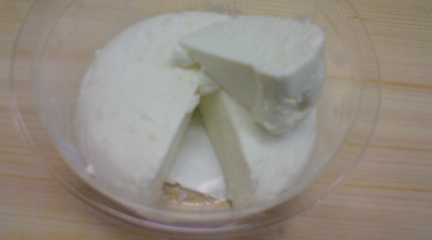
This cheese is the only one made from raw milk in that series.
Very much like a fresh Brousse from Corsica, France. Has already developped a strong taste of its own. If aged properly, coild become a very interesting cheese. To be eaten on its own with a Port!

All these are surprisingly “mature” in taste for Japanese cheese, which shows that cheese in Japan definitely has a future!

Fran Fran Farm
Hokkaido, Kamikawa Gun, Shimizu Cho, Hatainan, 10 sen
Tel.: (81)(0)156-63-3400
HOMEPAGE

Please check the new postings at:
sake, shochu and sushi

—————————————-
日本語のブログ
—————————————-

Japanese Cuisine: Yakitori-Tsukune

TSUKUNE-5
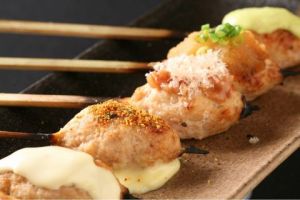
Modern tsukune at Japanese Izakaya

Yakitori is not only all parts of a chicken (or other bird, actually) on sticks or skewers.
One very popular yakitori is “Tsukune”!
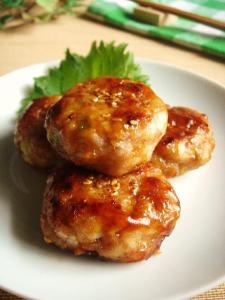
Tsukune (つくね) could described as a japanese chicken meatball either on stick or completely separate.

Whereas usual yakitori requires fine products and sauce (and a cooking skills) only, tsukune calls for a real recipe.

TSUKUNE-2
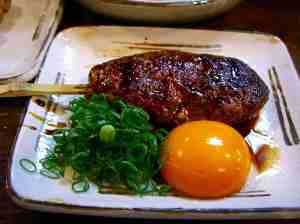
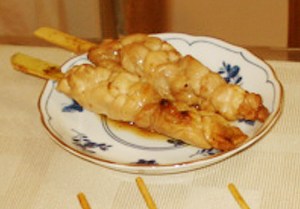
Traditional tsukune serves with egg yolk and chopped leeks.

Traditional tsukune are presented as a single larger sausage-shaped “ball” grilled around a skewer and will be served with some sauce and an egg yolk (either chicken or quail). A good amount of chopped leeks is always welcome.

TSUKUNE-4

Home-made tsukune will be simpler and served as chicken meat balls with home-made or bought tare/sauce.

TSUKUNE-3

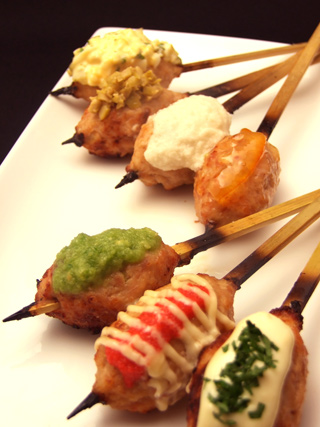
Modern tsukune seem come in many varieties all on the same plate. Actually the toppings are different but the meat balls are the same.

TSUKUNE-1

They certainly look appetizing!
Thay are fine, but as a purist I still prefer the traitional ones!

Next, I will publish a recipe!
You will find out there more ingredients included than in simple chicken balls!

Please check the new postings at:
sake, shochu and sushi

—————————————-
日本語のブログ
—————————————-
Japanese Cuisine: Yakitori-The Basics

YAKITORI-1

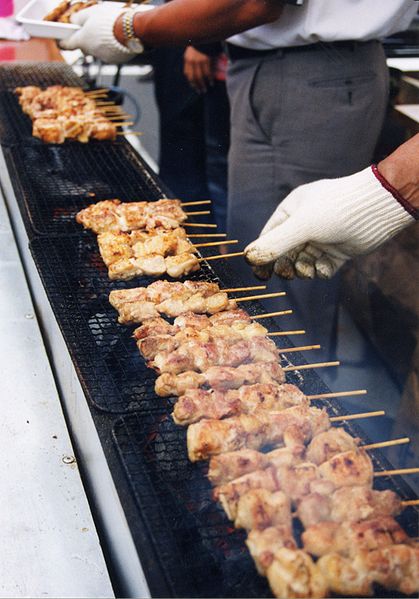
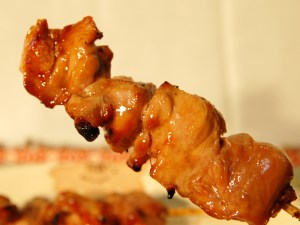
Yakitori (焼き鳥 やきとり), or fried chicken, is a Japanese type of skewered chicken that is found everywhere in Japan and i many countries abroad.
They are served all year round and have the advantage not only to be tasty but very healthy as meat comes by.

It is made from several bite-sized pieces of chicken meat, or chicken offal, skewered on a bamboo skewer and barbecued, usually over charcoal.

Diners ordering yakitori usually have a choice of having it served with salt (and sometimes lemon juice) or with tare sauce, which is generally made up of mirin, sake, soy sauce and sugar. The sauce is applied to the skewered meat and is grilled until delicately cooked and is served with the tare sauce as a dip.

Ways of serving naturally vary with regions.

YAKITORI-MURORAN

As served in Mururoran, Hokkaido.

YAKITORI-EHIME

As served in Ehime Prefecture, Shikoku Island.

One can order for sets or individually.
In the later case, you would do weel to remember basic names:

YAKITORI-HATSU
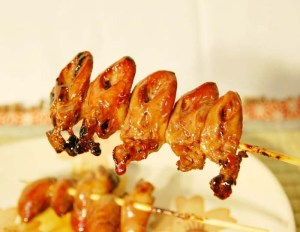
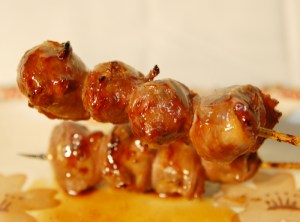
hatsu (ハツ) or kokoro (こころ), chicken heart

YAKITORI-LIVER
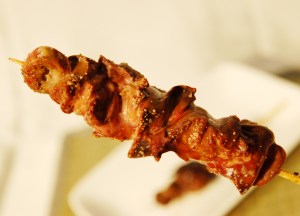
rebā (レバー), liver

YAKITORI-SUNAGIMO
sunagimo (砂肝), or zuri (ずり) chicken gizzard

YAKITORI-TSUKUNE
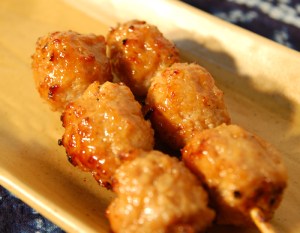
tsukune (つくね), chicken meatballs
Great served with an egg yolk and tare!

YAKITORI-KAWA
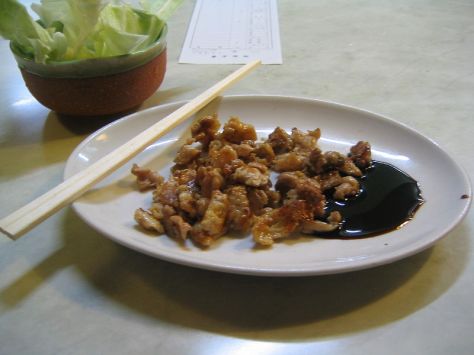
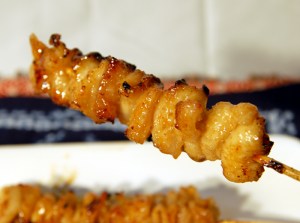
(tori)kawa ((とり)かわ) chicken skin, grilled until crispy

YAKITORI-TABASAKI
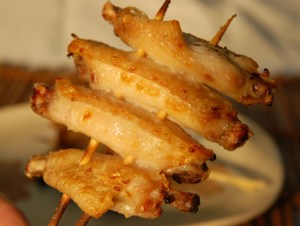
tebasaki (手羽先), chicken wing
The same can be ordered whole.

YAKITORI-BONCHIRI
bonjiri (ぼんじり), chicken tail

YAKITORI-SHIRO
shiro (シロ), chicken small intestines

YAKITORI-NEGIMA
ikada (筏) (lit. raft), Japanese scallion, with two skewers to prevent rotation. Also called negima (ネギ間)

YAKITORI-AOTO
Aoto (青と). Here the leek/scallion is rolled insde the chicken

YAKITORI-KASHIRA
Kashira (かしら) made from the tender par of the breast.

YAKITORI-SESERI
Seseri (せせり) similar to kashira

nankotsu, chicken cartilage
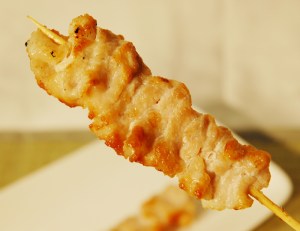
toriniku, Free Range “Chicken of the Earth” (all white meat on skewer)

Common kushiyaki (non-poultry) dishes:

atsuage tofu (厚揚げとうふ, deep-fried tofu)
enoki maki (エノキ巻き, enoki mushrooms wrapped in slices of pork)
pīman (ピーマン, green pepper)
asuparabēkon (アスパラベーコン, asparagus wrapped in bacon)

YAKITORI-BUTABARA
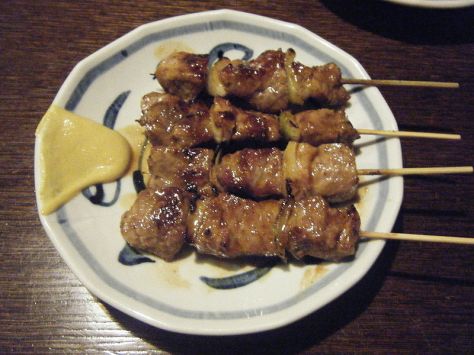
butabara (豚ばら, pork belly)

gyutan (牛タン), ox tongue, sliced thinly

Naturally if you take purely regional specialties in account, there are many more!

Please check the new postings at:
sake, shochu and sushi

—————————————-
日本語のブログ
—————————————-

Tonkatsu Recipes 2: Katsudon

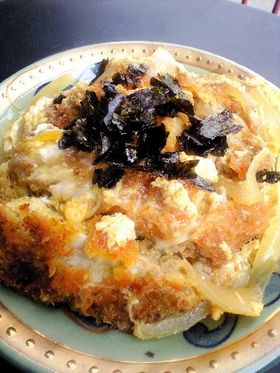
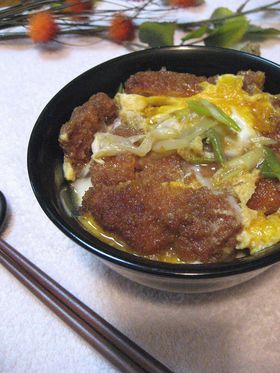
TONKATSU-KATSUDON-3

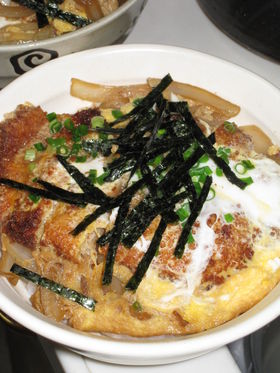
Katsudon is the favorite dish of famous Japanese baseball players such as the Yankees’ Hideki Matsui. In hard-boiled Japanese films, it is a dish served to villains under police interrogation!

If you have grasped the recipe for tonkatsu and oyakodon, it is pretty easy to make.

Here is a variation very popular in Japanese homesteads:

INGREDIENTS: For 4 people

-Tonkatsu:
Pork cuts: 4
Black pepper: to taste
Flour: 2~3 tablespoons
Egg: 1
Breadcrumbs/Panko: 1~2 cups
Frying oil

-Soup Stock:
Sugar: 1 tablespoon
Jaoanese sake: 50 ml
Sweet sake/Mirin: 50 ml
Soy sauce: 50 ml
Dashi (or soup stock): 100 ml

-Others:
Onion: 1 large
Sesame oil: 1 tablespoon
Steamed rice: enough for 4 servings
Eggs: 4~5
Trefoil or other leaf vegetables (including thin leeks,…): chopped, to taste
Dry seaweed/Nori: Finely cut, to taste

RECIPE:

KATSUDON-RECIPE-1

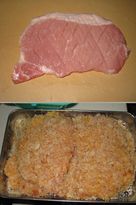
Make shallow cuts every 3~4 cm along the rim of the pork cuts (to prevent thme from bending or contracting). Sprinkle with black pepper, Roll in flour, then egg and last in breadcrumbs like in normal tonkatsu recipe.

KATSUDON-RECIPE-2

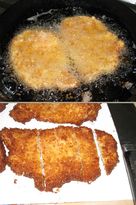
Deep-fry at 170~180 degrees Celsius.
Fry until breadcrumbs have become solid. Only then you may manipulate the tonkarsu and turn it over inside the oil.
Once cooked, cut it in serving size slices when still hot.

KATSUDON-RECIPE-3

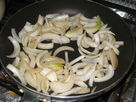
Cut the onion in half first, then into about 5 mm thick slices. Fry in sesame oil until they become translucent.
During that time, pour sake and mirin in a small pan and bring to boil. Add sugar, soy sauce and dashi. Bring to boil.

KATSUDON-RECIPE-4

Pour soup on onion and bring to boil.
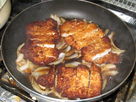
Drop in allthe cut tonkatsu and cook for a couple of minutes.

KATSUDON-RECIPE-5

Lower fire a little so that the soup does not boil. Pour the eggs well-beaten and add trefoil. Cover and cook on a medium fire for about a minute.
Eggs should be cooked on top but still half-cooked under. Make sure the eggs fill the spaces betwen the pork cuts.

KATSUDON-RECIPE-6

Fill each bowl with steamed rice and cover each with tonkatsu and omelette. Pour the left over soup over the top. Add dry seaweed on top and serve!

OTHER KATSUDON SAMPLES:

TONKATSU-KATSUDON-1

TONKATSU-KATSUDON-2

Please check the new postings at:
sake, shochu and sushi

—————————————-
日本語のブログ
—————————————-
Tonkatsu Recipes 1: Basic Recipe

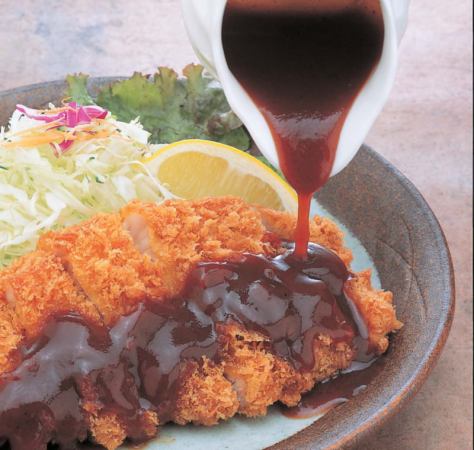
TONKATSU-PH

Tonkatsu, if properly organized, is not difficult to cook or prepare.
Here is the first of a series of recipes you easily accomodate to your taste and preferences:

Tonkatsu Basic Recipe:

INGREDIENTS: For one person

-Pork cutlet: one large, 1~2 cm thick. Choose good quality with as little fat as possible, although some around the rim is welcome.
-Flour: 2 tablespoons
-Black pepper: to taste:
-Salt: to taste
-Nutmeg: a pinch (you may use other spices of course, including chili pepper!)
-Egg: 1 large
-Fresh breadcrumbs (if unavailable, use dry breadcrumbs or panko): half a cup
-Deep-fry oil (as fresh as possible!)
-Cabbage (as much as you want, finley shredded)
-Sesame powder/ground sesame seeds: 1 tablespoon
-Tonkatsu sauce: 2 large tablespoons (easily found in markets. You can of course make your own with worcestershire sauce, ketchup, mustard and so on!)

RECIPE:

TONKATSU-RECIPE-1

-Make a shallow incision across the rim every 3~4 cm. It is an important step as it will prevent the meat from contracting or bending!

TONKATSU-RECIPE-2

-In a bowl mix flour, pepper, salt and spices. One can add curry mix powder there, too!

TONKATSU-RECIPE-3

-Cover both side of the pork cut with the flour mixture. Take care not to form lumps of flour.
Trick: Try to use only one hand to come in contact with the food, while the other hand stays dry and can manipulate utensils!

TONKATSU-RECIPE-4

-In a different bowl beat the egg. Preferably do this ahead of everything.
Dip the floured pork cut into the beaten egg.

TONKATSU-RECIPE-5

-Pour the breadcrumbs on a plate and spread it evenly. Thisis also better done before you start anything!
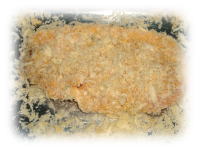
Lay the pork cut on the breadcrumbs and gently press. Cover the top side with breadcrumbs, too and pat gently to help the breadcrumbs adhere. Don’t be afraid of coating with a lot of breadcrumbs!

TONKATSU-RECIPE-6

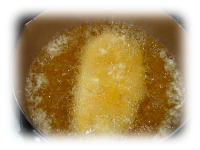
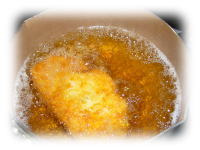
-Heta the oil to 170 degrees Celsius. Drop a little breadcrumb in the oil to check if it’s hot enough. It should start frying with bubbles right away. Drop the pork cut gently into the oil to avoid any accident.

TONKATSU-RECIPE-7

-Turn the pork cut over for even frying as it will rise to the surface. Do it as gently as possible either with long wooden chopsticks of frying tongs.

TONKATSU-RECIPE-8

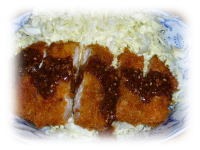
-On a serving plate lay a bed of shredded cabbage decorated with a little parsley and a few lemon slices. Provide some strong mustard if wanted.
Take pork cut out of the oil and lay on a grill for a few seconds to take off excess oil. Transfer onto a working table and cut into strips.
Place it above or beside shredded cabbage in the right order so as to remind you of the original shape.

Please check the new postings at:
sake, shochu and sushi

—————————————-
日本語のブログ
—————————————-

Today’s Lunch Box/Bento (’09/58)

BENTO-09-08-25a

When I came back home last night the Missus’ first question (she alway starts conversations with questions, LOL):
-Wha did you have for lunch?
-Ekiben Bento!”
-You went all the way to the station to buy one?
-Yup!
-Which one did you buy?
-Shizuoka Monogatari!
-Hummm….
She didn’t ask me if I enjoyed it, but she was certainly busy in the kitchen in the mirning, grumbling all the time. Well, if she grumbles, so much the better! (she more she grumbles, the better the food, didn’t I say before?)

BENTO-09-08-25b

She was still grumbling at her own “mistakes” when the bento finally came up. Taking pity of her, I assured her that her mistakes were delicious, that she should not worry…

BENTO-09-08-25c

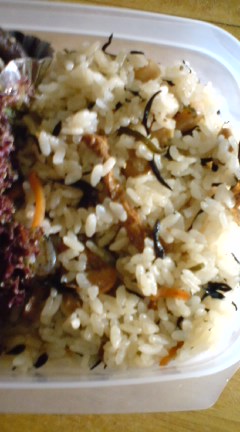
The steamed rice was “maze gohan” style/mixed rice, including beans and sweet seaweed/hijiri carrots and thinly sliced aburaage/fried tofu sheets.

BENTO-09-08-25d

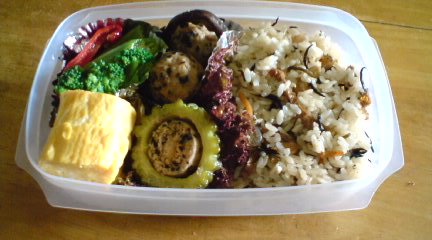
Now, the fried chicken stuffed goya and chicken balls with black sesame seeds were really good. She also made sure I had my favourite tamagoyaki to which she added okra, red pimento, brocoli and lettuce.

BENTO-09-08-25e

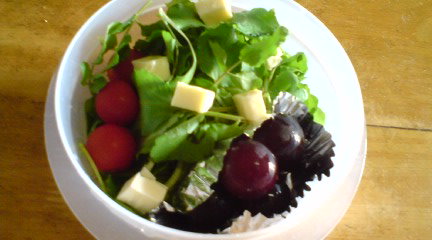
The salad/dessert included cress, mini-tomatoes, cheese cubes and grapes.

I’ll have to find another reason to make her grumble!

Please check the new postings at:
sake, shochu and sushi

—————————————-
日本語のブログ
—————————————-
Ekiben/Railway Station Lunch Boxes-Bento 6

EKIBEN6-1

Today both the Missus were in a bit of a hurry and working early, so she did not have the time to prepare a lunch box/bento as every Monday.
The Shizuoka JR Station not being far from my work place, I visited it at 9:45 a.m. when “freshly prepared” ekiben/Railway Station Bento” arrive at the booth inside this major station.

EKIBEN6-2

There must be more than 12 regular bento any time of the day, although they will be all on sale only from 9:45 a.m. After that the popular ones will rapidly disappear. The displays you see on the picture above are all palstic models (BIG business in Japan!)

As Frank told me some time ago, there is no comparison with what is on offer in Amtrak Stations in the US. I am certain there is a new business opprtunity there!

EKIBEN6-4

These bento purchased at railway stations are completely safe as Japanese rules and regulations are extremely stringent. All the contents are clearly written and a sticker will tell the exact time when usold lunches/dinners will be collected and discarded!

EKIBEN6-3

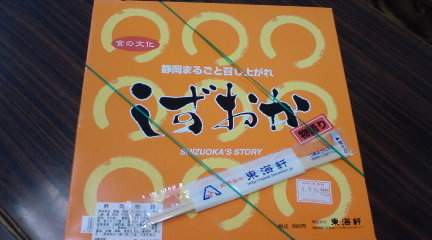
The box will always be accompanied by a pair of disposable chopsticks, so don’t worry about carrying any!
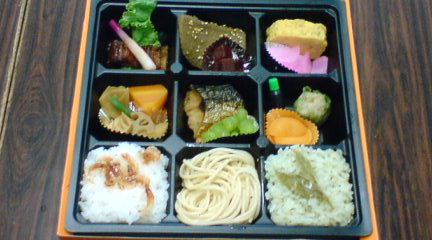
This partiular lunch box is called “Shizuoka Monogatari/Shizuoka Story” and contains mainly products from Shizuoka Prefecture.

EKIBEN6-5

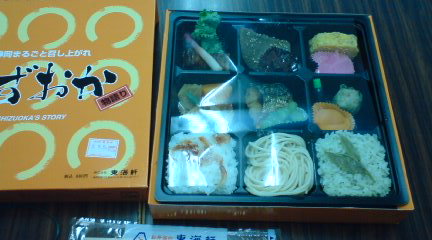
Upon opening the box, you will discover a hard cellophane paper protecting the food inside.

CONTENTS:

EKIBEN6-6

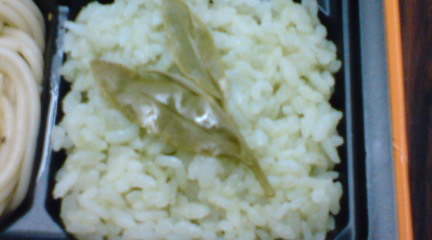
1) Rice steamed in green tea with edible steamed tea leaves (Shizuoka Prefecture produces 50% of all Japanese green tea!)

EKIBEN6-7

2) Spaghetti (for Italian tourists?). The Japanese are simply crazy about them!

EKIBEN6-8

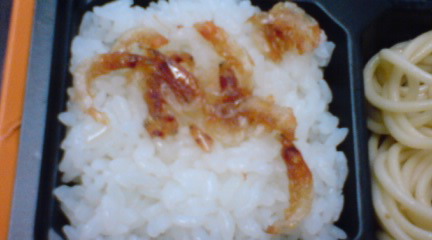
3) Normal steamed rice topped with preserved sakura ebi/cherry shrimps (only found in Shizuoka Prefecture!)

EKIBEN6-9

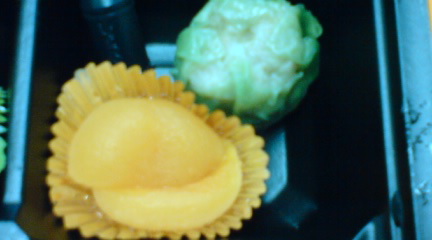
4) Shuumai, soy sauce mini bottle, and apricots (for dessert).

EKIBEN6-10

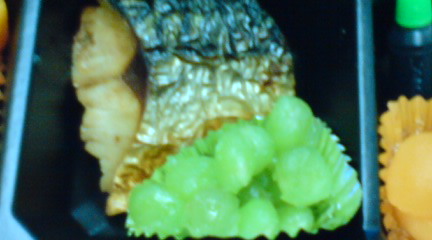
5) Grilled saba/mackerel and sweet beans.

EKIBEN6-11

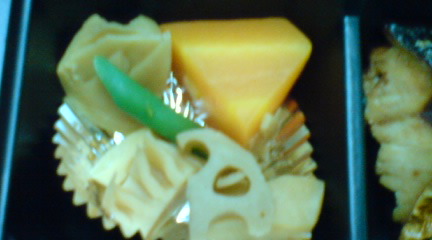
6) Steamed vegetables: Carrot, renkon/lotus roots, takenoko/bamboo shoots and string bean.

EKIBEN6-12

7) Daikon pickled in amazu/sweet vinegar and tamagoyaki/ Japanese omelette.

EKIBEN6-13

8) Two products from Shizuoka: kuro hanpen/sardine paste and sweet maguro dices.

EKIBEN6-14

9? Another product from Shizuoka: Unagi/broiled eel with some lettuce and pickled ginger.

The price: 9 US $! Very good value for a healthy and complete meal!

Please check the new postings at:
sake, shochu and sushi

—————————————-
日本語のブログ
—————————————-
Ekiben/Railway Station Lunch Boxes-Bento 5

SHIMADA-BENTO-1

As I mentioned before, “Ekiben” is the abreviation for “Eki”/Railway Station and “Ben”/Bento-Lunch box.
These packed lunches are extremely popular in Japan (I counted more than 90 in Shizuoka Prefecture alone!).

This particular one is served in Shimada City Railway Stations of Shimada and Kanaya.
Itis named:
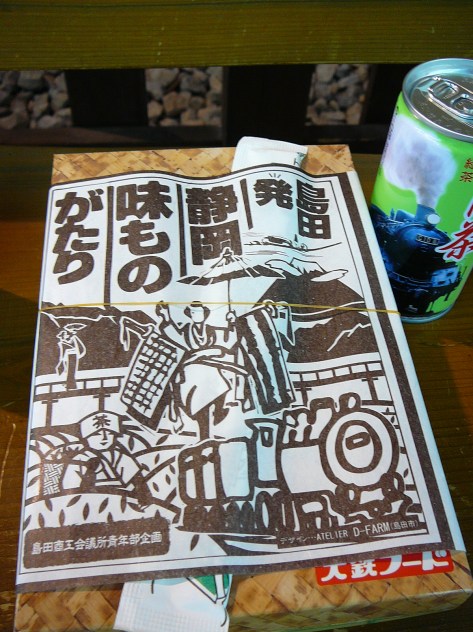
Shimada Hatsu Shizuoka Aji Monogatari/Shimada Departure, Shizuoka Taste Story
Shimada City is famous for its green tea, Japanese sake, Festival and new airport!

SHIMADA-BENTO-4

The rice/gohan part is made up seaweed maki/roll (top).
A little lettuce and more rice in the middle with a tea leaf tempura.
Bottom half left cosists of boiled/simmered bamboo shoot, kamaboko/steamed fish paste and kuro hanpen/sardine paste.
Note the small capsule of wasabi-zuke/wasabi pickles to be eaten with the rice.
Bottom middle consists of “tonkatsu/deep-fried pork fillets with their small tube of soy sauce.
For dessert lychee and small mandarine orange!

The Missus was pretty satisfied (I helped her a little with eating it! LOL)

Please check the new postings at:
sake, shochu and sushi

—————————————-
日本語のブログ
—————————————-
Today’s Lunch Box/Bento (’09/57)

BENTO-09-08-18a

If I had to give a name to today’s lunch box, it would be”General Election Bento”.
The campaign for the Japanese Lower Chamber general elections has just kicked off, and that means that no less than five candidates (in our constituency) criss-crossing in front of my office blaring their inane messages over their campaign car loudspeakers all day long for the next two weeks.
Was this the reason why the Missus felt grumpy this morning? LOL

BENTO-09-08-18b

Today’s bento was (only) slightly bigger than yesterday’s. Tuesday is the day off for my (?) half and she tends to cook more than usual as she prepares her own lunch at the same time.

BENTO-09-08-18c

The musubi were made of fresh steamed rice mixed with home-made ginger pickles (sliced thin beforehand), chopped shiso/perilla leaves and white sesame seeds.

BENTO-09-08-18d

For the meat part I got large shrimps wrapped into bacon and deep-fried with lettuce to wrap them in. Mini-tomatoes and beans and hijiki/sweet seaweed salad made up for the rest of the first box.

BENTO-09-08-18e

As for the salad and dessert: baby leaves for the greesn with boiled brocoli and gree asparaguses. Blueberries and fresh figs for dessert!

I suppose I’ll be able to ignore those silly politicians!

I take the opportunity of this bento to continue with “my roots pictures” started last week.
This particular picture was taken inside the Hospice de Beaune, a French National Monument in Beaune, Bourgogne. The big boy in the middle is our favourite nephew, Maxime (21), and you probably have guessed that the lady on the right is Mitsuko a.k.a. The Missus!

FOODBUZZ-3

Please check the new postings at:
sake, shochu and sushi

—————————————-
日本語のブログ
—————————————-
Ekiben/Railway Station Lunch Boxes-Bento 4

SHIMADA-BENTO-3

“Ekiben” is the abreviation for “Eki”/Railway Station and “Ben”/Bento-Lunch box.
These packed lunches are extremely popular in Japan (I counted more than 90 in Shizuoka Prefecture alone!), as not only they make for a very satisfying lunch during a long trip, but they are usually made up with local ingredients, thus offering a good idea of what is eaten in the particular region you are visiting or going through!

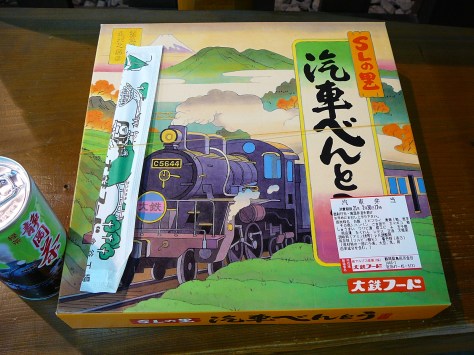
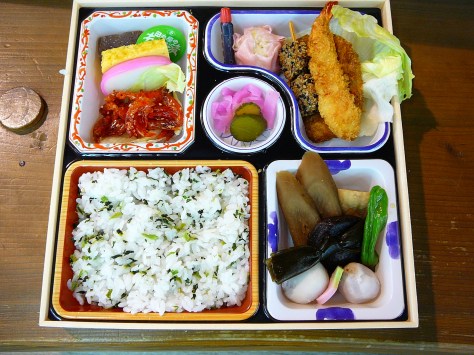
I bought this one (the Missus’ in the next posting!) at Shin Nakaya Station, the station where the Oigawa Railraod Steam Locomotive starts from to Sensu Hot Springs. There are very few steam locomotives left in Japan. Therefore this private railway line and station lunch boxes are pretty out of the ordinary.
Also note the can of Shizuoka Tea (Shizuoka produces 50% of all green tea in Japan!

SHIMADA-BENTO-2

The contents were typical of that area in Shizuoka Prefecture:
The steamed rice was mixed with pickled wasabi leaves.
Bottom right are simmered burdock (gobo) roots, wakame seaweed, boiled sato imo/tuber, green pepper, boiled bamboo shoot and some decorative tidbit.
Deep-fried meat featured shrimp, kuro hanpen/”black” sardine paste and minced chicken balls with sesame seeds, shuumai/dim sung and lettuce. Note the small train-shaped soy sauce tube!
Pickled daikon and cucumber in the middle.
Top left are pieces of konnyaku/devil7s tongue tuber jelly, tamagoyaki, kamamaboko/fish paste, sweet pickled sakura shrimp and a small cup of wasabizuke/pickled wasabi in sake lees to eat with rice.

Plenty to eat for our trip!

Please check the new postings at:
sake, shochu and sushi

—————————————-
日本語のブログ
—————————————-