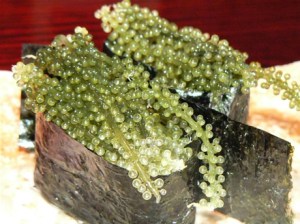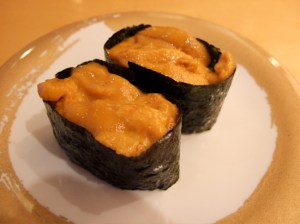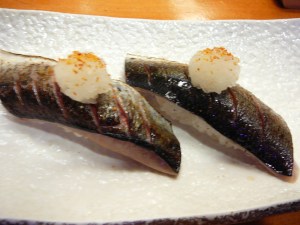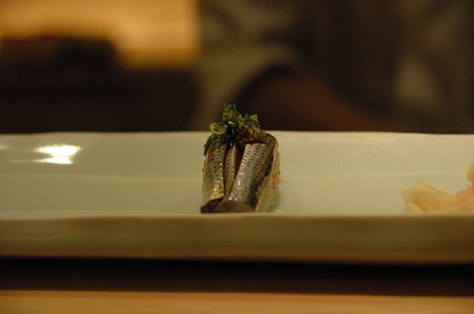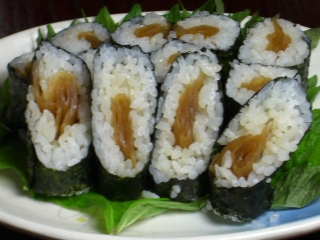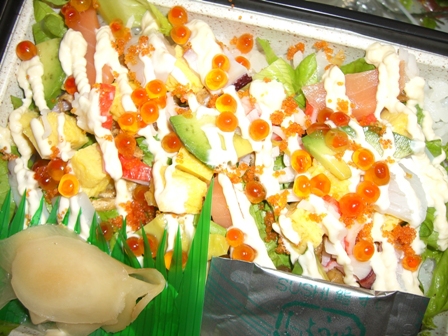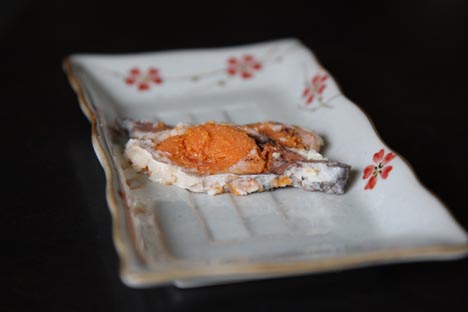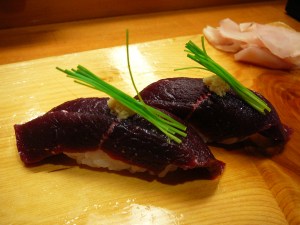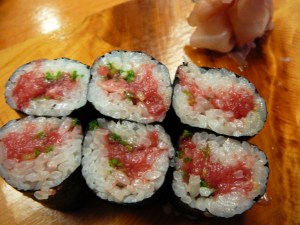
Tag Archives: 美食

Wine Tasting in Shizuoka 1: Domaine Dupont-Fahn

OC-1

For all my love of Japanese sake, I’m not ready yet to completely forget my roots. When there is good wine around, I see no reason to ignore it.
I thought it might be a good idea to taste the wines (within reasonability) available in this part of Japan!

A great place to that is Lavigne in Shizuoka City, an off-the-track establishment which combines a shop and standing bar offerring exclusively French wines they have discovered and imported themselves. As I visit the place at least once a week for a quick glass, I fially took my pen and notes yesterday!

OC-3

Michel Dupont-Fahn is not an obscure wine maker in France and has incrasingly been praised for his somewhat extravagant single cepage Vins de Pays.
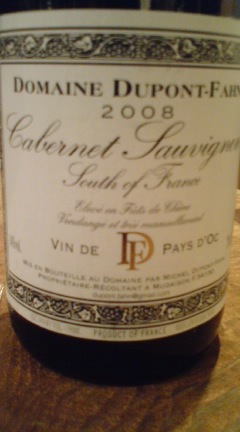
The wine I tasted last night reads as follows:
Vin Du Pays d’Oc
Domaine Dupont-Fahn, 2008, red
Cabernet-Sauvignon, 100%
Alcohol: 14 degrees proof
Vandange et trie manuellement/hand-picked and chosen

OC-2

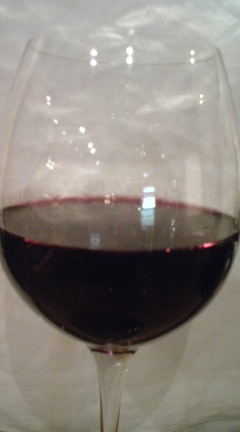
Colour: very deep, rich red
Aroma: Clean, powerful. Dry cassis/red fruit
Taste: Dry, strongish attack.
Good body
Dry red fruit
Shortish tail
Sharpish and short tannic note
Strong dry finish

Solid in spite of its youth. Surprisingly well-balanced. Soft on the palate with food.
A wine for all seasons.
Needs a little aging.
Retailed at 2,780 yen, 30 US$ (quite steep for a Vin de Pays!)

LAVIGNE
420-0852, Shizuoka City, Aoi-Ku, Kutsunoya Cho, 17-2, 1F (2 minutes walk from JR Station)
Tel/fax: 054-205-4181
Opening hours: 11:00~22:00
HOMEPAGE (Japanese)

RECOMMENDED RELATED SITES:
Warren Bobrow
5 Star Foodie
Frank Fariello
Mangantayon
Cheese Monger
Rubber Slippers in Italy
Palate To Pen
Tokyo Foodcast
Urban Sake
Tokyo Through The Drinking Glass

Please check the new postings at:
sake, shochu and sushi

—————————————-
日本語のブログ
—————————————-

French Cuisine: Young Cod and Lentils

CABILLAUD-LENTILS

Young cod or “Cabillaud” in French is one of those white-fleshed fish which are so easy to prepare and do not require complicated recipes!

Here is a recipe which will make you sound like an accomplished chef:
Paves de Cabillaud aux Lentilles/Young Cod Steaks and Lentils!

INGREDIENTS: for 6 persons

-6 large pieces of cod fillets, 150 g each
-Puy green lentils: 500 g
-Bacon or Pancetta: 6 very thin slices
-Carrot: 1
-Onion: 1
-Olive oil (EVO): 4 tablespoons
-Xeres vinegar: 1 tablespoon
-Bouquet garni (if unavailable, make your own with fresh of dried rosemary, thyme, sage, etc)
-Salt: to taste
-Black pepper, freshly groungd: to taste

RECIPE:

-Peel the carrot and onion. Slice the onion very thin and cut the carrot into small dices. Drop the sliced onion and carrot dices and lentils into a large pan and cover (a little higher than the whole level) with cold water (containing as little calcium as possible=soft water). Add the bouquet garni. Bring to boil. Set the heat as to simmer the vegetables for 45 minutes.

-10 minutes before the vegetables are cooked fry the bacon slices on a large non-stick frypan until golden. Take excess fat off by laying them on a kitchen paper sheet.
In the same frypan heat a tablespoon of olive oil. Lay the cod on the rypan and fry on high fire for 2 minutes on each side. Turn the heat low. Sprinkle the fish with salt and pepper and let cook for 5 more minutes on a low fire.

-Drain the lentils. Pour them on a serving dish.
Prepare a vinaigrette with salt, pepper, Xeres vinegar and the remaining olive oil. Pour it onto the lentils. Mix. Place the the bacon slices and cod onto the lentils and serve at once.

-If you serve them individually, keep six plates warm. Place each cod fillet on a bed of lentils and a slice of bacon. Sprinkle the fish with a little freshly chopped Italian parsley and just a little olive oil. Place a sprig of Italian parsley on the whole for the fnal touch.

Serve a good Beaujolais with it (not Beaujolais Nouveau, for people’s sake! LOL)

RECOMMENDED RELATED SITES:
Warren Bobrow
Bread + Butter
5 Star Foodie
Frank Fariello
Mangantayon
Elinluv Tidbit Corner

Please check the new postings at:
sake, shochu and sushi

—————————————-
日本語のブログ
—————————————-

Japanese Cheese: Kyodo Gakui Shintoku Nojyo

CHEESE-JAPAN-2

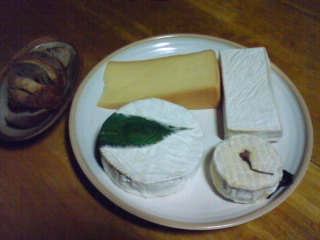
This is the second set of cheese made by Kyodo Gakui Tokunojyou in Hokkaido Island I found In Lavigne, Shizuoka City.

hok-cheese-2

I have already introduced other cheeses from the same company (see above picturse).
They iincluded Sasa no Yuki, a Camembert style wrapped in a small bamboo leaf, Koban, Sakura and Raclette

CHEESE-JAPAN-1

These two cheeses seem to complete the whole series from that particular company.

CHEESE-JAPAN-3

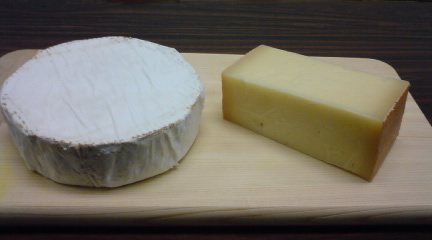
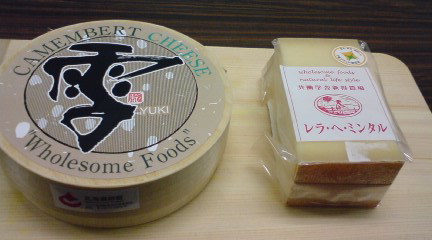
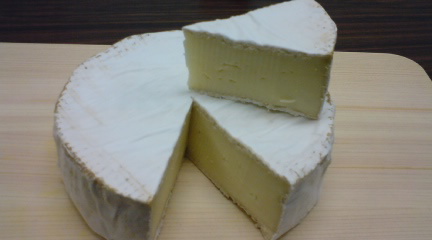
This one is simply called “Camembert-type”, and it is very near the French product, the more for it that it ismade with raw cow’s milk.
Actually it is the Sasa no Yuki minus the bamboo leaf!
Well-matured and soft, it can be matured a longer time.

CHEESE-JAPAN-4

The last one, a hard type cheese also made with raw cow’s milk is called “Lera He Mental”, obviously inspired by Emmental and Comte cheeses. Surprisingly strong in characteristic, it makes for a great snack with wine and bread. Can definitely be used in somewhat extravagant cooking!

Another discovery!

Kyodo Gakui Shintoku Nojyo
081-0038 Hokkaido, Kamikawa Gun, Shintoku Machi, Jishintoku, 9-1
(081-0038 北海道上川郡新得町字新得9-1)
Tel.: (81)(0)156-69-5600

RECOMMENDED RELATED SITES:
Warren Bobrow
Bread + Butter
5 Star Foodie
Frank Fariello
Mangantayon
Cheese Sommelier
Rubber Slippers in Italy

Please check the new postings at:
sake, shochu and sushi

—————————————-
日本語のブログ
—————————————-

Sushi & Sashimi: The Basics 4/3-Sushi Presentations-Donburi

donburi-09-02-13
Donburi made by the Missus:
-She marinated thin slices of raw tuna in ponzu, sake and what else. The leftover marinade was poured over the rice to season it before she placed the pieces of tuna on top.
-Smoked salmon with capers.
-A spoon of “tobikko/flying fish roe”
-a generous portion of locally-made (up the Abe River in Shizuoka City) “Wasabi zuke/chopped wasabi stems and flowers fermented in “sake kasu/sake white lees” (all from Shizuoka Prefecture!)

SYNOPSIS:
I already have wrtitten a lot in bits and pieces on Sushi and Sashimi, including in my other blog, Shizuoka Sushi, but I felt it was time to post an article that could be used as general reference by my blogging friends.
The Basic 1: Definitions
The Basics 2: Questions & Answers
The Basics 3: Ingredients
The Basics 4/1: Sushi Presentations
The Basics 4/2: Sushi Presenations-Rolls

There is another form of sushi, partly similar to Chirashizushi called Donburi Sushi.
It is popular not only at sushi restaurants, especially in Hokkaido Island, but also in Japanese homes all over Japan!
The moment you know how to prepare sushi rice, it is great fun!
You can make donburi vegan, vegetarian, seafood or even meat.
It is entirely up to your imagination!

Here is another example by the Missus:

DONBURI-HOME
Plain steamed rice topped with slices of “akami”/ lean tuna part, avocado salad with mayonnaise and wasabi pickles (the latter provided a nice balance with a spicy touch), boiled sirasu/whitebait sprinkled with “hijiki” seaweed and “tobikko”/flying fish roe.
The tobikko added a nice colour finish touh. It is quite cheap down here in Shizuoka City.
I poured a little Shizuoka-made wasabi dressing on top. This dressing is a lot milder than pure grated wasabi with a little sweetness which combines well with the fish!

I go very often to Hokkaido and have collected quite a few samples of Donburi:

The following three were taken near Abashiri a short distance from Shiretoko, one of the Japanese World Nature Heritage in the far North:

DONBURI-HOKKAIDO-1
“Oyako” Donburi/”Mother and Child”. In this case it means Salmon and Salmon Roe!

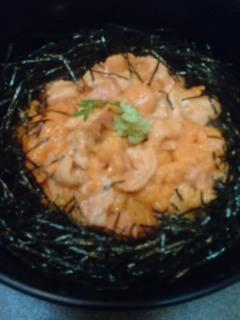
DONBURI-HOKKAIDO-2
“Uni” Donburi, Sea Urchin Donburi. Absolutely extravagant!

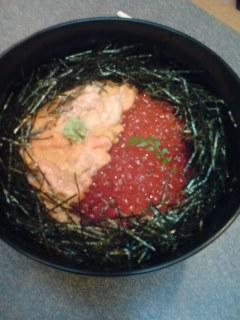
DONBURI-HOKKAIDO-3
Uni to Ikura Donburi, even more extravagant!

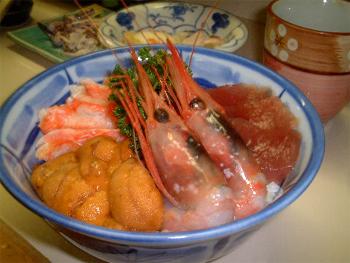
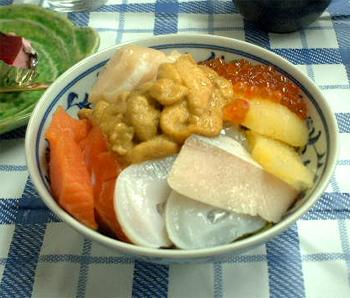
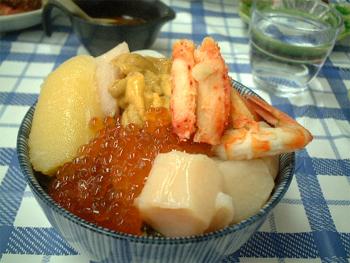
The next four were savoure in Sapporo City, the capital of Hokkaido:

DONBURI-SAPPORO-1
From bottom, clockwise:
“Uni” (Sea Urchin), “Kani Tsume” (Crab legs), “Maguro” (Tuna), “Nanban Ebi” ( large prawn variety)

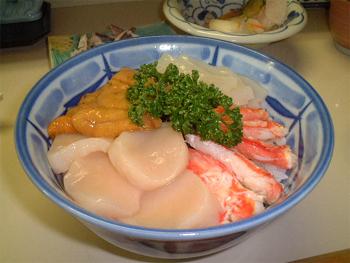
DONBURI-SAPPORO-2
From bottom, clockwise:
“Hotate” (Scallops), “Uni” (Sea urchin), “Ika” (Squid), “Kani Tsume” (Crab legs)

DONBURI-SAPPORO-3
From top middle clockwise:
“Ikura” (salmon roe), “Kazu no ko” (herring roe), “Kampachi” (Amberjack), “Tako” (octopus), “Sake” (raw salmon), “Hotate” (scallops), in the centre, “Uni” (sea urchin)

DONBURI-SAPPORO-4
From bottom, clockwise:
“Hotate” (Scallops), “Ikura” (Salmon roe), “Kazu no Ko” (Herring roe), “Kampachi” (Amberjack), “Uni” ( Sea Urchin), “Kani Tsume” (Crab leg), “Ebi” (Boiled prawn)

Next article will be about Sashimi Presentations!

RECOMMENDED RELATED SITES:
Warren Bobrow
Bread + Butter
5 Star Foodie
Frank Fariello
Mangantayon
Tokyo Foodcast
Tokyo Through The Drinking Glass
Urban sake
Hapabento
Elinluv Tidbit Corner

Please check the new postings at:
sake, shochu and sushi

—————————————-
日本語のブログ
—————————————-

Sashimi & Sushi: The Basics 4/2: Sushi Presentations/Rolls

SUSHI-ROLL-2-SIZES
Futo-Maki/Large sushi roll with normal size nori-maki for comparison

SYNOPSIS:
I already have wrtitten a lot in bits and pieces on Sushi and Sashimi, including in my other blog, Shizuoka Sushi, but I felt it was time to post an article that could be used as general reference by my blogging friends.
The Basic 1: Definitions
The Basics 2: Questions & Answers
The Basics 3: Ingredients
The Basics 4/1: Sushi Presentations

SUSHIKO-08-12-25-9
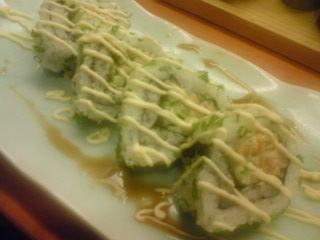
California Roll by Sushi Ko in Shizuoka City

I stopped counting the number of complaints I received about the so-called sushi rolls they serve in other countries. “Gross”, “Impossible to finish”, “Nothing to do with sushi”, and so forth.
This is like any “ethnic” food served outside its country of origin: some unscrupulous restaurateurs/businessmen catch on the fad and immediately serve “authentic” cuisine to gullible/unknowing customers.
But soon or later, thanks to better and faster global communications, the same customers will realize their mistake and stop patronizing such establishments.
The problem is that very often they are left with no decent sushi restaurant to visit.
About time to learn to make these famous rolls and enjoy them at home or parties until that great real sushi restaurant comes to town!
Here are some examples of sushi rolls to help you with your own crations!

-Sushi do not have all to be of the”California Roll” type.
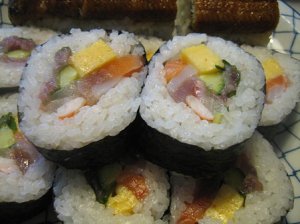
Below are typical examples of “futo maki/large maki” with the seaweed/nori outside.

SUSHI-ROLL-HOME-TYPE-1
Home-type futo-maki/large sushi roll 1

SUSHI-ROLL-HOME-TYPE-2
Home-type futo-maki/large sushi roll 2

They can be larger of course, but there is limit to size.
Below are great examples of what can be achieved with large types:

SUSHIK-09-08-31-1
Futo maki roll: (Large) Rainbow Roll at Sushi Ko, Shizuoka City

SUSHIKO-09-25-2
Pirikara Hotate Futo maki/large spicy scallops roll at Sushi Ko, Shizuoka City

SUSHI-ROLL-TONKATSU
Tonkatsu sushi roll

Nori-maki style rolls are probably the easiest to make, serve and eat.
And there are so many possibilities as you can devise them with a single ingredient!

SUSHIK-09-08-31-19
Negi-toro nori maki sushi roll at Sushi Ko, Shizuoka City

vegan-sushi3
Kanpyo maki/dried gourd shavings roll

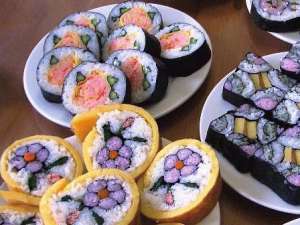
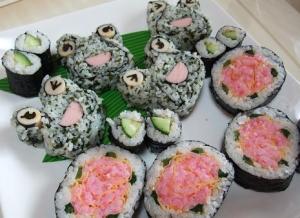
Making “decoration rolls2 for the family can be great fun!
Look below for some examples:

SUSHI-ROLL-DECORATION

SUSHI-ROLL-DECORATION-2

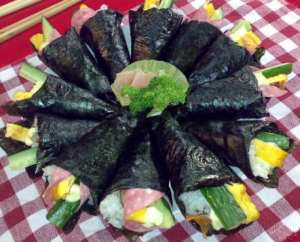
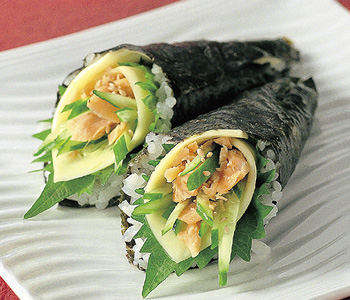
Another type of roll very popular in Japanese restaurants and homes is te-maki/手巻き, literally hand-roll.
They have the advantage that you can choose your own ingredients at will!

TE-MAKI-ZUSHI-HOMESTYLE
Home-style te-maki plate!

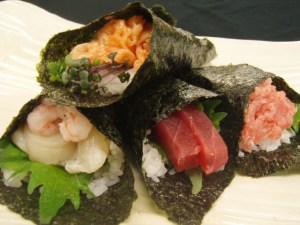
TE-MAKI-2
Te-maki set served at a sushi restaurant.
Can you recognize the ingredients?

TE-MAKI-3
How about this one, also served in a sushi restaurant! Looks very healthy!

TE-MAKI-1
Japanese home-style te-maki made with cheese, shiso and canned tuna!

Next article is about sushi donburi!

RECOMMENDED RELATED SITES:
Warren Bobrow
Bread + Butter
5 Star Foodie
Frank Fariello
Mangantayon
Tokyo Foodcast
Tokyo Through The Drinking Glass
Urban sake
Hapabento
Elinluv Tidbit Corner

Please check the new postings at:
sake, shochu and sushi

—————————————-
日本語のブログ
—————————————-

Sashimi & Sushi: The Basics 4/1: Sushi Presentations

SUSHIK-09-08-31-7
Sushi Millefeuille at Sushi Ko, Shizuoka City

SYNOPSIS:
I already have wrtitten a lot in bits and pieces on Sushi and Sashimi, including in my other blog, Shizuoka Sushi, but I felt it was time to post an article that could be used as general reference by my blogging friends.
The Basic 1: Definitions
The Basics 2: Questions & Answers
The Basics 3: Ingredients

Sushi does come ito many guises and shapes (and colours).
Too many people think it is only all nigiri and rolls.
Any chef worthy of his/her name will prove you otherwise!

Alright, then. What do they have to offer?

SUSHIK-09-08-31-9
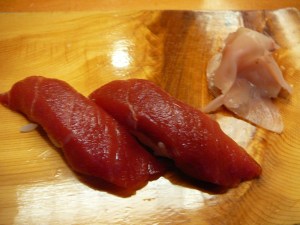
Magurozuke/Marinated tuna (Akami/lean part) Nigiri at Sushi Ko, Shizuoka City

NIGIRI/NIGIRIZUSHI:

Nigiri/握り literally means “grip/grasp/press” in Japanese.
The shari/シャリ is made by scooping the right amount of sushi rice in one hand (usually the left hand9 and making a “ball” of it. Actually it is more oblong than round. Size varies with the chef and restaurant, but an experienced chef is capable to reproducing such a ball to the same exact amount of grains. They say it takes seven years to become a master at making shari!
The next step, but not always, is to smear a little wasabi on top of the rice ball and then top it with an ingredient of your choice. Finally the chef will press it around the top of the shari before depositing it on a plate (or on a bamboo leaf) or on small wooden plate in front of the customer.
In some cases the wasabi will be placed in the from of a small ball on top of the neta/ネタ (topping) as on anago/アナゴ (conger eel).
All kinds of neta/toppings can wrapped around the top. (See The Basics 3: Ingredients).

SUSHIK-09-08-31-10
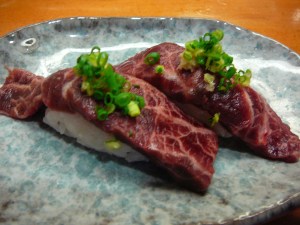
Sakura Nigiri/Horsemeat Nigiri at Sushi Ko in Shizuoka City

More ingredients will be added as seasoning on top of the topping such as grated ginger and chopped leeks (see above),

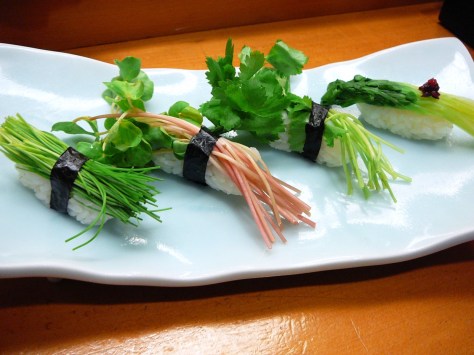
SUSHIK-09-08-31-14

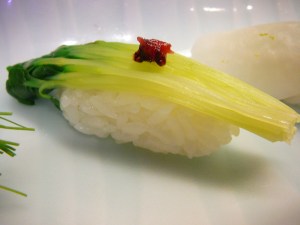
pickled Japanese plum/umeboshi/梅干 as above (on op of boiled mitsuba/trefoil at Sushi Ko in Shizuoka City)

SUSHIK-09-08-31-15

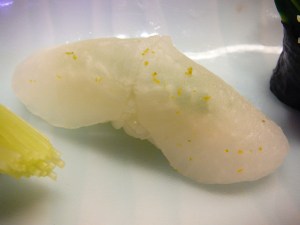
grated lime zest as above (on top of pickled/marinated daikon at Sushi Ko in Shizuoka City),

SUSHIK-09-08-31-17

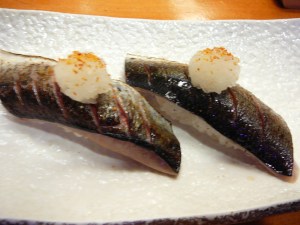
grated daikon and chili pepper as above (on top of aburi sanma/lightly grilled mackerel pike)

ANAGO-SUSHI

or tare/sauce as above(on top of anago/アナゴ)

TAMAGO-NIGIRI

A strip of dried seaweed/nori/海苔 can be used to secure the neta as with tamagoyaki/卵焼き above.

SUSHIK-09-08-31-8

The same strip of nori can circled around a really round shari as above (thinly cut ika/烏賊/squid arranged into a tsuru/鶴/crane shape)

SUSHIK-09-08-31-16
Boiled trefoil/Mitsuba and fresh cucmber/Kyuuri Gunkan at Sushi Ko in Shizuoka City

GUNKAN/GUNKAN SUSHI:

When a wider strip of nori is wrapped around a shari to prevent the topping to fall over, it is called a gunkan/軍艦/mothership.

UMIBUDOGUNKAN
Umibudo/Sea Grapes Gunkan

It is also useful to emphasize the neta as above,

SUSHIKO-08-12-25-12

or it can be designed as purposefully overflowing as above (ikura/salmon roe gunkan)!

ST-VALENTINE-SUSHI

What about this tiny St-Valentine Gunkan?

For more gunkan fun go HERE!

SUSHIKO-08-12-25-11

Chirashizushi served in Sushi Ko, Shizuoka City

CHIRASHIZUSHI:

Chirashizusi/散らし寿司 means “decoration Sushi”.
It is very popular in homes where large quantities can prepared for the family and still designed as to please the eye.

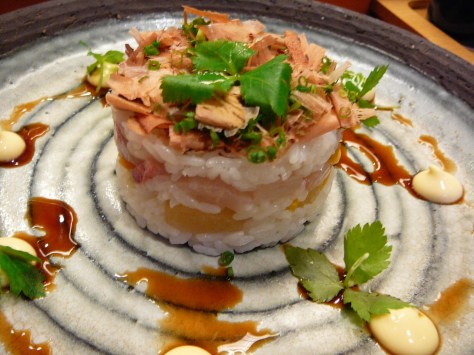
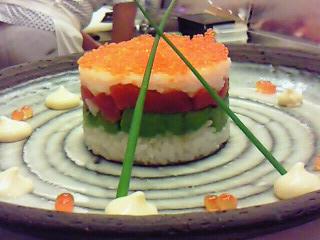
MILLEFEUILLE-EX
Millefeuille sushi served in Sushi Ko, Shizuoka City

Millefeuille is anaother typ of chirashizushi! Very easy to make and so impressive! (use a baking circle!)

TE-NARI-ZUSHI
Home Party Te-Mari Zushi

TEMARI ZUSHI:

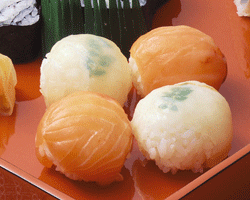
Te-Mari Zushi/手まり寿司/Small ball-shaped sushi are very popular in Kyoto and at homes in many Japanese homes, especially on Girls’ day (March 3rd). Great for parties and easy to make!

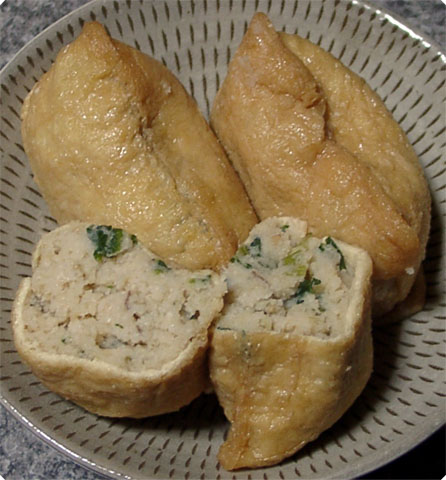
INARI-ZUSHI

INARI-ZUSHI:

Inari Zusi/稲荷寿司/Fried tofu pouches filled sushi rice and other ingredients are basically home-type and bento-type sushi.
Very popular with vegans and vegetarians as they can control the contents. Very healthy!

Next Article will be on Sushi Roll Presentation!

RECOMMENDED RELATED SITES:
Warren Bobrow
Bread + Butter
5 Star Foodie
Frank Fariello
Mangantayon
Tokyo Foodcast
Tokyo Through The Drinking Glass
Urban sake
Hapabento
Elinluv Tidbit Corner

Please check the new postings at:
sake, shochu and sushi

—————————————-
日本語のブログ
—————————————-

Sushi & Sashimi: The Basics 3: Ingredients

SUSHIKO-08-12-25-3
Botan ebi/Botan Shrimp and its eggs at Sushi Ko, Shizuoka City

SYNOPSIS:
I already have wrtitten a lot in bits and pieces on Sushi and Sashimi, including in my other blog, Shizuoka Sushi, but I felt it was time to post an article that could be used as general reference by my blogging friends.
The Basic 1: Definitions
The Basics 2: Questions & Answers

One encounters the general misconception that sushi ingredients include only fish and pre-determined seafood as neta/topping.
Fortunately, sushi offers a greater variety to please everyone, even vegetarians and vegans!

The following description is not exhaustive as possibilities are almost limitless according to avaibility, country and geography, but I hope it will help gastronomes and good food lovers to gain access to a larger scope on which they can expand at will!

007
Katsuo/Bonito sashimi at Sushi Ko, Shizuoka City

FISH:

The Japanese traditionally differentiate fish into the following kinds:

a) White-flesh fish:
Hirame/Sole, Makogarei or Ishigarei/Turbot or Halibut or Flounder, Sayori/Japanese Half Beak, Shirogisu/Sillago, Suzuki/Seabass, Kawahagi/Leatherback, Tobiuo/Flying fish, Yagara/Trumpet Fish, Houbo/Bluefin Robin, Funa/Crucian Carp, Koi/Carp, Tara-Madara/Cod
Seabreams: Tai, Madai, Ishidai, Amadai, Hanadai

b) Red-fleshed fish:
Maguro/Tuna = Kuro Maguro or Hon Maguro/Bluefin Tuna, Mebachi/Big-eyed Tuna, Kihada/Yellowfin Tuna, Minmamimaguro/Southern Seas Tuna, Binnaga/Albacore Tuna, Mekajiki/Big-eye Marlin.
Buri/Yellowtail,Kampachi/Amberjack, Katsuo/Bonito, Sanma/mackerel Pike, sawara/Spanish Mackerel, Iwashi/Sardine, Shimaaji/Stripe Horsemackerel, Tobiuo/Flying fish

c) Other fish: Unagi/eel, Anago/Conger eel, Noresore/Conger Eel Whitebait, Shirasu/Sardine whitebait, Nishin/Herring, Sake-Shake/Salmon, Benimasu/Salmon Trout

d) Fish related ingredients: Ankimo/Monkfish/Frogfish liver, Ikura/salmon Roe, Kazu no Ko/herring Roe, Tobikko/Flying Fish Roe, Uroko/Scales (deep-fried)

shako3
Shako/Mantis Shrimp

CRUSTACEANS:

There are many indeed, and many found only around Japan:
Shiro Ebi,White Shrimp, Botan Ebi/Large Prawn, Shako/Squilla,Amaebi/Alaskan Pink Shrimp/Pink Shrimp、Kuruma Ebi/Japanese Imperial Prawn、Ise Ebi/Japanese Spiny Lobster, Sakuraebi/Cherry shrimp, Budoebi/”Grape shrimp”
Snow Crab/Zuwagani, Red King Crab/Tarabagani, Japanese Spider Crab/Takaashigani, Japanese Mitten Crab/Mokuzugani

Crustacean-related ingredients:
Ebiko: egss from mainly of Amaebi and Botan Ebi. The only blue-colour sea ingredient in sushi?
Kani Sarada: Crab salad
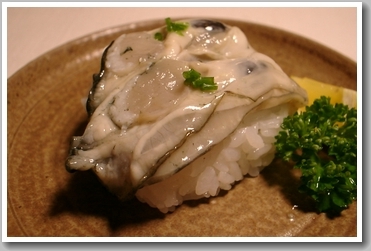
KAKI-NIGIRI
Kaki/Oyster

SHELLFISH:

Shellfish are very popular raw, cooked, grilled, marinated or salted:
Abalone/Awabi, Scallops/Hotategai, Oysters/Kaki, Surf Clam/Torigai, Gaper/Mirugai, Turbo Shells/Sazae, Clam/Hamaguri, Pen Shell/Tairagi, Round Clam-Hen Clam/Bakagai, Scallops/Hotate
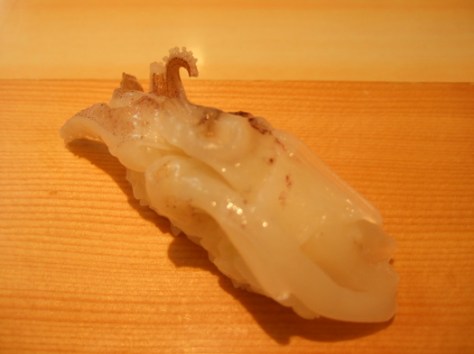
SQUID-LEGS
Ika Geso/ Squid legs

CEPHALOPODS

The Japanese are very fond of squids and octopus, be they raw, boiled, pickled or ciiked/grilled:
Aori Ika/Bigfin Reef Squid, Surume Ika/Japanese Common Squid-Pacific Flying Squid, Hotaru Ika/Firefly Squid-Sparkling Enope Squid, Common calamari/Yari Ika, Kensaki Ika
Madako/True Octopus, Mizudako/Shiodako/Oodako, Iidako/Komochhidako, Ishidako, Chihirodako

HOYA-1
Hoya/Common Sea Squirt

OTHER MARINE LIFE:

These include some creatures relatively unknown outside Japan!
-Sea slug/beche de mer/Sea cusumber or namako in Japanese, as well as its insides/innards called konowata in Japanese
-Common Sea Squirt: Hoya/mahoya in Japanese
-Sea Urchi/Uni
-Kurage/Jellyfish
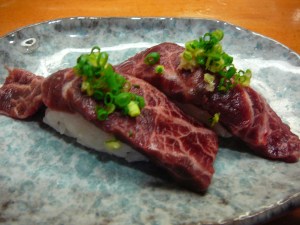
SUSHIK-09-08-31-10
Sakura/Horsemeat as served in Sushi Ko, Shizuoka City

MEAT:

Meat goes very well as sushi, completely raw, slightly grilled or completely cooked!
Basashi:Uma no Niku/Sakura: Horsemeat
Shika no Niku: Venison, deer meat
Gyuniku/Gyusashi: Beef
Kujira: Whalemeat
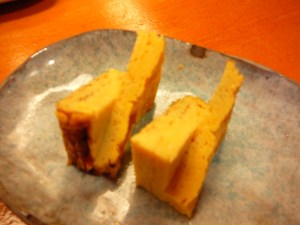
SUSHIK-09-08-31-18
Tamagoyaki served at Sushi Ko, Shizuoka City

EGGS

Chicken eggs are used for tamagoyaki,japab\nese omelette wihich is cut in various shapes according to volume and trend.
Uzura Tamago/Quail eggs are often used additionally
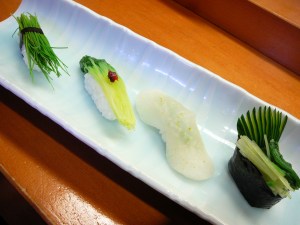
SUSHIK-09-08-31-12
Vegan Sushi at Sushi Ko, Shizuoka City

VEGETABLES:

Now, here is a really “open section”!
I might say it’s all up to you and your priorities.
I will just cite the most popular varieties encountered in Japan:
Kanpyo/gourd shavings first dried then marinated in rice vinegar, soy sauce and sugar.
Gobo/Burdock Root, Kooyaku/Devil’s Tongue tuber, Shiitake, Kyuuri/Cucumber, Mitsuba/Trefoil, Negi/Leek, Daikon, Radish, Shiso/Perilla, Natto, Tomato, Satsumaimo/Sweet potato, Kaiware daikon/Daikon shoots, Takenoko/Bamboo shoots, Myoga Ginger, Shooga/Ginger, Wasabi (chooped roots), Okra, Pimento, Nasu/Aubergine-Eg plant, Yamaimo/Glutinous Yam

To these you have to add the “sea vegetables”:
Konbu/Kaiso/Nori= Seaweed
Umibudo/Sea Grapes
Yuba/Tofu sheets

NOTE:

Fruit sushi has recently become popular abroad but has not caught yet in Japan!”
Foie gras (extravagant), tempura and tonkatsu may also be served as sushi!

Next article will be about Sushi Presentations!

RECOMMENDED RELATED SITES:
Warren Bobrow
Bread + Butter
5 Star Foodie
Frank Fariello
Mangantayon
Tokyo Foodcast
Tokyo Through The Drinking Glass
Urban sake
Hapabento
Elinluv Tidbit Corner

Please check the new postings at:
sake, shochu and sushi

—————————————-
日本語のブログ
—————————————-
Sushi & Sashimi: The Basics 2: Questions & Answers

015
Vegan Sushi at Sushi Ko in Shizuoka City

SYNOPSIS:
I already have wrtitten a lot in bits and pieces on Sushi and Sashimi, including in my other blog, Shizuoka Sushi, but I felt it was time to post an article that could be used as general reference by my blogging friends.
The Basic 1: Definitions

Many questions are asked about sushi as there are many misconceptions, which is absolutely normal if you do not live in Japan.
I hope the following will clear up the skies for everyone.
Naturally, if you have other questions, I’ll be glad to answer them!

018
Sushi set consisting only of seafood caught in Shizuoka Prefecture. Served at Ginta in Yui, Shizuoka City

Q: Are there “special seats” at a sushi restaurant?

A: The usual misconception is that sitting at the counter automatically proves more costly than sitting at a table or on a tatami floor. The price will vary accordingly to what you have ordered wherever you sit. The fact that customers sitting at tables usually order “sushi sets” will tend to demonstrate that it is cheaper, but you can order the same at the counter. On the other hand, sitting at the counter will entice you to order sushi piece by piece and venture into some exotic requests, hence a higher price. I myself always sit at the counter, especially around the “corner”, because I can enjoy the vital opportunity to converse with the chef, watch his technique and have a good look at the available ingredients of the day.

022
Sakura Ebi Gunkan/Cherry Shrimps (caught in Shizuoka Prefecture only) served at Sushi Ko in Shizuoka City

Q:”Nigiri Zushi” should be eaten at once?

A:Yes, for two reasons:
First, the carefully-made “nigiri zushi/握り寿司” will somehow collapse on itself after some time and will not look so appetizing.
Second, the “neta” will dry up and will lose some flavour, tenderness and freshness. That is why I have always strongly felt gainst the very popular “kaiten sushi/回転寿司” (conveyor belt) restaurants!
The trick is to order one “nigiri zushi” after the other and savour them individually, one more reason to choose a counter seat.

027
Mini Ikura Donburi served at Sushi Ko in Shizuoka City

Q: What are the prerequisites for a good “shari” (rice ball part of the sushi)?

A: As rice is actually the most important part, only high-quality rice such as “Akita Komachi” should be used.
I’m sorry to say so, but sushi made with Thai or Basmati rice abroad is not sushi. Full stop.
Next, the balance between the rice vinegar, sugar and salt is very important. Too much of any ingredient will leave an overwhelming taste inside the mouth to the detriment of the other ingredients. Not enough salt will also be detrimental. Only experience will dictate the right amounts!

024
Local sashimi served at Kansawagawa Sake Brewery in Yui, Shizuoka City

Q: Should you dip the “neta” or “shari” first into the soy sauce?

A: Do as you like!
I myself very often ask the chef to add soy sauce directly onto the sushi!
Actually some sushi don’t need any soy sauce.
One can enjoy sole/hirame/平目with a tiny pinch of salt and some lemon juice on top of the neta, or sakura/raw horsemeat is served with tare, grated ginger and chopped leeks, and so forth.

VEGETARIAN-SUSHI-2
Vegetarian sushi in Kyoto

Q: Is there a definite order in ordering and eating various kinds of sushi?

A: That is widely subject to personal taste. The best way is to finish with your special favourites.
I myself start with tuna sashimi (“akami” variety, my preferred part of the tuna) and finish with “natto/ume/shiso (fermented beans+pickled plum meat+green beefsteak leaf. Mind you, I would not order that in Osaka!) maki” with soup, preferably “kanijiru/蟹汁” (miso and crab soup).
In between I shall order all kinds of “nigiri zushi” according to availability. I also make a point to order “chyawan mushi/茶碗蒸し” (Japanese steamed custard) whenever possible.

UNI-GUNKAN
Uni-Gunkan

Q: Is sea urchin (“uni/海栗”) nice to eat as “nigiri”?

A: It should be. If the “gunkan/軍艦” (literally “mother ship”, term taken from the Navy) is properly made! A “gunkan”-style “nigiri zushi” is made with a strip of dry seaweed wrapping the rice ball leaving the top free and securing the topping (“neta”). Moreover I would ask the chef to season it with soy sauce to avoid dropping it into my soy saucer (sorry for the pun!)

SUSHIK-09-08-31-17
Aburi Sanma Nigiri/Slightly grilled Pike mackerel served at Sushi Ko in Shizuoka City

Q: Should all “neta” toppings be made from absolutely fresh fish only?

A: That is another misconception.
Long ago, sushi “neta” were exclusively made of boiled, pickled or salted fish.
As hygiene, refrigeration and preservation have greatly improved, we have access to better and better fresh fish. But in some cases, such as for “maguro” (tuna), it is best to leave the fish rest in a secure place for a while before eating it.
“Maguro” is at its best after a week left in a cold (not frozen) place.
Actually, Mr. Hara, the chef at Ginta in Yui, explained that he gets his fish (of the day only) from the boat the harbour, gut and dress it within a minute before leaving the fish fillets mature on a piece of cloth in the refrigerator for at least half a day!

KOHADA
Kohada Nigiri

Q:Especially in the case of “kohada” (gizzard shard fish or small sweet sardine) we can see at least 5 ways of cutting and presenting the fish: which is the best one?

A: Well. that probably depends both on the chef’s and the customer’s preferences. With a different cut or presentation, various parts of the fish will offer a different exposure to the eater’s palate with consequent different tastes and flavours.

vegan-sushi3
Kanpyo Maki

Q: “Kanpyo (dried gourd shavings) maki” is usually cut into 3 pieces and “tekka (tuna) maki” cut in 6. Is there a definite reason for that?

A: No. This is being dictated by two factors:
a) Easy-to-hold or to-eat portions.
b) Sometimes when the “maki” is shared so smaller portions (6) will be more practical and pleasing to the eye.

SUSHIK-09-08-31-8
Unusual round nigiri topped with ika/cuttlefish in the shape of a tsuru/crane served at Sushi Ko in Shizuoka City

Q: Which is better, a male fish or a female fish?

A: A male fish, because a female loses part of its own nutrients for egg (roe) production, especially in the case of salmon and white-fleshed fish.

The next article will be about Ingredients!

RECOMMENDED RELATED SITES:
Warren Bobrow
Bread + Butter
5 Star Foodie
Frank Fariello
Mangantayon
Tokyo Foodcast
Tokyo Through The Drinking Glass
Urban sake
Hapabento
Elinluv Tidbit Corner

Please check the new postings at:
sake, shochu and sushi

—————————————-
日本語のブログ
—————————————-

Sushi & Sashimi: The Basics 1: Definitions

SUSHIK-09-08-31-1

Rainbow Roll at Sushi Ko, Shizuoka City

I already have wrtitten a lot in bits and pieces on Sushi and Sashimi, including in my other blog, Shizuoka Sushi, but I felt it was time to post an article that could be used as general reference by my blogging friends.
This first article will describe the different kinds of sushi in a basic manner.

012

Kawahagi sashimi/Leatherback at Sushi Ko, Shizuoka City

Sashimi or thin slices of fish when put onto some rice could be called “sushi” as long as rice vinegar, salt and sugar have been added to season the rice beforehand.
On the other hand it does not have to be sashimi as almost anything could be used for making sushi: fish guts, roe, shellfish, meat, vegetables. etc.
Even the word “sashimi” does not actually apply to fish only as its meaning is “thin slices” (debatable).

SUSHIK-09-08-31-10

Sakura/Horsemeat Sushi at Sushi Ko, Shizuoka City

There are 3 basic kinds of sushi:
“Nare Zushi”, or pickled fish sushi.
“Nigiri Sushi” or “Edomae Zushi”,or sliced Fish et al onto small balls of rice.
“Oshi Zushi” or “Osaka Zushi”, or sliced fish et al pressed onto rice inside a wooden box or mould and then cut into equal-sized pieces.
Of course the three above kinds can be divided into numerous sub-varieties.

CHIRASHI-ZUSHI

Home-made Chirashi Zushi

One important variety is “Chirashi Zushi/散らし寿司”, basically all kinds of (available) ingredients, preferably small, strewn on a layer of rive inside a bowl or shallow Japanese dish. This last variety is commonly encountered at home meals when it is more practical for a housewife to serve to a whole family.

“NARE ZUSHI”

NAREZUSHI

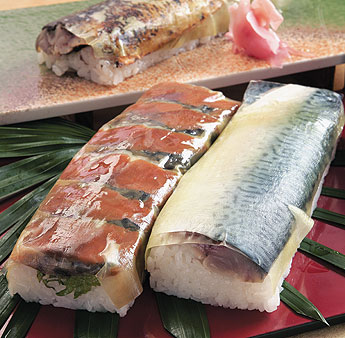
Nare zushi in Wakayama Prefecture envelopped in Bamboo leaves

Nare Zushi (熟寿司, or 馴れ寿司 in Japanese) is the original form of sushi in Japan. One way to preserve fish was to gut it, slice the meat with or without the skin and pickle it (ferment it) in rice. The fish could then always be presented at meals after having taken it out of the pickle jar, cleaned it and served it on a dish as an accompaniment (or main dish) to the usual Japanese fare of rice, miso (fermented beans) soup and pickles.

FUNAZUSHI

Funa Zushi/鮒寿司

Funa Zushi is a typical example.

Then one day, somebody selling fish in Edo (old Tokyo) struck on the idea to serve it wrapped around balls of rice to which vinegar, salt and sugar had been added for preservation. These balls were 2 or 3 times as big as nowadays and
3 balls would be enough for a meal.
This form of sushi is rarely encountered or availabe these days. One modern extension of this technique is “Zuke” whereas tuna (“maguro”) or other fish has been first dipped in hot water for a while, then transfered into iced water to stop it cooking and finally marinated into a pickle brine (“tsuke shiru”) for a while. When cut, the surface is cooked and slightly harder while the inside is still soft and comparatively raw. If it is not dipped in brine it becomes “tataki”.
(Note: “Zuke/漬け” also means leaving the fish slices in a mixture of soy sauce, mirin ans sake for about a certain amount of time begore making any kind of sushi. Each restaurant has its own original secrets and recipes.)

“NIGIRI ZUSHI”/”EDOMAE ZUSHI”

SUSHI-KUJIRA

Kujira Nigiri/Whalemeat at Sushi Ko, Shizuoka City

“Nigiri Zushi/握り寿司”, arguably the most popular kind of sushi, consists of a small hand-formed ball of rice, or more commonly called “shari/シャリ”, seasoned with rice vinegar, salt and sugar covered with a slice of fish or other ingredients (defined as “neta/ネタ” in Japanese).
Moreover, before covering the “shari” with the “neta”, a small portion of grated Japanese green horseradish (“wasabi/山葵”) is applied on top of the “shari” to be in contact with both the the “shari” nad “neta”. But this is not always the rule. Grated ginger and chopped chives can be applied on top of the “neta” or the “neta” could be seasoned with sauce (“tare/タレ” or “tsume/ツメ”) or the horseradish could be applied on top of the “neta” (as in for “anago”=conger eel). In some cases, I myself like the “neta” sprinkled with a bit of salt and lemon juice as for “hirame” ( sole/flatfish).
The “nigiri zushi” can be then be dipped or not, according to your preference, into a small dish of soy sauce before eating it.
A “nigiri zushi” seasoned with “tare” or salt and lemon juice should not be dipped into soy sauce.

SUSHIK-09-08-31-19

Negi-toro Nori Maki/leeks and toro nori maki at Sushi Ko, Shizuoka City

“Edomae Zushi/江戸前寿司”, apart of “nigiri zushi” comprises “te-maki zushi/手巻き寿司” (a sushi made inside dry seaweed in the form of a cone served in one piece),”ha-maki/葉巻” (the same as “te-maki-zushi” but with lettuce instead of dry seaweed), “nori-maki/海苔巻き”
(a long thin roll usually wrapped in dry seaweed, then cut in 2, 3 or 6 portions), “futo-maki/太巻” ( a thick roll wrapped in seaweed cut into thin slices), “inari zushi/稲荷寿司” (plain or mixed with some finely-cut ingredients seasoned rice wrapped inside fried toofu pouch, also known as “0-inari San”) , or “chakin zushi/茶巾寿司” (seasoned rice plain or mixed with other ingredients inside a pouch made of thin omelette).
The possibilities for “edomae zushi” are almost limitless.

TE-MARI-ZUSHI

Te-mari zushi, kyoto style

TE-MARI-ZUSHI2

Te-mari zushi, home-style

Ome more variety made in Kyoto called “te-mari zushi” (small round “nigiri zushi”) ought to be mentioned as its shape is particularly beautiful and its size is popular with diet-conscious ladies!

“OSHI ZUSHI”/”OSAKA SUSHI”

OSI-ZUSHI-1

Oshi Zushi out of it press box

This type of sushi is made from rice (“shari”) seasoned as in “edomae zushi” and then stuffed inside small wooden boxes, smeared or not with horseradish (“wasabi”). Finally thin slices of fish or else are carefully arranged on top usually so as to form a pattern. A wooden lid will then be pushed on top of the sushi to press it evenly and firmly. The sushi will be then slid out out of the box and cut into regular rectangular portions to be served accordingly to the chef’s taste and skill.

Next to come: Sushi & Sashimi: The Basics 2: Questions and Answers

RECOMMENDED RELATED SITES:
Warren Bobrow
Bread + Butter
5 Star Foodie
Frank Fariello
Mangantayon
Tokyo Foodcast
Tokyo Through The Drinking Glass
Urban sake
Hapabento
Elinluv Tidbit Corner

Please check the new postings at:
sake, shochu and sushi

—————————————-
日本語のブログ
—————————————-
Japanese Cuisine: Karei no Karaage/Whole deep-fried Flounder

KAREI-KARAAGE-1

Here continues the mini-series on easy Japanese fish recipes:

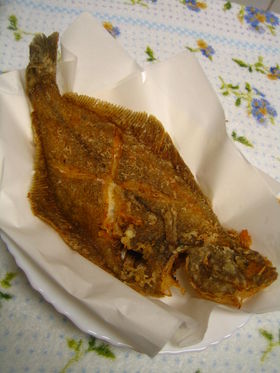
Karei no Karaage/Whole deep-fried Flounder!
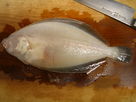
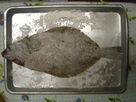
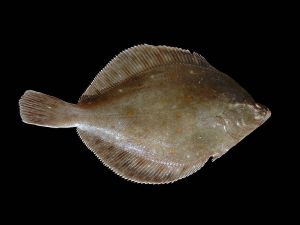
Have a look at the flounder pic below!

INGREDIENTS:

-Flounders: 1 per person
-salt: to taste
-Black pepper: To taste
-Cornstarch

RECIPE:

KAREI-KARAAGE-2

-Take scales off the fish. Take out innards. Clean the fish under running cold clear water. Dry off with kitchen paper.

KAREI-KARAAGE-3

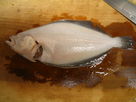
-make a incision under the gills and take these out cleanly. Sprinkle with salt and let rest for 10 minutes.

KAREI-KARAAGE-4

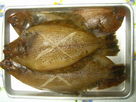
-Wipe water and salt off the fish. Make a cross section cut along the skin as in picture. Season with salt and pepper and leave inside fridge for a while to let the fish suck in the seasoning.

KAREI-KARAAGE-5

-Sprinkle both sides of the fish with cornstarch (enough to cover the fish as “thinly” as possible)

KAREI-KARAAGE-6

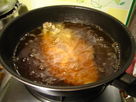
-Heat the oil to 160~170 degrees Celsius. Drop the fish in the oil.

KAREI-KARAAGE-7

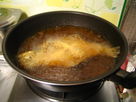
-When the fish has attained a nice colour and that the tail and fins have become crispy, finish the cooking by raising the temperature of the oil for a little while.

KAREI-KARAAGE-8

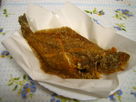
-Take off excess oil on a piece of kitchen paper.
Apart of the bones around the eyes, not only the flesh, but the bones, fins and tail can be eaten!

NOTE:

Take care not to start the deep-frying at too high a temperature, otherwise the fish will “burn out”!

KAREI-FLOUNDER

RECOMMENDED RELATED SITES:
Warren Bobrow
Bread + Butter
5 Star Foodie
Elinluv Tidbit Corner
Think Twice
Frank Fariello
Mangantayon
Hapabento

Please check the new postings at:
sake, shochu and sushi

—————————————-
日本語のブログ
—————————————-

Japanese Cuisine: Mebaru no Nitsuke/Stewed Rockfish

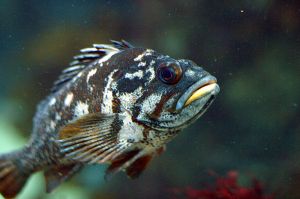
MEBARU-1

I found a bunch of simple fish recipes in my notes and thought that the faster I published them the better.
So after yesterday’s Simmered Turbot, here is a similar recipe for “mebaru” or Rockfish. a very popular fish here in Shizuoka and elsewhere!
Have a look at the pic of the fish at the end of this posting!

INGREDIENTS:

-Mebaru/Rockfish: 1 whole
-Water: 75 ml
-Soy sauce, Japanese Sake, Mirin/Sweet sake: 1 tablespoon each
-Sugar: 1 teaspoon
-Ginger, grated: 1 teaspoon

RECIPE:

-Dress the fish (take out the gills and innards.

-Wash the fish in running clear cold water. Dry it off with a piece of kitchen paper.
In a large pan, drop water, soy sauce, sake, mirin, and sugar. Mix well. Heat just before boiling point. Lay the fish inside.

-Bring the fire down to low-medium. Keep spooning “juices/soup” over the fish as it cooks.

-Cook until soup is reduced to one third.

-Check the taste of the soup halfway. If too astringent add sugar or mirin.

-The juices/soup having reached a slightly sirupy state, add the grated ginger. It is better to add it at the last minute, otherwise the taste will disappear.

-Consider the size of the fish as regards the ingredients for the soup/stock. It will be ok to double the ingredients quantity anyway.

NOTE:
Youmay increase the quantity of ginger and sugar. If the fish does not seem to be absolutely fresh increase the amount of sake and decrease accordingly the amount of water.

MEBARU-ROCKFISH

RECOMMENDED RELATED SITES:
Warren Bobrow
Bread + Butter
5 Star Foodie
Elinluv Tidbit Corner
Think Twice
Frank Fariello
Mangantayon
Hapabento

Please check the new postings at:
sake, shochu and sushi

—————————————-
日本語のブログ
—————————————-
Japanese Cuisine: Karei no Nitsuke/Simmered Turbot

KAREI-RECIPE-1

Karei/Turbot or halibut is a cheap and very popular fish in Japan, especially cooked, steamed, simmered or deep-fried.
Here is a very easy recipe found in many homes and izakayas:

Karei no Nitsuke/Simmered Turbot!

INGREDIENTS: For 3 “slices”

-Turbot/Halibut: 3 large cuts
-Soy sauce: 130 ml
-Sugar: 2 tablepsoons
-Mirin/sweet sake: 4 tablespoons
-Japanese sake: 4 tablespoons
-Miso paste: 1 tablespoon
-Garlic, grated: half a tablespoon
-Ginger, grated: Half a tablespoon

RECIPE:

KAREI-RECIPE-2

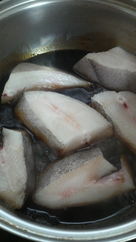
-In a large pan drop soy sauce, miso paste, sugar, mirin and sake, and bring slowly to boil.

KAREI-RECIPE-3

-Add fish and bring slowly to boil.

KAREI-RECIPE-4

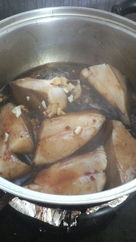
-Add grated garlic and ginger and cook on a low-medium fire until fish is almost cooked.

KAREI-RECIPE-5

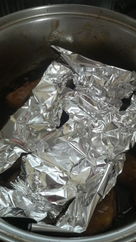
-Cover the fish with foil paper and simmer for 5 more minutes. Take care not burn anything.

KAREI-RECIPE-6

-Discard foil paper and keep spooning the juices over the fish util it has reached a nice brown colour and reduced to a nice texture.

KAREI-RECIPE-7

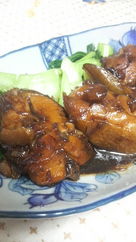
-Serve at once with some lettuce or greens. The fish and the sauce should have a shiny aspect.

The juices might look a bit dark, but that is when it’s at its best. Cooking time is difficult to determine exactly, but make sure nothing “burns”.
Great with plain steamed rice.

RECOMMENDED RELATED SITES:
Warren Bobrow
Bread + Butter
5 Star Foodie
Elinluv Tidbit Corner
Think Twice
Frank Fariello
Mangantayon
Hapabento

Please check the new postings at:
sake, shochu and sushi

—————————————-
日本語のブログ
—————————————-
Shizuoka Wine receives national recognition!: Naka Izu Winery

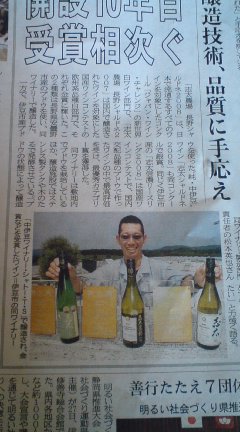
NAKA-IZU-WINE

After 10 years of existence, Naka Izu Winery Chateau T.S. has finally recevied the accolade of wine lovers in Japan!

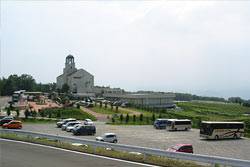
NAKA-IZU-WINERY
Naka Izu Winery & Hotel

The winery entered 10 varieties of wines in the Japan Wine Challenge Concours 09.
Its Shida Noujyo Nagano Chardonnay 2008 won the Gold Medal in the New World White Wine Wine Section, and its Shida Noujyo Nagano Chardonnay 2007 won another one at the National Homegrown Wines Contest.

NAKA-IZU-WINE-CHARDONNAY

Both wines made use of a Chardonnay grape strain originally developped in Nagano Prefecture, our northern neighbours.

On the other hand, another white wine made from Chardonnay grape strain developped in Izu City, Shizuoka Prefecture, called Shida Chardonnay won a silver medals in both contests.

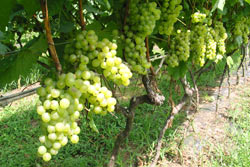
NAKA-IZU-WINE-RIESLINGjpg
Riesling strain grown at Naka Izu Winery.

The winery grows all its grapes and the wine is aged either in their own stainless tanks or wooden casks depending on the variety, making a real local winery.
Actually, until 1958 wine was produced in many parts of Shizuoka Prefecture, especially near Numazu City and in the Izu Peninsula, but disappeared when the government decided to support sake instead with very substantial subsidies.
Naka Izu Winery is still the only winery in existence in Shizuoka Prefecture.

About time to interview the winery and taste its wines!

Naka Izu Winery Chateau T.S.
410-2501, Shizuoka Prefecture, Izu Shi, Shimoshiraiwa, 1433-27
Tel.: 0120-818-517
Office hours: 09:30~17:00
HOMEPAGE (Japanese)

RECOMMENDED RELATED WEBSITES:
-Sake: Tokyo Through The Drinking Glass, Tokyo Foodcast, Urban Sake, Sake World
-Wine: Palate To Pen
-Beer: Good Beer & Country Boys, Another Pint, Please!, Warren Bobrow, Tokyo Terrace
-Japanese Pottery to enjoy your favourite drinks: Yellin Yakimono Gallery

Please check the new postings at:
sake, shochu and sushi

—————————————-
日本語のブログ
—————————————-
Cheese Plates at Gentil (’09/09/25)

GENTIL-09-25-3

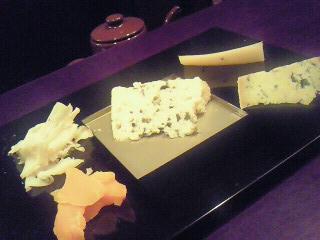
Last Friday, as said in previous reports, my two friend students and I visited Gentil, the oldest French restaurant in Shizuoka City.
It is a great and accordingly expensive restaurant, but you confine yourself to a plate of cheese and a glass of good wine, it is actually great value.
Ms. Keiko Kubota is THE authority on any cheese in Japan and actually help mature cheese she acquires all year long in season only.

As we were three of us, she served us two trays of them.

Above picture:
-Top left: “Tsuki no Okurimono/The Moon’s Present”, Cow’s milk, Hokkaido, Japan.
-Top left: Ossau Iraty, Ewe’s milk, Pyrenees, France
-Centre: Bleu des Causses, Cow’s milk, Causses, France
-Bottom left: Mimolette, 18-month old, Cow’s milk, North, France
-Bottom right: Bleu du Vercors Sassenage, Cow’s milk, Alpes, France

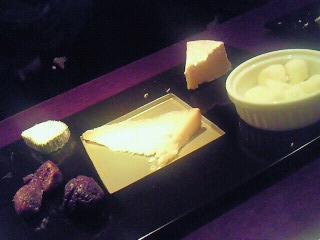
GENTIL-09-25-2

The second plate was an original combination:
-Top-left: Sainte-Maure, Goat’s milk, Loire, France
-Top-right: Aged Camembert, Cow’s Milk, Normandie, France
-Centre: Cosne de Porte Aubray, Goat’s milk, Loire, France
-Bottom left: dried black figs
-Bottom right inside a small dish: “Baby Cheese”, Cow’s milk, Canada!

What did wedrink with that?
A very fine Morgon from Bourgogne, France!

Restaurant Gentil
Address:420-0031 Shizuoka Shi, Gofuku-cho, 2-9-1, Gennan Kairaku building, 2F
Tel.: 054-2547655 (Reservations advisable)
Fax: 054-2210509
Opening hours: 12:00~14:00, 18:00~last orders for meals at 21:30. Bar time 18:00~23:30. Closed on Mondays.
Credit cards OK
Homepage (Japanese)

RECOMMENDED RELATED SITES:
Warren Bobrow
5 Star Foodie
Frank Fariello
Mangantayon
Cheese Monger
Rubber Slippers in Italy

Please check the new postings at:
sake, shochu and sushi

—————————————-
日本語のブログ
—————————————-
French Dessert Combination at Gentil (’09/09/25)

GENTIL-09-25-1

Last night, after we visited Sushi Ko in Shizuoka City, we went to Gentil, the oldest French restaurant in town for cheese (report coming next) and dessert.

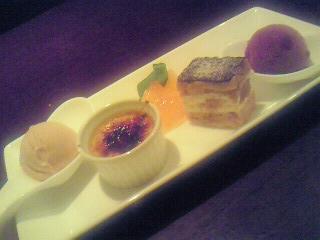
The chef at Gentil has just changed and the style is different, but very modern in approach as demonstrated by the combination dessert we were served:

From left to right:
-Caramel ice-cream
-Kabocha/Japanese Pumpkin Creme Brulee
-Fresh kaki/persimmon (my first this year!)
-Banana Cake
-Cassis Sorbet

Definitely extravagant!

Restaurant Gentil
Address:420-0031 Shizuoka Shi, Gofuku-cho, 2-9-1, Gennan Kairaku building, 2F
Tel.: 054-2547655 (Reservations advisable)
Fax: 054-2210509
Opening hours: 12:00~14:00, 18:00~last orders for meals at 21:30. Bar time 18:00~23:30. Closed on Mondays.
Credit cards OK
Homepage (Japanese)

RECOMMENDED RELATED SITES:
Warren Bobrow
Bread + Butter
5 Star Foodie
Frank Fariello
Mangantayon
Tokyo Foodcast
Tokyo Through The Drinking Glass

Please check the new postings at:
sake, shochu and sushi

—————————————-
日本語のブログ
—————————————-