Tag Archives: French cuisine

For Vegans & Vegetarians! “Forgotten Vegetables 10: Cerfeuil tubereux/Parsnip Chervil

CERFEUIL-1

SYNOPSIS:
Organic agriculture and biodiversity have in recent years brought about a rediscovery of many “forgotten” vegetables that people especially in Europe and France conscientiously tried to forget as they reminded them of the privations suffered during WWII. The same people had then to make do with untraditional vegetables because potatoes, carrots and so on were confiscated by occupying forces or their own armies.
With sustainibility and bioagriculture made more important by the deficiencies of modern mass agriculture, those “forgotten” vegetables have suddenly come to the fore for the pleasure of all, and that of course of vegetarians and vegans!

This particular series of postings will introduce these vegetables one by one. I hope they will become useful for a long time to come to all my vegan and vegetarian friends!
1) Scorsonere/Oyster Plant
2)Potimarron
3) Vitelotte
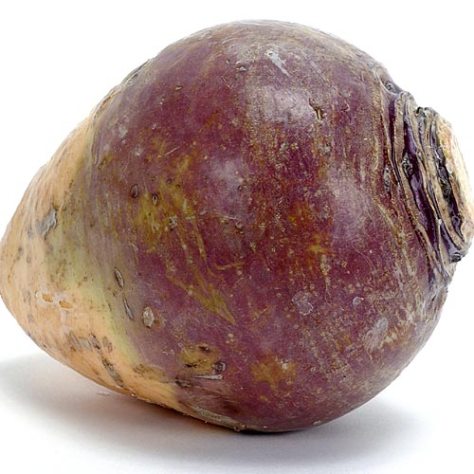
4) Rutabaga
5) Cardon
6) Panais/Parsnips
7) Patisson
8) Topinambour
9) Crosne

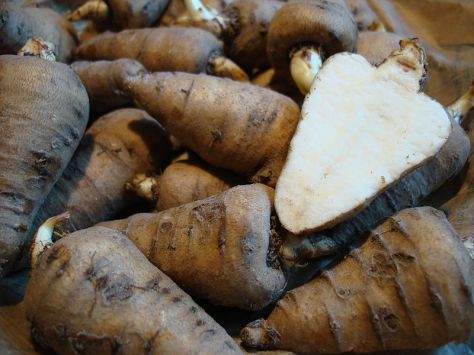
Cerfeuil Tubereux (French) or Chaerophyllum bulbosum (Latin) is a species of flowering plant in the carrot family known by several common names, including turnip-rooted chervil, tuberous-rooted chervil, bulbous chervil, and parsnip chervil. It is native to Europe and western Asia. This is a tall annual herb with fringelike divided leaves and large umbels of white flowers.

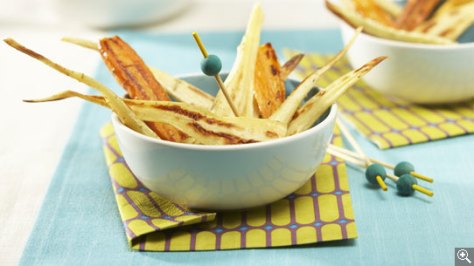
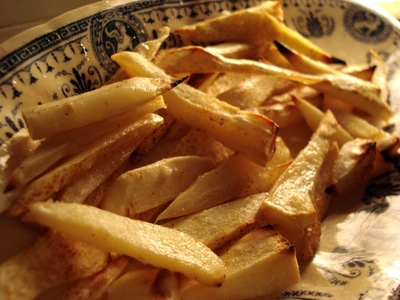
CERFEUIL-CHIPS
Cerfeuil Tubereux chips

The plant is cultivated on a small scale in parts of Europe for the edible root, which looks like a dark gray carrot with yellowish-white flesh.
After harvest it is stored for a few months, during which time the sugar content increases via hydrolysis of starch by amylases.

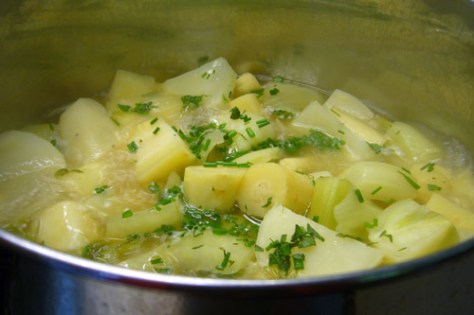
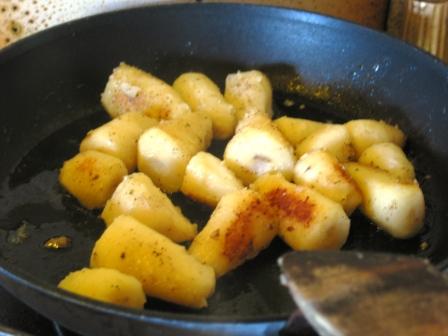
CERFEUIL-FRIED
Sauteed Cerfeuil tubereux

Storage also allows the development of the root’s flavor, which is reminiscent of chestnut. The root is prepared by boiling.
Actually all potato recipes can be applied to cerfeuil tubereux!

The reason it is rare is because it is difficult to plant and that they require 5 months storage for better taste!

RECOMMENDED RELATED SITES
Not-Just-Recipes
Bengal cuisine
Cooking Vegetarian

Please check the new postings at:
sake, shochu and sushi

—————————————-
日本語のブログ
—————————————-

For Vegans & Vegetarians! “Forgotten Vegetables 9: Crosne/Chinese Artichoke-Knotroot

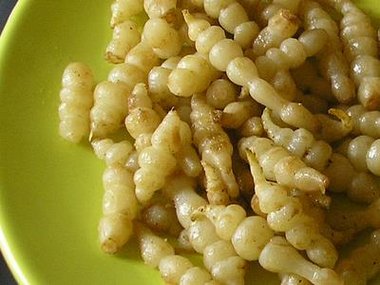
CROSNE-TUBER
Crosne tuber

SYNOPSIS:
Organic agriculture and biodiversity have in recent years brought about a rediscovery of many “forgotten” vegetables that people especially in Europe and France conscientiously tried to forget as they reminded them of the privations suffered during WWII. The same people had then to make do with untraditional vegetables because potatoes, carrots and so on were confiscated by occupying forces or their own armies.
With sustainibility and bioagriculture made more important by the deficiencies of modern mass agriculture, those “forgotten” vegetables have suddenly come to the fore for the pleasure of all, and that of course of vegetarians and vegans!

This particular series of postings will introduce these vegetables one by one. I hope they will become useful for a long time to come to all my vegan and vegetarian friends!
1) Scorsonere/Oyster Plant
2)Potimarron
3) Vitelotte
4) Rutabaga
5) Cardon
6) Panais/Parsnips
7) Patisson
8) Topinambour

CROSNE-PLANT

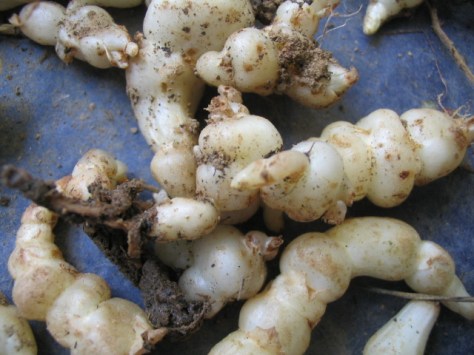
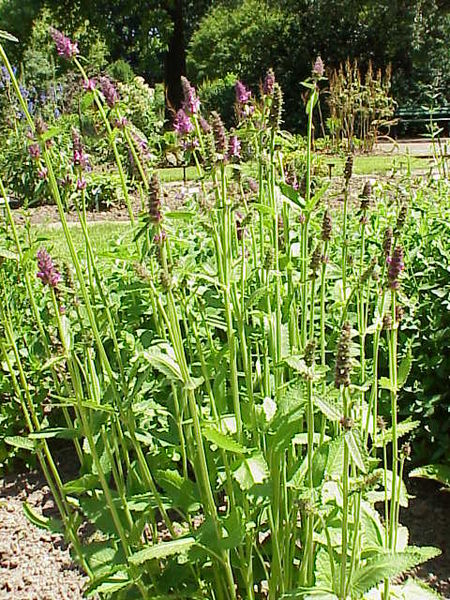
Crosne (Stachys affinis), otherwise known as the Chinese artichoke, knotroot, or artichoke betony, is an herbaceous perennial plant of the family Lamiaceae. Although its edible tuber can be grown as a root vegetable, it is a rare sight in the garden. From a cultivation standpoint this is rather odd — the plant is easy to grow, requiring neither staking nor earthing-up. The reason that it is so unpopular is the nature of the tubers — small, convoluted and indented, so that it is the cook rather than the gardener or the family who finds this vegetable frustrating. The thin skin is of whitish-brown or ivory-white. The flesh underneath, under proper cultivation, is white and tender. It is in season generally commencing with October.

The flavor of the tubers is delicate and delicious — they can be treated as topinambour/jerusalem artichokes in cooking. It is used as a vegetable, in salad compositions, but more so as a garnish.

In China, the Chinese artichoke is used primarily for pickling.

CROSNE-CHOROGI
Japanese Chorogi

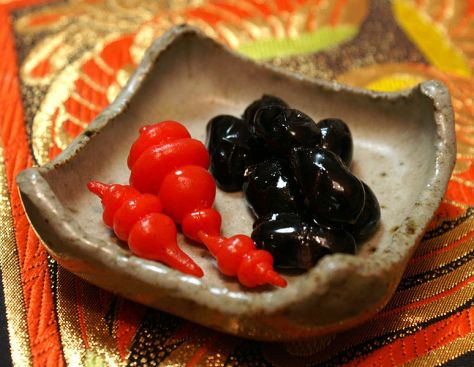
Its tuber is a part of Osechi cooked for celebrating Japanese New Year. Dyed red by leaves of red shiso after pickled, it is called Chorogi. In French cuisine, its cooked tuber is often served alongside dishes named japonaise or Japanese-styled.

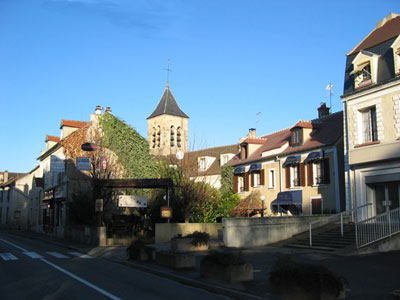
It was introduced in France in 1882 by a retired French industry businessman called Auguste Pailleux, who had a passion for gardening and unusual plants which could be used for food.

CROSNE-CITY
Crosne City

Crosne was adopted as the name of his birthplace in 1960!
He planted them in his garden in the Essone near Paris and has his neighbours taste them. Their taste halfway between salsify and artichoke became an instant success!
The very following year they could be bought at the local food stands/markets!
But They soon fell out of favour, being too difficult to peel.

It has regained popularity since then and is mainly cultivated in France in Val de Loire, around Paris, in Bretagne, Bourgogne and Somme (northern France).

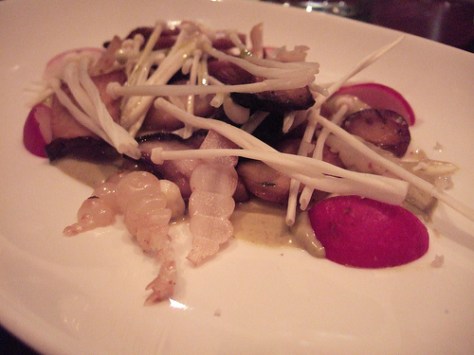
CROSNE-SALAD
Roasted Mushrooms and Crosnes Salad

They are presently sold over the counter pre-washed.
Blanchir/fry them over a hot fire for 2 minutes first. Then you can decline them into all kinds of dishes including cream, soup, mashed, fritters, etc.

CROSNES-CUMIN
Fried crosnes with cumin

RECOMMENDED RELATED SITES
Not-Just-Recipes
Bengal cuisine
Cooking Vegetarian

Please check the new postings at:
sake, shochu and sushi

—————————————-
日本語のブログ
—————————————-

For Vegans & Vegetarians! “Forgotten Vegetables 8: Topinambour/Jerusalem Artichoke

TPINAMBOUR-1
Topinambour

SYNOPSIS:
Organic agriculture and biodiversity have in recent years brought about a rediscovery of many “forgotten” vegetables that people especially in Europe and France conscientiously tried to forget as they reminded them of the privations suffered during WWII. The same people had then to make do with untraditional vegetables because potatoes, carrots and so on were confiscated by occupying forces or their own armies.
With sustainibility and bioagriculture made more important by the deficiencies of modern mass agriculture, those “forgotten” vegetables have suddenly come to the fore for the pleasure of all, and that of course of vegetarians and vegans!

This particular series of postings will introduce these vegetables one by one. I hope they will become useful for a long time to come to all my vegan and vegetarian friends!
1) Scorsonere/Oyster Plant
2)Potimarron
3) Vitelotte
4) Rutabaga
5) Cardon
6) Panais/Parsnips
7) Patisson

The topinambour or Jerusalem artichoke (Helianthus tuberosus), also called the sunroot or sunchoke or earth apple, is a species of sunflower native to the eastern United States, from Maine west to North Dakota, and south to northern Florida and Texas. It is also cultivated widely across the temperate zone for its tuber, which is used as a root vegetable.

TOPINAMBOUR-2
At a European market

It is a herbaceous perennial plant growing to 1.5–3 m tall.

The leaves are opposite on the lower part of the stem, alternate higher up; the larger leaves on the lower stem are broad ovoid-acute and can be up to 30 cm long, the higher leaves smaller and narrower; they have a rough, hairy texture.

The flowers are yellow, produced in flowerheads 5–10 cm diameter, with 10–20 ray florets, and are thought to smell like milk chocolate.

The tubers are gnarly and uneven, typically 7.5–10 cm long and 3–5 cm thick, and vaguely resembling ginger root, with a crisp texture when raw; they vary in color from pale brown to white, red or purple.
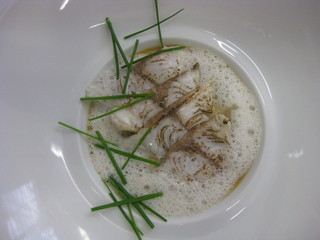
TOPINAMBOUR-CARPACCIO-MI-CUIT
Topinambour Carpaccio Mi-cuit

ETYMOLOGY

Despite its name, the Jerusalem artichoke has no relation to Jerusalem, and it is not a type of artichoke, even though both are members of the Daisy family. The origin of the name is uncertain. European settlers called the plant Girasole, the Italian word for sunflower. (The Jerusalem artichoke is a type of sunflower, in the same genus as the garden sunflower Helianthus annuus.) Over time the name Girasole may have been corrupted to Jerusalem. To avoid confusion some people have recently started to refer to it as sunchoke or sunroot.

The artichoke part of the Jerusalem artichoke’s name comes from the taste of its edible tuber. Samuel de Champlain, the French explorer, sent the first samples of the plant to France, noting that its taste was similar to an artichoke.

TOPINSMBOUR-CARROTS-SAVOURY
Topinambour & Carrots Savoury

HISTORY

Jerusalem artichokes were first cultivated by the Native Americans (who called them “sun roots”[citation needed]) long before the arrival of the Europeans; this extensive cultivation makes the exact native range of the species obscure.[1] The French explorer Samuel de Champlain found them being grown at Cape Cod in 1605. The Jerusalem artichoke was titled ‘best soup vegetable’ in the 2002 Nice festival for the heritage of the French cuisine.
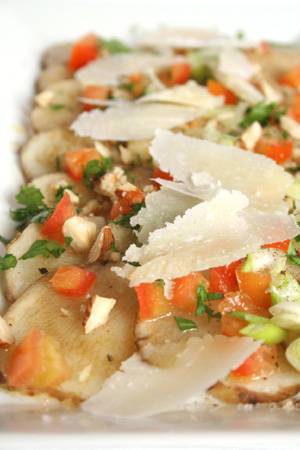
TOPINAMBOUR-SALAD
Topinambour Salad

CULTIVATION & USES

Unlike most tubers, but in common with other members of the Asteraceae (including the artichoke), the tubers store the carbohydrate inulin (not to be confused with insulin) instead of starch. For this reason, Jerusalem artichoke tubers are an important source of fructose for industry. The crop yields are high, typically 16–20 tonnes/ha for tubers, and 18–28 tonnes/ha green weight for foliage. Jerusalem artichoke also has a great deal of unused potential as a producer of ethanol fuel, using inulin-adapted strains of yeast for fermentation.

Jerusalem artichokes are easy to cultivate, which tempts gardeners to simply leave them completely alone to grow. However the quality of the edible tubers degrades unless the plants are dug up and replanted in fertile soil. This can be a chore, as even a small piece of tuber will grow if left in the ground, making the hardy plant a potential weed.

TOPINAMBOUR-TAJINE
Topinambour Tajine

The tubers, which resemble ginger root, have a consistency much like potatoes, and in their raw form have a similar taste to potatoes except they are crunchier and sweeter with a slightly nutty taste.

TOPINAMBOUR-VELOUTE
Topinambour Veloute

Jerusalem artichokes have 650 mg. potassium per 1 cup (150g) serving. They are also high in iron, and contain 10-12% of the US RDA of fiber, niacin, thiamine, phosphorus and copper.

Best season for purchase and cooking is October~March!

Liquor
In the Baden-Württemberg, Germany, over 90 percent of the Jerusalem artichoke root is used to produce a spirit called “Topinambur”, “Topi” or “Rossler”!

RECOMMENDED RELATED SITES
Not-Just-Recipes
Bengal cuisine
Cooking Vegetarian

Please check the new postings at:
sake, shochu and sushi

—————————————-
日本語のブログ
—————————————-
For Vegans & Vegetarians! “Forgotten” Vegetables 7: Patisson/Pattypan Squash

PATISSON-1

SYNOPSIS:
Organic agriculture and biodiversity have in recent years brought about a rediscovery of many “forgotten” vegetables that people especially in Europe and France conscientiously tried to forget as they reminded them of the privations suffered during WWII. The same people had then to make do with untraditional vegetables because potatoes, carrots and so on were confiscated by occupying forces or their own armies.
With sustainibility and bioagriculture made more important by the deficiencies of modern mass agriculture, those “forgotten” vegetables have suddenly come to the fore for the pleasure of all, and that of course of vegetarians and vegans!

This particular series of postings will introduce these vegetables one by one. I hope they will become useful for a long time to come to all my vegan and vegetarian friends!
1) Scorsonere/Oyster Plant
2)Potimarron
3) Vitelotte
4) Rutabaga
5) Cardon
6) Panais/Parsnips

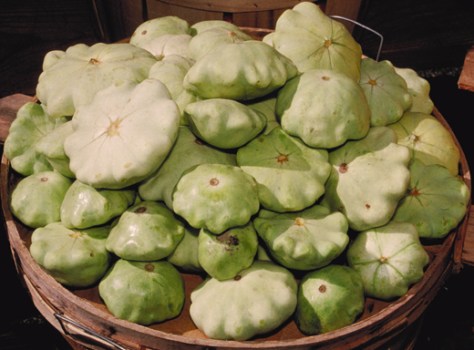
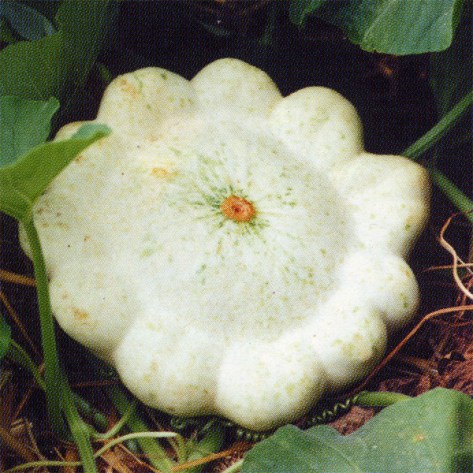
Patisson (French), or Pattypan squash, Sunburst Squash or White squash (English) or Scallopini or Button Squash in Australian English, is a summer squash (species Cucurbita pepo) notable for its small size, round and shallow shape, and scalloped edges, somewhat resembling a small toy top, or flying saucer.

PATISSON-2

The name “pattypan” derives from “a pan for baking a patty.”

PATISSON-SALADE
Patisson Salad

Its French name, “pâtisson,” derives from a Provençal word for a cake made in a scalloped mould. The pattypan squash is also known as cymling, scallop squash, custard marrow, or custard squash.

PATISSON-3

Pattypan comes in yellow, green, and white varieties. The squash is most tender when relatively immature; it is generally served when it is no more than two to three inches in diameter.

PATISSON-SOUP
Patisson Soup

In fine cuisine, its tender flesh is sometimes scooped out and mixed with flavorings such as garlic prior to reinsertion; the scooped-out husk of a pattypan also is sometimes used as a decorative container for other foods.

They can be prpared like courgettes/zuchini. Their taste is reminscent of the artichoke.
The smallest are the best!

Pattypan is a good source of magnesium, niacin, and vitamins A and C. One cup contains approximately 20 to 30 calories and no fat. It is often sliced, coated and fried until golden brown.

RECOMMENDED RELATED SITES
Not-Just-Recipes
Bengal cuisine
Cooking Vegetarian

Please check the new postings at:
sake, shochu and sushi

—————————————-
日本語のブログ
—————————————-
For Vegans & Vegetarians! “Forgotten” Vegetables 6: Panais/Parsnips

PANAIS-1

SYNOPSIS:
Organic agriculture and biodiversity have in recent years brought about a rediscovery of many “forgotten” vegetables that people especially in Europe and France conscientiously tried to forget as they reminded them of the privations suffered during WWII. The same people had then to make do with untraditional vegetables because potatoes, carrots and so on were confiscated by occupying forces or their own armies.
With sustainibility and bioagriculture made more important by the deficiencies of modern mass agriculture, those “forgotten” vegetables have suddenly come to the fore for the pleasure of all, and that of course of vegetarians and vegans!

This particular series of postings will introduce these vegetables one by one. I hope they will become useful for a long time to come to all my vegan and vegetarian friends!
1) Scorsonere/Oyster Plant
2)Potimarron
3) Vitelotte
4) Rutabaga
5) Cardon
——————————————–

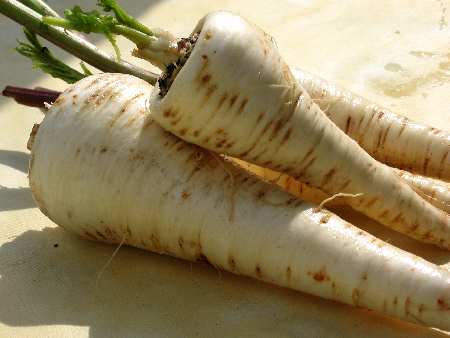
The panais (French) or parsnip (English) is a root vegetable related to the carrot. Parsnips resemble carrots, but are paler than most of them and have a stronger flavor.

PANAIS-CONFITS
Panais confits

HISTORY:

Like carrots, parsnips are native to Eurasia and have been eaten there since ancient times. Zohary and Hopf note that the archeological evidence for the cultivation of the parsnip is “still rather limited,” and that Greek and Roman literary sources are a major source about its early use, but warn “there are some difficulties in distinguishing between parsnip and carrot (which, in Roman times, were white or purple) in classical writings since both vegetables seem to have been sometimes called pastinaca yet each vegetable appears to be well under cultivation in Roman times.” As pastinache comuni the “common” pastinaca figures in the long list of comestibles enjoyed by the Milanese given by Bonvesin de la Riva in his “Marvels of Milan” (1288).

PANAIS-CARTTES-SOUP
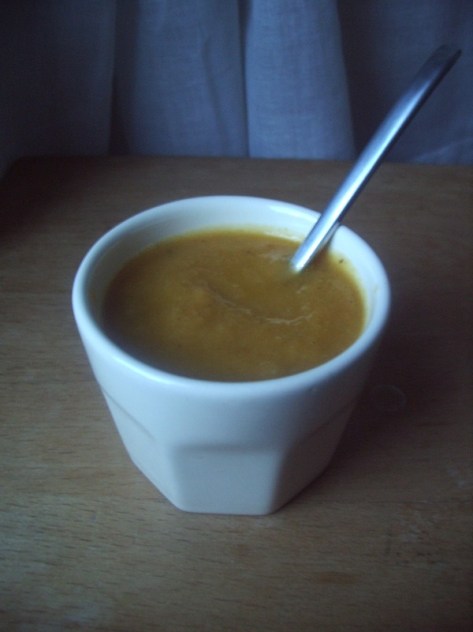
Panais and carrots soup

ETYMOLOGY:

While folk etymology sometimes assumes the name is an English portmanteau of parsley and turnip, it actually comes from Latin pastinum, a kind of fork, whose ending was changed to -nip by analogy with turnip because it was assumed to be a kind of turnip. It is among the closest relatives of parsley, which can be bred to develop a very parsnip-like root.

PANAIS-GRATIN
Panais gratin

CULTIVATION:

Panais are not grown in warm climates, since frost is necessary to develop their flavor. The panais is a favorite with gardeners in areas with short growing seasons. Sandy, loamy soil is preferred; silty, clay, and rocky soils are unsuitable as they produce short, forked roots.

Seeds can be planted in early spring, as soon as the ground can be worked. Harvesting can begin in late fall after the first frost, and continue through winter until the ground freezes over.

More than almost any other vegetable seed, panais seed significantly deteriorates in viability if stored for long, so it is advisable to use fresh seed each year.

PANAIS-GRILLES
Grilled panais

The parsnip is richer in vitamins and minerals than its close relative, the carrot. It is particularly rich in potassium with 600 mg per 100 g. The parsnip is also a good source of dietary fiber. 100 g of parsnip contains 55 Calories of energy.

PANAIS-POTEE
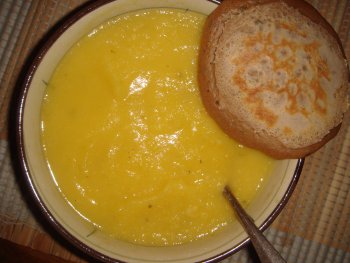
Panais pot au feu

Until the potato arrived from the New World, its place in dishes was occupied by the panais and other root vegetables such as the turnip. Panais can be boiled, roasted or used in stews, soups and casseroles.

PANAIS-PUREE
Panais mash/Puree

In some cases, the panais is boiled and the solid portions are removed from the soup or stew, leaving behind a more subtle flavor than the whole root and contributing starch to thicken the dish. Roasted panais is considered an essential part of Christmas dinner in some parts of the English-speaking world and frequently features in the traditional Sunday Roast. Panais can also be fried, or can be eaten raw, although raw parsnips are not frequently consumed.

PANAIS-TAGLIATELLES
Panais Tagliatelle

Like a lot of vegetables, the recipes are endless as panais can be easily combined with numerous other ingredients and dishes!

Choose them small as they wil contain less fibers.
Those which were submitted to a cold wave in the firelds are the best as they have become sweeter.
If you eat them raw like carrots, add lemon juice to them, or their colour will change!

RECOMMENDED RELATED SITES
Not-Just-Recipes
Bengal cuisine
Cooking Vegetarian

Please check the new postings at:
sake, shochu and sushi

—————————————-
日本語のブログ
—————————————-
For Vegans & Vegetarians! “Forgotten” Vegetables 5: Cardon

CARDON-2
Cardon before cooking

SYNOPSIS:
Organic agriculture and biodiversity have in recent years brought about a rediscovery of many “forgotten” vegetables that people especially in Europe and France conscientiously tried to forget as they reminded them of the privations suffered during WWII. The same people had then to make do with untraditional vegetables because potatoes, carrots and so on were confiscated by occupying forces or their own armies.
With sustainibility and bioagriculture made more important by the deficiencies of modern mass agriculture, those “forgotten” vegetables have suddenly come to the fore for the pleasure of all, and that of course of vegetarians and vegans!

This particular series of postings will introduce these vegetables one by one. I hope they will become useful for a long time to come to all my vegan and vegetarian friends!
1) Scorsonere/Oyster Plant
2)Potimarron
3) Vitelotte
4) Rutabaga
——————————————–

The cardon or cardoon (Cynara cardunculus), also called the artichoke thistle, cardone, cardoni, carduni or cardi, is a thistle-like plant which is member of the Aster family, Asteraceae; (or archaic: Daisy family, Compositae). It is a naturally occurring variant of the same species as the Globe artichoke, and has many cultivated varieties. It is native to the Mediterranean, where it was domesticated in ancient times.

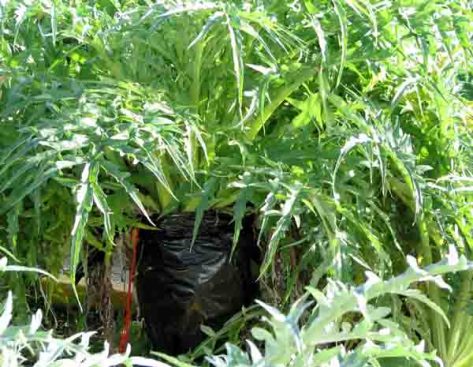
CARDON-1
Cardon plant

The cardon was popular in Greek and Roman cuisine. Cardons remained popular in medieval and early modern Europe, and were common in the vegetable gardens of colonial America. They fell from fashion only in the late nineteenth century. In Europe, Cardon is still cultivated in Provence, Spain and Italy. In the Geneva region, where Huguenot refugees introduced it about 1685, the local variety Cardy is considered a culinaric specialty.

Cardon stalks can be covered with small, nearly invisible spines that can cause substantial pain if they become lodged in the skin. Several “spineless” cultivars have been developed to overcome this but care in handling is recommended for all types.

While the flower buds can be eaten much as the artichoke, more often the stems are eaten after being braised in cooking liquid. Battered and fried, the stems are also traditionally served at St. Joseph’s altars in New Orleans.

The stalks, which look like large celery stalks, can be served steamed or braised. They have an artichoke-like flavor. Cardons are available in the market only in the winter months. In the U.S.A., it is rarely found in stores, but available in farmers’ markets, where it is available through May, June, and July. The main root can also be boiled and served cold. Acclaimed chef Mario Batali calls the cardon one of his favorite vegetables and says they have a “very sexy flavor.” LOL

CARDON-CREAM
Cardon Cream

Cardons are used as a vegetarian source of enzymes for cheese production. In Portugal, traditional coagulation of the curd relies entirely on this vegetable rennet. This results in cheeses such as the Nisa (D.O.P.), with a peculiar earthy, herbaceous and a slightly citric flavour that bears affinitty with full-body or fortified wines.

Cardons are also an ingredient in one of the national dishes of Spain, the Cocido Madrileno, a slow-cooking, one-pot, meat and vegetable dinner simmered in broth, cardoons are traditional in the cocidos of Madrid.

Cardon requires a long, cool growing season (ca. 5 months) but it is frost-sensitive. It also typically requires substantial growing space per plant and hence is not much grown save where it is a regional favorite.

The cardoon is highly invasive and is able to adapt to dry climates. It has become a major weed in the pampas of Argentina and California; it is also considered a weed in Australia.

RECOMMENDED RELATED SITES
Not-Just-Recipes
Bengal cuisine
Cooking Vegetarian

Please check the new postings at:
sake, shochu and sushi

—————————————-
日本語のブログ
—————————————-
For Vegans & Vegetarians! “Forgotten” Vegetables 4: Rutabaga

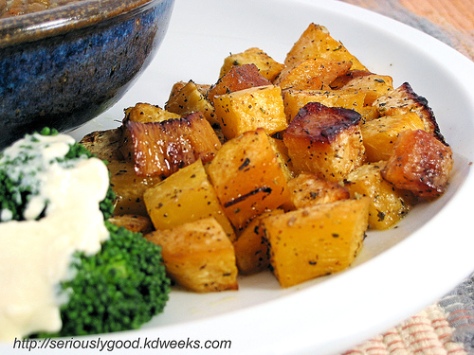
RUTABA-HONEY-ROASTED
Rutabaga roasted with Honey

SYNOPSIS:
Organic agriculture and biodiversity have in recent years brought about a rediscovery of many “forgotten” vegetables that people especially in Europe and France conscientiously tried to forget as they reminded them of the privations suffered during WWII. The same people had then to make do with untraditional vegetables because potatoes, carrots and so on were confiscated by occupying forces or their own armies.
With sustainibility and bioagriculture made more important by the deficiencies of modern mass agriculture, those “forgotten” vegetables have suddenly come to the fore for the pleasure of all, and that of course of vegetarians and vegans!

This particular series of postings will introduce these vegetables one by one. I hope they will become useful for a long time to come to all my vegan and vegetarian friends!
1) Scorsonere/Oyster Plant
2)Potimarron
3) Vitelotte
——————————————–

RUTABAGA-1

The rutabaga, swede (from Swedish turnip), or yellow turnip (Brassica napobrassica, or Brassica napus var. napobrassica) is a root vegetable that originated as a cross between the cabbage and the turnip. Its leaves can also be eaten as a leaf vegetable.

Prior to pumpkins being readily available in the UK and Ireland (a relatively recent development), swedes were hollowed out and carved with faces to make lanterns for Halloween. Often called “jack o’lanterns”, or “tumshie lanterns” in Scotland, they were the ancient symbol of a damned soul!

RUTABAGA-ROASTED
Roasted rutabagas

Rutabagas were an important nutritional source for many Finno-Ugric tribes before the introduction of potatoes. Some claim the vegetable is native to Sweden, but others think it was introduced to Sweden, possibly from Finland or Siberia, in the early 17th century. From Sweden, it reached Scotland, and from there it spread to the rest of Great Britain and to North America.

In continental Europe, it acquired a bad reputation during World War I, when it became a food of last resort. In the German Steckrübenwinter (rutabaga winter) of 1916–17, large parts of the population were kept alive on a diet consisting of rutabagas and little else, after grain and potato crop failures had combined with wartime effects. After the war, most people were so tired of rutabagas that they came to be considered “famine food,” and they have retained this reputation to the present day. As a consequence, they are rarely planted in Germany.

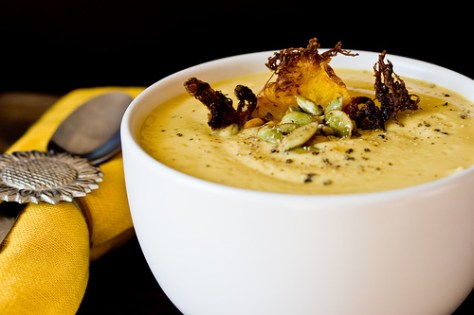
RUTABAGA-CREAM
Rutabaga Cream.

On the other hand rutabaga is foing through a kind of boom in France where famous chefs have readily adopted them and given the vegetable its “lettre de noblesse”/nobility image!

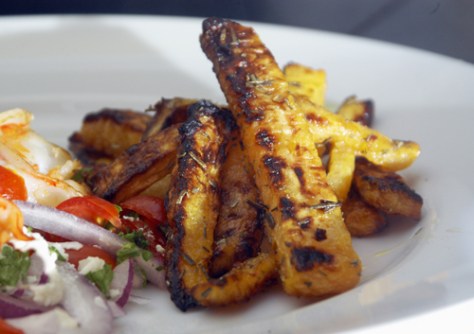
RUTABAGA-FRIES
Rutabaga Fries!

Choose firm and well-rounded.
All the potato recipes can be applied to the rutabaga.
Its yeloow sweet flsh tastes something between turnip and cabbage.

Other preparations according to the countries:

Finns cook swede/rutabaga in a variety of ways; roasted to be served with meat dishes, as the major ingredient in the ever popular Christmas dish Swede casserole (“lanttulaatikko”), as a major flavor enhancer in soups, uncooked and thinly julienned as a side dish or in a salad, baked, or boiled. Finns use swede in most dishes that call for any root vegetable.

Swedes and Norwegians cook swede with potatoes and carrots and mash them with butter and cream or milk to create a puree called “rotmos” (root mash) and “kålrot/kålrabistappe” in Swedish and Norwegian, respectively. Onion is occasionally added. In Norway, kålrabistappe is an obligatory accompaniment to many festive dishes, including smalahove, pinnekjøtt, raspeball and salted herring.

In Wales, a similar dish produced using just potatoes and swede is known as “potch”.

In Scotland, swede and potatoes are boiled and mashed separately to produce “tatties and neeps” (“tatties” being the Scots word for potatoes), traditionally served with the Scottish national dish of haggis as the main course of a Burns supper. Neeps may also be mashed with potatoes to make clapshot. Regional variations include the addition of onions to clapshot in Orkney. Neeps are also extensively used in soups and stews.

In Yorkshire and Lincolnshire/England, swedes are often mashed together with carrots as part of the traditional Sunday roast.

In Canada rutabagas are used as filler in foods such as mincemeat and Christmas cake, or as a side dish with Sunday dinner in Atlantic Canada.

In the US rutabagas are mostly eaten as part of stews or casseroles, served mashed with carrots, or baked in a pasty.

RECOMMENDED RELATED SITES
Not-Just-Recipes
Bengal cuisine
Cooking Vegetarian

Please check the new postings at:
sake, shochu and sushi

—————————————-
日本語のブログ
—————————————-
For Vegans & Vegetarians! “Forgotten” Vegetables 3: Vitelotte

VITELOTTE

SYNOPSIS:
Organic agriculture and biodiversity have in recent years brought about a rediscovery of many “forgotten” vegetables that people especially in Europe and France conscientiously tried to forget as they reminded them of the privations suffered during WWII. The same people had then to make do with untraditional vegetables because potatoes, carrots and so on were confiscated by occupying forces or their own armies.
With sustainibility and bioagriculture made more important by the deficiencies of modern mass agriculture, those “forgotten” vegetables have suddenly come to the fore for the pleasure of all, and that of course of vegetarians and vegans!

This particular series of postings will introduce these vegetables one by one. I hope they will become useful for a long time to come to all my vegan and vegetarian friends!
1) Scorsonere/Oyster Plant
2)Potimarron
——————————————–

Vitelotte (also called Negrèsse or Truffle de Chine in French) is an ancient (quite like an heirloom rose) cultivar of blue-violet potato.

Originally from Peru and Bolivia, the Vitelotte variety is still commonly grown there. It is supposed that they are a 200 year old mix of ancient types of Peruvian potatoes.

Vitelotte potatoes have a dark, almost black skin and dark violet-blue flesh thanks to a high content of the natural pigment anthocyanin. They retain their colour when cooked. The plants mature late and compared to modern varieties produce a fairly low yield. The tubers have a thick skin and thus store well.

VITELOTTE-2
Vitelotte chips

Its colour allows for spectacular dishes, taking in account that the colour blue is not common in gastronomy (except for cakes!)

VITELOTTE-MILLEFEUILLE
Vitelotte Millefeuille

Combined with other vegetables of different colours, they certainly look attractive!

VITELOTTE-PUREE
Mashed vitelotte

Not only its colour but also its hazlenut-like flavour makes it popular with chefs!

VITELOTTE-SOUP
Vitelotte soup (Courtesy of Lamiacucina)

It’s a bit difficult to peel, and when boiled a bit floury.
In soups, you can sieve it and combine with fresh cream and serve hot or cold as vichyssoise, but chips are probably the most popilar way to present and consume them!

RECOMMENDED RELATED SITES
Not-Just-Recipes
Bengal cuisine
Cooking Vegetarian

Please check the new postings at:
sake, shochu and sushi

—————————————-
日本語のブログ
—————————————-
For Vegans & Vegetarians! “Forgotten” Vegetables 2: Potimarron

POTIMARRON-1

SYNOPSIS:
Organic agriculture and biodiversity have in recent years brought about a rediscovery of many “forgotten” vegetables that people especially in Europe and France conscientiously tried to forget as they reminded them of the privations suffered during WWII. The same people had then to make do with untraditional vegetables because potatoes, carrots and so on were confiscated by occupying forces or their own armies.
With sustainibility and bioagriculture made more important by the deficiencies of modern mass agriculture, those “forgotten” vegetables have suddenly come to the fore for the pleasure of all, and that of course of vegetarians and vegans!

This particular series of postings will introduce these vegetables one by one. I hope they will become useful for a long time to come to all my vegan and vegetarian friends!
1) Scorsonere/Oyster Plant
——————————————–

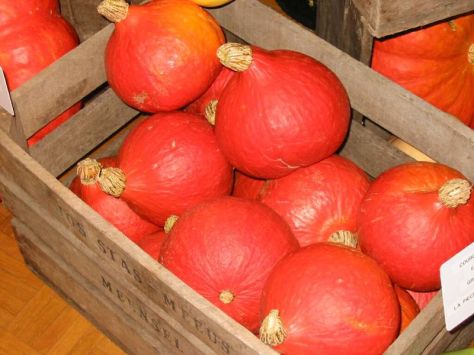
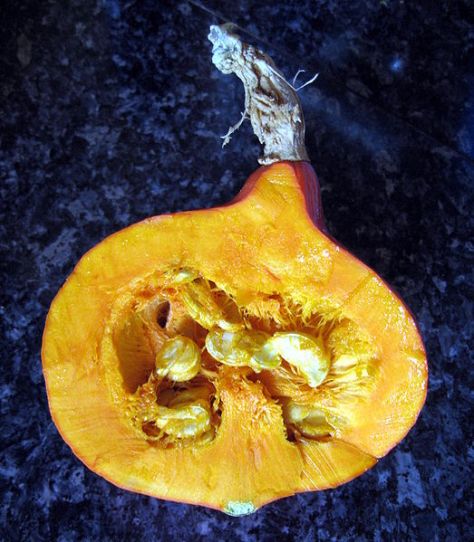
Potimarron, or Cucurbita maxima, Duchesne, 1786 in Latin, is a variety of Potiron,pumpkin, actually nearer to the Japanese kabcha that our big things growing before Halloween.
Talking of kabocha, the Japanes have started ptimarron to the extent that they call it Hokkaido squash!

POTIMARRON-2

This cousin of cucumbers has its own characteristic taste, very reminiscent of chestnuts.
Its colour is usually deep orange-red, but can be found in pink, bronce or green colours through mutation.
Although it has been grown for a long time in the Far Esat, especially in Hokkaido, Japan, its origin is American.
But the main reason why it is grown in Europe and Japan is not so much the taste, which is great, but the incredible amount of beta-caroten, a vitamin essential for fighting ageing!

POTIMARRON-MASHED
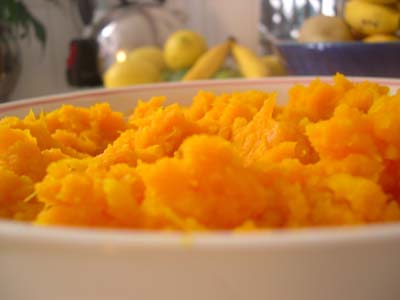
Potimarron Mashe/hash

Moreover Potimarron is very ric in Vitamins A, B, C, D, E, and oligo-elements (Phosporus, calcium, magnesium, iron, potassium, silicium, sodim…), amino acids and unsaturated fat amino, and natural sugars.

The longer the fruit is preserved inside a dry cellar, the nore its vitamins and sugars increase!

Growers have noticed that after extracted the seeds by hand, the skin of their hands stayed soft for two days as if they were coated with wax!

POTIMARRON-SOUP
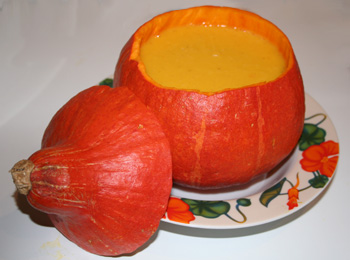
Potimarron soup

Naturally potimarron, like pumpkins can be prepared in numerous ways: has/mash, soups,

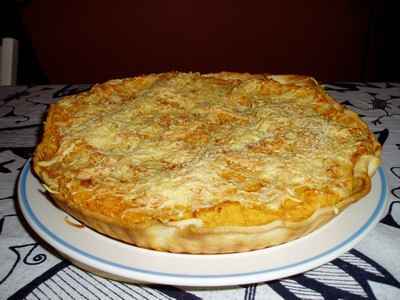
POTIMARRON-TART
Potimarron Tart!

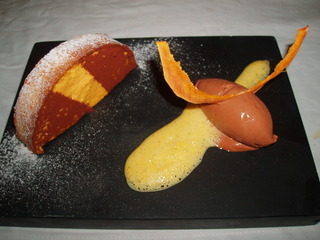
POTIMARRON-MOUSSE
Potimarron Mousse!

and of course tarts, mousse, Japanese cakes/wagashi as desserts, or in pies, or baked with garlic!

RECOMMENDED RELATED SITES
Not-Just-Recipes
Bengal cuisine
Cooking Vegetarian

Please check the new postings at:
sake, shochu and sushi

—————————————-
日本語のブログ
—————————————-
For Vegans & Vegetarians! “Forgotten” Vegetables 1: Scorsonere/Oyster Plant

SCORSONERE-1

Organic agriculture and biodiversity have in recent years brought about a rediscovery of many “forgotten” vegetables that people especially in Europe and France conscientiously tried to forget as they reminded them of the privations suffered during WWII. The same people had then to make do with untraditional vegetables because potatoes, carrots and so on were confiscated by occupying forces or their own armies.
With sustainibility and bioagriculture made more important by the deficiencies of modern mass agriculture, those “forgotten” vegetables have suddenly come to the fore for the pleasure of all, and that of course of vegetarians and vegans!

This particular series of postings will introduce these vegetables one by one. I hope they will become useful for a long time to come to all my vegan and vegetarian friends!

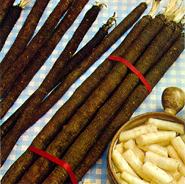
SCORSONERE (French)/OYSTER PLANT (English)

SCORSONERE-2

Scorsonere, or oyster plant, is a close cousin of the salsify and even of the burdock root.
The main difference is the dark brown/black colour of its skin.
Their history is the same. They are both found in the wild, especially along the Mediteranean Sea.
Scorsonere lost its popularity mainly because it is a chore to peel them, adde to the fact that the sap tends to stain hands. Moreover, they take a long time to cook.

Scorsonere seeds are planted in March~May in soil, spaced 25 cm from each other. Keep the soil clean leaving only one plant every 10 cm. Keep the soil cool (as opposite to hot and dry). Cover with straw in hot weather. If a flower stem appears, cut it to fortify the root.
The plant can stay up to 3 years in soil.
Soil must must be cool, deep and well manured.
harvest is conducted from October to march according to needs.

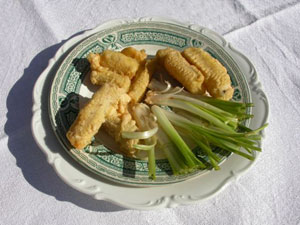
SCORSONERE-BEIGNETS
Scorsonere beignets/fritters

Once properly cooked, they are very tender and sweet, reminiscent of oysters as their English name indicates, as well of asparaguses and artichokes.
They are great cold in salads with mayonnaise or vinaigrette, glazed like carrots, deep-fried as beignets, or cooked again with fresh cream, tomato sauce, parmegianno and herbs!

RECOMMENDED RELATED SITES
Not-Just-Recipes
Bengal cuisine
Cooking Vegetarian

Please check the new postings at:
sake, shochu and sushi

—————————————-
日本語のブログ
—————————————-
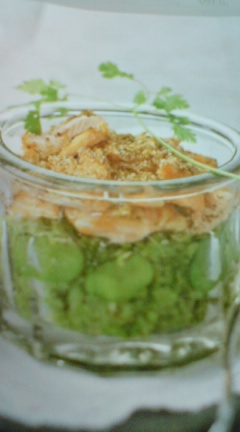
French Cuisine: Salmon Parmentier and Broad Beans Hash

SALMON-BEANS

Salmon and broad beans can be found on the plates and tables at homes and restaurants almost everywhere in the World.
Here is an easy recipe I found in my notes. It was both inspired by Japanese and French Cuisines, but definitely with a twist of the latter:

Parmentier de Saumon et Puree de Feves/Salmon Parmentier and Broad beans Hash!

INGREDIENTS:For 4 persons

-Salmon fillet (skin peeled off): 400 g
-Broad beans (peeled): 500 g
-Unsalted Butter 50g
-Hazlenut powder: 4 tablespoons
-Seasme oil: a few drops
-Ground pepper and fine salt

RECIPE:

-Preheat oven to 210 degrees Celsius
Put the salmon on an oven dish. Sprinkle with salt and pepper.
Cover a piece of foil paper and bake for 15 minutes

-During that time Heat a big pan full of salte water and cook the broad beans for 5~6 minutes.
Take care not to overcook!

-Drain the broad n\beans and mash them roughly witha fork inside a bowl. Add a few dops of seasme opil and a little pepper and mix.

-Fiil 4 glass cups with the broad beans has, then add the cooked salmon (after having brol\ken it into large flakes).

-Sprinkle the hazlenut powder over the top. Add a dollop of butteron top.
Grill it in the oven so as to gratine it for a few minutes.

Serve with a sprig or two of flat Italian parsley.

NOTE: Keep a few whole broad beans and mix them with the hash for better effect!

-Accompany it with a wine from my home:: Rully white (Cote Chalonnaise)!

Please check the new postings at:
sake, shochu and sushi

—————————————-
日本語のブログ
—————————————-
French Dessert: Apple Crumble Tiramisu

CRUMBLE-TIRAMISU

Apples are still very much in season, but contrary to here in Japan, the cold days are around the corner back home and people are expecting slightly heartier if still smaller desserts!

Here is a simple recipe marrying English, French and Italian cuisines all at the same time:
Apple Crumble Tiramisu!

INGREDIENTS: for 6 persons

-Apples: 2 (Canada, golden, …)
-Semi-salted butter: 50 g
-Sugar: 2 tablespoons
-Mascarpone: 150 g
-Egg: 1
-Flemish speculoos (French spéculoos) or shortcrust biscuit (cookies)

RECIPE:

-Peel the apples and cut them into small pieces.

-Put them on a frypan with butter and sugar.

-Fry them slowly on a small fire for 10 minutes. Then turn fire higher and cook, stirring all the time, fro 2~3 minutes. Let them cool and pour them at the bottom of six smallindividual ramequins or cupcake cups.

-Separate the yolk and white of the egg.
Mix the mascarpone with the yolk.
Beat the white into meringue with a pinch of salt.

-Mix the meringue delicately into the mascarpone cream so as not to break the air bubbles inside the meringue. Pour over the apples.
Leave inside of the fridge for a minimum of 3 hours or up to a mximum of 12 hours.

-Just before sercing top with a thin layer of crushed speculoos cookies.

-Drink an apple wine such as pineau or pommeau with it!

Please check the new postings at:
sake, shochu and sushi

—————————————-
日本語のブログ
—————————————-
Vegetarian French Cuisine: Chilled Cucumber & Yoghurt Soup

CUCUMBER-YAOURT

Summer is supposedly a good season for slimming and cooking healthy foods. I don’t know about the former and I totally agree with the latter!
As this is a season for vegetables, it is also a good time to eat vegetarian now and then!

Chilled Cucumber & Yoghurt Soup

INGREDIENTS: For 4 persons

-Cumceumbers:2
-Plain yoghurt: 250 g
-Olive oil: 4 tablespoons
-Parsley or flat Italianparsley: half a bunch, fresh and washed in cold running water
-Coarse salt, salt & pepper

RECIPE:

-Cut and keep aside a piece of cucumber 4 cm long.
Peel the cucmbers and cut in halves lengthwise. discard the pips and cut again into small pieces.. In a bowl sprinkle them with coarse salt and put them aside for 30 minutes to let lose their water.

-Drain the cucumber pieces in a sieve.
Mix/process them together with the yoghurt, lightly chopped parsley and olive oil. The soup must be homogeneous. Season with salt and pepper.

-Chill inside fridge for at least 3 hours.

-Cut the the piece of cucumber into thin slices and keep in the fridge.

-Taste the soup and rectify/season it if necessary, before serving it very cold (add a cube of ice in each bowl for decoration and temperature!). Decorate with cucumber slices and parsley leaves.

NOTE:
If you find the the soup to thick add some vegetable stock soup/bouillon!

-Serve with an Alsace Muscat or slightly sweet white wine!

Please check the new postings at:
sake, shochu and sushi

—————————————-
日本語のブログ
—————————————-
French Cupcakes: Lemon & Ricotta Cupcakes

CUPCAKES

I finally succumbed to the temptation of posting a cupcake recipe!
Mind you, this one is very French in spite of its name, and I7m afraid it’s a first and last!LOL

Lemon & Ricotta Cupcakes!

INGREDIENTS: for 6~9 people

-2 lemons (organic, please!)
-Ricotta Cheese: 100 g
-Eggs: 2
-Slightly salted (demi-sel) butter: 110 g (softened)
-Sugar: 110 g
-Sieved flour: 110 g
-Baking powder: 1 small packet
-Icing sugar: 4 tabespoons

RECIPE:

-Preheat oven to 180 degrees Celsius

-Mix softened butter with sugar so as to obtain a creamy mixture.

-Lightly beta the 2 eggs. Mix them with the butter cream little by little.

-Add the finely chopped zest of 1 lemon, 1 tablespoon of lemon juice, the sieved flour, and the baking powder.. Mix well.

-Fill one fourth of each cup with that cupcake mixture.
Add a “large” teaspoon of ricotta.
Cover the ricotta with more cupcake mixture. Make sure to fill only three fourths of each cup.

-Bake at 180 degrees Celsius for 15 minutes.

-Prepare the icing/glacage:
In a bowl pour the icing sugar with a few drops of hot water and mix. Cover with cellophane paper and keep aside (you can use it until the cakes have completely cooled down.

-Cut 6~9 slices of the second lemon. Take off the outer skin.

-As soon as the cakes have completely cooled down, Top with one teaspoon of icing. Spread to make a small circle as in picture above. Top with one slice of lemon.

As this is a cupcake designed for adults, drink a dry white wine with them!

Please check the new postings at:
sake, shochu and sushi

—————————————-
日本語のブログ
—————————————-

French Cuisine: Marinated Cuttlefish

PISTES

The Japanese are not the only ones to eat cuttlefis or squids raw.
In French Languedoc, especially along the coastline separating the Thau Lake from the sea, locals have an interesting, is simple, way to accommodate small “calamars” (French for calamari) very reminiscent of recipes found in Greece, Italy and Spain.

Marinated Cuttlefish:

INGREDIENTS: (this can multiplied at will, so I’ll keep to elements, instead of quantities)
-Cuttlefish: Choose them small
-Garlic, finley chopped after being crushed with a fork, spoon or heavy knife.
-Lemon juice
-Olive oil (EV)
-Green chili pepper (fresh and high quality, fresh jalapenos is fine): finely chopped (discard seeds!)
-Salt & pepper

RECIPE:

-Peel off “skin” of calamari wherever possible. Clean them thoroughly under running cold water. Take off excess water with kitchen paper.
Cut into bite size or according to preferences.
-Let them marinate together with chopped garlic, lemon juice, olive oil, chopped green chili pepper, a little salt and pepper.
Proportions: 1 clove of garlic, 1 tablespoon of lemon juice, 1 tablespoon of olive oil, 1 small green chili pepper.
-Mix well and leave in fridge for at least 1 hour.
Serve in individual pots or on good toasted bread as tidbits for aperitif before a larger meal or as a snack to go with your beer or wine!

Please check the new postings at:
sake, shochu and sushi

—————————————-
日本語のブログ
—————————————-