Tag Archives: Japanese Cuisine

Sushi Millefeuille: The Recipe (with Vegan Option)

Following the kind comments of the creators of such beautiful blogs as Gourmet Fury, Bread + Butter, Dhaleb, Reg And Mitzi, Island Vittles and many other friends, I thought the time was ripe to post a couple of simple but colorful sushi recipes than can be easily expanded for home parties and impress your guests!

My vegan and vegetarian friends should not worry as I have explained possible adaptations according to their priorities at the end of such postings!

Here is the second one:
Sushi Millefeuille!

INGREDIENTS (& ADVICE):

Once again need to be too precise about exact quantities here as personal tastes can (and ought to) be different!

First combination (see above picture):

-Sushi rice: as much as you will need (freshly made. See sushi rice recipe HERE)

-Fish: tuna for the red part
-Cucumbers: sliced very thin for the first green part under the tuna.
-Avocado: for the second green part under the tuna (choose ripe avocad)
-Tobikko: Flying fish roe for the topping (if unavailable, can be replaced with salmon roe or finely chopped sweet red pimento.
-Mayonnaise.
Now, if you don’t like it, make a thick dressing. The trick is to make a simple vinaigrette with a lot of soft Dijon mustrd which will give it consistency.
Mayonnaise sold over the counter can be cloying sweet. I would make my own, which is not difficult at all: one egg yolk + salt + pepper + vinegar.
Whisk them all until smooth. Add and whisk in olive oil little by little until you have enough. Point: all ingredients must be at room temperature!
I add some wasabi to it for extra taste!
-Thin leeks for decoration.

RECIPE:

-On a large enough individual serving plate place a large enough cake circle in the middle.

-Fill one quarter/third with sushi rice.

-Lay one layer of fine cucumber slices.

-Lay one layer of sliced ripe avocado.

-Lay one layer of sliced tuna.

-Fill to the brim with another layer of sushi rice and press.

-Top with a layer of tobikko/flying fish roe.

-Decorate with a couple of thin leeks, mayonnaise around the millefeuille and some tomatoes.

Second combination (see above picture):

-Sushi rice.

-Kanpachi/Amberjack (if not available use white fleshed raw fish such as sole, halibut, seabream, etc.)

-Herring roe/Kazu no Ko

-Cucumbers: sliced

-Dry bonito shavings/katsuo bushi

-Thin leeks: finely chopped.

-Mayonnaise

-Tobikko/Flying Fish roe or salmon roe

RECIPE:

-On a large enough individual serving plate place a large enough cake circle in the middle.

-Fill one quarter/third with sushi rice.

-Lay one layer of Kanpachi/Japanese Amberjack or white-fleshed fish.

-Lay one layer of kazu no Ko/herring roe.

-Lay one layer of sliced cucumbers.

-Fill to the brim with another layer of sushi rice and press.

-Top with a layer of Katsuo bushi/Dry bonito shavings and plenty of chopped leeks.

-Decorate with mayonnaise and tobikko around the millefeuille.

There are of course plenty of scope left for improvisation!

VEGAN OPTION:

-Skip the Tobikko/Flying Fish roe. Replace with very finely chopped sweet red pimento.

-As for the mayonnaise, use a vegan subsititute or make a dressing like I suggested above.

-Instead of fish use layers made of cooked carrot or kabocha.
Grilled, peeled and cooled down sweet red pimento also make for great taste and colourful grading.

Naturally boiled and cut to practicality brocoli, asparaguses, violet sweet potatoes and so forth can be combined into a colourful creation!

RECOMMENDED RELATED SITES:
Bread + Butter, Comestilblog, Greedy Girl, Bouchon For 2, Zoy Zhang, Hungry Neko, Mangantayon, Elinluv Tidbit Corner, Maison de Christina, Chrys Niles, Lexi, Culinary Musings, Eats and Everything, Bite Me New England, Heather Sweet, Warren Bobrow, 5 Star Foodie, Frank Fariello, Oyster Culture, Ramendo, Alchemist Chef, Ochikeron, Mrs. Lavendula, The Gipsy Chef, Spirited Miu Flavor, Wheeling Gourmet, Chef de Plunge, The Lacquer Spoon, Octopuspie, Pegasus Legend, Gourmet Fury, Chef de Plunge, Island Vittles, Beffuddled Canuck

Please check the new postings at:
sake, shochu and sushi

—————————————-
日本語のブログ
—————————————-

Ramen: Cold Ramen/Hiyashi Ramen-Basic Recipe

Ramen are not always eaten hot, even in cold countries (japan does become very cold in some areas in winter, I can guarantee you!).
Be it hot or cold, Cold Ramen, Hiyashi Ramen/冷やしラーメンare a very popular dish here.

Whereas the presentation basically varies little, many sauces can be combined with them
Here is the basic (classic) recipe with some different sauces.
I have left the precise quantities again to your preferences. I sincerely hope it will help!

INGREDIENTS:

-Main ingredients:
Cucumber
Beansprouts
Dried shiitake
Char Siu/Chyashyu
Ramen

-Peanuts sauce
Peanuts butter
Soy sauce
Seasme oil
Rice vinegar
Salt
Water

-Hot Sauce
Doubanjiang (chinese), Toubanjian (Japanese), Gochujang (Korean)
Soy sauce
Sesame oil
Rice vinegar
Japanese sake
Water

-Sweet vinegar sauce:
Sugar
Soy sauce
Sesame sauce
Rice vinegar
Japanese sake
Water

RECIPE:

Cucumbers:
Choose the short, crispy Japanese variety.
First massage them with salt.
Wash them under cold clear water.
Slice along their length at a slant and cut the slices into long thin strips.

Beansprouts:
Do choose them fresh for best taste.
Plunge them into hot water and stir them a while.
Drain them thoroughly and let cool completely.

Dried Shiitake:
Let the shiitake swell backto their original soft size in lukewarm water.
Boil them for 5 minutes then.
Drain thoroughly and let cool down before slicing them thin.

Char Siu/Chyashyu:
See recipe HERE.
Cut as much as you want into thin strips.
If unavailable, ham is fine.

Peanuts sauce:
Do experiment with quantities. Have a good look at picture, too!
In a bowl, mix soy sauce and peanuts butter (the less sweet kind if osiible) until you attain a creamy sauce.

Add sesame oil and a little and mix well again.

Add some water and mix well (to lighten it).
Add a little rice vinegar for seasoning and mix well again.
Pour the sauce into a mortar. Add sesame seeds and crush/mix with a pestle.
Depending on your preferences, you can add chili pepper, or a drop of tabasco.
By all means, experiment!
If the taste seems a little bland, add rice vinegar and soy sauce.

Hot sauce:
In a bowl drop Doubanjian, Japanese sake, soy sauce, rice vinegar, sesame oil and water. Mix well!
Once again, do experiment!
You may add liquid lard for a deeper taste.

Sweet vinegar sauce:
in a bowl drop soy sauce, sugar, rice vinegar, Japanese sake, sesame oil and water. Mix well.
Once again, do experiment!
If sauce is too thick, add water.

In a large pan bring to boil plenty of water with a little salt.
Throw in the ramen after having made sure they don’t stick to each other.
Control the heat so as not bringing the water back to boiling point.
Cook until slightly hard or very firm.

First drain thouroughly, then wash under cold running water.
Drain again thoroughly.
To prevent the ramen from sticking to each other, add a little sesame oil and mix well.
Boil the ramen after all the other ingredients are ready for fast and best sevice.

Place the ramen in the middle of a plate and cover them with cucumber, beansprouts, shiitake and char siu as decoratively as possible and serve with sauce in a separate dish.

NOTES/POINTS:

-Many restaurants serve the cold ramen seasoned with their sauce. This is not a very good idea as the ramen will end up impregnated and softened.
Add sauce little by little with a small spoon from the sauce dish. It might take more time, but it will far more delicious.

-You can of course use other ingredients as far as the vegetables are concerned. Let your imagination fly. Just make sure they are cut in strips all apprimately the same size!

-The Japanese often add hot mustard just before eating them Experiment!

RECOMMENDED RELATED SITES:
Bread + Butter, Comestilblog, Greedy Girl, Bouchon For 2, Zoy Zhang, Hungry Neko, Mangantayon, Elinluv Tidbit Corner, Maison de Christina, Chrys Niles, Lexi, Culinary Musings, Eats and Everything, Bite Me New England, Heather Sweet, Warren Bobrow, 5 Star Foodie, Frank Fariello, Oyster Culture, Ramendo, Alchemist Chef, Ochikeron, Mrs. Lavendula, The Gipsy Chef, Spirited Miu Flavor, Wheeling Gourmet, Chef de Plunge, Island Vittles, Beffuddled Canuck

Please check the new postings at:
sake, shochu and sushi

—————————————-
日本語のブログ
—————————————-

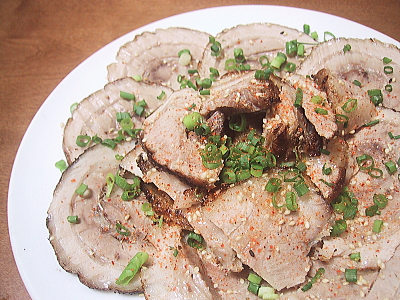
Japanese Cuisine: Char Siu/Chyashyu Basic Recipe

Posted by Shizuoka Gourmet

I was going to write on article on Cold Japanese Ramen/Hiyasi Ramen/冷やしラーメン when I realized I would have to introduce one main element first, namely Chyashyu (in Japanese) or Char Siu (in Chinese).

Therefore, here is the basic Japanese-style Char Siu recipe before I can introduce the one on Hiyashi Ramen!

INGREDIENTS:

As this is the basic recipe, I will explain the procedure only. I will leave it to you to decide on the exact amounts as priorities are vastly different!

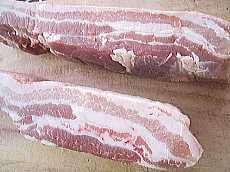
-Pork Belly
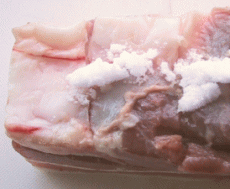
-Salt
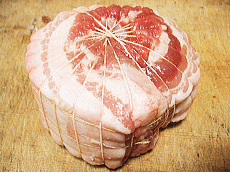
-Twine
-Sesame seeds
-Seven Spices/Shichimi/七味
-Thin leeks
-Large leeks
-Garlic
-Light taste soy sauce
-Japanese sake
-Laurel

RECIPE:

Choose a block of pork belly with the right proportion of meat and fat.
Personally, I ctually prefer blocks cut out the thighs or back.

Make a few shallow cuts across the pork and salt it lightly. That step will ensure an even seasoning.

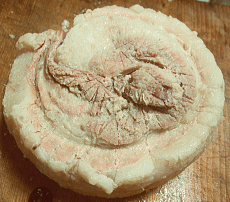
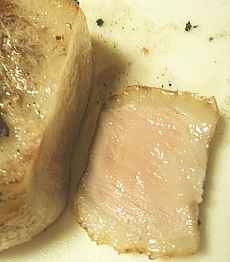
Bink the pork with cooking twine as shown in above picture with the fatty side outside.
Bind it tightly as to effectively shape the pork.

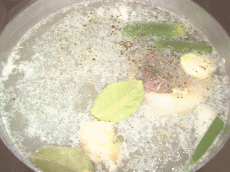
As the char siu has to be boiled first, prpare a large enough pan filled with water.
Drop the meat in the water.
Add just a drop of soy sauce, one clove of garlic, two leaves of laurel, some roughly cut leeks (thick variety), some Japanese sake and bring to boil.

Boil over a strong fire for one hour, scooping unwanted matters from time to time.
Bear in mind the boiling water can be used as soupstock for other dishes!
Once taken out of the pan, let it cool and cut the twine. The meat should hold by itself.
It can be consumed as it is.

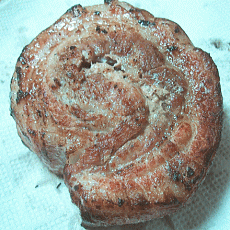
The Japanese then grill it (aburi/炙り) for even deeper taste.

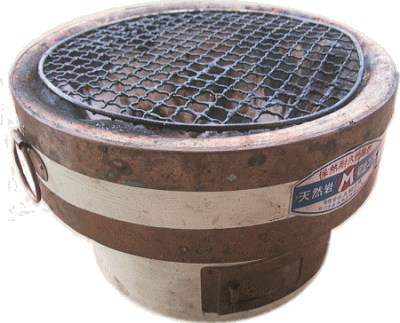
They use a special grill called nanarin/七輪 using charcoal.
take care not to overgrill it and bear in mind oil could start flying!

Cut the char siu to the thickness wanted.
I like it very thin and eat it a it is. But when using for ramen, I might cut it a bit thicker.

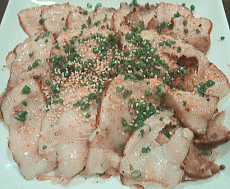
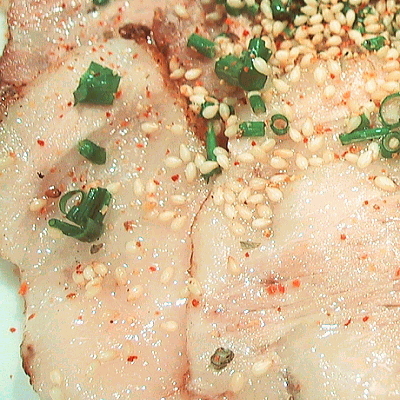
If you want to it eat and serve it for its own sake, cut many slices and arrange them on a serving dish and season it with seven spices mix/shichimi/七味, sesame seeds (whole or ground), chopped thin leeks, a little ponzu.

Doesn’t that look appetizing!

RECOMMENDED RELATED SITES:
Bread + Butter, Comestilblog, Greedy Girl, Bouchon For 2, Zoy Zhang, Hungry Neko, Mangantayon, Elinluv Tidbit Corner, Maison de Christina, Chrys Niles, Lexi, Culinary Musings, Eats and Everything, Bite Me New England, Heather Sweet, Warren Bobrow, 5 Star Foodie, Frank Fariello, Oyster Culture, Ramendo, Alchemist Chef, Ochikeron, Mrs. Lavendula, The Gipsy Chef, Spirited Miu Flavor, Wheeling Gourmet, Chef de Plunge, Island Vittles, Beffuddled Canuck

Please check the new postings at:
sake, shochu and sushi

—————————————-
日本語のブログ
—————————————-

Sashimi Plate at Sushi Ko, Shizuoka (’10/01/14)

I wrote this posting separately from the one introducing the vegan sushi plate the Missus and I shared at Sushi Ko, Shizuoka, last night so as not to confuse friends with different culinary priorities!
As I explained in the vegan sushi posting, Sushi Ko might not be the most expensive or sophisticated sushi restaurant in our Prefecture but you get the best food at the best price.
It certainly makes for far better value than some vaunted establishments in Tokyo or New York where you pay ridiculous prices for tiny pieces of art in outrageously expensive surroundings!
Moreover, Mr. Oda is one of those very few true chefs who take pleasure in tackling any challenge thrown at him by customers.
Owning a website of his own and knowing I’m more than amenable with his taking pictures of the food I order, we have this great deal of being offered even better presentation!
When it comes to sashimi, Mr. Oda always makes a point to introduce the seasonal fish of the day on a separate board for all to see, meaning that they will not be always available as contrary to the other possible orders written (with their prices!) on small wooden boards hung on the wall above the counter.

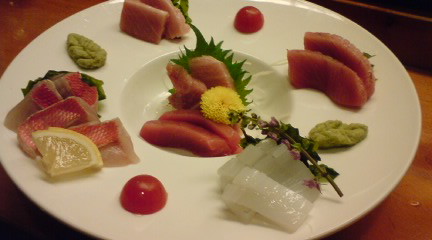
There were too many fish to choose from, but the help of Mr. Oda, we chose the following:

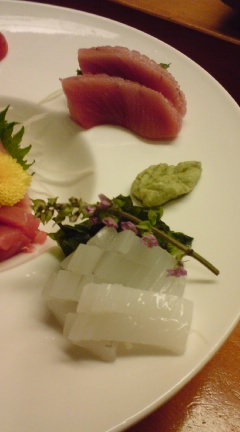
Above: Meji maguro Akami/Lean part.
Bottom: Aori Ika/Bigfin Reef Squid.
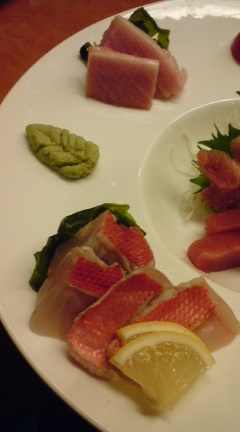
Can you see the freshly grated Shizuoka wasabi shaped into a green leaf?

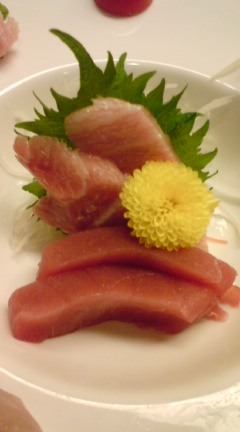
Above: Ooma Honmaguro/Ble Fin Tuna from Ooma in Aomori Prefecture, O-toro
Below: the same, chu-toro.
The chrysanthemum is edible.

Above: Meji maguro o-toro
Below: Kinmeidai/Seabream/Great Alfonsino from Izu Penisula in Shizuoka Prefecture.

No need to say that all sublime morsels!

Sushi Ko
shizuoka City, Aoi Ku, Ryogae-cho. 2-3-1 (Aoba Koen)
Tel.: 054-2512898
Business Hours: 17:00~25:00. 17:00~23:00 (Sundays)
Closed on Wednesdays
Reservations recommended
Credit cards OK
HOMEPAGE (Japanese)

RECOMMENDED RELATED SITES:
Bread + Butter, Comestilblog, Greedy Girl, Bouchon For 2, Zoy Zhang, Hungry Neko, Mangantayon, Elinluv Tidbit Corner, Maison de Christina, Chrys Niles, Lexi, Culinary Musings, Eats and Everything, Bite Me New England, Heather Sweet, Warren Bobrow, 5 Star Foodie, Frank Fariello, Oyster Culture, Ramendo, Alchemist Chef, Ochikeron, Mrs. Lavendula, The Gipsy Chef, Spirited Miu Flavor, Wheeling Gourmet, Chef de Plunge, Sushi Nomads, Island Vittles

Please check the new postings at:
sake, shochu and sushi,
—————————————-
日本語のブログ
—————————————-

Japanese Cuisine: Sweet & Spicy Chicken Liver

The Japanese have their own version of”Sweet and Sour”. They actually call it “Amakara” or “Sweet and Spicy”
It is a bit different from Chinese Cuisine in taste, although the concept is very similar.
Here is another simple Japanese liver recipe that you can easily expand on:

Sweet & Spicy Chicken Liver/Tori No Amakara Ni!

INGREDIENTS: for 2 people

-Chicken Liver: 250 g (you can adapt it to any other kind of liver!)
-Ginger: 5×5 cm (fresh)
-Soy sauce: 2 tablespoons
-Sugar: 2 tablespoons
-Japanese sake: 2 tablespoons
-Mirin/sweet sake: 1 tablespoon

Optional:
-Onion: 1/2
-Boiled eggs: 2

RECIPE:

-Clean chicken liver under running cold water. Repeat operation for 10 minutes. You can add 2 tablespoons of milk later if you don’t like the acidity of the liver.

-Cut the fresh ginger into thin slices.
Bring enough water to boil in a pan. Boil the liver for 1 minute. Drain thoroughly.

-Lightly wash the liver under cold running water again. Take off all the fat and blood vessels. If you have the heart, slice it.

-In a pan, drop the liver, soy sauce, sugar, Japanese sake, mirin and ginger. Add 50 cc/ml of water. Cover with lid. Switch on the fire to strong.

-Once brought to a boil, reduce fire to medium and simmer for 5 minutes. If you want to add the onions and boiled egg, slice the onion beforehand and add the onion and boiled egg together with the liver at the same time.

-Try to reduce as much as juices as possible, but don’t overcook.

Option 1: just cooked and served with boiled eggs.

Option 2: cooked and served with both onion and boiled eggs!

RECOMMENDED RELATED SITES:
Bread + Butter, Comestilblog, Greedy Girl, Bouchon For 2, Zoy Zhang, Hungry Neko, Mangantayon, Elinluv Tidbit Corner, Maison de Christina, Chrys Niles, Lexi, Culinary Musings, Eats and Everything, Bite Me New England, Heather Sweet, Warren Bobrow, 5 Star Foodie, Frank Fariello, Oyster Culture, Ramendo, Alchemist Chef, Ochikeron, Mrs. Lavendula, The Gipsy Chef, Spirited Miu Flavor, Wheeling Gourmet, Chef de Plunge, Island Vittles, Beffuddled Canuck

Please check the new postings at:
sake, shochu and sushi

—————————————-
日本語のブログ
—————————————-

Seasonal Fish: Noresore/Conger Eel Whitebait

noresore4.jpg

“Noresore” will soon appear at some select fish markets, and as it will be a very short season, you will have to keep your eyes open!
Noresore stands for very young conger eels. They are called different names depending on regions: “Berada” in Okayama Pref., “Tachikurage” in Misaki, “Nagatankurage” in Wakayama Pref.
In Shizuoka, they mainly come from Hamana Lake, a seawater lake west of the Prefecture, famous for its oysters, eels and clams.

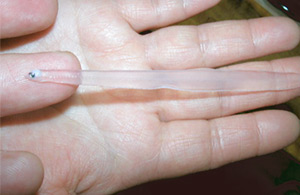
5~6cm long, they are practically transparent, save for their eyes. They emit no smell. In our Prefecture they are available only during the first two weeks of March. They are slowly but surely becoming a rarity wherever in Japan, and people come from afar just for the experience!

Before serving them, lightly wash them in clean salted water.
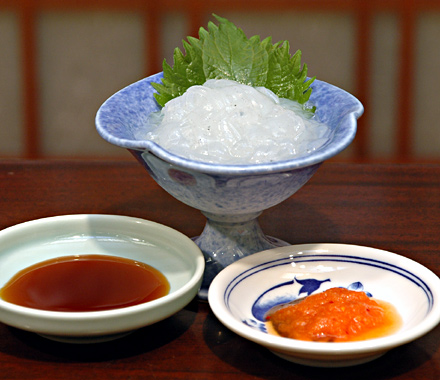
They are great as they are with a little “ponzu or “yuzu” vinegar, a dash of “momijioroshi” (freshly grated daikon and chili pepper) and some chopped thin leeks for a last touch of colour!

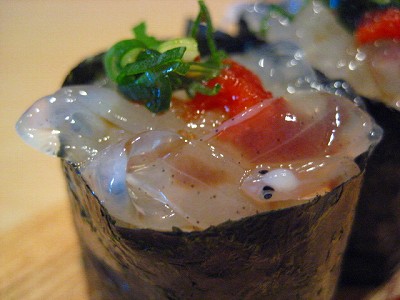
Now as sushi they are sublime as “gunkan”, or a rice ball wrapped in seaweed if you are an expert, with freshly grated ginger and chopped thin leeks again.

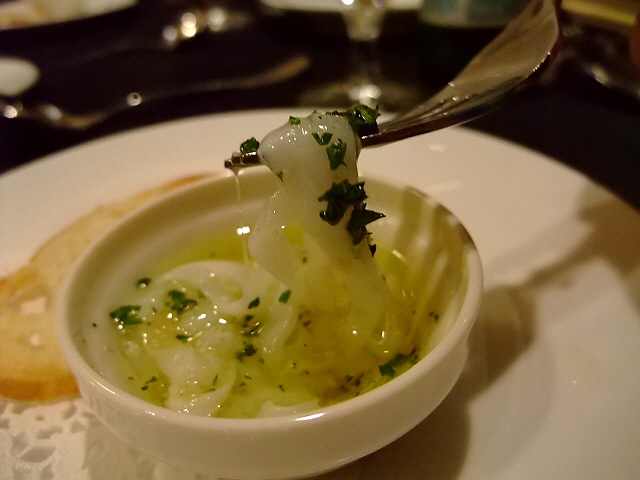
They can even been cooked (very quickly!) in garlic olive oil!

RECOMMENDED RELATED SITES:
Bread + Butter, Comestilblog, Greedy Girl, Bouchon For 2, Zoy Zhang, Hungry Neko, Mangantayon, Elinluv Tidbit Corner, Maison de Christina, Chrys Niles, Lexi, Culinary Musings, Eats and Everything, Bite Me New England, Heather Sweet, Warren Bobrow, 5 Star Foodie, Frank Fariello, Oyster Culture, Ramendo, Alchemist Chef, Ochikeron, Mrs. Lavendula, The Gipsy Chef, Spirited Miu Flavor, Wheeling Gourmet, Chef de Plunge, Sushi Nomads, Island Vittles

Please check the new postings at:
sake, shochu and sushi,
—————————————-
日本語のブログ
—————————————-

Japanese Seasonal Fish: Tai-Madai/Seabream

There are many varieties of Seabream/Snappers/Tai/鯛in Japan:
Batodai, Hanadai, Ishidai, Kinmeidai, Mekkidai, etc., but the most popular variety is called Madai/真鯛, or True Seabream.

Even Madai/True Seabream is called different names depending upon the region: Oodai or Hondai.
The best season streches from Winter to Spring.
It is extensively raised by humans in Ehime, Mie and Saga Prefectures.
Wild specimen are mainly caught off the shores of Nagasaki, Fukuok, Kumamoto, and Yamaguchi Prefectures. Not so many Madai are caught in Shizuoka but other varieties are abundant especially around Izu Penisula.

Human-raised amount to over 80,000 tonnes a year wild ones are caught at a rate inferior to 15,000 tonnes a year.
Imports are relatively and account for only about 6.500 tonnes a year.

Madai is widely appreciated raw as sashimi in the Japanese style (above),

in carpaccio, Italian-style sashimi!

The Japanese also ove them grilled or steamed.

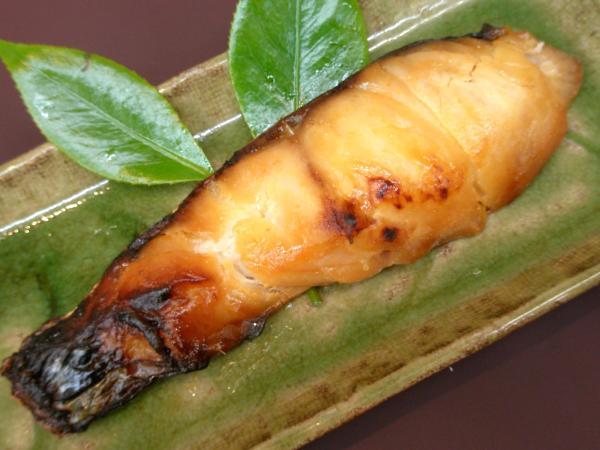
The Japanese since immemorial times have preserved the raw fish in rice miso, mirin/sweet sake and konbu/seaweed, but this has become quite an expensive morsel these days!

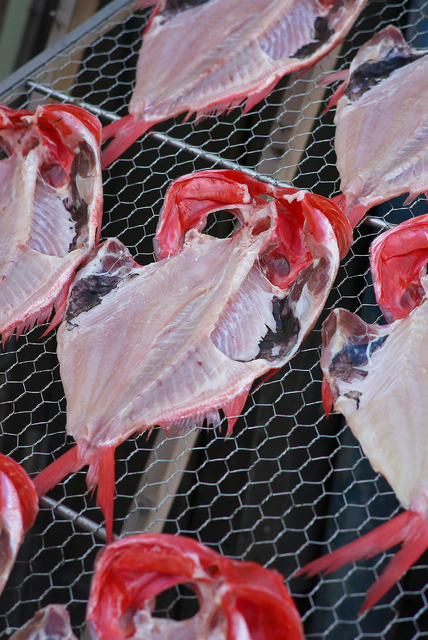
(Only relatively) lesser varieties, like Kinmedai, are appreciated as Himono/naturally dried fish, a specilaty of Shizuoka Prefecture which produces no less half of all naturally dried fish in Japan! Actually they come almost as expensive!

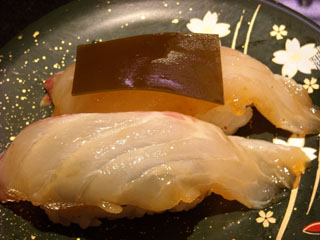
Konbujime/marinated in seaweed nigiri sushi

As sushi, madai (and other seabreams) are very versatile.
You will encounter them, depending on the region as konbujime/marinated in seaweed (above),

simple, straight nigiri sushi,

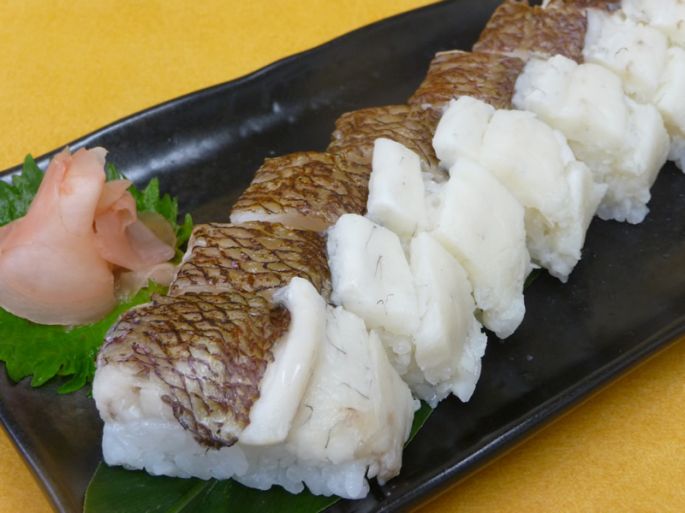
oshizushi/pressed sushi,

or zuke/marinated in ponzu, sake, mirin, etc.,

Seabream certainly looks great as temarizushi/Kyoto-style small round sushi nigiri!

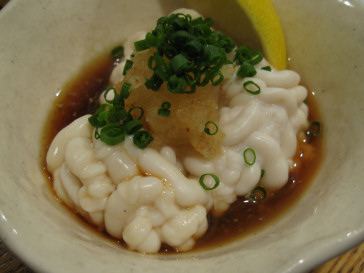
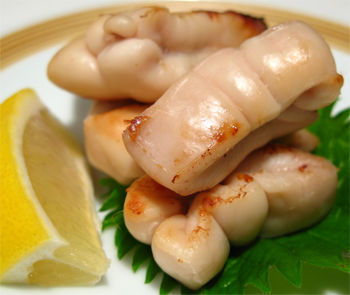
Tai Shirako

Like tara/cod, their sperm sacs of the male specimens are highly appreciated and even more expensive than those of cods.

You can have served raw/slightly boiled or grilled as above,

meuniere-style as in French or Italian cuisine,

or on gunkan sushi nigiri!

RECOMMENDED RELATED SITES:
Bread + Butter, Comestilblog, Greedy Girl, Bouchon For 2, Zoy Zhang, Hungry Neko, Mangantayon, Elinluv Tidbit Corner, Maison de Christina, Chrys Niles, Lexi, Culinary Musings, Eats and Everything, Bite Me New England, Heather Sweet, Warren Bobrow, 5 Star Foodie, Frank Fariello, Oyster Culture, Ramendo, Alchemist Chef, Ochikeron, Mrs. Lavendula, The Gipsy Chef, Spirited Miu Flavor, Wheeling Gourmet, Chef de Plunge, Sushi Nomads

Please check the new postings at:
sake, shochu and sushi

—————————————-
日本語のブログ
—————————————-

Spam Egg Roll

Back into spam!
Bazooka Gourmet is going to start screaming like a banshee!LOL
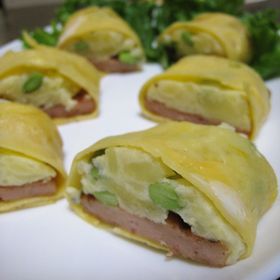
Making the most of simple ingredients to create a kind of roll reminiscent of a sushi roll!

Spam Egg Roll!

INGREDIENTS: For 2 people

-Spam: Half a can or 170 g
-Potato: 1
-Edamame: 50 g boiled. If not available can be replaced with boild string beans.
-Egg: 1
-Mayonnaise: 1 tablespoon
-Salt and pepper: to taste

RECIPE:

-Boil potato.
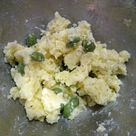
Mash it and add mayonnaise, edamame, salt and pepper. Mix well.

-Beat the egg into an omelette.
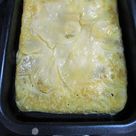
Use a rectangular nonstick frypan as the ones used for making tamagoyaki/omelette. Make three omelettes (or one if large enough) as thin as possible. Don’t hesitate to make more if needed.
Take out and let cool.

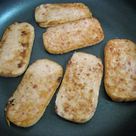
-Cut spam in thin slices and fry. Set apart to let cool down.

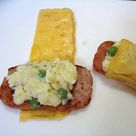
-Form rolls as shown on above picture.
Cut in halves before serving!

RECOMMENDED RELATED SITES:
Bread + Butter, Comestilblog, Greedy Girl, Bouchon For 2, Zoy Zhang, Hungry Neko, Mangantayon, Elinluv Tidbit Corner, Maison de Christina, Chrys Niles, Lexi, Culinary Musings, Eats and Everything, Bite Me New England, Heather Sweet, Warren Bobrow, 5 Star Foodie, Frank Fariello, Oyster Culture, Ramendo, Alchemist Chef, Ochikeron, Mrs. Lavendula, The Gipsy Chef, Spirited Miu Flavor, Wheeling Gourmet, Chef de Plunge, The Lacquer Spoon, Octopuspie, Pegasus Legend, Gourmet Fury

Please check the new postings at:
sake, shochu and sushi

—————————————-
日本語のブログ
—————————————-

Spicy Scallops Sushi Roll: The Recipe (with Vegan Option)

Following the kind comments of the creators of such beautiful blogs as Gourmet Fury, Bread + Butter, Dhaleb, Reg And Mitzi, and many other friends, I thought the time was ripe to post a couple of simple but colorful sushi recipes than can be easily expanded for home parties and impress your guests!

My vegan and vegetarian friends should not worry as I have explained possible adaptations according to their priorities at the end of such postings!

Here is the first one:
Spicy Scallops Sushi Roll!

INGREDIENTS (& ADVICE):

No need to be too precise about exact quantities here as personal tastes can (and ought to) be different!

-Sushi rice: as much as you will need (freshly made. See sushi rice recipe HERE)

-Nori/dry seaweed: use large sheets (maximum size)

-Scallops: Only fresh, please.

-Tobikko (Flying Fish roe): as fresh as possible.

-Tempura kasu: these are the pieces of batter found in the oil after frying tenpura. The Japanese do not throw them away! Scoop them out as early as possible and lay them on a piece of paper kitchen to take off excess oil. Let them cool completely. If you do use them immediately, store them by dee-freezing them inside an airtight vinyl pouch!

-Coarsely cruched peanuts. These with the tenpura kasu will add a welcome crunchiness.

-Mayonnaise.
Now, if you don’t like it, make a thick dressing. The trick is to make a simple vinaigrette with a lot of soft Dijon mustrd which will give it consistency.
Mayonnaise sold over the counter can be cloying sweet. I would make my own, which is not difficult at all: one egg yolk + salt + pepper + vinegar.
Whisk them all until smooth. Add and whisk in olive oil little by little until you have enough. Point: all ingredients must be at room temperature!
I add some wasabi to it for extra taste!

-Chili pepper powder.

-Cucumber: finely chopped. Cut the cucumber in 5 cm, 2-inch long pieces. Cut each piece into thin slices. Cut the slices again into very fine strips.

RECIPE:

-In a bowl drop the scallops cut into small pieces. Add the tobikko/Flyiing Fish roe, tempura kasu, crushed peanuts, mayonnaise and chili pepper. Mix well. Taste and rectify the seasoning if needed.

-Spread a large sushi roll mat out and cover it with a sheet of nori/dry seaweed.

-Spread a layer of sushi rice over the whole nori/dry seaweed as equally as possible. Careful with the quantity. Too much and you won’t be able to roll it!

-Leave a small strip space at one extremity. Line with the cucumber in a half centimetre/less than half an inch wide strip.

-Leave a space between the cucumber and scallops mixture to obtain the same pattern as shown in above picture. Spread the scallops evenly. Leave a space at the other extremity to allow for a tight closing of the roll.

-Carefully roll the sushi from the cucmber end. Once completely rolled, pressed gently and evenly so as to allow the nori/seaweed to seal the roll.

-Unroll the mat. Cut the roll and serve at once.

-There is no real need for extra soy sauce or whatever dessing, but this a personal taste.

VEGAN OPTION:

-Skip the Tobikko/Flying Fish roe. Replace with very finely chopped sweet red pimento.

-Instead of using scallops, use mushrooms. White coloured and soft varieties such as button mushrooms, shimeji or even eringi are best.
Cut the mushrooms and sprinkle with lemon juice to prevent them from darkening.
Fry them in olive oil until they are soft.
Let them cool completely and drain them thoroughly.
Do not throw the juices away as they can be used in delicious sauces or soups.

-As for the mayonnaise, use a vegan subsititute or make a dressing like I suggested above.

NOTES:

Do not be afraid of varying that recipe. It is very simple!

RECOMMENDED RELATED SITES:
Bread + Butter, Comestilblog, Greedy Girl, Bouchon For 2, Zoy Zhang, Hungry Neko, Mangantayon, Elinluv Tidbit Corner, Maison de Christina, Chrys Niles, Lexi, Culinary Musings, Eats and Everything, Bite Me New England, Heather Sweet, Warren Bobrow, 5 Star Foodie, Frank Fariello, Oyster Culture, Ramendo, Alchemist Chef, Ochikeron, Mrs. Lavendula, The Gipsy Chef, Spirited Miu Flavor, Wheeling Gourmet, Chef de Plunge, The Lacquer Spoon, Octopuspie, Pegasus Legend, Gourmet Fury

Please check the new postings at:
sake, shochu and sushi

—————————————-
日本語のブログ
—————————————-

Spam California Roll

Back into spam!
Bazooka Gourmet is going to kill for that one!LOL
Making the most of simple ingredients to create that ever popular Clifornai Roll!

INGREDIENTS:

-Sapm: 1 can
-Eggs: 2
-Avocado: 1 (ripe)
-Nori/dry seaweed (as much as needed)
-Sesame seeds (as much as needed)
-Mayonnaise (as much as needed)
-Rice: 2 large bowls (freshly made. See sushi rice recipe HERE)
-Salt, pepper: to taste

RECIPE:

-Cut spam into strips and fry.

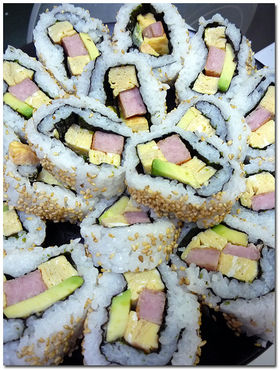
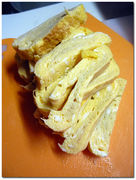
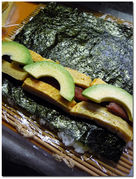
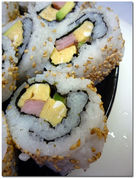
-Prepare the eggs as tamagoyaki/Japanese omelette and cut as shown in above picture. Check HERE for basic Tamagoyaki recipe!

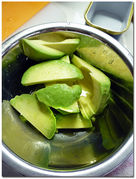
-Cut avocado as in above picture and let them for a while in some water added with lemon juice. This will prevent the avocado turning brown.

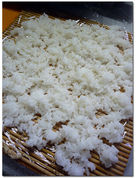
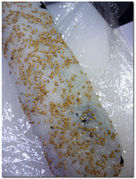
-First spread a sheet of cellophane paper over a sushi roll mat. Then spread sushi rice over it evenly and not too thickly!.

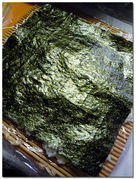
-Spread dry seaweed sheets over the rice.

-Place the sapm, tamgoyaki and avocado as shown in above picture at some distance from the extremity. Line with some mayonnaise.
Point: mix some grated wasabi with the mayonnaise first!

-Roll your Californai roll.
Unwrap and sprinkle it sesame seeds as shown in above picture.

-Cut and serve!

NOTES:

-The rice can be simple slightly salted steamed rice instead of the sushi rice.
-Tamagoyaki can be made in thin wide omelette you will roll first before lining the California roll with it.
-Let your imagination go free if you want to replace the sesame seeds with something else!

Easy, isn’t it?

RECOMMENDED RELATED SITES:
Bread + Butter, Comestilblog, Greedy Girl, Bouchon For 2, Zoy Zhang, Hungry Neko, Mangantayon, Elinluv Tidbit Corner, Maison de Christina, Chrys Niles, Lexi, Culinary Musings, Eats and Everything, Bite Me New England, Heather Sweet, Warren Bobrow, 5 Star Foodie, Frank Fariello, Oyster Culture, Ramendo, Alchemist Chef, Ochikeron, Mrs. Lavendula, The Gipsy Chef, Spirited Miu Flavor, Wheeling Gourmet, Chef de Plunge, The Lacquer Spoon, Octopuspie, Pegasus Legend, Gourmet Fury

Please check the new postings at:
sake, shochu and sushi

—————————————-
日本語のブログ
—————————————-

Russian Cuisine: Liver sauteed with Potatoes

in spite of those vegan and vegetarian postings, I’m not ready yet to abandon meat, especially liver, which particularly healthy and tasty as far as meat comes!

The Russians do have a gastronomy, and a very homey one at that in spite of all these platters of caviar, and smoked salmon washed down with vodka or Georgia (former Russian Republic!) wine!

Here is a simple recipe to keep you warm on these increasingly colder months of the winter:

Russian-style Liver suteed with potatoes!

INGREDIENTS: For 2 people

-Potatoes: 2 (may Queen, or potatoes that fry well)
-Unsalted butter (A): 20 g
-Salt and black pepper: a little of each

-Liver: 200 g (pork or veal according to your priorities. sliced)
-Onions: 2
-Wine vinegar: 1 tablespoon
-Basalmico vinegar: 1 tablespoon
-Olive oil: 2 tablespoons
-Unsalted butter (B): 30 g
-Unsalted butter (C): 20 g
-Light flour, salt, black pepper: a little of each
-Parsley: a little (finely chopped)
-Garlic: a little (finely chopped)
-Balck pepper: to taste (coarsely ground)

RECIPE:

-Peel onions, cut in half, cut across and along and chop into 7~8 mm wide pieces.
Transfer into an oven dish. Add a little salt and 2 tablespoons of olive oil (not included in the ingredients). Mix well. Wrap it closed with some cellophane paper.
Cook inside microwave oven for 5~7 minutes at 600 W.
This step will help the onions to sweeten up and will improve the overall taste.

-Peel the potatoes. Boil them as they are. Once cooked, cut them into 1 cm thick slices.
In a frypan melt unsalted butter (A), fry the potatoes lightly into it. Season with salt and black pepper. Transfer in a separate hot dish for keeping.

-in the same frypan melt unsalted butter (b) and fry the onions in it until they get lightly brown and sweet. Transfer into a separate hot dish for keeping.

-Coat the sliced liver with a little salt, black pepper and flour. In the same frypan melt unsalted butter (C) with the olive oil and saute the liver in it.

-Once the liver slices are properly cooked on both sides, add the blsamico vinegar and saute for a while to allow the balsamico vinegar to penetrate into the liver. Transfer into a separate dish.

-In the same frypan transfer the onions back and fry them into the juices laying at the bottom of your frypan. Saute them to let them absorb those juices. Add wine vinegar and sautee long enough for the final touch.

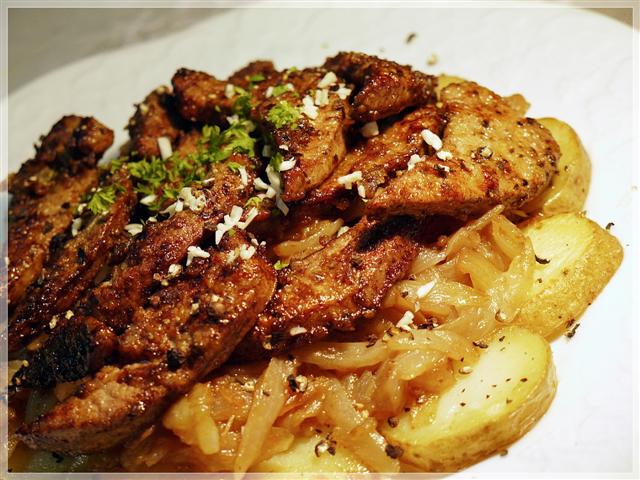
-On a serving plate, first lay the sliced potatoes.
Lay the onions over the potatoes.
Lay the liver over the onions.
Think of presentation when arranging them on the plate. Look at pic above!
Season the whole by sprinkling the chopped leeks, chopped garlic and coarsely ground black pepper.

Serve with dark beer!

RECOMMENDED RELATED SITES:
Bread + Butter, Comestilblog, Greedy Girl, Bouchon For 2, Zoy Zhang, Hungry Neko, Mangantayon, Elinluv Tidbit Corner, Maison de Christina, Chrys Niles, Lexi, Culinary Musings, Eats and Everything, Bite Me New England, Heather Sweet, Warren Bobrow, 5 Star Foodie, Frank Fariello, Oyster Culture, Ramendo, Alchemist Chef, Ochikeron, Mrs. Lavendula, The Gipsy Chef, Spirited Miu Flavor, Wheeling Gourmet, Chef de Plunge, The Lacquer Spoon, Octopuspie, Pegasus Legend, Gourmet Fury

Please check the new postings at:
sake, shochu and sushi

—————————————-
日本語のブログ
—————————————-

Japanese Seasonal Fish: Tara/Cod

Cod, or “Tara/鱈” in Japanese reads a the “Snow Fish”. Unlike in many countries in Europe and North America, the fish is eaten fresh, raw or cooked in Japan, but practically never salted.
Only the Norwegians can boast a difference as they eat the tongue of the fish as soon as they catch it!

As other fish in Japan, it is called different names: Ibodara, Maidara (Toyama Prefecture), Ara (Nagasaki Prefecture) as far as “Madar” or “True Cod” is concerned.
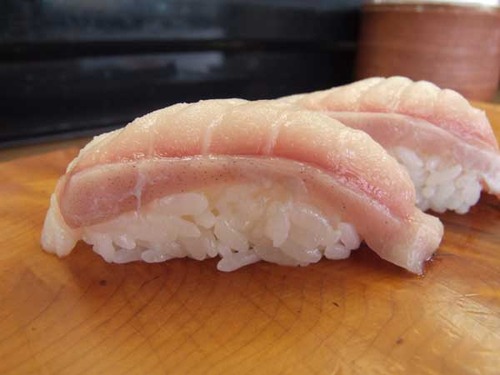
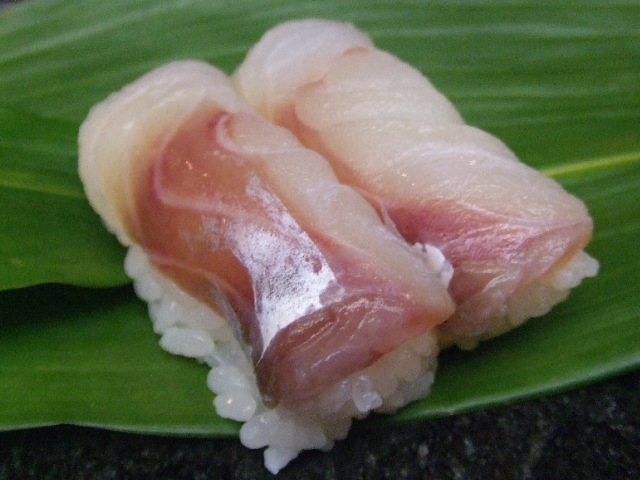
There are other varieties as is shown below in sushi pictures.

It is mainly caught in the Sea of Okhotsk in Winter.
The average total Cod catch is 437,000 tonnes, 55.000 of which is “True Cod”. Imports average annualy 152,000 tonnes mainly from the US and Russia.

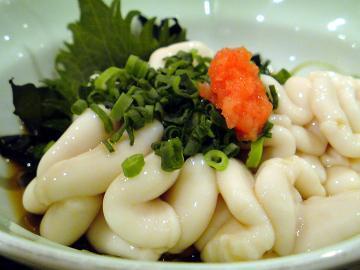
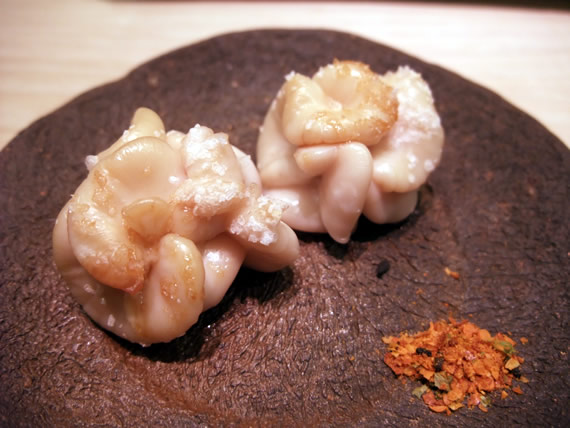
Cod sashimi with its male sperm sacs/Shirako

It makes for great sashimi.

But it is also equally appreciated cooked, especially grilled or in “Nabe/Japanese-style pot au feu”.

Gintara/銀鱈 Cod variety as sushi nigiri.

Higetara/髭鱈 Cod variety as sushi nigiri.

Madara/真鱈 Cod as sushi nigiri.

As shown above, many varieties of tara are greatly appreciated as sushi, especially nigiri.

Shirako/白子, or the sperm sacs of the male fish, is an extremely popular delicay in Japan.
It is either served raw or lightly boiled as in above picture with ponzu, chopped leeks and momijioroshi/grated daikon with chili pepper.

Shirako is also very popular served as sushi in gunkan shape as above.

It becomes another delicacy when grilled.
French and Italian Restaurants in Japan also extensively use it sauteed or in gratin!

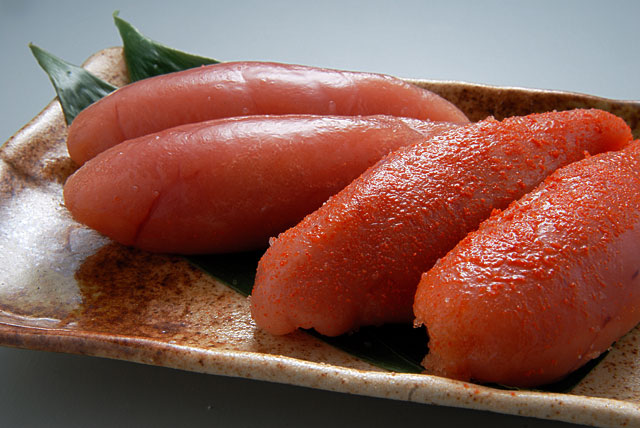
The roe sacs of the femal fish is also a very popular (and expensive) delicacy especially when preserved in chili pepper (as above) and sold as Mentaiko/明太子!

The same roe is also served as “Tarako/鱈子”, especially in the sushi gunkan form!

RECOMMENDED RELATED SITES:
Bread + Butter, Comestilblog, Greedy Girl, Bouchon For 2, Zoy Zhang, Hungry Neko, Mangantayon, Elinluv Tidbit Corner, Maison de Christina, Chrys Niles, Lexi, Culinary Musings, Eats and Everything, Bite Me New England, Heather Sweet, Warren Bobrow, 5 Star Foodie, Frank Fariello, Oyster Culture, Ramendo, Alchemist Chef, Ochikeron, Mrs. Lavendula, The Gipsy Chef, Spirited Miu Flavor, Wheeling Gourmet, Chef de Plunge, Sushi Nomads

Please check the new postings at:
sake, shochu and sushi

—————————————-
日本語のブログ
—————————————-

Sashimi Mini-Plate at Tomii (’10/01/09)

This is the second part of my “Quick fix” last night at Tomii.
I posted this article separately as it will also go to my sushi blog page and Sushi Nomads Website.

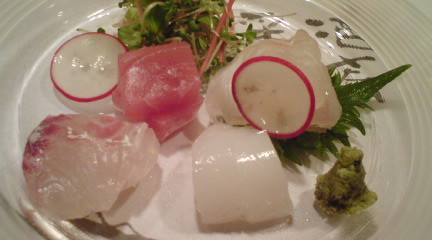
All the fish served on this “min sashimi plate” are seasonal (as always at Tomii).

Left top: “Honmaguro Akami”, or lean part of bluefin tuna backed with various sprout vegetables.
Right top: “Hirame” or sole on a leaf of shiso/perilla.
Left bottom: “Tai”, or seabream. In thei case “Madai”, or true seabream.
Right bottom: “Aori Ika”, or bigfin reef squid.
The wasabi is naturally freshly grated wasabi from Shizuoka!

TOMII
Shizuoka City, Aoi Ku, Tokiwa-cho, 1-2-7, Tomii Bldg, 1F
Tel.: 054-274-0666
Business hours: 17:00~22:00
Closed on Sundays
HOMEPAGE (Japanese)

RECOMMENDED RELATED SITES:
Bread + Butter, Comestilblog, Greedy Girl, Bouchon For 2, Zoy Zhang, Hungry Neko, Mangantayon, Elinluv Tidbit Corner, Maison de Christina, Chrys Niles, Lexi, Culinary Musings, Eats and Everything, Bite Me New England, Heather Sweet, Warren Bobrow, 5 Star Foodie, Frank Fariello, Oyster Culture, Ramendo, Alchemist Chef, Ochikeron, Mrs. Lavendula, The Gipsy Chef, Spirited Miu Flavor, Wheeling Gourmet, Chef de Plunge

Please check the new postings at:
sake, shochu and sushi

—————————————-
日本語のブログ
—————————————-

Japanese Gastronomy: Zensai/Appetizer at Tomii (’10/01/09)

Dining or just “having a snack” in Japan in the right places can easily turn into an intimidating experience.
Last night, suffering from a bout of starvation, my body took me to my favourite Japanese restaurant for a “quick bite”.
People know me well there and don’t really bother to ask me for orders. I just tell them “a little today”, or “plenty today”! That kind of attitude will make my friends think I’ve gone snobbish at last…

Not at all, actually, which means anyone can expect great surprises in this country, even if it concerns a simple appetizer.

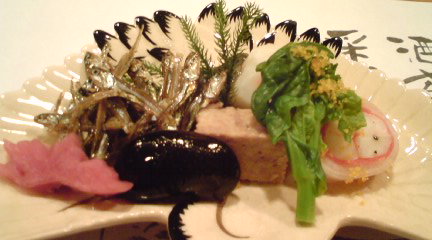
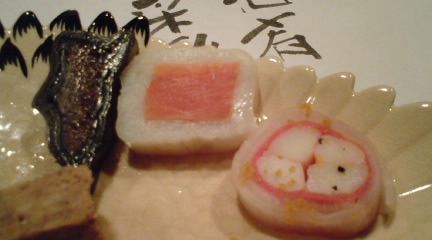
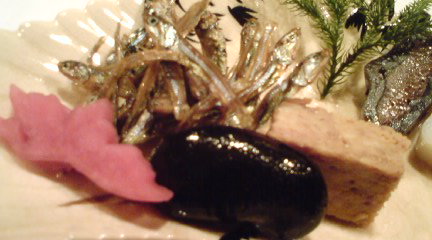
That particular plate wich came with the first drink consisted of the following:
From left to right:
“Tazukuri”, or grilled (very) small fish.
“Nishin no Kobumaki”, or herring simmered and rolled into seaweed.
“Sake Nekimitamaki”, or salmon steamed inside fish paste.
“Hoshoumaki”, or crab roll.

For a closer picture of “Nishin no Kobumaki”, “Sake Nekimitamaki”, and “Hoshoumaki”.

For a closer picture ofthe other ingredients:
The “Tazukuri”, or grilled (very) small fish at the back.
“Tsurudaikon”, or daikon coloure in plum water and cut in the shape of a “tsuru”, or Ja@anese crane.
“Tori no terrine”, or a small cube of chicken terrine.
“Fukumame”, or large simmered black bean.

The green is “Na no Hana”, or rape blossom sprinkled with “Karasumi Oroshi”, or grated pickled mullet roe.
The grated wasabi is fresh one from Shizuoka!

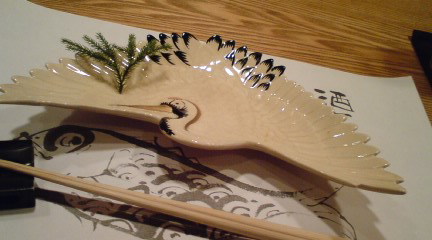
For a better view of the beautiful Japanese Crane pottery dish used to serve that great appetizer!

TOMII
Shizuoka City, Aoi Ku, Tokiwa-cho, 1-2-7, Tomii Bldg, 1F
Tel.: 054-274-0666
Business hours: 17:00~22:00
Closed on Sundays
HOMEPAGE (Japanese)

RECOMMENDED RELATED SITES:
Bread + Butter, Comestilblog, Greedy Girl, Bouchon For 2, Zoy Zhang, Hungry Neko, Mangantayon, Elinluv Tidbit Corner, Maison de Christina, Chrys Niles, Lexi, Culinary Musings, Eats and Everything, Bite Me New England, Heather Sweet, Warren Bobrow, 5 Star Foodie, Frank Fariello, Oyster Culture, Ramendo, Alchemist Chef, Ochikeron, Mrs. Lavendula, The Gipsy Chef, Spirited Miu Flavor, Wheeling Gourmet, Chef de Plunge

Please check the new postings at:
sake, shochu and sushi

—————————————-
日本語のブログ
—————————————-

Spam Donburi/Japanese Spam on a Bowl of Rice

Here is another suggestion for using spam that is surely going to provoke Bazooka Gourmet into new comments! LOL

It is very simple and makes for a solid meal.

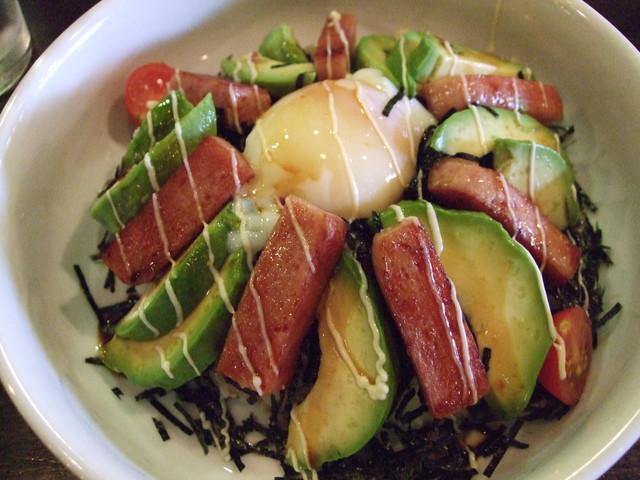
Steam some rice either to be served plain or as sushi rice. See sushi rice recipe HERE for the latter.

Fill a large bowl with the sushi rice.
Sprinkle the top with plenty of Finely cut dry seaweed.
You might smear here and there with a little grated wasabi, too.

Use spam that you would have cut into strips and fried (and let cool) with seasoning beforehand.
Intersperse them with avocado slices (seasoned with a little soy sauce and lemon juice.
Place a poached egg in the middle.
Season the whole with the dressing or mayonnaise of your choice in the pattern suggested in picture.
You may add plum tomatoes and greens for better effect and taste!

RECOMMENDED RELATED SITES:
Bread + Butter, Comestilblog, Greedy Girl, Bouchon For 2, Zoy Zhang, Hungry Neko, Mangantayon, Elinluv Tidbit Corner, Maison de Christina, Chrys Niles, Lexi, Culinary Musings, Eats and Everything, Bite Me New England, Heather Sweet, Warren Bobrow, 5 Star Foodie, Frank Fariello, Oyster Culture, Ramendo, Alchemist Chef, Ochikeron, Mrs. Lavendula, The Gipsy Chef, Spirited Miu Flavor, Wheeling Gourmet, Chef de Plunge

Please check the new postings at:
sake, shochu and sushi

—————————————-
日本語のブログ
—————————————-