Tag Archives: Recipes

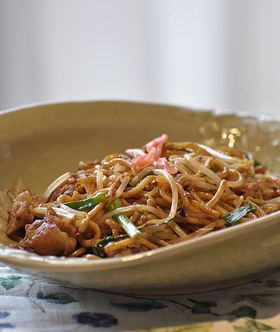
Japanese Cuisine: Yakisoba-Basic Recipe

YAKISOBA-RECIPES-1

I introduced the basic knowledge on Yakisoba some tip before my trip to New Caledonia.
here is a very basic and simple recipe you can easily improvise on!

INGREDIENTS: For 1 person

-Yakisoba (yakisoba men/can be bought in individual packs): 1 person portion pack
-Moyashi/soy bean sprouts (fresh if possible/if not canned ones are ok, but drain well): to taste (i like plenty!)
-Thin leeks, cut into 1~2 cm long bits: to taste
-Pork: here is where you can improvise. some poepl like it fatty, others lean. Cut in thin strips. Amount up to your taste.
-Furikake: 1 small pack
-Yakisoba sauce (available in Asian markets, although you can decise your own): to taste (I use a good amount!)
Sauce suggestion: Japanese Sake, Mirin/sweet ake, soy sauce & Worcester sauce: 1 teaspoon each. Add 1 teaspoon of yakisoba sauce to that!

RECIPE:
YAKISOBA-RECIPES-2
-Prepare the moyashi/soy bean sprouts (clean them quickly if they are fresh) and cut thin leeks.
Heat the yakisoba in hot water and drain. This step willmake the yakisoba softer and help them suck the juices in.
YAKISOBA-RECIPES-3
-Pour some oil in a frypan. Fry yakisoba with the pork placed on top in the middle.
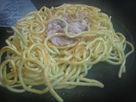
YAKISOBA-RECIPES-4
-After having fried the yakisoba for a while, turn the lot over and fry pork with yakisoba on top. Reapeat operation a few times.
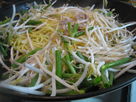
YAKISOBA-RECIPES-5
-Add moyashi and thin leeks, salt, pepper and furikake. Fry quickly to taste.
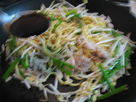
YAKISOBA-RECIPES-6
-Add yakisoba sauce of your liking. Saute until sauce has evened in the yakisoba.

Serve immediately.
You can add pickled ginger and others as a finishing touch.

RECOMMENDED RELATED SITES:
Warren Bobrow
Bread + Butter
5 Star Foodie
Elinluv Tidbit Corner
Think Twice

Please check the new postings at:
sake, shochu and sushi

—————————————-
日本語のブログ
—————————————-
Japanese Cuisine: Somen-The Basics

SOMEN-1

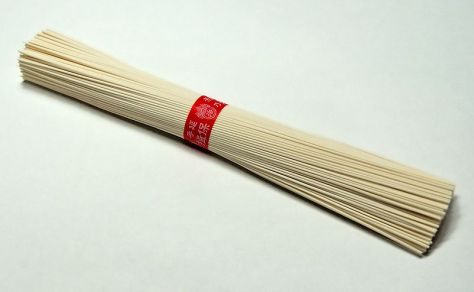
Sōmen (素麺) are very thin, white Japanese noodles made of wheat flour. The noodles are usually served cold and are less than 1.3 mm in diameter. The distinction between sōmen and the next thicker wheat noodles hiyamugi (冷麦), and even thicker Japanese wheat noodles udon (饂飩) is that sōmen is stretched while hiyamugi and udon are cut.

SOMEN-COLD
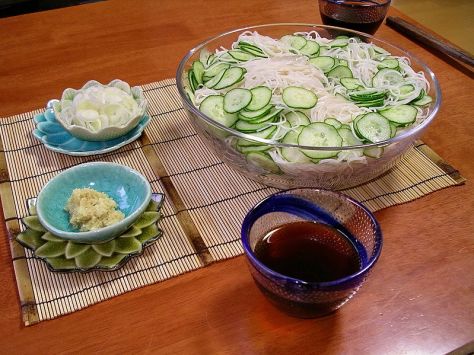
Summer-style cold somen

Sōmen are usually served cold with a light flavored dipping sauce or tsuyu. The tsuyu is usually a katsuobushi-based (鰹節/dried bonito shavings) sauce that can be flavored with chopped thin leeks, ginger, or myoga. In the summer, sōmen chilled with ice is a popular meal to help stay cool.

SOMEN-COLD2
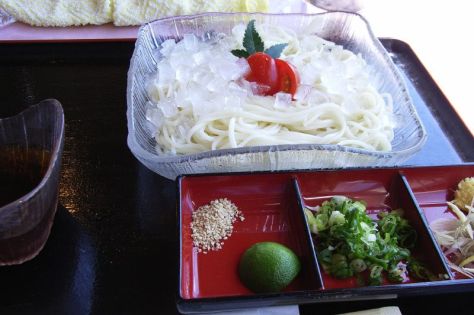
Somen Meal Sample

Fish stock can easily be replaced with konu/seaweed stock if you vegetarian or vegan.

SOMEN-NAGASHI
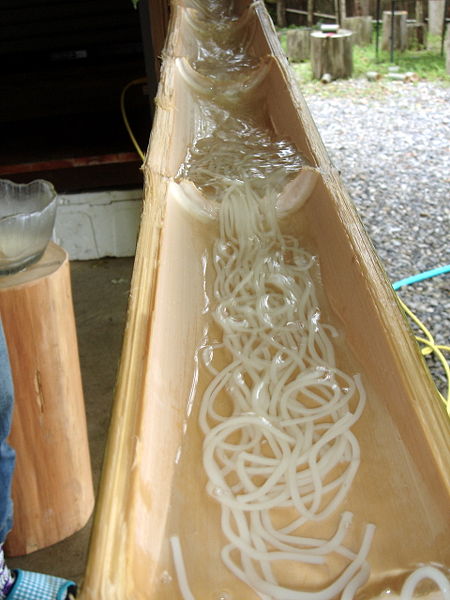
Nagashi Somen flowing down a bamboo pipe.

Some restaurants offer “nagashi sōmen” (流しそうめん flowing noodles) in the summer. The noodles are placed in a long flume of bamboo across the length of the restaurant. The flume carries clear, ice-cold water. As the sōmen pass by, diners pluck them out with their chopsticks and dip them in tsuyu. Catching the noodles requires a fair amount of dexterity, but the noodles that aren’t caught by the time they get to the end usually aren’t eaten, so diners are pressured to catch as much as they can. A few luxurious establishments put their sōmen in real streams so that diners can enjoy their meal in a beautiful garden setting.

SOMEN-NYUMEN
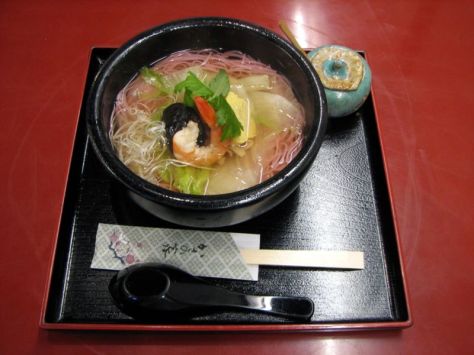
Nyumen

Sōmen served in hot soup is usually called “nyumen” and eaten in the winter, much like soba or udon are.

SOMEN-CHAMPURU
Somen champuru.

In Okinawa, somen champuru are very popular with goya and tofu.

SOMEN-PLAIN
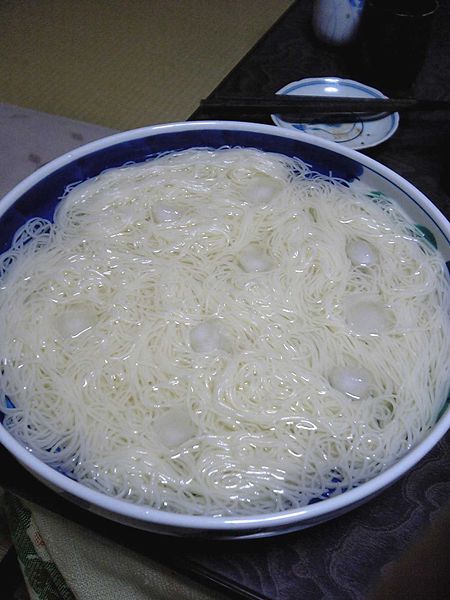
Plain somen

Somen are probably the easiest style of noodles to prepare.
Plain chilled somen witj cold ponzu are such a great snack in summer.

SOMEN-KOREAN

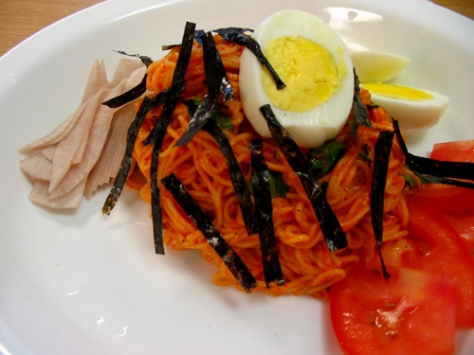
A very similar variety of thin wheat flour noodles are called somyeon in Korea and are used in a dish called bibim guksu.

RECOMMENDED RELATED SITES:
Warren Bobrow
Bread + Butter
5 Star Foodie
Think Twice

Please check the new postings at:
sake, shochu and sushi

—————————————-
日本語のブログ
—————————————-
Japanese Cuisine: Yakisoba-The Basics

YAKISOBA-1

Yakisoba (焼きそば), literally “fried noodles”, is a dish often sold at festivals in Japan, but originates in China. The dish was derived by the Chinese from the traditional chow mein, but has been more heavily integrated into Japanese cuisine like ramen. Even though soba (Japanese Noodles made from buckwheat) is part of the word, yakisoba noodles are not made from buckwheat, but are similar to ramen noodles and made from wheat flour.

Yakisoba usually refers to sōsu yakisoba/ソース焼きそば, flavored with yakisoba sauce.

It is prepared by stir-frying ramen-style noodles with bite-sized pork, vegetables (usually cabbage, onions or carrots) and flavoured with yakisoba sauce, salt and pepper. It is served with a multitude of garnishes, such as aonori/青海苔 (seaweed powder), beni shoga/紅生姜 (shredded pickled ginger), katsuobushi/鰹節 (fish flakes), and Japanese mayonnaise.

YAKISOBA-4
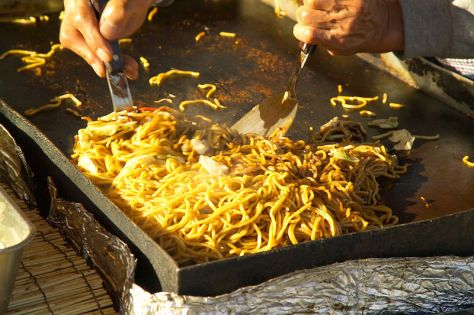
Family style yakisoba

Yakisoba is most familiarly served on a plate either as a main dish or a side dish.

YAKISOBA-3-PAN
“Yakisoba Pan/Yakisoba Bun)

Another popular way to prepare and serve yakisoba in Japan is to pile the noodles into a bun sliced down the middle in the style of a hot dog, and garnish the top with mayonnaise and shreds of pickled ginger. Called yakisoba-pan, pan meaning bread, it is commonly available at local matsuri (Japanese festivals) or konbini (convenience stores).

Sometimes, Japanese white Udon is used as a replacement of Chinese style Soba and called Yakiudon. This variation was started in Kitakyushu in Fukuoka Prefecture.

Yakisoba is served widely across military bases around the world, and daily at Camp Hansen, a Marine Corps base in Okinawa, Japan, and weekly at Kunsan AB, an airbase in the Republic of Korea. It has become a favored dish among the U.S. Military across the world.

Other Yakisoba varieties:

YAKISOBA-5-GOMOKU
“Gomoku Yakisoba”

As said above, all kinds of garnish are used for Yakisoba.
The most popular way to add such garnish is called Gomoku Yakisoba/五目焼きそば/5 garnishes yakisoba, as the number “5” is a particular good number in Japan.

YAKISOBA-2-KATAYAKISOBA
“Katayakisoba”

Katayakisoba/堅焼きそば means that the soba hard, either deep-fried or instant. It makes for a cruchylayer of soba under soft garnish and sweet and sour sauce!

—————————————-
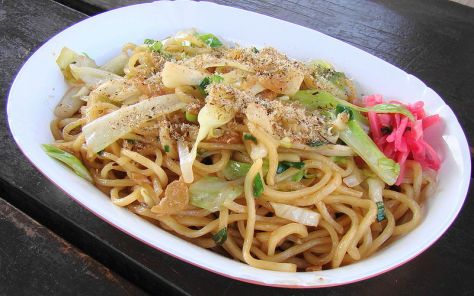
FUJINOMIYA YAKISOBA

YAKISOBA-8-FUJINOMIYA

In Fujinomiya City, at the foot of Mount Fuji in Shizuoka Prefecture, they make a slightly different kind of Yakisoba which has been awarded its own name patent!

The noodles used in the recipe are thicker than in the rest of Japan.
The noodles are fried in anima fat leftover (that is left after cooking the meat!)
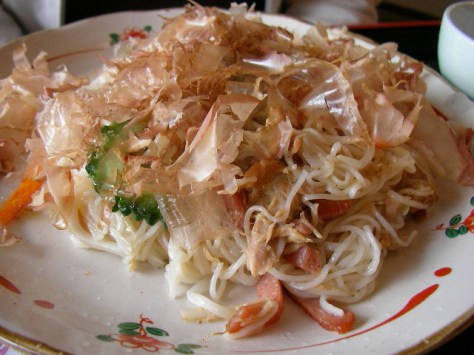
Fine bonito shavings or other powder (mackerel, sardine, …) is used as a finishing touch.
Depending on the home or shop, sakura ebi/cherry shrimp, cuttle fish and minced meat are included.

RECOMMENDED RELATED SITES:
Warren Bobrow
Bread + Butter
5 Star Foodie
Think Twice

Please check the new postings at:
sake, shochu and sushi

—————————————-
日本語のブログ
—————————————-
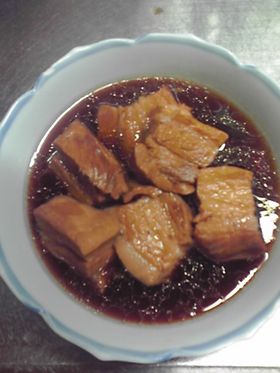
Japanese Cuisine: Kakuni-Recipes 3

KAKUNI-RECIPE-3-m

This is the third of a series of recipes for preparing Kakuni.
This particular recipe can be considered as the basic “professional” one, altough it is open to variations as far as spices and presentations are concerned!

INGREDIENTS;

-Large raw pork belly lumps: 1 kg
-Fresh ginger, finely chopped, 1~2 tablespoons
-Japanese sake: 2 cups
-Soy sauce: 2 cups
-Sugar: 2 large tablespoons
-Salt: 2 pinches

NOTE:
One can and ought (according to prefences) to add mirin/sweet sake, star anise, lemon zest, green parts of leeks and so on!

RECIPE:

KAKUNI-RECIPE-3-a

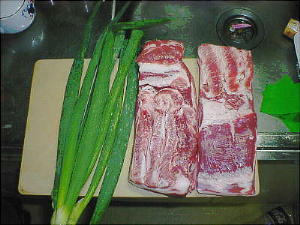
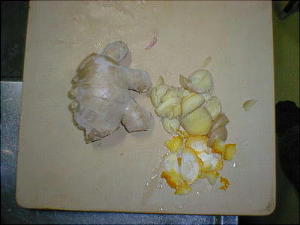
-Get everything prepared first!

KAKUNI-RECIPE-3-b

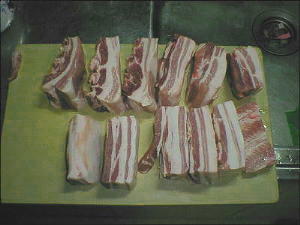
-Cut the pork into about 6cm wide slices.

KAKUNI-RECIPE-3-c

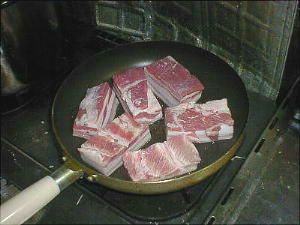
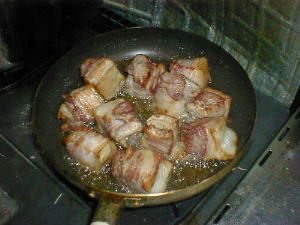
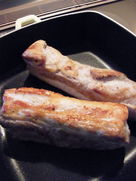
-Fry pork on both sides first. This will help the meat suck in the “juices”!

KAKUNI-RECIPE-3-d

-Fry until the colour above is reached.

KAKUNI-RECIPE-3-e

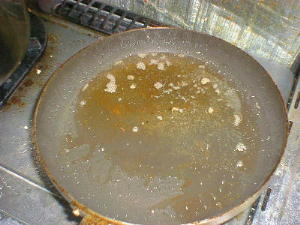
-Scoop out the excess fat, taking care not to run it over the meat.
The picture above shows how much fat can scooped out!
If you use a non-stick frypan, there is no need to add oil before frying the pork, meaning less fat to scoop out!

KAKUNI-RECIPE-3-f

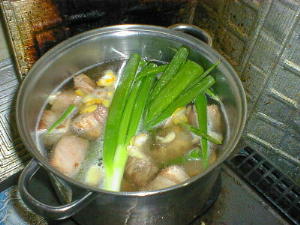
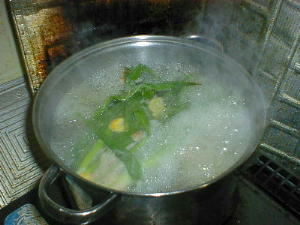
-In a large and deep pan, drop in the meat. Add water just to cover meat. Switch on the fire. You can add water later litle by little to keep it above the meat.
Add ginger, leeks (green part), lemon zest (whole or minced) and star anise.
If you want to make it sweet, add a whole sliced onion!

KAKUNI-RECIPE-3-g

-Make sure that all ingredients are clean. Check that the lemons are not waxed (in that case clean it out!)!

KAKUNI-RECIPE-3-h

-Once brought to a boil, add soy sauce, Japanese sake, mirin/sweet sake and sugar.
Last, add salt (important!).

KAKUNI-RECIPE-3-i

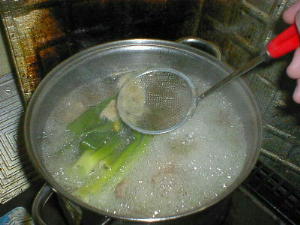
-Lower fire to low and continue scooping out any scum.

KAKUNI-RECIPE-3-j

-When no more scum appears, cover with lid or a large piece of foil paper and simmer for a whole hour.
Check from time to time if there is enough soup in the pan. If the soup level goes under that of top of the meat, the taste will become too strong. Add water and Japanese sake until the soup reaches the meat level.

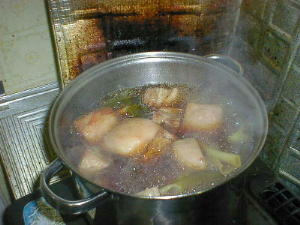
KAKUNI-RECIPE-3-k

-Above picture shows starting point of the simmering process.

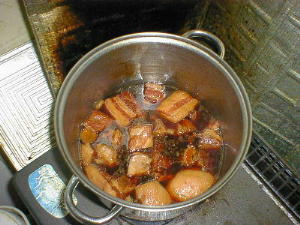
KAKUNI-RECIPE-3-l

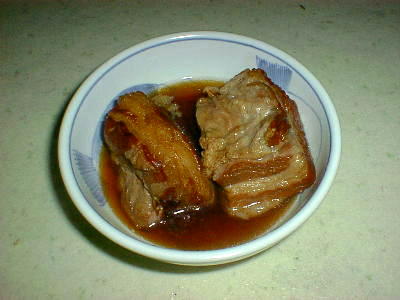
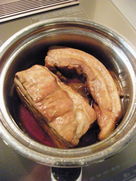
-Above picture shows the finished product inside the deep pan!
Check if the meat is well cooked. A pointed (Japanese-style) chopstick should easily go through the meat all the way.
But this does not mean you can eat it at once.
It is best to switch off the fire, let the cover on, and let it cool completely. Only then, the meat will be fully impregnated with the taste!
It will taste a lot better re-heated before serving it!

Please check the new postings at:
sake, shochu and sushi

—————————————-
日本語のブログ
—————————————-
Japanese Cuisine: Kakuni-Recipes 2

KAKUNI-RECIPE-2-a

Here the second of a series of recipes for Kakuni, a bit more sophisticated than the first one, but still very easy!

INGREDIENTS: For 4 people

-Large raw pork belly lumps: 1 kg
-Fresh ginger: choose a root (or part of), about 5cm long and 2 cm thick/Sliced
-Brown sugar: 50 g
-Honey: 50 ml (liquid)
-Japanese sake: 60 ml
-Soy sauce: 120 ml
-Water: 600 ml
-Star anise: 1

RECIPE:

KAKUNI-RECIPE-2-b

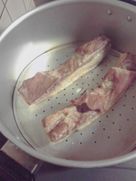
-Steam pork in steamer on a low fire for 2 hours.

KAKUNI-RECIPE-2-c

-Cool down pork completely. This is important as this will help tenderize the meat!
Cut in bite size.
Put all the pork in deep pan. Add water, Japanese sake, sliced ginger, brown sugar and honey.

KAKUNI-RECIPE-2-d

-Add soy sauce and star anise. Simmer on a low fire for 30 minutes. Keep taking out the foam to remove harshness.

KAKUNI-RECIPE-2-e

-When ready serve with its juices/soup and strong mustard.

NOTE:
Do not add star anise at once as the taste might become overwhelming for some people.
Of course, this recipe is adapatble.
You may add chili pepper and other spices of your preferences, or even Chinese ingredients!

Please check the new postings at:
sake, shochu and sushi

—————————————-
日本語のブログ
—————————————-
Japanese Cuisine: Kakuni-Recipes 1

KAKUNI-RECIPE-1-a

Here the first of a series of recipes for Kakuni, that is a very basic one!

INGREDIENTS: -Large raw pork belly lumps: 1 or 2 (depending on thickness and width)
-Fresh ginger: 1 or 2 pieces (5×5 cm)
-White leek: 1
-Rice vinegar: 50 ml
-Soy sauce: 50 ml
-Sweet sake/mirin: 50 ml
-Honey: 1 tablespoon
-Water: 4–~500 ml

RECIPE:

-Thinly slice the fresh ginger. Cut the leeks into small trunks. Punch holes in the pork with a fork to help “taste going inside”.

KAKUNI-RECIPE-1-b

-Fry pork on a frypan on all sides on a strong fire until all colour has completely changed and fat has changed colour.

KAKUNI-RECIPE-1-c

-In a large pot, drop/pour all ingredients, add por, cover with lid and simmer over low medium fire for 60 minutes.
If meat does not cook as quickle as wanted, raise fire after 30 minutes.
Simer until juices have reduced as low as on pic.

-Cut the pork into large size bites and simmer again for 5 minutes.

-Place on a serving meat cuts on a serveing dis. Pour juices/sauce all over and add some chopped thin leeks.

Please check the new postings at:
sake, shochu and sushi

—————————————-
日本語のブログ
—————————————-
Japanese Cuisine: Kakuni

KAKUNI-1

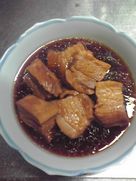
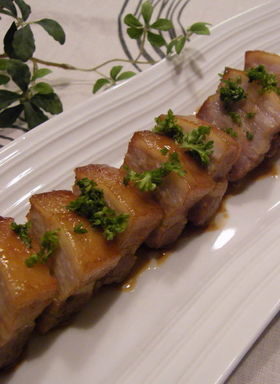
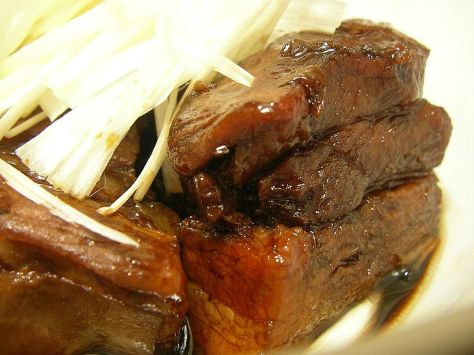
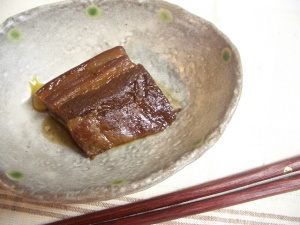
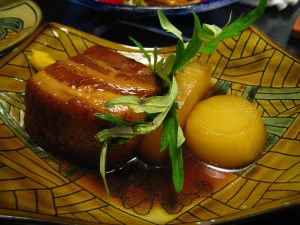
Kakuni (角煮) is a Japanese braised pork dish which literally means “square simmered”.

Kakuni is a meibutsu (名物/famous regional product) of Nagasaki.
Actually this is not a strictly traditional Japanese dish as its most likely Chinese, similar to Dongpo’s pork, though not as heavy in sauce.

KAKUNI-2
Kakuni as served in some restaurants cut and cold

During the Ming Dynasty and Song Dynasty, the main Sino-Japanese trading route existed between Hangzhou and Kyūshū. Many Chinese lived in major Kyūshū port cities, such as Nagasaki and Japanese in Hangzhou. Therefore pork, was popularized in major Kyūshū cities.
These days kakuni is popular all over Japan with very many varieties depending on the region, climate and prevailing tastes.

KAKUNI-RAFTI

Okinawa, probably the region in Japan consuming the largest quantity of pork in Japan has its own recipe called “Rafti”!

PREPARATION:
Kakuni is made of thick cubes of pork belly simmered in dashi, soy sauce, mirin, sugar and sake. By cooking it for a long time over a low temperature the collagen breaks-down into gelatin keeping the meat moist while becoming extremely tender allowing it to be consumed with chopsticks easily. The dish is often served with scallions, daikon and karashi.

Will publish a recipe soon!
——————————————

DONG PO ROU

KAKUNI-DONGPO

For the record, as it is the origin of Kakuni, Dongpo’s pork is a famous Hangzhou dish which is made by pan-frying and then red cooking pork belly. The pork is cut to around 2 inches square in dimensions, consisting of half fat and half lean meat. The mouth feel is oily but not greasy, with the fragrance of wine.

ORIGINS:
Legend has it that while Su Dongpo was banished to Huangzhou, in a life of poverty, he made an improvement of the traditional process. He first braised the pork, added Chinese fermented wine and made red-braised pork, then slowly stewed it on a low heat. This dish was first launched in Huangzhou, then spread to Hangzhou, the capital of the Southern Song Dynasty, flourished, and then became one of Hangzhou’s most famous dishes.

Please check the new postings at:
sake, shochu and sushi

—————————————-
日本語のブログ
—————————————-
Japanese Cuisine: Chazuke

CHAZUKE-1

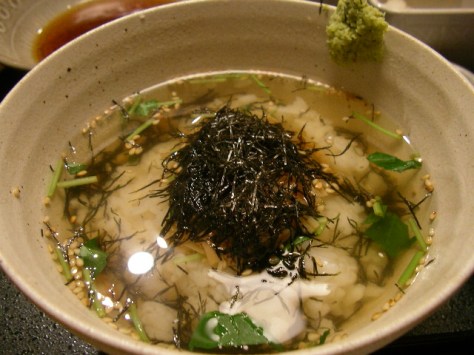
Chazuke (茶漬け, ちゃづけ) or o-chazuke (お茶漬け, from o + cha/tea + tsuke/submerge, marinate) is a simple Japanese dish made by pouring green tea, olong tea, dashi, or hot water over cooked rice roughly on its own or accompanied by all kinds of toppings.
It is very popular in izakaya at the end of the meal, or in homes in the evening making use of the rice steamed in the morning.
As Shizuoka is the largest grower of tea and wasabi in Japan, it is a very common way of eating and seasoning leftover rice here!

It is also known as cha-cha gohan.

Common toppings include tsukemono, umeboshi (both types of pickles), nori (seaweed), furikake, sesame seeds, tarako and mentaiko (salted and marinated Alaska pollock roe), salted salmon, shiokara (pickled seafood) and wasabi.

This dish first became popular in the Heian period, when water was most commonly poured over rice, but beginning in the Edo period, tea was often used instead.

In Kyoto, ochazuke is known as bubuzuke. When a Kyoto native asks if a guest wants to eat bubuzuke, it really means that the person has overstayed and is being politely asked to leave.

Since the 1970s packaged “instant ochazuke”, consisting of freeze-dried toppings and seasonings, have become popular.

Chazuke, for all its humble origins can become a fairly sophisticate dish of its own as shown by a few examples below:

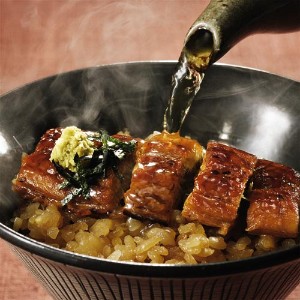
CHAZUKE-2

In Shizuoka we pour hot green tea over a bowl of rice and broiled eel!

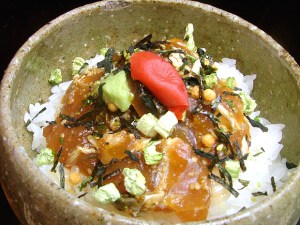
CHAZUKE-3-TAI

Over Tai/Seabream sashimi!

CHAZUKE-4-SALMON

With salmon, especially in Hokkaido!

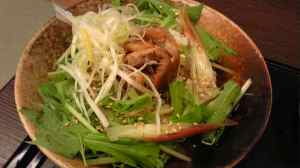
CHAZUKE-5-ABURI-MAGURO

Even more sophisiticated with aburi maguro/seared tuna, and chopped fresh vegetables!

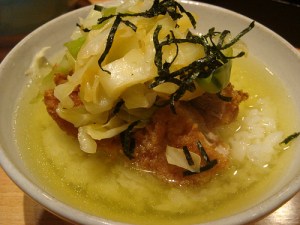
CHAZUKE-6-TONKATSU

With tonkatsu for the big appetites!

CHAZUKE-7-MUSUBI

With a grilled “musubi” for more rice!

Please check the new postings at:
sake, shochu and sushi

—————————————-
日本語のブログ
—————————————-
Japanese Cakes-Wagashi 15: Daifuku

DAIFUKU-1

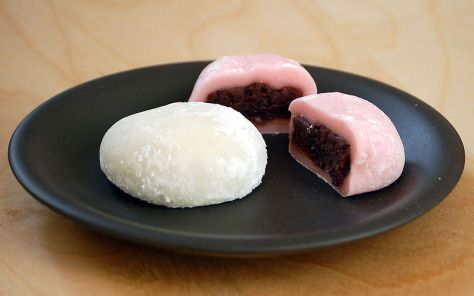
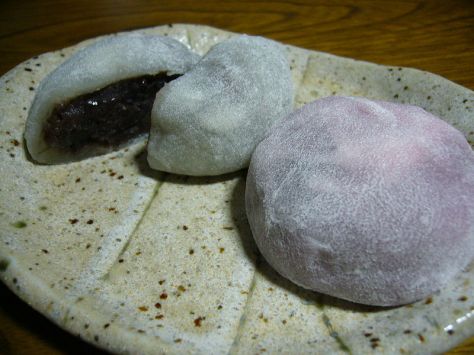
Daifukumochi (大福餅), or Daifuku (大福) (literally “great luck”), is a Japanese confection consisting of a small round mochi (glutinous rice cake) stuffed with sweet filling, most commonly anko, sweetened red bean paste made from azuki beans.

The traditional daifuku, like all Wagashi are vegan in concept.

But Daifuku comes in many varieties.
The most common is white, pale green or pale pink colored mochi filled with anko.
These come in two sizes, one approximately the diameter of a half-dollar coin, the other palm-sized.
Some versions contain whole pieces of fruit, mixtures of fruit and anko or crushed melon paste.
Nearly all daifuku are covered in a fine layer of corn or taro starch to keep them from sticking to each other, or to the fingers. Some are covered with confectioner’s sugar or cocoa.

DAIFUKU-2

HISTORY:
Daifuku were originally called Harabuto mochi (腹太餅) (belly thick rice cake) because of its filling nature. Later the name was changed to Daifuku mochi (大腹餅) (big belly rice cake). Since the pronunciation of Fuku (腹) (belly) and Fuku (福) (luck) is the same in Japanese, the name was further changed to Daifuku mochi (大福餅) (great luck rice cake), a bringer of good luck. By the end of the 18th century, Daifuku were gaining popularity and people began eating them toasted. They were also used for gifts in ceremonial occasions

VATIETIES:

DAIFUKU-3
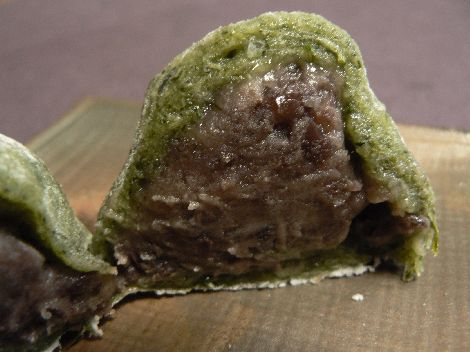
Yomogi daifuku (蓬大福)
A version made with kusa mochi (草餅), which is mochi flavored with mugwort.

DAIFUKU-4
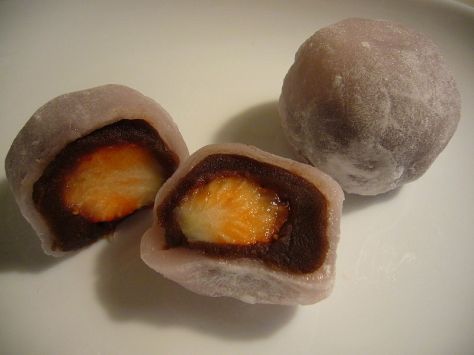
Ichigo daifuku (イチゴ大福)
A variation containing strawberry and sweet filling, most commonly anko, inside a small round mochi. Creams are sometimes used for sweet filling. Because it contains strawberry, it is usually eaten during the spring time. It was invented in the 1980s. Many patisseries claim to have invented the confection, so its exact origin is vague.

DAIFUKU-5
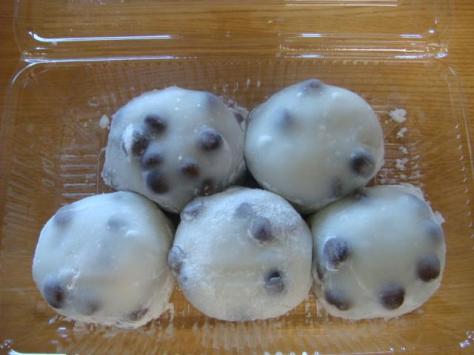
Mame daifuku (豆大福)
Another variation made of mochi mixed with red peas or soy beans.

Please check the new postings at:
sake, shochu and sushi

—————————————-
日本語のブログ
—————————————-
Japanese Cake: Taiyaki/”Baked Seabream”

TAIYAKI-1

There are may Japanese traditional cakes making their way abroad these days.
But have ever heard of “Taiyaki”?

Frst of all, do not confuse it “Takoyaki”!

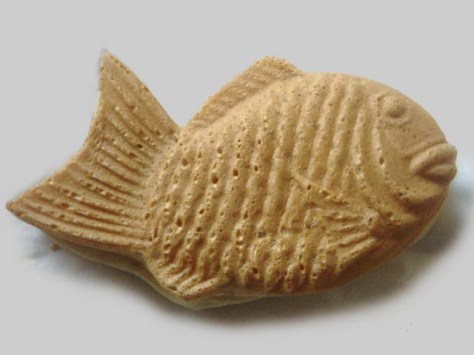
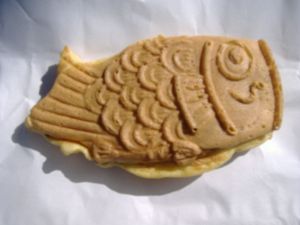
Taiyaki (たい焼き, , literally “baked seabream”) is a Japanese fish-shaped cake. The most common filling is red bean paste that is made from sweetened azuki beans.
Other common fillings may be custard, chocolate, or cheese. Some shops even sell taiyaki with okonomiyaki, gyoza filling, or a sausage inside.

TAIYAKI-2

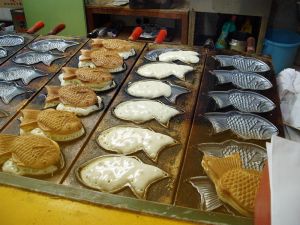
Taiyaki is made using regular pancake or waffle batter. The batter is poured into a fish-shaped mold for each side. The filling is then put on one side and the mold is closed. It is then cooked on both sides until golden brown.

TAIYAKI-3

Taiyaki was first baked by a sweet shop Naniwaya in Azabu, Tokyo in 1909, and now can be found all over Japan, especially at food courts of supermarkets and Japanese festivals (祭, matsuri) and other Asian countries (for example Korea, but they call it buunga baang).

They are similar to imagawayaki (今川焼き?, which are thick round cakes also filled with sweet azuki bean paste or custard.

They come in different shapes according to the occasion or/and area:

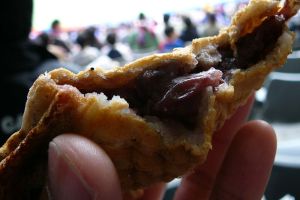
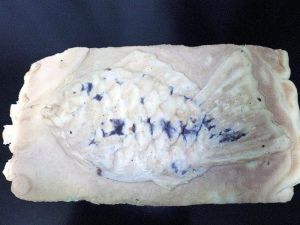
TAIYAKI-4

In Fukushima Prefecture where the Aquamarine Fukushima is located they sell taiyaki made from a mold reminscent of the famed coelacanth!

TAIYAKI-5

In some areas they make a taiyaki in the shape of a carp floater to commemorate Boys Day on May 5th!

TAIYAKI-6

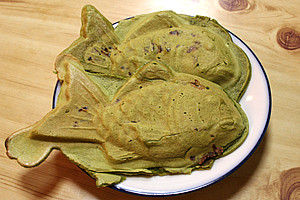
As for Shizuoka Prefecture, people in Ieyama along the Oigawa Railway make a taiyaki with matcha tea!

Please check the new postings at:
sake, shochu and sushi

—————————————-
日本語のブログ
—————————————-
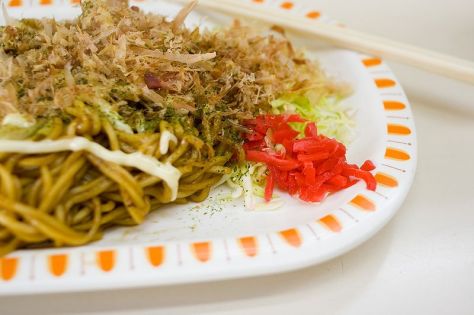
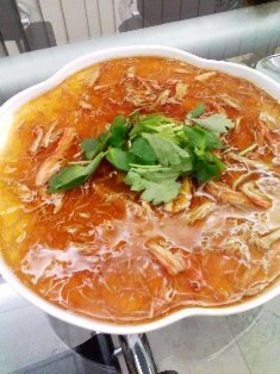
Japanese Cuisine: Ankake Tofu Kani Chawanmushi-Tofu & Crab Chawanmushi with Sweet & Sour Sauce

TOFU-CHAWANMUSHI

Another easy recipe for the Tofu Tribe, (Terecita, Elin, Jenn and Jennifer !
This time is a tofu accomodated as Chawanmushi, a very popular dish in Japan!

INGREDIENTS: For 4 people

1)
Tofu: 450 g (fine texture/kinu dofu)
Eggs: 2
Crab: 1 small can/shredded

2) For the chawanmushi
Dashi: 2 cups (konbu dashi or fish dashi)
Salt: 1 quarter of a teaspoon
Japanese sake: 1 tablespoon

3) For the sweet & sour sauce
Dashi: half a cup
Soy sauce: 1 tablespoon
Mirin/sweet sake: 1 tablespoon
Japanese sake: 1 tablespoon
Cornstarch dissolved in water: according to preferences
Trefoil (or other leaves) for decoration: according to preferences

RECIPE:

-Chill the dashi. Beat eggs into fine omelette. Add dashi, salt and Japanese sake. Mix well.

-Use a steamer for the chawanmushi. Chawan means tea bowl/cup and mushi means steaming!

-Fill four cups with one fourth of the tofu, pouring it into the cups little by little with a spoon. Pour one fourth of the egss dashi mixture on top.
Cover each cup with a piece of cellophane paper. Steam for 2 minutes on strong fire, then 20 minutes on a low fire.

-While the chawanmushi is steaming, prepare the sweet and sour sauce.
In a small pan, pour the dashi, soy sauce, mirin, Japanese sake and bring to boil.
Shred the crab and add to sauce.
Add cornstarch and mix well until sauce is smooth. Take off fire.
Bear in mind that the sauce must be ready at the moment the chawanmushi is completely steamed, not before!

-Pour an equal amount of sauce on each chawanmushi. Decorate with trefoil and serve!

NOTE:
The chawanmushi taste is a bit weak, while the taste of the sweet and sour taste is trong, thus attaining the right balance!

Please check the new postings at:
sake, shochu and sushi

—————————————-
日本語のブログ
—————————————-
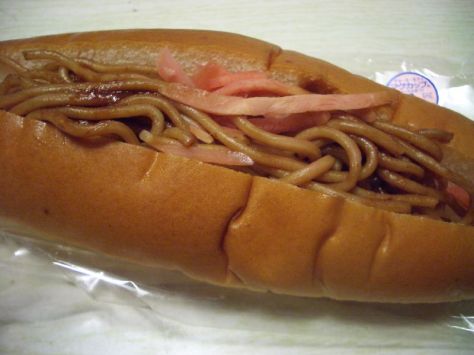
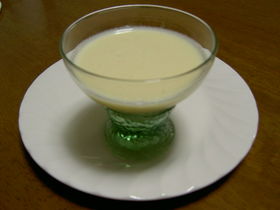
Vegan Japanese Dessert: Tofu Puddings

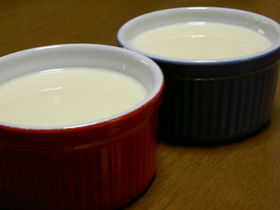
TOFU-PUDDING-1a

It’s been some time since I have featured a recipe for the Tofu Tribe, (Terecita, Elin, Jenn and Jennifer !
I thought it was about time I introduced them to a very easy way to make a dessert with tofu!

TOFU PUDDING!

INGREDIENTS: for 5 ramequins

-Water: 100 ml
-Agar agar powder: 3 g
-Tofu: 400 ml
-Sugar: 30 g
-Lemon juice: 1 lemon

RECIPE:

-Heat the mashed tofu without bringing it to a boil. Add sugar and let it dissolve into the tofu. Mix if necesary.

-In a deep pan pour the water and add the agar agar. Mix well as you heat on a medium fire. Once cissolved continue mixing until the water has become transparent.

-Take off fire. Add tofu to agar agar water little by little and mix well. Add lemon juice and mix. Wait for a little while. Pour in ramequins or recipients of your choice.
Chill well before serving!

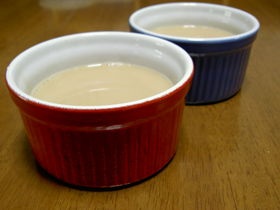
TOFU-PUDDING-1

Same recipe as above but replace water with English tea!
Vegan should make the tea with soy milk or water only!

TOFU-PUDDING-2

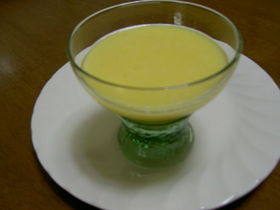
Same with orang juice!
In this case use 100 ml of water and 200 ml of organice orange juice!

TOFU-PUDDING-3

For this one replace orange juice with pineapple juice!

Please check the new postings at:
sake, shochu and sushi

—————————————-
日本語のブログ
—————————————-
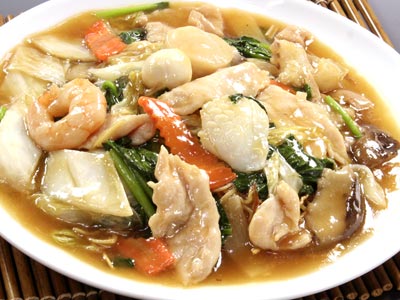
Vegan Japanese Dessert: Fruit Jelly

VEGAN-FRUIT-JELLY-1

The Japanese do have some simple ideas to please vegans and vegetarians alike, especially when it comes to simple, tasty and healthy desserts.
Here is a simple fruit jelly dessert you can adapt according to seasons and availability (try it with your kids!):

INGREDIENTS: For 2 large cups
1)
-100% orange juice (organic if possible) 200ml
-Water: 200 ml
-Agar agar: 2^4 g (depending how solid you like your jelly)
2)
-100% apple juice (organic if possible): 200 ml
Water: 200 ml
-Agar agar: 2~4 g
-Grapefruit: 1 peeled and and quartered (all skins off)
-Mint leaves and blueberries for final touch

RECIPE:

VEGAN-FRUIT-JELLY-2
-Pour water in a pan. Add agar agar. Heat a little to dissolve agar agar. Add orange juice. Pour into two glass cup of your choice and leave inside the fridge until it solidifies completely.

VEGAN-FRUIT-JELLY-3
-Add grapefruit.

-Reapeat with apple juice: pour water in a pan and add agar agar. Heat slowly to dissolve agar agar. Add fruit juice. Pour the lot over the grapefruit.

VEGAN-FRUIT-JELLY-4
-Add grapefruit and mint to your liking and put inside refrigerator to solidify.

VEGAN-FRUIT-JELLY-5
-Variation with 3 layers!

VEGAN-FRUIT-JELLY-6
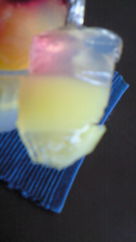
-As it appears on your spoon!

VEGAN-FRUIT-JELLY-7
-The other way round!

Please check the new postings at:
sake, shochu and sushi

—————————————-
日本語のブログ
—————————————-
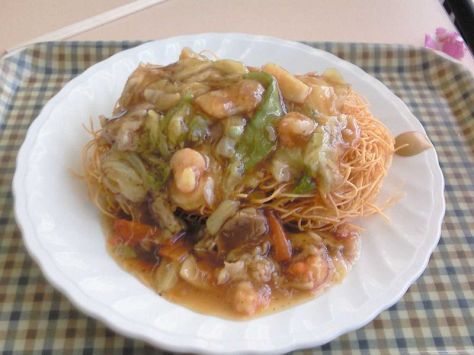
Vegan French Cuisine: Green Peas & Mint Chutney

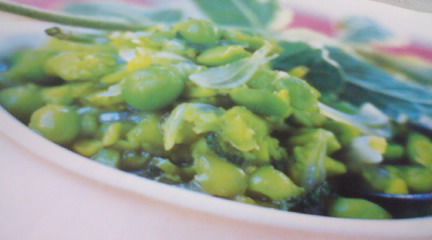
PEAS-MINT

I’ve said before that the French are also fond of vegetarian and vegan cuisine and are always ready to adapt their traditional rcipes to different priorities.

Here is a French-style chutney that even my Indian friends will appreciate:
Green Peas & Mint Chutney!

INGREDIENTS: for 4~6 persons

-Fresh green peas: 300 g
-Small new onions: 2, thinly sliced
-Olive oil (EV): 2 tablespoons
-Brown sugar (light brown variety if possible): 1 tablespoon
-Freshly grated ginger: 1 teaspoon
-Mint: 3 large sprigs, finely cut (reserve a few leaves for decoration)
-Green lemon juice: 1
-Salt & pepper to taste

RECIPE:

-Cook the gree peas (out of their pods!) in a pan full of boiling salted water for 4~5 minutes. Try and preserve some firmness. Cool completely.

-At the same time cook the onions in the oive oil for 2~3 minutes, taking car not to “colour” them.
Add grated ginger, sugar, lemon juice, salt and pepper. Let simmer for 2~3 minutes.

-Mash the green peas (keep some whole for better effect the you will add at the end) and add to the onions. Let simmer for 2^3 more minutes. Lats add the finely cut mint and transfer the chutney into a bowl.
Serve cool or slgtly chilled.

NOTE:
You can mash all the green peas, but keeping a few whole added with a few mint leaves will look great!

Please check the new postings at:
sake, shochu and sushi

—————————————-
日本語のブログ
—————————————-
Cheese Plate at Gentil (7)

GENTIL-09-08-04

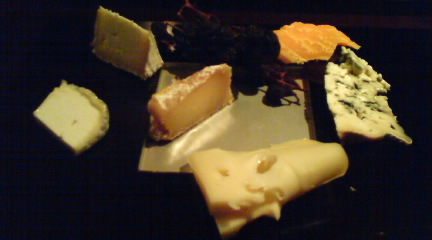
This article is again dedicated to Cheese Monger as he is interested in what we can expect here in Japan!

I don’t need to introduce Gentil and Ms. Keiko Kubota in Japan who is THE authority on cheese in Japan!

Look at picture above to find out what I sampled last Wednesday:

Left top: Chaource (Cow, France)
Left bottom: Bon de Sologne (Cow, France)

Centre under muscat raisins: Merois (Goat, France)
Centre bittom: Tsuki no Monogatari/Moon Story (Raw Cow milk, Japan, Hokkaido)

Right top: Mimolette, 2 months old (Cow, France)
Right bottom: Bleu d’Auvergne (Cow, France)

Another great plate, I can assure you!

Restaurant Gentil
Address:420-0031 Shizuoka Shi, Gofuku-cho, 2-9-1, Gennan Kairaku building, 2F
Tel.: 054-2547655 (Reservations advisable)
Fax: 054-2210509
Opening hours: 12:00~14:00, 18:00~last orders for meals at 21:30. Bar time 18:00~23:30. Closed on Mondays.
Credit cards OK
Homepage (Japanese)

Please check the new postings at:
sake, shochu and sushi

—————————————-
日本語のブログ
—————————————-