Category Archives: Uncategorized

Today’s Lunch Box/Bento (’10/46): Keep On Rollin’ Bento

Picture by the Missus!

When I took a sneaky peak in the kitchen this morning, I couldn’t help commenting to the Missus:
-Keep them rollin’!
-Do you mind?
-Sorry, sorry, Rabbit!
I made myself scarce and took my shower (the safest palce away from the real Dragon!).

My pic… Oh well… (ever heard of Fleetwood Mac?)…

She kept things very simple, healthy and light as you can see. Which suited me fine, as I ate a lot yesterday!

I’m trying hard not to make mistakes when describing the Missus’ bentoes as she will check later, and I can assure I’ll be in for some flak for the tiniest error! LOL
Anyway, she made two types of rolls.

One included home-pickled cuumber strips and surumi (the latter bought at the supermarket).

The other one contained processed cheese and o-kaka.
O-kaka is a mixture of dry bonito shavings, sugar, miso, soy sauce and ground sesame seeds you can easily buy.

The pickles included myoga ginger (home-made), Fresh ginger root (home-made) and yellow takuan/pickled daikon (bought).

As for the salad I was offered sweet tomato (“sweet enough for your dessert) and a soft-boiled egg on a bed of fresh coriander!

Very healthy again!

Adventures in Bento Making, American Bento, Beanbento, Bento No1, Bento Wo Tsukurimashou, Cooking Cute, Eula, Hapabento , Happy Bento, Jacki’s Bento Blog, Kitchen Cow, Leggo My Obento, Le Petit Journal Bento & CO (French), Lunch In A Box, My Bento Box, Vegan Lunch Box; Tokyo Tom Baker, Daily Food Porn/Osaka, Only Nature Food Porn, Happy Little Bento, The Herbed Kitchen, J-Mama’s Kitchen, Cook, Eat, Play, Repeat

Please check the new postings at:
sake, shochu and sushi

—————————————-
日本語のブログ
—————————————-

Japanese Seasonal Fish: Kohada/Gizzard Shad

Kohada/コハダ、or “small skin” actually is not the Japanese name of gizzard shad, but a generic name for the small fish as sashimi or sushi.
The real Japanese name for gizzard shad is konoshiro/コノシロ, and even the same fish goes by other names depending on its size:
-Up to 5 cm: shinko/シンコ
-Around 10 cm: kohada/コハダ
-More than 15 cm: konoshiro/コノシロ

Although the mainfishing/angling season is around November~December, it can be found in good sushi restaurants all year round.
This said, in July, it will be the small shinko season.

Choose fresh specimens. Fish with reddish eyes and flaking scales should be avoided.
The fish is particularly popular pickled in salt and vinegar before being served either as sashimi or sushi, as the smell emanating form the grilled fish is too strong for many.

Kohada maki, with no rice, is an interesting morsel for people wishing to savour it alone with a great drink.

But it is most popular as sushi!
The small size of the fish allows for all kinds of combinations, but the fun, and the skill, reside in the “shallow cutting” practicd by many chefs for best taste.

The cutting techniques are almost infinite.
I hope that the following pictures will give an idea of what to expect, or create!

Will publish the recipe to prepare the fish soon!

RECOMMENDED RELATED SITES:
Warren Bobrow, Bread + Butter, Zoy Zhang, Hungry Neko, Think Twice, Frank Fariello, Mangantayon, Hapabento, Elinluv Tidbit Corner, Tokyo Terrace, Maison de Christina, Chrys Niles,Lexi, Culinary Musings, Wheeling Gourmet, Comestiblog, Chronicles Of A Curious Cook, Tokyo Through The Drinking Glass, Tokyo Foodcast, Palate To Pen, Yellin Yakimono Gallery, Tokyo Terrace, Hilah Cooking, More than a Mount Full, Arkonite Bento, Happy Little Bento; 5 Star Foodie; Jefferson’s Table; Oyster Culture; Gourmet Fury; Island Vittles; Good Beer & Country Boys; Rubber Slippers In Italy; Color Food daidokoro/Osaka;/a; The Witchy Kitchen; Citron Et Vanille, Lunsj Med Buffet/Estonian Gastronomy (English), Cook, Eat, Play, Repeat, Chrisoscope

Please check the new postings at:
sake, shochu and sushi

Today’s Lunch Box/Bento (’10/45)

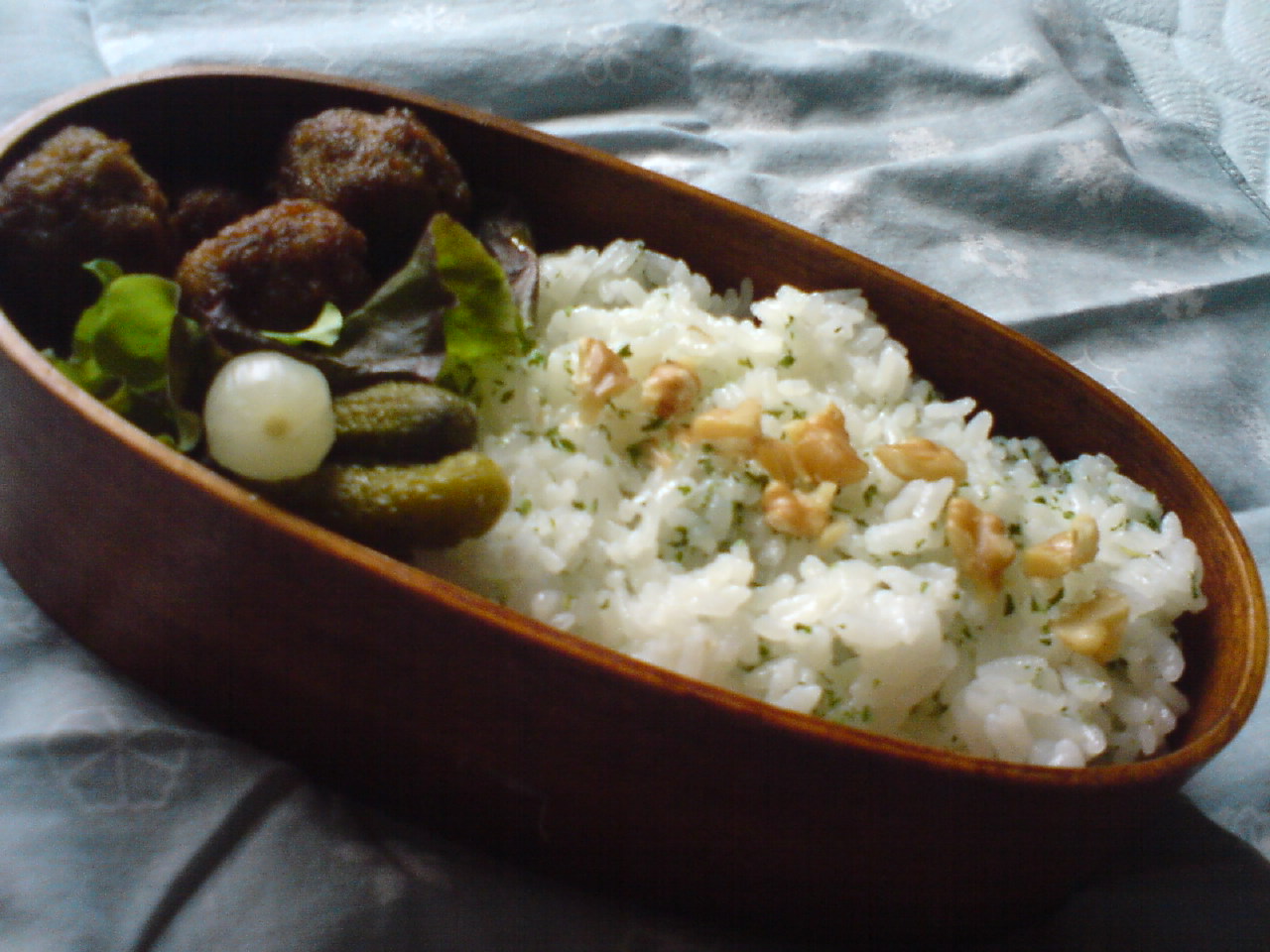
Picture taken by the Missus!

I don’t have any special title for this bento although it does include some unusual pink potatoes (not sweet potatoes, normal potatoes!)
The Missus having grown proud of her own photography has started sending me her pic of the day’s bento as a matter of course!

My picture,… oh. well…

The “staple” dish was simple in concept but made for some good colours.

Just freshly steamed plain rice with a dash of green tea furikake and broken walnuts.

Meat balls first fried with a coating of cornstarch and finished with curry sauce. Some lettuce anf French cornichons/pickled cucumbers.

Good colours again for the salad and dessert box!

Salad of carrot tagliatelle, black olives, mini tomatoes and fresh coriander.
The large string beans are called “Morokko Ingen”, which probably mean they were first imprted from Morocco (I’m sure about that at all!). They were boiled before being seasoned with goma dare/sesame dressing.

The boiled pink potatoes actually sport red skin, and the flesh is white under the skin, but pink for the largest part of it. Taste like real potatoes!

Dark US cherries for dessert!

Adventures in Bento Making, American Bento, Beanbento, Bento No1, Bento Wo Tsukurimashou, Cooking Cute, Eula, Hapabento , Happy Bento, Jacki’s Bento Blog, Kitchen Cow, Leggo My Obento, Le Petit Journal Bento & CO (French), Lunch In A Box, My Bento Box, Vegan Lunch Box; Tokyo Tom Baker, Daily Food Porn/Osaka, Only Nature Food Porn, Happy Little Bento, The Herbed Kitchen, J-Mama’s Kitchen, Cook, Eat, Play, Repeat

Please check the new postings at:
sake, shochu and sushi

—————————————-
日本語のブログ
—————————————-

Japanese Dessert: Kakigoori/Shaved Ice With Syrup

KAKEKOORI-1

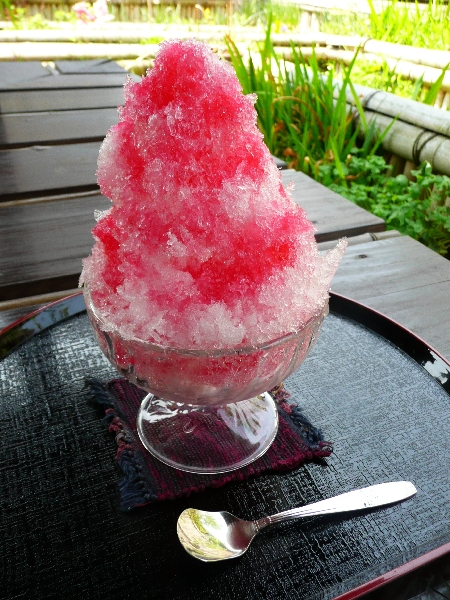
The days have turned with a vengeance, but this is the time to enjoy Kakigōri!

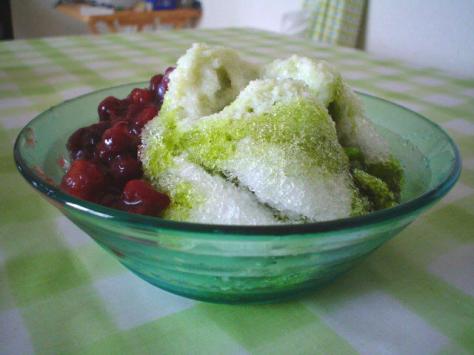
Kakigōri (かき氷) is a very popular Japanese dessert made from shaved ice flavored with syrup.
It was served for the first time in Kanagawa Prefecture in 1869!

KAKEKOORI-2

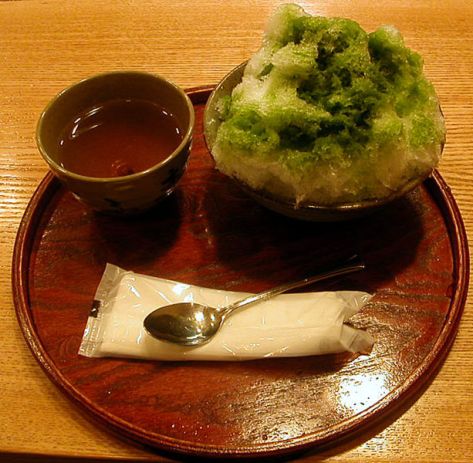
Popular flavors include: strawberry, cherry, lemon, green tea, grape, melon, “blue-Hawaii” sweet plum, and colorless syrup. Some shops provide colorful varieties by using two or more different syrups. To sweeten Kakigōri, condensed milk is often poured on top of it.

KAKEKOORI-3

It is nearly identical to a snow cone but can have a slightly rougher consistency and a spoon is almost always used. The traditional way of making kakigōri involves using a hand cranked machine to spin a block of ice over an ice shaving blade. However, electric ice shavers are most often used, though street vendors can still be seen hand-shaving ice blocks in the summer.

KAKEKOORI-4

In addition to the streets, kakigōri is also sold in festivals, convenience stores, coffee shops, and restaurants. During the hot summer months, kakigōri is sold virtually everywhere in Japan. Some coffee shops serve it with ice cream and sweet bean paste. Convenience stores may also sell it already flavored and packaged similar to ice cream.

KAKEKOORI-5

In other countries in East Asia, similar varieties can be seen.

Halo halo: Filipino shaved ice topped with sweetened beans, nata de coco and ice cream. “Halo-Halo” literally means “mix-mix” in the Tagalog language. Some shops in Japan also sell these sweets.
Bingsu (빙수) Korean shaved ice. The most popular kind is patbingsu. It is topped with sweetened red beans, canned fruits, and soybean powder. Many other varieties can be found throughout the country.
Bàobīng (刨冰) in Mandarin Pinyin or Chhoah-peng (剉冰) in Taiwanese POJ: Taiwanese shaved ice. There are many varieties in Taiwan. Some of them are topped with fresh fruits, fruits syrup and condensed milk. Some of them are topped with sweetened beans, glutinous rice balls and brown sugar syrup, while others will even use seafood. Some vendors use milk ice to make finer shaved ice, and some vendors may sometimes use a hand blade to shave block ice in order to produce rough crushed ice.
Ice kacang: Malaysia and Singapore Shaved ice topped with sweetened syrup of various colours and flavours, condensed and evaporated milk, and sometimes also durian pulp or vanilla ice cream. Beneath the ice sweetened red beans, canned fruit, attap seeds and grass jelly are usually added. Electric ice shavers are often used; though some vendors may use a hand blade to shave the ice in order to produce a rough texture. A variation of this would be Cendol which is shaved ice with sweet green coloured glutinous rice noodles drizzled with palm sugar it is usually accompanied with kidney beans and canned sweetcorn.
Nam Kang Sai: Thai Shaved Ice. In Thailand, this kind of cold dessert is very popular as well. The differences from other countries’ shaved ice is that in the Thai version the toppings (mixings) are in the bottom and the shaved ice is on top. There are between 20-30 varieties of mixings that can be mixed in. Among them are young coconut that have been soaked in coconut milk, black sticky rice, chestnuts,sweetened taro, red beans, sarim (thin strands of cooked flour that is very chewy and slippery) and many more.

RECOMMENDED RELATED SITES:
Warren Bobrow, Bread + Butter, Zoy Zhang, Hungry Neko, Think Twice, Frank Fariello, Mangantayon, Hapabento, Elinluv Tidbit Corner, Tokyo Terrace, Maison de Christina, Chrys Niles,Lexi, Culinary Musings, Wheeling Gourmet, Comestiblog, Chronicles Of A Curious Cook, Tokyo Through The Drinking Glass, Tokyo Foodcast, Palate To Pen, Yellin Yakimono Gallery, Tokyo Terrace, Hilah Cooking, More than a Mount Full, Arkonite Bento, Happy Little Bento; 5 Star Foodie; Jefferson’s Table; Oyster Culture; Gourmet Fury; Island Vittles; Good Beer & Country Boys; Rubber Slippers In Italy; Color Food daidokoro/Osaka;/a; The Witchy Kitchen; Citron Et Vanille, Lunsj Med Buffet/Estonian Gastronomy (English), Cook, Eat, Play, Repeat

Please check the new postings at:
sake, shochu and sushi

Health & Nutrition Facts in Japanese Food 10: Sato Imo/Taro/里芋

As demonstrated by many food bloggers, cooking and creating great foods and drinks have become incomplete and unsatisfying when not considering the benefits or adverse effects of the same foods and drinks regardless of their taste.
I do not intend to delve into counselling or consulting, but only to offer some knowledge about the good sides of Japanese foods and drinks. I will not extoll on its possible lacks and negative aspects. After all, the Japanese are not the longest-living people in the world for no reason!
I will also offr at least one nutritious or healthy recipe at the end of each posting.

Health & Nutrition Facts in Japanese Food 10: Sato Imo/Taro/里芋

Sato Imo, or Taro, orignally come from Malaysia and its Latin name is Colocasia esculenta.
Apart of water, they mainly contain starches, making a stamina food. Onced cooked, the same starches are very easy to digest by the human body. It is also a “health food” because of its high potassium contents (to combat high blood pressure and stress in particular).
Their high contents in vegetal fibers also make it a very important vegetable.

For each 100g (edible parts) it contains:
-Energy: 58 kcal
-Water: 84.1 g
-Proteins: 1,5 g
-Carbohydrates: 13.1 g
-Ash: 1.2 g
-Potassium: 640 mg
-Phosphorous: 55 mg
-Iron: 0.5 mg
-Copper: 0.15 mg
-Manganese: 0.19 mg
-Vitamin B1: 0.07 mg
-Vitamin B2: 0.02 mg
-Vitamin C: 6 mg
-Dietary (roughage) fibre: 2.3 g

HEALTH FACTS & TIPS:

-Combined with eggs, or with chicken, or with sardine, or with bonito, increases stamina and promotes general health.

-Combined with tofu, or with milk, helps promote general health and brain activity.

-Combined with enokitake mushrooms, or with devil’s tongue tuber/konnyaku, or with burdock root/gobo, helps lower down blood cholesterol, helps prevent high blood pressure and cancer.

-Combined with konbu/seaweed, or with miso paste, or with onion, or with green chili pepper, promotes general health and blood circulation.

RECIPE:

A simple recipe to promote health and help combat obesity:

Sato imo/taro: 10
Miso: 2 tablespoons
Mirin/Japanese sweet sake: 1 tablespoon
Sugar: 1 teaspoon
Japanese sake: 2 teaspoons

Wash the sato imo/taro well in clear cold running water. Cut off both extremities. Place in an oven dish. Cover with cellophane paper. Heat in microwave oven for 6 minutes. Check if they are cooked by stabbing them with a sharp and thin wooden stick.

In a small pan, drop miso, mirin, sugar and sake. Mix well. Heat over a small fire and stir at th same time until the sauce has become smooth.

Peel the taro while hot. Place on a dish and pour sauce on top!

RECOMMENDED RELATED SITES:
Warren Bobrow, Bread + Butter, Zoy Zhang, Hungry Neko, Think Twice, Frank Fariello, Mangantayon, Hapabento, Elinluv Tidbit Corner, Tokyo Terrace, Maison de Christina, Chrys Niles,Lexi, Culinary Musings, Wheeling Gourmet, Comestiblog, Chronicles Of A Curious Cook, Tokyo Through The Drinking Glass, Tokyo Foodcast, Palate To Pen, Yellin Yakimono Gallery, Tokyo Terrace, Hilah Cooking, More than a Mount Full, Arkonite Bento, Happy Little Bento; 5 Star Foodie; Jefferson’s Table; Oyster Culture; Gourmet Fury; Island Vittles; Good Beer & Country Boys; Rubber Slippers In Italy; Color Food daidokoro/Osaka;/a; The Witchy Kitchen; Citron Et Vanille, Lunsj Med Buffet/Estonian Gastronomy (English), Cook, Eat, Play, Repeat

Please check the new postings at:
sake, shochu and sushi

Sushi Restaurant: Yoshimizu

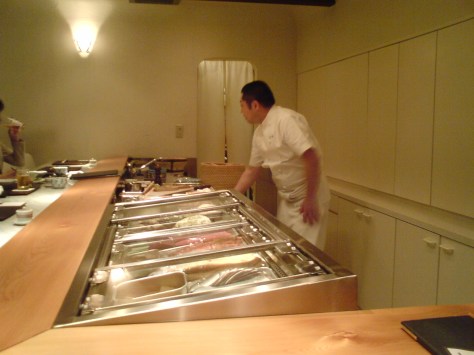
Chef Mamoru Yoshimuzu at work

Service: excellent, professional and friendly
Facilities: great washroom, great cleanliness overall
Prices: reasonable to slight expensive. Good value.
Strong points: Edomae-style sushi. Good sake and drinks.
no-smoking-logoentirely non-smoking!

Thanks to a bunch of new friends, I had the occasion last night to pay my first visit to an excellent Sushi Restauarant called Yoshimizu in Shizuoka City.
It proved a good idea to have gone there with friends as there is little chance to find a seat if you haven’t made a reservation.
The oyakata prepares only enough to be served to guests with reservations every evening!
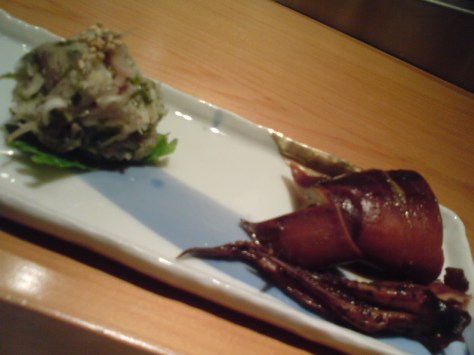
Visiting a new restaurant with new friends can be a problem when taking pictures as you do not have the time, nor the best of lightings!
At least no smoke is interfering as it is an entirely non-smoking establishement, a rare case for a sushi restaurant!

The above is an appetizer combination of Aji Namuro/Pike Mackerel Tartare and Surumeika Meshi/Rivce stuffed briled squid-cuttle fish.
All the morsels are served on/in minoyaki earthenware.
The sushi style is uncompromisingly edomae-style (Tokyo style) by an oyakata/chef who also spent 3 years in London before opening his restaurants 5 years ago.
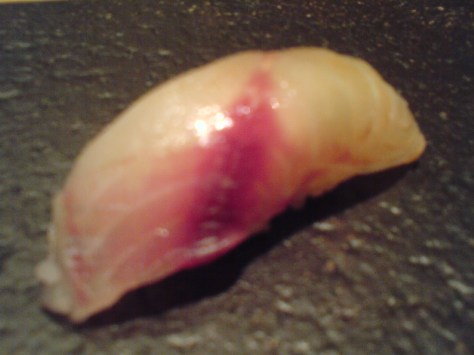
Isaki

Whenever possible the fish and seafood are local such as the above isaki.
There is no menu to choose from because one is serve a menu set depending on the day’s avaibility.
As for drinks, there is enough to please everywhere, including some great sake from Shizuoka Prefecture and elsewhere.
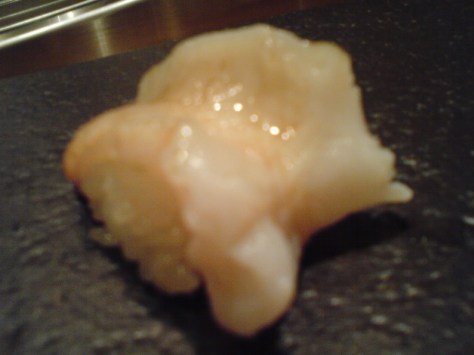
Mirugai.

The service is very professional but friendly.
All questions and queries will be answered with plenty of details.
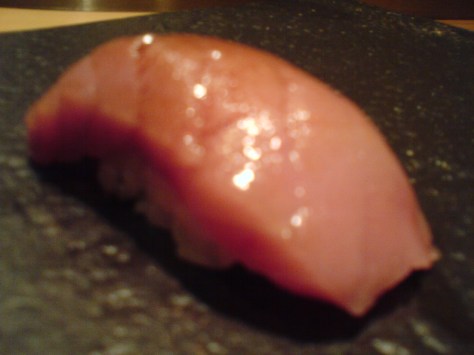
Seitoro: Toro from the back of a minami maguro/southern tuna.
The fact that the place seats only 10 guests means that everyone is sitting at a counter in full view of the chef’s work!
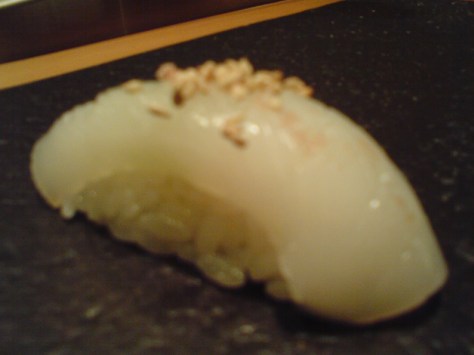
Aka Ika: red squid seasoned with Himalaya salt and sesame seeds.
No small saucer is provided as all mrseld come -preseasoned by the chef. No need for extra soy sauce or wasabi!
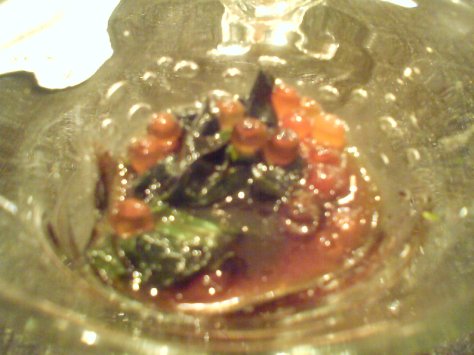
Kinjiso leaves and ikura/salmon roe.
Before starting serving the chef will chef if you have any problems and ny food (in my case I can’t stand mentaiko) and will take good note (on his notebook!) to make sure you pleased and satisfied!
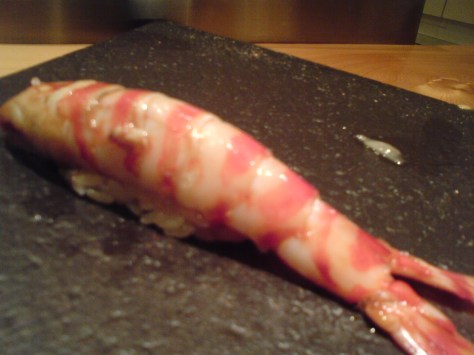
Kuruma ebi, boiled and seasoned.
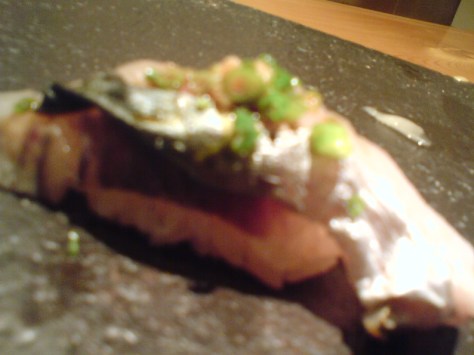
Sagoshi/Young Sawara/Spanish Mackerel.
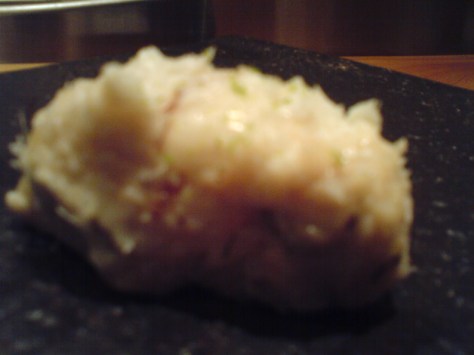
Anago sho/conger eel, so soft!
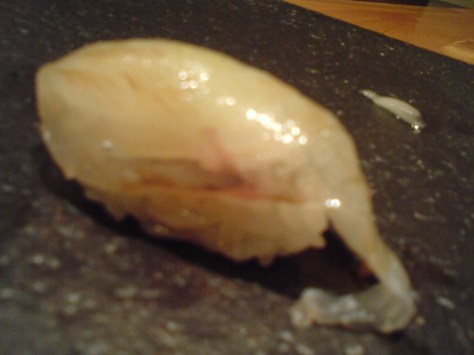
Megochi/Young kochi
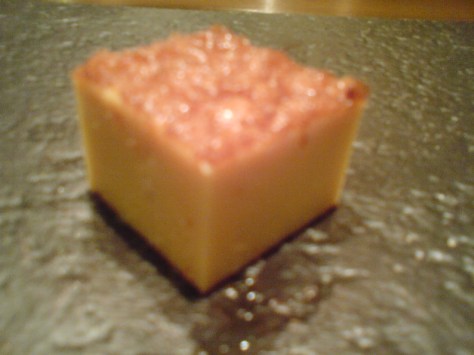
Tamagoyaki (made with shrimp paste)!

Alright, I will have to go there again very soon, and on my own , for better pics!

Sushi Yoshimizu/鮨よし水
Shizuoka Shi, Aoi Ku, Showa-cho, 4-8, Rumankan 4F
Tel.: 054-253-3889
Opening hours: 17:30~24:00 (mon., Tues, Wed.); 17:30~02:00 (Fri., Sat.); 17:30~22:30 (Sun. and National Holidays)
Closed on Thursdays and on Mondays after National Holidays.
Cards OK

RECOMMENDED RELATED SITES:
Warren Bobrow, Bread + Butter, Zoy Zhang, Hungry Neko, Think Twice, Frank Fariello, Mangantayon, Hapabento, Elinluv Tidbit Corner, Tokyo Terrace, Maison de Christina, Chrys Niles,Lexi, Culinary Musings, Wheeling Gourmet, Comestiblog, Chronicles Of A Curious Cook, Tokyo Through The Drinking Glass, Tokyo Foodcast, Palate To Pen, Yellin Yakimono Gallery, Tokyo Terrace, Hilah Cooking, More than a Mount Full, Arkonite Bento, Happy Little Bento; 5 Star Foodie; Jefferson’s Table; Oyster Culture; Gourmet Fury; Island Vittles; Good Beer & Country Boys; Rubber Slippers In Italy; Color Food daidokoro/Osaka;/a; The Witchy Kitchen; Citron Et Vanille, Lunsj Med Buffet/Estonian Gastronomy (English), Cook, Eat, Play, Repeat, Chrisoscope

Please check the new postings at:
sake, shochu and sushi

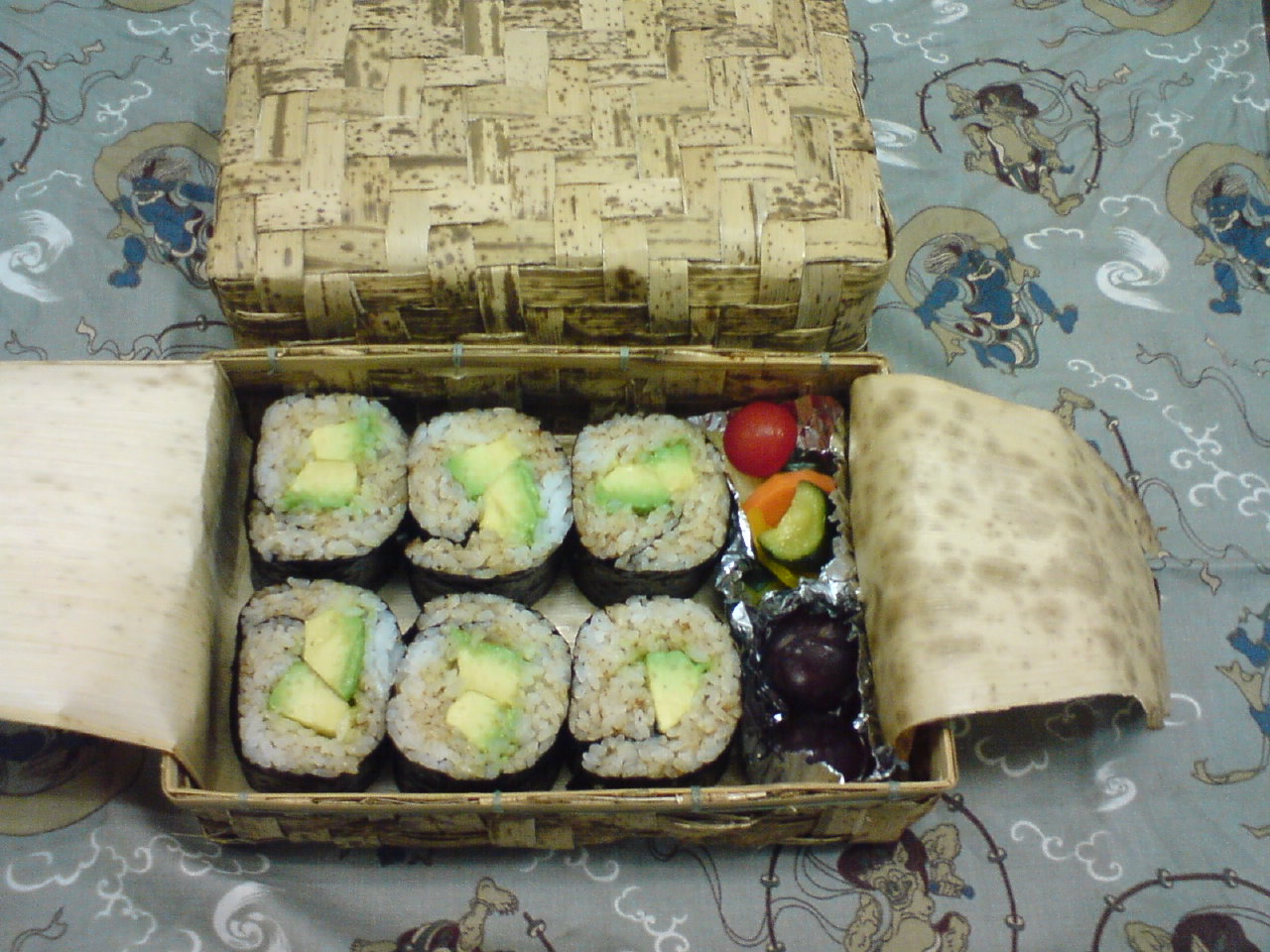
Today’s Lunch Box/Bento (’10/44): Avocado Sushi Roll Bento

The weather is perfect for sushi!
It has been raining non-stop, at times at typhoon level, for the last 24 hours and more rain is on the cards for the next two weeks!

The Missus seems to have got the mesage as yesterday’s university train bento consisted of large sushi roll (report prohibited! LOL). On top of that, I was invited to a sushi restaurant last night (report coming soon). And to finish it, I had musubi/rice balls for breakfast and now avocado rolls!

The rolls were hastily inserted inside that old box of mine made of bamboo fibers lined with a large dry bamboo leaf.

The Missus steamed some fresh sushi rice this morning although instead of adding the usual rice vinegar to the rice, she seasoned it with with a little soy sauce before rolling it around avocado.

Home-made marinated salad for the fibers and some Chilean grapes for dessert.
Simple, tasty and satisfying!

Adventures in Bento Making, American Bento, Beanbento, Bento No1, Bento Wo Tsukurimashou, Cooking Cute, Eula, Hapabento , Happy Bento, Jacki’s Bento Blog, Kitchen Cow, Leggo My Obento, Le Petit Journal Bento & CO (French), Lunch In A Box, My Bento Box, Vegan Lunch Box; Tokyo Tom Baker, Daily Food Porn/Osaka, Only Nature Food Porn, Happy Little Bento, The Herbed Kitchen, J-Mama’s Kitchen, Cook, Eat, Play, Repeat

Please check the new postings at:
sake, shochu and sushi

—————————————-
日本語のブログ
—————————————-

A Dragons’ Banquet 5: Magic Eggs

This is a series of exerpts taken from The Life Of A Dragon to prove that gastronomy can be discreetly introduced in any story or novel, be it fiction or not!

The cool season had finally arrived in Dunlago, the Land of the Free Races of the Desert and the Sea. The prevailing breeze ensured that one could enjoy a stroll outside along the wharves of the harbour in relative comfort, even in the middle of the day.
Most of the guests at the Blue Mermaid sat outside at tables lined on a platform along the street under a verandah, either to sip a strong coffee or to look and be looked at. Any citizen of note would have been considered uncouth or downright boring by the higher society of Dunlago if he or she did not make the point to patronize the most famed inn of the nation at least once a week.
Ekan had more practical considerations in mind. Mumtaz had come down from the Palace for his bi-weekly visit to the Black Dragon’s kitchen. His big friend was demonstrating the recipe of an unusual dish he had discovered during his long stay in Beaucastel.
Ekan was beating eggs in a bowl under the attentive eyes of Mumtaz, Naeem and the whole staff.
“Jonas, what do you call that dish?” the young chef queried.
“They call it an omelet in the south. First , you beat eggs, add salt and pepper and heat oil in a skillet. Count a tablespoon of oliva oil for each egg and wait until it is very hot. What we have here is a plain omelet, but the beauty of that recipe is that there are no limits to whatever you could combine with the eggs. Personally, I like it as simple as possible. A few freshly cut herbs should provide ample taste.”
He turned to the back door opened onto the large garden where a couple of children were busy helping Claudius the gardener.
“Mareeva! Matthieu! Bring us a few sprigs of thin leek, will you?”
The two children had come to Dunlago in the company of Ekan as the weather had turned cold with the approaching winter. Matthieu certainly did not complain to stay away from the castle and the impossibly crowded city of Beaucastel. It would have been perfect if Lieutenant Gratien de Salles-Lavauguyon and Firebrand, his outlandish female dwarf companion had not joined their party on Lady Geraldine de Blanchefleur’s orders. Whenever they could escape the clutches of their guardians, the two of them spent most of their time in Claudius’ company, in the kitchen, or playing with other children at the harbor or in the market.


Tamagoyaki with sakura shrimps and ciboulette

They hurried inside with the herbs asked for by Mareeva’s father. They lingered to look, hoping for a tasty morsel.
Jonas chopped the leeks and included them in the eggs. He poured the mixture in the skillet and briskly stirred the whole with a fork. The whole population had adopted that kind of utensil in no time after some Elven merchants and diplomats had introduced them in the capital.
“The secret is to keep stirring them all the time, so that the hot oil nicely blends with the eggs until you obtain a light and fluffy omelet. If you just leave the eggs to fry on the oil, you will end up with a heavy and greasy piece of food impossible to present or taste properly!”
He expertly let the omelet slide from the skillet onto a plate and invited everyone to sample the treat.
There was enough for all to taste.
The two children already knew the dish but nonetheless savored it with delight.
Mumtaz was munching a second helping as he commented:
“I can see a lot of possibilities. Such food should please ladies in particular. Light but nourishing and delicious. Serve it with some salad in spicy dressing for our women, or with some stew and bread for our men. How do they serve it in Beaucastel?”
“They mostly eat it for breakfast with fried bacon and sausages on thick slices of grilled bread.”
“That could prove a good idea here, too! It could make for a hearty meal for those ravenous nobles of ours! Mumtaz mused aloud.
“We could adapt one of our traditional recipes by adding cooked vegetables cut in small cubes.” Naeem proposed. “If we fry it on a small fire instead, we should obtain some kind of soft hot pancacke. We could cut it in quarters before serving it along with some marinated fish and other garnish!”
“Good thinking, Naeem! I’ll tell you what: let us put our ideas into practice right away and offer the results to whoever happens to be sitting inside the tavern or under the verandah as a gracious service on the house! We shall be able to judge whether our customers will develop a taste for it or not!”
He turned to the children:
“You kids, come along with me! We need some more herbs!”
The three of them went out to join Claudius in the garden.
Mareeva was bent picking flat leaf parsley with Matthieu, when on an impulse; she lifted her head to watch her father.
Jonas’ imposing frame too was crouched over the neatly hoed lines of earth, a hand about to pick a sprig of leek, when his gesture stopped in midair. His eyes stared ahead of him.
Mareeva recognized the telltale signs.
Her fingers lightly tapped her friend’s arm:
“Father’s speaking.”
The two children were two of the very few individuals privy to Ekan’s true secret nature.
The Black dragon that Dunlago people called Jonas was not speaking. In fact, he was listening.
Someone was trying to reach him in mindspeech.

RECOMMENDED RELATED SITES:
Warren Bobrow, Bread + Butter, Zoy Zhang, Hungry Neko, Think Twice, Frank Fariello, Mangantayon, Hapabento, Elinluv Tidbit Corner, Tokyo Terrace, Maison de Christina, Chrys Niles,Lexi, Culinary Musings, Wheeling Gourmet, Comestiblog, Chronicles Of A Curious Cook, Tokyo Through The Drinking Glass, Tokyo Foodcast, Palate To Pen, Yellin Yakimono Gallery, Tokyo Terrace, Hilah Cooking, More than a Mount Full, Arkonite Bento, Happy Little Bento; 5 Star Foodie; Jefferson’s Table; Oyster Culture; Gourmet Fury; Island Vittles; Good Beer & Country Boys; Rubber Slippers In Italy; Color Food daidokoro/Osaka;/a; The Witchy Kitchen; Citron Et Vanille, Lunsj Med Buffet/Estonian Gastronomy (English), Cook, Eat, Play, Repeat, Chrisoscope

Please check the new postings at:
sake, shochu and sushi

Japanese Seasonal Fish: Kurosoi/Black Rock Fish

Kurosoi/クロソイ/Black Rock Fish-Schlegel’s Black Rockfish (Latin name: Sebastes schlegelii Hilgendorf,1880) is a rock fish/scorpion Fish variety even rarer than Ainame/アイナメ/Fat Greening for the simple reason that it is one of those fish great not only for its taste but for its angling challenge!

Also known as Kurosui and Kurokara (and many local names), it is caught south of the Hokkaido Island along rocky coasts as well as off the Korean Peninsula and China.
Great efforts are presently spent on the possibility of raising them either by semi-natural methods or completely raised from egg to adult state in human-controlled environment.
Its flesh can be appreciated in any form of gastronomy, raw or cooked.

Sashimi plate.

Rare as sushi! (two on the left!)

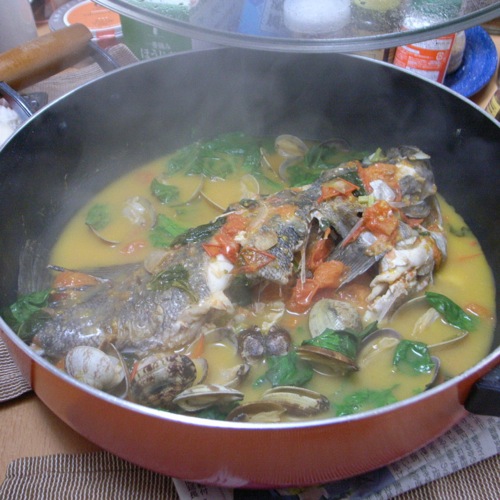
Slow-cooked as Japanese-style aquapazza!

Its head, tail, fins and bones can be turned into a succulent Japanese-style miso bouillabaisse with other seafood!

RECOMMENDED RELATED SITES:
Warren Bobrow, Bread + Butter, Zoy Zhang, Hungry Neko, Think Twice, Frank Fariello, Mangantayon, Hapabento, Elinluv Tidbit Corner, Tokyo Terrace, Maison de Christina, Chrys Niles,Lexi, Culinary Musings, Wheeling Gourmet, Comestiblog, Chronicles Of A Curious Cook, Tokyo Through The Drinking Glass, Tokyo Foodcast, Palate To Pen, Yellin Yakimono Gallery, Tokyo Terrace, Hilah Cooking, More than a Mount Full, Arkonite Bento, Happy Little Bento; 5 Star Foodie; Jefferson’s Table; Oyster Culture; Gourmet Fury; Island Vittles; Good Beer & Country Boys; Rubber Slippers In Italy; Color Food daidokoro/Osaka;/a; The Witchy Kitchen; Citron Et Vanille, Lunsj Med Buffet/Estonian Gastronomy (English), Cook, Eat, Play, Repeat, Chrisoscope

Please check the new postings at:
sake, shochu and sushi

Bryan Baird’s Newsletter (2010/06/16)

Baird Beer & Taproom Events Bulletin
bryan-sayuri.gif

Zamamiro! Ale 2010

Dear Taproom Friend & Baird Beer Enthusiast:

We originally brewed Zamamiro! Ale back in April, 2008 to commemorate our 1000th batch of Baird Beer. When we started Baird Brewing back in 2000, the prevailing “wisdom” in the ji-biiru sector generally ran against us. Very few industry players embraced the idea of highly characterful beer brewed in limitless diversity on a minuscule scale and then dispensed with as much care and attention to detail (appropriate temperatures and carbonation levels, etc.) as was devoted to brewhouse activity. Fortunately for us, though, Japan was home to a strong cadre of sensitive, open-minded and discerning drinkers who steadfastly supported passionate beer artisans like ourselves. To those who didn’t get it, and perhaps still don’t, we say once again, good naturedly: Zamamiro! (loosely translated as, “Hey, I told you so!”).

We have decided to brew Zamamiro! Ale as an annually released seasonal beer. Today we unveil the 2010 version.

*Zamamiro! Ale 2010 (ABV 8%):

The concept here is a strong, golden ale that enjoys a clean, crisp and easy smoothness while still packing a powerful flavor and alcohol punch. The brewing inspiration is very Belgian — we use only base malts and raw wheat; we jack up the gravity with lots of sudakito sugar; we keep the bittering units at a reasonable level (35); and we accentuate aroma by dry-hopping with spicy, herbal hop varieties (CZ Saaz and US Glacier). The one thing Belgian we don’t do is ferment with a phenolic-character Belgain yeast strain (we use our main house ale strain). The result, we think, is a beer that combines supreme drinkability with quiet audacity.

Zamamiro! Ale 2010 will be available at Baird Beer retailing pubs and liquor shops (draught and 633 ml bottles) throughout Japan beginning Thursday, June 17. Individual consumers may also purchase bottles direct from the brewery via our online E-Shop: http://bairdbeer.com/en/shop/.

Cheers,

Bryan Baird

Baird Brewing Company
Numazu, Japan
HOMEPAGE


The Japan Blog List

———————————
Must-see tasting websites:
-Sake: Tokyo Through The Drinking Glass, Tokyo Foodcast, Urban Sake, Sake World
-Wine: Palate To Pen, Warren Bobrow, Cellar Tours, Ancient Fire Wines Blog
-Beer: Good Beer & Country Boys, Another Pint, Please!
-Japanese Pottery to enjoy your favourite drinks: Yellin Yakimono Gallery
——————————–
Please check the new postings at:
sake, shochu and sushi

—————————————-
日本語のブログ
—————————————-

Umeshu Season in Shizuoka (2010)!

June is not only a month for the brides but the right time for making umeshu/梅酒 in Shizuoka, and in the whole of Japan!
Ume/Japanese plums hav appeared since the last week of May as this is also the season for makeing umeboshi/梅干/pickled Japanese plums.

First of all one has to buy his/her plums green, clean and firm. Choose a batch with no scars on the skin.
Lay them in a dry place (no need to put them under the sun) on a piece of cloth until they ripen to a nice yellow/red.
Gently clean them under running cold water. Pick off the stem petal part and wipe them dry. If you want your ume wrinkled and small, use them as they are. Now if you want your plums fat and juicy to eat out of the umshu as dessert, prickle them with a clean toothpick in 5 or 6 spots. That will allow the plums to soak in the umeshu!

As for sugar, buy some good koorizato/ice-sugar/氷砂糖 if you are in Japan. Abroad, choose a clean white sugar, although brown sugar could prove very interesting, but I cannot guarantee the colour!

As for the proportions, this is my personal preference (experiment!):
-Sugar: 1 kg
-Plums: 1 kg
-Shochu: 2 bottles (720ml each/4 “go” in Japanese)
-Japanese sake: 2 bottles (720ml each/4 “go” in Japanese)

If you live in Japan, try to keep it local as much as you can!
Cheap umeshu is made with “white liqueur”. I avoid it like the plagure for two reasons: 1) very low alcohol contents, 2) it is nothing less than “reprocessed alcohol” and simply doesn’t know how, when and with what it is made!
Be a bit extravagant and create a potent and sweet nectar with the accompanying dessert (the plums!)!

Above is what I used this time (from left to right):
-Tokubetsu Honjyozo sake, Kikuyoi, by Aoshima Brewery in Fujieda City.
-Tokubetsu Honjyozo sake, Suginishiki, by Sugii Brewery in Fujieda City.
-Shochu (rice), En, by Takashima Brewery in Numazu City. This shochu is made with the white lees of premium sake and then matured for 2 years inside sherry casks imported from Spain!
-Shochu (rice), Acha no Tsubome, by Hana no Mai Brewery in Hamamatsu City.

RECIPE:

-Drop the sugar in the glass “jug”.

-Place all the plums delicately on top. Don’t throw them in!

-First pour all the shochu.

-Top with all the sake.

-Tighly close the jug.

-Store the umeshu in a dark place away from high temperature sources. Do not leave in the fridge. Ambient temperature of 15~25 degrees Celsius is best (in my opinion!).

The sugar will take at least 6 months to completely dissolve.
The plums will slowly sink to the bottom.
Move the contents around gently once a month by swirling the jug (do not open it!).
Once the sugar is completely dissolved, the plums have all sunk to the bottom and have become the same colour as the liqueur (about 8~10 months), it is then ready to be savoured although one could wait even longer for better maturity!

Enjoy on plenty of ice.
Naturally it can be used in many recipes from sauces to desserts!
I have a special fondness for fat and juicy umeshu plums!
Bazooka Gourmet will most feel compelled to comment! LOL

RECOMMENDED RELATED SITES:
Warren Bobrow, Bread + Butter, Zoy Zhang, Hungry Neko, Think Twice, Frank Fariello, Mangantayon, Hapabento, Elinluv Tidbit Corner, Tokyo Terrace, Maison de Christina, Chrys Niles,Lexi, Culinary Musings, Wheeling Gourmet, Comestiblog, Chronicles Of A Curious Cook, Tokyo Through The Drinking Glass, Tokyo Foodcast, Palate To Pen, Yellin Yakimono Gallery, Tokyo Terrace, Hilah Cooking, More than a Mount Full, Arkonite Bento, Happy Little Bento; 5 Star Foodie; Jefferson’s Table; Oyster Culture; Gourmet Fury; Island Vittles; Good Beer & Country Boys; Rubber Slippers In Italy; Color Food daidokoro/Osaka;/a; The Witchy Kitchen; Citron Et Vanille, Lunsj Med Buffet/Estonian Gastronomy (English), Cook, Eat, Play, Repeat, Chrisoscope

Please check the new postings at:
sake, shochu and sushi

Japanese Seasonal Fish: Ainame/Fat Greening

Ainame/アイナメ/Hexagrammos otakii or Fat Greening is a truly Japanese seasonal fish, which has become a rarity as it lives only around the Japanese archipelago along rocky shores in water comparatively high in salt (some are also found around the Korean Peninsula).
Luckily enough it has been raised successfully in the Western part of Shizuoka Prefecture for the last few years.
Its rarity is caused by its popularity with anglers and its very fine taste.
A cousin of the rock fish, it is called many other names such as Aburako, Aburame and when young, Kujime.
The best season is in may and June. As it lay eggs in Winter, the taste loses its appeal.

It is a real morsel to be enjoyed in many ways:

As sashimi, even its skin is edible!

It makes for superb sushi nigiri!

Like any great white-fleshed fish, you must sample it in karaage/deep-fried!

The same karaage can be then marinated!

Another great way to enjoy it is to cook it as Japanese nimono, either slowly simmered or steamed and served with a soy sauce, sake and mirin sauce!

Of course it makes for a supreme delicacy “poele” in French or Italian gastronomy!

RECOMMENDED RELATED SITES:
Warren Bobrow, Bread + Butter, Zoy Zhang, Hungry Neko, Think Twice, Frank Fariello, Mangantayon, Hapabento, Elinluv Tidbit Corner, Tokyo Terrace, Maison de Christina, Chrys Niles,Lexi, Culinary Musings, Wheeling Gourmet, Comestiblog, Chronicles Of A Curious Cook, Tokyo Through The Drinking Glass, Tokyo Foodcast, Palate To Pen, Yellin Yakimono Gallery, Tokyo Terrace, Hilah Cooking, More than a Mount Full, Arkonite Bento, Happy Little Bento; 5 Star Foodie; Jefferson’s Table; Oyster Culture; Gourmet Fury; Island Vittles; Good Beer & Country Boys; Rubber Slippers In Italy; Color Food daidokoro/Osaka;/a; The Witchy Kitchen; Citron Et Vanille, Lunsj Med Buffet/Estonian Gastronomy (English), Cook, Eat, Play, Repeat, Chrisoscope

Please check the new postings at:
sake, shochu and sushi

A Dragons’ Banquet 4: Honey Buns

This is a series of exerpts taken from The Life Of A Dragon to prove that gastronomy can be discreetly introduced in any story or novel, be it fiction or not!

Ekan and Mumtaz were busy experimenting in the kitchen of the Royal Palace in Dunlago.
They had just taken rolls out of the oven. Mumtaz had been requested small pastries for guests as light food to accompany coffee served in the afternoon. The Black Dragon had suggested the addition of cinnamon and raisins to the light soft bread.
His new friend was about to taste one of them, hot, as it was, when the black giant restrained him with a hand on his wrist.
“Wait. I brought something for you!”
An intrigued Palace Chef saw Ekan extract a jar from the basket he used to carry all his findings.
“Look at what is inside, and smell it!”
Mumtaz saw a viscous yellow liquid inside the jar. He brought his nose close.
“Umh… That seems very sweet. I can also smell something like flowers in it.”
“I knew you had a good nose! It is made from flowers by small insects called bees. Have you ever heard of honey?”
“Yes, but I’ve not had the chance to see or taste any. Where does it come from?”
“Shahzad obtained it from a Beaulieu trader in exchange for spices. Although you can find it in the wild inside the trunks of trees far south near the Fire Mountains, some farmers have found the way to domesticate the bees and produce honey in large quantities. It is very sweet indeed, but far healthier than any sugar you could find here. They even use it as medicine for throat sore and other ailments. This is how they use it on their bread over there!”
He demonstrated by pouring a small amount on top of one of the rolls. He twirled the pastry around to allow the honey to spread all over the surface. He the handed it to Mumtaz:
“Taste it!”
The Palace Chef sniffed the bread and the brought it to his mouth. He bit a large chunk of it and started masticating.
His eyes grew wide. He stretched his arm holding the half-eaten roll:
“Jonas, would you mind adding another little dollop of that stuff?”
“Of course I don’t! But this is as far as you go, or you’d end up gobbling the whole tray!”
He poured some more honey on the bread. Mumtaz unashamedly threw it inside his mouth and licked his fingers like a child not wanting to miss any tiny piece of a rare treat.

Honey Bun

He commented:
“Jonas, you had better urge Shahzad to acquire more of that treasure in large quantities! I can see all the gentry flocking to his shop, as soon as they get to know what honey tastes like! Can you think of any other uses, apart of topping rolls and cakes?”
“Many, actually. Any time you use sugar in sauces or drinks, you could replace it with honey, and you will find out that it is sweeter and healthier! Women would surely appreciate a dessert less fattening than some cakes I can see around!”
“Healthier? If I could support that notion, this would become a solid reason for starting a new trend of cooking, although we might have to face some resistance from the guild looking after the interests of the sugar cane growers!”
“I would not worry too much about the guild, as honey is a luxury, whereas cane sugar is a necessity. Now, the reason why honey is healthier comes from the fact that it has already been digested by the bees, thus getting rid of all impurities in the process. After all, honey is produced to serve as food for young bees!”
Mumtaz passed his hand over his pate with a dubious look.
“So we are eating something which has already been eaten?”
Jonas chortled.
“Yes. But you worry too much. If you knew how much we need these little things called insects, I’m sure you would lose a lot of needed sleep, figuring out what we cannot do without them!”
Just at that moment, a servant from the Palace entered the kitchen.
“Good man Jonas, the King requests your presence urgently!”
Ekan could not suppress an exasperated grimace.
“Just when the fun had begun! Oh well, it cannot be helped! Mumtaz. Let’s top all those pastries first!”
Turning to the servant:
“Good man, would you mind waiting for us and bring that tray to the King before I join them?”
The two chefs hurried while the underling patiently stood waiting in the entrance.
Before Mumtaz could pass him the tray, Jonas picked one of the rolls and handed it to the man.
“Eat it right now, but don’t tell anyone!”
The servant gratefully accepted it and wolfed it down. He then took the tray, but his greedy eyes showed that the way to the Kings rooms would be a long one indeed.
Once he had left, Jonas turned to the other chef:
“Mumtaz, if you want to start a new trend or fashion, always begin at the bottom and make sure the so-called gentry finds themselves scrambling around in fear of losing face!”
The two men parted in laughter.

RECOMMENDED RELATED SITES:
Warren Bobrow, Bread + Butter, Zoy Zhang, Hungry Neko, Think Twice, Frank Fariello, Mangantayon, Hapabento, Elinluv Tidbit Corner, Tokyo Terrace, Maison de Christina, Chrys Niles,Lexi, Culinary Musings, Wheeling Gourmet, Comestiblog, Chronicles Of A Curious Cook, Tokyo Through The Drinking Glass, Tokyo Foodcast, Palate To Pen, Yellin Yakimono Gallery, Tokyo Terrace, Hilah Cooking, More than a Mount Full, Arkonite Bento, Happy Little Bento; 5 Star Foodie; Jefferson’s Table; Oyster Culture; Gourmet Fury; Island Vittles; Good Beer & Country Boys; Rubber Slippers In Italy; Color Food daidokoro/Osaka;/a; The Witchy Kitchen; Citron Et Vanille, Lunsj Med Buffet/Estonian Gastronomy (English), Cook, Eat, Play, Repeat, Chrisoscope

Please check the new postings at:
sake, shochu and sushi

Today’s Lunch Box/Bento (’10/43): Broiled Conger Eel Bento

Picture taken by the Missus!

The Missus has been less than happy with my mobile phone pics recently and she decided to send me the above pic for publication. After all, she said, I make the bento, so I have the right to choose the proper picture!LOL

That is my picture and I must admit it does look as good! LOL again!
As for the title, she had prepared a chirashizushi/散らし寿司/”decoration sushi” with broiled conger eels (not the unagi/鰻/common eel, but the anago/穴子/conger eel).

She lay the freshly steamed sushi rice into two different layers:

the first one topped with lightly pickled cucumber slices and broiled conger eel, and the second one again added with some home-pickled sansho/山椒/Japanese pepper for extra zip and some roasted sesame seeds.

And two more kinds of pickles (daikon) for extra colours and taste.

Now for the side dish: plenty of colours and variety once again.

Boiled violet sweet potatoes, cheese and walnuts salad flanked with lettuce and lightly vinegar-pickled vegetables: cucumber, carrot, pimentoes, celery and mini tomato.

And tamagoyaki/Japanese omelette containing shiso/perilla leaves.
Would you believe that the Missus had first forgotten to include it? LOL

Grapes from Chile and yellow kiwi fruit from Japan for dessert!

Adventures in Bento Making, American Bento, Beanbento, Bento No1, Bento Wo Tsukurimashou, Cooking Cute, Eula, Hapabento , Happy Bento, Jacki’s Bento Blog, Kitchen Cow, Leggo My Obento, Le Petit Journal Bento & CO (French), Lunch In A Box, My Bento Box, Vegan Lunch Box; Tokyo Tom Baker, Daily Food Porn/Osaka, Only Nature Food Porn, Happy Little Bento, The Herbed Kitchen, J-Mama’s Kitchen, Cook, Eat, Play, Repeat

Please check the new postings at:
sake, shochu and sushi

—————————————-
日本語のブログ
—————————————-

Italian Cuisine: Appetizers at Il Paladino (5)

Service: Excellent and very friendly
Facilities: great and very large washroom, great cleanliness overall
Prices: reasonable to expensive.
Specialty:Sicilian Cuisine. Top-class Italian wines and great collection of Grappa.
no-smoking-logo1 Non-smoking at tables.

As I mentioned before, I’ve found over the years that in Japan, and especially Shizuoka, that it is more fun to ask for a few appetizers with a couple of glasses of good wine at Italian Restaurants (mind you, the same would apply to Spanish Restaurants and izakayas!).
When a good restaurant like Il Paladino in Shizuoka City agrees to it, it is simply great fun! This is I hope the continuation of a long series of delicious appetizers!

The first sample of this series is called Falsomagro, or Farsumagru in old Siscilian.
It is made as a roll with pork, although beef and especially veal can be used.

As pre-cooked and kept in the restaurant.
This is actually very traditional food cooked in homes in Sicily. Similar dishes can be found in many other European countries such in Lyon, France where such meat roll concept is popular.

The pork roll is filled with boiled eggs, salami and spinach before being slow-cooked.

It is cut into thick slices and re-heated before being served.

Served with plenty of fresh tomato puree, ground black pepper and EV olive oil, it does make for a substantative appetizer!

Now, this second appetizers a simple and delicious marriage between Italy and Japan!

Can you guess what is inside these fritatta/omelettes?

Broad beans and Japanese baby conger eels (called “noresore” in Japanese)! Very unusual, even in Japan!

“Baby corn” is very popular in Japan (they are not gene-modified!) and make for some delicious, is simple, appetizers! This particular one was grown in Aichi Prefecture.

Not only the corn, but almost everything inside the “leaves” and the whole stem are tender and edible. Grilled over charcoal and served with some EV olive oil, they make for the perfect vegan appetizer!

The last sample of this series is quite simple in concept but made with the highest quality ingredients: A slice of Scarmozza (could be described as a hard and creamy type of smoked mozzarella) coated with fin panini crumbs and fried in EV olive oil with the right amount of seasoning and great vegetables!
For a side view!

For an even more tantalizing view of the Scarmozza!

See you again next time around!

Tratorria . Il Paladino
420-9839 Shizuoka City, Aoi-Ku, Takajo, 2-8-19
Tel.: 054-253-6537
Opening hours: 11:30~13:30, 17:00~22:00
Closed on Mondays
Credit cards OK (Dinner only)

RECOMMENDED RELATED SITES:
Warren Bobrow, Bread + Butter, Zoy Zhang, Hungry Neko, Think Twice, Frank Fariello, Mangantayon, Hapabento, Elinluv Tidbit Corner, Tokyo Terrace, Maison de Christina, Chrys Niles,Lexi, Culinary Musings, Wheeling Gourmet, Comestiblog, Chronicles Of A Curious Cook, Tokyo Through The Drinking Glass, Tokyo Foodcast, Palate To Pen, Yellin Yakimono Gallery, Tokyo Terrace, Hilah Cooking, More than a Mount Full, Arkonite Bento, Happy Little Bento; 5 Star Foodie; Jefferson’s Table; Oyster Culture; Gourmet Fury; Island Vittles; Good Beer & Country Boys; Rubber Slippers In Italy; Color Food daidokoro/Osaka;/a; The Witchy Kitchen; Citron Et Vanille, Lunsj Med Buffet/Estonian Gastronomy (English), Cook, Eat, Play, Repeat, Chrisoscope

Please check the new postings at:
sake, shochu and sushi