Category Archives: Uncategorized

Today’s Lunch Box/Bento (’09/44)

BENTO-09-06-23a

Apparently as far as the Tuesday’s bentoes are concerned, the Missus has turned into “Sandwich mode”!

BENTO-09-06-23b

Now, for the greens, she had come with the interesting notion of a veg sticks dip with celery, boiled asparaguses, cucumber and red radishes (and their leaves). One half-boiled egg for the balance and mayonnaise/mustard dip.

BENTO-09-06-23c

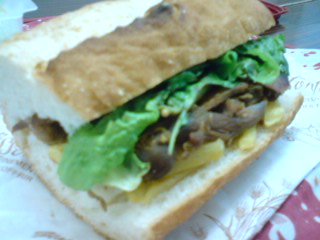
The sandwich, once again, was a big affair.

BENTO-09-06-23d

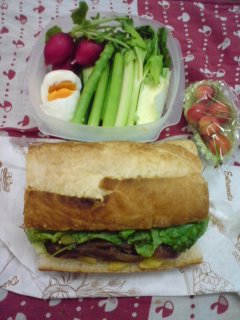
As for the filling, she first fried duck confit, then potato sticks in the remaining fat and inserted them in the French bread (soft type) with lettuce, cassis mustard and French conichons.

This time she didn’t forget the dessert: Japanese cherries!

Please check the new postings at:
sake, shochu and sushi

—————————————-
日本語のブログ
—————————————-

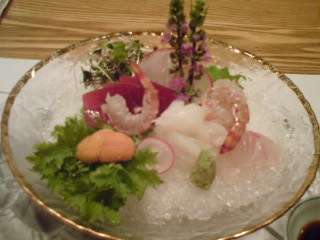
Sashimi Plate at Tomii (’09/06/22)

TOMII-09-06-22

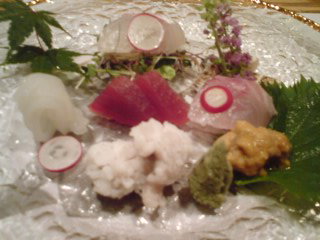
Just came from a “quick fix” at Tomii as I was too hungry to continue work! (I’m back at the office right now!)

Just ordered “o-tsukuri/Sashimi plate” as the calories are non-existent (the Missus is preparing dinner!).

From top clockwise:
-Madai/Japanese Snapper species
-Aburi Tachiuo/lightly grilled Scabbard Fish
Note the shiso/perilla flowers in between!
-Hata/Grouper
-Murasaki Uni/Violet Sea Urchin from Aomori Prefecture
-Hamo/Pike Conger Eel, lightly boiled
-Aka Ika-Kensaki Ika/Red cuttlefish-Squid
In the middle:
-Mebachi-maguro/big-eyed Tuna Akami/lean part

I honestly wish you were all here!

Please check the new postings at:
sake, shochu and sushi

—————————————-
日本語のブログ
—————————————-

Crustacean Species 6: Kuruma Ebi/Japanese Imperial Prawn

KURUMA-EBI-1

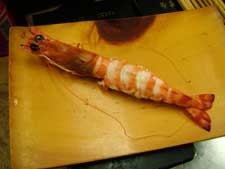
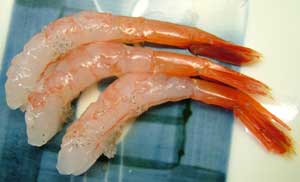
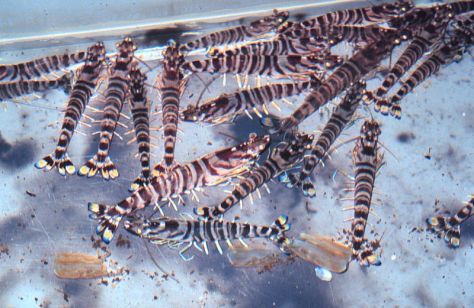
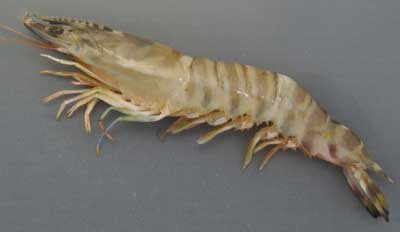
Kuruma Ebi, or Japanese Imperial Prwan, is probably the most popular prawn in Japan!
It has different names depending on its size: Saimaki (up to 5 cm), Maki (up to 10cm)

Its season lasts from late Autumn to the end of Winter.
It is found south of Hokkaido Island down to the Indian Ocean until depths of 50 metres.
It had been successfully artificially grown for some time until diseases put a momentary stop.
The prawn has steadily become a rare morsel. Altogether, natural and human raised specimen, the annual catch amounts only to 2,000 tonnes.

KURUMA-EBI-1a

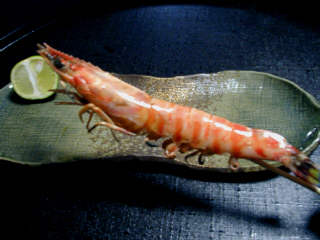
Raw, or

KURUMA-EBI-2

boiled, they make for great decoration on top of suucculent taste!

KURUMA-EBI-4

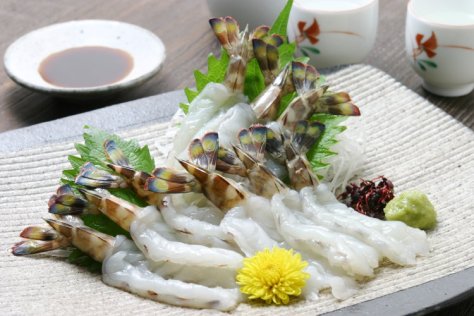
They are very much appreciated a sashimi, especially after having been made to “dance” in Japanese sake!

KURUMA-EBI-5

Grilled on the stick would tempt many an officionado!

KURUMA-EBI-6

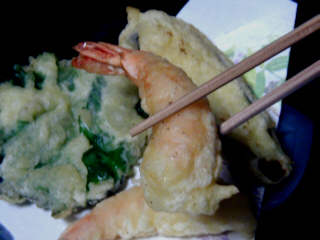
They make for extravagant tempura!

KURUMA-EBI-7

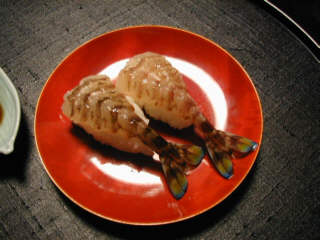
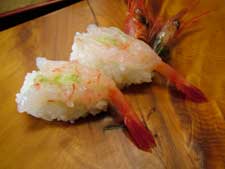
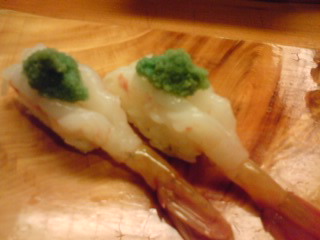
As sushi Nigiri, they are equally popular raw, or

KURUMA-EBI-3

boiled!

If you the chance to buy tem alive (In shizuoka, we do have them kicking), put them in a pan with Japanese sake under a lid. Wait until they have grown “quiet”, and prepare them right away!

Please check the new postings at:
sake, shochu and sushi

—————————————-
日本語のブログ
—————————————-

Today’s Lunch Box/Bento (’09/43)

BENTO-09-06-22a

Mondays, for all the Missus’ grumpiness, see typical Japanese bentoes coming my way! Weekends mean busy days at work at my other half works for an orthodontist, meaning that most patients visit the clinic on weekends.
Although I did cook some tasty cold pasta and seafood salad for dinner last night, The Missus hadn’t forgiven me for not checking the wine avaibility!
A back massage this morning did some good in re-establishing a modicum of peace, though!

BENTO-09-06-22b

The main dish did take some work to do:

BENTO-09-06-22e

The rice was steamed with red miso-flavoured konbu/sweet seaweeed mix, making for the unusual colour of the musubi/rice balls.

BENTO-09-06-22d

The Missus’ specialty: Japanese-style (twice) deep-fried chicken with deep-fried renkon/lotus root chips (with some lemon handy).

BENTO-09-06-22c

Homemade pickles: Mini-melon with salt-preserved cherry blossom.

BENTO-09-06-22f

The salad was a very simple affair: lettuce and boiled string beans, “grated” carrots, mini tomatoes and walnut (was the last for dessert?)

Please check the new postings at:
sake, shochu and sushi

—————————————-
日本語のブログ
—————————————-

Japanese Cakes/Wagashi 12: Recipe-Dango/Sweet Dumplings

DANGO-1a
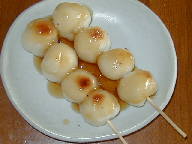
(Mitarashi Dango)

This simple recipe is particularly dedicated to my friends at Bouchonfor2, Bread + Butter, Eeyoreblues 27 and The Sophisticated Gourmet!

Japanese dango are not complicated, although it might be better to make a lot at a time!

INGREDIENTS:
-Rice (“Uruchi Kome”/normal Japnese round rice): 200g
-Water (for dango): 130cc
-Water (for sauce): 60cc
-Cornstarch: 1 teaspoon
-Sugar: 1 teaspoon
-Soy sauce: 2 teaspoons

RECIPE:

DANGO-RECIPE-1

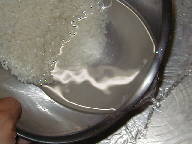
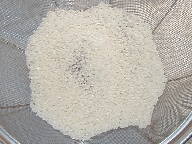
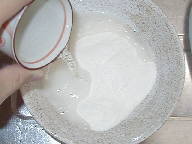
Wash rice thoroughly.
If rice is no-wash type, skip 3 first steps.

DANGO-RECIPE-2

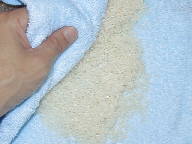
Once the rice washing water is coming out clean, drain rice and spread ontowel. Take off all excess humidity.

DANGO-RECIPE-4

Let the rice dry for two hours.

DANGO-RECIPE-3

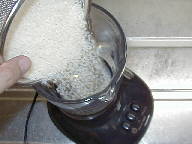
Pour rice in Blender/mixer. First work the blender for only a few seconds at a time until all the rice has been broken completeley. Then blend three times 15 seconds at a time.

DANGO-RECIPE-5

If the rice does not turn into powder easily, sift rice as many times as necessary until all rice has been reduced to powder.

DANGO-RECIPE-6

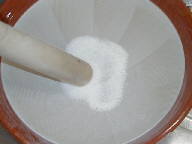
Finish the job with mortar and pestle.

DANGO-RECIPE-7

Once the rice has been reduced completely topowder, work the pestle in for 5 more minutes.

DANGO-RECIPE-8

Add water and mix well with spoon.

DANGO-RECIPE-9

Divide into small portions and steam for 15 minutes.

DANGO-RECIPE-10

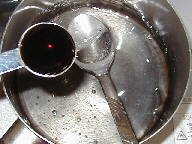
In a pan add cornstarch to water (for the sauce). keep stirring over a low fire. once the water has been become transparent add sugar and soy sauce and mix well until you obtain a smooth syrup. take off fire.

DANGO-RECIPE-11

Fill a glass with water and keep within arm’s reach.
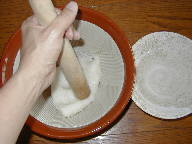
Drop all the steamed dango paste into mortar.
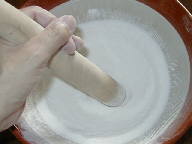
Work dango paste with a wet wooden pestle.
Once the paste ahas been become sticky and elastic, form small balls (the operation should not last more than 10 minutes).
Wet them to prevent them from sticking to each other.

DANGO-RECIPE-12

Push a wet (important!) stick through the balls (4 or 5 at the most).
Grill the balls (or not) for better effect.
Serve them smeared with syrup.

Please check the new postings at:
sake, shochu and sushi

—————————————-
日本語のブログ
—————————————-

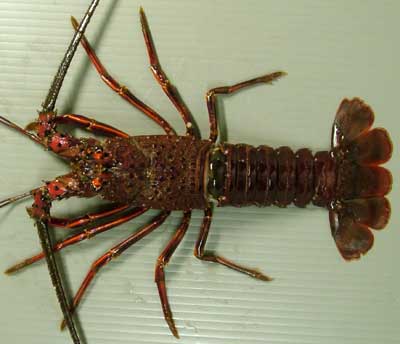
Crustacean Species 5: Ise Ebi/Japanese Spiny Lobster

ISE-EBI-1

Ise Ebi, or Japanese Spiny Lobster is one the Spiny lobster varieties so popular all over the World.
The Japanese variety is smaller, or more precisely is more popular under a certain size.

Also called Kamakura Ebi, it is caught off the shores of Chiba, Wakayama, Mie and Shizuoka Prefectures.

The best specimens are aught in Winter, although imported lobsters can be found at other seasons.

The annual catch is fairly stable at 1,000 tonnes a year.
Imprted specimens account for 10,000 tonnes, mainly from Australia, New Zealand and New Caledonia.
In the case they are also called Minami/South Ebi.

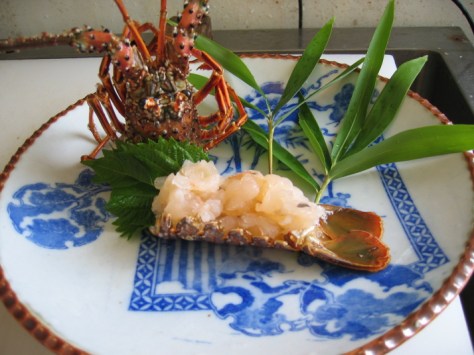
The Japanese appreciate their lobsters raw.

ISE-EBI-SASHIMI

As o-tsukuri/sashimi plate they are quite spectacular!

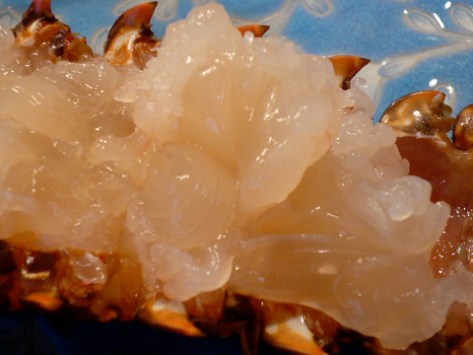
ISE-EBI-SASHIMI2

For a closer look!

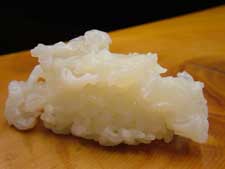
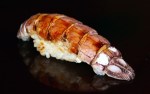
ISE-EBI-SUSHI

And of course as sushi nigiri!

Please check the new postings at:
sake, shochu and sushi

—————————————-
日本語のブログ
—————————————-

French Restaurant: Lunch at Pissenlit (third visit!)

PISSENLIT-09-21-3

Service: excellent and very friendly
Facilities: great washroom, great cleanliness overall
Prices: reasonable, good value.
Strong points: Interesting wine list. Great use of local products.
no-smoking-logo!

In Shizuoka, during the reainy season, when it rains, it just pours!
The Missus workingon Sunday, and me having to cook in the veening, I just escaped from our stuffy home and took the bus to taown. I already had in mind where I was going to use this rare break from Sunday Cricket: Pissenlit!
This is my third lunch, which might be considered as an overkill, but since I’m going there again on Friday evening with friends, there a couple more things I wanted to check!
PISSENLIT-09-21-2

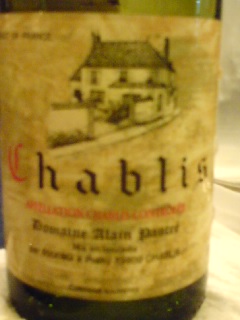
Chablis 2006, Domaine Alain Pautre

PISSENLIT-09-21-1

For a moment, I was thinking of ordering wine by the glass, but what the hell, I asked for the full ottle and shared it with the chef and staff!

Melinda, Rachael, Etsuko and Jen are going to kill me for the succinct review, but I’ll make with Friday’s tasting:

Colour: rich golden hue, very clear
Aroma: Fresh, flowery
Taste: Solid attack, flowery, backed with dry, slightly tannic back-up. Longish tail, Stays solide with food.
PISSENLIT-09-21-4

This time I didn’t bother reading the menu and just went for the carte (written on a blackboard!).
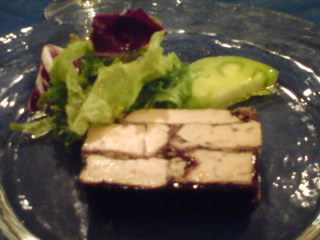
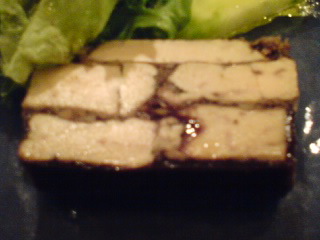
I had been dreaming about the Foie Gras Marbre (Marbled Foie Gras, sorry Arnie!) for some time. Now, I was going to enjoy it! (If someone wants the Missus to kill me, just tell her, but this will be the end of this blog!)!
Surprisinfly light and supremely elegant affair. Not to mention the organic green tomato!
PISSENLIT-09-21-5

It was then I was going to order the Escargots de Bourgogneet Morilles (Morels), when the Chef said “Hang on!”. Blimey I already knew I was going to be deprived of my favourite home specialty! Had better be good!

I was told they had just received this organic Poulet Noir (Black Chicken) bred according to the French Label Rouge regulations. The difference is that it is raisedd in Hamamatsu City, Haruno in a secluded mountainous part near the Tenryuu River by Mr. Mastoshi Uchiyama who has been raising these little beauties for the last 15 years in his farm, Forest Farm Meguri! The chicken is “cooped” in quasi freedom, eating only selected organic food for 120 days.

Akright, alright, I will have the snails on Friday, then! Mind you, it was not difficult to convince me when I was told I would be the first customer in Pissenlit to be served the morsel!

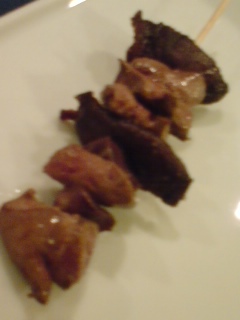
And morsel it was:
Above is a”yakitori” stick of the Black Chicken giblets with shiitake!
PISSENLIT-09-21-6

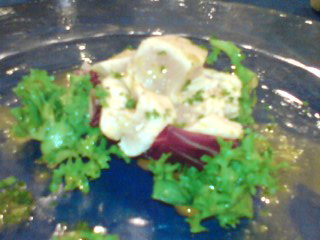
Next came a typically Japanese way and though of cooking: Chicken sasami/Brest fillets, “tataki”/half cooked style marinade with yuzu koshio/lime pepper. I know a lot of French “critiques” who would fall over each other to taste that in an overpiced instiyution back home!
PISSENLIT-09-21-7

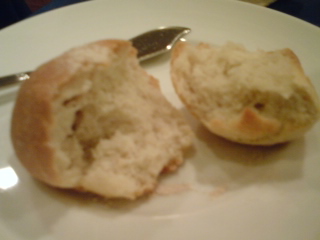
For the bread lovers, I was served these exquisite and small soba/buckwheat bread buns!
PISSENLIT-09-21-8

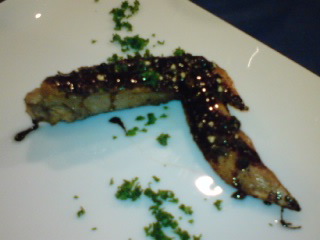
Tebasaki/Wing grilled with Teriayaki sauce amde with fond de veau/veal stock and balsamico vinegar. To be eaten with your fingers only! (you are allowed to lick them!)
PISSENLIT-09-21-9

And ten,…

PISSENLIT-09-21-10

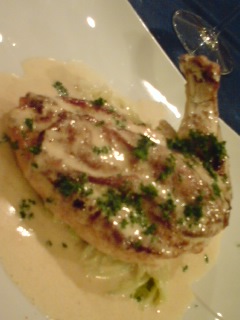
One whole breast roasted and served on chou frise with a Sauce Supreme. Simple, exquisite and finger-licking! I usually don’t go much for chicken skin, but I must admit I was convinced this time!
PISSENLIT-09-21-11

As for dessert I didn’t want to put my health to risk on their enormous dessert plate and just asked for the creation of the day:
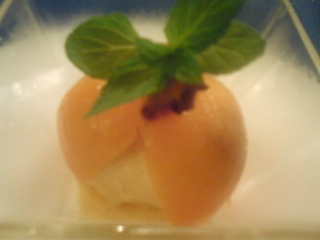
Loquat compote (cooked in Bourgogne White Wine) and vanilla ice-cream (plenty of vanilla bits there!)! The perfect ending to an extravagant lunch!

PISSENLIT
420-0839 Shizuoka City, Aoi Ku, Takajo, 2-3-4
Tel.: 054-270-8768
Fax: 054-627-3868
Business hours: 11:30~14:30; 17:00~22:00
Closed on Tuesdays and Sunday evening
Credit Cards OK
Homepage (Japanese)

Please check the new postings at:
sake, shochu and sushi

—————————————-
日本語のブログ
—————————————-
Japanese Cakes/Wagashi 11: Dango/Sweet Dumplings

DANGO-1a
(Mitarashi Dango)

Dango (団子) is a Japanese dumpling made from mochi-ko (rice flour), related to mochi. It is often served with green tea.
In Edo times, they were very popular at tea stands along the country roads.

Dango are eaten year-round, but the different varieties are traditionally eaten in given seasons. Three to four dango are often served on a skewer. One variety of dango from Hokkaidō is made from potato flour and baked with shoyu (soy sauce).

Types of dango:

There are many different varieties of dango which are usually named after the various seasonings served on or with it.

DANGO-2
Chadango: Green-tea flavored Dango.

DANGO-4
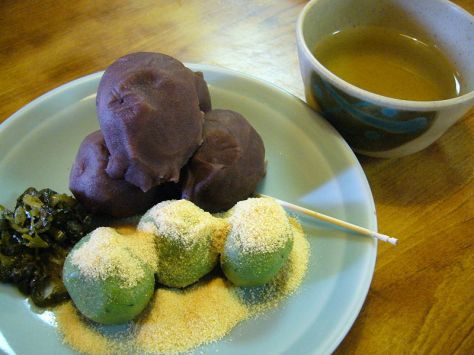
Dango served covered with anko

Actually, if you want to write all about Dango, you’d need to publish a whole book!

Chichi dango: Slightly-sweet light treats usually eaten as a dessert.

DANGO-1
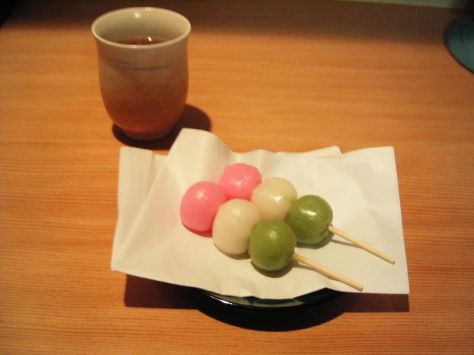
Hanami dango: Also has three colors, Hanami dango is traditionally
made during Sakura-viewing season. Hence the name Hanami (Hanami means “flower viewing”; hana meaning “flower”, and mi meaning “to see”).

DANGO-1b
Kushi dango: Dango held by a skewer

DANGO-3
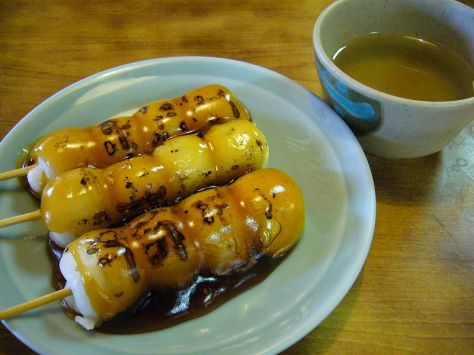
Mitarashi: Covered with a syrup made from shouyu (soy sauce), sugar and starch.

Please check the new postings at:
sake, shochu and sushi

—————————————-
日本語のブログ
—————————————-

Japanese Dessert: Kakigoori/Shaved Ice with Syrup

KAKEKOORI-1

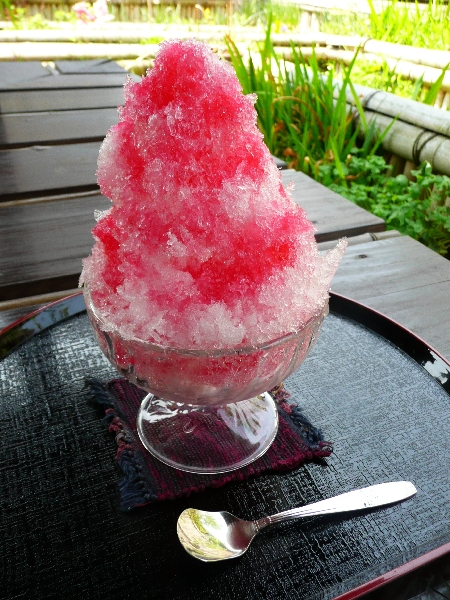
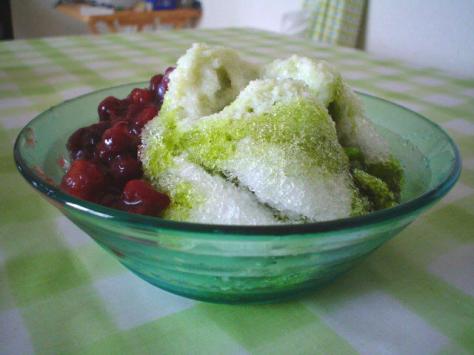
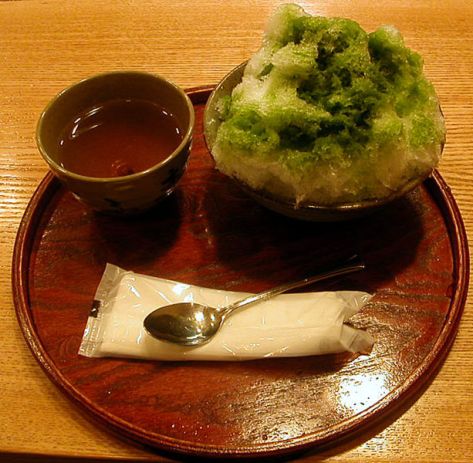
Kakigōri (かき氷) is a very popular Japanese dessert made from shaved ice flavored with syrup.
It was served for the first time in Kanagawa Prefecture in 1869!

KAKEKOORI-2

Popular flavors include: strawberry, cherry, lemon, green tea, grape, melon, “blue-Hawaii” sweet plum, and colorless syrup. Some shops provide colorful varieties by using two or more different syrups. To sweeten Kakigōri, condensed milk is often poured on top of it.

KAKEKOORI-3

It is nearly identical to a snow cone but can have a slightly rougher consistency and a spoon is almost always used. The traditional way of making kakigōri involves using a hand cranked machine to spin a block of ice over an ice shaving blade. However, electric ice shavers are most often used, though street vendors can still be seen hand-shaving ice blocks in the summer.

KAKEKOORI-4

In addition to the streets, kakigōri is also sold in festivals, convenience stores, coffee shops, and restaurants. During the hot summer months, kakigōri is sold virtually everywhere in Japan. Some coffee shops serve it with ice cream and sweet bean paste. Convenience stores may also sell it already flavored and packaged similar to ice cream.

KAKEKOORI-5

In other countries in East Asia, similar varieties can be seen.

Halo halo: Filipino shaved ice topped with sweetened beans, nata de coco and ice cream. “Halo-Halo” literally means “mix-mix” in the Tagalog language. Some shops in Japan also sell these sweets.
Bingsu (빙수) Korean shaved ice. The most popular kind is patbingsu. It is topped with sweetened red beans, canned fruits, and soybean powder. Many other varieties can be found throughout the country.
Bàobīng (刨冰) in Mandarin Pinyin or Chhoah-peng (剉冰) in Taiwanese POJ: Taiwanese shaved ice. There are many varieties in Taiwan. Some of them are topped with fresh fruits, fruits syrup and condensed milk. Some of them are topped with sweetened beans, glutinous rice balls and brown sugar syrup, while others will even use seafood. Some vendors use milk ice to make finer shaved ice, and some vendors may sometimes use a hand blade to shave block ice in order to produce rough crushed ice.
Ice kacang: Malaysia and Singapore Shaved ice topped with sweetened syrup of various colours and flavours, condensed and evaporated milk, and sometimes also durian pulp or vanilla ice cream. Beneath the ice sweetened red beans, canned fruit, attap seeds and grass jelly are usually added. Electric ice shavers are often used; though some vendors may use a hand blade to shave the ice in order to produce a rough texture. A variation of this would be Cendol which is shaved ice with sweet green coloured glutinous rice noodles drizzled with palm sugar it is usually accompanied with kidney beans and canned sweetcorn.
Nam Kang Sai: Thai Shaved Ice. In Thailand, this kind of cold dessert is very popular as well. The differences from other countries’ shaved ice is that in the Thai version the toppings (mixings) are in the bottom and the shaved ice is on top. There are between 20-30 varieties of mixings that can be mixed in. Among them are young coconut that have been soaked in coconut milk, black sticky rice, chestnuts,sweetened taro, red beans, sarim (thin strands of cooked flour that is very chewy and slippery) and many more.

Please check the new postings at:
sake, shochu and sushi

—————————————-
日本語のブログ
—————————————-

Japanese Cakes/Wagashi 10: Youkan: Easy Recipe-Mizu Youkan

MIZU-YOKAN-1

Youkan come in many guises. Here is an easy and ver basic recipe for “Mizu Youkan” that you will be able to adapt into many creations of yours! For vegans, vegetarians and omnivores!

INGREDIENTS:
-Boiled azuki beans: 1 can (430 g)
-Brown sugar: 60 g
-Salt: a pinch
-Agar agar Powder (“kanten” in Japanese): 4 g
-Water: 300 ml + 300 ml

RECIPE:

MIZU-YOKAN-2

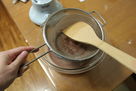
Blend beans and 300 ml of water until smooth.

MIZU-YOKAN-3

Pass mixture through fine sieve.

MIZU-YOKAN-4

In 300 ml of water drop agara agar. Bring to boil, stirring at the same time. Then keep stirring vern medium fire for 1 minute.

MIZU-YOKAN-5

Switch off fire. Pour sugar and salt. Mix well. Add bean paste. Mix well.

MIZU-YOKAN--6

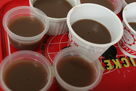
Pour in recipients of your choice (that is when the fun starts!) and let cool completely. Keep in fridge (not too cold, please). Take out of recipient and serve!

More recipes to come!

Please check the new postings at:
sake, shochu and sushi

—————————————-
日本語のブログ
—————————————-
Japanese Cakes/Wagashi 9: Youkan

YOUKAN-JELLY

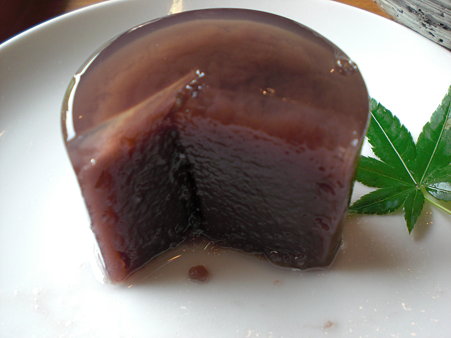
Here is another popular type of Japanese Wagashi fit for Vegans and Vegetarians: Youkan!

YOUKAN-MIZUYOKAN
Mizu Youkan

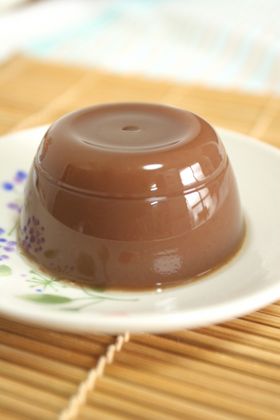
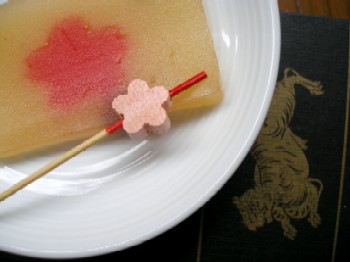
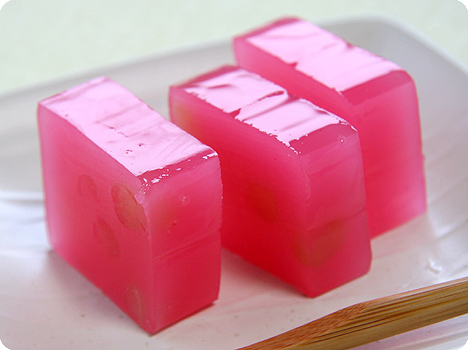
Yōkan (羊羹) is a thick jellied dessert made of red bean paste, agar (寒天/”kanten” in Japanese, and sugar. It is usually sold in a block form, and eaten in slices.

There are two main types: neri yōkan and mizu yōkan. “Mizu” means “water”, and indicates that it is made with more water than usual. Mizu yōkan is often chilled and eaten in summer.
Although most yōkan found in Japan and abroad are typically made with red bean paste, yōkan made from white kidney bean paste (しろあん, 白餡, shiro an in Japanese) are also relatively common. This type of yōkan is milky and translucent with a much milder flavour than that made of red bean paste.

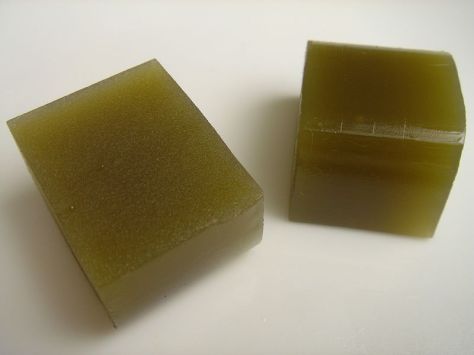
YOUKAN-GREENTEAYOUKAN
Tea Youkan

As such, they can be effectively flavoured and coloured by using green tea powder.

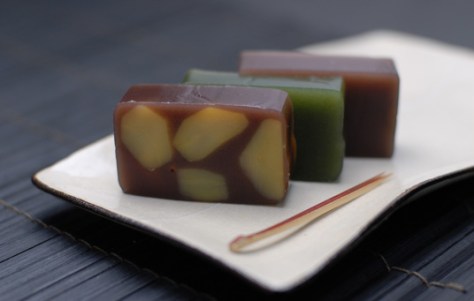
YOUKAN-TRICOLOUR

MizuyōkanYōkan may also contain chopped chestnuts, persimmons, whole sweetened azuki beans, figs, and sweet potato, among other additions. Sugar can be also be substituted with honey, dark brown sugar, or molasses to alter the taste of the yōkan produced. There is also shio yōkan, which uses small amounts of salt as a sweetener.

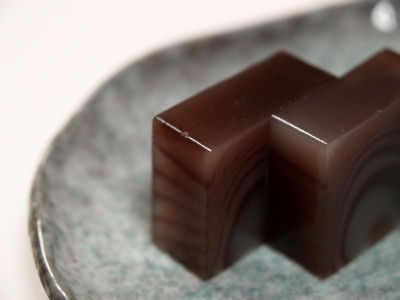
Other Pictures of Youkan:

YOUKAN-BICOLOUR

YOUKAN-CHERRY

YOUKAN-PINK

I will introduce an easy recipe soon!

Please check the new postings at:
sake, shochu and sushi

—————————————-
日本語のブログ
—————————————-
Crustacean Species 4: Amaebi/Alaskan Pink Shrimp-Pink Shrimp

AMAEBI-1

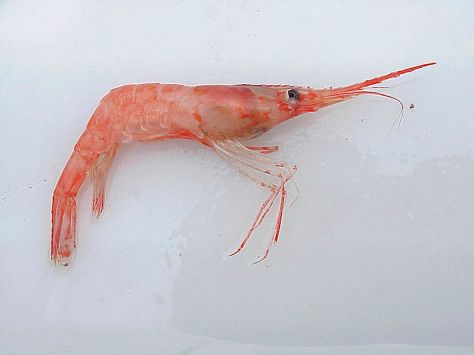
Amaebi (in Japanese) or by its Latin name Pandalus borealis (also called Pandalus eous) is a species of shrimp found in cold parts of the Atlantic and Pacific Oceans. Many different English names are used, with little consensus (deep-water shrimp, cold-water shrimp, northern shrimp, Alaskan pink shrimp, pink shrimp, northern red shrimp, Greenland prawn (UK)). Often the word shrimp is replaced by prawn, albeit incorrectly.

In Japan, it is also known as Hokkoku Akaebi/North Country Red Shrimp, Nanban Ebi or Tongarasahi.

The season in Japan is Winter, although it can be found all year round thanks to large imports from Greenland and Canada. Yearly domestic catch amount to 2,000 tonnes in Hokkaido and 800 tonnes in Ishikawa Prefecture.

It is a species famous for its sexual properties: the shrimps are hermaphroditic. They start out male, but after year or two, their testicles turn to ovaries and they complete their lives as females. However, if there is a predominance of female Pandalus shrimp, the males will delay their transformation. Likewise should there be a shortage of females, the male shrimp will begin their transformation earlier, all for the sake of maintaining balance for procreational purposes.

They are called “Ama Ebi/Sweet Shrimp” in Japanese as they will turn very sweet after a couple of days in the refrigerator, whereas they will show no sweetness at all when fresh!

AMAEBI-2

They are great as sashimi on their own, in salads or as part of a larger sashimi plate such as served i Tomii in Shizuoka:

TOMII-09-05-20b

Of course, as sushi, they are a superb morsel!

AMAEBI-3

Please check the new postings at:
sake, shochu and sushi

—————————————-
日本語のブログ
—————————————-
Crustacean Species 3: Shako-Squilla

shako1.jpg

The Squilla or “Shako” (蝦蛄in Japanese) is a delicacy that appears on the sushi bar counters from April to Summer, although different varieties can be found in Hokkaido markets (Otaru City in particular) almost all year round.
You will discover it under names such as “Shaku” and “Gazaebi”.
They are actually caught in almost all Japanese seas, but the best are supposed to originate from Hokkaido.

shako2

Like any crustaceans, they can be eaten in many ways.
The Japanese favour the small kind with a violet back. I had the opportunity to buy some very large specimen in Otaru, and eat them just boiled and served with rice vinegar mixed with a little Japanese mustard, or in salads.
They almost disappeared from Tokyo Bay in the 1960’s but reappeared in the 1970’s. Most fishermen in the Kanto area will place them in boxes themselves to sell them directly at fish markets. The market value can vary wildly, but look for the genuine harbour markets and buy them yourself.

shako3

Naturally, they are most popular as nigiri sushi. Customers jokingly ask for “garage” (in English) as “shako” also means (different kanji, of course) “garage”!

Please check the new postings at:
sake, shochu and sushi

—————————————-
日本語のブログ
—————————————-
Crustacean Species 2: Botan Ebi-Large Prawn

botanebi1.jpg

Botanebi/”Botan” Prawn, or “Pandalus nipponesis” for the specialists, is a large prawn found in all seas of Japan at depths varying from 300 to 500 metres. They are caught at 200~300 metres depth in Suruga Bay and along the Western coast of Izu Peninsula In Shizuoka Prefecture. Once abundant, they have become scarce and only small specimens are found, whereas Hokkaido produces up to 20cm-long prawns.

sushiko-08-12-25-31

They are known under different names: “Toyamaebi and Kijiebi”.
It is not a cheap morsel in Sushi bars. But it is interesting to note they are essentially eaten raw as like “Amaebi”. They become very sweet after some time in the refrigerator.

oda-4.jpg

Now, if you are lucky enough to find them fresh with their eggs, ask your chef to dress them as above, or even better, put the eggs on top of a “gunkan nigiri”!

sushiko-08-12-25-5

And one more thing, if they are fresh again, don’t forget to ask for the heads deep-fried!

Incidentally, botanebi change sex (gender) with age to end up as big juicy females!

Please check the new postings at:
sake, shochu and sushi

—————————————-
日本語のブログ
—————————————-
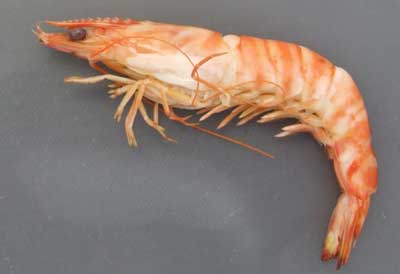
Crustacean Species 1: Shiro Ebi-White Shrimp

shiroebi1.jpg

Having obtained more information and species, I decided to restart the Series on Crustaceans for the sake of secure information!

Shiroebi or White Shrimp is not as known as other shrimp/prawn varieties. However, it is a very popular crustacean in Japanese cuisine.
Also known under the the names of “Shiraebi, Hirataebi and Bekkoebi”, it is mainly caught between depths of 40 and 200 metres off the coasts of Toyama Bay on the other side of Japan and Suruga Bay in Shizuoka Prefecture.

shiraebi-22

It is mainlly served as sashimi with some ponzu and grated fresh ginger

shiraebi-3

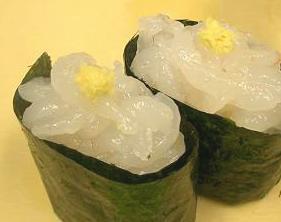
as “gunkan” topped with a dash of grated fresh ginger.

It is possible to serve it as “nigiri”, although one would need large specimen, as the usual length is only 7 cm.
Shiroebi appears on our tables between April and November in many guises:

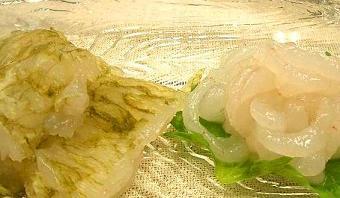
shirebi-4

The picture above shows on the right the shiroebi in its natural flesh whereas on the left it has been kept between two sheets of wetted seaweed for a while as “kombu-jime”, another very popular way to prepare all kinds of sashimi/sushi.

White Shrimps also enter in the preparation of a kind of “Tamagoyaki”/Japanese Omelette when they are first processed into a paste and mixed thoroughly with beaten eggs, sieved and then cooked.
The Japanese also love them as soft sembei/rice crackers.

The annual catch has exceeded 600 tonnes in recent years, half of them in Toyama.
They are also exported whole.

Please check the new postings at:
sake, shochu and sushi

—————————————-
日本語のブログ
—————————————-