Tag Archives: レシピ

Japanese Cuisine: Datemaki/Tamagoyaki Roll

DATEMAKI-1

I do not need to tell you how much tamagoyaki/Japanese Omelette and Maki/Rolls are popular, do I?LOL
Now, many of you have seen and wondered how to make those Tamagoyaki Rolls? Their real name is “Date maki/伊達巻.
There are cheap and dubious varieties abounding, and frankly speaking, I would recommend everyone to make their own than buy cheap “junk food”-style ones ready-made at supermarkets, so here is a simple and deicious recipe.
It also has the advantage to be very healthy and become a full full meal with a salad!

INGREDIENTS:

-Eggs: 5
-White fish or shrimp (without skin, shell or bones!): 100 g
-Sugar: 3 tablespoons
-Mirin/sweet sake: 3 tablespoons
-Soy sauce: half a tablespoon

RECIPE:
DATEMAKI-2

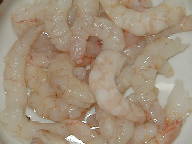
-This time shrimps were used. I repeat: do not forget to take of heads and shells!
DATEMAKI-3

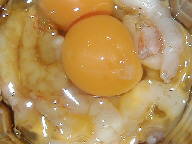
-In a blender/mixer drop 2 eggs (without the shells!LOL), the sugar, mirin and soy sauce. Blend for 30 seconds.
Add the remaining 3 eggs (without the shells! I told ya, dinya?) and blend for 30 more seconds.
DATEMAKI-4

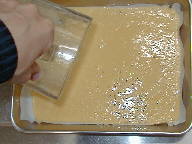
-Line the bottom of 20×26 cm rectangular mold with a sheet of cooking paper. This should result in an approximately 7 mm thick omelette.
DATEMAKI-5

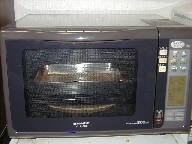
-Bake in oven at 200 degrees Celsius for 25 minutes.
The surface of the omelette should attain a nice even brown colour.
DATEMAKI-6

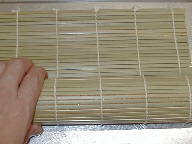
-Roll the omelette with a sushi roll bamboo sheet.
The brown surface should on the outside, meaning that you should lay the omelette on the bamboo sheet upside down.
Do this while the omelette is hot.
Don’t wait for it to cool down!
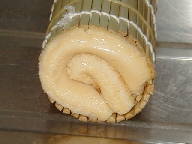
DATEMAKI-7

-Roll the omelette tight and bind the whole with a string or rubber band.
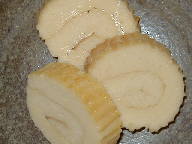
DATEMAKI-8

-Wait at least for 30~40 minutes for the egg roll to cool down completely.
Cut and serve!

DATEMAKI SAMPLE PICS:
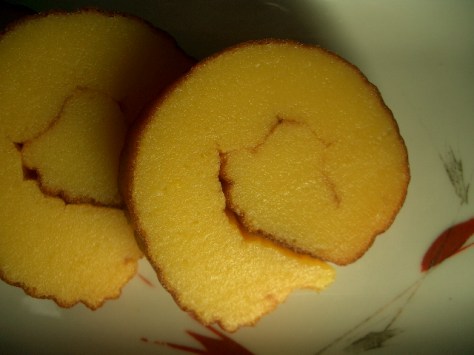
DATEMAKI-PIC-1

-Simple is best?

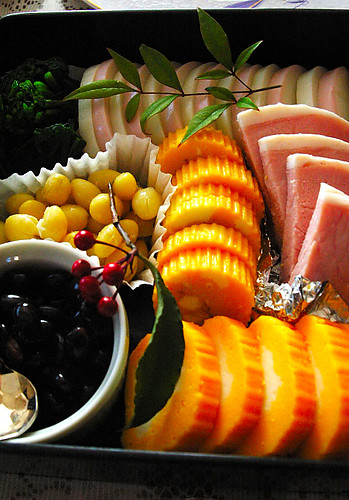
DATEMAKI-PIC-2

-Combined in O-Sechi New Year Bento

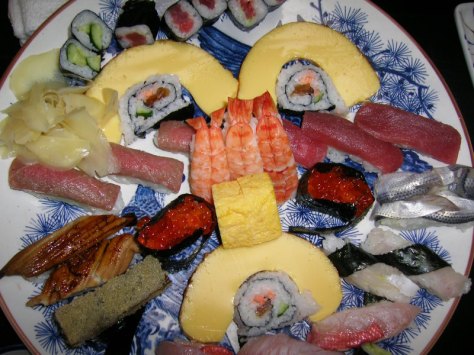
DATEMAKI-PIC-3

-Combined with sushi

RECOMMENDED RELATED SITES:
Warren Bobrow
Bread + Butter
5 Star Foodie
Elinluv Tidbit Corner
Think Twice
Frank Fariello
Mangantayon
Hapabento

Please check the new postings at:
sake, shochu and sushi

—————————————-
日本語のブログ
—————————————-
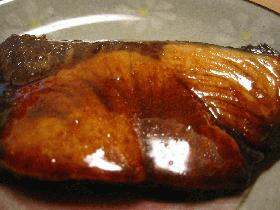
Japanese Cuisine: Buri Teriyaki/Yellowtail inTeriyaki Sauce

BURI-TERIYAKI

Here is a simple recipe for preparing fish in teriyaki style.
I chose Yellowtail/buri as it is about to come in season!

INGREDIENTS: For 3 people

-Yellowtail slices/steaks: 3
-Salad Oil: 1 tablespoon

Tare/sauce:
-Soy sauce: 4 tablespoons
-Mirin/sweet sake: 4 tab;espoons
-Japanese sake: 4 tablespoons
-Sugar: 2 tablespoons

RECIPE:

– Prepare the tare/sauce first by mixing all the ingredients well in a small bowl.

-Heat oil in frypan.
Fry fish on the their skin first, however narrow. Then fry on one side util a nice colour is attained.

-fry other side until a nice colour is attained. Lower fire. Cover with lid and steam fry for 2~3 minutes.

-Add all tare/sauce.
Fry on a low fire for 7~8 minutes, scooping the sauce over the fish regularly.
It will be ready whenthe sauce has reduced and started caramelizing!

NOTE:
-Serve it topped with grated daikon!

RECOMMENDED RELATED SITES:
Warren Bobrow
Bread + Butter
5 Star Foodie
Elinluv Tidbit Corner
Think Twice
Frank Fariello
Mangantayon
Hapabento

Please check the new postings at:
sake, shochu and sushi

—————————————-
日本語のブログ
—————————————-

Today’s Lunch Box/Bento (’09/62)

BENTO-09-09-22a

I could with different names for today’s bento:
“Holiday Bento”-Today is a National Holiday, but I’ve found myself working!
“Leftover Bento”-This particular bento has been made up mostly with yesterday’s food cooked by the Missus!

BENTO-09-09-22b

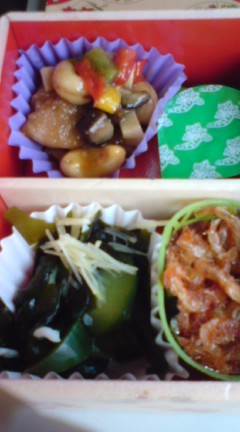
Yesterday the Missus had made “kakuni/stewed pork”. She had added beans and chili pepper during the second cookin.
I inherited the leftovers with boiled brocoli (also prpepared yesterday and a little pasta, the whole in the middle of freshly steamed plain rice.

BENTO-09-09-22c

The salad included yesterday’s curry potato salad to which she added crumbled boiled egg, mini tomatoes and mixed samll leaves.

BENTO-09-09-22d

Simple dessert with cut plum and Asian pear/nashi.

Must admit I felt full and contented!

RECOMMENDED RELATED SITES:
Warren Bobrow
Bread + Butter
5 Star Foodie
Think Twice
Frank Fariello
Mangantayon
Hapabento
Elinluv Tidbit Corner

Please check the new postings at:
sake, shochu and sushi

—————————————-
日本語のブログ
—————————————-

Japanese Cuisine: Yakitori/Tsukune-Recipes 5

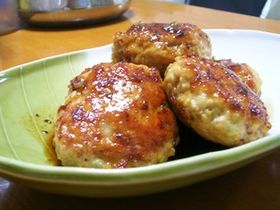
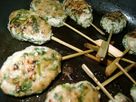
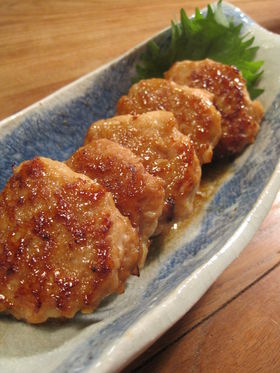
TSUKUNE-PORK

Here is the fourth of (long) series of simple recipes that I hope will stimulate into you creating more recipes!

INGREDIENTS: For 2 persons

-Minced pork: 200 g
-Thin green leeks: 4~5
-Ginger, grated: 1 piece, 5×5 cm
-Japanese sake: 2 tablespoons
-Soy sauce: 3 tablespoons
-Naga imo/glutinous Japanese yam/Chinese yam, grated: 2 tablespoons
-Cornstarch: 1 tablespoon

Tare/Sauce
-Soy sauce: 2~3 tablespoons
-Sugar: 2 teaspoons
-Mirin/sweet sake: 3 tablespoons

-Japanese sake: 2 tablespoons (for steam/fry)
-Onsen Tamago/Japanese-style poached eggs (normal poached eggs are great!)

RECIPE:

-Chop the thin leeks coarsely.
In a bowl mix minced pork, Japanese sake, soy sauce and grated ginger until smooth.

-Add grated Chinese yam and mix until smooth. It will take some time as the yam will tend to separate at first. Add cornstarch and mix until smooth.

-Add chopped leeks and mix well.

-Heat a frypan. Pour in a little oil. Make 6~7 round patties/tsukune by hand or with a mold.
Fry both sides on a medium fire.

-When “eyes” have appeared on both sides, reduce fire to small. Add sake, cover with glass lid and steam fry.

-When you are sure that the tsukune are well cooked, add soy sauce, mirin and sugar and let simmer until sauce has “caramelized” the tsukune.

-Serve with a poached egg in a separate ramequin for each person who will choose either to break it directly over the tsukune or use it as a dip (the former will be probably easier!LOL)

NOTE:
-You can increase the amount of leeks and gingeraccording to your taste.
-You may replace leeks with parsley.
-Any soy sauce is fine, although a sweet variety is recommended. Otherwise you may increase the amount of mirin.

RECOMMENDED RELATED SITES:
Warren Bobrow
Bread + Butter
5 Star Foodie
Elinluv Tidbit Corner
Think Twice

Please check the new postings at:
sake, shochu and sushi

—————————————-
日本語のブログ
—————————————-

Japanese Cuisine: Yakisoba-Basic Recipe

YAKISOBA-RECIPES-1

I introduced the basic knowledge on Yakisoba some tip before my trip to New Caledonia.
here is a very basic and simple recipe you can easily improvise on!

INGREDIENTS: For 1 person

-Yakisoba (yakisoba men/can be bought in individual packs): 1 person portion pack
-Moyashi/soy bean sprouts (fresh if possible/if not canned ones are ok, but drain well): to taste (i like plenty!)
-Thin leeks, cut into 1~2 cm long bits: to taste
-Pork: here is where you can improvise. some poepl like it fatty, others lean. Cut in thin strips. Amount up to your taste.
-Furikake: 1 small pack
-Yakisoba sauce (available in Asian markets, although you can decise your own): to taste (I use a good amount!)
Sauce suggestion: Japanese Sake, Mirin/sweet ake, soy sauce & Worcester sauce: 1 teaspoon each. Add 1 teaspoon of yakisoba sauce to that!

RECIPE:

YAKISOBA-RECIPES-2
-Prepare the moyashi/soy bean sprouts (clean them quickly if they are fresh) and cut thin leeks.
Heat the yakisoba in hot water and drain. This step willmake the yakisoba softer and help them suck the juices in.

YAKISOBA-RECIPES-3
-Pour some oil in a frypan. Fry yakisoba with the pork placed on top in the middle.

YAKISOBA-RECIPES-4
-After having fried the yakisoba for a while, turn the lot over and fry pork with yakisoba on top. Reapeat operation a few times.

YAKISOBA-RECIPES-5
-Add moyashi and thin leeks, salt, pepper and furikake. Fry quickly to taste.

YAKISOBA-RECIPES-6
-Add yakisoba sauce of your liking. Saute until sauce has evened in the yakisoba.

Serve immediately.
You can add pickled ginger and others as a finishing touch.

RECOMMENDED RELATED SITES:
Warren Bobrow
Bread + Butter
5 Star Foodie
Elinluv Tidbit Corner
Think Twice

Please check the new postings at:
sake, shochu and sushi

—————————————-
日本語のブログ
—————————————-

Japanese Cuisine: Yakitori/Tsukune-Recipes 4

TSUKUNE-RECIPES-3

Here is the fourth of (long) series of simple recipes that I hope will stimulate into you creating more recipes!

INGREDIENTS: For 3~4 persons

-Minced Chicken (breast or thigh): 250 g
-Leek, lon and thin type: 1
-Fresh ginger, grated, to taste
-Soy sauce: 1 tablespoon
-Salt and pepper: a little to taste
-Cornstarch: 1 tablespoon
-Sesame oil: a little to taste
-Yama Imo/Japanese glutinous yam, grated: 2 tablespoons

Tare/Sauce
-Soy sauce: 2 tablespoons
-Mirin/sweet sake: 2 tablespoons
-Water: 1 teaspoon
-Seven spices, to taste

Decoration/presentation:

-Kaiwaredaikon/Daikon sprouts: to taste
-White sesame seeds: to taste
-Grated fresh daikon: to taste

RECIPE:

-Chop leek finely. Grate the ginger. Grate the yama imo.

-In a large bowl drop the the minced chicken, soy sauce, salt & pepper, seame oil and mix quickly by hand.

-Add leek, ginger, yama imo and the cornstarch. Mix well. Let the mixture rest in the fridge for 30 minutes.

-During that time prepare the kaiwaredaikon, freshly grated daikon and sesame sesame seeds.
Prepare the tare/sauce ingredients.

-Fry the tsukune/patties after having shaped them into 3 or 4 equal sized circles with salad oil on both sides over a medium fire until they are a light brown.

-Add 2 tablespoons of water, cover with lid and steam/simmer for a while. Check if tsukune are well cooked with a thin wooden stick.

-Add the tare/sauce ingredients and cook until the tare has “caramelized”.
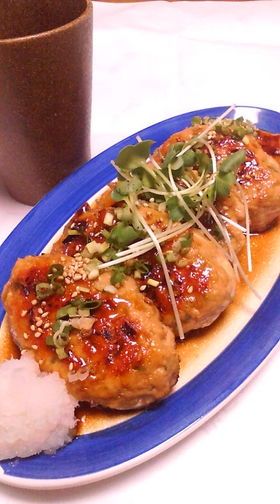
Serve on a plate with kaiware daikon, grated fresh daikon and white seasme seeds for the final touch.

NOTE:
Do not fry tsukune over a strong fire or they will get hard.

RECOMMENDED RELATED SITES:
Warren Bobrow
Bread + Butter
5 Star Foodie
Think Twice

Please check the new postings at:
sake, shochu and sushi

—————————————-
日本語のブログ
—————————————-
Japanese Cuisine: Somen-The Basics

SOMEN-1

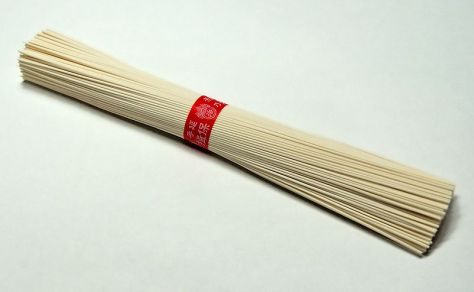
Sōmen (素麺) are very thin, white Japanese noodles made of wheat flour. The noodles are usually served cold and are less than 1.3 mm in diameter. The distinction between sōmen and the next thicker wheat noodles hiyamugi (冷麦), and even thicker Japanese wheat noodles udon (饂飩) is that sōmen is stretched while hiyamugi and udon are cut.

SOMEN-COLD
Summer-style cold somen

Sōmen are usually served cold with a light flavored dipping sauce or tsuyu. The tsuyu is usually a katsuobushi-based (鰹節/dried bonito shavings) sauce that can be flavored with chopped thin leeks, ginger, or myoga. In the summer, sōmen chilled with ice is a popular meal to help stay cool.

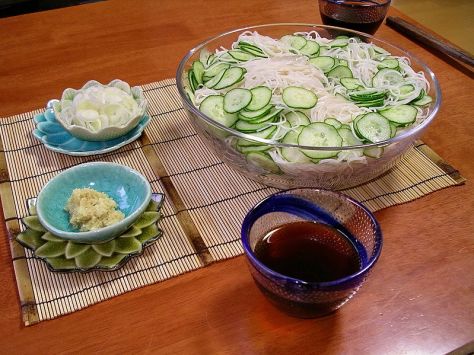
SOMEN-COLD2
Somen Meal Sample

Fish stock can easily be replaced with konu/seaweed stock if you vegetarian or vegan.

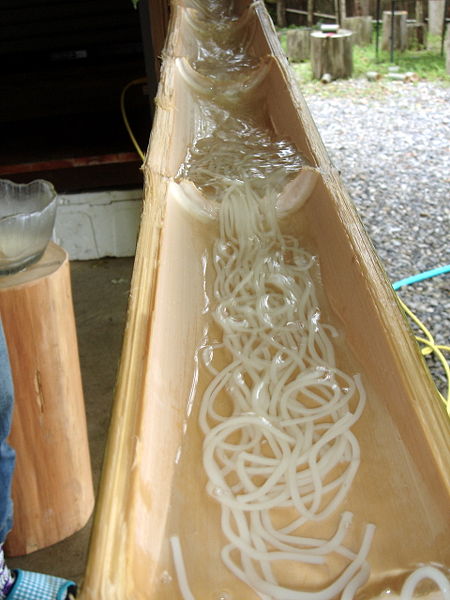
SOMEN-NAGASHI
Nagashi Somen flowing down a bamboo pipe.

Some restaurants offer “nagashi sōmen” (流しそうめん flowing noodles) in the summer. The noodles are placed in a long flume of bamboo across the length of the restaurant. The flume carries clear, ice-cold water. As the sōmen pass by, diners pluck them out with their chopsticks and dip them in tsuyu. Catching the noodles requires a fair amount of dexterity, but the noodles that aren’t caught by the time they get to the end usually aren’t eaten, so diners are pressured to catch as much as they can. A few luxurious establishments put their sōmen in real streams so that diners can enjoy their meal in a beautiful garden setting.

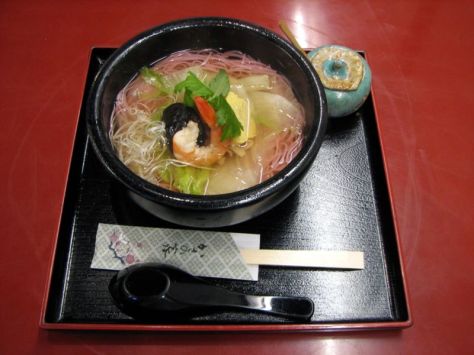
SOMEN-NYUMEN
Nyumen

Sōmen served in hot soup is usually called “nyumen” and eaten in the winter, much like soba or udon are.

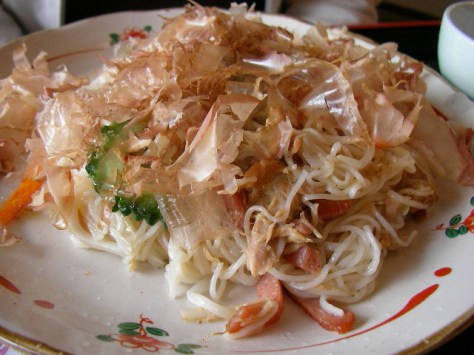
SOMEN-CHAMPURU
Somen champuru.

In Okinawa, somen champuru are very popular with goya and tofu.

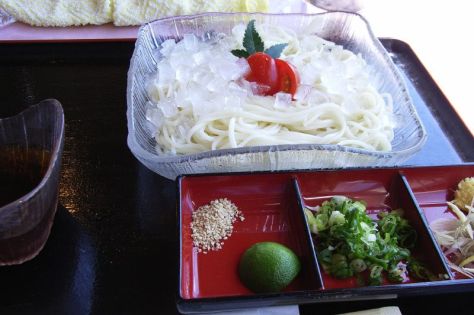
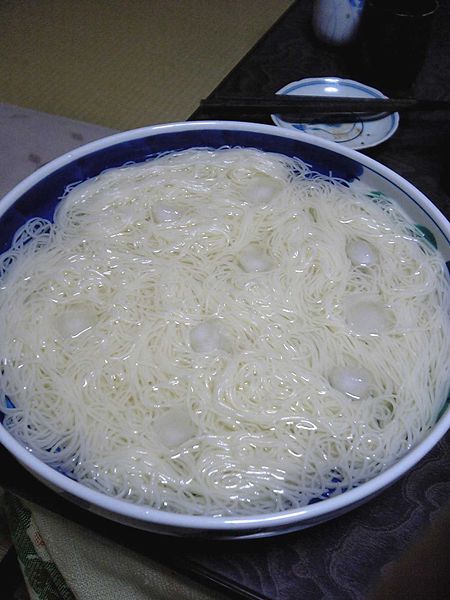
SOMEN-PLAIN
Plain somen

Somen are probably the easiest style of noodles to prepare.
Plain chilled somen witj cold ponzu are such a great snack in summer.

SOMEN-KOREAN

A very similar variety of thin wheat flour noodles are called somyeon in Korea and are used in a dish called bibim guksu.

RECOMMENDED RELATED SITES:
Warren Bobrow
Bread + Butter
5 Star Foodie
Think Twice

Please check the new postings at:
sake, shochu and sushi

—————————————-
日本語のブログ
—————————————-
Today’s Lunch Box/Bento (’09/61)

BENTO-09-09-07a

The Missus was a “bit grumpy” today.
“Don’t take a photo of that!” she said…
It was a typical, if simple, Summer bento, more aimed at stamina than anything else.

BENTO-09-09-07b

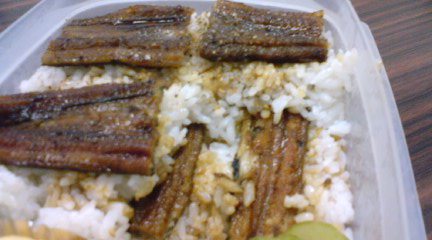
The broiled unagi/eel bento in short!

BENTO-09-09-07c

The unagi had been bought ready-made at the local supermarket.
The Missus coorected the fishy taste by havin the broiled unagi rest in matcha tea for a while.

BENTO-09-09-07d

As for the broiled eel and steamed rice, they were laid in a two-tier style, very popular in Japan.

BENTO-09-09-07e

Plain tamagoyaki and home-made cucmber pickles for garnish.

BENTO-09-09-07f

(Shizuoka grown) cress, mini-tomatoes and walnuts for the salad, plums and grapes (grown in Yamamshi Prefecture, our neighbours) for dessert.

Simple but hearty!

RECOMMENDED RELATED SITES:
Warren Bobrow
Bread + Butter
5 Star Foodie
Think Twice

Please check the new postings at:
sake, shochu and sushi

—————————————-
日本語のブログ
—————————————-
Japanese Cuisine: Yakisoba-The Basics

YAKISOBA-1

Yakisoba (焼きそば), literally “fried noodles”, is a dish often sold at festivals in Japan, but originates in China. The dish was derived by the Chinese from the traditional chow mein, but has been more heavily integrated into Japanese cuisine like ramen. Even though soba (Japanese Noodles made from buckwheat) is part of the word, yakisoba noodles are not made from buckwheat, but are similar to ramen noodles and made from wheat flour.

Yakisoba usually refers to sōsu yakisoba/ソース焼きそば, flavored with yakisoba sauce.

It is prepared by stir-frying ramen-style noodles with bite-sized pork, vegetables (usually cabbage, onions or carrots) and flavoured with yakisoba sauce, salt and pepper. It is served with a multitude of garnishes, such as aonori/青海苔 (seaweed powder), beni shoga/紅生姜 (shredded pickled ginger), katsuobushi/鰹節 (fish flakes), and Japanese mayonnaise.

YAKISOBA-4
Family style yakisoba

Yakisoba is most familiarly served on a plate either as a main dish or a side dish.

YAKISOBA-3-PAN
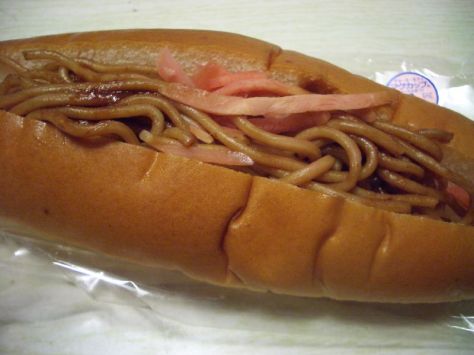
“Yakisoba Pan/Yakisoba Bun)

Another popular way to prepare and serve yakisoba in Japan is to pile the noodles into a bun sliced down the middle in the style of a hot dog, and garnish the top with mayonnaise and shreds of pickled ginger. Called yakisoba-pan, pan meaning bread, it is commonly available at local matsuri (Japanese festivals) or konbini (convenience stores).

Sometimes, Japanese white Udon is used as a replacement of Chinese style Soba and called Yakiudon. This variation was started in Kitakyushu in Fukuoka Prefecture.

Yakisoba is served widely across military bases around the world, and daily at Camp Hansen, a Marine Corps base in Okinawa, Japan, and weekly at Kunsan AB, an airbase in the Republic of Korea. It has become a favored dish among the U.S. Military across the world.

Other Yakisoba varieties:

YAKISOBA-5-GOMOKU
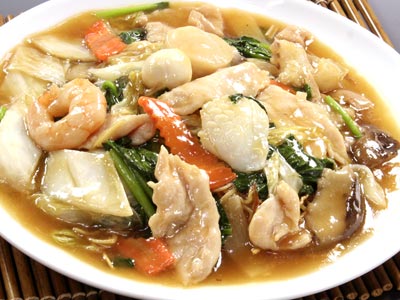
“Gomoku Yakisoba”

As said above, all kinds of garnish are used for Yakisoba.
The most popular way to add such garnish is called Gomoku Yakisoba/五目焼きそば/5 garnishes yakisoba, as the number “5” is a particular good number in Japan.

YAKISOBA-2-KATAYAKISOBA
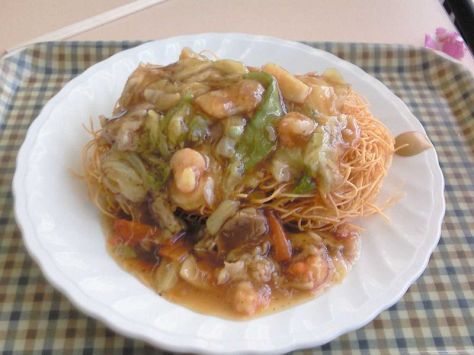
“Katayakisoba”

Katayakisoba/堅焼きそば means that the soba hard, either deep-fried or instant. It makes for a cruchylayer of soba under soft garnish and sweet and sour sauce!

—————————————-
FUJINOMIYA YAKISOBA

YAKISOBA-8-FUJINOMIYA

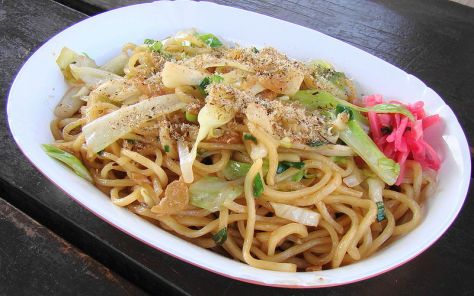
In Fujinomiya City, at the foot of Mount Fuji in Shizuoka Prefecture, they make a slightly different kind of Yakisoba which has been awarded its own name patent!

The noodles used in the recipe are thicker than in the rest of Japan.
The noodles are fried in anima fat leftover (that is left after cooking the meat!)
Fine bonito shavings or other powder (mackerel, sardine, …) is used as a finishing touch.
Depending on the home or shop, sakura ebi/cherry shrimp, cuttle fish and minced meat are included.

RECOMMENDED RELATED SITES:
Warren Bobrow
Bread + Butter
5 Star Foodie
Think Twice

Please check the new postings at:
sake, shochu and sushi

—————————————-
日本語のブログ
—————————————-
Japanese Cuisine: Yakitori/Tsukune-Recipes 3

TSUKUNE-TOFU

Here is the third of (long) series of simple recipes that I hope will stimulate into you creating more recipes!
The difference is that this time it is made with tofu as well!

INGREDIENTS: For 2~3 persons

-Tofu: 100 g
-Minced chicen: 300 g
-Onion, finely chopped, 1/2
-Grated fresh ginger, 3~3cm cube
-Egg: 1
-Black pepper: a pinch or two
-Cornstarch: 2 teaspoons
-Soy sauce: 2 tablespoons
-Japanese sake: 2 tablepoons
-Sugar: 2+1/2 tablespoons
-Salad oil

RECIPE:

-In a bowl mix tofu, chicken, onion, ginger, egg, pepper and cornstarch. Make patties/tsukune.

-Pour some oil in a frypan. On medium high fire fry both sides of tsukune until they have reached a nice colour. Add some water. Cover with lid and steam/cook on low fire.

-Mix soy sauce, Japanese sake and sugar in a bowl.

-Take off lid from tsukune. Turn to medium fire. Pour in the sauce and simmer until ready for serving.

NOTE:

Great served wrapped in shiso leaves!

Please check the new postings at:
sake, shochu and sushi

—————————————-
日本語のブログ
—————————————-
Japanese Cuisine: Yakitori/Tsukune-Recipes 2

TSUKUNE-RECIPES-2-a

Here is the second of (long) series of simple recipes that I hope will stimulate into you creating more recipes!

INGREDIENTS:
-Minced Chicken: 400 g+
-Large shiso/perilla leaves (can be replaced with basil or other green tasty leaves): 15~20
-Salt, pepper: 1 pinc each
-Black sesame: 1 teaspoon
-Grated fresh ginger: 5×5 cm cube
-Japanese Sake: 1 teaspoon
-Cornstarch: 1 tablespoon
-Egg yolk: 1 large

-For seasoning:
Lemon juice
Yuzu koshio/lime and pepper paste

RECIPE:

TSUKUNE-RECIPES-2-b

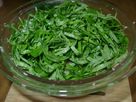
-Chop the leaves fine as shown on above picture.

TSUKUNE-RECIPES-2-c

-In a large bowl, drop in the minced chicken, salt, pepper and black sesame seeds. Mix well until it becomes a smooth paste.

TSUKUNE-RECIPES-2-d

-Add egg yolk, Japanese Sake, Cornstarch and grated ginger.
Mix well.

TSUKUNE-RECIPES-2-f

-Add chopped shiso (leaves9 and mix well.

TSUKUNE-RECIPES-2-g

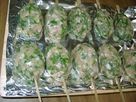
-make tsukune/patties in size of your liking around a wooden stick.

TSUKUNE-RECIPES-2-h

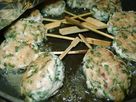
-Pour a little oil in a non-stick frypan and place tsukune as shown on picture.
Start frying.

TSUKUNE-RECIPES-2-i

-When one side has reached the right colour, turn over and fry until both sides have reached the proper colour.
You may add a little more Japanese sake for seasoning.

TSUKUNE-RECIPES-2-j

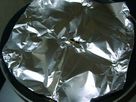
-Cover with large piece of foil paper and stema/fry on a small fire for a while.

TSUKUNE-RECIPES-2-k

-That’s how the should look when ready!

-Serve a little lemon juice and lime and peppr paste, and plenty of beer!

NOTE:
Naturally, youi may use a sauce of your choice as well, or ponzu, or soy sauce, etc.

Please check the new postings at:
sake, shochu and sushi

—————————————-
日本語のブログ
—————————————-
Today’s Lunch Box/Bento (’09/60)

BENTO-09-09-05a

Two days ago, the Missus decreed that from now no I will take a bento to work on Saturdays as we are both too busy to bother with coming home for lunch.
I’m notone to complain as Saturday will see totally different bentoes form mondays and Tuesdays.

BENTO-09-09-05b

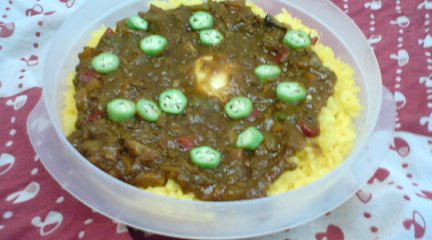
Like I said, Saturday bentoes will be different becaus this is the day of the week when the Missus makes a point to cook stews or curries.
Today’s curry was pork minced meat served with chopped okra from her family’s garden and a whole soft boiled egg on saffron rice.

BENTO-09-09-05c

As for the salad I was offered a selection of raw vegetables sticks with drssing as vegetables sticks. These are particularly welcome in this still hot season!

BENTO-09-09-05d

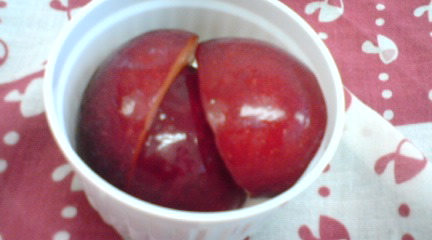
And ripe plums for dessert!

Next Saturday I will be flying to New caledonia for a few days. Therefore the next Saturday bento will have to wait till the 19th. LOL

Please check the new postings at:
sake, shochu and sushi

—————————————-
日本語のブログ
—————————————-
Ekiben/Railway Station Lunch Boxes-Bento 7

EKIBEN-09-04-d

Just came back from University where I had to rush to “help” a stident re-take and pass his Summer Finals. As I had no time to stay long enough at home for the Missus to prepare a packed lunch, I just sped off (on my bicycle) to Shizuoka Station where I purchas an Ekiben/Railway Station Lunch Box.
Knowing the Missus, I suspect she gorged herself with pasta for lunch at home!

EKIBEN-09-04-a

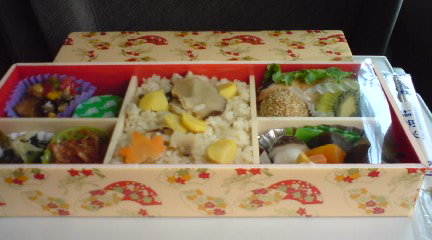
I chose that particular Ekiben because it was seasonal. You never know after all, as this could prove to be a unique occasion.
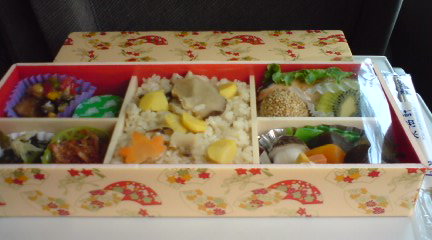
Its name was very poetic: 秋千扇/Aki Chi Sen=The One Thousands fans of Autumn!

EKIBEN-09-04-c

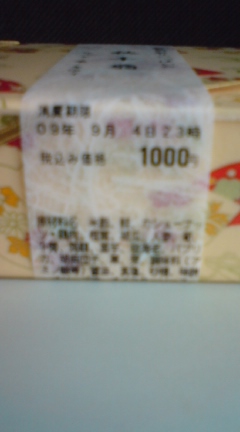
As I mentioned before hygiene laws for bento in Japan are very strict and contents are cleraly indicated (in Jpanaese) on the box with the packaging date and time and price. This particular one cost 1,000 yen/about 11 US $ at the current rate.

EKIBEN-09-04-d

As usual the food inside is protected by an sheet of hard cellophen paper.

EKIBEN-09-04-f

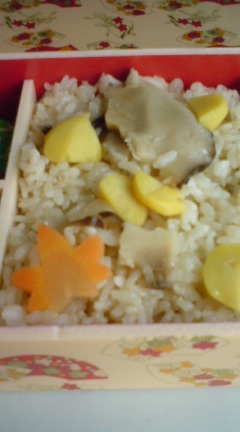
The “gohan/rice” part was rice steamed with shiitake mushrooms slices and pieces of chestnuts, a very popular way to make “mazegohan/mixed rice” inthe Fall/Autumn. The juices of the shiitake are incoprated in the rice, making even more tasty.

EKIBEN-09-04-g

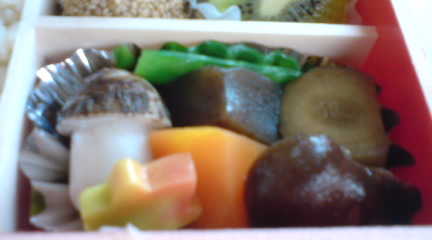
The garnish consisted of boiled or simered vegetables including burdock root, carrot, shiitake mushrooms, sato-imo/tuber variety (very soft), string bean and devil’s tongue tuber/Konnyaku.

EKIBEN-09-04-i

For a closer view.
Dessert consisted of goma dango, a ball of mochi containing anko and coated with white sesame, and a slice of kiwi fruit. Above the dessert a slice of fried salmon made up for the meat part.

EKIBEN-09-04-h

The other half of the garnish consisted of seaweed/wakame and cucumber salad seasoned with amazu/sweet vinegar, deep-fried and sweetened sakura ebi/cherry shrimps (found only in Shizuoka).
Above them Deep-fried chicken in sweet and sour sauce with beans an a small “cup” od wasabi zuke/wasabi pickled in sake lees to season the rice with, not forgetting the small tube of soy sauce for the veg!

Not bad, not bad!LOL

Please check the new postings at:
sake, shochu and sushi

—————————————-
日本語のブログ
—————————————-
Japanese Cuisine: Yakitori/Tsukune-Recipes 1

TSUKUNE-RECIPES-1

Apparently, yakitori and especially tsukune are very popular not only in Japan but almost everywhere in the world as they share similarities with many other countries’ specialties! After all a hamburger is nothing less than a big tsukune!LOL

Here is the first of (long) series of simple recipes that I hope will stimulate into you creating more recipes!

Tsukune Recipe 1:

INGREDIENTS: For 4 people

-High quality chicken (breast or thigh): 250 g
-Leek (long narrow one): 1
-Soy sauce + Japanese sake + mirin/sweet sake: 4 tablespoons each
-Honey: 2 teaspoons
-Fresh ginger juice (also available over the counter in Asian stores): 10 ml
-Water: 2 tablespoons
-Cornstarch: 2 tablespoons
-Salad oil: 2 tablespoons

RECIPE:

-Cut chicken and leek into rough pieces and drop them into a food processor. Add one half of the cornstarch, water, soy sauce, sake and mirin each.

-Process well until you obtain a smooth paste. Stop the food processor from time to time to move chicken from the centre with a spatula.

-Make/shape “patties”/tsukune.
Fry in oil on a frypan over a low fire on both side until you obtain a light brown colour (“foxy” in Japanese)

-Pour the rest of the soy sauce, sake, mirin, ginger juice, and cornstarch dissolved in water over the tsukune and cook until the sauce has caramelized.
Serve immediately!

NOTE:
By dividing the seasoning in two halves, the chicken will be thoroughly impregnated with the taste.
make sure you cook over a low fire all the time!

Please check the new postings at:
sake, shochu and sushi

—————————————-
日本語のブログ
—————————————-
Japanese Cuisine: Kakuni-Recipes 3

KAKUNI-RECIPE-3-m

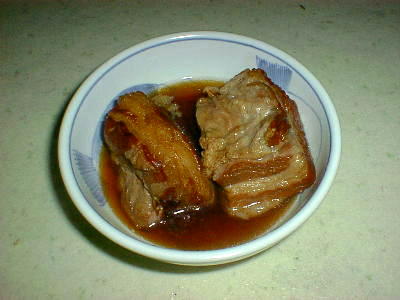
This is the third of a series of recipes for preparing Kakuni.
This particular recipe can be considered as the basic “professional” one, altough it is open to variations as far as spices and presentations are concerned!

INGREDIENTS;

-Large raw pork belly lumps: 1 kg
-Fresh ginger, finely chopped, 1~2 tablespoons
-Japanese sake: 2 cups
-Soy sauce: 2 cups
-Sugar: 2 large tablespoons
-Salt: 2 pinches

NOTE:
One can and ought (according to prefences) to add mirin/sweet sake, star anise, lemon zest, green parts of leeks and so on!

RECIPE:

KAKUNI-RECIPE-3-a

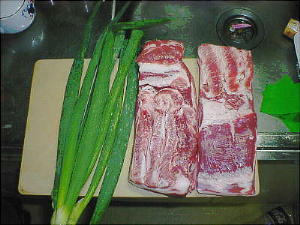
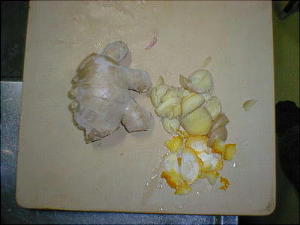
-Get everything prepared first!

KAKUNI-RECIPE-3-b

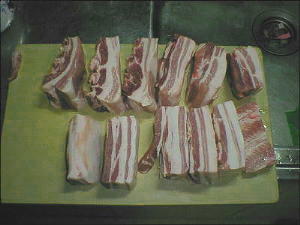
-Cut the pork into about 6cm wide slices.

KAKUNI-RECIPE-3-c

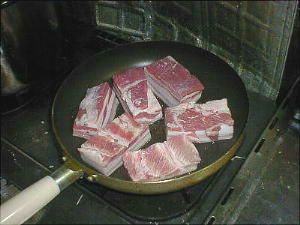
-Fry pork on both sides first. This will help the meat suck in the “juices”!

KAKUNI-RECIPE-3-d

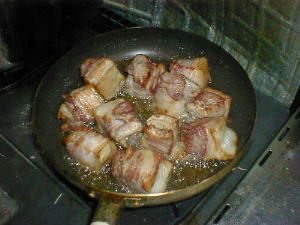
-Fry until the colour above is reached.

KAKUNI-RECIPE-3-e

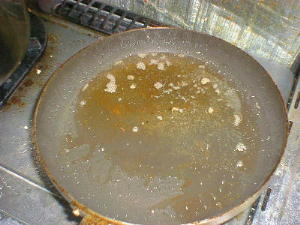
-Scoop out the excess fat, taking care not to run it over the meat.
The picture above shows how much fat can scooped out!
If you use a non-stick frypan, there is no need to add oil before frying the pork, meaning less fat to scoop out!

KAKUNI-RECIPE-3-f

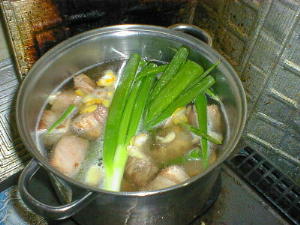
-In a large and deep pan, drop in the meat. Add water just to cover meat. Switch on the fire. You can add water later litle by little to keep it above the meat.
Add ginger, leeks (green part), lemon zest (whole or minced) and star anise.
If you want to make it sweet, add a whole sliced onion!

KAKUNI-RECIPE-3-g

-Make sure that all ingredients are clean. Check that the lemons are not waxed (in that case clean it out!)!

KAKUNI-RECIPE-3-h

-Once brought to a boil, add soy sauce, Japanese sake, mirin/sweet sake and sugar.
Last, add salt (important!).

KAKUNI-RECIPE-3-i

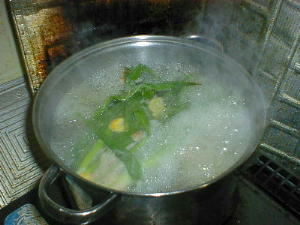
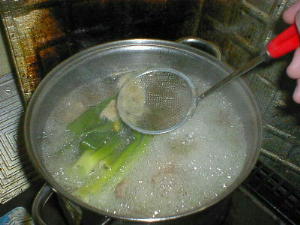
-Lower fire to low and continue scooping out any scum.

KAKUNI-RECIPE-3-j

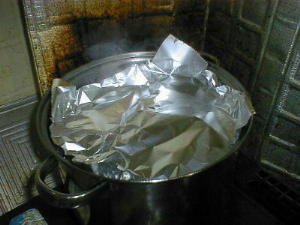
-When no more scum appears, cover with lid or a large piece of foil paper and simmer for a whole hour.
Check from time to time if there is enough soup in the pan. If the soup level goes under that of top of the meat, the taste will become too strong. Add water and Japanese sake until the soup reaches the meat level.

KAKUNI-RECIPE-3-k

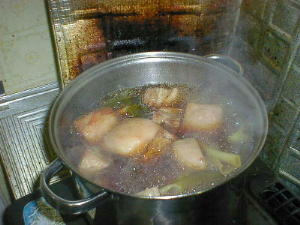
-Above picture shows starting point of the simmering process.

KAKUNI-RECIPE-3-l

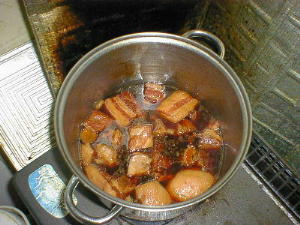
-Above picture shows the finished product inside the deep pan!
Check if the meat is well cooked. A pointed (Japanese-style) chopstick should easily go through the meat all the way.
But this does not mean you can eat it at once.
It is best to switch off the fire, let the cover on, and let it cool completely. Only then, the meat will be fully impregnated with the taste!
It will taste a lot better re-heated before serving it!

Please check the new postings at:
sake, shochu and sushi

—————————————-
日本語のブログ
—————————————-