Tag Archives: 美食

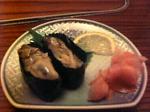
Vegan & Vegetarian Japanese delicacy: “Sea Grapes/Umibudou”


The Japan Blog List

Please check the new postings at:
sake, shochu and sushi

—————————————-
日本語のブログ
—————————————-

umibudou-11

Although not from Shizuoka, this Okinawa delicacy regularly appears in good supermarkets such as Shizuoka JR Station Supermarket and in good Japanese restaurants.

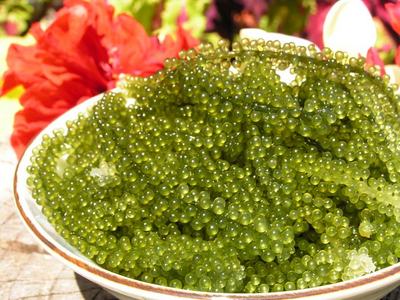
Although called Sea Grapes (Umibudou) for their shape, it is a saweed variety!
Its Latin name is “Caulerpa lentillifera” for the purists.

umibudou-2

Apparently they can be found in some islands an seas in South Eastern Asia and Oceania. World vegetarian and vegans, look out for them (I mean discovere and eat them! LOL)!
The whole seaweed can reach betwen 2 and 5 metres, but only the extremities including the “grapes” are consumed.
In Okinawa where they have been eaten eons, they are also called “green caviar”!
You can eat them raw of course with soy sauce or rice vinegar mixed with mustard.

umibudogunkan

In sushi, as “gunkan/maothership”, they certainly make for great fun and taste!
Beware of counterfeits! No less than the JAS was recently caught selling them in August 2008!
Growing them in Japan has apparently been successful, great news for vegans and vegetarians who will find a great source of iodine and other beneficial elements!
Didi I say it? They are delicious/”oishii”!

Japanese Shellfish Species 1: Torigai/”Large Cockle”


The Japan Blog List

Please check the new postings at:
sake, shochu and sushi

—————————————-
日本語のブログ
—————————————-

torigai1.jpg

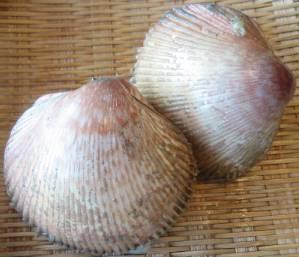
“Torigai” does not have a real name in English. They are approximately translated “large cockle”
They will appear on the market in Spring and earlier in Shizuoka Prefecture. They are mainly found in Tokyo Bay, Ise bay and Seto Inner Sea. Some are imported from Korea, but catches can wildly vary, especially with the occurence of “red tides”. A lot are imported from Aichi Prefecture (Nagoya region) to Shizuoka.

torigai-shellfish

They must be absolutely fresh to be consumed.
One easy way to check if they are still fresh is to slam them on the wooden board. They should immediately retract, even if cut out. They are at their cheapest between March and May.

torigai-nigiri.jpg
(Pic taken at Sushiya No Ichi, Shizuoka City)

They can be appreciated either as “tsumami”/Appetizer with a little grated wasabi and shoyu, or as nigiri.
Beware of torigai with a thin colour! They are not fresh!

Bryan Baird’s Newsletter


The Japan Blog List

Please check the new postings at:
sake, shochu and sushi

—————————————-
日本語のブログ
—————————————-

Baird Beer & Taproom Events Bulletin 2008 #26
bryan-sayuri.gif

Dear Taproom Friend & Baird Beer Enthusiast:

The parade of big winter beers continues with the release on Tuesday, December 23 of an annual Baird Strong Ale Series seasonal: Yabai-Yabai! Strong Scotch Ale.

Yabai-Yabai! Strong Scotch Ale (ABV 7.3%):

Scotland, an historically important center of beer brewing, has a cool climate that favors cultivation of the hardy barley plant. Scottish Ales, thus, tend to feature the rich and robust flavor of malted barley in the flavor profile. Moreover, relatively cool ale fermentation temperatures contribute to brews that are not highly attenuated — i.e. they remain rich in residual sugars and thus round and full-bodied. Strong type Scottish Ales often have been considered “a kind of liquid porridge.”

Baird Yabai-Yabai Strong Scotch Ale is, in a word, rich! It is liquid opulence that verges on decadence. The color is a deep mahogany and the head is dense, creamy and tan. The warming effect begins in the nose, with the wafting of soft fruit esters and warm fusel alcohols. As the aroma dovetails into the flavor, notes of molasses, caramel apples, rum cake and maple syrup perform a holiday festival on the palate. Just as a chewy malt sweetness blankets the mouth, it is pealed back by the ethereal pull of a vinous character reminiscent of port or sherry. One hearty pint is enough to take the bite out of the winter chill. Two pints will leave you toastily, and blissfully, warm. Three pints and…. YABAI!

Yabai-Yabai! Strong Scotch Ale will be pouring from the taps of the Fishmarket and Nakameguro Taprooms beginning at noon on the Emperor’s birthday (Tuesday, December 23). This day is a Japan national holiday so plan to come join us for a few pints and some great holiday cuisine. Yabai-Yabai! also will be served on draught at select Baird Beer retailing pubs and restaurants throughout Japan. Bottle versions (633 ml) are available for purchase through the family of Baird Beer retailing liquor stores in Japan and direct from our website estore.

Remainder: Tuesday, December 23 kicks of a three-day Christmas celebration hosted at our Fishmarket Taproom. Pints of Jubilation Ale (both the 2007 and 2008 versions) will be sold for 500 yen and a special Christmas food menu will be offered. Christmas music and DVDs will be played throughout and small gifts offered to the young ones so bring your kids and enjoy a wonderful family outing.

The Nakameguro Taproom is hosting a Christmas Eve celebration on Wednesday, December 24 that includes a special Christmas food menu as well as 500 yen pints for the lonely and forlorn who find themselves visiting solo.

Stop in and enjoy the Christmas revelry with us at one of our two Taproom locations.

Happy Holidays!

Bryan Baird

Baird Brewing Company
Numazu, Japan
HOMEPAGE

Vegan and Vegetarian Japanese Cuisine: Tofu (part 1)-Preparation


The Japan Blog List

Please check the new postings at:
sake, shochu and sushi

—————————————-
日本語のブログ
—————————————-

zarudofu
“Zarudofu”, my favourite variety of tofu just filtered out in a “zaru/basket”. You just eat it with a spoon on its own. No seasoning needed!

As promised, here is the first posting about tofu.
This article concerns the home-making of it.
The next article will introduce different kinds of tofu and recipes!

Ingredients (for one large piece, one cho/丁in Japanese)

Soy beans: 2 cups (360cc)
Nigari: 2 large tablespoons
(Magnesium chloride is an important coagulant used in the preparation of tofu from soy milk. In Japan it is sold as nigari (the term is derived from the Japanese word for “bitter”), a white powder produced from seawater after the sodium chloride has been removed, and the water evaporated. In China it is called “lushui”.. Nigari or Lushui consists mostly of magnesium chloride, with some magnesium sulfate and other trace elements. It is also an ingredient in baby formula milk).
Water: 5 cups (twice and a half the volume of soy beans)

Utensils:
One large pot
One large clean cloth pouch to press tofu through
One bowl
One mixer
One thermometer
One large piece of gauze to filter water off shaped tofu
One large wooden spoon
One wooden tofu-shaper case

RECIPE:
toofu-1
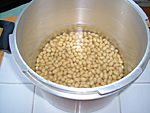
1) Preparation: soak soy beans in water overnight

toofu2
2) Preparation: Mix nigari with 1 cup of water and set aside

toofu-3
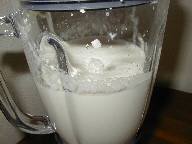
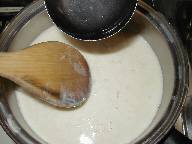
3) According to its size, Pour the whole or part by part soy beans and water (1) and make paste as fine as possible. If mixer runs at an even pace without crushing beans into paste, add more water. The paste obtained is called “namago” (生呉)

toofu-4
4) Pour the bean paste into a large pot with an equal amount of water. Heat stirring all the time. The paste will come to a boil suddenly. Switch off fire. Switch on low once the paste has settled for 10 minutes and take off fire.

toofu-5
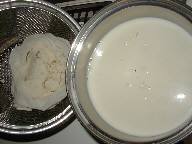
5) Pour paste into the cloth pouch and press. Right of the picture is tofu paste before pressing. Left is pressed out tofu

toofu-6
6) Solidifying (coagulating) with nigari.
Stir tofu over light fire. When the temperature has reached 75~80 degrees Celsius pour in nigari slowly and stir all the time. The solid matter will sink to the bottom and accumulate. The coagulation will be complete when liquid above tofu has become transparent. Stop the operation and let rest for 15 minutes.

toofu-7
7) Arrange the gauze inside tofu a tofu shaper case which should have small holes to let excess water run out.

toofu-8
8) Cover with lid with a weight (or glass of water) of about 250 g and further press out water for 15 minutes

toofu-9
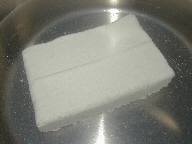
9) Delicately empty tofu in basin filled with called water and leave it there for an hour to take out excess nigari. Store in refrigerator.

Healthier, tastier fried Potatoes!


The Japan Blog List

Please check the new postings at:
sake, shochu and sushi

—————————————-
日本語のブログ
—————————————-

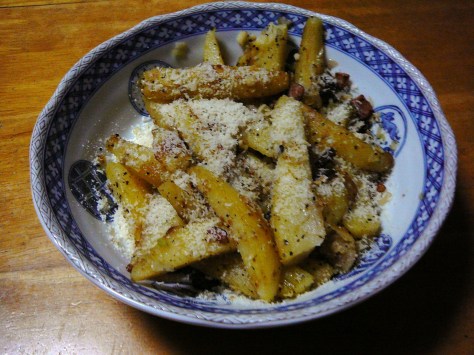
fried-potatoes

Fried potatoes have been temptying us since the 17th Century when the Belgians first experimented cooking them in oil. At the time, deep-frying, imported by Crusaders from the Middle East, was the only absolutely safe way to cook, especially in “flat countries” as Belgium and Holland were called, as water was a bed for all kinds of diseases.
Incidentally, Paris had a good laugh when some time ago a misinformed gentleman proposed than French Fries should be re-named “Freedom Fries” on the White House menus. Sorry, mate, but they are Belgian, not French!

Now, eveyone knows that boiled potatoes are healthy, if somewhat bland in taste, whereas fried potatoes are tasty but hideously high in unwanted calories.
There is a simple method half way which will enable you to enjoy your favourite snack/main dish with a lighter heart (and midriff) and at the same time allow you to serve a savoury dish to your ravenous friends or family! (But don’t overeat them!)

INGREDIENTS
(for 2 to 4, depending whether it is an accompaniment or full dish):
-4 large potatoes
-1 large echalotte/shallot (if unavailable, half a red onion is great!), finely chopped
-3 cloves of garlic, finely chopped
-Bacon (vegan and vegetarians, please skip this keeping in mind you will have to add a little salt)-1 large rasher cut in small pieces (half a cm square or half the size of your little finger nail, cut short!)
-Parmesan/Parmiggiano Cheese (vegans, please skip this or use alternative), freshly grated, 3 large tablespoons.
-Salt (for the potatoes boiling water, otherwise as little as possible, as bacon and cheese will contain enough!)
-Pepper, nutmeg. Foodies who like their food Indian-style may add a little powdered curry mix and chili pepper.
-Olive oil: 2 large tablespoons

RECIPE:
-Boil potatoes in plenty of salted water. If you do not add salt to the water, the potatoes will end up very bland in taste.
-Once the potates are boiled at about 80%, plunge them into cold water. This little trick will prevent them from breaking up later.
-When potatoes are cold enough, peel and cut them in wedges (the size is up to you).
-In deep enough frying pan dry-fry (no oil added) the chopped bacon until it becomes a nice crisp and dark. Put aside on a small dish. For non-vegan/vegetarians, do not wipe the pan, or you will miss a lot of taste!
-Pour two large tablespoons of olive oil in the same frying pan. That is enough, and the oil will be “sucked in” by the potatoes with the result that the potatoes will not be “greasy”. Use olive oil, extra virgin, as this is best, not only for taste, but for health (the vitamin C contained in olive oil do not disappear even cooked for a long time).
-When potatoes have almost reached the wanted colour, drop in shallots, garlic, fried bacon, pepper, nutmeg (and salt if you absolutely must use some!). Toss-fry until shallots have turned transparent.
-Pour the lot into a serving dish and sprinkle parmesan over it.
Enjoy at once!

Sometimes, simple is best!

Japanese Oysters


The Japan Blog List

Please check the new postings at:
sake, shochu and sushi

—————————————-

Oysters! One would be hard put to find a produce from the sea more internationally recognized as a gourmet’s choice! Moreover, it is the only shellfish you could survive on if you get marrooned on a desert island! It is a complete food in irself if consumed raw.
For a long time (that is before coming to Japan), I had thought that my country, France, was the place to eat them. Well, I must admit that it was a little pretentious from me, especially in the light that more than half of the oysters consumed back at home originated from Japan!

Now the Japanese have come with many ways of appreciating them:
-As in the picture above they would eat them as sashimi with a dash of wasabi and soy sauce.

-Or just a little lemon juice as in Europe, Americas or Oceania.

-Or in another Japanese fashion, with ponzu and momijioroshi (fresh grated daikon mixed with chili pepper. Succulent!)

-Or, and here Japanese and foreigners are simply crazy about them, as “kakifrai”, deep-fried oysters in batter and breadcrumbs with a nice tartare sauce!

-Or finally, and I would recommend the experience to all foreigners, as “kaki-gohan”, either with oysters steamed together with the rice, or cooked apart in light broth poured over a bowl of freshly steamed rice!

kaki-nigiri kakigunkan

Of course, any good sushi restaurants will serve oysters as nigiri or gunkan!

In Japan, oysters come from various areas, mainly Hiroshima, Iwate and so on.
As for Shizuoka Prefecture, oysters mainly come from Hamanako inland salted lake near Hamamatsu City.

Japanese Sushi: Gunkan/Mothership


The Japan Blog List

Please check the new postings at:
sake, shochu and sushi

—————————————-

gunkan-ikura.jpg

Intestingly enough, for all the fame of sushi and (California) rolls (maki), a very popular form of Sushi in Japan is almost ignored abroad.
Gunkan or “Mothership” in Japanese is a typically Japanese way of serving ingredients which would be difficult to serve on top of a nigiri.
They are usually made by wrapping a piece of “nori”/dry seaweed around a ball of rice/shari with plenty of space left on top to fill.
The advantages are multiple. The nori/seaweed is crisp. You eat the whole in one go with your fingers (clean your hand first!). And they make for beautiful decoration!
Some people do not appreciate the “nori”, but it could be replaced with very thin strips of daikon, cucumber, zucchuni and so on.

Here are some samples of “gunkan” I have eaten over the years:
gunkan-ikura.jpg gunkan-kanisalada.jpg gunkan-kanitsume.jpg
Ikura/Salmon roe Kani Salada/Crab salad Kanitsume/Crab pincers

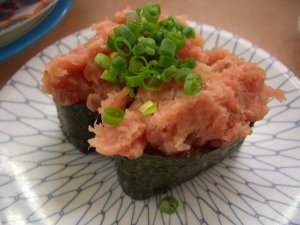
gunkan-kobashira.jpg gunkan-mizuna.jpg gunkan-negitoro.jpg
Kobashira/Round Clam round twin muscles Mizuna/A Japanese thin leaf vegetable + quail egg Negitoro/finely chopped tuna and thin leeks

gunkan-shirako.jpg gunkan-takuan.jpg
Shirako/Whiting-male cod sperm sacs Takuan/Pickled Japanese daikon + cucumber

gunkan-shirako2.jpg
“Shirako” (Cod Whiting) for a repeat.

gunkan-benisuwai.jpg gunkan-mitsukuruebi.jpg gunkan-kobashira2.jpg gunkan-namakarasumi.jpg

“Benisuwaigani” (Red Suwai Crab), “Mikkuriebi” (Mikkuri Shrimp, a variety of sweet shrimp, delicious in spite of the colour!), “Kobashira” (Muscle from the “Bakagai” Shellfish), “Nama Karasumi” (raw mullet roe)

gunkan-ooenkougani.jpg gunkan-akahada.jpg gunkan-sakuraebi.jpg gunkan-shirasu.jpg

“Ooenkogani” (Ooenko Crab, featuring body flesh, red brins and pincers flesh!), “Akahada Tsurutsuru”, a seaweed gunkan! It is a red seaweed variety), “Sakura ebi” (Sakura Shrimp, the pride of Shizuoka Prefecture!), “Nama Shirasu/Umeiwashi” (raw whitebait from “Ume” sardines)

gunkan-bafununi.jpg
“Gunkan” can be presented on individual plates for better effect!
gunkan-bafununi.jpg gunkan-murasakiuni.jpg gunkan-uni.jpg
The three above are varieties of sea urchins: “Bafun uni” and Murasaki Uni”, whereas the last last show both gunkan and nigiri.

gunkan-egani.jpg gunkan-ibaraganimodoki.jpg gunkan-matsubagani.jpg
Above are three types of crabs: “Egani”, Ibaraganimodoki” and Matsubagani”

gunkan-kagabai.jpg gunkan-nejinukibai.jpg gunkan-sazae.jpg
Three shellfish varieties: “Kagabai”, Nejinakubai” and “Sazae” (Turbo Shell)

gunkan-hoteiuo.jpg gunkan-konago.jpg gunkan-muroaji.jpg
We go to fish varieties: “Hoteiuo” roe, “Konago”, and “Muroaji” (horse mackerel variety)

gunkan-noresore.jpg gunkan-shiraebi.jpg gunkan-sunaebi.jpg
“Noresore” (baby conger eels), and two shrimp varieties: “Shiraebi” (white shrimp) and “sunaebi” (sand shrimp)

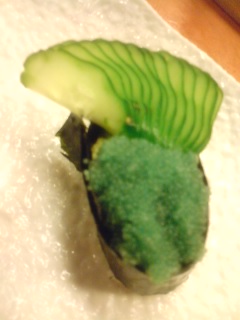
oda-4.jpg
We were fortunate enough to find those “botan ebi/large sweet prawns” fresh with their eggs. Two provided enough eggs for a single “botan ebi ko gunkan”.Not an easy treat to find, as it must absolutely be fresh. The eggs were sweet with not any disagreeable “fishy” background. By the way, this is the only sushi featuring the colour “blue” that comes to my mind!

For more about sushi check Shizuoka Sushi!

Salmon Trout Pie


The Japan Blog List

Please check the new postings at:
sake, shochu and sushi

—————————————-

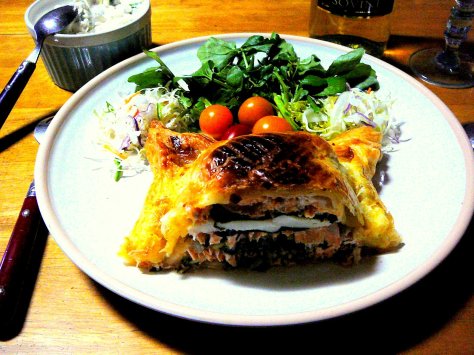
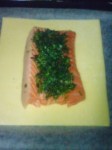
salmon-pie-1

With cold weather prevailing, one expects a hearty hot meal back home from a long work day.
I personally cook dinner twice or three times a week at the most, but I can guarantee you that the Missus does expect a proper meal if I happen to be back home for her!
The problem is that I tend to cook too much, and I consequently end up finishing both plate to the detriment of my waistline! LOL.
In winter reasonably-priced salmon trout is readily available, and taking in account my partner’s inordinate love for salon, it is easy enough to please her!
Here is what I concocted for her last week Friday:

INGREDIENTS (for 2 to 4 persons depending on your appetite!)
-Salmon trout: a large (~15 cm long) piece/filet. Cut the ends square if needed. The small bits can be put on top wherever to adjust the level of the contents. Pare off all the excess fat as it tends to sog the pie. In any case cooked fish fat is not appealing either in shape or taste!
-Frozen pie sheets: 2 large enugh to leave necessary margin around the fish.
-Lemon juice: 1 large lemon juice squeezed into a small glass.
-Fresh basil: 20 leaves, finely chopped/cut.
-Fresh Italian parsley: 10 sprigs, finely chopped/cut.
-White mushrooms (other varieties are fine),: 4 large, finely chopped.
-Fresh shiso/perilla leaves: 12 large. If not available, use 24 salad spinach leaves. Boil them in salted water for 15 seconds. Spread on kitchen paper to suck off as much water as possible.
-Scallops: 4 large, sliced in two.
-Egg: 1 large, beaten.
-Shallot/Echalotte: 1, large, finely chopped.
-Garlic: 2 cloves, finely chopped.
-White wine: 50cc/one quarter cup.
-Olive oil: 2 large tablespoons.
-Salt, pepper, nutmeg to taste. You may add (or do without) spices according to taste and tradition.

RECIPE:
-Pour oil in a non-stick fryig pan. Drop in chopped shallots and garlic. On a medium fire, when shallts are becoming transparent, add half of the lemon juice and all the wine. Stir. Lower the fire to gentle, drop in chpped mushrooms, a little sale, pepper, nutmeg and spices. Slowly fry until there is almost no juices left. Take off fire, pour the lot on a flat plate and let cool off.
-Preheat oven to 210 degrees C. (about 420 Degrees F)
-Spread one pie sheet onto a large piece of cooking paper laid over the oven plate.
-Cut salmon trout into 3 equal “sheets/layers” with a large sharp knife. Spread bottom slice on pie sheet. Brush it lightly with lemon juice. Sprinkle a little salt and pepper.

salmon-pie-2
-Spread chopped basil and Italian parsley on top. Then spread fried vegetables, taking care to include as little juice as possible.
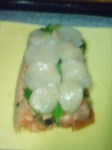
salmon-pie-3
-Spread second slice of salmon trout on top. Brush with a little lemon juice and sprinkle a little salt and pepper. Spread half of the perilla leaves (or spinach) on top. Spread the sliced scallops on top. Brush with a little lemon juice. Spread the remaining leaves over the scallops.
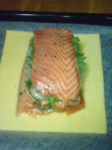
salmon-pie-4
-Spread the last slice of salmon trout over the top. Brush with a little lemon juice and sprinkle a littlle salt and pepper.
salmon-pie-5
-Brush beaten egg over th uncovered parts of the pie sheet.
Spread the second pie sheet over the whole, strching it carefully as to fall eaqually onto the bottom pie sheet. Press “margins” (I do it with a fork) and roll them so as to “close” the pie.
Brush the whole surface with beaten egg (the more, the better!).
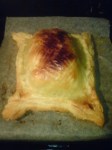
salmon-pie-5_0001
Cook at 210 degrees for 15minutes, then lower to 160 degrees (about 290 degrees F) for 15 more minutes. Cook a little while longer if you are not satisfied with the colour of the pie.

Served with cream dressing and a tossed salad, it should satisfy any appetite.
Serve with white wine or sparkling wine!
Enjoy!

Japanese Seasonal Fish: Sole/Hirame


The Japan Blog List

Please check the new postings at:
sake, shochu and sushi

—————————————-

hirame.jpg

“Hirame” could be translated in many ways depending of your country of origin: Flat Fish, Sole, Turbot (although the latter should define “karei”) and what else. There are many varieties, wild or humanーfed. In Japanese, the names are numerous: Hirame, Shitabirame, Ooguchikarei, oyanirami, etc.
The best season is Autumn to Winter. They are still available until Spring in Shizuoka Prefecture. Wild ones come from Hokkaido and Aomori. Human-fed ones mainly hail from Oita, Ehime, Mie, and Kagoshima Prefectures.
hiramesashimi.jpg
The domestic wild catch is around 7600 tonnes a year, while human-fed fish amount to around 7100 tonnes a year. A recent increase has been observed in recent years, though. A lot are imported from Korea through Fukuoka and Shimoseki.
hirame-nigiri.jpg
Hirame can be enjoyed as sashimi, cut in various thickness, according to the chef’s preference and presented artfully.
I like both sashimi and nigiri, but in the case of nigiri, I have a marked preference (see pic above taken at Sushi No Ichi, Shizuoka City): Seasoned with a little lemon juice or yuzu (if available) and salt (preferably “snow salt” from Okinawa), eaten as it is with no shoyu!

Taky’s Cake Shop & Cafe


The Japan Blog List

Please check the new postings at:
sake, shochu and sushi

—————————————-
日本語のブログ
—————————————-

takys-1

Taky’s in Takajo Machi, Shizuoka City is not your run-of-the-mill shop as it actually combines no less than four functions: Cafe, Confectionery (Cake shop), Restaurant and even Bar.

takys-3

Mr. Takuya Hanai opened his tiny establishment on September 9th, 2007 with a novel view, that is, satisfying customers with different needs at different times of the day.

takys-2

First of all, and most of all, it is a confectionery (cake) shop. The originality is that you just do not know what will be on offer on the day you visit the place! Mr. Hanai prepares cakes according to the season, availability and his whims!

fig-walnut-tart11 marron-tart1 takys1 caramel-poire-1

10 years of experience working in hotels and bakeries certainly shaped his character. In any case expect at least 3 different cakes every day.

As for lunch and dinner, he proposes Japanese-style curry, pasta and sandwiches. Fresh toasted sandwiches take-out orders are welcome! Certainly a rare treat for unhurried guests!

Regulars vary on the time, too, when you will see ladies sitting at counter (6 seats) or at the single table (for 4) at lunch or tea time, and adults at dinner and bar time when you can drink wine, beer and even shochu!

As for me, as Taky’s is conveniently located near my work, I make a lot of poeple happy every week!

TAKY’S
420-0839 Shizuoka City, Aoi Ku, Takajo, 1-11-10
Tel.: 054-255-2829
Opening hours: 11:00~22:00
Closed on Sundays & National Holidays

Mussles in Curry Cream Sauce


The Japan Blog List

Please check the new postings at:
sake, shochu and sushi

—————————————-
日本語のブログ
—————————————-

Mussles are ever becoming popular all over the World and become more acaailable, fresh or frozen.
Last Friday night, my usual night out (alone) which had to be postponed because of my numerous commitments the week after, ended in my cooking dinner for the Missus. As soon as I reached Shizuoka JR Station back from University I visited JR Station Parche Big Supermarket in search for fresh oysters. Apparently they were sold out and had to rethink our dinner, when I found some Japanese grown fresh mussles which gave me a good idea.

Incidentally, keep in mind that contrary to oysters, wild mussles should be avoided!

Mussles in Curry Cream Sauce

Ingredients:

-Mussles: 3~4 dozens (wash and brush them first under running water and pull “roots” out)

-Shallot (echalotte): 1, finely chopped
-Garlic: 3~5 cloves, finely chopped
-Ciboulette (very thin chives): a “bunch (see above pic)
-Basil: a “fistful”
-Lean Bacon: a slice, cut into small pieces

-Sour cream: a glass (Half a cup), 120g

-Noilly: a glass (half a cup). If unavailable, any sweet wine will do.

-Curry paste (possibly Garam Masala): 1 large tablespoon
-Olive oil: 2 large tablespoons
-Pepper: to taste.

N.B.: No need for salt as there is already plenty in the bacon and curry paste!

Recipe:

In a deep large deep pan pour the oil and heat over medium fire. Drop in shallots and garlic and fry until shallots turn transparent. Pour in Noilly, curry past and pepper. Mix well. Drop in all the mussles. Cover with a glass lid.
When all the mussles have opened (discard the ones that haven’t later), drop in the sour cream and mix well. Let cook for a minute, then add ciboulette and basil. Stir. Serve at once.

Make sure you have prepared a dish for the dicarded shells. They are more easily eaten with your fingers, so keep a finger bowl or wet towel handy.

Now, you will be left with a lot of good sauce which would be a shame to throw away. Last Friday I prepared spaghetti for my pasta-crazy Missus and mixed them into the sauce with a little olive oil. My personal choice would have been the sauce poured over boiled potatoes (instead of fried potatoes usually served back home). Otherwise it could become the base for a soup. If you find the sauce a bit too strong, mix in some yoghurt.

Bon appetit!

Japanese Food Humor!


The Japan Blog List

Please check the new postings at:
sake, shochu and sushi

—————————————-

one-noodle1
(Sorry, mate!
this might be the best noodle, but you can get only one!)

In Japan, like in many non-English speaking countries (not a general rule, mind you!), one can find some humorous gems when people feel the need to use English for whatever PR purposes!
The above noodle example is a fairly tame one!

junk1
But advertizing “Junk Food” might be going a bit too far!


Too much writing can only take you that far!


This “Marine Choir” is not only strikingly funny, it is a real piece of art!

sushi-eraser.jpg
You might have a hard time using those erasers!

heart-space.gif
Heart Space? No comment!

gargoyle-bar.jpg
That Bar is definitely tempting!


True! This is the name of a bar in Fujieda City!

pick-up.gif
Who’s on the pick up? I wonder, …

atago.gif
Keep your paws off the grub, mate!

smorking.jpg
Not only customers are invited to smoke in this cheap cafe, but English teachers might do some good work there!

sushi-bus-1.jpg
Sushi is very popular in Shizuoka City, even on the buses!

shizuoka-pic02.jpg
Outrageous Recipe?

For more fun, visit Shizuoka Pictures!

Shochu: the way to drink and taste it!/ Parlons de la dégustation du SHOCHU


The Japan Blog List

Please check the new postings at:
sake, shochu and sushi 

Version français ci-dessous !

—————————————-

kampai-shochu.jpg
Kampai!

I’ve been asked a few times already about shochu and how to drink it.
Shochu is distilled spirit as opposed to Japanese sake which is a fremented drink.
Like Japanese sake, shochu, if made in proper clean environment is an alcohol that both vegans and vegetarians can enjoy!
For extensive information on Shochu made in Shizuoka Prefecture (38 found so far by 10 breweries!), check Shizuoka Shochu!

If you use shochu simply as an additive, or to quickly reach an irresponsible inebriety, just skip reading the following!

-Shochu comes in four main varieties: imo/tubers, mugi/wheat-grain, kome/rice and finally in what I call “fancy shochu” (which is not a detrimental term at all!).
The latter includes green tea (the best is from Shizuoka Prefecture), buckwheat and what else.

-So, first decide on the variety. As far as quality is concerned, shochu in Shizuoka Prefecture is only produced by Sake Brewers, which means higher quality and dependability.
-Once you have chosen your baby, first pour a tiny bit inside a normal glass, turn it around until the bouquet (smell) reaches your nostrils (smokers, get out of here!). Taste it at room temperature. It will give you a kick, but you will learn its true character.
-Next, if you are a true shochu lover, fill a large glass with ice (one very large block is best), pour a reasonable quantity of shochu on it, and drink it slowly through (or around) the ice. As the ice slowly melts, the shochu taste will subtly change, giving you an indication, whether you want to drink it straight, on the rocks, or with a certain amount of ice and water, or added with warm water.
-After all, you are in Shizuoka, so why don’t you try the “Shizuoka Hai”. Pour hot or ice-cold Shizuoka green tea, or better, mixed with powdered “macha” tea. You might get hooked!
-The other step is to find what goes best with shochu (as regards your personal taste): ginger ale, oolong tea, soda,… There is no end to it!
Enjoy!
Robert-Gilles

Kampai!

I

Cela fait plusieurs fois que l’mon demande comment boire le shochu, qui est un alcool distillé, contrairement au saké qui lui est fermenté. Tout comme le saké, que l’on appelle plutôt nihonshu, le shochu a bien des qualités, et y compris celles du respect de l’environnement. Jetez un oeil à notre autre blog ici pour plus d’informations (en anglais) sur les variétés de Shizuoka: Shizuoka Shochu! A Shizuoka on a pour l’instant selon mes comptes 38 variétés pour 10 distilleries.

Si vous vous servez du shochu pour cuisiner ou pour vous faire tourner la tête vous pouvez éviter de lire les paragraphes qui suivent !

On a principalement 4 variétés de shochu : Patates/tubercules, blé (mugi), riz (kome) et ensuite ce qu’on pourrait appeler les shochu fantaisie (avec tout le respect et la considération que j’ai pour eux néanmoins ! )

Je pense qu’il faut déjà penser à la variété. Bien que la qualité soit un facteur tout autant essentiel, dans Shizuoka tous les shochus sont fabriqués avec conscience par les distilleries de saké, donc très fiables.


Quand vous aurez choisi votre petit bébé, mettez-le dans un verre et faites le tourner jusqu’à ce que l’odeur pénètre vos narines (évitons de fumer en même temps). Dégustez-le à température ambiante si vous voulez bien faire connaissance avec lui, même si cela devrait vous mettre un coup de fouet.

Si vous êtes un vrai amateur de shochu, remplissez un verre avec de la glace, un gros glaçon est l’idéal, mettez une quantité “raisonnable” de shochu à l’intérieur et buvez-le ainsi. Avec la fonte du glaçon, le goût du shochu se verra aussi modifié ce qui devrait vous donner aussi plus d’informations sur la manière idéale de le déguster (mélange d’eau, plus de glaçons, avec de l’eau chaude, de l’eau pétillante)…


Après tout si vous êtes à Shizuoka, n’hésite pas le Shizuoka Hai, à base d’eau chaude ou froid et de thé vert de Shizuoka ou encore mieux avec du Macha ! Vous pourriez vous laisser prendre 🙂

Enfin il existe plein de manières d’agrémenter son Shochu : Gingembre, thé oolong, soda etc… !
Bryan Baird’s Newsletter


The Japan Blog List

Please check the new postings at:
sake, shochu and sushi

—————————————-
日本語のブログ
—————————————-

Baird Beer & Taproom Events Bulletin 2008 #24
bryan-sayuri.gif

Dear Taproom Friend & Baird Beer Enthusiast:

The holiday season is upon us. Jubilation is in the air. Jubilation also is in the glass! Yes, Friday, December 12 marks the 2008 debut of a Baird Beer holiday classic — Jubilation Ale. It also marks the release of a specially festive first-time Baird Beer brewed at the request and with the cooperation of the fine liquor store, Nakaya: Autumn Harvest Blueberry Ale.

(1) Jubilation Ale (ABV 7%):

This is our annually crafted holiday season ale. It’s hallmark flavor stems chiefly from the addition of two special ingredients: (1) fully ripened figs candied in Japanese red sugar and (2) cinnamon twigs culled from a Japanese Nikki tree. A sublimely balanced interplay of sweet and spice results. The ruby red hue and the wafting aroma of Japanese nikki warm the heart and furbish the soul.

This year we are unveiling a newly designed label for our Jubilation Ale that, we think, captures the spirit and flavor of this celebratory ale in a very esthetically pleasing way. (Thanks go to our talented and loyal designer, Ms. Eiko Nishida, for her splendid work). Fifty of these 633 ml bottles will be specially gift-wrapped and available for purchase direct from our brewery. The cost is 1,200 yen and limit one per person. To reserve one of these gift bottles, please contact directly either the Fishmarket or Nakameguro Taprooms. Pickup and payment for your reserved bottle can be made at either Taproom beginning Friday, December 19.

Non-gift wrap bottles (633 ml) are available for purchase through the Baird Beer estore as well as through the fine family of Baird Beer retailing liquor stores in Japan. A limited number of 2007 edition, long-maturation bottles (360 ml) of Jubilation Ale also will be available for purchase through these channels. The flavor comparison between the two years is highly interesting. Draught versions of Jubilation Ale 2008 will be pouring from the taps of Baird Beer retailing pubs and restaurants throughout Japan beginning Friday, December 12 (including at our own Fishmarket and Nakameguro Taprooms).

(2) Autumn Harvest Blueberry Ale (ABV 6%):

What do you get when you combine a passionate Isehara beer-retailing liquor store, fresh Kanagawa prefecture blueberries, and a devoted fruit beer craft brewery? Of course, you get a great idea for an interesting beer. Autumn Harvest Blueberry Ale is the final product of that idea. Brewed exclusively with European base malts and Japanese sugar, lightly hopped with English Fuggles, and dosed with loads of hand-crushed Kanagawa blueberries, Autumn Harvest Blueberry Ale is piquant and effervescent — a fruited beer champagne, if you will.

633 ml bottles of this gorgeous elixir are being sold exclusively through the online estore of liquor shop Nakaya (please visit http://www.craftbeers.jp). Draught versions are available for sampling at three locations: (1) Craft Beer Bar in Yokohama, (2) Nakameguro Taproom in Tokyo and (3) Fishmarket Taproom in Numazu.

Finally, please mark your calendar for upcoming events at the Nakameguro and Fishmarket Taprooms.

Nakameguro Taproom:

*Wednesday, December 24 (hosting a Christmas Eve celebration that includes a special menu and an appeal to all the loveless and forlorn — 500 yen pints for all those who visit by themselves. Christmas Eve in Japan is not just for the love birds!).

*Wednesday, December 31 (hosting a New Year’s Eve countdown party that features all-you-can-drink Baird Beer and an all-you-can-eat light buffet for only 5,000 yen per person. Party begins at 7:00 pm).

Fishmarket Taproom:

*Tuesday (National Holiday) December 23 – Thursday, December 25 (hosting a three-day Christmas celebration that features a special Christmas food menu, a vertical draught tasting of Jubilation Ale 2007 and Jubilation Ale 2008, and 500 yen pint servings of Jubilation Ale for the entire 3 days).

Wednesday, December 31 (hosting a New Year’s Eve countdown party that features our traditional an all-you-can-eat Mexican buffet for only 1,000 yen per person and 500 yen Baird Beer pints. Buffet begins at 5:00 pm and ends at 10:00 pm. 500 yen pints run through the entire evening).

Cheers!
Bryan Baird

Baird Brewing Company
Numazu, Japan
HOMEPAGE

Japanese seasonal Fish: Saba/Mackerel


The Japan Blog List

Please check the new postings at:
sake, shochu and sushi

—————————————-

saba1.jpg

Mackerel or saba, not to be confused with sanma/mackerel pike, is a fish eaten over the whole Northern Hemisphere and does come under many varieties and names.
In Japan it is mainly called “Saba”, “Masaba” or “Sekisaba”.
“Saba” is written 鯖 in Japanese, that is a combination of kanji characters for “fish” and “blue”!
Here, it is mainly caught off Oita, Saga Prefecture (Kyushu), although quite a few are caught off our coasts. They feed on plankton mainly.
saba-yaizu.jpg
(mackerel catch in Yaizu Harbour)
They are prepared and cooked in many guises.
In France, my birthplace, they are steamed and then pickled in white wine and spices. In Northern Europe they are also eaten half raw as smorgasbrod and pickled fish.
It can be appreciated as sashimi, but it must be absolutely fresh and is best served with grated fresh ginger and lemon:
saba2.jpg
As far as sushi is concerned, “masaba” variety is best:
saba3.jpg
It is especially popular as “oshizushi” (pressed sushi).
My preference goes for konbu zume saba. the mackerel is kept inside a variety of wet seaweed for an hour or so before put whole on top of a long “bar” of rice, then cut to size:
saba-sushi.jpg
(picture taken at Tomii estaurant, Shizuoka City)