Tag Archives: Gourmet

Japanese Seasonal Fish: Noresore/Conger Eel Whitebait


The Japan Blog List

Please check the new postings at:
sake, shochu and sushi

—————————————-
日本語のブログ
—————————————-
noresore4.jpg

“Noresore” will soon appear at some select fish markets, and as it will be a very short season, you will have to keep your eyes open!
Noresore stands for very young conger eels. They are called different names depending on regions: “Berada” in Okayama Prefecture, “Tachikurage” in Misaki, “Nagatankurage” in Wakayama Prefecture
In Shizuoka, they mainly come from Hamana Lake, a seawater lake west of the Prefecture, famous for its oysters, eels and clams.

noresore2

5~6cm long, they are practically transparent, save for their eyes. They emit no smell. In our Prefecture they are available only during the first two weeks of March. They are slowly but surely becoming a rarity wherever in Japan, and people come from afar just for the experience!

nresore3

Before serving them, lightly wash them in clean salted water.
As sushi, put them on top of “gunkan”, or a rice ball if you are an expert, with freshly grated ginger and chopped thin leeks.
I like them best served as they are with a little “ponzu or “yuzu” vinegar, a dash of “momijioroshi” (freshly grated daikon and chili pepper) and some chopped thin leeks for a last touch of colour!

Vegan and Vegetarian Japanese Cuisine: Tofu (2)-Varieties


The Japan Blog List

Please check the new postings at:
sake, shochu and sushi

—————————————-
日本語のブログ
—————————————-

zarudofu
“Zarudofu”, my favourite variety of tofu just filtered out in a “zaru/basket”. You just eat it with a spoon on its own. No seasoning needed!

This is the second article dedicated to some of the many varieties of that celebrated food, tofu. A third article is in preparation as for recipes!

tofu-kinds-10
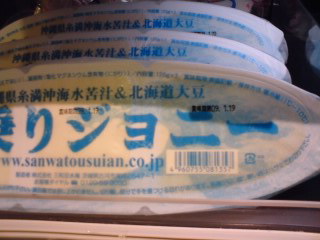
Okinawa Tofu

Tofu comes in various degrees of firmness.
The softest are “Zaru dofu” (see pic above) and Okinawa-style tofu.

tofu-kinds-7
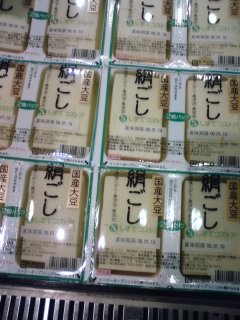
“Kinu Goshi Tofu”

Next come “Kinu Tofu/Kinu Goshi Tofu”/Silk-sieved tofu. It can be used for almost any recipe, although you might have to press it as it contains a lot of water.

tofu-kinds-9
“On Tofu”

“On Tofu” is similar to “Kinu tofu”, but it has been conceived as it its name indicates for being eaten hot or warm instead of cold.

tofu-kinds-6
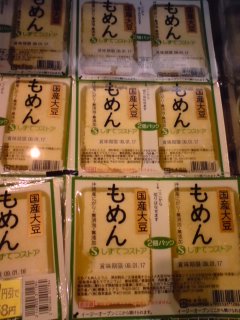
“Momen Tofu”

“Momen Tofu”/”Wool Tofu” contains less water, is firmer and is perfect for “Nabe/Japanese Pot-au-feu”.

tofu-kinds-8
“Yaki Tofu”

“Yaki Tofu/Grilled tofu” (not to be confused with deep-fried tofu) is usually “Momen tofu” grilled to give it the “gratine” look. Tasty, it is particularly interesting when sauteed with vegetables and so forth in Japanese, Chinese, Korean or Thai food.

tofu-kinds-1
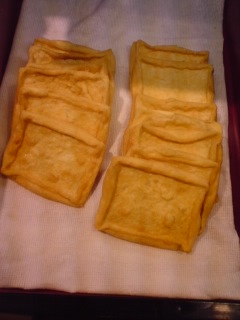
“Yawarakaage or Yawarakai Aburaage”

Tofu can be bought cooked/deep-fried in many manners.
“Yawarakaage” is tofu deep-fried into a thin sheet which can be opened as a pouch like in:

inari-tofu
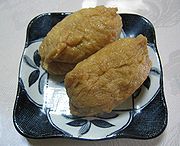
“Inari”

“Inari” is “Yawarakaage”, which has been first marinated in mirin, soy Sauce and sugar. Do ask about its preparation as some companies or individuals add dashi, which is usually not vegan or vegetarian!

tofu-kinds-2
“Namaage”

“Karaage Tofu/Deep-fried Tofu” comes in many forms.
The above “Namaage/Deep-fried raw” is the most common.

tofu-kinds-3
“Kinu Namaage”

“Kinu namaage” is great for the contrast between a solid outside and vey soft inside.

tofu-kinds-4
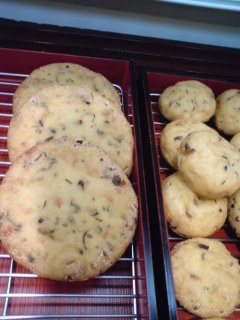
“Ganmo” and “Kyo-Ganmo”

“Ganmo” is Tofu that has pressed to almost dry, then broken into very small lumps to which one added cooked carrots, Hijiki sweet seaweed, grated yam, a little sugar (not always), shaped into a ball and lightly deep-fried. Great, heated again with vegetables and a swet and sour sauce, or in whatever recipe you might imagine. “Kyo-Ganmo” is the smaller Kyoto-Style variety. Ganmo should be made exclusively with vegetal matter, but do ask if you are not sure!

tofu-kinds-5
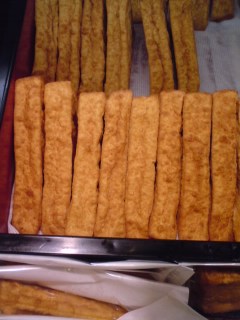
“Tofu Doughnuts”

Yes, you have read it, “Tofu Doughnuts”, very popular with kids!

Other varieties:
-“Okara” is hard-pressed, almost dry tofu sold broken into very small lumps.
-“Yuba” is the “skin” appearing on top of the pan when tofu is being prepared. Very popular served cold with all kinds of ingredients.
-“Koya” is hard-pressed tofu sold marinated. Now, as it contains fish stock dashi, it is not suitable to vegans or vegetarians.
-“Kuro goma tofu” or “Shiro goma tofu” (Black and white sesame curd) are not made with soy beans but sesame, although they make for great food for vegans and vegetarians.

There are many other “fancy” varieties, but I cannot guarantee their suitability to vegans or vegetarians!

Enjoy!

Blue-Fin Robin and Scampi baked in Foil Paper


The Japan Blog List

Please check the new postings at:
sake, shochu and sushi

—————————————-
日本語のブログ
—————————————-

blue-fin2
Pic kindly upgraded by Jay Gustafson!

Last Friday, on my way back from University, I visited the big Parche Supermarket inside Shizuoka City JR Station as I wanted to cook some seafood for the Missus that night!

houbou2

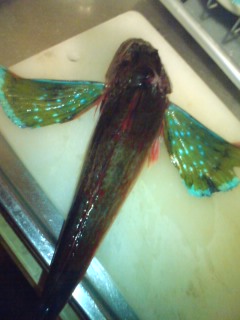
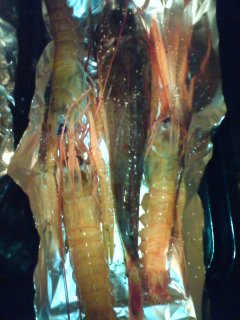
I was lucky to find a couple of medium-sized “Houbou/Blue-Fin Robin” for a little over 4 US$. This fish was caught off the western part of Shizuoka shore. I also discovered a few great value fresh “Te-naga Ebi/Scampi” caught in Suruga Bay (Shizuoka Prefecture). I only needed to check with the vegetables stand nearby and I was back home!

houbou3

Things are (most of the time) best when kept simple.
I had had the fishmonger dress the fish beforehand, so I needed only to make a couple of shallow cuts across the skin.
In two separate large sheets of foil paper, I place one fish (seasoned with salt and pepper) in the middle, flanked it with two (on the the left) and one scampi (on the right), filled the upper right corner with plenty of fresh basil and dill. I placed mini asparaguses and large fresh broad beans along them, added a good portion of white wine, a little olive oil, some freshly pressed lime juice and a good measure of sweet and hot Thai sauce.
I closed the foil tightly around the whole and baked it on grill at 250 degrees Celsius for 25 minutes.
Served at once, they made for a great and light dinner enjoyed with white wine (for the Missus) and Japanese sake (for me!)

Today’s Lunch Box/Bento (’9/2)


The Japan Blog List

Please check the new postings at:
sake, shochu and sushi

—————————————-
日本語のブログ
—————————————-

bento-09-01-13a2

Yesterday was a National Holiday in Japan, and instead of going to work with a bento, I ended up eating and drinking too much with the Missus at a friend’s home!
I requested for a light bento and was offered the following:

bento-09-01-13b1

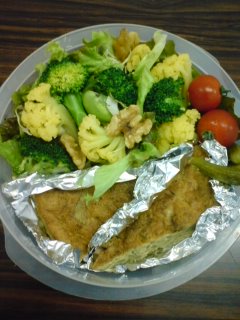
Vegetable quiche leftovers (I cooked it myself yesterday). and plenty o vegetables including yellow cauliflower locally grown, lettuce (local,too), midi tomatoes, cornichons and walnuts.

bento-09-01-13c1

And the last (toasted) slice of home-baked bread (containing walnuts)!
Simple and ample!

Vegetables Facts and Tips (4): Carrots


The Japan Blog List

Please check the new postings at:
sake, shochu and sushi

—————————————-
日本語のブログ
—————————————-

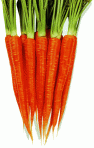
carrot-1

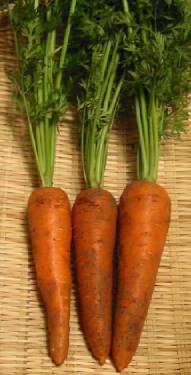
Carrots are consumed everywhere in the World, raw or cooked in so many manners, including desserts, that you need a whole book to describe all the recipes! And you might have to come up with a special addenda leaflet to introduce all its varieties!

Now, people might have forgotten that this cousin of the spinach orignated from Afghanistan before it was first introduced in China and Europe (by the Dutch) in the 12th Century. Japan had to wait until the 16th Century before the Chinese brought it to the Island of the Rising Sun.

FACTS:

Some time ago carrots were not popular in Japan because of their strong taste characteristics, but the Japanese have come with sweeter and softer varieties:
carrot-kyo
“Kyo-Ninjin”, a variety developed in Kyoto, with a deep dark red colour and very sweet taste.

carrot-gosun
“Go-Sun Ninjin”, the most common in Japan.

carrot-sansu
“San-Sun Ninjin”, a smaller variety of the above.

carrot-daijyo
“Daijyo Ninjin”, a very long and thin variety very popular in Japanese restaurants! Great for sticks!

carrot-kinji
“Kinji Ninjin”, probably the most elegant of them all!

carrot-shim-yellow
“Kiiro Ninjin”, beautiful and very sweet!

carrot-mini
“Mini Ninjin”, so much fun!

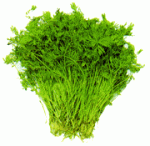
carrot-leaves-vitaminc
Now, do not forget the leaves which contain an enormous amount of Vitamin C!

-Season: May to June, and October to Deecember in the Northern Hemisphere.
-Beneficial elements:
Carotenes
An absolute need for humans. Carotenes are more easily absorbed by the body systems when the carrots are eaten together with oil, dressing or “glace”.
Vitamin C, Potassium, Calcium.

TIPS:

Preservation: Carrots should not be kept inside too cold fridges. Protect them by wrapping them into newspaper “standing up”, or into cellophane paper if they are cut.
Choose specimen with a good constant colour and with a small stem core if you buy them with leaves already cut away.

Important: When you peel them, do so as thinly as possible as the majority of the carotenes lie just under the skin!

Japanese Izakaya: Bu-Ichi (first visit in 2009)


The Japan Blog List

Please check the new postings at:
sake, shochu and sushi

—————————————-
日本語のブログ
—————————————-

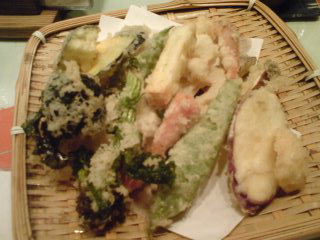
bu-ichi-09-b

Last Thursday, the Missus and I finally found the time to make a quick visit to our favourite Izakaya in Shizuoka City, namely Bu-Ichi
Not only the food (most of it local) is great, but the Shizuoka Sake are regularly changed according to the food of the moment!

Moreover, vegetarians (and I’m sure they an make something for vegans! Japanese sake is vegan, by the way!) will be glad to learn that tenpura is one of their specialties. See above picture and try to tell what vegetables are served!

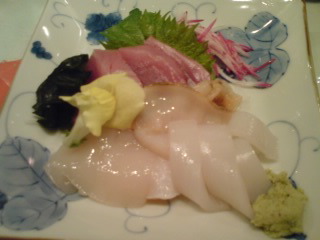
bu-ichi-09-a

Now for the sashimi lovers, it is simply first class (and very reasonable compared to the prices in Tokyo!). We asked only for a small set and savoured the following:
-Mejiro maguro/big-eyed tuna
-Hotate/Scallops with their “threads”
-Ika/Squid-Cuttlefish
Incidentally the flower is edible (grown in Shizuoka Prefecture!)

bu-ichi-09-c

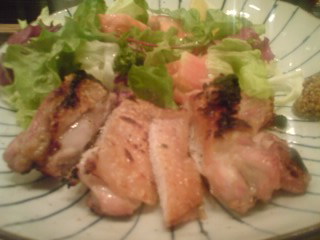
As the last bite before we headed home, we ordered the “Shio-yaki-niwatori/salted grilled chicken.
Crispy skin and absolutely tender flesh! How they do it, I simply don’t have a clue! No need to say the salad was splendid!

Looking forward to our next visit!

Bu-Ichi
420-0032 Shizuoka City, Aoi Ku, Ryogae-cho, 1-6-10, Dai 2 Matsunaga Bldg. 2F
Tel.: 054-2521166
Closed on Wednesdays
Reservations advisable

First Sashimi Set of the Year at Tomii!


The Japan Blog List

Please check the new postings at:
sake, shochu and sushi

—————————————-
日本語のブログ
—————————————-

tomii-09-06

Yesterday evening, being hungry late at work, I just took a “break” and went for a (slightly extravagant!) quick fix at my favourite Japanese restaurant in Shizuoka City.

Apart of the usual appetizer, I was served the following “O-Tsukuri/Sashimi set” (See above picture, from left to right, top first):

-“Buri/Japanese Amberjack” on a cushion of fresh sprouts
-“Hon-maguro no Akami/Bluefin tuna lean part” with “Shiso no Hana/Perilla Flowers”
-“Inada/young Japanese Amberjack”. The difference with Buri is that the flesh is still white. On a “Shiso no Happa/Perilla Leaf” and a radish slice
-“Madai/True Snapper-Seabream”
-“Amaebi/Sweet Shrimp)
-“Uni/Sea Urchin)
-Freshly grated “Wasabi/Green Japanese Horseradish”
-“Kou-Ika/wide-bodied cuttlefish variety

Heavens!

TOMII
Shizuoka City, Aoi Ku, Tokiwa-cho, 1-2-7, Tomii Bldg, 1F
Tel.: 054-274-0666
Business hours: 17:00~22:00
Closed on Sundays
HOMEPAGE (Japanese)

Vegetables Facts and Tips (3): Broccoli


The Japan Blog List

Please check the new postings at:
sake, shochu and sushi

—————————————-
日本語のブログ
—————————————-

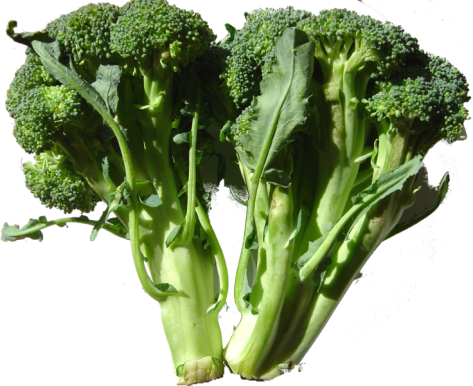
broccoli-1a

In a recent National Geographic Magazine survey, Broccoli was at the very top when considering nutrients beneficient to humans in our everyday food!

Vegans, Vegetarians and Omnivores, rejoice! Doctors, start moaning!
A cousin of cabbages and cauliflowers, the flowers are the mainly consumed part, but people forget that the stems are great, too (explained later)!

FACTS:
-Season: November to January and March to April in the Northern Hemisphere.
-Main elements:
Carotene, Vitamin C and Vitamin E in very large amounts. Together they combine as an elixir to fight ageing and stress.
Potassium
Iron, which helps increase red blood cells and control cholesterol.
Calcium
Fibers, which help digestion.
Sulforafan which helps fight poisonous intruders.

VARIETIES:

broccoli-2
Italian red broccoli

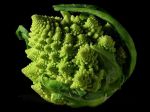
broccoli-romanesco
Broccoli Romanesco, a favourite of mine!

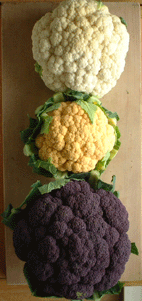
broccoli-colour
In Japan, a violet variety (bottom) is becoming popular, making for some great combinations with white and yellow cauliflower,

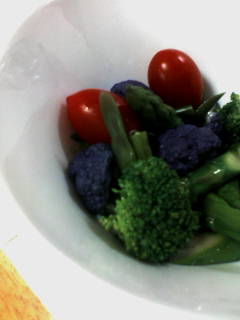
broccoli-dish
and other dishes!

TIPS:
-As I said above, the stem is not only edible, it is succulent, with a taste between avocadoes and asparaguses! Peel the skin, cut it in any shape you wish and boil it for a while in slightly salted water. let cool and use for salads, stews and gratins!
-Choose specimens with big and dense buds, shiny and fat stems. Check whether the cut at the stem looks fresh!
-After boiling in slightly salted water, plunge into cold water immediately. The colour will not change!
-Preservation: Wrap in wet paper towel, seal it inside a polyester rigid box and keep inside refrigerator’s chilled compartment away from light.
As it will change in contact with natural light, better to cut it, boil it, cool it, seal it inside vinyl pouches and freeze if you have too much of it!

Today’s Lunch Box/Bento (‘9/1)


The Japan Blog List

Please check the new postings at:
sake, shochu and sushi

—————————————-
日本語のブログ
—————————————-

bento-2009-01-06b

Yesterday’s bento did not qualify as this year’s first as the Missus refused to let me take a picture of the sandwich she had made!
Today, she came back with a vengeance, concocting a lunch fit for a man’s (or big teenager’s) solid appetite!

bento-2009-01-06a

She also used a wooden box with a bamboo “curtain” lid for the “maki”/rolls.

bento-2009-01-06d

I can already hear Rick moaning at the look of those rolls! LOL

bento-2009-01-06e

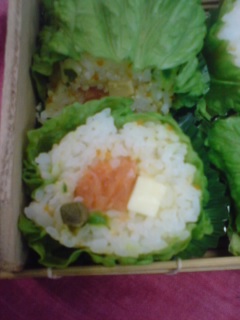
The rolls were wrapped in lettuce instead of “nori”/dry seaweed.
The “shari”/sushi rice was mixed with “tobikko”/flying fish roe.
The filling consisted of smoked slamon and Japanese processed cheese with capers for decoration. These rolls were definitely American-sized!

bento-2009-01-06c

As for the accompaniment the Missus worked hard (she actually threw me out of the kitchen!):
Boiled egg seasoned by leaving it overnight in the coca cola sauce of simmered pork she had made the day before, boiled Brussels sprouts, black olives, cornichons, carrot sticks, chickory/endive leaves, celery sticks (with leaves), Ameera Rubbins tomatoes (as sweet as strawberries!), and mayonnaise/black olives dip.

For dessert, winter mandarine (“mikan”) from her family’s garden!
Pretty full for the whole day, I can guarantee you!

Chocolat Fin’s Classic Cakes (4): B-Cafe


The Japan Blog List

Please check the new postings at:
sake, shochu and sushi

—————————————-
日本語のブログ
—————————————-

b-cafe-1

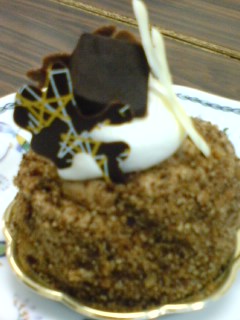
American friends will be amused by the fact that this latest Chocolat Fin’s creation ‘s name B-Cafe stands for Baghdad Cafe, the great film!

b-cafe-2

A typical cake by Chocolat Fin where cakes are concocted with a view to please adults first:
On a thin base of dark chocolate sponge cake stays a ball of Mocha mousse surrounded by light Chocolat sponge containing very fine orange peels.
The whole is topped with Chantilly cream, chocolate decoration chips and a cube of softened dark chocolate.
Simple in looks, complex in taste.
To savour with a strong coffee or tea!

Chocolat Fin
Shizuoka City, Aoi Ku, Takajo Machi, 1-3-7 (2 minutes walk from Shin Shizuoka Center)
Tel. & fax: 054-2516321
Business hours: 10:00~20:00

Also: Shizuoka City, Aoi Ku, Shin Shizuoka Center, Basement 1F
Tel.: 054-2215878

Shizuoka Beer 8/4: Usami Brewery


The Japan Blog List

Please check the new postings at:
sake, shochu and sushi

—————————————-
日本語のブログ
—————————————-

izu-beer-rhein

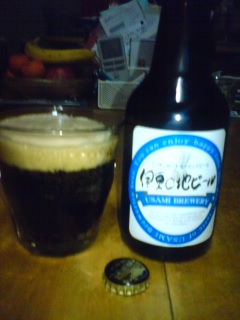
This is the last (for the moment) of the Usami Brewery series:

Usami Brewery “Rhein” (German Type)

Ingredients: Grain Malt, Hops
Alcohol: 5%
Contents: 300ml
Live yeast, unfiltered, unpasteurized.

Clarity: Very clear
Colour: Dark brown, neat colour
Foam: Long head, fine bubbles
Aroma: Dry, caramel, Welcome acidity
Taste: Well-rounded. Refreshing. Solid. Complex.
Apples, oranges, light caramel. A little acidity. Sweetish finish.
Lingers in back of the mouth

Overall: Sweetish for a Japanese palate, just right for a European/North American one.
Lighter than expected. Wel-rounded as for taste.
Very satisfying with food.

Usami Brewery
European Ji Beer Company
Ito City, Usami, 3504-1
Tel.: 0557-33-0333
HOMEPAGE (Japanese)

Must-see beer Blogs/Websites:

Good Beer and Country Boys, Beer Haiku Daily, Bair Beer, Another Pint, Please!

Vegetables Facts and Tips (2): Tomatoes


The Japan Blog List

Please check the new postings at:
sake, shochu and sushi

—————————————-
日本語のブログ
—————————————-

tomato1

Tomatoes have laid on our tables for so long that we have almost forgotten they came from South America. The Spanish and the Portuguese ignored them. The British studied them. The French brought them to Europe under the name of “Love Apple”, a name still existing in Italy. So it is said,…
tomato-fruit
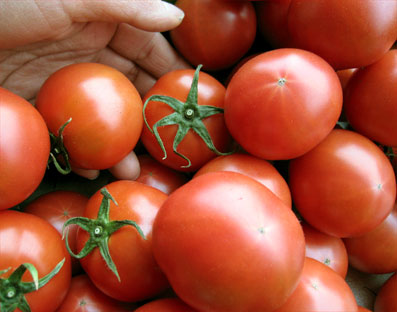
“Fruit Tomatoes”

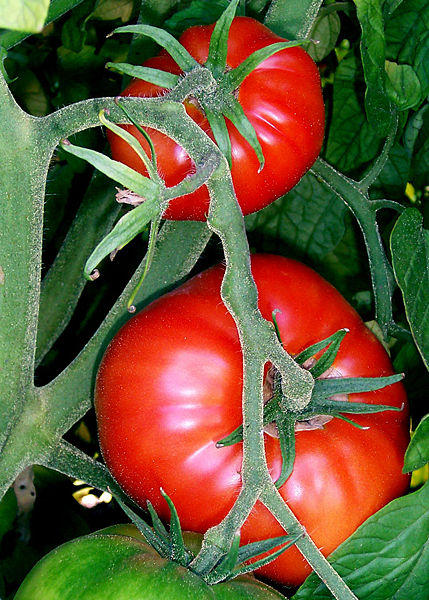
This summer-maturing fruit can be bought all year round with the interesting consequence that tomatoes ripened in winter are sweeter than their summer cousins as they contain less water, earning themselves the name of “fruit tomatoes”, a great oxymoron, if there was one!

Thanks to consumers’ insatiable appetite for novelty, tomatoes are grown into all kinds of size, shape and colour.
Just to cite a few, the following are the most popular in Japan:

tomato-momotaro
“Momotaro Tomatoes”

-Momotaro (after the Japanese “Peach Boy” tale), which becomes “Fruit tomato” in winter.
tomato-midi
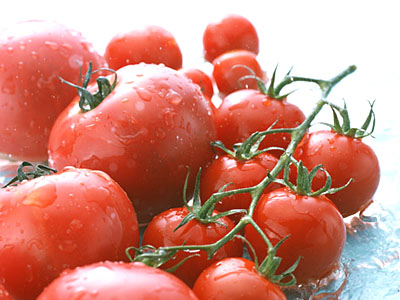
“Midi Tomatoes”

-Midi Tomato (sometimes called “Plum tomatoes”), a larger cousin of the “Mini tomato”, is very sweet and very high in nutrients. Its aroma has a particularly long life.

tomato-italian
“Italian tomatoes”

-Italian Tomato: mainly used for cooking, it may often come in a comparatively elongated shape.
It contains less water and reveals both large amounts of sweetness and acidity, making it very conducive to long cooking with the extra bonus of actually improving in taste upon heating.
tomato-mini
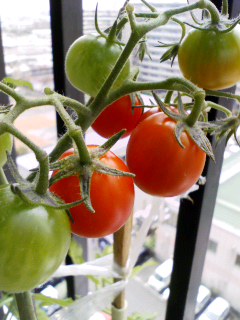
“Mini Tomatoes”

-Mini Tomato: one-bite sized, it is also called “Petit tomato”. It contains twice as many Vitamin C, and it is very rich in beneficient ingredients.

tomato-yellow-mini
“Yellow Mini Tomatoes”

-Yellow Mini Tomato: characteristic for a lot of sweetness and very little acidity. Very handy for children who dislike vegetables!
rubbins
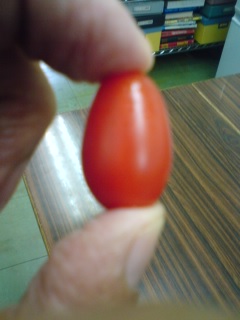
“Ameera Rubbins”

-Ameera Rubbins: with its larger Ammeera tomato, it is grown exclusively (until now, but they are bound to expand beyond our borders!) in Shizuoka Prefecture. They are the sweetest of all, tasting like strawberries, and very firm, making them ideal for decoration, notwithstanding their nutrient value. The smallest variety called “Rubbins” is grown by only two farmers near Iwata City!

tomato-micromini
“Micro Mini Tomatoes”

-Micro Mini Tomatoes: increasingly popular, they are only 8~10 mm and look somewhat like redcurrants. Very tasty with a beautiful acidity, the Japanese use them not only in salads, but also as the final touch on a plate of sashimi!

FACTS:

-Season: All year round
-Main elements: Licopin (Ricopin), Vitamin C, B Vitamins, Potassium, Pectin, Luchin (Ruchin).
Licopin is a carotene variety particularly beneficial in fights against allergies and ageing. The Potassium and Vitamin C and Pectin help control cholesterol in blood.
Luchin reinforces capillary veins and arteries.
Recent researches in Germany and China have proven that tomatoes help control high blood pressure.
Who said that the Italians look healthier than everybody else? LOL

TIPS:

-Choose tomatoes with a deep colour and healthy strong skin!
-Preservation: before storing them into the vegetable compartment of your fridge, wrap themin newspaper or put them inside a vinyl bag, or even better, inside a rigid plastic sealed box.
-Peeling: better than boiling water, direct contact with a flame! Make a very shallow cut near the stem area, firmly stick a fork or thin skewer into the stem area, hold the tomato directly over the gas flame for a few seconds, then plunge it into cold water. Skin should come off very easily.

Vegetables Facts and Tips (1): Potatoes


The Japan Blog List

Please check the new postings at:
sake, shochu and sushi

—————————————-
日本語のブログ
—————————————-

potatoes

This is the first of a series of articles on vegetables, which I hope will help my vegan and vegetarian (I’m not!) friends.
Incidentally、 nothing, pictures included, is copyrighted in my food blogs, so please feel free to use anything!

POTATOES

danshaku-potato
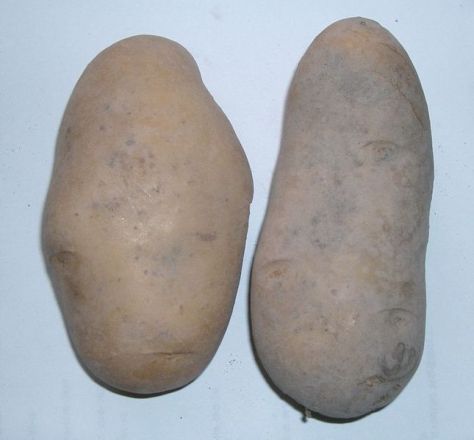
“Danshaku”

Potatoes were first introduced to Japan in 1910 by Baron Kawata from Great Britain/Ireland giving the name of “Danshaku/Baron” to the most commonly used potato in Japan, especially in croquettes and salads.

The biggest potato exporters to Japan are China and India, although more and more grown locally.
The varieties found in supermarkets are:

kitaakari-potato
“Kita Akari” used for mashed potatoes and croquettes,

mayqueen-potato
“May Queen” used in stews,

toyoshiro-potato
“Toyoshishiro” used for fried potatoes,

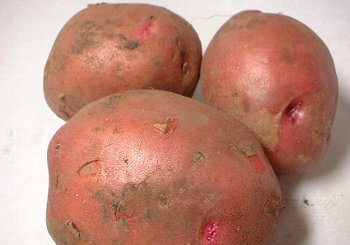
redandespotato
“Red Andes” used for croquettes and Pot au feu,

incanomezame-potato
“Inca No Mezame” used for stews.

Potatoes are available all year round, but are at their peak from February to May when new potatoes can be eaten whole!

FACT CARD:

-Season: All year round
-Main elements: carbohydrates (high energy), Vitamin C1, B1 (thanks to a large amount of natural starch in potatoes, the vitamin C will resist heating!), Potassium
-Preservation: Wrap potatoes inside newspaper and keep them in a dark, well-ventilated place away from the sunlight.

TIPS:

-Choose specimens well-rounded and with healthy skin. Avoid specimens with buds or of greenish colour (risks of diarrhea). Cut out all “dark spots”!
-To avoid a change of colour, wash potatoes in water after peeling or cutting.
-If you want to keep your potatoes for a while after boiling them, plunge them in (change it as many times as necessary) cold water until completely cooled down. They will not break or crumble when used later.
-After boiling cut potatoes, throw away water and keep heating them until they have lost a great part of their moisture. They will attain a crispy enough nature without resorting to deep-frying!

Avocado and Crab Gratin/Gratin d’Avocat et de Crabe


The Japan Blog List

Please check the new postings at:
sake, shochu and sushi

—————————————-
日本語のブログ
—————————————-

avo-crab-6

Today is the second of January, and as I generally cook on holidays, I proposed the following to the Missus:

avo-crab-8

As my other half loves gratinsin any form, it was not difficult to convince her!
I’m not going to burden you with numbers, so here is the recipe, which I tried to keep simple and calorie-light!

avo-crab-1

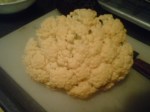
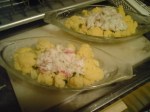
I used bout a quarter of a yellow (yes, you heard it!) cauliflower grown locally in Asabata, Shizuoka City, cut it small enough pieces and cooked them the Missus’ way, that is, I put them in a non-stick frypan with half a centimetre of water and cocered it with a glass lid. I switched on the fire to medium and waited the water to boil. As soon as it started boiling I turned the fire to minimum, cooked the cauliflower for one minute, switched off and let it covered for one more minute. I then drained completely and held it under running cold water for a few seconds to cool down, then put them aside in a strainer.

avo-crab-21

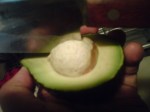
I used a medium-sized avocado, cut it into two halves, took off the large seed by stabbing it with the “talon” of a kitchen knife and twisting it out.

avo-crab-3

I peeled the avocado and brushed both halves with lemon juice.
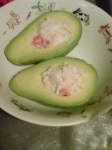
Next I used the equivalent of a small tin of crab meat, added some lemon juice and some sweet wine wine to it. I mixed the lot and quickly pressed the juices out. I filled both halves of the avocado with some crab meat. I kept the juices for the bechamel sauce.
I chopped a good quantity of Italian parsley and put it aside.

avo-crab-4

I buttered the inside of two glass oven dishes, put the avocado halves in the middle upside down, arranged the cauliflower around it and garnished the top of the avocado halves with the remaining crab.

avo-crab-5

I prepared the bechamel (white) sauce by making a roux with 50 g. of butter, two large spoons of flour, then added the crab juices, 200cc (one cup) of milk, 80 cc of sour cream. When the bechamel had “caught”, I added salt, pepper, theme, nutmeg and four spices and dropped in the chopped Italian parsley.
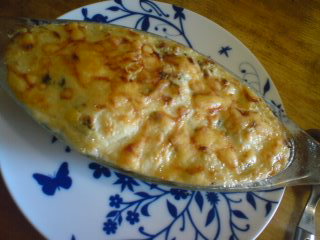
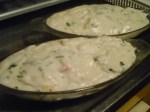
I spread the bechamel sauce allover the dishes and let it cool completely. This way the bechamel sauce will not “run out” inside the oven. I sprinkled the lot with cheese and baked it the oven at 180 degrees for about 25 minutes (or until it attains the colour needed).
avo-crab-7

We ate it with a salad just out of the oven.
I chose a fairly firm avocado on purpose for better effect when cutting it out with my spoon, but it’s up to your taste.
I’m sure anyone can improvise and improve on that!

Japanese Crustacean Species 3: Squilla/Shako


The Japan Blog List

Please check the new postings at:
sake, shochu and sushi

—————————————-
日本語のブログ
—————————————-

shako1.jpg

The Squilla or “Shako” (蝦蛄in Japanese) is a delicacy that appears on the sushi bar counters from April to Summer, although different varieties can be found in Hokkaido markets (Otaru City in particular) almost all year round.
You will discover it under names such as “shaku” and “Gazaebi”.
They are actually caught in almost all Japanese seas, but the best are supposed to originate from Hokkaido.

shako2

Like any crustaceans, they can be eaten in many ways.
The Japanese favour the small kind with a violet back. I had the pportunity to buy some very large specimen in Otaru, and eat them just boiled andserved with rice vinegar mixed with a little Japanese mustard, or in salad.
They almost disappeared from Tokyo Bay in the 1960’s but reappeared in the 1970’s. Most fishermen in the Kanto area will place them in boxes themselves to sell them directly at fish markets. The market value can vary wildly, but look for the genuine harbour markets and buy them yourself.

shako3

Naturally, they are most popular as nigiri sushi. Customers jokingly ask for “garage” (in English) as “shako” also means (different kanji, of course) “garage”!