Tag Archives: Japanese Cuisine

Japanese Cuisine: Korokke/Croquettes-Basic Recipe

I already have introduced the basics about the this marsel which has become such an ubiquitous feature of everyday Japanese food, namely Korokke-Croquettes.

Here is the basic recipe prevalent in restaurants and homesteads.
Naturally it can be expanded and modified at will.
I will not bother you with measurements this time as the method is the point of this posting!

INGREDIENTS:

-Potatoes (you will have to decide which variety! In Japan, “Danshaku” are best!)
-Onion
-Minced meat (of your choice!)
-Salt and pepper
-Flour (of your choice)
-egg
-Milk
-Breadcrumbs (fresh if possible)
-Oil
-Lard (skip if you don’t like, but a pity!)

RECIPE:
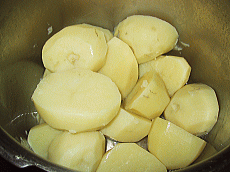
-Boil the potatoes with their skins.
Peel the skins off just out of the water when very hot. This way, the potatoes will not be too wet.
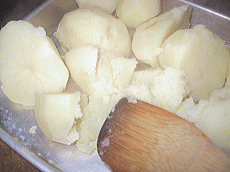
-Mash the potatoes roughly with a wooden spoon/spatula. Add salt and peepper and mix roughly. Cover with cellophane paper to keep the potatoes warm as long as possible.
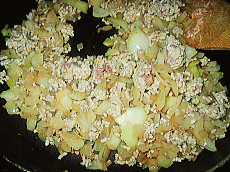
Chop the onions finely and fry in lard if possible for better taste. If you don’t like lard, use oil. You could add chopped garlic and small pieces of bacon.
Add minced meat of your choice. Season with a little salt, pepper, sugar and soy sauce according to you preferences. Fry until the monced meat is cooked.

-Add the mashed potatoes. Mixing them all atogether at the same time fry until potatoes have become dry enough.
Let cool completely and transfer to a stroage dish. Cover with cellophane paper and leave overnight in the refrigerator to allow taste to permeate the potatoes. This is an important point as not only it will enhnace the taste but make the croquettes easier to shape.

-Spread a little oil over your palms and shape croquettes to you preffered size.
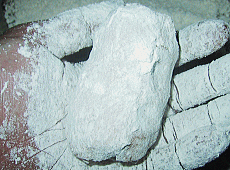
-Roll in flour and “shake” croquettes so that not too much flour adhere to them.
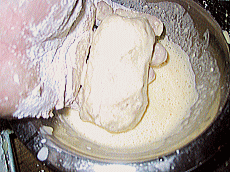
-Prepare (you might better do that first, LOL) the croquettes egg dip by mixing beaten egg, flour and milk to your preference.
Dip the croquettes in the batter competely.

-Roll the croquettes in the breadcrumbs.
One way to make breadcrumbs is to use real bread which had turned completely solid, soften it in milk, let it dry again and crush it into powder!

-Deep-fry croquettes at 170 degrees Celsius until they have reached a colour of your liking.
As everything is already cooked inside, don’t worry if they are not enough cooked.
Point: add a little sesame oil to your frying oil for extra taste.

There are all kinds of sauce and decoration you cane serve croquettes with, unless you like them plain with a little mustard for example.

Here is a little suggestion for good taste and appetizing presentation:
Prepare a light white sauce/bechamel in the aurora style sauce with plenty of white pepper and boiled gree peas.

Don’t they look nice like that!

RECOMMENDED RELATED SITES:
Bread + Butter, Comestilblog, Greedy Girl, Bouchon For 2, Zoy Zhang, Hungry Neko, Mangantayon, Elinluv Tidbit Corner, Maison de Christina, Chrys Niles, Lexi, Culinary Musings, Eats and Everything, Bite Me New England, Heather Sweet, Warren Bobrow, 5 Star Foodie, Frank Fariello, Oyster Culture, Ramendo, Alchemist Chef, Ochikeron, Mrs. Lavendula, The Gipsy Chef, Spirited Miu Flavor, Wheeling Gourmet, Chef de Plunge

Please check the new postings at:
sake, shochu and sushi

—————————————-
日本語のブログ
—————————————-
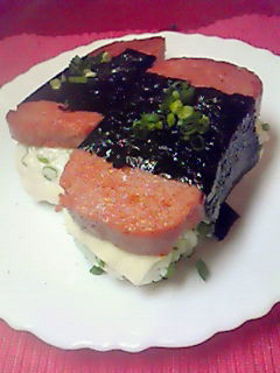
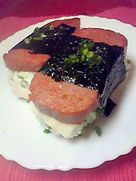
Spam Nigiri with Ginger Rice

My friends know I nurture a pet hate for all spammers!LOL
Following a suggestion by my good Foodbuzz friend, Bazooka Gourmet, I decided to run a little series on recipes including Spam.

Spam Spam sushi nigiri is apparently the “National Sushi of Hawaii”.
I’m sure friends there will come with some more interesting suggestions!

Spam Nigiri with Ginger rice!

INGREDIENTS:

-Steamed rice: 3 small bowls ( a bowl means a serving in Japan. That should make enough for 6 nigiri. Bear in mind that the nigiri will be a large as a spam slice)
-Spam: 1 standard can. Enough to make 6 slices
-Fresh ginger: 30 g
-Leeks (Manno style, but any leeks can work if thin enough): 4~5 stems
-Sesame oil: 1 tablespoon
-White sesame seeds: 1 tablespoon
-Cheese (sliced cheese): 2 fourths of a large thin slice.
-Nori: dry seaweed for binding

RECIPE:

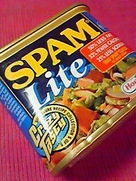
Here is the kind of spam available in Japan.

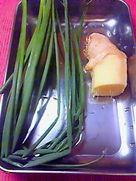
-Leeks and fresh ginger before chopping (leeks) and grating (ginger).

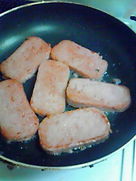
-Fry the spam slices on both sides until satisfaction.
-You may vary on the thickness of the spam slice.

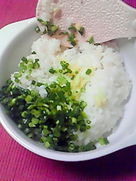
-Add the grated 80% of the chopped leeks, ginger, sesame seeds and sesame oil with the freshly steamed rice.
Chop the leeks.

-Form a rice ball of the spam surface size and and shape. Place a cheese on top, than a slice of fried spam.
Secure with a band of nori/dried seaweed.
Serve them sprinkled with the rest of the chopped leeks.
Eat at once!

NOTES:

-Try and use freshely steamed rice. It willbe easier to shape and will not break away.
-Don’t be afraid of increasing the amount of ginger, leeks and white seame to add more taste.ご飯は少し硬めに-On the other hand, do not add sesame oil!

RECOMMENDED RELATED SITES:
Bread + Butter, Comestilblog, Greedy Girl, Bouchon For 2, Zoy Zhang, Hungry Neko, Mangantayon, Elinluv Tidbit Corner, Maison de Christina, Chrys Niles, Lexi, Culinary Musings, Eats and Everything, Bite Me New England, Heather Sweet, Warren Bobrow, 5 Star Foodie, Frank Fariello, Oyster Culture, Ramendo, Alchemist Chef, Ochikeron, Mrs. Lavendula, The Gipsy Chef, Spirited Miu Flavor, Wheeling Gourmet, Chef de Plunge

Please check the new postings at:
sake, shochu and sushi

—————————————-
日本語のブログ
—————————————-
Chicken Liver Simmered with Balsamico

I love liver and am always looking for new simple ways to eat some, be it yakitori for Japanese style, stirfry for Chinese style or any European/American style!

Just found this easy recipe in my notes, which blends many influences:

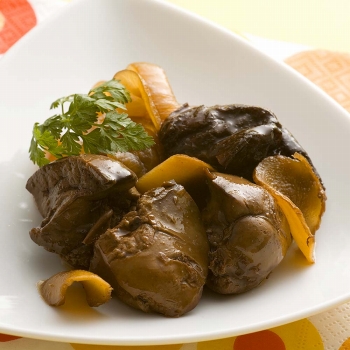
Chicken liver simmered in Balasamico!

INGREDIENTS: For 2 people

-Chicken liver: 150 g
-Onion: 1/2
-Fresh Ginger: 2×2 cm piece
-Prunes: 4

-Soy Sauce: 1/2 tablespoon
-Water: 2/3 cup/140 cc/ml
-Balsamico vinegar: 1 1/2 tablespoon
-Red wine: 1 tablespoon
-Bouillon/Chicken stock: 1 cube
-Sugar: 1 tablespoon
-Chervil: to taste

RECIPE:

1-Leave the liver in water for 20 minutes. Take out veins and nerves. Cut in bite-sized pieces.

2-Slice onion into 5 mm thick slices. Cut the ginger into fine slices

3 -Gently boil the liver with some chopped leek leaves (not included in the ingredients) and scoop out unwanted matters.

4-In a pan drop the water, balsamico vinegar, red wine, bouillon, sugar and sliced ginger. Bring to light boil. Add sliced onion and prunes.

5-Wait untio it starts boiling again, then lower fire to low and simmer until satisfaction.
Serve and decorate with chervil.

RECOMMENDED RELATED SITES:
Bread + Butter, Comestilblog, Greedy Girl, Bouchon For 2, Zoy Zhang, Hungry Neko, Mangantayon, Elinluv Tidbit Corner, Maison de Christina, Chrys Niles, Lexi, Culinary Musings, Eats and Everything, Bite Me New England, Heather Sweet, Warren Bobrow, 5 Star Foodie, Frank Fariello, Oyster Culture, Ramendo, Alchemist Chef, Ochikeron, Mrs. Lavendula, The Gipsy Chef, Spirited Miu Flavor, Wheeling Gourmet, Chef de Plunge

Please check the new postings at:
sake, shochu and sushi

—————————————-
日本語のブログ
—————————————-
Sauteed Liver with Garlic Stems

For all the recipes I publish to help my vegan and vegetarian friends, I need my meat!
The difference is that I tried to balance my diet as much as I can.
Mind you, if one keeps to good ingredients, it is quite easy.
Here is a simple recipe, both Japanese and Chinese in cocept, which has the merits to be bvery healthy, calorie-low and balanced.
Makes for a great snack with a beer!

Sauteed Liver with Garlic Stems

INGREDIENTS: For 1 person?

-Liver (sliced): 150 g (choose the liver according to your priorities!)
-Garlic stems: 5 or 6
-Garlic: 1 clove
-Soy sauce: 2 tablespoons
-Japanese sake: 2 tablespoons
-Water: 50 ml/cc
-Salad oil: 1 tablespoon

RECIPE:

-Slice the garlic thinly. Cut the garlic stems into 6~7 cm long pieces.

-Mix the soy sauce, Japanese sake and water as a sauce in a separate bowl.

-Heat the oil in a frypan over a strong fire. Stirfry sliced garlic and liver together.

-Once the liver is almost cooked add garlic stems and sauce.

-Cover with lid, reduce fire and simmer it for about 3 minutes.

-Serve immediately.

NOTES:

There are many possible variations to this recipe:
-add spices of your liking, especially black pepper and chilies.
-add vegetables, especially leaf vegetables.

RECOMMENDED RELATED SITES:
Bread + Butter, Comestilblog, Greedy Girl, Bouchon For 2, Zoy Zhang, Hungry Neko, Mangantayon, Elinluv Tidbit Corner, Maison de Christina, Chrys Niles, Lexi, Culinary Musings, Eats and Everything, Bite Me New England, Heather Sweet, Warren Bobrow, 5 Star Foodie, Frank Fariello, Oyster Culture, Ramendo, Alchemist Chef, Ochikeron, Mrs. Lavendula, The Gipsy Chef, Spirited Miu Flavor, Wheeling Gourmet

Please check the new postings at:
sake, shochu and sushi

—————————————-
日本語のブログ
—————————————-

Japanese Cuisine: Chawanmushi-Basic Recipe

Chawanmushi or Chyawanmushi/茶碗蒸し is the Japanese equivalent of a French flan with thebig differencethat is not a dessert, but an appetizer!
It is quite easy to prepare and open to so many variations.
Here is the basic recipe. Just let your imagination fly!

Chawanmushi!

INGREDIENTS: For 2

-Eggs: 2
-Shrimps: 10 small
-Shiitake mushroom: 2
-Chopped leeks: to decorate and taste (or trefoil)
(you can use gingko nuts, kamaboko, crab, sea urchin, etc.)
-Dashi: 100 cc/ml (of your choice)
-Japanese sake: 50 cc/ml
-Soy sauce: half a teaspoon
-Sugar: half a teaspoon
-Salt: 1 pinch
-Water: 2 cups, 400 cc/ml

RECIPE:

Take shell and head off every shrimp.
Let shrimps marinate in the sake for a while.
If you use frozen shrimps, thaw them and sponge off their water first.

Cut the shiitake in two.
If you use fresh shiitake, fry them just a little in butter and sponge them off.
If you use dried shiitake, let them mariante in lukewarm water for two hours. Their water can be used as part of the dashi.
If you use frozen shiitake, thaw them and sponge them off first.

in a saucepan, drop dashi, water, salt, sugar and soy sauce. Heat to before bubbles come up (bubbles will be the main reason for failure!).

Beat eggs and por them slowly into the dashi, whisking them all the time.

Once all the eggs are mixed in, switchoff fire and strain/sieve soup.

Place half of the shrimps and mushrooms at the beottom of each cup.

Slowly pour half of soup in each cup/ramequin/small bowl.

Pour 3 cm of water into your steamer pan and bring to boil.

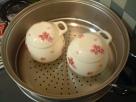
Place steaming tray inside steamer and place cups on it with lids on.

Cover as shown on above picture.
Cook over strong fire for 2 minutes, then 10 minutes over low fire (over high fire all theway through will ened into failure!).

Check if chawanmushi are properly cooked. If you stab a toothpick in it, no dashi shoud come out.

Decorate with leeks or trefoil and serve!

RECOMMENDED RELATED SITES:
Bread + Butter, Comestilblog, Greedy Girl, Bouchon For 2, Zoy Zhang, Hungry Neko, Mangantayon, Elinluv Tidbit Corner, Maison de Christina, Chrys Niles, Lexi, Culinary Musings, Eats and Everything, Bite Me New England, Heather Sweet, Warren Bobrow, 5 Star Foodie, Frank Fariello, Oyster Culture, Ramendo, Alchemist Chef, Ochikeron, Mrs. Lavendula, The Gipsy Chef Hapabento, Tokyo Terrace</a

Please check the new postings at:
sake, shochu and sushi

—————————————-
日本語のブログ
—————————————-

Sushi Restaurant: Sushi Ko (’09/12/10)

When I go for sushi with the Missus, we invariably visit Sushi Ko in Sushi Ko.
I just can’t enumerate all the good reasons for visiting this sushi restaurant.
It is the best deal in town when it comes to quality, freshness, prices and service. Full stop.

We were served ankimo/アンキモ or monkfish liver (I call it Japanese foir gras!) with the first drink.
That helped us consider which sashimi to start with.
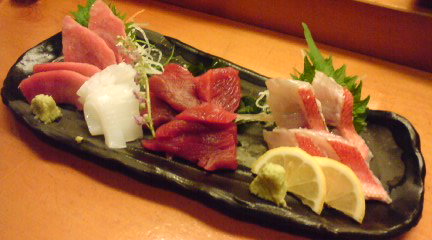
Here is what we ordered on that particular day (the fish served is only seasonal at Sushi Ko, so choosing sashimiis a great venture!):

-Bottom left: “honmaguro/本鮪”, blue fin tuna from Oma (Aomori Prefecture), chu-toro/semi-fat part.
-Top left: O-toro/belly fat part of same fish
-Bottom centre: “Aori Ika/あおり烏賊, Great Fin Reef Squid from Suruga Bay in Shizuoka Prefecture.
-Bottom right: Akami/lean part rom same tuna.

Notice the “shiso/紫蘇”, perilla flowers, grated “wasabi/山葵” from Shizuoka and “wakame/若布” seaweed at the back!

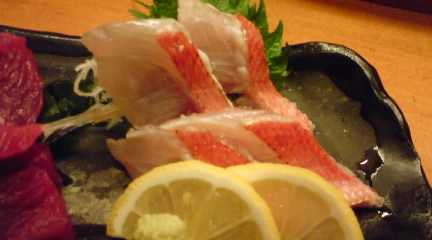
“Kinmeidai/金目鯛”, gold eye seabream from Izu penisula in Shizuoka Prefecture resting on a shiso/perilla leaf.

As we were not ready yet for the sushi (rice) we ordered one more sashimi: “aji tataki/鯵たたき”, or saurel/mackerel pike tartare Caught off Shizuoka shores).
Very fresh and enjoyable as you little bits at a time.

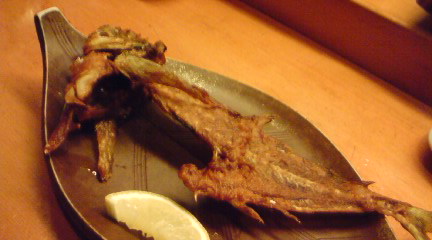
Just to prove how fresh the fish was (it was caught live from the tank), we were served its head and bones dep-fried. This is actually the traditional Japanese way to get their calcium for their bodies!

Sushi is not only superlative at sashimi and sushi, but they also provide a great array of excellent cooked dishes.
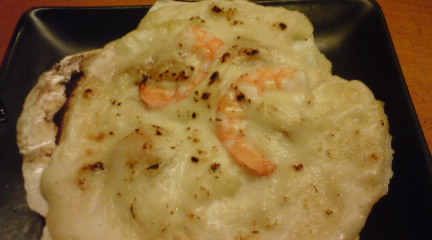
The Missus being ravenous, she couldn’t help asking for the “hotate gratin/帆立グラタン, scallops gratin! French cuisine at a sushi restaurant! Why not!

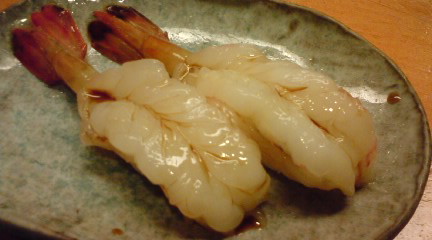
On the other I couldn’t help ogling at the “botan ebi/牡丹蝦, large prawns” from Hokkaido. I opted for them as sushi nigiri. These large prawns are very sweet and are exclusively eaten raw.

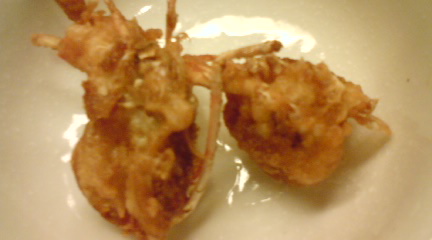
Once again, to prove their freshness, we were served the heads deep-fried!

“Maguro Zuke/鮪付け”, marinated tuna is another morsel that we must have. The tuna, akami/lean part usually is marinated for 10~20 minutes in a mixture of soy sauce, sake and mirin (and other “secret” ingredients) before being placed on the shari/rice ball. Almost makes for a dessert.

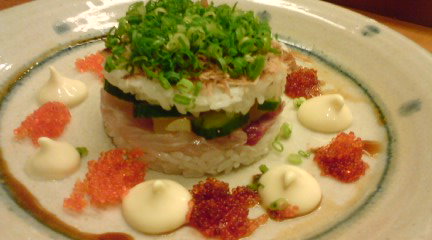
One particular creation by Sushi Ko is their Sushi Millefeuille (another French concept?)
They offer two kinds, one international style, the other Japanese style.
For once, we chose the Japanese style:
“kanpachi/間八” or greater Amberjack, “Kazu no Ko/数の子”, or herring roe and cucumber on the first tier, “Katsuo Bushi/鰹節” or dry bonito shavings and chopped thin leeks, the whole surrounded with dressing and “Tobikko/飛び子” or flying fish roe!

From then it was ordering morsels, one set of two/”nikan-二冠” at a time:
“hotate/帆立”, raw scallops muscle part.

“HIrame/平目”, or sole, served pre-seasoned with a little salt and lemon juice. Perfect as it is. No need for soy sauce!

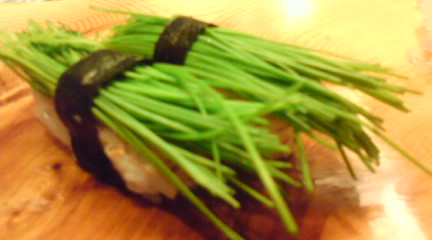
“Me-negi/芽葱”, or leek sprouts for the vegans!

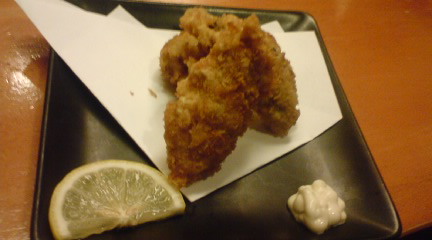
The Missus couldn’t stop and ordered Japanese-style deep-fried oysters!

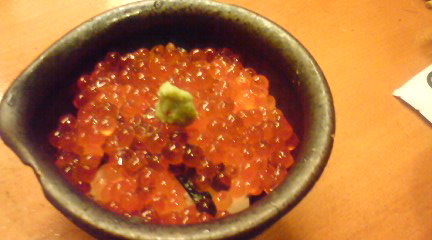
And the ubiquitous “Ikura mini don/いくらミニ丼”, or mini bowl of rice topped with salmon roe and freshly grated wasabi (from Shizuoka, of course!).

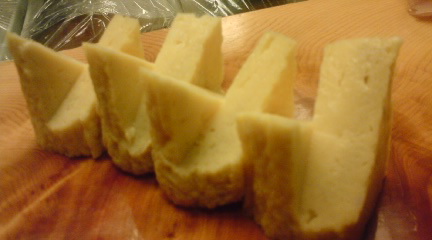
As for me, I will not leave the place without the “Tamagoyaki/卵焼き” or Japanese omellette. Home-made (not all sushi restaurants go through the pain of cooking their own tamagoyaki!”) and artfully cut!

And the extravagant dessert: “Anago/穴子”, conger eel first grilled to a soft texture and topped with tare/sauce (always original at Sushi Ko!)!

We did have a lot of drink, I can assure you, but we remembered what we savoured!
Next time? Very soon, I’m sure!

Sushi Ko
shizuoka City, Aoi Ku, Ryogae-cho. 2-3-1 (Aoba Koen)
Tel.: 054-2512898
Business Hours: 17:00~25:00. 17:00~23:00 (Sundays)
Closed on Wednesdays
Reservations recommended
Credit cards OK
HOMEPAGE (Japanese)

RECOMMENDED RELATED SITES:
Bread + Butter, Comestilblog, Greedy Girl, Bouchon For 2, Zoy Zhang, Hungry Neko, Mangantayon, Elinluv Tidbit Corner, Maison de Christina, Chrys Niles, Lexi, Culinary Musings, Eats and Everything, Bite Me New England, Heather Sweet, Warren Bobrow, 5 Star Foodie, Frank Fariello, Oyster Culture, Ramendo, Alchemist Chef, Ochikeron, Mrs. Lavendula, The Gipsy Chef, Spirited Miu Flavor,
-Sake: Tokyo Through The Drinking Glass, Tokyo Foodcast, Urban Sake, Sake World
-Wine: Palate To Pen
-Beer: Good Beer & Country Boys, Another Pint, Please!
-Japanese Pottery to enjoy your favourite drinks: Yellin Yakimono Gallery

Please check the new postings at:
sake, shochu and sushi

—————————————-
日本語のブログ
—————————————-

Sashimi Plate at Sushi-Ko (’09/12/12)

When I go for sushi with the Missus, we invariably visit Sushi Ko in Sushi Ko.
I just can’t enumerate all the good reasons for visiting this sushi restaurant.
It is the best deal in town when it comes to quality, freshness, prices and service. Full stop.

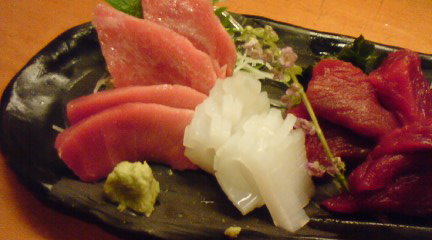
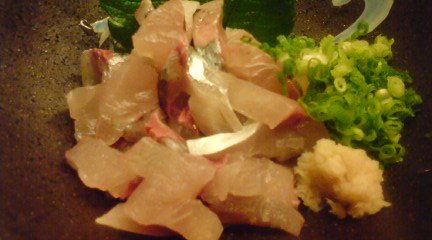
To cut a long story short (no pun intended) here what we ordered as sashimi to start our meal:

-Bottom left: honmaguro/blue fin tuna from Oma (Aomori Prefecture), chu-toro/semi-fat part.
-Top left: O-toro/belly fat part of same fish
-Bottom rcentre: Aori Ika/Great FinReef Squid from Suruga Bay in Shizuoka Prefecture.
-Bottom right: Akami/lean part rom same tuna.

Notice the shiso/perilla flowers, grated wasabi from Shizuoka and wakame seaweed at the back!

Kinmeidai/gold eye seabream from Izu penisula in Shizuoka Prefecture.

For what we had for the rest of the meal (a large one!) check Shizuoka Sushi Blog!

Sushi Ko
shizuoka City, Aoi Ku, Ryogae-cho. 2-3-1 (Aoba Koen)
Tel.: 054-2512898
Business Hours: 17:00~25:00. 17:00~23:00 (Sundays)
Closed on Wednesdays
Reservations recommended
Credit cards OK
HOMEPAGE (Japanese)

RECOMMENDED RELATED SITES:
Bread + Butter, Comestilblog, Greedy Girl, Bouchon For 2, Zoy Zhang, Hungry Neko, Mangantayon, Elinluv Tidbit Corner, Maison de Christina, Chrys Niles, Lexi, Culinary Musings, Eats and Everything, Bite Me New England, Heather Sweet, Warren Bobrow, 5 Star Foodie, Frank Fariello, Oyster Culture, Ramendo, Alchemist Chef, Ochikeron, Mrs. Lavendula, The Gipsy Chef, Spirited Miu Flavor,
-Sake: Tokyo Through The Drinking Glass, Tokyo Foodcast, Urban Sake, Sake World
-Wine: Palate To Pen
-Beer: Good Beer & Country Boys, Another Pint, Please!
-Japanese Pottery to enjoy your favourite drinks: Yellin Yakimono Gallery

Please check the new postings at:
sake, shochu and sushi

—————————————-
日本語のブログ
—————————————-

Sashimi Plate at Tomii (’09/12/04)

I suppose I do not need to introduce Tomii again as it is my favourite Japanese restaurant in the whole of Shizuoka Prefecture!
To make a long story short, I paid them a visit last night on my way back from university before going home.

I was not that hungry, so I just ordered “o-tsukuri/sashimi plate”.

From left to right:
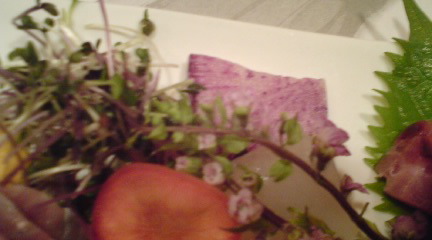
Yellow carrot, Suzuki/black bass, various sprouts, Kyoto ninjin/Kyoto re carrot, Aka Ika/red squid, shiso/perilla flowers and beni shigure daikon/red daikon variety.

For a clsoer view of thefresh vegetables!

From left to right:
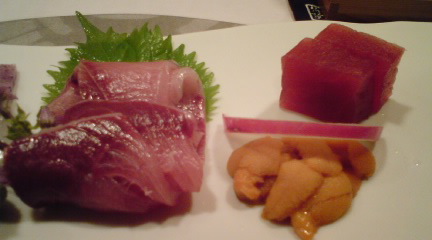
Kan buri/Winter yelowtail on shiso/perilla leaf, Uni/seaurchin under a slice beni daikon/red daikon and bachmaguro/tuna variety.

I had sake with all that of course.

I particularly enjoyed a new brew by Doi Brewery in Kakegawa City:

Doi Brewery: Kaiun Junmai
Rice: Oyamanishiki
Rice milled down to 60%
Alcohol: 15 degrees
Dryness: +4
Acidity: 1.5
Amino acids: 1.2
Bottled in March 2009

Clarity: very clear
Colour: faint golden hue
Aroma: Fresh, discreet, feminine, fruity. Memories of vanilla, banana and pineapple.
Body: velvety
Taste: Soft attack. Well-rounded. Short tail.
Pleasant, fleeting, feminine, sophisticated.
Fruity and dry, but very smooth.
Pineapple, soft citruses
Junmai tingle appears with food with a late appearance by almonds.
Very soft and fleeting finish with more dry almonds.

Overall: Extravagant, sophisiticated, fleetingly feminine are not exaggerated descriptions for this sake, the last created by Master Brewer hase who passed away in 2009.
Now, how would you drink it?
With your love? as an extravagant aperitif? Or on your own away from the bustle of everyday life….

TOMII
Shizuoka City, Aoi Ku, Tokiwa-cho, 1-2-7, Tomii Bldg, 1F
Tel.: 054-274-0666
Business hours: 17:00~22:00
Closed on Sundays
HOMEPAGE (Japanese)

RECOMMENDED RELATED SITES:
Bread + Butter, Comestilblog, Greedy Girl, Bouchon For 2, Zoy Zhang, Hungry Neko, Mangantayon, Elinluv Tidbit Corner, Maison de Christina, Chrys Niles, Lexi, Culinary Musings, Eats and Everything, Bite Me New England, Heather Sweet, Warren Bobrow, 5 Star Foodie, Frank Fariello, Oyster Culture, Ramendo, Alchemist Chef, Ochikeron, Mrs. Lavendula, The Gipsy Chef, Spirited Miu Flavor,
-Sake: Tokyo Through The Drinking Glass, Tokyo Foodcast, Urban Sake, Sake World
-Wine: Palate To Pen
-Beer: Good Beer & Country Boys, Another Pint, Please!
-Japanese Pottery to enjoy your favourite drinks: Yellin Yakimono Gallery

Please check the new postings at:
sake, shochu and sushi

—————————————-
日本語のブログ
—————————————-

Vegan sashimi at Yasaitei (’09/12/02)

Service: excellent and very friendly
Facilities: great cleanliness overall
Prices: reasonable, good value.
Strong points: Very fresh local ingredients extensively used. Seasonal ingredients only. All-ladies staff.

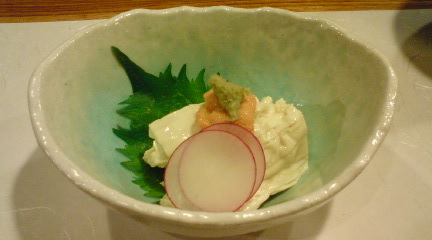
Last night, having a long break in the evening and being ravenous, I just couldn’t wait until dinner at home. So, I veisited my favourite izakaya, namely Yasaitei, where I knew I could have a quick and delicious fix without worrying about my wasitline!

In Japan it is usual to be served a small snack (which will be charged at a nominal but reasonable price) with the first drink order.

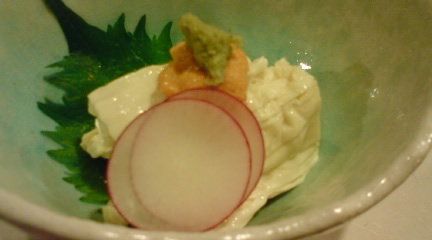
For a closer view!

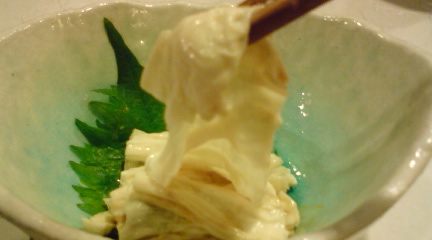
The snack was “yuba”/tofu sheets with uni/sea urchin (vegans or vegetarians only need to point out their priorities and they will be served only according to them, so no worries!) and Shizuoka wasabi (and slices of radish).

With a little soy sauce,so simple but so refined at the same time!

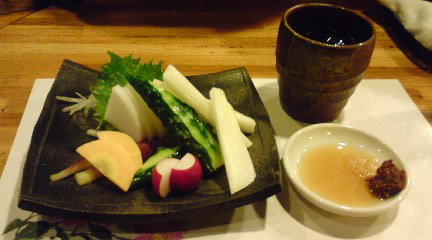
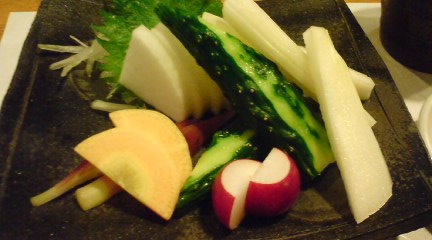
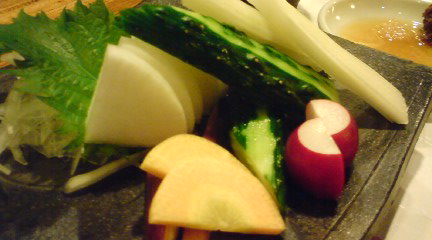
The vegetables were basically the same as my last visit, which I don’t mind at all, but the plate and the presentation were different, which I appreciate no end!:
-Yellow carrot
-Myoga/myoga ginger shoots
-Cucumber (so crispy!)
-Celery
Daikon
-Shiso on a bed of thinly cut onions.

For a side view!

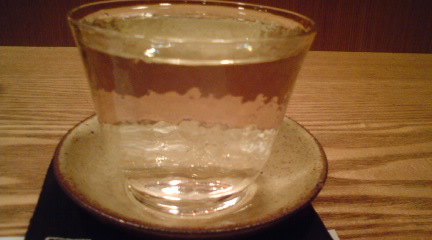
Served with sesame oil, miso and salt seasoning and a glass of Doman Shochu by Hamamatsi-Tenjigura Brewery, perfect!

YASAITEI
Shizuoka City, Aoi Ku, Tokiwa-Cho, 1-6-2 Green Heights Wamon 1-C
Tel.: 054-2543277
Business hours: 17:30~22:00
Closed on Sundays
Reservations highly recommended
Seating: 6 at counter + 20 at tables
Set Courses: 3,000, 4,000, 5,000 yen
HOMEPAGE (Japanese)

RECOMMENDED RELATED SITES
Not-Just-Recipes, Bengal cuisine, Cooking Vegetarian, Frank Fariello, Gluten-free Vegan Family, Meatless MamaFrank Fariello, , Warren Bobrow

Please check the new postings at:
sake, shochu and sushi

—————————————-
日本語のブログ
—————————————-

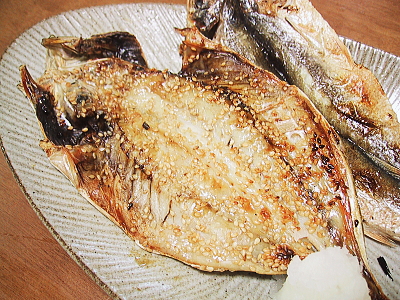
Japanese Cuisine: Himono-Dried Fish

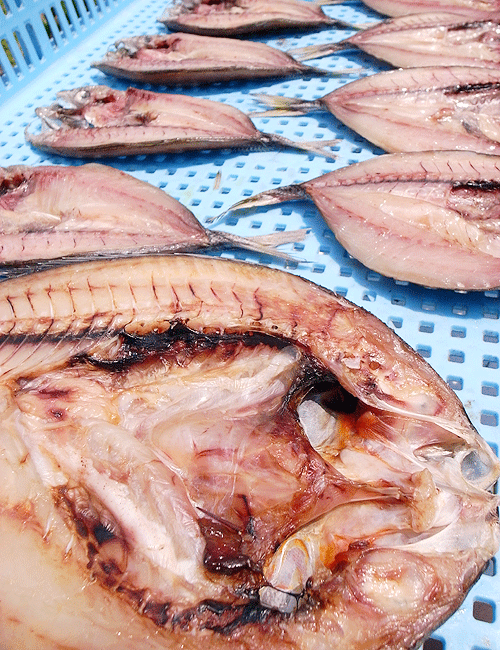
How many people outside Shizuoka Prefecture know that half (yes, half!) of all dried fish are caught and processed in our Prefecture, notably along the shores of the Izu Peninsula?
When will i convince everyone that Shizuoka Prefecture is THE true gastronomic region of Japan? LOL
To those guys living in Tokyo, may I remind them that Mount Fuji, Izu Peninsula and wasabi are all in Shizuoka Prefecture? Please someone stop me!

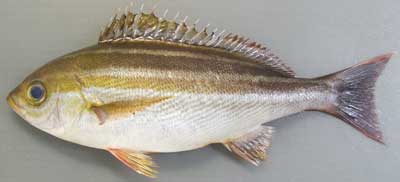
I chose a fish called “isaki” or “Chicken Grunt” (who came up with that English name?) that is quite common on our shores.
The recipe naturally applies to loadsof fish!

CLEANING THE FISH:

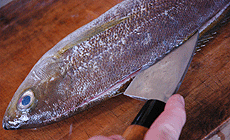
Using a strong short sharp knife (the japanese use the same knife to cut and gut medium size fish), first get rid of the scales as much as possible.
Wash once under running clear cold water.
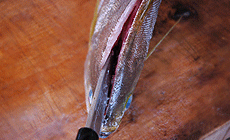
Cut along the back (not the belly! very important) from the tail to the head as shown on above picture deeply enough to reach the main bone.

Oncethe knife has cut all along the back and reached the head, cut the head in half along the same cutting line.
The head of a isaki being small it is quite easy. It might requires some strength for bigger head fish like seabreams. Call the MOTH then! (not the moths, the “Man”! LOL).

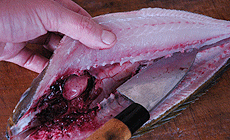
Open the fish and continue cutting in half all the way through.

Take out innards carefully so as not having them getting in contact with the flesh!
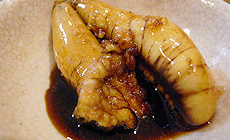
Depending upon the season, you might be lucky to get male sperm sacks (shirako). Don’t throw that away. They are great simmered with soy sauce, mirin/sweet sake, japanese sake and chili pepper! (see pic below).

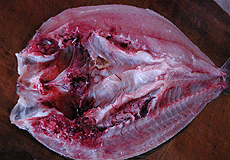
Open the fish and clean it under running clear cold water.
Take water off with some kitchen paper or a clean piece of cloth.
Sprinkle with salt and dry outside under the sun until it has reached a nice aspect. You could also smoke it.
It can be preserved insde an airtight plastic bag and frozen, although eaten quickly it will taste so much better!

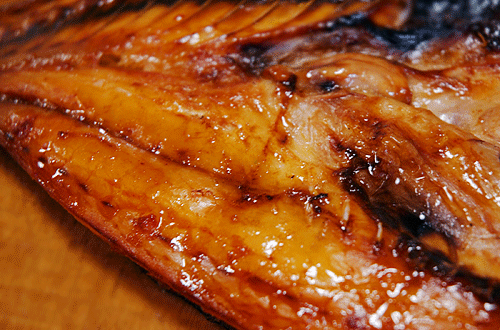
The Japanese grill their himono/dried fish pasted with a liuttel soy sauce or tare. Beautiful with beer, Good Beer and Country Boys!

Great also grilled with a little salt!

If grilled with salt don’t forget the freshly grated daikon (and lemon juice, and soy sauce…)

The male sperm sacs (shirako) make for a great snack with your beer or sake once simmered in soy sauce, mirin/sweet sake and Japanese sake (and a little chili pepper)!

RECOMMENDED RELATED SITES:
Bread + Butter, Comestilblog, Greedy Girl, Bouchon For 2, Zoy Zhang, Hungry Neko, Mangantayon, Elinluv Tidbit Corner, Maison de Christina, Chrys Niles, Lexi, Culinary Musings, Eats and Everything, Bite Me New England, Heather Sweet, Warren Bobrow, 5 Star Foodie, Frank Fariello, Oyster Culture, Ramendo, Alchemist Chef, Ochikeron, Mrs. Lavendula, The Gipsy Chef

Please check the new postings at:
sake, shochu and sushi

—————————————-
日本語のブログ
—————————————-

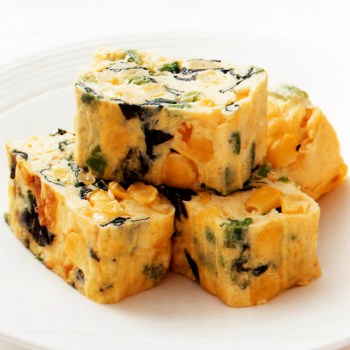
Tamagoyaki with Spinach & Corn

I have always been surprised to find out how Japanese Omelette or Tamagoyaki is so popular abroad.

Here is a simple recipe that adults and children alike will love to eat either as a main dish or as a snack!

Tamagoyaki with Spinach & Corn!

INGREDIENTS: For 2~3 people

-Eggs: 3
-Dashi/soup stock (konbu/seaweed or chicken): 3 tablespoons
-Japanese Sake: 1 teaspoon.
-Sugar:: 1 tablespoon
-Salt: 1/4 teaspoon
-Spinach: 50 g (boiled and drained completely)
-Soy sauce: 1/2 teaspoon
-Corn: 4 tablespoons (already boiled/canned)
-Vegetal oil: 1/2 teaspoon

RECIPE:

1 Boil the spinach for a minute or two maximum. Let cool completely and press hard to drain all water out. Chop finely.

2Boil the corn if necessary and drain completely. (If canned, drain thoroughly)

3 Beat the eggs in a bowl. Add dashi, Japanese sake, sugar, and salt. Mix well. Add spinach and corn and mix well.

4 Heat frypan and cook as described in Tamagoyaki Basic Recipe.

5 Cut and serve!

RECOMMENDED RELATED SITES:
Bread + Butter, Zoy Zhang, Hungry Neko, Mangantayon, Elinluv Tidbit Corner, Maison de Christina, Chrys Niles, Lexi, Culinary Musings, Eats and Everything, One Frugal Foodie, Bite Me New England, Heather Sweet, Dodol-Mochi

——————————–
Please check the new postings at:
sake, shochu and sushi

—————————————-
日本語のブログ
—————————————-

Japanese Cuisine: Cabbage Rolls

Cabbage Rolls or stuffed cabbage have a long history and have become one almost universal dish.
The concept comes from the “dorma” in Anatolia (turkey) during the first Century A.D. which were conceived with grape leaves.
Cabbage being a prominent vegetable in Europe, it was only a question of time before cabbage leaves replaced the grape leaves!
The first mention in Japanese history dates back to 1895 when they were called “Rooru Kabetsu/Roll Cabbage” (the other way round!).
They can found in most homes, at oden restaurants and in many other establishments. They are particularly popular in winter when cabbages are everywhere in supermarkets.

The recipe below is the basic one. I will leave to you how to experiment on quantities!
Keep in mind that meat can replaced with tofu, but you will probably needs konbu dashi/seaweed stock.

Choose cabbage leaves of the same size (number depending on servings).
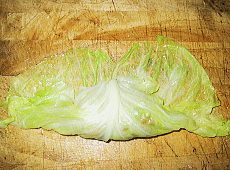
Bring lightly salted water to boil and dip cabbage leaves in water long enough to soften them. Lay the cabbage leaves on a piece of kitchen paper or clean cloth to take off excess water.
Put aside.

Chop some onion very fine and mix it with minced meat of your choice (pork, beef, lamb). Season with salt, pepper, nutmeg, clove and pther spices of your liking. Mix well.
Note: I personally add some chopped garlic and tiny cubes of lotus root.

Shape minced meat mixture into elongated balls of the size you wish for stuffing the cabbage. Their length should be equal to the width of your hand (that is, if you are not 7 feet tall!).
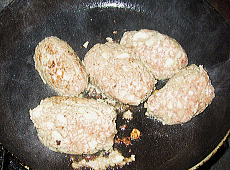
Fry them in olive oil until their surface is well cooked (this will prevent unwanted breaking off later). Sprinkle them with a little white wine or Japanese sake for more seasoning.
Place them on a plate and let them cool off completely.

Roll a meat ball in each cabbage leaf.

Bring the ends of the cabbage leaves under the roll and place each roll in the pot as shown on picture above to prevent rolls from moving away (around). If you are not confident, tie some kitchen thread around or secure them with a wooden toothpick, altough this can become very bothersome upon serving and eating.

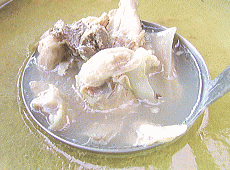
Fill the pot with a soup made with chicken stock.
This is when you can add a few more spices, but don’t overdo it!
Of course you could could cook it with kimchi for example.
Simmer for about 30 minutes over a medium high fire.
Only then can you scoop the cabbage rolls out.
Keep in mind the soup is great, too!

Here you are! Enjoy!

NOTES:
-If served to children, careful on the spices and garlic!
-Instead of the chicken stock, you may use tonkotsu ramen soup!

RECOMMENDED RELATED SITES:
Bread + Butter, Comestilblog, Greedy Girl, Bouchon For 2, Zoy Zhang, Hungry Neko, Mangantayon, Elinluv Tidbit Corner, Maison de Christina, Chrys Niles, Lexi, Culinary Musings, Eats and Everything, Bite Me New England, Heather Sweet, Warren Bobrow, 5 Star Foodie, Frank Fariello, Oyster Culture, Ramendo, Alchemist Chef, Ochikeron, Mrs. Lavendula, The Gipsy Chef

Please check the new postings at:
sake, shochu and sushi

—————————————-
日本語のブログ
—————————————-

Japanese Gratin: Doria

The Japanese have their own version for Gratin called Doria which is prepared with rice, especially leftover rice.
It is said it was first invented by an Italian family with the name of Doria who tried to represent the Italian flag (with tomatoes, cucumbers and chicken) in this recipe they first cooked in Paris.
It was first prepared in Japan in Yokohoma by a French cuisine chef from Switzerland at the New Grand Hotel in 1925!

It has become a mainstay in Japan in homes and restaurants.
The variations are endless, but here is the basic recipe:

Japanese Gratin: Doria

RECIPE:
I leave the kinds and weights for the ingredients to your creative imagination!

First make a bechamel sauce:
Use the smae volume of flour and butter.
Melt butter in a large saucepan.
Once the butter is melted, add flour and stir until you obtain a smooth mixture.
Add milk (warm will make things easier) cup by cup and stir well. make as much as you want. Keep stirring until you obtain a thick (the thicker, the better) bechamel sauce. Season with salt (easy on that!), pepper and nutmeg.
Set aside and let cool completely.

Slice onion thin and fry in a little oil until soft and just before colouring.
Scoop out and set aside.
You may of course add such vegetables as sweet pimentoes, etc.

The Japanese make their doria with chicken usually, but you may of course replace it any white meat, fish or seafood.
Cut the chicken into small pieces and fry them in same oil until crispy.
Scoop out and set aside.

Use leftover steamed rice.
Fry it with salt (careful on that one again!), pepper and tomato sauce (ketchup is fine, tomato puree is even better).
Season with other spices if you wish to.
Add onions and chicken and stir fry until all ingredients are well mixed.

Butter the inside of an oven dish.
Pour the whole fried rice inside.

Cover the rice with as much as bechamel sauce as you wish.
Add a generous layer of cheese of your choice.
The original recipe called for parmegiano, but cheaper cheese did not exist then!

Bake inside oven as you would do for any other gratin.
Keep in mind the colour you wish to attain.
It might be a good idea to serve them in individual dishes as they come out very hot!
Can be frozen until cooking them in an oven!

The same recipe with boiled macaroni!

RECOMMENDED RELATED SITES:
Bread + Butter, Comestilblog, Greedy Girl, Bouchon For 2, Zoy Zhang, Hungry Neko, Mangantayon, Elinluv Tidbit Corner, Maison de Christina, Chrys Niles, Lexi, Culinary Musings, Eats and Everything, Bite Me New England, Heather Sweet, Warren Bobrow, 5 Star Foodie, Frank Fariello, Oyster Culture, Ramendo, Alchemist Chef, Ochikeron, Mrs. Lavendula, The Gipsy Chef

Please check the new postings at:
sake, shochu and sushi

—————————————-
日本語のブログ
—————————————-

Tofu & Chicken stuffed Green Peppers

TOOFU-CHICKEN-PIMAN

Tofu when mixed with other ingredients opens a door on an infinite number of easy recipes!

Here is a very simple Japanes-style snack:
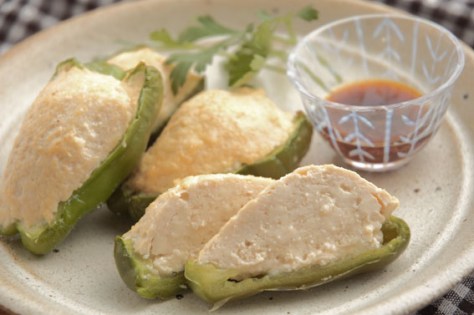
Tofu & Chicken stuffed Green Peppers!

INGREDIENTS: For 4 people

-Green peppers: 6
-Kinu tofu: 400 g
-Minced chicken: 175 g
-Japanese Sake: 1 tablespoon
-Soy sauce: 2 teaspoons
-Cheese powder: 1 tablespoon
-Salt: 1/2 teaspoon
-Black or white pepper: to taste
-Cornstarch: a small amount according to preferences

RECIPE:

-Leave a weight on top of the tofu to drain water and reduce it about two thirds of its volume.
-Wash the green peppers, cut in halves and wipe off humidity.
-In a bowl drop the tofu and minced chicken. Mix well by hand until you obtain a soft smooth paste.
-Add Japanese sake, cheese powder, salt and pepper and mix well.
Sprinkle insides of peppers with cornstach and fill each pepper half with tofu/chicken mixture.
-Place on oven plate and cook at 200 degrees Celsius for 15 minutes.
Serve with a little salt or soy sauce.

RECOMMENDED RELATED SITES:
Warren Bobrow
Wild River Review
Bread + Butter
5 Star Foodie
Frank Fariello
Mangantayon
Hapabento
Elinluv Tidbit Corner
Think Twice

Please check the new postings at:
sake, shochu and sushi

—————————————-
日本語のブログ
—————————————-
Tea as Food!

fugetsuro-2.jpg

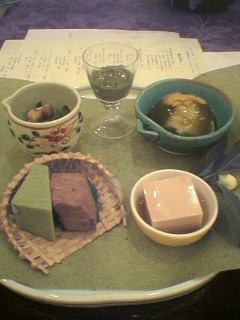
(from top middle, clockwise: Salted Cuttle fish marinated in tea leaves and rice yeast, conger eel pike and urchin in green tea jellied fish broth, tea leaves walnut tofu curd, tuna simmered in green tea with tea leaves dumpling cake, matsutake mushroom cooked in tea leaves)

Tea is mainly known as a drink all over the World in spite of puddings and a limited variety of desserts made with red or green tea.
Shizuoka Prefecture where more than 50% of all green tea in Japan has witnessed some gastronomic research by local chefs of all leanings and events have regularly been organised to share the information and skills.

Fugetsuro is one of the restaurants in Shizuka holding such welcome events:

fugetsuro-1.jpg

Above is a view of a dinner Mr. Hitoshi Yamada, Master Chef at Fugetsuro was asked to design for some 120 guests with the overriding concept that tea must be included in all dishes.

Including the first dish described above, the menu ran as follows (I let you judge!)
fugetsuro-3.jpg

Raw fish assortment: Tuna, seabream, sole, seasoned with fresh tea, edible flowers, salt and soy sauce.

fugetsuro-4.jpg

Surugani: tea sob/buckwheat noodles, seabream cooked in whole rice, “kouyou” carrot, tea leaves.

fugetsuro-5.jpg

Oven-baked black pork seasoned with tea, five color vegetables, tea sauce.

fugetsuro-6.jpg

Tofu bean curd and whole rice Pouch, deep-fried tea leaves. Seasoned with
“macha” tea salt.

fugetsuro-7.jpg

Autumn salmon marinate in seaweed and tea, yuuba/bean curd sheet. Seasoned with golden vinegar.

fugetsuro-8.gif

Tea rice, salmon roe, soup.

fugetsuro-9.jpg

Persimmon, grape, “macha” tea Bavarois, green tea cube jelly.

Fugetsurou
420-0852 Shizuoka City, Aoi Ku, Koya Machi, 11-1
Tel.: 054-2526500
Fax: 054-2528411
Homepage (Japanese)

RECOMMENDED RELATED SITES:
Warren Bobrow
Wild River Review
Bread + Butter
5 Star Foodie
Frank Fariello
Mangantayon
Hapabento
Elinluv Tidbit Corner
Think Twice
Oyster Culture
Tokyo Terrace
Maison de Christina
Chrys Niles
Comestilblog
Greedy Girl
Bouchon For 2

Please check the new postings at:
sake, shochu and sushi

—————————————-
日本語のブログ
—————————————-