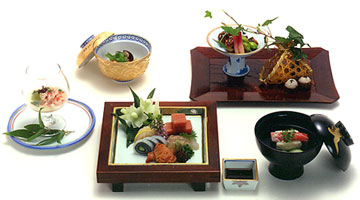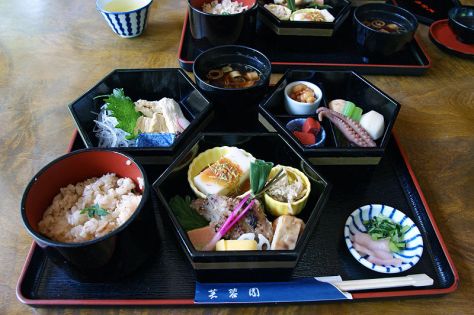
Tag Archives: Japanese Cuisine

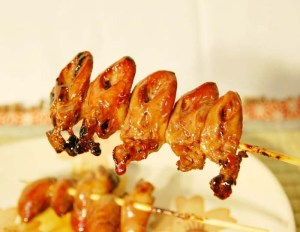
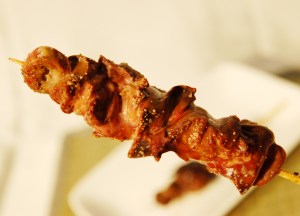
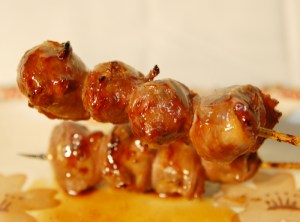
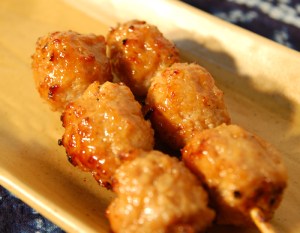
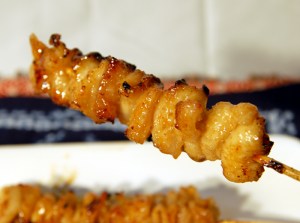
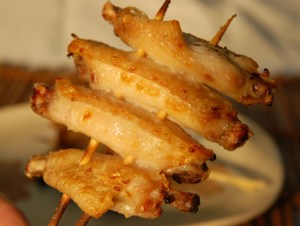
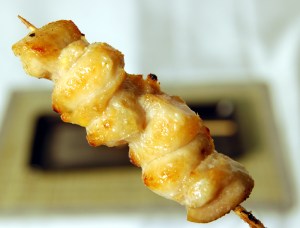
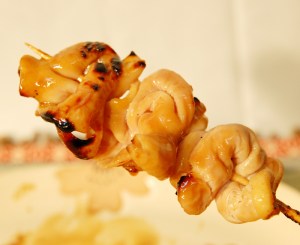
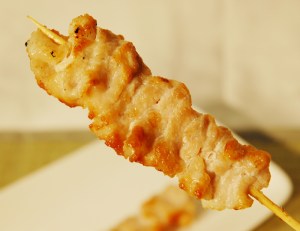
Japanese Cuisine: Yakitori-Tsukune

TSUKUNE-5
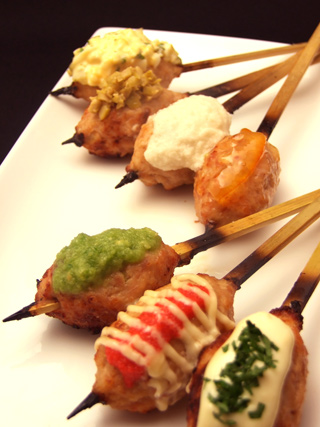
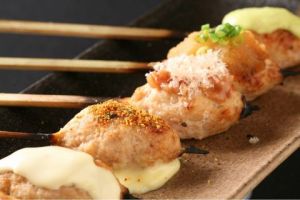
Modern tsukune at Japanese Izakaya

Yakitori is not only all parts of a chicken (or other bird, actually) on sticks or skewers.
One very popular yakitori is “Tsukune”!
Tsukune (つくね) could described as a japanese chicken meatball either on stick or completely separate.

Whereas usual yakitori requires fine products and sauce (and a cooking skills) only, tsukune calls for a real recipe.

TSUKUNE-2
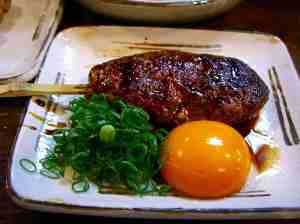
Traditional tsukune serves with egg yolk and chopped leeks.

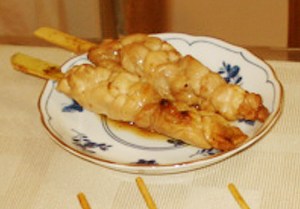
Traditional tsukune are presented as a single larger sausage-shaped “ball” grilled around a skewer and will be served with some sauce and an egg yolk (either chicken or quail). A good amount of chopped leeks is always welcome.

TSUKUNE-4

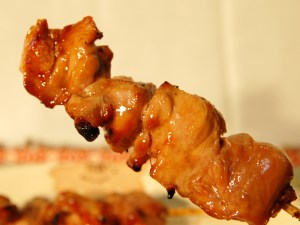
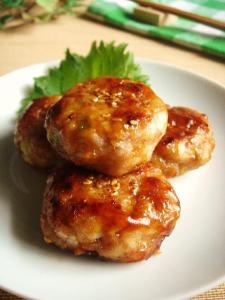
Home-made tsukune will be simpler and served as chicken meat balls with home-made or bought tare/sauce.

TSUKUNE-3

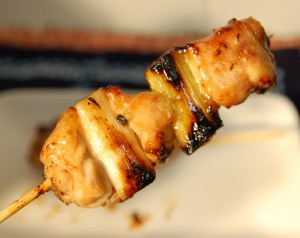
Modern tsukune seem come in many varieties all on the same plate. Actually the toppings are different but the meat balls are the same.

TSUKUNE-1

They certainly look appetizing!
Thay are fine, but as a purist I still prefer the traitional ones!

Next, I will publish a recipe!
You will find out there more ingredients included than in simple chicken balls!

Please check the new postings at:
sake, shochu and sushi

—————————————-
日本語のブログ
—————————————-

Japanese Cuisine: Yakitori-The Basics

YAKITORI-1

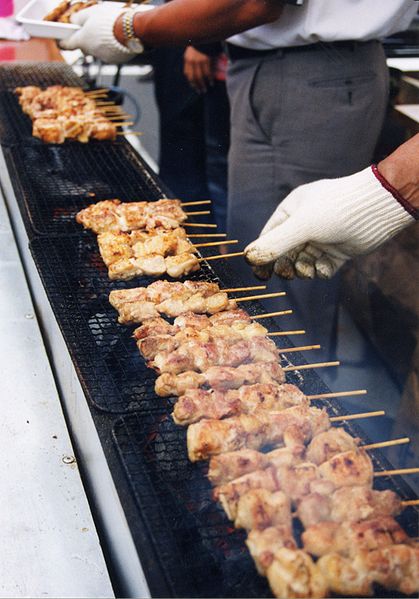
Yakitori (焼き鳥 やきとり), or fried chicken, is a Japanese type of skewered chicken that is found everywhere in Japan and i many countries abroad.
They are served all year round and have the advantage not only to be tasty but very healthy as meat comes by.

It is made from several bite-sized pieces of chicken meat, or chicken offal, skewered on a bamboo skewer and barbecued, usually over charcoal.

Diners ordering yakitori usually have a choice of having it served with salt (and sometimes lemon juice) or with tare sauce, which is generally made up of mirin, sake, soy sauce and sugar. The sauce is applied to the skewered meat and is grilled until delicately cooked and is served with the tare sauce as a dip.

Ways of serving naturally vary with regions.

YAKITORI-MURORAN

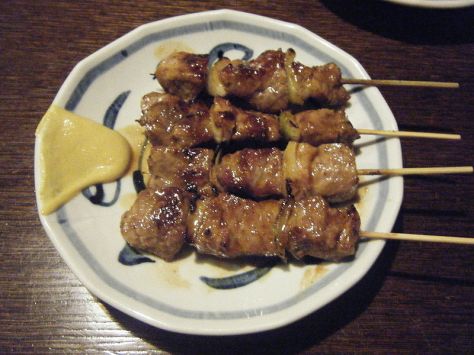
As served in Mururoran, Hokkaido.

YAKITORI-EHIME

As served in Ehime Prefecture, Shikoku Island.

One can order for sets or individually.
In the later case, you would do weel to remember basic names:

YAKITORI-HATSU
hatsu (ハツ) or kokoro (こころ), chicken heart

YAKITORI-LIVER
rebā (レバー), liver

YAKITORI-SUNAGIMO
sunagimo (砂肝), or zuri (ずり) chicken gizzard

YAKITORI-TSUKUNE
tsukune (つくね), chicken meatballs
Great served with an egg yolk and tare!

YAKITORI-KAWA
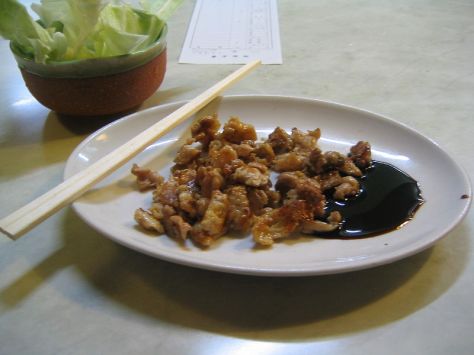
(tori)kawa ((とり)かわ) chicken skin, grilled until crispy

YAKITORI-TABASAKI
tebasaki (手羽先), chicken wing
The same can be ordered whole.

YAKITORI-BONCHIRI
bonjiri (ぼんじり), chicken tail

YAKITORI-SHIRO
shiro (シロ), chicken small intestines

YAKITORI-NEGIMA
ikada (筏) (lit. raft), Japanese scallion, with two skewers to prevent rotation. Also called negima (ネギ間)

YAKITORI-AOTO
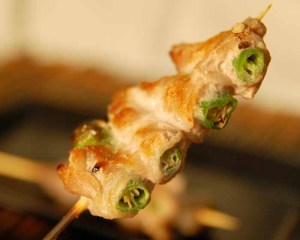
Aoto (青と). Here the leek/scallion is rolled insde the chicken

YAKITORI-KASHIRA
Kashira (かしら) made from the tender par of the breast.

YAKITORI-SESERI
Seseri (せせり) similar to kashira

nankotsu, chicken cartilage
toriniku, Free Range “Chicken of the Earth” (all white meat on skewer)

Common kushiyaki (non-poultry) dishes:

atsuage tofu (厚揚げとうふ, deep-fried tofu)
enoki maki (エノキ巻き, enoki mushrooms wrapped in slices of pork)
pīman (ピーマン, green pepper)
asuparabēkon (アスパラベーコン, asparagus wrapped in bacon)

YAKITORI-BUTABARA
butabara (豚ばら, pork belly)

gyutan (牛タン), ox tongue, sliced thinly

Naturally if you take purely regional specialties in account, there are many more!

Please check the new postings at:
sake, shochu and sushi

—————————————-
日本語のブログ
—————————————-

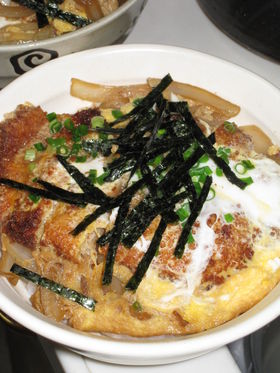
Tonkatsu Recipes 2: Katsudon

TONKATSU-KATSUDON-3

Katsudon is the favorite dish of famous Japanese baseball players such as the Yankees’ Hideki Matsui. In hard-boiled Japanese films, it is a dish served to villains under police interrogation!

If you have grasped the recipe for tonkatsu and oyakodon, it is pretty easy to make.

Here is a variation very popular in Japanese homesteads:

INGREDIENTS: For 4 people

-Tonkatsu:
Pork cuts: 4
Black pepper: to taste
Flour: 2~3 tablespoons
Egg: 1
Breadcrumbs/Panko: 1~2 cups
Frying oil

-Soup Stock:
Sugar: 1 tablespoon
Jaoanese sake: 50 ml
Sweet sake/Mirin: 50 ml
Soy sauce: 50 ml
Dashi (or soup stock): 100 ml

-Others:
Onion: 1 large
Sesame oil: 1 tablespoon
Steamed rice: enough for 4 servings
Eggs: 4~5
Trefoil or other leaf vegetables (including thin leeks,…): chopped, to taste
Dry seaweed/Nori: Finely cut, to taste

RECIPE:

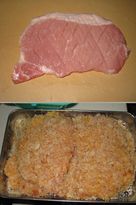
KATSUDON-RECIPE-1

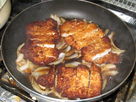
Make shallow cuts every 3~4 cm along the rim of the pork cuts (to prevent thme from bending or contracting). Sprinkle with black pepper, Roll in flour, then egg and last in breadcrumbs like in normal tonkatsu recipe.

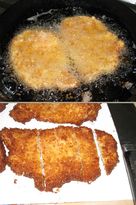
KATSUDON-RECIPE-2

Deep-fry at 170~180 degrees Celsius.
Fry until breadcrumbs have become solid. Only then you may manipulate the tonkarsu and turn it over inside the oil.
Once cooked, cut it in serving size slices when still hot.

KATSUDON-RECIPE-3

Cut the onion in half first, then into about 5 mm thick slices. Fry in sesame oil until they become translucent.
During that time, pour sake and mirin in a small pan and bring to boil. Add sugar, soy sauce and dashi. Bring to boil.

KATSUDON-RECIPE-4

Pour soup on onion and bring to boil.
Drop in allthe cut tonkatsu and cook for a couple of minutes.

KATSUDON-RECIPE-5

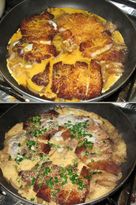
Lower fire a little so that the soup does not boil. Pour the eggs well-beaten and add trefoil. Cover and cook on a medium fire for about a minute.
Eggs should be cooked on top but still half-cooked under. Make sure the eggs fill the spaces betwen the pork cuts.

KATSUDON-RECIPE-6

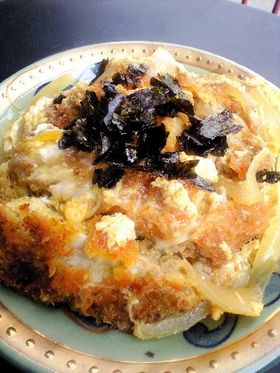
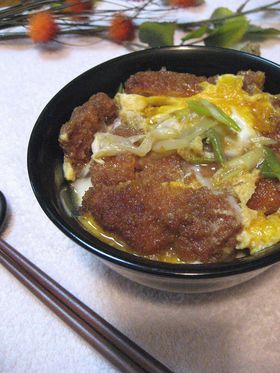
Fill each bowl with steamed rice and cover each with tonkatsu and omelette. Pour the left over soup over the top. Add dry seaweed on top and serve!

OTHER KATSUDON SAMPLES:

TONKATSU-KATSUDON-1

TONKATSU-KATSUDON-2

Please check the new postings at:
sake, shochu and sushi

—————————————-
日本語のブログ
—————————————-

Tonkatsu Recipes 1: Basic Recipe

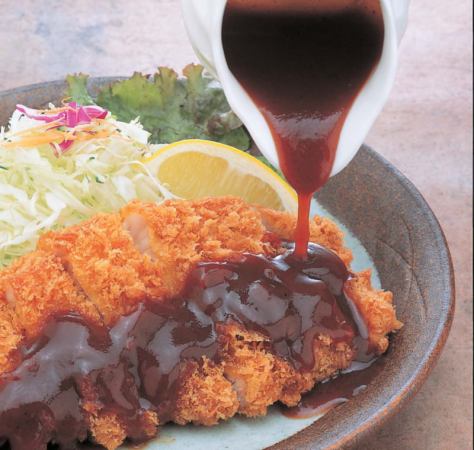
TONKATSU-PH

Tonkatsu, if properly organized, is not difficult to cook or prepare.
Here is the first of a series of recipes you easily accomodate to your taste and preferences:

Tonkatsu Basic Recipe:

INGREDIENTS: For one person

-Pork cutlet: one large, 1~2 cm thick. Choose good quality with as little fat as possible, although some around the rim is welcome.
-Flour: 2 tablespoons
-Black pepper: to taste:
-Salt: to taste
-Nutmeg: a pinch (you may use other spices of course, including chili pepper!)
-Egg: 1 large
-Fresh breadcrumbs (if unavailable, use dry breadcrumbs or panko): half a cup
-Deep-fry oil (as fresh as possible!)
-Cabbage (as much as you want, finley shredded)
-Sesame powder/ground sesame seeds: 1 tablespoon
-Tonkatsu sauce: 2 large tablespoons (easily found in markets. You can of course make your own with worcestershire sauce, ketchup, mustard and so on!)

RECIPE:

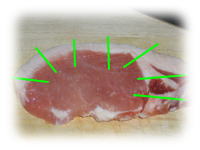
TONKATSU-RECIPE-1

-Make a shallow incision across the rim every 3~4 cm. It is an important step as it will prevent the meat from contracting or bending!

TONKATSU-RECIPE-2

-In a bowl mix flour, pepper, salt and spices. One can add curry mix powder there, too!

TONKATSU-RECIPE-3

-Cover both side of the pork cut with the flour mixture. Take care not to form lumps of flour.
Trick: Try to use only one hand to come in contact with the food, while the other hand stays dry and can manipulate utensils!

TONKATSU-RECIPE-4

-In a different bowl beat the egg. Preferably do this ahead of everything.
Dip the floured pork cut into the beaten egg.

TONKATSU-RECIPE-5

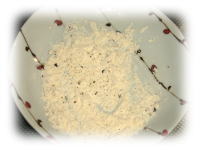
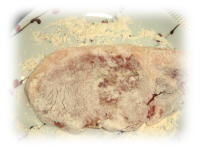
-Pour the breadcrumbs on a plate and spread it evenly. Thisis also better done before you start anything!
Lay the pork cut on the breadcrumbs and gently press. Cover the top side with breadcrumbs, too and pat gently to help the breadcrumbs adhere. Don’t be afraid of coating with a lot of breadcrumbs!

TONKATSU-RECIPE-6

-Heta the oil to 170 degrees Celsius. Drop a little breadcrumb in the oil to check if it’s hot enough. It should start frying with bubbles right away. Drop the pork cut gently into the oil to avoid any accident.

TONKATSU-RECIPE-7

-Turn the pork cut over for even frying as it will rise to the surface. Do it as gently as possible either with long wooden chopsticks of frying tongs.

TONKATSU-RECIPE-8

-On a serving plate lay a bed of shredded cabbage decorated with a little parsley and a few lemon slices. Provide some strong mustard if wanted.
Take pork cut out of the oil and lay on a grill for a few seconds to take off excess oil. Transfer onto a working table and cut into strips.
Place it above or beside shredded cabbage in the right order so as to remind you of the original shape.

Please check the new postings at:
sake, shochu and sushi

—————————————-
日本語のブログ
—————————————-

Japanese Cuisine: Korokke-Croquettes

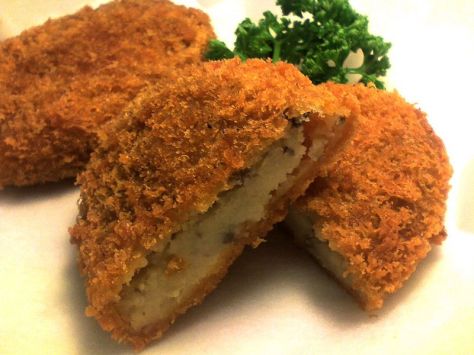
KOROKKE-1

Korokke (Japanese: コロッケ) is the Japanese name for a deep fried dish originally related to a French dish, the croquette. It is also said thai it comes from the Dutch, Kroket.
It was introduced in the early 1900s. This dish is also popular in South Korea where it is typically sold in bakeries.

Korokke is made by mixing cooked chopped meat or seafood, vegetables with mashed potato or white sauce, or both, rolling it in wheat flour, eggs, and breadcrumbs/panko, then deep frying this until brown (fox colour in Japanese!) on the outside.
Korokke are usually shaped like flat patties. They are generally called ingredient + Korokke. For example, those using beef would be called beef (gyu) korokke, those using shrimp, ebi korokke, etc.. Those using white sauce may also be called Cream Korokke.

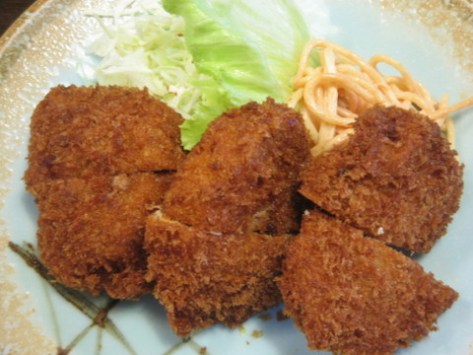
KOROKKE-2

Korokke are often served with worcestershire sauce and shredded cabbage.

Korokke can be eaten as is, and are sometimes sold wrapped in paper at stalls. They may also be used as a topping for other dishes. When sandwiched between a piece of bread, they are be called “Korokke pan” (pan being bread in Japanese).

Korrokke was the most sold single frozen food in 2007 and has been among the top three ever since.

Please check the new postings at:
sake, shochu and sushi

—————————————-
日本語のブログ
—————————————-

Japanese Cuisine: Tonkatsu-The Basics

TONKATSU-1

Tonkatsu (豚カツ, とんかつ, or トンカツ, pork cutlet), invented in the late 19th century, is a popular dish in Japan. It consists of a breaded (breadcrums/panko), pork cutlet one to two centimeters thick first deep-fried whole then sliced into bite-sized pieces, generally served with shredded cabbage and/or miso soup. Either a pork fillet (ヒレ, hire) or pork loin (ロース, rōsu) cut may be used; the meat is usually salted, peppered and dipped in a mixture of flour, beaten egg and panko (Japanese breadcrumbs) before being deep fried.

TONKATSU-HIREKATSU
Hire Katsu or high quality pork fillet served and cut into one bite size.

It was originally considered a type of yōshoku/洋食—Japanese versions of European schnitzel invented in the late 1800s and early 1900s—and was called katsu-retto (“cutlet”) or simply katsu. Early katsu-retsu was usually beef; the pork version, similar to today’s tonkatsu, is said to have been first served in 1890 in a western food restaurant in Ginza, Tokyo. The term “tonkatsu” (“pork katsu”) was coined in the 1930s.

In Korea, this dish is known as donkkaseu (돈까스), a simple transliteration of the Japanese word to Korean.

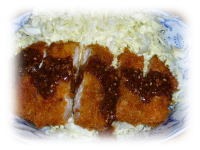
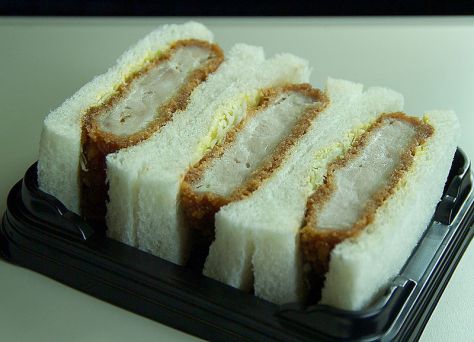
TONKATSU-KATSUSANDO
“Katsu sando/Tonkatsu Sandwich” as served in Okinawa

Variations
Tonkatsu has Japanized over the years more so than other yōshoku and is today usually served with rice, miso soup and tsukemono/pickles in the style of washoku/和食 (traditional Japanese food) and eaten with chopsticks. Recently, some establishments have taken to serving tonkatsu with the more traditional Japanese grated daikon and ponzu instead of tonkatsu sauce.

TONKATSU-KATSUDON
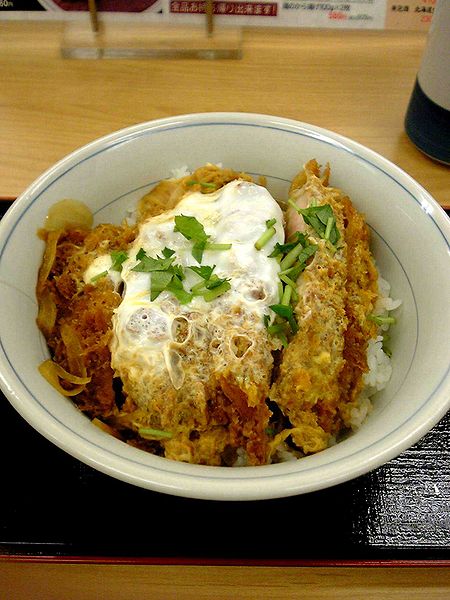
Katsudon

Tonkatsu is also popular as a sandwich filling (katsu sando) or served on Japanese curry (katsu karē). It is sometimes served with egg on a big bowl of rice as katsudon—an informal one-bowl lunchtime dish.

Regardless of presentation, tonkatsu is most commonly eaten with a type of thick Japanese Worcestershire sauce that uses pureed apples as a principal ingredient and is called tonkatsu sauce (tonkatsu sōsu) (トンカツソース), often simply known as sōsu (“sauce”), and often with a bit of spicy yellow karashi (Japanese mustard) and perhaps a slice of lemon. Some people like to use soy sauce instead. In Nagoya and surrounding areas, miso katsu—tonkatsu eaten with a miso-based sauce—is a specialty.

Variations on tonkatsu may be made by sandwiching an ingredient like cheese or shiso leaf between the meat, and then breading and frying. For the calorie conscious, konnyaku is sometimes sandwiched between the meat. And in Waseda, Tokyo, a restaurant serves a tonkatsu with a bar of chocolate sandwiched inside, sometimes compared to a Western creation: the deep-fried Mars Bar.

There are several variations to tonkatsu that use alternatives to pork:

Chicken katsu (チキンカツ) is a similar dish, using chicken instead of pork. This variant often appears in Hawaiian plate lunches.
Menchi katsu is a minced meat patty, breaded and deep fried.
Hamu katsu (ハムカツ “ham katsu”), a similar dish made from ham, is usually considered a budget alternative to tonkatsu.
Gyū katsu (牛カツ “beef katsu”), also known as bīfu katsu, is popular in the Kansai region around Osaka and Kobe.
Saengseonkkaseu (생선까스 “fish katsu”) is a Korean fish-cutlet modelled on the Japanese fry[citation needed].
Prices for a tonkatsu vary from 198 yen for a pre-cooked tonkatsu from a supermarket to over 5,000 yen in an expensive restaurant. The finest tonkatsu is said[citation needed] to be made from kurobuta (black pig) from Kagoshima Prefecture in southern Japan

Please check the new postings at:
sake, shochu and sushi

—————————————-
日本語のブログ
—————————————-

Japanese Soy Sauce: Varieties

SOY-2-KINDS
Japanese meal served with two kinds of soy sauce

Almost everyone knows or has heard about soy sauce (or soya sauce in Europe).
It is even used in all kinds of cuisines in the world, be they vegetarian or not.

SOY-VATS
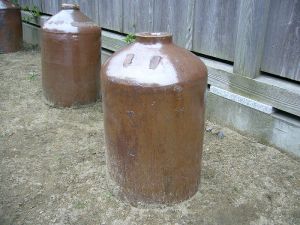
Ancient soy vats.

Authentic soy sauces are made by mixing the grain and/or soybeans with yeast or kōji (麹, the mold Aspergillus oryzae or A. sojae) and other related microorganisms. Traditionally soy sauces were fermented under natural conditions, such as in giant urns and under the sun, which was believed to contribute to additional flavours. Today, most of the commercially-produced counterparts are instead fermented under machine-controlled environments.

Although there are many types of soy sauce, all are salty and “earthy”-tasting brownish liquids used to season food while cooking or at the table. Soy sauce has a distinct basic taste called umami by the Japanese (旨味, literally “delicious taste”). Umami was first identified as a basic taste in 1908 by Kikunae Ikeda of the Tokyo Imperial University. The free glutamates which naturally occur in soy sauce are what give it this taste quality.

SOY-3-KINDS
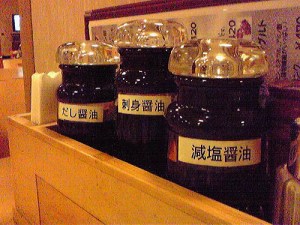
3 kinds of soy sauce as served in a Jpanese izkaya: だし醤油/Dashi Soy Sauce, 刺身醤油/oy Sauce for sashimi, 減塩醤油/salt-reduced soy sauce

Artificially hydrolyzed Soy sauce
Many cheaper brands of soy sauces are made from hydrolyzed soy protein instead of brewed from natural bacterial and fungal cultures. These soy sauces do not have the natural color of authentic soy sauces and are typically colored with caramel coloring, and are popular in Southeast Asia and China, and are exported to Asian markets around the globe. They are derogatorily called Chemical Soy Sauce (“化學醬油” in Chinese), but despite this name are the most widely used type because they are cheap. Similar products are also sold as “liquid aminos” in the US and Canada.

Some artificial soy sauces pose potential health risks due to their content of the chloropropanols carcinogens 3-MCPD (3-chloro-1,2-propanediol) and all artificial soy sauces came under scrutiny for possible health risks due to the unregulated 1,3-DCP (1,3-dichloro-2-propanol) which are minor byproducts of the hydrochloric acid hydrolysis.

SOY-2-KINDSa
Difference in colour between 薄口醤油/light soy sauce and 濃口醤油/strong soy sauce

Japanese soy sauce varieties

Buddhist monks introduced soy sauce into Japan in the 7th century, where it is known as “shōyu”. The Japanese word “tamari” is derived from the verb “tamaru” that signifies “to accumulate”, referring to the fact that tamari was traditionally from the liquid byproduct produced during the fermentation of miso. Japan is the leading producer of tamari.

Japanese soy sauce or shō-yu (しょうゆ, or 醤油), is traditionally divided into 5 main categories depending on differences in their ingredients and method of production. Most but not all Japanese soy sauces include wheat as a primary ingredient, which tends to give them a slightly sweeter taste than their Chinese counterparts. They also tend towards an alcoholic sherry-like flavor, due to the addition of alcohol in the product. Not all soy sauces are interchangeable.

Koikuchi (濃口, “strong flavor”)
Originating in the Kantō region, its usage eventually spread all over Japan. Over 80% of the Japanese domestic soy sauce production is of koikuchi, and can be considered the typical Japanese soy sauce. It is produced from roughly equal quantities of soybean and wheat. This variety is also called kijōyu (生醤油) or namashōyu (生しょうゆ) when it is not pasteurized.
Usukuchi (淡口, “light flavor”)
Particularly popular in the Kansai region of Japan, it is both saltier and lighter in color than koikuchi. The lighter color arises from the usage of amazake, a sweet liquid made from fermented rice, that is used in its production.
Tamari (たまり)
Produced mainly in the Chūbu region of Japan, tamari is darker in appearance and richer in flavour than koikuchi. It contains little or no wheat; wheat-free tamari is popular among people eating a wheat free diet. It is the “original” Japanese soy sauce, as its recipe is closest to the soy sauce originally introduced to Japan from China. Technically, this variety is known as miso-damari (味噌溜り), as this is the liquid that runs off miso as it matures.
Shiro (白, “white”)
A very light colored soy sauce. In contrast to “tamari” soy sauce, “shiro” soy sauce uses mostly wheat and very little soybean, lending it a light appearance and sweet taste. It is more commonly used in the Kansai region to highlight the appearances of food, for example sashimi.
Saishikomi (再仕込, “twice-brewed”)
This variety substitutes previously-made koikuchi for the brine normally used in the process. Consequently, it is much darker and more strongly flavored. This type is also known as kanro shoyu (甘露醤油) or “sweet shoyu”.

Newer varieties of Japanese soy sauce include:

Gen’en (減塩, “reduced salt”)
Low-salt soy sauces also exist, but are not considered to be a separate variety of soy sauce, since the reduction in salt content is a process performed outside of the standard manufacture of soy sauce.
Amakuchi (甘口, “sweet flavor”)
Called “Hawaiian soy sauce” in those few parts of the US familiar with it, this is a variant of “koikuchi” soy sauce.

All of these varieties are sold in the marketplace in three different grades according to how they were produced:

Honjōzō hōshiki (本醸造 方式)
Contains 100% naturally fermented product.
Shinshiki hōshiki (新式 方式)
Contains 30-50% naturally fermented product.
Tennen jōzō (天然 醸造)
Means no added ingredients except alcohol.

All the varieties and grades may be sold according to three official levels of quality:

Hyōjun (標準)
Standard pasteurized.
Tokkyū (特級)
Special quality, not pasteurized.
Tokusen (特選)
Premium quality, usually implies limited quantity.

Other terms unrelated to the three official levels of quality:

Hatsuakane (初茜)
Refers to industrial grade used for flavoring, powder.
Chōtokusen (超特選)
Used by marketers to imply the best.

Please check the new postings at:
sake, shochu and sushi

—————————————-
日本語のブログ
—————————————-

Miso: The Basics

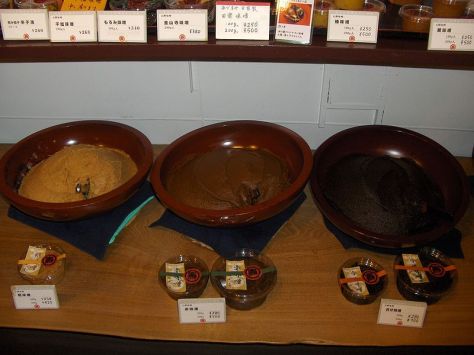
MISO-1
Three types of miso

Miso (みそ or 味噌) is a traditional Japanese seasoning produced by fermenting rice, barley and/or soybeans, with salt and a yeast called kōjikin (麹菌) in Japanese, the most typical miso being made with soybeans. The result is a thick paste used for sauces and spreads, pickling vegetables or meats, and mixing with dashi soup stock to serve as miso soup, Misoshiru (味噌汁), a Japanese culinary staple. High in protein and rich in vitamins and minerals, miso played an important nutritional role in feudal Japan. Miso is still very widely used in Japan, both in traditional and modern cooking, and has been gaining world-wide interest. Miso is typically salty, but its flavor and aroma depend on various factors in the ingredients and fermentation process. Different varieties of miso have been described as salty, sweet, earthy, fruity, and savory, and there is an extremely wide variety of miso available.
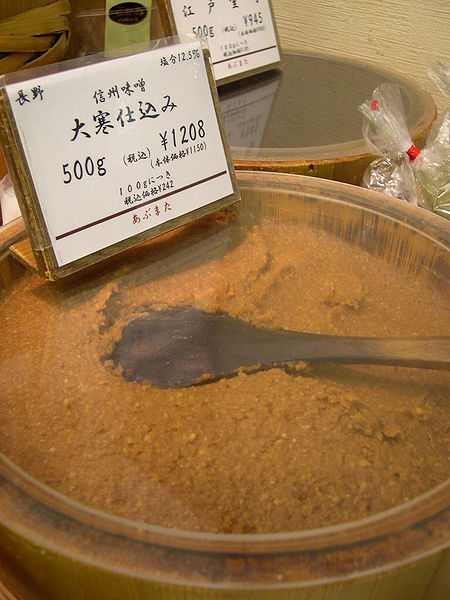
MISO-8
Miso from Nagano Prefecture on sale in Kyoto

The predecessor of miso originated in China during the 3rd century BC or earlier, and it is probable that this, together with related fermented soy-based foods, was introduced to Japan at the same time as Buddhism in the 6th century AD.This fermented food was called “Shi”.
Until the Muromachi era, miso was made without grinding the soybeans, somewhat like natto. In the Kamakura era, a common meal was made up of a bowl of rice, some dried fish, a serving of miso, and a fresh vegetable. In the Muromachi era, Buddhist monks discovered that soybeans could be ground into a paste, spawning new cooking methods where miso was used to flavor other foods.
In the Sengoku (Feudal) era, miso was useful as a military provision and precious nourishing food for soldiers.
During the Edo period miso was also called hishio and kuki.
In the modern era, the industrial method of producing miso in large quantities was established and it became rare to make miso at home, although miso made in farms has suddenly become fashinable as a health food.
MISO-2
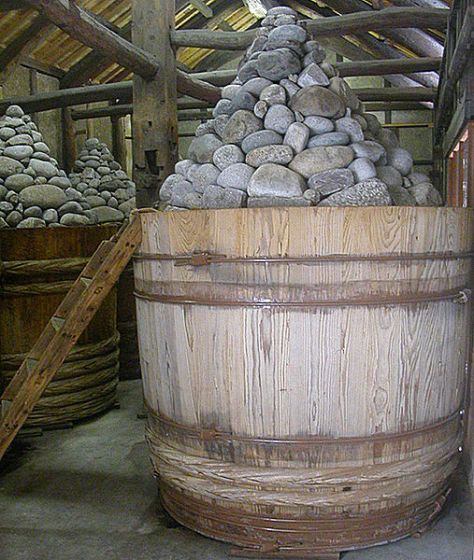
Miso being fermented inside a large wood cask

VARIETIES (FLAVOUR)

The taste, aroma, texture, and appearance of any specific miso vary with the miso type as well as the region and season for which the miso was made. The ingredients used, temperature and duration of fermentation, salt content, variety of kōji/yeast, and fermenting vessel all contribute. The most common flavor categories of soy miso are:

Shiromiso, “white miso”
Akamiso, “red miso”
MISO-5
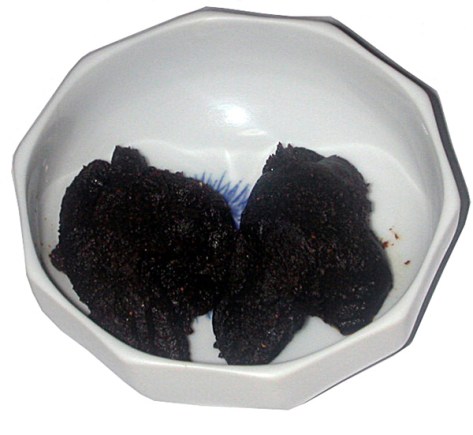
Kuromiso, “black miso”

Hatchomiso
White and red (shiromiso and akamiso) are the basic types of miso available in all of Japan as well as overseas. Different varieties are preferred in particular regions. For example, in the eastern Kantō region that includes Tokyo, the lighter shiromiso is popular, while in the western Kansai region encompassing Osaka, Kyoto, and Kobe, darker brownish hatchomiso is preferred, and akamiso is favored in the Tokai area.
MISO-4
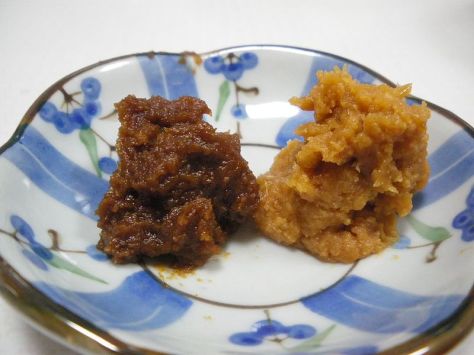
Akamiso and shiromiso

VARIETIES (INGREDIENTS)

The raw materials used to produce miso may include any mix of soybeans, barley, rice, buckwheat, millet, rye, wheat, hemp seed, and cycad, among others. Lately, producers in other countries have also begun selling miso made from chick peas, corn, azuki beans, amaranth, and quinoa. Fermentation time ranges from as little as five days to several years. The wide variety of Japanese miso is difficult to classify, but is commonly done by grain type, color, taste, and background.

MISO-6
Kinzanji/Kinzan Temple (金山寺味噌) miso

mugi (麦): barley
tsubu (粒): whole wheat/barley
aka (赤): red, made with rice koji and soybeans, medium flavor, most widely used in Japan
Hatchō (八丁): aged, strongest flavor, used mostly in Central Japan
shiro (白): rice, sweet white, fresh
shinshu (信州): rice, brown color
genmai (玄米): brown rice
awase (合わせ): layered, typically in supermarket
moromi (醪): chunky, healthy (kōji/yeast is unblended)
nanban (南蛮): chunky, sweet, for dipping sauce
inaka (田舎): farmstyle
taima (大麻): hemp seed
sobamugi (蕎麦): buckwheat
hadakamugi (裸麦): rye
meri (蘇鉄): made from cycad pulp, Buddhist temple diet
gokoku (五穀): “5 grains”: soy, wheat, barley, proso millet, and foxtail millet
Many regions have their own specific variation on the miso standard. For example, the soybeans used in Sendai miso are much more coarsely mashed than in normal soy miso.

Miso made with rice (including shinshu and shiro miso) is called kome (rice) miso (米味噌).
MISO-3
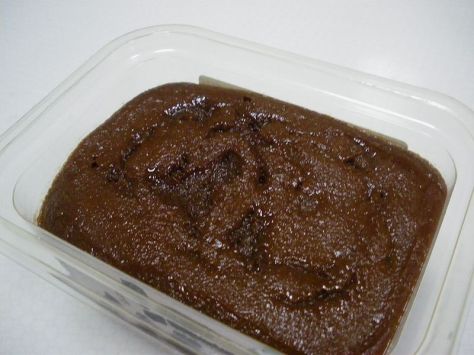
Miso sold in plastic container.

STORAGE AND PREPARATION

Miso typically comes as a paste in a sealed container, and should be kept refrigerated after opening. It can be eaten raw, and cooking changes its flavor and nutritional value; when used in miso soup, most cooks do not allow the miso to come to a full boil. Some people, especially those outside of Japan, go so far as to only add miso to preparations after they have cooled, to preserve the biological activity of the kōjikin/fermented yeast. Since miso and soy foods play a large role in the Japanese diet, there are a variety of cooked miso dishes as well.
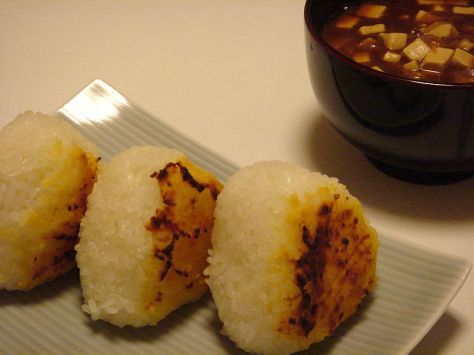
MISO-7
Grilled miso seasoned rice balls and miso soup

MISO AS FOOD

Miso is a part of many Japanese-style meals. It most commonly appears as the main ingredient of miso soup, which is eaten daily by much of the Japanese population. The pairing of plain rice and miso soup is considered a fundamental unit of Japanese cuisine. This pairing is the basis of a traditional Japanese breakfast, although more and more Japanese in big towns eat European style as opposed to people living in the country.
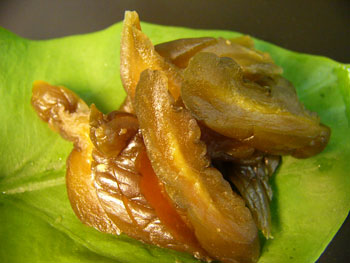
MISO-9
Cucmber pickled in “gold miso”

Miso is used in many other types of soup and souplike dishes, including some kinds of ramen, udon, nabe, and imoni. Generally, such dishes have the title miso prepended to their name (for example, miso-udon), and have a heavier, earthier flavor and aroma compared to other Japanese soups that are not miso-based.
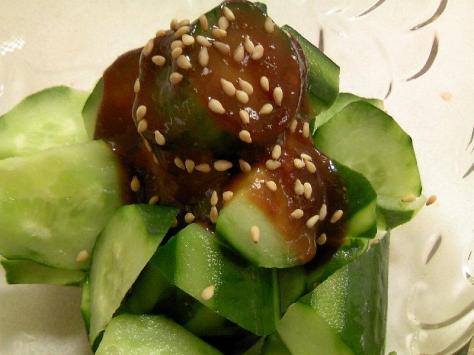
MISO-10
Fresh cucumber served with miso and sesame seeds

Many traditional confections use a sweet, thick miso glaze, such as mochidango. Miso glazed treats are strongly associated with Japanese festivals, although they are available year-round at supermarkets. The consistency of miso glaze ranges from thick and taffy-like to thin and drippy.

Soy miso is used to make a type of pickle called “misozuke” (味噌漬け). These pickles are typically made from cucumber, daikon, hakusai/Chinese cabbage, or eggplant/aubergine, and are sweeter and less salty than the standard Japanese salt pickle. Barley miso, or nukamiso (糠味噌), is used to make another type of pickle. Nukamiso is a fermented product, and considered a type of miso in Japanese culture and linguistics, but does not contain soy, and so is functionally quite different. Like soy miso, nukamiso is fermented using kōji mold.

Other foods with miso as an ingredient include:

dengaku (charcoal-grilled miso covered tofu)
yakimochi (charcoal-grilled miso covered mochi)
miso braised vegetables or mushrooms
marinades: fish or chicken can be marinated in miso and sake overnight to be grilled.
corn on the cob in Japan is usually coated with shiro miso, wrapped in foil and grilled.
sauces: sauces like misoyaki (a variant on teriyaki) are common.

NUTRITION AND HEALTH

The nutritional benefits of miso have been widely touted by commercial enterprises and home cooks alike. However, claims that miso is high in vitamin B12 have been contradicted in some studies. Part of the confusion may stem from the fact that some soy products are high in B vitamins (though not necessarily B12), and some, such as soy milk, may be fortified with vitamin B12. Some, especially proponents of healthy eating, suggest that miso can help treat radiation sickness, citing cases in Japan and Russia where people have been fed miso after the Chernobyl nuclear disaster and the atomic bombings of Hiroshima and Nagasaki. Also some experts suggest that miso is a source of Lactobacillus acidophilus or Lecithin which is a kind of phospholipid caused by fermentation is effective in the prevention of high blood pressure. Miso contains salt. A small amount is essential to animal life but most scientists believe an excess of it can cause a variety of health problems.

Please check the new postings at:
sake, shochu and sushi

—————————————-
日本語のブログ
—————————————-

Japanese Cuisine: Miso Soup-The Basics

MISOSOUP-1
Basic miso soup with Tofu and Wakame seaweed.

Miso soup (味噌汁, miso shiru) is a traditional Japanese soup consisting of a stock called “dashi” into which is mixed softened miso paste. Although the suspension of miso paste into dashi is the only characteristic that actually defines miso soup, many other ingredients are added depending on regional and seasonal recipes, and personal preferences.

Miso Paste:
The choice of miso paste for the soup defines a great deal of its character and flavor. Most miso pastes can be categorized into red (akamiso), white (shiromiso), or black (kuromiso), with darker pastes having a heartier, saltier flavor. There are many variations within these themes, including regional variations, such as Sendai miso; pastes designed to be used with specific misoshiru ingredients, such as yasaimiso, a white miso for use with miso-vegetable soup; and seasonal variations.

MISOSOUP-2
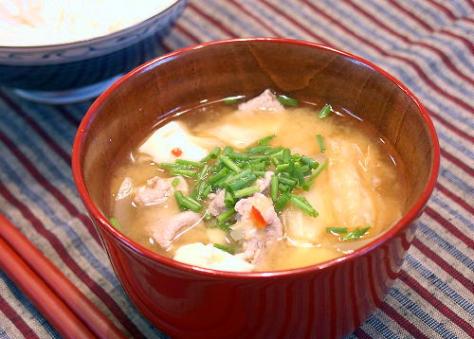
Miso Soup with Vegetables, tofu and pork

Stock/Dashi
The most common dashi soup stocks for miso soup are made of niboshi (dried baby sardines), kombu (dried kelp), katsuobushi (thin shavings of dried and smoked bonito, also called skipjack tuna), or hoshi-shiitake (dried shiitake mushrooms). The kombu can also be used in combination with katsuobushi or hoshi-shiitake. The kelp and/or shiitake dashi serve as a vegetarian or veagn soup stock.

Outside of Japan, American or European style miso soup is sometimes made by dissolving miso in a Western vegetable stock. The stock might include ingredients such as negi, carrot, potato and daikon radish. In some versions of the dish chicken stock, Western-style fish stock, and other non-dashi bases can even be used, but there is some debate over whether or not miso soups made using these non-traditional bases count as true misoshiru.

MISOSOUP-4
Vegetables in white miso soup.

Preparation:
Miso soup can be prepared in several ways, depending on the chef and the style of soup. Japanese recipes usually call for most vegetables and meats to be cooked in the simmering dashi, particularly mushrooms, daikon, carrots, potatoes, tofu, and fish. The miso is suspended separately in some dashi stock removed from the simmering mix, kept relatively cool (still hot, but below boiling) to keep the miso paste from cooking, which alters the flavour (cooking the miso “kills” the natural yeasts and reduces the health benefits of biologically active miso paste). When the vegetables are cooked, the stock is removed from heat, the miso suspension is added and mixed into the soup, any uncooked ingredients are added, and the dish is served.

In Japan, miso soup and white rice make up the central dishes of the traditional Japanese breakfast, and so most Japanese people drink miso soup at least once a day.

The soup is usually served in lacquer bowls with lids and drunk directly from the bowl, though the solid ingredients are eaten with chopsticks.

Instant Miso Soup:
Instant miso soup is available in single-serving packets, and generally contains dried wakame and tofu, soy beans that reconstitute rapidly on the addition of hot water. These are popular in the Japanese workplace, where miso soup can be made with lunch as easily as green tea, and using the same water. Instant miso soup, however, have up to 3 times the amount of sodium and MSG. Instant miso soup is also available in many grocery stores outside of Japan. These have a shelf life of between 3 to 12 months.

Next to come: Miso SoupRecipes and Preparation of Miso!

Please check the new postings at:
sake, shochu and sushi

—————————————-
日本語のブログ
—————————————-
Japanese Cuisine/Kaiseki 4: Cha-Kaiseki Sample

CHA-KAISEKI-1a

Cha-Kaiseki is the meal served in the context of chanoyu (Japanese tea ceremony). It precedes the serving of the tea at a formal tea function (chaji). The basic constituents of a cha-kaiseki meal are the ichijū sansai or “one soup, three side dishes”, and the rice, plus the following: suimono, hassun, yutō, and kōnomono. The one soup referred to here is usually miso soup, and the basic three side dishes are the following:

Mukōzuke: foods in a dish arranged on the far side of the meal tray for each guest, which is why it is called mukōzuke (lit., “set to the far side”). Often this might be some kind of sashimi, though not necessarily so. On the near side of the meal tray are arranged the rice and the soup, both in lacquered lidded bowls.

Nimono: simmered foods, served in individual lidded bowls.

Yakimono: grilled foods (usually some kind of fish), brought out in a serving dish for the guests to serve themselves.
Here under is a description of the additional items mentioned above:

Suimono: clear soup served in a small lacquered and lidded bowl, to cleanse the palate before the exchange of saké (rice wine) between host and guests. Also referred to as kozuimono (small clear soup) or hashiarai (chopstick rinser).

Hassun: a tray of tidbits from mountain and sea that the guests serve themselves to and accompanies the round of saké (rice wine) shared by host and guests.

Yutō: pitcher of hot water having slightly browned rice in it, which the guests serve themselves to.

Kōnomono: pickles that accompany the yutō.

Extra items that may be added to the menu are generally referred to as shiizakana, and these attend further rounds of saké. Because the host leaves them with the first guest, they are also referred to as azukebachi (lit., “bowl left in another’s care”).

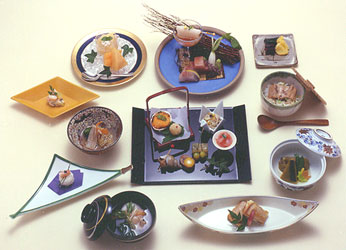
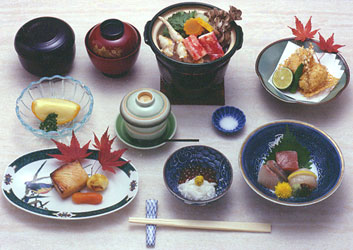
Now, here is a typical Cha Kaiseki meal.
Can you guess the components?

CHA-KAISEKI-1

CHA-KAISEKI-2

CHA-KAISEKI-3

CHA-KAISEKI-4

CHA-KAISEKI-5

Please check the new postings at:
sake, shochu and sushi

—————————————-
日本語のブログ
—————————————-
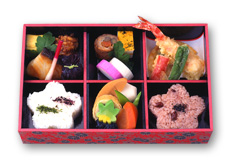
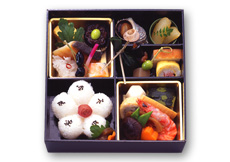
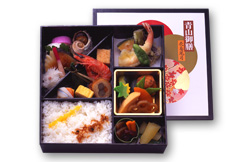
Japanese Cuisine/Kaiseki 3: Bento, Lunch Box Samples

KAISEKI-2

As mentioned before, kaiseki ryori also comes under the form of bento.
The latter can be ordered in restaurants or even on the internet.

Here is a typical collection of 10 different bento/lunch boxes whose prices vary from 14 to 35 US $.
Can you recodnize the ingredients?

KAISEKI-BENTO-1
“Hanagoromo”

KAISEKI-BENTO-2
“Youseikoubai”

KAISEKI-BENTO-3
“Harugasumi”

KAISEKI-BENTO-4
“Hanakosode”

KAISEKI-BENTO-5
“Umekoshiki”

KAISEKI-BENTO-6
“Harunokoto”

KAISEKI-BENTO-7
“Akinofue”

KAISEKI-BENTO-8
“Kagamishishi”

KAISEKI-BENTO-9
“Kyoukanoko”

KAISEKI-BENTO-10
“Funabenken”

Please check the new postings at:
sake, shochu and sushi

—————————————-
日本語のブログ
—————————————-

Vegan Japanese Dessert: Fruit Jelly

VEGAN-FRUIT-JELLY-1

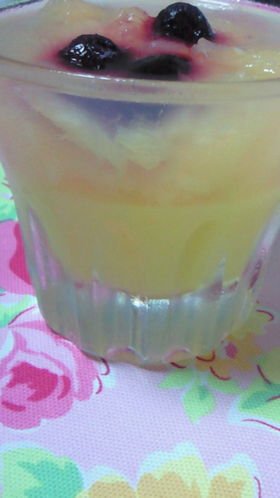
The Japanese do have some simple ideas to please vegans and vegetarians alike, especially when it comes to simple, tasty and healthy desserts.
Here is a simple fruit jelly dessert you can adapt according to seasons and availability (try it with your kids!):

INGREDIENTS: For 2 large cups
1)
-100% orange juice (organic if possible) 200ml
-Water: 200 ml
-Agar agar: 2^4 g (depending how solid you like your jelly)
2)
-100% apple juice (organic if possible): 200 ml
Water: 200 ml
-Agar agar: 2~4 g
-Grapefruit: 1 peeled and and quartered (all skins off)
-Mint leaves and blueberries for final touch

RECIPE:

VEGAN-FRUIT-JELLY-2
-Pour water in a pan. Add agar agar. Heat a little to dissolve agar agar. Add orange juice. Pour into two glass cup of your choice and leave inside the fridge until it solidifies completely.

VEGAN-FRUIT-JELLY-3
-Add grapefruit.

-Reapeat with apple juice: pour water in a pan and add agar agar. Heat slowly to dissolve agar agar. Add fruit juice. Pour the lot over the grapefruit.

VEGAN-FRUIT-JELLY-4
-Add grapefruit and mint to your liking and put inside refrigerator to solidify.

VEGAN-FRUIT-JELLY-5
-Variation with 3 layers!

VEGAN-FRUIT-JELLY-6
-As it appears on your spoon!

VEGAN-FRUIT-JELLY-7
-The other way round!

Please check the new postings at:
sake, shochu and sushi

—————————————-
日本語のブログ
—————————————-

Japanese Cuisine/Kaiseki 2: Full Course Samples

KAISEKI-1a

The second part of this series explaining the basics of kaiseki ryori features a selection of full course meal.
Let me remind the usual components of a kaiseki meal:

ORDER
Originally, kaiseki comprised a bowl of miso soup and three side dishes. It has since evolved to include an appetizer, sashimi, a simmered dish, a grilled dish, and a steamed course, in addition to other dishes at the discretion of the chef.

-Sakizuke/先付: an appetizer similar to the French amuse-bouche.
-Hassun/八寸: the second course, which sets the seasonal theme. Typically one kind of sushi and several smaller side dishes.
-Mukozuke/向付: a sliced dish of seasonal sashimi.
-Takiawase/焚き合せ: vegetables served with meat, fish or tofu; the ingredients are simmered separately.
-Futamono/蓋物: a “lidded dish”; typically a soup.
-Yakimono/焼き物: Broiled seasonal fish.
-Su-zakana/酢魚: a small dish used to clean the palate, such as vegetables in vinegar.
-Hiyashi-bachi/冷やし撥: served only in summer; chilled, lightly-cooked vegetables.
-Naka-choko/中ちょこ: another palate-cleanser; may be a light, acidic soup.
-Shiizakana/しい魚: a substantial dish, such as a hot pot.
-Goha, o-shokuji/ご飯,お食事: a rice dish made with seasonal ingredients.
-Ko no mono/この物: seasonal pickled vegetables.
-Tome-wan/留め碗: a miso-based or vegetable soup served with rice.
-Mizumono/水物: a seasonal dessert; may be fruit, confection, ice cream, or cake.

Now look at the following pictures and try to find what is featured!

KAISEKI-3
Seasonal kaiseki, spring and summer style

KAISEKI-4
Seasonal kaiseki, cold weather-style with nabe mono.

KAISEKI-5
Kaiseki, shabu shabu course style

KAISEKI-6
Kaiseki with hot dish

KAISEKI-7
Kaiseki, nabe course

KAISEKI-8
Kaiseki, bento style

Please check the new postings at:
sake, shochu and sushi

—————————————-
日本語のブログ
—————————————-

Japanese Cuisine/Kaiseki 1: Introduction

KAISEKI-1

I’ve been asked quite a few times to explain and give examples of Kaiseki (Kaiseki Ryōri), a tradional form of Japanese Cuisine.
Here is a mini series that I hope will help friends to at least understand the basics!

Kaiseki (懐石) or kaiseki ryōri (懐石料理) is a traditional multi-course Japanese dinner analogous to Western haute cuisine.

There are basically two kinds of traditional Japanese meal styles called “kaiseki” or “kaiseki ryōri.” The first, where “kaiseki” is written as 会席 (and kaiseki ryōri, 会席料理), referring to the fancy meal served at banquets. The other is written 懐石 or 懐石料理, referring to the simple meal that the host of a chanoyu/tea ceremony gathering serves to the guests, and which is also known as cha-kaiseki (茶懐石).

DISHES
In the present day, kaiseki is a type of art form that balances the taste, texture, appearance, and colors of food. To this end, only fresh seasonal ingredients are used and are prepared in ways that aim to enhance their flavor. Local ingredients are often included as well. Finished dishes are carefully presented on plates that are chosen to enhance both the appearance and the seasonal theme of the meal. Dishes are beautifully arranged and garnished, often with real leaves and flowers, as well as edible garnishes designed to resemble natural plants and animals.

ORDER
Originally, kaiseki comprised a bowl of miso soup and three side dishes. It has since evolved to include an appetizer, sashimi, a simmered dish, a grilled dish, and a steamed course, in addition to other dishes at the discretion of the chef.

-Sakizuke: an appetizer similar to the French amuse-bouche.
-Hassun: the second course, which sets the seasonal theme. Typically one kind of sushi and several smaller side dishes.
-Mukozuke: a sliced dish of seasonal sashimi.
-Takiawase: vegetables served with meat, fish or tofu; the ingredients are simmered separately.
-Futamono: a “lidded dish”; typically a soup.
-Yakimono: Broiled seasonal fish.
-Su-zakana: a small dish used to clean the palate, such as vegetables in vinegar.
-Hiyashi-bachi: served only in summer; chilled, lightly-cooked vegetables.
-Naka-choko: another palate-cleanser; may be a light, acidic soup.
-Shiizakana: a substantial dish, such as a hot pot.
-Gohan: a rice dish made with seasonal ingredients.
-Ko no mono: seasonal pickled vegetables.
-Tome-wan: a miso-based or vegetable soup served with rice.
-Mizumono: a seasonal dessert; may be fruit, confection, ice cream, or cake.

KAISEKI-2

CASUAL KAISEKI
The thing which put all menus of Kaiseki in Jubako (a nest of boxes). Shokado-bento falls under this, too.

Kaiseki is often served in ryokan/traditional inns in Japan, but it is also served in small restaurants. Kyoto is well known for its kaiseki.
Shizuoka is also renown for its kaiseki reastaurants thanks to the abundance of natural ingredients all year round.

Please check the new postings at:
sake, shochu and sushi

—————————————-
日本語のブログ
—————————————-
Japanese Cakes/Wagashi 14: Satsuma Imo/Sweet Potato

SATSUMA-WAGASHI-1

Satsuma Imo or Sweet Potatoes are often used in Japanese cakes/Wagashi.
The great advantage is that it makes for completely vegan cakes with an almost endless source of variations.

Here is the basice recipe from you will be able to improvise!

INGREDIENTS:

-Satsuma/Sweet Potato: 400g (peeled)
-Sugar: 75 g
-Agar agar powder: 3 g
-Salt: a pinch
-Water: 20 ml

RECIPE:

SATSUMA-WAGASHI-2
-Cut the sweet potato into small pieces and wash under clear cold water to take off astringency.
Boil in a pan with 20 ml of water until soft.

-Just before the potatoes are completely cooked, add sugar agar agar and salt. Bring to boil and swith off fire. Bear in mind there will is very little water. Do not burn the poatoes!

-Transfer potatoes into a frying pan and fry until they get smooth..

-Return to boiling pan and heat to get all excess water out.

-Pass through a sieve, or process.

-Wet the inside of a refrigerator recipient before spreading cellophane paper inside. Pour the potato puree into the recipient and fold the cellophane paer on top, leaving no air between cellophane paper and potato. Chill inside refrigerator.

SATSUMA-WAGASHI-3

Before eating unwrap cellophane paper and cut into preferred shape.
This is where the fun begins!

Please check the new postings at:
sake, shochu and sushi

—————————————-
日本語のブログ
—————————————-