Tag Archives: recipe

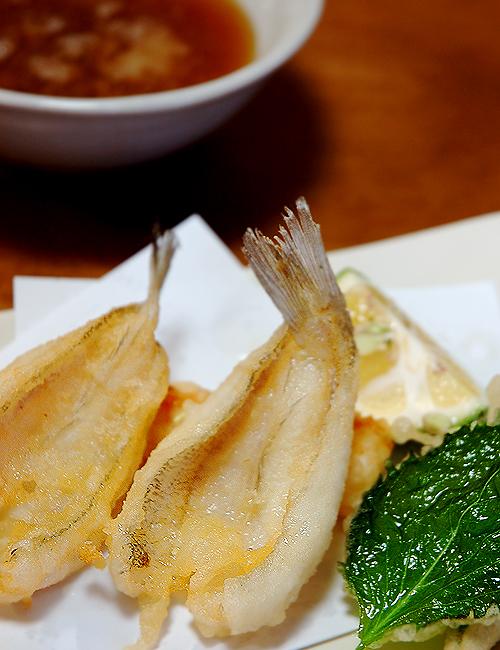
Tempura: The Professional Basic Recipe

Tempura is not difficult to make. If you keep to the basics and good ingredients, you will be able to make a lot of people happy with healthy and beautiful food.

The following instructions should be amply enough to succeed with this celebarted Japanese gastronomic marvel:

INGREDIENTS:
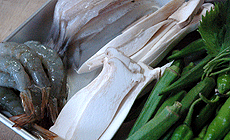
What can you fry as tempura?
-Any green or not vegetable as long as they are cut to the appropriate size. Avocado and pumpkin can be made as tempura!
Important: try to keep all vegetables cut to the same size.
If consistency and thickness varies, sort them out accordingly in compatible batches. The frying will be more even, avoiding disappointing discrepancies.
Wash and dry vegetables.
-Any white-fleshed fish, crustaceans and shellfish. Clean and wipe off excessive humidity. Fry them separately from the vegetables. Some red-fleshed fish can be made as tempura, but they are a bit of an acquired taste.

In short, don’ be afraid of experimenting!

Vegans and Vegetarians

Before we go any further, vegans and vegetarians can make tempura. Replace the egg white with cornstarch. Wheat flour allergics can use other flour types, keeping in mind they have to be of the kight-weight and fine sort.

-If you use frozen ingredients, make sure to thaw them completely and wipe off all excess water!
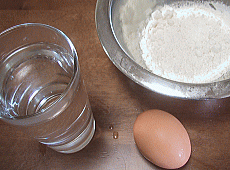
The batter:
-Use an equal amount of fine light flour and pure water.
1 cup of water for 1 cup of flour and 1 egg white are the right proportions.
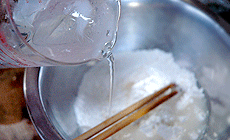
Important!
-Flour, water and egg, not only must be at the same temperature, but must be chilled! leave them together in the fridge before using!
The batter should be prepared at the last moment after all the ingredients have been cut and laid on the table, the oil brought to the right temperature and the sauces or spices prepared and laid on the table!

-First mix water and egg white (or cornstarch/not too much with that one!). Then pour on the flour and mix lightly.
Do not overmix! Flour blobs should still be there! This is the secret for fluffy, light tempura!
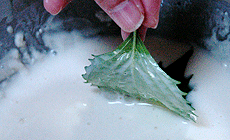
Fish, crustaceans and shellfish may be completely dipped in the batter as well as rounded or stick-shaped vegetables including slices of onions, kabocha or avocado.
But in the case of large leafy vegetables such as shiso/perilla or large flat mushrooms such as shiitake, dipping only one side (back side for leaves!) in batter is preferable, otherwise you will end up with masses of fried batter!
Actually, in the case of fish, it is better to dip only the skin side in the batter.
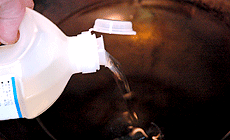
Oil:
-Use plenty.
Use clean fresh oil!
Use salad oil of your preference and sesame oil in a 6:4 ratio.
Bad oil or old oil is bad for your health.
If the oil keep bubbling on upon being heated, change it!

Frying:
-The usual temperature is 180 degrees Celsius, but the ideal is 170 degrees Celsius.
Note: 160 degrees Celsius is not hot enough!
-Use a relatively thin pan for frying as the temperature of the oil will fall down by 4 degrees Celsius when food is plunged into the oil. The oil has to reach its former temperature back as soon as possible.
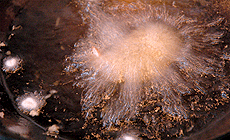
-Fry vegetables before fish or seafood as the latter’s proteins will change the character of the oil.
-Do not crowd the oil. Drop everything in the middle in small batches.
-Do not overfry. Experience will tell you when to take ingredients out.
-Do not fry twice! Full stop!
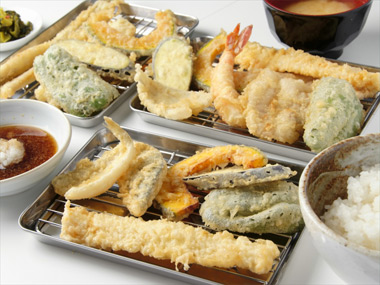
Serve on a piece of kitchen paper after having put the ingredients on a grill for a few seconds to get rid of the excess oil.
Seasoning:
-Personally I eat tempura as it is without anything, but if I use seasoning I like the following:
Matcha powder
Rock salt
Curry mixture powder

Now,if you want to dip your tempura in soup/tsuyu, you can prepare it as follows:
Dashi (konbu/seweed dashi for veganas and vegetarians!): 5 (or 4)
Soy sauce: 1 (or 2)
Mirin/sweet sake: 1
Heat the whole a little before serving.

NOTE:
-You may use freshly grated daikon, lemon juice or a light dressing of your choice for further seasoning.

RECOMMENDED RELATED SITES:
Bread + Butter, Comestilblog, Greedy Girl, Bouchon For 2, Zoy Zhang, Hungry Neko, Mangantayon, Elinluv Tidbit Corner, Maison de Christina, Chrys Niles, Lexi, Culinary Musings, Eats and Everything, Bite Me New England, Heather Sweet, Warren Bobrow, 5 Star Foodie, Frank Fariello, Oyster Culture, Ramendo, Alchemist Chef, Ochikeron, Mrs. Lavendula, The Gipsy Chef, Spirited Miu Flavor

Please check the new postings at:
sake, shochu and sushi

—————————————-
日本語のブログ
—————————————-
Tempura: The Basics

Home-made style tempura

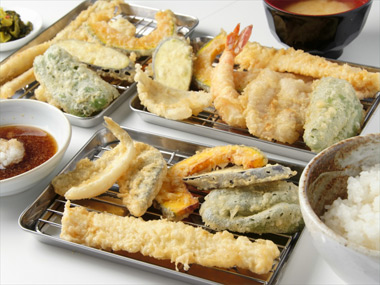
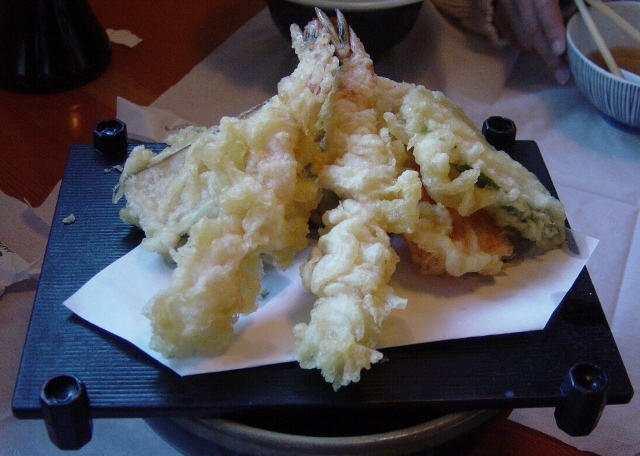
Tempura (天麩羅, or 天婦羅, tenpura, also written as “天ぷら”), which may be of Portuguese origin, is a popular Japanese dish of deep fried, battered seafood, or vegetables which has spread all the world!

The word tempura, or the technique of dipping fish and vegetables into a batter and frying them, comes from the word “tempora,” a Latin word meaning “times”, “time period” used by both Spanish and Portuguese missionaries to refer to the Lenten period or Ember Days (ad tempora quadragesimae), Fridays, and other Christian holy days.

Tempura at a Japanese Restaurant

In Japan, restaurants specializing in tempura are called tenpura-ya and range from inexpensive fast food chains to very expensive five-star restaurants. Many restaurants offer tempura as part of a set meal or an obento (lunch box), and it is also a popular ingredient in take-out or convenience store obento boxes. The ingredients and styles of cooking and serving tempura vary greatly through the country, with importance being placed on using fresh, seasonal ingredients.

Vegetables Tempura

Batter
A light batter is made of cold water and soft wheat flour. Eggs, baking soda or baking powder, starch, oil, and/or spices may also be added. Tempura batter is traditionally mixed in small batches using chopsticks for only a few seconds, leaving lumps in the mixture that, along with the cold batter temperature, result in the unique fluffy and crisp tempura structure when cooked. The batter is often kept cold by adding ice, or by placing the bowl inside a larger bowl with ice in it. Over-mixing the batter will result in activation of wheat gluten, which causes the flour mixture to become chewy and dough-like when fried.

Specially formulated tempura flour is available in worldwide supermarkets. This is generally light (low-gluten) flour and occasionally contains leaveners such as baking powder.

Some varieties of tempura are dipped in a final coating, such as sesame seeds, before frying. Tempura generally does not use breadcrumbs in the coating.

Shrimps Tempura

Frying
Thin slices or strips of vegetables or seafood are dipped in the batter, then briefly deep-fried in hot oil. Vegetable oil or canola oil are most common, however tempura was traditionally cooked using sesame oil. Many specialty shops still use sesame oil or tea seed oil, and it is thought that certain compounds in these oils help to produce light, crispier batter.

When cooking shellfish, squid, or hard-skinned watery vegetables such as bell pepper or eggplant, the skin is usually scored with a knife to prevent the ingredients from bursting during cooking, which can cause serious burns from splashing oil.

Oil temperature is generally kept between 160 and 180 degrees Celsius, depending on the ingredient. In order to preserve the natural flavour and texture of the ingredients, care is taken not to overcook tempura. Cooking times range between a few seconds for delicate leaf vegetables, to several minutes for thick items or large kaki-age fritters.

The bits of batter (known as tenkasu) are scooped out between batches of tempura, so they do not burn and leave a bad flavour in the oil. A small mesh scoop is used for this purpose. Tenkasu are often reserved as ingredients in other dishes or as a topping.

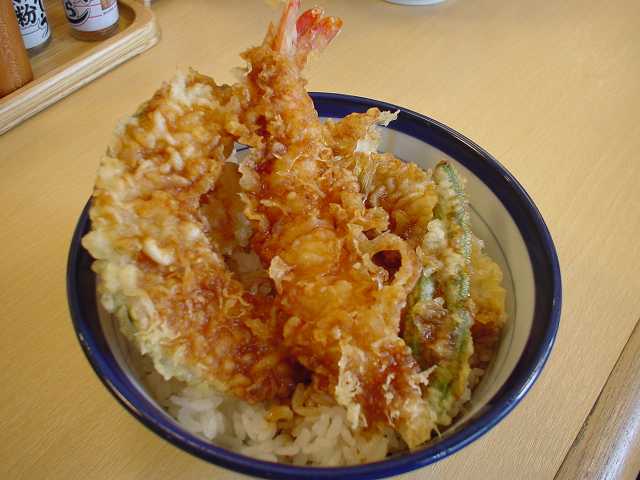
Tempura Tendon (on a bowl of rice)

Ingredients
Seafood: Prawn, Shrimp, squid, scallop, anago (conger eel), ayu (sweetfish), crab, and a wide variety of fish and shellfish.
Vegetables: bell pepper, kabocha squash, eggplant, carrot, burdock, green beans, sweet potato, yam, potato, renkon (lotus root), shiitake mushroom, mushrooms, bamboo shoots, okra.
There is no real limit, actually.
Keep in mind that it is probably the best way to appreciate wild mountain vegetables!

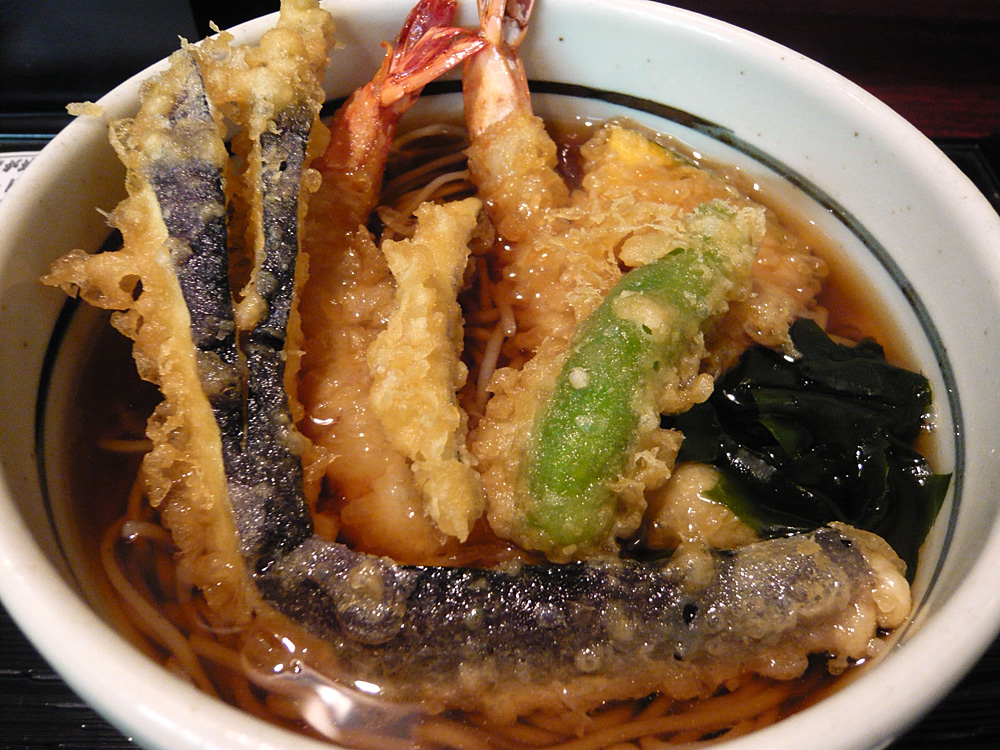
Tempura served on Soba!

Serving and presentation
Cooked bits of tempura are either eaten with dipping sauce or used to assemble other dishes. Tempura is commonly served with grated daikon and eaten hot immediately after frying. The most common sauce is tentsuyu sauce (roughly three parts dashi, one part mirin, and one part shoyu). Alternatively, tempura may be sprinkled with sea salt before eating. Mixtures of powdered green tea and salt or yuzu and salt are also used.

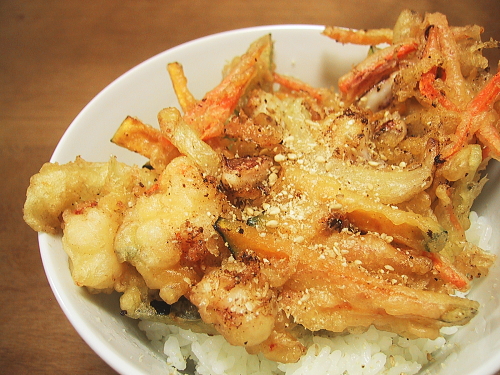
Kakiage on a bowl of rice

Kakiage is a type of tempura made with mixed vegetable strips, such as onion, carrot, and burdock, and sometimes including shrimp, which are deep fried as small round fritters.

Tempura is also used in combination with other foods. When served over soba (buckwheat noodles), it is called tempura soba or tensoba. Tempura is also served as a donburi dish where tempura shrimp and vegetables are served over steamed rice in a bowl (tendon) and on top of udon soup (Tempura Udon).

Tempura and Kakiage Professional recipes coming soon!

RECOMMENDED RELATED SITES:
Bread + Butter, Comestilblog, Greedy Girl, Bouchon For 2, Zoy Zhang, Hungry Neko, Mangantayon, Elinluv Tidbit Corner, Maison de Christina, Chrys Niles, Lexi, Culinary Musings, Eats and Everything, Bite Me New England, Heather Sweet, Warren Bobrow, 5 Star Foodie, Frank Fariello, Oyster Culture, Ramendo, Alchemist Chef, Ochikeron, Mrs. Lavendula, The Gipsy Chef

Please check the new postings at:
sake, shochu and sushi

—————————————-
日本語のブログ
—————————————-
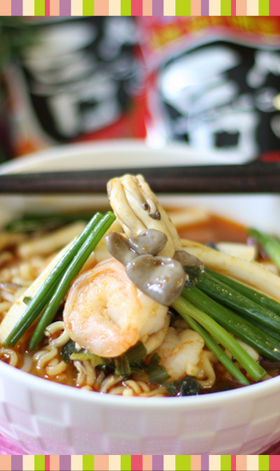
Ramen: Korean-style Recipe

Not only the Japanese, but koreans also make succulent ramen.
Here is a very simple home-made recipe in Korean style:

Korean-style ramen!

INGREDIENTS: For 1 person?

-Instant Korean ramen with their soup powder: 1 pack (size is up to you! readily available in all Asian markets)
-Water: 500 ml
-Squid: 50 g
-Shrimps: 50 g
-Mushrooms: 30 g
-Fresh beasprouts: 50 g
-Thick short leek: 2
-Salad oil: 1 tablespoon
-Grated garlic: 1 teaspoon
-Oyster sauce: 1 teaspoon
-Salt: a little
-Pepper: a little

RECIPE:

-Cut the squid in 1 cm/5cm pieces. Take shell off shrimps.
In a frypan pour the oil with grated garlic and switch on fire/heat.

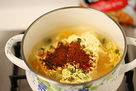
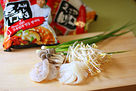
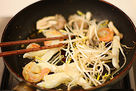
-As soon as the garlic aroma comes out add shrimps and squid and fry until shrimp have changed colour. Add mushrooms, beansprouts, oyster sauce, salt and pepper and stir-fry for a short moment.

-In a large pot bring water to boil. Drop ramen, instant Korean powdered soup and other seasoning if included.

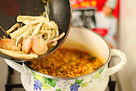
-As soon as you are satisfied with the consistency of the ramen add fried squid and shrimps and leeks cut in proper size.

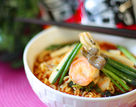
-You prefer to serve in the following way:
First the ramen with their soup.
Second topped with fried squid, shrimps and mushrooms.
Last decorated with cut leeks.

Simple and easy to improve on!

RECOMMENDED RELATED SITES:
Bread + Butter, Comestilblog, Greedy Girl, Bouchon For 2, Zoy Zhang, Hungry Neko, Mangantayon, Elinluv Tidbit Corner, Maison de Christina, Chrys Niles, Lexi, Culinary Musings, Eats and Everything, Bite Me New England, Heather Sweet, Warren Bobrow, 5 Star Foodie, Frank Fariello, Oyster Culture, Ramendo, Alchemist Chef, Ochikeron, Mrs. Lavendula, The Gipsy Chef

Please check the new postings at:
sake, shochu and sushi

—————————————-
日本語のブログ
—————————————-
Ramen with Komatsuna and Minced Meat

All ramen lovers, please check Ramendo’s great Ramen Poll!

Ramen make for excellently balanced meals when properly combined with green vegetables and meat.
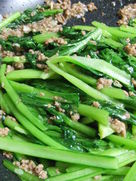
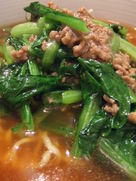
Here is a simple recipe combining ramen with minced pork and bee and komatsu leaves:

Ramen with Komatsuna and Minced Meat!

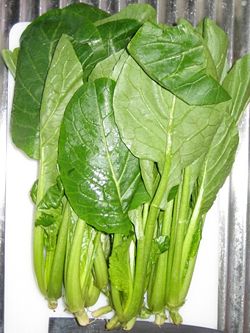
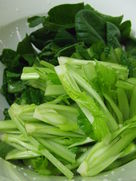
Komatsuna (Brassica rapa var. perviridis or var. komatsuna, コマツナ/小松菜、冬菜、鶯菜) is a type of leaf vegetable. It is a variant of the same species as the common turnip. It is grown in Japan, Taiwan and Korea. It is also known as Japanese Mustard Spinach and can be stir-fried, pickled, boiled and added to soups or used fresh in salads. It is an excellent source of calcium. It is also used for fodder in some Asian countries. The leaves of komatsuna can be eaten at any stage of growth. In a mature plant they are dark green with slender light green stalks, around 30 cm long and 18 cm wide. It is most often grown in the spring and autumn, as it cannot endure extreme heat or cold for more than a short time.

INGREDIENTS: For 2 persons

-Non-fry instant ramen (sold with shoyu/soy sauce taste stock soup powder): 2 packs
-Minced meat (half beef, half pork. Can be replaced with chicken): 180 g
-Komatsuna (or spinach): 1 bouquet (as much as you want, actually!)
-Ginger: 1 fresh piece (2×2 cm)
-Garlic (little smell variety if you can find it): 1 large clove
-Sesame oil: 1 teaspoon
-Chicken Bouillon powder (to taste): 1 cube~ crushed into powder

-Cornstarch: to taste (depends on how thick you like your soup)
-Water: 50 ml

RECIPE:

-Cut the komatsuna/spinach into 2 or 3 easy to eat lengths. Chop the ginger fine. Slice the garlic.

-Mix the cornstarch with a water in small cup (don’t forget to stir it again before using it!)

-Prepare the soup by heating water added with the soup bought together with the instant ramen.

-Boil the ramen in salted water to the consistence of your liking.

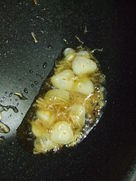
-While the ramen are boiling, In a frypan fry the ginger and garlic in sesame oil over a small fire so as to bring out flavour.

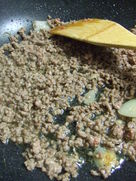
-Once the aroma of the fried chopped condiments come out add the minced meat and fry over a medium high fire.

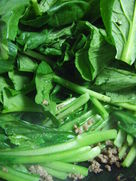
-Once the meat is well cooked, throw in the komatusna, lower stems irst for a few seconds and then all the rest, over a strong fire.

-Add the chicken bouillon powder and mix well.

-Reduce the fire to low. sprinkle over with all the starch mixed with water. Turn the fire to high and stir until the sauce around the meat and veg has thickened to your liking. Switch off fire.

-In a bowl (two bowls for 2 in this case), drop the boiled and drained ramen. Cover with soup and top with fried komatsuna and minced meat.

Simple!

RECOMMENDED RELATED SITES:
Bread + Butter, Comestilblog, Greedy Girl, Bouchon For 2, Zoy Zhang, Hungry Neko, Mangantayon, Elinluv Tidbit Corner, Maison de Christina, Chrys Niles, Lexi, Culinary Musings, Eats and Everything, Bite Me New England, Heather Sweet, Warren Bobrow, 5 Star Foodie, Frank Fariello, Oyster Culture
href=”http://ramendo.wordpress.com/”>Ramendo, Ramendo

Please check the new postings at:
sake, shochu and sushi

—————————————-
日本語のブログ
—————————————-
Ramen: Simple Recipe with Beansprouts, Butter and Miso!

The Basic and Complete Ramen Recipe, I must admit, was complicated and a bit hard for friends to follow, but ramen can also be made simple and tasty.
Here is an example:
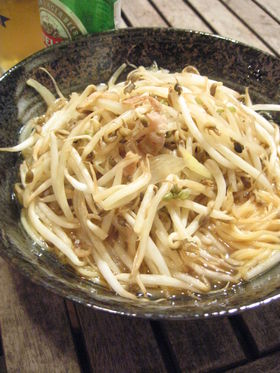
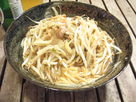
Ramen with beansprouts, butter and miso!

INGREDIENTS: For 2 servings

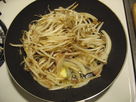
-Beansprouts (“moyashi”/もやし): one pack or a very large handful. Fresh, please!
-Onion: one half
-Bacon: 2 rashers
-Ramen: enough for 2 persons
-Butter: 1 tablespoon
-Miso: to taste

RECIPE:

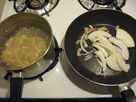
-While you boil the ramen, cut the onion and bacon into thin slices and fry. Boil some very lightly salted water for the soup (if you have bought the ramen with their soup, add it to the water, although it might become a bit heavy)

After the onion have become translucent and started taking in the bacon juices throw in the beansprouts and butter. Add just enough soup water as to obtain a thick enough soup. Add miso and stir.

In a bowl drop the boiled and drained ramen and top it with the beansprouts, bacon and onion soup!
Easy, isn’t it?

NOTE:
If you wish to make your ramen spicy add spices and chili when you fry the onion and bacon.
Don’t be afraid of using a lot of beansprouts (and other thinly cut veg if you wish)!

RECOMMENDED RELATED SITES:
Bread + Butter, Comestilblog, Greedy Girl, Bouchon For 2, Zoy Zhang, Hungry Neko, Mangantayon, Elinluv Tidbit Corner, Maison de Christina, Chrys Niles, Lexi, Culinary Musings, Eats and Everything, Bite Me New England, Heather Sweet, Warren Bobrow, 5 Star Foodie, Frank Fariello, Oyster Culture, Ramendo

Please check the new postings at:
sake, shochu and sushi

—————————————-
日本語のブログ
—————————————-
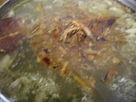
Ramen: A Basic Complete Recipe

The following ramen recipe is complete but basic and can be improved on with many variations and other ingredients. It originally comes from Saitama prefecture, just morth of Tokyo.

INGREDIENTS: For 14~15 servings

SOUP/STOCK
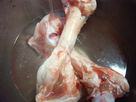
-Pork bone: 1~2
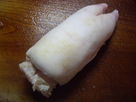
-Pig feet/trotter: 1
-Chicken frame/chicken carcass: 1 whole chicken
-Pork belly (for chashu): 1.3 kg
-Onion, carrot, potato: 1/2 of each
-Cabbage: 1/8
-Leeks (green part): 2
-Figs: 2
-Fresh ginger root: 3 slices
-Garlic: 1 whole
-Chili pepper: 1 whole

JAPANESE BASE SOUP/STOCK:
-Water: 2.5 liters
-Konbu/dry seaweed: 6
-Iriko (small dry fish): 50g
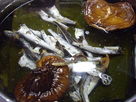
-Dried shiitake mushroom: 2
-Kongoukezuribushi or Niboshi dashi/dry sardines shavings for stock: 1 pack

CHASHU/CHAR SIU SAUCE
-Water: 1000 ml
-Soy sauce: 500 ml
-Japanese sake: 200 ml
-Mirin/Sweet sake: 50 ml
-Sugar: 110 g
-Fresh ginger and garlic: 2 each
-Chicken breasts: 2 (optional)

SHOYU DARE/SOY SAUCE SAUCE:
-Japanese base stock soup: 300 ml
-Konbu/dried shiitake: 1 each
-Japanese sake: 100 ml
-Mirin/sweet sake: 1 tablespoon
-Iriko/small dry fish: 30 g
-Kongoukezuribushi or Niboshi dashi/dry sardines shavings for stock: 80 g
-Soy sauce: 500 ml
-Salt: 1 tablespoon
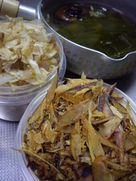
-Hana katsuo/large bonito shavings: 150 g
-Chashu/Char siu sauce: 150 ml

MEN/NOODLES:
-Bread flour: 1 kg
-Cookie flour: 500 g
-Salt: 23 g
-Eggs: 11~12/580 g
-Butter: 90g

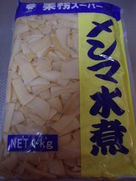
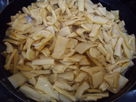
MENMA/ (メンマ or 麺麻 or 麺碼), a Japanese condiment made from lactate-fermented bamboo shoots
-Packed boiled menma: 1 kg
-Sesame oil: 1~2 tablespoons
-Chili pepper: 1 whole
-Mirin/sweet sake: 2 tablespoons
-Japanese sake: 2 tablespoons
-Soy sauce: 6 tablespoons
-Chashyu/Char siu soup: 4 tablespoons

OTHERS:
-Boiled egg, chopped leeks, nori seaweed, etc.

RECIPE:

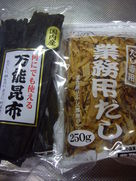
Konbu and dashi sold in Japanese supermarkets.

Packed boiled menma sold in Jpanese supermarkets.

FIRST DAY:

Keep in mind that such ramen take two day to prepare!

JAPANESE STOCK:
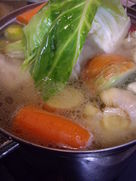
Pour all the ingredients for the Japanese soup stock in a large bowl and let rest a whole night (inside the fridge in summer!)

Wash the blood off the chicken carcass and pork bones with clear cold water.
Break the pork bones in two.

Holding the pork feet with tongs, burn the hair away over a gas flame.
Clean with clear cold water.

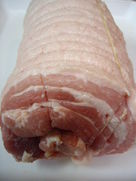
Roll thepork belly cut with the thinner part inside. Secure it by binding it tightly in cooking rope/thread. Do the same with the chicken breast if you use them.

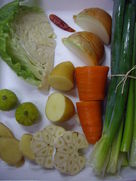
Wash vegetables and cut roughly.
Do not peel them!

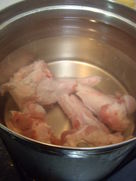
In a large enough (7~10 l) pot, pour plenty of water and boil the pork bones inside over a strong fire.
Skim off the water regularly of all unwanted matters.

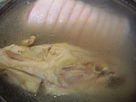
When unwanted matters have stopped appearing, add chicken carcass, pork belly, pig feet/trotters and boil over a medium high fire, skimming off all unwanted matters regularly until they stop appearing.

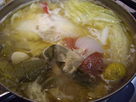
Add vegetables and seasoning and simmer over a medium high fire for 2 hours.
Switch off fire.

Chashyu/Char siu
Take out pork abelly (and chicken if used) out of the pot and simmer it in the Chashyu/Char siu sauce for 2 hours.

———-

SECOND DAY

SHOYU DARE/SOY SAUCE SOUP
Take out all solid ingredients out of the Japanese base soup stock pan.
Take 300 ml out of it into a separate bowl.
Add the other ingredients (-Konbu, dried shiitake, Japanese sake, Mirin/sweet sake, iriko/small dry fish, Kongoukezuribushi or Niboshi dashi/dry sardines shavings for stock, Soy sauce, Salt, Hana katsuo/large bonito shavings) and 150 ml of the Chashyu/Char siu sauce.

SOUP
Bring the soup left after cooking the chashyu/Cahar siu to boil.
Discard vegetables.

Add the rest of the Japanese base soup stock and cook over a low fire for 2 hours. This will be your basic soup.

NOODLES

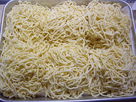
Prepare noodles bymixin the ingredients as you would do with pasta.
Cut the noodles with a pasta machine to 2×2 mm and let rest inside fridge.

MENMA

Bring water to boil in a pot.
Boil the menma for a little while.
Drain completely.

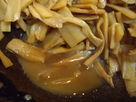
Pour the sesame oil in a frying pan. Lightly fry menma and chili pepper. Add other ingredients. Keep frying until juices have reduced to about 2 tablespoons. Transfer into a bowl. Let cool completely. Keep in fridge.

The proportions for the soup and shoyu dare should be of 360~400 ml of soup for 35~50 ml of shoyu dare. Adjust to taste.

After having chilled the chashyu/char siu well cut ino slices of the thickness of your preference.
Chop the leeks.

Heat large serving bowl in hot water.
Boil the noodles in a large pot for 4~5 minutes.

While you boil the noodles, throw hot water out of the serving bowl.
Pour shoyu dare then the soup.
Drain the noodles and drop them in the soup.
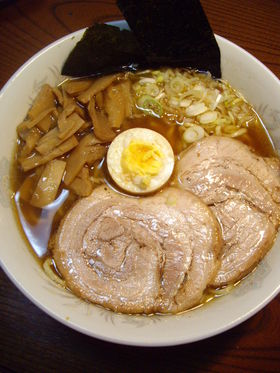
Place chashyu/char siu, boiled eggs, chopped leeks and nori on top and serve!

NOTE:

The noodles according to this recipe should have enough “bite” to them while blending well with the soup!

RECOMMENDED RELATED SITES:
Bread + Butter, Comestilblog, Greedy Girl, Bouchon For 2, Zoy Zhang, Hungry Neko, Mangantayon, Elinluv Tidbit Corner, Maison de Christina, Chrys Niles, Lexi, Culinary Musings, Eats and Everything, Bite Me New England, Heather Sweet, Warren Bobrow, 5 Star Foodie, Frank Fariello, Ramendo

Please check the new postings at:
sake, shochu and sushi

—————————————-
日本語のブログ
—————————————-
Vegan and Vegetarian Japanese Cuisine: Tofu (2)-Varieties


The Japan Blog List

Please check the new postings at:
sake, shochu and sushi

—————————————-
日本語のブログ
—————————————-
zarudofu
“Zarudofu”, my favourite variety of tofu just filtered out in a “zaru/basket”. You just eat it with a spoon on its own. No seasoning needed!

This is the second article dedicated to some of the many varieties of that celebrated food, tofu. A third article is in preparation as for recipes!

tofu-kinds-10
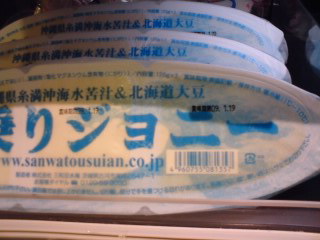
Okinawa Tofu

Tofu comes in various degrees of firmness.
The softest are “Zaru dofu” (see pic above) and Okinawa-style tofu.

tofu-kinds-7
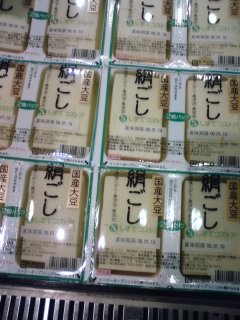
“Kinu Goshi Tofu”

Next come “Kinu Tofu/Kinu Goshi Tofu”/Silk-sieved tofu. It can be used for almost any recipe, although you might have to press it as it contains a lot of water.

tofu-kinds-9
“On Tofu”

“On Tofu” is similar to “Kinu tofu”, but it has been conceived as it its name indicates for being eaten hot or warm instead of cold.

tofu-kinds-6
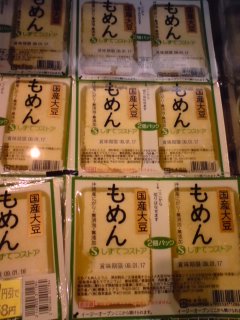
“Momen Tofu”

“Momen Tofu”/”Wool Tofu” contains less water, is firmer and is perfect for “Nabe/Japanese Pot-au-feu”.

tofu-kinds-8
“Yaki Tofu”

“Yaki Tofu/Grilled tofu” (not to be confused with deep-fried tofu) is usually “Momen tofu” grilled to give it the “gratine” look. Tasty, it is particularly interesting when sauteed with vegetables and so forth in Japanese, Chinese, Korean or Thai food.

tofu-kinds-1
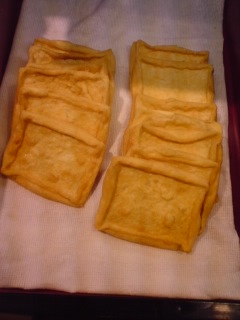
“Yawarakaage or Yawarakai Aburaage”

Tofu can be bought cooked/deep-fried in many manners.
“Yawarakaage” is tofu deep-fried into a thin sheet which can be opened as a pouch like in:

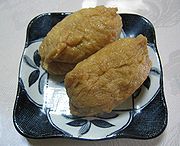
inari-tofu
“Inari”

“Inari” is “Yawarakaage”, which has been first marinated in mirin, soy Sauce and sugar. Do ask about its preparation as some companies or individuals add dashi, which is usually not vegan or vegetarian!

tofu-kinds-2
“Namaage”

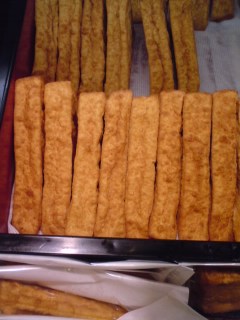
“Karaage Tofu/Deep-fried Tofu” comes in many forms.
The above “Namaage/Deep-fried raw” is the most common.

tofu-kinds-3
“Kinu Namaage”

“Kinu namaage” is great for the contrast between a solid outside and vey soft inside.

tofu-kinds-4
“Ganmo” and “Kyo-Ganmo”

“Ganmo” is Tofu that has pressed to almost dry, then broken into very small lumps to which one added cooked carrots, Hijiki sweet seaweed, grated yam, a little sugar (not always), shaped into a ball and lightly deep-fried. Great, heated again with vegetables and a swet and sour sauce, or in whatever recipe you might imagine. “Kyo-Ganmo” is the smaller Kyoto-Style variety. Ganmo should be made exclusively with vegetal matter, but do ask if you are not sure!

tofu-kinds-5
“Tofu Doughnuts”

Yes, you have read it, “Tofu Doughnuts”, very popular with kids!

Other varieties:
-“Okara” is hard-pressed, almost dry tofu sold broken into very small lumps.
-“Yuba” is the “skin” appearing on top of the pan when tofu is being prepared. Very popular served cold with all kinds of ingredients.
-“Koya” is hard-pressed tofu sold marinated. Now, as it contains fish stock dashi, it is not suitable to vegans or vegetarians.
-“Kuro goma tofu” or “Shiro goma tofu” (Black and white sesame curd) are not made with soy beans but sesame, although they make for great food for vegans and vegetarians.

There are many other “fancy” varieties, but I cannot guarantee their suitability to vegans or vegetarians!

Enjoy!

Vegan and Vegetarian Japanese Cuisine: Tofu (part 1)-Preparation


The Japan Blog List

Please check the new postings at:
sake, shochu and sushi

—————————————-
日本語のブログ
—————————————-
zarudofu
“Zarudofu”, my favourite variety of tofu just filtered out in a “zaru/basket”. You just eat it with a spoon on its own. No seasoning needed!

As promised, here is the first posting about tofu.
This article concerns the home-making of it.
The next article will introduce different kinds of tofu and recipes!

Ingredients (for one large piece, one cho/丁in Japanese)

Soy beans: 2 cups (360cc)
Nigari: 2 large tablespoons
(Magnesium chloride is an important coagulant used in the preparation of tofu from soy milk. In Japan it is sold as nigari (the term is derived from the Japanese word for “bitter”), a white powder produced from seawater after the sodium chloride has been removed, and the water evaporated. In China it is called “lushui”.. Nigari or Lushui consists mostly of magnesium chloride, with some magnesium sulfate and other trace elements. It is also an ingredient in baby formula milk).
Water: 5 cups (twice and a half the volume of soy beans)

Utensils:
One large pot
One large clean cloth pouch to press tofu through
One bowl
One mixer
One thermometer
One large piece of gauze to filter water off shaped tofu
One large wooden spoon
One wooden tofu-shaper case

RECIPE:
toofu-1
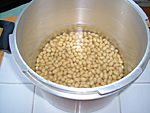
1) Preparation: soak soy beans in water overnight

toofu2
2) Preparation: Mix nigari with 1 cup of water and set aside

toofu-3
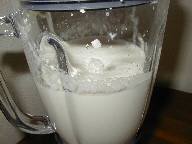
3) According to its size, Pour the whole or part by part soy beans and water (1) and make paste as fine as possible. If mixer runs at an even pace without crushing beans into paste, add more water. The paste obtained is called “namago” (生呉)

toofu-4
4) Pour the bean paste into a large pot with an equal amount of water. Heat stirring all the time. The paste will come to a boil suddenly. Switch off fire. Switch on low once the paste has settled for 10 minutes and take off fire.

toofu-5
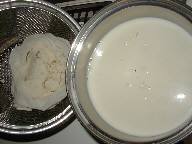
5) Pour paste into the cloth pouch and press. Right of the picture is tofu paste before pressing. Left is pressed out tofu

toofu-6
6) Solidifying (coagulating) with nigari.
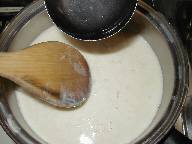
Stir tofu over light fire. When the temperature has reached 75~80 degrees Celsius pour in nigari slowly and stir all the time. The solid matter will sink to the bottom and accumulate. The coagulation will be complete when liquid above tofu has become transparent. Stop the operation and let rest for 15 minutes.

toofu-7
7) Arrange the gauze inside tofu a tofu shaper case which should have small holes to let excess water run out.

toofu-8
8) Cover with lid with a weight (or glass of water) of about 250 g and further press out water for 15 minutes

toofu-9
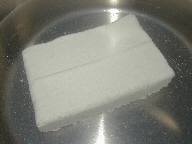
9) Delicately empty tofu in basin filled with called water and leave it there for an hour to take out excess nigari. Store in refrigerator.

California Roll made easy!

Please check the new postings at:
sake, shochu and sushi

—————————————-
日本語のブログ
—————————————-
homemade-sushi4.gif

I would like to dedicate this particular recipe to all sushi and sushi rol lovers!
My better (worse?) half came up with this simple recipe the same day she prepared the bonito sushi.
Once again she used traditional sushi rice added with fine pieces of pickled fresh ginger.

On a large piece of cooking cellophane paper she first placed thin strips of avocado and slices of smoked salmon, and finally the rice, keeping in mind to place them as to form a regular-shaped cylinder.

homemade-sushi3.gif

She then wrapped the cellophane paper around the whole as shown on above picture.

She cut the sushi roll through the cellophane paper with a sharp knife she wiped between each cut.
N.B.: Wiping the knife the knife on a humid cloth is a technique universally used in Sushi restaurants to insure clean cuts!

She finally served the cuts topped “Tobikko” (flying fish roe). Lghtly dipped in shoyu, great with Japanese sake!

Simple Recipes: Bonito Sushi

Please check the new postings at:
sake, shochu and sushi

—————————————-
日本語のブログ
—————————————-
homemade-sushi1.gif

My better (worse?) half came up with this idea after she got hold of quality “katsuo tataki” (slightly grilled bonito).
She prepared the sushi rice balls according to tradition with the addition of fine pieces of pickled fresh ginger (as this is the season rigt now).

homemade-sushi2.jpg

She then placed a slice of bonito seasoned with ponzu with more thin sliced pickled ginger, “tobikko” (flying fish roe) and finley chopped thin leeks>

Great with sake!