Noren/暖簾/Shop Curtains: A Japanese Tradition 1

A beautiful turnip noren at Tomii, Shizuoka City!

When visiting Japan, have you ever noticed those unusual “curtains” hanging outside the main entrance of traditional shops, izakayas and sometimes of private homes?
They are called “noren”.

Noren (暖簾) are traditional Japanese fabric dividers, hung between rooms, on walls, in doorways, or in windows. They usually have one or more vertical slits cut from the bottom to nearly the top of the fabric, allowing for easier passage or viewing. Noren are rectangular (but not always a rule) and come in many different materials, sizes, colors, and patterns.

Noren are traditionally used by shops and restaurants as a means of protection from sun, wind, and dust, and for advertising space. Sentō (commercial bathhouses) also place noren across their entrances, typically blue in color for men and red for women with the kanji 湯 (yu, litterally hot water) or the corresponding hiragana ゆ. They are also hung in the front entrance to a shop to signify that the establishment is open for business, and they are always taken down at the end of the business day.

There are still many left in Shizuoka City and Prefecture in spite of all that modernizing and I do meet a lot of them along my bicycle wanderings. It would be a pity not to share their sight, as it would make for beautiful souvenirs to take back home next time you visit Japan!

Accordingly here is the first of hopefully many postings on those little beauties!

A long, sober and narrow one. Pristine white!

For the night owls!

Chibariyo, an Okinawa restaurant.

Izakaya noren: Kurumaya.

Another izakaya nore, very feminine?

Simple design and pretty complicated characters!

Mishimaya, a Soba Restaurant. Very basic and simple.

Masa Sushi Restaurant. Another basic and simple Noren.

More colourful ones coming soon!

RECOMMENDED RELATED SITES:
Warren Bobrow, Bread + Butter, Zoy Zhang, Hungry Neko, Think Twice, Frank Fariello, Mangantayon, Hapabento, Elinluv Tidbit Corner, Tokyo Terrace, Maison de Christina, Chrys Niles,Lexi, Culinary Musings, Wheeling Gourmet, Comestiblog, Chronicles Of A Curious Cook, Tokyo Through The Drinking Glass, Tokyo Foodcast, Urban Sake, Sake World, Palate To Pen, Good Beer & Country Boys, Another Pint, Please!, Yellin Yakimono Gallery, Tokyo Terrace, Hilah Cooking

Please check the new postings at:
sake, shochu and sushi

—————————————-
日本語のブログ
—————————————-
Italian Restaurant: Lunch at Il Castagno (’10/02/28)

Service: Excellent and very friendly
Facilities: clean
Prices: reasonable
Specialty: Central and south Italian-style cuisine. Home-made pasta. Very reasonables prices
no-smoking-logoentirely non-smoking!

I’ve heard that some countries are suffering from unusually unclement weather (snow drifts in the US and floods in Western Europe), and here we are assailed by sudden chages in temperatures going as far 13 degrees Celsius within 24 hours.
Last Sunday was not a day for sport and I decided to do some work at the office as the Missus is away working for an orthondontist (Sunday is the busiest day).
As usual I felt ravnous at lunch time and decided to have some proper food at neighbouring Il Castagno, a very reasonable and extremely popular Italian restaurant.

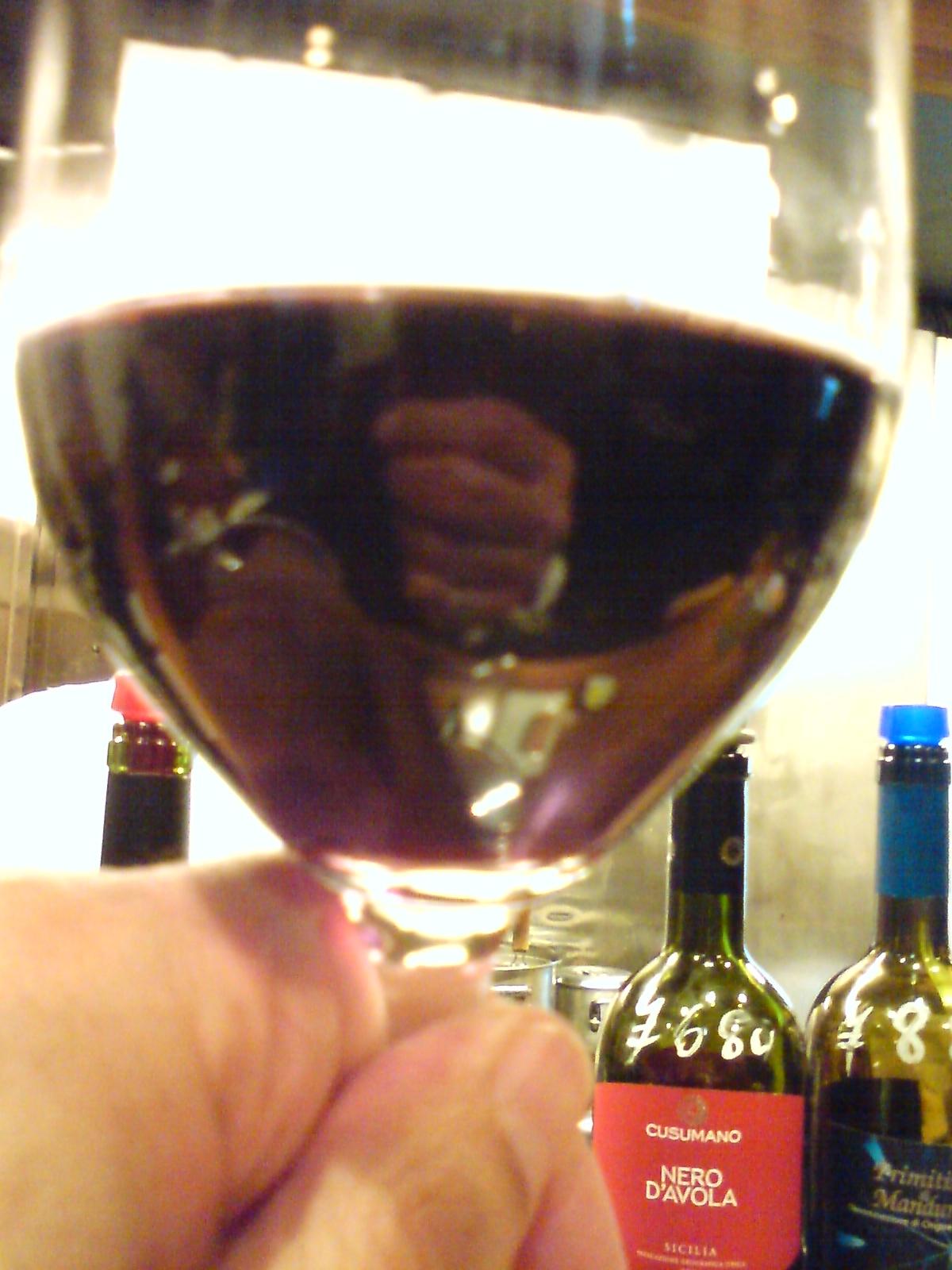
They have eminently drinkable wines at very reasonable prices, and I always end up drinking a couple of glasses in spite of the early hour (that is for drinking!).

A bit strange picture as you can see my fist holding the glass in side the glass!
Wine: Chianti, Villa Puccini Riserva, 2004. Grapes: Sangiovese+Cabernet Sauvignon+Canaiolle.
Solid and and pleasant Chianti

I opted for the full lunch set menu.
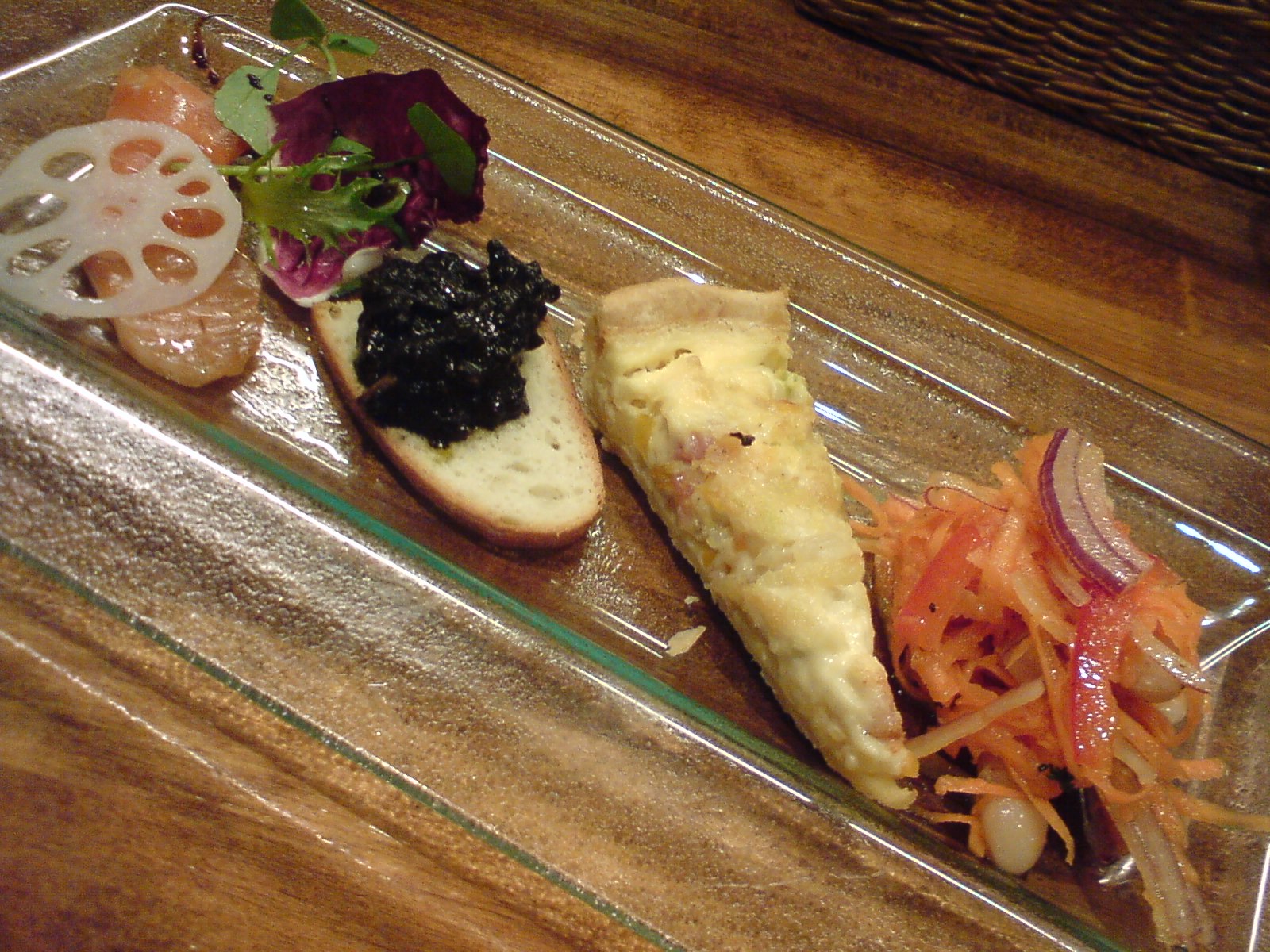
The antipasti misto consisted of Carrots, large white beans and red onions salad, Squid ink Crostini, Quiche (bacon, onion, potato and cabbage), home-made smoked salmon and pickled lotus root. A very global dish!

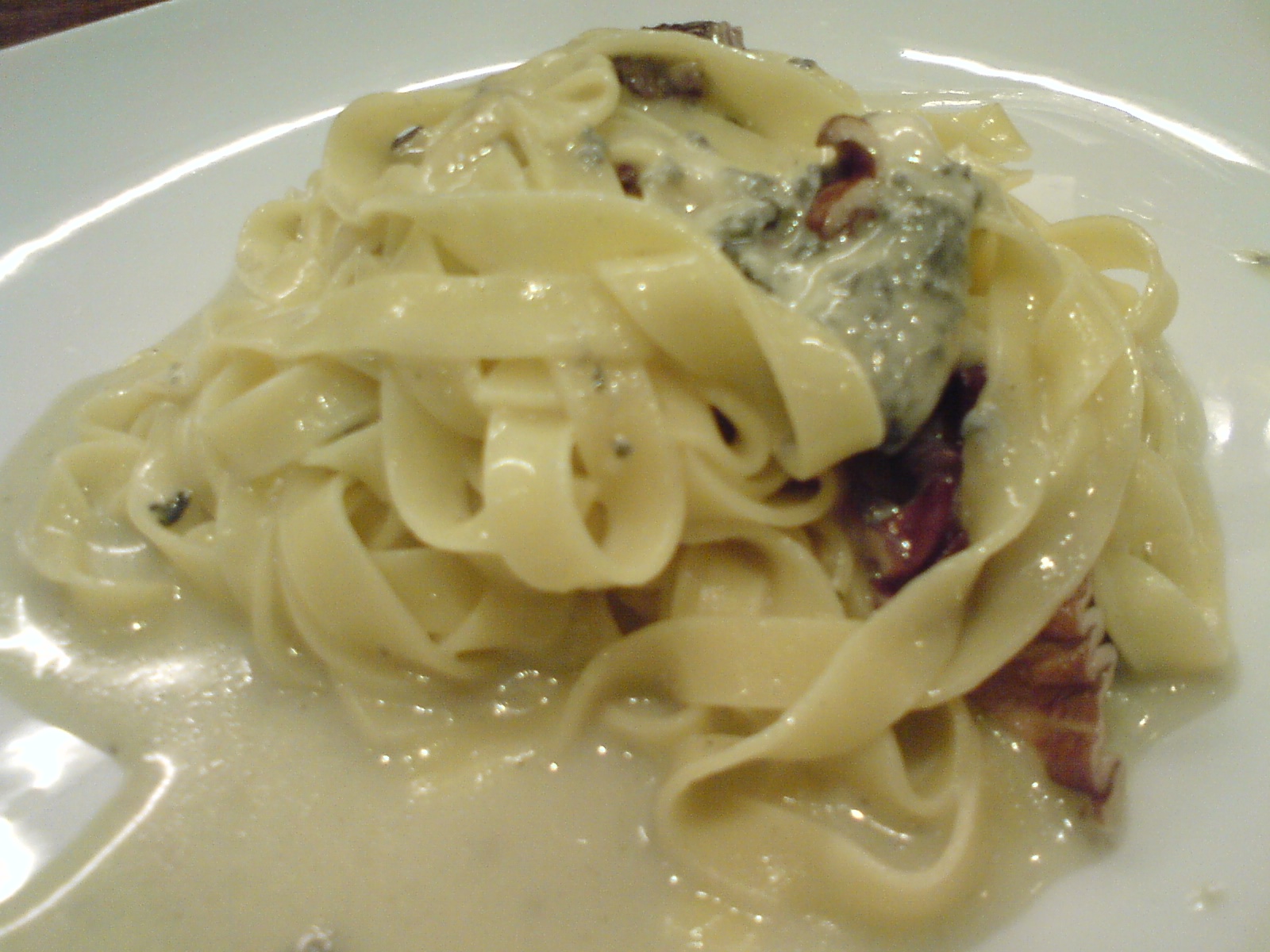
now, the pasta dish was worth the visit for itself!
Il Castagno serves exclusively home-made fresh pasta, a luxury in Jpaan!
These particular pasta were tagliatelle (comparatively narrow) in Gorgonzola and Radicchio (a variety of Trevise) Cream sauce. Perfectly balanced and the right quantity. As for the taste, I start to understand why so many local expats have started patronizing the place!

The dessert plate consisted of blanc mange, Apricot Cheese Cake (another specialty expats are running for!), strawberries and Neburu Orange (popular Japanese variety) Sherbet/Sorbet.

Coffee and home-made Italian mignardises!

IL CASTAGNO
420-0843 Shizuoka Shi, Aoi Ku, Tomoe Cho, 48 (along Kitakaido Street)
Tel. & Fax: 054-247-0709
Business hours: 11:45~14:00, 17:30~21:00
Closed on Mondays and second Tuesdays
Lunch: 1,260 and 1,860 yen
Dinner: 4,000 and 5,000 yen
A la Carte menu and wine list available. Wine by the glass ok
Reservations recommended.
HOMEPAGE (Japanese)

RECOMMENDED RELATED SITES:
Warren Bobrow, Bread + Butter, Zoy Zhang, Hungry Neko, Think Twice, Frank Fariello, Mangantayon, Hapabento, Elinluv Tidbit Corner, Tokyo Terrace, Maison de Christina, Chrys Niles,Lexi, Culinary Musings, Wheeling Gourmet, Comestiblog, Chronicles Of A Curious Cook

Please check the new postings at:
sake, shochu and sushi

—————————————-
日本語のブログ
—————————————-

Sushi & Sashimi: The Basics 4/5: Sushi Presentations-Te-Maki Zushi/Cone Sushi

Te-Maki Zushi/手巻き寿司, Hand-rolled sushi or more appropriately said “Cone Sushi). like Te-mari sushi that I introduced yeaterady, are the perfect way of making your own sushi at great informal sushi parties!

I know that Jenn , Debbie, and Melody are going to get some great ideas from that notion!LOL

Now, if you decide to organize a Te-Maki Sushi Party, make sure that you have plenty of “neta”/fillings ready for your guests to easily choose from.
Bear in ind the priorities of your guests. Vegan and vegatarian sushi are very easy to provide for. If need be prepare different plates of ingredients.

Next you need nori/海苔/ dried sheets of seaweed. Cut to the size most appropriate to your te-maki. keep in mind the appetite of ypur guests. Some might want them small, others large. Do experiment!

Prepare enough sushi rice for all to fill their te-maki with.
I would suggets you make at least 3 large bowls of them:
One seasoned with sesame seeds like the Missus does all the time, one plain, and another one seasoned with an ingredient of your choice: finely chopped pickle, chopped cooked shiitake, and so on.

TECHNIQUES:

The above te-maki includes three ingredients: avocado, katsuo/bonito and fresh salmon sashimi.

Spread a triangle of sushi rice on the left half of the nori/dry seaweed.
The seaweed sheets ought to be cut in half along their length first.

Place the ingredients over the rice as shown in picture.

Start rolling from the left.

Keep turning until you have completed the cone!

FILLINGS SUGGESTIONS:

Hera is a group of four different te-maki as a combination suggestion with ingredients that should please both Japanese and non-Japanese.
Do experiment!

Kimchi, tuna flakes, mayonnaise and sesame seeds!

Crab meat and mayonnaise. You could add some green leaf vegetables, too!

Asparaguses (boiled), tuna flakes and mayonnaise. You could include some curry powder in the mayonnaise!

Salmon roe. Season the roe with a little soy sauce first! Some wasabi would be welcome, too!

SAMPLES:

Here are more samples to help your imagination:

Chili sauce shrimps and kawaire daikon sprouts.

Tuna, shiso and ikura/salmon roe.

Roast beef, omelette and vegetables!

Lettuce, surimi, omelette and cucumber.

Fried pork, shiso and kawaire daikon sprouts.

Nato and hijiki seaweed for vegans!

All vegetables again!

I’m going to Sushi Ko with the Missus tomorrow. I will ask Mr. Oda to think of something!LOL

RECOMMENDED RELATED SITES:
Warren Bobrow, Bread + Butter, Zoy Zhang, Hungry Neko, Think Twice, Frank Fariello, Mangantayon, Hapabento, Elinluv Tidbit Corner, Tokyo Terrace, Maison de Christina, Chrys Niles,Lexi, Culinary Musings, Wheeling Gourmet, Comestiblog, Chronicles Of A Curious Cook

Please check the new postings at:
sake, shochu and sushi

—————————————-
日本語のブログ
—————————————-

Sushi & Sashimi: The Basics 4/4: Sushi Presentations-Te-Mari Zushi

Te-Mari Sushi made by the Missus for my bento!

A comment by my friend Jennifer Razon just reminded me I hadn’t explained the technique behind a very enjoyable form of sushi, namely Te-Mari Sushi/手まり寿司!

Te-Mari Sushi was apparently made poular in Kyoto first where gastronomy is more “feminine” than in any other part of Japan. It is very easy to make, present and carry.
It is more welcome when you realize people in Kyoto have more socializing to do than anywhere else, including eating and drinking. Making portions smaller and more artistic are a necessity there!
Actually Te-Mari Sushi can be made in any size and include any ingredients, be it for omnivores, adults, ladies, children, vegetarian or vegans!

TECHNIQUE:

The technique is simple enough: having prepared the sushi rice, take a piece of cellophane paper and first put the tane/topping outer surface down, then place some rice over it. Close the cellphane paper by twisting it and press the sushi into a ball (mari) in your hand (te)! Unwrap it, place it on a plate, tray or in a box and add some more topping if neceassary!

Look at the demonstration pics below for better understanding!
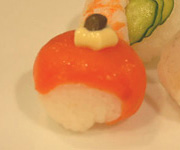
In that case the rice ball is made first inside a piece of cellophane and wrapped again with the toppings!

Tai/Seabream

Ebi/boiled shrimp

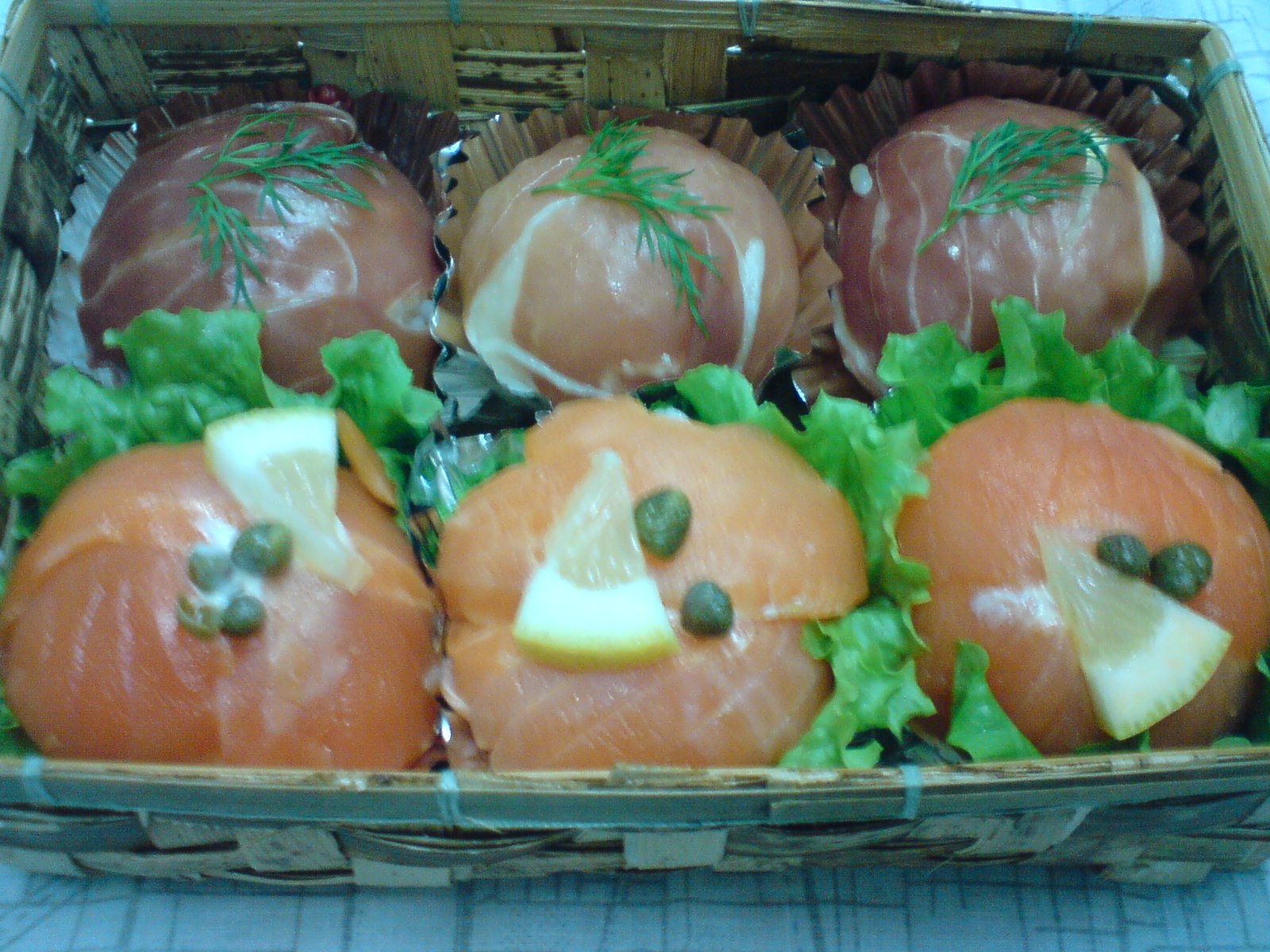
Smoked Salmon

Pickled fish

SUGGESTIONS & SAMPLES:

Below are suggestions and samples for Te-Mari Sushi.
Frankly speaking, varaiations are endless. Have good fun!

For a tea party?

For a lady’s bento?

For a gentleman’s bento?

For a special occasion?

For a European/American style party?

For ladies only?

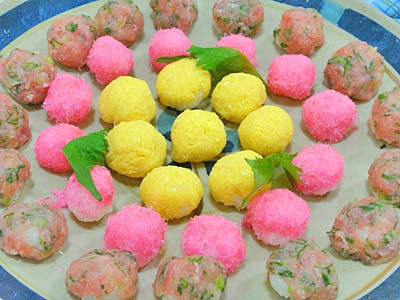
Sweet te-mari for Children!

RECOMMENDED RELATED SITES:
Warren Bobrow, Bread + Butter, Zoy Zhang, Hungry Neko, Think Twice, Frank Fariello, Mangantayon, Hapabento, Elinluv Tidbit Corner, Tokyo Terrace, Maison de Christina, Chrys Niles,Lexi, Culinary Musings, Wheeling Gourmet, Comestiblog, Chronicles Of A Curious Cook

Please check the new postings at:
sake, shochu and sushi

—————————————-
日本語のブログ
—————————————-

Today’s Lunch Box/Bento (’10/17)

Spring has come early in Shizuoka, the mildest region in Japan after Okinawa.
This is both a bonus and a pain. We get all these great vegetables before eveyone else, but we are also plagued with grotty weather and cold rain. Mind you, we shouldn’t complain compared to other regions.
In the end it means that the bentoes will be both rich in calories and vitamins!

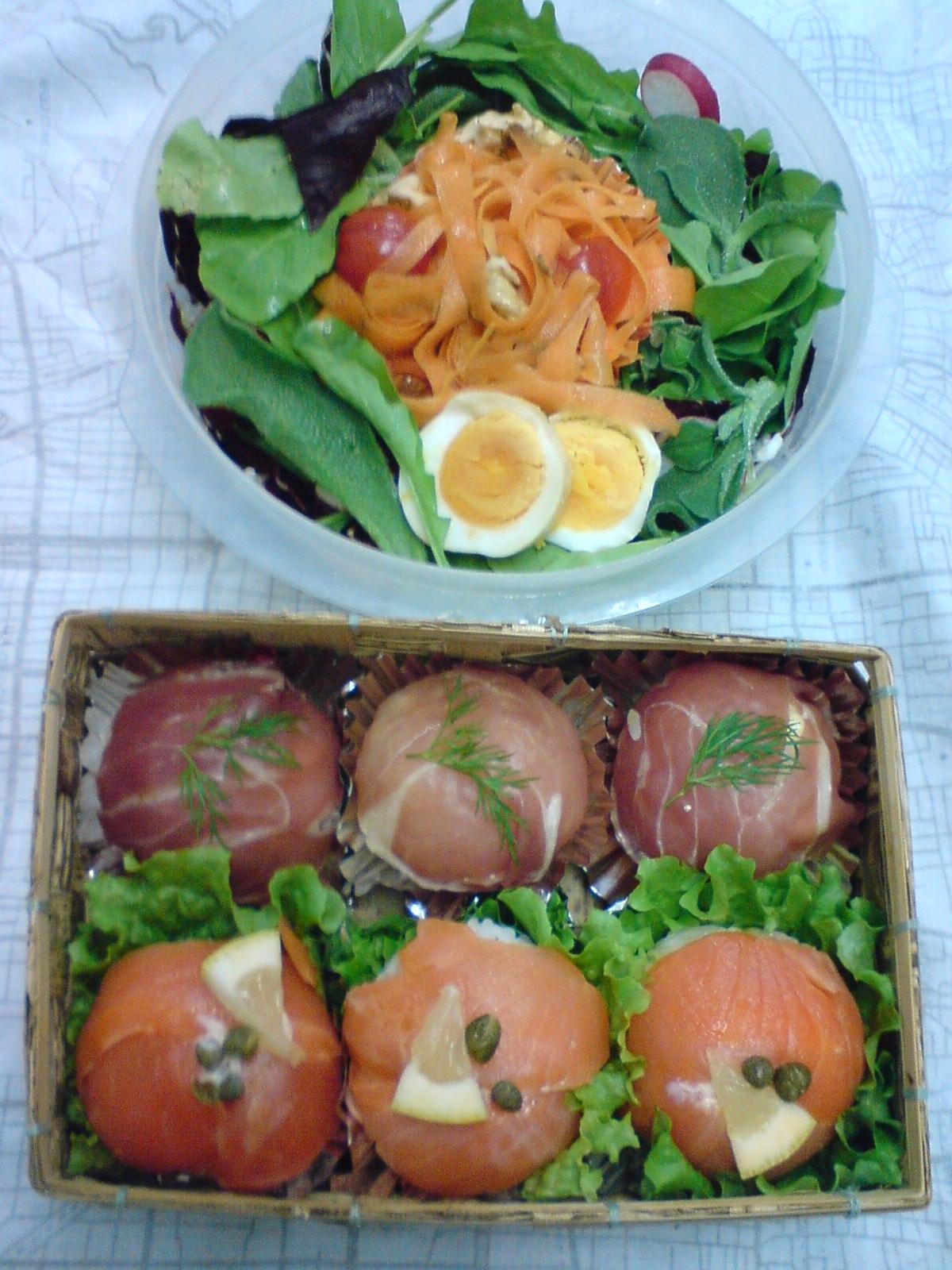
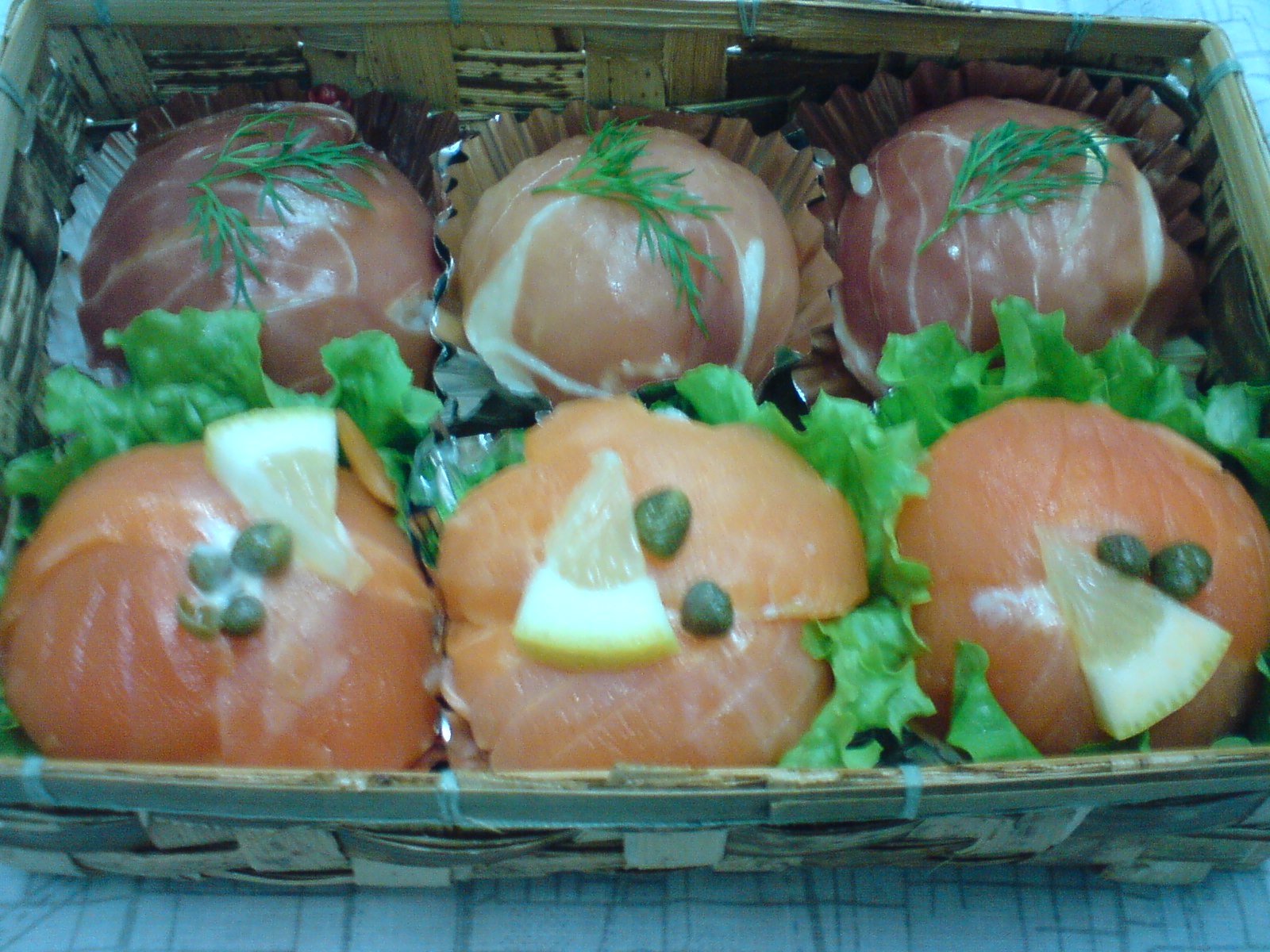
The rice part this time consisted of two kinds of te-mari sushi balls/手まり寿司. The missus, used freshly steamed rice, formed the balls by wrapping rice and the garnish together in cellophane paper, twisting it closed and shaping in balls with her hands. This type of sushi is particular popular in the Kyoto area, where they are both served to adults and kids with beautiful effect.
One of my te-mari sushi contained cheese and was topped with raw ham and some fresh dill.
The other contained Japanese-style pickled cucumber (Very finely chopped) and sesame seeds, and was topped with smoked salmon, lemon, capers and a little tartare sauce. A small piece of lettuce added colour and vitamins!

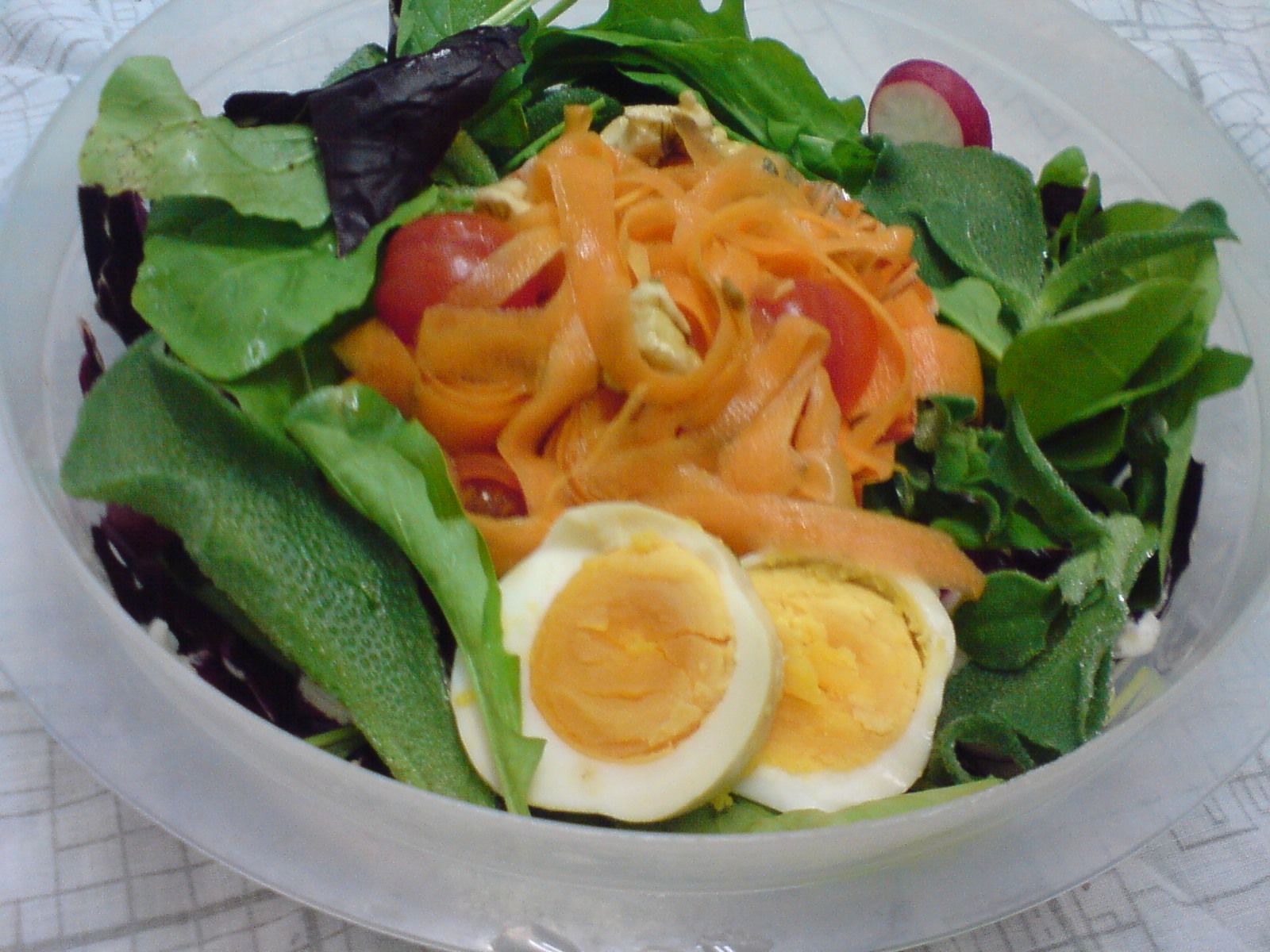
The salad part included home-made marinated carrot tagliatelle salad with walnuts, mini tomatoes and soft-boiled egg. The whole was surrounded by a wealth of hand-broken leaf vegetables: ice plant, trevise, luccolla, and others as well as sliced red radish and mini tomato.

As for dessert I took a couple of mikan/madarines from The Missus’ family garden.
Once again, colourful, healthy and tasty!

RECOMMENDED RELATED SITES:
Warren Bobrow, Bread + Butter, Zoy Zhang, Hungry Neko, Think Twice, Frank Fariello, Mangantayon, Hapabento, Elinluv Tidbit Corner, Tokyo Terrace, Maison de Christina, Chrys Niles,Lexi, Culinary Musings, Wheeling Gourmet, Comestiblog, Chronicles Of A Curious Cook

Please check the new postings at:
sake, shochu and sushi

—————————————-
日本語のブログ
—————————————-

Bryan Baird’s Newsletter (2010/03/02)

Baird Beer & Taproom Events Bulletin
bryan-sayuri.gif

Dear Taproom Friend & Baird Beer Enthusiast:

New Seasonal Baird Beer Releases: Morning Coffee, Wabi-Sabi, Obatarian

The Baird Beer brewers have been busy bees over the past several months crafting a diverse range of unique seasonal brews. Wednesday, March 3 will mark the official debut of the following three seasonal beers:

Morning Coffee Stout 2010 (ABV 7%): Each year we combine our passion for stout beer with our love of coffee in the brewing of Morning Coffee Stout. This 2010 version is an export-style stout infused with freshly ground fair-trade espresso beans from Arabika Coffee. This year we added the coarsely ground espresso beans directly to the stout in the conditioning tank in what amounted to a cold beer toddy extraction method. The result is a perfect flavor marriage between stout beer and java beans.

Wabi-Sabi Ale (ABV 5.5%): Shizuoka is the green tea capital of Japan. Drinking fine Shizuoka tea is to experience the Japanese wabi-sabi cultural aesthetic in microcosm. We feel the same is true of imbibing Baird Beer. So it struck us: why not skillfully combine the two? This we have done in a richly malty brown ale in which hop character is almost wholly absent (only 15 BUs of hops were added in a single kettle addition). We use the Shizuoka tea (infused into the beer in the conditioning tank) to supplement and make complete the bitter, herbal and aromatic character generally supplied by hops. The result is a wonderfully unique beer best characterized by the following descriptors: refinement, elegance, sobriety, dignity.

Obatarian Strong English Ale (ABV 8%): Strong English Ales generally are noted for richness of malt character, alcohol strength which imparts warmth, and a pleasant estery profile. They normally are released only after sufficient aging and maturation. Thus, they tend to be extremely self-assured beers; ones that care little for the opinions or sensitivities of others. In other words, they are the beer version of that old biddy obatarian you sometimes encounter in the supermarket checkout line here in Japan. We promise, though, that your encounter with Obatarian Strong English Ale will prove more satisfying than your experience with the human version at the supermarket.

Morning Coffee Stout 2010 will be available on draught and in bottles (633 ml) and sold throughout Japan through the fine family of Baird Beer retailing establishments (as well as direct from the brewery via our online E-Shop). Wabi-Sabi Ale is a small batch beer that will be available on hand-pump as real ale exclusively at our Taproom pubs. Obatarian Strong English Ale, another small batch brew, is draught only and also will be poured exclusively from the taps of our own Taproom pubs.

Finally, please mark you calendar for the upcoming Lucky Seven Stout Week which kicks off on St. Patrick’s Day (Wednesday, March 17) at our Numazu Fishmarket Taproom and runs through the national holiday on Monday, March 22. During the week we will be celebrating the quintessential Irish beer style: Stout. We will devote seven taps to different varieties of stout beer, serve a special Stout-inspired food menu and engage in other mischievous fun. More details will be forthcoming in next week’s bulletin.

Cheers,

Bryan Baird
Baird Brewing Company
Numazu, Japan
HOMEPAGE


The Japan Blog List

———————————
Must-see tasting websites:
-Sake: Tokyo Through The Drinking Glass, Tokyo Foodcast, Urban Sake, Sake World
-Wine: Palate To Pen, Warren Bobrow, Cellar Tours
-Beer: Good Beer & Country Boys, Another Pint, Please!
-Japanese Pottery to enjoy your favourite drinks: Yellin Yakimono Gallery
——————————–
Please check the new postings at:
sake, shochu and sushi

—————————————-
日本語のブログ
—————————————-

Shizuoka Sake Tasting 1/9: Morimoto Brewery/Sayogoromo

Whereas most brewers in Shizuoka Prefecture concoct soft, almost feminine, sake, Hidetoshi Morimoto, Masterbrewer/owner of Morimoto Brewery in Kikugawa City has often taken the notorious role of a maverick to the delight of lovers of characterful brews bordering on the impertinent.

The latest of his creations is definitely out of the ordinary in this Prefecture famed for making some of the best (popular?) sake in Japan, especially when ones notices that Hidetoshi Morimoto doesn’t bother much about giving all kinds of information usually found in this Prefecture.

Morimoto Brewery, Sayogoromo, Tokubetsu Junmai.

Rice milled down to 60%
Alcohol: 15 degrees

Clarity: Very clear and clean.

Colour: Faint golden hue.

Aroma: Fruity and complex: bananas, pineapple, alcohol, almonds.

Body: Smooth and solid.

Taste: Strong junmai attack. Great combination offruitiness and acidity. Shortish tail. Complex: bananas and flowers.
Abruptly ends on a dry almond note.
Holds well with any food.

Overall: Unusually “macho” sake for Shizuoka, typical of Morimoto brewery sakes.
Great with strong food, especially yakitori and nabe.
Drunk on its on, will please lovers of strong and characteful sakes.

RECOMMENDED RELATED WEBSITES:
-Sake: Tokyo Through The Drinking Glass, Tokyo Foodcast, Urban Sake, Sake World
-Wine: Palate To Pen
-Beer: Good Beer & Country Boys, Another Pint, Please!
-Japanese Pottery to enjoy your favourite drinks: Yellin Yakimono Gallery
Warren Bobrow
Tokyo Terrace

New Vegetable: Tsubomina/蕾菜

Picture taken at Parche Supermarket on March 1st, 2010

Earlier in the day, I mentioned a new vegetable that the Missus included in my bento: Tsubomina or 蕾菜 in Japanese.
The first Kanji character is made up of made up of the character meaning “plant” or “grass” at the top over another character meaning “thunder”. The second kanji means “plant”.

Stir-fried Tsubomina in my bento.

Tsubomina sold in Hakata, Fukuoka, Kysushu island.

Tsubomina sprouts

Tsubomina belongs to the same group of plants as Brussels sprouts, Chinese Cabbage, Komatsuna/leaf Mustard, Broccoli, Daikon, turnips and so on, that is Brassicaceae. It is actually a variety of Leaf Mustard. The latter is a plant introduced in Japan from China.

Picture taken at Parche Supermarket on March 1st, 2010

Although it had been grown since 2005 with various results, JA/Japan Agriculture (Association) officially put it on the markets in Hakata, Fukuoka City in Kyushu island in February 2009.
Due to a certain weakness to insects, it is harvested in Februaray and March only.
Growers started “exporting” it through Japan, altough it is available only in Nagoya, Tokyo and Shizuoka for the moment being. But it is only a question of time before it is sold all over the nation.

Picture taken at Parche Supermarket on March 1st, 2010

Actually the competition is starting heating up for the good of the consumers.
Tsubomina was sold 300~350 yen for 3 small specimens last year. It is already sold for only 250 yen for 3 large specimens since yesterday in Shizuoka City!

Picture taken at Parche Supermarket on March 1st, 2010

Copy of the advertisement appearing in local magazines in Fukuoka where many restaurants serve it in Japanese, Chinese and other foods.

Picture taken at Parche Supermarket on March 1st, 2010

It can be served raw in salads. I tasted it this morning raw. It is crunchy, almost sweet, without any acidity, and eminently eatable.
moreover the high contrast in white and green colours make for a very decorative item.
It can be cooked in almost any kind of Asian gastronomic manner: fried, stir-fried, nabe/pot-au-feu, etc. Vegetarians and vegans should appreciate it as it combines a goog bite, a great taste and plenty of nutrients!

RECOMMENDED RELATED SITES:
Warren Bobrow, Bread + Butter, Zoy Zhang, Hungry Neko, Think Twice, Frank Fariello, Mangantayon, Hapabento, Elinluv Tidbit Corner, Tokyo Terrace, Maison de Christina, Chrys Niles,Lexi, Culinary Musings, Wheeling Gourmet, Comestiblog

Please check the new postings at:
sake, shochu and sushi

—————————————-
日本語のブログ
—————————————-

Today’s Lunch Box/Bento (’10/16)

Shizuoka is replete with new vegetables in this supposedly early Spring and buying them at the local markets in view of including (sorry having them included by the Missus) in the next day’s bento is great fun!

It certainly makes for very colourful bentoes, too!
The Missus has been looking around shops for this elusive (meaning big enough) pinewood bento box for better looks and better taste (she believes that the pine wood will enhance the taste of her creations).
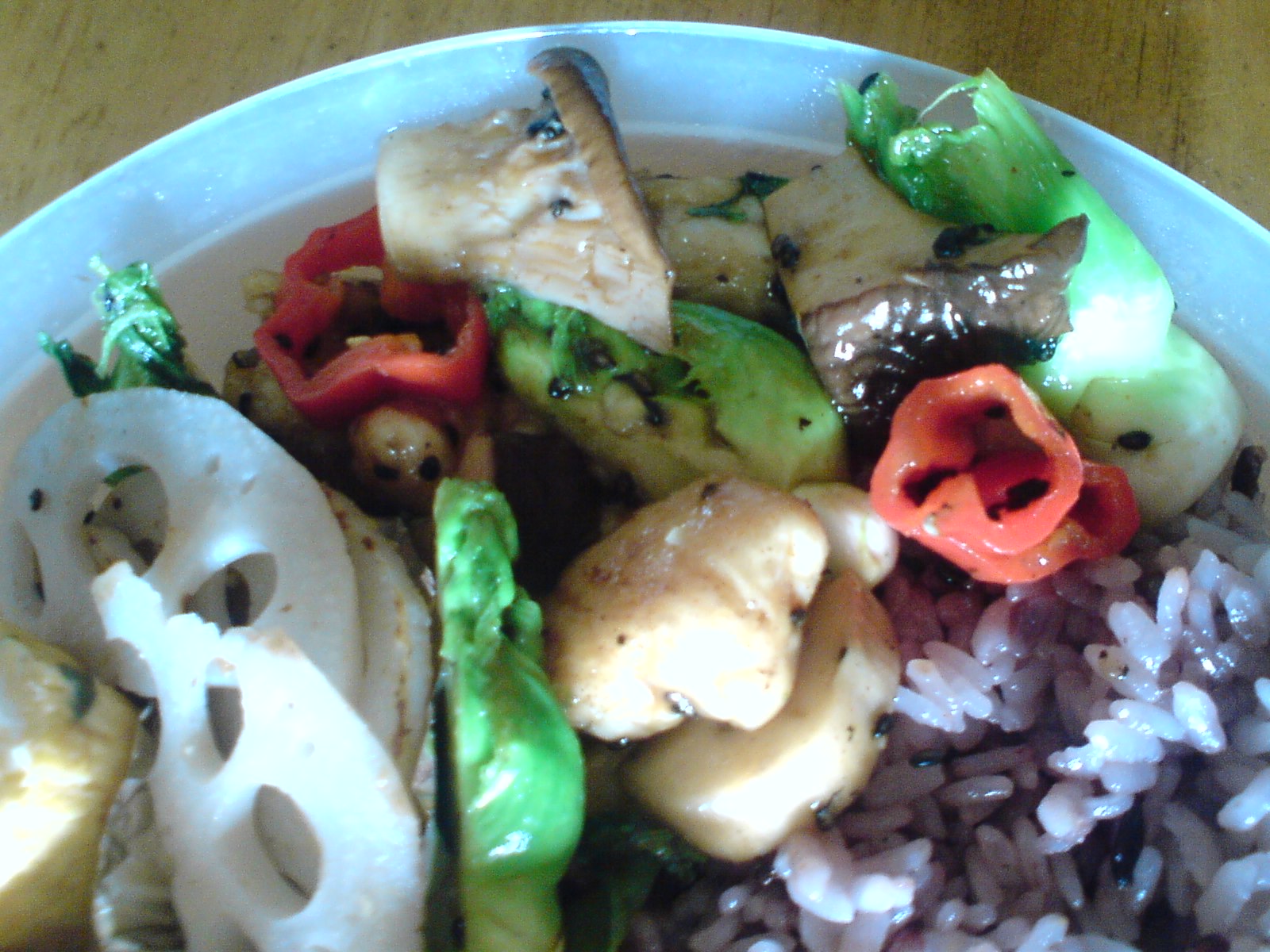
The steamed rice looks violet because it has been supplemented with a little (too much would the rice too dark) with Kuromai/黒米 or “Black Rivce”.
Actually it is not black rice, but dark violet rice. It comes from Iriomote Island in Okinawa. It is simply “ancient rice” as it used to be many centuries ago. It does provide a lot of useful nutrients that have disappeared after white rice was polished.

Now for the garnish:
The Missus concocted her tamagoyaki/Japanese omelette with cheese and ciboulette, also called civette, chiboulette, brelette (French), Schnittlauch (German), chives (English), cebolleta (Spanish). They habeen cultivated for some time in Japan and people are starting discovering them. They contain plenty of Vitamin C and iron! The vegetables include boiled and fried lotus root slices, home-made pickled mini lemons and a new vegetable grown in Fukuoka, Kyushu. I still remember the name but I will check today again and write up some information!

More of the mystery green vegetable, eringe mushrooms. sweet red piments chicken fillets, the whole fried in spicy sauce and agremented with black sesame seeds.

Dessert was benihppe/red cheeks strawberries and mikan/winter oranges from Shizuoka.

Complete, healthy and tasty bento!

RECOMMENDED RELATED SITES:
Warren Bobrow, Bread + Butter, Zoy Zhang, Hungry Neko, Think Twice, Frank Fariello, Mangantayon, Hapabento, Elinluv Tidbit Corner, Tokyo Terrace, Maison de Christina, Chrys Niles,Lexi, Culinary Musings, Wheeling Gourmet, Comestiblog

Please check the new postings at:
sake, shochu and sushi

—————————————-
日本語のブログ
—————————————-