Category Archives: Uncategorized

Bryan Baird’s Newsletter (2009/9)

Baird Beer & Taproom Events Bulletin 2009 #9
bryan-sayuri.gif

Dear Taproom Friend & Baird Beer Enthusiast:

Two Baird Beer spring seasonals are being released today and will be pouring from the taps of our Taprooms as well as from those of other fine pubs and restaurants in Japan beginning Wednesday, April 8.

(1) Four Sisters Spring Bock (ABV 7 %):

Baird Four Sisters Spring Bock is brewed in the spirit of a German Maibock, albeit one of the type that was brewed centuries ago in the city of Einbeck and that was noted for its generous use of malted wheat. Four Sisters Spring Bock sports a deep copper-gold color and enjoys a sweet floral nose from aroma additions of Sterling hops. In the mouth, a rich malty character will introduce itself before quickly giving way to an extremely smooth, dry finish in which a hint of honeyed-malt flavor and estery alcohol character lingers.

Four Sisters Spring bock is available both in kegs and bottles (633 ml).

(12 Yamanashi Sumomo Ale (ABV 5.5%):

This is part of our Yamanashi prefecture fruited-ale series made possible by the cooperation of our friends at the fine Kofu pub, Four Hearts Cafe. Sumomo is a plum grown in Yamanashi prefecture and we add plenty of whole sumomos, broken and cut to expose the juicy interior, directly to the wort at kettle knock-out. This zesty, sprite ale is lightly hopped with additions of English Fuggles and has been re-fermented and conditioned in the keg for over six months.

Supplies of this 2008-brewed version are limited to kegs. We have saved a small quantity of bottles (360 ml) from the 2007-brewed version that have been conditioning beautifully in our cellar for well over a year.

Be sure to get your taste of these fine spring seasonals while the tasting lasts.

Cheers,
Bryan Baird

Baird Brewing Company
Numazu, Japan
HOMEPAGE


The Japan Blog List

Please check the new postings at:
sake, shochu and sushi

—————————————-
日本語のブログ
—————————————-

LE CAFE-LABO: Classic Cakes (10)-Tiramisu

tiramisu-1

The chef at La cafe-Labo changed some time ago. Now a gentleman is at the helm and a new trend has emerged.

tiramisu-2

This Tiramisu concept is very Japanese in the sense that it is almost “packaged”. When you know that shops spend enormous amounts of energy for the sole purpose of packaging and presentation you understand that practicality and quality are inseparable in this country!

tiramisu-3

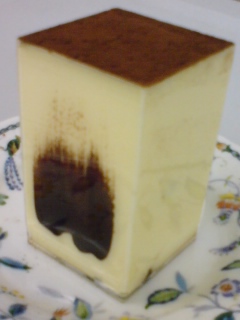
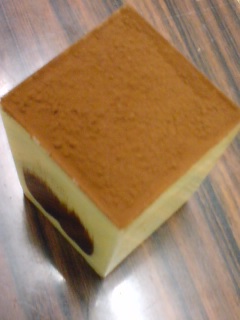
The big “blob” on the side of the cake is actually there to add a modern artistic touch.
As for the cake itself, it is based on a Biscuit Joconde type confectionery repeated a quarter of the way up.
The “mouuse/Cream” was made with egg white, fresh cream, Mascarpone, egg, milk and sugar of the highest quality with the final note being a thin coat of cocoa powder.

tiramisu-4

My student commented it was milky and light and yummy!

Simple in concept, almost austere, but so delicious!
To be savoured with a great coffee!

LE CAFE-LABO
424-0886 Shizuoka City, Shimizu Ku, Kusanagi, 46
Tel.: 054-3441661
Also available at Isetan Dept. Store, Shizuoka City, Aoi Ku, Shichiken-Cho

Please check the new postings at:
sake, shochu and sushi

—————————————-
日本語のブログ
—————————————-

French Dessert at Rouge et Piquant: Dessert Rouge

rouge-09-1

Service: Excellent and very friendly
Facilities: great washroom, great cleanliness overall
Prices: reasonable, good value
no-smoking-logo!

As I said before I suddenly found myself with a whole free day, a rare luxury, and decided it was grand time I paid a visit to one of my old favourite cake shop/cafes in Shizuoka!
Rouge et Piquant is a confectionery shop which has been making its name since 2004 and certainly deserves its ever growing popularity!
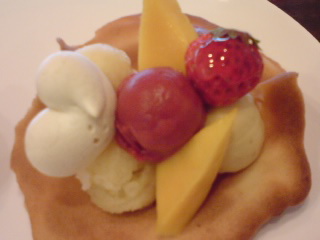
This time I sampled one of three seasonal dessert plates: Rouge (red) red berries cake and assortment.

rouge-09-3

Definitely my favourite dessert, both fulfilling and so scrumptious!
I’m a bit of a babarian when it comes to eat dessert, and when it comes to the order, I just follow my instinct.
Therefore I started with the ice-cream part:
On an artistically shaped Feuillantine: Meringue, Strawberry ice-cream, Raspberry Sherbet and Apple Sherbet enhanced by pieces of fresh mango and a mini strawberry! That alone would be enough to justify the visit!
And:

rouge-09-2

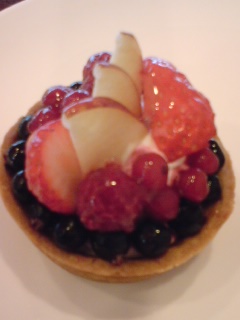
Red Fruit Tart:
On a small pate sucree tart filled with a beaten mix of Sour cream, fresh cream and a little lemon juice (concealing one fresh raspberry in the middle) : Cassis/Blackcurrant, Groseilles/Redcurrant, Raspberries, Cut apple and strawberry! A well full of little marvels!

Don’t forget there are more to savour: Blanc (white): Short Cake and Milk Ice Cream Assortment. Chocolat: Chocolat mousse and Caramel Ice Cream + Chocolate Sauce. Assortment (800 yen).
I would also recommend the Entremets glaces at 600 yen (Profiterolle or Mille-Feuille).
Also gateau at 500 yen, Ice Cream at 500 yen. Very good teas and coffes (10 varieties).
Take out homemade biscuits (7 kinds). Birthday cakes on order.
Entirely non-smoking place!

Address: 420-0032 Shizuoka Shi, Ryogae-cho, 2-4-29, Aspis Bldg. 2F
Tel. & Fax: 054-2214358
Opening hours: 14:00~24:00
Closed on Mondays
Chef-Owner: Ms. Kanae Tsunogai

Please check the new postings at:
sake, shochu and sushi

—————————————-
日本語のブログ
—————————————-

Wine Tasting at La Vigne

lavigne-tasting-1

Service: Excellent and very friendly
Facilities: great washroom, great cleanliness overall
Prices: reasonable, good value
no-smoking-logo!

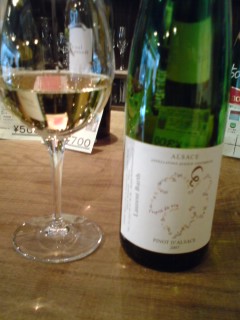
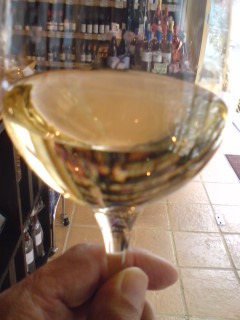
As I found myself not busy with cricket due to heavy rain the night before I took the opportunity to visit la Vigne, the new French wine shop in Shizuoka which is conveniently equipped with a standing bar.
As usual I had the opportunity of making new from vastly different regions and ways of life as I tasted one of the dozen wines on offer:

lavigne-tasting-2

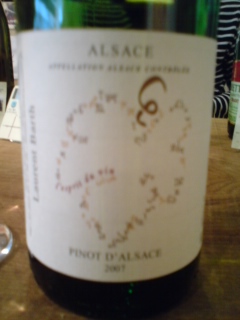
Region: Alsace
Grapes: Pinot d’Alsace
Year: 2007
Producer/owner: Laurent Barth at Bennwihr

lavigne-tasting-3

Clarity: Very clear and clean
Colour: Golden hue
Aroma: Light and fruity. Muscat. Elegant
Taste: Light, fruity, well balanced by pleasant acidity. Shortish tail. Light impression lingering at the back of the plalate. Muscat, memories of sweet raisins. Fleeting.

Overall: Would do well as an aperitif. Would marry well with light vegetables hors d’oeuvres and white flesh fish.
On the other hand, was subdued by the cheese I ate with it,
Probably best drunk on its own, very slightly chilled.

lavigne-tasting-4

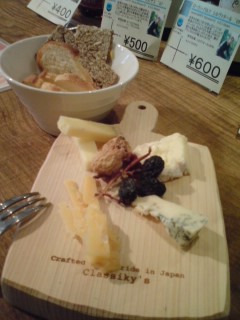
The “cheese tray” included (from top left around the clock):
Laguiole, Brie de Meaux, Bleu de Gex and 25-month Gouda.

LA VIGNE
420-0852 Shizuoka City, Aoi Ku, Gofuku-Cho, 17-2, 1F (within walking distance for Shizuoka JR Station in front of Fugetsuro!)
Tel. & Fax: 054-2054181
Business hours: 10:00~22:00
HOMEPAGE (Japanese)

Must-see tasting websites:
-Sake: Tokyo Through The Drinking Glass, Tokyo Foodcast, Urban Sake, Sake World
-Wine: Palate To Pen
-Beer: Good Beer & Country Boys, Another Pint, Please!
-Japanese Pottery to enjoy your favourite drinks: Yellin Yakimono Gallery
———————————————–
Please check the new postings at:
sake, shochu and sushi

—————————————-
日本語のブログ
—————————————-

English Sake Brewer Master in Japan: Phillip Harper (1)

harper-koonotori

A lot has been written and will be written both here in Japan and abroad on Phillip Harper as he has, with the likes of John Gauntner, Timothy Sullivan and Melinda Joe, established himself as one of the references proving once for all that Japanese sake has at last expanded beyond the confines of this island for the good of all.
It is only a question of time when sake breweries will become a part of life like wine and beer abroad as demonstrated by the five existing branches of large Japanese breweries in the United States employing a full American staff and Moto I, the entirely owned and run American Sake Brewery.

harper-1

What makes the difference is that Phillip has gone as far as becoming the only foreign sake “toji”/master brewer in a Japanese brewery, namely Ki no Shita Brewery in Kyoto Prefecture!
An Oxford graduate hailing from Cornwall, it took him 18 years of sheer courage and guts to break into the closely guarded world of Japanese sake to gain recognition and earn his master brewer status in 2001.
The media (including The Los Angeles Times) finally take good note of his achievements when he was formally asked by Owner Yoshito Kinoshita to become his new Master Brewer (incidentally Phillip had already held that position in Osaka for two years).

I have always been intrigued by this fellow sake-loving foreigner, and when Melinda Joe and Etsuko Nakamura started sending me some of his bottles, I decided it was grand time that I atoned for my ignorance and tasted his sake which has won so many fans in Japan and abroad!

Before I continue with this first of three (and hopefully more) bottles tasting report, I would like to point out that some will not agree with my heavily Shizuoka sake influenced palate and my “wine” tasting methods (just can’t get rid of my Burgundian origin!). I will just invite them to drink, taste and compare notes!

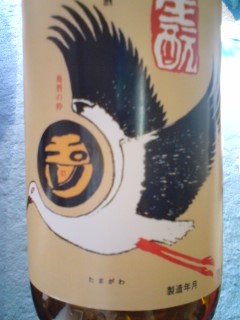
harper-koonotori

Ki No shita Brewery (kyoto Fu)
Tamagawa (Brand name), Junmai, Nama Genshu (unaltered original pressed sake), Muroka (unfiltered), Kimoto (traditional brewing method)
Rice: Gohyakumangoku
Rice milled down to 77%
Alcohol contents: 19~20 degrees

Clarity: Very clear
Colour: Almost transparent
Aroma: fruity, banana
Body: Velvety
Taste: Strong attack backed by alcohol.
Dry. Complex. Shortish tail. Fruity: Musk Melon. Coffee beans and cherries appearing later.
Hold its own well with food with a light mellow turn.

Overall: A sake devised for food, especially heavy food.
Strong, almost aggressive sake with an uncompromising character.
Turns more complex with the second glass. Elusive at times, but always with a fruity note so remiscent of Musk Melon.
For strong sake officionados!

PHILLIP’S NOTES:

Like all the kimoto and yamahai sakes we do here, this was made without the use of anything but water, rice and koji. We do not
add cultured yeast or anything else to the mash. It is pre-Meiji brewing, and the kimoto under question is precisely the kind of sake that we read about in Meiji Period texts – SMV well into double figures on the plus side, junmai of course, acidity well over two, and comfortably at modern levels of alcohol.

The rice for the kimoto you tasted is organic Gohyakumangoku grown 15 miles away near the haunt of the Oriental White Stork/コウノトリ (as depicted on the label). The methods are different from standard organic rice farming, as the prime intention is to provide a habitat for these
amazing birds. As you can see from the red sticker, some of the
price goes towards a support organization. This project is all about the
birds, so it would be great if you could give them a plug. FYI, the original artwork is by Sakane Katsuke, an eminent artist who happens to be the boss’s brother-in-law and is also the creator of our excellent Tamagawa logo.

———————————
Must-see tasting websites:
-Sake: Tokyo Through The Drinking Glass, Tokyo Foodcast, Urban Sake, Sake World
-Wine: Palate To Pen
-Beer: Good Beer & Country Boys, Another Pint, Please!
-Japanese Pottery to enjoy your favourite drinks: Yellin Yakimono Gallery
———————————————–
Please check the new postings at:
sake, shochu and sushi

—————————————-
日本語のブログ
—————————————-

TAKY’S classic Cakes (7): Fedora

fedora

I have just discovered his new creation by talented Takuya Hanai and shared with my students.
I have to keep a constant lookout as this talented and still young patissier has a habit to offer new cakes almost every week.

This cake, Fedora, although fairly simple in concept, is a small gem:
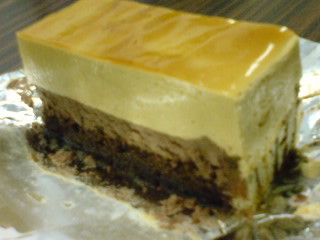
On a thin layer of chocolate chips studded chocolate sponge, he first lay a layer of chocolate bavarois/mousse, then again, but twice a thick, a caramel bavarois/mousse with a final layer of thick caramel syrup.
Breaking through the whole and tasting the combination of the various tastes all at the same time reveals the sublime qualities of this little marvel!

To appreciate with a great coffee or English tea!

TAKY’S
420-0839 Shizuoka City, Aoi Ku, Takajo, 1-11-10
Tel.: 054-255-2829
Opening hours: 11:00~22:00
Closed on Sundays

Please check the new postings at:
sake, shochu and sushi

—————————————-
日本語のブログ
—————————————-
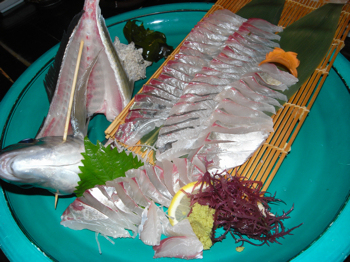
Japanese Seasonal Fish: Striped Horse mackerel/Shimaaji

shimaaji-1

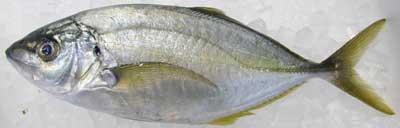
Shimaaji, or Striped Horsemackerel is one variety of Aji/Horsemackerel-Saurel.
Although the season is said to be in Summer, the taste varies little with the time of the year.
Striped Horsemackerel caught by anglers off the Izu Peninsula, Shizuoka Prefecture, are said to be the best in Japan.
It is known under the other names of Ookami, Kose and Katsuoaji.
It is very popular as sashimi:

shimaaji-2

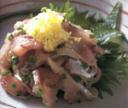
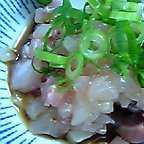
or as tataki (tartare), my favourite, with a dash of fresh grated ginger:
<a

shimaaji-3 shimaaji-3a

Of course, as a sushi, it has many lovers:

shimaaji-4

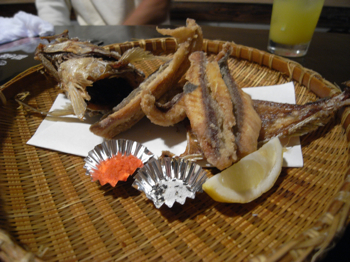
The best sushi restaurants will prepare the sashimi or sushi from live specimen swimming in their tanks and later serve the bones and head deep-fried. They will serve the whole fish deep-fried for the guests who are so keen on eating raw fish!

shimaaji-5

Recently, breeding the fish from their eggs off Chichijima Island has been successful, meaning more on our plates in the future!

Please check the new postings at:
sake, shochu and sushi

—————————————-
日本語のブログ
—————————————-
Japanese Home-made Lunch of the Day

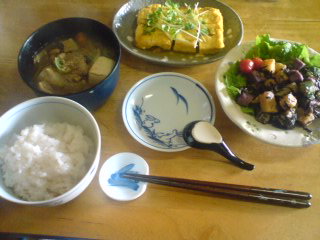
lunch-09-04-01

With all the bentoes the Missus is (I was going to say “kindly” but don’t forget she eats the same lunch after all! LOL) preparing for me every Monday and Tuesday I have been asked what would be typical lunch at home.
Frankly speaking, it varies all the time, depending on the Missus’ mood and my own (rare) requests.
But today was a bit special. This morning, April Fool’s Day, I had to go through a stomach scan on my doctor’s orders (which revealed nothing serious, fortunately, apart of a big dent in this month budget!), which meant I hadn’t been allowed to eat for 18 hours (or drink for 58 hours!). As I was about to depart for the hospital, the Missus sent me off saying: “Don’t worry, I’ll prepare a nice healthy Japanese lunch as you like them!”
That could explain that for all the anaesthesics I had to ingurgitate, I stayed conscious during the whole operation!

lunch-09-04-01a

Because I did not have to sleep off all the medicine I managed to come home earlier than scheduled and take pictures of the meal as it came onto the table:
The salad was made with three types of potatoes: yellow sweet potato, violet sweet potato and regular potato to which was added cucumber cubes of the same size, “hijiki” sweet seaweed, lettuce with gomadare/sesame dressing.

lunch-09-04-01b

Naturally I had my tamagoyaki/Japanese omelette. The above picture shows it as it came out of the pan.

lunch-09-04-01c

It was then cut to bite size (half for each of us!) and served with “Kawaire Daikon” sprouts and a dash of ponzu.

lunch-09-04-01d

As for the meat, I had the Missus’ special: “motsu nikomi”/Japanese-style pork tripes stew with veg and tofu. (I had a second serving).

lunch-09-04-01e

As for the rice, I had rice steamed with shreds of sweet umeboshi/Japanese pickled plums. (I had a second serving of that, too!)

We had some small cakes for dessert.
I was so full that I had to sleep it off!

Tonight I ‘ll be able to open a bottle of sake at last! LOL

Please check the new postings at:
sake, shochu and sushi

—————————————-
日本語のブログ
—————————————-

Today’s Lunch Box/Bento (’09/20)

bento-09-03-31a

Today saw a rare occurence in that the Missus prepared a double bento for me!
Let me explain: As I have to submit to a camera scan of my stomach (you know, those long thin things they force through your gullet!) I’m not allowed to eat anything after 9:00 p.m.
As I usually have dinner at around 9:30 due to late work hours, the Missus included a small “6:00 p.m. dinner” (I can’t really call it a lunch box! LOL).

bento-09-03-31d

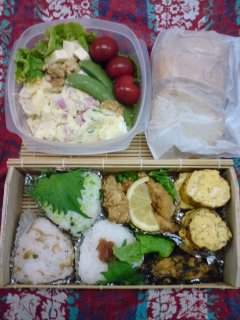
Lunch was served in that interesting box with a bamboo lid I have described before:
Three different “o-nigiri/rice balls”, one with an umeboshi/pickled Japanese plums, another one with Japanese cucumber (both wrapped in fresh shiso/perilla leaves) and the third one with fried “shirasu/Sardine whitebait”.

bento-09-03-31b

Two kinds of deep-fried chicken fillets cuts were provided with some lettuce. One kind was fried with white sesame seeds, the other with bits of shiso/perilla leaves.
The tamagoyaki/Japanese omelette came in a cylindrical shape instead of the usual rectangular one. This done is done by “rolling” it into a sushi roll bamboo sheet just after it has been cooked and kept pressed inside until it has completely cooled down.

bento-09-03-31c

As for dinner I was provided with potato and ham salad to which the Missus added plum tomatoes, cut processed cheese, walnuts, sweet peas in their pod and more lettuce!

I’ll be hungry tonight!

Please check the new postings at:
sake, shochu and sushi

—————————————-
日本語のブログ
—————————————-

Tuna Species: Kindai Tuna/Kindai Maguro

kuromaguro.jpg

Following a kind request by my good Foodbuzz friend, Elizabeth, I decided to re-post an article on this particular tuna species to clear some misunderstandings and add new information!

“Kuromaguro” or Blue Fin Tuna has become almost a mythical fish all over the world to the point that non-Japanese refer to it by its Japanese name.

“Kuromaguro”, or Blue Fin Tuna (or Tunny) has many other names in Japanese: Honmaguro, Maguto,Meji,Yokowa, Shibi, Imoshii, Shibimaguro, Kuroshibi, and Hatsu!

The best are caught in Winter mainly in the seas off Kochi (Shikoku Island), Miyagi and Hokkaido Prefectures.
This variety is the most expensive and can reach astronomical prices, especially caught in Winter off Hokkaido.
Imported Kuromaguro usually reaches Japan frozen, but in recent years the fish has been successfully raised in semi-wild environments in Spain, Australia and Croatia and arrives in Japan fresh by plane.
Imports and sales of Kuromaguro are monopolised by Japanese trade associations, unless you are lucky enough to catch one (careful here, as poaching is a major offense in Japan!).
Between you and me, if you want to eat Kuromaguro sashimi, it might come cheaper if you do it while travelling in Spain!
Did you know that Japanese importers will fly to Spain and other countries just to check that the fish are bled properly?

Now “Kindai Maguro” (近/kin for “near/nearby” and 大/dai for “big”) is the name given Kuromaguro/Blue Fin Tuna entirely human-fed (I mean fed by humans, not fed with humans!LOL).
There is big “but”, though! Huma-fed does not mean human-raised.
Young tuna have first to be located, encircled with large nets, guided near a shore and then provided with food. What people forget is that the tuna gills are hard. If the fish cannot swim freely enough it will wither and eventually die. So Kindai Tuna is nothing less than wild tuna caught into a trap and raised inside it!

BUT GOOD NEWS!

Only last week, the Tokai Marine Studies University in Shimizu Ku, Shizuoka City (Shizuoka, Banzai!) has just announced that they have succeeded in raising Kuromaguro from the eggs! What is with the recent success by fish farmers in raising another variety of Kuromaguro in Kyushu, Specialist are confident that Japan will be able to actually export completely human-raised tuna in the foreseeable future!

———————
Related terms:

kuromaguro-otoro
Kuromaguro Otoro (fat part)

kuromaguro-chutoro
Kuromaguro Chutoro (semi-fat part)

kuromaguro-akami
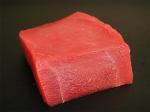
Kuromaguro Akami (lean part)

Please check the new postings at:
sake, shochu and sushi

—————————————-
日本語のブログ
—————————————-

Today’s Lunch Box/Bento (’09/19)

bento-09-03-30a

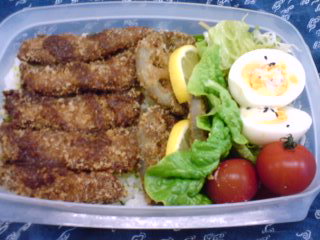
The Missus did not want to take a picture of today’s bento because, as in her own words, it looked too “brown”.
I ignored her protests because bentoes are simply looking brown sometimes,e specially when you include deep-fired items.

bento-09-03-30b

She deep-fired first soft pork strips after dipping thme into a sauce mix of hers and breadcrumbs, and then slices of renkon/fresh and peeled lotus roots in exactly the same way.

bento-09-03-30e

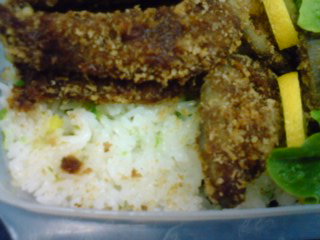
As for the rice it was plain steamed rice with which she later mixed chopped Japanese pivkled cucumbers.
A boiled eggs, plum tomatoes, lettuce and shredded veg completed the lunch.

bento-09-03-30c

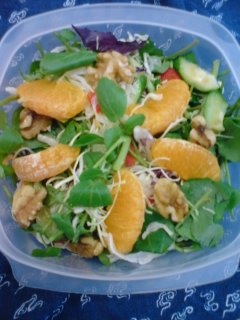
For more salad and dessert, shredded veg, “tankan” oranges from Yakushima island and walnuts!

Simple, tasty and very satisfying!

Please check the new postings at:
sake, shochu and sushi

—————————————-
日本語のブログ
—————————————-

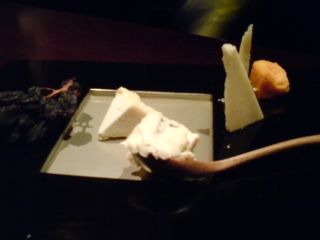
Cheese Plate at gentil (5)

gentil-09-03-a

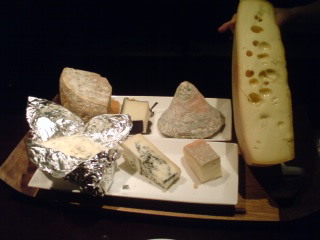
Last night I paid a belated visit to Gentil Restaurant In Shizuoka City in the company of two good friends to check and taste what was on offer at that nationally famous restaurant.

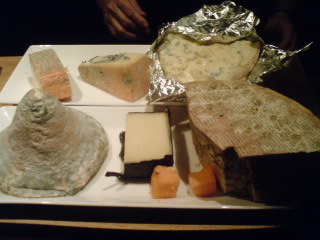
My good friend, Ms. Keiko Kubota, the only Japanese Cheese Sommelier to hold the title of compagnon d’Honneur de Taste Fromage came up with the tray of Cheeses she is currently maturing:

gentil-09-03-c

Front from left to right:
-Cone de Port Aubray (Goat Milk, Loire, France)
-2 year-old Chevre Noir (Goat’s Milk, Canada)
-10 year-old Red Cheddar (Cow’s Milk, Wisconsin, US. Yes, you read well!)
-Bleu de Sassenage (Cow’s Milk, Alpes, France)

Back from left to right:
-Talegio (Cow’s Milk, Piemonte, Italy)
-Gorgonzola Picante (Cow’s Milk, Piemonte, Italy)
-Gorgonzola Dolce (Cow’s Milk, Piemonte, Italy)

gentil-09-03-b

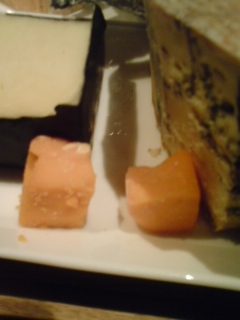
-10 year-old Red Cheddar (Cow’s Milk, Wisconsin, US. Yes, you read well!). A rarity!

gentil-09-03-d

Another rarity: look at the pic at the top of this posting. It is the large cheese “standing” on the right:
-“Hokkaido Shintoku”, semi-hard type from Hokkaido, Japan. Only served presently at Gentil!

gentil-09-03-e

We actually tasted all the cheese on the tray.
This particular dish offers:
-Cone de Port Aubray (Goat Milk, Loire, France), top
-Gorgonzola Picante (Cow’s Milk, Piemonte, Italy)
-2 year-old Chevre Noir (Goat’s Milk, Canada) Standing
-10 year-old Red Cheddar (Cow’s Milk, Wisconsin, US.)!
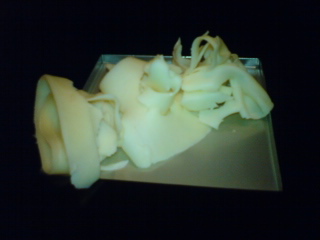
-Gorgonzola Dolce (Cow’s Milk, Piemonte, Italy) in the wooden spoon.

What did we drink with that?
Chateau Talbot from Bordeaux, and wines from Crozes-Hermitage and Bourgogne!

Restaurant Gentil
Address:420-0031 Shizuoka Shi, Gofuku-cho, 2-9-1, Gennan Kairaku building, 2F
Tel.: 054-2547655 (Reservations advisable)
Fax: 054-2210509
Opening hours: 12:00~14:00, 18:00~last orders for meals at 21:30. Bar time 18:00~23:30. Closed on Mondays.
Credit cards OK
Homepage (Japanese)


The Japan Blog List

Please check the new postings at:
sake, shochu and sushi

—————————————-
日本語のブログ
—————————————-

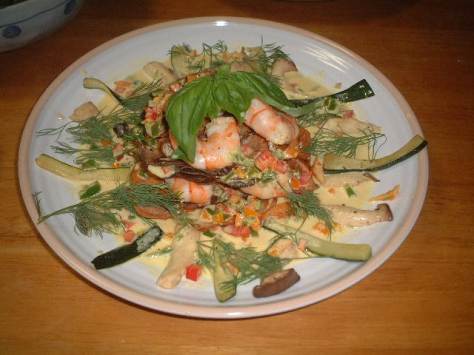
Cream Sauce Prawns and Potato Pagoda

prawns-cream-potatoes

Frankly speaking, I was stumped by how to call this simple, healthy but fullfilling home-made recipe reminiscent of the Curry Sauce Mango Prawns and Scallops recipe I posted a couple of days ago!
Lauren would probably have kicked if I had called it “Prawns and Potatoes Sandwich in Cream Sauce”! LOL
As with other recipes, it can be multiplied into many variations. Vegetarians can replce the prawns with boiled cauliflower and Brocoli for example!

Ingredients (for 2 people/large apppetites!):

Small -medium prawns: 18 without their shells and kept in a little lemon juice
Potatoes: 4 medium-large
Courgette/Zucchini: 1 small cut in thin strips (at least 9 or 10. See pic above)
Eringi Mushrooms or subsitute: 2 large cut in thin strips (at least 9 or 10. See pic above)
Fresh dill (for decoration)
Fresh sweet basil (for topping)
Sauce:
Shallots: 1 large, finely chopped
Garlic: 1 large clove, finely chopped
Red, yellow, green pimento: 2 large tablespoons of each, finely chopped
Fresh Cream: 1 cup (200 cc)
White wine: 1 quarter of a cup (50 CC)
Olive oil
Lemon juice: 1 lemon
Salt, pepper, nutmeg, chili pepper (the last to taste). You can make it Indian by using curry mix powder.

Recipe:
Organize yourself so as to have everything on hand and ready from the beginning!
You will need at least two frypans and one deep pan.

-Cut potatoes as thin as possible. The thinner, the better. Also keep in mind you have to make 6 “pancakes”. Wash them. Take all water off them with a clen cloth or kitchen paper. Add a little salt, pepper, nutmeg and chili pepper (last one can be discarded) to them in a bowl.
-Pour a little olive oil in one non-stick frypan. On a medium-large fire wait until oil is hot enough and form a “pancake with potato slices. The trick is that no space should be left between potatoes and at the same time avoiding two sliced to cover each other completely. Wait until potatoes have cooked enough to stick together (“help” them if necessary by pressing them). Turn them over and cook the other side to a nice crispy light brown. Continue until you have obtained 6 “pancakes”. Keep warm.
-While the potatoes cook, fry first zucchini then eringi mushrooms in a little olive oil until tender to taste. Add a (very) little salt to them while cooking. Keep warm.
-Sauce: In a deep pan, pour 3 large tablespoon of olive oil, heat oil over medium fire. Fry shallots and garlic. When shallots have become translucent, add wine, fresh cream, lemon juice, salt, pepper, nutmeg and other spices. Take it easy with salt and spice at first. You can always rectify later. Let cook for a few minutes. Sieve sauce, add chopped pimento and cook for a good 5 minutes on a medium fire. Lower fire if it boils.
-Fry prawns in a little olive oil until only their centers are still a little raw. If you cook them any longer, they will harden up.

On a large plate you had kept hot in the oven, first place one potato pancake then 3 prawns on top. Repeat the operation twice more to obtain the “pagoda” or “Sandwich” shape. Place alternatively zucchini and eringi around to form a crown. With a large tablespoon scoop up the pimento out of the sauce and pile them on top of the Pagoda. Pour the sauce on the vegetables around the Pagoda. Decorate with plenty of fresh dill around and sweet basil leaves on top as shown on pic above.

Serve with a dry white wine or Pilsner tye beer. Non-drinkers could drink a nice fresh lemonade (real one!) with it!

Enjoy!

Please check the new postings at:
sake, shochu and sushi

—————————————-
日本語のブログ
—————————————-

The Pride of Shizuoka: Sakura Ebi/Cherry shrimp!

sakura-ebi1.jpg

With Spring comes the season for a specialty found in Shizuoka Prefecture only!
“Sakura Ebi” or Sakura shrimp is a vey small (maximum 5 cm) crustacean caught in the Suruga Bay of Shizuoka Prefecture. Most of ships are anchored in Yui City (part of Shizuka City city) and Fujikawa Harbours.

sakura-ebi-yui.jpg sakura-ebi-catch.jpg sakura-ebi-market.jpg
The shrimps are caught in special net baskets. They are then siphoned through special “tubes” with the baskets kept just above the water. Later all sea creatures inadvently caught in the nets are released alive back into the sea! Who said the Jpanese are not environment-conscious?
Moreover, for the first time in Japan, the Association of Cherry Shrimps Fishermen decided in 1965 to strictly limit their yearly total catch to preserve stocks. A salutary initiative long before normal citizens became aware of conservation and environment!

According to long traditions they are put on the market immediately for auction.
Many fishermen open their own sushi restaurants, bars and often their catches of the night until early in the afternoon before taking a well-earned sleep.

sakura-ebi2.jpg sakura-ebi-cuisine.jpg sakura-ebi-gunkan.jpg

For people who prefer them as sushi, the gunkan style is the most appreciated!
Most French and Italian Restaurants in Shizuoka City and around will serve them in quiches!

izutsuya6.jpg
(Pic taken at Izutsuya Restaurant, Yui)

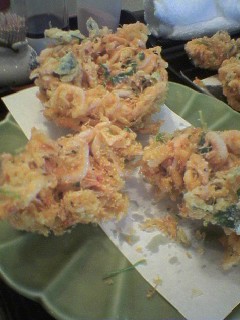
Another popular way to eat them is of course as a tempura called kaki-age, either with fresh sakura ebi in season or frozen/dried ones.
Fishermen use to dry their catch for sale and export until the government had the great idea to run an expressway just along the harbour!
The shrimps are now dried along nearby Fujikawa River at the foot of Mount Fuji, creating large quaint rose expanses in the most useen for locations!

sakura-ebi-drying.jpg

Please check the new postings at:
sake, shochu and sushi

—————————————-
日本語のブログ
—————————————-

Vegetables Facts and Tips (9/1): Mushrooms/Shitake

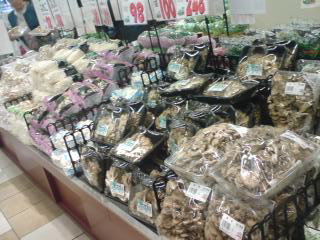
mushrooms-market
(Mushrooms at at a Shizuoka Supermarket)

I don’t intend to talk about wild mushrooms here as I would need a very thick book to post!
Japan is arguably the country cultivating the greatest number of varieties ( new ones appear and disappear every year!), so I will limit myself to give information on at least four of them and furthermore introduce most varieties I have found in Japanese supermarkets (most of them should be available in many countries.

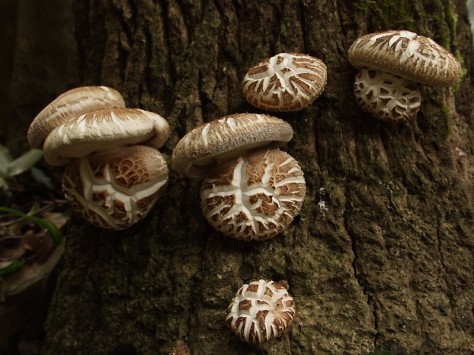
SHIITAKE

efbd93efbd88efbd89efbd89efbd94efbd81efbd8befbd85

FACTS:
Shiitake/Lentinula Edodes (Black Forest Mushrooms) are native to China but have been grown in both Japan and China since prehistoric times[2]. They have been cultivated for over 1000 years; the first written record of shiitake cultivation can be traced to Wu Sang Kwuang, born during the Song Dynasty (AD 960–1127). However, some documents record the uncultivated mushroom being eaten as early as AD 199.
Fresh and dried shiitake have many uses in the cuisines of East Asia. In Chinese cuisine, they are often sauteed in vegetarian dishes such as Buddha’s delight. In Japan, they are served in miso soup, used as the basis for a kind of vegetarian dashi, and also as an ingredient in many steamed and simmered dishes. In Korean cuisine, they are commonly used in dishes such as bulgogi (marinated grilled beef), jjigae (stews), and namul (sauteed vegetable dishes). In Thailand, they may be served either fried or steamed.

Shiitake are often dried and sold as preserved food in packages. These must be rehydrated by soaking in water before using. Many people prefer dried shiitake to fresh, considering that the sun-drying process draws out the umami flavour from the dried mushrooms by breaking down proteins into amino acids and transforms ergosterol to vitamin D. The stems of shiitake are rarely used in Japanese and other cuisines, primarily because the stems are harder and take longer to cook than the soft fleshy caps. The highest grade of shiitake are called donko in Japanese.
Extracts from shiitake mushrooms (such as ichtyol) have also been researched for many other immunological benefits, ranging from anti-viral properties to possible treatments for severe allergies, as well as arthritis.
The Japanese actually consume them from their raw form more than in any other country.

-Season: best in October~March for outdoors cultivation
-Main beneficial ingredients: Vitamin B1, B2, N6, Ergosterol, Lentinan, Fibers.

TIPS:

-Loosely wrap them in clean Newspaper or Kitchen Paper and store them in fridge away from the light.
-Choose specimens with unbroken “umbrella” and no black marks under.
-Fresh Shiitake are best enjoyed for their taste by keeping their cooking simple such as frying them over a grill with a dash of soy sauce and sake!

Please check the new postings at:
sake, shochu and sushi

—————————————-
日本語のブログ
—————————————-