Today’s Lunch Box/Bento (48)


The Japan Blog List

Please check the new postings at:
sake, shochu and sushi

—————————————-
日本語のブログ
—————————————-

bento-2008-12-25a

Yes, I worked yesterday on the 25th of December. Chritmas is more a business bonanza than anything else. In any case I’m agnostic!
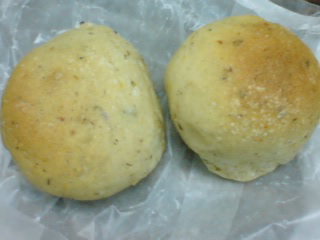
The Missus made doo with whatever she had in the fridge and some buns she had baked the day before.

bento-2008-12-25b

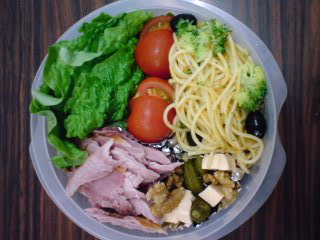
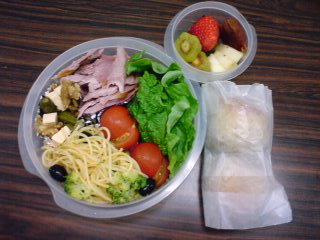
The main dish included from bottom clockwise:
Turkey ham bought at the local supermarkert, lettuce leaves to wrap around the turkey, plum tomatoes, brocoli and “tobikko/flying fish roe” spaghetti, first fried then cooled down, processed cheese, black olive and cornichons.

bento-2008-12-25d

The buns provided with plenty of calories,

bento-2008-12-25e
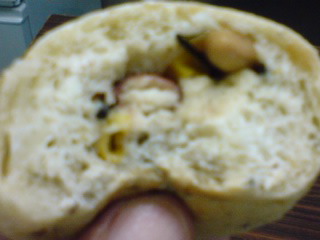
as they contained beans.

bento-2008-12-25c

The dessert, plentiful for once, included cut fresh pear, mini kiwi, “benihoppe/red cheek” strawberry from Izu Peninsula and home-dried persimmon.

Plenty to last until the night out!

Japanese Crustacean Species 1: White Shrimp/”Shiroebi”


The Japan Blog List

Please check the new postings at:
sake, shochu and sushi

—————————————-
日本語のブログ
—————————————-

shiroebi1.jpg

Shiroebi or White Shrimp is not as known as other shrimp/prawn varieties. However it is a very popular crustacean in Japanese cuisine.
Also known under the the names of “Shiraebi, Hirataebi and Bekkoebi”, it is mainly caught between depths of 40 and 200 metres off the coasts of Toyama Bay on the other side of Japan and Suruga Bay in Shizuoka Prefecture.

shiraebi-22

It is mainlly served as sashimi with some ponzu and grated fresh ginger

shiraebi-3

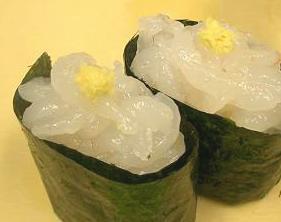
as “gunkan” topped with a dash of grated fresh ginger.

It is possible to serve it as “nigiri”, although one would need large specimen, as the usual length is only 7 cm.
Shiroebi appears on our tables between April and November in many guises:

shirebi-4

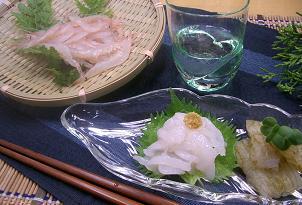
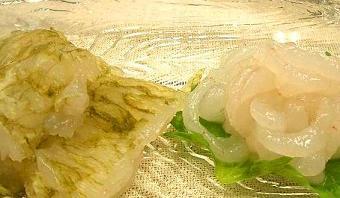
The picture above shows on the right the shiroebi in its natural flesh whereas on the left it has been kept between two sheets of wetted seaweed for a while as “kombu-jime”, another very popular way to prepare all kinds of sashimi/sushi.

White Shrimps also enter in the preparation of a kind of “Tamagoyaki”/Japanese Omelette when they are first processed into a paste and mixed thoroughly with beaten eggs, sieved and then cooked.
The Japanese also love them as soft sembei/rice crackers.

The annual catch has exceeded 600 tonnes in recent years, half of them in Toyama.
They are also exported whole.

Taky’s Classic Cakes (5): Charlotte


The Japan Blog List

Please check the new postings at:
sake, shochu and sushi

—————————————-
日本語のブログ
—————————————-

charlotte

Charlotte russe is a dessert invented by the French chef Marie Antoine Carême (1784-1833), who named it in honor of his Russian employer Czar Alexander I (“russe” being the French word for “Russian”). Originally it was a cold dessert of Bavarian cream set in a mold lined with ladyfingers.
Nowadays the cake is simply called “Charlotte” and and come in many variations.

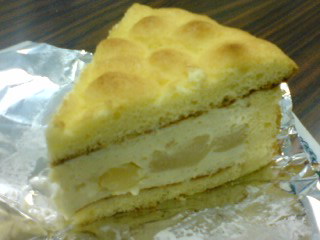
Taky’s in Shizuoka City has created his own version with an accent on pears.

The Gateau de Savoie (sponge cake) lining the bottom and sides is imbibed with Poire Williams Liqueur.
It is filled with vanilla mousse containing cuts of pears marinated in Poire Williams Liqueur.
The Gateau de Savoie forming the “lid” was baked separately. It contains more meringue (beaten egg whites) and sugar, making it it lighter and slighter cripsy.

Certainly more fulfilling than it looks, it is best appreciated with a great tea!

TAKY’S
420-0839 Shizuoka City, Aoi Ku, Takajo, 1-11-10
Tel.: 054-255-2829
Opening hours: 11:00~22:00
Closed on Sundays

Shizuoka Bars: Our Boozer! in Shizuoka City


The Japan Blog List

Please check the new postings at:
sake, shochu and sushi

—————————————-
日本語のブログ
—————————————-

boozer-2008-06

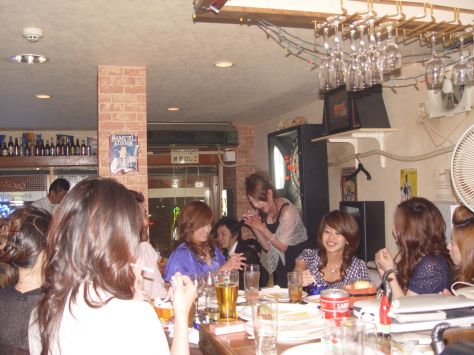
When Karl Emerson, a native from Birmingham City, U.K., opened Our Boozer in July 2003, customers were mostly expats in search for a homey waterhole. Things have slowly evolved since then. These days Japanese patrons make for a good half of the clientele, although English is still the prevalent language.
Karl, into his ninth year of residence, strives to create an easy-going environment where customers fel like “going abroad without leaving Japan”.
Parties of all kinds and budgets can be quickly arranged.

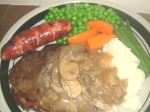
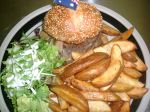
boozer-aussie-grill boozer-burger-new boozer-cottagepie
Typical pub food is plentiful at very reasonable prices:
Burger (750 yen), Lamb Grill (1,200 yen), Cottage Pie (850 yen) all served with generous garnish.

Abbot Ale, Carlsberg (after all, the owner’s name is Karl!) and Guinness are served at the tap at 750 yen~ a pint. All kinds of drinks and cocktails can be quickly prepared and served.
Among the attractions are a large TV screen for all major sports viewing, a pool table and an elctronic darts board.
The late hours and informal setting are conducive to making new friends in complete relaxation and freedom of movement as drinkers (and diners) can choose either to sit down, stand or walk around according to their preferences and companions.
A luxury in this crowded bustling city!

Our Boozer!
Koyamachi,Aoi Ku,Shizuoka, Japan, 420-0852
Telephone +81 (0)54 293 7029
Fax +81 (0)54 254 0505
Open from 6:45pm until late. Closed every Tuesday and the first Monday in every month.
HOMEPAGE

Edamame: Japanese Green Soybeans


The Japan Blog List

Please check the new postings at:
sake, shochu and sushi

—————————————-
日本語のブログ
—————————————-

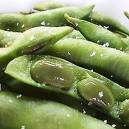
I’ve always been somewhat puzzled to find the word “edamame” in my U.S. (and European) friends’ blogs. This conspicuous vegetable seems to conjure grand images of Japanese gastronomy in spite of its almost base status in this country.

After all, “edamame” (枝豆/branch bean in Japanese) is nothing but green soybeans, a food mass-produced and heavily exported by North American farmers.
Or, is it that the soybean’s image has fallen so low on the other side of the Pacific because some people grow it for bio-ethanol that restaurateurs feel more comfortable with a grand-sounding Japanese name?

Alright, before I get collared for indulging into a cheap rant, let me introduce my own recipe for preparing the “delicacy”:
One does not have to boil it, cool it and serve it sprinkled with salt. This is probably the worst and least healthy way to consume it!
If you can, choose them fresh on the branch(es). This will guarantee they haven’t lost any of their nutrient qualities.
Cut out all the pods and throw away the branches (or re-process them inside your fertilizer box!).
Clean the pods under running water.
Drain water, but do not wipe them dry.
Drop them in an appropriate-sized non-stick pan and hand-rub them in a little coarse salt. The less salt, the better, but enough to season all pods. Experience and personal preferences will tell you how much you need.
Cover pan with a glass lid and switch on fire to medium-low. Cook until water seeps out of the pods. Switch off fire and keep inside covered pan (do not take the lid off!) for a good 5 minutes. By then, they should be sufficiently cooked.
Serve immediately.

In Japan there exists another variety called Kuro Edamame/黒枝豆-Black Edamame.
Actually they are a light brown-green soybean grown in Shizuoka Prefecture and elsewhere. They are definitely tastier and deserve the title of “delicacy”.
The beans out of their pods also make for great addition to salads, artful presentation with meat dishes, and are great mixed inside “nigiri”!

Vegan & Vegetarian Japanese delicacy: “Sea Grapes/Umibudou”


The Japan Blog List

Please check the new postings at:
sake, shochu and sushi

—————————————-
日本語のブログ
—————————————-

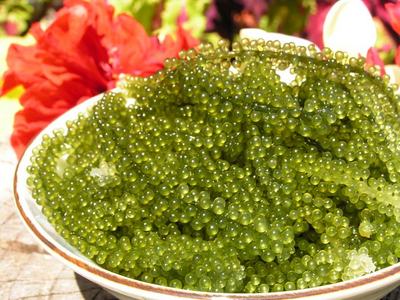
umibudou-11

Although not from Shizuoka, this Okinawa delicacy regularly appears in good supermarkets such as Shizuoka JR Station Supermarket and in good Japanese restaurants.

Although called Sea Grapes (Umibudou) for their shape, it is a saweed variety!
Its Latin name is “Caulerpa lentillifera” for the purists.

umibudou-2

Apparently they can be found in some islands an seas in South Eastern Asia and Oceania. World vegetarian and vegans, look out for them (I mean discovere and eat them! LOL)!
The whole seaweed can reach betwen 2 and 5 metres, but only the extremities including the “grapes” are consumed.
In Okinawa where they have been eaten eons, they are also called “green caviar”!
You can eat them raw of course with soy sauce or rice vinegar mixed with mustard.

umibudogunkan

In sushi, as “gunkan/maothership”, they certainly make for great fun and taste!
Beware of counterfeits! No less than the JAS was recently caught selling them in August 2008!
Growing them in Japan has apparently been successful, great news for vegans and vegetarians who will find a great source of iodine and other beneficial elements!
Didi I say it? They are delicious/”oishii”!

Japanese Shellfish Species 1: Torigai/”Large Cockle”


The Japan Blog List

Please check the new postings at:
sake, shochu and sushi

—————————————-
日本語のブログ
—————————————-

torigai1.jpg

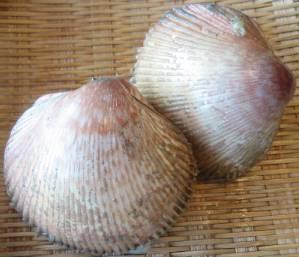
“Torigai” does not have a real name in English. They are approximately translated “large cockle”
They will appear on the market in Spring and earlier in Shizuoka Prefecture. They are mainly found in Tokyo Bay, Ise bay and Seto Inner Sea. Some are imported from Korea, but catches can wildly vary, especially with the occurence of “red tides”. A lot are imported from Aichi Prefecture (Nagoya region) to Shizuoka.

torigai-shellfish

They must be absolutely fresh to be consumed.
One easy way to check if they are still fresh is to slam them on the wooden board. They should immediately retract, even if cut out. They are at their cheapest between March and May.

torigai-nigiri.jpg
(Pic taken at Sushiya No Ichi, Shizuoka City)

They can be appreciated either as “tsumami”/Appetizer with a little grated wasabi and shoyu, or as nigiri.
Beware of torigai with a thin colour! They are not fresh!

Bryan Baird’s Newsletter


The Japan Blog List

Please check the new postings at:
sake, shochu and sushi

—————————————-
日本語のブログ
—————————————-

Baird Beer & Taproom Events Bulletin 2008 #26
bryan-sayuri.gif

Dear Taproom Friend & Baird Beer Enthusiast:

The parade of big winter beers continues with the release on Tuesday, December 23 of an annual Baird Strong Ale Series seasonal: Yabai-Yabai! Strong Scotch Ale.

Yabai-Yabai! Strong Scotch Ale (ABV 7.3%):

Scotland, an historically important center of beer brewing, has a cool climate that favors cultivation of the hardy barley plant. Scottish Ales, thus, tend to feature the rich and robust flavor of malted barley in the flavor profile. Moreover, relatively cool ale fermentation temperatures contribute to brews that are not highly attenuated — i.e. they remain rich in residual sugars and thus round and full-bodied. Strong type Scottish Ales often have been considered “a kind of liquid porridge.”

Baird Yabai-Yabai Strong Scotch Ale is, in a word, rich! It is liquid opulence that verges on decadence. The color is a deep mahogany and the head is dense, creamy and tan. The warming effect begins in the nose, with the wafting of soft fruit esters and warm fusel alcohols. As the aroma dovetails into the flavor, notes of molasses, caramel apples, rum cake and maple syrup perform a holiday festival on the palate. Just as a chewy malt sweetness blankets the mouth, it is pealed back by the ethereal pull of a vinous character reminiscent of port or sherry. One hearty pint is enough to take the bite out of the winter chill. Two pints will leave you toastily, and blissfully, warm. Three pints and…. YABAI!

Yabai-Yabai! Strong Scotch Ale will be pouring from the taps of the Fishmarket and Nakameguro Taprooms beginning at noon on the Emperor’s birthday (Tuesday, December 23). This day is a Japan national holiday so plan to come join us for a few pints and some great holiday cuisine. Yabai-Yabai! also will be served on draught at select Baird Beer retailing pubs and restaurants throughout Japan. Bottle versions (633 ml) are available for purchase through the family of Baird Beer retailing liquor stores in Japan and direct from our website estore.

Remainder: Tuesday, December 23 kicks of a three-day Christmas celebration hosted at our Fishmarket Taproom. Pints of Jubilation Ale (both the 2007 and 2008 versions) will be sold for 500 yen and a special Christmas food menu will be offered. Christmas music and DVDs will be played throughout and small gifts offered to the young ones so bring your kids and enjoy a wonderful family outing.

The Nakameguro Taproom is hosting a Christmas Eve celebration on Wednesday, December 24 that includes a special Christmas food menu as well as 500 yen pints for the lonely and forlorn who find themselves visiting solo.

Stop in and enjoy the Christmas revelry with us at one of our two Taproom locations.

Happy Holidays!

Bryan Baird

Baird Brewing Company
Numazu, Japan
HOMEPAGE

Vegan and Vegetarian Japanese Cuisine: Tofu (part 1)-Preparation


The Japan Blog List

Please check the new postings at:
sake, shochu and sushi

—————————————-
日本語のブログ
—————————————-

zarudofu
“Zarudofu”, my favourite variety of tofu just filtered out in a “zaru/basket”. You just eat it with a spoon on its own. No seasoning needed!

As promised, here is the first posting about tofu.
This article concerns the home-making of it.
The next article will introduce different kinds of tofu and recipes!

Ingredients (for one large piece, one cho/丁in Japanese)

Soy beans: 2 cups (360cc)
Nigari: 2 large tablespoons
(Magnesium chloride is an important coagulant used in the preparation of tofu from soy milk. In Japan it is sold as nigari (the term is derived from the Japanese word for “bitter”), a white powder produced from seawater after the sodium chloride has been removed, and the water evaporated. In China it is called “lushui”.. Nigari or Lushui consists mostly of magnesium chloride, with some magnesium sulfate and other trace elements. It is also an ingredient in baby formula milk).
Water: 5 cups (twice and a half the volume of soy beans)

Utensils:
One large pot
One large clean cloth pouch to press tofu through
One bowl
One mixer
One thermometer
One large piece of gauze to filter water off shaped tofu
One large wooden spoon
One wooden tofu-shaper case

RECIPE:
toofu-1
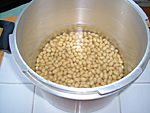
1) Preparation: soak soy beans in water overnight

toofu2
2) Preparation: Mix nigari with 1 cup of water and set aside

toofu-3
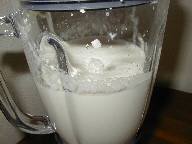
3) According to its size, Pour the whole or part by part soy beans and water (1) and make paste as fine as possible. If mixer runs at an even pace without crushing beans into paste, add more water. The paste obtained is called “namago” (生呉)

toofu-4
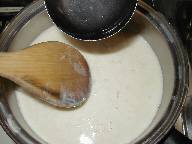
4) Pour the bean paste into a large pot with an equal amount of water. Heat stirring all the time. The paste will come to a boil suddenly. Switch off fire. Switch on low once the paste has settled for 10 minutes and take off fire.

toofu-5
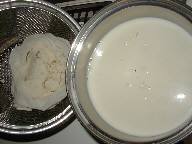
5) Pour paste into the cloth pouch and press. Right of the picture is tofu paste before pressing. Left is pressed out tofu

toofu-6
6) Solidifying (coagulating) with nigari.
Stir tofu over light fire. When the temperature has reached 75~80 degrees Celsius pour in nigari slowly and stir all the time. The solid matter will sink to the bottom and accumulate. The coagulation will be complete when liquid above tofu has become transparent. Stop the operation and let rest for 15 minutes.

toofu-7
7) Arrange the gauze inside tofu a tofu shaper case which should have small holes to let excess water run out.

toofu-8
8) Cover with lid with a weight (or glass of water) of about 250 g and further press out water for 15 minutes

toofu-9
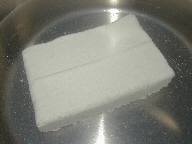
9) Delicately empty tofu in basin filled with called water and leave it there for an hour to take out excess nigari. Store in refrigerator.

Healthier, tastier fried Potatoes!


The Japan Blog List

Please check the new postings at:
sake, shochu and sushi

—————————————-
日本語のブログ
—————————————-

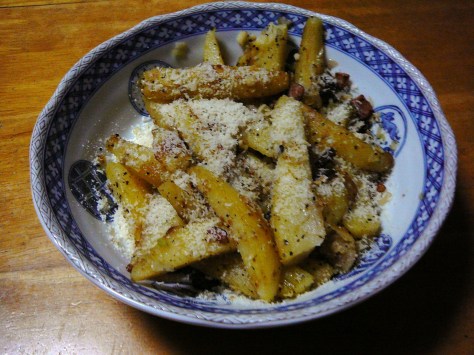
fried-potatoes

Fried potatoes have been temptying us since the 17th Century when the Belgians first experimented cooking them in oil. At the time, deep-frying, imported by Crusaders from the Middle East, was the only absolutely safe way to cook, especially in “flat countries” as Belgium and Holland were called, as water was a bed for all kinds of diseases.
Incidentally, Paris had a good laugh when some time ago a misinformed gentleman proposed than French Fries should be re-named “Freedom Fries” on the White House menus. Sorry, mate, but they are Belgian, not French!

Now, eveyone knows that boiled potatoes are healthy, if somewhat bland in taste, whereas fried potatoes are tasty but hideously high in unwanted calories.
There is a simple method half way which will enable you to enjoy your favourite snack/main dish with a lighter heart (and midriff) and at the same time allow you to serve a savoury dish to your ravenous friends or family! (But don’t overeat them!)

INGREDIENTS
(for 2 to 4, depending whether it is an accompaniment or full dish):
-4 large potatoes
-1 large echalotte/shallot (if unavailable, half a red onion is great!), finely chopped
-3 cloves of garlic, finely chopped
-Bacon (vegan and vegetarians, please skip this keeping in mind you will have to add a little salt)-1 large rasher cut in small pieces (half a cm square or half the size of your little finger nail, cut short!)
-Parmesan/Parmiggiano Cheese (vegans, please skip this or use alternative), freshly grated, 3 large tablespoons.
-Salt (for the potatoes boiling water, otherwise as little as possible, as bacon and cheese will contain enough!)
-Pepper, nutmeg. Foodies who like their food Indian-style may add a little powdered curry mix and chili pepper.
-Olive oil: 2 large tablespoons

RECIPE:
-Boil potatoes in plenty of salted water. If you do not add salt to the water, the potatoes will end up very bland in taste.
-Once the potates are boiled at about 80%, plunge them into cold water. This little trick will prevent them from breaking up later.
-When potatoes are cold enough, peel and cut them in wedges (the size is up to you).
-In deep enough frying pan dry-fry (no oil added) the chopped bacon until it becomes a nice crisp and dark. Put aside on a small dish. For non-vegan/vegetarians, do not wipe the pan, or you will miss a lot of taste!
-Pour two large tablespoons of olive oil in the same frying pan. That is enough, and the oil will be “sucked in” by the potatoes with the result that the potatoes will not be “greasy”. Use olive oil, extra virgin, as this is best, not only for taste, but for health (the vitamin C contained in olive oil do not disappear even cooked for a long time).
-When potatoes have almost reached the wanted colour, drop in shallots, garlic, fried bacon, pepper, nutmeg (and salt if you absolutely must use some!). Toss-fry until shallots have turned transparent.
-Pour the lot into a serving dish and sprinkle parmesan over it.
Enjoy at once!

Sometimes, simple is best!

Today’s Lunch Box/Bento (47)


The Japan Blog List

Please check the new postings at:
sake, shochu and sushi

—————————————-
日本語のブログ
—————————————-

bento-2008-12-22-a1

This morning, the Missus said: Don’t take a picture, that bento is not worth it! Apparently her standards have raised since I started introducing her concoctions. LOL.
Well, I still think I should describe it as after all it is everyday food!

bento-2008-12-22-b1

The “rice dish” is a favourite of hers: it’s been steamed together with preserved beans and their juice and “hijiki” seaweed (osft sweet type). The technique (one day I promise I will post an article on easy sushi rice preparation!) is to lay the beans and seaweed on top of rice before steaming it and then mix the lot when it is cooked.

bento-2008-12-22-c1

The “o-yatsu/accompaniment” is a mixture of all kinds: on a bed of finely chopped vegetables, boiled “renkon/lotus roots” and home-made Chiken Ham (similar to Turkey Ham) salad, half-boiled egg sprinkled with black sesame seeds, plum tomatoes, cornichons, smoked salmon salad adn walnuts (for dessert).

I have no complaints!

Japanese Oysters


The Japan Blog List

Please check the new postings at:
sake, shochu and sushi

—————————————-

Oysters! One would be hard put to find a produce from the sea more internationally recognized as a gourmet’s choice! Moreover, it is the only shellfish you could survive on if you get marrooned on a desert island! It is a complete food in irself if consumed raw.
For a long time (that is before coming to Japan), I had thought that my country, France, was the place to eat them. Well, I must admit that it was a little pretentious from me, especially in the light that more than half of the oysters consumed back at home originated from Japan!

Now the Japanese have come with many ways of appreciating them:
-As in the picture above they would eat them as sashimi with a dash of wasabi and soy sauce.

-Or just a little lemon juice as in Europe, Americas or Oceania.

-Or in another Japanese fashion, with ponzu and momijioroshi (fresh grated daikon mixed with chili pepper. Succulent!)

-Or, and here Japanese and foreigners are simply crazy about them, as “kakifrai”, deep-fried oysters in batter and breadcrumbs with a nice tartare sauce!

-Or finally, and I would recommend the experience to all foreigners, as “kaki-gohan”, either with oysters steamed together with the rice, or cooked apart in light broth poured over a bowl of freshly steamed rice!

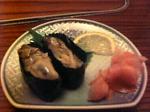
kaki-nigiri kakigunkan

Of course, any good sushi restaurants will serve oysters as nigiri or gunkan!

In Japan, oysters come from various areas, mainly Hiroshima, Iwate and so on.
As for Shizuoka Prefecture, oysters mainly come from Hamanako inland salted lake near Hamamatsu City.

Japanese Sushi: Gunkan/Mothership


The Japan Blog List

Please check the new postings at:
sake, shochu and sushi

—————————————-

gunkan-ikura.jpg

Intestingly enough, for all the fame of sushi and (California) rolls (maki), a very popular form of Sushi in Japan is almost ignored abroad.
Gunkan or “Mothership” in Japanese is a typically Japanese way of serving ingredients which would be difficult to serve on top of a nigiri.
They are usually made by wrapping a piece of “nori”/dry seaweed around a ball of rice/shari with plenty of space left on top to fill.
The advantages are multiple. The nori/seaweed is crisp. You eat the whole in one go with your fingers (clean your hand first!). And they make for beautiful decoration!
Some people do not appreciate the “nori”, but it could be replaced with very thin strips of daikon, cucumber, zucchuni and so on.

Here are some samples of “gunkan” I have eaten over the years:
gunkan-ikura.jpg gunkan-kanisalada.jpg gunkan-kanitsume.jpg
Ikura/Salmon roe Kani Salada/Crab salad Kanitsume/Crab pincers

gunkan-kobashira.jpg gunkan-mizuna.jpg gunkan-negitoro.jpg
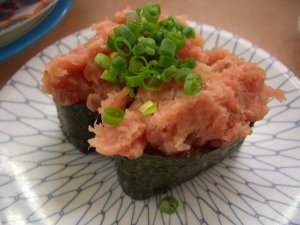
Kobashira/Round Clam round twin muscles Mizuna/A Japanese thin leaf vegetable + quail egg Negitoro/finely chopped tuna and thin leeks

gunkan-shirako.jpg gunkan-takuan.jpg
Shirako/Whiting-male cod sperm sacs Takuan/Pickled Japanese daikon + cucumber

gunkan-shirako2.jpg
“Shirako” (Cod Whiting) for a repeat.

gunkan-benisuwai.jpg gunkan-mitsukuruebi.jpg gunkan-kobashira2.jpg gunkan-namakarasumi.jpg

“Benisuwaigani” (Red Suwai Crab), “Mikkuriebi” (Mikkuri Shrimp, a variety of sweet shrimp, delicious in spite of the colour!), “Kobashira” (Muscle from the “Bakagai” Shellfish), “Nama Karasumi” (raw mullet roe)

gunkan-ooenkougani.jpg gunkan-akahada.jpg gunkan-sakuraebi.jpg gunkan-shirasu.jpg

“Ooenkogani” (Ooenko Crab, featuring body flesh, red brins and pincers flesh!), “Akahada Tsurutsuru”, a seaweed gunkan! It is a red seaweed variety), “Sakura ebi” (Sakura Shrimp, the pride of Shizuoka Prefecture!), “Nama Shirasu/Umeiwashi” (raw whitebait from “Ume” sardines)

gunkan-bafununi.jpg
“Gunkan” can be presented on individual plates for better effect!
gunkan-bafununi.jpg gunkan-murasakiuni.jpg gunkan-uni.jpg
The three above are varieties of sea urchins: “Bafun uni” and Murasaki Uni”, whereas the last last show both gunkan and nigiri.
gunkan-egani.jpg gunkan-ibaraganimodoki.jpg gunkan-matsubagani.jpg
Above are three types of crabs: “Egani”, Ibaraganimodoki” and Matsubagani”

gunkan-kagabai.jpg gunkan-nejinukibai.jpg gunkan-sazae.jpg
Three shellfish varieties: “Kagabai”, Nejinakubai” and “Sazae” (Turbo Shell)
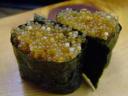
gunkan-hoteiuo.jpg gunkan-konago.jpg gunkan-muroaji.jpg
We go to fish varieties: “Hoteiuo” roe, “Konago”, and “Muroaji” (horse mackerel variety)

gunkan-noresore.jpg gunkan-shiraebi.jpg gunkan-sunaebi.jpg
“Noresore” (baby conger eels), and two shrimp varieties: “Shiraebi” (white shrimp) and “sunaebi” (sand shrimp)
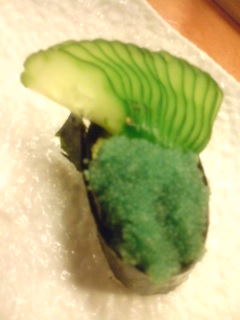
oda-4.jpg
We were fortunate enough to find those “botan ebi/large sweet prawns” fresh with their eggs. Two provided enough eggs for a single “botan ebi ko gunkan”.Not an easy treat to find, as it must absolutely be fresh. The eggs were sweet with not any disagreeable “fishy” background. By the way, this is the only sushi featuring the colour “blue” that comes to my mind!

For more about sushi check Shizuoka Sushi!
Salmon Trout Pie


The Japan Blog List

Please check the new postings at:
sake, shochu and sushi

—————————————-

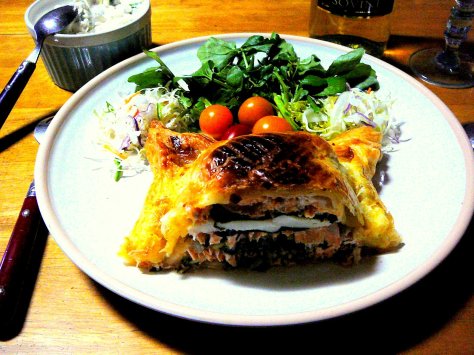
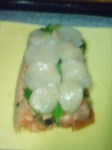
salmon-pie-1

With cold weather prevailing, one expects a hearty hot meal back home from a long work day.
I personally cook dinner twice or three times a week at the most, but I can guarantee you that the Missus does expect a proper meal if I happen to be back home for her!
The problem is that I tend to cook too much, and I consequently end up finishing both plate to the detriment of my waistline! LOL.
In winter reasonably-priced salmon trout is readily available, and taking in account my partner’s inordinate love for salon, it is easy enough to please her!
Here is what I concocted for her last week Friday:

INGREDIENTS (for 2 to 4 persons depending on your appetite!)
-Salmon trout: a large (~15 cm long) piece/filet. Cut the ends square if needed. The small bits can be put on top wherever to adjust the level of the contents. Pare off all the excess fat as it tends to sog the pie. In any case cooked fish fat is not appealing either in shape or taste!
-Frozen pie sheets: 2 large enugh to leave necessary margin around the fish.
-Lemon juice: 1 large lemon juice squeezed into a small glass.
-Fresh basil: 20 leaves, finely chopped/cut.
-Fresh Italian parsley: 10 sprigs, finely chopped/cut.
-White mushrooms (other varieties are fine),: 4 large, finely chopped.
-Fresh shiso/perilla leaves: 12 large. If not available, use 24 salad spinach leaves. Boil them in salted water for 15 seconds. Spread on kitchen paper to suck off as much water as possible.
-Scallops: 4 large, sliced in two.
-Egg: 1 large, beaten.
-Shallot/Echalotte: 1, large, finely chopped.
-Garlic: 2 cloves, finely chopped.
-White wine: 50cc/one quarter cup.
-Olive oil: 2 large tablespoons.
-Salt, pepper, nutmeg to taste. You may add (or do without) spices according to taste and tradition.

RECIPE:
-Pour oil in a non-stick fryig pan. Drop in chopped shallots and garlic. On a medium fire, when shallts are becoming transparent, add half of the lemon juice and all the wine. Stir. Lower the fire to gentle, drop in chpped mushrooms, a little sale, pepper, nutmeg and spices. Slowly fry until there is almost no juices left. Take off fire, pour the lot on a flat plate and let cool off.
-Preheat oven to 210 degrees C. (about 420 Degrees F)
-Spread one pie sheet onto a large piece of cooking paper laid over the oven plate.
-Cut salmon trout into 3 equal “sheets/layers” with a large sharp knife. Spread bottom slice on pie sheet. Brush it lightly with lemon juice. Sprinkle a little salt and pepper.

salmon-pie-2
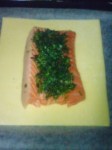
-Spread chopped basil and Italian parsley on top. Then spread fried vegetables, taking care to include as little juice as possible.
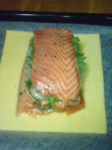
salmon-pie-3
-Spread second slice of salmon trout on top. Brush with a little lemon juice and sprinkle a little salt and pepper. Spread half of the perilla leaves (or spinach) on top. Spread the sliced scallops on top. Brush with a little lemon juice. Spread the remaining leaves over the scallops.
salmon-pie-4
-Spread the last slice of salmon trout over the top. Brush with a little lemon juice and sprinkle a littlle salt and pepper.
salmon-pie-5
-Brush beaten egg over th uncovered parts of the pie sheet.
Spread the second pie sheet over the whole, strching it carefully as to fall eaqually onto the bottom pie sheet. Press “margins” (I do it with a fork) and roll them so as to “close” the pie.
Brush the whole surface with beaten egg (the more, the better!).
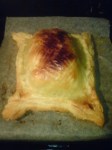
salmon-pie-5_0001
Cook at 210 degrees for 15minutes, then lower to 160 degrees (about 290 degrees F) for 15 more minutes. Cook a little while longer if you are not satisfied with the colour of the pie.

Served with cream dressing and a tossed salad, it should satisfy any appetite.
Serve with white wine or sparkling wine!
Enjoy!

Japanese Seasonal Fish: Sole/Hirame


The Japan Blog List

Please check the new postings at:
sake, shochu and sushi

—————————————-

hirame.jpg

“Hirame” could be translated in many ways depending of your country of origin: Flat Fish, Sole, Turbot (although the latter should define “karei”) and what else. There are many varieties, wild or humanーfed. In Japanese, the names are numerous: Hirame, Shitabirame, Ooguchikarei, oyanirami, etc.
The best season is Autumn to Winter. They are still available until Spring in Shizuoka Prefecture. Wild ones come from Hokkaido and Aomori. Human-fed ones mainly hail from Oita, Ehime, Mie, and Kagoshima Prefectures.
hiramesashimi.jpg
The domestic wild catch is around 7600 tonnes a year, while human-fed fish amount to around 7100 tonnes a year. A recent increase has been observed in recent years, though. A lot are imported from Korea through Fukuoka and Shimoseki.
hirame-nigiri.jpg
Hirame can be enjoyed as sashimi, cut in various thickness, according to the chef’s preference and presented artfully.
I like both sashimi and nigiri, but in the case of nigiri, I have a marked preference (see pic above taken at Sushi No Ichi, Shizuoka City): Seasoned with a little lemon juice or yuzu (if available) and salt (preferably “snow salt” from Okinawa), eaten as it is with no shoyu!