Tag Archives: グルメ

Crab Species 4: Japanese Mitten Crab/Mokuzugani

MOKUZUGANI-1

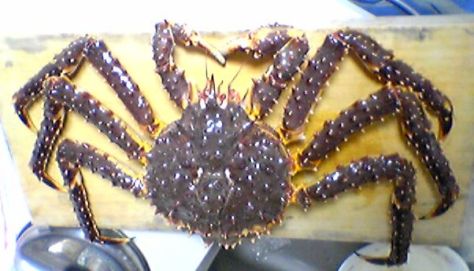
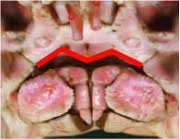
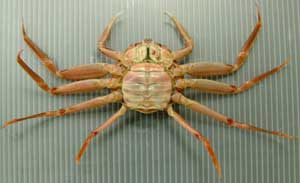
Japanese Mitten Crab or Mokuzugani i Japanese is also called Mokuzou, Zugani, Tsugani or Kegani.
It caught alsmost everywhere in Japan in Autumn and Winter.
In Autumn the females come to lay their eggs at river mouths.
Plenty are found along the Izu Peninsula in Shizuoka Prefecture.
They are caught in boxes baited with fish.

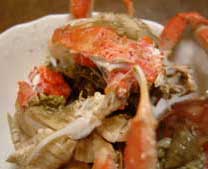
As for food, they can be eaten boiled in soups or crushed with their shell and cooked with miso. They could even be prepared as French bisque.

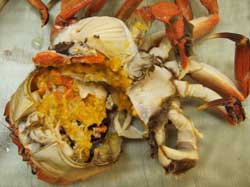
MOKUZUGANI-FEMALE

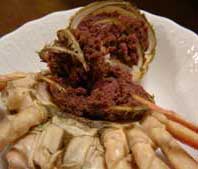
The female specimens are particularly appreciated for their egg sacs.

MOKUZUGANI-SUSHI

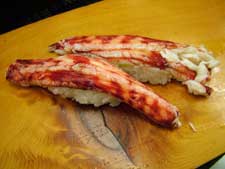
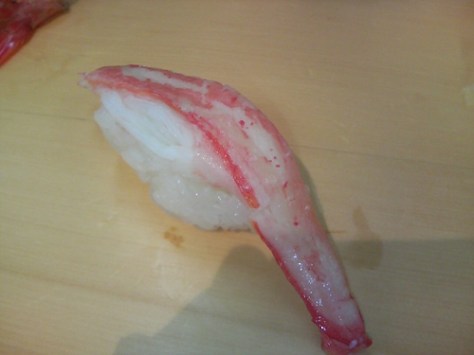
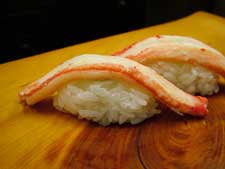
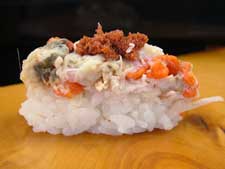
These boiled egg sacs with the meat make for delicious sushi nigiri or gunkan!

Please check the new postings at:
sake, shochu and sushi

—————————————-
日本語のブログ
—————————————-

Today’s Lunch Box/Bento (’09/42)

BENTO-09-06-16b

After yestreday’s small tour de force, the Missus wanted to take a break and make things simple!

BENTO-09-06-16a

I think I can qualify today’s “bento” as “American/French Lunch”!

BENTO-09-06-16d

The reason is the enormous sandwich prepared with a French baguette!

BENTO-09-06-16e

Mind you, the filling was a healthy fusion of home-made chicken ham, boiled egg salad and cornichons!

BENTO-09-06-16c

The salad was Japanese in concept: shredded vegetables, deep-fried renkon/lotus root chips, lettuce and mini tomatoes.

American Darkk Cherries for dessert.
Quite voluminous, maybe fitter for a young sportsman!

Please check the new postings at:
sake, shochu and sushi

—————————————-
日本語のブログ
—————————————-

LE CAFE-LABO: Classic Cakes (12)-Acapulco

acapulco-1

It had been some time since I checked on that great confectionery institution in Shizuoka City, LE CAFE-LABO, so yesterday afternoon I paid a visit to their shop In Isetan Department Store to find out if they had a new creation on display for my students!

acapulco-2

In fact they did!
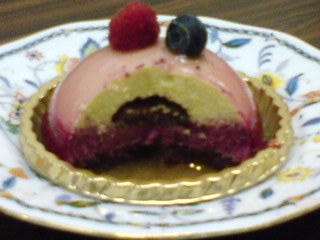
The cake is called “Acapulco”.
I refrained buying two of them, otherwise my lady student might miscontrued my intent! LOL

It is very feminine and luscious not only in looks and concept, but also in taste and texture.
The base is a chocolate joconde short cake with a layer of cassis mousse surmounted with a small chocoate macaron inside. The whole is covered with a “mound” of green apple mousse overlaid with a thin layer of cassis jell.

Perfect for the summer with a cold glass of tea!

LE CAFE-LABO
424-0886 Shizuoka City, Shimizu Ku, Kusanagi, 46
Tel.: 054-3441661
Also available at Isetan Dept. Store, Shizuoka City, Aoi Ku, Shichiken-Cho.

Please check the new postings at:
sake, shochu and sushi

—————————————-
日本語のブログ
—————————————-

Shizuoka Izakaya: UZU (revisited again!)

UZU-09-06-12-e

Service: excellent, easy-going and very friendly
Facilities: great washroom, great cleanliness overall
Prices: very reasonable, good value.
Strong points: Very fresh local ingredients especially organic vegetables extensively used.

I will have to be careful, or UZU Izakaya is bound to become an addiction!
I visited that increasingly popular (need to reserve on Fridays especially!) last Friday for a quick dinner and some Shizuoka sake!

UZU-09-06-12-a

Thye kabocha/pumpkin tofu snack was still there!

UZU-09-06-12-b

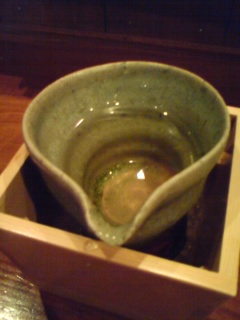
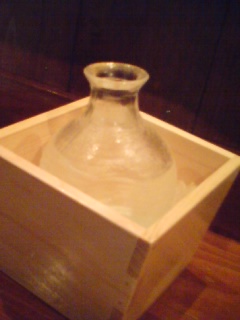
Any sake is served in a different vessel, and you are offered a choice of cup for each sake you savour!

UZU-09-06-12-c

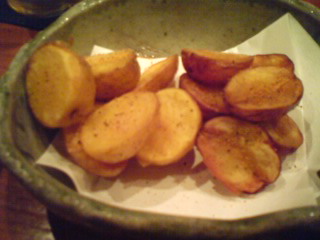
Fried organic new potatoes with their skins!
Uzu specializes in organic vegetables and “shamo” chicken!

UZU-09-06-12-d

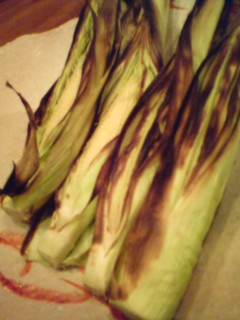
Organic “Young Corn” grilled inside their husks. The “hair” around the corn is edible!

UZU-09-06-12-f

Again, a rare morsel to please vegans and vegetarians:
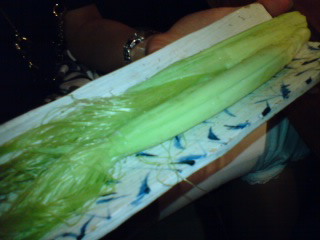
“Young corn” organically grown by Mr. Matsuki in Shibakawa Cho, at the foot of Mount Fuji, served raw! Yes, you head/read right, raw!
These were the only two available that night and I didn’t have to pay for them! Slightly different from the above, they are very tender and sweet. You eat them as they are, no need for “dressing”!

UZU-09-06-12-e

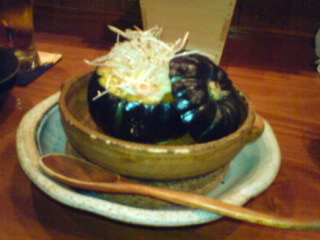
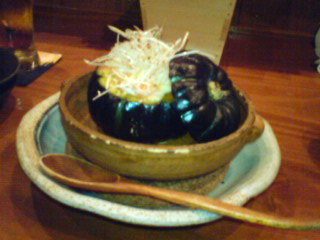
Now, that’s an iteresting morsel: Shamo Chicken Gratin inside a small organic kabocha/pumpkin!
Just small enough not to worry about the calories!

UZU-09-06-12-g

Another bottle of sake!

UZU-09-06-12-h

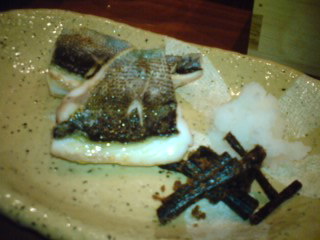
Grilled “Isaki/Chicken Grunt” ( a strange name for a fish!), caught off Shizuoka shores. Elegant!

UZU-09-06-12-i

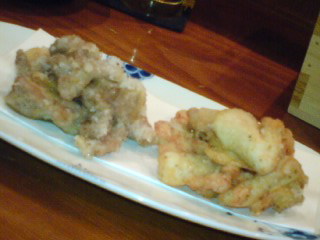
Deep-fried “shamo” chicken thighs and breast fillets!

No need for dessert!

UZU
Shizuoka City, Otowa-cho, 3-18
Tel.: 054-249-6262
Business hours: 17:00=23:00
Closed on Mondays and first Tuesday
Reservations recommended
Credit cards OK

Please check the new postings at:
sake, shochu and sushi

—————————————-
日本語のブログ
—————————————-

Today’s Lunch Box/Bento (’09/41)

BENTO-09-06-15a

I must admit that the Missus worked hard toady to create a slightly different bento, albeit using the same ideas!

BENTO-09-06-15b

She opted for the healthy and fulfilling combination of maki/rolls and tamagoyaki/Japanese omelette.

BENTO-09-06-15d

Having steamed the rice (she added a piece of konbu/seaweed today), stirred and cooled it, she mixed in a generous amount of tobikko/flying fish roe, “white” and black sesame seeds. She then made sushi maki with fresh lettuce instead of seaweed, and placed smoked salmon and avocado in the middle (she had them with lemon juice beforehand). Californian Bento? LOL

BENTO-09-06-15c

As for the tamagoyaki, she made it according to my request: She mixed the eggs with fine pieces of pimento and chopped thin leeks. The result? Spanish Tamagoyaki or Japanese Tapas? I leave it to yuo!LOL

BENTO-09-06-15e

As for the salad: shredded vegetables, mini tomatoes, French cornichons.
Got American dark cherries for dessert!

High-class bento, I must admit!

Please check the new postings at:
sake, shochu and sushi

—————————————-
日本語のブログ
—————————————-

Bryan Baird’s Newsletter (2009/14)

Baird Beer & Taproom Events Bulletin 2009 #14
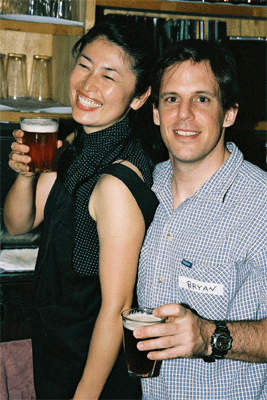
bryan-sayuri.gif

Dear Taproom Friend & Baird Beer Enthusiast:

The rainy season has arrived. This is not, of course, bad news for the Japan beer enthusiast because it means the release of Baird Rainy Season Black Ale.

*Rainy Season Black Ale (ABV 6.1%):

A torrential downpouring of hops define this otherwise roasty, toasty, espresso-like powerful black ale. 55 BUs of elegant American (Magnum, Galena & Sterling) and German (Tradition, Hersbrucker) lupulin as well as dry-hopped character from the spicy-floral combination of Sterling and Hersbrucker coat the tongue with a resinous stickiness that is pungently pleasurable. This is the Baird Beer antidote to the rainy season funk. We guarantee the results!

Rainy Season Black Ale is now pouring from our Taproom taps and will be available on draught at Baird Beer retailing pubs beginning Monday, June 15. 633 ml bottles also are available for purchase at Baird Beer retailing liquor stores throughout Japan.

The Rainy season gloom works on different people in different ways. To ensure there is a beery antidote that fits everyone’s afflicted disposition, we are releasing two additional Tsuyu-season Baird Beers: Numazu Lager and Faded Glory Pale Mild.

*Numazu Lager (ABV 5.5%):
This copper-gold lager (brewed back in March 2008 and conditioned for over one year in the keg), medium-light in body, bristles with a prickly hop bitterness (courtesy of Warrior and Columbus) and aroma (dry-hopping with Vanguard, Santiam and Sterling). I recommend imbibing as you stare out the Fishmarket Taproom window, marvelling at the acrobatic prowess of the swooning seagulls and contemplating the majesty of the low-hanging, fast-moving rain clouds which magically release their precipitate upon encountering the inland mountains.

Numazu Lager is available only on draught and only at our Numazu Fishmarket Taproom.

*Faded Glory Pale Mild (ABV 3.1%):

Pale Mild is a classic English Ale style that, much like the British Empire, has become essentially a historical relic. It is an unfashionably low gravity and low alcohol ale meant to replenish and not to inebriate. The brewing of low-gravity “small” beers is an extremely challenging task for the brewer because he is attempting to achieve flavor and character with the use of much less raw ingredient material. The Baird brewers relish the challenge and love the tribute that it pays to beer history and tradition.

Faded Glory Pale Mild is amber-gold in color, lightly floral in aroma (dry-hopping with Saaz) and somewhat biscuity in flavor (Maris Otter and Munich base malts). It is fresh and smooth from start to finish. This is a beer where flavor, refreshment, sociability and history meet at the crossroads! Faded Glory Pale Mild is available as Real Ale only at the Nakameguro and Fishmarket Taprooms.

Cheers,
Bryan Baird

Baird Brewing Company
Numazu, Japan
HOMEPAGE


The Japan Blog List

———————————
Must-see tasting websites:
-Sake: Tokyo Through The Drinking Glass, Tokyo Foodcast, Urban Sake, Sake World
-Wine: Palate To Pen
-Beer: Good Beer & Country Boys, Another Pint, Please!
-Japanese Pottery to enjoy your favourite drinks: Yellin Yakimono Gallery
——————————–
Please check the new postings at:
sake, shochu and sushi

—————————————-
日本語のブログ
—————————————-

Crab Species 3: Japanese Spider Crab/Takaashigani

TAKAASHIGANI-1

Takaashigani/高足が二, literally meaning “Tall Legs Crab” is the largest crab in the world and is caught almost only around Japan especially in the Suruga Bay In Shizuoka Prefecture and Izu Islands, but numbers of the crab have diminished over recent years, and there are many efforts to protect them. In Shizuoka Prefecture, people even help them grow from the eggs before returning them to the sea!

Fully grown it can reach a leg span of almost 4 m (13 ft), a body size of up to 37 cm (15 inches) and a weight of up to 20 kg (44 lb). The crab’s natural habitat is on the bottom of the Pacific Ocean (some 300 to 400 m deep) around Japan, where it feeds on dead animals and shellfish. It is believed to have a life expectancy of up to 100 years.

The Japanese spider crab has 10 legs. The front two legs have been adapted into claws. It has an orange body with white spots on its thin legs. In males, the limbs on which the claws are located become longer than its other limbs, and a large male can widen them to more than 3 m. The oval-shaped and vertically rounded shell can reach 30 cm in width and can be up to 40 cm long. The compound eyes are situated on the front, and two thorns stick out between them. Younger specimens feature hair and thorns on the shell, and their frontal horns are longer, but these gradually atrophy as the crab ages.

In Japan it is considered a delicacy and prices can easily jump!
The Japanese spider crab is caught using small trawling nets, and is often eaten salted and steamed.

TAKAASHIGANI-BOILED

Interestingly enough, when bolied/steamed, not only the shell but also the flesh turns red.

TAKAASHIGANI-SUSHI

They do make for impressive sushi!

Please check the new postings at:
sake, shochu and sushi

—————————————-
日本語のブログ
—————————————-
Japanese Cakes/Wagashi 7: Creation 3-Hanabira Mochi

WAGASHI-HANABIRAMOCHI

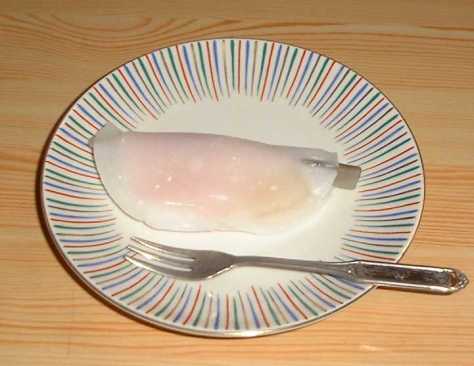
Here is another traditional Japanese Cake/Wagashi: Hanabira Mochi (菱葩餅 in Japanese)!
Hanabiramochi is a Japanese sweet usually eaten at the beginning of the year. Hanabiramochi is also served at the first tea ceremony of the New Year.

The name “hanabiramochi” literally means “flower petal mochi”. The original form of Hanabiramochi is Hishihanabira, a dessert that was eaten by the Imperial family at special events coinciding with the beginning of the year.

Hanabiramochi was first made in the Meiji Era (8 September 1868 – 30 July 1912), but it is now a familiar New Year wagashi.

The exact shape of hanabiramochi is strictly defined by tradition. The white mochi covering is flat and round, folded over to form a semicircular shape, and must have a pink color showing through in the center of the confection, fading to a white at the edge. Unlike a daifuku the mochi must not completely seal the insides.

In the center of a hanabiramochi is a layer of anko, a sweet bean paste, commonly the white kind made from sweetened mung beans. In the very center is a thin strip of sweetly flavoured gobo (burdock root) which protrudes from the mochi on both sides.

Each element of the hanabiramochi is significant.

The red colour showing through the white mochi is not only appropriate to the celebration of the new year but also evokes the Japanese apricot/plum (ume) blossom, which in turn represents the purity, perseverance, and renewal associated with the New Year.

The gobo represents pressed ayu, a fish exclusive to East Asia, and a prayer for a long life.

A vegan way to celebrate the New Year!

Please check the new postings at:
sake, shochu and sushi

—————————————-
日本語のブログ
—————————————-
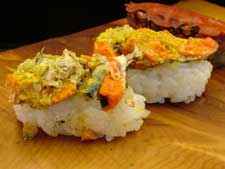
Crab Species 2: Red King Crab/Tarabagani

TARAGANI-KINGCRAB-1

Tarabagani or Red King Crab is caught in Autumn and Winter.
It is the most coveted of the commercially sold king crab species, and is the most expensive per unit weight. It was named after the colour it turns when it is cooked rather than the colour of a living animal, which tends to be more burgundy.

Red king crabs can be very large, sometimes reaching a carapace width of 11 in (28 cm) and a leg span of 6 ft (1.8 m) [2]. It is most commonly caught in the Bering Sea and Norton Sound, Alaska, and is particularly difficult to catch, but is nonetheless one of the most preferred crabs for consumption.

The King Crab is native to the Bering Sea, north Pacific Ocean, around the Kamchatka Peninsula and neighbouring Alaskan waters.
In Japan it is caught in the Japan Sea and neighbouring Okhotsk Sea.

In Japan 100 tonnes are caught every year, whereas 40,000 tonnes are imported, mainly from Russia!

There are so many way to enjoy this great crab!
Here are a few examples:

TARAGANI-KINGCRAB-SUSHI

Boiled as Sushi Nigiri of course!

TARAGANI-KINGCRAB-SUSHI-RAW

Even more extravagant, raw as sushi nigiri!

TARAGANI-KINGCRAB-CHIRASHIZUSHI-2

Just plain boiled on a bowl of freshly steamed rice. My favourite for its extravagant simplicity!

TARAGANI-KINGCRAB-CHIRASHIZUSHI

As Chirashizushi should please anyone!

TRABAGANI-SOUP

And how about a great soup with miso!

Naturally, there are more ways, including grilling!
I will leave it to your imagination! LOL

Please check the new postings at:
sake, shochu and sushi

—————————————-
日本語のブログ
—————————————-

Japanese Cakes/Wagashi 6: Creation 2/Sakura Mochi

WAGASHI-SAKURA-MOCHI-2

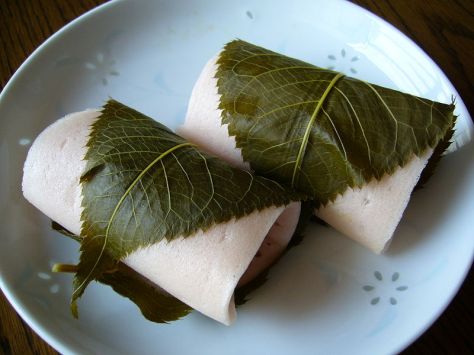
Sakura Mochi (桜餅) is a variety of wagashi, or Japanese confectionery consisting of a sweet pink mochi (rice cake) and red bean paste, covered with a leaf of sakura (cherry blossom).

Sakura Mochi (桜餅) or Cherry Blossom Mochi has been popular all over Japan since the beginning of gastronomy in the Land of the Rising Sun.
The style of Sakura Mochi differs from the regions in Japan.
Basically, the east of Japan such as Tokyo uses shiratama-ko (白玉粉/ rice flour) and the west side such as Kansai uses dōmyōji-ko (道明寺粉/glutinous rice flour) for “batter”.

WAGASHI-SAKURA-MOCHI
Anko is folded inside a mochi sheet and again inside an edible cherry tree leaf.

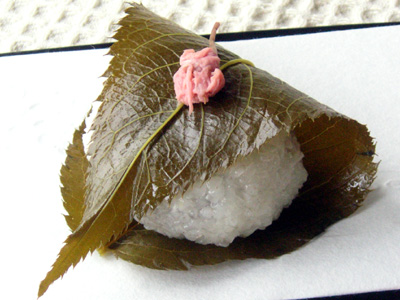
WAGASHI-SAKURA-MOCHI-3

Here the anko is inside white mochi, then folded in cherry tree leaf and topped with an edible cherry flower.

WAGASHI-SAKURA-MOCHI-4

A smaller, very cute Sakura Mochi: the coloure mochi contains anko and is presented inside an edible cherry tree leaf.

WAGASHI-SAKURA-MOCHI-5

Sakura mochi as sold over the counter in the Kansai/West Japan Region.
They are also called Sakura Dango/Cherry Balls (no comment, please!LOL)

SIMPLE RECIPE
This recipe is for making Western-style sakuramochi. Serves 8.

INGREDIENTS:
3/4 cup glutinous rice flour
1/3 cup sugar
1 cup water
3/4 cup red bean paste
red food coloring (optional)
8 sakura leaves pickled in salted water

PREPARATION:
Wash pickled sakura leaves and dry.
Boil water in a pan.
Mix glutinous flour in the water.
Cover the pan with a lid and leave it for 5 minutes.
Place a wet cloth in a steamer and put the dough on the cloth.
Steam the dough for about 20 minutes over medium heat.
Remove the steamed dough to a bowl.
Mash the dough slightly with a wooden pestle, mixing sugar into the dough.
Dissolve a little bit of red food color in some water.
Add some of the red water in the dough and mix well.
Divide the pink mochi into 8 balls.
Flat each mochi ball by hands and place red bean paste filling on the dough.
Wrap the filling with mochi and rounds by hands.
Wrap each mochi with a sakura leaf.

Please check the new postings at:
sake, shochu and sushi

—————————————-
日本語のブログ
—————————————-

Japanese Cakes/Wagashi 6: Creation 1

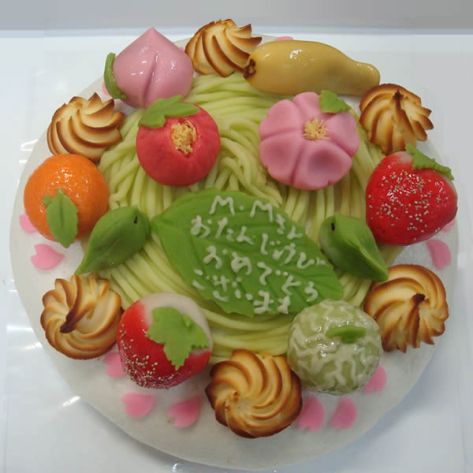
WAGASHI-VARIETIES-1

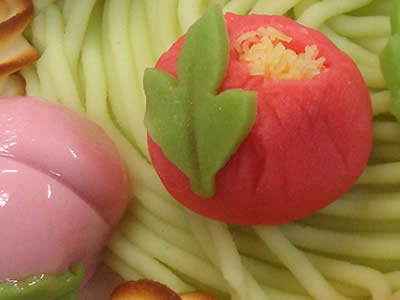
Here is an example of what could be done by a Japanese chef as Wagashi/Japanese Cake!
This particular Birthday Cake creation is the work of Chef Maeda at Kouseido in Osaka City!
Will look around and post other creations whenever I can!

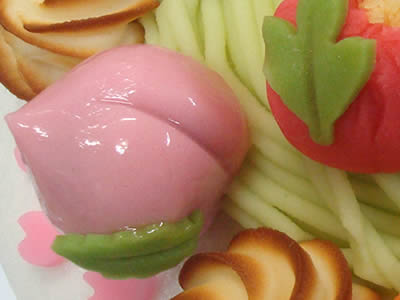
Here is a breakdown of the above:

WAGASHI-VARIETIES-MOMO

“Momo”/Peach

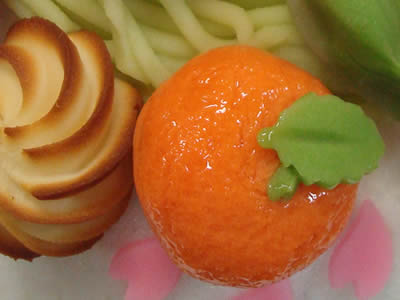
WAGASHI-VARIETIES-MIKAN

“MIkan”/Orange

WAGASHI-VARIETIES-TSUBAKI

“Tsubaki”/Camelia

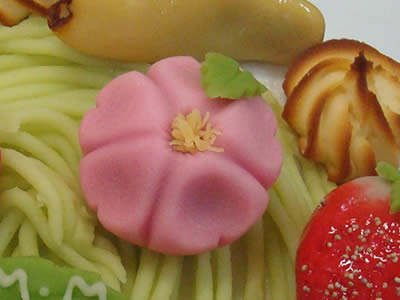
WAGASHI-VARIETIES-SAKURA

“Sakura”/Cherry Blossom

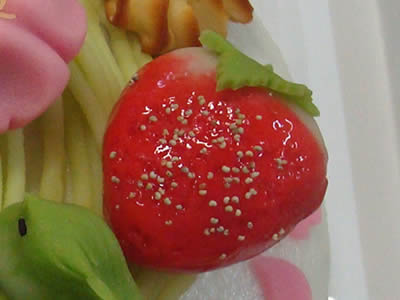
WAGASHI-VARIETIES-ICHIGO

“Ichigo”/Strawberry

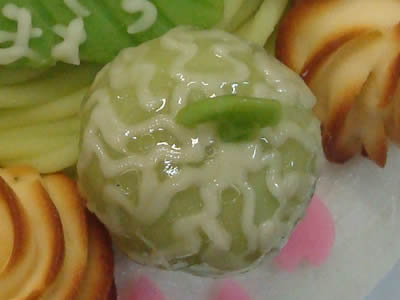
WAGASHI-VARIETIES-MELON

“Meron”/Melon

Please check the new postings at:
sake, shochu and sushi

—————————————-
日本語のブログ
—————————————-

Crab Species 1: Snow Crab/Zuwagani

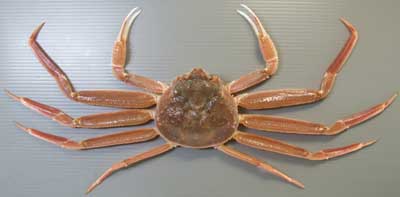
ZUWAGANI-MALE-1
(Male Snow Crab)

Snow Crabs, or Zuwagani in Japanese are very popular not only in Japan, but also in Russia, Canada and many other countries.

In Japan, they are also known under the following names: Matsubagani, Echizengani and Yoshigani.
The females are also called Seikogani, Megani or Koubakogani.
They are caught mainly in Autumn and Winter.
Their number have decreased in the Japan seas down to a yearly catch of 5,000 tonnes while 60,000 tonnes are imported from Russia and Canada.

ZUWAGANI-FEMALE-1
(Female snow Crab)

Male and female snow crabs are equally succulent, but the males contain more flesh and are accordingly more expensive.

ZUWAGANI-MALE-2
The “thorns” of a male snow crab are bigger.

ZUWAGANI-MALE-3
The “teeth” of a male snow crab are triangular in a seesaw shape.
The female “teeth” are in a straight line.

ZUWAGANI-FEMALE-2
The underbelly of a female snow crabis flatish.

ZUWAGANI-FEMALE-3

When buying a female (10 tmes as cheap) snow crab, choose a specimen with as few eggs as possible. Above speciman just has too many!

ZUWAGANI-FEMALE-4

A female snow crab should contain plenty of succulent orange egg sacs (the eggs not yet “born”). Otherwise, there is very little reason to buy any!

Crabs can be eaten in many ways, even raw, but my favourites are on sushi!

ZUWAGANI-SUSHI

Male Snow crab leg Sushi Nigiri.

ZUWAGANI-FEMALE-SUSHI

Female snow crab Sushi Nigiri and its egg sacs!

Please check the new postings at:
sake, shochu and sushi

—————————————-
日本語のブログ
—————————————-

Japanese Seasonal Fish: Sawara/Spanish Mackerel

SAWARA-1

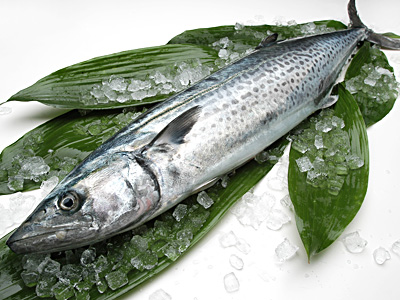
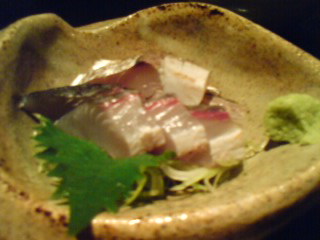
Sawara or Spanish Mackerel is considered as the best kind of Mackerel in Japan. Not only it is a big variety, but its comparatively white flesh is succulent in almost any kind of cooking!

It is known under different names such as Sagoshi and Sagochi when young and Yanagi when mature.
It is basically caught by trawling, but can be fished by line. It is, unlike other mackerels, a pretty solitary fish.

It is caught widely around Japan, off Russia, China and Korea.
The total catch has varied in recent years, but thanks to import, including 21.000 tonnes from China, it has become a feature in season from late Autumn to end of Spring.

UZU-2
(Kan-Sawara at Uzu, Shizuoka City)

In Winter, it is called Kan Sawara/寒鰆 (寒stands for cold, 鰆 stands for Sawara/Spring Fish) and is a sought after morsel. In Shizuoka it is sometimes caught then in Sagara bay, and I can tell you it disappears quickly form the table.

UZU-09-05-29-5
(Sawara at Uzu, Shizuoka City)

Later in Spring, it is just called Sawara and is leaner.

SAWARA-2

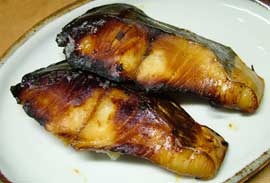
It can be cooked in many ways: broiled as above.

SAWARA-4

Or grilled.

SAWARA-3
(Small pic, sorry!)

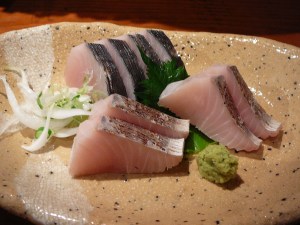
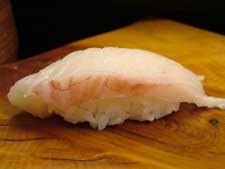
Of Course, as sushi nigiri! Especially Kan Sawara!

Please check the new postings at:
sake, shochu and sushi

—————————————-
日本語のブログ
—————————————-

Today’s Lunch Box/Bento (’09/40)

BENTO-09-06-08-a

It was back to classical” bento today!
That is rice topped with all kinds of ingredients!

BENTO-09-06-08-c

For once I managed to steal into the kitchen to take a quick pic of the rice being steamed with the beans!

BENTO-09-06-08-b

It was a pretty voluminous bento as you can see!

BENTO-09-06-08-d

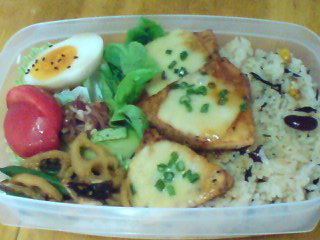
As for the main meat the Missus fried slices of tuna in soy sauce and covered with cheese and chopped thin leeks.

BENTO-09-06-08-e

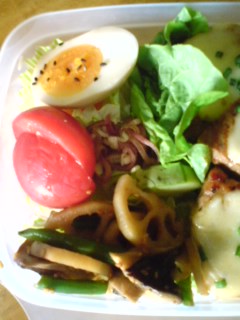
The rest of the garnish consisted of renkon/lotus roots, shiitake and stringbeans fried together in the same pan as the tuna. She added a fresh plum tomato, boiled egg seasoned with black sesame, home-made piclled mini melons and myoga and lettuce. I probably forget something!

BENTO-09-06-08-f

Chopped veg salad with pieces of lettuce and walnuts and cherries from Yamanashi Prefcture for dessert!

I can guarantee you I was full after that!

Please check the new postings at:
sake, shochu and sushi

—————————————-
日本語のブログ
—————————————-
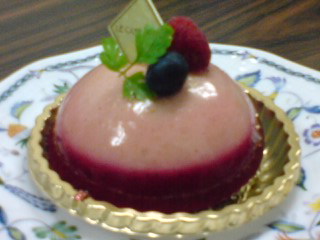
Japanese Cakes/Wagashi 5: Recipe-Kinako/Roasted Soy Beans Powder

WAGASHI-ABEKAWAMOCHI-2
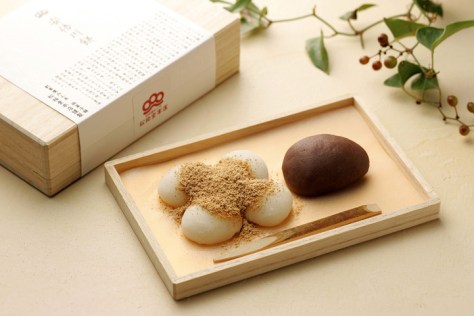
Abekawa Mochi from Shizuoka, one served pasted inside red sweetmeats/anko and the others with kinako powder.

As promised here is a simple recipe for kinako/黄な粉, roasted soy beans powder, so often used with Japanese cakes/Wagashi!

MOCHI-KINAKO

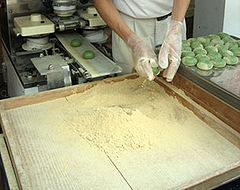
Kinako (黄粉 or きなこ), also known as soybean flour, is a product commonly used in Japanese cuisine. In order to create the soybean flour, soybeans are toasted and ground into powder. Its flavor is commonly compared to that of peanut butter.

INGREDIENTS:
Soy beans: 1 cup (200cc)

RECIPE:

KINAKO-1
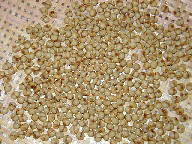
Discard beans showing broken skin or with an unusual colour.

KINAKO-2
To make sure of any taking away any humidity, put them inside a clean cloth sack and roll them inside your hands/fingers.

KINAKO-4
Use a pan with as thick a bottom as possible. Roast for 12 minutes above medium fire. Stir around with wooden spatula. The soy beans will emit their smell making small “noises” at the same time.

KINAKO-3
Transfer to a bamboo basket/zaru or a reipient with small holes to cool off.

KINAKO-5
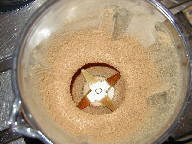
Start slowly processing them inside a food processor/mixer, working 15 seconds at a time, 3 or 4 times. All the beans will probably not be reduced to powder. Transfer powder into earthenware mortar little by little until all the beans are reduced into powder.

KINAKO-6
Make sure you get an even powder by crushing it around with a wooden pestle.

KINAKO-7
Sieve powder through a fine strainer.

KINAKO-8
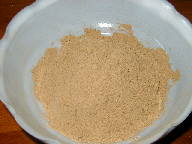
The powder obtained should be fragrant and almost sweet.

You can turn into a drink if you want to!
Milk: 1 glass, kinako, 2 tablespoons, sugar, 1 tablespoon.

Kinako should be eaten as soon as possible!

Please check the new postings at:
sake, shochu and sushi

—————————————-
日本語のブログ
—————————————-