Tag Archives: グルメ

Today’s Lunch Box/Bento (’09/39)

BENTO-09-06-07a

For once, The Nissus madebento with “men/Japanese-Chinese Pasta”!

BENTO-09-06-07b

The principle is to boil “ramen” and strain them through a “zaru/sieve” for them to become “zarumen”.

BENTO-09-06-07c_0001

At the office I piured the two different sauces and chopped thin leeks on the cole “zarumen” before eating them.

BENTO-09-06-07c

As for the garnish, the Missus prepared “Tamagoyaki/Japanese Omelette, “Chicken Kaarage/Japanese style deep-fried chicken” (note the black sesame seeds coating), boiled “ingen mame/string beans”, a large plum tomato and home-made cucumber and myoga pickles.

She didn’t forget the dessert: banana!
Plenty and enough, I can tell you!

Please check the new postings at:
sake, shochu and sushi

—————————————-
日本語のブログ
—————————————-

Japanese Cakes/Wagashi 4: Recipe-Mochi

WAGASHI-SAKURA-MOCHI
Wagashi/Sakura Mochi

Here is a simple way to make mochi.
Bear in mind that mochi can be eaten fresh as it is especially with wagashi cakes and that it can be mixed with other ingredients for colouring. It can be aslo dried and grilled and also included in soups and other recipes such as mochi pizza!

INGREDIENTS:
Glutinous rice: 3 go (Japanese measure): 540 cc (2.8 cups)
Kinako (to taste)

Notes on kinako and glutinous rice:

MOCHI-KINAKO

Kinako (黄粉 or きなこ), also known as soybean flour, is a product commonly used in Japanese cuisine. In order to create the soybean flour, soybeans are toasted and ground into powder. Its flavor is commonly compared to that of peanut butter.

Kinako, being composed of soybeans, is a healthy topping and flavoring which contains B vitamins and protein. It can also be used as a drink;. For example, warabi mochi is a famous kinako-covered sweet

I will introduce a recipe soon!

MOCHI-TRADITIONAL

Glutinous rice (Oryza sativa var. glutinosa or Oryza glutinosa; also called sticky rice, sweet rice, waxy rice, botan rice, biroin chal, mochi rice, and pearl rice) is a type of short-grained Asian rice that is especially sticky when cooked. It is called glutinous (Latin glūtinōsus) in the sense of being glue-like or sticky and not in the sense of containing gluten; on the other hand, it is called sticky but should not be confused with the other varieties of Asian rice that become sticky to one degree or another when cooked.

RECIPE:

MOCHI-1
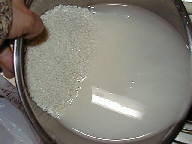
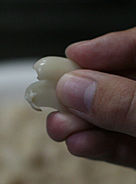
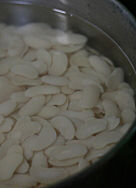
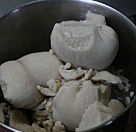
Wash the rice and let it soak in water overnight.

MOCHI-2
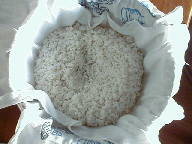
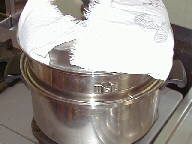
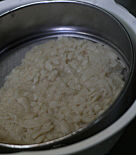
Pour water in steamer. Bring to boil. Set a clean cloth inside. Drain rice. Pour rice inside cloth. Dig a “well” in the middle for better cooking.

MOCHI-3
Steam over a medium fire for 20~25 minutes.

MOCHI-4
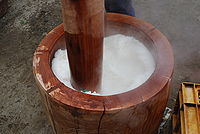
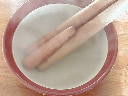
Pour hot water inside pestle bowl and leave the wooden sticks inside water for long enough to have all of them well impregnated with water. Throw water away just before next step. This will insure a better mochi!

MOCHI-5
Check rice for an even cooking. No water should be left or the mochi will be runny. If you make a small quantity, softer rice than usual is better as it will tend to dry faster than a large quantity.

MOCHI-6
Now this is the hard part!
You will need three adults to press hard on the rice with the wooden sticks at the same time to crush the rice completely. It might take as long as 10 minutes.

MOCHI-7
Now that the rice has been softened, One can continue on his own or work in shifts. Pound the rice in the middle 10 times. Turn over the rice from outside to inside and continue always around the clock.
Important: always pound in the middle, never on the sides or you will break the bowl!

MOCHI-8
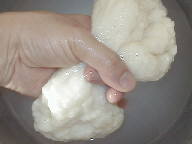
That is how it should look. Make balls by twisting rice out.

MOCHI-9
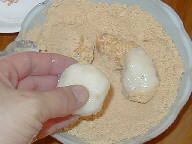
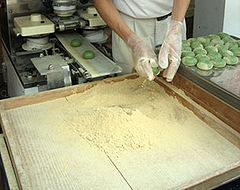
Roll mochi in kinako mixed with sugar to taste. They are ready to be eaten!

MOCHI-10
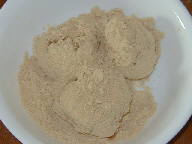
This is how are served in Japan for children (and adults!)

MOCHI-11
If you want to preserve them for a while before eating, roll them in rice powder. Rice powder will come in useful if you want to fashion the mochi into thin sheets or else.

MOCHI-12
That is they look grilled!

Please check the new postings at:
sake, shochu and sushi

—————————————-
日本語のブログ
—————————————-

17th Shida Heiya Bishu Story

SHIDA-09-8
Shidaizumi Brewery Sakes

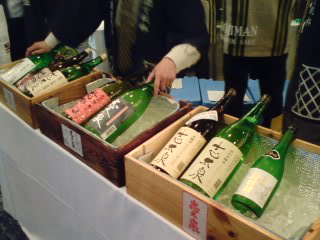
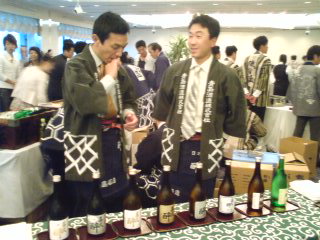
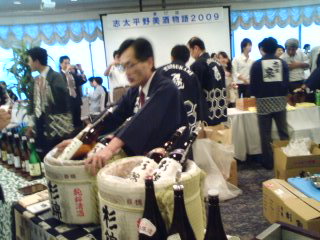
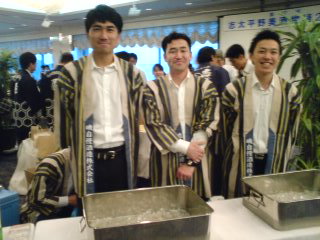
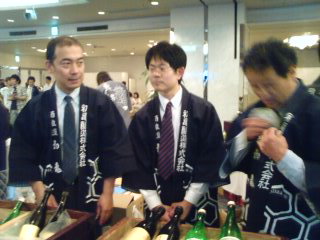
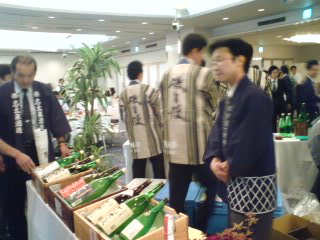
On Wednesday June 3rd, six breweries located in the centre of Shizuoka Prefecture held their 17th Annual Event, Shida Heiya Bishu Story 2009 in Yaizu City at Shofukaku Hotel.

SHIDA-09-1

This has become a real event in recent years, for which the 400 seats are sold out months before the event in spite of very few seats reserved for special guests like John Gauntner, the foreign authority on Japanese Sake who has to come all the way from Kamakura.
This time I was spared from making the kampai speech (John took care of that!) and could concentrate on the event on the full, taking my time to say hello to everyone and visit every stand for a hearty taste of some sublime brews!

SHIDA-09-2
Aoshima Brewery (Kikuyoi/Fujieda City)

SHIDA-09-3
Sugii Brewery (Suginishiki/Fujieda City)

SHIDA-09-4
Isojiman Brewery (Yaizu City)

SHIDA-09-5
Oomuraya Brewery (Wakatake/Shimada City)

SHIDA-09-6
Hatsukame Brewery (Okabe Cho)

SHIDA-09-7
Shidaizumi Brewery (Fujieda City)

SHIDA-09-9

Took the time to take a pic of a new brand by Oomuraya Brewery to commemorate the new Mount Fuji-Shizuoka Airport in Shimada City!

SHIDA-09-11

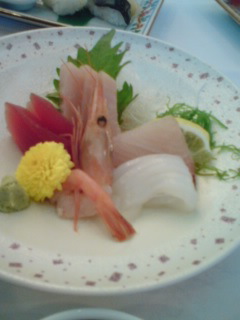
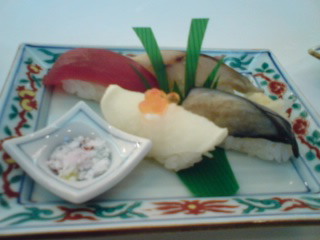
The hotel served us an excellent Japanese meal!

SHIDA-09-12

Including Sashimi!

SHIDA-09-13

And Sushi!

Looking forward to participating to next year’s event!
Before that I will make sure to visit all those breweries again!

Must-see tasting websites:
-Sake: Tokyo Through The Drinking Glass, Tokyo Foodcast, Urban Sake, Sake World
-Wine: Palate To Pen
-Beer: Good Beer & Country Boys, Another Pint, Please!
-Japanese Pottery to enjoy your favourite drinks: Yellin Yakimono Gallery

HOMEPAGE (Japanese)
Please check the new postings at:
sake, shochu and sushi

—————————————-
日本語のブログ
—————————————-

French Restaurant: Lunch at Pissenlit (revisited)

PISSENLIT-DESSERT

Service: excellent and very friendly
Facilities: great washroom, great cleanliness overall
Prices: reasonable, good value.
Strong points: Interesting wine list. Great use of local products.
no-smoking-logo!

As promised, here is a short report about the second lunch taken with the Missus. Soryy for the delay, as I had to wait for my other half’s pics!

PISSENLIT-HAMBURGER

I will ignore the same offerings as last time and will concentrate on the new dishes:
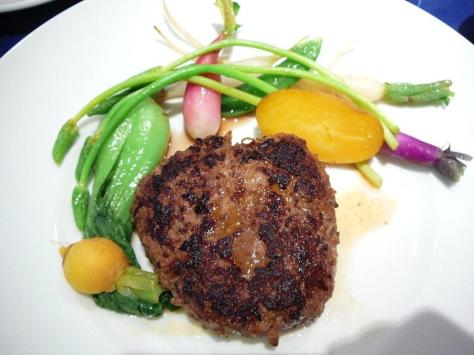
The Missus, who had not eaten a hamburger for ages, could not resist asking for the Oven-baked Japanese Beef Hamburger and Spring Vegetables!
Apart of the French wild asparaguses, allthe vegetables are organically grown in Shizuoka: 3 differently coloured mini daikon, mini yellow carrot, Chinese zasai and new yellow potato. I did taste the hamburger. It certainly would make a fan of such delicacy if the same quality could be found in the States! Absolutely extravagant and ridiculously cheap!

PISSENLIT-DUCK

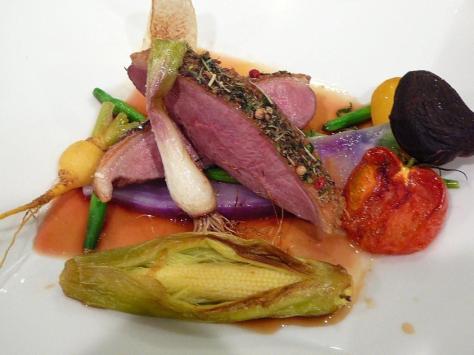
As for me, I had to order that dish bringing me back to my roots: Herb-roasted Vendee (West of France) Duck with Spring Vegetables!
Note the baby corn that I ate whole, ear included, the violet daikon, lily flower buds, yellow carrot, shiitake, and so on.
The Duck was absolutely perfect, medium-rare as it should be, more tender than a loving woman and the subtle herb mixture combining into another world inside your palate!

PISSENLIT-DESSERT

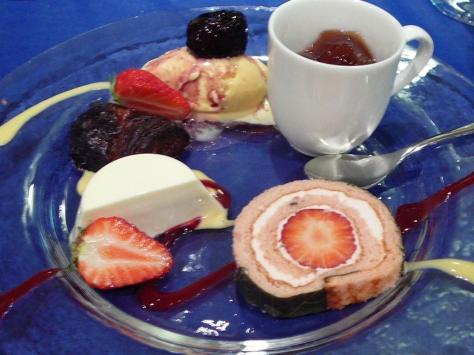
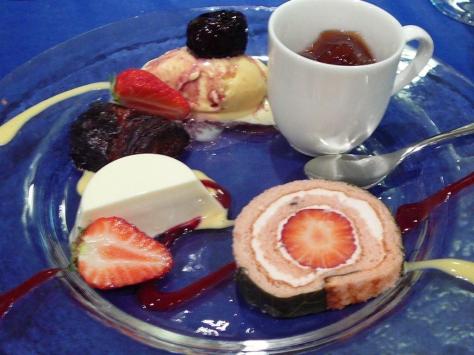
Alright, alright, here is the dessert plate (we had to share it, as it is simply too big!LOL)!
All are home-made (of course, some will say): Vanilla Ice-cream filled with vanilla bits, Black Tea Jelly, Cannelle, Pannacota, Strabeery and Cherry Tree Leaf Roll Cake!

Incidentally, I’m going there again for dinner in two-weeks time!
I’m definitely going to order that Marbled Foie Gras!

PISSENLIT
420-0839 Shizuoka City, Aoi Ku, Takajo, 2-3-4
Tel.: 054-270-8768
Fax: 054-627-3868
Business hours: 11:30~14:30; 17:00~22:00
Closed on Tuesdays and Sunday evening
Homepage (Japanese)

Please check the new postings at:
sake, shochu and sushi

—————————————-
日本語のブログ
—————————————-

Bryan Baird’s Newsletter (2009/13)

Baird Beer & Taproom Events Bulletin 2009 #13
bryan-sayuri.gif

Dear Taproom Friend & Baird Beer Enthusiast:

Beer simply is the most diverse alcoholic beverage on earth. It also is the most sociable. Don’t believe us? We are releasing three more wonderfully varied seasonal beers (Kinshu Domei Double IPA, Dark Wheat Lager, Maris Otter-Saaz Ale) to further strengthen our case. Let us know if you remain unconvinced.

*Kinshu Domei Double IPA (ABV 8.0%):

The grist is entirely base malt (Pilsner, Vienna, Maris Otter and Wheat)
buttressed by a good dosing of Japanese red sugar (akato) in the kettle (sugar, of course, lightens body and dries flavor in beer rather than sweeten it). 80 BUs of American hops add a wonderful bitter character that balances the residual malt sweetness. Dry-hopping with a combination of Simcoe, Horizon and Glacier varieties renders this big IPA spritely aromatic. Available on draught and in 633 ml bottles

*Dark Wheat Lager (ABV 5.0%):

The German Beer Purity Law does not permit the use of malted wheat in lager beers. Fortunately, we are not brewing in Germany. This tawny brown lager is brewed with 4 varieties of malted wheat which contribute a light and bready flavor. The overall character is defined by a rich, velvety smoothness that is punctuated by a clean and firm hop bitterness. This original lager was brewed way back in August, 2007 and has been conditioning in our cold cellar for nearly two years! Available on draught and in 360 ml bottles.

*Maris Otter-Saaz Ale (ABV 5.0%):

Maris Otter is the historically classic barely variety used in English Ale
brewing. We use floor-malted Maris Otter Pale Ale malt in virtually all of our brews. Saaz is the historically classic aroma hop grown in
Czechoslovakia and used in lagers of all sorts — particularly
Bohemian-style pilsners. We brew Maris Otter-Saaz Ale with only these two ingredients (aside, of course, from soft Numazu water and our hardy house ale yeast). We serve it exclusively on hand-pump in Real Ale form. It is beer history in a glass! Available only as Real Ale at our Fishmarket and Nakameguro Taprooms.

Allthree beers will be pouring at out Taprooms and other fine pubs and restaurants in Japan beginning Thursday, June 4. Bottle-conditioned versions of the Double IPA and Dark Wheat Lager will also be available through the finr family of Baird Beer retailing liquor stores in Japan.

Cheers,
Bryan Baird

Baird Brewing Company
Numazu, Japan
HOMEPAGE


The Japan Blog List

———————————
Must-see tasting websites:
-Sake: Tokyo Through The Drinking Glass, Tokyo Foodcast, Urban Sake, Sake World
-Wine: Palate To Pen
-Beer: Good Beer & Country Boys, Another Pint, Please!
-Japanese Pottery to enjoy your favourite drinks: Yellin Yakimono Gallery
——————————–
Please check the new postings at:
sake, shochu and sushi

—————————————-
日本語のブログ
—————————————-

French Cake by Bernard Heberle: Tisane

TISANE

Here’s the latest creation by my good friend, Bernard Heberle, the owner-patissier at Abondance in Hamamatsu City!
It is called “Tisane”, or herb tea infusion.

In his own words:
“Voici un gâteau au nom de ” Tisane ” et pour cause il est a base d’herbe fraîche et plus spécialement de Verveine.
La combinaison Verveine, crème, oeuf, lait et amour se marie très bien surtout en approche de la saison chaude et humide.”

“Here is a caked I called “Tisane” because it is prepared with a fresh herb base, especially Verveine.
The combination of Verveine, cream, egg, milk and love is just perfect as we approach the hot sultry season!”

Abondance
Address: Hamamatsu Shi, Sumiyoshi, 2-14-27 (in front of Seirei Hospital)
Tel.: 053-4738400
Fax: 053-4738401
Opening hours: 10:00~20:00. Closed on Tuesdays.
Homepage

HOMEPAGE (Japanese)
Please check the new postings at:
sake, shochu and sushi

—————————————-
日本語のブログ
—————————————-

Shizuoka Izakaya: UZU (revisited)

UZU-09-05-29-1

Service: excellent, easy-going and very friendly
Facilities: great washroom, great cleanliness overall
Prices: very reasonable, good value.
Strong points: Very fresh local ingredients especially organic vegetables extensively used.

Uzu is slowly becoming another regular izakaya of mine and that of my friends. Apart of the great welcome and atmosphere, their cuisine makes an extensive use of locally grown organic vegetables, making it one of those rare izakaya wher vegetarians are truly welcome!
As for the meat and fish, it is simply superlative. Moreover, one will be able to choose and taste geat local sake!

UZU-09-05-29-2

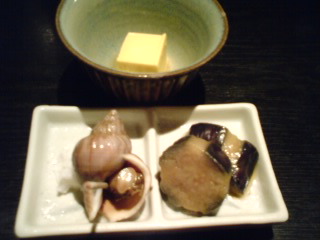
Last Friday, while my friends and I were having a “discussion” as to what we would order for food, tasty morsels had already come with our first sake!

UZU-09-05-29-3

To cut a long story short, here is what we savoured on that day!
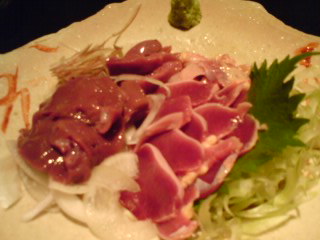
(See pic above). A plate of “Shamo” (Shizuoka-bred) chicken sashimi, comprising giblets (heart, liver, etc.). You can be assured they are absolutely fresh. Eaten with Shizuoka Wasabi and soy sauce, they make for a decadent starter!

UZU-09-05-29-4

“Mizu Nasu”, a succulent egg-plant/aubergine which is eaten raw!

UZU-09-05-29-5

“Sawara/young cod” sashimi. The fish was caught in Suruga Bay! Almost sweet!

UZU-09-05-29-7

An enormous salad of grilled “Shamo” Chicken and Shizuoka-grown vegetables!

UZU-09-05-29-8

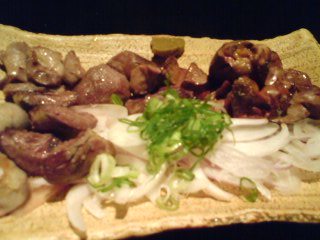
A plate of grilled “Shamo” Chicken giblets! You must have guessed by now that we had decided to make it a chicken and vegetable dinner!

UZU-09-05-29-9

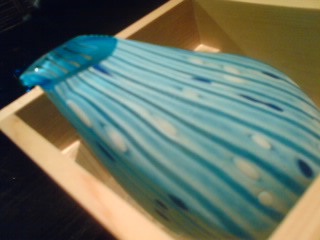
All earthenware and glassware at UZU are made by local artists!
How about this sake glass decanter?

UZU-09-05-29-10

And finally, “aburi”/grilled Shamo Chicken. With a little wasabi and nothing else, absolutely scrumptious!

We did have UZU’s lime sherbet for dessert, but I have already described this beauty in another posting!
Going there again next week, incidentally!

UZU
Shizuoka City, Otowa-cho, 3-18
Tel.: 054-249-6262
Business hours: 17:00=23:00
Closed on Mondays and first Tuesday
Reservations recommended
Credit cards OK

HOMEPAGE (Japanese)
Please check the new postings at:
sake, shochu and sushi

—————————————-
日本語のブログ
—————————————-

Today’s Lunch Box/Bento (’09/38)

BENTO-09-06-02d

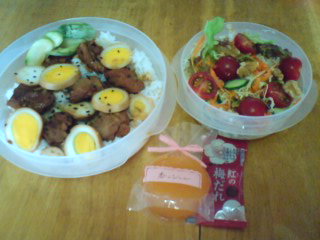
The Missus started devising and prapring today’s bento last night when she stewed the chicken, with the firm idea to taste it herself at home by herself toady!LOL

BENTO-09-06-02a

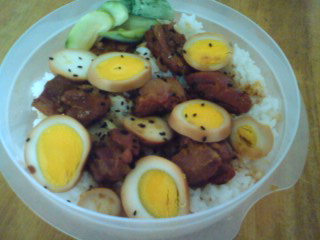
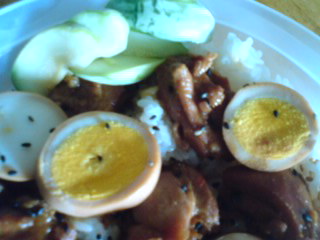
She first boiled eggs before taking care of the chicken. The chicken was first fried then slowly simmered with the eggs in the Chinese shashu pork style with soy sauce, sake, star anise and I don’t know what secret (don’t expect me to ask her, or it will start another argument!). She provided home-made pickled mini melons for the “salty additive”.

BENTO-09-06-02e

It was basically only light reheated when the chicken and sliced boiled/simmered eggs were placed on freshly steamed plain rice. She added some of the “juices” to season the rice and topped it with a goodmeasure of black sesame seeds.

BENTO-09-06-02b

the salad was a simple affair of chopped greens with mini tomatoes and a few walnuts.

BENTO-09-06-02c

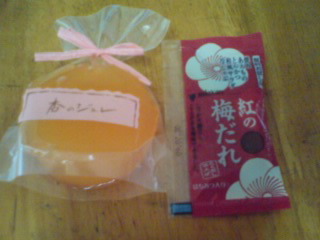
Finallly, I was provided with “ume tare/pickled plum vinaigrette” for the slad, and apricot jelly for dessert.

Ma ma yokatta!/Not bad!
Please check the new postings at:
sake, shochu and sushi

—————————————-
日本語のブログ
—————————————-

Tofu Recipe: Aburaage/ Recette de Tofu : Aburaage

ABURAAGE-1
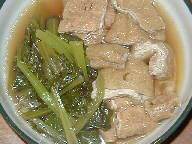
(Aburaage Soup)

Aburaage is basically a deep-fried thin slice of tofu.
It does offer a very versatile option as it can be used as it is, or open as a pouch it becomes the base for inari sushi and many other variations!

Here is a simple recipe:

INGREDIENTS:
Tofu (firm Momen tofu type): 1 large piece/block (Icho in Japanese)
Thick Towel
Cellophane paper
Long wooden disposable chopsticks (wari-bashi)
“Piano string”, or the equivalent
Water drainer
Oil
Oil thermometer (up to 200 degrees Celsius)

RECIPE:
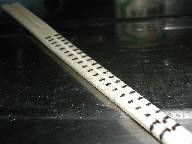
ABURAAGE-2
Make identations or marks on the chopsticks every 5 mm up to the height of the tofu block.
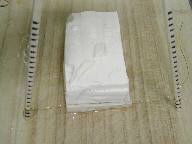
ABURAAGE-3
Tie “piano string” around chopsticks as shown on pic first at 10 mm height (or higher up to 15 mm if you wish), and cut tofu by sliding chopsticks along the cutting table (it should easy, but make sure you cut tofu evenly!)
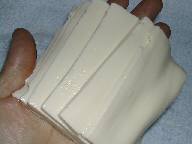
ABURAAGE-4
Tofu being soft, it is not easy to manipulate.
Later, when you will manipulate it, the best way is to first turn over the whole onto your open palm and have each slice slide away.
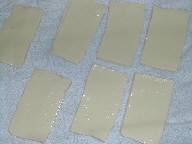
ABURAAGE-6
Before manipulating the tofu, first put a 500g weight (anything over a thin wooden plank if you don’t have asushi weight) on top of the tofu for 2 hours to get as much water off as possible.
Transfer slices onto thick towel and leave them there for an hour.

ABURAAGE-7
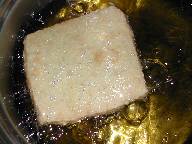
First frying step: fry tofu slice at 130 degrees Celsius (make sure to keep the temperature constant!) for 6 minutes. This will allow for a uniform heating.
ABURAAGE-8
Second frying step: bring oil temperature to 160 degrees Celsius.
If tofu contains too much water or if you fry in a single step, it will fail to achieve the right shape and quality.
ABURAAGE-9
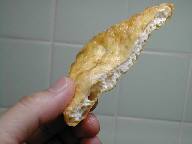
Aburaage will usually be a bit hard upon frying.
ABURAAGE-10
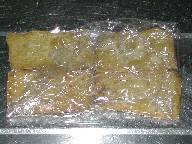
To make it soft, wrap it in cellophane paper and and heat inside electric oven. As soon as water comes out of aburaage inside the cellopahne paper, take the whole out and unwrap aburaage.
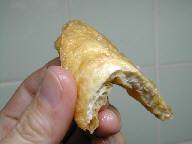
ABURAAGE-11
The aburaage should be soft by then.

ABURAAGE-12
Check if the aburaage needs a second frying (according to your liking).
if you fry it at 130 degrees, it will reduce as the one on the right in the picture.
If you fry it at 160 degrees you will obtain an aburaage like the left one on the picture (longer one).

ABURAAGE-13
To properly open it, cut in half, and then cut inside to form a pouch!

Recette de Tofu frit : Aburaage

ABURAAGE-1
(Soupe de Aburaage )

L’aburaage est un une fine tranche de tofu que l’on fait frire. C’est une met assez polyvalent, car il peut être dégusté tel quel (recouvert de sauce soja, et de gingembre en le faisant un peu griller par exemple), en soupe, ou alors devenir l’enveloppe d’inari sushi.

Je vous donne une recette simple mais il en existe bien d’autres, notamment on peut jouer sur l’épaisseur du tofu frit.

:

INGREDIENTS:
Tofu (type momen) :  1 bloc (Icho en japonais)

Une serviette épaisse
Du film célophane
Des baguettes longues (wari-bashi)
Une corde de piano, ou quelque chose équivalent
Un égouttoir
De l’huile
Et un thermomètre qui peut monter jusqu’à 200 degrés.

RECETTE:

ABURAAGE-2

Faire des marques tous les 5mm le long de la hauteur du bloc (Cela représente la future hauteur découpée). Vous pouvez aussi enrouler la corde de piano le long des baquettes que vous aurez aussi marquées tous les 5 millimètres.

ABURAAGE-3

Enrouler la corde de piano comme ci-dessus le long des baguettes. Commencez à partir de 10mm en haut, voire 15 si vous voulez et coupez le tofu en faisant glisser les baguette le long de la planche à découper. Ce n’est pas compliqué mais soyez sûr d’être bien droits.

ABURAAGE-4

Le tofu même quand il est en bloc n’est pas facile à manipuler, alors les tranches, je vous laisse imaginer. L’idéal est quand vous le manipuler de toujours saisir ses tranches dans l’intégralité de la paume de votre main.

ABURAAGE-6

Avant de commencer, mettez un poids de 500g sur le tofu, de quoi faire pression pour en évacuer l’eau. Cela prendra deux heures. Ensuite posez-le sur une serviette pour extraire encore plus d’eau.

ABURAAGE-7

Première friture : Il faut le chauffer à 130 degrés, et que cette température ne varie pas pendant 6 minutes. L’uniformité de la cuisson est indispensable.

ABURAAGE-8
Deuxième friture: On monte à 160 degrés. Si vous avez trop d’eau dans votre tofu, et si vous ne respectez pas les étapes, vous allez le rater.

ABURAAGE-9
L’aburaage est un peu dur une fois la cuisson terminée.

ABURAAGE-10

Pour le rendre plus mou, il faut le mettre dans du papier cellophane et le chauffer au four électrique. Quand l’eau s’échappe de l’aburaage il se ramollira.

ABURAAGE-11
Vous devez obtenir ce résultat.

ABURAAGE-12

Vérifiez si vous avez besoin de faire une deuxième friture, selon votre goût. 130 degrés vous donnerons le résultat de droite sur la photos du dessus, 160 celui de gauche (plus long).

ABURAAGE-13
En général quand vous le coupez en deux, vous voyez si vous avez réussi… ou pas !

Please check the new postings at:
sake, shochu and sushi

—————————————-
日本語のブログ
—————————————-

Japanese Cakes/Wagashi 3: Recipe-Shiro Anko/White Sweetmeats

WAGASHI-SHIROANKO-1

In my previous article, I introduced the recipe for “red sweetmeats” or just “anko” in Japanese, an improtant ingredients in Wagashi.
But the red/violet colour is not always wanted.
Another popular way to make anko is to use “ingen mame”/kidney beans (US), or string/French beans (Europe).
Note that soy beans/”daizu” are not used in this recipe!
The advantage are multiple, as the “white” (actually beige) colour can be modified by adding green peas (green), pumpkin (yellow or orange), fruit pulp from papaya and mago. Variations are practically unlimited!

INGREDIENTS:
Kidney beans: 500g
Sugar: 400g
Salt: three small pinches

RECIPE:

WAGASHI-SHIROANKO-2
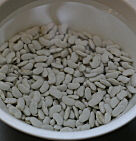
Put beans in 3 times their volume of water in a large pan. Let soak for two nights. Change water twice a day.

WAGASHI-SHIROANKO-3
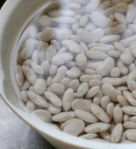
Beans should have lost their “wrinkles” by then.

WAGASHI-SHIROANKO-b
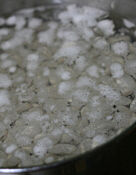
Bring water to boil over strong fire then simmer for 5 minutes on medium fire.

WAGASHI-SHIROANKO-4
Drain water, making sure beans don’t dry up. The skin of the beans should peel off easily. Take skins and dark spots away.

WAGASHI-SHIROANKO-5
Simmer again peeled beans until they soft and start breaking up. Start on a strong fire to bring to boil, then lower to medium fire.

WAGASHI-SHIROANKO-6
Heat until most of the water has evaporated. Beans will pass through sieve more easily.

WAGASHI-SHIROANKO-7
Pass all the beans through the sieve. Wash and dry the pan.

WAGASHI-SHIROANKO-8
Add sugar and stir/mix over low fire.

WAGASHI-SHIROANKO-9
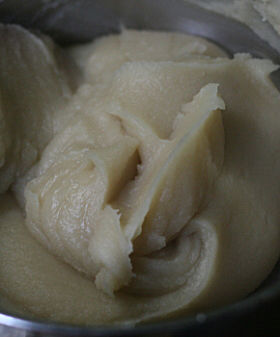
Sugar becoming liquid upon heating will give a watery aspect to the mixture. Heat over low fire, stirring all the time for 25 minutes.

WAGASHI-SHIROANKO-10
Once satisfied with the paste consistency, add salt, mix and stop fire.

WAGASHI-SHIROANKO-11
Transfer to another dish for preserving until use. Do it at once while it is still hot.
Make sure it does not dry up.
Cover with a lid.
If lid does not close well enough, wrap the whole into cellophane paper.

Please check the new postings at:
sake, shochu and sushi

—————————————-
日本語のブログ
—————————————-

Today’s Lunch Box/Bento (’09/37)

BENTO-09-06-01-a

I’m always looking forward to bento on Monday, although the Missus tends to demur, as they usually see some research and new ingredients!

BENTO-09-06-01-b

This time, the Missus opted for “musubi/hand-made rice balls, of two kinds:

BENTO-09-06-01-c

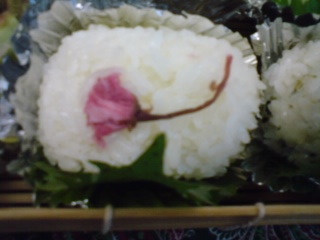
One was plain rice with a whole salt-preserved Sakura no Hana/Cherry blossom (above pic).
The other one was plain steamed rice mixed with chopped shiso/perilla leaves, hijiki/sweet seaweed and white sesame seeds.
All musubi were envelopped in ooba/large perilla variety leaves.
She added home-made pickled myoga and pickled mini-melaons with white sesame seeds.

BENTO-09-06-01-d

As for the garnish, I got renkon/lotus roots fried with black sesame and katsuo bushi/bonito dry shavings, Boiled green and white asparaguses, home-made chicken ham with British chutney and lettuce, tamagoyaki/Japanese omelette (for dessert!) and plum tomatoes.

Plenty to eat!

Please check the new postings at:
sake, shochu and sushi

—————————————-
日本語のブログ
—————————————-

Japanese Cakes/Wagashi 2: Recipe-Anko/Sweetmeats

WAGASHI-4

One main ingredients in traditional Wagashi/Japanese Cakes is “anko” (or more simply “an”) which can be translated as “sweetmeats” or “bean jam”.

I would like here to introduce a simple way to make one’s own “anko” at home:

INGREDIENTS:

Azuki/Adzuki/red beans (in Japanese: 小豆): 150 g
Sugar: 150g
Salt: a little

RECIPE:

a) Wash azuki lightly. Put in a large basin with an equal amount of water and turn on heat to high.

b) Bring to boil. If beans level is higher that of water, add water till beans are completely covered. Let simmer. Add water 2 or 3 times as soon as the water does not cover completely the beans and this until beans stop floating on water.

c) Drain beans, put them back into basin with same amount of water and turno fire to high. Repeat a9 operation.

d) Cook as c) fro 40~60 minutes.

e) Mash azuki beans lightly. Add sugar. Simmer and stir to mix, making sure the jam does not overboil.

f) Add a little salt (to your taste) and mix.
Let cool completely.
You can eat as it is of course, but you will need it to make your cakes!
You can either sieve it to make it a very fine paste, sieve a part and mix it with the unsieved part, or use it as it is. In any case it will be easy to fashion!

WAGASHI-ANKO

Please check the new postings at:
sake, shochu and sushi

—————————————-
日本語のブログ
—————————————-

Japanese Cakes/Wagashi 1: Introduction

WAGASHI-1

There is a traditional way of making cakes in Japan that ought to please no end vegans and people allergic to wheat flour and dairy products, namely Wagashi!

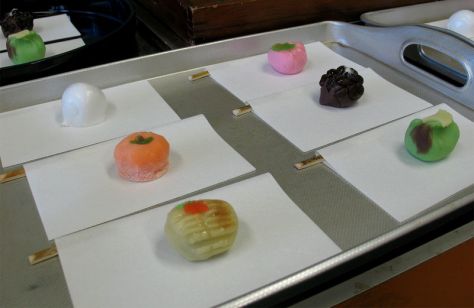
Wagashi (和菓子) is a traditional Japanese confectionery which is often served with tea, especially the types made of mochi, azuki bean paste, and fruits.

Wagashi is typically made from natural based (mainly plant) ingredients. The names used for wagashi commonly fit a formula—a natural beauty and a word from ancient literature; they are thus often written with hyōgaiji (kanji that are not commonly used or known), and are glossed with furigana.

Generally, confectioneries that were introduced from the West after the Meiji Restoration (1868) are not considered wagashi. Most sorts of Okinawan confectionery and those originating in Europe or China that use ingredients alien to traditional Japanese cuisine, e.g., kasutera, are only rarely referred to as wagashi.

WAGASHI-2
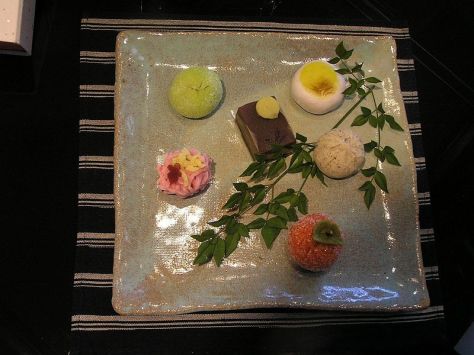
Assortment of wagashi for a tea ceremony

During the Edo period, the production of sugarcane in Okinawa became highly productive, and low quality brown sugar as well as heavily processed white sugar became widely available. A type of sugar, wasanbon, was perfected in this period and is still used exclusively to make wagashi. Wagashi was a popular gift between samurai, in significance much like a good wine. Wagashi is served as part of a Japanese tea ceremony, and serving a good seasonal wagashi shows one’s educational background.

WAGASHI-3
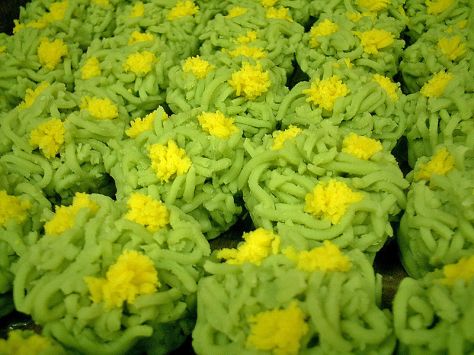
Wagashi in the shape of rape flowers/Na no Hana

There are many, many kinds of Wagashi.
I will introduce them in the next posting, followed by another posting on the basic preparation.

WAGASHI-ABEKAWAMOCHI-2
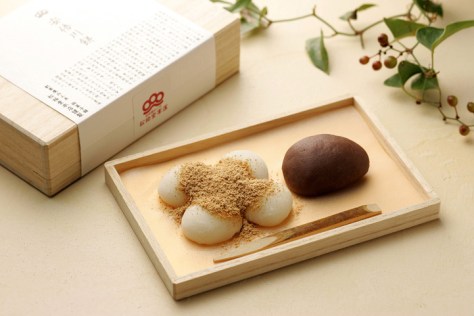
Shizuoka’s Abekawa Mochi

Just know that about every region in Japan has its own traditional Wagashi!

Avaibility:
Wagashi is widely available in Japan, but quite rare outside it.
Minamoto Kitchoan (源 吉兆庵)
Has a varied selection, and stores in New York City (shipping throughout the US), London (shipping throughout Europe), and Singapore, in addition to Japan.
Toraya (とらや)
Has a full Paris store, stores in Japan, and sells a limited selection (yōkan only) at New York stores.
Fugetsu-do
Family owned and operated in the USA, since 1903, Fugetsu-do now ships anywhere in the USA.

Please check the new postings at:
sake, shochu and sushi

—————————————-
日本語のブログ
—————————————-

Tomatoes: Local varieties in Shizuoka

AGRI-TOMATO1

I had my good friend Rich in mind when I set off on my bicycle yesterday morning in the direction of the Abe River in Shizuoka City. This major river is dotted almost all the way up to its source with farmland. Very often, while the men are busy with staple crops like rice,tubers and even peanuts, some housewives grow vegetables and other produce as a “side business” to contribute some cash to their homesteads.
About an hour ride from my place one will find a JA (Japan Agriculture) market called “Agri Road Miwa” associated with 13 such housewives who sell their vegetables, fruit, flowers, tea, honey and home-made cakes on a daily basis, guaranteeing fresh produce everyday.
The only problem is that you must be there when the market opens at 9:30 and fight off the local “o-baasan/grannies”! LOL
Being seasonal produce only, you can expect something new every morning!
I had already picked some great burdock roots, pink potatoes and maountain veggies, when my eyes stopped on some unusual tomatoes.
Interestingly enough. the grannies were more interested in the lettuce and strawberries, so I had enough time to choose the best specimens!

AGRI-TOMATO2

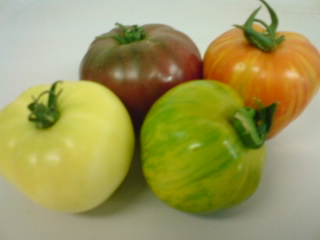
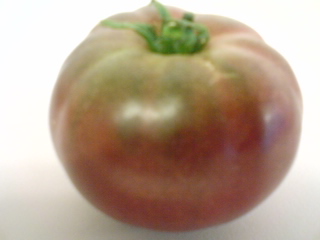
“Black Tomato”. Actually it is a very deep red colour, practically dark blue-violet.

AGRI-TOMATO3

“Orange Tiger”. Beautiful name, isn’t it?

AGRI-TOMATO4

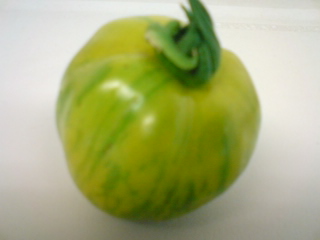
“Green Tiger”. A cousin of the above!

AGRI-TOMATO5

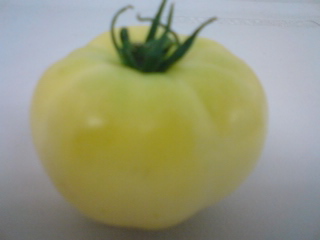
“White Tomato”. Actually more of a mild beige colour.

Bear in mind that all these tomatoes, in spite of their colour, were ripe.
I bought enough for myself and Yasaitei, a favourite local Japanese Izakaya which specializes in vegetables (I just give them away as the prices are simple ridiculous. If Yasaitei can promote these farmers’ products, I’m more than happy!).
Some actually did not reach my office intact (a long rough bicycle ride is not a great idea for shopping!). I just “sampled” them,… I ended up eating all the “damaged” tomatoes! They were sweet and tangy at the same time, firm and juicy, all basically of the same taste. No need for drinking water after that!
I stored the intact tomatoes in the fridge and later brought them to Yasatei. This izakaya is run by ladies only, and it was a discovery for them! No need to say that the tomatoes were immediately displayed for the customers’ pleasure!

Agri Road Miwa
Shizuoka City, Aoi Ku, Abeguchi Shinden, 537-1
TEL:054-296-7878
Business hours: 09:30~15:30 (from 08:30 on Saturdays)
Homepage (Japanese)
Even if you don’t understand Japanese look at their products!

Yasaitei
Shizuoka City, Aoi Ku, Tokiwa-Cho, 1-6-2 Green Heights Wamon 1-C
Tel.: 054-2543277
Business hours: 17:30~22:00
Closed on Sundays
Reservations highly recommended

Please check the new postings at:
sake, shochu and sushi

—————————————-
日本語のブログ
—————————————-
Octopus Species

OCTOPUS-MIZUDAKO-SALAD
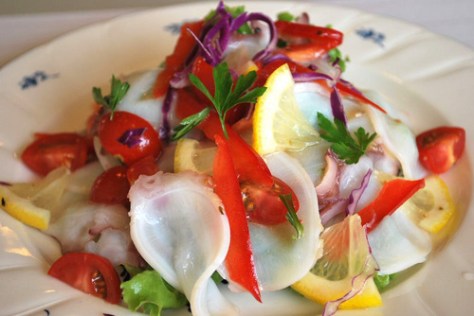
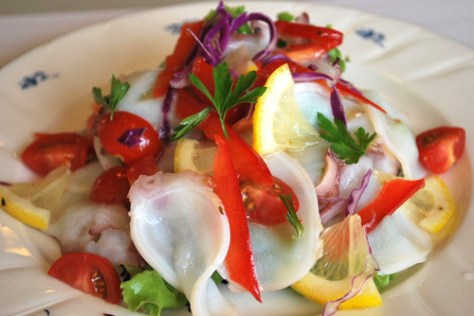
Mizudako Octopus Sashimi Salad

Octopuses are common on the markets along the Mediteranean Sea, especially Greece, italy and Spain.
Tey are also very common in Asia, especially Korea and Japan.

OCTOPUS-MADAGO-TSUKIJI
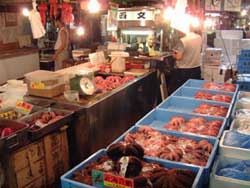
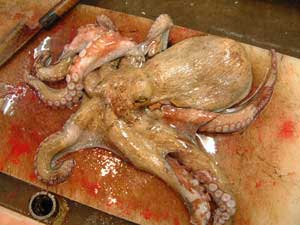
For people living in Tokyo, you will find plenty inside the Tsukiji Market.

OCTOPUS-NUMAZU-HARBOUR
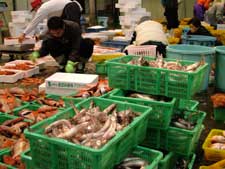
As for people living in Shizuoka Prefecture, go and visit the Harbour in Numazu City!

There many kinds of octopus, some edible, some definitely not!
I will talk here about the main varieties found, sold and eaten in Japan!

MADAKO
OCTOPUS-MADAGO-1

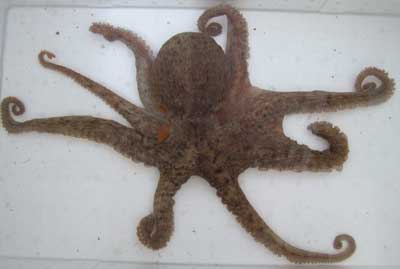
Madako or “True Octopus” will be sold from late Autumn till early Spring.
50,000 tonnes are caught in Japan while 100,000 tonnes are imported, 60% fromm Morocco, 20% from Mauritania and some more from South Africa.

OCTOPUS-MADAGO-2
Boiled Madako from Japan

OCTOPUS-MADAGO-3
Boiled Madako from South Africa

It is very often found boiled in the supermarkets and are appreciated in salads, chyawanmushi, takoyaki and so on.

OCTOPUS-MADAGO-4

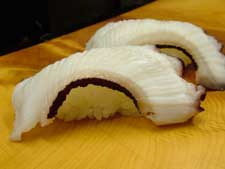
But lightly as sushi nigiri is probably the best!

MIZUDAKO
OCTOPUS-MIZUDAKO-1

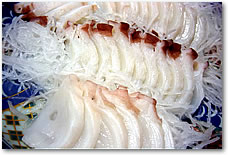
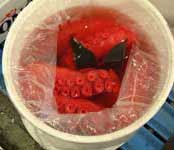
Mizudako, also called Shiodako and Oodako is a large variety reaching up to 3 metres. It is caught in Autumn and Winter at depths bewteen 100and 1,000 metres in the Northern half of Japan.
It is usually sold frozen. It is then cut when half thawn for:

OCTOPUS-MIZUDAKO-3
Mizudako sashimi

OCTOPUS-MIZUDAKO-SALAD
Mizudako Salad

OCTOPUS-MIZUDAKO-2
It is also very common boiled and pickled in rice vinegar.

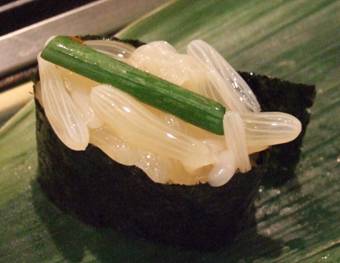
OCTOPUS-MIZUDAKO-EGGS
Its eggs are a rare morsel eaten as sushi on a gunkan!

IIDAKO
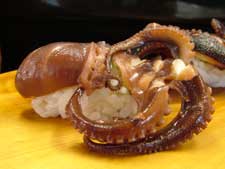
OCTOPUS-IIDAGO-1

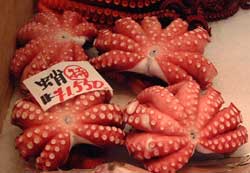
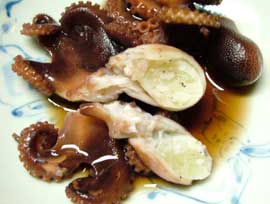
Iidako, also known as Komochidako or Ishidako are caught south of Hokkaido Island. They are comparatively small and do not measure more than 20 cm. A lot are caugt along the Korean Peninsula and China at depths down to 20 metres. They tend to lay their a bit everywhere, even inside empty cans at the bottom of the sea!
Imports have been increasing of late.

OCTOPUS-IIDAGO-2

Iidago are much appreciated cooked whole with their eggs or

OCTOPUS-IIDAGO-3

whole again, boiled or raw, as sushi on nigiri!

CHIHIRODAKO
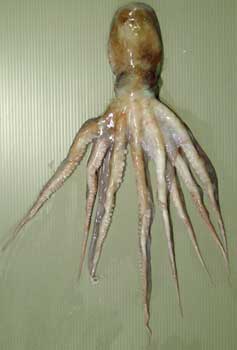
OCTOPUS-CHIHIRODAKO-1

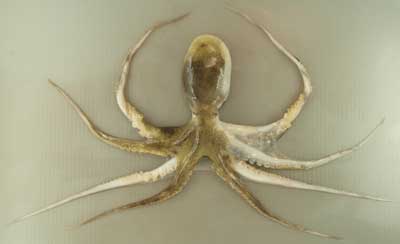
Chihirodako is local Shizuoka variety found at Numazu Harbour.
It is appreciated boiled or in Tenpura

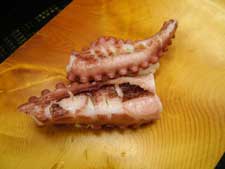
OCTOPUS-CHIHIRODAKO-2
Its tentacles, boiled, are popular as sushi nigiri!

Please check the new postings at:
sake, shochu and sushi

—————————————-
日本語のブログ
—————————————-