Tag Archives: レシピ

Today’s Lunch Box/Bento (’09/74)

It’s been more than two weeks since I last wrote about my bentoes!
Don’t worry, the Missus is still making them!
The reason for this prolonged silence is that we did travel a couple of times on Mondays and Tuesdays. Otherwise the Missus had prohibited me from reporting on them as she did not judge them worthwhile.

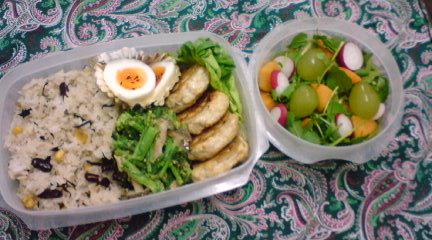
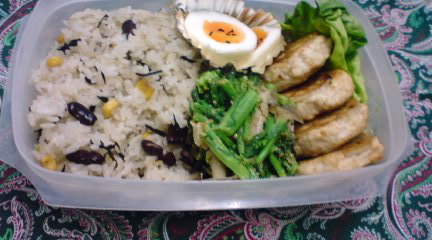
Today’s bento can be considered a classic Japanese beto with steamed rice with various garnishes.

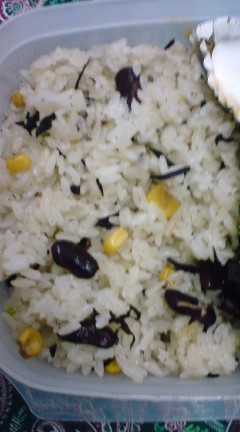
The Missus steamed fresh rice with hijiki/sweet seaweed and beans on top, which she stirred altogether upon being cooked.

Soft-boiled eggs (meaning that the yolk is still soft) seasoned with roasted black sesame seeds.
The salad consist of boiled na no hana/rape blossoms and fried shimeji mushrooms seasoned with goma tare/sesame dressing.

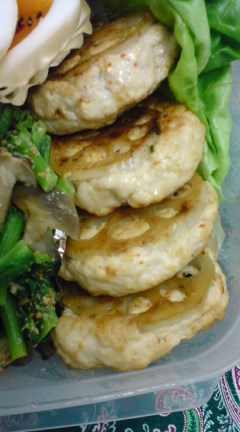
As for the meat part she fried chicken tsukune/ patties.

Before frying them she made a slice of renkon/lotus root to adhere to once side for added crucnchiness.

The other side after being fried in a Japanese-style sweet and sour sauce.

The salad/dessert consisted of pieces of jiro kaki/squat persimmon, sliced radish and muscat on a bed of fresh leaf vege/herbs.

Back onto a healthy road!

RECOMMENDED RELATED SITES:
Warren Bobrow
Bread + Butter
Zoy Zhang
Hungry Neko
Think Twice
Frank Fariello
Mangantayon
Hapabento
Elinluv Tidbit Corner
Tokyo Terrace
Maison de Christina
Chrys Niles
Lexi
Culinary Musings

Please check the new postings at:
sake, shochu and sushi

—————————————-
日本語のブログ
—————————————-

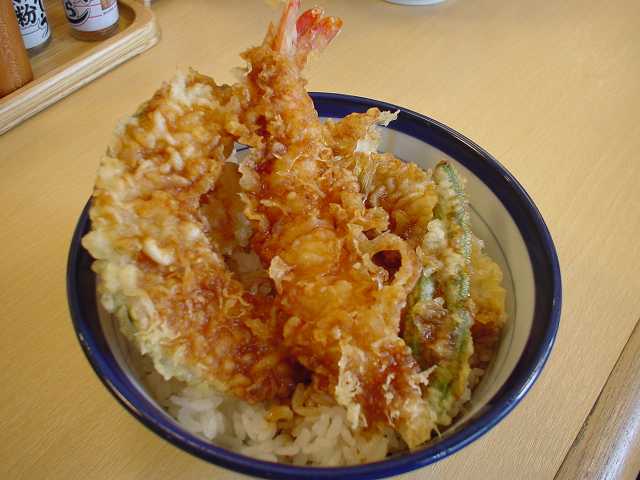
Tempura: The Basics

Home-made style tempura

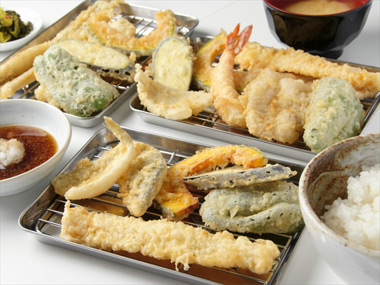
Tempura (天麩羅, or 天婦羅, tenpura, also written as “天ぷら”), which may be of Portuguese origin, is a popular Japanese dish of deep fried, battered seafood, or vegetables which has spread all the world!

The word tempura, or the technique of dipping fish and vegetables into a batter and frying them, comes from the word “tempora,” a Latin word meaning “times”, “time period” used by both Spanish and Portuguese missionaries to refer to the Lenten period or Ember Days (ad tempora quadragesimae), Fridays, and other Christian holy days.
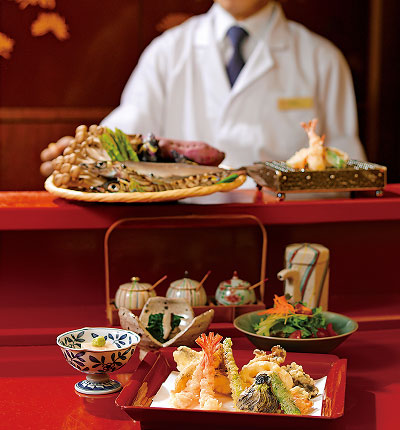
Tempura at a Japanese Restaurant

In Japan, restaurants specializing in tempura are called tenpura-ya and range from inexpensive fast food chains to very expensive five-star restaurants. Many restaurants offer tempura as part of a set meal or an obento (lunch box), and it is also a popular ingredient in take-out or convenience store obento boxes. The ingredients and styles of cooking and serving tempura vary greatly through the country, with importance being placed on using fresh, seasonal ingredients.
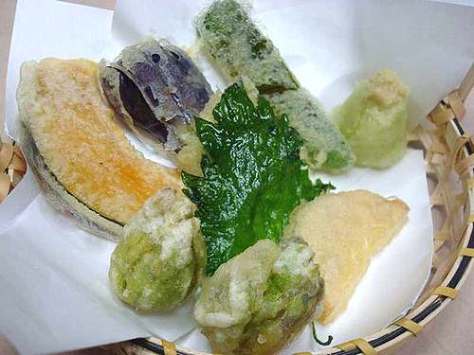
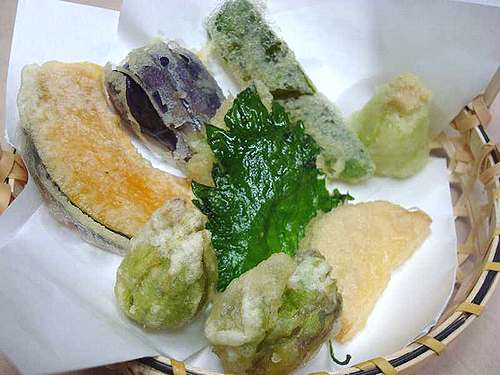
Vegetables Tempura

Batter
A light batter is made of cold water and soft wheat flour. Eggs, baking soda or baking powder, starch, oil, and/or spices may also be added. Tempura batter is traditionally mixed in small batches using chopsticks for only a few seconds, leaving lumps in the mixture that, along with the cold batter temperature, result in the unique fluffy and crisp tempura structure when cooked. The batter is often kept cold by adding ice, or by placing the bowl inside a larger bowl with ice in it. Over-mixing the batter will result in activation of wheat gluten, which causes the flour mixture to become chewy and dough-like when fried.

Specially formulated tempura flour is available in worldwide supermarkets. This is generally light (low-gluten) flour and occasionally contains leaveners such as baking powder.

Some varieties of tempura are dipped in a final coating, such as sesame seeds, before frying. Tempura generally does not use breadcrumbs in the coating.
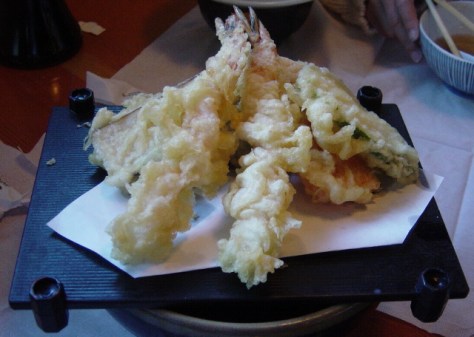
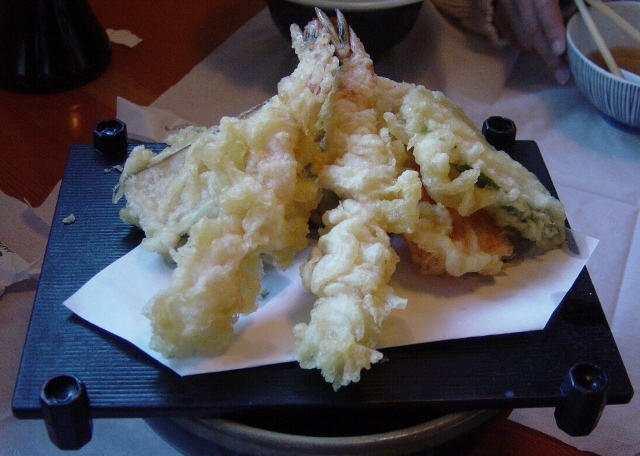
Shrimps Tempura

Frying
Thin slices or strips of vegetables or seafood are dipped in the batter, then briefly deep-fried in hot oil. Vegetable oil or canola oil are most common, however tempura was traditionally cooked using sesame oil. Many specialty shops still use sesame oil or tea seed oil, and it is thought that certain compounds in these oils help to produce light, crispier batter.

When cooking shellfish, squid, or hard-skinned watery vegetables such as bell pepper or eggplant, the skin is usually scored with a knife to prevent the ingredients from bursting during cooking, which can cause serious burns from splashing oil.

Oil temperature is generally kept between 160 and 180 degrees Celsius, depending on the ingredient. In order to preserve the natural flavour and texture of the ingredients, care is taken not to overcook tempura. Cooking times range between a few seconds for delicate leaf vegetables, to several minutes for thick items or large kaki-age fritters.

The bits of batter (known as tenkasu) are scooped out between batches of tempura, so they do not burn and leave a bad flavour in the oil. A small mesh scoop is used for this purpose. Tenkasu are often reserved as ingredients in other dishes or as a topping.
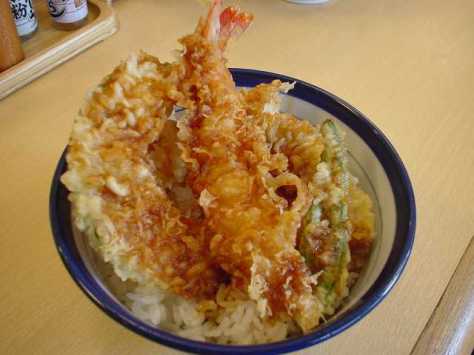
Tempura Tendon (on a bowl of rice)

Ingredients
Seafood: Prawn, Shrimp, squid, scallop, anago (conger eel), ayu (sweetfish), crab, and a wide variety of fish and shellfish.
Vegetables: bell pepper, kabocha squash, eggplant, carrot, burdock, green beans, sweet potato, yam, potato, renkon (lotus root), shiitake mushroom, mushrooms, bamboo shoots, okra.
There is no real limit, actually.
Keep in mind that it is probably the best way to appreciate wild mountain vegetables!
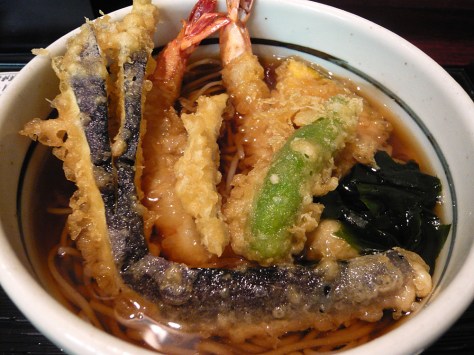
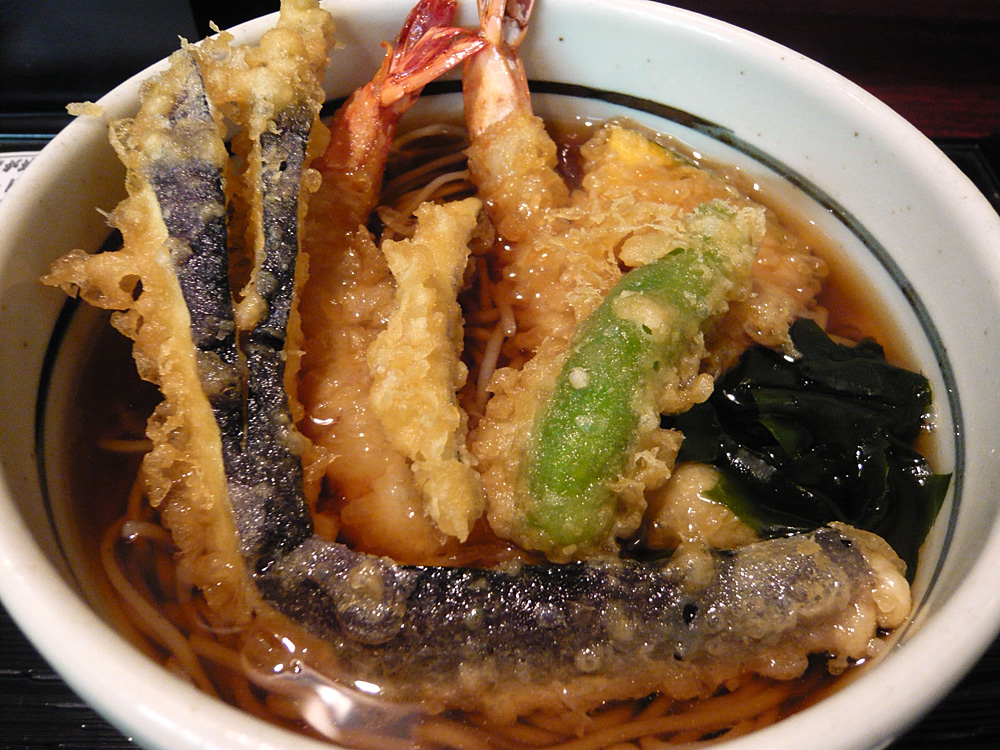
Tempura served on Soba!

Serving and presentation
Cooked bits of tempura are either eaten with dipping sauce or used to assemble other dishes. Tempura is commonly served with grated daikon and eaten hot immediately after frying. The most common sauce is tentsuyu sauce (roughly three parts dashi, one part mirin, and one part shoyu). Alternatively, tempura may be sprinkled with sea salt before eating. Mixtures of powdered green tea and salt or yuzu and salt are also used.
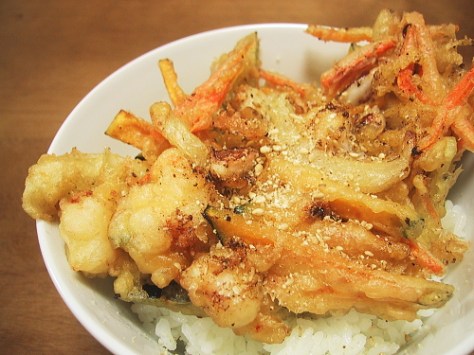
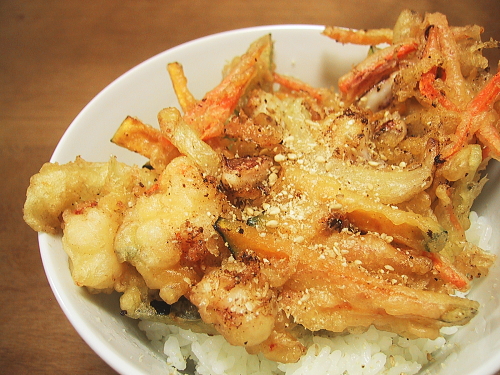
Kakiage on a bowl of rice

Kakiage is a type of tempura made with mixed vegetable strips, such as onion, carrot, and burdock, and sometimes including shrimp, which are deep fried as small round fritters.

Tempura is also used in combination with other foods. When served over soba (buckwheat noodles), it is called tempura soba or tensoba. Tempura is also served as a donburi dish where tempura shrimp and vegetables are served over steamed rice in a bowl (tendon) and on top of udon soup (Tempura Udon).

Tempura and Kakiage Professional recipes coming soon!

RECOMMENDED RELATED SITES:
Bread + Butter, Comestilblog, Greedy Girl, Bouchon For 2, Zoy Zhang, Hungry Neko, Mangantayon, Elinluv Tidbit Corner, Maison de Christina, Chrys Niles, Lexi, Culinary Musings, Eats and Everything, Bite Me New England, Heather Sweet, Warren Bobrow, 5 Star Foodie, Frank Fariello, Oyster Culture, Ramendo, Alchemist Chef, Ochikeron, Mrs. Lavendula, The Gipsy Chef

Please check the new postings at:
sake, shochu and sushi

—————————————-
日本語のブログ
—————————————-
Ramen: Korean-style Recipe

Not only the Japanese, but koreans also make succulent ramen.
Here is a very simple home-made recipe in Korean style:

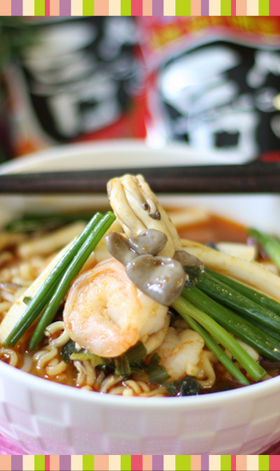
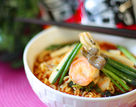
Korean-style ramen!

INGREDIENTS: For 1 person?

-Instant Korean ramen with their soup powder: 1 pack (size is up to you! readily available in all Asian markets)
-Water: 500 ml
-Squid: 50 g
-Shrimps: 50 g
-Mushrooms: 30 g
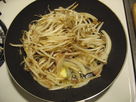
-Fresh beasprouts: 50 g
-Thick short leek: 2
-Salad oil: 1 tablespoon
-Grated garlic: 1 teaspoon
-Oyster sauce: 1 teaspoon
-Salt: a little
-Pepper: a little

RECIPE:

-Cut the squid in 1 cm/5cm pieces. Take shell off shrimps.
In a frypan pour the oil with grated garlic and switch on fire/heat.

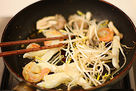
-As soon as the garlic aroma comes out add shrimps and squid and fry until shrimp have changed colour. Add mushrooms, beansprouts, oyster sauce, salt and pepper and stir-fry for a short moment.

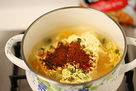
-In a large pot bring water to boil. Drop ramen, instant Korean powdered soup and other seasoning if included.

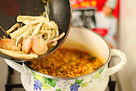
-As soon as you are satisfied with the consistency of the ramen add fried squid and shrimps and leeks cut in proper size.

-You prefer to serve in the following way:
First the ramen with their soup.
Second topped with fried squid, shrimps and mushrooms.
Last decorated with cut leeks.

Simple and easy to improve on!

RECOMMENDED RELATED SITES:
Bread + Butter, Comestilblog, Greedy Girl, Bouchon For 2, Zoy Zhang, Hungry Neko, Mangantayon, Elinluv Tidbit Corner, Maison de Christina, Chrys Niles, Lexi, Culinary Musings, Eats and Everything, Bite Me New England, Heather Sweet, Warren Bobrow, 5 Star Foodie, Frank Fariello, Oyster Culture, Ramendo, Alchemist Chef, Ochikeron, Mrs. Lavendula, The Gipsy Chef

Please check the new postings at:
sake, shochu and sushi

—————————————-
日本語のブログ
—————————————-
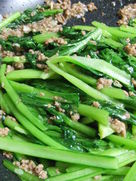
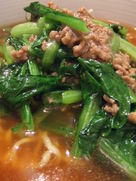
Ramen with Komatsuna and Minced Meat

All ramen lovers, please check Ramendo’s great Ramen Poll!

Ramen make for excellently balanced meals when properly combined with green vegetables and meat.
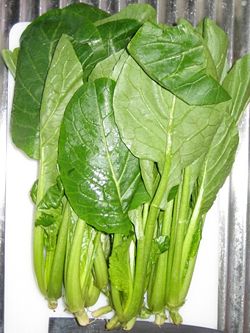
Here is a simple recipe combining ramen with minced pork and bee and komatsu leaves:

Ramen with Komatsuna and Minced Meat!

Komatsuna (Brassica rapa var. perviridis or var. komatsuna, コマツナ/小松菜、冬菜、鶯菜) is a type of leaf vegetable. It is a variant of the same species as the common turnip. It is grown in Japan, Taiwan and Korea. It is also known as Japanese Mustard Spinach and can be stir-fried, pickled, boiled and added to soups or used fresh in salads. It is an excellent source of calcium. It is also used for fodder in some Asian countries. The leaves of komatsuna can be eaten at any stage of growth. In a mature plant they are dark green with slender light green stalks, around 30 cm long and 18 cm wide. It is most often grown in the spring and autumn, as it cannot endure extreme heat or cold for more than a short time.

INGREDIENTS: For 2 persons

-Non-fry instant ramen (sold with shoyu/soy sauce taste stock soup powder): 2 packs
-Minced meat (half beef, half pork. Can be replaced with chicken): 180 g
-Komatsuna (or spinach): 1 bouquet (as much as you want, actually!)
-Ginger: 1 fresh piece (2×2 cm)
-Garlic (little smell variety if you can find it): 1 large clove
-Sesame oil: 1 teaspoon
-Chicken Bouillon powder (to taste): 1 cube~ crushed into powder

-Cornstarch: to taste (depends on how thick you like your soup)
-Water: 50 ml

RECIPE:

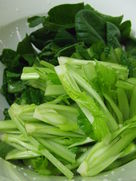
-Cut the komatsuna/spinach into 2 or 3 easy to eat lengths. Chop the ginger fine. Slice the garlic.

-Mix the cornstarch with a water in small cup (don’t forget to stir it again before using it!)

-Prepare the soup by heating water added with the soup bought together with the instant ramen.

-Boil the ramen in salted water to the consistence of your liking.

-While the ramen are boiling, In a frypan fry the ginger and garlic in sesame oil over a small fire so as to bring out flavour.

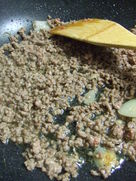
-Once the aroma of the fried chopped condiments come out add the minced meat and fry over a medium high fire.

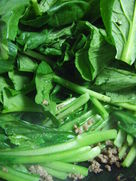
-Once the meat is well cooked, throw in the komatusna, lower stems irst for a few seconds and then all the rest, over a strong fire.

-Add the chicken bouillon powder and mix well.

-Reduce the fire to low. sprinkle over with all the starch mixed with water. Turn the fire to high and stir until the sauce around the meat and veg has thickened to your liking. Switch off fire.

-In a bowl (two bowls for 2 in this case), drop the boiled and drained ramen. Cover with soup and top with fried komatsuna and minced meat.

Simple!

RECOMMENDED RELATED SITES:
Bread + Butter, Comestilblog, Greedy Girl, Bouchon For 2, Zoy Zhang, Hungry Neko, Mangantayon, Elinluv Tidbit Corner, Maison de Christina, Chrys Niles, Lexi, Culinary Musings, Eats and Everything, Bite Me New England, Heather Sweet, Warren Bobrow, 5 Star Foodie, Frank Fariello, Oyster Culture
href=”http://ramendo.wordpress.com/”>Ramendo, Ramendo

Please check the new postings at:
sake, shochu and sushi

—————————————-
日本語のブログ
—————————————-
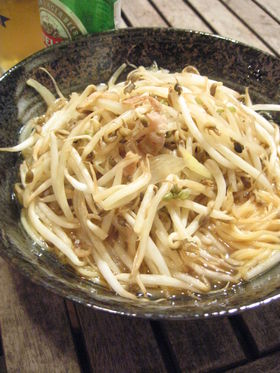
Ramen: Simple Recipe with Beansprouts, Butter and Miso!

The Basic and Complete Ramen Recipe, I must admit, was complicated and a bit hard for friends to follow, but ramen can also be made simple and tasty.
Here is an example:
Ramen with beansprouts, butter and miso!

INGREDIENTS: For 2 servings

-Beansprouts (“moyashi”/もやし): one pack or a very large handful. Fresh, please!
-Onion: one half
-Bacon: 2 rashers
-Ramen: enough for 2 persons
-Butter: 1 tablespoon
-Miso: to taste

RECIPE:

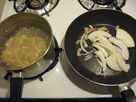
-While you boil the ramen, cut the onion and bacon into thin slices and fry. Boil some very lightly salted water for the soup (if you have bought the ramen with their soup, add it to the water, although it might become a bit heavy)

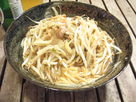
After the onion have become translucent and started taking in the bacon juices throw in the beansprouts and butter. Add just enough soup water as to obtain a thick enough soup. Add miso and stir.

In a bowl drop the boiled and drained ramen and top it with the beansprouts, bacon and onion soup!
Easy, isn’t it?

NOTE:
If you wish to make your ramen spicy add spices and chili when you fry the onion and bacon.
Don’t be afraid of using a lot of beansprouts (and other thinly cut veg if you wish)!

RECOMMENDED RELATED SITES:
Bread + Butter, Comestilblog, Greedy Girl, Bouchon For 2, Zoy Zhang, Hungry Neko, Mangantayon, Elinluv Tidbit Corner, Maison de Christina, Chrys Niles, Lexi, Culinary Musings, Eats and Everything, Bite Me New England, Heather Sweet, Warren Bobrow, 5 Star Foodie, Frank Fariello, Oyster Culture, Ramendo

Please check the new postings at:
sake, shochu and sushi

—————————————-
日本語のブログ
—————————————-

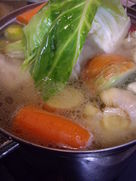
Ramen: A Basic Complete Recipe

The following ramen recipe is complete but basic and can be improved on with many variations and other ingredients. It originally comes from Saitama prefecture, just morth of Tokyo.

INGREDIENTS: For 14~15 servings

SOUP/STOCK
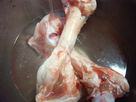
-Pork bone: 1~2
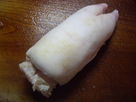
-Pig feet/trotter: 1
-Chicken frame/chicken carcass: 1 whole chicken
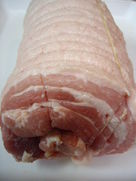
-Pork belly (for chashu): 1.3 kg
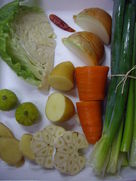
-Onion, carrot, potato: 1/2 of each
-Cabbage: 1/8
-Leeks (green part): 2
-Figs: 2
-Fresh ginger root: 3 slices
-Garlic: 1 whole
-Chili pepper: 1 whole

JAPANESE BASE SOUP/STOCK:
-Water: 2.5 liters
-Konbu/dry seaweed: 6
-Iriko (small dry fish): 50g
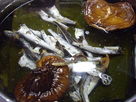
-Dried shiitake mushroom: 2
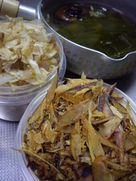
-Kongoukezuribushi or Niboshi dashi/dry sardines shavings for stock: 1 pack

CHASHU/CHAR SIU SAUCE
-Water: 1000 ml
-Soy sauce: 500 ml
-Japanese sake: 200 ml
-Mirin/Sweet sake: 50 ml
-Sugar: 110 g
-Fresh ginger and garlic: 2 each
-Chicken breasts: 2 (optional)

SHOYU DARE/SOY SAUCE SAUCE:
-Japanese base stock soup: 300 ml
-Konbu/dried shiitake: 1 each
-Japanese sake: 100 ml
-Mirin/sweet sake: 1 tablespoon
-Iriko/small dry fish: 30 g
-Kongoukezuribushi or Niboshi dashi/dry sardines shavings for stock: 80 g
-Soy sauce: 500 ml
-Salt: 1 tablespoon
-Hana katsuo/large bonito shavings: 150 g
-Chashu/Char siu sauce: 150 ml

MEN/NOODLES:
-Bread flour: 1 kg
-Cookie flour: 500 g
-Salt: 23 g
-Eggs: 11~12/580 g
-Butter: 90g

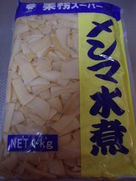
MENMA/ (メンマ or 麺麻 or 麺碼), a Japanese condiment made from lactate-fermented bamboo shoots
-Packed boiled menma: 1 kg
-Sesame oil: 1~2 tablespoons
-Chili pepper: 1 whole
-Mirin/sweet sake: 2 tablespoons
-Japanese sake: 2 tablespoons
-Soy sauce: 6 tablespoons
-Chashyu/Char siu soup: 4 tablespoons

OTHERS:
-Boiled egg, chopped leeks, nori seaweed, etc.

RECIPE:

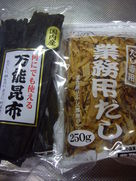
Konbu and dashi sold in Japanese supermarkets.

Packed boiled menma sold in Jpanese supermarkets.

FIRST DAY:

Keep in mind that such ramen take two day to prepare!

JAPANESE STOCK:
Pour all the ingredients for the Japanese soup stock in a large bowl and let rest a whole night (inside the fridge in summer!)

Wash the blood off the chicken carcass and pork bones with clear cold water.
Break the pork bones in two.

Holding the pork feet with tongs, burn the hair away over a gas flame.
Clean with clear cold water.

Roll thepork belly cut with the thinner part inside. Secure it by binding it tightly in cooking rope/thread. Do the same with the chicken breast if you use them.

Wash vegetables and cut roughly.
Do not peel them!

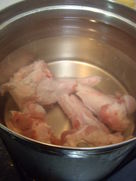
In a large enough (7~10 l) pot, pour plenty of water and boil the pork bones inside over a strong fire.
Skim off the water regularly of all unwanted matters.

When unwanted matters have stopped appearing, add chicken carcass, pork belly, pig feet/trotters and boil over a medium high fire, skimming off all unwanted matters regularly until they stop appearing.

Add vegetables and seasoning and simmer over a medium high fire for 2 hours.
Switch off fire.

Chashyu/Char siu
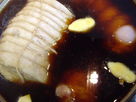
Take out pork abelly (and chicken if used) out of the pot and simmer it in the Chashyu/Char siu sauce for 2 hours.

———-

SECOND DAY

SHOYU DARE/SOY SAUCE SOUP
Take out all solid ingredients out of the Japanese base soup stock pan.
Take 300 ml out of it into a separate bowl.
Add the other ingredients (-Konbu, dried shiitake, Japanese sake, Mirin/sweet sake, iriko/small dry fish, Kongoukezuribushi or Niboshi dashi/dry sardines shavings for stock, Soy sauce, Salt, Hana katsuo/large bonito shavings) and 150 ml of the Chashyu/Char siu sauce.

SOUP
Bring the soup left after cooking the chashyu/Cahar siu to boil.
Discard vegetables.

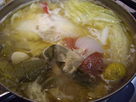
Add the rest of the Japanese base soup stock and cook over a low fire for 2 hours. This will be your basic soup.

NOODLES

Prepare noodles bymixin the ingredients as you would do with pasta.
Cut the noodles with a pasta machine to 2×2 mm and let rest inside fridge.

MENMA

Bring water to boil in a pot.
Boil the menma for a little while.
Drain completely.

Pour the sesame oil in a frying pan. Lightly fry menma and chili pepper. Add other ingredients. Keep frying until juices have reduced to about 2 tablespoons. Transfer into a bowl. Let cool completely. Keep in fridge.

The proportions for the soup and shoyu dare should be of 360~400 ml of soup for 35~50 ml of shoyu dare. Adjust to taste.

After having chilled the chashyu/char siu well cut ino slices of the thickness of your preference.
Chop the leeks.

Heat large serving bowl in hot water.
Boil the noodles in a large pot for 4~5 minutes.

While you boil the noodles, throw hot water out of the serving bowl.
Pour shoyu dare then the soup.
Drain the noodles and drop them in the soup.
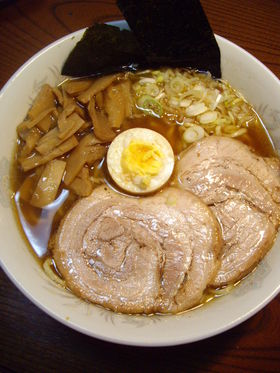
Place chashyu/char siu, boiled eggs, chopped leeks and nori on top and serve!

NOTE:

The noodles according to this recipe should have enough “bite” to them while blending well with the soup!

RECOMMENDED RELATED SITES:
Bread + Butter, Comestilblog, Greedy Girl, Bouchon For 2, Zoy Zhang, Hungry Neko, Mangantayon, Elinluv Tidbit Corner, Maison de Christina, Chrys Niles, Lexi, Culinary Musings, Eats and Everything, Bite Me New England, Heather Sweet, Warren Bobrow, 5 Star Foodie, Frank Fariello, Ramendo

Please check the new postings at:
sake, shochu and sushi

—————————————-
日本語のブログ
—————————————-
Today’s Lunch Box/Bento (’09/73): Rain Sushi Bento

BENTO-09-11-11a

Usually I do not take a bento to with me on Wednesdays, but the weather simply gave us no choice.
With a very unusual warm Fall in Japan this year, we are bound to be assailed by typhoon-like downpours. The bus was going through sheer curtains of water along the road. I found out that we got drenched with 100mm of rain in a single hour! Mind you, it does not compare to what the Philippines had to go through recently.

BENTO-09-11-11b

In such an emergency the Missus usually comes with some kind of sushi and plentyof vegetables.

BENTO-09-11-11c

Today’s sushi style was te-mari zushi/手丸寿司, a style very popular in the Kyoto area.
The rice balls are small, round and prepared by wrapping them in a piece of cellophane paper and then topped with various neta/ねた (toppings).
She made two kinds:
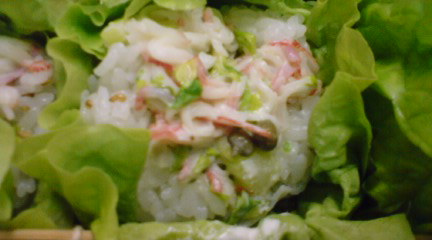
the first one with a salad consisting of surimi, shredded lettuce, capers, sesame seeds and mayonnaise. She placed them inside lettuce leaves for easing handling and supplemetary Vitamin C (!).

BENTO-09-11-11d

The second type which could be called Italian-style te-mari zushi as they contained cheese and were topped with Italian raw ham and Italian parsley (!).

BENTO-09-11-11e

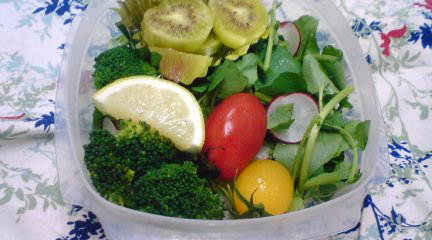
As for the salad side dish on a bed of cress (grown in Shizuoka) she placed boiled brocoli, sliced radishes, plum tomatoes and a dessert consisting of rainbow kiwis (grown in Shizuoka).

Very healthy! I wonder if I should welcome the rain!

RECOMMENDED RELATED SITES:
Warren Bobrow
Bread + Butter
Zoy Zhang
Hungry Neko
Think Twice
Frank Fariello
Mangantayon
Hapabento
Elinluv Tidbit Corner
Tokyo Terrace
Maison de Christina
Chrys Niles
Lexi
Culinary Musings

Please check the new postings at:
sake, shochu and sushi

—————————————-
日本語のブログ
—————————————-

Today’s Lunch Box/Bento (’09/72): PC Crash Bento 3

BENTO-09-11-09a

I finally got my laptop back last Wenesday, but I was still left to deal with a big problem: a mail box overloaded with spams.
It took me hours to first download more than 100,000 spams (yes, you read right, one hundred thousand critters), 99% coming from only two single bots (spam robots)!
It took me half an hour to erase them just to sse them coming back!
I was seriously thinking of changing my mail address, a bothersome affair if there is any. Luckily I do have computer-wise (the old geezer isn’t) friends who told me to consult my provider directly. Which I did.
The company taught how to deal with a Japanese language filter box (their services are in Jpanese only), but it still took them almost half an hour to clean my mail box!
Anyway, I’m a bit wiser and cleverer now, and I can resume my blogging activities in tranquility!

BENTO-09-11-09b

Since she also needed to be careful about her own weight, the Missus has decided to maximize the veg part and minimize the high-calories items in my bentoes from now on!

BENTO-09-11-09c

She steamed the rice withn vegetables including mushrooms and carrots that she mixed later with small pieces of fried chicken.

BENTO-09-11-09d

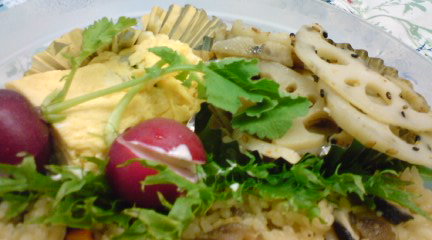
As for the garnish, on a bed of lettuce (grown in Shizuoka) she placed plenty of renkon/lotus root slices fried with black sesame, whole red radish (with their stems) and simple tamagoyaki/Jpanese omelette.

BENTO-09-11-09e

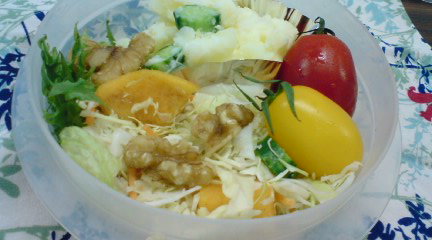
As for the salad cum dessert, on bed of shredded veg she placed a cople of plum tomatoes, pieces of jiro kaki/squat persimmon and some walnuts. She also added some lightly seasoned potato and cucumber salad for supplemetary calories.

Very tasty and just enough to hold on until dinner!

RECOMMENDED RELATED SITES:
Warren Bobrow
Bread + Butter
5 Star Foodie
Think Twice
Frank Fariello
Mangantayon
Hapabento
Elinluv Tidbit Corner
Tokyo Terrace
Maison de Christina
Chrys Niles

Please check the new postings at:
sake, shochu and sushi

—————————————-
日本語のブログ
—————————————-
Today’s Lunch Box/Bento (’09/71): PC Crash Bento 2

BENTO-09-11-02a

As of November 2nd, the Kojima Company had not called me back yet to announce that my laptop was finally ready for me to collect. I had been without it for 11 days by then and for all the time suddenly found to write and read, I was really beginning to suffer from hi-tec retrieval!

BENTO-09-11-02b

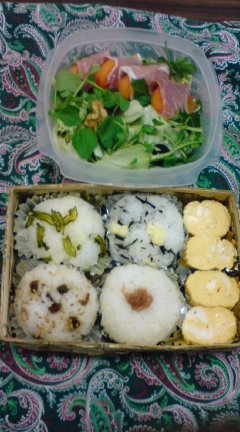
I had requested the Missus to prepare a musubi/rice balls bento that time.
She came up with four different balls:

BENTO-09-11-02c

-One with Japanese-style pickled cucumber
-One with hijiki/sweet seaweed, sesame seeds and cheese
-One with pickled ginger and sesame seeds
-And the last one with umeboshi/Japanese pickled plums.

BENTO-09-11-02d

The tamagoyaki/Japanese omelette was of the plain variety. Just sweet enough.

BENTO-09-11-02e

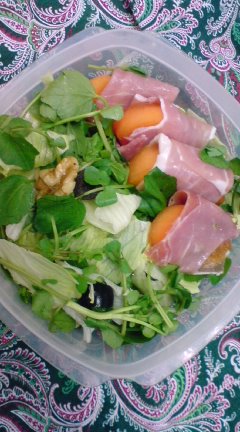
As for the salad/dessert side dish she rolled wedges of jiro kaki/squat persimmon inside raw ham and place dthem over a bed of lettuce, cress, walnuts and black olives.

Very healthy!

RECOMMENDED RELATED SITES:
Warren Bobrow
Bread + Butter
5 Star Foodie
Think Twice
Frank Fariello
Mangantayon
Hapabento
Elinluv Tidbit Corner
Tokyo Terrace
Maison de Christina
Chrys Niles

Please check the new postings at:
sake, shochu and sushi

—————————————-
日本語のブログ
—————————————-

Today’s Lunch Box/Bento (’09/70): PC Crash Bento 1

BENTO-09-10-26a

My PC (laptop) having crashed for the third time in the last four years, these bento reports are a bit late. This one was due on October 26th!
The PC being brand new at the time I purchased it and still has great speed. I’m reluctant to part from it, but I might soon be forced into a painful reconversion (Microsoft to Mac?).

BENTO-09-10-26b

Therefore I will call this particular lunch box the “PC Crash Bento 1”!
The same bento was consumed on a heavy rainy day to compound my misery, but I must say the meal lifted my spirits somewhat!

BENTO-09-10-26c

For all her grumpiness on that day, the Missus did not disappoint me:
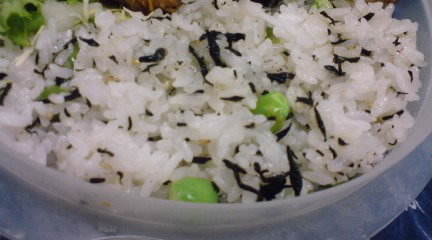
After steaming the rice, she mixed it with hijiki/sweet seaweed, green peas and roasted sesame seeds.

BENTO-09-10-26d

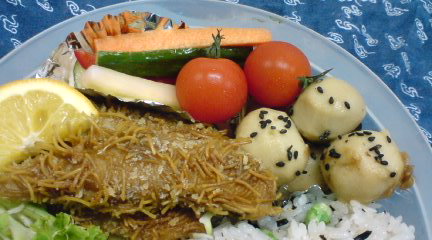
As for the garnish, it came in all kinds of ingredients and colours:
She deep-fried (shallow-fried would be a more precise term) pork fillets sticks she had dipped in batter and then coated with broken fried soba (the soba was purchased fried, then dried and cold in package). She placed the pork atop lettuce and shredded greens.
Hand-made pickles (carrots, ginger, pimento) were added for the vinegary part.
Fresh plum tomatoes for the Vitamin C and the decorative note.
She boiled a few “sato imo”, a kind of sweet tuber typical of Japan. After peeling them, she fried them for a while in sweet sauce and seasoned them with black sesame seeds. Finally, a slice of orange for the finishing touch.

BENTO-09-10-26e

The dessert consisted of jiro kaki/squat persimmon wedges grown in Shizuoka and mini red-haert kiwi fruit, also grown locally.

Certainly a hearty lunch!

RECOMMENDED RELATED SITES:
Warren Bobrow
Bread + Butter
5 Star Foodie
Think Twice
Frank Fariello
Mangantayon
Hapabento
Elinluv Tidbit Corner
Tokyo Terrace
Maison de Christina
Chrys Niles

Please check the new postings at:
sake, shochu and sushi

—————————————-
日本語のブログ
—————————————-
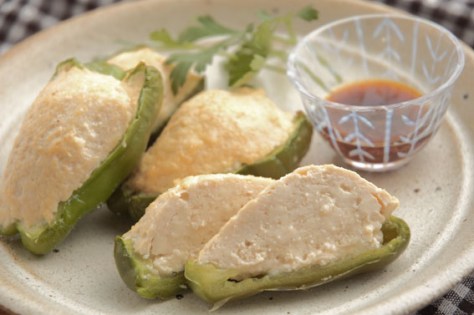
Tofu & Chicken stuffed Green Peppers

TOOFU-CHICKEN-PIMAN

Tofu when mixed with other ingredients opens a door on an infinite number of easy recipes!

Here is a very simple Japanes-style snack:
Tofu & Chicken stuffed Green Peppers!

INGREDIENTS: For 4 people

-Green peppers: 6
-Kinu tofu: 400 g
-Minced chicken: 175 g
-Japanese Sake: 1 tablespoon
-Soy sauce: 2 teaspoons
-Cheese powder: 1 tablespoon
-Salt: 1/2 teaspoon
-Black or white pepper: to taste
-Cornstarch: a small amount according to preferences

RECIPE:

-Leave a weight on top of the tofu to drain water and reduce it about two thirds of its volume.
-Wash the green peppers, cut in halves and wipe off humidity.
-In a bowl drop the tofu and minced chicken. Mix well by hand until you obtain a soft smooth paste.
-Add Japanese sake, cheese powder, salt and pepper and mix well.
Sprinkle insides of peppers with cornstach and fill each pepper half with tofu/chicken mixture.
-Place on oven plate and cook at 200 degrees Celsius for 15 minutes.
Serve with a little salt or soy sauce.

RECOMMENDED RELATED SITES:
Warren Bobrow
Wild River Review
Bread + Butter
5 Star Foodie
Frank Fariello
Mangantayon
Hapabento
Elinluv Tidbit Corner
Think Twice

Please check the new postings at:
sake, shochu and sushi

—————————————-
日本語のブログ
—————————————-
Tea as Food!

fugetsuro-2.jpg

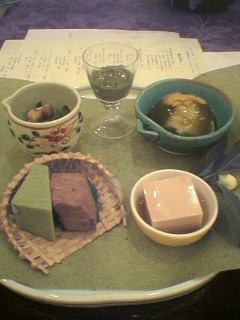
(from top middle, clockwise: Salted Cuttle fish marinated in tea leaves and rice yeast, conger eel pike and urchin in green tea jellied fish broth, tea leaves walnut tofu curd, tuna simmered in green tea with tea leaves dumpling cake, matsutake mushroom cooked in tea leaves)

Tea is mainly known as a drink all over the World in spite of puddings and a limited variety of desserts made with red or green tea.
Shizuoka Prefecture where more than 50% of all green tea in Japan has witnessed some gastronomic research by local chefs of all leanings and events have regularly been organised to share the information and skills.

Fugetsuro is one of the restaurants in Shizuka holding such welcome events:

fugetsuro-1.jpg

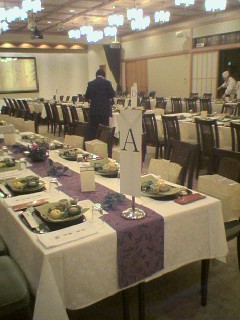
Above is a view of a dinner Mr. Hitoshi Yamada, Master Chef at Fugetsuro was asked to design for some 120 guests with the overriding concept that tea must be included in all dishes.

Including the first dish described above, the menu ran as follows (I let you judge!)
fugetsuro-3.jpg

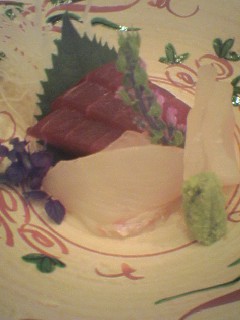
Raw fish assortment: Tuna, seabream, sole, seasoned with fresh tea, edible flowers, salt and soy sauce.

fugetsuro-4.jpg

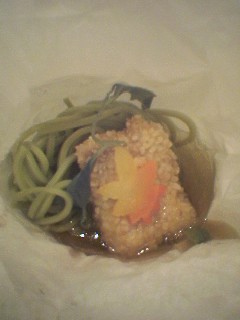
Surugani: tea sob/buckwheat noodles, seabream cooked in whole rice, “kouyou” carrot, tea leaves.

fugetsuro-5.jpg

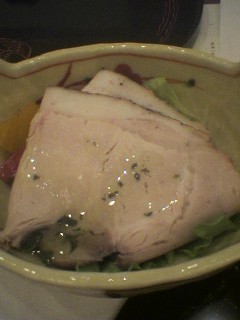
Oven-baked black pork seasoned with tea, five color vegetables, tea sauce.

fugetsuro-6.jpg

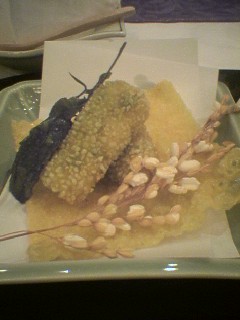
Tofu bean curd and whole rice Pouch, deep-fried tea leaves. Seasoned with
“macha” tea salt.

fugetsuro-7.jpg

Autumn salmon marinate in seaweed and tea, yuuba/bean curd sheet. Seasoned with golden vinegar.

fugetsuro-8.gif

Tea rice, salmon roe, soup.

fugetsuro-9.jpg

Persimmon, grape, “macha” tea Bavarois, green tea cube jelly.

Fugetsurou
420-0852 Shizuoka City, Aoi Ku, Koya Machi, 11-1
Tel.: 054-2526500
Fax: 054-2528411
Homepage (Japanese)

RECOMMENDED RELATED SITES:
Warren Bobrow
Wild River Review
Bread + Butter
5 Star Foodie
Frank Fariello
Mangantayon
Hapabento
Elinluv Tidbit Corner
Think Twice
Oyster Culture
Tokyo Terrace
Maison de Christina
Chrys Niles
Comestilblog
Greedy Girl
Bouchon For 2

Please check the new postings at:
sake, shochu and sushi

—————————————-
日本語のブログ
—————————————-
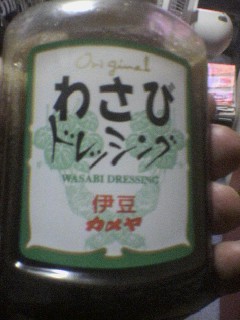
Vegan Dressing: Shizuoka Wasabi Dressing

wasabi-dressing.jpg

Shizuoka has claimed world fame for being the first to grow wasabi in the 17th Century (in Yutogi, Shizuoka City exactly, up along the Abe River) and for producing more than 80% of the wole Japanese output, but people tend to forget that it can be accomodated in varuious manners, apart of being used a condiment for sashimi, sushi and the ubuquitous makisushi/rolled sushi!

The whole plant for instance can be made ito a pickled delicacy of its own.

One more great use has been initiated in Mishima City in eastern Shizuoka Prefecture: Wasabi Dressing!

It is not at all hot, but almost sweet and makes great accompaniment for any salads, on omelettes (Japanese or traditional) and mixed with sauces. I (and my better/worse) half are still disovering more usages!

Definitely worth a try! Moreover it contains a crowd of healthy ingredients!
Moreover, as it contains only vegetal oil, vinegar and ntural spices, it makes for the perfect vegan or vegetarian dressing!

Wasabi Dressing
Izu Kameya Co.
Mishima City, Heiseidai 5
Tel.: 0120369981
Can be bought in Sunpu Raku Ichi Shop, Asty, Shizuoka JR Station

RECOMMENDED RELATED SITES:
Warren Bobrow
Bread + Butter
5 Star Foodie
Frank Fariello
Elinluv Tidbit Corner
Tokyo Terrace
Maison de Christina
Chrys Niles
Comestilblog
Greedy Girl
Bouchon For 2

Please check the new postings at:
sake, shochu and sushi

—————————————-
日本語のブログ
—————————————-
Japanese Cheese: NEEDS Co. (Hokkaido)

CHEESE-NEEDS2

I have already said that the Japanese have been steadily increasing their own cheese production for the last 10 years or so with some reamarkable results.
Moreover, these cheese have slowly but steadily become available over the whole country at specialised shops and department stores.
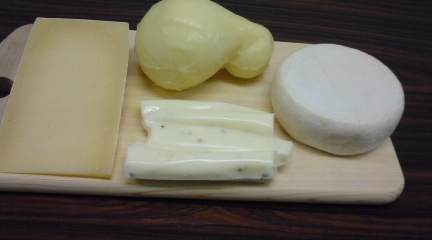
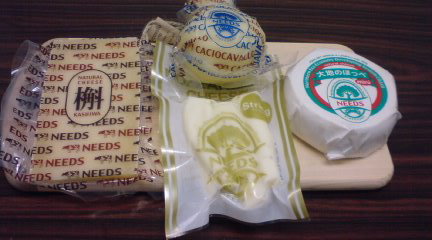
As a futher proof I have discovered four more cheeses by a different company I hadn’t heard of before: NEEDS Co Ltd in the island of Hokkaido!
NEEDS stands for “Northern Eco Economy Developing System”.
The amusing details are that names are in English or Japanese while weights and packaging are written in French.
NEEDS Co. Ltd. is relatively new as it was founded in 2003.

CHEESE-NEEDS1

They are all made from raw cow’s milk and very safely packaged, a must in this country with very changeable climates!

CHEESE-NEEDS3

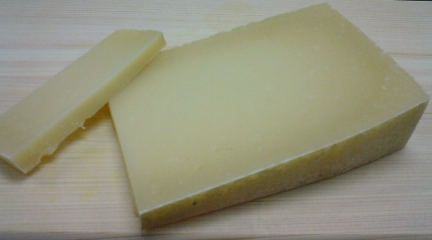
The above cheese, a hard type variety is called Kashiwa/槲 (Japanese Emperor Oak), the name of a tree found in Hokkaido.
It is a cross obtween Emmental and Gruyere, with some welcome pungency and solid taste.

CHEESE-NEEDS4

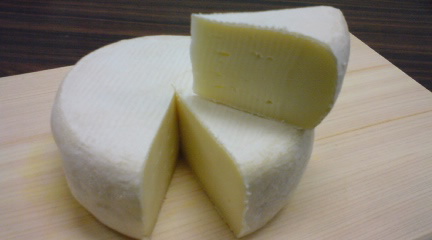
This cheese is called “Oochi no Hoppe/大地のほっぺ” meaning the “Cheek of the Large lands”!
Reblochon-style, it is quite soft and pobably will do better with some more maturing.

CHEESE-NEEDS5

The cheese above is called “Sakeru Type Mozzarella/White pepper/String/さけるタイプ・モッツアレラチーズ・ホワイトペッパーストリング”. in brief it is a string-type cheese you can tear easily. great as a snack. The pepper contained in the cheese is a good initiative. As for the name Mozzarella, it just shows that the Japanese laws are somewhat a bit lax! great snack with beer.

CHEESE-NEEDS6

As the name “Caciocavallo” indicates, the above cheese is Italian-inspired!
Softer than its Italian counterpart, it has nonetheless a solid taste with plenty of supleness, making for a great snack!

NEEDS Co. Ltd.
Hokkaido, Nakagawa Gun, Makubetsu cho, Shinwa, 162-111
Tel.: (819(0)155-57-2511

RECOMMENDED RELATED SITES:
Warren Bobrow
5 Star Foodie
Think Twice
Frank Fariello
Cheesemonger’s Weblog

Please check the new postings at:
sake, shochu and sushi

—————————————-
日本語のブログ
—————————————-
Today’s Lunch Box/Bento (’09/69)

BENTO-06-10-20a

The Missus turned to “Sandwich mode” for today’s bento!

BENTO-06-10-20b

Above pic shows how it was packaged.

BENTO-06-10-20d

Above pic shows it came out of the package.

BENTO-06-10-20e

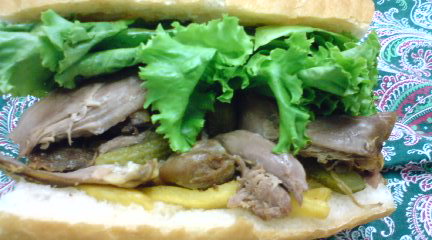
Above pic represents the biting end of the sandwich.
The sandwich itself was at least 15 cm (6 inches) long and thick!

BENTO-06-10-20f

As for the sandwich, the Missus used soft-style (very Japanese!) French baguette she toasted first.
She then fried a whole confit duck leg and shredded it into large enough chunks.
She fried some potato chips in the duck confit fat.
She added lettuce and French pickles for the finishing touch.

BENTO-06-10-20c

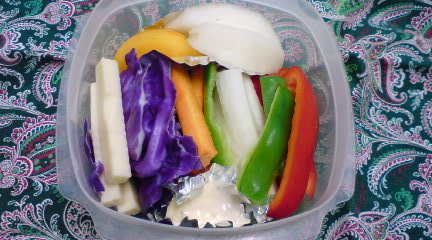
Today’s salad consisted of veg sticks and their dip:
From right to left-red and green soft pimentoes, daikon, carrots, violet cabbage and cheese.

For dessert in-season Asian Pear/Nashi and Squat Persimmons/Jirou Kaki.

It certainly took me quite some time to eat it all!

RECOMMENDED RELATED SITES:
Warren Bobrow
Bread + Butter
5 Star Foodie
Think Twice
Frank Fariello
Mangantayon
Hapabento
Elinluv Tidbit Corner
Tokyo Terrace
Maison de Christina
Chrys Niles

Please check the new postings at:
sake, shochu and sushi

—————————————-
日本語のブログ
—————————————-