Tag Archives: 日本料理

French Restaurant: Lunch at Pissenlit (third visit!)

PISSENLIT-09-21-3

Service: excellent and very friendly
Facilities: great washroom, great cleanliness overall
Prices: reasonable, good value.
Strong points: Interesting wine list. Great use of local products.
no-smoking-logo!

In Shizuoka, during the reainy season, when it rains, it just pours!
The Missus workingon Sunday, and me having to cook in the veening, I just escaped from our stuffy home and took the bus to taown. I already had in mind where I was going to use this rare break from Sunday Cricket: Pissenlit!
This is my third lunch, which might be considered as an overkill, but since I’m going there again on Friday evening with friends, there a couple more things I wanted to check!
PISSENLIT-09-21-2

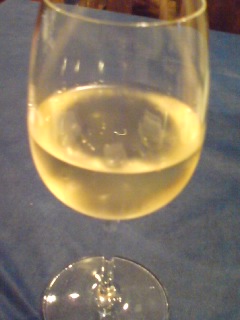
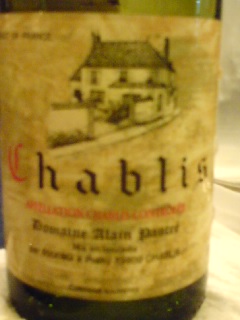
Chablis 2006, Domaine Alain Pautre

PISSENLIT-09-21-1

For a moment, I was thinking of ordering wine by the glass, but what the hell, I asked for the full ottle and shared it with the chef and staff!

Melinda, Rachael, Etsuko and Jen are going to kill me for the succinct review, but I’ll make with Friday’s tasting:

Colour: rich golden hue, very clear
Aroma: Fresh, flowery
Taste: Solid attack, flowery, backed with dry, slightly tannic back-up. Longish tail, Stays solide with food.
PISSENLIT-09-21-4

This time I didn’t bother reading the menu and just went for the carte (written on a blackboard!).
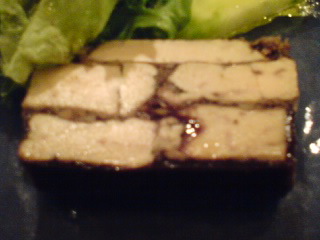
I had been dreaming about the Foie Gras Marbre (Marbled Foie Gras, sorry Arnie!) for some time. Now, I was going to enjoy it! (If someone wants the Missus to kill me, just tell her, but this will be the end of this blog!)!
Surprisinfly light and supremely elegant affair. Not to mention the organic green tomato!
PISSENLIT-09-21-5

It was then I was going to order the Escargots de Bourgogneet Morilles (Morels), when the Chef said “Hang on!”. Blimey I already knew I was going to be deprived of my favourite home specialty! Had better be good!

I was told they had just received this organic Poulet Noir (Black Chicken) bred according to the French Label Rouge regulations. The difference is that it is raisedd in Hamamatsu City, Haruno in a secluded mountainous part near the Tenryuu River by Mr. Mastoshi Uchiyama who has been raising these little beauties for the last 15 years in his farm, Forest Farm Meguri! The chicken is “cooped” in quasi freedom, eating only selected organic food for 120 days.

Akright, alright, I will have the snails on Friday, then! Mind you, it was not difficult to convince me when I was told I would be the first customer in Pissenlit to be served the morsel!

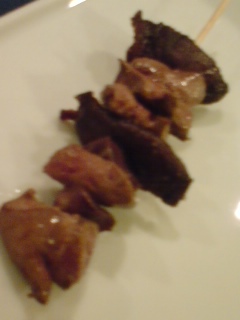
And morsel it was:
Above is a”yakitori” stick of the Black Chicken giblets with shiitake!
PISSENLIT-09-21-6

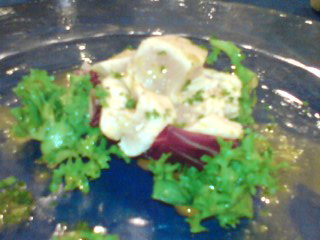
Next came a typically Japanese way and though of cooking: Chicken sasami/Brest fillets, “tataki”/half cooked style marinade with yuzu koshio/lime pepper. I know a lot of French “critiques” who would fall over each other to taste that in an overpiced instiyution back home!
PISSENLIT-09-21-7

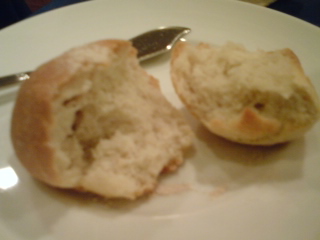
For the bread lovers, I was served these exquisite and small soba/buckwheat bread buns!
PISSENLIT-09-21-8

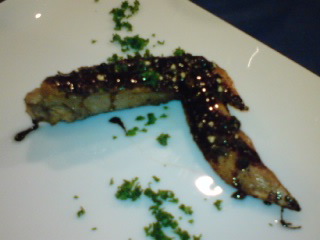
Tebasaki/Wing grilled with Teriayaki sauce amde with fond de veau/veal stock and balsamico vinegar. To be eaten with your fingers only! (you are allowed to lick them!)
PISSENLIT-09-21-9

And ten,…

PISSENLIT-09-21-10

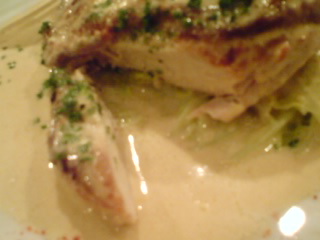
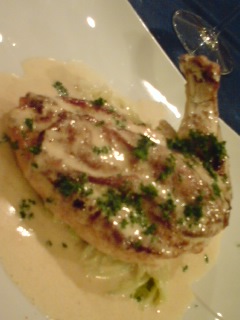
One whole breast roasted and served on chou frise with a Sauce Supreme. Simple, exquisite and finger-licking! I usually don’t go much for chicken skin, but I must admit I was convinced this time!
PISSENLIT-09-21-11

As for dessert I didn’t want to put my health to risk on their enormous dessert plate and just asked for the creation of the day:
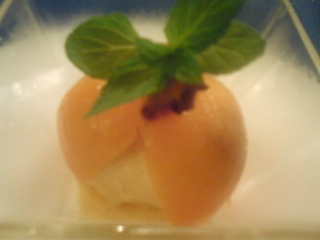
Loquat compote (cooked in Bourgogne White Wine) and vanilla ice-cream (plenty of vanilla bits there!)! The perfect ending to an extravagant lunch!

PISSENLIT
420-0839 Shizuoka City, Aoi Ku, Takajo, 2-3-4
Tel.: 054-270-8768
Fax: 054-627-3868
Business hours: 11:30~14:30; 17:00~22:00
Closed on Tuesdays and Sunday evening
Credit Cards OK
Homepage (Japanese)

Please check the new postings at:
sake, shochu and sushi

—————————————-
日本語のブログ
—————————————-

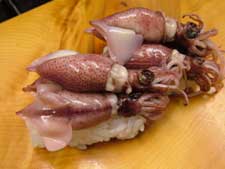
Cuttlefish/Squid Species 5: Hotaru Ika/Firefly Squid-Sparkling Enope Squid

IKA-HOTARUIKA-1

Here we go again with this series called “The Jacques Cousteau” upon suggestion by Jaded Fork and forBread + Butter, and Elin who don’t mind being on a long haul! LOL

Sparkling Enope Squid is a name difficult to remember and the translation of the Japanese name, Hotaru Ika/蛍烏賊 or Firefly Squid, certainly holds a better sound and is more adapted to reality.
It is also known as Matsui Ika in Toyama Prefecture.

The Sparkling Enope Squid is found in the Western Pacific ocean at depths of 600 to 1200 feet and exhibits bioluminescence. Each tentacle has an organ called a photophore, which produces light. By flashing these lights, the Sparkling Enope Squid can attract small fish to feed upon.

The Sparkling Enope Squid is the only species of cephalopod in which evidence of color vision has been found. While most cephalopods have only one visual pigment, firefly squid have three, along with a double-layered retina. These adaptations for color vision may have evolved to enable firefly squid to distinguish between ambient light and bioluminescence.

The Sparkling Enope Squid measures about 3 inches long at maturity and dies after one year of life.
The Sparkling Enope Squid can also light up its whole body to attract a mate. The mating season of the Sparkling Enope Squid lasts from March to June.

The fishing season lasts from Spring to Summer. The annual catch varies between 4,500 and 6,500 tonnes.

IKA-HOTARUIKA-2

They are very popular boiled as a snack or cooked in soy sauce and sake. You can of course cook them in wine or tomato sauce, European-style.

IKA-HOTARUIKA-3

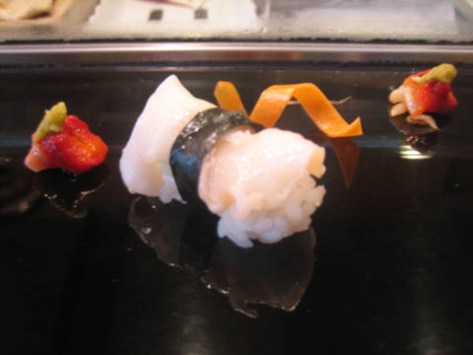
They are very much much appreciated raw and whole as sashimi or lightly boiled as sushi on nigiri!

Please check the new postings at:
sake, shochu and sushi

—————————————-
日本語のブログ
—————————————-

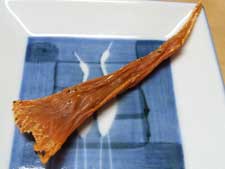
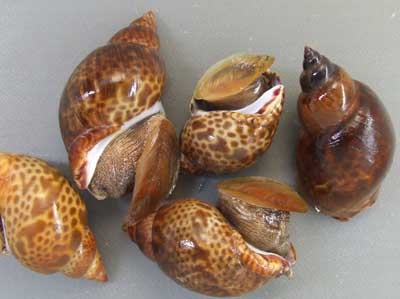
Shellfish species 12: Japanese Ivory Shell-Japanese Babylon Shell/Baigai

BAIGAI-1

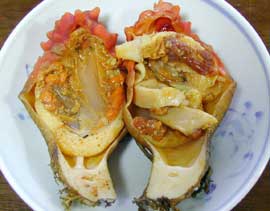
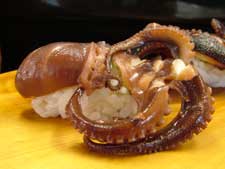
Japanese Ivory Shell/Japanese Babylon Shell are known as Bai, Baigai, Isobai in Japanese.
They are just in season now as we see them over the counters from Spring to Summer.
They used to very common and found all over Japan, but unfortuantely too many have been caught or killed by pollution in recent years.
The biggest specimens are caught off Toyama fairly deep where they can attain 15cm length and weigh as much as 300g.

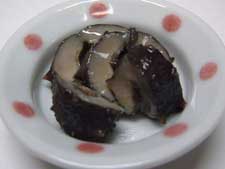
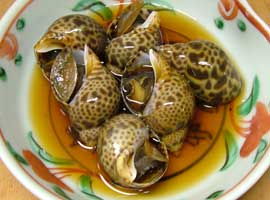
BAIGAI-2

The most popular way of eating them is to first boil them in water and soy sauce and serve them cold.

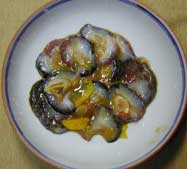
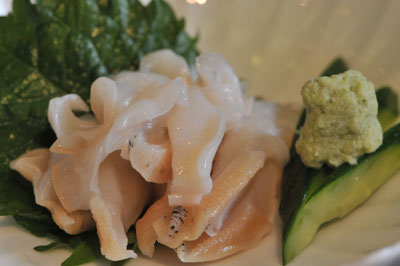
BAIGAI-SASHIMI

But the Japanese apprecaite them very much raw as sashimi and

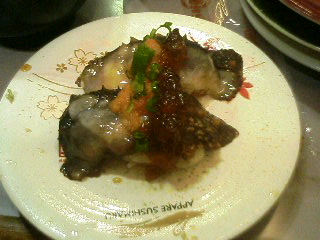
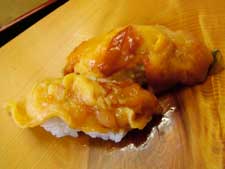
BAIGAI-SUSHI

sushi!

There must be a good reason for the Japanese to call them “Kai no Oosama/King of Shelfish”!

Please check the new postings at:
sake, shochu and sushi

—————————————-
日本語のブログ
—————————————-

Shizuoka Izakaya: UZU (revisited again!)

UZU-09-06-12-e

Service: excellent, easy-going and very friendly
Facilities: great washroom, great cleanliness overall
Prices: very reasonable, good value.
Strong points: Very fresh local ingredients especially organic vegetables extensively used.

I will have to be careful, or UZU Izakaya is bound to become an addiction!
I visited that increasingly popular (need to reserve on Fridays especially!) last Friday for a quick dinner and some Shizuoka sake!

UZU-09-06-12-a

Thye kabocha/pumpkin tofu snack was still there!

UZU-09-06-12-b

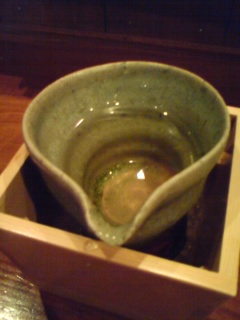
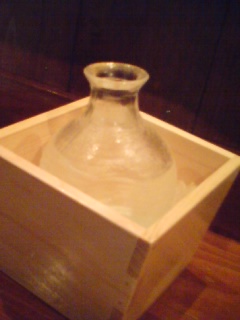
Any sake is served in a different vessel, and you are offered a choice of cup for each sake you savour!

UZU-09-06-12-c

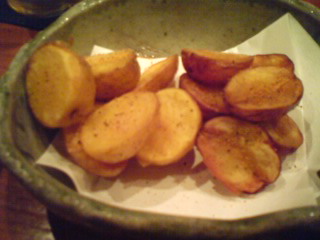
Fried organic new potatoes with their skins!
Uzu specializes in organic vegetables and “shamo” chicken!

UZU-09-06-12-d

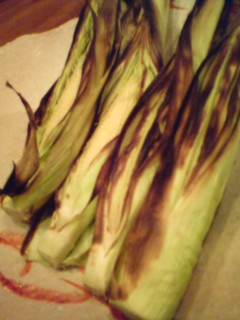
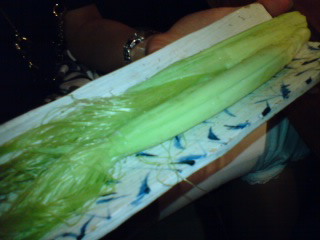
Organic “Young Corn” grilled inside their husks. The “hair” around the corn is edible!

UZU-09-06-12-f

Again, a rare morsel to please vegans and vegetarians:
“Young corn” organically grown by Mr. Matsuki in Shibakawa Cho, at the foot of Mount Fuji, served raw! Yes, you head/read right, raw!
These were the only two available that night and I didn’t have to pay for them! Slightly different from the above, they are very tender and sweet. You eat them as they are, no need for “dressing”!

UZU-09-06-12-e

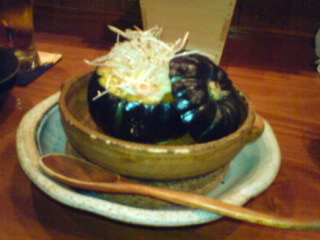
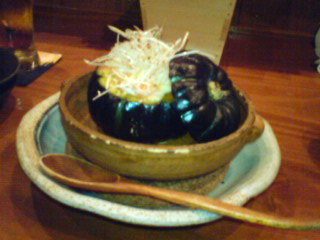
Now, that’s an iteresting morsel: Shamo Chicken Gratin inside a small organic kabocha/pumpkin!
Just small enough not to worry about the calories!

UZU-09-06-12-g

Another bottle of sake!

UZU-09-06-12-h

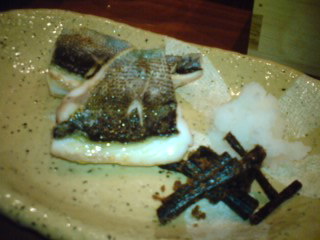
Grilled “Isaki/Chicken Grunt” ( a strange name for a fish!), caught off Shizuoka shores. Elegant!

UZU-09-06-12-i

Deep-fried “shamo” chicken thighs and breast fillets!

No need for dessert!

UZU
Shizuoka City, Otowa-cho, 3-18
Tel.: 054-249-6262
Business hours: 17:00=23:00
Closed on Mondays and first Tuesday
Reservations recommended
Credit cards OK

Please check the new postings at:
sake, shochu and sushi

—————————————-
日本語のブログ
—————————————-

Cuttlefish/Squid Species 4: Surume Ika/Japanese Common Squid-Pacific Flying Squid

IKA-SURUMEIKA-1

Here we go again with this series called “The Jacques Cousteau” upon suggestion by Jaded Fork and forBread + Butter, and Elin who don’t mind being on a long haul! LOL

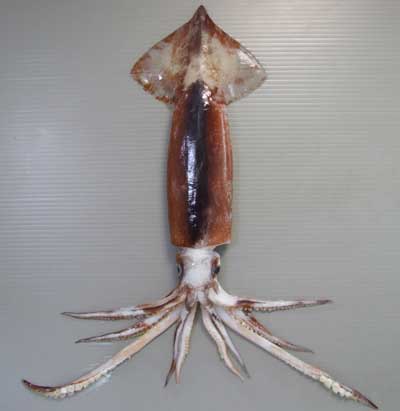
Surume Ika or Japanese Common Squid/Pacific Flying Squid is also called by regional names of Ma Ika, Matsu Ika or Kanzegi.

It caught off the shores of Northern Japan and south of Kyushu Island.
Catches tend to vary widely.
The Japanese squid can live anywhere from 5° to 27°C, and tend to inhabit the upper layers of the ocean. They are short lived, only surviving about a year.
The fishing season for the Japanese flying squid is all year round, but the largest and most popular seasons are from January to March, and again from June to September. Gear used to catch the Japanese flying squid is mainly line and hook, lift nets, and gill nets, the most popular method being hook and line used in jigging.
Most of it is turned into various pickled or dried cuttle fish/squid products.
It is also much appreciated broiled or simmered.

IKA-SURUMEIKA-2

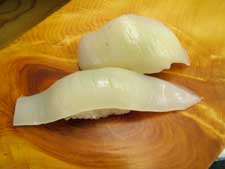
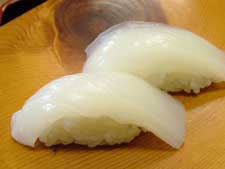
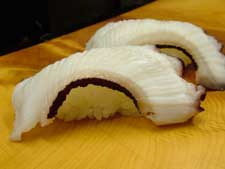
It is quite popular as a simple sushi nigiri,

IKA-SURUMEIKA-3

or slightly boiled with “tare” sauce.

Please check the new postings at:
sake, shochu and sushi

—————————————-
日本語のブログ
—————————————-

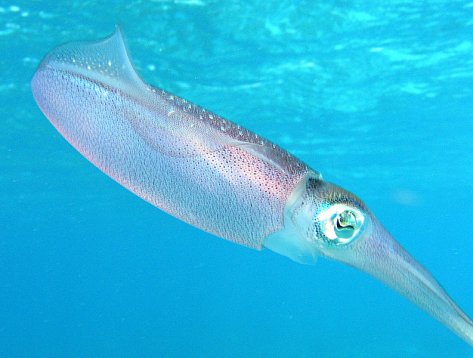
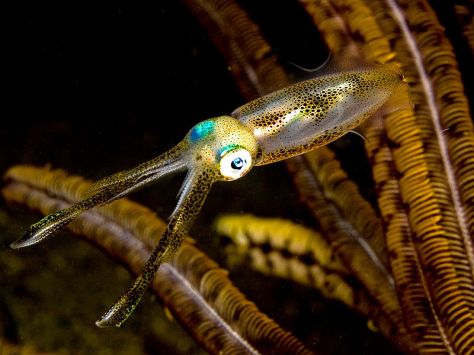
Cuttlefish/Squid Species 3: Aori Ika/Bigfin Reef Squid

IKA-AORIIKA-1

Here we go with this series called “The Jacques Cousteau” upon suggestion by Jaded Fork and forBread + Butter, and Elin who don’t mind being on a long haul! LOL

Aori Ika or Bigfin Reef Squid is another extremely popular cuttle fish but in many othere countries.
In French languedoc and Roussillon they call them “piste” and eat them raw marinated in lemon juice, olive oil and spices on top of freshly toasted bread.

IKA-AORIIKA-4
America Aori Ika/Caribbean Reef Squid

Of course they come by various regional names in Japan: Mo Ika, Bashoo Ika, Kutsu Ika, Misu Ika, Shiroi Ika.
They are fairly large as they can attain 40~45 cm length for a weight up to 6 kg.

IKA-AORIIKA-3

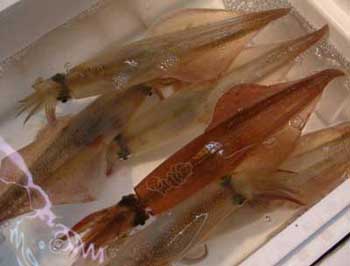
Their season is from Summer to early Autumn (just in time for this article!). They are mainly caught in Central and South Japan along the Southern shores.
The catch has never been big (mainly by trawling nets), making them a choice morsel.
They are considered the best cuttlefish as far as sashimi is concerned.
The Japanese often catch them as a hobby to process and sell at local markets.

IKA-AORIIKA-2

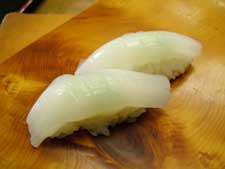
As sushi, especially as nigiri, they are simply top-class!

Please check the new postings at:
sake, shochu and sushi

—————————————-
日本語のブログ
—————————————-

Cuttlefish/Squid Species 2: Kensaki Ika

IKA-KENSAKI-IKA-1

I decided to dedicate this series called “The Jacques Cousteau” upon suggestion by Jaded Fork and forBread + Butter, and Elin who don’t mind being on a long haul! LOL

“Kensaki Ika/ケンサキ烏賊 goes by the Latin name of Loligo (Photololigo) edulis Hoyle,1885, but that complicated name does not prevent this particular squid to be extremely popular in Japan!

It is of course known under other local names: Ak Ika/Red Squid, especially in Shizuoka, Budo Ika/Grapes Squid, Shiro Ika, Gotou Ika.

They will soon appear in the markets in Summer.
They are mainly caught by line.
They are more and more available live, so great specimens can be easily bought.

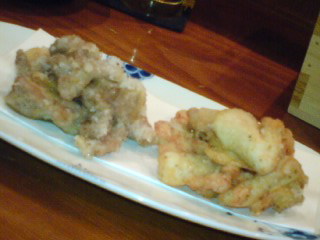
They are a very versatile kind of squid as they can be appreciated as sashimi, sushi, simmered, boiled, broiled, dried, and especially as tempura!

IKA-KENSAKI-IKA-2

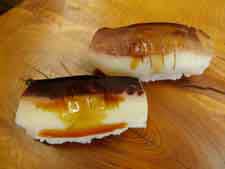
As for me, it is a bit of a dilemna as I like them both as sushi nigiri and sashimi!

Please check the new postings at:
sake, shochu and sushi

—————————————-
日本語のブログ
—————————————-

Cuttlefish/Squid Species 1: Yari Ika

IKA-YARIKA-1

Cuttlefish or squids are eaten almost all the world as they seem to inhabit the whole planet! They are the favourite food of many big fish such as tuna, whales and birds. Although humans contribute to dwindling stocks, they will never consume the same amount as its natural predators.

The Japanese call them Ika/烏賊, roughly meaning crow shellfish/cephalopods.

This is the start of a long series. I do hope you like them, otherwise you are in for a long haul!LOL

IKA-YARIKA-2

Yari Ika/槍烏賊, or Spear Squid, are also known under the names of sasika, Sayaika, Shyakuhachi, Tsutsuika or Sayanaga.
In Japan they are mainly caught in Winter and Spring off the shores of Aomori, Hokkaido, Ibaragi, Mie, Aichi and Yamaguchi Prefectures.
Females are slightly more rounded thanthe males.
They are either caught with nets or lines.
Their flesh is comparatively thin, but soft and sweet. They are among the most popular in Japan.
The best specimens are the ones caught by line. Buy them live whenever possible.

IKA-YARIKA-3

They can of course be cooked, or eaten as sashimi, but I reckon sushi nigiri is best.
The best sushi restaurants will serve two of them with two different dip soy sauces.

Please check the new postings at:
sake, shochu and sushi

—————————————-
日本語のブログ
—————————————-

French Restaurant: Lunch at Pissenlit (revisited)

PISSENLIT-DESSERT

Service: excellent and very friendly
Facilities: great washroom, great cleanliness overall
Prices: reasonable, good value.
Strong points: Interesting wine list. Great use of local products.
no-smoking-logo!

As promised, here is a short report about the second lunch taken with the Missus. Soryy for the delay, as I had to wait for my other half’s pics!

PISSENLIT-HAMBURGER

I will ignore the same offerings as last time and will concentrate on the new dishes:
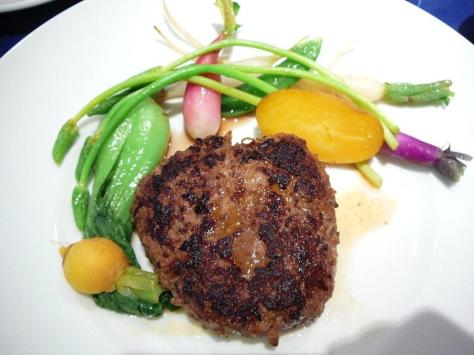
The Missus, who had not eaten a hamburger for ages, could not resist asking for the Oven-baked Japanese Beef Hamburger and Spring Vegetables!
Apart of the French wild asparaguses, allthe vegetables are organically grown in Shizuoka: 3 differently coloured mini daikon, mini yellow carrot, Chinese zasai and new yellow potato. I did taste the hamburger. It certainly would make a fan of such delicacy if the same quality could be found in the States! Absolutely extravagant and ridiculously cheap!

PISSENLIT-DUCK

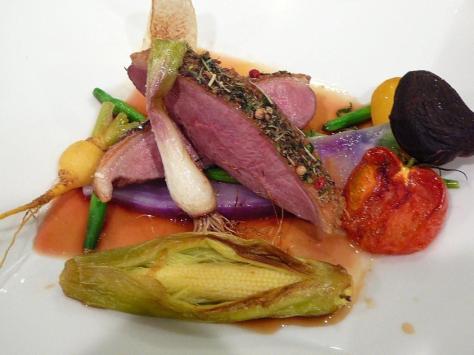
As for me, I had to order that dish bringing me back to my roots: Herb-roasted Vendee (West of France) Duck with Spring Vegetables!
Note the baby corn that I ate whole, ear included, the violet daikon, lily flower buds, yellow carrot, shiitake, and so on.
The Duck was absolutely perfect, medium-rare as it should be, more tender than a loving woman and the subtle herb mixture combining into another world inside your palate!

PISSENLIT-DESSERT

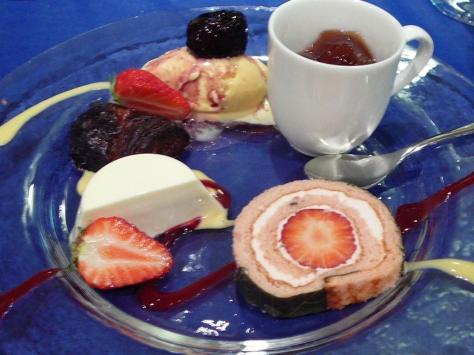
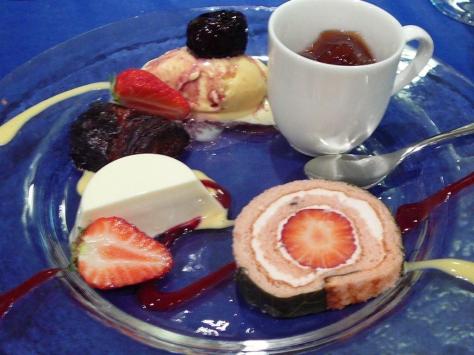
Alright, alright, here is the dessert plate (we had to share it, as it is simply too big!LOL)!
All are home-made (of course, some will say): Vanilla Ice-cream filled with vanilla bits, Black Tea Jelly, Cannelle, Pannacota, Strabeery and Cherry Tree Leaf Roll Cake!

Incidentally, I’m going there again for dinner in two-weeks time!
I’m definitely going to order that Marbled Foie Gras!

PISSENLIT
420-0839 Shizuoka City, Aoi Ku, Takajo, 2-3-4
Tel.: 054-270-8768
Fax: 054-627-3868
Business hours: 11:30~14:30; 17:00~22:00
Closed on Tuesdays and Sunday evening
Homepage (Japanese)

Please check the new postings at:
sake, shochu and sushi

—————————————-
日本語のブログ
—————————————-
Beche de Mer/Sea Cucumber Species: Namako

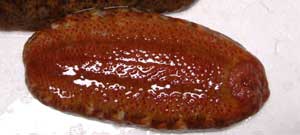
NAMAKO-RED
(Red Sea Cucumber)

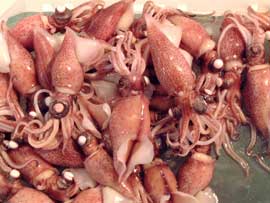
Beche de Mer in French, Sea Cucumber in English, Sea Rat (海鼠) in Japanese, this marine creature has been called all kinds of names in many different countries over the ages.
French sailors were catching them and trading them with the Chinese as far back as the XVIIIth Century.
They are presently the most poached single creature inthe Jpaanese seas by illegal fishermen from China, Nort Korea and Russia.

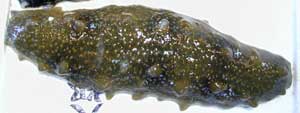
NAMAKO-GREEN
(Green Sea Cucumber)

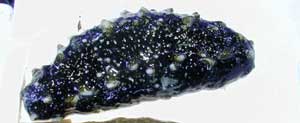
NAMAKO-BLACK
(Black Sea Cucumber)

Quite a few varieties are found in Japanese markets, but the highest quality specimen are the red sea cucumbers.

The best season is Winter, although they are sold over the counter well beyond Spring in Japan.
They ave many names in Japanese: Namako, Manamako, Akako, Aoko, Kaiso and are caught almost all around the Japanese islands.
They lay eggs from late Spring to early Summer, hence their best taste in Winter when the Japanese find them almost sweet.
Choose red ones as they are softer and tastier. Choose specimens with firm flesh and healthy skin.

NAMAKO-BACHIKO
(Namako Bachiko)

The Japanese eat them in many ways. Like the Chinese they eat them in their dried form, or “Bachiko”.

NAMAKO-GREEN-TEA

They are popular boiled in green tea!

NAMAKO-SASHIMI

Of course you will find them as sashimi!

NAMAKO-NIGIRI

Or as sushi nigiri!

NAMAKO-KONOWATA

Their innards, called “konowata”, are considered a delicacy!

NAMAKO-KONOWATA-GUNKAN

Most popular as gunkan sushi!

Please check the new postings at:
sake, shochu and sushi

—————————————-
日本語のブログ
—————————————-

Shizuoka Izakaya: UZU (revisited)

UZU-09-05-29-1

Service: excellent, easy-going and very friendly
Facilities: great washroom, great cleanliness overall
Prices: very reasonable, good value.
Strong points: Very fresh local ingredients especially organic vegetables extensively used.

Uzu is slowly becoming another regular izakaya of mine and that of my friends. Apart of the great welcome and atmosphere, their cuisine makes an extensive use of locally grown organic vegetables, making it one of those rare izakaya wher vegetarians are truly welcome!
As for the meat and fish, it is simply superlative. Moreover, one will be able to choose and taste geat local sake!

UZU-09-05-29-2

Last Friday, while my friends and I were having a “discussion” as to what we would order for food, tasty morsels had already come with our first sake!

UZU-09-05-29-3

To cut a long story short, here is what we savoured on that day!
(See pic above). A plate of “Shamo” (Shizuoka-bred) chicken sashimi, comprising giblets (heart, liver, etc.). You can be assured they are absolutely fresh. Eaten with Shizuoka Wasabi and soy sauce, they make for a decadent starter!

UZU-09-05-29-4

“Mizu Nasu”, a succulent egg-plant/aubergine which is eaten raw!

UZU-09-05-29-5

“Sawara/young cod” sashimi. The fish was caught in Suruga Bay! Almost sweet!

UZU-09-05-29-7

An enormous salad of grilled “Shamo” Chicken and Shizuoka-grown vegetables!

UZU-09-05-29-8

A plate of grilled “Shamo” Chicken giblets! You must have guessed by now that we had decided to make it a chicken and vegetable dinner!

UZU-09-05-29-9

All earthenware and glassware at UZU are made by local artists!
How about this sake glass decanter?

UZU-09-05-29-10

And finally, “aburi”/grilled Shamo Chicken. With a little wasabi and nothing else, absolutely scrumptious!

We did have UZU’s lime sherbet for dessert, but I have already described this beauty in another posting!
Going there again next week, incidentally!

UZU
Shizuoka City, Otowa-cho, 3-18
Tel.: 054-249-6262
Business hours: 17:00=23:00
Closed on Mondays and first Tuesday
Reservations recommended
Credit cards OK

HOMEPAGE (Japanese)
Please check the new postings at:
sake, shochu and sushi

—————————————-
日本語のブログ
—————————————-
Sea Pineapple/Common Sea Squirt: Hoya/Mahoya

HOYA-1

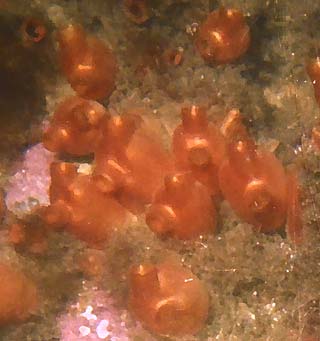
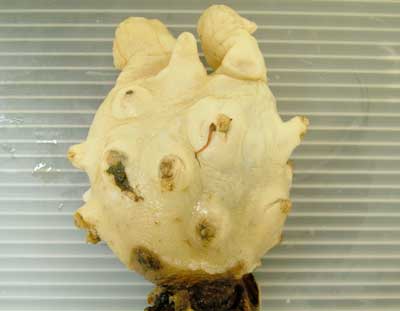
The Common Sea Squirt, very often called Sea Cucumber is neither a coral, seaweed, shellfish or whatever.
It is an animal of its own class.

HOYA

in its natural habita, already a prey to many marine predators, it has become rare because of the extensive catch by humans.

HOYA-NATURAL

Its natural colour is whitish out of the water while (see pic above) Hoya rasied by humans are of a deep orange colour.

We are just in the middle of its season, May.
They are mainly raised in Miyagi Prefecture while natural ones are caught in Iwate Prefecture.

HOYA-2

You have to cut it open to reach its edible part.

HOYA-3

It can be eaten raw, slightly boiled or pickled.
It is said to be the rare sea animal combining the four tastes: sweetness, saltiness, sourness and acidity.

HOYA-4

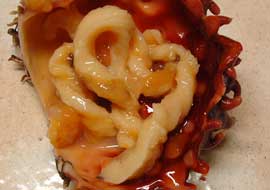
For a better view of its insides. It is called sea squirt, because it is mainly filled with sea water which can be expelled at will.

HOYA-SUSHI

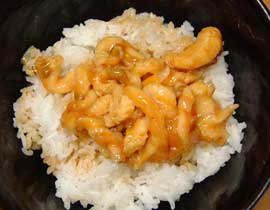
Ipersonally appreciate it as sushi nigiri, although it is a bit of an acquired taste!

Please check the new postings at:
sake, shochu and sushi

—————————————-
日本語のブログ
—————————————-
Sea Urchin Species

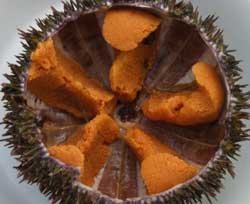
UNI-AKAUNI-2
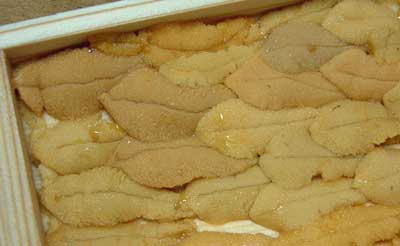
Aka Uni/Red Sea Urchin Roe

Sea urchins, or uni/海栗in Japanese, are popular in many countries, but maybe not as much as in Japan!
The situation sometimes is becoming ridiculous as time and again Chinese and North Korrean ships are caught poaching sea urchins in the Japan seas to export them later to Japan!

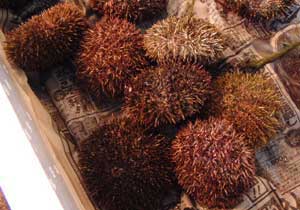
There are many kinds of sea urchins, some great, some barely acceptable, and many inedible.
I will keep this posting to the most popular ones in Japan.

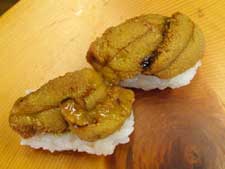
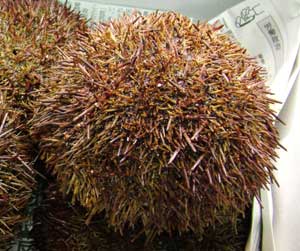
EZO-BAFUN-UNI
UNI-EZOBAFUNUNI-1

Ezobafun-uni, or Kaze, or Kanze are best appreciated in Spring.
Most are caught off Hokkaido.
As its name in Japanese says (Sea Chestnut), when fresh it has a firm texture and tastes like chestnuts.

UNI-EZOBAFUNUNI-2

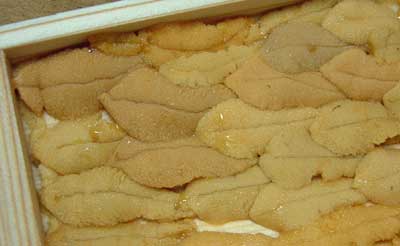
Its roe is a beautiful orange.
Beware of imported copies that don’t mely in your mouth!

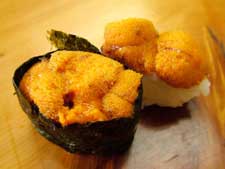
UNI-EZOBAFUNUNI-3

Beautiful as sushi nigiri or gunkan!

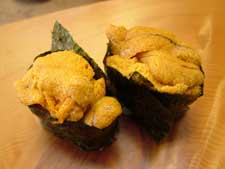
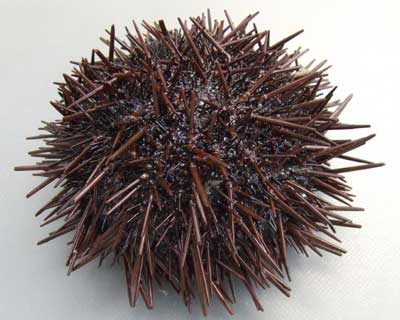
KITA-MURASAKI-UNI
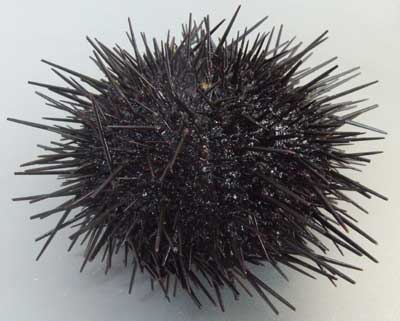
UNI-KITAMURASAKIUNI-1

Appearing on the markets between early Summer and Atumn, domestic specimen come from Hokkaido (12,000 tonnes).

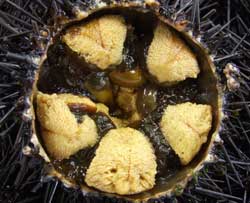
UNI-KITAMURASAKIUNI-2

Please note the different colour, more yellowish.
It is widely imported from Russia (6.200 tonnes), USA (2,600 tonnes), Chili (2,100 tonnes), Canada (800 tonnes) and Kora (300 tonnes).

UNI-KITAMURASAKIUNI-3

Great as sushi nigiri!
Good quality specimens should be firm, with a definite shape, and leave a yellow colour inside its box or on chopsticks!

CHILI-UNI
UNI-CHIRIUNI-1

Chili-Uni/Sea Urchin from Chili is considered as the best imported sea urchin in Japan and merits a special mention.

UNI-CHIRIUNI-2

Beautiful served as sushi gunkan!

AKA-UNI
UNI-AKAUNI-1

Aka-uni/Red sea Urchin, although of a lower grade, is considered a choice morsel.

UNI-AKAUNI-2

Aka uni roe, some of which will find its way in the following dishes!

SEA URCHIN DISHES

There are countless ways of cooking and using sea urchins!
The following are just suggestions.
Enjoy!

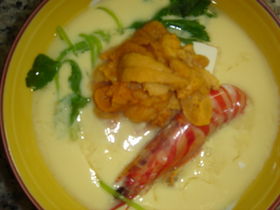
UNI-CHYAWANMUSHI
Uni Chyawan Mushi

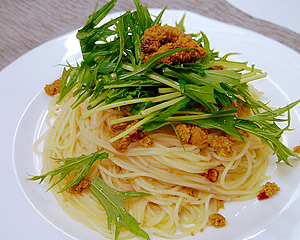
UNI-COLD-PEPEROCINO
Cold Pepperocino Sea Urchin Spaghetti

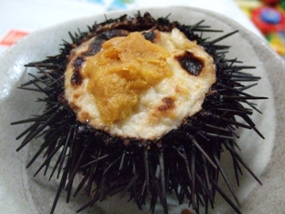
UNI-GRATIN
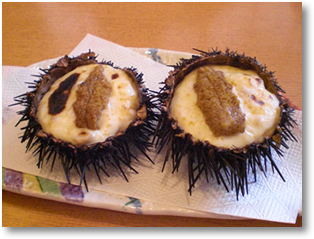
Sea Urchi Gratin in its shell

UNI-GRATIN-2
Another Sea Urchin Gratin in its shell.

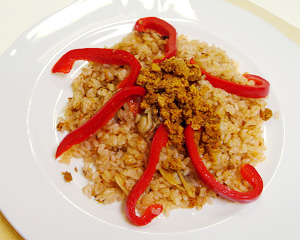
UNI-PILAF
Sea Urchin Pilaf

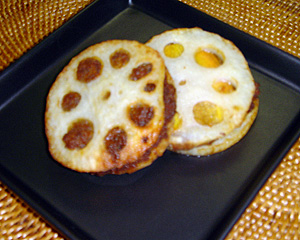
UNI-RENKON
Uni-Renkon: Sea Urchin cooked inside slices of Lotus roots

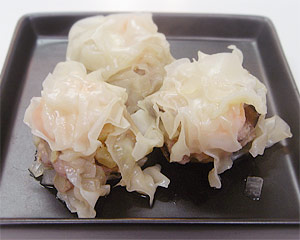
UNI-SHUMAI
Sea Urchin Shou-mai

UNI-TOFU-AVOCADO-MILLEFEUILLE
Sea Urchi Tofu and Avocado Millefeuille

UNI-TOFU-SOUP
Sea Urchin and Tofu Soup

Please check the new postings at:
sake, shochu and sushi

—————————————-
日本語のブログ
—————————————-
Octopus Species

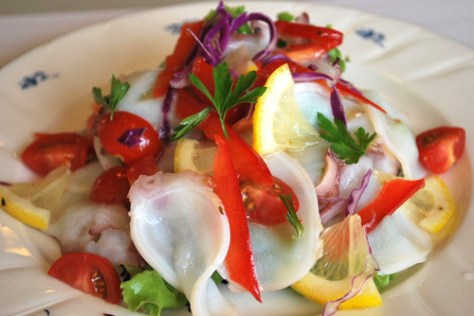
OCTOPUS-MIZUDAKO-SALAD
Mizudako Octopus Sashimi Salad

Octopuses are common on the markets along the Mediteranean Sea, especially Greece, italy and Spain.
Tey are also very common in Asia, especially Korea and Japan.

OCTOPUS-MADAGO-TSUKIJI
For people living in Tokyo, you will find plenty inside the Tsukiji Market.

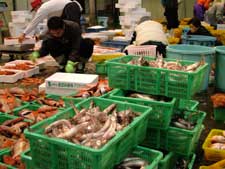
OCTOPUS-NUMAZU-HARBOUR
As for people living in Shizuoka Prefecture, go and visit the Harbour in Numazu City!

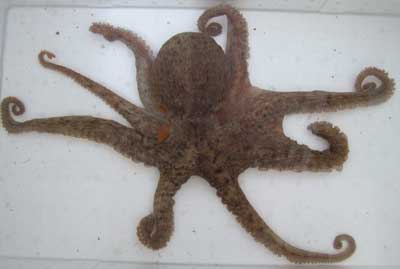
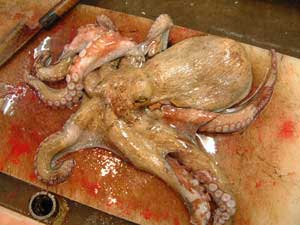
There many kinds of octopus, some edible, some definitely not!
I will talk here about the main varieties found, sold and eaten in Japan!

MADAKO
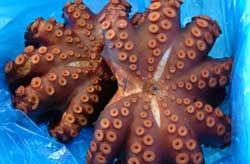
OCTOPUS-MADAGO-1

Madako or “True Octopus” will be sold from late Autumn till early Spring.
50,000 tonnes are caught in Japan while 100,000 tonnes are imported, 60% fromm Morocco, 20% from Mauritania and some more from South Africa.

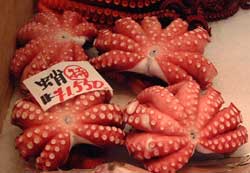
OCTOPUS-MADAGO-2
Boiled Madako from Japan

OCTOPUS-MADAGO-3
Boiled Madako from South Africa

It is very often found boiled in the supermarkets and are appreciated in salads, chyawanmushi, takoyaki and so on.

OCTOPUS-MADAGO-4

But lightly as sushi nigiri is probably the best!

MIZUDAKO
OCTOPUS-MIZUDAKO-1

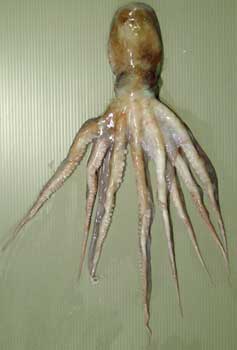
Mizudako, also called Shiodako and Oodako is a large variety reaching up to 3 metres. It is caught in Autumn and Winter at depths bewteen 100and 1,000 metres in the Northern half of Japan.
It is usually sold frozen. It is then cut when half thawn for:

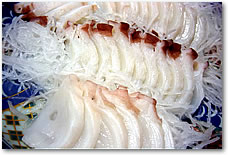
OCTOPUS-MIZUDAKO-3
Mizudako sashimi

OCTOPUS-MIZUDAKO-SALAD
Mizudako Salad

OCTOPUS-MIZUDAKO-2
It is also very common boiled and pickled in rice vinegar.

OCTOPUS-MIZUDAKO-EGGS
Its eggs are a rare morsel eaten as sushi on a gunkan!

IIDAKO
OCTOPUS-IIDAGO-1

Iidako, also known as Komochidako or Ishidako are caught south of Hokkaido Island. They are comparatively small and do not measure more than 20 cm. A lot are caugt along the Korean Peninsula and China at depths down to 20 metres. They tend to lay their a bit everywhere, even inside empty cans at the bottom of the sea!
Imports have been increasing of late.

OCTOPUS-IIDAGO-2

Iidago are much appreciated cooked whole with their eggs or

OCTOPUS-IIDAGO-3

whole again, boiled or raw, as sushi on nigiri!

CHIHIRODAKO
OCTOPUS-CHIHIRODAKO-1

Chihirodako is local Shizuoka variety found at Numazu Harbour.
It is appreciated boiled or in Tenpura

OCTOPUS-CHIHIRODAKO-2
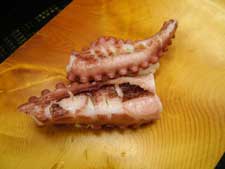
Its tentacles, boiled, are popular as sushi nigiri!

Please check the new postings at:
sake, shochu and sushi

—————————————-
日本語のブログ
—————————————-
Shellfish species 11: Surf Clam/Ubagai

UBAGAI-1

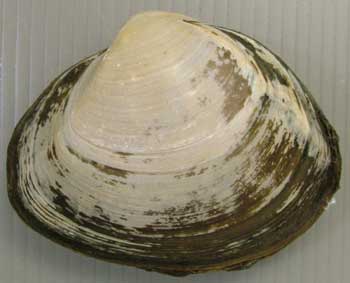
“Ubagai” or more commonly called “Hokkigai” when served as sashimi or sushi have many names in English.
Member of the Trough Shells Groups, they are called Surf Clams, or more precisely, as pertains to the varieties eaten in Japan, either Japanese Surf Clams or Sakhalin Surf Clams as they are collected both along Japan and Sakhalin Islands shores

8,000 tonnes are caught in Japan every year. 94% of fresh/live Surf Clams are collected in Hokkaido, Aomori, Fukushima and Miyagi Prefectures.
About 4,000 tonnes are imported frozen from Canada.
They are popular dried, in soups or cooked with vegeatbles and rice.

UBAGAI-2

Their “tongues” can be appreciated as sashimi, but are most popular lightly poached and cooled down.

UBAGAI-3

That is the way they are usually processed before being served as sushi nigiri, either straight, or with a few small incisions for better effect!

Please check the new postings at:
sake, shochu and sushi

—————————————-
日本語のブログ
—————————————-