Tag Archives: 美食

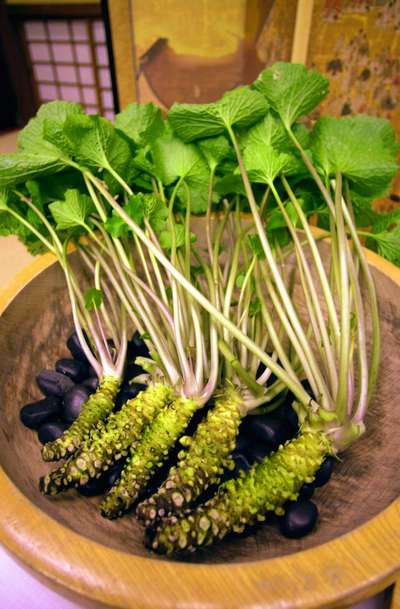
Wasabi: All you need to know!

For all my agnosticism, I sometimes think I am blessed to be born in Dijon, Bourgogne, France and lived in Shizuoka City, the birthplace of Wasabi!

The sign at the entrance of Utogi, the birthplace of wasabi!

Around 1600, farmers in Utougi District, some 33 km from Shizuoka JR Station along the Abe River, first started experimenting with the culture of that particular plant, which they already knew as a wild vegetable used for pickling. At the time they were only processing the stems, leaves and flowers.

Utogi Village

If you want to visit Utogi, where you will find a soba restaurant and other shops as well as the possibility of trekking and festivals watching in April and October, either go by car (55 minutes) or take a bus (Shizuoka JR Station/75 minutes). The trip along the Abe River is worth for its own sake with all the changing landscapes and vistas!
I did it by bicycle, but it took me 5 hours for the return-trip from the city centre and had to push the bicycle along forthe last 3 kilometres. Even a maoutain bike would have made it!

Another view of Utogi

Wasabi Monument in Utogi.

They even have their own “Mon/Arms”!

This is still a very popular kind of pickles in Shizuoka where they are sold in season.
In 1604, Tokugawa Ieyasu, the Japanese Overlord/Shogun, who had just moved to Sumpu (presently Shizuoka City), grew extremely fond of the grated root and helped spread its use all over the country. Its present culture has expanded outside our Prefecture, especially in Nagano, but Shizuoka still produces not only 80% of the whole crop in Japan, and the best wasabi are grown in Utougi and in the Amagi Range in Izu Peninsula.

This gentleman is the 17th generation of the first wasabi growers in Utogi! Check His homepage (Japanese) where you can order a whole array of products! Look at him in his field on youtube!

Tamaruya stand at Haneda Airport

The first and oldest wasabi shop, Tamaruya, is still very much in business in Shizuoka City and even has a stand in Haneda Airport, Shizuoka City!

Wasabi growing is backbreaking work. You need a constant temperature, so you have to be located at a certain altitude (weel over 1,000 metres in some cases) as extreme heat is not welcome, as well as extrem cold.

Pure, soft, constant water is a must. Shizuoka water is known as the best in Japan as demonstrated by its superlative (and rare) sake.

Fields need constant care during the two years it takes for roots to be mature. You can drink the water in these fields without any fear!

WASABI IN JAPANESE CUISINE

If you want to grate your own wasabi, you will need a grater.
The best (above) are made with shark skin!
Grated wasabi is the most common use for the plant, especially with sushi and sashimi.

Wasabi Flowers.

But the stems, leaves and flowers are extensively used.
The leaves can be eaten raw and are great with miso!

The stems are a delicacy marinated in rice vinegar.

Wasabi zuke/wasabi stems and flowers pickled in sake kasu/sake white lees.
Wasabi zuke in Shizuoka is simply extravagant as the sake breweries sell their best white lees/sake kasu (after the sake has been pressed) to the local farmers and producers!

Soon I will post an interesting home-made recipe for wasabi zuke!

The same leaves, once pickled, can be included inside inari zushi for the pleasure of vegans!

Na no hana/rape flowers boiled and seasoned with wasabi mayonnaise.

Now, you might know it, but thinly sliced wasabi root is not as strong as grated wasabi. In Shizuoka, as it is not that expensive, try and ask your favourite sushi chef to cut it in very thin strips and roll as it is in a “maki”. It’s called “namida maki/tear maki” or “bakudan maki/bomb maki” (the real one, not the buster made with grated wasabi!). A favourite of mine!

FRENCH CUISINE

Wasabi is getting more and more popular in French and other cuisines all over the world.
The above dish was created by Dominique Corby a great French Chef who learned his craft at the Tour d’Argent in Paris, among others, before coming to Japan to look after the kitchen of the Sakura Restaurant in the New Otani Hotel in Osaka and of the 6eme Sens in Tokyo.

His cuisine was created with whole wasabi (1 metre long!) i sent him by cool box from Shizuoka.
These are the best grown in Utogi. Very fat, clean, with no black marks and with enormous stems and leaves. Dominique steame the leaves and stems before serving them with fish seasoned with a wasabi sauce reduction from the roots!

FANCY FOODS

Wasabi Dango!

Wasabi comes into many kinds of fancy food for the pleasure of all, young and old!

Wasabi soft Ice-cream!

DERIVATED PRODUCTS

Wasabi comes into a whole array of derivated products worth exploring:

Wasabi Dressing 1

Wasabi Dressing 2

Wasabi dressing is not that strong and can be used in cold and hot/warm dishes.
The Missus uses it extensively with dtir-fried veetables and meat.

Nori/seaweed and miso seasoned with wasabi is another great vegan seasoning!

Wasabi salt by Tamaruya!
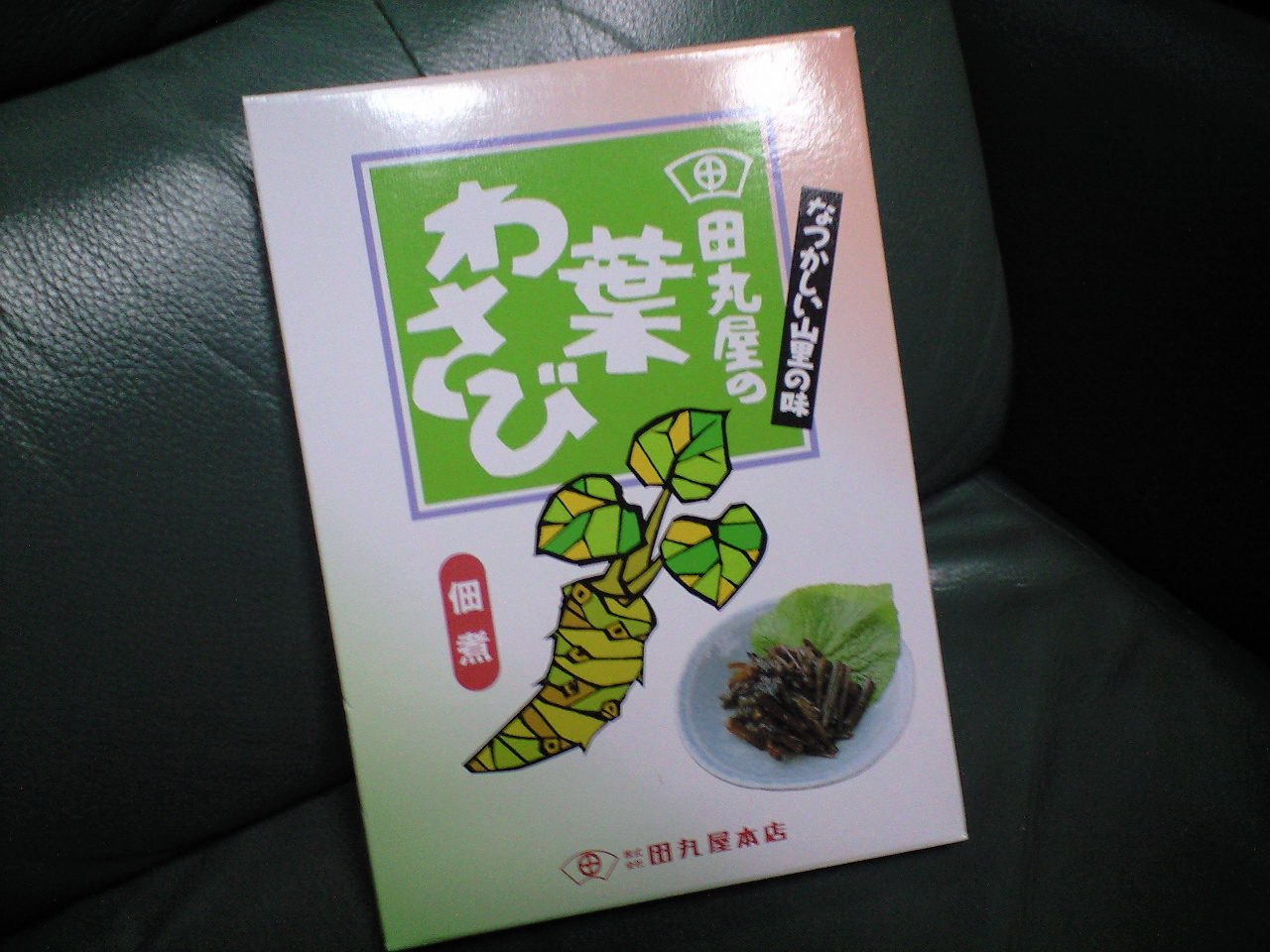
Stewed wasabi by Tamaruya!

Wasabi Shochu!

The only true wasabi shochu is made by Bandai Brewery in Shuzenji, Izu peninsula, Shizuoka Prefecture! (don’t be fooled by unscrupulous producers/traders!).

HEALTH FACTS:

-Wasabi is a natural medicinal herb as it contains big amounts of Potassium, Calcium, Magnesium, Vitamin B2 ad C.

-Combined with vinegar, or mustard, or ginger, helps combat fppd poisining, obesity and helps blood flow.

-Combined with Chinese cabbage, or cabbage, or yam, helps combat ulcers and cancer.

-Combine with onion, or leek, or galic chive, helps combat blood vessel ageaing and heart diseases, as well as preserve skin health.

-Combined with chili peppers, or umeboshi/Japanese pickled plums, or orange, or grapefruit, helps appetite and quick illness recovery, helps skin rejuvenation and helps combat ageing.

FOR RESIDENTS AND VISITORS IN SHIZUOKA CITY:
On every first Wednesday of the month, a small but very special fair is held in the basement of Isetan Store in Shizuoka City.
It is called “Shizuoka Utsurogi Ichiba” after a group of farmers residing and conducting business up Abe River in Shizuoka City, up to an altitude of 1,500 metres, around Utogi, the birthplace of wasabi, and still considered the best in the world.
Try to come as soon as Isetan opens as it can become quite a unashamed tussle with all these local grannies fighting for the best morsel!
All products on sale are purely local and practically devoid of industrial fertilizers. It is actually a paradise for vegetarians as only vegetables are represented there. A multitude of succulent and extravagant wasabi pickles, pickled plums, onions, etc.
The names, addresses and even phone numbers of the farmers are clearly stated, making all purchases eminently traceable.
But the pinnacle is some incredible fresh vegetables, including enormous fresh wasabi roots at ridiculously low prices. I grabbed tis couple of fresh bouquets of wasabi stems, leaves and flowers for my better half (worse?) who loves them as tempura or home-made pickles! I wonder what people in Tokyo would have to pay for that!

It is possible to travel up to Utogi and buy directly from the Farmers Cooperative at:
422–8031 Shizuoka City, Yumei Cho, 2-20
TEl.: 054-2869018

RECOMMENDED RELATED SITES:
Bread + Butter, Comestilblog, Greedy Girl, Bouchon For 2, Zoy Zhang, Hungry Neko, Mangantayon, Elinluv Tidbit Corner, Maison de Christina, Chrys Niles, Lexi, Culinary Musings, Eats and Everything, Bite Me New England, Heather Sweet, Warren Bobrow, 5 Star Foodie, Frank Fariello, Oyster Culture, Ramendo, Alchemist Chef, Ochikeron, Mrs. Lavendula, The Gipsy Chef, Spirited Miu Flavor, Wheeling Gourmet, Chef de Plunge, Sushi Nomads, Island Vittles, The French Market Maven, Tokyo Through The Drinking Glas, Palate To Pen, Tokyo Foodcast, Good Beer & Country Boys, Tokyo Terrace, Think Twice, Jefferson’s Table, While mY Sautoir Gently Weeps

Please check the new postings at:
sake, shochu and sushi,
—————————————-
日本語のブログ
—————————————-

Gastronomic Cycling in Shizuoka (2)

Today was also a glorious day, even in the second half of the afternoon with blue skies and crisp air. Time to go out!

Bazooka Gourmet will smirk again when he sees that I had to change the basket yesterday as it finally fell apart!

I took the street at the back of the office, running along the Sumpu Castle Park and Moat. Sumpu is the old name of Shizuoka City. The caste which had been leveled down in early Edo Times was rebuilt to two thirds of its original size at the end of last millennium (LOL, not so long ago, actually!).

The city is still asking the country to pay for the repair of the wall which collapsed in three different spots during last summer’s earthquake (do you remember my earthquake bento?).

I was then cycling past the Old City Hall Dome built by Queen Victoria’s subjects in the 19th Century. To think that a former Mayor wanted to pull it down. It is presently used as a museum and local government seat.

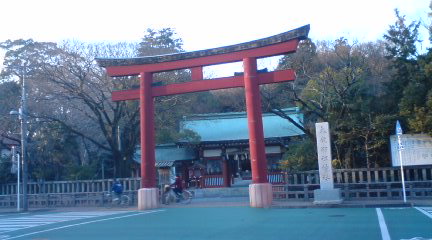
A minute later I reached the entrance of Sengen Shrine street, the destination of the day, marked by a giant red torii. A torii is a Japanese entranc/arch erected to allow birds to perch and rest on (Shintoism).

Sengen Shrine is only about 300 metres long but it is one of the oldest street in town. Although it has been renovated over the ages, one can still find traditional shops and quaint sites.
The shop above is famous oden-ya/Japanese pot au feu restaurant.

Shizuoka-style oden is renown all over Japan!

Taking a short peek (I will write a full about oden again soon).
Note that I use my mobile phone camera. A real camera tends to put off people for good reasons….

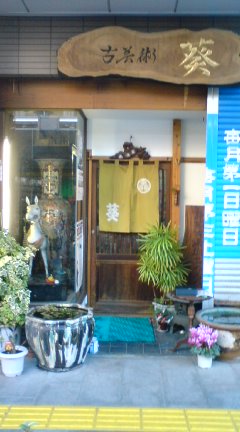
Narrow but interesting (reason coming in next pic!) entrance of an antique shop.

Although the shop sells all kinds of old sabres and knives, the police notice states you are allowed to carry knives with blades over 5 cm long!

This shop specializes in peanuts only!

They went as far as to designing their own “mon/arms” with peanut plants!

This cafe specializes in organic food, a very real real thing in Shizuoka!

A sign to make sure you know they use only organic vegetables!

A local celebrity: Yamada Nagamasa

Yamada Nagamasa (1590~1630) voyaged to Siam where 7,000 samurais lived in Ayathaya as the personal guard of the Siam King.

The statue was erected in 1991. Note that due to the closure of the country in Edo Times, he probably become the last Japanese sailor of note for the next 200 years!

A grocery selling only organic vegetables!

Would love to taste these!

At the first crossing stands this quaint shop selling miniature cars.

Hundred of them all different!
Did you know that Tamiya Miniature Company is in Shizuoka City?

Real antiques for the collectors!

The City Tourism Bus (names in French…) clearly indicates this is a street to explore.

This street is one of the very last where you still can find shops selling traditional gardening tools, some of them real monsters! LOL

This pet clinic (real vet!) is apparently the best business in the whole street!

End of the street and entrance to the Sengen Shrine (will write a report about it one day!) and it’s back along the other side of the street towards my real destination I ignored on purpose at the entrance of the street.

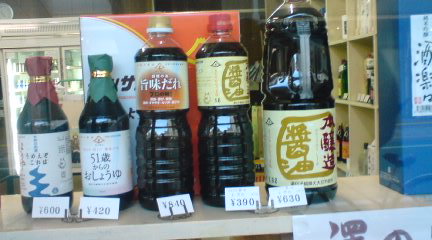
A soy sauce shop, probably the only one in town.

And an old one at that! These ceramic bottles are over 80 years old!

Local soy sauce brands.

A yeast and miso shop. Only a few shops left in Shizuoka. This is the place to buy artisanal miso!

That shop still sells traditional cookware, kitchen and bathroom wooden and metallic utensils. Almost no plastic there!

Shizuoka is famous for this kind of bamboo craft!

Now, this is the guy I had left for dessert!
Now, what is he cooking on his copper hot plate?

Can you guess? Hot Cakes? Yes and no…

have you heard of Doraemon, the Japanese manga character?
He loves “dorayaki”, the Japanese double hot cake filled with anko/sweetmeats!
This is the only place left in Shizuoka still cooking them every day in the true traditional way!

I did ask for the authorization to take pictures.
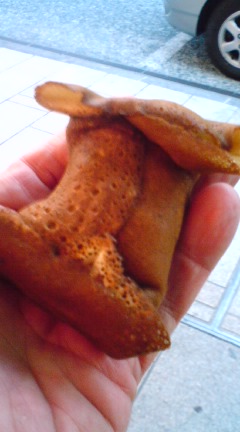
The man was real sweet (of course…) and gave me (to prove the great taste…good businessman!) a single hot cake wrapped around anko/sweetmeats!

Hot, simple and so delicious!
The gentleman was beaming all the time.
“If you want to take more picture, come inside!”
????

I only understood when I passed the “noren”/Entrance curtain!
The place for all its tiny size was a real Ali Baba cavern full of antique collectibles!

I almost screamed when I discovered those exquiisite antique glasses,

Cups, saucers and more!
Who could have believed there was a cultured man behind that artisan?
I know I will come for more than one reason!
No wonder customers kept streaming in!

Mr. Kawauchi make the dorayaki. His smiling wife packs them carefully and individually in cellophane paper printed with”Dorayaki”, the shop name and all ingredients used!

Out of the package.
They are big and sell for only 100 yen/1.10 US $.
Mr. Kawauchi was selling them only 42 yen when he opened his shop 22 year ago!

After a big bite.
The hot cake is unbelievely light and soft. The taste is certainly heads, shoulders and torso above anything sold at higher prices in department stores!

Where next?

RECOMMENDED RELATED SITES:
Bread + Butter, Comestilblog, Greedy Girl, Bouchon For 2, Zoy Zhang, Hungry Neko, Mangantayon, Elinluv Tidbit Corner, Maison de Christina, Chrys Niles, Lexi, Culinary Musings, Eats and Everything, Bite Me New England, Heather Sweet, Warren Bobrow, 5 Star Foodie, Frank Fariello, Oyster Culture, Ramendo, Alchemist Chef, Ochikeron, Mrs. Lavendula, The Gipsy Chef, Spirited Miu Flavor, Wheeling Gourmet, Chef de Plunge, Sushi Nomads, Island Vittles, The French Market Maven, Tokyo Through The Drinking Glas, Palate To Pen, Tokyo Foodcast, Good Beer & Country Boys, Tokyo Terrace, Think Twice, Jefferson’s Table

Please check the new postings at:
sake, shochu and sushi,
—————————————-
日本語のブログ
—————————————-

Japanese Seasonal Fish: Bora/Mullet

There are at least 12 recognized kinds of mullet being caught all over the world.
The flathead mullet in particular is an important food fish for many around the world, and can be both fished and farmed. The roe of this mullet is salted, dried, and compressed to make a specialty food across the world, such as Korean myeongran jeot, Japanese karasumi, Italian botargo, and Egyptian batarekh . In Egypt, the fish itself is salted, dried, and pickled to make feseekh.

Flathead Mullet, Mugil Cephalus in Latin, or Bora/鯔/鰡 in Japanese will reach length of over 80 cm in Japan, although the average length will more around 50 cm.

It is caught south of Hokkaido near river mouths or in bays receiving lots of river waters.
Like any othe fish, it will be called other names depending upon the region: Isegoi (Western Japan), Itanebora (Ehime Prefecture), Mabora (Hiroshima Prefecture), Tsukura (Okinawa), Kuchime, Mejiro, Hebuna, Haku, Makuchi, Kurome, or Merome.

It is a versatile fish:

Served raw as sashimi in Jpaanese Cuisine or,

as carpaccio in Italian style.

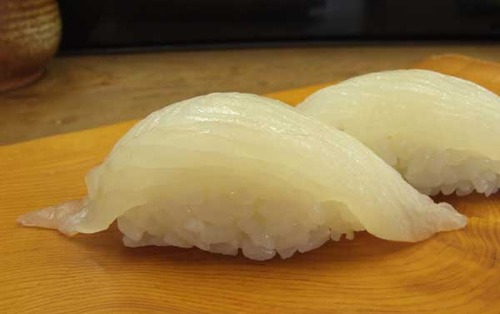
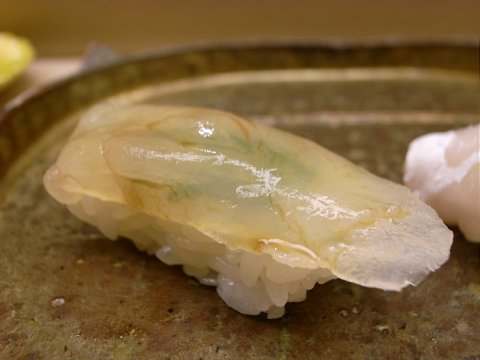
It is more unusual as sushi nigiri (front two) and will probably be found as such only locally.

To answer a query from Luke, it is more encountered cooked:
Deep-fried and served with a soy-based sauce is common to many asian countries.

Deep-fried before being served wit a sweet and saour sauce,

or the same again with tofu is popular in Taiwan (and in Japan!).

First steamed and then served with a sauce made with sweet pickled plum and miso is supposed to be of Chinese origin, but can be found again in many Asians countries.

But for all these recipes, the most valuable (and very expensive at that!) is the roe of the female mullets!

It is served as it is extavagantly in Japanese or Italian cuisine sashimi or carpaccio.

The combinations are infinite!

An extravagant salad of Japanese and Italian inspiration!

Grated over an extragant pasta dish!

RECOMMENDED RELATED SITES:
Bread + Butter, Comestilblog, Greedy Girl, Bouchon For 2, Zoy Zhang, Hungry Neko, Mangantayon, Elinluv Tidbit Corner, Maison de Christina, Chrys Niles, Lexi, Culinary Musings, Eats and Everything, Bite Me New England, Heather Sweet, Warren Bobrow, 5 Star Foodie, Frank Fariello, Oyster Culture, Ramendo, Alchemist Chef, Ochikeron, Mrs. Lavendula, The Gipsy Chef, Spirited Miu Flavor, Wheeling Gourmet, Chef de Plunge, Sushi Nomads, Island Vittles, Jefferson’s Table

Please check the new postings at:
sake, shochu and sushi,
—————————————-
日本語のブログ
—————————————-

Japanese Seasonal Fish: Makogarei/Turbot

“Makogarei” or Pleuronectes yokohamae Gunther for the specialists is one of the many kinds of turbot indigeneous to Japan.
You will find it on the markets between June and August.
Depending where you live, you might do well to know its other names: “Aome” (Sendai), “Mushibirama” (Konahama), “Mako” (Tokyo) or “Amakarei” among many.
It is net-caught all around Japan.

It has comparatively a lot of flesh for a turbot, making it a choice morsel for nigiri or sashimi.

It can reach a length of 30 cm. Contrary to many other fish, the size will bear no incidence on the taste, but if you wish for extra taste, avoid female specimen bearing eggs/roe, and if possible, although a bit extravagant, choose a live fish (possible at Parche, Shizuoka JR Station!).
A good sushi or Japanese restaurant will deep-fry the bones and head for you, making for a great snack with great ale!

As a sushi nigiri, it is served as it is, and can be savoured with a little salt and lemon juice only as seasoning.

Many people also ask their sushi nigiri seasoned with tare/sauce.

One more way is to present it as konbujime/marineated in seaweed.

being a large fish, it can be easily manipulated into bo sugata sushi/baton sushi with the rice inside the fish.

Small specimens are appreciated grilled whole with some lemon, soy sauce and grated daikon.

Another popular cuisine is to stew/simmer the whole fish in soy sauce, mirin and sake as ni-zakana.

The sperm sacs/shirako of the male specimens are much appreciated in European-style cuisine!

RECOMMENDED RELATED SITES:
Bread + Butter, Comestilblog, Greedy Girl, Bouchon For 2, Zoy Zhang, Hungry Neko, Mangantayon, Elinluv Tidbit Corner, Maison de Christina, Chrys Niles, Lexi, Culinary Musings, Eats and Everything, Bite Me New England, Heather Sweet, Warren Bobrow, 5 Star Foodie, Frank Fariello, Oyster Culture, Ramendo, Alchemist Chef, Ochikeron, Mrs. Lavendula, The Gipsy Chef, Spirited Miu Flavor, Wheeling Gourmet, Chef de Plunge, Sushi Nomads, Island Vittles

Please check the new postings at:
sake, shochu and sushi,
—————————————-
日本語のブログ
—————————————-

Gastronomic Cycling in Shizuoka (1)

Many friends have enquired why I call myself a “cycling gourmet” (instead of the celebrated “galloping one”).
There is no mystery there for the simple reason that I have never driven, or was tempted to, a car in my life.
Thanks to that, I’m still comparatively in good health in spite of my ever-going battle of the bulge and a blood pressure to keep in check.

As for my bicycle(s), do not expect me to ride the state-of-the-art mountain bike (although I’d love to own one!), great for riding on all roads, but definitely unpractical. I need that sturdy basket in the front!
In any case there is no way you can suddenly stop to take a picture with your car sitting in the middle of the street!
Japan might be a congested, teeming land, but there are millions of pictures begging to be taken of the everyday life of its people, the more for it that it is the safest country in the world. With a minimum of (good) manners you will soon discover that almost everyone is happy to be reported on!

Shizuoka City is a very compact town in spite of its fairly large population of over 800,000 souls. Really big buildings are only to be found near the large Railway Station (this is earthquake country after all). In spite of many wide arteries gridiing the area, there are plenty of side streets to explore.

A typical thoroughfare starts from the Central Police Station onto the Shichiken-cho street through Komagata Street.
I will spare you from all the ubiquitous chain cafes, diners, nonsensical cake shops and the like to concentrate on the places of true interest.
Japanese cities can appear bland and jumblelike to the point of sheer boredom at first contact, but if you know what and where to search there is plenty to discover, big or small, local or foreign, amusing or downright alien.

Shichiken-cho starts with th Isetan Store, one of the major chain department stores in Japan.

The food department is invariably located on the first or basement floor in such buildings.
Isetan is worth some study as they make an (albeit a bit weak) effort to promote truly local gastronomy:

Map of Shizuoka Prefecture and its main fisheries harbours with the fish of the day.

Shizuoka sake!

Shizuoka Green Tea with a map of the main fields!

Shizuoka Wasabi products.

Shizuoka processed fish.

Keeping straight (you must explore the side streets at night with their many izakayas!) you will find Il Cuore Trattoria, a great Italian Cafe where you can enjoy your drink and tasty light fare at a table outside on the pavement (in warm weather!).

The best and most beautiful cappucino in town!

Just keep going on, and you will find Takahashiya Sembei shop.

The oldest rice crackers shop. All sembei are made over a charcoal fire!

To be fair, there are many small cheap restaurants (ramen, yakiniku, etc..), cafes, bakeries, boutiques, beauty salons and whatnot along the way, but they would not have you raise an eyebrow.
You will also find one useful Shizutetsu grocery store along the way, but skip it for the time being.

Now, when entering Komagata Street, you do have to keep an eye open for some intriguing sights.

Don’t forget to pay a visit to the minuscule Komagata Shrine,

and salute its dragons (we know this guy, don’t we?)!

Just past the Komagata Shrine you will discover where the true locals buy their everyday needs at ancient grocery stores.

Tomitaya is your typical Shizuoka off license/liquor shop,

offering rare Shizuoka sake, some of which you will not find in any other shop in Shizuoka City!

Have a good look at what is displayed at the shops.

Not only the (very low) prices are clearly indicated, but also the origin of all the veg, meat, fish and fruit!

There must be good reasons for the local to crowd such grocery stores!
Great places for expats with gastronomic priorities and limited budgets!

Sano Rice(only) shop.

Very good value for very fine rice coming form all over Japan!
A reference shop for vegans and vegetarians!

I’m pretty sure you will have missed a lot on your way out, therefore on your way back proceed slowly and have two or three more looks.

Dotai Kotai Izakaya. They are part of a big chain, but they have the merit to serve a few eminent Shizuoka sake and decent food.

There are some intriguing signs to be put on film.
The shop above sells beef, chicken, pork, sausages, delicatessen all in the same place,….

Scorpion Hearts?
This is not a food store, but a beauty salon!

Amici, a tiny watering hole I definitely will have to investigate in the near future!

A quaint entrance to an unusual cafe.

No comments!
The amateurs of the truly bizarre should come well-equipped!

I just loved that one!

Biwa is a popular “Chinese Fusion” restaurant with ladies but I hold reservations as to that kind of presentation…

Unusual design for a Crepe shop called Roulotte.

But the kids seem to love it!

Osakaya is shop solely selling “katsuo bushi/Dry bonito shavings”. Shizuoka is the main area for ships to bring their bonito catch in Japan.

Ichome, a kitch jumble of a trattoria, which seems to be really popular.
I’ll have to check!

Will meet you soon at the next destination!

RECOMMENDED RELATED SITES:
Bread + Butter, Comestilblog, Greedy Girl, Bouchon For 2, Zoy Zhang, Hungry Neko, Mangantayon, Elinluv Tidbit Corner, Maison de Christina, Chrys Niles, Lexi, Culinary Musings, Eats and Everything, Bite Me New England, Heather Sweet, Warren Bobrow, 5 Star Foodie, Frank Fariello, Oyster Culture, Ramendo, Alchemist Chef, Ochikeron, Mrs. Lavendula, The Gipsy Chef, Spirited Miu Flavor, Wheeling Gourmet, Chef de Plunge, Sushi Nomads, Island Vittles, The French Market Maven, Tokyo Through The Drinking Glas, Palate To Pen, Tokyo Foodcast, Good Beer & Country Boys, Tokyo Terrace, Think Twice

Please check the new postings at:
sake, shochu and sushi,
—————————————-
日本語のブログ
—————————————-

Tamagoyaki Nori Cheese Roll

Found this easy Winter Ci\omfort food recipe in my notes which for a simple combination of Japanese and American/European (?) tastes!

It is tentatively called Tamagoyaki Nori Cheese Roll/卵焼き海苔チーズ巻!

INGREDIENTS:

-Eggs: quantity depending on the number of servings. Better think big!
-Nori/dry seaweed: a few sheets
-Cheese: slice pizza cheese is fine. Of course you can upgrade!

RECIPE:

-Make thin sheets of tamagoyaki in this way or that way first.

-Spread one sheet of tamagoyaki on workig table.

-Spread nori/dry seaweed all over it.

-Place cheese slices along one end. Think of how wide you want to make the roll when you choose the size of the cheese slices. Cut the cheese to size if necessary.
Season the cheese with black pepper if you wish for more taste.
You could vary by adding some thin ham slices, too.

-Roll the maki from the cheese end.
If the tamagoyaki was still hot, it could be eaten right away.
Better so is to place them aside until your start your meal.
Wrap them in foil paper and heat them.
before serving cut them across and serve them with the cheese flowing out!

-You may of course serve them with a sauce of your making and some greens!

RECOMMENDED RELATED SITES:
Bread + Butter, Comestilblog, Greedy Girl, Bouchon For 2, Zoy Zhang, Hungry Neko, Mangantayon, Elinluv Tidbit Corner, Maison de Christina, Chrys Niles, Lexi, Culinary Musings, Eats and Everything, Bite Me New England, Heather Sweet, Warren Bobrow, 5 Star Foodie, Frank Fariello, Oyster Culture, Ramendo, Alchemist Chef, Ochikeron, Mrs. Lavendula, The Gipsy Chef, Spirited Miu Flavor, Wheeling Gourmet, Chef de Plunge, Sushi Nomads, Island Vittles, The French Market Maven

Please check the new postings at:
sake, shochu and sushi,
—————————————-
日本語のブログ
—————————————-

Italian Restaurant: Dinner at Contorno

Service: excellent and very friendly
Facilities: great washroom, great cleanliness overall
Prices: very reasonable, good value.
Strong points: Very fresh local ingredients extensively used.
no-smoking-logo1 All non-smoking!

Yesterday was Friday. The university having taken a day off before the final exams, there was no lecturing duty. The weather, although a bit chilly and windy, was absolutely glorious. I did not need more reasons to get away from that computer!
Contorno Italian Restaurant stands 5 minutes walk from Mochimune Station, 2 stops away from Shizuoka City.
It became a good opportunity to take a long 2-hour stroll on my own at my pace along the shore to work up an appetite!

I did show a bit early but the owner nonetheless invited me and opened the place for me.
I rewarded his hospitality by ordering a bottle and share it ith nad his sous-chef.

FALCHINI 2007, white, Vernaccha, Di San Gimignagno

Great golden colour.
Very clear and clean.
Aroma: Muscat and raisins.
Tasting: Solid attack.
Lingered longer on than expected.
Deep muscat and raisins.
Holds well with food.
Soft but solid on the palate. Memories of oak
Overall: Very honest, solid, well-balance white wine. Eminently drinkable with any food.
Melinda and Jen are going to kill with that kind of succinct tasting report!

As for the antipasto misti, I can already hear Lou-Ann and Frank scream in the distance!
Look at these fresh oysters! They are called Ako Kaki and they come all the way from Hyogo Prefecture (near Kobe City). They are small by Japanese standards, but I can garantee you they are a mouthful. Fat but vey firm, just perfect. Notice the edible fresh seaweeds around them. These disappeared quickly, too!
The rillettes (pork) are of course home-made.
That with the Parma ham, semi-dried tomato and black olives and my appetite was really sharpened (as we say in French)!

I din’t bother looking at the menu and consulted the small blackboard on which were chalk-written the recommendations of the day.
I first opted for the Duck Breast Roast.
Served with a solid and delicious sauce made red wine and fond de veau, the duck was raosted to perfection, red and soft inside.
As for the vegetables, including yellow, red pimentoes, kabocha, brocoli, carrot, rape plant, sweet potato, string beans and red daikon, they were all organically grown in Fujinomiya City at the foot of Mount Fuji!

But my eyes (and stomach!) had noticed something else which urged me to check the blackboard again after I had finished the duck:
Shungiku Risotto Kaki Soroe: “Shungiku” is a variety of chrysanthemum grown for its edible leaves, “kaki” means “oyster” and “sore” means “topped with”.

One enormous sauteed Ako Oyster on top of the risotto (sorry for the fuzzy picture, butI was desperate!)!
Perfectly balanced risotto, sublime simplicity and that oyster again!
Italian Cuisine with Japanese finesse!

And the dessert!
Shizuoka (Most famous area for strawberries in Japan!) straberry tart conceived on a marzipan base. A real red fruit sauce concocted with red wine, fruit coulis, lemon juice and real red fruit.
Once again sublime simplicity, great balance and perfect volume!

I will have a hard time explaining the Missus what I wa doing in Mochimune! LOL

CONTORNO
421-0122, Shizuoka City, Suruga Ku, Mochimune, 5-1-10, Sunrise Mochimune (5 minutes walk from Mochimune JR Station. Second stop after Shizuoka)
Tel.: 054-2565877
Business hours: 11:30~14:30, 17:00~21:30
Closed on Wednesdays

RECOMMENDED RELATED SITES:
Bread + Butter, Comestilblog, Greedy Girl, Bouchon For 2, Zoy Zhang, Hungry Neko, Mangantayon, Elinluv Tidbit Corner, Maison de Christina, Chrys Niles, Lexi, Culinary Musings, Eats and Everything, Bite Me New England, Heather Sweet, Warren Bobrow, 5 Star Foodie, Frank Fariello, Oyster Culture, Ramendo, Alchemist Chef, Ochikeron, Mrs. Lavendula, The Gipsy Chef, Spirited Miu Flavor, Wheeling Gourmet, Chef de Plunge, Sushi Nomads, Island Vittles, The French Market Maven

Please check the new postings at:
sake, shochu and sushi,
—————————————-
日本語のブログ
—————————————-

Japanese Cuisine: Omelette Ribbons

The Japanese not only make great tamagoyaki/omelettes but extensively use eggs for decoration, especially sushu and salads.
One such decorations are omelette ribbons.

Here is the basic recipe that could help you with future decoration!

Japanese Omelette ribbons!

INGREDIENTS:

-Eggs
-Oil

RECIPE:

-Having beaten the eggs, sieve/filter them through a large piece of gaze (this is the little secret!) into anther bowl as shown on picture above.
Organize yourself so as not to spill egg everywhere. Yse large bowls and plenty of gaze!
No need to season the eggs as the thin size of the ribbons will facilitate the absorption of any environmental seasoning.

-Use a square or rectangular non-stick tamagoyaki frypan.
Pour and spread a small quantity of oil.
Pour the eggs into a thin layer.
Bear in mind that the oil needs not to be sohot or the eggs will “crackle”.
Also bear in mind that not enough egg will ot spread evenly all over the surface of the frypan. Not enough or too much are failure. Practice will soon make you a master!

-One more reason the omelette ought to be thick enough is that, when you turn it over with a long chopstick as shown on above picture, it will not break up.

-Fry both sides.

-Spread the omelette sheet on a working table while you eventuall fry more.

-First cut the sheet into wide strips/bands. Think about the eventual lenght of your ribbons.

-Finally cut across into thin ribbons.

-Enjoy the fun of easy decoration later!

RECOMMENDED RELATED SITES:
Bread + Butter, Comestilblog, Greedy Girl, Bouchon For 2, Zoy Zhang, Hungry Neko, Mangantayon, Elinluv Tidbit Corner, Maison de Christina, Chrys Niles, Lexi, Culinary Musings, Eats and Everything, Bite Me New England, Heather Sweet, Warren Bobrow, 5 Star Foodie, Frank Fariello, Oyster Culture, Ramendo, Alchemist Chef, Ochikeron, Mrs. Lavendula, The Gipsy Chef, Spirited Miu Flavor, Wheeling Gourmet, Chef de Plunge, Sushi Nomads, Island Vittles, The French Market Maven

Please check the new postings at:
sake, shochu and sushi,
—————————————-
日本語のブログ
—————————————-

Vegetables Tips & Facts 7: Edible Flowers (amended & expanded)

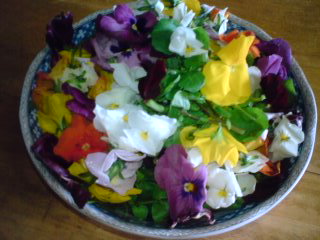
flowers-8
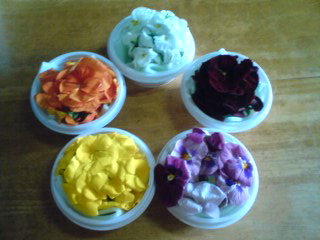
(5 edible flowers and water cress salad)

The other day, while I was shopping at the big supermarket at the Shizuoka JR Station I was reminded of a recent post by Natasha at 5 Star Foodie when I noticed edible flowers on sale.
Edible flowers have been on the Japanese markets for quite a few years already.
They tend to first appear in late winter, although it is only a question of time when they will be sold all year long!

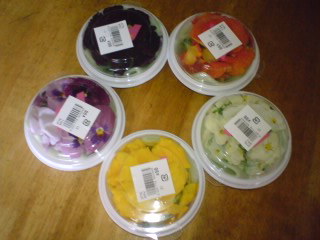
flowers-1

flowers-2

They come in very cheap, at 98 yen a small box (1 US$), but they ought to be used as early as possible.
Aichi Prefecture, our neighbour Prefecture seems to have become the largest growing area in Japan.
Thai, Indian and Persian citizens, as far as I know, have been using flowers in food for quite some time. The Japanese have served mini-chrysanthemum and perilla flowers since immemorial times.

flowers-3 flowers-4 flowers-5 flowers-6 flowers-71

Most edible flowers are of the pansy, snapdragon, primura, roses, Cosmos, nasturium and so on.
Do you recognize some of them above?

FACTS:

Now, the great news is that they contain an enormous amount of Vitamin A carotene:
1,100 to 9,400 micrograms per 100 grams as compared to 390 micrograms for tomatoes, 720 micrograms for broccoli and 3,100 micrograms for spinach.
as well as Vitamin C:
230 t0 650 mg per 100 grams as compared to 20 mg for tomatoes, 100 mg for spinach and 160 mg for broccoli!

TIPS:

The Japanese will use them either in flower or vegetable salads or on cakes.
Perilla flowers/shiso no hana are regularly served with sashimi or many kinds of fresh foods!

HEALTH FACTS:

-Edible Chrysanthemums combined with shiitake or mackerel enriches the blood, helps combat ageing and stress.

-Edible Chrysanthemums combined with wakame/seawedd or ginger helps combat muscle/body swelling and helps lower blood pressure.

-Edible flowers combined with oil is a generally beneficila combination.

-Edibke flowers combined with grapefruit or strawberries are beneficial to the skin and helps combat ageing.

One small advice for caution: don’t overeat them as they have purgative powers!

The best season for edible flowers is from September to December in Japan.

RECOMMENDED RELATED SITES:
Bread + Butter, Comestilblog, Greedy Girl, Bouchon For 2, Zoy Zhang, Hungry Neko, Mangantayon, Elinluv Tidbit Corner, Maison de Christina, Chrys Niles, Lexi, Culinary Musings, Eats and Everything, Bite Me New England, Heather Sweet, Warren Bobrow, 5 Star Foodie, Frank Fariello, Oyster Culture, Ramendo, Alchemist Chef, Ochikeron, Mrs. Lavendula, The Gipsy Chef, Spirited Miu Flavor, Wheeling Gourmet, Chef de Plunge, Sushi Nomads, Island Vittles, The French Market Maven

Please check the new postings at:
sake, shochu and sushi,
—————————————-
日本語のブログ
—————————————-

Japanese Cuisine: Oysters steamed in Rice/Kaki Meshi

Winter means a large supply of fresh oyters in Japan and many other countries! But we certainly need some fresh and simple ideas to consume them, even if raw oysters are the norm.
Oyster chowder is a traditionla option for example.
Have you heard of this typical Japanese dish called “Kaki Meshi/牡蠣飯, or oysters steamed in rice?
It has the advantage of beiing a hearty, simple and very healthy recipe.

Here is the basic recipe. There are plenty of options open for it!

INGREDIENTS: As I often do with basic Japanese recipes, I leave it to you as for exact quantities to accomodate personal preferences and priorities.

-Oysters/蠣
-Rice/米
-Soy sauce/醤油
-Japanese sake/酒
-Dashi/Japanese soup stock/出汁
-Grated daikon/大根おろし
-Ginger/生姜/cut into very fine strips
-Lime/yuzu/柚子/grated zest
-Thin leeks/子葱/コネギ
-Trefoil/Mitsuba/三葉

RECIPE:

Oysters:
Using fresh oysters in their shells (don’t forget to take them out!LOL) is a bit too extravagant for this recipe, and hard work.
In Japan they can be found in any markets sold packed in water. This country being very strict on hygiene rules, I have no problem using them.

Rice:
Prepare the rice before opening the pack of oysters.
3 “go”, or about 540 cc (liquid measure) should be enough. Use Japanese round rice. Check if it has to be washed first or not, as both varieties are available.
(After washed the rice, if necessary) let soak the rice in clear water for 30 minutes.
Drain thoroughly.

Massaging the oyters in grated daikon:
This is a very important step which will ensure that the oysters are properly cleaned.
Prepare enough grated daikon.
If you use oysters just taken out of their shells, massaging them with salt might be better.
Wash quickly under clear clean water and drain thoroughly.

Pre-cooking the oysters:
In pan pour just enough sake and soft soy sauce variety to simmer the the oysters in for 2~3 minutes.
The more sake, the better!
Do experiment!

Sieving/filter the juices:
Take oysters out with a sieve ladle and keep aside.
Strain/filter the juices into the rice cooker.

Preparing the rice steaming liquid/soup:
Add dashi/Japanese soup stock so that the total liquid is the equivalent of the rice volume x 1.2=about 650 cc.

Steaming:
Pour the rice into the steaming liquid.
Place oysters and ginger on top.
Close rice cooker and switch on.

Wait until the rice is cooked.
DO NOT OPEN the cooker at once, but leave it closed for 10 more minutes!
Open the cooker.
Drop in 90% of thechopped thin leeks, grated yuzu zest and cut trefoil.
Mix in quickly.
Serve at once sprinkled with some more thin leeks, grated yuzu and cut trefoil.

RECOMMENDED RELATED SITES:
Bread + Butter, Comestilblog, Greedy Girl, Bouchon For 2, Zoy Zhang, Hungry Neko, Mangantayon, Elinluv Tidbit Corner, Maison de Christina, Chrys Niles, Lexi, Culinary Musings, Eats and Everything, Bite Me New England, Heather Sweet, Warren Bobrow, 5 Star Foodie, Frank Fariello, Oyster Culture, Ramendo, Alchemist Chef, Ochikeron, Mrs. Lavendula, The Gipsy Chef, Spirited Miu Flavor, Wheeling Gourmet, Chef de Plunge, Sushi Nomads, Island Vittles, The French Market Maven

Please check the new postings at:
sake, shochu and sushi,
—————————————-
日本語のブログ
—————————————-

Insects & Bugs Gastronomy in Japan

From bottom cntre clockwise:
Inago/locusts/いなご, Hachi no ko/bee larvae/蜂の子, Kaiko/Silk worms/蚕のさなぎ, Saza Mushi/Trichoptera/ザザ虫

The Good Beer and Country Boys made the mistake in provoking me to write something on the various insects and bugs eaten in Japan!
These little critters have been eaten since time immemorial for their high content in animal proteins.
They definitely are an acquired taste, but escargots (snails), ecrevisses (crayfish) and cuisses de grenouille (froglegs) also are.
Don’t ask me if I like them or not, I’m just writing about them!

Inago/locusts/いなご

Locusts are generally eaten dry-fried, stir-fried, fried with soy sauce. mirin and sake, or

as tempura after having boiled them!
Pick your choice!

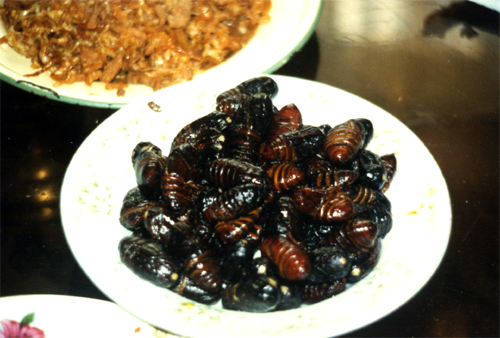
Kaiko/Silk worms/蚕

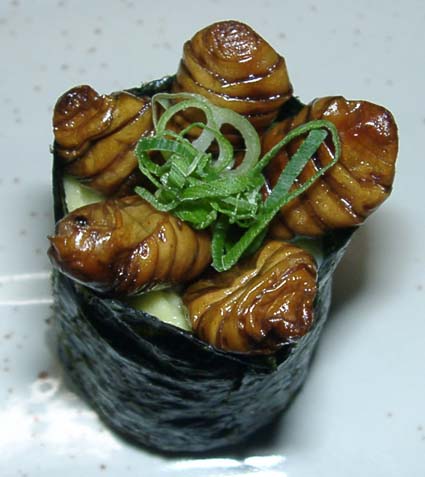
Like locusts, silk worms can be eaten after having stewed them in soy sauce, mirin, sake and spices.

They are ven found as sushi!

They are popular just dry-fried, making for a crsipy snack!
It is said that a single silk worm has the protein equivalent of three chicken egg yolks!

Hachi no ko/bee larvae/蜂の子

Bee or more aptly honey bee larvae have been eaten all over the world since men (animals) prowled our planet.
They are of course sweet and healthy (yes!), so it is only a matter of finding a way to make them look appetizing.
They are very popular deep-fried (see picture above) in Japan,

where they are also stewed with soy sauce, mirin, Japanese sake and of course, honey!

Saza Mushi/Trichoptera/ザザ虫

Now, these are real buggers/critters (how about feeding them to spammers? LOL)!
The plate above featur: カワゲラ/kawagera, トビゲラ/tobigera and ヘビトンボ/hebitonbo. Could not find their names in English!

They have been “popular” in Japan for a long time. Most are caught near rivers in clean areas (!).
They are cooked/stewed in mirin, Japanese sake and soy sauce for a long time, I cantell you!

RECOMMENDED RELATED SITES:
Bread + Butter, Comestilblog, Greedy Girl, Bouchon For 2, Zoy Zhang, Hungry Neko, Mangantayon, Elinluv Tidbit Corner, Maison de Christina, Chrys Niles, Lexi, Culinary Musings, Eats and Everything, Bite Me New England, Heather Sweet, Warren Bobrow, 5 Star Foodie, Frank Fariello, Oyster Culture, Ramendo, Alchemist Chef, Ochikeron, Mrs. Lavendula, The Gipsy Chef, Spirited Miu Flavor, Wheeling Gourmet, Chef de Plunge, Sushi Nomads, Island Vittles, The French Market Maven

Please check the new postings at:
sake, shochu and sushi,
—————————————-
日本語のブログ
—————————————-
Japanese Cuisine: Ika-Meshi/Rice-stuffed Squids

Squids and rice are cheap anywhere in the world, and many gastronomies combine the two.
In Japan rice stuffed squids are called Ika Meshi/烏賊飯.

The best squids for this kind of dish are spear squids or Yari Ika/槍烏賊 in Japanese. But any kind of long squid variety, large or small should be fine with this basic recipe!

INGREDIENTS: This is the basic, therefore I leave the exact quantities to you!

-Squid (or small squids)
-Rice: normal Japanese round rice
-Glutinous rice: Mochi Kome in Japanese
-Japanese sake (if unavailable dry white wine)
-Soy sauce
-Sugar
-Water

RECIPE:

Take the head, tentacles and all innards off/out.
Don’t forget that the tentacles are edible raw, or cooked!
Clean the squid thoroughly under running cold water.

Wash the rice.
The rice should be an equal quantity of normal rice and glutinous rice.
Soak in clean cold water for a whole night inside the fridge.
Before cooking drain thoroughly.

Fill the squid with rice.
Don’t overfill it as the rice will gain in volume upon cooking and will break the squid if too much is pushed inside. Just fill the squid pushing the rice in gently without expanding the squid.

Close/lock the squid with a wooden toothpick to prevent the rice from spilling out.

Fill a pan with enough water for the squid to “float”.
Add Soy sauce, Japanese sake and sugar. That is when you have to experiment. You may also add spices but do experiment there., too. Chili pepper should be ok!
Cover with lid and let cook over a small fire.
Stew until the squid is cooked. The rice having been soaked all night should be ready.
Take the squid out carefully. Peel off the thin membrane/skin which be broken in places by then.
pull the toothpick out.
Serve it whole or cut as in top picture. Decorate with green leafy vegetables.

Here is what you can do with smaller squids!

RECOMMENDED RELATED SITES:
Bread + Butter, Comestilblog, Greedy Girl, Bouchon For 2, Zoy Zhang, Hungry Neko, Mangantayon, Elinluv Tidbit Corner, Maison de Christina, Chrys Niles, Lexi, Culinary Musings, Eats and Everything, Bite Me New England, Heather Sweet, Warren Bobrow, 5 Star Foodie, Frank Fariello, Oyster Culture, Ramendo, Alchemist Chef, Ochikeron, Mrs. Lavendula, The Gipsy Chef, Spirited Miu Flavor, Wheeling Gourmet, Chef de Plunge, Sushi Nomads, Island Vittles, The French Market Maven

Please check the new postings at:
sake, shochu and sushi,
—————————————-
日本語のブログ
—————————————-

Japanese Cuisine: Tebasaki Karaage/Deep-fried Chicken Wings

I seem to have entered a chicken mode these days! LOL
Chicken Wings in Japanese is Tebasaki/手羽先, meaning H”and Wing Extremities”!
This is a very popular morsel in this country where nothing is thrown away as far as food is concerned.
We can find some really fat/meaty ones in the market here.
They make for great snacks with beer, sake or wine!

Here is a basic (there are many variations!) recipe in deep-fried style:

Tabasaki/Chicken Wings!

INGREDIENTS:

-Chicken Wings: 8 (choose them as large as possible!)

Marinade:
-Japanese sake: 1 tablespoon (if unavailable, use white wine)
-Salt and black pepper: to taste
-Honey (liquid): 1/2 tablespoon
-Other spices: optional

Sauce:
-Garlic: 1 clove (grated)
-Sesame seeds: to taste
-Japanese sake: 2 tablespoons
-Soy sauce:1+1/2 tablespoons
-Salt: 1/2 teaspoon
-Sesame seeds: to taste (don’t be afraid to use plenty!)
-Honey (liquid): 1 tablespoon
-Other spices: optional (I use a little star anise)

RECIPE:

-Clean the chicken wings if necessary.
Sponge off any water with kitchen paper.
Place them in a bowl with the marinade ingredients. Stir them well, pressing the marinade into them with your fingers.

-Mix the sauce ingredients in a separate bowl.

-Deep-fry the marinated chicken wings in oil heated to 170 degrees. Take them out as soon as they attain a light colouring.

-Heat the oil to 180~185 degrees Celsius and deep-fry the chicken wings in two stages until they are completely cooked and crispy.

-Place the chicken wings on a grill long enough to let the excess oil drop from them.
Drop them in the bowl containing the sauce while they are still hot, mix well and serve on dish with greens.

For a closer view!

Easy, isn’t it?

RECOMMENDED RELATED SITES:
Bread + Butter, Comestilblog, Greedy Girl, Bouchon For 2, Zoy Zhang, Hungry Neko, Mangantayon, Elinluv Tidbit Corner, Maison de Christina, Chrys Niles, Lexi, Culinary Musings, Eats and Everything, Bite Me New England, Heather Sweet, Warren Bobrow, 5 Star Foodie, Frank Fariello, Oyster Culture, Ramendo, Alchemist Chef, Ochikeron, Mrs. Lavendula, The Gipsy Chef, Spirited Miu Flavor, Wheeling Gourmet, Chef de Plunge, Sushi Nomads, Island Vittles, The French Market Maven

Please check the new postings at:
sake, shochu and sushi,
—————————————-
日本語のブログ
—————————————-

Bryan Baird’s Newsletter (2010/01/20)

Baird Beer & Taproom Events Bulletin
bryan-sayuri.gif

Dear Taproom Friend & Baird Beer Enthusiast:

We are three weeks into 2010 (the beginning of Baird Brewing’s second decade) and this is our first New Year email bulletin. This Internet silence has not been due to a barren beer cellar. In fact, we are bursting at the seams with a bevvy of winter seasonal brews awaiting release. Today, we announce the debut of several of these.

Dark Sky Imperial Stout (ABV 8.5%): This foreboding stout is a beer lover’s winter dream come true. It is pitch-black in color, unctuous in body, elusively complex in flavor, warming in alcohol and piquantly hoppy. This 2010-release version is slightly more British in character than previous versions: e.g. more British malt, lower IBU and milder hop varieties, less use of Japanese black sugar, and fermentation with a British ale yeast.
This year, due to my own forgetful blunder, only one double-batch of Dark Sky was brewed and all of it was bottled (633 ml). None of it, therefore, is available on draught. It will be available in bottle-conditioned form beginning Thursday, January 21 at all of our Taproom pubs and at other fine Baird Beer retailing establishments in Japan. Next year, so long as I manage to keep my job, I promise broad draught availability.

Okini Old Ale (ABV 6.5%): Old Ales derive their name from the fact that they undergo a long period of ageing in the package before release. The historical roots of this classic ale style are English. Old Ales tend to be moderately high in alcohol, medium to full in body, and somewhat sweet and vinous in flavor. Okini (meaning ‘thank you’ in Kansai dialect) Old Ale is the brainchild of our former brewer, Molly Browning. She formulated the recipe and brewed the beer on her final day of work back in August, 2008 and she did so in a spirit of thanks to all those who had given her support and friendship during her tenure in Japan with Baird Beer. Molly, we say ‘thanks’ in return.
Okini Old Ale is available both in kegs and bottles (633 ml). It will begin pouring from our Taproom taps on Thursday, January 21 and should be on the shelves and behind the bars of other Baird Beer retailers in Japan on or around the same date.

In addition to these two general releases, we also will be hooking up the hand pumps this Thursday at our Fishmarket and Nakameguro Taprooms to begin pouring a new small-batch Real Ale: Wheaty Porter (ABV 5%). This moderate strength, smooth drinking Porter has the unique attribute of being wheat-based (55%) rather than barely-based. It is a terrific winter session beer. Also relatively new to the hand pumps at all three Taprooms is another maiden-brewed Real Ale: Kiwi Single-Hop Dark Ale (ABV 4.8%). The single hopping of this fruity, low-gravity dark ale occurs with the New Zealand hop, Hallertau Aroma. It is another excellent moderate alcohol winter alternative in this season of otherwise very strong beers.

Finally, please mark your calendar for the dates of the upcoming Nakameguro Taproom Big Beer Winter Week (Thursday, February 11 through Friday, February 19). This is the week in which we feature a huge lineup of strong ales and lagers and match them with special treats from the kitchen. This year, we will be working in tandem with the team at Nagano Trading to offer a broad menu of Big Beers imported direct from the United States in addition to a robust lineup of Baird Big Beers. More event details will be announced shortly.

Cheers,

Bryan Baird
Baird Brewing Company
Numazu, Japan
HOMEPAGE


The Japan Blog List

———————————
Must-see tasting websites:
-Sake: Tokyo Through The Drinking Glass, Tokyo Foodcast, Urban Sake, Sake World
-Wine: Palate To Pen, Warren Bobrow, Cellar Tours
-Beer: Good Beer & Country Boys, Another Pint, Please!
-Japanese Pottery to enjoy your favourite drinks: Yellin Yakimono Gallery
——————————–
Please check the new postings at:
sake, shochu and sushi

—————————————-
日本語のブログ
—————————————-

Cold Avocado Soup

Avocadoes are popular, plentiful and becomeing cheaper.
Here is a hearty and delicious, but simple recipe for a refreshing soup, especially in hot climate.
Bear in mind you will have to check the Chicken Bones Soup Stock recipe first!

INGREDIENTS: For about 4 people

-Avocadoes: 2 large
-Lemon juice: half a lemon
-Chicken bones soup stock: 1 cup/200 cc/ml
-Yoghurt: 2~3 cups/400~600 cc/ml
-Salt: a little
-Black pepper to taste
-Other spices: optional and to taste

RECIPE:

Choose your avocadoes ripe.
Cut them cleanly and throw seed away.
Peel carefully and cut into quarters.

Drop the avocado quarter into a large food processor.

Squeeze in the juice of half a lemon.

Add the chicken bones soup stock.
A cup is the right amount. More, and the taste will greatly vary!

Add the yoghurt.
As for the yoghurt you can add mre if you really wish to.

Process until smooth.

Add salt and pepper (and optional spices).
Process quickly to mix them in.
Check taste and rectify if needed.

Serve in glass plates or bowls.
Do think oabout the presentation!

RECOMMENDED RELATED SITES:
Bread + Butter, Comestilblog, Greedy Girl, Bouchon For 2, Zoy Zhang, Hungry Neko, Mangantayon, Elinluv Tidbit Corner, Maison de Christina, Chrys Niles, Lexi, Culinary Musings, Eats and Everything, Bite Me New England, Heather Sweet, Warren Bobrow, 5 Star Foodie, Frank Fariello, Oyster Culture, Ramendo, Alchemist Chef, Ochikeron, Mrs. Lavendula, The Gipsy Chef, Spirited Miu Flavor, Wheeling Gourmet, Chef de Plunge, Sushi Nomads, Island Vittles

Please check the new postings at:
sake, shochu and sushi,
—————————————-

日本語のブログ
—————————————-