Tag Archives: 美食

Sushi Restaurant: Sushi Ko (’09/09/25)

SUSHIKO-09-25-5

Last night, I took two of my students to Sushi Ko in Shizuoka City to introduce them to the highest quality for the best value sushi in town.
Most sushi restaurants in Japan do not advertize their prices, whereas Sushi Ko does so expcept for the sashimi of thday, which are nonetheless of very good value.

Moreover they serve local seafood whenever possible, and seasonl one only. You do not visit Sushi Ko to fill yourself with cheap fat rolls, but to appreciate healthy top class sushi and sashimi.

SUSHIKO-09-25-9

My students, being both ladies. we ordered a Chablis bottle to start.
Halfway, I ordered for myself a glass of succulent Shizuoka Sake, “Shosetesu/正雪 brewed by Kansawagawa Brewery (located in Yui, one of the best spots for fihing in the Prefecture!).
SUSHIKO-09-25-8
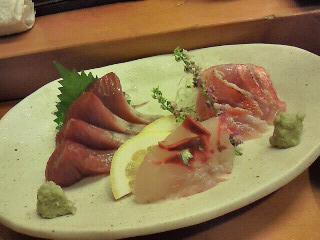
Sashimi: Katsuo/bonito, Shimaaji/Stripde Jack and Kinmedai/plendid alfonsino

Since the last time I visited the place in June with the Missus, the seasonal fish haven’t changed that much yet and we almost ordered the same.
We started with a plate of sashimi consisting of katsuo/bonito, shimaaji/striped jack (a variety of saurel) and kinmedai/plendid alfonsino (a variety of grouper) all caught off Shizuoka’s shores!
SUSHIKO-09-25-4

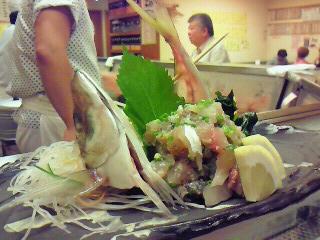
Next we ordered a “tennen-aji” a saurel caught in the wild as a tataki/Japanese-style tartare served with the rest of the fish.
SUSHIKO-09-25-3

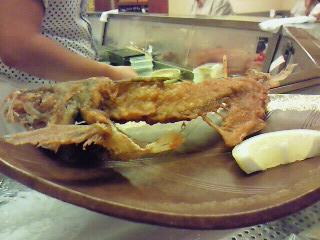
The fish being extremely fresh, its bones and head were later served deep-fried/karaage!
SUSHIKO-09-25-5

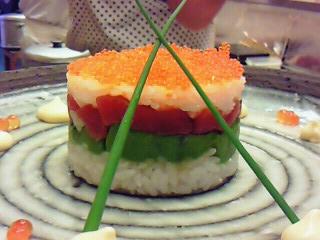
Then, it was for the Sushi Ko classics:
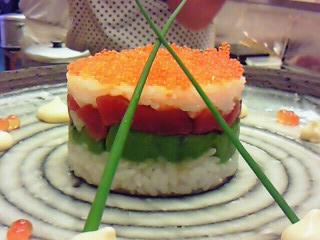
Sushi Millefeuille with maguro/tuna, kyuuri/cucumber, avocado adn topped with tobikko/flying fish roe!
SUSHIKO-09-25-2

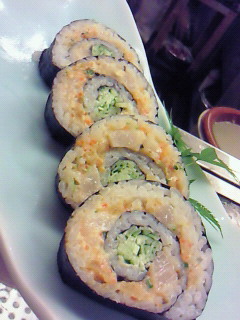
Piri kara hotate maki/spicy scallops roll. A superlative roll made with with finely cut scallops, tobikko, chili pepper, finely chopped leeks and peanuts with mayonnaise and what else.
A must at Sushi Ko!
SUSHIKO-09-25-1

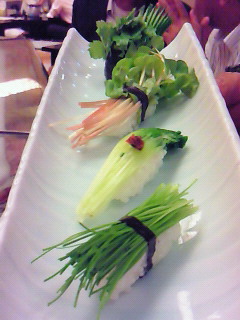
A plate of vegan sushi!

SUSHIKO-09-25-6

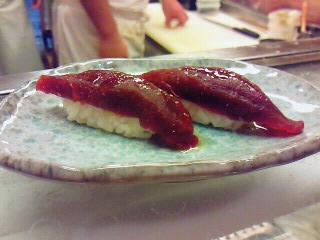
The last order is unfortunately going to creat consternation among some of my friends in the US: kujira/whalemeat seasoned with a little salt and a good amount of goma a bura/sesame oil without any siy sauce. Succulent!

Sushi Ko
shizuoka City, Aoi Ku, Ryogae-cho. 2-3-1 (Aoba Koen)
Tel.: 054-2512898
Business Hours: 17:00~25:00. 17:00~23:00 (Sundays)
Closed on Wednesdays
Reservations recommended
Credit cards OK
HOMEPAGE (Japanese)

RECOMMENDED RELATED SITES:
Warren Bobrow
Bread + Butter
5 Star Foodie
Frank Fariello
Mangantayon
Tokyo Foodcast
Tokyo Through The Drinking Glass
Urban sake

Please check the new postings at:
sake, shochu and sushi

—————————————-
日本語のブログ
—————————————-
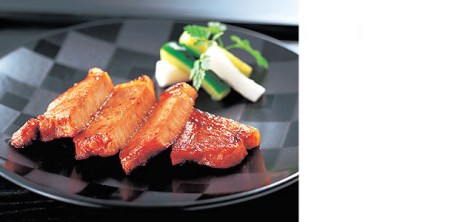
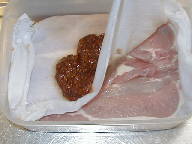
Japanese Cuisine: Buta Miso Tsuke/Miso-pickled Pork

BUTA-MISO-1

The Japanese use miso not only for soup or seasoning but also to preserve other foods, eggs, fish and meat in particular
I would like to introduce here a very easy and tasty recipe to preserve and season pork:
Miso-pickled pork!

INGREDIENTS: For 4 persons

-Pork: 4 large slices of 100g each with as little fat as possible
-Miso: 400 g
-Sugar: 80 g
-Mirin/Sweet sake: 3 tablespoons
-Japanese sake: 1 tablespoon
-Ginger: grated, half a tablespoon

RECIPE:

BUTA-MISO-2

-In a separate bowl drop miso, sugar, mirin, Japanese sake and grated ginger.
Mix well.

BUTA-MISO-3

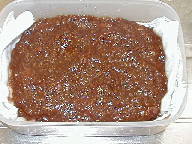
-In a large recipient drop half of the miso mix, spread all over the bottom and insides of the recipient and flatten it with a spatula.

BUTA-MISO-4

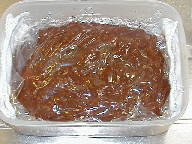
-After having placed the pork slices in one single layer, lay a piece of gauze all over the meat (wet the gauze with clean water and press all water out of cloth). Pour the remaining miso mix over the gauze.

BUTA-MISO-5

-Spread the miso evenly.

BUTA-MISO-6

-Cover with cellophane paper and leave inside refrigerator for 24 hours.

BUTA-MISO-7

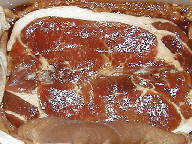
-The pork will attain a certain transparency upon pickling.

BUTA-MISO-8

-Fry slowly on a frypan. Take care not to burn the miso!

ANOTHER DISH SAMPLE:
BUTA-MISO-1a

RECOMMENDED RELATED SITES:
Warren Bobrow
Bread + Butter
5 Star Foodie
Elinluv Tidbit Corner
Think Twice
Frank Fariello
Mangantayon
Hapabento

Please check the new postings at:
sake, shochu and sushi

—————————————-
日本語のブログ
—————————————-
Japanese Cuisine: Tamago Miso Tsuke/Miso-pickled Egg Yolk

TAMAGO-MISO-1

Eggs are one single ingredient used all over the World (except for the glacial caps mybe!), and people have come up with infinite ways of preserving them.
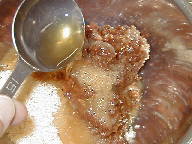
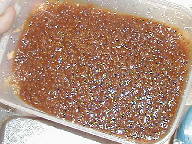
Tamago Miso Tsuke/卵黄味噌漬け is a popular way in Japan to preserve egg yolk in miso.
I decided to publish this very simple recipe as it could become useful for a tasty decoration!

INGREDIENTS:

-Raw eggs: 2
-Japanese sake: half a tablespoon
-Miso: 50 g
-Sugar: half a tablespoon

RECIPE:

TAMAGO-MISO-2

-Mix miso, Japanese sake and sugar well.

TAMAGO-MISO-3

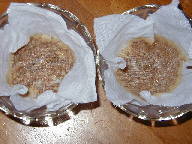
-Line two cups (narrow bottom and wide top) with gauze cloth (first clean it in cold clean water and press out all water). Pour half of the miso mix on each.

TAMAGO-MISO-4

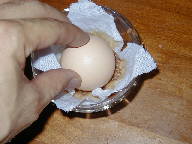
-Wash the egg and wipe it clean of water. Use it to fashion a “bed” inside the miso.

TAMAGO-MISO-5

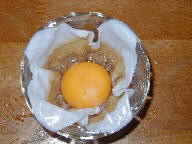
-Break the egg and separate yolk from white. Drop the Egg yolk (only!) inside the miso bed. Cover with cellophane paper and leave inside the refrigeartor for 2 days.

TAMAGO-MISO-6

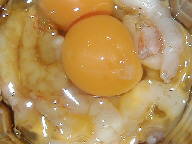
-After the first two days take the cup out and turn the egg yolk over delicately with a spoon. Leave in the fridge for three~four more days.
It should be ready by then!
It can be safely preserved inside a tightly closed tupperware inside the fridge for up to ten days!

RECOMMENDED RELATED SITES:
Warren Bobrow
Bread + Butter
5 Star Foodie
Elinluv Tidbit Corner
Think Twice
Frank Fariello
Mangantayon
Hapabento

Please check the new postings at:
sake, shochu and sushi

—————————————-
日本語のブログ
—————————————-
Japanese Cuisine: Datemaki/Tamagoyaki Roll

DATEMAKI-1

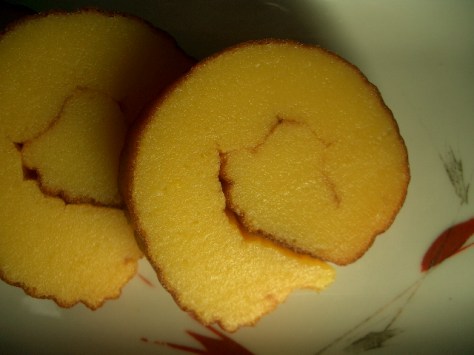
I do not need to tell you how much tamagoyaki/Japanese Omelette and Maki/Rolls are popular, do I?LOL
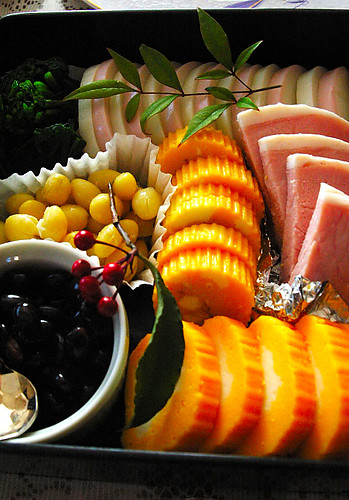
Now, many of you have seen and wondered how to make those Tamagoyaki Rolls? Their real name is “Date maki/伊達巻.
There are cheap and dubious varieties abounding, and frankly speaking, I would recommend everyone to make their own than buy cheap “junk food”-style ones ready-made at supermarkets, so here is a simple and deicious recipe.
It also has the advantage to be very healthy and become a full full meal with a salad!

INGREDIENTS:

-Eggs: 5
-White fish or shrimp (without skin, shell or bones!): 100 g
-Sugar: 3 tablespoons
-Mirin/sweet sake: 3 tablespoons
-Soy sauce: half a tablespoon

RECIPE:

DATEMAKI-2

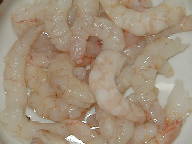
-This time shrimps were used. I repeat: do not forget to take of heads and shells!

DATEMAKI-3

-In a blender/mixer drop 2 eggs (without the shells!LOL), the sugar, mirin and soy sauce. Blend for 30 seconds.
Add the remaining 3 eggs (without the shells! I told ya, dinya?) and blend for 30 more seconds.

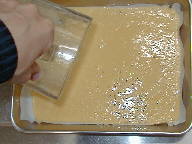
DATEMAKI-4

-Line the bottom of 20×26 cm rectangular mold with a sheet of cooking paper. This should result in an approximately 7 mm thick omelette.

DATEMAKI-5

-Bake in oven at 200 degrees Celsius for 25 minutes.
The surface of the omelette should attain a nice even brown colour.

DATEMAKI-6

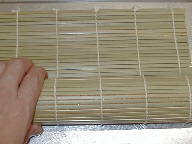
-Roll the omelette with a sushi roll bamboo sheet.
The brown surface should on the outside, meaning that you should lay the omelette on the bamboo sheet upside down.
Do this while the omelette is hot.
Don’t wait for it to cool down!

DATEMAKI-7

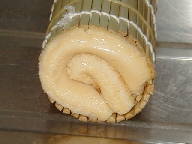
-Roll the omelette tight and bind the whole with a string or rubber band.

DATEMAKI-8

-Wait at least for 30~40 minutes for the egg roll to cool down completely.
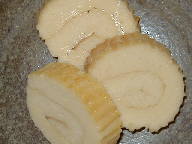
Cut and serve!

DATEMAKI SAMPLE PICS:

DATEMAKI-PIC-1

-Simple is best?

DATEMAKI-PIC-2

-Combined in O-Sechi New Year Bento

DATEMAKI-PIC-3

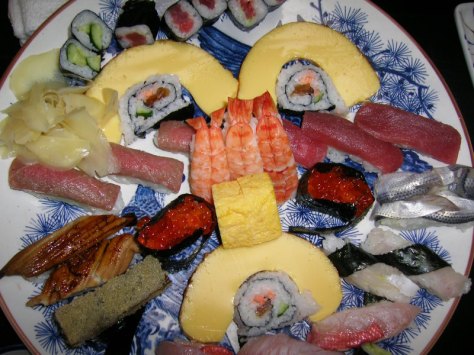
-Combined with sushi

RECOMMENDED RELATED SITES:
Warren Bobrow
Bread + Butter
5 Star Foodie
Elinluv Tidbit Corner
Think Twice
Frank Fariello
Mangantayon
Hapabento

Please check the new postings at:
sake, shochu and sushi

—————————————-
日本語のブログ
—————————————-

Japanese Cuisine: Yuzu Koshio/Lime Chili Mix-Recipe

YUZU-KOSHIO-1

Yuzu Koshio or lime and Chili mix is prepared with green hot chili (as opposed to red one) and lime skin/zest.
It is quite commnon in Kyushu Island, especially in Oita Prefecture, as well as far as in Okinawa.
It is quickly becoming more and more popular all over Japan, and is even locally produced in our Prefecture, Shizuoka!
It is a very versatile condiment that can be used in all kinds of Asian cuisines by vegans, vegetarians and omnivores alike!

Here is a simple recipe. Don’t forget you can replace green chilies with red chilies for two varieties!

INGREDIENTS:

-Green lime: 1 large
-Fresh green chilies: 6
-Salt: to taste

RECIPE:

YUZU-KOSHIO-2

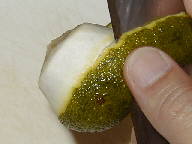
-Peel the lime.
Wash the lime zests and green chilies in clean cold water.

YUZU-KOSHIO-3

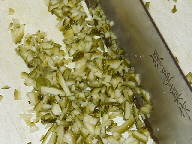
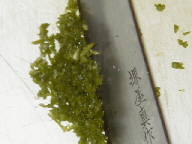
-Chop lime zests as fine as possible.

YUZU-KOSHIO-4

-Cut the chilies in two, discard the seeds and chop them all as fine as possible.

YUZU-KOSHIO-5

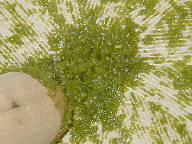
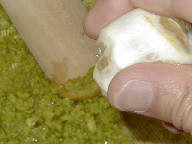
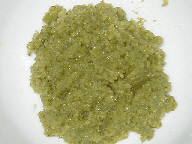
-Grind lime zests and chilies with a pestle so as to obtain a paste.

YUZU-KOSHIO-6

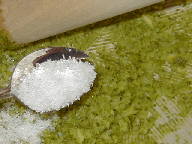
-Add salt (experimentation might be needed there) and mix well.

YUZU-KOSHIO-7

-Add lime juice (experimentation might be needed there, too) and mix well.

YUZU-KOSHIO-8

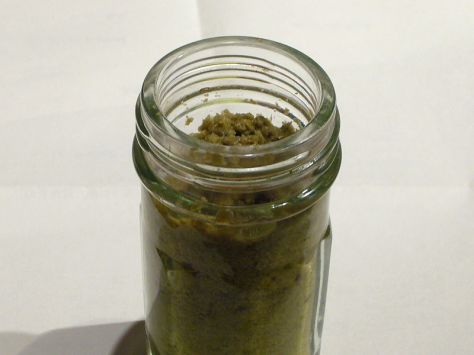
-Wrap the mix in cellophane paper and store in a tupperware box, or pour it inside a small bottle. Keep it in the fridge away from the light.
Consume as soon as possible!

RECOMMENDED RELATED SITES
Not-Just-Recipes
Bengal cuisine
Cooking Vegetarian
Frank Fariello
Warren Bobrow
Bread + Butter
5 Star Foodie
Elinluv Tidbit Corner
Think Twice
Frank Fariello
Mangantayon
Hapabento

Please check the new postings at:
sake, shochu and sushi

—————————————-
日本語のブログ
—————————————-

Japanese Cuisine: Buri Teriyaki/Yellowtail inTeriyaki Sauce

BURI-TERIYAKI

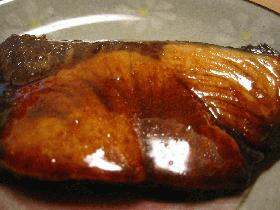
Here is a simple recipe for preparing fish in teriyaki style.
I chose Yellowtail/buri as it is about to come in season!

INGREDIENTS: For 3 people

-Yellowtail slices/steaks: 3
-Salad Oil: 1 tablespoon

Tare/sauce:
-Soy sauce: 4 tablespoons
-Mirin/sweet sake: 4 tab;espoons
-Japanese sake: 4 tablespoons
-Sugar: 2 tablespoons

RECIPE:

– Prepare the tare/sauce first by mixing all the ingredients well in a small bowl.

-Heat oil in frypan.
Fry fish on the their skin first, however narrow. Then fry on one side util a nice colour is attained.

-fry other side until a nice colour is attained. Lower fire. Cover with lid and steam fry for 2~3 minutes.

-Add all tare/sauce.
Fry on a low fire for 7~8 minutes, scooping the sauce over the fish regularly.
It will be ready whenthe sauce has reduced and started caramelizing!

NOTE:
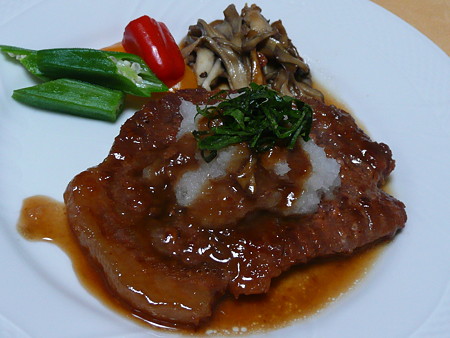
-Serve it topped with grated daikon!

RECOMMENDED RELATED SITES:
Warren Bobrow
Bread + Butter
5 Star Foodie
Elinluv Tidbit Corner
Think Twice
Frank Fariello
Mangantayon
Hapabento

Please check the new postings at:
sake, shochu and sushi

—————————————-
日本語のブログ
—————————————-

Bryan Baird’s Newsletter (2009/22)

Baird Beer & Taproom Events Bulletin 2009 #22
bryan-sayuri.gif

Dear Taproom Friend & Baird Beer Enthusiast:

Football season has kicked off and fall is in full motion. We are responding at Baird Beer with the release of two more autumn season brews: Sparkling Strawberry Ale & Brewmaster’s Blunder Rye Lager.

*Sparkling Strawberry Ale (ABV 7.0%):

Each year we brew a special ale with freshly picked Shizuoka strawberries. This year’s version is a strong golden ale tinged with strawberry hues of amber that is provocatively aromatic and piquantly tart in its berry accented flavor. The warm alcohol finish will help keep you toasty on a brisk autumn evening. Draught and bottle (633 ml) versions are now available at Baird Beer retailers througout Japan.

*Brewmaster’s Blunder Rye Lager (ABV 6.2%):

Rye malt adds a wonderful peppery bite to the flavor of a beer. Unfortunately, it is wickedly difficult to process in the brewhouse. Brewmaster’s Blunder was our first attempt at brewing with rye malt. I stuck the glutonous mash, abandoned the lauter in midstream and lost major kettle volume. The resulting original gravity, and hence alcohol content, was higher than planned. Nonetheless, we saw this problemmatic brew through to packaging and then lagered it for one year. The delicious result of this mistake we are now sharing with you. Don’t ask us to replicate it because I am sure we can’t! Brewmaster’s Blunder Rye Lager is available only on draught at Baird Beer retailing pubs and restaurants in Japan.

Nakameguro Taproom Real Ale Week

We are kicking off a week highlighting the glories of traditional English Real Ale today (Monday, September 21) at the Nakameguro Taproom. Four handpump dispensed Baird real ales will be poured all week, each accompanied by a special food dish designed to complement and enhance the real ale flavor experience. The four Real Ales to be served are:

-Nakameguro Bitter Batch 014 (Ordinary Bitter aggressively hopped with American varieties)
-Tradition Single Hop Ale (zesty golden ale single hopped with German Hallertau Tradition hops)
-Son of Rising Strong Pale Ale (similar to our Rising Sun Pale Ale but higher in gravity, alcohol and hop punch)
-SchwarzAle (we designed a recipe for a German Schwarz lager, fermented it with an ale yeast, and are dispensing it in classic English fashion)

The Nakameguro Taproom (as well as the Fishmarket and Harajuku Taprooms) will be open from noon until midnight Monday, Tuesday and Wednesday of this special Japan national holiday week. The Fishmarket Taproom will be closed on Thursday, September 24.

Booktoberfest at Nakameguro Taproom (Sunday, October 11, noon to midnight)

The Nakameguro Taproom is joining hands with the Beers for Books organization (www.beersforbooks.org) to raise money for the Room to Read charity which purchases books for poverty-stricken kids in third world countries. All day long on October 11, the Nakameguro Taproom will donate 100 yen per drink ordered to the Room to Read charity. The day will include a charity book sale, beer knowledge quiz with prizes for the winners, and other fun events. Please mark your calendar and plan to join Sayuri and me at this fun and festive good-cause event. More details will be forthcoming shortly.

Cheers,
Bryan Baird

Baird Brewing Company
Numazu, Japan
HOMEPAGE


The Japan Blog List

———————————
Must-see tasting websites:
-Sake: Tokyo Through The Drinking Glass, Tokyo Foodcast, Urban Sake, Sake World
-Wine: Palate To Pen, Warren Bobrow, Cellar Tours
-Beer: Good Beer & Country Boys, Another Pint, Please!
-Japanese Pottery to enjoy your favourite drinks: Yellin Yakimono Gallery
——————————–
Please check the new postings at:
sake, shochu and sushi

—————————————-
日本語のブログ
—————————————-

For Vegan and Vegetarians! “Forgotten” Vegetables 13: Ulluque/Ulluco

ULLUQE-1

SYNOPSIS:
Organic agriculture and biodiversity have in recent years brought about a rediscovery of many “forgotten” vegetables that people especially in Europe and France conscientiously tried to forget as they reminded them of the privations suffered during WWII. The same people had then to make do with untraditional vegetables because potatoes, carrots and so on were confiscated by occupying forces or their own armies.
With sustainibility and bioagriculture made more important by the deficiencies of modern mass agriculture, those “forgotten” vegetables have suddenly come to the fore for the pleasure of all, and that of course of vegetarians and vegans!

This particular series of postings will introduce these vegetables one by one. I hope they will become useful for a long time to come to all my vegan and vegetarian friends!
1) Scorsonere/Oyster Plant
2)Potimarron
3) Vitelotte
4) Rutabaga
5) Cardon
6) Panais/Parsnips
7) Patisson
8) Topinambour
9) Crosne
10) Cerfeuil Tubereux
11) Poiree
12) Oca

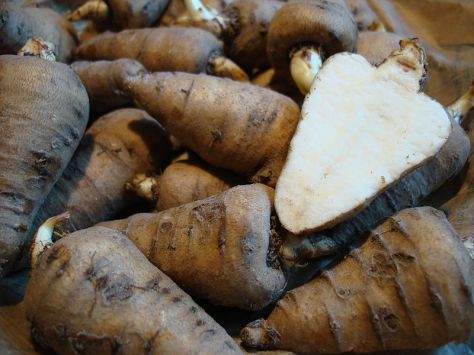
The Ulluque (French), Ulluco (Spanish), or Ullucus tuberosus (Latin) is a plant grown primarily as a root vegetable, secondarily as a leaf vegetable.

ULLUQUE-1
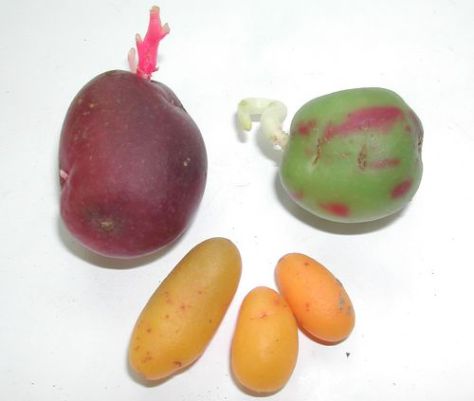
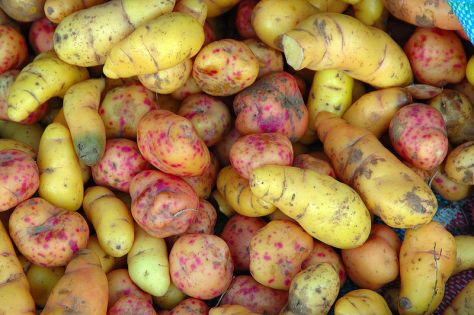
Ulluque Tubers

The Ulluque is one of the most widely grown and economically important root crops in the Andean region of South America, second only to the potato. It is known there with the common name of papa lisa, but also by the regional names melloco (Ecuador), olluco (Peru, chugua (Colombia) or ruba (Venezuela). The leaf and the tuberous root are edible, similar to spinach and the potato, respectively. They are known to contain high levels of protein, calcium, and carotene. Papalisa were originally used and discovered by the Incas.

The origin and development of the ullucu in the cold climates of the Andes suggest that it is one of the crops most suited to the complex agro-ecology of areas between 3000 and 4000 m. Although the precise role of hybridization, introgression and mutation in the ullucu is not known, these must have acted—along with natural and human selection pressure—to favour the plant’s distribution and adaptation to the various types of Andean climate and soils.

ULLUQUE-LEAF
Ulluque Leaves

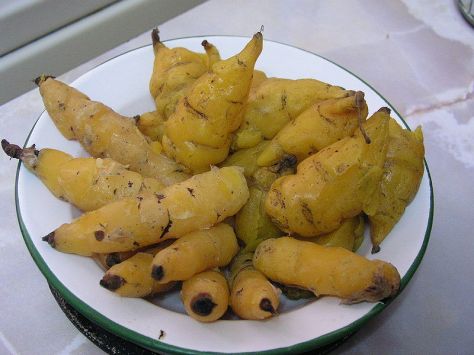
Oblong and thinly shaped, they grow to be only a few inches long. Varying in color, papalisa potatoes may be orange/yellow in color with red/pink/purple freckles. In Bolivia, they grow to be very colorful and decorative, though with their sweet and unique flavor they are rarely used for decoration.

The major appeal of the ulluco is its crisp texture which, like the jicama, remains even when cooked. Because of its high water content, the ulloco is not suitable for frying or baking but it can be cooked in many other ways like the potato. In the pickled form, it is added to hot sauces.

ULLUQUE-Cocido-Boyacense
Cocido Boyacense (Courtesy of Gastrononia & Cia)

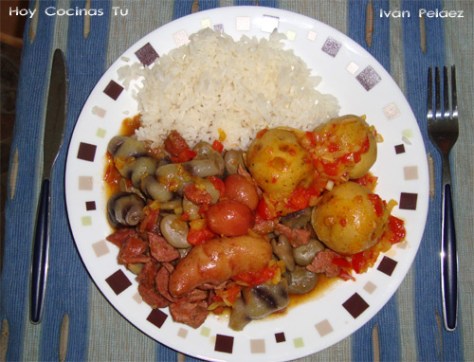
It is a basic ingredient together with the cubio in the typical Colombian dish cocido boyacense. They are generally cut into thin strips.

Oblong and thinly shaped, they grow to be only a few inches long. Varying in color, papalisa potatoes may be orange/yellow in color with red/pink/purple freckles. In Bolivia, they grow to be very colorful and decorative, though with their sweet and unique flavor they are rarely used for decoration.

RECOMMENDED RELATED SITES
Not-Just-Recipes
Bengal cuisine
Cooking Vegetarian
Frank Fariello

Please check the new postings at:
sake, shochu and sushi

—————————————-
日本語のブログ
—————————————-

For Vegan and Vegetarians! “Forgotten” Vegetables 12: Oca

OCA-1

SYNOPSIS:
Organic agriculture and biodiversity have in recent years brought about a rediscovery of many “forgotten” vegetables that people especially in Europe and France conscientiously tried to forget as they reminded them of the privations suffered during WWII. The same people had then to make do with untraditional vegetables because potatoes, carrots and so on were confiscated by occupying forces or their own armies.
With sustainibility and bioagriculture made more important by the deficiencies of modern mass agriculture, those “forgotten” vegetables have suddenly come to the fore for the pleasure of all, and that of course of vegetarians and vegans!

This particular series of postings will introduce these vegetables one by one. I hope they will become useful for a long time to come to all my vegan and vegetarian friends!
1) Scorsonere/Oyster Plant
2)Potimarron
3) Vitelotte
4) Rutabaga
5) Cardon
6) Panais/Parsnips
7) Patisson
8) Topinambour
9) Crosne
10) Cerfeuil Tubereux
11) Poiree

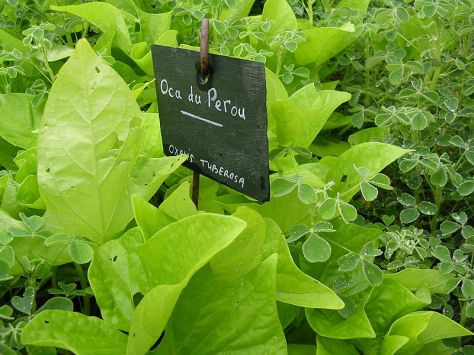
Oca or Oca du Perou in French or Oxalis tuberosa in Latin is an annual plant that overwinters as underground stem tubers. These tubers are known as oca , oka or New Zealand Yam. The plant was brought into cultivation in the central and southern Andes for its tubers which are used as a root vegetable. The plant is not known in the wild.

The stem tubers of oca form in the ground in the autumn. These are commonly boiled before eating although they may also be eaten raw. The leaves and young shoots can be eaten as a green vegetable. Introduced to Europe in 1830 as a competitor to the potato and to New Zealand as early as 1860, it has become popular in that country under the name New Zealand yam and is now a common table vegetable there although it was practically abandonned in France, Europe and North America. It is also widely known in the Polynesian islands of the South Pacific under the name yam.

OCA-2

The flavour is slightly tangy, and texture ranges from crunchy (like a carrot) when undercooked, to starchy or mealy when fully cooked. Though the original Andean varieties are widely variable in colour from purple to yellow, the usual New Zealand variety is a fleshy pink.

Oca can be boiled, baked or fried. In the Andes it is used in stews and soups, served like potatoes or can be served as a sweet. Oca is eaten raw in Mexico with salt, lemon and hot pepper.

OCA-3

Not only the tubers, but also the leaves are edible.

Oca is one of the important staple crops of the Andean highlands, second only to the potato due to its easy propagation, and tolerance for poor soil, high altitude and harsh climates.

Ocas need a long growing season, and are day length dependent, forming tubers when the day length shortens in the autumn. In areas with harsh winter climates, early frosts may cut back the foliage before the tubers have a chance to form. In tropical areas where the days are unchanging in length, oca will not set a crop successfully.

OCA-4
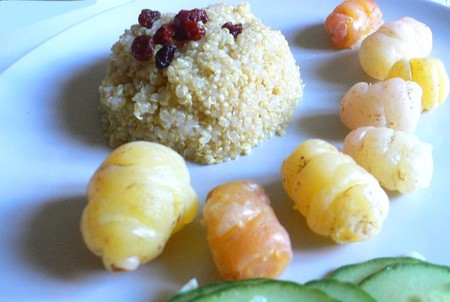
Oca and Quinoa (Courtesy of Blogbio)

Ocas are fairly high in oxalates, concentrated in the skin, and traditional Andean preparation methods were geared towards reducing the oxalate level of the harvested vegetable. This is done by exposure to sunlight which increases the glucose content and sweet taste of the oca. Recent oca cultivars have a lower oxalate content, and have also been selected for more flexibility in day lengths.

In Ireland during the 19th Century, following the potato famine, many people suggested to grow Peruvian Oca, but the project was quickly abandonned due to insufficient yields.

RECOMMENDED RELATED SITES
Not-Just-Recipes
Bengal cuisine
Cooking Vegetarian

Please check the new postings at:
sake, shochu and sushi

—————————————-
日本語のブログ
—————————————-

Japanese Seasonal Fish: Buri/Yellowtail

BURI-1

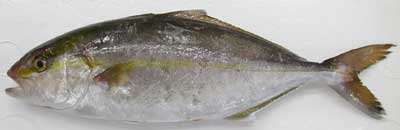
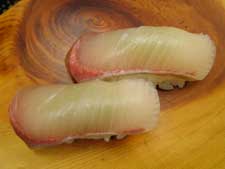
As explained in a precedent posting on Kampachi we are just between two distinct seasons for Buri/鰤 or Yellowtail, as Hiramasa or young Yellowtail is caught in Summer and Buri/Mature Yellowtail is caught in Winter.

How do you recognize them apart?

BURI-AGO
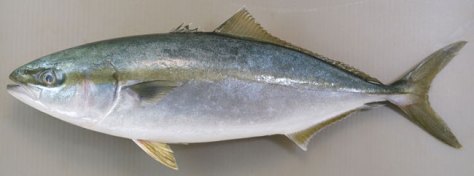
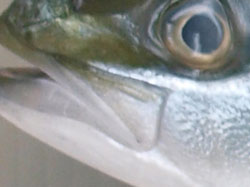
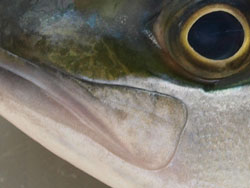
Buri has a “square chin” as they say in Japanese. Look at the back extremity of the mouth,

BURI-HIRAMASA-AGO
whereas it is more rounded for the hiramasa.

In Japan they are caught south of Hokkaido Island.
They come under many names: Wakashi, Inada, Warasa, Wakana, Hamachi and Mejiro.

Buri/Yellowyail is most popular when caught in rising waters in Winter when called Kan Buri/寒鰤 or “Cold Yellowtail.

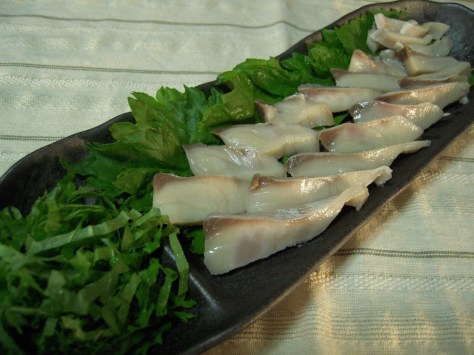
BURI-SASHIMI
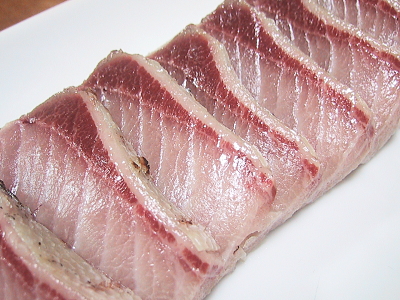
Buri sashimi after light grill/Aburi/炙り

Young Yellowtails are best eaten as sahimi or

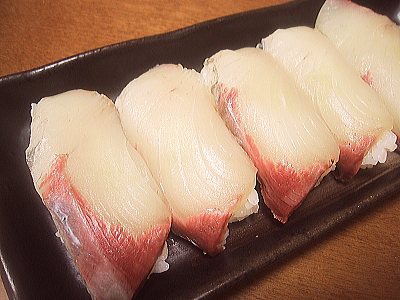
BURI-SUSHI-2
Buri Sushi

or as sushi as they are leaner then.

Older buri, cotaining a lot of fat, are better eaten cooked

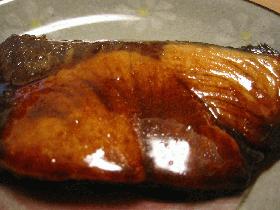
BURI-TERIYAKI
Buri Teriyaki,

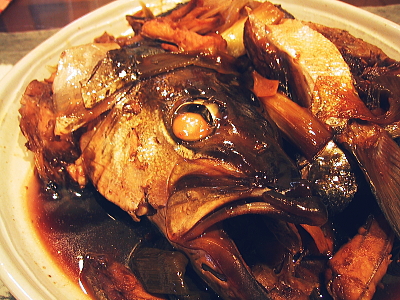
BURI-ARA
Buri Ara with the whole head, or

BURI-MOPPONZU
Buri Mopponzu, including innards, especially liver and heart.

In the West of Japan, a New Year Meal cannot be conceived without buri!

Natural Buri catch accounts for 70,000~80,000 tonnes, while human-raised buri accounts for over 130,000 tonnes every year.
Imported buri account for less than 3,000 tonnes.

RECOMMENDED RELATED SITES:
Warren Bobrow

Please check the new postings at:
sake, shochu and sushi

—————————————-
日本語のブログ
—————————————-

For Vegan and Vegetarians! “Forgotten” Vegetables 11: Poiree/Spinach Beet

POIREE

SYNOPSIS:
Organic agriculture and biodiversity have in recent years brought about a rediscovery of many “forgotten” vegetables that people especially in Europe and France conscientiously tried to forget as they reminded them of the privations suffered during WWII. The same people had then to make do with untraditional vegetables because potatoes, carrots and so on were confiscated by occupying forces or their own armies.
With sustainibility and bioagriculture made more important by the deficiencies of modern mass agriculture, those “forgotten” vegetables have suddenly come to the fore for the pleasure of all, and that of course of vegetarians and vegans!

This particular series of postings will introduce these vegetables one by one. I hope they will become useful for a long time to come to all my vegan and vegetarian friends!
1) Scorsonere/Oyster Plant
2)Potimarron
3) Vitelotte
4) Rutabaga
5) Cardon
6) Panais/Parsnips
7) Patisson
8) Topinambour
9) Crosne
10) Cerfeuil Tubereux

Poiree is regaining a lot of favour these days, as far as in Japan. It is a herb vegetable which can eaten in two different ways, depending if you use the leafy part or the harde central stem part.

Its Latin name is Beta vulgaris, whereas it is called bette à cardes, blette, poirée à cardes in French,Schnittmangold in German, spinach beet or foliage beet in English and remolacha de mesa in Spanish.

This plant is a variant of the maritime beet (Beta vulgaris L. subsp. maritima (L.) Arcang. in Latin) which grows spontaneously along European shores.

Poirée is bi-annual (it takes two to mature) and cultivated for its leaves. These are large and their central part can come into many colours, making them very attractive for salads (after boiling) and other preparations:

POIREE-JAUNE
Yellow Poiree

POIREE-ORANGE
Orange Poiree

POIREE-ROSE
Pink Poiree

POIREE-ROUGE
Red Poiree

POIREE-VERTE-RACE-BERAC
Green Berac Poiree

POIREE-VERTE-RACE-SUISSE
Green Swiss Poiree

POIREE-LUCULLUS
Lucullus Poiree

The leaves can be prepared eaten like spinach, whereas the stems after being cut and cooked can prepared in gratin, tarts, quiches, raviolis and soups.

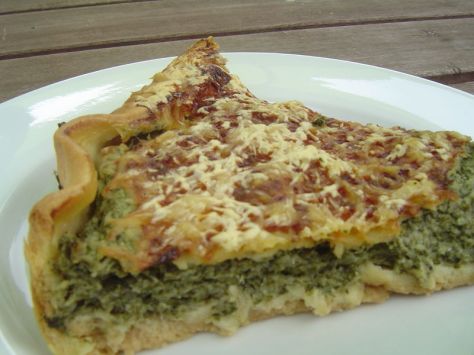
POIREE-TARTE
Poiree Tart (Courtesy of Tarabiscotta)

RECOMMENDED RELATED SITES
Not-Just-Recipes
Bengal cuisine
Cooking Vegetarian

Please check the new postings at:
sake, shochu and sushi

—————————————-
日本語のブログ
—————————————-

Japanese Seasonal Fish: Kampachi/Amberjack

KAMPACHI-1

With the first days of Autumn upon us, Kampachi or Amberjack is appearing on our plates in Japan!

The fish seems to have so many names in any language: Amberjack, Purplish Amberjack, Yellowtail, Greater Yellowtail, and Ruderfish in English, whereas in Japanese it is called Kampachi, Akahana, Kampa, or Shokko among others, not accounting for regional names!.

KAMPACHI-3

It is caught along Central and South Honshu Island, including a lot in Suruga Bay in Shizuoka Prefecture!
It is a very popular fish as it happens to come just in between Hiramasa/Young Japanese Amberjack-Five ray Yellowtail in Summer and Buri/Mature Japanese Amberjack-Five Ray Yellowtail in Winter, making a favourite for the season, but bringinga lot of confusion on foreign tables because of the similar names.
Kampachi (Seriola dumerili (Risso) in Latin) and Buri (Seriola quinqueradiata Temminck and Schlegel in Latin) are very similar but their season is different. Beware of scams! Actually the meat looks different.

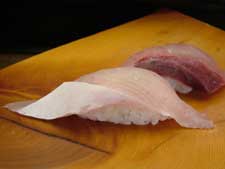
KAMPACHI-2BURI-SUSHI
Kampachi vs Buri Sushi

Natural Kampachi is quite rare in Japan these days whereas human-raised are plenty.

Kampachi is savoured in many ways: Sashimi & Sushi, Grilled (Yakimono), Simmered (Nizuke), Meuniere and fried.
Choose comparatibely small specimens. Beware of the large cheap specimens!
Ask for a variation in Sushi called “Kampachi Aburi”?kampachi lightly grilled on one side: a beauty!

RECOMMENDED RELATED SITES:
Warren Bobrow

Please check the new postings at:
sake, shochu and sushi

—————————————-
日本語のブログ
—————————————-

For Vegans & Vegetarians! “Forgotten Vegetables 10: Cerfeuil tubereux/Parsnip Chervil

CERFEUIL-1

SYNOPSIS:
Organic agriculture and biodiversity have in recent years brought about a rediscovery of many “forgotten” vegetables that people especially in Europe and France conscientiously tried to forget as they reminded them of the privations suffered during WWII. The same people had then to make do with untraditional vegetables because potatoes, carrots and so on were confiscated by occupying forces or their own armies.
With sustainibility and bioagriculture made more important by the deficiencies of modern mass agriculture, those “forgotten” vegetables have suddenly come to the fore for the pleasure of all, and that of course of vegetarians and vegans!

This particular series of postings will introduce these vegetables one by one. I hope they will become useful for a long time to come to all my vegan and vegetarian friends!
1) Scorsonere/Oyster Plant
2)Potimarron
3) Vitelotte
4) Rutabaga
5) Cardon
6) Panais/Parsnips
7) Patisson
8) Topinambour
9) Crosne

Cerfeuil Tubereux (French) or Chaerophyllum bulbosum (Latin) is a species of flowering plant in the carrot family known by several common names, including turnip-rooted chervil, tuberous-rooted chervil, bulbous chervil, and parsnip chervil. It is native to Europe and western Asia. This is a tall annual herb with fringelike divided leaves and large umbels of white flowers.

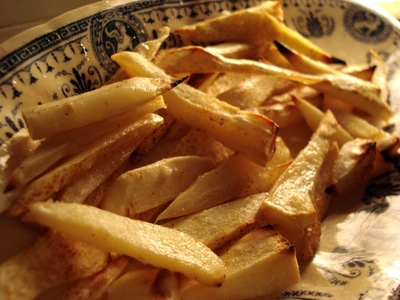
CERFEUIL-CHIPS
Cerfeuil Tubereux chips

The plant is cultivated on a small scale in parts of Europe for the edible root, which looks like a dark gray carrot with yellowish-white flesh.
After harvest it is stored for a few months, during which time the sugar content increases via hydrolysis of starch by amylases.

CERFEUIL-FRIED
Sauteed Cerfeuil tubereux

Storage also allows the development of the root’s flavor, which is reminiscent of chestnut. The root is prepared by boiling.
Actually all potato recipes can be applied to cerfeuil tubereux!

The reason it is rare is because it is difficult to plant and that they require 5 months storage for better taste!

RECOMMENDED RELATED SITES
Not-Just-Recipes
Bengal cuisine
Cooking Vegetarian

Please check the new postings at:
sake, shochu and sushi

—————————————-
日本語のブログ
—————————————-

Japanese Cuisine: Yakitori/Tsukune-Recipes 5

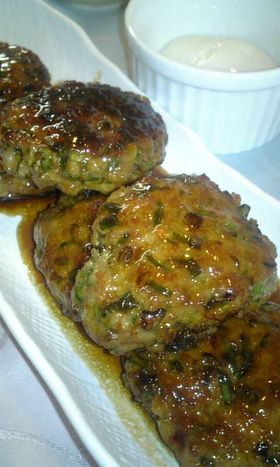
TSUKUNE-PORK

Here is the fourth of (long) series of simple recipes that I hope will stimulate into you creating more recipes!

INGREDIENTS: For 2 persons

-Minced pork: 200 g
-Thin green leeks: 4~5
-Ginger, grated: 1 piece, 5×5 cm
-Japanese sake: 2 tablespoons
-Soy sauce: 3 tablespoons
-Naga imo/glutinous Japanese yam/Chinese yam, grated: 2 tablespoons
-Cornstarch: 1 tablespoon

Tare/Sauce
-Soy sauce: 2~3 tablespoons
-Sugar: 2 teaspoons
-Mirin/sweet sake: 3 tablespoons

-Japanese sake: 2 tablespoons (for steam/fry)
-Onsen Tamago/Japanese-style poached eggs (normal poached eggs are great!)

RECIPE:

-Chop the thin leeks coarsely.
In a bowl mix minced pork, Japanese sake, soy sauce and grated ginger until smooth.

-Add grated Chinese yam and mix until smooth. It will take some time as the yam will tend to separate at first. Add cornstarch and mix until smooth.

-Add chopped leeks and mix well.

-Heat a frypan. Pour in a little oil. Make 6~7 round patties/tsukune by hand or with a mold.
Fry both sides on a medium fire.

-When “eyes” have appeared on both sides, reduce fire to small. Add sake, cover with glass lid and steam fry.

-When you are sure that the tsukune are well cooked, add soy sauce, mirin and sugar and let simmer until sauce has “caramelized” the tsukune.

-Serve with a poached egg in a separate ramequin for each person who will choose either to break it directly over the tsukune or use it as a dip (the former will be probably easier!LOL)

NOTE:
-You can increase the amount of leeks and gingeraccording to your taste.
-You may replace leeks with parsley.
-Any soy sauce is fine, although a sweet variety is recommended. Otherwise you may increase the amount of mirin.

RECOMMENDED RELATED SITES:
Warren Bobrow
Bread + Butter
5 Star Foodie
Elinluv Tidbit Corner
Think Twice

Please check the new postings at:
sake, shochu and sushi

—————————————-
日本語のブログ
—————————————-
For Vegans & Vegetarians! “Forgotten Vegetables 9: Crosne/Chinese Artichoke-Knotroot

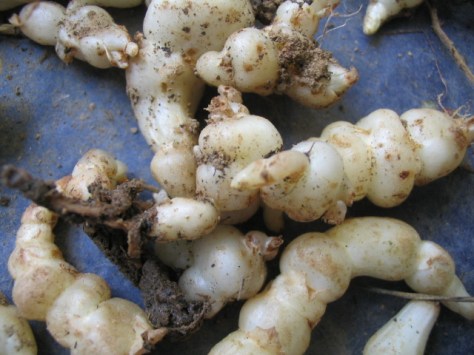
CROSNE-TUBER
Crosne tuber

SYNOPSIS:
Organic agriculture and biodiversity have in recent years brought about a rediscovery of many “forgotten” vegetables that people especially in Europe and France conscientiously tried to forget as they reminded them of the privations suffered during WWII. The same people had then to make do with untraditional vegetables because potatoes, carrots and so on were confiscated by occupying forces or their own armies.
With sustainibility and bioagriculture made more important by the deficiencies of modern mass agriculture, those “forgotten” vegetables have suddenly come to the fore for the pleasure of all, and that of course of vegetarians and vegans!

This particular series of postings will introduce these vegetables one by one. I hope they will become useful for a long time to come to all my vegan and vegetarian friends!
1) Scorsonere/Oyster Plant
2)Potimarron
3) Vitelotte
4) Rutabaga
5) Cardon
6) Panais/Parsnips
7) Patisson
8) Topinambour

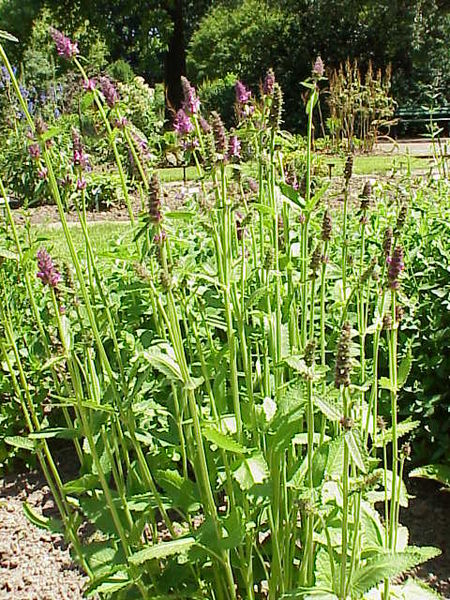
CROSNE-PLANT

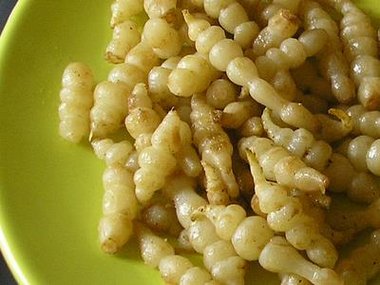
Crosne (Stachys affinis), otherwise known as the Chinese artichoke, knotroot, or artichoke betony, is an herbaceous perennial plant of the family Lamiaceae. Although its edible tuber can be grown as a root vegetable, it is a rare sight in the garden. From a cultivation standpoint this is rather odd — the plant is easy to grow, requiring neither staking nor earthing-up. The reason that it is so unpopular is the nature of the tubers — small, convoluted and indented, so that it is the cook rather than the gardener or the family who finds this vegetable frustrating. The thin skin is of whitish-brown or ivory-white. The flesh underneath, under proper cultivation, is white and tender. It is in season generally commencing with October.

The flavor of the tubers is delicate and delicious — they can be treated as topinambour/jerusalem artichokes in cooking. It is used as a vegetable, in salad compositions, but more so as a garnish.

In China, the Chinese artichoke is used primarily for pickling.

CROSNE-CHOROGI
Japanese Chorogi

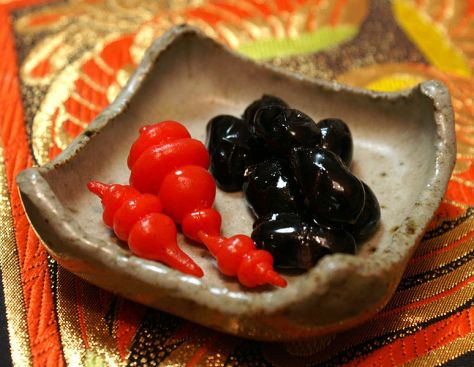
Its tuber is a part of Osechi cooked for celebrating Japanese New Year. Dyed red by leaves of red shiso after pickled, it is called Chorogi. In French cuisine, its cooked tuber is often served alongside dishes named japonaise or Japanese-styled.

It was introduced in France in 1882 by a retired French industry businessman called Auguste Pailleux, who had a passion for gardening and unusual plants which could be used for food.

CROSNE-CITY
Crosne City

Crosne was adopted as the name of his birthplace in 1960!
He planted them in his garden in the Essone near Paris and has his neighbours taste them. Their taste halfway between salsify and artichoke became an instant success!
The very following year they could be bought at the local food stands/markets!
But They soon fell out of favour, being too difficult to peel.

It has regained popularity since then and is mainly cultivated in France in Val de Loire, around Paris, in Bretagne, Bourgogne and Somme (northern France).

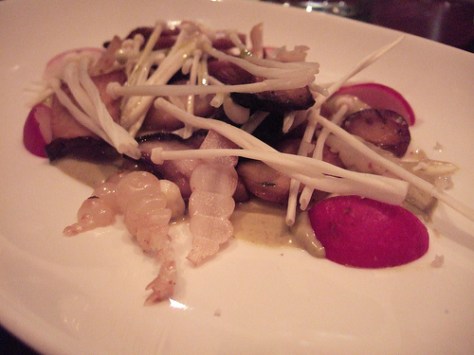
CROSNE-SALAD
Roasted Mushrooms and Crosnes Salad

They are presently sold over the counter pre-washed.
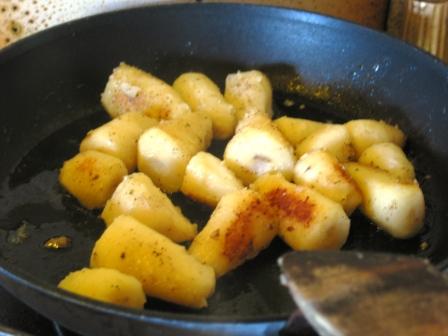
Blanchir/fry them over a hot fire for 2 minutes first. Then you can decline them into all kinds of dishes including cream, soup, mashed, fritters, etc.

CROSNES-CUMIN
Fried crosnes with cumin

RECOMMENDED RELATED SITES
Not-Just-Recipes
Bengal cuisine
Cooking Vegetarian

Please check the new postings at:
sake, shochu and sushi

—————————————-
日本語のブログ
—————————————-