Tag Archives: 静岡

Vegetables Facts and Tips (11): Lotus Roots/Renkon

lotus-root1

In Japan we are at the end of Lotus Roots season, but eat them all year round!
Lotus roots come from a plant called Nelumbo nucifera, also known by a number of names including Indian lotus, sacred lotus, bean of India, or simply lotus. This plant is an aquatic perennial. Under favorable circumstances its seeds may remain viable for many years.
A common misconception is referring to the lotus as a water-lily (Nymphaea), an entirely different plant.

Native to Greater India and commonly cultivated in water gardens, the lotus is the national flower of India and Vietnam.

The flowers, seeds, young leaves, and “roots” (rhizomes) are all edible. In Asia, the petals are used sometimes for garnish, while the large leaves are used as a wrap for food. In Korea, the leaves and petals are used as a tisane. Yeonkkotcha (연꽃차) is made with dried petals of white lotus and yeonipcha (연잎차) is made with the leaves. The rhizome (called ǒu (藕) in pinyin Chinese, ngau in Cantonese, bhe in Hindi, renkon (レンコン, 蓮根 in Japanese), yeongeun (연근) in Korean is used as a vegetable in soups, deep-fried, stir-fried and braised dishes. Petals, leaves, and rhizome can also all be eaten raw, but there is a risk of parasite transmission (e.g., Fasciolopsis buski): it is therefore recommended that they be cooked before eating.

FACTS:
-Season: September~December in Japan.
-Beneficial elements:
Lotus roots have been found to be rich in dietary fiber, vitamin C, potassium, thiamin, riboflavin, vitamin B6, phosphorus, copper, iron and manganese, while very low in saturated fat.
Various parts of the lotus are also used in traditional Asian herbal medicine.

TIPS:

-Choose specimens with a clear white cut section. There should not be any black spots.
-Use large specimen as they are easier to cut and use.
-To prevent oxydising, warp cut specimen into wet kitchen paper.
-Add vinegar to water when bolingthem to keep them white.
-The easiest way to peel them is to use a potato peeler!

COOKING:

The stamens can be dried and made into a fragrant herbal tea called liánhuā cha (蓮花茶) in Chinese, or (particularly in Vietnam) used to impart a scent to tea leaves. The lotus seeds or nuts (called liánzĭ, 蓮子; or xian liánzĭ, 鲜莲子, in Chinese) are quite versatile, and can be eaten raw or dried and popped like popcorn, phool makhana. They can also be boiled until soft and made into a paste, or boiled with dried longans and rock sugar to make a tong sui (sweet soup). Combined with sugar, lotus seed paste becomes one of the most common ingredient used in pastries such as mooncakes, daifuku, and rice flour pudding.

Japanese popular Renkon dishes:

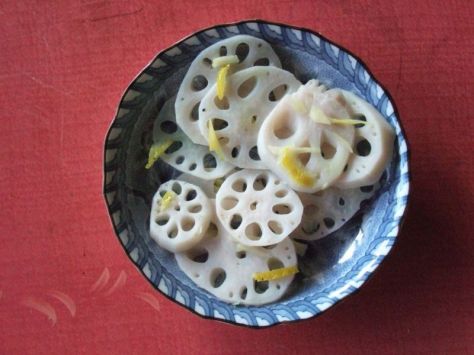
lotus-root-nimono

“NIMONO”

lotus-root-sumono

“SUMONO”

lotus-root-kimpira

“KIMPIRA”

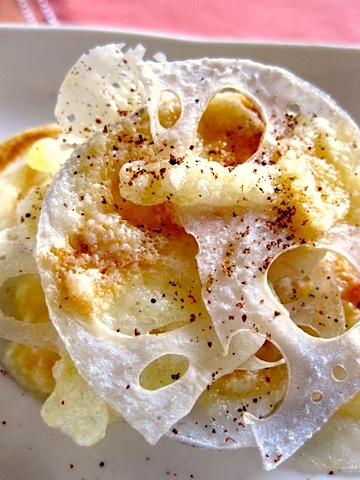
lotus-roots-chips

“CHIPS”

Please check the new postings at:
sake, shochu and sushi

—————————————-
日本語のブログ
—————————————-
Today’s Lunch Box/Bento (’09/23)

bento-09-04-16-a

Today Missus was still recovering from a bad fit of viral flu and it was her day-off from work. Moreover I was having a busy day. We agreed that a lunch box was on order, the more for it that it would become part of the Missus’ lunc, too!

bento-09-04-16-b

I hadn’t been eating much for the last three day, so she made quite a big bento!

bento-09-04-16-c1

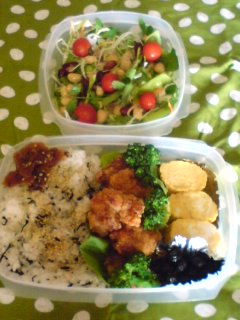
The “main dish” consisted of some of my favourites: Deep-fried garlic chicken (thigh parts off the bone) and tamagoyaki/Japanese omelette with boild brocoli, lettuce and home-stewed sweet blak beans.

bento-09-04-16-d

The steamed rice had been mixed with “hijiki/sweet seawedd” after cooking and sprinkled with plenty of white sesame seeds. The Missus added some pickled ginger as well.

bento-09-04-16-e

As for the salad, on a bed of chopped veg, canned beans, mini tomatoes, fresh cress and boiled pois gourmands/green peas in their pod.

It did take me some time to eat it all, but who am I to complain! LOL

Please check the new postings at:
sake, shochu and sushi

—————————————-
日本語のブログ
—————————————-

Shizuoka Shochu Tasting: Kogane-Danshaku by Sugii Brewery

kogane-danshaku

As a general rule I keep Shochu tasting postings to my other blog, Shizuoka Shochu, but for once I thought these tasting notes could help non-Japanese shochu lovers how to report on their favourite drink.
Please note that my style is very dry. Some will have have a more lyrical manner, and the better for it! LOL

Sugii Brewery in Fujieda City has come up with yet another creation of theirs! But once again, it is a “limited edition”. You do have to keep all your senses alert to discover these bottles.
Unlike Kagoshima Prefecture in Kyushu Island, Shizuoka-made shochu are not only exotic and extravagant, but rare and slightly more expensive. The labels certainly become collectors’ items!

Sugii Brewery: Kogane-Danshaku Shochu

Ingredients:
Kogane (Satsuma potato variety) and Danshaku (normal potato variety), both grown in Shizuoka Prefecture
Yeast: Shizuoka NEW-5 (Shizuoka Sake Yeast)
Fermented rice
Contents: 500 ml

Clarity: Very clear
Colour: Transparent
Aroma: Clean, strong, nutty
Taste: Sweetish, clean attack.
Deep roasted nuts.
Shortish tail with a dry finish.
Memory of coffee beans.

Overall: Unusual, clean, elegant shochu with lots of character and facets.
Combination of Satsuma yams and potatoes out of the ordinary! The use of Shizuoka Sake Yeast gives it a very regional flavour!
Best appreciated straight with plenty of ice!

Must-see tasting websites:
-Sake: Tokyo Through The Drinking Glass, Tokyo Foodcast, Urban Sake, Sake World
-Wine: Palate To Pen
-Beer: Good Beer & Country Boys, Another Pint, Please!
Chewy
-Japanese Pottery to enjoy your favourite drinks: Yellin Yakimono Gallery

Please check the new postings at:
sake, shochu and sushi

—————————————-
日本語のブログ
—————————————-

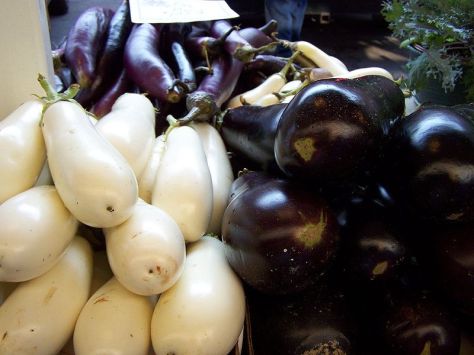
Vegetables Facts and Tips (10): Egg plants/Aubergines

aubergines-1

The eggplant, aubergine, or brinjal (Solanum melongena) is a plant of the family Solanaceae (also known as the nightshades) and genus Solanum. It bears a fruit of the same name, commonly used as a vegetable in cooking. As a nightshade, it is closely related to the tomato and potato and is native to India and Sri Lanka.

That for the Wikipedia definition. The word Aubergine is mainly used in Europe. It comes in many shapes, sizes and even colours, but they share the same facts.

FACTS:
-Season: June to September in the Northern Hemisphere, but are available all year round thanks to greenhouse cultivation.
-Main beneficial elements: Potassium, Vitamin C and B1
-90% is water, but the skin contains a lot of polyphenols so useful against aging and arteries cleaning!
It is also of a great help to fight diabetes.

VARIETIES:

As mentioned above, aubergines come in many varieties, but Japa has come up with another interesting kind:
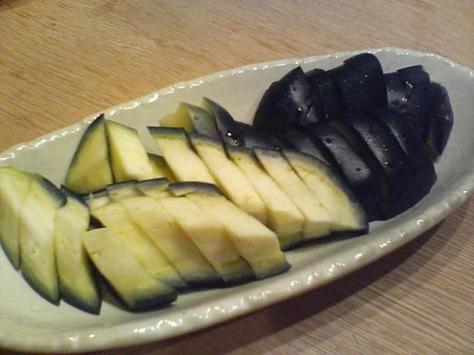
aubergines-mizu
“Mizu Nasu”, litterally “Water Aubergine”
It has the particularity that it can be eaten raw cut and served like sashimi! With miso, pickled plum flesh, wasabi or soy sauce, it opens all kindsof possibilities fro vegans, vegetarians and raw food lovers!

TIPS:

-Choose specimens with a deep colour, bright appearance and comparatively light weight.
-To preserve them, wrap them individually in cellophane paper before storing them in the refrigerator.
-Before cooking them, cut them and leave them in clear water util usage to prevent oxydizing.
If you want to fry them, cut them first and rub them with a lttle salt to take excess water out of them.

Please check the new postings at:
sake, shochu and sushi

—————————————-
日本語のブログ
—————————————-

Today’s Lunch Box/Bento (’09/22)

bento-09-04-13a

Today’s bento was “small” and could become a good suggestion for a small appetite!
The reason? The last few days I overate and overdrank myself and had been physically and mentally (that happens) very busy. When I woke up 5:30 the body just screamed a loud and painful “NO!”. This is a very rare occurrence and I will spare you form the details!

bento-09-04-13b

Only two (fairly big) nigiri/rice balls of freshly steamed rice and shopped fresh ginger covered with white sesame seeds.
Very tasty, actually!

bento-09-04-13c

The very simple salad consisted of my comfort food, tamagoyaki/Japanese omelette, Mini tomatoes, pois gourmands/wholly edible green peas, cress and pepper ham on a bed of chopped veg.

Large enough, I can guarantee you!

Please check the new postings at:
sake, shochu and sushi

—————————————-
日本語のブログ
—————————————-

Sushi Restaurant: Ginta

ginta-1

Yesterday, I had the pleasure to introduce a “hidden treasure” to my friends Anselmo and Ticiana Zeri with Ticiana’s moter, Helda, who were on their 6th visit of Japan. Anselmo had found my blogs some time ago as he researched on Japan and had contacted me for more information.
Anselmo then decided it was grand time to visit Shizuoka Prefecture.
It was my pleasure to guide them for two days in and around Shizuoka City.
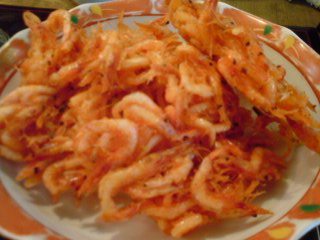
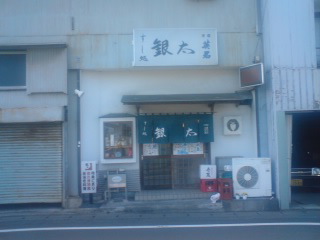
Yesterday I took them to Ginta, a minuscule Sushi restaurant not far from Yui Harbour famed for its sakura ebi/Cherry shrimps.
To cap it all we are in the middle of the season guaranteeing the best seafood available in this small city.

ginta-21

Now, Mr. Hara’s restaurant is unassuming and can be easily missed. But I can guarantee you you do need to reserve if you venture there at lunch as hordes of tourists and businessmen from all corners of Japan make a point tocome just to savour the region’s specialties.

There are indeed many possibilities, and a very good, amost ridiculous prices.
We decided to sample the 3,000 yen sakura ebi full course:

ginta-3

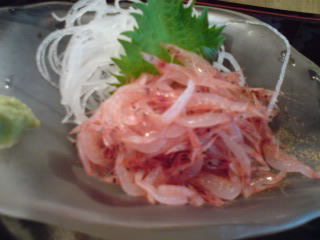
Raw Sakura Ebi, caught in the very morning in Suruga Bay.
Mr. Hara demostrated us how to recognize fresh Sakura Ebi. Take a few between two fingers. They should slip easily away!

ginta-4

Boiled sakura Ebi salad. Great with Eikun, the local sake available in Ginta!

ginta-5

Sakura Ebi lightly pickled in rice vinegar.

ginta-6

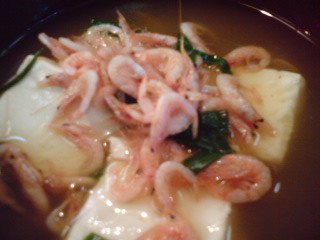
Sakura Ebi in “Suimono/clear hot soup” style with tofu.

ginta-11

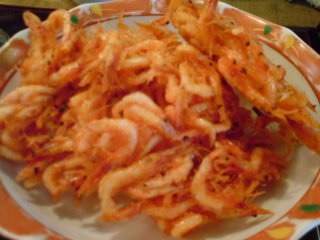
Sakura Ebi Kakiage/Sakura Ebi Tempura. Extremely generous portions.

ginta-7

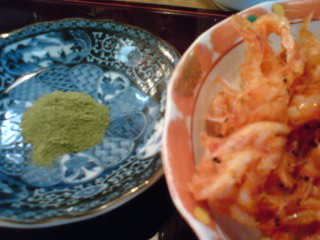
The Kakiage is served with salt and matcha tea mixture. Perfect with tempura! We hust ate them with our fingers!

ginta-8

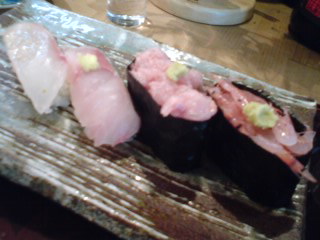
Sushi set (part of the full-course!):
Tai/Seabream sushi served with its deep-fried scales between the fish slice and rhe rice.
Aji/Horesemackerel-Saurel with a dash of fresh grated ginger.
Kawahagi/Filefish with its flesh chopped in tartare style with its fresh liver in gunkan manner topped with a dash of fresh grated wasabi. A rare morsel indeed!
Sakura Ebi in gunkan manner topped with a dash of fresh grated wasabi.
Mr. Hara advised us not to dip the sushi directly into the soy sauce, but to “brush” it with a piece of pickled ginger (provided on the same dish) after having dippe it into soy sauce. “That will be just quite enough soy sauce!”, he added.

Actually, once mr. Hara has warmed up to a particular customer, he can become an incredible source of information that even fishmongers at Tsukiji would not be able to equal! I can guarantee you an interesting report next I go there to sample his local fish sushi sets!

ginta-9

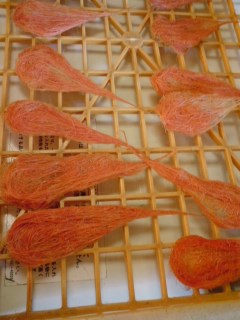
Now, what are these Sakura Ebi-shaped things?
This is another specialty of Yui: People there take the long antenna (three times as long as the body) and dry them in the sun after having “shaped them”. These will be used all year long crushed into powder over a bowl of freshly cooked rice!

Since the Missus gotextremely jealous of our little venture, you can expect a report soon!

GINTA
421-3111 Shizuoka Shi, Shimizu Ku, Yui cho, Imajuku, 165. (get off at Yui Station and walk to your right. Only a few minutes away)
Tel.: 0543-75-3004
Opening hours: 11:00~23:00
Closed on Tuesdays
Reservations on the telephone recommended!

Please check the new postings at:
sake, shochu and sushi

—————————————-
日本語のブログ
—————————————-

Sashimi Set at Tomii (’09-04)

tomii-09-04

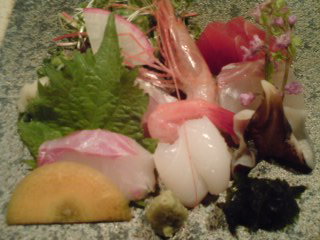
For all my regular visits at Tomii, my favourite Japanese Cuisine Restaurant in Shizuoka City, It had been some time since I last introduced one of their seasonal sashimi plates!

I need little to say anything about the quality and presentation as they are perect as usual, so I’ll just describe the assortment:

Front row, left to right:
Sakuradai Seabream with a sllice of yellow carrot, Grated wasabi, Yari Ika/Calamari variety/Squid, Torigai/Surf Clam with fresh seaweed in front.

Second row:
Behind the shiso/perilla leaf, Aji/Horsemackerel-saurl from Kogawa, Shizuoka, Amaebi/Sweet Prawn, Ishidai Seabream with Shiao/Perilla flowers.

Third row:
Aka daikon/ red Daikon and various herbs, Honmaguro/Blue fin tuna.
Hoped you enjoyed the explanation as much as I enjoyed the taste! LOL

TOMII
Shizuoka City, Aoi Ku, Tokiwa-cho, 1-2-7, Tomii Bldg, 1F
Tel.: 054-274-0666
Business hours: 17:00~22:00
Closed on Sundays
HOMEPAGE (Japanese)

———————————————–
Please check the new postings at:
sake, shochu and sushi

—————————————-
日本語のブログ
—————————————-
English Sake Brewer Master in Japan: Phillip Harper (2)

time-machine

A lot has been written and will be written both here in Japan and abroad on Phillip Harper as he has, with the likes of John Gauntner, Timothy Sullivan and Melinda Joe, established himself as one of the references proving once for all that Japanese sake has at last expanded beyond the confines of this island for the good of all.
It is only a question of time when sake breweries will become a part of life like wine and beer abroad as demonstrated by the five existing branches of large Japanese breweries in the United States employing a full American staff and Moto I, the entirely owned and run American Sake Brewery.

harper-1

What makes the difference is that Phillip has gone as far as becoming the only foreign sake “toji”/master brewer in a Japanese brewery, namely Ki no Shita Brewery in Kyoto Prefecture!
An Oxford graduate hailing from Cornwall, it took him 18 years of sheer courage and guts to break into the closely guarded world of Japanese sake to gain recognition and earn his master brewer status in 2001.
The media (including The Los Angeles Times) finally take good note of his achievements when he was formally asked by Owner Yoshito Kinoshita to become his new Master Brewer (incidentally Phillip had already held that position in Osaka for two years).

This the second of the three bottles I received from his fans in Tokyo. That particular one was sent to me by Etsuko Nakamura.

Kinoshita Brewery, TIME MACHINE Tamagawa
Dryness: -72
Acidity: 3.2 (very high compared to Shizuoka)
Rice milled down to 88%

Clarity: Slightly smoky (nothing wrong with this as it contains some lees)
Colour: Rich gold
Aroma: Powerful. Fruity. Plums
Body: Velvety
Taste: Powerful. Strong and pleasant attack. Complex. Flowery and fruity: plums and mirabelles. Memories of coffee beans and almonds.
Bitter chocolate peaking out later.
Liquorish with a hint of acidity.

Overall: I’ve been accused of not beingvery lyrical in my comments, whatever my feelings towards a wine or sake in spite of my great love for them. I suppose I’m too old to change! LOL
I waited until the very last glass (note, galss, not cup!) before writing my impressions.
Frankly speaking, an unknowledgeable person could be easily fooled into believing into thinking he is drinking wine! What with the bottle shape, the colour of the sake and the quaint label!
Liquorish, but not tart or overwhelming, I slowly savoured it like Sauternes or sweet white Port.
With plenty of translated explanations, it should hit the palate of some vaunted “tasters” anywhere in the world!

PHILLIP’S NOTES:

“We also do a barking mad sake called Time Machine that is made in the style of the Edo Period. Etsuko took a shine to it last year. We pressed this year’sTime Machine last week: specs are

SMV -70, Acidity 3.4, Amino acids 7.3, Alcohol 16.6.”
(Specs seem to vary with what is written on the labels)
Phillip later commented:
“The discrepancy in the data is because you drank last year’s
(slightly diluted) version: I gave the specs for this year’s
genshu – which, for your information, is already more deeply
coloured than the bottle you drank, only a week after pressing.”

———————————
Must-see tasting websites:
-Sake: Tokyo Through The Drinking Glass, Tokyo Foodcast, Urban Sake, Sake World
-Wine: Palate To Pen
-Beer: Good Beer & Country Boys, Another Pint, Please!
-Japanese Pottery to enjoy your favourite drinks: Yellin Yakimono Gallery
———————————————–
Please check the new postings at:
sake, shochu and sushi

—————————————-
日本語のブログ
—————————————-
Today’s Lunch Box/Bento (’09/21)

bento-09-04-07a

Yesterday’s bento was a simple sandwich pack as I wa too busy to eat a proper bento in tranquility.
Today’s lunch was definitely of the traditional kind:

bento-09-04-07c

I’ll talk about the rice later.
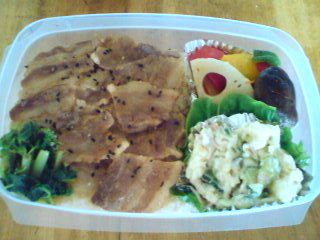
The meat are thin slices of pork oven-cooked in sauce and sprinkled with black sesame seeds. The sauce was typical Japanese soy based and spicy.
The “greens” you can see in the left bottom corner are actually wasabi pickles.
I bought some fresh wasabi leaves and flowers last night and the Missus pickled them immediately. They have a nice hot spicy taste, but not as strong as the root. Scooped little by little with rice,they are simply succulent.
The vegetables were cooked in the oven (3 minutes): renkon (lotus roots, which are just in season), shiitake, three color pimentoes.
The salad is a potato-pepper ham-cucumber-capers combination with a lettuce leaf.

bento-09-04-07d

The rice was “shooga maze gohan”/rice steamed with shredded fresh ginger (which are just appearing on the markets!) and later mixed with white sesame seeds. I must admit it is particulary delicious, and I often request it in season!

bento-09-04-07b

The extra salad consisted of smoked salmon on a bed of shredded veg and some fresh cress.

No dessert… oh well, the Missus has started that habit of fondling my love handles!

Please check the new postings at:
sake, shochu and sushi

—————————————-
日本語のブログ
—————————————-

Bryan Baird’s Newsletter (2009/9)

Baird Beer & Taproom Events Bulletin 2009 #9
bryan-sayuri.gif

Dear Taproom Friend & Baird Beer Enthusiast:

Two Baird Beer spring seasonals are being released today and will be pouring from the taps of our Taprooms as well as from those of other fine pubs and restaurants in Japan beginning Wednesday, April 8.

(1) Four Sisters Spring Bock (ABV 7 %):

Baird Four Sisters Spring Bock is brewed in the spirit of a German Maibock, albeit one of the type that was brewed centuries ago in the city of Einbeck and that was noted for its generous use of malted wheat. Four Sisters Spring Bock sports a deep copper-gold color and enjoys a sweet floral nose from aroma additions of Sterling hops. In the mouth, a rich malty character will introduce itself before quickly giving way to an extremely smooth, dry finish in which a hint of honeyed-malt flavor and estery alcohol character lingers.

Four Sisters Spring bock is available both in kegs and bottles (633 ml).

(12 Yamanashi Sumomo Ale (ABV 5.5%):

This is part of our Yamanashi prefecture fruited-ale series made possible by the cooperation of our friends at the fine Kofu pub, Four Hearts Cafe. Sumomo is a plum grown in Yamanashi prefecture and we add plenty of whole sumomos, broken and cut to expose the juicy interior, directly to the wort at kettle knock-out. This zesty, sprite ale is lightly hopped with additions of English Fuggles and has been re-fermented and conditioned in the keg for over six months.

Supplies of this 2008-brewed version are limited to kegs. We have saved a small quantity of bottles (360 ml) from the 2007-brewed version that have been conditioning beautifully in our cellar for well over a year.

Be sure to get your taste of these fine spring seasonals while the tasting lasts.

Cheers,
Bryan Baird

Baird Brewing Company
Numazu, Japan
HOMEPAGE


The Japan Blog List

Please check the new postings at:
sake, shochu and sushi

—————————————-
日本語のブログ
—————————————-

Wine Tasting at La Vigne

lavigne-tasting-1

Service: Excellent and very friendly
Facilities: great washroom, great cleanliness overall
Prices: reasonable, good value
no-smoking-logo!

As I found myself not busy with cricket due to heavy rain the night before I took the opportunity to visit la Vigne, the new French wine shop in Shizuoka which is conveniently equipped with a standing bar.
As usual I had the opportunity of making new from vastly different regions and ways of life as I tasted one of the dozen wines on offer:

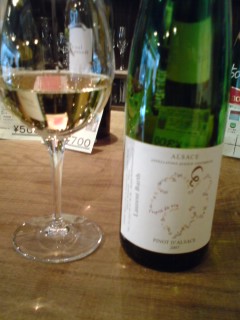
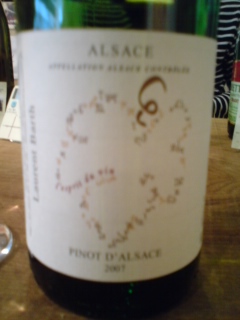
lavigne-tasting-2

Region: Alsace
Grapes: Pinot d’Alsace
Year: 2007
Producer/owner: Laurent Barth at Bennwihr

lavigne-tasting-3

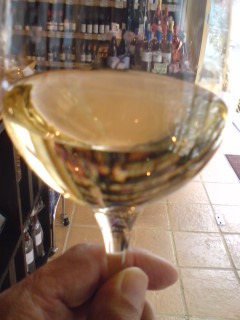
Clarity: Very clear and clean
Colour: Golden hue
Aroma: Light and fruity. Muscat. Elegant
Taste: Light, fruity, well balanced by pleasant acidity. Shortish tail. Light impression lingering at the back of the plalate. Muscat, memories of sweet raisins. Fleeting.

Overall: Would do well as an aperitif. Would marry well with light vegetables hors d’oeuvres and white flesh fish.
On the other hand, was subdued by the cheese I ate with it,
Probably best drunk on its own, very slightly chilled.

lavigne-tasting-4

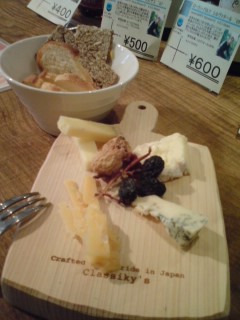
The “cheese tray” included (from top left around the clock):
Laguiole, Brie de Meaux, Bleu de Gex and 25-month Gouda.

LA VIGNE
420-0852 Shizuoka City, Aoi Ku, Gofuku-Cho, 17-2, 1F (within walking distance for Shizuoka JR Station in front of Fugetsuro!)
Tel. & Fax: 054-2054181
Business hours: 10:00~22:00
HOMEPAGE (Japanese)

Must-see tasting websites:
-Sake: Tokyo Through The Drinking Glass, Tokyo Foodcast, Urban Sake, Sake World
-Wine: Palate To Pen
-Beer: Good Beer & Country Boys, Another Pint, Please!
-Japanese Pottery to enjoy your favourite drinks: Yellin Yakimono Gallery
———————————————–
Please check the new postings at:
sake, shochu and sushi

—————————————-
日本語のブログ
—————————————-

English Sake Brewer Master in Japan: Phillip Harper (1)

harper-koonotori

A lot has been written and will be written both here in Japan and abroad on Phillip Harper as he has, with the likes of John Gauntner, Timothy Sullivan and Melinda Joe, established himself as one of the references proving once for all that Japanese sake has at last expanded beyond the confines of this island for the good of all.
It is only a question of time when sake breweries will become a part of life like wine and beer abroad as demonstrated by the five existing branches of large Japanese breweries in the United States employing a full American staff and Moto I, the entirely owned and run American Sake Brewery.

harper-1

What makes the difference is that Phillip has gone as far as becoming the only foreign sake “toji”/master brewer in a Japanese brewery, namely Ki no Shita Brewery in Kyoto Prefecture!
An Oxford graduate hailing from Cornwall, it took him 18 years of sheer courage and guts to break into the closely guarded world of Japanese sake to gain recognition and earn his master brewer status in 2001.
The media (including The Los Angeles Times) finally take good note of his achievements when he was formally asked by Owner Yoshito Kinoshita to become his new Master Brewer (incidentally Phillip had already held that position in Osaka for two years).

I have always been intrigued by this fellow sake-loving foreigner, and when Melinda Joe and Etsuko Nakamura started sending me some of his bottles, I decided it was grand time that I atoned for my ignorance and tasted his sake which has won so many fans in Japan and abroad!

Before I continue with this first of three (and hopefully more) bottles tasting report, I would like to point out that some will not agree with my heavily Shizuoka sake influenced palate and my “wine” tasting methods (just can’t get rid of my Burgundian origin!). I will just invite them to drink, taste and compare notes!

harper-koonotori

Ki No shita Brewery (kyoto Fu)
Tamagawa (Brand name), Junmai, Nama Genshu (unaltered original pressed sake), Muroka (unfiltered), Kimoto (traditional brewing method)
Rice: Gohyakumangoku
Rice milled down to 77%
Alcohol contents: 19~20 degrees

Clarity: Very clear
Colour: Almost transparent
Aroma: fruity, banana
Body: Velvety
Taste: Strong attack backed by alcohol.
Dry. Complex. Shortish tail. Fruity: Musk Melon. Coffee beans and cherries appearing later.
Hold its own well with food with a light mellow turn.

Overall: A sake devised for food, especially heavy food.
Strong, almost aggressive sake with an uncompromising character.
Turns more complex with the second glass. Elusive at times, but always with a fruity note so remiscent of Musk Melon.
For strong sake officionados!

PHILLIP’S NOTES:

Like all the kimoto and yamahai sakes we do here, this was made without the use of anything but water, rice and koji. We do not
add cultured yeast or anything else to the mash. It is pre-Meiji brewing, and the kimoto under question is precisely the kind of sake that we read about in Meiji Period texts – SMV well into double figures on the plus side, junmai of course, acidity well over two, and comfortably at modern levels of alcohol.

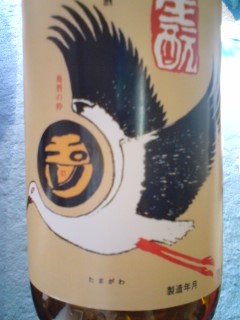
The rice for the kimoto you tasted is organic Gohyakumangoku grown 15 miles away near the haunt of the Oriental White Stork/コウノトリ (as depicted on the label). The methods are different from standard organic rice farming, as the prime intention is to provide a habitat for these
amazing birds. As you can see from the red sticker, some of the
price goes towards a support organization. This project is all about the
birds, so it would be great if you could give them a plug. FYI, the original artwork is by Sakane Katsuke, an eminent artist who happens to be the boss’s brother-in-law and is also the creator of our excellent Tamagawa logo.

———————————
Must-see tasting websites:
-Sake: Tokyo Through The Drinking Glass, Tokyo Foodcast, Urban Sake, Sake World
-Wine: Palate To Pen
-Beer: Good Beer & Country Boys, Another Pint, Please!
-Japanese Pottery to enjoy your favourite drinks: Yellin Yakimono Gallery
———————————————–
Please check the new postings at:
sake, shochu and sushi

—————————————-
日本語のブログ
—————————————-
Japanese Seasonal Fish: Striped Horse mackerel/Shimaaji

shimaaji-1

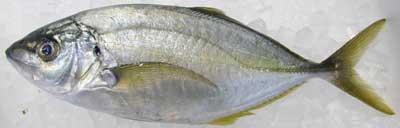
Shimaaji, or Striped Horsemackerel is one variety of Aji/Horsemackerel-Saurel.
Although the season is said to be in Summer, the taste varies little with the time of the year.
Striped Horsemackerel caught by anglers off the Izu Peninsula, Shizuoka Prefecture, are said to be the best in Japan.
It is known under the other names of Ookami, Kose and Katsuoaji.
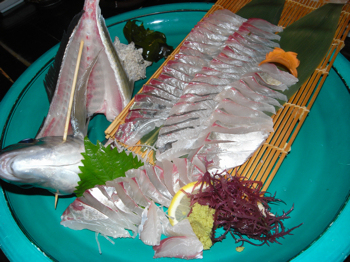
It is very popular as sashimi:

shimaaji-2

or as tataki (tartare), my favourite, with a dash of fresh grated ginger:
<a

shimaaji-3 shimaaji-3a

Of course, as a sushi, it has many lovers:

shimaaji-4

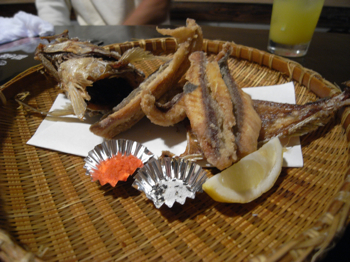
The best sushi restaurants will prepare the sashimi or sushi from live specimen swimming in their tanks and later serve the bones and head deep-fried. They will serve the whole fish deep-fried for the guests who are so keen on eating raw fish!

shimaaji-5

Recently, breeding the fish from their eggs off Chichijima Island has been successful, meaning more on our plates in the future!

Please check the new postings at:
sake, shochu and sushi

—————————————-
日本語のブログ
—————————————-
Japanese Home-made Lunch of the Day

lunch-09-04-01

With all the bentoes the Missus is (I was going to say “kindly” but don’t forget she eats the same lunch after all! LOL) preparing for me every Monday and Tuesday I have been asked what would be typical lunch at home.
Frankly speaking, it varies all the time, depending on the Missus’ mood and my own (rare) requests.
But today was a bit special. This morning, April Fool’s Day, I had to go through a stomach scan on my doctor’s orders (which revealed nothing serious, fortunately, apart of a big dent in this month budget!), which meant I hadn’t been allowed to eat for 18 hours (or drink for 58 hours!). As I was about to depart for the hospital, the Missus sent me off saying: “Don’t worry, I’ll prepare a nice healthy Japanese lunch as you like them!”
That could explain that for all the anaesthesics I had to ingurgitate, I stayed conscious during the whole operation!

lunch-09-04-01a

Because I did not have to sleep off all the medicine I managed to come home earlier than scheduled and take pictures of the meal as it came onto the table:
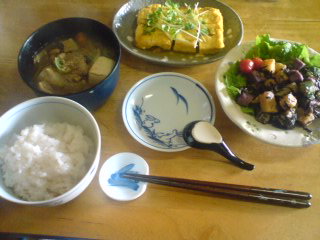
The salad was made with three types of potatoes: yellow sweet potato, violet sweet potato and regular potato to which was added cucumber cubes of the same size, “hijiki” sweet seaweed, lettuce with gomadare/sesame dressing.

lunch-09-04-01b

Naturally I had my tamagoyaki/Japanese omelette. The above picture shows it as it came out of the pan.

lunch-09-04-01c

It was then cut to bite size (half for each of us!) and served with “Kawaire Daikon” sprouts and a dash of ponzu.

lunch-09-04-01d

As for the meat, I had the Missus’ special: “motsu nikomi”/Japanese-style pork tripes stew with veg and tofu. (I had a second serving).

lunch-09-04-01e

As for the rice, I had rice steamed with shreds of sweet umeboshi/Japanese pickled plums. (I had a second serving of that, too!)

We had some small cakes for dessert.
I was so full that I had to sleep it off!

Tonight I ‘ll be able to open a bottle of sake at last! LOL

Please check the new postings at:
sake, shochu and sushi

—————————————-
日本語のブログ
—————————————-
Today’s Lunch Box/Bento (’09/20)

bento-09-03-31a

Today saw a rare occurence in that the Missus prepared a double bento for me!
Let me explain: As I have to submit to a camera scan of my stomach (you know, those long thin things they force through your gullet!) I’m not allowed to eat anything after 9:00 p.m.
As I usually have dinner at around 9:30 due to late work hours, the Missus included a small “6:00 p.m. dinner” (I can’t really call it a lunch box! LOL).

bento-09-03-31d

Lunch was served in that interesting box with a bamboo lid I have described before:
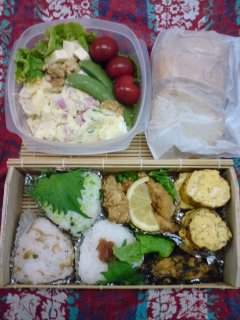
Three different “o-nigiri/rice balls”, one with an umeboshi/pickled Japanese plums, another one with Japanese cucumber (both wrapped in fresh shiso/perilla leaves) and the third one with fried “shirasu/Sardine whitebait”.

bento-09-03-31b

Two kinds of deep-fried chicken fillets cuts were provided with some lettuce. One kind was fried with white sesame seeds, the other with bits of shiso/perilla leaves.
The tamagoyaki/Japanese omelette came in a cylindrical shape instead of the usual rectangular one. This done is done by “rolling” it into a sushi roll bamboo sheet just after it has been cooked and kept pressed inside until it has completely cooled down.

bento-09-03-31c

As for dinner I was provided with potato and ham salad to which the Missus added plum tomatoes, cut processed cheese, walnuts, sweet peas in their pod and more lettuce!

I’ll be hungry tonight!

Please check the new postings at:
sake, shochu and sushi

—————————————-
日本語のブログ
—————————————-