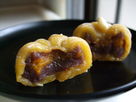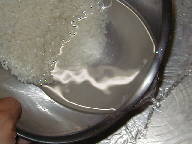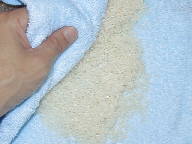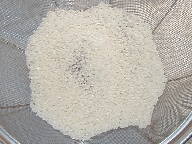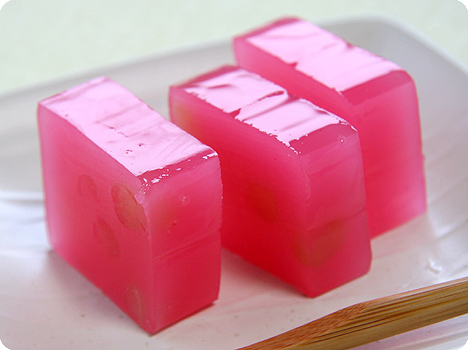
Tag Archives: Simple Recipes

Chicken Ham: The Japanese Recipe

CHICKEN-HAM-SALAD

Following renewed queries about the Missus’ chicken Ham included in some of my bentoes, I decided to post again the recipe for my friends’ benefit!

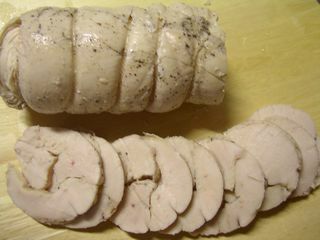
CHICKEN-HAM-ROLL1

Now, the following recipe is for Chicken Ham in the shape of a “ham”.
Naturally, you can, like the Missus, keep the original shape of the chicken breast.

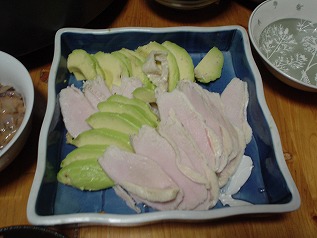
CHICKEN-HAM-SALAD-2

You can slice or shred the chicken as shown above in the combination chicken/avocado salad. Variations are almost endless!

INGREDIENTS:
-One large chicken breast: 250g
-Sugar: 1 large tablespoon
-Coarse salt-black pepper mixture: 1 large tablespoon

RECIPE:

CHICKEN-HAM-RECIPE-1

Get rid of all skin and fat.
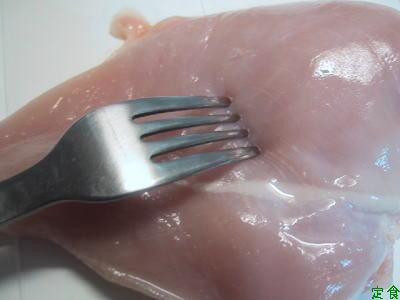
“Puncture” chicken shallowly on both sides.

CHICKEN-HAM-RECIPE-2

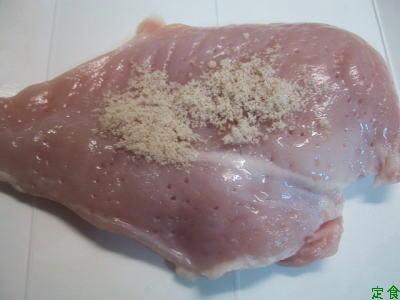
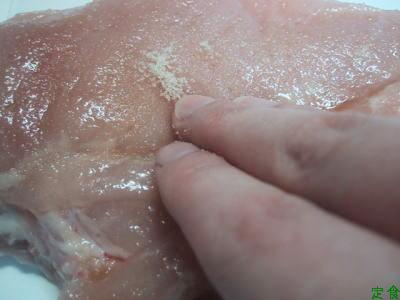
Sprinkle sugar on both sides and

CHICKEN-HAM-RECIPE-3

throughly brush it in on both sides.

CHICKEN-HAM-RECIPE-4

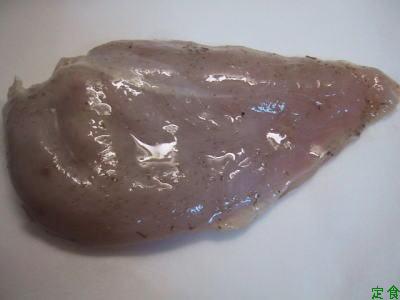
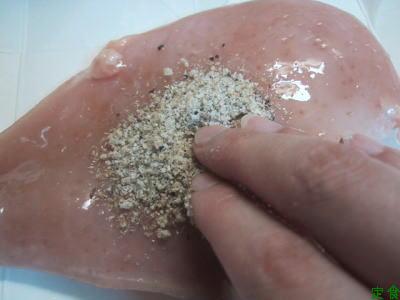
Repeat procedure with coarse salt-black pepper mixture.
Water will start oozing out.

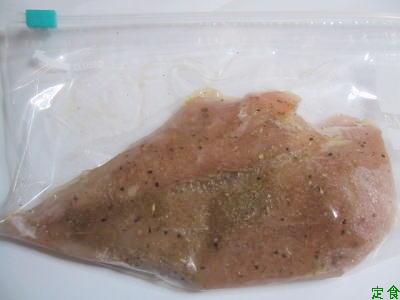
CHICKEN-HAM-RECIPE-5

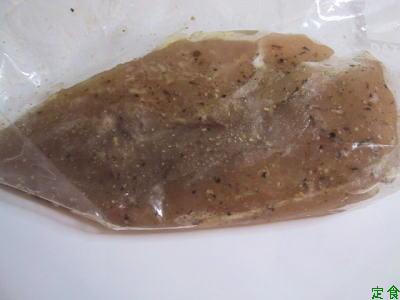
Tightly seal inside zip-lock type vinyl envelope and leave it 48 hours inside the fridge (get as much air out as possible before sealing!).

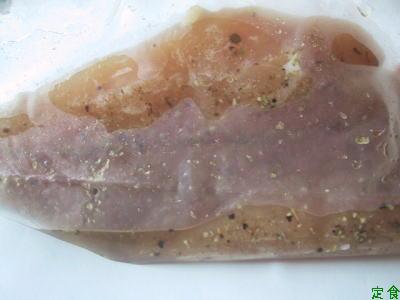
CHICKEN-HAM-RECIPE-6

After the first 24 hours inside the fridge, throw out the water that has accumulated, reseal and put back inside the fridge.

CHICKEN-HAM-RECIPE-7

That’s how it looks when you take it out of the fridge after 48 hours.

CHICKEN-HAM-RECIPE-8

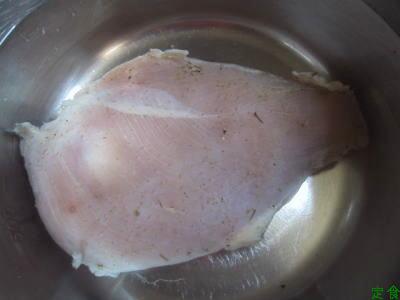
Take chicken out, clean lightly under running water, and then let it rest in clear water for 30 minutes to get rid of the excess salt.

CHICKEN-HAM-RECIPE-9

Take out of water and carefully get the chicken rid of water with kitchen paper.

CHICKEN-HAM-RECIPE-10

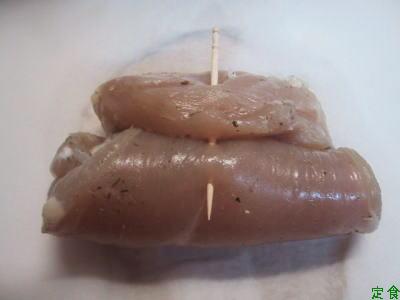
“Roll” the chicken breast into a “ham” shape and secure it with a wooden toothpick (avoid any contact with naked metal!).

CHICKEN-HAM-RECIPE-11

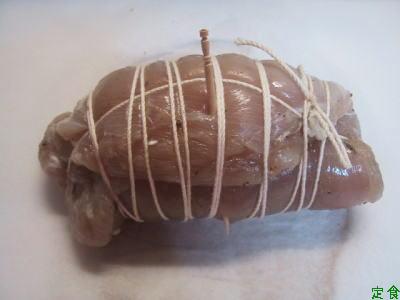
Bind the chicken with cooking thread tightly until you have attained a ham shape. Take toothpick out and discard it.

CHICKEN-HAM-RECIPE-12

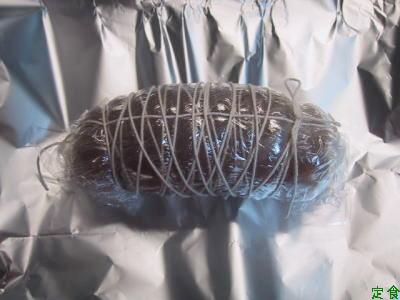
Wrap tightly into cellophane paper.

CHICKEN-HAM-RECIPE-13

Wrap into foil paper twice.
NOTE: the Missus does not wrap it into anything and just slowly and directly boil the chicken into chicken bouillon/stock.

CHICKEN-HAM-RECIPE-14

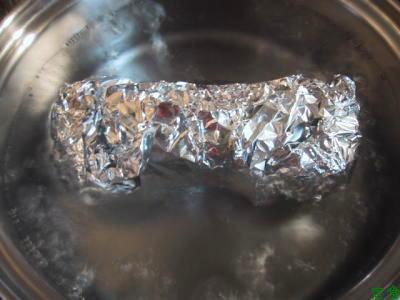
In a big enough pan bring water to boil.

CHICKEN-HAM-RECIPE-15

Put the foil paper-wrapped chicken inside water and switch off fire.

CHICKEN-HAM-RECIPE-16

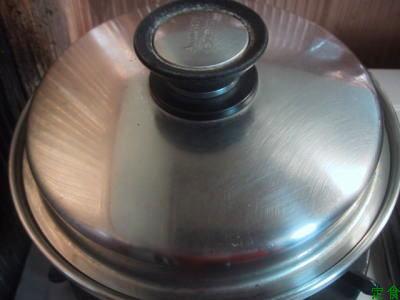
Cover with lid and leave it as it it is for 7~8 hours.
Take chicken out with its foil paper and let it rest inside fridge for 24 hours.
NOTE: The Missus will put the chicken and the whole broth inside a Tupperware box before putting it inside the fridge.

CHICKEN-HAM-RECIPE-17

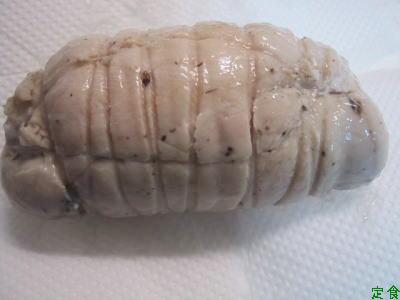
Get Chicken ham out. Discard foil paper and thread.

CHICKEN-HAM-RECIPE-18

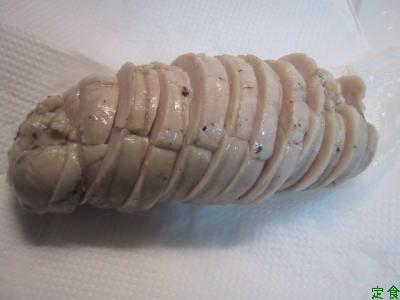
Cut it to your liking.

CHICKEN-HAM-RECIPE-20
Serve.

That is when the fun starts!
Great as salads, in sandwiches and of course bentoes!

NOTE: The Missus sometimes, as an extra last step, smokes the whole chicken in green tea leaves!

RECOMMENDED RELATED WEBSITES

With a Glass,
Clumsyfingers by Xethia
Adventures in Bento Making, American Bento, Beanbento, Bento No1, Bento Wo Tsukurimashou, Cooking Cute, Eula, Hapabento , Happy Bento, Jacki’s Bento Blog, Kitchen Cow, Leggo My Obento, Le Petit Journal Bento & CO (French), Lunch In A Box, My Bento Box, Vegan Lunch Box; Tokyo Tom Baker, Daily Food Porn/Osaka, Only Nature Food Porn, Happy Little Bento, The Herbed Kitchen, J-Mama’s Kitchen, Cook, Eat, Play, Repeat; Bento Lunch Blog (German); Adventures In Bento; Anna The Red’s Bento Factory; Cooking Cute; Timeless Gourmet; Bento Bug; Ideal Meal; Bentosaurus; Mr. Foodie (London/UK); Ohayo Bento

Must-see tasting websites:

-Sake: Tokyo Through The Drinking Glass, Tokyo Foodcast, Urban Sake, Sake World
-Wine: Palate To Pen, Warren Bobrow, Cellar Tours, Ancient Fire Wines Blog
-Beer: Good Beer & Country Boys, Another Pint, Please!
-Japanese Pottery to enjoy your favourite drinks: Yellin Yakimono Gallery

Today’s Bento/Lunch Box (11/66): Omu Raisu Bento!

Omu Raisu/オムライスin Japanese means “omelette rice”, that is fried rice wrapped inside an omelette!

So the Missus proceeded in two steps:
first the rice: She steamed plain rice while she pan-fried some vegetables, especially diced pimentos, chopped onion and parsley.
Once the vegetables were almost cooked she added the rice and fried the whole lot while mixing it at the same time. At the last moment she added some tomato sauce and then switched off the fire.

She then made a round omelette in another frying pan.
When the omelette was ready she switched off the fire and filled the center of the omelette with plenty of fried rice.
She closed the omelette over the rice and put the whole upside down inside the round bento box.
She finally made a cross cut to show the inside and decorated the whole with lettuce and plum tomatoes.

As for the salad dessert box, she designed it with plenty of colors as usual!

The salad and the dessert were separated with more lettuce.
The salad consisted of boiled white and pink potatoes from her family’s garden, sliced cucumber and walnut.

For dessert apples cooked with grenadine mixed with raisins.

It proved a very hefty bento and yummy, too!

RECOMMENDED RELATED WEBSITES

With a Glass,
Clumsyfingers by Xethia
Adventures in Bento Making, American Bento, Beanbento, Bento No1, Bento Wo Tsukurimashou, Cooking Cute, Eula, Hapabento , Happy Bento, Jacki’s Bento Blog, Kitchen Cow, Leggo My Obento, Le Petit Journal Bento & CO (French), Lunch In A Box, My Bento Box, Vegan Lunch Box; Tokyo Tom Baker, Daily Food Porn/Osaka, Only Nature Food Porn, Happy Little Bento, The Herbed Kitchen, J-Mama’s Kitchen, Cook, Eat, Play, Repeat; Bento Lunch Blog (German); Adventures In Bento; Anna The Red’s Bento Factory; Cooking Cute; Timeless Gourmet; Bento Bug; Ideal Meal; Bentosaurus; Mr. Foodie (London/UK); Ohayo Bento

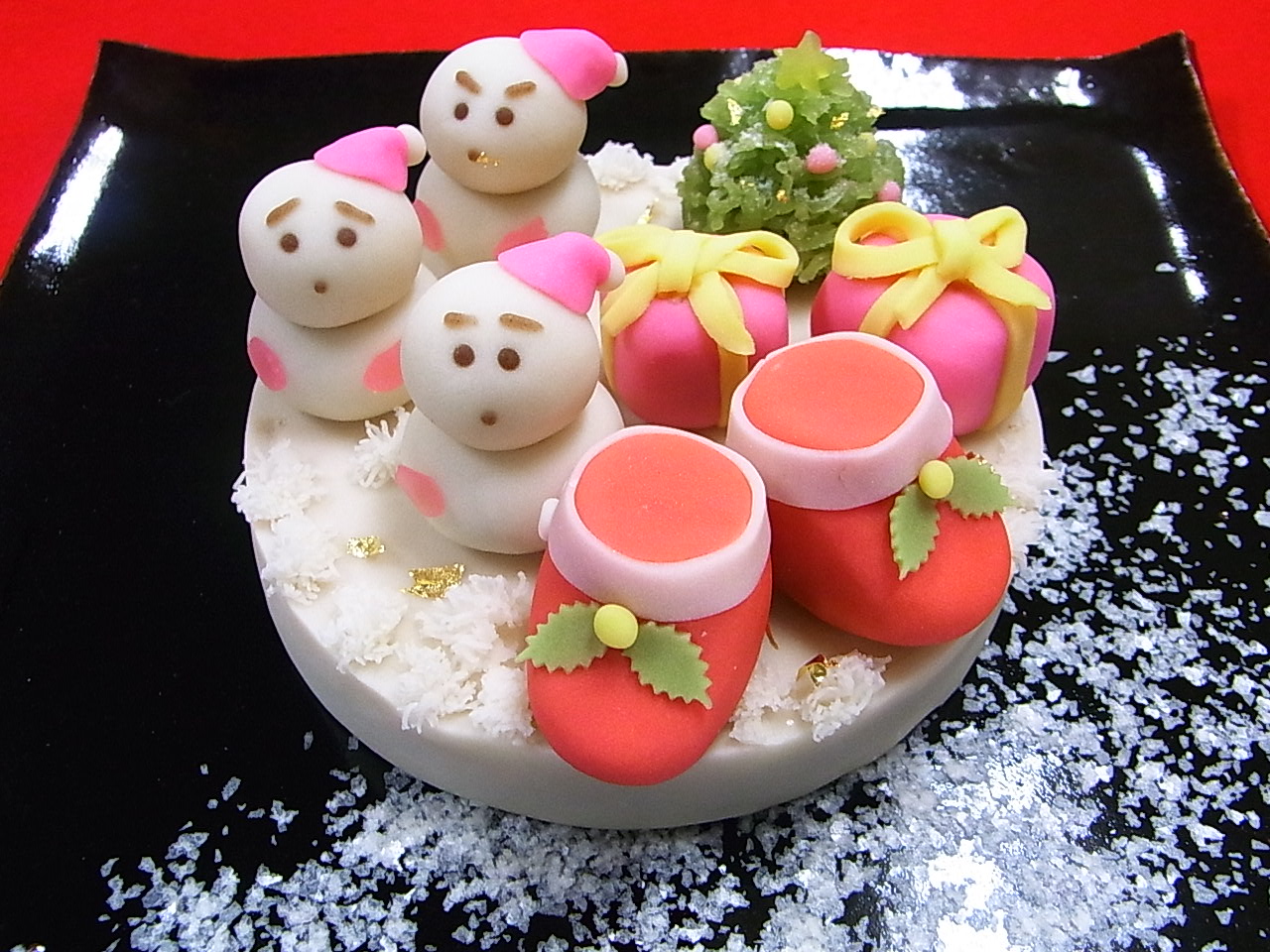
Japanese Vegetarian & Vegan Cakes: Wagashi/和菓子 17: Wagashi Christmas Cakes Pictures

Pyramid-style Christmas Tree?

I’m an unrepentant agnostic hedonist (and an omnivore to boot!), but since some of my vegan and vegetarain friends are Christian, I hope these pictures will inspire them!

Flowery Christmas!

What’s in Santa’s bag?

Bring your forks and knives!

Holy (Holly) Christmas!

For the toddlers!

Pity you have to eat it!

Definitely Japanese-style!

They almost look like sushi!

Elegant simplicity!

RECOMMENDED RELATED WEBSITES

With a Glass,
Clumsyfingers by Xethia
Adventures in Bento Making, American Bento, Beanbento, Bento No1, Bento Wo Tsukurimashou, Cooking Cute, Eula, Hapabento , Happy Bento, Jacki’s Bento Blog, Kitchen Cow, Leggo My Obento, Le Petit Journal Bento & CO (French), Lunch In A Box, My Bento Box, Vegan Lunch Box; Tokyo Tom Baker, Daily Food Porn/Osaka, Only Nature Food Porn, Happy Little Bento, The Herbed Kitchen, J-Mama’s Kitchen, Cook, Eat, Play, Repeat; Bento Lunch Blog (German); Adventures In Bento; Anna The Red’s Bento Factory; Cooking Cute; Timeless Gourmet; Bento Bug; Ideal Meal; Bentosaurus; Mr. Foodie (London/UK); Ohayo Bento

Must-see tasting websites:

-Sake: Tokyo Through The Drinking Glass, Tokyo Foodcast, Urban Sake, Sake World
-Wine: Palate To Pen, Warren Bobrow, Cellar Tours, Ancient Fire Wines Blog
-Beer: Good Beer & Country Boys, Another Pint, Please!
-Japanese Pottery to enjoy your favourite drinks: Yellin Yakimono Gallery

Japanese Rice Crackers/ Senbei (煎餅): An introduction

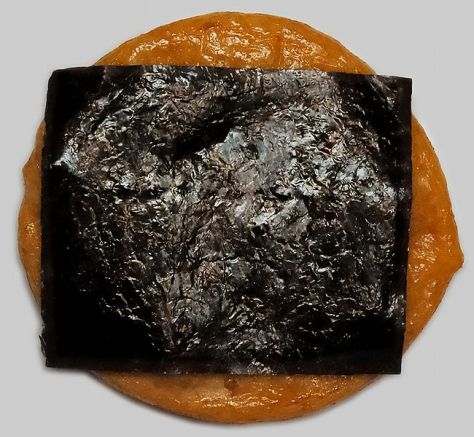
Nori Senbei/Rice Cracker coated with a dry seaweed

I remember eating those rice-crackers a (very) long time ago when I was at college in England!
At the time I never made the relation between these snacks and Japan!

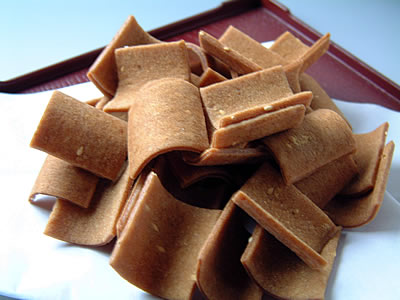
Senbei (煎餅, alternatively spelled sembei) are a type of Japanese rice crackers. They come in various shapes, sizes, and flavors, usually savory but sometimes sweet. Senbei are often eaten with green tea as a casual snack and offered to visiting house guests as a courtesy refreshment.
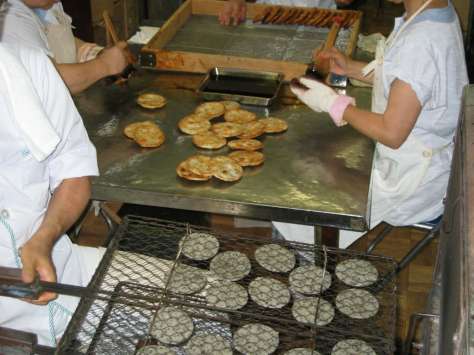
Senbei are usually cooked by being baked or grilled, traditionally over charcoal. While being prepared they may be brushed with a flavoring sauce, often one made of soy sauce and mirin. They may then be wrapped with a layer of nori. Alternatively they may be flavored with salt or so-called “salad” flavoring.

In China, the same characters used to write senbei are read jiānbǐng (煎餅). There are varieties like Shandong Jianbing and Tianjin Jianbing. However, these are in actuality a different food. In China, they are more like wraps and pancakes, similar to okonomiyaki, whereas in Japan they are hard (not floppy), and are bite-sized snacks rather than meals. However, crackers similar to Japanese senbei can be found in China today. Their modern Chinese name is 仙贝 (or 鲜贝) (Pinyin: xianbei), which reflects the Japanese-language pronunciation of “senbei” (煎餅).
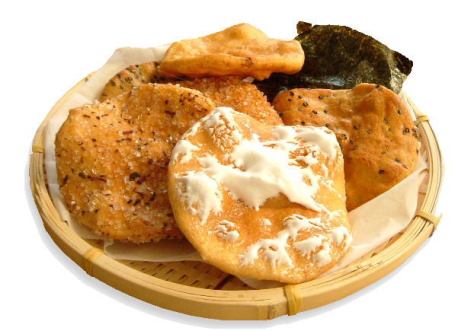
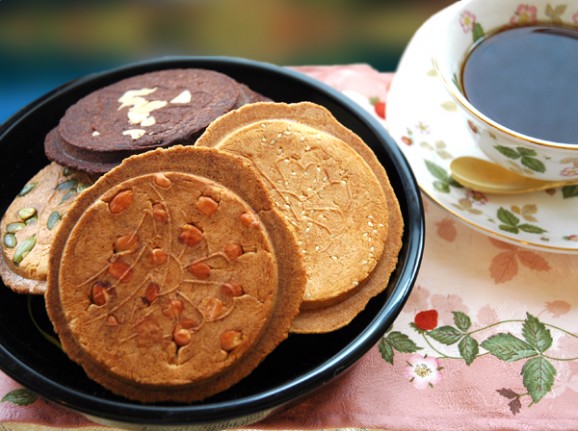
Sweet senbei (甘味煎餅) came to Japan during the Tang Dynasty, the first recorded usage in 737 AD, and still are very similar to Tang traditional styles, originally often baked in the Kansai area, of which include the traditional “roof tile” senbei. These include ingredients like potato and wheat flour or glutinous rice, and are similar to castella cakes. (Distinctly different from what most people would consider as Senbei today).

What Japanese commonly refer to as sembei nowadays was popularized by a shop in the Edo Period, Sōkajuku, which spread salty soy sauce flavored sembei throughout Japan.
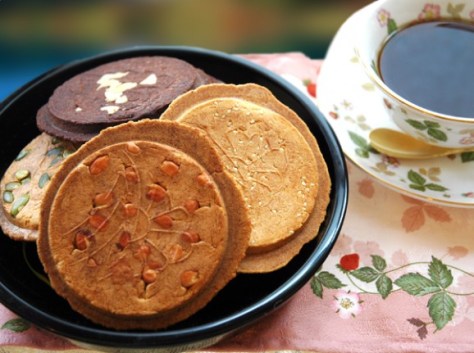
There are several types of traditional Japanese senbei. They include the 2 categories, sweet sembei (over 15 types) and rice candy senbei (米菓煎餅), and others, which include even fish senbei (魚せんべい), lotus senbei (蓮根煎餅) and bone senbei (骨せんべい).

Modern senbei versions are very inventive and may include flavorings which can range from kimchi to wasabi to curry to chocolate.

Kansai senbei tend to use glutinous rice and have a lightly seasoned and delicate in texture (saku saku). Kantō senbei were originally based on uruchimai, a non-glutinous rice, and they tend to be more crunchy (kari kari) and richly flavored.

OTHER TYPES OF SENBEI:

ARARE
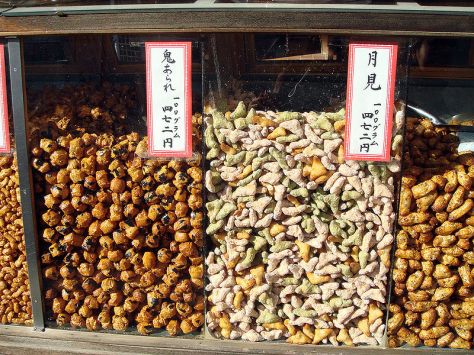
Arare (あられ “hailstones”) is a type of bite-sized Japanese cracker made from glutinous rice and flavored with soy sauce. The size and shapes are what distinguish arare from senbei.
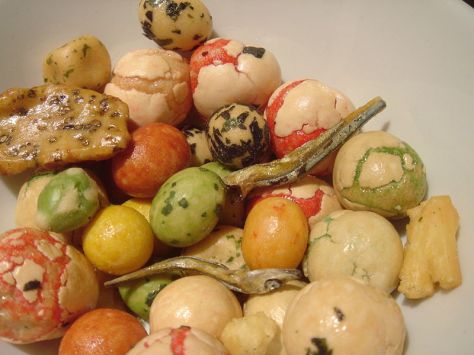
There are many different sizes, colors, and shapes of arare. Some are sweet, and others savory. One, called norimaki arare (nori meaning an edible seaweed foodstuff in the form of a dried sheet; maki meaning roll shape) is wrapped with dried nori seaweed. Another, kaki no tane (柿の種), takes its name from its resemblance to a persimmon seed. (Kaki is Japanese for “persimmon”.) Kaki no tane are often sold with peanuts, a combination called kakipī (かきピー). These are a popular snack to accompany Japanese beer.
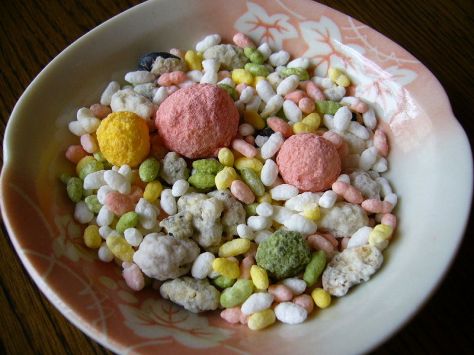
Hina Arare

Japanese typically consume arare to celebrate the Doll Festival (Hinamatsuri), on March 3, Girls’ Day in Japan. The arare made during the festival are very colorful – pink, yellow, white, brown, light green, and so on. Regular arare can be bought throughout the year, but the colorful ones are only available around January to March in anticipation of the Doll Festival.

Arare was brought to the U.S. by Japanese immigrants who came as plantation workers in the early 1900s. In Hawaii, the snack is often called kakimochi (fried rice paste) or mochi crunch. In Hawaii, it’s popular to mix arare with popcorn (some people mix in furikake, too). The popular Hurricane popcorn includes both arare and furikake with the popcorn. Also popular in Hawaii is li hing arare.

FANCY/SNACK/FAST FOOD SEMBEI

One can buy these anywhere in many forms of package and sets.
They are universally popular as snacks for adults and young alike!

SEnbei can even be usedto send messages, such as the above overwritten with “ありがとう/Arigatou/Thnak you”!

AGEMOCHI:
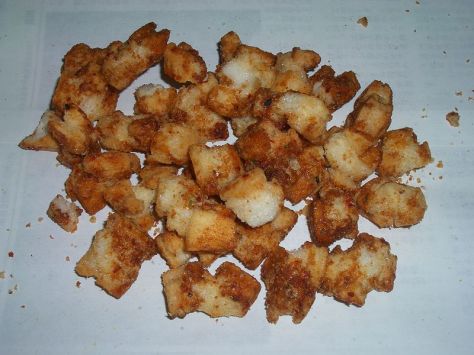
Agemochi (揚げ餅?) is a popular Japanese snack food made from fried mochi (sticky rice). The dry mochi is broken into small pieces, about 1cm cubed, and deep fried. The pieces then puff up. It is usually eaten lightly salted, but there are also various flavoured versions, such as shichimi agemochi, agemochi covered with shichimi seasoning. Agemochi can be purchased anywhere in Japan and is also a common home-made snack.

YATSUHASHI:
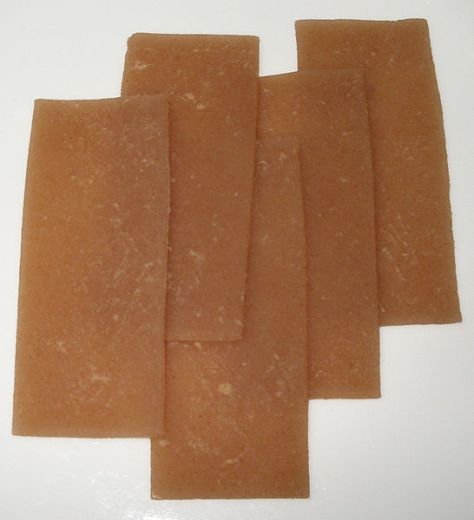
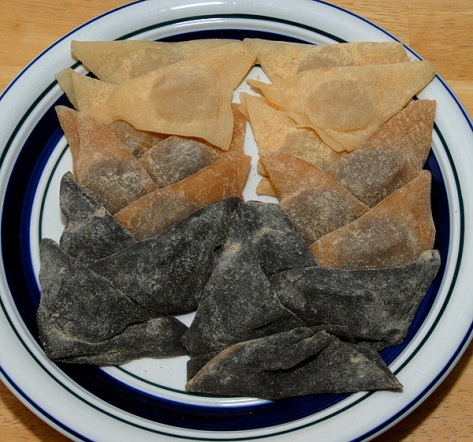
Yatsuhashi (八ツ橋 or 八橋) is a Japanese confectionery sold mainly as a souvenir sweet (miyagegashi). It is one of the best known meibutsu (famous regional products) of Kyoto. It is made from rice flour (上新粉, jōshinko), sugar and cinnamon. Baked, it is similar to senbei. Raw, unbaked yatsuhashi (Nama yatsuhashi) has a soft, mochi-like texture and is often eaten wrapped around red bean paste (餡, an), and may come in a variety of different flavours. Most notable to the Kyoto area is the black version of this. The addition of black bean powder to the wrapper gives a distinctive black color.

KAPPA EBISEN:
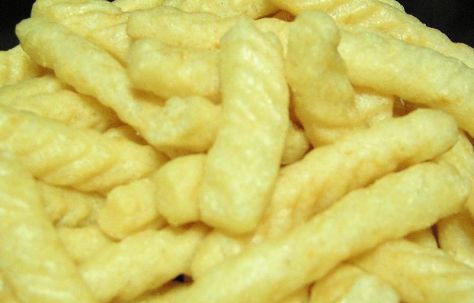
Kappa Ebisen (かっぱえびせん) is a Japanese snack food produced by Calbee of Japan. It is a crunchy, shrimp-flavored snack resembling french fries that is very popular in Japan.
The primary ingredients of Kappa Ebisen are wheat flour, vegetable oil, starch, shrimp, sugar, salt, baking powder, amino acid and sweetening.
Kappa Ebisen was first sold in 1964 and has gained wide popularity among Japanese consumers as a snack food.
In 1966, Calbee began exporting Kappa Ebisen to Hawaii and Southeast Asia.[1] It is now sold in dozens of countries worldwide.
There are different flavors of Kappa Ebisen, such as curry flavor, available in Japan and a few other countries.
A similar product known as Saewoo Ggang (새우깡) has been produced by Nongshim of South Korea since 1971. It is not licensed by Calbee.

RECOMMENDED RELATED WEBSITES

With a Glass,
Clumsyfingers by Xethia
Adventures in Bento Making, American Bento, Beanbento, Bento No1, Bento Wo Tsukurimashou, Cooking Cute, Eula, Hapabento , Happy Bento, Jacki’s Bento Blog, Kitchen Cow, Leggo My Obento, Le Petit Journal Bento & CO (French), Lunch In A Box, My Bento Box, Vegan Lunch Box; Tokyo Tom Baker, Daily Food Porn/Osaka, Only Nature Food Porn, Happy Little Bento, The Herbed Kitchen, J-Mama’s Kitchen, Cook, Eat, Play, Repeat; Bento Lunch Blog (German); Adventures In Bento; Anna The Red’s Bento Factory; Cooking Cute; Timeless Gourmet; Bento Bug; Ideal Meal; Bentosaurus; Mr. Foodie (London/UK); Ohayo Bento

Must-see tasting websites:

-Sake: Tokyo Through The Drinking Glass, Tokyo Foodcast, Urban Sake, Sake World
-Wine: Palate To Pen, Warren Bobrow, Cellar Tours, Ancient Fire Wines Blog
-Beer: Good Beer & Country Boys, Another Pint, Please!
-Japanese Pottery to enjoy your favourite drinks: Yellin Yakimono Gallery
Japanese Vegetarian & Vegan Cakes: Wagashi/和菓子 16: Yatsuhashi/-Tabe

Yatsuhashi (八ツ橋 or 八橋) is a Japanese confectionery sold mainly as a souvenir sweet (miyagegashi/土産菓子). It is one of the best known meibutsu/名物 (famous regional products) of Kyoto.
It is also widely known under the name of O-Tabe/お食べ (“please eat”).

It is made from rice flour (上新粉, jōshinko), sugar and cinnamon. Baked, it is similar to senbei, making it suitable for both vegans and flour allergics!

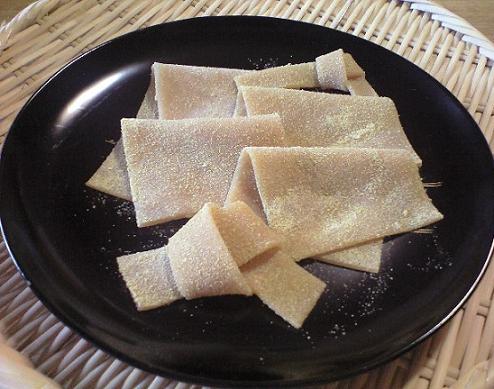
Baked Yatsuhashi

Raw Yatsuhashi

Raw, unbaked yatsuhashi (Nama yatsuhashi/生八橋) has a soft, mochi-like texture and is often eaten wrapped around red bean paste (餡, an), and may come in a variety of different flavours.

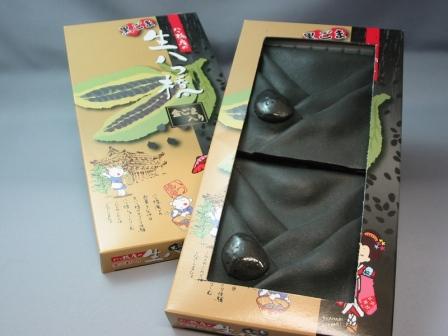
Black Yatsuhashi

Most notable to the Kyoto area is the black version of this. The addition of black bean powder and black sesame seed powder to the wrapper and the an give a distinctive black color.

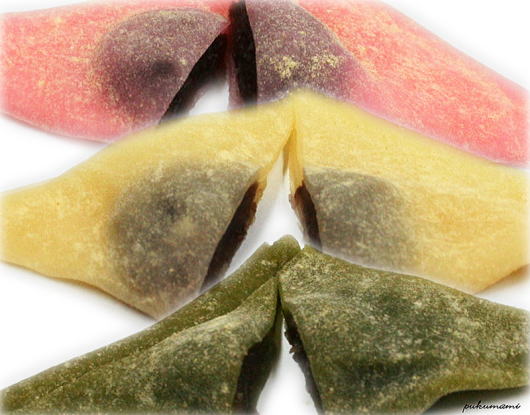
Different flavoured Yatsuhashi

Not so long ago, there were only a few flavours available.
Now, all kinds of flavours are on sale for the pleasur of all:
Cinnamon, Matcha Tea, Ume an (sweetmeats mixed with Jpanese plum), Mandarine, Strawberries, Cherry blossoms, Ramune, Chocolate-banana, Chocolate, Kyoto baked sweet potato, Chestnuts, Green apple, Blueberries, Mango, Orange, Red wine and more seasonal offerings!

RECOMMENDED RELATED WEBSITES

With a Glass,
Clumsyfingers by Xethia
Adventures in Bento Making, American Bento, Beanbento, Bento No1, Bento Wo Tsukurimashou, Cooking Cute, Eula, Hapabento , Happy Bento, Jacki’s Bento Blog, Kitchen Cow, Leggo My Obento, Le Petit Journal Bento & CO (French), Lunch In A Box, My Bento Box, Vegan Lunch Box; Tokyo Tom Baker, Daily Food Porn/Osaka, Only Nature Food Porn, Happy Little Bento, The Herbed Kitchen, J-Mama’s Kitchen, Cook, Eat, Play, Repeat; Bento Lunch Blog (German); Adventures In Bento; Anna The Red’s Bento Factory; Cooking Cute; Timeless Gourmet; Bento Bug; Ideal Meal; Bentosaurus; Mr. Foodie (London/UK); Ohayo Bento

Must-see tasting websites:

-Sake: Tokyo Through The Drinking Glass, Tokyo Foodcast, Urban Sake, Sake World
-Wine: Palate To Pen, Warren Bobrow, Cellar Tours, Ancient Fire Wines Blog
-Beer: Good Beer & Country Boys, Another Pint, Please!
-Japanese Pottery to enjoy your favourite drinks: Yellin Yakimono Gallery
Vegan Gastronomy: a Heaven in Shizuoka, Japan!

Chinese vegan gastronomy at Cham!

How many times have I heard expats and Japanese telling me, “I dare not go out of Tokyo as I’m vegan!”
Well, you may have some specialized vegan restaurants in Tokyo, but here in Shizuoka, the Prefecture counting (officially!) the greatest number of vegetable varieties in Japan, you do not need to look for (in vain!) a vegan restaurant!
Either you can find enough in the local markets, or better explore the many restaurants of this Prefecture and City of the same name that is THE gastronomic region of Japan. As you will discover below you are bound to find something absolutely delicious according to your priorities in menus of all genres!

Let me take your hand (or arm) and leave it to me! And we are visiting Shizuoka City only!

Vietnamese Sauteed vegetables at Annam!

Italian sauteed organic vegetables at Aquavite!

West African lunch, all vegetables cooked in coconut milk at Capu!

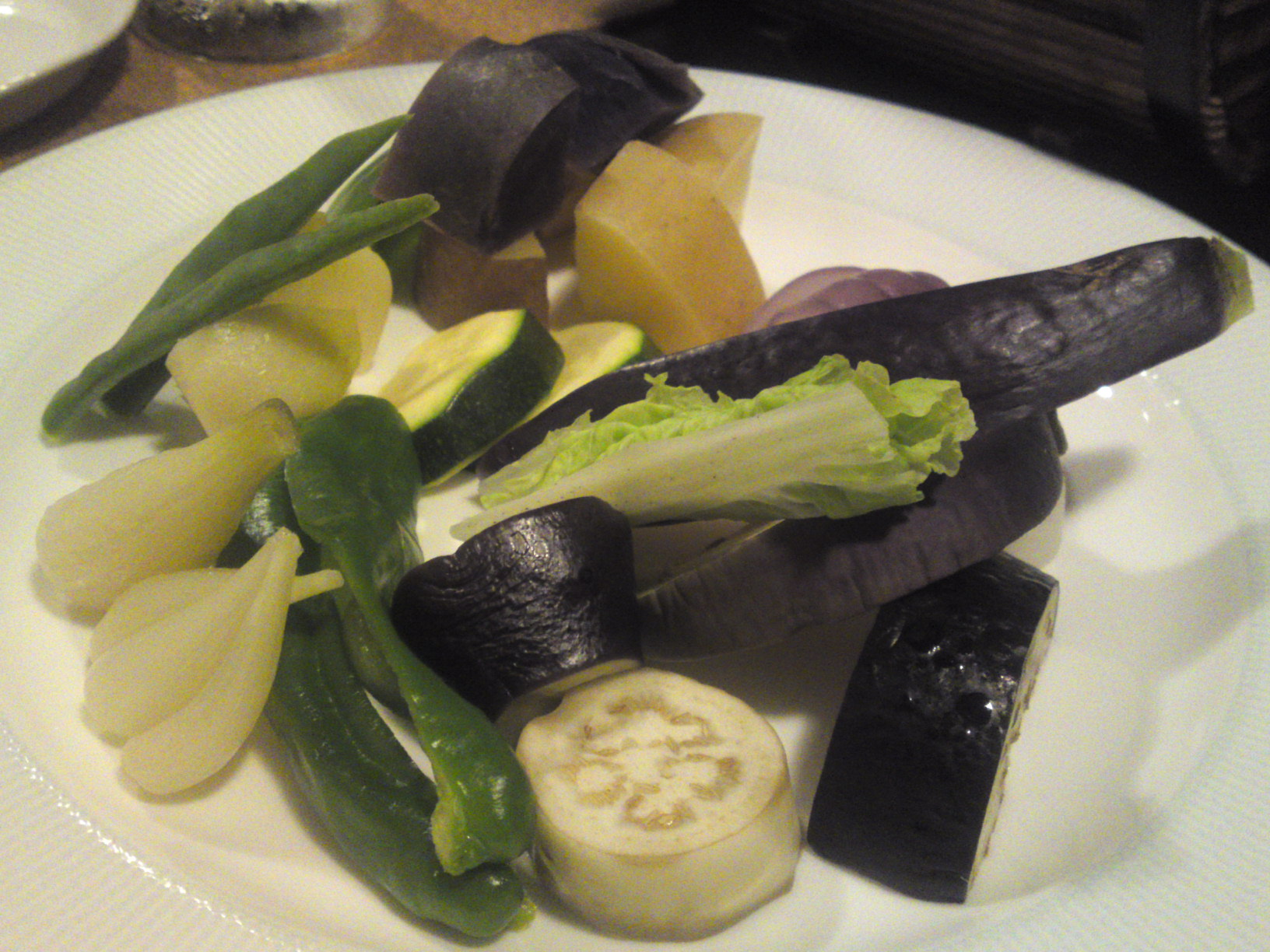
Chinese steamed vegetables at Cham served with a scented oil and soy sauce, or just plain salt and matcha powder!

Vegan sushi at Sushi Ko!

Organic shiitake at Yasaitei!

Vegetables baked in skillet from Solio Italian Restaurant’s own garden!

Tomato tempura (no egg white used) with yuzu koshio at Uzu Izakaya!

“Goro goro” fried and steamed salad at Uzu Izakaya!

Vegetable sashimi at Yasaitei!

Vegan steak at Tetsuya Sugimoto French Restaurant!

Fried Vegetables at Yasaitei!

Yomogi Wagashi, anywhere in town!

Misoyaki (miso paste and buckwheat), a personal favorite of mine at Yoshino Soba Restaurant!

If you need more explanations and guidance, I’ll be glad to help!

Incidentally I’m neither a vegan or vegetarian, but I understand my friends’ priorities!

RECOMMENDED RELATED WEBSITES

With a Glass,
Clumsyfingers by Xethia
Adventures in Bento Making, American Bento, Beanbento, Bento No1, Bento Wo Tsukurimashou, Cooking Cute, Eula, Hapabento , Happy Bento, Jacki’s Bento Blog, Kitchen Cow, Leggo My Obento, Le Petit Journal Bento & CO (French), Lunch In A Box, My Bento Box, Vegan Lunch Box; Tokyo Tom Baker, Daily Food Porn/Osaka, Only Nature Food Porn, Happy Little Bento, The Herbed Kitchen, J-Mama’s Kitchen, Cook, Eat, Play, Repeat; Bento Lunch Blog (German); Adventures In Bento; Anna The Red’s Bento Factory; Cooking Cute; Timeless Gourmet; Bento Bug; Ideal Meal; Bentosaurus; Mr. Foodie (London/UK); Ohayo Bento

Must-see tasting websites:

-Sake: Tokyo Through The Drinking Glass, Tokyo Foodcast, Urban Sake, Sake World
-Wine: Palate To Pen, Warren Bobrow, Cellar Tours, Ancient Fire Wines Blog
-Beer: Good Beer & Country Boys, Another Pint, Please!
-Japanese Pottery to enjoy your favourite drinks: Yellin Yakimono Gallery
Japanese Vegetarian & Vegan Cakes: Wagashi/和菓子 15: Daifuku

DAIFUKU-1

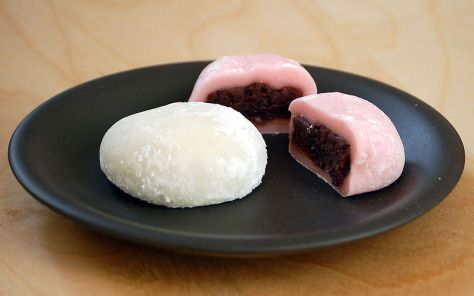
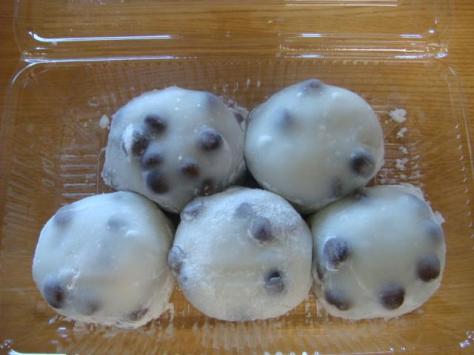
Daifukumochi (大福餅), or Daifuku (大福) (literally “great luck”), is a Japanese confection consisting of a small round mochi (glutinous rice cake) stuffed with sweet filling, most commonly anko, sweetened red bean paste made from azuki beans.

The traditional daifuku, like all Wagashi are vegan in concept.

But Daifuku comes in many varieties.
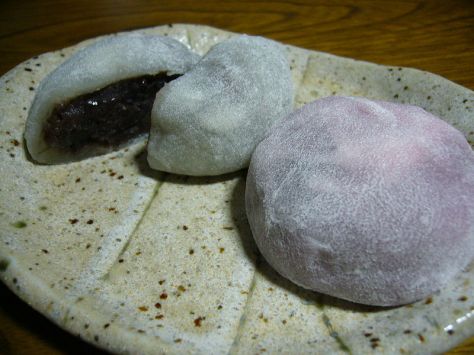
The most common is white, pale green or pale pink colored mochi filled with anko.
These come in two sizes, one approximately the diameter of a half-dollar coin, the other palm-sized.
Some versions contain whole pieces of fruit, mixtures of fruit and anko or crushed melon paste.
Nearly all daifuku are covered in a fine layer of corn or taro starch to keep them from sticking to each other, or to the fingers. Some are covered with confectioner’s sugar or cocoa.

DAIFUKU-2

HISTORY:
Daifuku were originally called Harabuto mochi (腹太餅) (belly thick rice cake) because of its filling nature. Later the name was changed to Daifuku mochi (大腹餅) (big belly rice cake). Since the pronunciation of Fuku (腹) (belly) and Fuku (福) (luck) is the same in Japanese, the name was further changed to Daifuku mochi (大福餅) (great luck rice cake), a bringer of good luck. By the end of the 18th century, Daifuku were gaining popularity and people began eating them toasted. They were also used for gifts in ceremonial occasions

VATIETIES:

DAIFUKU-3
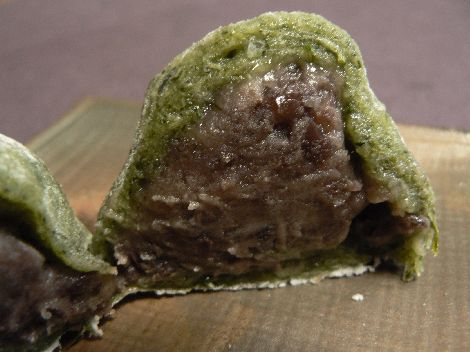
Yomogi daifuku (蓬大福)
A version made with kusa mochi (草餅), which is mochi flavored with mugwort.

DAIFUKU-4
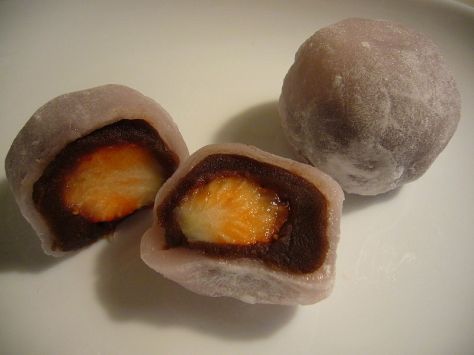
Ichigo daifuku (イチゴ大福)
A variation containing strawberry and sweet filling, most commonly anko, inside a small round mochi. Creams are sometimes used for sweet filling. Because it contains strawberry, it is usually eaten during the spring time. It was invented in the 1980s. Many patisseries claim to have invented the confection, so its exact origin is vague.

DAIFUKU-5
Mame daifuku (豆大福)
Another variation made of mochi mixed with red peas or soy beans.

RECOMMENDED RELATED WEBSITES

With a Glass,
Clumsyfingers by Xethia
Adventures in Bento Making, American Bento, Beanbento, Bento No1, Bento Wo Tsukurimashou, Cooking Cute, Eula, Hapabento , Happy Bento, Jacki’s Bento Blog, Kitchen Cow, Leggo My Obento, Le Petit Journal Bento & CO (French), Lunch In A Box, My Bento Box, Vegan Lunch Box; Tokyo Tom Baker, Daily Food Porn/Osaka, Only Nature Food Porn, Happy Little Bento, The Herbed Kitchen, J-Mama’s Kitchen, Cook, Eat, Play, Repeat; Bento Lunch Blog (German); Adventures In Bento; Anna The Red’s Bento Factory; Cooking Cute; Timeless Gourmet; Bento Bug; Ideal Meal; Bentosaurus; Mr. Foodie (London/UK); Ohayo Bento

Must-see tasting websites:

-Sake: Tokyo Through The Drinking Glass, Tokyo Foodcast, Urban Sake, Sake World
-Wine: Palate To Pen, Warren Bobrow, Cellar Tours, Ancient Fire Wines Blog
-Beer: Good Beer & Country Boys, Another Pint, Please!
-Japanese Pottery to enjoy your favourite drinks: Yellin Yakimono Gallery
Today’s Bento/Lunch Box (11/65): Soboro Oyako Bento!

“Oyako”, as I mentioned before, means “Parent & Child” in Japanese, meaning the use of chicken and eggs in the same dish. As for “soboro”, it means a dish presented in the form of coarse powder.

When it comes to a chicken and egg combination one may expect an oyakodon which will be served as a kind of omelette containing fairly big pieces of chicken. But the Missus came up with an extra twist!

What she did was to use minced chicken and fry it in a soboro form with tomato sauce.
The egg soboro, which is no less than a type of Japanese scrambled eggs were prepared separately.
Having steamed the rice, she filled a box with it and covered the whole with chicken and egg soboro. She completed the design by separating the two with fresh cress and sliced black olives!

As for the side dish/box the Missus steamed various vegetables, most of them coming from her home garden, and served with a dip sauce!

Three types of potatoes (no sweet potatoes!), white, blue and violet, carrot, daikon, and green peas in their pod!

For more colors, fibers and vitamins she added lettuce and Ameera Rubbins Pearl Tomatoes.
As for the dip she mixed mayonnaise with miso paste seasoned with golden sesame seeds!
I took some mandarin oranges from her garden for dessert!

So healthy, yummy and fulfilling!
Who said I was a lucky man?

RECOMMENDED RELATED WEBSITES

With a Glass,
Clumsyfingers by Xethia
Adventures in Bento Making, American Bento, Beanbento, Bento No1, Bento Wo Tsukurimashou, Cooking Cute, Eula, Hapabento , Happy Bento, Jacki’s Bento Blog, Kitchen Cow, Leggo My Obento, Le Petit Journal Bento & CO (French), Lunch In A Box, My Bento Box, Vegan Lunch Box; Tokyo Tom Baker, Daily Food Porn/Osaka, Only Nature Food Porn, Happy Little Bento, The Herbed Kitchen, J-Mama’s Kitchen, Cook, Eat, Play, Repeat; Bento Lunch Blog (German); Adventures In Bento; Anna The Red’s Bento Factory; Cooking Cute; Timeless Gourmet; Bento Bug; Ideal Meal; Bentosaurus; Mr. Foodie (London/UK); Ohayo Bento

Japanese Vegetarian & Vegan Cakes: Wagashi/和菓子 14: Satsuma Imo/Sweet Potatoes-Recipe

SATSUMA-WAGASHI-1

Satsuma Imo or Sweet Potatoes are often used in Japanese cakes/Wagashi.
The great advantage is that it makes for completely vegan cakes with an almost endless source of variations.

Here is the basice recipe from you will be able to improvise!

INGREDIENTS:

-Satsuma/Sweet Potato: 400g (peeled)
-Sugar: 75 g
-Agar agar powder: 3 g
-Salt: a pinch
-Water: 20 ml

RECIPE:

SATSUMA-WAGASHI-2
-Cut the sweet potato into small pieces and wash under clear cold water to take off astringency.
Boil in a pan with 20 ml of water until soft.

-Just before the potatoes are completely cooked, add sugar, agar agar and salt. Bring to boil and switch off fire. Bear in mind there will be very little water. Do not burn the poatoes!

-Transfer potatoes into a frying pan and fry until they get smooth.

-Return to boiling pan and heat to get all excess water out.

-Pass through a sieve, or process.

-Wet the inside of a refrigerator recipient before spreading cellophane paper inside. Pour the potato puree into the recipient and fold the cellophane paper on top, leaving no air between cellophane paper and potato. Chill inside refrigerator.

SATSUMA-WAGASHI-3

Before eating unwrap cellophane paper and cut into preferred shape.
This is where the fun begins!

RECOMMENDED RELATED WEBSITES

With a Glass,
Clumsyfingers by Xethia
Adventures in Bento Making, American Bento, Beanbento, Bento No1, Bento Wo Tsukurimashou, Cooking Cute, Eula, Hapabento , Happy Bento, Jacki’s Bento Blog, Kitchen Cow, Leggo My Obento, Le Petit Journal Bento & CO (French), Lunch In A Box, My Bento Box, Vegan Lunch Box; Tokyo Tom Baker, Daily Food Porn/Osaka, Only Nature Food Porn, Happy Little Bento, The Herbed Kitchen, J-Mama’s Kitchen, Cook, Eat, Play, Repeat; Bento Lunch Blog (German); Adventures In Bento; Anna The Red’s Bento Factory; Cooking Cute; Timeless Gourmet; Bento Bug; Ideal Meal; Bentosaurus; Mr. Foodie (London/UK); Ohayo Bento

Must-see tasting websites:

-Sake: Tokyo Through The Drinking Glass, Tokyo Foodcast, Urban Sake, Sake World
-Wine: Palate To Pen, Warren Bobrow, Cellar Tours, Ancient Fire Wines Blog
-Beer: Good Beer & Country Boys, Another Pint, Please!
-Japanese Pottery to enjoy your favourite drinks: Yellin Yakimono Gallery
Shizuoka Ekiben/Railway Station Bento: Kazutoyo Gozen in Kakegawa JR Railway Station

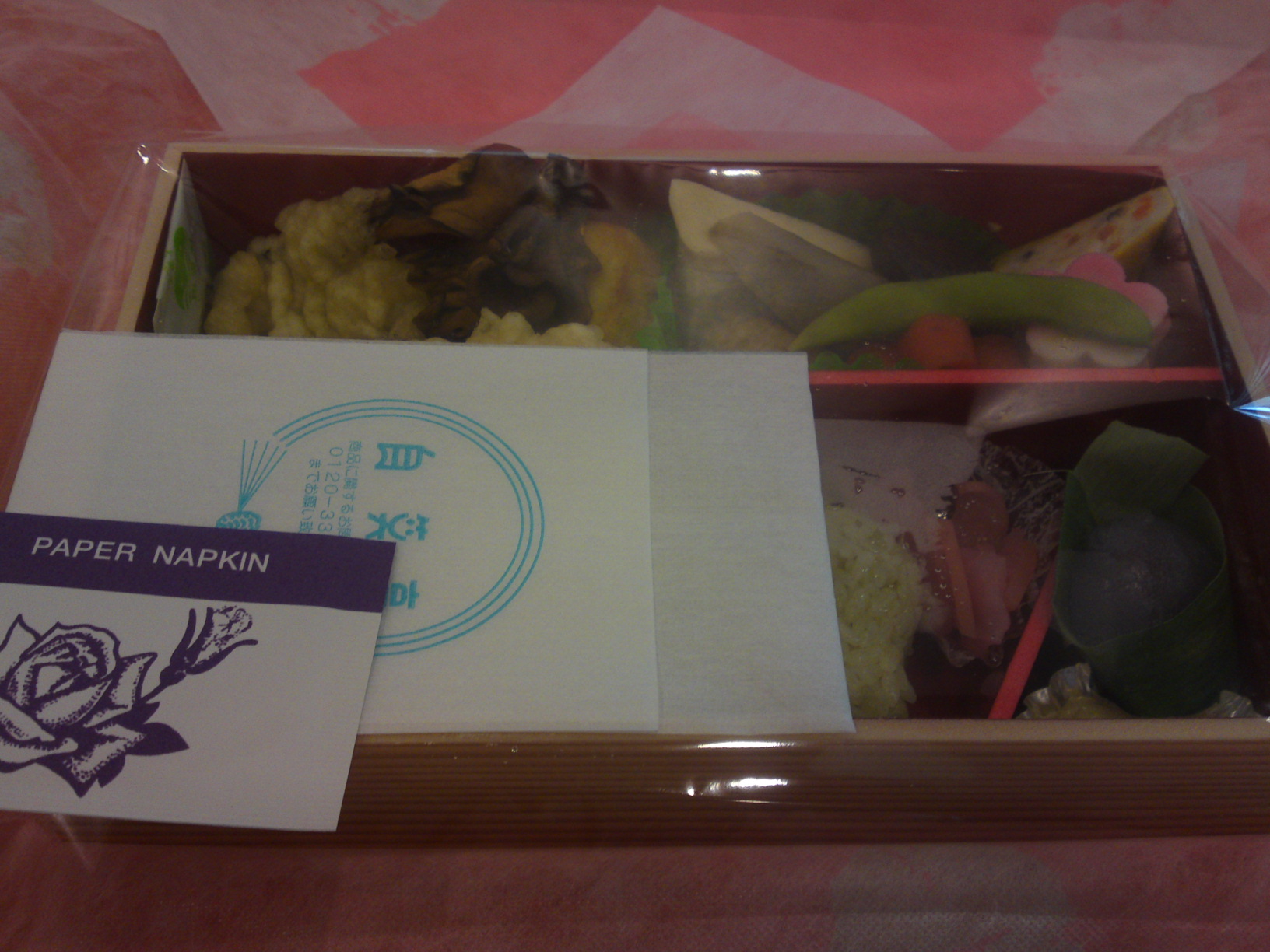
Kazutoyo Gozen/一豊御膳 refers to Kazutoyo Yamauchi, a Lord that lived in Kakegawa City during the Feudal Japan Era in the 16th Century and made famous in a TV Drama Series, while Gozen means “Repast”!
I bought this ekiben inside the Kakegawa JR Station on my way to work!

The whole ekiben could have made for a real present to take home!

As usual Jishotei Company in Hamamatsu City give precise explanations of the contents!

The ekiben as it looks without the sticker.
It is wrapped in very sturdy paper in the shape of a “furoshiki/bento box wrapping cloth”!

The box cover is another collector’s item with the introduction to the story of Lord Kazutoyo Yamauchi!

The inside was protected by a sheet of hard translucent paper and a wet towel was also provided!

Now, what do we have?

Two o-musubi/rice balls both molded into the shape of cherry blossom.
The first one is mixed with sansai/山菜/wild mountain vegetables and topped with a salted cherry blossom!

The second one consists of rice steamed into green tea from Kakegawa City!

Pickles and wasabi zuke to season the rice and a wagashi/Japanese cake made of anko/sweetmeats and jelly.

Chicken meat ball, simmered carrot, tofu flower atop a boiled sato imo/taro, boiled edamame, simmered burdock root, simmered shiitake mushroom, Takano tofu and Yuuba maki/tofu skin roll.

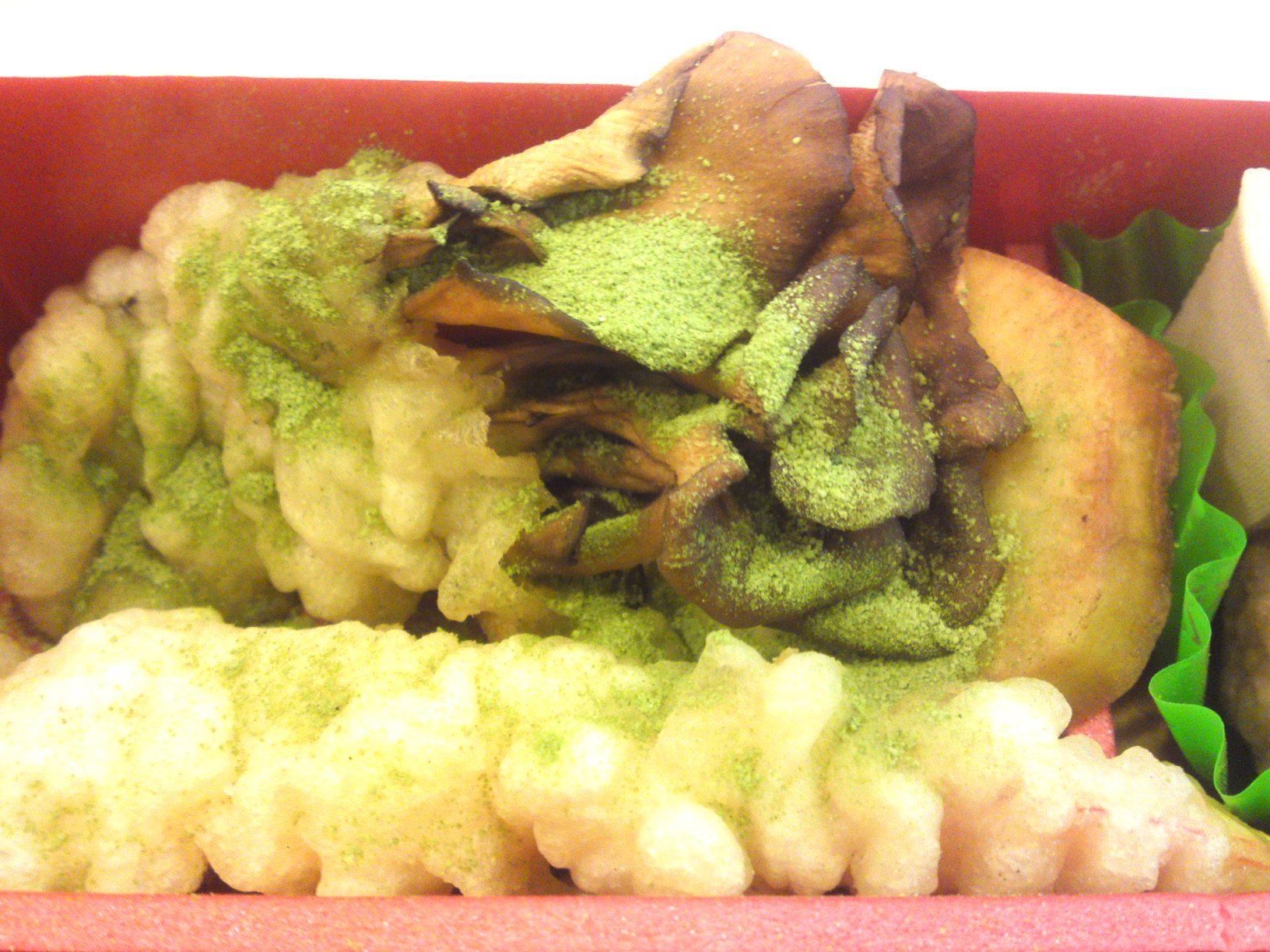
Maitake mushroom/Hen-of-the-Woods Mushroom tempura, prawn tempura and deep-fried sweet potato.

Salted matcha tea was provided to season the tempura!

The tempura once seasoned with salted matcha tea!

I wouldn’t mind going back to the 16th Century if people then ate like that!

RECOMMENDED RELATED WEBSITES

With a Glass,
Clumsyfingers by Xethia
Adventures in Bento Making, American Bento, Beanbento, Bento No1, Bento Wo Tsukurimashou, Cooking Cute, Eula, Hapabento , Happy Bento, Jacki’s Bento Blog, Kitchen Cow, Leggo My Obento, Le Petit Journal Bento & CO (French), Lunch In A Box, My Bento Box, Vegan Lunch Box; Tokyo Tom Baker, Daily Food Porn/Osaka, Only Nature Food Porn, Happy Little Bento, The Herbed Kitchen, J-Mama’s Kitchen, Cook, Eat, Play, Repeat; Bento Lunch Blog (German); Adventures In Bento; Anna The Red’s Bento Factory; Cooking Cute; Timeless Gourmet; Bento Bug; Ideal Meal; Bentosaurus; Mr. Foodie (London/UK); Ohayo Bento

Must-see tasting websites:

-Sake: Tokyo Through The Drinking Glass, Tokyo Foodcast, Urban Sake, Sake World
-Wine: Palate To Pen, Warren Bobrow, Cellar Tours, Ancient Fire Wines Blog
-Beer: Good Beer & Country Boys, Another Pint, Please!
-Japanese Pottery to enjoy your favourite drinks: Yellin Yakimono Gallery
Japanese Vegetarian & Vegan Cakes: Wagashi/和菓子13: Recipe-Kabotcha/Pumpkins

WAGASHI-PUMPKIN-1

Just found this recipe to please vegans (and others) with a sweet tooth:
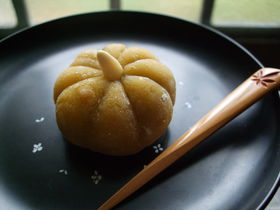
Japanese Cake/Wagashi: Pumpkin/Kabotcha Wagashi!

INGREDIENTS: For 5 cakes
-Pumkin paste: 20 g
-Rice flour: 30 g
-Sugar: 12 g
-Water: 50 ml
-Sweetmeats/Anko (See Recipe here)
-Cornstarch: enough for operation
-Pumpkin seeds or pine nuts: 5 (for decoration)

RECIPE:

WAGASHI-PUMPKIN-2
-Peel skin from pumkin and heat pulp inside microwave oven until soft enough to make paste. Let cool down completely.

WAGASHI-PUMPKIN-3
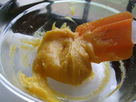
-In an oven bowl mix well punpkin paste, rice flour, sugar and water until it becomes bubbly. Cover with cellophane paper and heat for 40 seconds at 700W inside microwave oven.

WAGASHI-PUMPKIN-4
-Work the paste until smooth.

WAGASHI-PUMPKIN-5
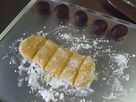
-Using cornstarch to work paste more easily as it will easily stick to your fingers, divide the paste into 5 identical portions.

WAGASHI-PUMPKIN-6
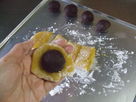
-Divide sweetmeats/anko into 5 identical parts and fashion them into small balls.
Coat your fingers with a little cornstarch and completely wrap sweetmeat/anko ball with pumpkin paste as shown in picture.

WAGASHI-PUMPKIN-7
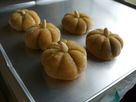
-Make indents around the ball with a wooden sticks to shape the ball into a small pumpkin.

WAGASHI-PUMPKIN-8
-As soon as the ball is finished, gently brush away whatever cornstarch is left on the surface.

WAGASHI-PUMPKIN-9
-On top of each pumpkin cake place a seed for decoration and effect!

WAGASHI-PUMPKIN-10
-That is how your “pumpkin” will look when you cut it!

NOTE:
You can sieve the pumpkin pulp first for a finer texture.

RECOMMENDED RELATED WEBSITES

With a Glass,
Clumsyfingers by Xethia
Adventures in Bento Making, American Bento, Beanbento, Bento No1, Bento Wo Tsukurimashou, Cooking Cute, Eula, Hapabento , Happy Bento, Jacki’s Bento Blog, Kitchen Cow, Leggo My Obento, Le Petit Journal Bento & CO (French), Lunch In A Box, My Bento Box, Vegan Lunch Box; Tokyo Tom Baker, Daily Food Porn/Osaka, Only Nature Food Porn, Happy Little Bento, The Herbed Kitchen, J-Mama’s Kitchen, Cook, Eat, Play, Repeat; Bento Lunch Blog (German); Adventures In Bento; Anna The Red’s Bento Factory; Cooking Cute; Timeless Gourmet; Bento Bug; Ideal Meal; Bentosaurus; Mr. Foodie (London/UK); Ohayo Bento

Must-see tasting websites:

-Sake: Tokyo Through The Drinking Glass, Tokyo Foodcast, Urban Sake, Sake World
-Wine: Palate To Pen, Warren Bobrow, Cellar Tours, Ancient Fire Wines Blog
-Beer: Good Beer & Country Boys, Another Pint, Please!
-Japanese Pottery to enjoy your favourite drinks: Yellin Yakimono Gallery
Japanese Vegetarian & Vegan Cakes: Wagashi/和菓子12: Dango-団子-Sweet Dumplings-Recipe

DANGO-1a
(Mitarashi Dango)

Japanese dango are not complicated, although it might be better to make a lot at a time!

INGREDIENTS:
-Rice (“Uruchi Kome”/normal Japnese round rice): 200g
-Water (for dango): 130cc
-Water (for sauce): 60cc
-Cornstarch: 1 teaspoon
-Sugar: 1 teaspoon
-Soy sauce: 2 teaspoons

RECIPE:

DANGO-RECIPE-1

Wash rice thoroughly.
If rice is no-wash type, skip 3 first steps.

DANGO-RECIPE-2

Once the rice washing water is coming out clean, drain rice and spread ontowel. Take off all excess humidity.

DANGO-RECIPE-4

Let the rice dry for two hours.

DANGO-RECIPE-3

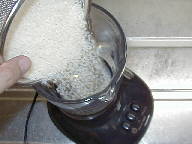
Pour rice in Blender/mixer. First work the blender for only a few seconds at a time until all the rice has been broken completeley. Then blend three times 15 seconds at a time.

DANGO-RECIPE-5

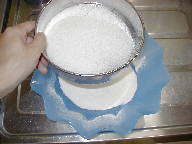
If the rice does not turn into powder easily, sift rice as many times as necessary until all rice has been reduced to powder.

DANGO-RECIPE-6

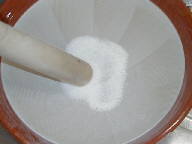
Finish the job with mortar and pestle.

DANGO-RECIPE-7

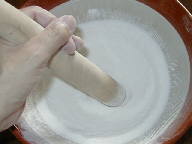
Once the rice has been reduced completely into powder, work the pestle in for 5 more minutes.

DANGO-RECIPE-8

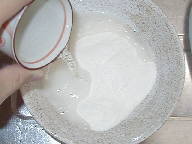
Add water and mix well with spoon.

DANGO-RECIPE-9

Divide into small portions and steam for 15 minutes.

DANGO-RECIPE-10

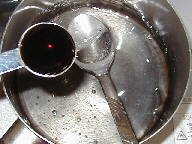
In a pan add cornstarch to water (for the sauce). keep stirring over a low fire. once the water has been become transparent add sugar and soy sauce and mix well until you obtain a smooth syrup. take off fire.

DANGO-RECIPE-11

Fill a glass with water and keep within arm’s reach.
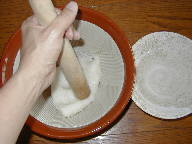
Drop all the steamed dango paste into mortar.
Work dango paste with a wet wooden pestle.
Once the paste has been become sticky and elastic, form small balls (the operation should not last more than 10 minutes).
Wet them to prevent them from sticking to each other.

DANGO-RECIPE-12

Push a wet (important!) stick through the balls (4 or 5 at the most).
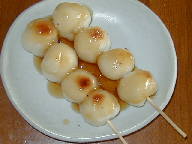
Grill the balls (or not) for better effect.
Serve them smeared with syrup.

RECOMMENDED RELATED WEBSITES

With a Glass,
Clumsyfingers by Xethia
Adventures in Bento Making, American Bento, Beanbento, Bento No1, Bento Wo Tsukurimashou, Cooking Cute, Eula, Hapabento , Happy Bento, Jacki’s Bento Blog, Kitchen Cow, Leggo My Obento, Le Petit Journal Bento & CO (French), Lunch In A Box, My Bento Box, Vegan Lunch Box; Tokyo Tom Baker, Daily Food Porn/Osaka, Only Nature Food Porn, Happy Little Bento, The Herbed Kitchen, J-Mama’s Kitchen, Cook, Eat, Play, Repeat; Bento Lunch Blog (German); Adventures In Bento; Anna The Red’s Bento Factory; Cooking Cute; Timeless Gourmet; Bento Bug; Ideal Meal; Bentosaurus; Mr. Foodie (London/UK); Ohayo Bento

Must-see tasting websites:

-Sake: Tokyo Through The Drinking Glass, Tokyo Foodcast, Urban Sake, Sake World
-Wine: Palate To Pen, Warren Bobrow, Cellar Tours, Ancient Fire Wines Blog
-Beer: Good Beer & Country Boys, Another Pint, Please!
-Japanese Pottery to enjoy your favourite drinks: Yellin Yakimono Gallery
Japanese Vegetarian & Vegan Cakes: Wagashi/和菓子11: Dango-団子-Sweet Dumplings

DANGO-1a
(Mitarashi Dango)

Dango (団子) is a Japanese dumpling made from mochi-ko (rice flour), related to mochi. It is often served with green tea.
In Edo times, they were very popular at tea stands along the country roads.

Dango are eaten year-round, but the different varieties are traditionally eaten in given seasons. Three to four dango are often served on a skewer. One variety of dango from Hokkaidō is made from potato flour and baked with shoyu (soy sauce).

Types of dango:

There are many different varieties of dango which are usually named after the various seasonings served on or with it.

DANGO-2
Chadango: Green-tea flavored Dango.

DANGO-4
Dango served covered with anko.

Actually, if you want to write all about Dango, you’d need to publish a whole book!

But I will publish an easy recipe tomorrow!

RECOMMENDED RELATED WEBSITES

With a Glass,
Clumsyfingers by Xethia
Adventures in Bento Making, American Bento, Beanbento, Bento No1, Bento Wo Tsukurimashou, Cooking Cute, Eula, Hapabento , Happy Bento, Jacki’s Bento Blog, Kitchen Cow, Leggo My Obento, Le Petit Journal Bento & CO (French), Lunch In A Box, My Bento Box, Vegan Lunch Box; Tokyo Tom Baker, Daily Food Porn/Osaka, Only Nature Food Porn, Happy Little Bento, The Herbed Kitchen, J-Mama’s Kitchen, Cook, Eat, Play, Repeat; Bento Lunch Blog (German); Adventures In Bento; Anna The Red’s Bento Factory; Cooking Cute; Timeless Gourmet; Bento Bug; Ideal Meal; Bentosaurus; Mr. Foodie (London/UK); Ohayo Bento

Must-see tasting websites:

-Sake: Tokyo Through The Drinking Glass, Tokyo Foodcast, Urban Sake, Sake World
-Wine: Palate To Pen, Warren Bobrow, Cellar Tours, Ancient Fire Wines Blog
-Beer: Good Beer & Country Boys, Another Pint, Please!
-Japanese Pottery to enjoy your favourite drinks: Yellin Yakimono Gallery
Japanese Vegetarian & Vegan Cakes: Wagashi/和菓子10: Youkan-Easy Recipe-Mizu Youkan

MIZU-YOKAN-1

Youkan come in many guises. Here is an easy and very basic recipe for “Mizu Youkan” that you will be able to adapt into many creations of yours! For vegans, vegetarians and omnivores!

INGREDIENTS:
-Boiled azuki beans: 1 can (430 g)
-Brown sugar: 60 g
-Salt: a pinch
-Agar agar Powder (“kanten” in Japanese): 4 g
-Water: 300 ml + 300 ml

RECIPE:

MIZU-YOKAN-2

Blend beans and 300 ml of water until smooth.

MIZU-YOKAN-3

Pass mixture through fine sieve.

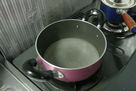
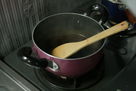
MIZU-YOKAN-4

In 300 ml of water drop agar agar. Bring to boil, stiring at the same time. Then keep stiring vover medium fire for 1 minute.

MIZU-YOKAN-5

Switch off fire. Add sugar and salt. Mix well. Add bean paste. Mix well.

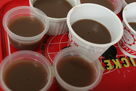
MIZU-YOKAN--6

Pour in recipients of your choice (that is when the fun starts!) and let cool completely. Keep in fridge (not too cold, please). Take out of recipient and serve!

RECOMMENDED RELATED WEBSITES

With a Glass,
Clumsyfingers by Xethia
Adventures in Bento Making, American Bento, Beanbento, Bento No1, Bento Wo Tsukurimashou, Cooking Cute, Eula, Hapabento , Happy Bento, Jacki’s Bento Blog, Kitchen Cow, Leggo My Obento, Le Petit Journal Bento & CO (French), Lunch In A Box, My Bento Box, Vegan Lunch Box; Tokyo Tom Baker, Daily Food Porn/Osaka, Only Nature Food Porn, Happy Little Bento, The Herbed Kitchen, J-Mama’s Kitchen, Cook, Eat, Play, Repeat; Bento Lunch Blog (German); Adventures In Bento; Anna The Red’s Bento Factory; Cooking Cute; Timeless Gourmet; Bento Bug; Ideal Meal; Bentosaurus; Mr. Foodie (London/UK); Ohayo Bento

Must-see tasting websites:

-Sake: Tokyo Through The Drinking Glass, Tokyo Foodcast, Urban Sake, Sake World
-Wine: Palate To Pen, Warren Bobrow, Cellar Tours, Ancient Fire Wines Blog
-Beer: Good Beer & Country Boys, Another Pint, Please!
-Japanese Pottery to enjoy your favourite drinks: Yellin Yakimono Gallery
Japanese Vegetarian & Vegan Cakes: Wagashi/和菓子9: Youkan/羊羹

YOUKAN-JELLY

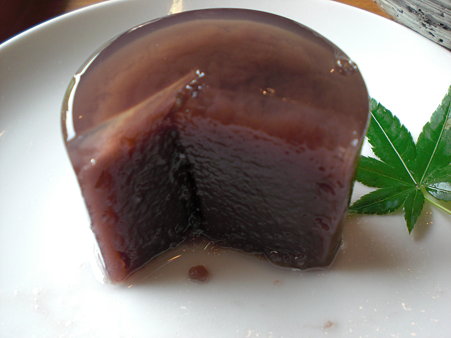
Here is another popular type of Japanese Wagashi fit for Vegans and Vegetarians: Youkan!

YOUKAN-MIZUYOKAN
Mizu Youkan

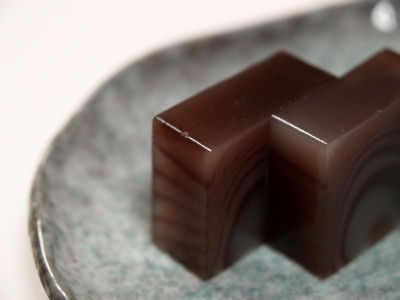
Yōkan (羊羹) is a thick jellied dessert made of red bean paste, agar (寒天/”kanten” in Japanese), and sugar. It is usually sold in a block form, and eaten in slices.

There are two main types: neri yōkan and mizu yōkan. “Mizu” means “water”, and indicates that it is made with more water than usual. Mizu yōkan is often chilled and eaten in summer.
Although most yōkan found in Japan and abroad are typically made with red bean paste, yōkan made from white kidney bean paste (しろあん, 白餡, “shiro an” in Japanese) are also relatively common. This type of yōkan is milky and translucent with a much milder flavour than the ones made of red bean paste.

YOUKAN-GREENTEAYOUKAN
Tea Youkan

As such, they can be effectively flavored and colored by using green tea powder or matcha.

YOUKAN-TRICOLOUR

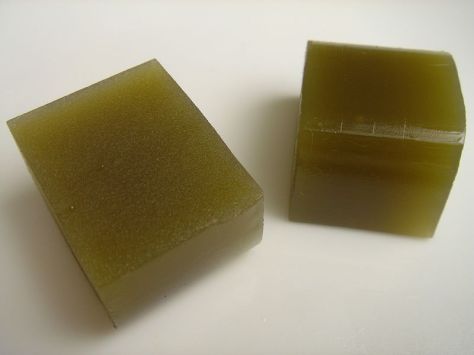
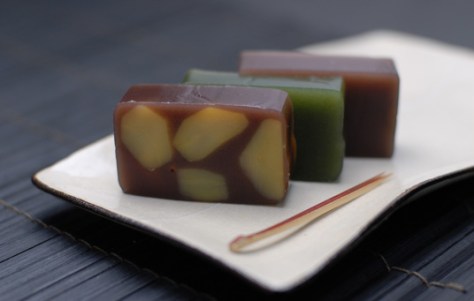
MizuyōkanYōkan may also contains chopped chestnuts, persimmons, whole sweetened azuki beans, figs, and sweet potato, among other additions. Sugar can be also be substituted with honey, dark brown sugar, or molasses to alter the taste of the yōkan produced. There is also shio yōkan, which uses small amounts of salt (shio/塩) as an additive.

Other Pictures of Youkan:

YOUKAN-BICOLOUR

YOUKAN-CHERRY

YOUKAN-PINK

I will introduce an easy recipe soon!

RECOMMENDED RELATED WEBSITES

With a Glass,
Clumsyfingers by Xethia
Adventures in Bento Making, American Bento, Beanbento, Bento No1, Bento Wo Tsukurimashou, Cooking Cute, Eula, Hapabento , Happy Bento, Jacki’s Bento Blog, Kitchen Cow, Leggo My Obento, Le Petit Journal Bento & CO (French), Lunch In A Box, My Bento Box, Vegan Lunch Box; Tokyo Tom Baker, Daily Food Porn/Osaka, Only Nature Food Porn, Happy Little Bento, The Herbed Kitchen, J-Mama’s Kitchen, Cook, Eat, Play, Repeat; Bento Lunch Blog (German); Adventures In Bento; Anna The Red’s Bento Factory; Cooking Cute; Timeless Gourmet; Bento Bug; Ideal Meal; Bentosaurus; Mr. Foodie (London/UK); Ohayo Bento

Must-see tasting websites:

-Sake: Tokyo Through The Drinking Glass, Tokyo Foodcast, Urban Sake, Sake World
-Wine: Palate To Pen, Warren Bobrow, Cellar Tours, Ancient Fire Wines Blog
-Beer: Good Beer & Country Boys, Another Pint, Please!
-Japanese Pottery to enjoy your favourite drinks: Yellin Yakimono Gallery