Tag Archives: sushi

Japanese Fish Species: Scabbard Fish/Tachiuo

scabbard-fish-a1
(Sorry, but that fish is just too long for the screen!)

Scabbard Fish or “Tachiuo” (太刀魚/Great Sword Fish in Japanese), a very popular in Japan in spite of its great length is usually caught in Summer in Japan but also appears in Winter in Shizuoka Prefcture.
As other fish it owns other names: Tachi (not in Hokkaido, where the word means “whiting”!), Shirada and Tachinouo.
It is mainly caught off Wakayama, Ehime and Oita Prefectures, although it is also caught in Suruga Bay off Shizuoka Prefecture
It is both caught by line or net.
In 1999, 37,000 tonnes were caught, but it fell to 23,000 tonnes in 2000.
It is also imported from Kore and China, although their fish is slightly different from the Japanese variety. More than half of imported fish are eaten west of Kansai.

scabbard-fish-c

It is fish than can be eaten raw as nigiri.

scbbard-fish-b1

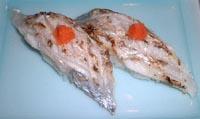
I personally prefer it “aburi” (slightly grilled) with a dash of ponzu and some momijioroshi (grated daikon with chili pepper) as above served at Sushi Ko Restaurant.

scabbard-fish-d

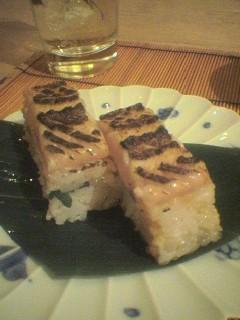
Some time ago I ate it at Oboro No Tsuki Restaurant (now defunct) as above:
They first put a double layer of sushi rice interspaced with shiso leaves (perilla) in a box for “oshi zushi” (pressed sushi), then top it with thick fillets (the fish is actually quite thin) and press the whole.
Next they slightly grill the top (“aburi”), take it out of the box and cut it to size.
Quite tasty and appetizing-looking!


The Japan Blog List

Please check the new postings at:
sake, shochu and sushi

—————————————-
日本語のブログ
—————————————-

Chirashizushi: Marinated Tuna Sushi for Lunch


The Japan Blog List

Please check the new postings at:
sake, shochu and sushi

—————————————-
日本語のブログ
—————————————-

home-chirashi

The Missus does not work on Thursday. This is the day we usually go out at night, but the frigid temperature outside having discouraged her to venture into town, she decided to cook both lunch and dinner for us for my (and her own ) pleasure!

For lunch we had a salad of beans, yams from Ishigaki Island and greens with a big bowl of miso and mushrooms soup. As for the main dish featured above, she prepare “Chirashizushi/Sushi on a plate or in a lunch box.
She steamed the rice with a piece of konbu/seaweed.
She later added this seaweed shredded once the rice had been mixed with the rice vinegar, sugar and some “secrets”. She also mixed in some shredded “takuan”/yellow pickled daikon to balance the sweetness of the sushi. Sushi in Shizuoka in generally “sweeter” than that found in other areas of japan, notably Tokyo where it is more “vinegary”.
On top of the rice she placed slices of “maguro”/tuna she had marinated beforehand in konbu ponzu ( a lot lighter tha soy sauce!) and mirin. She added “ikura”/salmon roe and “tobikko”/flying fish roe and completed for color effect and balance pieces of “shiso”/perilla leaves. A dollop of real grated wasabi, et voila!

She couldn’t help remark how much she would price it for customers at her virtual restaurant! LOL (not a bad price, actually!)

Japanese Seasonal Fish: Noresore/Conger Eel Whitebait


The Japan Blog List

Please check the new postings at:
sake, shochu and sushi

—————————————-
日本語のブログ
—————————————-

noresore4.jpg

“Noresore” will soon appear at some select fish markets, and as it will be a very short season, you will have to keep your eyes open!
Noresore stands for very young conger eels. They are called different names depending on regions: “Berada” in Okayama Prefecture, “Tachikurage” in Misaki, “Nagatankurage” in Wakayama Prefecture
In Shizuoka, they mainly come from Hamana Lake, a seawater lake west of the Prefecture, famous for its oysters, eels and clams.

noresore2

5~6cm long, they are practically transparent, save for their eyes. They emit no smell. In our Prefecture they are available only during the first two weeks of March. They are slowly but surely becoming a rarity wherever in Japan, and people come from afar just for the experience!

nresore3

Before serving them, lightly wash them in clean salted water.
As sushi, put them on top of “gunkan”, or a rice ball if you are an expert, with freshly grated ginger and chopped thin leeks.
I like them best served as they are with a little “ponzu or “yuzu” vinegar, a dash of “momijioroshi” (freshly grated daikon and chili pepper) and some chopped thin leeks for a last touch of colour!

Japanese Crustacean Species 3: Squilla/Shako


The Japan Blog List

Please check the new postings at:
sake, shochu and sushi

—————————————-
日本語のブログ
—————————————-

shako1.jpg

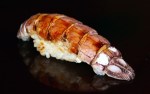
The Squilla or “Shako” (蝦蛄in Japanese) is a delicacy that appears on the sushi bar counters from April to Summer, although different varieties can be found in Hokkaido markets (Otaru City in particular) almost all year round.
You will discover it under names such as “shaku” and “Gazaebi”.
They are actually caught in almost all Japanese seas, but the best are supposed to originate from Hokkaido.

shako2

Like any crustaceans, they can be eaten in many ways.
The Japanese favour the small kind with a violet back. I had the pportunity to buy some very large specimen in Otaru, and eat them just boiled andserved with rice vinegar mixed with a little Japanese mustard, or in salad.
They almost disappeared from Tokyo Bay in the 1960’s but reappeared in the 1970’s. Most fishermen in the Kanto area will place them in boxes themselves to sell them directly at fish markets. The market value can vary wildly, but look for the genuine harbour markets and buy them yourself.

shako3

Naturally, they are most popular as nigiri sushi. Customers jokingly ask for “garage” (in English) as “shako” also means (different kanji, of course) “garage”!

Japanese Crustacean Species 2: Large Prawn/”Botan ebi”


The Japan Blog List

Please check the new postings at:
sake, shochu and sushi

—————————————-
日本語のブログ
—————————————-

botanebi1.jpg

Botanebi/”Botan” Prawn, or “Pandalus nipponesis” for the specialists, is a large prawn found in all seas of Japan at depths varying from 300 to 500 metres. They are caught at 200~300 metres depth in Suruga Bay and along the WEstern coast of Izu Peninsula In Shizuoka Prefecture. Once abundant, they have become scarce and only small specimen are found whereas Hokkaido produces up to 20cm-long prawns.

sushiko-08-12-25-31

They are known under different names: toyamaebi and Kijiebi.
It is not a cheap morsel in Sushi bars. But it is interesting to note they are essentially eaten raw as like “amaebi”, they become very sweet after some time in the refrigerator.

oda-4.jpg

Now, if you are lucky enough to find them fresh with their eggs, ask your chef to dress them as above, or even better, put the eggs on top of a “gunkan nigiri”!

sushiko-08-12-25-5

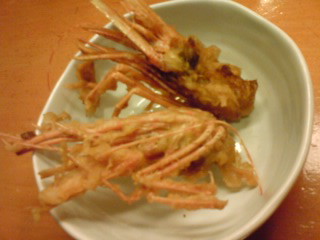
And one more thing, if they are fresh again, don’t forget to ask for the heads deep-fried!

Incidentally, botanebi change sex (gender) with age to end up as big juicy females!

Sashimi Set: Sushi Ko Restaurant


The Japan Blog List

Please check the new postings at:
sake, shochu and sushi

—————————————-
日本語のブログ
—————————————-

sushiko-08-12-25-1

Last night, the Missus and I went out to celebrate Christmas our own way by having dinner at Sushi Ko, our favourite sushi restaurant in Shizuoka City!
This was our first order, a “sashimi no moriawase/sashimi plate”.
All seafood came from Shizuoka Prefecture!
For the rest of our dinner, please check Shizuoka Sushi!

From left to right:
“Mebachi Maguro/Big-eyed Tuna” on a “shiso/perilla” leaf and finely cut daikon, fresh “Sakura Ebi/Cherry Blossom Shrimp” from Yui with grated ginger and cucumber, “Aburi Kinmeidai/slightly grilled Golden Eyes Snapper/Seabream”, lemon, “Shiso no Hana/Perilla Flowers, “Ishidai/Parrot bass, Stone Flounder, Striped Knifejaw” and freshly grated wasabi!

Sushi Ko
shizuoka City, Aoi Ku, Ryogae-cho. 2-3-1 (Aoba Koen)
Tel.: 054-2512898
Business Hours: 17:00~25:00. 17:00~23:00 (Sundays)
Closed on Wednesdays
Reservations recommended
Credit cards OK
HOMEPAGE (Japanese)

Japanese Crustacean Species 1: White Shrimp/”Shiroebi”


The Japan Blog List

Please check the new postings at:
sake, shochu and sushi

—————————————-
日本語のブログ
—————————————-

shiroebi1.jpg

Shiroebi or White Shrimp is not as known as other shrimp/prawn varieties. However it is a very popular crustacean in Japanese cuisine.
Also known under the the names of “Shiraebi, Hirataebi and Bekkoebi”, it is mainly caught between depths of 40 and 200 metres off the coasts of Toyama Bay on the other side of Japan and Suruga Bay in Shizuoka Prefecture.

shiraebi-22

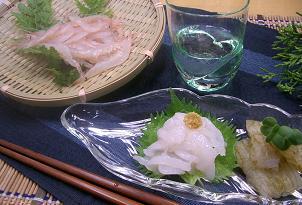
It is mainlly served as sashimi with some ponzu and grated fresh ginger

shiraebi-3

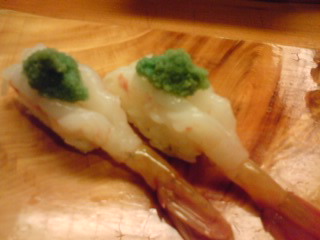
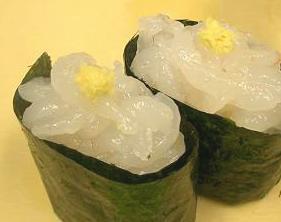
as “gunkan” topped with a dash of grated fresh ginger.

It is possible to serve it as “nigiri”, although one would need large specimen, as the usual length is only 7 cm.
Shiroebi appears on our tables between April and November in many guises:

shirebi-4

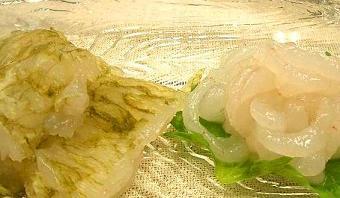
The picture above shows on the right the shiroebi in its natural flesh whereas on the left it has been kept between two sheets of wetted seaweed for a while as “kombu-jime”, another very popular way to prepare all kinds of sashimi/sushi.

White Shrimps also enter in the preparation of a kind of “Tamagoyaki”/Japanese Omelette when they are first processed into a paste and mixed thoroughly with beaten eggs, sieved and then cooked.
The Japanese also love them as soft sembei/rice crackers.

The annual catch has exceeded 600 tonnes in recent years, half of them in Toyama.
They are also exported whole.

Vegan & Vegetarian Japanese delicacy: “Sea Grapes/Umibudou”


The Japan Blog List

Please check the new postings at:
sake, shochu and sushi

—————————————-
日本語のブログ
—————————————-

umibudou-11

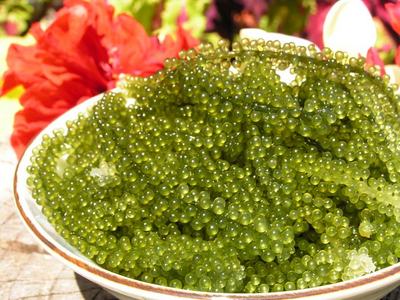
Although not from Shizuoka, this Okinawa delicacy regularly appears in good supermarkets such as Shizuoka JR Station Supermarket and in good Japanese restaurants.

Although called Sea Grapes (Umibudou) for their shape, it is a saweed variety!
Its Latin name is “Caulerpa lentillifera” for the purists.

umibudou-2

Apparently they can be found in some islands an seas in South Eastern Asia and Oceania. World vegetarian and vegans, look out for them (I mean discovere and eat them! LOL)!
The whole seaweed can reach betwen 2 and 5 metres, but only the extremities including the “grapes” are consumed.
In Okinawa where they have been eaten eons, they are also called “green caviar”!
You can eat them raw of course with soy sauce or rice vinegar mixed with mustard.

umibudogunkan

In sushi, as “gunkan/maothership”, they certainly make for great fun and taste!
Beware of counterfeits! No less than the JAS was recently caught selling them in August 2008!
Growing them in Japan has apparently been successful, great news for vegans and vegetarians who will find a great source of iodine and other beneficial elements!
Didi I say it? They are delicious/”oishii”!

Japanese Shellfish Species 1: Torigai/”Large Cockle”


The Japan Blog List

Please check the new postings at:
sake, shochu and sushi

—————————————-
日本語のブログ
—————————————-

torigai1.jpg

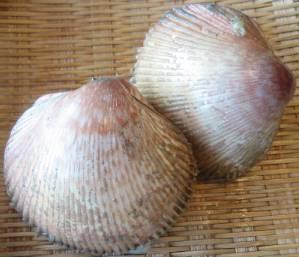
“Torigai” does not have a real name in English. They are approximately translated “large cockle”
They will appear on the market in Spring and earlier in Shizuoka Prefecture. They are mainly found in Tokyo Bay, Ise bay and Seto Inner Sea. Some are imported from Korea, but catches can wildly vary, especially with the occurence of “red tides”. A lot are imported from Aichi Prefecture (Nagoya region) to Shizuoka.

torigai-shellfish

They must be absolutely fresh to be consumed.
One easy way to check if they are still fresh is to slam them on the wooden board. They should immediately retract, even if cut out. They are at their cheapest between March and May.

torigai-nigiri.jpg
(Pic taken at Sushiya No Ichi, Shizuoka City)

They can be appreciated either as “tsumami”/Appetizer with a little grated wasabi and shoyu, or as nigiri.
Beware of torigai with a thin colour! They are not fresh!

Japanese Sushi: Gunkan/Mothership


The Japan Blog List

Please check the new postings at:
sake, shochu and sushi

—————————————-

gunkan-ikura.jpg

Intestingly enough, for all the fame of sushi and (California) rolls (maki), a very popular form of Sushi in Japan is almost ignored abroad.
Gunkan or “Mothership” in Japanese is a typically Japanese way of serving ingredients which would be difficult to serve on top of a nigiri.
They are usually made by wrapping a piece of “nori”/dry seaweed around a ball of rice/shari with plenty of space left on top to fill.
The advantages are multiple. The nori/seaweed is crisp. You eat the whole in one go with your fingers (clean your hand first!). And they make for beautiful decoration!
Some people do not appreciate the “nori”, but it could be replaced with very thin strips of daikon, cucumber, zucchuni and so on.

Here are some samples of “gunkan” I have eaten over the years:
gunkan-ikura.jpg gunkan-kanisalada.jpg gunkan-kanitsume.jpg
Ikura/Salmon roe Kani Salada/Crab salad Kanitsume/Crab pincers

gunkan-kobashira.jpg gunkan-mizuna.jpg gunkan-negitoro.jpg
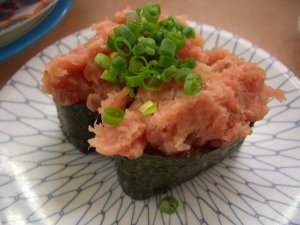
Kobashira/Round Clam round twin muscles Mizuna/A Japanese thin leaf vegetable + quail egg Negitoro/finely chopped tuna and thin leeks

gunkan-shirako.jpg gunkan-takuan.jpg
Shirako/Whiting-male cod sperm sacs Takuan/Pickled Japanese daikon + cucumber

gunkan-shirako2.jpg
“Shirako” (Cod Whiting) for a repeat.

gunkan-benisuwai.jpg gunkan-mitsukuruebi.jpg gunkan-kobashira2.jpg gunkan-namakarasumi.jpg

“Benisuwaigani” (Red Suwai Crab), “Mikkuriebi” (Mikkuri Shrimp, a variety of sweet shrimp, delicious in spite of the colour!), “Kobashira” (Muscle from the “Bakagai” Shellfish), “Nama Karasumi” (raw mullet roe)

gunkan-ooenkougani.jpg gunkan-akahada.jpg gunkan-sakuraebi.jpg gunkan-shirasu.jpg

“Ooenkogani” (Ooenko Crab, featuring body flesh, red brins and pincers flesh!), “Akahada Tsurutsuru”, a seaweed gunkan! It is a red seaweed variety), “Sakura ebi” (Sakura Shrimp, the pride of Shizuoka Prefecture!), “Nama Shirasu/Umeiwashi” (raw whitebait from “Ume” sardines)

gunkan-bafununi.jpg
“Gunkan” can be presented on individual plates for better effect!
gunkan-bafununi.jpg gunkan-murasakiuni.jpg gunkan-uni.jpg
The three above are varieties of sea urchins: “Bafun uni” and Murasaki Uni”, whereas the last last show both gunkan and nigiri.

gunkan-egani.jpg gunkan-ibaraganimodoki.jpg gunkan-matsubagani.jpg
Above are three types of crabs: “Egani”, Ibaraganimodoki” and Matsubagani”

gunkan-kagabai.jpg gunkan-nejinukibai.jpg gunkan-sazae.jpg
Three shellfish varieties: “Kagabai”, Nejinakubai” and “Sazae” (Turbo Shell)

gunkan-hoteiuo.jpg gunkan-konago.jpg gunkan-muroaji.jpg
We go to fish varieties: “Hoteiuo” roe, “Konago”, and “Muroaji” (horse mackerel variety)

gunkan-noresore.jpg gunkan-shiraebi.jpg gunkan-sunaebi.jpg
“Noresore” (baby conger eels), and two shrimp varieties: “Shiraebi” (white shrimp) and “sunaebi” (sand shrimp)

oda-4.jpg
We were fortunate enough to find those “botan ebi/large sweet prawns” fresh with their eggs. Two provided enough eggs for a single “botan ebi ko gunkan”.Not an easy treat to find, as it must absolutely be fresh. The eggs were sweet with not any disagreeable “fishy” background. By the way, this is the only sushi featuring the colour “blue” that comes to my mind!

For more about sushi check Shizuoka Sushi!

Japanese Seasonal Fish: Sole/Hirame


The Japan Blog List

Please check the new postings at:
sake, shochu and sushi

—————————————-

hirame.jpg

“Hirame” could be translated in many ways depending of your country of origin: Flat Fish, Sole, Turbot (although the latter should define “karei”) and what else. There are many varieties, wild or humanーfed. In Japanese, the names are numerous: Hirame, Shitabirame, Ooguchikarei, oyanirami, etc.
The best season is Autumn to Winter. They are still available until Spring in Shizuoka Prefecture. Wild ones come from Hokkaido and Aomori. Human-fed ones mainly hail from Oita, Ehime, Mie, and Kagoshima Prefectures.
hiramesashimi.jpg
The domestic wild catch is around 7600 tonnes a year, while human-fed fish amount to around 7100 tonnes a year. A recent increase has been observed in recent years, though. A lot are imported from Korea through Fukuoka and Shimoseki.
hirame-nigiri.jpg
Hirame can be enjoyed as sashimi, cut in various thickness, according to the chef’s preference and presented artfully.
I like both sashimi and nigiri, but in the case of nigiri, I have a marked preference (see pic above taken at Sushi No Ichi, Shizuoka City): Seasoned with a little lemon juice or yuzu (if available) and salt (preferably “snow salt” from Okinawa), eaten as it is with no shoyu!

Japanese seasonal Fish: Saba/Mackerel


The Japan Blog List

Please check the new postings at:
sake, shochu and sushi

—————————————-

saba1.jpg

Mackerel or saba, not to be confused with sanma/mackerel pike, is a fish eaten over the whole Northern Hemisphere and does come under many varieties and names.
In Japan it is mainly called “Saba”, “Masaba” or “Sekisaba”.
“Saba” is written 鯖 in Japanese, that is a combination of kanji characters for “fish” and “blue”!
Here, it is mainly caught off Oita, Saga Prefecture (Kyushu), although quite a few are caught off our coasts. They feed on plankton mainly.
saba-yaizu.jpg
(mackerel catch in Yaizu Harbour)
They are prepared and cooked in many guises.
In France, my birthplace, they are steamed and then pickled in white wine and spices. In Northern Europe they are also eaten half raw as smorgasbrod and pickled fish.
It can be appreciated as sashimi, but it must be absolutely fresh and is best served with grated fresh ginger and lemon:
saba2.jpg
As far as sushi is concerned, “masaba” variety is best:
saba3.jpg
It is especially popular as “oshizushi” (pressed sushi).
My preference goes for konbu zume saba. the mackerel is kept inside a variety of wet seaweed for an hour or so before put whole on top of a long “bar” of rice, then cut to size:
saba-sushi.jpg
(picture taken at Tomii estaurant, Shizuoka City)

Japanese seasonal Fish: Sanma/Mackerel Pike


The Japan Blog List

Please check the new postings at:
sake, shochu and sushi

—————————————-

“Sanma” or Mackerel Pike has come on our plates with the advent of Autumn and will stay with us until almost end of the year.
Known under other names such “Saira” or “Banjyo”, it is a fish with red meat rich with proteins.
In Japanese, 秋刀魚, it means “Autumn Sword Fish”!
In season, the flesh is fatty and sweet and ought to be sampled as sashimi served with grated fresh ginger and thinly cut leeks:

(Pic taken at Tonami, Shizuoka City. Notice the shiso/perilla flowers)
It is mainly caught off the north eastern shores of Japan as the fish swim down from Hokkaido.
But the more south it is caught, the less fat it will contain.
The annual catch exceeds 20,000 tonnes, although breeding is increasingly successful.
Incidentally for all the fish consumed in this country, Japan is the World leader when it comes to marine research and stock renewal develoment!
If you eat it at a good place such as Tonami in Shizuoka, you will be served its with its bones and head deep-fried.
Of course, as a sushi it is a morsel to savour!

Eel Species

Please check the new postings at:
sake, shochu and sushi

—————————————-
日本語のブログ
—————————————-

Here is another fish, second only to tuna, so popular in Japan!

Anago/Conger Eel
anago1.jpg

Anago or Conger Eel, a favourite all over Japan, does come in many varieties, some edible, some not.

The most popular conger eel in Japan is “Maanago” (“True Conger Eel”).
It is also called “Anago”, “Hakarime” and “Hamo” (although this particular kind should be treated separately)
Summer is the best season, although they are available all year round in Sushi restaurants.
They are mainly caught in Tokyo Bay, Jyowata Bay and Seto Sea.
anago3.jpg
Most Japanese appreciate them first boiled in broth then cooked on a grill over charcoal fire and then dipped in “tare/Japanese grill sauce”.
anago4.jpg anago5.jpg
As for nigiri, they come in many guises: topped with “tare” (sauce) or just with a light brush of shoyu (see above pics)
anago6.jpg anago7.jpg
Or a bit on the crispy side, or on the very soft and melting one (see above pics)
It basically depends on the chef’s skills and preferences.
anago2-tempura.jpg
One should not forget they also taste great as tempura, including the bones, a particular favourite of mine!

Samples with bright skin transaprent flesh are the best.
Imports from China and Korea have increased recently, although Japan is starting putting strong regulations to protect the species.
As for Shizuoka Prefecture, we do have access to fresh fish. Select your sushi restaurant accordingly!
———————————
Unagi/Common Eel

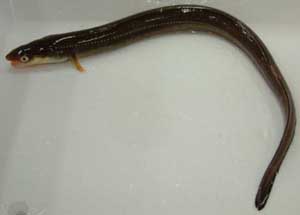
Unagi or common eel is fish which made Hamanako/Hamana Lake famous in western Shizuoka Prefecture.
As summer approaches, the Japanese are looking forward to eat the delicacy as it is supposed to revitalize your body on very hot days.
Also called “Kayoko”, “Subera” or “Aobai”, it is farmed mainly in Shizuoka, Aichi and Gifu Prefectures.
It is only in the Edo Period that the Japanese starting it after they realized it could not be eaten raw as opposed to anago/conger eel or hamo/pike conger eel (coming soon!).
Japan presently produces more than 24,000 tonnes and still imports 14,000 tonnes whole and 71,000 tonnes cooked, most of it from China.

It is quite popular as nigiri in any part of Japan.

But the Japanese are simply crazy about “kabayaki”, which requires to grill and baste the fish at the same time, a fairly tedious process. It is a bit of an acquired taste as the connoisseurs eat the skin, which a bit oily to my liking.
In Hamamtsu, it is possible to eat the real wild fish in a very few restaurants, but you will know the difference when the bill comes!

Tuna Species

Please check the new postings at:
sake, shochu and sushi

—————————————-
日本語のブログ
—————————————-

I noticed that many friends at Foodbuzz are anglers and fish lovers.
Here is some useful information on the most popular fish in Japan (and in Spain, too), namely Tuna!
Kuromaguro/Blue Fin Tuna

kuromaguro.jpg

Tuna or “Maguro” is the most popular fish for sushi and sashimi lovers in Japan (and abroad). It is said that more than 60% of total catch is consumed in Japan alone (and probably a lot higher depending on species). Incidentally, Japan is not the single bigger consumer of fish. Spain is!

Now, there is tuna and tuna. Briefly said there many species with many names and very different price tags as well!

The first species I would like to introduce is “Kuromaguro”, or Blue Fin Tuna (or Tunny). It has many other names in Japanese: Honmaguro, Maguto,Meji,Yokowa, Shibi, Imoshii, Shibimaguro, Kuroshibi, and Hatsu!

The best are caught in Winter mainly in the seas off Kochi (Shikoku Island), Miyagi and Hokkaido Prefectures.
This variety is the most expensive and can reach astronomical prices, especially caught in Winter off Hokkaido.
Imported Kuromaguro usually reaches Japan frozen, but in recent years the fish has been successfully raised in semi-wild environments in Spain, Australia and Croatia and arrives in Japan fresh by plane.
Import and sale of Kuromaguro are monopolised by Japanese trade associations, unless you are lucky enough to catch one (careful here, as poaching is a major offense in Japan!).
Between you and me, if you want to eat Kuromaguro sashimi, it might come cheaper if you do it while travelling in Spain!
Did you know that Japanese importers will fly to Spain and other countries just to check that the fish are bled properly?
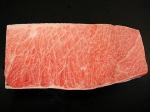
kuromaguro-otoro
Kuromaguro Otoro (fat part)

kuromaguro-chutoro
Kuromaguro Chutoro (semi-fat part)

kuromaguro-akami
Kuromaguro Akami (lean part)

———————

Mebachi/Big-eyed Tuna

mebachi.jpg

We are nearing the season for savouring Mebachi or Big-eyed Tuna, a fairly reasonable kind of tuna especially popular for its “akami” (lean part)
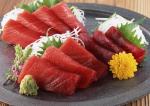
mebachi-akami

It has different names according to the areas: “Darumashibi” (Mie Prefecture), “Mebuto” (Kyushu). In Tokyo, Shizuoka and Wakayama, it is called “Daruma” when caught a young age.
The best seasons for catching are during the rainy season or the Fall.
This kind of tuna is mainly caught off the shores of Miyagi, Kagoshima, Kochi, Shizuoka, Kanagawa and Hokkaido Prefectures.

As said before it is mainly appreciated for its lean beautiful red flesh, but also cooked and grilled as “kama”:
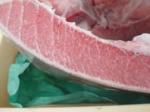
mebachi-kama
In the fall it is also a source of toro (fatty part) when kuromaguro is not available.
In recent years it has been extensively caught in the Pacific, Atlantic and Indian Oceans and in the Mediterranean Sea. It also comes frozen from Chile, Peru and North America. It is also flown fresh from Australia, Indonesia and New York. A lot equally comes frozen from South Korea and Taiwan.

——————–

Kihada: Yellowfin Tuna

kihada1.jpg

“Kihada maguro” or Yellowfin Tuna” will appear on our tables from early summer.
It is mainly caught off Shizuoka, Miyagi and Kochi Prefectures coasts.
Like all other fish it is called other names in different regions:
Kiwada, Itoshibi (Wakayama, Kochi, Kyushu), Shibi (Kyusyu, Osaka), Ban (Osaka) and Tuna Kajibi (Okinawa)
Kihada roams over many seas between 30 degrees north latitude and 30 degrees south latitude and even wider depending on the season.
Most of the fish caught in Japan is served locally as sashimi:
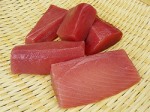
efbd8befbd89efbd88efbd81efbd84efbd81efbc92
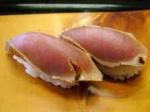
Very recognizable for its pinkish colour.
It is also widely appreciated as Zuke (first lightly grilled, then dipped into ice water before being cut in thin slices) on nigiri:
kihada3
A lot is imported frozen.
In Shizuoka try to go for the freshly caught samples coming from Yaizu or Numazu.

—————–

Minamimaguro/Southern Blue Fin Tuna
minamimaguro.jpg

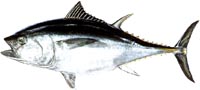
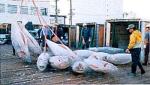
Minamimaguro or Southern Blue Fin Tuna could be called a true Shizuoka Prefecture tuna as our Prefecture accounts for 30% of the total in Japan!
shizuokaminamimaguro
Like all fish it has different names: Indomaguro, Goushyumaguro, Bachimaguro.
In Autumn it is mainly caught off Australia, New Zealand, Capetown (South Africa) in the Southern Hemisphere and off the coasts of Shizuoka, Kochi, Kagoshima and Miyagi Prefectures in Japan.
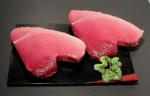
Mianmimaguro is comparatively cheaper than its fellows as it contains little fat, which on the other hand makes it very easy to freeze and preserve.
shizuokaminamimagurochu
Regardless of the lack of fat, it makes for excellent sashimi, sushi and various parts are succulent grilled or cooked.
The parts discarded by humans make for a lot of cat food!

————————

Binnaga/Albacore Tuna

binnaga.jpg

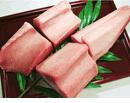
Binnaga or Albacore is very often called Tonbo Maguro in Japan. It is also known under the name of Binchyou.
It is caught in the Summer off the coasts of Miyagi, Kochi, Mie and Miyazaki Prefectures.
This is probably the cheapest kind of tuna available in Japan apart of Marlin.
binnagatonbo
It makes for most of the cheaper tuna sashimi in supermarkets.
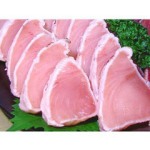
I personally like it fried in large slices before eating them as tuna hamburgers. Absolutely delicious and far healthier than a McDonald’s (let them sue me!)!
efbd82efbd89efbd8eefbd8eagatataki
For people who want to try their hand at making “tataki”, it would be the perfect first step into Japanese gastronomy.
It is also vastly used by canneries under the name of “Sea Chicken”.
It is probably the most popular tuna species outside Japan.
———————–
Mekajiki/Big-eye Marlin

mekajiki.jpg

Strictly speaking, marlins are only a different branch from tuna, but as it is so often offered as a substitute for true tuna, I decided to introduce it as such.
There are many types of marlins all over the world, but the most commonly caught and eaten is “Mekajiki”/Big-eye Marlin.
kajiki1.jpg
It is found in various supermarkets and cheap izakaya. Still it is a very popular as sashimi as well as grilled fish. Even in my home country it is served as “Carpaccio”.
It is caught all around Japan from Atumn to Winter.
It is also called “Meka” in Tokyo or “Mesara” in Kanagawa Prefecture.
Sashimi varieties came in two main kinds: “kuro” and “shiro”.
“Makajiki” (“true marlin”) is peach pink while “Mekajiki” (“big-eye marlin”) is of a whitish orange.
More than 1,000 tonnes are caught off Japan, whereas imports amount to more than 1,100 tonnes.
In Europe and America it is popular as canned food or grilled.
mekajiki-sushi
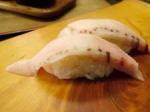
One can enjoy it as cheap “nigiri” in sushi restaurants.
Fresh marlin should be shiny and show veins bright red.
It is mainly caught at night as it swims near the surface then.