Tag Archives: vegetables

Scottish Cuisine: Green Peas and Mint Soup

PEAS-MINT

I have nurtured a special fondness for Scotland where I stayed many times as far back as in the 1970’s. I’m still an ardent fan of Hamilton Academics, better known as the “Accies”, Football Club (Soccer)!

Scotland has more to offer than whisky and haggis, and its gastronomy is slowly but steadily getting better attention thanks to the thousands of tourists visiting this beautiful and still wild country.

It is a very cold country in winter, and a good soup is always much appreciated there!

Green Peas and Mint Soup!

INGREDIENTS: For 4 people

-Fresh or frozen green peas: 500 g
-Lettuce leaves: 150 g
-Onions: 250 g
-Chopped fresh mint: 3 large tablespoons
-Butter: 50 g
-Fresh cream: 100 ml
-Salt and pepper to taste

RECIPE:

-Peel the onions and chop finely. Wash the lettuce leaves and cut/chop finely.

-Melt the butter in large deep pan and cook the onions slowly over a low fire. They must melt but not change colour. Add the lettuce first and after a minute or two add 1 litre of water. Cook over a very low fire for 20 minutes.

-Add the green peas and bring to boil. Take off fire.

-Add the mint and mix for a long time with an electric whisker. Season with salt and pepper. Sieve the soup through a very fine mesh and pour again into the pan.

-Add the fresh cream and re-heat the soup over a low fire, taking care not to boil it.

-Serve hot with a few green peas and mint leaves.

NOTE:
You may also serve this soup with whisked fresh cream to which you have added plenty of pepper!

Please check the new postings at:
sake, shochu and sushi

—————————————-
日本語のブログ
—————————————-

Easy Vegetable and Fruit Yoghurt Mousse

VEG-FRUIT-YOGHURT-MOUSSE-1

Is your whole family vegetarian?
Here is a dessert for all, adults and chidren alike:
Vegetables and Fruit Yoghurt Mousse!

INGREDIENTS: for 8 people
-Mousse:
Vegetable Juice: 200 cc (1 cup)
Fresh cream: 200 cc (1 cup)
Yoghurt: 250 cc (1 and a quarter cups)
Sugar: 100 g
lemon juice (to taste)
Gelatin or agar agar powder: 10 g

-Jelly:
Vegetable juice: 350 cc (1 and three quarters cups)
Sugar: 200 cc (1 cup)
Sugar: 30 g
Gelatin or agar agar powder: 10 g

-Topping:
Blueberry jam (to taste)/You may use other fruit jams naturally!

-Others:
Lukewarm water to dissolve gelatin: 6 large tablespoons each

RECIPE:
-Preparing jelly:
Add water to vegetable juice and warm up inside microwave oven for 30 seconds. Take out, add sugar and mix.

Add gelatin dissolved in lukearm water and stir well.
Pour in individual recipients. Let cool.
Leave inside refrigerator for 40~60 minutes until it has properly solidified.

-Preparing mousse:
Mix fresh cream with sugar in blender or whisk until half solid (should still see bubbles)

In a separate bowl pour vegetable juice, yoghurt and lemon juice. Add gelatin dissolved in lukewarm water and mix well.

-Let cool and pour over jely in individual recipients. Leave in refrigerator until properly solidified.

-Once the mousse ad solidified, top with jam thinned with a little water. If the dessert is for adults only, thinning the jam with liqueur is a good idea!

Open to imagination and variations!

Please check the new postings at:
sake, shochu and sushi

—————————————-
日本語のブログ
—————————————-

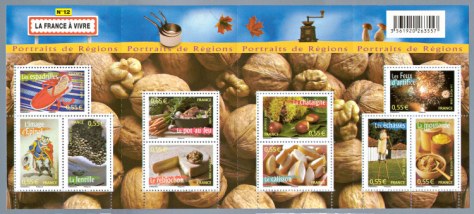
French Gastronomy on Stamps (29): Traditional Ingredients & Dishes

TIMBRES-GASTRONOMIE-1

France has issued many stamps on food (not foodstamps!) on her own gastronomy for quite some time including the new series will be issued on April 25th and wil be printed in the form of mini-sheets dedicated to a particular region with stamps, pics and explanations.
As for stamps issued since the first stamp in 1849, a number of them were issued with Traditional Ingredients and Dishes as a theme:

TIMBRES-BEURRE
BEURRE/butter
Someone said that France is a muntain of butter in the middle of a lake of milk, a statement hotly disputed by Denmark!

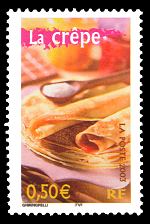
TIMBRES-CREPE
CREPE
The word crepe apllies only for the sweet whet flour pancake. Its original meaning is “lace” as of a lace veil.
The buckwheat pancake is called “galette”.

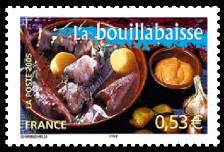
TIMBRES-GASTRONOMIE-BOUILLABAISSE
BOUILLABAISSE
Oriinally a poor man/fisherman’s soup eaten with toasted bread has beome an extravagant “national” dish almost unrelated with the real one.

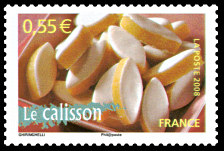
TIMBRES-GASTRONOMIE-CALISSON
CALISSON
A traditional sweet from south France.

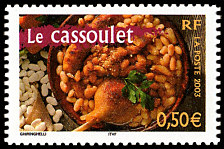
TIMBRES-GASTRONOMIE-CASSOULET
CASSOULET
Created with beans originally from India. It takes four hours to cook it with beans, tomatoes and meat (pork, duck or goose) before being gratineed in an oven for at leat an hour.

TIMBRES-GASTRONOMIE-FOIEGRAS
FOIE GRAS
Made in different regions of France. originally mad with goose liver. I, for myself prefer duck foie gras!

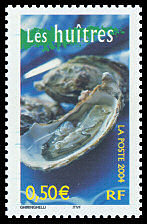
TIMBRES-GASTRONOMIE-HUITRES
HUITRES/Oysters
Did you know that all oysters in France, except for the Belon variety either came from Great Britain or Japan?

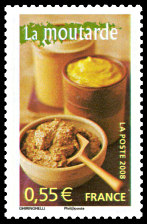
TIMBRES-GASTRONOMIE-MOUTARDE
MOUTARDE/Mustard
Originally from the Middle East, it is mainly prepared in Dijon, my birthplace!

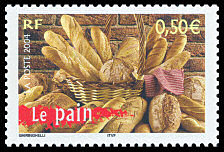
TIMBRES-GASTRONOMIE-PAIN
PAIN/Bread
Baguette is not French by the way. It was introduced by the Austrian Queen, marie-Antoinette!

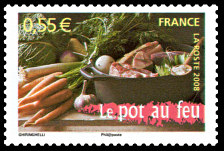
TIMBRES-GASTRONOMIE-POTAUFEU
POT AU Feu/Pot on the Fire
Has become universal!

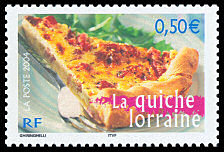
TIMBRES-GASTRONOMIE-QUICHE
QUICHE LORRAINE
The original one, cooked with fresh cream, eggs and bacon only!

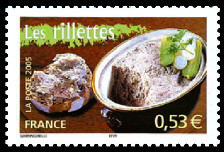
TIMBRES-GASTRONOMIE-RILLETTES
RILLETTES
made with lean pork and lard. Great, but careful with those calories!

TIMBRES-LECAFE

CAFES, the symbol of a lifestyle originally came from Austria!

————————-
Please check the new postings at:
sake, shochu and sushi

—————————————-
日本語のブログ
—————————————-

French Gastronomy on Stamps (28): River Fish

TIMBRES-GASTRONOMIE-1

France has issued many stamps on food (not foodstamps!) on her own gastronomy for quite some time including the new series will be issued on April 25th and wil be printed in the form of mini-sheets dedicated to a particular region with stamps, pics and explanations.
As for stamps issued since the first stamp in 1849, a number of them were issued with River Fish as a theme:

TIMBRES-GASTRONOMIE-POISSON-Saumon

SAUMON/Salmon

Of course most varieties of Salmo both live in the sea and in rivers.
In France, salmon fishing regulations are very strict and define the season when one can catch the fish, its minimum size and fishing area.
The French probably appreciate it most poached, and served cold with a jelly coating and mayonnaise either served whole or in medaillons/thick slices.

TIMBRES-GASTRONOMIE-POISSONS-Brochet

BROCHET/Pike

Both caled the “King of Rivers” and the “River Shark”, its catches are also strictly regulated.
Most apprecated either poached and cold like salmon, or as quenelles/dumplings served hot in a gratineed bechamel sauce as made in Lyon!

TIMBRES-GASTRONOMIE-POISSONS-Gardon

GARDON/Common Roach

Found in big schools in quiet rivers, it is a small cousin of the carp.
The French mostly appreciate it in small size, emptied, rolled into flour and deep-fried, served with lemon and a good glass of white wine or beer.

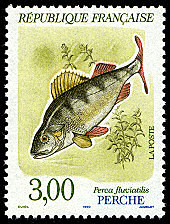
TIMBRES-GASTRONOMIE-POISSONS-Perche

PERCHE/Perch=River Bass

here is a fish whose catching, except for the season, is practically not regulated as it tends to overpopulate rivers and lakes to the detriment of other fish.
Best appreciated as deep-fried filets served with lemon or tartatr sauce! Great with a solid beer!

Look forward to the next postings! There are plenty more!

————————-
Please check the new postings at:
sake, shochu and sushi

—————————————-
日本語のブログ
—————————————-

French Gastronomy on Stamps (27): Fruits, Vegetables, Herbs

timbres-gastronomie-2

France has issued many stamps on food (not foodstamps!) on her own gastronomy for quite some time including the new series will be issued on April 25th and wil be printed in the form of mini-sheets dedicated to a particular region with stamps, pics and explanations.
As for stamps issued since the first stamp in 1849, a great number of them were issued with edible Fruits, Vegetables and Herbs as a theme:

TIMBRES=GASTRONOMIE-CANNEASUCRE

CANNE A SUCRE/Sugarcane
France produces a lot of its brown sugar from sugarcanes grown in the West French Indies and African Islands in the Indian Ocean.

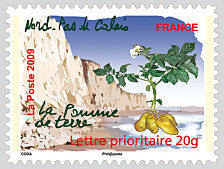
TIMBRES=GASTRONOMIE-POMMEDETERRE

POMME DE TERRE/Potatoes.
France was comparatively late in Europe adopting this particular vegetable.

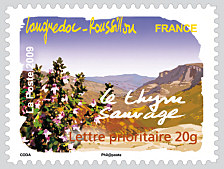
TIMBRES=GASTRONOMIE-THYME

THYM/Thyme
What would the French do witout it?

TIMBRES-GASTRONOMIE-AWARA

AWARA
Exclusively grown in French Guyana/Guyanne.

TIMBRES-GASTRONOMIE-CASSIS

CASSIS
Cassis is mainly grown and poduced in Dijon, my birthplace!

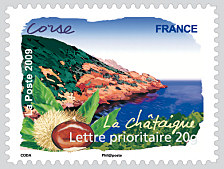
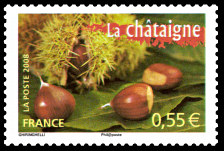
TIMBRES-GASTRONOMIE-CHATAIGNE TIMBRES-GASTRONOMIE-CHATAIGNE-b

CHATAIGNE/Chestnuts
For a long time, in many rural areas of France, chestnuts provided the flour for bread!

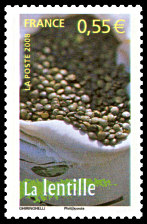
TIMBRES-GASTRONOMIE-LENTILS

LENTILLES/Lentils
Originally coming from Indian, the green small ones are the best!

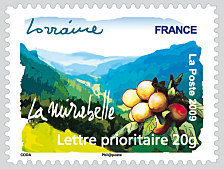
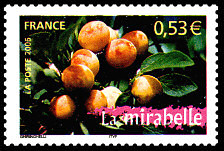
TIMBRES-GASTRONOMIE-MIRABELLE TIMBRES-MIRABELLE

MIRABELLES
At one time almost extinct, they are evrywhere to be found in early Autumn!

TIMBRES-GASTRONOMIE-MYRTILLE

MYRTILLE/Blueberry
Used in making jams and also spirits!

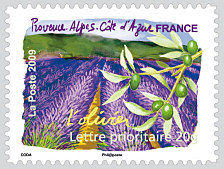
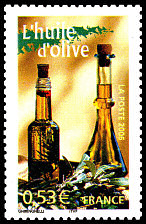
TIMBRES-GASTRONOMIE-OLIVE TIMBRES-OLIVEOIL

OLIVES-HUILE D’OLIVE/Olives and Olive Oil
Grown in Provence mainly!

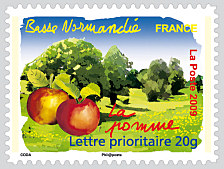
TIMBRES-GASTRONOMIE-POMME

POMMES/Apples
Make for great Cider and Pommeau! (and cakes!)

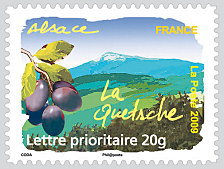
TIMBRES-GASTRONOMIE-QUETSCHE

QUETSCHE/Plums
What I would give for a tart of them!

TIMBRES-GASTRONOMIE-SALICORNE

SALICORNE
A very rare vegetable/plant growing in salted waters!
Great as pickles!

Look forward to the next postings! There are plenty more!

————————-
Please check the new postings at:
sake, shochu and sushi

—————————————-
日本語のブログ
—————————————-

Vegan & Vegetarian Feast at Tomii: Sansai/Japanese Wild Mountain Vegetables

tomii-veg1

It seems I can’t away from Tomii these days!
The reason (s) is (are) pretty simple:
This Japanese restaurant not only offers the best value for food (although a little expensive), but they scrupulously serve only seasonal culinary marvels!

tomii-veg2
“Sanbo”

Its young (33) second-generation chef-owner, Kazuya Tomii, has always been surprised to hear that many expat vegans or vegetarians had a hard time to find appropriate food in restaurants or even markets.

tomii-veg4
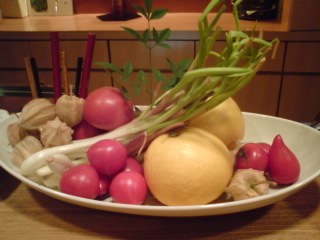
Vegetables and fruit from Shizuoka Prefecture

Having spent 6 years learning his trade in Tokyo, Kyoto, Gifu and Shizuoka before taking over in 2004, he knows very well there is plenty to savour for non-meat eaters!

tomii-veg3
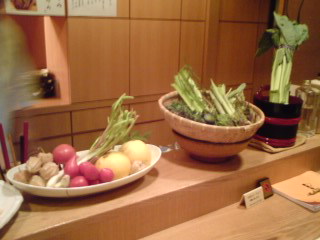
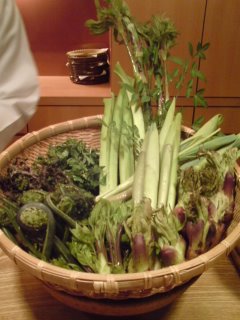
Sansai/Japanese Wild Mountain Plants from Yamagata Prefecture

When I went there for dinner last Friday, he had just received a whole batch of “Sansai” from a relative in Yamagata Prefecture who owns a mountain (no joke) awash with these succulent wild plants!
I don’t have to tell you that I went vegetarian on that particular night!
I asked him to just prepare them away as he deemed best with some great local Shizuoka Sake!

Here is what I was served (I keep all the items in Japanese in case you have the occasion to find them. Asking in English would be very complicated. If needed, I will send a glossary to any friend who asks for it!):

tomii-veg5

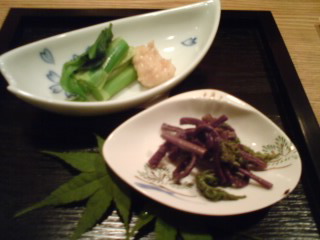
Hors d’oeuvres/starter:
From top clockwise
-Ginbo
-Ukogi
-Ichiya Kogomi

tomii-veg6

Top: Amadokoro with white miso sauce
Bottom: Aka Kogomi

tomii-veg7
A better view of the sansai from Yamagata Prefecture!

tomii-veg8
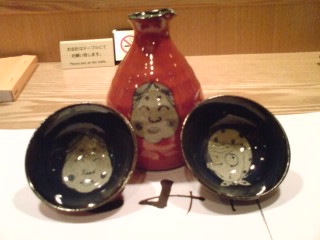
Nice ware to serve hot sake in!

tomii-veg9

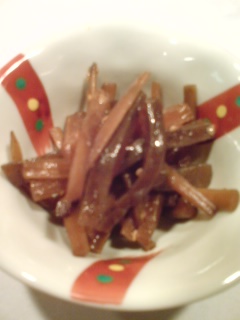
Udo and konyaku kimpira!

tomii-veg10

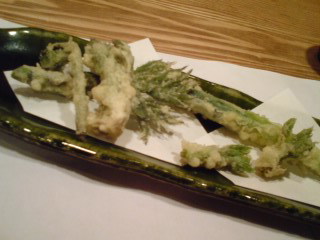
Sansai Tempura!
From left to right:
-Aka kogomi
-Tara no me
-Udo leaf
-Amadokoro (long stem)
-Koshiabura

Note: vegans, when making tempura, should use cornstarch instead of egg whites!

tomii-veg11

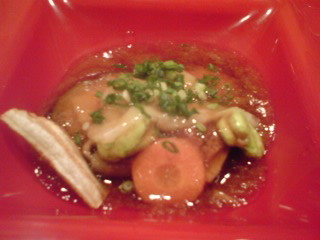
Agedashi yasai with mochi!
Now, this particular dish is absolutely vegan and vegetarian. Very satisfying!

I guarantee you I was full!

TOMII
Shizuoka City, Aoi Ku, Tokiwa-cho, 1-2-7, Tomii Bldg, 1F
Tel.: 054-274-0666
Business hours: 17:00~22:00
Closed on Sundays
HOMEPAGE (Japanese)

————————-
Please check the new postings at:
sake, shochu and sushi

—————————————-
日本語のブログ
—————————————-

Vegetables Facts and Tips (6): Asparaguses

asparagus-varieties

Asparagus has been used from very early times as a vegetable and medicine, owing to its delicate flavour and diuretic properties. There is a recipe for cooking asparagus in the oldest surviving book of recipes, Apicius’s third century AD De re coquinaria, Book III. It is said that it was cultivated by the ancient Egyptians, Greeks and Romans, who ate it fresh when in season and dried the vegetable for use in winter.It lost its popularity in the Middle Ages but returned to favour in the seventeenth century.

Facts:
Season: They are at their best March~June in the Northern Hemisphere, but can be obtained all year round thanks to state-of-the-art greenhouse cultivation.
Beneficial elements: Carotene, Vitamin C and E, Vitmanins from the B group, Rutin, Vegetal fibers, Folic Acid, Potassium. The amino acid asparagine gets its name from the plant.
Asparagus rhizomes and root are used ethnomedically to treat urinary tract infections, as well as kidney and bladder stones.
Asparagus is also believed to have aphrodisiac properties (this belief is at least partially due to the phallic shape of the shoots).

Tips:
-Choose asparaguses with a clean cutting surface. No black spots should appear.
-The darker the colour, the better. As for white asparaguses, choses with a “wet cutting”
-When storing your asparaguses in the fridge, have them stand upright in a long narrow container with their foot wrapped in wet kitchen paper. Discard bent asparaguses on the supermarket stands.
-Choose green asparaguses with the smallest possible foliage along the stems and dark tips.
-When boiling them, either boil them stading upright inside a pasta mesh container, or absolutely flat in a sauce pan. Do not bend them.
-Asparaguses are best digested when lightly fried with oil.
-If Asparaguses cannot be obtained directly from the farmer, lightly peel but keep yop half as it is to preserve Vitamins.

Varieties:
Most popular varieties are shown in the picture above: White, Green and “wild-style” (apeelations vary!)

asparagus-wild

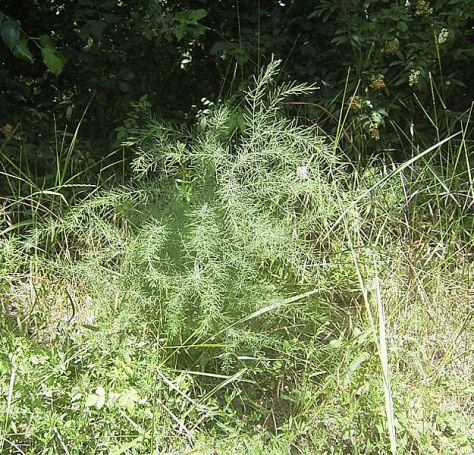
Asparaguses are abundant in the while, but they grow very quickly and get too hard for consumption.
The wild ones picked in their natural environment are my favourite as I fondly rememebr picking them up as a soldier in the South of France during our drills and cooking them in simple omelettes!

asparagus-violet

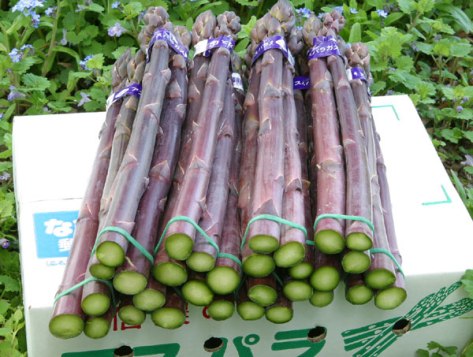
Violet asparaguse are very popular in any restaurants!

asparagus-mini

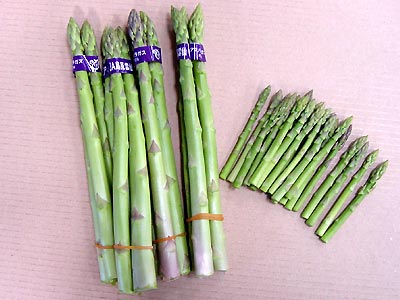
Mini-asparaguses are ever so popular in Japan thanks to their practical size.

uzu-41

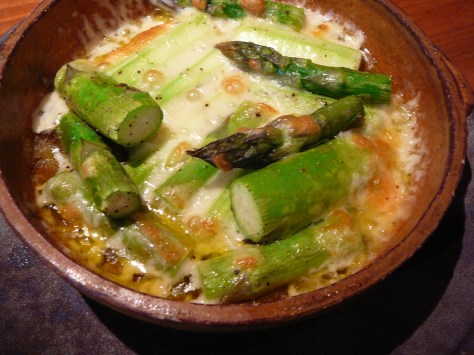
Recipes are endless, but my favourite is the large green asparaguses and mozzarella gratin as prepared and served at Uzu Izakaya in Shizuoka City!

Please check the new postings at:
sake, shochu and sushi

—————————————-
日本語のブログ
—————————————-

Pervert Daikon?


The Japan Blog List

Please check the new postings at:
sake, shochu and sushi

—————————————-
日本語のブログ
—————————————-
pervert-daikon

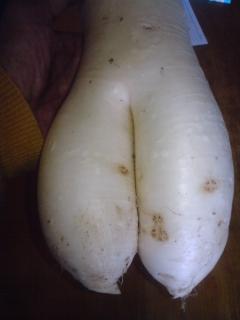
My usually prudish half turned up triumphantly with this strange daikon grown in her parents’ garden!

I didn’t know where to start cutting it…

In the end I saw gradually disappearing as I grated the whole for a “daikon-nabe”!

Vegetables Facts and Tips (5): Yams


The Japan Blog List

Please check the new postings at:
sake, shochu and sushi

—————————————-
日本語のブログ
—————————————-

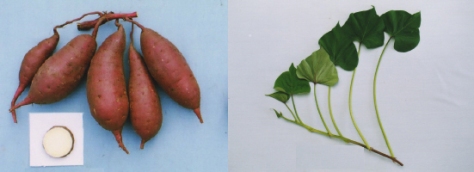
satsuma-1

Yams or “Satsuma Imo” were first introduced to Japan in the rykyu Islands (Okinawa) in 1604 by the Chinese. It was then introduced in Kyushu in 1609, an area that grows 80% of the total Japanese production.

It has been recognized in this country fro a long time for both its nutritional and pharmaceutical qualities.

satsumabeni_haruka

There are over a hundred species in Japan, but the most popular edible ones (not the ones exclusively used for making shochu) have red skins and light yellow flesh.

satsumatanegashima

My personal favorite is the “Tanekoshima Gold Imo” grown in Taneko Island south of Kyushu. It has the particularity of being red when raw before chaning to a rich golden color when cooked. Among other varieties, the violet yams are getting increasingly popular.

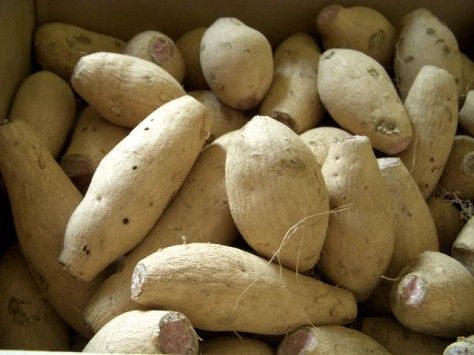
yummy
Tanekoshima yam (deep yellow), “common yam” (light yellow) and Murasaki/Violet yam.

The Missus particularly likes to mix the three above as a cold salad with mayonnaise or cream-based dressing.

FACTS:
-Season: September to November
-Main elements: Carbohydrates, Carotene, Vitamin C, Vitamin E, Potassium, Calcium, Magnesium, vegetal fibers.
-Beneficial to digestion.
-Lose very little of its beneficial elements even after a long cooking.

TIPS:
-Choose specimens with nice color and a “fat/roundish” aspect!
-Plunge yam in cold water as soon as you have cut them. They will not lose their color!
-Boil, bake or steam long enough before taking skin off. Discard skin!

Vegetables Facts and Tips (4): Carrots


The Japan Blog List

Please check the new postings at:
sake, shochu and sushi

—————————————-
日本語のブログ
—————————————-

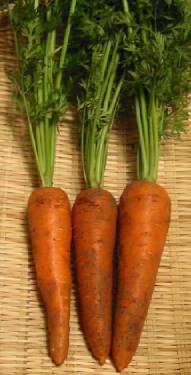
carrot-1

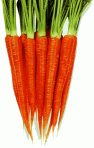
Carrots are consumed everywhere in the World, raw or cooked in so many manners, including desserts, that you need a whole book to describe all the recipes! And you might have to come up with a special addenda leaflet to introduce all its varieties!

Now, people might have forgotten that this cousin of the spinach orignated from Afghanistan before it was first introduced in China and Europe (by the Dutch) in the 12th Century. Japan had to wait until the 16th Century before the Chinese brought it to the Island of the Rising Sun.

FACTS:

Some time ago carrots were not popular in Japan because of their strong taste characteristics, but the Japanese have come with sweeter and softer varieties:
carrot-kyo
“Kyo-Ninjin”, a variety developed in Kyoto, with a deep dark red colour and very sweet taste.

carrot-gosun
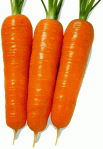
“Go-Sun Ninjin”, the most common in Japan.

carrot-sansu
“San-Sun Ninjin”, a smaller variety of the above.

carrot-daijyo
“Daijyo Ninjin”, a very long and thin variety very popular in Japanese restaurants! Great for sticks!

carrot-kinji
“Kinji Ninjin”, probably the most elegant of them all!

carrot-shim-yellow
“Kiiro Ninjin”, beautiful and very sweet!

carrot-mini
“Mini Ninjin”, so much fun!

carrot-leaves-vitaminc
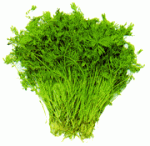
Now, do not forget the leaves which contain an enormous amount of Vitamin C!

-Season: May to June, and October to Deecember in the Northern Hemisphere.
-Beneficial elements:
Carotenes
An absolute need for humans. Carotenes are more easily absorbed by the body systems when the carrots are eaten together with oil, dressing or “glace”.
Vitamin C, Potassium, Calcium.

TIPS:

Preservation: Carrots should not be kept inside too cold fridges. Protect them by wrapping them into newspaper “standing up”, or into cellophane paper if they are cut.
Choose specimen with a good constant colour and with a small stem core if you buy them with leaves already cut away.

Important: When you peel them, do so as thinly as possible as the majority of the carotenes lie just under the skin!

First Sashimi Set of the Year at Tomii!


The Japan Blog List

Please check the new postings at:
sake, shochu and sushi

—————————————-
日本語のブログ
—————————————-

tomii-09-06

Yesterday evening, being hungry late at work, I just took a “break” and went for a (slightly extravagant!) quick fix at my favourite Japanese restaurant in Shizuoka City.

Apart of the usual appetizer, I was served the following “O-Tsukuri/Sashimi set” (See above picture, from left to right, top first):

-“Buri/Japanese Amberjack” on a cushion of fresh sprouts
-“Hon-maguro no Akami/Bluefin tuna lean part” with “Shiso no Hana/Perilla Flowers”
-“Inada/young Japanese Amberjack”. The difference with Buri is that the flesh is still white. On a “Shiso no Happa/Perilla Leaf” and a radish slice
-“Madai/True Snapper-Seabream”
-“Amaebi/Sweet Shrimp)
-“Uni/Sea Urchin)
-Freshly grated “Wasabi/Green Japanese Horseradish”
-“Kou-Ika/wide-bodied cuttlefish variety

Heavens!

TOMII
Shizuoka City, Aoi Ku, Tokiwa-cho, 1-2-7, Tomii Bldg, 1F
Tel.: 054-274-0666
Business hours: 17:00~22:00
Closed on Sundays
HOMEPAGE (Japanese)

Vegetables Facts and Tips (3): Broccoli


The Japan Blog List

Please check the new postings at:
sake, shochu and sushi

—————————————-
日本語のブログ
—————————————-

broccoli-1a

In a recent National Geographic Magazine survey, Broccoli was at the very top when considering nutrients beneficient to humans in our everyday food!

Vegans, Vegetarians and Omnivores, rejoice! Doctors, start moaning!
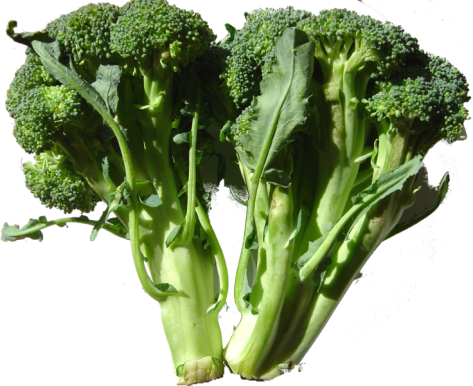
A cousin of cabbages and cauliflowers, the flowers are the mainly consumed part, but people forget that the stems are great, too (explained later)!

FACTS:
-Season: November to January and March to April in the Northern Hemisphere.
-Main elements:
Carotene, Vitamin C and Vitamin E in very large amounts. Together they combine as an elixir to fight ageing and stress.
Potassium
Iron, which helps increase red blood cells and control cholesterol.
Calcium
Fibers, which help digestion.
Sulforafan which helps fight poisonous intruders.

VARIETIES:

broccoli-2
Italian red broccoli

broccoli-romanesco
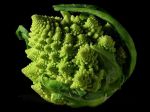
Broccoli Romanesco, a favourite of mine!

broccoli-colour
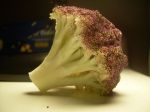
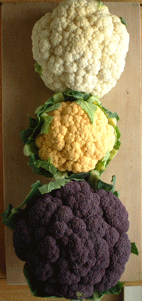
In Japan, a violet variety (bottom) is becoming popular, making for some great combinations with white and yellow cauliflower,

broccoli-dish
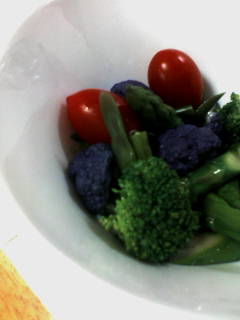
and other dishes!

TIPS:
-As I said above, the stem is not only edible, it is succulent, with a taste between avocadoes and asparaguses! Peel the skin, cut it in any shape you wish and boil it for a while in slightly salted water. let cool and use for salads, stews and gratins!
-Choose specimens with big and dense buds, shiny and fat stems. Check whether the cut at the stem looks fresh!
-After boiling in slightly salted water, plunge into cold water immediately. The colour will not change!
-Preservation: Wrap in wet paper towel, seal it inside a polyester rigid box and keep inside refrigerator’s chilled compartment away from light.
As it will change in contact with natural light, better to cut it, boil it, cool it, seal it inside vinyl pouches and freeze if you have too much of it!

Vegetables Facts and Tips (2): Tomatoes


The Japan Blog List

Please check the new postings at:
sake, shochu and sushi

—————————————-
日本語のブログ
—————————————-

tomato1

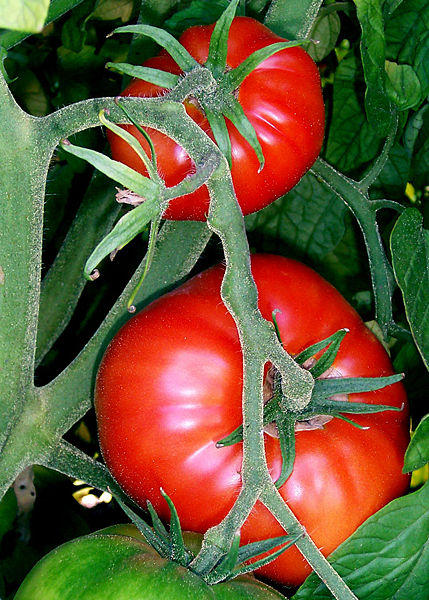
Tomatoes have laid on our tables for so long that we have almost forgotten they came from South America. The Spanish and the Portuguese ignored them. The British studied them. The French brought them to Europe under the name of “Love Apple”, a name still existing in Italy. So it is said,…
tomato-fruit
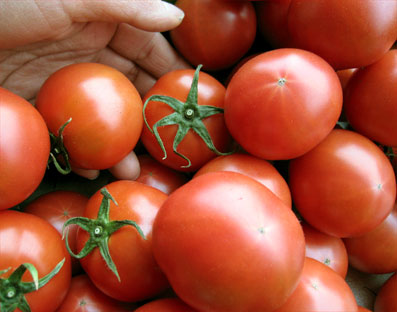
“Fruit Tomatoes”

This summer-maturing fruit can be bought all year round with the interesting consequence that tomatoes ripened in winter are sweeter than their summer cousins as they contain less water, earning themselves the name of “fruit tomatoes”, a great oxymoron, if there was one!

Thanks to consumers’ insatiable appetite for novelty, tomatoes are grown into all kinds of size, shape and colour.
Just to cite a few, the following are the most popular in Japan:

tomato-momotaro
“Momotaro Tomatoes”

-Momotaro (after the Japanese “Peach Boy” tale), which becomes “Fruit tomato” in winter.
tomato-midi
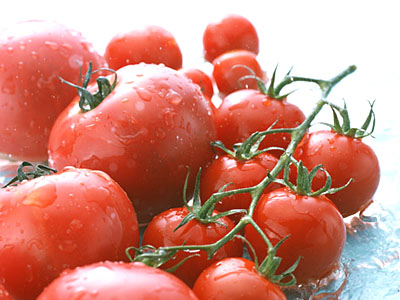
“Midi Tomatoes”

-Midi Tomato (sometimes called “Plum tomatoes”), a larger cousin of the “Mini tomato”, is very sweet and very high in nutrients. Its aroma has a particularly long life.

tomato-italian
“Italian tomatoes”

-Italian Tomato: mainly used for cooking, it may often come in a comparatively elongated shape.
It contains less water and reveals both large amounts of sweetness and acidity, making it very conducive to long cooking with the extra bonus of actually improving in taste upon heating.
tomato-mini
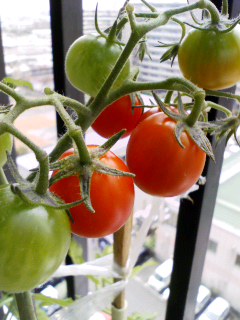
“Mini Tomatoes”

-Mini Tomato: one-bite sized, it is also called “Petit tomato”. It contains twice as many Vitamin C, and it is very rich in beneficient ingredients.

tomato-yellow-mini
“Yellow Mini Tomatoes”

-Yellow Mini Tomato: characteristic for a lot of sweetness and very little acidity. Very handy for children who dislike vegetables!
rubbins
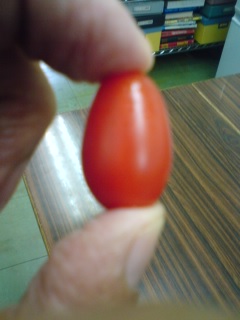
“Ameera Rubbins”

-Ameera Rubbins: with its larger Ammeera tomato, it is grown exclusively (until now, but they are bound to expand beyond our borders!) in Shizuoka Prefecture. They are the sweetest of all, tasting like strawberries, and very firm, making them ideal for decoration, notwithstanding their nutrient value. The smallest variety called “Rubbins” is grown by only two farmers near Iwata City!

tomato-micromini
“Micro Mini Tomatoes”

-Micro Mini Tomatoes: increasingly popular, they are only 8~10 mm and look somewhat like redcurrants. Very tasty with a beautiful acidity, the Japanese use them not only in salads, but also as the final touch on a plate of sashimi!

FACTS:

-Season: All year round
-Main elements: Licopin (Ricopin), Vitamin C, B Vitamins, Potassium, Pectin, Luchin (Ruchin).
Licopin is a carotene variety particularly beneficial in fights against allergies and ageing. The Potassium and Vitamin C and Pectin help control cholesterol in blood.
Luchin reinforces capillary veins and arteries.
Recent researches in Germany and China have proven that tomatoes help control high blood pressure.
Who said that the Italians look healthier than everybody else? LOL

TIPS:

-Choose tomatoes with a deep colour and healthy strong skin!
-Preservation: before storing them into the vegetable compartment of your fridge, wrap themin newspaper or put them inside a vinyl bag, or even better, inside a rigid plastic sealed box.
-Peeling: better than boiling water, direct contact with a flame! Make a very shallow cut near the stem area, firmly stick a fork or thin skewer into the stem area, hold the tomato directly over the gas flame for a few seconds, then plunge it into cold water. Skin should come off very easily.

Vegetables Facts and Tips (1): Potatoes


The Japan Blog List

Please check the new postings at:
sake, shochu and sushi

—————————————-
日本語のブログ
—————————————-

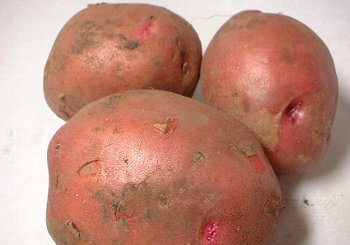
potatoes

This is the first of a series of articles on vegetables, which I hope will help my vegan and vegetarian (I’m not!) friends.
Incidentally、 nothing, pictures included, is copyrighted in my food blogs, so please feel free to use anything!

POTATOES

danshaku-potato
“Danshaku”

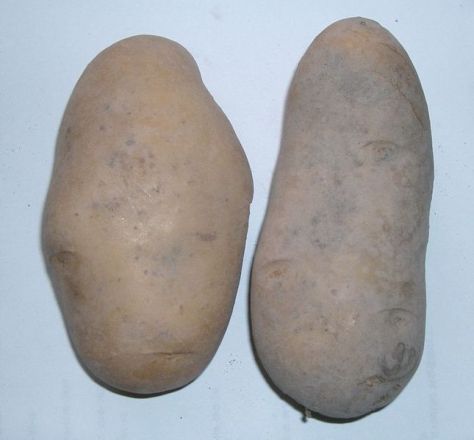
Potatoes were first introduced to Japan in 1910 by Baron Kawata from Great Britain/Ireland giving the name of “Danshaku/Baron” to the most commonly used potato in Japan, especially in croquettes and salads.

The biggest potato exporters to Japan are China and India, although more and more grown locally.
The varieties found in supermarkets are:

kitaakari-potato
“Kita Akari” used for mashed potatoes and croquettes,

mayqueen-potato
“May Queen” used in stews,

toyoshiro-potato
“Toyoshishiro” used for fried potatoes,

redandespotato
“Red Andes” used for croquettes and Pot au feu,

incanomezame-potato
“Inca No Mezame” used for stews.
Potatoes are available all year round, but are at their peak from February to May when new potatoes can be eaten whole!

FACT CARD:

-Season: All year round
-Main elements: carbohydrates (high energy), Vitamin C1, B1 (thanks to a large amount of natural starch in potatoes, the vitamin C will resist heating!), Potassium
-Preservation: Wrap potatoes inside newspaper and keep them in a dark, well-ventilated place away from the sunlight.

TIPS:

-Choose specimens well-rounded and with healthy skin. Avoid specimens with buds or of greenish colour (risks of diarrhea). Cut out all “dark spots”!
-To avoid a change of colour, wash potatoes in water after peeling or cutting.
-If you want to keep your potatoes for a while after boiling them, plunge them in (change it as many times as necessary) cold water until completely cooled down. They will not break or crumble when used later.
-After boiling cut potatoes, throw away water and keep heating them until they have lost a great part of their moisture. They will attain a crispy enough nature without resorting to deep-frying!

Vegan Farandole for the New Year!


The Japan Blog List

Please check the new postings at:
sake, shochu and sushi

—————————————-
日本語のブログ
—————————————-

p1010612

Last Sunday, not the New Year I must admit, I had to cook dinner for my other half, and I just happened to be litterally submerged with vegetables.
Why not create something vegeterian, or even better, something vegan, at least to justify my omnivorous preferences? I thought.
Well, I came with a simple idea that can expanded at infinitum. It has the merit of making use of very healthy ingredients and help the system take a much needed rest! LOL

farandole-oil-22 farandole-oil-3 farandole-oil-1

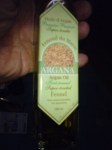
I utilized three different oils from three different countries to add a little inernationalization: Olive oil from Italy, Walnut oil from France and Argan oil from Morocco!

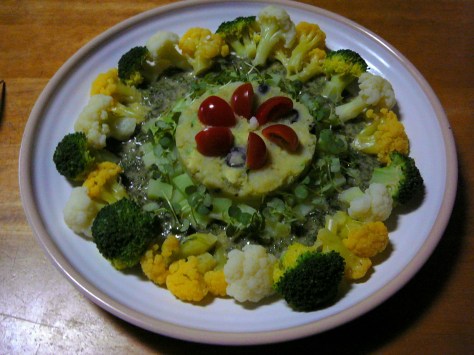
In the centre of the plate I arranged a “circle” of boiled potatoes mixed in “brandade style” with plenty of olive oil, avocado, black olives, lemon juice, a minimum of salt, chopped fresh garlic, pepper, nutmeg, thyme and yuzu chili pepper. Indian friends would probably add plenty more spices.
I surrounded it with a thin crown of boiled diced brocoli stems and shiso/perilla shoots/mini leaves.

farandole-2

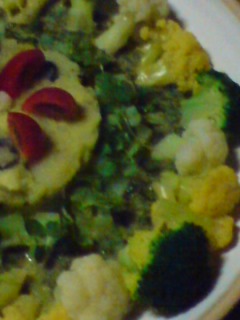
I then added plenty of dressing around the lot. The dressing was made with walnut oil, taragon white wine vinegar, soft Dijon mustard (with seeds), lemon juice, a little salt, pepper and a large amount of very finely chopped fresh parsley and basil. It was very consistent and easy to spread without “leaking” everywhere.
Around the whole, I arranged boiled green brocoli, white cauliflower and yellow cauliflower (beautiful and very tasty) all grown in Shizuoka Prefecture.
I decorated the potato core with plum tomato wedges, and sprinkled both the cauliflower(s) and tomatoes with a little dash of argan oil (take it easy with this particular oil as it is particularly fragrant!).

I hope this will give ideas to my vegan and vegetarian friends for the New Year repast! By the way, “Farandole is a dance!