Category Archives: Japan

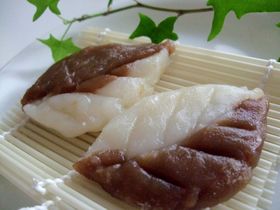
Japanese Vegetarian & Vegan Cakes: Wagashi/和菓子12: Dango-団子-Sweet Dumplings-Recipe

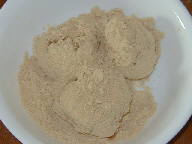
DANGO-1a
(Mitarashi Dango)

Japanese dango are not complicated, although it might be better to make a lot at a time!

INGREDIENTS:
-Rice (“Uruchi Kome”/normal Japnese round rice): 200g
-Water (for dango): 130cc
-Water (for sauce): 60cc
-Cornstarch: 1 teaspoon
-Sugar: 1 teaspoon
-Soy sauce: 2 teaspoons

RECIPE:
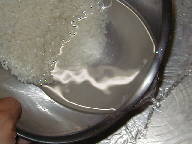
DANGO-RECIPE-1

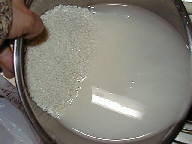
Wash rice thoroughly.
If rice is no-wash type, skip 3 first steps.
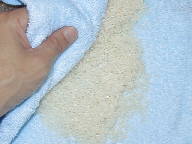
DANGO-RECIPE-2

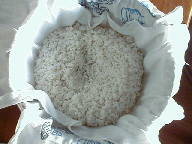
Once the rice washing water is coming out clean, drain rice and spread ontowel. Take off all excess humidity.
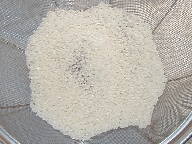
DANGO-RECIPE-4

Let the rice dry for two hours.

DANGO-RECIPE-3

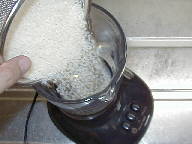
Pour rice in Blender/mixer. First work the blender for only a few seconds at a time until all the rice has been broken completeley. Then blend three times 15 seconds at a time.
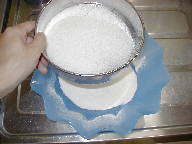
DANGO-RECIPE-5

If the rice does not turn into powder easily, sift rice as many times as necessary until all rice has been reduced to powder.
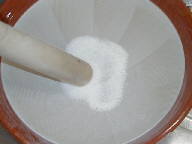
DANGO-RECIPE-6

Finish the job with mortar and pestle.
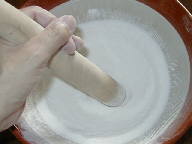
DANGO-RECIPE-7

Once the rice has been reduced completely into powder, work the pestle in for 5 more minutes.
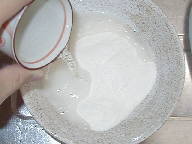
DANGO-RECIPE-8

Add water and mix well with spoon.

DANGO-RECIPE-9

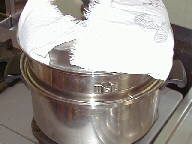
Divide into small portions and steam for 15 minutes.
DANGO-RECIPE-10

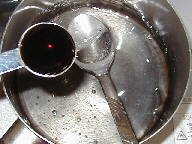
In a pan add cornstarch to water (for the sauce). keep stirring over a low fire. once the water has been become transparent add sugar and soy sauce and mix well until you obtain a smooth syrup. take off fire.
DANGO-RECIPE-11

Fill a glass with water and keep within arm’s reach.
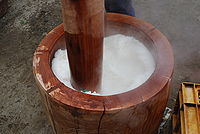
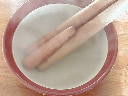
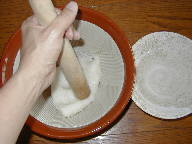
Drop all the steamed dango paste into mortar.
Work dango paste with a wet wooden pestle.
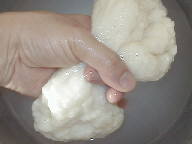
Once the paste has been become sticky and elastic, form small balls (the operation should not last more than 10 minutes).
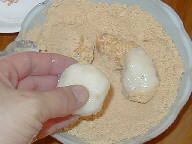
Wet them to prevent them from sticking to each other.
DANGO-RECIPE-12

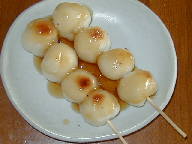
Push a wet (important!) stick through the balls (4 or 5 at the most).
Grill the balls (or not) for better effect.
Serve them smeared with syrup.

RECOMMENDED RELATED WEBSITES

With a Glass,
Clumsyfingers by Xethia
Adventures in Bento Making, American Bento, Beanbento, Bento No1, Bento Wo Tsukurimashou, Cooking Cute, Eula, Hapabento , Happy Bento, Jacki’s Bento Blog, Kitchen Cow, Leggo My Obento, Le Petit Journal Bento & CO (French), Lunch In A Box, My Bento Box, Vegan Lunch Box; Tokyo Tom Baker, Daily Food Porn/Osaka, Only Nature Food Porn, Happy Little Bento, The Herbed Kitchen, J-Mama’s Kitchen, Cook, Eat, Play, Repeat; Bento Lunch Blog (German); Adventures In Bento; Anna The Red’s Bento Factory; Cooking Cute; Timeless Gourmet; Bento Bug; Ideal Meal; Bentosaurus; Mr. Foodie (London/UK); Ohayo Bento

Must-see tasting websites:

-Sake: Tokyo Through The Drinking Glass, Tokyo Foodcast, Urban Sake, Sake World
-Wine: Palate To Pen, Warren Bobrow, Cellar Tours, Ancient Fire Wines Blog
-Beer: Good Beer & Country Boys, Another Pint, Please!
-Japanese Pottery to enjoy your favourite drinks: Yellin Yakimono Gallery

Healthy French Gastronomy in Shizuoka City: Le Comptoir de Bios-s by Bio Farm Matsuki! The Dinner!

Service: Pro and very friendly
Equipment: Great overall cleanliness and splendid washroom
Prices: Reasonable
Strong points: A palette of Shizuoka Prefecture Products! Great use of organic vegetables and meats from Shizuoka Prefecture. True healthy gastronomy! Excellent wine list!

As promised here is the dinner report at Le Comptoir de Bios-s, the new restaurant opened on November the 2nd in Shizuoka City!
I also had the pleasure to meet the man who made it all possible!

Kazuhiro Matsuki/松木一浩さん

Kazuhiro spent a long time in Paris working for such elevated establishments as Taillevent and Joel Robuchon before coming to Shizuoka instead of his native Nagasaki thanks to his wife hailing from our prefecture and establishing an organic farm called Bio Farm Matsuki in Fujinomiya City.
Since then the venture grew and grew. After Restaurant Bio-S and Bio-Deli he opened Le Comptoir de Bios-S in Shizuoka where he makes a point to appear three times a week to serve and socialize with his customers, thus establishing a direct contact from producer to consumer.

The whole place is very reminiscent of a modern cafe-restaurant in France with sober but comfortable tables and seats along the wall or the large bay windows.

You can read (part of) the menu on the wall while your companion is poring through it!

But the place to be is the counter where you can socialize with the staff and your neighbors in a very easy-going and animated atmosphere.

And looking at your food being prepared is always good fun!

Now, their wine list is worth a careful perusing!
I discovered a wine from my own home in Cote Chalonnaise: Rully, Domaine Dureuil-Jeantha, “Maizieres”, 2009, White!

One more reason to patronize the place! This white wine almost drank like a premium sake!

The menu might look short to some but the quality is not easy to emulate. But even a big appetite like mine was to be satisfied!
Another great quality of the staff is that they help you by offering you sets combining dishes on the menu although it is not mentioned or point out when to eat only half of a dish when it is obviously designed for two!

Smoked chicken by Aoki Farm in Fuji City.

Fried organic vegetables from Bio Farm Matsuki and red squid from Suruga Bay.

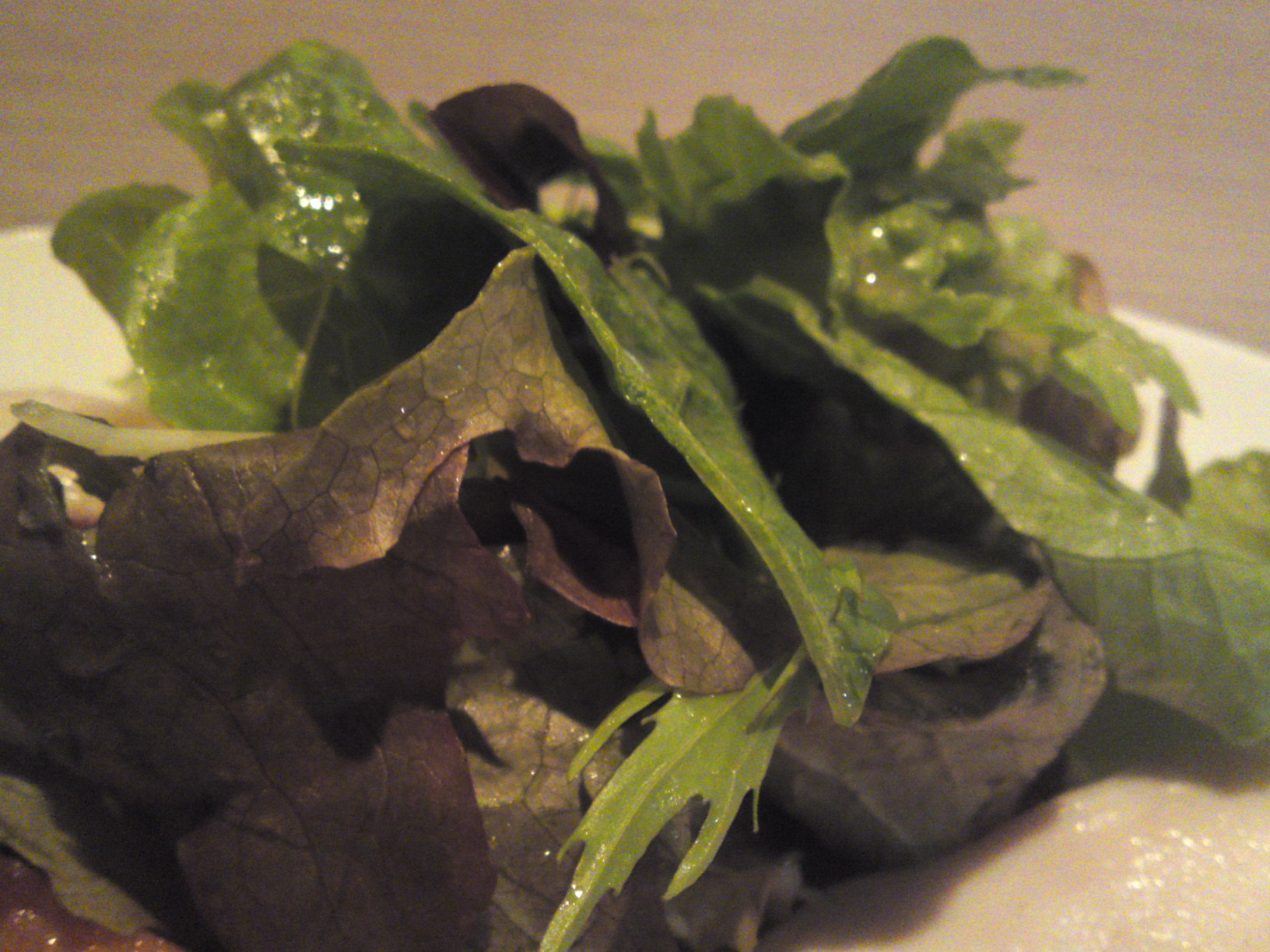
Organic greens from Bio Farm Matsuki.

Raw mushrooms from Hasegawa Farm in Fuji City.

My second dish was all Shizuoka Prefecture again!

Organic Red Moon Potato Fries with real home-made mayonnaise! The potatoes are fried with their skins!

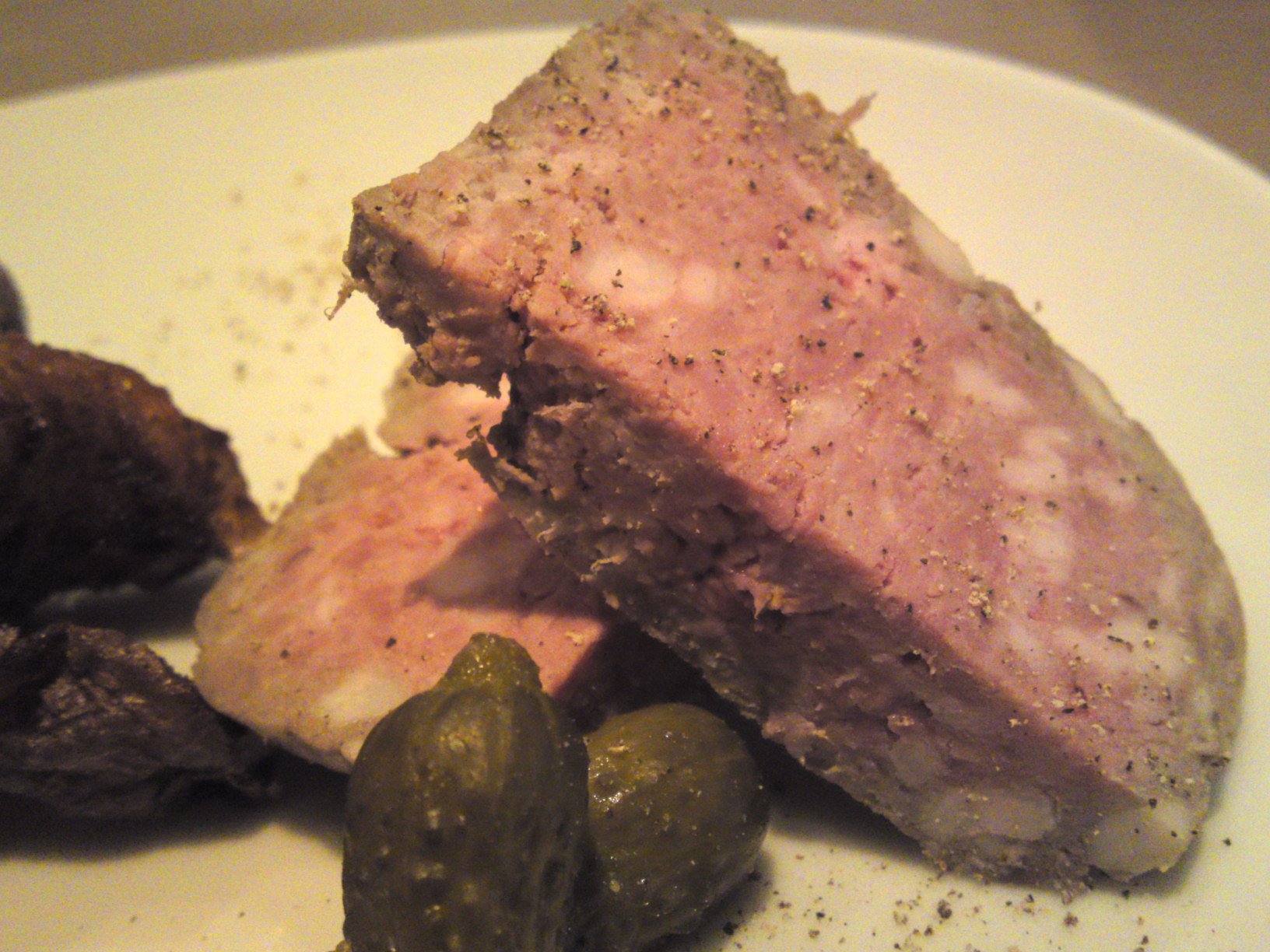
A terrine of wild boar caught on Amagi Plateau in northern Izu Peninsula!
A beauty that would make a lot French people envious!

My third dish was a trip to Italy: Cooked and grilled organic vegetables with bania cauda sauce!

I actually took a picture of the chef preparing them!

Different tubers and radish.

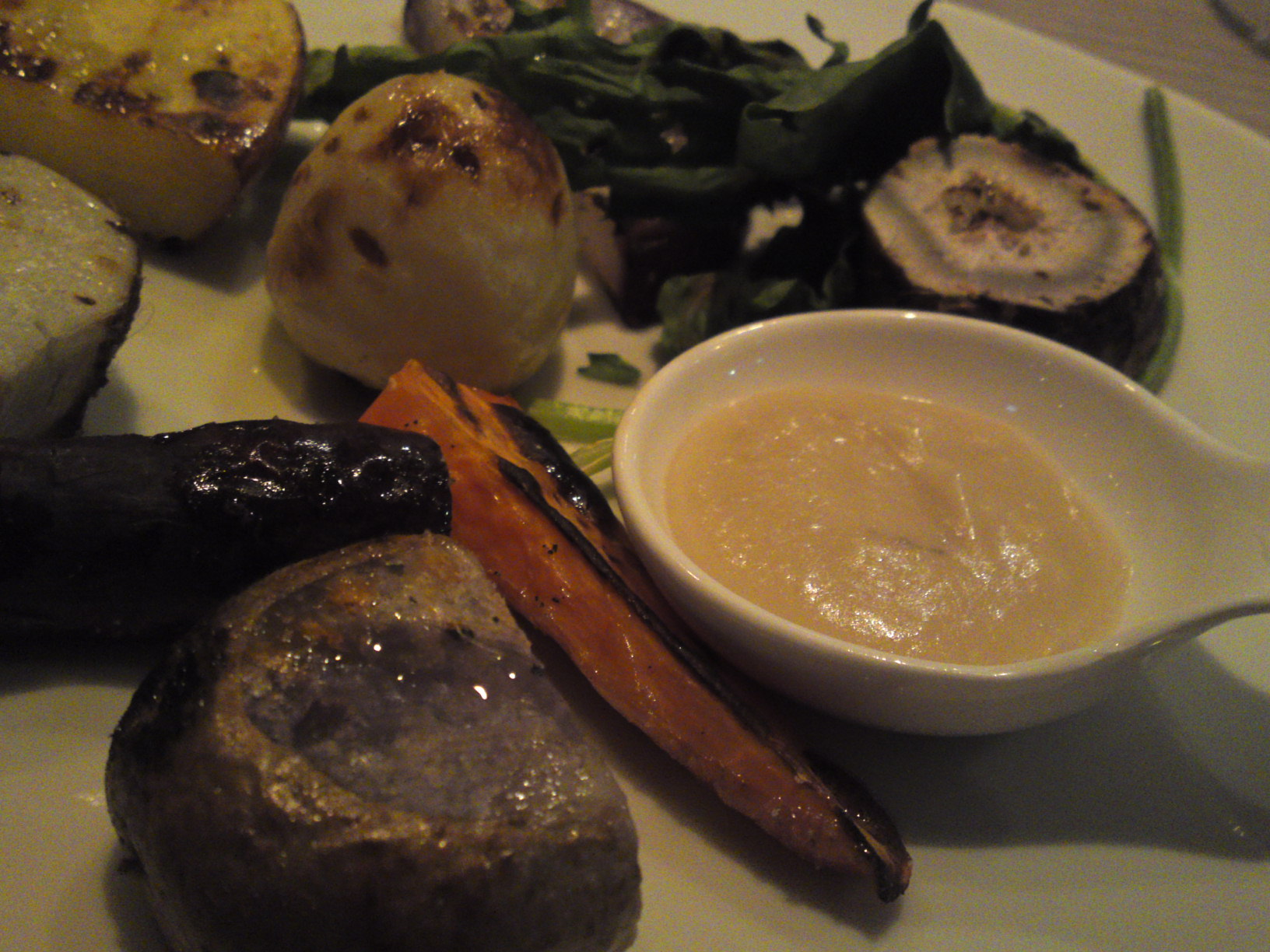
Organic potatoes and carrot and bania cauda sauce.
If you are a vegan just ask for olive oil!

Radish, spinach and burdock root.

I still had enough space left for another French treat: Chicken Liver Paste!

From the same chickens bred in Aoki Farm in Fuji City!

The desserts will be for my next visit!
Once again I will let the pictures speak for themselves!

Le Comptoir de Bio-s by Bio Farm Matsuki
420-0852 Shizuoka City, Aoi Ku, Kooya machi, 12-8, Sankousha Bldg, 1F
Tel./fax: 054-221-5250
Business hours: 11:30~15:00 (Last orders 14:00), 17:00~23:00 (Last orders 22:00)
Closed on Mondays
Credit cards OK
HOMEPAGE (Japanese)
Entirely non-smoking!

RECOMMENDED RELATED WEBSITES

With a Glass,
Clumsyfingers by Xethia
Adventures in Bento Making, American Bento, Beanbento, Bento No1, Bento Wo Tsukurimashou, Cooking Cute, Eula, Hapabento , Happy Bento, Jacki’s Bento Blog, Kitchen Cow, Leggo My Obento, Le Petit Journal Bento & CO (French), Lunch In A Box, My Bento Box, Vegan Lunch Box; Tokyo Tom Baker, Daily Food Porn/Osaka, Only Nature Food Porn, Happy Little Bento, The Herbed Kitchen, J-Mama’s Kitchen, Cook, Eat, Play, Repeat; Bento Lunch Blog (German); Adventures In Bento; Anna The Red’s Bento Factory; Cooking Cute; Timeless Gourmet; Bento Bug; Ideal Meal; Bentosaurus; Mr. Foodie (London/UK); Ohayo Bento

Must-see tasting websites:

-Sake: Tokyo Through The Drinking Glass, Tokyo Foodcast, Urban Sake, Sake World
-Wine: Palate To Pen, Warren Bobrow, Cellar Tours, Ancient Fire Wines Blog
-Beer: Good Beer & Country Boys, Another Pint, Please!
-Japanese Pottery to enjoy your favourite drinks: Yellin Yakimono Gallery

Japanese Vegetarian & Vegan Cakes: Wagashi/和菓子11: Dango-団子-Sweet Dumplings

DANGO-1a
(Mitarashi Dango)

Dango (団子) is a Japanese dumpling made from mochi-ko (rice flour), related to mochi. It is often served with green tea.
In Edo times, they were very popular at tea stands along the country roads.

Dango are eaten year-round, but the different varieties are traditionally eaten in given seasons. Three to four dango are often served on a skewer. One variety of dango from Hokkaidō is made from potato flour and baked with shoyu (soy sauce).

Types of dango:

There are many different varieties of dango which are usually named after the various seasonings served on or with it.

DANGO-2
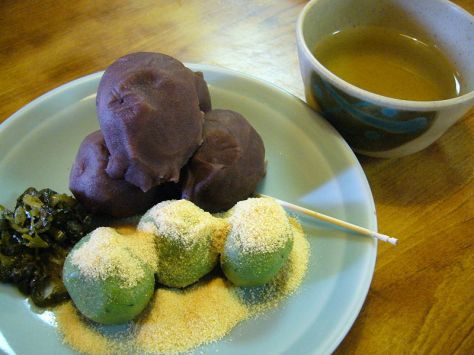
Chadango: Green-tea flavored Dango.

DANGO-4
Dango served covered with anko.

Actually, if you want to write all about Dango, you’d need to publish a whole book!

But I will publish an easy recipe tomorrow!

RECOMMENDED RELATED WEBSITES

With a Glass,
Clumsyfingers by Xethia
Adventures in Bento Making, American Bento, Beanbento, Bento No1, Bento Wo Tsukurimashou, Cooking Cute, Eula, Hapabento , Happy Bento, Jacki’s Bento Blog, Kitchen Cow, Leggo My Obento, Le Petit Journal Bento & CO (French), Lunch In A Box, My Bento Box, Vegan Lunch Box; Tokyo Tom Baker, Daily Food Porn/Osaka, Only Nature Food Porn, Happy Little Bento, The Herbed Kitchen, J-Mama’s Kitchen, Cook, Eat, Play, Repeat; Bento Lunch Blog (German); Adventures In Bento; Anna The Red’s Bento Factory; Cooking Cute; Timeless Gourmet; Bento Bug; Ideal Meal; Bentosaurus; Mr. Foodie (London/UK); Ohayo Bento

Must-see tasting websites:

-Sake: Tokyo Through The Drinking Glass, Tokyo Foodcast, Urban Sake, Sake World
-Wine: Palate To Pen, Warren Bobrow, Cellar Tours, Ancient Fire Wines Blog
-Beer: Good Beer & Country Boys, Another Pint, Please!
-Japanese Pottery to enjoy your favourite drinks: Yellin Yakimono Gallery

Japanese Vegetarian & Vegan Cakes: Wagashi/和菓子10: Youkan-Easy Recipe-Mizu Youkan

MIZU-YOKAN-1

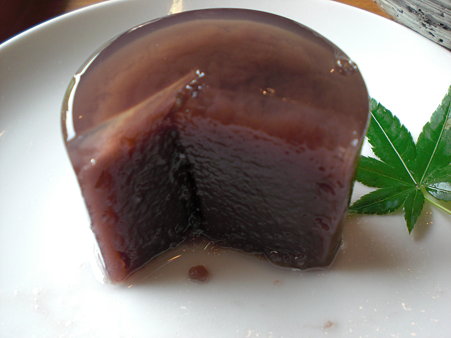
Youkan come in many guises. Here is an easy and very basic recipe for “Mizu Youkan” that you will be able to adapt into many creations of yours! For vegans, vegetarians and omnivores!

INGREDIENTS:
-Boiled azuki beans: 1 can (430 g)
-Brown sugar: 60 g
-Salt: a pinch
-Agar agar Powder (“kanten” in Japanese): 4 g
-Water: 300 ml + 300 ml

RECIPE:

MIZU-YOKAN-2

Blend beans and 300 ml of water until smooth.

MIZU-YOKAN-3

Pass mixture through fine sieve.

MIZU-YOKAN-4

In 300 ml of water drop agar agar. Bring to boil, stiring at the same time. Then keep stiring vover medium fire for 1 minute.

MIZU-YOKAN-5

Switch off fire. Add sugar and salt. Mix well. Add bean paste. Mix well.

MIZU-YOKAN--6

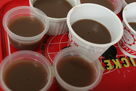
Pour in recipients of your choice (that is when the fun starts!) and let cool completely. Keep in fridge (not too cold, please). Take out of recipient and serve!

RECOMMENDED RELATED WEBSITES

With a Glass,
Clumsyfingers by Xethia
Adventures in Bento Making, American Bento, Beanbento, Bento No1, Bento Wo Tsukurimashou, Cooking Cute, Eula, Hapabento , Happy Bento, Jacki’s Bento Blog, Kitchen Cow, Leggo My Obento, Le Petit Journal Bento & CO (French), Lunch In A Box, My Bento Box, Vegan Lunch Box; Tokyo Tom Baker, Daily Food Porn/Osaka, Only Nature Food Porn, Happy Little Bento, The Herbed Kitchen, J-Mama’s Kitchen, Cook, Eat, Play, Repeat; Bento Lunch Blog (German); Adventures In Bento; Anna The Red’s Bento Factory; Cooking Cute; Timeless Gourmet; Bento Bug; Ideal Meal; Bentosaurus; Mr. Foodie (London/UK); Ohayo Bento

Must-see tasting websites:

-Sake: Tokyo Through The Drinking Glass, Tokyo Foodcast, Urban Sake, Sake World
-Wine: Palate To Pen, Warren Bobrow, Cellar Tours, Ancient Fire Wines Blog
-Beer: Good Beer & Country Boys, Another Pint, Please!
-Japanese Pottery to enjoy your favourite drinks: Yellin Yakimono Gallery

Japanese Vegetarian & Vegan Cakes: Wagashi/和菓子9: Youkan/羊羹

YOUKAN-JELLY

Here is another popular type of Japanese Wagashi fit for Vegans and Vegetarians: Youkan!

YOUKAN-MIZUYOKAN
Mizu Youkan

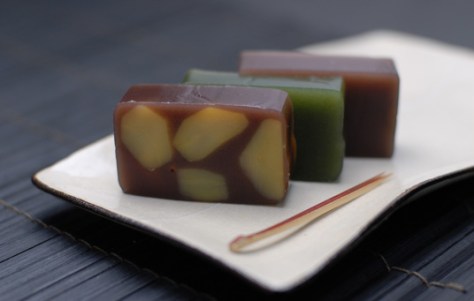
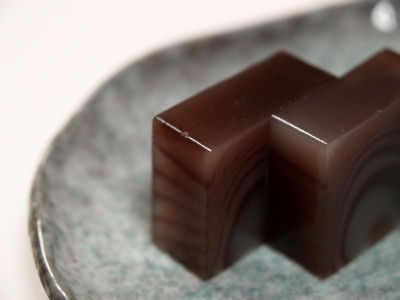
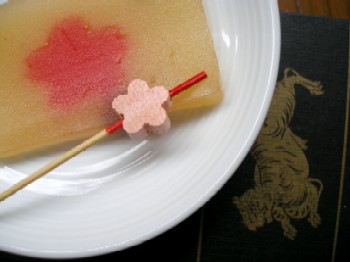
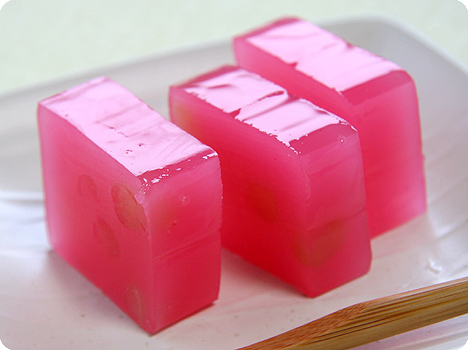
Yōkan (羊羹) is a thick jellied dessert made of red bean paste, agar (寒天/”kanten” in Japanese), and sugar. It is usually sold in a block form, and eaten in slices.

There are two main types: neri yōkan and mizu yōkan. “Mizu” means “water”, and indicates that it is made with more water than usual. Mizu yōkan is often chilled and eaten in summer.
Although most yōkan found in Japan and abroad are typically made with red bean paste, yōkan made from white kidney bean paste (しろあん, 白餡, “shiro an” in Japanese) are also relatively common. This type of yōkan is milky and translucent with a much milder flavour than the ones made of red bean paste.

YOUKAN-GREENTEAYOUKAN
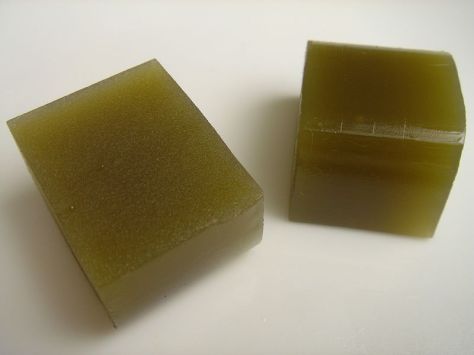
Tea Youkan

As such, they can be effectively flavored and colored by using green tea powder or matcha.

YOUKAN-TRICOLOUR

MizuyōkanYōkan may also contains chopped chestnuts, persimmons, whole sweetened azuki beans, figs, and sweet potato, among other additions. Sugar can be also be substituted with honey, dark brown sugar, or molasses to alter the taste of the yōkan produced. There is also shio yōkan, which uses small amounts of salt (shio/塩) as an additive.

Other Pictures of Youkan:

YOUKAN-BICOLOUR

YOUKAN-CHERRY

YOUKAN-PINK

I will introduce an easy recipe soon!

RECOMMENDED RELATED WEBSITES

With a Glass,
Clumsyfingers by Xethia
Adventures in Bento Making, American Bento, Beanbento, Bento No1, Bento Wo Tsukurimashou, Cooking Cute, Eula, Hapabento , Happy Bento, Jacki’s Bento Blog, Kitchen Cow, Leggo My Obento, Le Petit Journal Bento & CO (French), Lunch In A Box, My Bento Box, Vegan Lunch Box; Tokyo Tom Baker, Daily Food Porn/Osaka, Only Nature Food Porn, Happy Little Bento, The Herbed Kitchen, J-Mama’s Kitchen, Cook, Eat, Play, Repeat; Bento Lunch Blog (German); Adventures In Bento; Anna The Red’s Bento Factory; Cooking Cute; Timeless Gourmet; Bento Bug; Ideal Meal; Bentosaurus; Mr. Foodie (London/UK); Ohayo Bento

Must-see tasting websites:

-Sake: Tokyo Through The Drinking Glass, Tokyo Foodcast, Urban Sake, Sake World
-Wine: Palate To Pen, Warren Bobrow, Cellar Tours, Ancient Fire Wines Blog
-Beer: Good Beer & Country Boys, Another Pint, Please!
-Japanese Pottery to enjoy your favourite drinks: Yellin Yakimono Gallery

Today’s Bento/Lunch Box (11/64): Oyako Bento!

“Oyako/親子” in Japanese means “Parent and Child”. It is used to describe two different combinations in Japanese Gastronomy, Chicken & Eggs or Fish & Roe. The Missus opted for the latter this morning with smoked salmon and salmon’s roe! Mind you, I could have called it a “Russian Bento”!

All orange color, the official color of Shizuoka Prefecture (though we do not have salmon here!) and that of my rugby club back home in France!

The Missus prepared sushi rice she actually mixed with tiny bits of seasoned seaweed and filled one box with it.
She covered half with seasoned smoked salmon.

She covered the other half with soy sauce-seasoned salmon roe from Hokkaido.
She separated the “Parent ” and the “Child” with fresh cress, sliced black olive and half a sudachi lemon for extra seasoning.

Plenty of colors again for the salad and dessert box!

Spicy burdock root/gobo (cooked) and water spinach sprouts/空心菜/kōngxīncài (raw) seasoned with gomadare/sesame dressing.

The Missus’ specialty, tamagoyaki, this time containing finely chopped parsley and red carrot, lettuce, Ameera pearl tomatoes and Red Heart Kiwi fruit!

Very, very tasty and very satisfying again!

RECOMMENDED RELATED WEBSITES

With a Glass,
Clumsyfingers by Xethia
Adventures in Bento Making, American Bento, Beanbento, Bento No1, Bento Wo Tsukurimashou, Cooking Cute, Eula, Hapabento , Happy Bento, Jacki’s Bento Blog, Kitchen Cow, Leggo My Obento, Le Petit Journal Bento & CO (French), Lunch In A Box, My Bento Box, Vegan Lunch Box; Tokyo Tom Baker, Daily Food Porn/Osaka, Only Nature Food Porn, Happy Little Bento, The Herbed Kitchen, J-Mama’s Kitchen, Cook, Eat, Play, Repeat; Bento Lunch Blog (German); Adventures In Bento; Anna The Red’s Bento Factory; Cooking Cute; Timeless Gourmet; Bento Bug; Ideal Meal; Bentosaurus; Mr. Foodie (London/UK); Ohayo Bento

Shizuoka Sake Tasting: Fuji-Takasago Brewery-“Tatsu/Dragon” Limited Edition Futsushu

The New Year is around the corner, and as next year is the Year of the Dragon, many breweries put out various limited brews with a Dragon label!
Fuji-Takasago Brewery in Fujinomiya City came up with a limited Futsushu/regular brew for the occasion!
Be assured that the label will be carefully stored away!

Alcohol: 15~16 degrees
Dryness: + 5.0
Bottled in November 2011

Clarity: Very clear
Color: Very faint golden hue
Aroma: Strong and fruity. Dryish. Coffee beans, vanilla.
Body: Fluid
Taste: Very powerful and fruity attack backed by pleasant alcohol warming up back of the palate.
Coffee beans, dark chocolate, vanilla, apricots.
Fairly quickly disappears on a very dry note.
Varies little with food but gets drier with some oranges joining in with dry coffee beans.
Coffee beans repeatedly make a strong comeback with every sip.

Overall: A sake obviously designed for food but eminently drinkable on its own.
The fruitiness tends to conceal the dryness at first.
Can be appreciated in any ways: chilled, room temperature or lukewarm.
Considering it is only a futsushu, one might overreact and talk of extravagance for such a cheap price!

RECOMMENDED RELATED WEBSITES

With a Glass,
Clumsyfingers by Xethia
Adventures in Bento Making, American Bento, Beanbento, Bento No1, Bento Wo Tsukurimashou, Cooking Cute, Eula, Hapabento , Happy Bento, Jacki’s Bento Blog, Kitchen Cow, Leggo My Obento, Le Petit Journal Bento & CO (French), Lunch In A Box, My Bento Box, Vegan Lunch Box; Tokyo Tom Baker, Daily Food Porn/Osaka, Only Nature Food Porn, Happy Little Bento, The Herbed Kitchen, J-Mama’s Kitchen, Cook, Eat, Play, Repeat; Bento Lunch Blog (German); Adventures In Bento; Anna The Red’s Bento Factory; Cooking Cute; Timeless Gourmet; Bento Bug; Ideal Meal; Bentosaurus; Mr. Foodie (London/UK); Ohayo Bento

Must-see tasting websites:

-Sake: Tokyo Through The Drinking Glass, Tokyo Foodcast, Urban Sake, Sake World
-Wine: Palate To Pen, Warren Bobrow, Cellar Tours, Ancient Fire Wines Blog
-Beer: Good Beer & Country Boys, Another Pint, Please!
-Japanese Pottery to enjoy your favourite drinks: Yellin Yakimono Gallery

Japanese Vegetarian & Vegan Cakes: Wagashi/和菓子8: Recipe-Beni Mochi

BENI-MOCHI-1

Here is a simple Japanese Cake/Wagashi Recipe that can be adapted to all shapes by vegans and vegetarians! Beni Mochi.
Beni Mochi, or 紅餅 in Japanese, means “Red Mochi”.

INGREDIENTS: 16 pieces

-Rice flour: 250 g
-White sugar: 80 g
-Water: 100 ml/half a cup (for white mochi)
-Brown sugar (take care in choosing the colour): 80 g
-Water: 100 ml/half a cup (for red mochi)

RECIPE:

BENI-MOCHI-2

Divide rice flour into two equal parts (125 g) and pour into two different bowls.

BENI-MOCHI-3

In a deep pan, drop red sugar and add water. Heat over fire until completely melted. Switch off fire. Add rice flour and mix well.
Repeat same procedure with white sugar.

BENI-MOCHI-4

In a steamer, put mochi pastes (take care no to mix them) on a steaming paper and steam for 10 minutes.

BENI-MOCHI--5

Take out. Let cool. Make two balls and keep in different bowls.

BENI-MOCHI--6

Shape the mochi as above or according to your preference. Put them back inside the steamer on steaming paper and steam for 10 more minutes.

BENI-MOCHI--7

Let cool and serve!
Are best enjoyed with Japanese tea, hot or cold!

RECOMMENDED RELATED WEBSITES

With a Glass,
Clumsyfingers by Xethia
Adventures in Bento Making, American Bento, Beanbento, Bento No1, Bento Wo Tsukurimashou, Cooking Cute, Eula, Hapabento , Happy Bento, Jacki’s Bento Blog, Kitchen Cow, Leggo My Obento, Le Petit Journal Bento & CO (French), Lunch In A Box, My Bento Box, Vegan Lunch Box; Tokyo Tom Baker, Daily Food Porn/Osaka, Only Nature Food Porn, Happy Little Bento, The Herbed Kitchen, J-Mama’s Kitchen, Cook, Eat, Play, Repeat; Bento Lunch Blog (German); Adventures In Bento; Anna The Red’s Bento Factory; Cooking Cute; Timeless Gourmet; Bento Bug; Ideal Meal; Bentosaurus; Mr. Foodie (London/UK); Ohayo Bento

Must-see tasting websites:

-Sake: Tokyo Through The Drinking Glass, Tokyo Foodcast, Urban Sake, Sake World
-Wine: Palate To Pen, Warren Bobrow, Cellar Tours, Ancient Fire Wines Blog
-Beer: Good Beer & Country Boys, Another Pint, Please!
-Japanese Pottery to enjoy your favourite drinks: Yellin Yakimono Gallery

Today’s Bento/Lunch Box (11/63): Curry Hamburger Bento!

There are two things that the Japanese love, namely curry and hamburgers!
Mind you, the Missus didn’t agree with the naming of this bento as for her, hamburgers must be served with buns!
I beg to differ…
And when it comes to curry, the Japanese have this interesting notion of “dry curry”!

Actually “dry curry” in Japanese means rice flavored with curry mix and not in curry sauce!
So the Missus steamed the rice with some curry powder mix and some garam masala curry paste!
Once steamed, she mixed the lot and formed a well into the main box and sprinkled the rice with freshly chopped parsley.

I was not allowed to look at her preparing the hamburger, but I know it was made with minced beef and pork and her usual set of spices and that it contained some cheese before she fried it slowly in sauce. She placed it in the rice well and covered it with a tomato sauce she concocted with the hamburger juices.
She decorated the lot with some fresh cress and sliced cornichons.

The colorful salad dish consisted of an egg mimosa decorated with a black olive slice, Ameera Pearl Tomatoes, apple cuts, walnuts, Trevise and plenty of lettuce for beautiful colors and nutritious balance!

Very satisfying and delicious!

RECOMMENDED RELATED WEBSITES

With a Glass,
Clumsyfingers by Xethia
Adventures in Bento Making, American Bento, Beanbento, Bento No1, Bento Wo Tsukurimashou, Cooking Cute, Eula, Hapabento , Happy Bento, Jacki’s Bento Blog, Kitchen Cow, Leggo My Obento, Le Petit Journal Bento & CO (French), Lunch In A Box, My Bento Box, Vegan Lunch Box; Tokyo Tom Baker, Daily Food Porn/Osaka, Only Nature Food Porn, Happy Little Bento, The Herbed Kitchen, J-Mama’s Kitchen, Cook, Eat, Play, Repeat; Bento Lunch Blog (German); Adventures In Bento; Anna The Red’s Bento Factory; Cooking Cute; Timeless Gourmet; Bento Bug; Ideal Meal; Bentosaurus; Mr. Foodie (London/UK); Ohayo Bento

Japanese Vegetarian & Vegan Cakes: Wagashi/和菓子7: Creation 2-Hanabira Mochi

WAGASHI-HANABIRAMOCHI

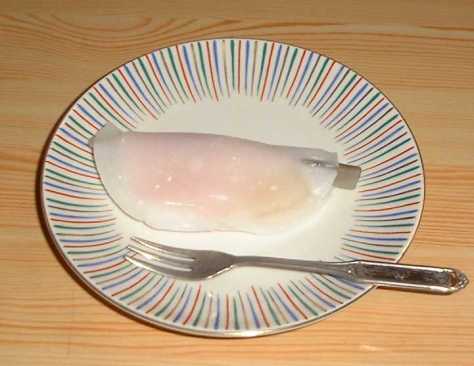
Here is another traditional Japanese Cake/Wagashi: Hanabira Mochi (菱葩餅 in Japanese)!
Hanabiramochi is a Japanese sweet usually eaten at the beginning of the year. Hanabiramochi is also served at the first tea ceremony of the New Year.

The name “Hanabiramochi” literally means “Flower petal mochi”. The original form of Hanabiramochi is Hishihanabira, a dessert that was eaten by the Imperial family at special events coinciding with the beginning of the year.

Hanabiramochi was first made in the Meiji Era (8 September 1868 – 30 July 1912), but it is now a familiar New Year wagashi.

The exact shape of Hanabiramochi is strictly defined by tradition. The white mochi covering is flat and round, folded over to form a semicircular shape, and must have a pink color showing through in the center of the confection, fading to a white at the edge. Unlike a daifuku, the mochi must not completely seal the insides.

In the center of a hanabiramochi is a layer of anko, a sweet bean paste, commonly the white kind made from sweetened mung beans. In the very center is a thin strip of sweetly flavoured gobo (burdock root) which protrudes from the mochi on both sides.

Each element of the hanabiramochi is significant.

The red colour showing through the white mochi is not only appropriate to the celebration of the New Year but also evokes the Japanese apricot/plum (ume) blossom, which in turn represents the purity, perseverance, and renewal associated with the New Year.

The gobo represents pressed ayu, a fish exclusive to East Asia, and a prayer for a long life.

A vegan way to celebrate the New Year!

RECOMMENDED RELATED WEBSITES

With a Glass,
Clumsyfingers by Xethia
Adventures in Bento Making, American Bento, Beanbento, Bento No1, Bento Wo Tsukurimashou, Cooking Cute, Eula, Hapabento , Happy Bento, Jacki’s Bento Blog, Kitchen Cow, Leggo My Obento, Le Petit Journal Bento & CO (French), Lunch In A Box, My Bento Box, Vegan Lunch Box; Tokyo Tom Baker, Daily Food Porn/Osaka, Only Nature Food Porn, Happy Little Bento, The Herbed Kitchen, J-Mama’s Kitchen, Cook, Eat, Play, Repeat; Bento Lunch Blog (German); Adventures In Bento; Anna The Red’s Bento Factory; Cooking Cute; Timeless Gourmet; Bento Bug; Ideal Meal; Bentosaurus; Mr. Foodie (London/UK); Ohayo Bento

Must-see tasting websites:

-Sake: Tokyo Through The Drinking Glass, Tokyo Foodcast, Urban Sake, Sake World
-Wine: Palate To Pen, Warren Bobrow, Cellar Tours, Ancient Fire Wines Blog
-Beer: Good Beer & Country Boys, Another Pint, Please!
-Japanese Pottery to enjoy your favourite drinks: Yellin Yakimono Gallery
Japanese Vegetarian & Vegan Cakes: Wagashi/和菓子6: Creation 2-Sakura Mochi (& Recipe!)

WAGASHI-SAKURA-MOCHI-2

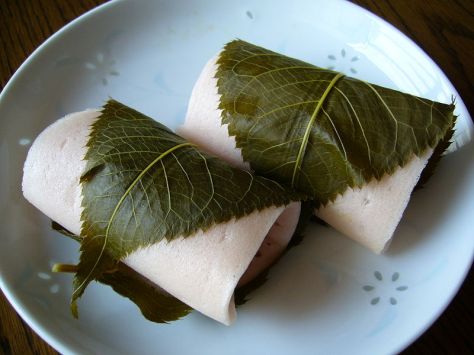
Sakura Mochi (桜餅) is a variety of wagashi, or Japanese confectionery consisting of a sweet pink mochi (rice cake) and red bean paste, covered with a leaf of sakura (cherry blossom).

Sakura Mochi (桜餅) or Cherry Blossom Mochi has been popular all over Japan since the beginning of gastronomy in the Land of the Rising Sun.
The style of Sakura Mochi differs with the regions in Japan.
Basically, the east of Japan such as Tokyo uses shiratama-ko (白玉粉/ rice flour) and the west side such as Kansai uses dōmyōji-ko (道明寺粉/glutinous rice flour) for “batter”.

WAGASHI-SAKURA-MOCHI
Anko is folded inside a mochi sheet and again inside an edible cherry tree leaf.

WAGASHI-SAKURA-MOCHI-3

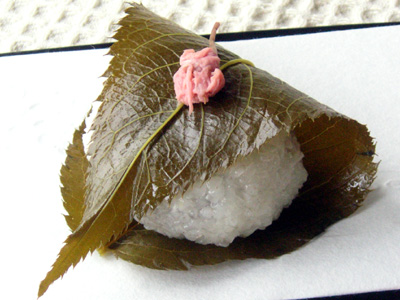
Here the anko is inside white mochi, then folded in cherry tree leaf and topped with an edible cherry flower.

WAGASHI-SAKURA-MOCHI-4

A smaller, very cute Sakura Mochi: the colored mochi contains anko and is presented inside an edible cherry tree leaf.

WAGASHI-SAKURA-MOCHI-5

Sakura mochi as sold over the counter in the Kansai/West Japan Region.
They are also called Sakura Dango/Cherry Balls (no comment, please!LOL)

SIMPLE RECIPE
This recipe is for making Western-style sakuramochi. Serves 8.

INGREDIENTS:
3/4 cup glutinous rice flour
1/3 cup sugar
1 cup water
3/4 cup red bean paste
red food coloring (optional)
8 sakura leaves pickled in salted water

PREPARATION:
Wash pickled sakura leaves and dry.
Boil water in a pan.
Mix glutinous flour in the water.
Cover the pan with a lid and leave it for 5 minutes.
Place a wet cloth in a steamer and put the dough on the cloth.
Steam the dough for about 20 minutes over medium heat.
Remove the steamed dough to a bowl.
Mash the dough slightly with a wooden pestle, mixing sugar into the dough.
Dissolve a little bit of red food color in some water.
Add some of the red water in the dough and mix well.
Divide the pink mochi into 8 balls.
Flaten each mochi ball by hands and place red bean paste filling on the dough.
Wrap the filling with mochi and rounds by hands.
Wrap each mochi with a sakura leaf.

RECOMMENDED RELATED WEBSITES

With a Glass,
Clumsyfingers by Xethia
Adventures in Bento Making, American Bento, Beanbento, Bento No1, Bento Wo Tsukurimashou, Cooking Cute, Eula, Hapabento , Happy Bento, Jacki’s Bento Blog, Kitchen Cow, Leggo My Obento, Le Petit Journal Bento & CO (French), Lunch In A Box, My Bento Box, Vegan Lunch Box; Tokyo Tom Baker, Daily Food Porn/Osaka, Only Nature Food Porn, Happy Little Bento, The Herbed Kitchen, J-Mama’s Kitchen, Cook, Eat, Play, Repeat; Bento Lunch Blog (German); Adventures In Bento; Anna The Red’s Bento Factory; Cooking Cute; Timeless Gourmet; Bento Bug; Ideal Meal; Bentosaurus; Mr. Foodie (London/UK); Ohayo Bento

Must-see tasting websites:

-Sake: Tokyo Through The Drinking Glass, Tokyo Foodcast, Urban Sake, Sake World
-Wine: Palate To Pen, Warren Bobrow, Cellar Tours, Ancient Fire Wines Blog
-Beer: Good Beer & Country Boys, Another Pint, Please!
-Japanese Pottery to enjoy your favourite drinks: Yellin Yakimono Gallery

Izu Peninsula Hot Springs Resort: Hotel Isaba in Heda!

Service: A bit stiff but friendly and attentive
Facilities: A bit old-fashioned but clean. Excellent hotspring bathroom
Prices: Expensive
Strong points: Excellent private hotspring bathroom and open-air hotspring bath with great view on the sea. Excellent breakfast
Overall: 72/100

The best time to check in a hotel in Heda is at sunset when you can admire the sinking sun over the horizon from your windows!

It is the more striking when you squid fishing boat cutting the sea under a sinking flaming orb!

Hotel Isaba is one of the most popular hotspring resort hotels in Heda, Izu Peninsula, thanks to its location overlooking the great sea expanses.
One can choose a room Japanese-style or Western-style.

The hotel is a bit kitsch and definitely from another age but comfortable with all amenities.

The better rooms have a nice, if small, kind of terrace opened onto a great sea landscape.

Cozy place to enjoy a drink or a book in summer!

The private hotspring bath, small by Western standards is big and deep enough for two adults!

Like the terrace it opens onto a sea landscape particularly striking at dusk and dawn!

The dinner served inside your room over a table large enough for 4 adults is a big affair!

Complimentary home-made blueberry aperitif.

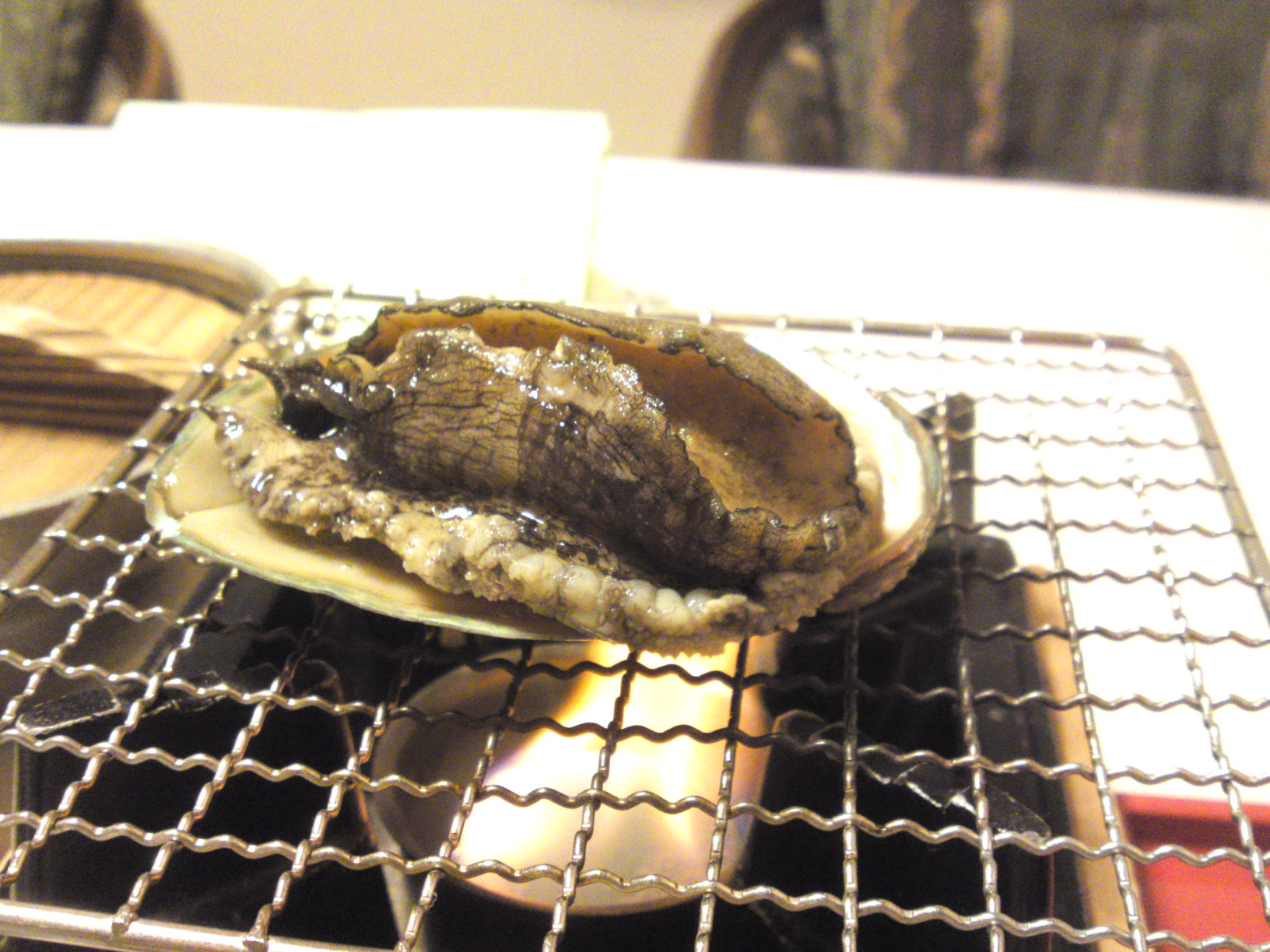
Live abalone you grill by yourself after listening to the maid’s instructions!

It’s dancing over the fire!

Chyawanmushi/Japanese hot salted pudding and Japanese pickles.

Mishima Pork shabu shabu.

Varied appetizers.

Sashimi plate from Suruga Bay!

Italian-style lobster.

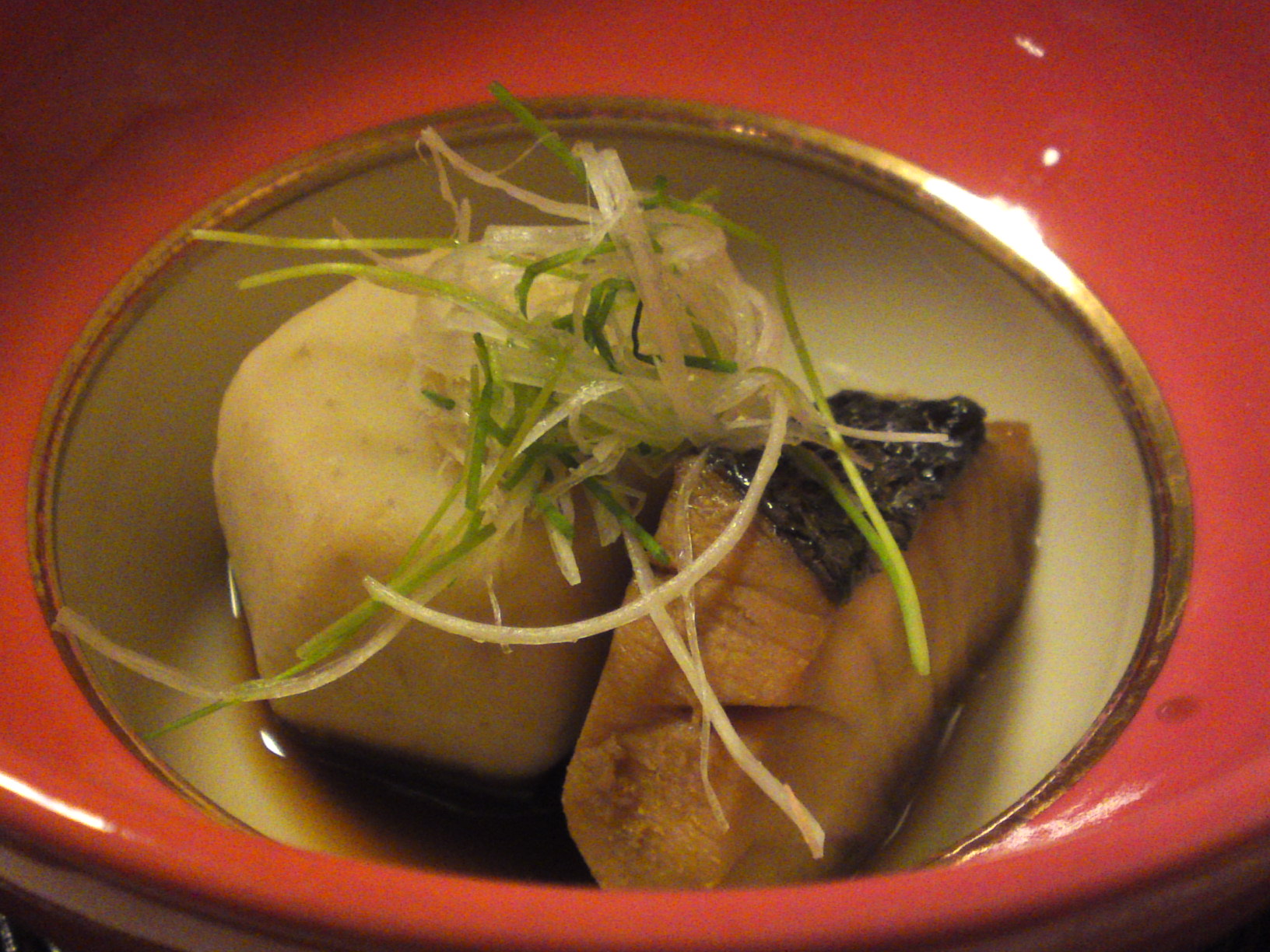
Simmered “Medai” seabream and taro.

“Menuke” fish Sautee.

Plenty of rice and miso soup!

And dessert!

The specialty of the house: Suruga Bay sea-salt sorbet!

Wake up early enough in the morning to enjoy a great ocean view!

And catch the sight of the returning squid fishing boats!

And then first pay a visit to the large hotspring bath on top of the hotel!

Don’t forget to scrub yourself before taking a dip!

Large bay windows will allow you to enjoy a great view again at the same time.

But your hotspring experience will not be complete with another body-relaxing dip in the “rotenburo/open-air bath” outside the main bathroom whatever the season or weather!

A great souvenir picture!

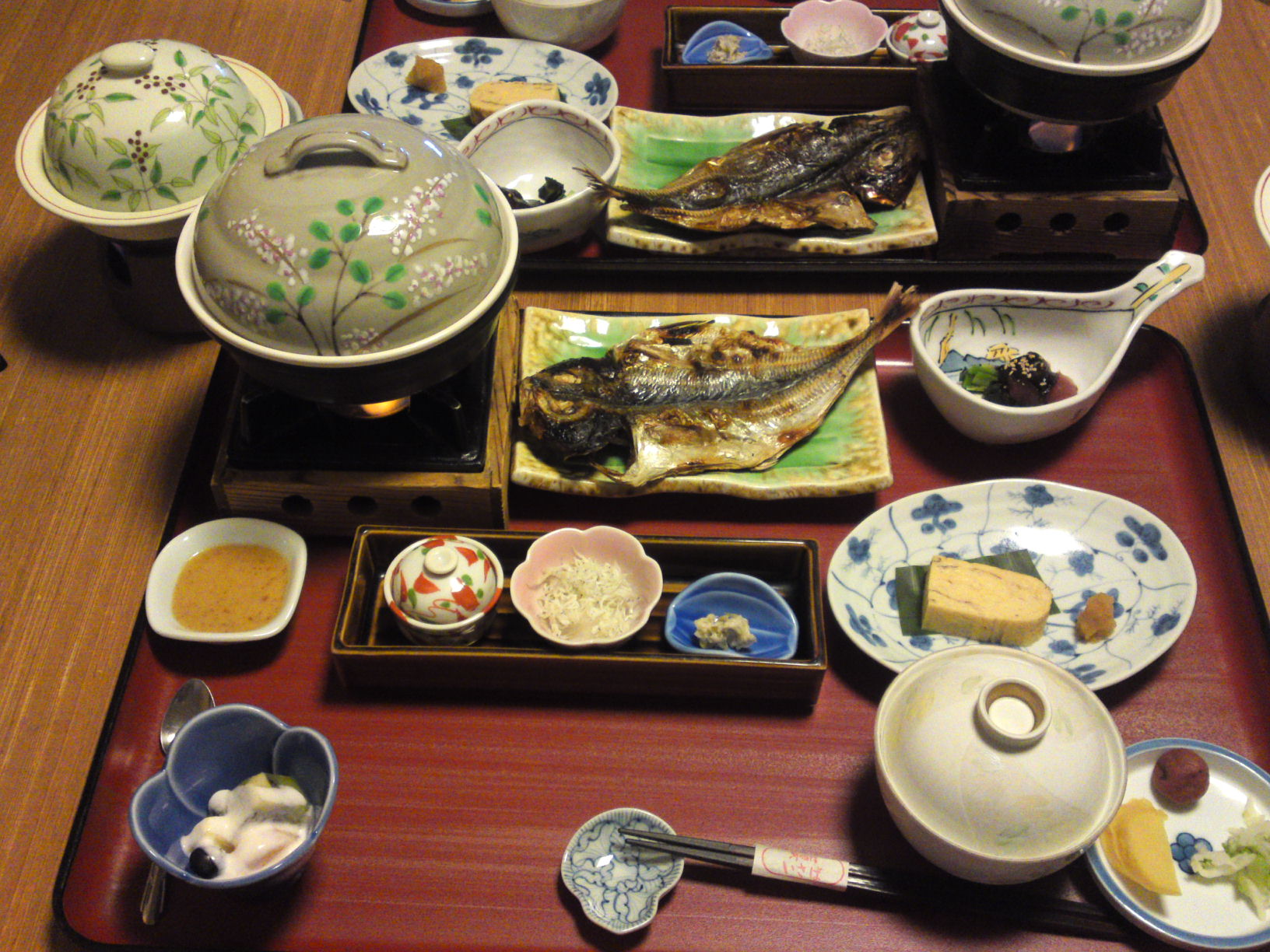
Breakfast is simply enormous and should last you half a day!

And very healthy too with local ingredients!

Seaweed soup.

Horse mackerel from Suruga Bay.

All kinds of tidbits to accompany the rice, and a little dessert.

Tamagoyaki, Sweet and sour tofu, pickles and crab miso soup.

And plenty of rice, the traditional way!

HOTEL ISABA
400-3402, Shizuoka Ken, Numazu Shi, Heda, Bihama Kaigan, 3878-20
Tel.: 0558-94-3048
Fax: 558-94^4270
HOMEPAGE (Japanese)

RECOMMENDED RELATED WEBSITES

With a Glass,
Clumsyfingers by Xethia
Adventures in Bento Making, American Bento, Beanbento, Bento No1, Bento Wo Tsukurimashou, Cooking Cute, Eula, Hapabento , Happy Bento, Jacki’s Bento Blog, Kitchen Cow, Leggo My Obento, Le Petit Journal Bento & CO (French), Lunch In A Box, My Bento Box, Vegan Lunch Box; Tokyo Tom Baker, Daily Food Porn/Osaka, Only Nature Food Porn, Happy Little Bento, The Herbed Kitchen, J-Mama’s Kitchen, Cook, Eat, Play, Repeat; Bento Lunch Blog (German); Adventures In Bento; Anna The Red’s Bento Factory; Cooking Cute; Timeless Gourmet; Bento Bug; Ideal Meal; Bentosaurus; Mr. Foodie (London/UK); Ohayo Bento

Must-see tasting websites:

-Sake: Tokyo Through The Drinking Glass, Tokyo Foodcast, Urban Sake, Sake World
-Wine: Palate To Pen, Warren Bobrow, Cellar Tours, Ancient Fire Wines Blog
-Beer: Good Beer & Country Boys, Another Pint, Please!
-Japanese Pottery to enjoy your favourite drinks: Yellin Yakimono Gallery

Japanese Vegetarian & Vegan Cakes: Wagashi/和菓子5: Creation 1-Birthday Cake

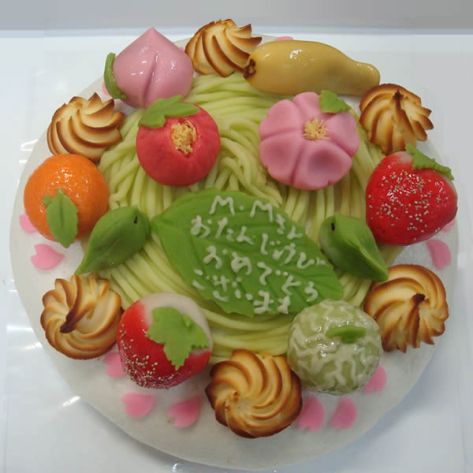
WAGASHI-VARIETIES-1

Here is an example of what could be done by a Japanese chef as Wagashi/Japanese Cake!
This particular Birthday Cake creation is the work of Chef Maeda at Kouseido in Osaka City!
Will look around and post other creations whenever I can!

Here is a breakdown of the above:

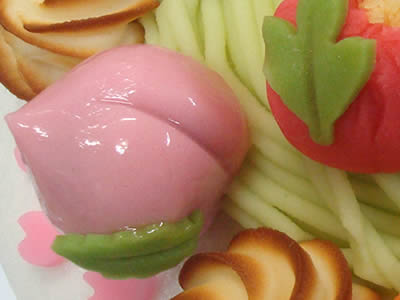
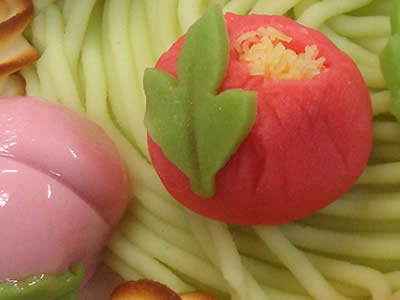
WAGASHI-VARIETIES-MOMO

“Momo”/Peach

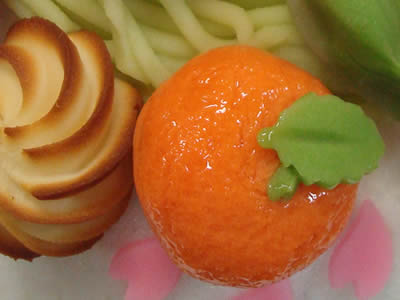
WAGASHI-VARIETIES-MIKAN

“MIkan”/Orange

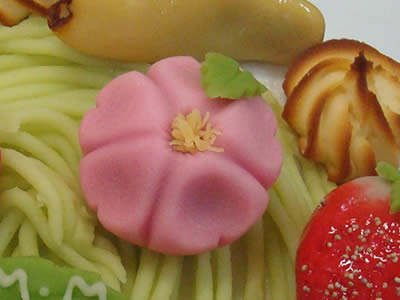
WAGASHI-VARIETIES-TSUBAKI

“Tsubaki”/Camelia

WAGASHI-VARIETIES-SAKURA

“Sakura”/Cherry Blossom

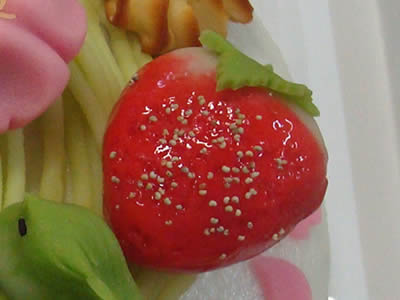
WAGASHI-VARIETIES-ICHIGO

“Ichigo”/Strawberry

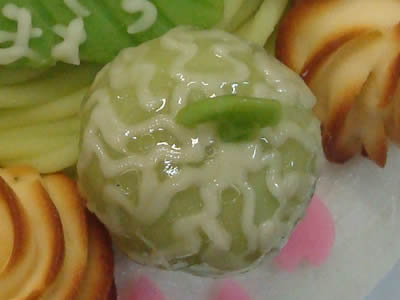
WAGASHI-VARIETIES-MELON

“Meron”/Melon

RECOMMENDED RELATED WEBSITES

With a Glass,
Clumsyfingers by Xethia
Adventures in Bento Making, American Bento, Beanbento, Bento No1, Bento Wo Tsukurimashou, Cooking Cute, Eula, Hapabento , Happy Bento, Jacki’s Bento Blog, Kitchen Cow, Leggo My Obento, Le Petit Journal Bento & CO (French), Lunch In A Box, My Bento Box, Vegan Lunch Box; Tokyo Tom Baker, Daily Food Porn/Osaka, Only Nature Food Porn, Happy Little Bento, The Herbed Kitchen, J-Mama’s Kitchen, Cook, Eat, Play, Repeat; Bento Lunch Blog (German); Adventures In Bento; Anna The Red’s Bento Factory; Cooking Cute; Timeless Gourmet; Bento Bug; Ideal Meal; Bentosaurus; Mr. Foodie (London/UK); Ohayo Bento

Must-see tasting websites:

-Sake: Tokyo Through The Drinking Glass, Tokyo Foodcast, Urban Sake, Sake World
-Wine: Palate To Pen, Warren Bobrow, Cellar Tours, Ancient Fire Wines Blog
-Beer: Good Beer & Country Boys, Another Pint, Please!
-Japanese Pottery to enjoy your favourite drinks: Yellin Yakimono Gallery
Shizuoka Ekiben/Railway Station Bento: Fuyu Chisen

Fuyu Chisen/冬千扇 means the “Thousand Fans of Winter”.
This is the fourth ekiben of a year-long limited series I already have introduced in Spring, Summer and Autumn! I finally made it all!

The ekiben as it was sold to me this morning at Shizuoka City Railway Station!

As usual Tokaiken has clearly written the contents on their wrap!

Some collectors will want this box!

Notice that it lies on the table in front of me on the Shinkansen Bullet Train!

Beautiful design, isn’t it?

As usual a film of rigid transparent paper protects the contents!

Now, what do we have?

Rice steamed with chicken and burdock root shavings and a little soy sauce.

Boiled lotus root and cucumber lightly marinated in rice vinegar.

Boiled green asparagus, steamed mushrooms, steamed sweet potato and mandarine orange.

Boiled egg with soft yolk seasoned with black sesame seeds, boiled string bean, carrot, burdock root, seaweed (konbu) and konyaku jelly.

Shuumai, Ebi chiri Harumaki/Shrimp Spring Roll and fried buri/Japanese Amberjack!

No better way to learn about Winter food in Shizuoka!

RECOMMENDED RELATED WEBSITES

With a Glass,
Clumsyfingers by Xethia
Adventures in Bento Making, American Bento, Beanbento, Bento No1, Bento Wo Tsukurimashou, Cooking Cute, Eula, Hapabento , Happy Bento, Jacki’s Bento Blog, Kitchen Cow, Leggo My Obento, Le Petit Journal Bento & CO (French), Lunch In A Box, My Bento Box, Vegan Lunch Box; Tokyo Tom Baker, Daily Food Porn/Osaka, Only Nature Food Porn, Happy Little Bento, The Herbed Kitchen, J-Mama’s Kitchen, Cook, Eat, Play, Repeat; Bento Lunch Blog (German); Adventures In Bento; Anna The Red’s Bento Factory; Cooking Cute; Timeless Gourmet; Bento Bug; Ideal Meal; Bentosaurus; Mr. Foodie (London/UK); Ohayo Bento

Must-see tasting websites:

-Sake: Tokyo Through The Drinking Glass, Tokyo Foodcast, Urban Sake, Sake World
-Wine: Palate To Pen, Warren Bobrow, Cellar Tours, Ancient Fire Wines Blog
-Beer: Good Beer & Country Boys, Another Pint, Please!
-Japanese Pottery to enjoy your favourite drinks: Yellin Yakimono Gallery

Japanese Vegetarian & Vegan Cakes: Wagashi/和菓子4: Recipe-Mochi

WAGASHI-SAKURA-MOCHI
Wagashi/Sakura Mochi

Mochi/餅 is probably the most ancient sweet/cake confectioned by humans in Japan as its main ingredient is glutinous rice.
It is the more popular as it can be eaten and made all year round.
Kinako/黄粉 is a powder made from roasted soy beans (next article).
The combination of the two and other ingredients such as sweetmeats/anko/餡子, also made from soy beans, make for a valuable, tasty and nourishing food!
Read notes below!

Here is a simple way to make mochi.
Bear in mind that mochi can be eaten fresh as it is, especially with wagashi cakes, and that it can be mixed with other ingredients for colouring. It can be also dried and grilled and also included in soups and other recipes such as mochi pizza!

INGREDIENTS:
Glutinous rice: 3 go (Japanese measure): 540 cc (2.8 cups)
Kinako (to taste)

Notes on kinako and glutinous rice:

MOCHI-KINAKO

Kinako (黄粉 or きなこ), also known as soybean flour, is a product commonly used in Japanese cuisine. In order to create the soybean flour, soybeans are toasted and ground into powder. Its flavor is commonly compared to that of peanut butter.

Kinako, being composed of soybeans, is a healthy topping and flavoring which contains B vitamins and protein. It can also be used as a drink;. For example, warabi mochi is a famous kinako-covered sweet.

I will introduce a recipe soon!

MOCHI-TRADITIONAL

Glutinous rice (Oryza sativa var. glutinosa or Oryza glutinosa; also called sticky rice, sweet rice, waxy rice, botan rice, biroin chal, mochi rice, and pearl rice) is a type of short-grained Asian rice that is especially sticky when cooked. It is called glutinous (Latin glūtinōsus) in the sense of being glue-like or sticky and not in the sense of containing gluten; on the other hand, it is called sticky but should not be confused with the other varieties of Asian rice that become sticky to one degree or another when cooked.

RECIPE:

MOCHI-1
Wash the rice and let it soak in water overnight.

MOCHI-2
Pour water in steamer. Bring to boil. Set a clean cloth inside. Drain rice. Pour rice inside cloth. Dig a “well” in the middle for better cooking.

MOCHI-3
Steam over a medium fire for 20~25 minutes.

MOCHI-4
Pour hot water inside pestle bowl and leave the wooden sticks inside water for long enough to have all of them well impregnated with water. Throw water away just before next step. This will insure a better mochi!

MOCHI-5
Check rice for an even cooking. No water should be left or the mochi will be runny. If you make a small quantity, softer rice than usual is better as it will tend to dry faster than a large quantity.

MOCHI-6
Now this is the hard part!
You will need three adults to press hard on the rice with the wooden sticks at the same time to crush the rice completely. It might take as long as 10 minutes.

MOCHI-7
Now that the rice has been softened, one can continue on his own or work in shifts. Pound the rice in the middle 10 times. Turn over the rice from outside to inside and continue always around the clock.
Important: always pound in the middle, never on the sides or you will break the bowl!

MOCHI-8
That is how it should look. Make balls by twisting rice out.

MOCHI-9
Roll mochi in kinako mixed with sugar to taste. They are ready to be eaten!

MOCHI-10
This is how they are served in Japan for children (and adults!)

MOCHI-11
If you want to preserve them for a while before eating, roll them in rice powder. Rice powder will come in useful if you want to fashion the mochi into thin sheets or else.

MOCHI-12
That is how they look grilled!

RECOMMENDED RELATED WEBSITES

With a Glass,
Clumsyfingers by Xethia
Adventures in Bento Making, American Bento, Beanbento, Bento No1, Bento Wo Tsukurimashou, Cooking Cute, Eula, Hapabento , Happy Bento, Jacki’s Bento Blog, Kitchen Cow, Leggo My Obento, Le Petit Journal Bento & CO (French), Lunch In A Box, My Bento Box, Vegan Lunch Box; Tokyo Tom Baker, Daily Food Porn/Osaka, Only Nature Food Porn, Happy Little Bento, The Herbed Kitchen, J-Mama’s Kitchen, Cook, Eat, Play, Repeat; Bento Lunch Blog (German); Adventures In Bento; Anna The Red’s Bento Factory; Cooking Cute; Timeless Gourmet; Bento Bug; Ideal Meal; Bentosaurus; Mr. Foodie (London/UK); Ohayo Bento

Must-see tasting websites:

-Sake: Tokyo Through The Drinking Glass, Tokyo Foodcast, Urban Sake, Sake World
-Wine: Palate To Pen, Warren Bobrow, Cellar Tours, Ancient Fire Wines Blog
-Beer: Good Beer & Country Boys, Another Pint, Please!
-Japanese Pottery to enjoy your favourite drinks: Yellin Yakimono Gallery