Category Archives: Uncategorized

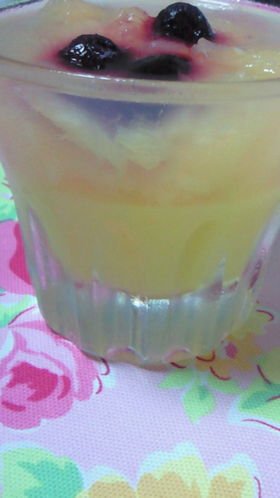
Vegan Japanese Dessert: Fruit Jelly

VEGAN-FRUIT-JELLY-1

The Japanese do have some simple ideas to please vegans and vegetarians alike, especially when it comes to simple, tasty and healthy desserts.
Here is a simple fruit jelly dessert you can adapt according to seasons and availability (try it with your kids!):

INGREDIENTS: For 2 large cups
1)
-100% orange juice (organic if possible) 200ml
-Water: 200 ml
-Agar agar: 2^4 g (depending how solid you like your jelly)
2)
-100% apple juice (organic if possible): 200 ml
Water: 200 ml
-Agar agar: 2~4 g
-Grapefruit: 1 peeled and and quartered (all skins off)
-Mint leaves and blueberries for final touch

RECIPE:

VEGAN-FRUIT-JELLY-2
-Pour water in a pan. Add agar agar. Heat a little to dissolve agar agar. Add orange juice. Pour into two glass cup of your choice and leave inside the fridge until it solidifies completely.

VEGAN-FRUIT-JELLY-3
-Add grapefruit.

-Reapeat with apple juice: pour water in a pan and add agar agar. Heat slowly to dissolve agar agar. Add fruit juice. Pour the lot over the grapefruit.

VEGAN-FRUIT-JELLY-4
-Add grapefruit and mint to your liking and put inside refrigerator to solidify.

VEGAN-FRUIT-JELLY-5
-Variation with 3 layers!

VEGAN-FRUIT-JELLY-6
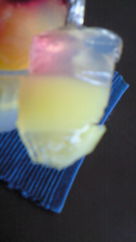
-As it appears on your spoon!

VEGAN-FRUIT-JELLY-7
-The other way round!

Please check the new postings at:
sake, shochu and sushi

—————————————-
日本語のブログ
—————————————-

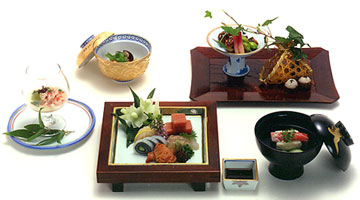
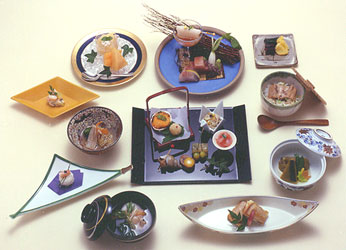
Japanese Cuisine/Kaiseki 2: Full Course Samples

KAISEKI-1a

The second part of this series explaining the basics of kaiseki ryori features a selection of full course meal.
Let me remind the usual components of a kaiseki meal:

ORDER
Originally, kaiseki comprised a bowl of miso soup and three side dishes. It has since evolved to include an appetizer, sashimi, a simmered dish, a grilled dish, and a steamed course, in addition to other dishes at the discretion of the chef.

-Sakizuke/先付: an appetizer similar to the French amuse-bouche.
-Hassun/八寸: the second course, which sets the seasonal theme. Typically one kind of sushi and several smaller side dishes.
-Mukozuke/向付: a sliced dish of seasonal sashimi.
-Takiawase/焚き合せ: vegetables served with meat, fish or tofu; the ingredients are simmered separately.
-Futamono/蓋物: a “lidded dish”; typically a soup.
-Yakimono/焼き物: Broiled seasonal fish.
-Su-zakana/酢魚: a small dish used to clean the palate, such as vegetables in vinegar.
-Hiyashi-bachi/冷やし撥: served only in summer; chilled, lightly-cooked vegetables.
-Naka-choko/中ちょこ: another palate-cleanser; may be a light, acidic soup.
-Shiizakana/しい魚: a substantial dish, such as a hot pot.
-Goha, o-shokuji/ご飯,お食事: a rice dish made with seasonal ingredients.
-Ko no mono/この物: seasonal pickled vegetables.
-Tome-wan/留め碗: a miso-based or vegetable soup served with rice.
-Mizumono/水物: a seasonal dessert; may be fruit, confection, ice cream, or cake.

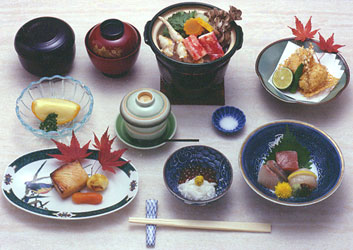
Now look at the following pictures and try to find what is featured!

KAISEKI-3
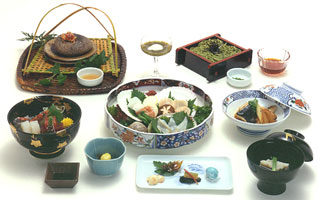
Seasonal kaiseki, spring and summer style

KAISEKI-4
Seasonal kaiseki, cold weather-style with nabe mono.

KAISEKI-5
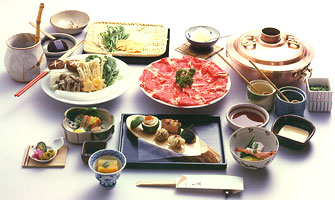
Kaiseki, shabu shabu course style

KAISEKI-6
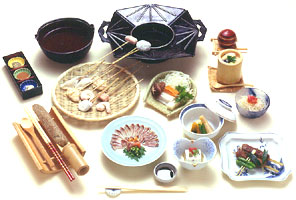
Kaiseki with hot dish

KAISEKI-7
Kaiseki, nabe course

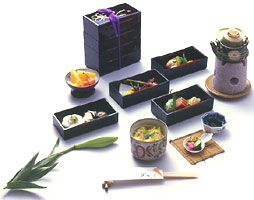
KAISEKI-8
Kaiseki, bento style

Please check the new postings at:
sake, shochu and sushi

—————————————-
日本語のブログ
—————————————-

Japanese Cuisine/Kaiseki 1: Introduction

KAISEKI-1

I’ve been asked quite a few times to explain and give examples of Kaiseki (Kaiseki Ryōri), a tradional form of Japanese Cuisine.
Here is a mini series that I hope will help friends to at least understand the basics!

Kaiseki (懐石) or kaiseki ryōri (懐石料理) is a traditional multi-course Japanese dinner analogous to Western haute cuisine.

There are basically two kinds of traditional Japanese meal styles called “kaiseki” or “kaiseki ryōri.” The first, where “kaiseki” is written as 会席 (and kaiseki ryōri, 会席料理), referring to the fancy meal served at banquets. The other is written 懐石 or 懐石料理, referring to the simple meal that the host of a chanoyu/tea ceremony gathering serves to the guests, and which is also known as cha-kaiseki (茶懐石).

DISHES
In the present day, kaiseki is a type of art form that balances the taste, texture, appearance, and colors of food. To this end, only fresh seasonal ingredients are used and are prepared in ways that aim to enhance their flavor. Local ingredients are often included as well. Finished dishes are carefully presented on plates that are chosen to enhance both the appearance and the seasonal theme of the meal. Dishes are beautifully arranged and garnished, often with real leaves and flowers, as well as edible garnishes designed to resemble natural plants and animals.

ORDER
Originally, kaiseki comprised a bowl of miso soup and three side dishes. It has since evolved to include an appetizer, sashimi, a simmered dish, a grilled dish, and a steamed course, in addition to other dishes at the discretion of the chef.

-Sakizuke: an appetizer similar to the French amuse-bouche.
-Hassun: the second course, which sets the seasonal theme. Typically one kind of sushi and several smaller side dishes.
-Mukozuke: a sliced dish of seasonal sashimi.
-Takiawase: vegetables served with meat, fish or tofu; the ingredients are simmered separately.
-Futamono: a “lidded dish”; typically a soup.
-Yakimono: Broiled seasonal fish.
-Su-zakana: a small dish used to clean the palate, such as vegetables in vinegar.
-Hiyashi-bachi: served only in summer; chilled, lightly-cooked vegetables.
-Naka-choko: another palate-cleanser; may be a light, acidic soup.
-Shiizakana: a substantial dish, such as a hot pot.
-Gohan: a rice dish made with seasonal ingredients.
-Ko no mono: seasonal pickled vegetables.
-Tome-wan: a miso-based or vegetable soup served with rice.
-Mizumono: a seasonal dessert; may be fruit, confection, ice cream, or cake.

KAISEKI-2

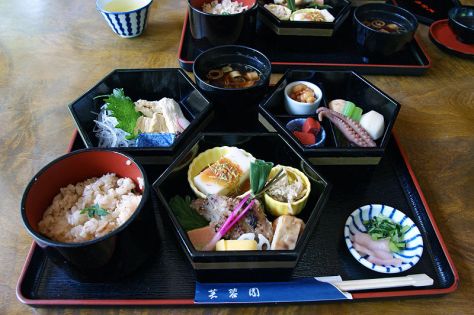
CASUAL KAISEKI
The thing which put all menus of Kaiseki in Jubako (a nest of boxes). Shokado-bento falls under this, too.

Kaiseki is often served in ryokan/traditional inns in Japan, but it is also served in small restaurants. Kyoto is well known for its kaiseki.
Shizuoka is also renown for its kaiseki reastaurants thanks to the abundance of natural ingredients all year round.

Please check the new postings at:
sake, shochu and sushi

—————————————-
日本語のブログ
—————————————-

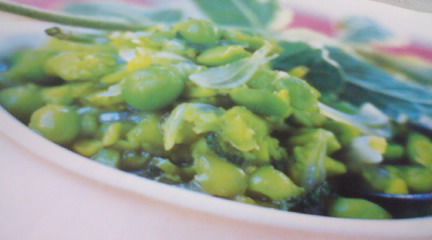
Vegan French Cuisine: Green Peas & Mint Chutney

PEAS-MINT

I’ve said before that the French are also fond of vegetarian and vegan cuisine and are always ready to adapt their traditional rcipes to different priorities.

Here is a French-style chutney that even my Indian friends will appreciate:
Green Peas & Mint Chutney!

INGREDIENTS: for 4~6 persons

-Fresh green peas: 300 g
-Small new onions: 2, thinly sliced
-Olive oil (EV): 2 tablespoons
-Brown sugar (light brown variety if possible): 1 tablespoon
-Freshly grated ginger: 1 teaspoon
-Mint: 3 large sprigs, finely cut (reserve a few leaves for decoration)
-Green lemon juice: 1
-Salt & pepper to taste

RECIPE:

-Cook the gree peas (out of their pods!) in a pan full of boiling salted water for 4~5 minutes. Try and preserve some firmness. Cool completely.

-At the same time cook the onions in the oive oil for 2~3 minutes, taking car not to “colour” them.
Add grated ginger, sugar, lemon juice, salt and pepper. Let simmer for 2~3 minutes.

-Mash the green peas (keep some whole for better effect the you will add at the end) and add to the onions. Let simmer for 2^3 more minutes. Lats add the finely cut mint and transfer the chutney into a bowl.
Serve cool or slgtly chilled.

NOTE:
You can mash all the green peas, but keeping a few whole added with a few mint leaves will look great!

Please check the new postings at:
sake, shochu and sushi

—————————————-
日本語のブログ
—————————————-

The Tea Museum/O Cha No Sato

TEA-MUSEUM-2

Shizuoka Prefecture produces between 45 and 55% of all green tea in Japan depending on the year and official surveys. Moreover, 70% of all tea made in this island finds it way every year at auctions and sales held within the confines of this central Prefecture.

The Tea Museum in Kanaya, Shimada City, would be a sufficient reason to visit this relatively unknown tourist destination, but you could also include it in a grander tour as it stands near Shin Kanaya Station where you could board one of three daily Steam Locomotive trains running up to Senzu Hot Spring resorts along the Oi River and unending tea fields. Another option would be to walk along the Old Tokaido Paved Road through mountain and forest, or along the main road circling its way up over beautiful vistas of the Oi River and its surrounding landscapes.
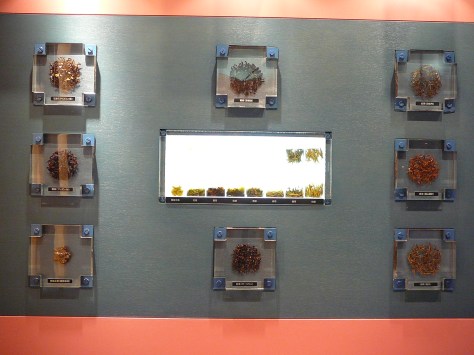
TEA-MUSEUM-3
Tea leaves Exhibit

Serving and drinking a cup of tea is an exchange of hospitality. It is evident that tea is in fact one of the very foundations of Japanese culture.
At The Tea Museum you can learn by experiencing its history and culture hands-on
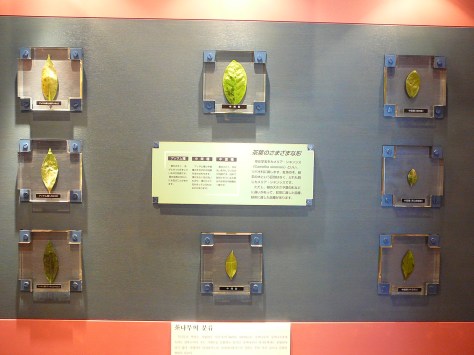
TEA-MUSEUM-4
Tea leaves Exhibit

Tea has its origin in the mountain ranges of Asia. Its culture was developed in China and Japan, and later all over the World. People and environment each play a part in the way tea is enjoyed with amazing variations.
Here in Japan drinking tea takes root very deeply.
However because tea is such a part of our everyday lives we perhaps have come to value it less.
The Tea Museum, therefore, invites everyone to reconsider the original meaning of tea through many exhibits of tea life in the World.
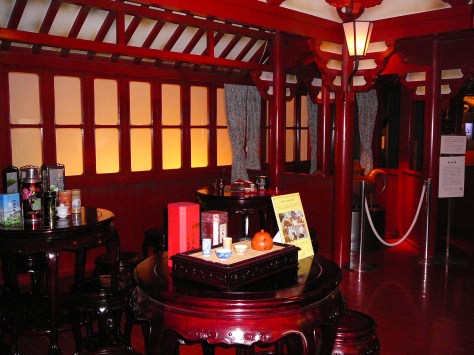
TEA-MUSEUM-5
Huxinting/湖心亭 Tea Room in Shanghai

First, as you enter the small lobby leading to the exhibition rooms, you will be offered a cup of tea from Kanaya and invited to check the ninety varieties of tea from thirty countries displayed inside glass drawers you may open to feel and smell their contents!
Then, as you follow the visit route, you will discover the highly sophisticated ambiance of Chinese Imperial Era inside the reproduction of the famous Huxinting/湖心亭 Tea Room in Shanghai, the simplicity of a typical Tibetan house in Nepal, the great setting from a Turkish Restaurant in Ankara, or the quaint atmosphere of a traditional British household!
TEA-MUSEUM-6
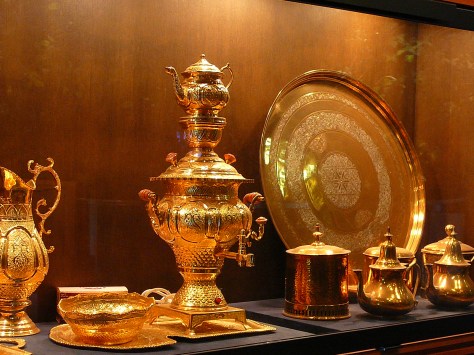
Samovar and tea utensils from Russia

Other exhibits include a replica of one of the oldest tea trees in the World, from Yuna, China, a scaled down landscape of tea fields, farms and growers in Japan, and the History of Tea in Japan.
TEA-MUSEUM-8
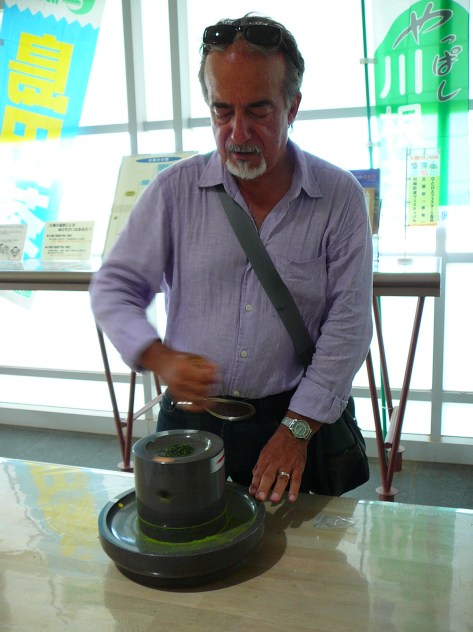
Grinding your own matcha!
Check this site for more information!

Real tea lovers will also be able to sample and grind their own matcha tea in situ!
TEA-MUSEUM-1
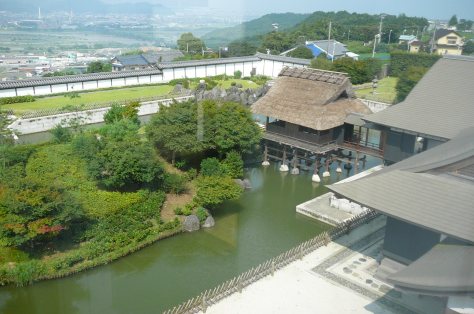
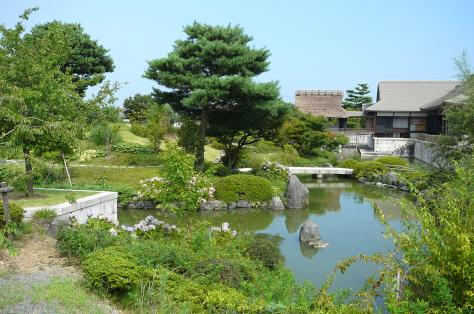
Tea House Garden

Now, the main attraction is the Japanese Tea House/Ocha no Sato-お茶の里!
The tea house, tea rooms and extensive garden are reconstructions of original architectural works of Kobori Enshu-小堀遠州 (1579~1647), a renown magistrate and tea master from the early Edo Era.
The east garden of the Sento Palace in Kyoto, the residence of Emperor Gomizunao-o after he abdicated the throne in 1629, has been recreated there.
The Japanese garden is open to visitors free of charge.
Before entering the tea house, walk along the Yatsuhashi-八橋 (eight-wooden plank bridge), enter the house through Kouhoukyo-向峯居, the arbor of the official residence for the Chief Administrative Judge of Fushimi, and visit Taiunkaku-対雲閣, tea room from the Iwashimizu-hachimangu Temple and Rinsuitei-臨水亭, tea room of the official residence of the Chief Administrative Judge of Fushimi.
TEA-MUSEUM-7
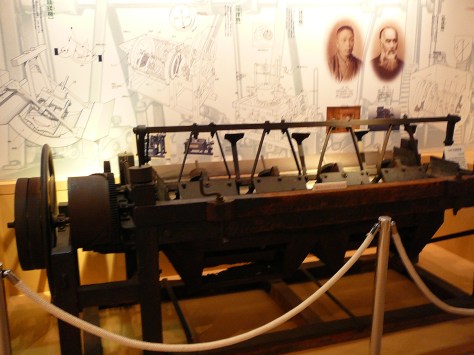
Tea History in Japan

Before leaving the Tea Museum pay a visit to the small but very interesting library if you can read Japanese, the Yume Ichiba Shop to purchase local products and souvenirs or Restaurant Moegi for a well-earned refreshment!

Access:
Train: 5 minutes by bus or taxi from Kanaya Station on the JR Tokaido Line.
Car: 10 minutes by car from Sagara/Makinohara I.C. on Tomei Expressway
Or 15 minutes from Ojiro I.C. Bypass

Museum visitor’s regular exhibition fee: 600 yen per adult. Cheaper for students, groups and disabled people.
Service hours: 9:00 a.m.~5:00 p.m.
Museum and Teahouse visitor fee: 1,00 yen per adult. Cheaper for students, groups and disabled people.
Service hours: 9:30 a.m.~4:00 p.m.

The teahouse only admission is 500 yen per person (no discount)

Address: The Tea Musuem/Ocanosato, 3053-2, Kanaya, Shimada Shi, Shizuoka Ken, 428-0022 Japan
Tel: (81)0547-46-5588
Fax: (81)0547-46-5577
Closed every Tuesday (the following day when Tuesday is a National Holiday), December 29th~January 3rd.
Parking: free of charge for 9 large buses and 90 cars.

HOMEPAGE

Please check the new postings at:
sake, shochu and sushi

—————————————-
日本語のブログ
—————————————-
Today’s Lunch Box/Bento (’09/55-Earthquake))

BENTO-09-08-11a

August 11th, 2009, Shizuoka City, 05:13 a.m.
6.2~6.5 tremor with its epicentre bang in the middle of Shizuoka Prefecture.
Positives: Occured at the “best” time of the day when people wake up and react quickly, no one is cooking yet, and no communal transport is moving.
Negatives: some stupid “specialists” take the opportunity to announce this is still not the “Big Tokai Earthquake that we (?) are all expecting anytime!”
That did not prevent the Missus to prepare my (and her) bento!

So, this time it is not “Typhoon Bento”, but “Earthquake Bento”!

BENTO-09-08-11b

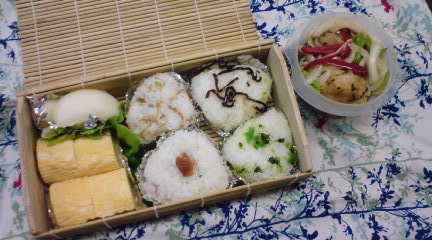
She used that bamboo box again with its soft lid.
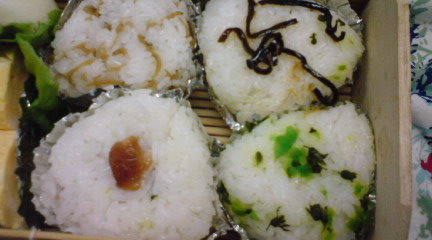
She put in 4 musubi/rice balls instead of the usual 3. She probably though I needed some comfort! LOL

BENTO-09-08-11c

4 musubi then:
Top left: dried shirasu/sardine whitings
Top right: konbu/sweet seaweed
Bottom left: umeboshi/pickled Japanese plum
Bottom right: pickled cucumber

BENTO-09-08-11d

Tamagoyaki. Very simple and sweet. “Nashi”/Japanese pears from Yaizu which was hit by a mini tsunami at 5:30.

BENTO-09-08-11e

The side dish was one of the Missus specialties: Deep-fried chicken marinated with vegetables. She deep-fries the chicken first. Then she fries some thinly cut vegetables lightly. She dropped both into a large plate with rich vinegar, mirin, ponzu and I don’t know what and let the lot marinate for at least 30 minutes before transfering it into a tupperware.

BENTO-09-08-11f

A side view of the garnish!

Looking at, and eating this bento, I might be tempted to wish for a few more (very small) earthquakes!

Here is another picture of my “roots” taken outside my Dad’s house:

FAMILLE

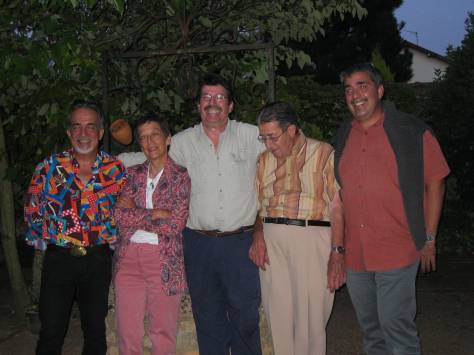
Myself (61 this month), my sister Laure (60), my brother Jean-Jacques (the chef, 59) my Dad Andre (85) and my other brother Francois (the one who works for AREVA and spends half of his time in Florida, 52).

Please check the new postings at:
sake, shochu and sushi

—————————————-
日本語のブログ
—————————————-

Japanese Cake: Matcha Sticks

MATTCHA-STICK-1

Matcha tea, or refined tea powder is quickly becoming popular all over the world.
Now, you don’t have to go all the way to Japan to find some if you live in the States! Just the excellent resource website in Los Angeles called Matcha Source!
(I do not have any interest inthe company, but I thought it deserved to be known!)

Here is another easy recipe for a cake you can use for any occasion or even as a gift:
Matcha Sticks!

INGREDIENTS: For 12 sticks
-Eggs: 2
-Sugar: 50 g
-Honey (liquid9: 20 g
-Butter: 50 g
Flour: 50 g
-Almond Powder: 50 g
-Matcha: 5 g
-Baking Powder: half a teaspoon
-Kuro mame/Black beans (feijao style/boiled): as many as you like”

RECIPE:

-Eggs must be at room temperature. Take them out of the fridge and leave them to attain room temperature if necessary.
Mix flour, almond powder, matcha and baking powder in a bowl.
Melt butter in microwave oven for a minute.

MATTCHA-STICK-2
-In another bowl, beta eggs. Add sugar, honey. Mix well with an electric whisker.

MATTCHA-STICK-3
-Progressively add flour mixture and mix well. Once all the flour has been mixed, add melted butter little by little and mix well.

MATTCHA-STICK-4
-Cover inside of an oven dish with baking paper. Pour the cake mixture in. Add the beans in parrallel rows.
Bake for 20 minutes at 170 degrees Celsius.

MATTCHA-STICK-5
-Once cooked, take out the cake together with the baking paper.
Once completely cooled down, cut and serve.

Please check the new postings at:
sake, shochu and sushi

—————————————-
日本語のブログ
—————————————-
Local Sushi & Sashimi only at Ginta!

GINTA-LOCAL-1

The particularity of Ginta, a minuscule sushi restaurant located near the harbour of Yui in the eastern part of Shizuoka City is that it proposes sushi and sashimi plates from fish exclusively caught in Suruga Bay only a few miles and fathoms from the very shore!

The other day I convinced the Missus to pay Ginta a belated (for me as it was a first for her) visit and sample the fish of the moment.

Iforgot to say that the prices are ridiculously low when taking the quality and rarity in consideration!

The “Jizakana/Local Fish” set of 8 above is priced at 1,800 yen/ 19 US $!

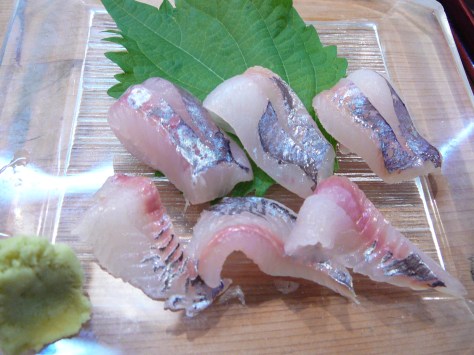
Here is a description of the sushi (Picture above):

Above, from left to right:
-Tora Fugu/a popular species of globefish, served pre-seasoned (no need to dip it in the soy sauce)
-Hanadai/A kind of grouper, served pre-seasoned
Mr. Hara actually deep-fries the scales of that particular fish before inserting them under the slice of raw fish!
-Tachiuo/Scabbard Fish, v
-Sakura Ebi/Cherry Shrimps, served in “gunkan” style.

Bottom, from left to right:
-Kanpachi/Albacore
-Kurodai/another kind of grouper
-Kurozawa Aji/Saurel caught in Kurozawa area, next to Yui.
-Kose/a purely local fish also called “kushikinme or goso (in Numazu City). It is apparently a local variety of grouper.

GINTA-LOCAL-2

Having enjoyed kose for the first time, we decided to order it as a full sashimi plate.
A real beauty: firm, almost crisp, not a hint of “fishy taste” and absloutely delicious!

No wonder customers come all the way from Tokyo!
Now, the advantage I have on such customers is that Mr. Hara is so enthusiastic sharing his knowledge with local patrons!

GINTA
421-3111 Shizuoka Shi, Shimizu Ku, Yui cho, Imajuku, 165. (get off at Yui Station and walk to your right. Only a few minutes away)
Tel.: 0543-75-3004
Opening hours: 11:00~23:00
Closed on Tuesdays
Reservations on the telephone recommended!

Please check the new postings at:
sake, shochu and sushi

—————————————-
日本語のブログ
—————————————-

Today’s Lunch Box/Bento (’09/54-Typhoon No 9)

BENTO-09-08-10a

Today’s bento was “Typhoon Bento”! Not the one that crashed on Taiwan last week, but the next one which veered onto Japan today!
I can assure you that the Missus was “pretty” grumpy!

BENTO-09-08-10b

In Summer I very often get these cold noodles/”men-ramen-soba” bentoes. I can keep the in the fridge at the office and eat them chilled.
Very much appreciated in these hot days!

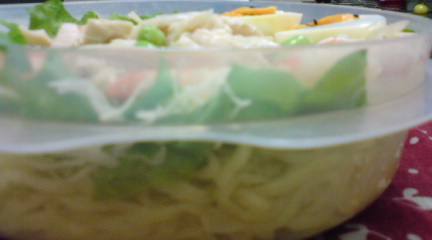
Today’s was mad of ramen first boiled then cooled under running cold water. They were topped with finely choppe veg, pieces of lettuce, boiled shrimp, home-made chicken ham, Soft boiled egg seasoned withblack sesame seeds and steamed edamame.

BENTO-09-08-10c

Here’s a side view!

BENTO-09-08-1033

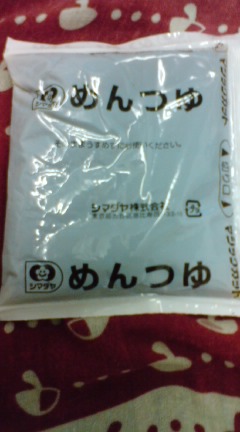
I was provided with “men tsuyu/cold noodles stock soup) to add to the noodles. I added some dressing from the bottle kept in the fridge.

BENTO-09-08-10d

Great dessert for once: Fresh “nashi/Japanese pears”, figs and blueberries!

I’ve been asked a lot of questions about my origins and family recently.
I will include a few pics of the (surviving) family from time to time to give you an idea of my (very normal) roots!

TRICOLOR-FAMILY

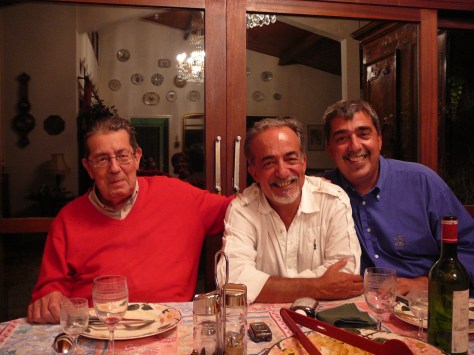
The Tricolour (unintended!) Picture taken inside my Dad’s (big) home in Givry, Bourgogne, France:
Andre, my Dad (86 years old)
Myself (60 years old)
Francois, my second younger brother (52 years old)

Please check the new postings at:
sake, shochu and sushi

—————————————-
日本語のブログ
—————————————-

Scottish Dessert: Whisky and Rolled Oats Mousse

BARLEY-WHISKY

Yes, they have great for desserts in Scotland!

Whisky & Rolled Oats Mousse!

INGREDIENTS: for 4 persons

-Fresh cream: 600 ml
-Rolled Oats/Barley: 75 g
-Whisky: 6 tablespoons
-Honey (liquid): 3 tablespoons
-Raspberries (can be replaced by seasonal small fruit: strawberries, blaberries, etc.): 500 g

RECIPE:

-Spread the rolled oats on an oven hot plate. Place them under the grill for 2~3 minutes until they become golden. Let cool down completely on the oven hot plate.

-Beat the fresh cream (chilled!) with an electric beater/whisker. When the cream has become a firm Chantilly, continue to beat as you add the whisky and honey.
Then add the rolled oats with a wooden spoon.

-Pour some of the cream in 4 large glass cups. Place a layer of raspberries. Repeat the process until you reach the top of the glass cup.

-Keep the glasses inside a fridge for at least 2 hours (you can prepare the dessert the night before).

Drink your favourite whisky with it!

Please check the new postings at:
sake, shochu and sushi

—————————————-
日本語のブログ
—————————————-
Cheese Plate at Gentil (7)

GENTIL-09-08-04

This article is again dedicated to Cheese Monger as he is interested in what we can expect here in Japan!

I don’t need to introduce Gentil and Ms. Keiko Kubota in Japan who is THE authority on cheese in Japan!

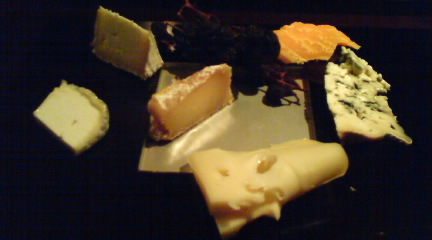
Look at picture above to find out what I sampled last Wednesday:

Left top: Chaource (Cow, France)
Left bottom: Bon de Sologne (Cow, France)

Centre under muscat raisins: Merois (Goat, France)
Centre bittom: Tsuki no Monogatari/Moon Story (Raw Cow milk, Japan, Hokkaido)

Right top: Mimolette, 2 months old (Cow, France)
Right bottom: Bleu d’Auvergne (Cow, France)

Another great plate, I can assure you!

Restaurant Gentil
Address:420-0031 Shizuoka Shi, Gofuku-cho, 2-9-1, Gennan Kairaku building, 2F
Tel.: 054-2547655 (Reservations advisable)
Fax: 054-2210509
Opening hours: 12:00~14:00, 18:00~last orders for meals at 21:30. Bar time 18:00~23:30. Closed on Mondays.
Credit cards OK
Homepage (Japanese)

Please check the new postings at:
sake, shochu and sushi

—————————————-
日本語のブログ
—————————————-

Scottish Cuisine: Green Peas and Mint Soup

PEAS-MINT

I have nurtured a special fondness for Scotland where I stayed many times as far back as in the 1970’s. I’m still an ardent fan of Hamilton Academics, better known as the “Accies”, Football Club (Soccer)!

Scotland has more to offer than whisky and haggis, and its gastronomy is slowly but steadily getting better attention thanks to the thousands of tourists visiting this beautiful and still wild country.

It is a very cold country in winter, and a good soup is always much appreciated there!

Green Peas and Mint Soup!

INGREDIENTS: For 4 people

-Fresh or frozen green peas: 500 g
-Lettuce leaves: 150 g
-Onions: 250 g
-Chopped fresh mint: 3 large tablespoons
-Butter: 50 g
-Fresh cream: 100 ml
-Salt and pepper to taste

RECIPE:

-Peel the onions and chop finely. Wash the lettuce leaves and cut/chop finely.

-Melt the butter in large deep pan and cook the onions slowly over a low fire. They must melt but not change colour. Add the lettuce first and after a minute or two add 1 litre of water. Cook over a very low fire for 20 minutes.

-Add the green peas and bring to boil. Take off fire.

-Add the mint and mix for a long time with an electric whisker. Season with salt and pepper. Sieve the soup through a very fine mesh and pour again into the pan.

-Add the fresh cream and re-heat the soup over a low fire, taking care not to boil it.

-Serve hot with a few green peas and mint leaves.

NOTE:
You may also serve this soup with whisked fresh cream to which you have added plenty of pepper!

Please check the new postings at:
sake, shochu and sushi

—————————————-
日本語のブログ
—————————————-

Japanese Cakes/Wagashi 14: Satsuma Imo/Sweet Potato

SATSUMA-WAGASHI-1

Satsuma Imo or Sweet Potatoes are often used in Japanese cakes/Wagashi.
The great advantage is that it makes for completely vegan cakes with an almost endless source of variations.

Here is the basice recipe from you will be able to improvise!

INGREDIENTS:

-Satsuma/Sweet Potato: 400g (peeled)
-Sugar: 75 g
-Agar agar powder: 3 g
-Salt: a pinch
-Water: 20 ml

RECIPE:

SATSUMA-WAGASHI-2
-Cut the sweet potato into small pieces and wash under clear cold water to take off astringency.
Boil in a pan with 20 ml of water until soft.

-Just before the potatoes are completely cooked, add sugar agar agar and salt. Bring to boil and swith off fire. Bear in mind there will is very little water. Do not burn the poatoes!

-Transfer potatoes into a frying pan and fry until they get smooth..

-Return to boiling pan and heat to get all excess water out.

-Pass through a sieve, or process.

-Wet the inside of a refrigerator recipient before spreading cellophane paper inside. Pour the potato puree into the recipient and fold the cellophane paer on top, leaving no air between cellophane paper and potato. Chill inside refrigerator.

SATSUMA-WAGASHI-3

Before eating unwrap cellophane paper and cut into preferred shape.
This is where the fun begins!

Please check the new postings at:
sake, shochu and sushi

—————————————-
日本語のブログ
—————————————-
French Cuisine: Beignets de Sole au Parmesan & Mayonnaise verte/Sole fritters with Parmegiano and Green Mayonnaise

SOLE-VERTE

A lot of people have this cringe/hate about mayonnaise.
Why?
Because they usually eat redy-made, meaning a sweet and cloy product akin to fast/junk food.
Make it yourself then! I can assure you your world will change (alright, I’m exagerating!LOL)!
Sole is in season. Parmegiano is a favourite. Why not indulge in the following dish (long title, sorry!):
French Cusine: Beignets de Sole au Parmesan & Mayonnaise verte/Sole fritters with Parmegiano and Green Mayonnaise!

INGREDIENTS: For 4 persons

-Sole filets: 500 g
-Bredcrumbs: 100 g
-Grated Parmegiano: 50 g
-Flour: 50 g
-Eggs: 2 (beaten in omelette)

Oil for deep-frying

-Mayonnaise:
Sunflower oil: 300 ml
Spinach: 25 g
Egg: 1
White wine vinegar: 2 teaspoons
Mixed fresh herbs (Chervil, Tarragon, ciboulette): 25 g
Salt and Pepper to taste

RECIPE:

-Prepare the mayonnaise:
First drop the spinach in boiling water. Let cook for a few seconds only. Take out. Drain well and process with herbs into a puree.
Put aside.
In a food processor drop the whole egg with the vinegar and salt.
Mix at slow speed.
Then pour the oil slowly incresing the mixer/processor’s speed along.
When the mayonnaise is ready, Drop the spinach and herbs puree in andmix quickly. Keep in a cool place

-Heat the dep-fry oil.
Cut the sole fillets in 2cm long pieces.
In three separate dishes place 1) the flour, 2) the beaten eggs, 3) the parmegiano and bredcrumbs mixed together.
Rool the fish in 1) the folur, 2) the beaten eggs and 39 into the Pamegiano/breadcrumbs mixture.

-Drop the fish into the oil and lt fry for 1 minute.
Take out and place on kitchen paper to take off excess oil.

-Serve hot with the green mayonnaise.

What wine with it: dry solid white wine!

Please check the new postings at:
sake, shochu and sushi

—————————————-
日本語のブログ
—————————————-
French Cake: Croustillant Banane Mangue/Banana & Mango Pie

BANANA-MANGO

Still delving into my notes for more French desserts!
Bananas and mangoes are practically everywhere, so it should be a problem to realize this simple recipe:
Croustillant Banane Mangue/Banana & Mango Pie!

INGREDIENTS: For 4 persons

-Brick/Filo sheets: 4
-Banana: 1
-Mango: 1
-Butter: 25 g
-For the syrup:
Water: 250 ml
Sugarcane sugar/brown sugar: 3 tablespoons
Vanilla: 1 whol pod cut along its lengt
Juice of 1 orange
Juice of 1 gree lemon

-Pulp of 1 guava

RECIPE:

-In a small pan, drop all the ingredients for the syrup (Do not include the guava!) and cook on a medium fire for 10 minutes. Let cool completely and leave in a cool place.

-Peel the banana and mango and cut them in big pieces first.

-Put the banana and mango pieces into the syrup and let marinate for 30 minutes.

-Take the fruit pieces out of the syrup with a holed ladle to drain as much of the syrup as possible. Put the fruit on a piece of kitchen paper.

-Cut the fruit into small pieces.

-On a kitchen board, place a filo sheet and fold it once (double).
Put a large tablespoon of the cut fruit in the middle of the filo sheet.

-Melt the butter i a small pan.

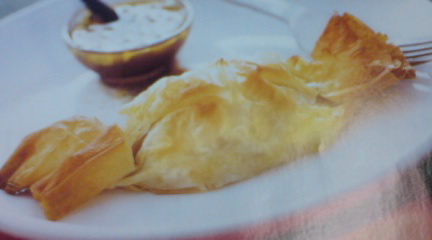
-Fold the right third of the filo sheet onto the fruit, and fold the left third of the filo sheet on top. Delicately turn or twist each end so as to form a “papillote” (sweet wrapper) as in picture above.
Brush melted butter over the whole papillote.

-Bake at 180 degrees Celsius for 10~15 minutes.

-Serve hot with the syrup in a small pot to you have added guava pulp.

if you want to taste a wine with it, a port or banyuls or a sweet wine is best!

Please check the new postings at:
sake, shochu and sushi

—————————————-
日本語のブログ
—————————————-