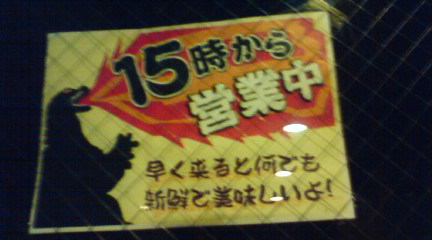
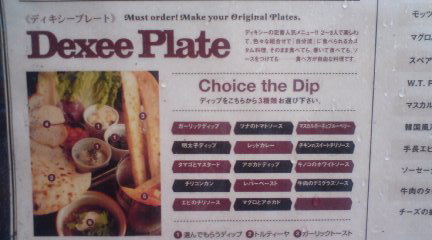
Tag Archives: 日本

Gastronomic Cycling in Shizuoka (4)

Ryogae Cho Street in Shizuoka City where Koya machi meets Edogawa Street, one of the main arteries crossing the city parrallel to the sea.
“Ryogae” means “Money Exchange” and was the hubbub of the city in Feudal Times. The street of the same name. although being comparatively narrow and parallel to a more important thoroughfare is nonetheless one of the main venues for diners and revellers.
It is a very long street, making it impossible to cover in one single article, so let’s proceed slowly!LOL

Like the entrance of any by-night street it looks pretty drab in day time.

Much the same atmosphere even halfwy up.

But it starts lightening up at dusk.

Like in any other revelling streets expect all kinds of giant signboards!
“Woody Cloud” is the name of a large cheap izakaya, not a heavy contrapption hanging over your head!

At night the (chgeap places) neons seem to attract all kinds of people.
Did you know that in Japanese moths if described as night butterflies stand for women working in bars?

Those big sign boards are a bit difficult to investigate at night at leisure.

But in daytime you are in for a filed day!

don’t be afraid of climbing stairs. You will be left in peace in daytime. After all the night butterflies are still sleeping!

I have a special fondness for the meaning of this sign: Tsuki no Oto/The Sound of the Moon!

The same night sushi restaurant ha another larger sign on theopposite wall. Aren’t these rabbits cute?

but some places are open for business at lunch and dinner.
Above is the advertised lunch sets.

At night the same sign is turned around to announce the dinner sets!

The same sushi restaurant advertizes the setsubun festival/the day when the Japanese throw beans to ward off bad spirits. Contrary to what you might think, these two are good spirits!

We are still at the same place, but as I have some reservations about the quality of their food, I will not divulge their name. Actually they are known for having sued a magazine who criticized them.
On the other hand they the best array of sushi plastic models in town!

I would steal these!

And those too!
But I’m not ready to compromise myself yet!LOL

Now, in the next building there are signs definitely needing some explanations!
You will not get shot in this bar! They just mean they sell the drinks by the shot!

Do you speak French? If you do, you are in trouble!

Take your pick!
I don’t really understand what “lavless” stands for, even after so many years in Shizuoka! “loveless”, maybe, but it doesn’t stand to reason…

Now, what kind of shop can call itself “Psyche”?

A flower shop! which stays open very late at night: a ot of flowers are needed for uncountable reasons in such a neighbourhood!

Shidax is the largest single karaoke shop chain company in Japan!
They even own a semi-professional baseball team!

Back to the signs.
I wonder where I left my wallet!

Now, that sign could get you into trouble in some countries!

Don’t they have mountain cats in America?

The back entrance of Loft, a favourite shop of the Missus! They sell all kinds of clothes, stationery and crafts.

Sawamura, a good if small art gallery with exhibitions regularly changing.

A major lottery booth.
It stands at the very corner of Ryogae Street and Aoba/Green Leaves Park Street.
We shall not proceed any further this time but go back slowly for more investigation as dusk is coming on us.

Although the place is a cheap izakaya chain restaurant, the sign gives you a good indication of Japanese food. Left is shabu shabu/Japanese meat fondue, right is nabe/Japanese pot au feu.

What kind of customers patronize this nonetheless well-known night bar?

People drink very late in Shizuoka City!

Don’t complain later!

Part of the street is slowly turning into a mini China Town.
I’d love to try those egg tarts!

Cuthroat prices competition among those Chinese restaurateurs!
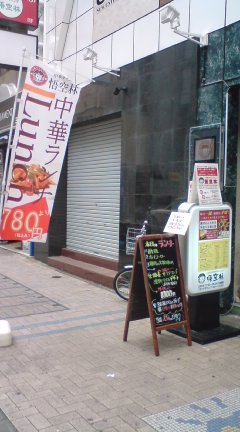
The third one within to entrances. Working day and night!
They must be from the same family!

Real cheap!

The dusk is slowly shrouding the street.
Shinchikurin, one of the older izakayas reamaining in the street.

Now as far as I know, this sign hasn’t changed for the last 20 years! C’mon!

Well-known cheap izakaya with a benevolent guardian.

The same guardian keeps a watch on the ridiculously low prices!
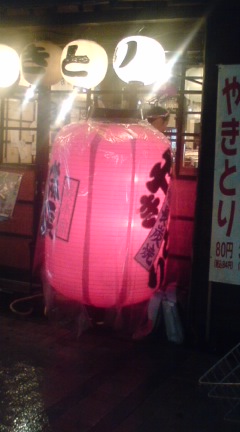
Akachoshin/Traditional red lantern (they were a lot smaller not o long ago!) denoting an izakaya!

Shidax Karaoke at night. Cheap! (I don’t mean the prices!)

Still closed at dusk, but I have promised myself to investigate this takoyaki shop!

Cheap store speciliazing in “hostess dress” open till late at night. You never know, you might firnd some interesting garments!

Venturing into a dark side alley would be dodgy at best in many countries. In Shizuoka it would very often end up in discovering a little well-kept secret (gourmet secret!)!

Well, I’m afraid I will have to leave my bicycle somewhere as walking is more practical at night!

Next: Aoba Park Street!

RECOMMENDED RELATED SITES:
Bread + Butter, Comestilblog, Greedy Girl, Bouchon For 2, Zoy Zhang, Hungry Neko, Mangantayon, Elinluv Tidbit Corner, Maison de Christina, Chrys Niles, Lexi, Culinary Musings, Eats and Everything, Bite Me New England, Heather Sweet, Warren Bobrow, 5 Star Foodie, Frank Fariello, Oyster Culture, Ramendo, Alchemist Chef, Ochikeron, Mrs. Lavendula, The Gipsy Chef, Spirited Miu Flavor, Wheeling Gourmet, Chef de Plunge, Sushi Nomads, Island Vittles, The French Market Maven, Tokyo Through The Drinking Glas, Palate To Pen, Tokyo Foodcast, Good Beer & Country Boys, Tokyo Terrace, Think Twice, Jefferson’s Table

Please check the new postings at:
sake, shochu and sushi,
—————————————-
日本語のブログ
—————————————-
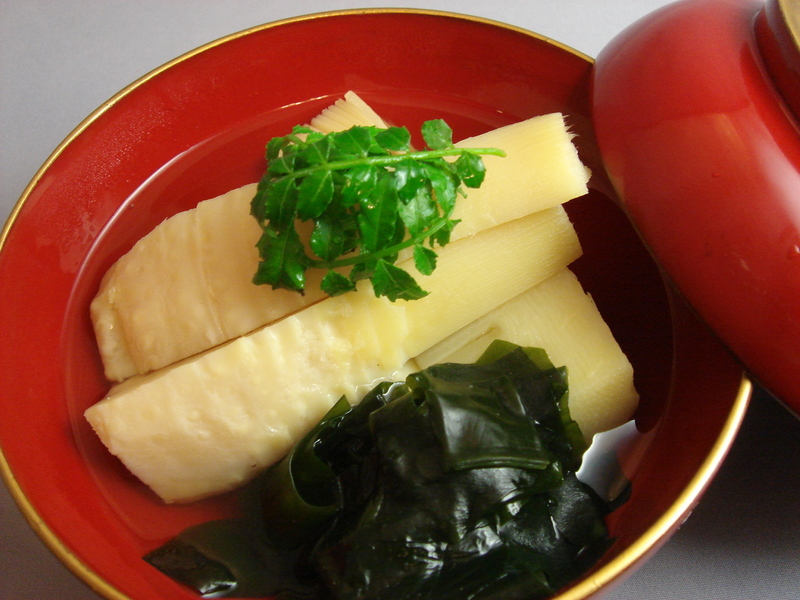
Vegan Japanese Cuisine: Simmered Bamboo Shoots

In Japan, and in Shizuoka in particular, the bamboo shoots season is about to come.
Fresh, they are so tender and provide a good bite sensation for people with vegan and vegetarian priorities.
Naturally you can buy them tinned all year round, but the quality just does not compare!
The Japanese are very found of new shoots grilled with their “skin” around them to later peel and eat them almost like corn ears!
By the way, did you know that bamboo is not a tree, but a grass?

Here is a simple vegan Japanese recipe. All ingredients hopefully can be found in Asian markets abroad:

Simmered Bamboo Shoots/Waka Take Ni/若竹煮!

INGREDIENTS:

-Bamboo shoots: 2 small, fresh if possible
-Wakame: as appropriate (can be boughtin Asian Markets in sachet/bags. Wash their salt off first and soften them if necessary)


-Ki no Me (see above): Ki no me is also also called Sansho or Japanese pepper, especially when fresh and in leaves. It is called Shishuan pepper when dried: as appropriate. If unavailable, use leafy greens or fresh spouts of any kind!

-Dashi: 2 cups/400 cc/ml (Check HERE for Vegan Recipe!)

-Salt: 1/2~teaspoon
-Soft taste soy sauce: 2 tablespoons
-Japanese sake: 1 tablepoon (if unavailable, experiment with white wine!)
-Mirin/sweet sake: 50 cc/ml

RECIPE:

-Peel bamboo shoots if necessary. Cut them along their lengths into 6 radial trips.

-Wash wakame in clear cold water and cut into bite size.

-Pour the dashi, soy sauce, sake, salt and mirin in a pan. Simmer the bamboo shoots and wakame in the mixture for 20 minutes on a medium fire, taking care not to overboil it.

-Serve hot or chilled with its soup decorated with some frsh ki no me or other greens

NOTES:

This is the “soft style” recipe. You may vary the amount of salt and add spices.

RECOMMENDED RELATED SITES
Not-Just-Recipes, Bengal cuisine, Cooking Vegetarian, Frank Fariello, Gluten-free Vegan Family, Meatless Mama, Warren Bobrow, Wheeling Gourmet, Le Petit Cuisinier, Vegan Epicurean, Miss V’s Vegan Cookbook, Comestiblog, To Cheese or not To Cheese, The Lacquer Spoon, Russell 3, Octopuspie, Bread + Butter, Pegasus Legend, Think Twice, The French Market Maven

Please check the new postings at:
sake, shochu and sushi

—————————————-
日本語のブログ
—————————————-

Japanese Seasonal Fish: Kawahagi/Thread-sail Filefish

Kawahagi or Thread-sail Filefish (or simply Filefish) is an angler’s favourite in summer, although it is caught almost all year round in Shizuoka.
Like any other fishes, it has other names such as “Gihagi, “Hagi”, “Gyuu”, “Subuta” or “bakuchiuchi”.
It is fairly common in Central and South Japan.
It is called Leatherjacket down in Australia where it is considered a pest!

The skin should be rough like that of a shark and brightly coloured.
Avoid sticky skin fish.
The bigger the size, the greater the taste (anglers, enjoy!)

In Kansai area, it replaces Fugu/Globefish when it is out of season for its similarity as sashimi.

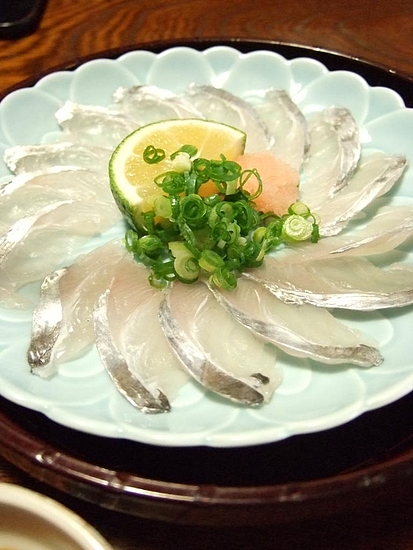
Actually it makes for superlative sashimi as demonstrated by the above O-Tsukuri served at Sushi Ko in Shizuoka City!

012

The same served with its own liver dip!

It can make for a spectacular sashimi presentation as a whole fish sashimi plate!

Both its flesh and liver can served raw!

Australians would be surprised to discover it served as tartare on Italian-style crostinis!

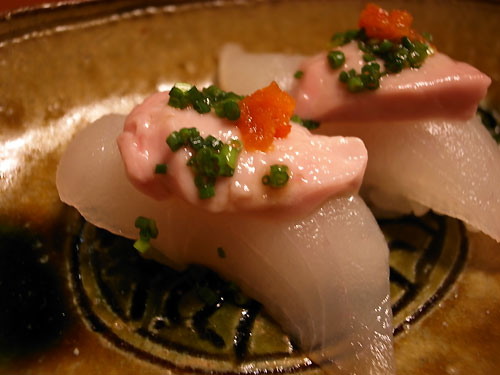
The perfect Kawahagi sushi nigiri must have be topped with its liver!

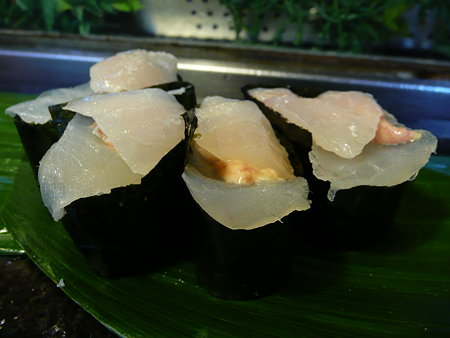
Cut in small slices, it makes for beautiful sushi gunkan!

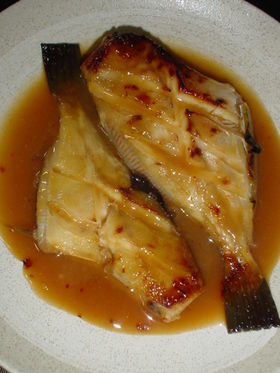
Cooked, it is very popular simmered in soy sauce, mirin and sugar. A great accompaniment for a nice bowl of freshly steamed rice!

If you want to serve it as tempura, first season it with umeboshi/Japanese pickled plums flesh of the sweet kind.

Now, what does this remind you of? Foie gras? Almost right! Grilled kawahagi Liver!

——————————————————————
Savouring the full Filfish meal at Sushi Ko, Shizuoka City:

Back in June, as I had to atone for some somewhat egoistical pleasure-seeking, I took the Missus to our favourite Sushi Restaurant in Shizuoka City, namely Sushi Ko,located along Aoba Park.

Although we did order the inevitable favourites, “katsuo/bonito” sashimi, “Shirako to Ankimo/Combination of Cod Sperm sacs and Frogfish/Monkfish liver”, “Pon Kara Maguro/Deep-fried tuna cubes”, “Shishamo/Spirinchus lanceolatus”, “Hotate/Scallops”, “Maguro Zuke/Marinated Tuna sushi”, and “Amaebi nigiri to Shiraebi Gunkan/Sweet shrimp and white shrimp sushi”, the star of the day was “Kawahagi/Filefish”!

The chef took a splendid live specimen (see top pic) just caught off Mochimune coast in Shizuoka City out of the “aquarium” and proceeded to serve the complete fish in three different manners:


“O-Tsukuri”:
After having taken away the inedible skin, the chef first cut the fillets into very thin slices to be served with thin leeks and dip sauce made of ponzu mixed with the fresh liver of the same fish. As now is the best season, those comparatively thin fish come up with enormous livers!


“O nigiri”:
The chef managed to keep four slices aside to prepare nigiri with the fish flesh topped with a piece of its liver, some “momiji oroshi/grated daikon with chili pepper” and seasoned with ponzu!

SUSHI-KO-2008-10-11
“Kara age”:
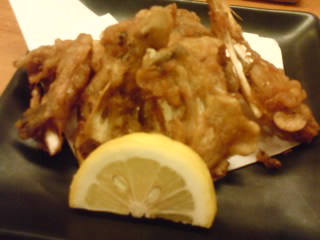
The “cheeks bones” with their meat were last deep-fried and served as they are with some lemon. Simple and great!
All this with one single fish!

Sushi Ko
shizuoka City, Aoi Ku, Ryogae-cho. 2-3-1 (Aoba Koen)
Tel.: 054-2512898
Business Hours: 17:00~25:00. 17:00~23:00 (Sundays)
Closed on Wednesdays
Reservations recommended
Credit cards OK
HOMEPAGE (Japanese)

RECOMMENDED RELATED SITES:
Bread + Butter, Comestilblog, Greedy Girl, Bouchon For 2, Zoy Zhang, Hungry Neko, Mangantayon, Elinluv Tidbit Corner, Maison de Christina, Chrys Niles, Lexi, Culinary Musings, Eats and Everything, Bite Me New England, Heather Sweet, Warren Bobrow, 5 Star Foodie, Frank Fariello, Oyster Culture, Ramendo, Alchemist Chef, Ochikeron, Mrs. Lavendula, The Gipsy Chef, Spirited Miu Flavor, Wheeling Gourmet, Chef de Plunge, Sushi Nomads, Island Vittles, Jefferson’s Table

Please check the new postings at:
sake, shochu and sushi,
—————————————-
日本語のブログ
—————————————-

Today’s Lunch Box/Bento (’10/08)

After the deluge we bore yetserday, clear bright skies were welcome today. The drawback is that I had to ride of those stuffing buses to work as I had left my bicycle at work last night. Don’t worry, it’s safe and nobody wills steal it. This is Japan! I still marvel at the patience shown by the Japanese in their common transport. Not a single complaint….

The Missus was quickly back into her meat mode today. I suspect that she is planning well ahead as she has started taking regular pictures of her concoctions!
“I will start a notebook when I have one hundred of them!, she said.
It’s about time she started her own blog!

The rice was steamed together with shredded carrots on top, then mixed before being served with a sprinkle of black sesame seeds and some shredded takuan/pickled daikon.

The garnish consisted of meatballs fried coated in cornstarch first in oil then with a sweet and sour sauce of the Missus’ invention. It was complemented with half-boiled eeg, boiled na no hana/rape flower seasoned with sesame sauce, and beans (canned) and cucumber salad.

Dessert was benihoppe/red cheek strawberry like yesterday with orange wedges.

Hearty, healthy and yummy!

RECOMMENDED RELATED SITES:
Warren Bobrow, Bread + Butter, Zoy Zhang, Hungry Neko, Think Twice, Frank Fariello, Mangantayon, Hapabento, Elinluv Tidbit Corner, Tokyo Terrace, Maison de Christina, Chrys Niles,Lexi, Culinary Musings, Wheeling Gourmet

Please check the new postings at:
sake, shochu and sushi

—————————————-
日本語のブログ
—————————————-

Cote Chalonnaise: Bourgogne Most Underrated Wines 1: Inroduction

Me standing in a vineyard just behind my father’s home in Givry!

For long wines from the Cote Chalonnaise have been ignored because they were “wampirized” by the big Bourgogne “negociants/dealers” who found very practical to mix them with other wines and sell them as better-quality straight Bourgogne appellation bottles.

But times have changed and especially the new generation of wine growers have rebelled and gone their own way, proving that quality for quality their wines were better value than their “cousins” up north. The term “cousins” is what the the so-called specialists often call Cote Chalonnaise wines when comparing them to the celebrated nectars which have made Bourgogne known all the World. I certainly beg to differ. Cote Chalonnaise wines have simply matured into a variety of their own.

Côte Chalonnaise is a subregion of the Burgundy/Bourgogne wine region of France. Côte Chalonnaise lies to the south of the Côte d’Or continuing the same geology southward. It is still in the main area of Burgundy wine production but it includes no Grand cru vineyards. Like the Côte d’Or, it is at the western edge of the broad valley of the river Saône, on the rising ground overlooking the town of Chalon-sur-Saône which is about six kilometers out into the plain. To the north, across the River Dheune, lies the Côte de Beaune. To the south is the Mâconnais. The grapes of the region are predominantly Pinot Noir and Chardonnay with some Aligoté and Gamay also grown in vineyards spread over a stretch of 25 kilometers long and 7 kilometers wide of undulating land in which vineyards are interspersed with orchards and other forms of farming.

The wine-producing communes of the Côte Chalonnaise are, from the north: Bouzeron, the only communal AOC for Aligoté still wine; Rully, which has 23 premier cru vineyards and is known for its white wines as well as being a center for Crémant sparkling wines production; Mercurey, which with 30 premier cru vineyards is the largest volume producer of the region, its wines being nearly all red; Givry, with 17 premier cru vineyards producing mostly red wines; and Montagny, which produces only white wines in its 49 premier cru vineyards.

Visiting La Maison Des Vins in Chalon sur Saone

La Maison Des Vins in Chalon sur Saone has done invaluable work since 1982 to make the wines of the region better known to the general public and connoisseurs alike.
It offers their own selection twice a year, choosing the best 122 wines of Cote Chalonnaise in one single Wine shop with the help of a blind tasting jury.
The chosen wines will be sold there at the producers’ prices (lower than anywhere else!) for the following 6 months!
The Restaurant de La Maison des Vins on the second floor (equiped with elevator and physically-impaired people facilities) will introduce you to the regional gastronomy served with the wines of the Cote Chalonnaise in a very quiet part of the city near the very wide Saone River.
Both are a must-visit before you venture through the hilly country in search for your unknown nectar!

La Maison Des Vins
Promenade Sainte Marie
711OO Chalon sur Saône
France
Téléphone : (33)03-85-41-64-00
Fax: (33)03-85-41-99-83
HOMEPAGE

The Restaurant de la Maison des Vins
Tel : (33)03-85-41-66-66
Fax : (33)03-85-43-82-25

Amphorae found in the region

The Côte Chalonnaise is named after the town of Chalon-sur-Saône, located on the Saône. Its location made the town an important trading center of the Celts in Gaul and was known as Cabilonum. The region was later used by the Ancient Romans with wine being one of the commodities traded up and down the river. More than 20,000 amphorae stamped with Roman emblems have been found in graves in this area, and 1,000 were discovered at the bottom of the Saone River apparently thrown overboard by a Roman trader who discovered the practicality of Celtic oak casks!

South of the village of Santenay in the Côte de Beaune region is the city of Chagny which begins the Côte Chalonnaise, although the city itself does not produce wine. On the other hand Maranges, although lying in Saone et Loire is not part of Cote Chalonnaise yet. The climate and vineyard soils of the Côte Chalonnaise are very similar to those of the Côte d’Or, though the rainfall is slightly less. However, unlike the Côte d’Or, the vineyards of the Côte Chalonnaise do not run along the slopes of a single escarpment but rather are three isolated on patches of limestone. The first patch of vineyards located northwest of Chalon-sur-Saône includes the villages of Bouzeron, Rully and Mercurey which is separated by only a few kilometers from the second patch of vineyards around the village of Givry. Located due west from Saint-Rémy and southwest of Chalon-sur-Saône this patch is nearly 5 kilometers from the third patch of vineyards that make up the Montagny region.

Cote Chalonnaise Country

The landscape of the region is much more agrarian than other parts of Burgundy with pastures and orchards interspersed among vineyards. The soft rolling hills of the area reach altitudes between 750-1,050 feet (230-320 meters). These hills provide some protection from frost and hail damage. The soil is predominately limestone mixed with sand and clay and the occasional iron deposit. Around the city of Mercurey, the soil has a high concentration of iron-enriched marl. The diversity in slopes and soils creates a myriad of microclimates that can greatly influence the varying quality of wine from the Côte Chalonnaise, even among vineyards labeled as premier cru.

All wine produced in the Côte Chalonnaise qualifies for the Appellation d’origine contrôlée (AOC) Bourgogne Côte Chalonnaise though it is more often declassified to the generic Bourgogne AOC because of the higher name recognition of the later. Sparkling wine made from the region is usually labeled as Crémant de Bourgogne. The Côte Chalonnaise has five village-level AOCs. They are, from north to south: Bouzeron, the only communal AOC for Aligoté still wine; Rully, which has 23 premier cru vineyards and is known for its white wines as well as being a center for Crémant sparkling wines production; Mercurey, which with 30 premier cru vineyards is the largest volume producer of the region, its production being nearly all red; Givry, whose 17 premier cru vineyards also produce mostly red wines; and Montagny which produces only white wines and has 49 premier cru vineyards. There is currently no Grand Cru classed vineyards in the Côte Chalonnaise.

I will start introducing the wines of each appelation from the next article with the qualified help of my friends at La Maison des Vins!

RECOMMENDED RELATED WEBSITES:
-Sake: Tokyo Through The Drinking Glass, Tokyo Foodcast, Urban Sake, Sake World
-Wine: Palate To Pen, Warren Bobrow, Cellar Tours, Jefferson’s Table, Wheeling Gourmet, 5 Star Foodie, Frank Fariello, Oyster Culture, Comestilblog
-Beer: Good Beer & Country Boys, Another Pint, Please!
-Japanese Pottery to enjoy your favourite drinks: Yellin Yakimono Gallery
——————————–
Please check the new postings at:
sake, shochu and sushi

—————————————-
日本語のブログ
—————————————-

Vegan Japanese Cuisine: New Cabbage In Sweet Vinegar Marinade

New cabbages are coming to the markets in Shizuoka!
They are both juicy and crunchy and are just great raw!

Here is a simple recipe for vegans to enjoy:

New Cabbage in Sweet Vinegar Marinade!

INGREDIENTS:

-New Cabbage: 4~5 leaves
-Graound sesame seeds: 2 tablespoons
-Sugar: 1 tablespoon
-Rice vinegar: 1+1/2 tablespoons
-Light taste soy sauce: 1/2 tablespoon

RECIPE:

-Cut the cabbage leaves in 4 cm square pieces.

-Heat salted water in a pan to boiling point.

-Throw in the cabbage.

-Take cabbage out just before boiling point and set aside.

-In a large bowl, mix ll ingredients with cabbage while they are still hot.

-Let it cool down completely.

It can actually be savoured warm, lukearm or chilled, although the quicker you eat it, the better!

Add some leafy greens or sprouts for decoration!

Simple again, ain’t it? (I tend to repeat myself! LOL)

RECOMMENDED RELATED SITES
Not-Just-Recipes, Bengal cuisine, Cooking Vegetarian, Frank Fariello, Gluten-free Vegan Family, Meatless Mama, Warren Bobrow, Wheeling Gourmet, Le Petit Cuisinier, Vegan Epicurean, Miss V’s Vegan Cookbook, Comestiblog, To Cheese or not To Cheese, The Lacquer Spoon, Russell 3, Octopuspie, Bread + Butter, Pegasus Legend, Think Twice, The French Market Maven

Please check the new postings at:
sake, shochu and sushi

—————————————-
日本語のブログ
—————————————-

Bryan Baird’s Newsletter (2010/02/01)

Baird Beer & Taproom Events Bulletin
bryan-sayuri.gif

Dear Taproom Friend & Baird Beer Enthusiast:

Official Opening: Baird Beer Online E-Shop

Dear Taproom Friend & Baird Beer Enthusiast:

The wait is over; the Baird Beer online E-Shop is now officially open for business!

The Baird Beer E-Shop is actually two shops: one English and one Japanese (each can be accessed via the appropriate language section of our website). The Baird Beer E-Shop sells two things: (1) Baird Beer (both year-round and seasonal brands) and (2) Baird Beer accessory goods (T-shirts, glassware and posters). Delivery of beer and accessory goods is available only in Japan. Payment options available on the E-Shop are: (1) PayPal (via which you can use a credit card), (2) COD, and (3) bank wire transfer.

The impetus behind the building of a new Baird Beer E-Shop is the commitment we have to the following:

Maintenance and growth of direct sales of Baird Beer from brewery to consumer.
Offering an easy and pleasurable shopping experience to the ENTIRE Japan community through a completely bi-lingual format.
Providing consumers with purchase convenience through the selection of a diversity of simple and low-cost payment options.
Please give the new Baird Beer E-Shop a look and a try at your earliest convenience. I am sure that there remain some kinks to be worked out and we greatly appreciate both your input and understanding as we move ahead to create better and simpler access for the beer enthusiast to good craft beer in Japan.

Cheers & Yoroshiku,

Bryan Baird
Baird Brewing Company
Numazu, Japan
HOMEPAGE


The Japan Blog List

———————————
Must-see tasting websites:
-Sake: Tokyo Through The Drinking Glass, Tokyo Foodcast, Urban Sake, Sake World
-Wine: Palate To Pen, Warren Bobrow, Cellar Tours
-Beer: Good Beer & Country Boys, Another Pint, Please!
-Japanese Pottery to enjoy your favourite drinks: Yellin Yakimono Gallery
——————————–
Please check the new postings at:
sake, shochu and sushi

—————————————-
日本語のブログ
—————————————-

Japanese Cake: Dorayaki-Basic Recipe

Dorayaki (どら焼き, どらやき, 銅鑼焼き, ドラ焼き) is a type of Japanese confection which consists of two small pancake-like patties made from castella wrapped around a filling of sweet red bean paste.

It has been made popular by the famous manga character, Doraemon.

Here is a simple recipe that will please children and adults alike!

Japanese Cake: Dorayaki!

INGREDIENTS: For 6

-Pancakes:
Eggs: 2
Sugar: 100 g
Honey: 1+1/2 tablespoons
Salad oil: 1 tablespoon
Mirin/sweet sake: 1 tablespoon
Sodium bicarbonate: 1/3 teaspoon
Flour: 150 g
Water: 40~60 cc/ml

-Salad oil for cooking

-Sweetmeats/Anko/Bean jam:
300 g: (50 g per dorayaki)Look HERE for basic recipe!

RECIPE:

-Use a hand whisker instead of an electric whisker/blender as overmixing will achieve poor results!
Respect the order of the ingredients!
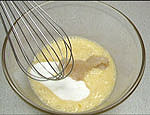
Beat the eggs and add the sugar. Mix until the mixture whitens.
Add the honey and mix until it has completely nblended in.
Add oil and mix.
Add bicarbonate sodium and mix.
Add mirin and mix.

-Add half of flour and mix well.
Add other half and mix well.

-Add water and mix. The amount of water might vary with the kind of flour.
Experiment!

-Heat a frypan over a medium fire first.
take frypan off fire.
Lower fire.
Once the frypan has cooled down bring over the fire again.
Wipe it with a kitchen paper soaked with salad oil.
Wipe off excess oil if necessary.

-Pour pancake mixture. Bear in mind that the size of the panckes must be the same. The amount, whatever it is must be the same. Choose your ladle/spoon well beforehand!

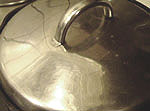
-Cover with lid.

-When bubbles have appeared across the surface turn the pancake over.

-The very minimum of oil will garantee an even cooking!

-Too much oil and your pancake will have that look!

Sandwich sweetmeats/anko between two pancakes and serve hot.

Once cooled down you may deep-freeze them wrapped in cellophane paper.

A perfect look!

RECOMMENDED RELATED SITES
Not-Just-Recipes, Bengal cuisine, Cooking Vegetarian, Frank Fariello, Gluten-free Vegan Family, Meatless Mama, Warren Bobrow, Wheeling Gourmet, Le Petit Cuisinier, Vegan Epicurean, Miss V’s Vegan Cookbook, Comestiblog, To Cheese or not To Cheese, The Lacquer Spoon, Russell 3, Octopuspie, Bread + Butter, Pegasus Legend, Think Twice, The French Market Maven

Please check the new postings at:
sake, shochu and sushi

—————————————-
日本語のブログ
—————————————-

Today’s Lunch Box/Bento (’10/07)

“You must eat more fish!” said the Missus this morning.
Alright, I love any fish as sushi or sashimi, but when it comes to cooked fish, The Japanese tend to include too much salt for my own liking with the result of emphasizing the “fishy smell and taste”.
I suppose I will have to hold myself on a leash for some time to come!LOL

The positive side of this morning’s (grumpy) conversation is that the Missus is planning to buy a cedar wood bento box for better presentation!

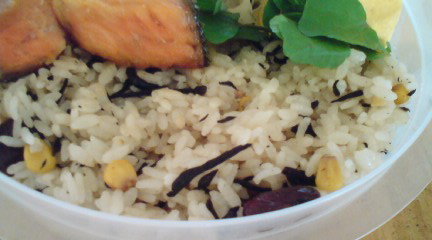
Today’s rice was her specialty: Steamed together with hijiki/sweet seaweed and tinned beans and their juice. It does make for good diet balance and colours.

My compulsory tamagoyaki/Japanese omelette, crucnhy sauteed renkon/lotus root and a sprig of fresh cress for the looks and Vitamin C.

Mini tomatoes for more Vitamin C, Na no Hana/Rape flowers, boiled and seasoned with sesame sauce and seeds for iron, and the fish: salted salmon the Missus fried with soy sauce and other seasoning.

And more Vitamin C with Benihoppe/red cheeks strawberry from Shizuoka and kiwi fruit.

Well-balanced bento, I agree.

RECOMMENDED RELATED SITES:
Warren Bobrow, Bread + Butter, Zoy Zhang, Hungry Neko, Think Twice, Frank Fariello, Mangantayon, Hapabento, Elinluv Tidbit Corner, Tokyo Terrace, Maison de Christina, Chrys Niles,Lexi, Culinary Musings, Wheeling Gourmet

Please check the new postings at:
sake, shochu and sushi

—————————————-
日本語のブログ
—————————————-

Vegan Japanese Cuisine: Tomatoes marinated in Sweet Vinegar

Like the Aubergines/Eggplants, Tomatoes are available all year round!

Here is a very simple and healthy recipe that anyone can use and eat at will!

Tomato No Amazu tsuke/Tomeatoes marinated in sweet vinegar!

INGREDIENTS:

-Tomato: 250 g
-Onuon: 15 g (finealy chopped)
-Celery: 10 g (finely chopped)
-Coriander: to taste (fresh and finely chopped

Marinade:
-Sugar: 2,1/2 tablespoons
-Rice vinegar: 50 ml/cc
-Water: 100 ml/cc

RECIPE:

-Pour allthe marinade ingredients in a saucepan and heat until just before boiling point. Switch off fire, let cool completely and chill.
Chill chopped onion, celery and coriander inside the fridge.

-Plunge the tomatoes in hot water, then ice-cold water and peel.
Cut into small enough pieces and add them to the marinade. Chill inside fridge.

-Serve tomatoes with chopped vegetables on topas shown in above picture.

You may add optional chopped vegetables and leaves.
As for salt ot spices I would experiment very carefully!

RECOMMENDED RELATED SITES
Not-Just-Recipes, Bengal cuisine, Cooking Vegetarian, Frank Fariello, Gluten-free Vegan Family, Meatless Mama, Warren Bobrow, Wheeling Gourmet, Le Petit Cuisinier, Vegan Epicurean, Miss V’s Vegan Cookbook, Comestiblog, To Cheese or not To Cheese, The Lacquer Spoon, Russell 3, Octopuspie, Bread + Butter, Pegasus Legend, Think Twice, The French Market Maven

Please check the new postings at:
sake, shochu and sushi

—————————————-
日本語のブログ
—————————————-

Vegan Japanese Cuisine: Marinated Aubergines/Egg Plants

Aubergines/egg plants are available all year round and are so versatile.

Here is a simple recipe for vegans and vegetarians to expand on:
Marinated Aubergines!

INGREDIENTS: for 2~3 persons

-Aubergines/egg plants: 3
-Garlic: 1 clove (thinly sliced)
-Capsicum/red chili pepper: 1 (Cut into thin rings)
-Wine vinegar: 1 tablespoon
-Olive Oil (EV): 3 tablespoons
-Mint leaves

RECIPE:

Cut the aubergines into 5 mm thick slices.
line them in a dish with salt.
After 15 minutes, the aubergines should have expelled enough water.
Wipe the aubergine slices with some kitchenpaper.
Sprinkle with salt and deep-fry.

-In a dish spread the aubergines on top of each other. Place the thin garlic slices over the top layer. Place the thin rings of capsicum over the garlic. Sprinkle the whole with wine vineagar and olive oil. Place plenty of mint leaves over the top.
Chill thoroughly inside the refrigerator.
Mint leaves might change colour with the wine vinegar. You may add them last when you serve the aubergines.

You may add more garlic slices in between the aubergines layers for stronger taste.

Serve as shown in above picture.

Easy again, isn’t it?
Great with beer!

RECOMMENDED RELATED SITES
Not-Just-Recipes, Bengal cuisine, Cooking Vegetarian, Frank Fariello, Gluten-free Vegan Family, Meatless Mama, Warren Bobrow, Wheeling Gourmet, Le Petit Cuisinier, Vegan Epicurean, Miss V’s Vegan Cookbook, Comestiblog, To Cheese or not To Cheese, The Lacquer Spoon, Russell 3, Octopuspie, Bread + Butter, Pegasus Legend, Think Twice, The French Market Maven

Please check the new postings at:
sake, shochu and sushi

—————————————-
日本語のブログ
—————————————-

Japanese Cuisine: Taro & Chicken Stew

Taro/sato imo are a very eclectic vegetable. Like potatoes, they can be cooked with almost anything!

ere is a simple very Japanese recipe:

Taro & Chicken Stew!

INGREDIENTS: For 3~4 people

-Taro/sato imo: 400 g
-Chicken breast: 1
-Japanese sake: 1 tablespoon
-Salt: to taste

-Sugar: 2 tablespoons
-Japanese sake: 2 tablespoons
-Soy sauce: 2 tablespoons

RECIPE:

-First cut the chicken into bits-sized pieces. Marinate for a while in Japanese sajke and a little salt.

-Peel taro/sato imo and cut into bite-sized pieces.
Sprinkle with a little salt, than wash thoroughly.

-In a saucepan pour some oil (not included in above ingredients) and heat. Fry the marinated chicken until it has changed colour.

-Add the taro/sato imo. Lightly fry until the oil has covered all the taro/sato imo. Add sugar, Japanese sake and soy sauce. Bring to boil first, then lower fire to low. Cover with lid. Stew for 15~20 minutes until taro/sato imo are soft.

-Stir from time to time. When you are satisfied with the tenderness of the taro/sato imo, it is ready to serve!

-Place in a dish and eat while hot.
Decorate/season with a few sprigs or leaves.

NOTE:

-There is no need to add water.
-Season with a little sesame oil at the end!

RECOMMENDED RELATED SITES:
Bread + Butter, Comestilblog, Greedy Girl, Bouchon For 2, Zoy Zhang, Hungry Neko, Mangantayon, Elinluv Tidbit Corner, Maison de Christina, Chrys Niles, Lexi, Culinary Musings, Eats and Everything, Bite Me New England, Heather Sweet, Warren Bobrow, 5 Star Foodie, Frank Fariello, Oyster Culture, Ramendo, Alchemist Chef, Ochikeron, Mrs. Lavendula, The Gipsy Chef, Spirited Miu Flavor, Wheeling Gourmet, Chef de Plunge, Sushi Nomads, Island Vittles, Jefferson’s Table

Please check the new postings at:
sake, shochu and sushi,
—————————————-
日本語のブログ
—————————————-

Japanese Seasonal Fish: Ishigarei/Stone Flounder

Ishigarei, イシガレイ、石鰈 in Japanese, is another popular flatfish/flounder in theis country. For the specialists the Englidh name is stone flounder, and its Latin name Kareus bicoloratus. Interestingly enough these fishes are commonly called flatfishes in Englis, wheeras the Jaapnese write them as “leaf Fishes”!

In Japan, depending upon the region it will be called other names, such as Ishimochi, Ishimochigarei or Shirogarei.
Their season is mainly in Summer in Hokkaido and Eastern Japan, although they might appear a lot earlier in Shizuoka.

Ishigarei is considered the best of all flounders in this country. People generally avoid to catch them during the female egg incubation, but the same egg-bearing fish are a delicacy in Tokyo.

Always choose “lively” specimens when buying them as the taste will soon deteriorate if the fish is not dressed quickly first.
If angler-friend of yours calls on the phone with one of them, don’t discuus and buy the fish!

Stone flounders make for such superlative sashimi that it becomes a bit of a waste to consume in another way.

But who would pass such a Japanese-style carpaccio?

Or an Italian Carpaccio?

Sushi lovers will appreciate it as a sushi nigiri!

A truly extravagant sushi nigiri display. Eat it quickly!

Alright, you were not lucky enough to get it absolutely fresh.
In this case simmer it the Japanese way as Ishigarei Ni (Ni stands for simmer) with soy sauce, sake, mirin and ginger!

Or do it the Italian way with olive oil and dry tomatoes!

RECOMMENDED RELATED SITES:
Bread + Butter, Comestilblog, Greedy Girl, Bouchon For 2, Zoy Zhang, Hungry Neko, Mangantayon, Elinluv Tidbit Corner, Maison de Christina, Chrys Niles, Lexi, Culinary Musings, Eats and Everything, Bite Me New England, Heather Sweet, Warren Bobrow, 5 Star Foodie, Frank Fariello, Oyster Culture, Ramendo, Alchemist Chef, Ochikeron, Mrs. Lavendula, The Gipsy Chef, Spirited Miu Flavor, Wheeling Gourmet, Chef de Plunge, Sushi Nomads, Island Vittles, Jefferson’s Table

Please check the new postings at:
sake, shochu and sushi,
—————————————-
日本語のブログ
—————————————-

Japanese Seasonal Fish: Tachiuo/Scabbard Fish

Scabbard Fish or “Tachiuo” is a summer fish very popular in Japan in spite of its great length.
Tachiuo in Japanese, 太刀魚, means “Great Sword Fish”, not the scabbard!
The Suruga Bay being warmer than the rest of Japan, we have scabbard fish in the dead of winter.
Like other fish it owns other names: Tachi (not in Hokkaido, where the word means ” Cod sperm sacs”!), Shirada and Tachinouo.
It is mainly caught off Wakayama, Ehime and Oita Prefectures.
In Shizuoka it is both caught by line or net.
In 1999, 37,000 tonnes were caught in the whole of Japan, but it fell to 23,000 tonnes in 2000.
It is also imported from Korea and China, although the fish is slightly different from the Japanese variety. More than half of imported fish are eaten west of Kansai.

Scabbard Fish Sashimi Plate

Tachiuo is bot popular raw and cooked.
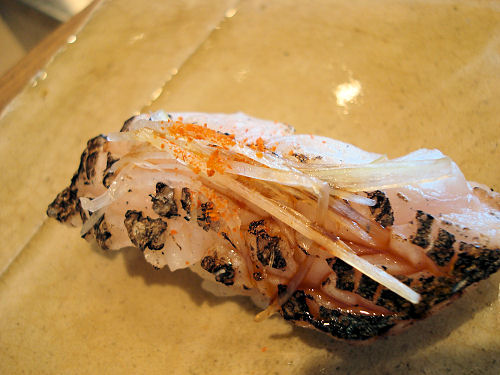
Raw, it is usually served with ponzu instead of soy suce and topped with momijioroshi/grated daikon mixed with chili pepper.

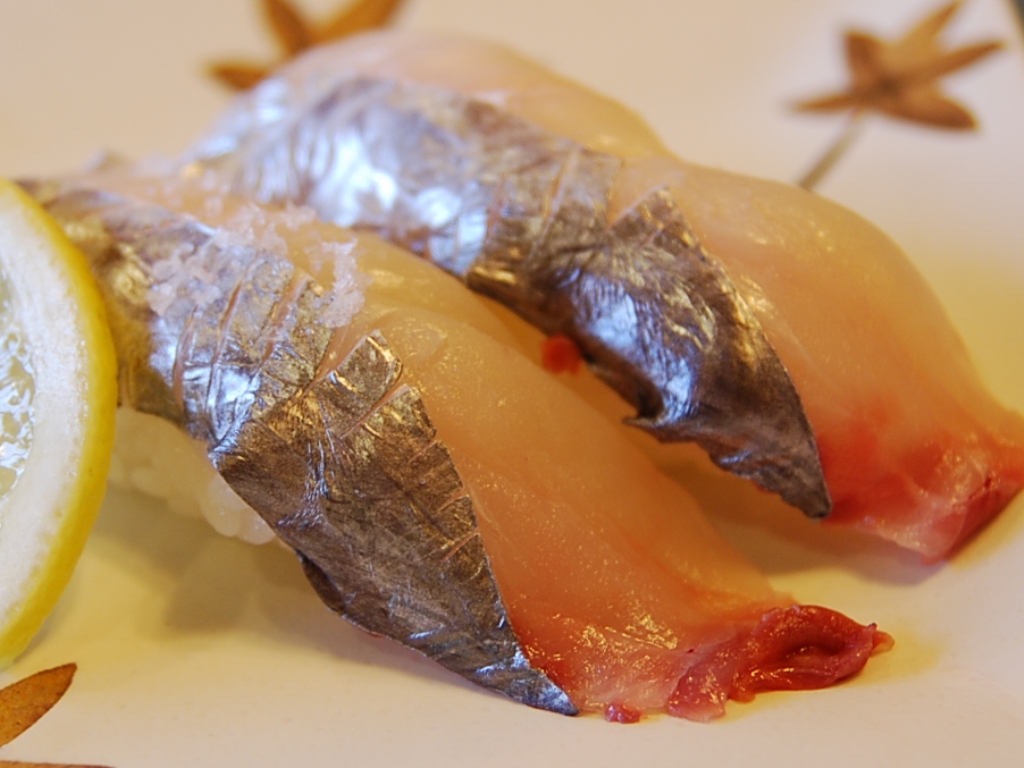
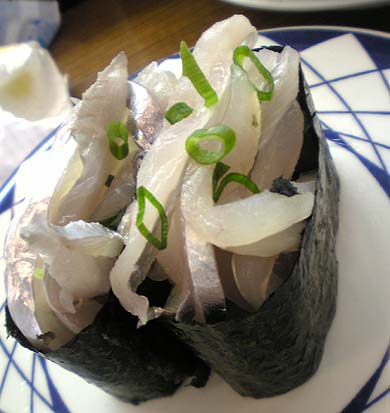
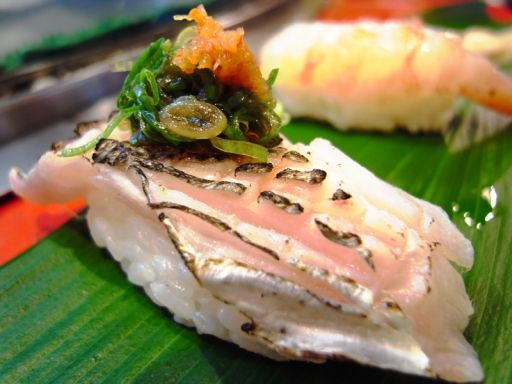
Raw, it is of course popular as sushi nigiri,

cut into fine strips and served as gunkan.

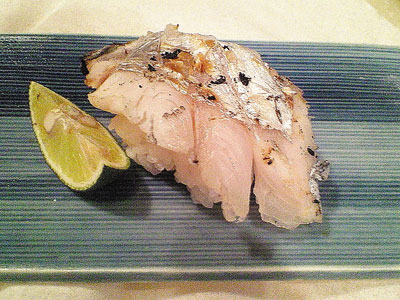
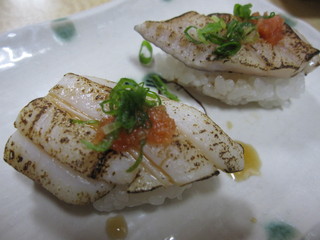
As sashimi I personally prefer it “aburi” (slightly grilled) with a dash of ponzu and some momijioroshi (grated daikon with chili pepper), or with some finely cut vegetables.

The same applies for sushi nigiri as I like my scabbard fish a little grilled first.

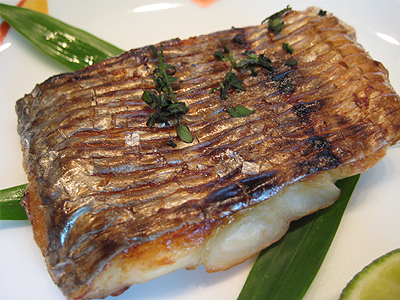
Making incisions into the fish before grilling it will make for another prsentation!

It does not have to be complicated to be yummy!

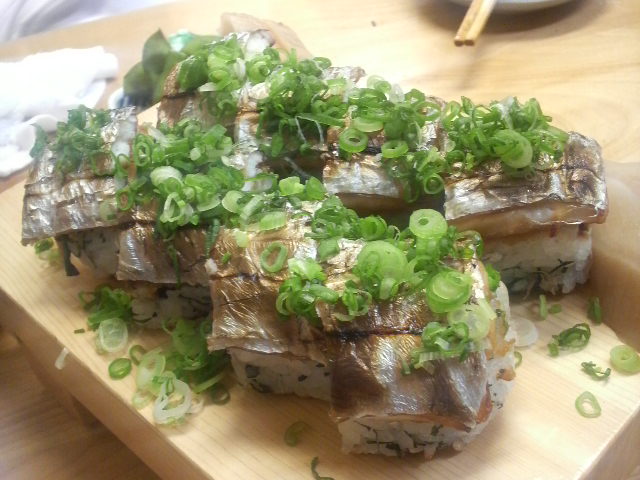
In the Kansai/western Japan region it is very popular in oshizushi/pressed sushi thanks to its flat and long shape.

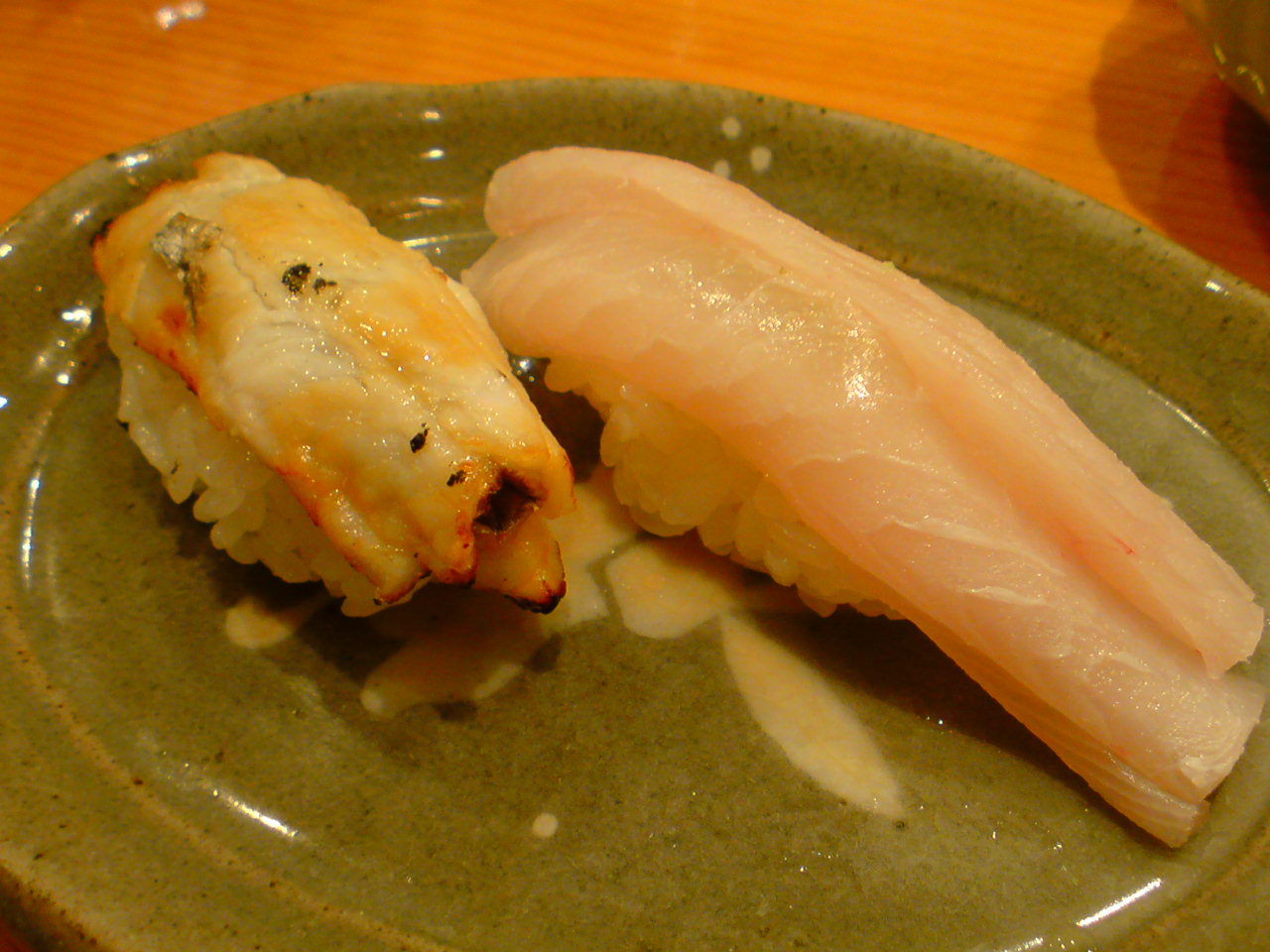
How about a combination of both raw and aburi style sushi nigiri?

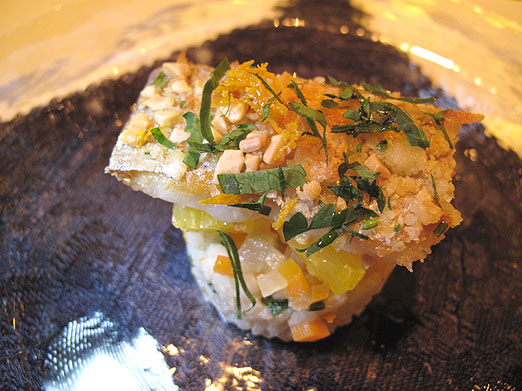
How about an Italian-style sushi nigiri?

As for the cooked scabbard fish, grilling is the most commoon way here in Japan where it is served as simple and healthy food at many meals.

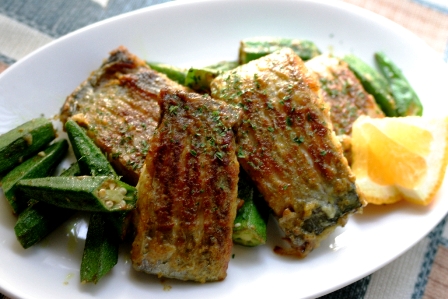
Sauteed with colourful vegetables (okra) make for great presentation in spite of the simplicity of the dish!

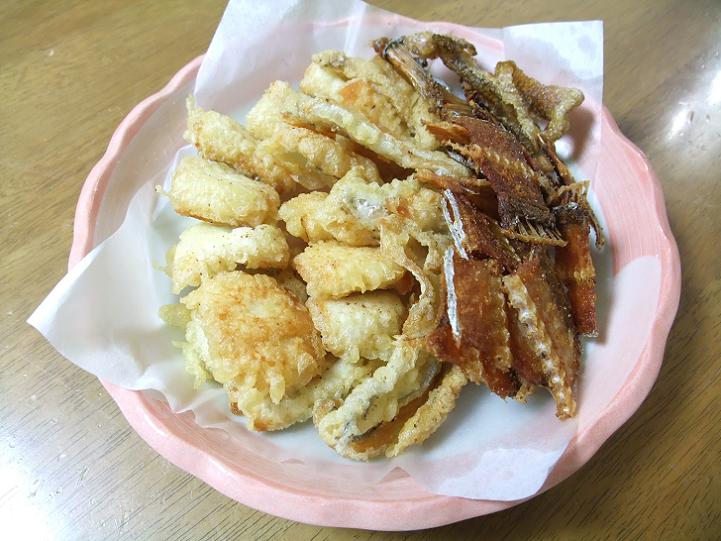
Deep-frying is also very popular especially with its bones when it is very fresh. Such deep-fried bones make for one vital source of calcium for the Japanese.

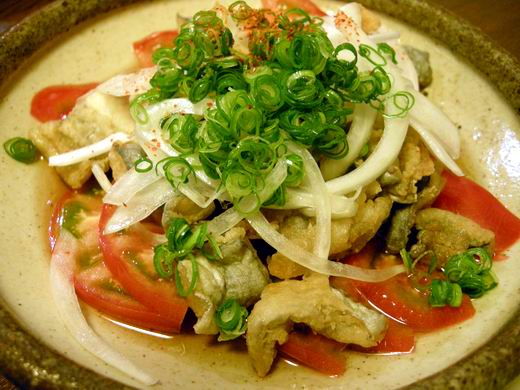
Fried scabbard fish salad.

Cooked, it is a very versatile fish and easy to prepare!

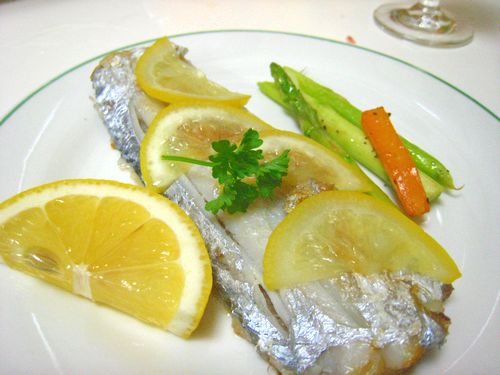
Grilled with lemon!

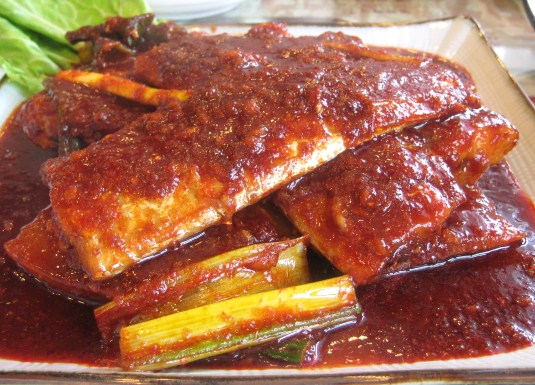
Cooked with chili peppers and miso paste, it makes for an intriguing sweet and hot combination!

RECOMMENDED RELATED SITES:
Bread + Butter, Comestilblog, Greedy Girl, Bouchon For 2, Zoy Zhang, Hungry Neko, Mangantayon, Elinluv Tidbit Corner, Maison de Christina, Chrys Niles, Lexi, Culinary Musings, Eats and Everything, Bite Me New England, Heather Sweet, Warren Bobrow, 5 Star Foodie, Frank Fariello, Oyster Culture, Ramendo, Alchemist Chef, Ochikeron, Mrs. Lavendula, The Gipsy Chef, Spirited Miu Flavor, Wheeling Gourmet, Chef de Plunge, Sushi Nomads, Island Vittles, Jefferson’s Table

Please check the new postings at:
sake, shochu and sushi,
—————————————-
日本語のブログ
—————————————-
Gastronomic Cycling in Shizuoka (3)

Eating Veal Kidneys at Pissenlit!

Venturing into side streets might be tantamount to tempting fate in some countries, but in Japan, and particularly in Shizuoka, it is more like opening an intriguing Pandora box!

The side street is called koya Machi and is parallel to the traditional merchant artery called Gofuku-cho.

Japan does not have fire hydrants but fire “holes”. Keep an eye at ground level and you are bound to discover some interesting “manhole covers”!

Koya Machi Street entrance in day time.

Any city in Japan shows two distinctive faces in day time and at night.
The same spot might look drab and even decrepit in the afternoon but come dusk and you enter another world.

Koya Machi entrance at dusk.

Koya Machi Street starts across from Shizuoka JR Station and is only a few hundred metres long (the continuing and busy Ryogae Street is much, much longer) but pack enough for investigation.

At the very beginning on the left side stands Fugetsuro, the abode of the klast Shogun of Japan, Tokugawa Yoshinobu who retired there after the failed Bakufu Revolt.

It has then been transformed into an expensive restaurant-hotel by his descendants. It surrounds the best private Japanese garden in the city, complete with pond, bridge and guest house.

View of the garden from the Ukidono Izakaya.

One of the annexes was transformed seven years ago to accomodate a better-class izakaya, Ukidono, but still cheaper than the unaffordable Fugetsuro Restaurant, a renown, if somewhat old-fashioned, kaiseki restaurant.

Ukidono is worth paying a visit because it has a very extensive list of Shizuoka sake!

Just across the street is Lavigne Wine Shop.

Lavigne seels exclusively French wine you can also savour at the standing pay cash on delivery bar until 10:00 p.m.!

Walking past Lavigne, you will see this small curry restaurant with a somewhat strange name, Kabocha, written as “Kabo Cha/Kabo Tea” instead of the real name, “Kabocha/南瓜/Southern Gourd”.

just a little further up stands the oldest Izakaya (founded in 1922!), Takano!

Notice the real flower arrangement outside!

More real flowers outside!

The entrance at night.

Takano has recently been voted one of the best true izakayas in Japan!
It serves true local food such as sakuraebi kakiage/sakura shrimps tempura.

The present generation speaks fluent English!

The sashimi plate is simply a bargain!

And the Japanese sake is exclusively from Haginishiki Brewery in Shizuoka City!

Go across the street again and you will find Life Time, the other place owned by Fugetsuro.
It is a cafe opening late until night with a selection of drinks (alcoholic and non-alcoholic) and the jazz concert place in Shizuoka City!

Life Time on a cold winter night.

On the right at the next corner, stands a thin building.
on the second floor you will find an izakaya called Ichi. Never been there but must be very old, because…

the sake, Kikugenji/菊源氏, advertised on their sign was brewed by a brewery called Toyo Shuzo (Izu eninsula), which disappeared more than 10 years ago!

The sign makes clear you have to climb the stairs up to the second floor to Ichi in case you don’t know!

Ichi at night.
The sushi bar on the first floor has not much interest unfortunately.

A litle further up and you notice people busy delivering bottles of sake and beer to this busy and cheap izakaya.

The same place at night.
The name means “Showa Era Hormones”! (hormones are actually animal intestines).

Another ubiquitous “Ramen Shop”.

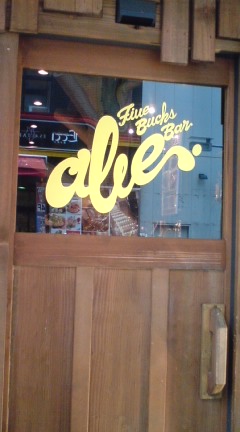
“Five Bucks Bar” or “Fine Bucks Bar”?

I wonder what customers drink there!

Beware! The larger and the most colourful the poster, the more forgettable food!

back again to the Showa Hormones Izakaya for more investigation!

I found this “notice” pinned on the wall at eye-level in the men’s toilets.
The notice says:
“Genki no nai Otoko ha mamushi sake!”/Viper Sake for people (men) not feeling energetic!”
This is real sake in which a snake was marinated!
The note says above that you should be careful not to drink too much, or you will suffer from nosebleed (Japanese men supposedly go through this predicament when their libido is overstimulated!).
Actually, orders are limited to a single glass. It had better work as it costs a whopping 22 US$!
Last, but not least, as if men needed more incentive, they added a picture of a “well-endowed” man (face not shown!) wearing snake skin pants!

N.B.: A lady friend told me that there was nothing hanging on the wall inside the ladies’ facilities!

More seriously, the place also serves “oden/Japanese pot au feu”. Shizuoka Oden is famous all over Japan!

Behind the place I found this notice.
It says, “Open form 15:00. The earlier you come, the fresher the food!”
Thank you for telling us!

The same place at night. Empty…. I wonder why….

On the first floor of the next building stand this sign introducing no less than 26 watering holes!

Some names are worth a second look!
Oratoire, in French! I wonder what people are visiting this place for!

Lay back maybe?

Back across the street you will find a horror show of a restaurant (?) sign! Interesting grammar notwithstanding…

The sign in question to prove I’m not kidding you!
Now, for the horror show!
Take your time and read slowly!

Aargh!

Tears….

Blast me!

I definitely trust you!

At night….. empty…..

Next: Ryogae Street!

RECOMMENDED RELATED SITES:
Bread + Butter, Comestilblog, Greedy Girl, Bouchon For 2, Zoy Zhang, Hungry Neko, Mangantayon, Elinluv Tidbit Corner, Maison de Christina, Chrys Niles, Lexi, Culinary Musings, Eats and Everything, Bite Me New England, Heather Sweet, Warren Bobrow, 5 Star Foodie, Frank Fariello, Oyster Culture, Ramendo, Alchemist Chef, Ochikeron, Mrs. Lavendula, The Gipsy Chef, Spirited Miu Flavor, Wheeling Gourmet, Chef de Plunge, Sushi Nomads, Island Vittles, The French Market Maven, Tokyo Through The Drinking Glas, Palate To Pen, Tokyo Foodcast, Good Beer & Country Boys, Tokyo Terrace, Think Twice, Jefferson’s Table

Please check the new postings at:
sake, shochu and sushi,
—————————————-
日本語のブログ
—————————————-