Tag Archives: 日本

Today’s Lunch Box/Bento (’09/25)

bento-09-04-21a

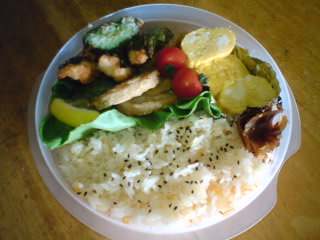
For today’s lunch box, the Missus decided to make it very “traditional”!

bento-09-04-21b

Even the lunch box was tradional lacquerware!

bento-09-04-21c

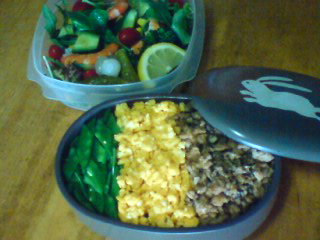
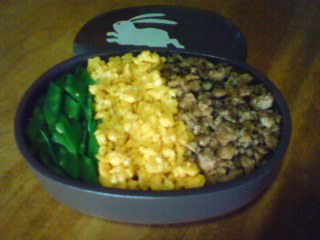
The three-coloured style bento is a classic here:
The green colour is achieved with boiled flat ingenmame/green string beans cut at a slant and small enough to form a “bed of green”.
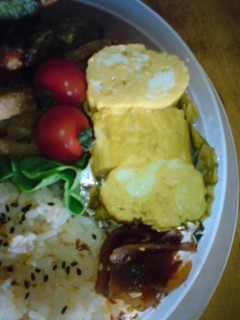
The yellow part is iri-tamago, a form of sweet Japanese scrambled eggs.
As for the brown part, it is made up of tori-soboro. Minced chicken was first seasoned, including black sesame seeds, and then fried as to form small “clumps” and then laid on top of the rice, which had been steamed with a seasoning (the Missus wouldn’t tell me what!)

bento-09-04-21d

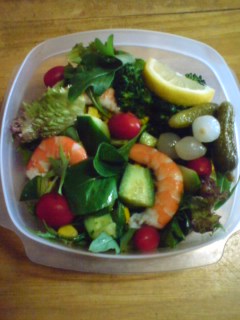
As for the salad, the Missus made a bed of mixed herbs and added cut cucumber, Ameera Rubbins mini tomatoes, corn, boiled broccoli, boiled shrimps and French pickled cucumbers and mini onions.

I might ask for that again soon!

Please check the new postings at:
sake, shochu and sushi

—————————————-
日本語のブログ
—————————————-

Today’s Lunch Box/Bento (’09/24)

bento-09-04-19a

The Missus has this peculiar habit of teasing me (very) early in the morning by asking me:
-How would you like your rice for your bento today?
-Well,…
-You should have answered at once, since you know I was going to cook rice since last night!
-???…

Then, as I was finishing my coffee:
-How big do you want it?
-Just the usual!
-All right,…

I should have known better, because she did come with a big one!

bento-09-04-19b

She steamed the rice with shredded carrots and served it with black sesame seeds and some home-made sweet ginger pickles.

bento-09-04-19c

She has just bought a new large tamagoyaki fry pan, so I know she will cook my favourite bento item for some time. A couple of Shizuoka-grown mini-tomatoes were added.

bento-09-04-19d

Then she came up with deep-fried renkon/lotus roots, Chicken sasami/breast fillets deep-fried with shiso/perilla leaves dry seaweed.. Some lettuce and lemon finished the lot.

bento-09-04-19e

As for the salad (-eat it before the rice!, she ordered):
On lettuce leaves, cucumber, boiled brocoli, Japanese processed cheese, walnuts and strawberries!

Please check the new postings at:
sake, shochu and sushi

—————————————-
日本語のブログ
—————————————-

English Sake Brewer Master in Japan: Phillip Harper (3)

tetsukezu

A lot has been written and will be written both here in Japan and abroad on Phillip Harper as he has, with the likes of John Gauntner, Timothy Sullivan and Melinda Joe, established himself as one of the references proving once for all that Japanese sake has at last expanded beyond the confines of this island for the good of all.
It is only a question of time when sake breweries will become a part of life like wine and beer abroad as demonstrated by the five existing branches of large Japanese breweries in the United States employing a full American staff and Moto I, the entirely owned and run American Sake Brewery.

harper-1

What makes the difference is that Phillip has gone as far as becoming the only foreign sake “toji”/master brewer in a Japanese brewery, namely Ki no Shita Brewery in Kyoto Prefecture!
An Oxford graduate hailing from Cornwall, it took him 18 years of sheer courage and guts to break into the closely guarded world of Japanese sake to gain recognition and earn his master brewer status in 2001.
The media (including The Los Angeles Times) finally take good note of his achievements when he was formally asked by Owner Yoshito Kinoshita to become his new Master Brewer (incidentally Phillip had already held that position in Osaka for two years).

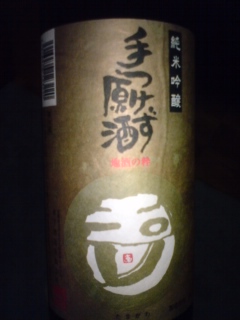
This the third of the three bottles I received from his fans in Tokyo. That particular one was sent to me by Melinda Joe.

Kinoshita Brewery, Tamagawa, Tetsukezu Genshu Junmai Ginjo
Rice: Gohyakumangiku
Rice milled down to: 60%
Alcohol: 18~19 degrees (high as it is a genshu/unaltered alcohol contents)

Clarity: Very clear
Colour: Transparent
Aroma: Fruity, elegant. Strawberries, apricot.
Body: Velvety
Taste: Strong attack backed by alcohol.
Shortish tail. Warms up back of the palate.
Complex. Junmai tingle.
Fruity and dryish: apricots with hints of strawberries, almonds and macadamia nuts.
Elegant.
Dry almonds making a regular comeback.
Holds its own well with food, but revealing different facets, especially strawberries with a dry finish.

Overall: Elegant and easy to drink in spite of high alcohol contents.
For once, similar to Shizuoka-brewed sake.
Combines fruitiness and dryness into a remarkably palatable (eminently drinkable) creation!

PHILLIP’S COMMENTS:

The specs for that sake are:

SMV +4, Acidity 1.7, Amino Acids 1.5, Alcohol 18.7.

It was brewed with the same organic rice used to make the Konotori kimoto you reviewed the other day – at 60% polish this time.
Though it doesn’t seem to have made an impression on you, that sake isslightly effervescent. Bubbly sake is usually made either by refermenting in the bottle (like Champagne…), or injecting gas into the sake itself. Oh,and a few people do a kind of sparkling wine thing with secondary fermentationin tanks. Tetsukezu bubbles are different, because they derive from the originalfermentation in the mash itself. We trap them in by a secret method that I can’t
reveal, except to say that it is as high-tech as all the other stuff we do at Tamagawa.

Regards, Philip

———————————
Must-see tasting websites:
-Sake: Tokyo Through The Drinking Glass, Tokyo Foodcast, Urban Sake, Sake World
-Wine: Palate To Pen
-Beer: Good Beer & Country Boys, Another Pint, Please!
-Japanese Pottery to enjoy your favourite drinks: Yellin Yakimono Gallery
———————————————–
Please check the new postings at:
sake, shochu and sushi

—————————————-
日本語のブログ
—————————————-

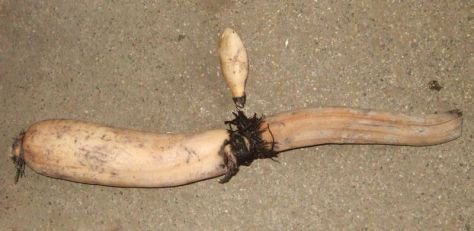
Vegetables Facts and Tips (11): Lotus Roots/Renkon

lotus-root1

In Japan we are at the end of Lotus Roots season, but eat them all year round!
Lotus roots come from a plant called Nelumbo nucifera, also known by a number of names including Indian lotus, sacred lotus, bean of India, or simply lotus. This plant is an aquatic perennial. Under favorable circumstances its seeds may remain viable for many years.
A common misconception is referring to the lotus as a water-lily (Nymphaea), an entirely different plant.

Native to Greater India and commonly cultivated in water gardens, the lotus is the national flower of India and Vietnam.

The flowers, seeds, young leaves, and “roots” (rhizomes) are all edible. In Asia, the petals are used sometimes for garnish, while the large leaves are used as a wrap for food. In Korea, the leaves and petals are used as a tisane. Yeonkkotcha (연꽃차) is made with dried petals of white lotus and yeonipcha (연잎차) is made with the leaves. The rhizome (called ǒu (藕) in pinyin Chinese, ngau in Cantonese, bhe in Hindi, renkon (レンコン, 蓮根 in Japanese), yeongeun (연근) in Korean is used as a vegetable in soups, deep-fried, stir-fried and braised dishes. Petals, leaves, and rhizome can also all be eaten raw, but there is a risk of parasite transmission (e.g., Fasciolopsis buski): it is therefore recommended that they be cooked before eating.

FACTS:
-Season: September~December in Japan.
-Beneficial elements:
Lotus roots have been found to be rich in dietary fiber, vitamin C, potassium, thiamin, riboflavin, vitamin B6, phosphorus, copper, iron and manganese, while very low in saturated fat.
Various parts of the lotus are also used in traditional Asian herbal medicine.

TIPS:

-Choose specimens with a clear white cut section. There should not be any black spots.
-Use large specimen as they are easier to cut and use.
-To prevent oxydising, warp cut specimen into wet kitchen paper.
-Add vinegar to water when bolingthem to keep them white.
-The easiest way to peel them is to use a potato peeler!

COOKING:

The stamens can be dried and made into a fragrant herbal tea called liánhuā cha (蓮花茶) in Chinese, or (particularly in Vietnam) used to impart a scent to tea leaves. The lotus seeds or nuts (called liánzĭ, 蓮子; or xian liánzĭ, 鲜莲子, in Chinese) are quite versatile, and can be eaten raw or dried and popped like popcorn, phool makhana. They can also be boiled until soft and made into a paste, or boiled with dried longans and rock sugar to make a tong sui (sweet soup). Combined with sugar, lotus seed paste becomes one of the most common ingredient used in pastries such as mooncakes, daifuku, and rice flour pudding.

Japanese popular Renkon dishes:

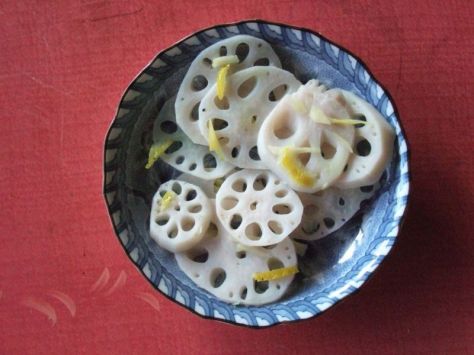
lotus-root-nimono

“NIMONO”

lotus-root-sumono

“SUMONO”

lotus-root-kimpira

“KIMPIRA”

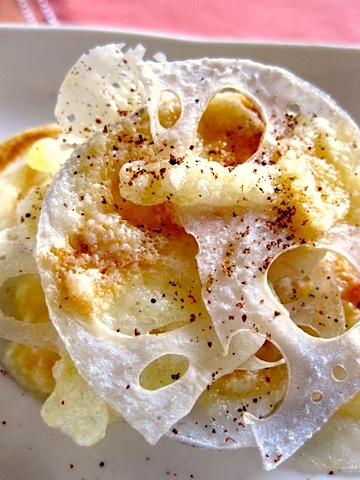
lotus-roots-chips

“CHIPS”

Please check the new postings at:
sake, shochu and sushi

—————————————-
日本語のブログ
—————————————-
BOUQUET’s Classic Cakes (2): Caramel Mousse

bouquet-car1

Bouwuet has long been a favourite of mine and one of the oldest cake-shops stiil alive in Shizuoka City. It could actually be called an institution here!
The only place willng to bake Gateau Basque, it regularly comes up with classics and novelties.
Since I had to find a cke for a student of mine I chose this particular cake.
The name is a bit of a misnomer as it is far more sophisticated than it sounds.

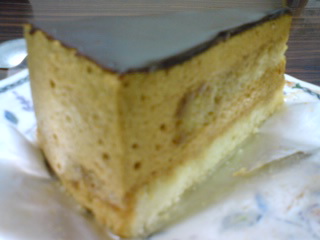
bouquet-car2

A thin layer of sponge made for the base on which was spread a frist layer of Caramel Mousse. A second round and smaller spong circle was then laid in the middle and imbibed with a syrup cotaining pear liqueur.
It was then “filled up” with Caramel Mousse. A thun layer of chocolate sauce was added for the last colour finish and protect the Mousse!

To savour with a great coffee!

Bouquet
420-0839 Shizuoka City, Aoi Ku, Takajo machi, 1-8-6
Tel. & fax: 054-2530349
Open: 11:00~20:00
11:00~19:00 (Sundays & National Holidays)
Closed on Wednesdays

Please check the new postings at:
sake, shochu and sushi

—————————————-
日本語のブログ
—————————————-

Today’s Lunch Box/Bento (’09/23)

bento-09-04-16-a

Today Missus was still recovering from a bad fit of viral flu and it was her day-off from work. Moreover I was having a busy day. We agreed that a lunch box was on order, the more for it that it would become part of the Missus’ lunc, too!

bento-09-04-16-b

I hadn’t been eating much for the last three day, so she made quite a big bento!

bento-09-04-16-c1

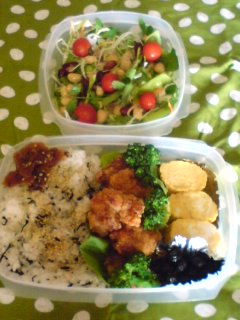
The “main dish” consisted of some of my favourites: Deep-fried garlic chicken (thigh parts off the bone) and tamagoyaki/Japanese omelette with boild brocoli, lettuce and home-stewed sweet blak beans.

bento-09-04-16-d

The steamed rice had been mixed with “hijiki/sweet seawedd” after cooking and sprinkled with plenty of white sesame seeds. The Missus added some pickled ginger as well.

bento-09-04-16-e

As for the salad, on a bed of chopped veg, canned beans, mini tomatoes, fresh cress and boiled pois gourmands/green peas in their pod.

It did take me some time to eat it all, but who am I to complain! LOL

Please check the new postings at:
sake, shochu and sushi

—————————————-
日本語のブログ
—————————————-
Shizuoka Shochu Tasting: Kogane-Danshaku by Sugii Brewery

kogane-danshaku

As a general rule I keep Shochu tasting postings to my other blog, Shizuoka Shochu, but for once I thought these tasting notes could help non-Japanese shochu lovers how to report on their favourite drink.
Please note that my style is very dry. Some will have have a more lyrical manner, and the better for it! LOL

Sugii Brewery in Fujieda City has come up with yet another creation of theirs! But once again, it is a “limited edition”. You do have to keep all your senses alert to discover these bottles.
Unlike Kagoshima Prefecture in Kyushu Island, Shizuoka-made shochu are not only exotic and extravagant, but rare and slightly more expensive. The labels certainly become collectors’ items!

Sugii Brewery: Kogane-Danshaku Shochu

Ingredients:
Kogane (Satsuma potato variety) and Danshaku (normal potato variety), both grown in Shizuoka Prefecture
Yeast: Shizuoka NEW-5 (Shizuoka Sake Yeast)
Fermented rice
Contents: 500 ml

Clarity: Very clear
Colour: Transparent
Aroma: Clean, strong, nutty
Taste: Sweetish, clean attack.
Deep roasted nuts.
Shortish tail with a dry finish.
Memory of coffee beans.

Overall: Unusual, clean, elegant shochu with lots of character and facets.
Combination of Satsuma yams and potatoes out of the ordinary! The use of Shizuoka Sake Yeast gives it a very regional flavour!
Best appreciated straight with plenty of ice!

Must-see tasting websites:
-Sake: Tokyo Through The Drinking Glass, Tokyo Foodcast, Urban Sake, Sake World
-Wine: Palate To Pen
-Beer: Good Beer & Country Boys, Another Pint, Please!
Chewy
-Japanese Pottery to enjoy your favourite drinks: Yellin Yakimono Gallery

Please check the new postings at:
sake, shochu and sushi

—————————————-
日本語のブログ
—————————————-
French Pissaladiere: Recipe, History, Facts & Etymology

pissaladiere-w
(Wikipedia)

When Babeth pointed out that my brother’s creation ought to be called something else, I decided to investigate.
I must say that I gladly owe her an apology and will tell Francois to rename it something like “French-style healthy Pizza”!
Being aware of my younger brother’s character, I’m in for some flak from both sides of the World!

Now for Wikipedia’s definition:

[Pissaladiere or Pissaladina (pissaladiera in Provençal, “piscialandrea” in Ligurian) is a type of pizza made in southern France, around the Nice, Marseilles, Toulon and the Var District, and in the Italian region of Liguria, especially in the Imperia district. Believed to have been introduced to the area by Roman cooks during the time of the Avignon Papacy, it can be considered a type of white pizza, as no tomatoes are used. The dough is usually thicker than that of the classic Italian pizza, and the topping consist of: sauteed (almost pureed) onions and anchovies. No cheese is used, again unlike the Neapolitan pizza, however in the nearby Italian town of San Remo mozzarella is added. Now served as an appetizer, it was traditionally cooked and sold early each morning.

Another view held by food specialists is that pissaladiere is not a pizza, but a flat open-face tart garnished with onions, olives, anchovies and sometimes tomato. The etymology of the word seems to be from Old French pescion from the Latin piscis.]

I would tend to believe that Pissaladiere is more a local Provence gastronomic creation, although one must remember that Provence (the name itself could mean province/colony) changed hands many times including those of the Celts, Greeks, Romans and Italians.

Knowing the French propensity for arguments, some will soon (and rightly so) point out that after all, it is only another “poor people’s” food, like bouillabaisse, aligot or fondue (or pizza, or pasta!), which has turned into a fashionable gastronomy with the consequent “evolution”!

This “battle” is not confined to France or Europe but as far as the States as illustrated in the excellent posting by Daria in Paris. But it can also bring people together like Brunsli so funnily described!

Please check the new postings at:
sake, shochu and sushi

—————————————-
日本語のブログ
—————————————-

Pizza: Easy French Pissaladiere

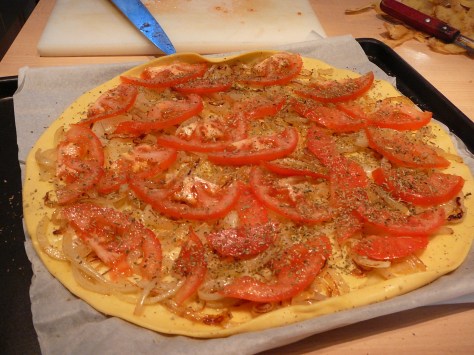
pissaladiere-1

Pissaladiere is the French version of the Italian Pizza.
It originated in southeast France.
The main difference is that it usually makes use for more vegetables and less cheese. Actually if it obviously does not look like a pizza, it can be called a pissaladiere!LOL
The merit of it is that it is usually lighter both in calories and taste.

pissaladiere-2

My youngest brother, Francois, came up with this simple recipe.
As he works for Areva and has to spend a week every month in the States I believe he has been “influenced”!
For the bread base, he used a large frozen filo-style sheet. He first covered it with onions, large shallots and garlic, which he had cut into thin slices and previously fried in olive oil. He then covered them with a generous amount of thinly sliced ripe tomatoes (this was the end of the summer). Plenty of ground black pepper, herbes de Provence (dried aromatic herbs), a little salt and some secret seasoning (up to you there!) and that was it!
Baked into a hot oven to the right crispiness, it made for a great snack with some heady red wine!

Please check the new postings at:
sake, shochu and sushi

—————————————-
日本語のブログ
—————————————-
Vegetables Facts and Tips (10): Egg plants/Aubergines

aubergines-1

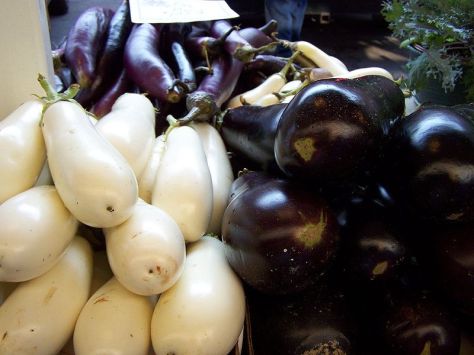
The eggplant, aubergine, or brinjal (Solanum melongena) is a plant of the family Solanaceae (also known as the nightshades) and genus Solanum. It bears a fruit of the same name, commonly used as a vegetable in cooking. As a nightshade, it is closely related to the tomato and potato and is native to India and Sri Lanka.

That for the Wikipedia definition. The word Aubergine is mainly used in Europe. It comes in many shapes, sizes and even colours, but they share the same facts.

FACTS:
-Season: June to September in the Northern Hemisphere, but are available all year round thanks to greenhouse cultivation.
-Main beneficial elements: Potassium, Vitamin C and B1
-90% is water, but the skin contains a lot of polyphenols so useful against aging and arteries cleaning!
It is also of a great help to fight diabetes.

VARIETIES:

As mentioned above, aubergines come in many varieties, but Japa has come up with another interesting kind:
aubergines-mizu
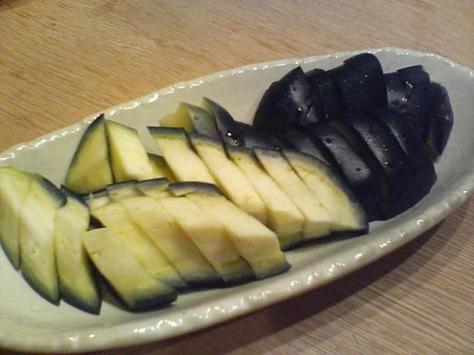
“Mizu Nasu”, litterally “Water Aubergine”
It has the particularity that it can be eaten raw cut and served like sashimi! With miso, pickled plum flesh, wasabi or soy sauce, it opens all kindsof possibilities fro vegans, vegetarians and raw food lovers!

TIPS:

-Choose specimens with a deep colour, bright appearance and comparatively light weight.
-To preserve them, wrap them individually in cellophane paper before storing them in the refrigerator.
-Before cooking them, cut them and leave them in clear water util usage to prevent oxydizing.
If you want to fry them, cut them first and rub them with a lttle salt to take excess water out of them.

Please check the new postings at:
sake, shochu and sushi

—————————————-
日本語のブログ
—————————————-
TAKY’S classic Cakes (8): Framboise

framboise-1

I have just discovered his new creation by talented Takuya Hanai and served to one of my students today.
I have to keep a constant lookout as this talented and still young patissier has a habit to offer new cakes almost every week.

This cake, Framboise, ia reminiscent of Fedora I introduced in an earlier posting.
Also fairly simple in concept, it is nonetheless a small gem:

framboise-2

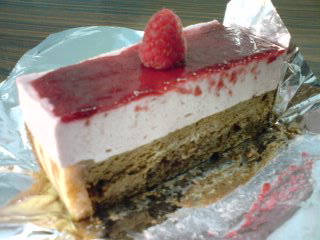
On a thin layer of chocolate chips-studded chocolate sponge, he first lay a layer of chocolate bavarois/mousse, then again, but twice as thick, a framboise/raspberry bavarois/mousse with a final layer of thick Raspberry sauce with a fresh raspeberry for the final touch.
The whole cake is “surrounded” with bicolor sponge for mpre personality.
Breaking through the whole and tasting the combination of the various tastes all at the same time reveals the sublime qualities of this other little marvel!

To appreciate with a great coffee or English tea!

TAKY’S
420-0839 Shizuoka City, Aoi Ku, Takajo, 1-11-10
Tel.: 054-255-2829
Opening hours: 11:00~22:00
Closed on Sundays

Please check the new postings at:
sake, shochu and sushi

—————————————-
日本語のブログ
—————————————-

Today’s Lunch Box/Bento (’09/22)

bento-09-04-13a

Today’s bento was “small” and could become a good suggestion for a small appetite!
The reason? The last few days I overate and overdrank myself and had been physically and mentally (that happens) very busy. When I woke up 5:30 the body just screamed a loud and painful “NO!”. This is a very rare occurrence and I will spare you form the details!

bento-09-04-13b

Only two (fairly big) nigiri/rice balls of freshly steamed rice and shopped fresh ginger covered with white sesame seeds.
Very tasty, actually!

bento-09-04-13c

The very simple salad consisted of my comfort food, tamagoyaki/Japanese omelette, Mini tomatoes, pois gourmands/wholly edible green peas, cress and pepper ham on a bed of chopped veg.

Large enough, I can guarantee you!

Please check the new postings at:
sake, shochu and sushi

—————————————-
日本語のブログ
—————————————-

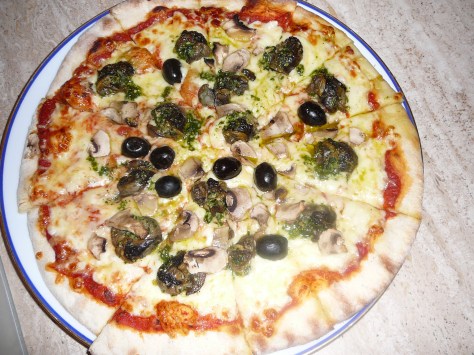
Pizza: Bourgogne-style Escargots Pizza

pizza-escargots

The Italian are not the only ones to make pizzas!
The French do to, and I have this very, very simple recipe for a Bourgogne-style pizza!

Prepare your own pizza dough, it’s so much better. Brush with plenty of tomato sauce (I recommend basil). Place plenty plenty of mozzarella slices all over it.
Next use frozen ready-made (or home-made. A good way to use any leftovers!) escargots with their butter. A few black olives, some ground black pepper, et voila!

Even my American friends won’t leave a crumb!

Please check the new postings at:
sake, shochu and sushi

—————————————-
日本語のブログ
—————————————-
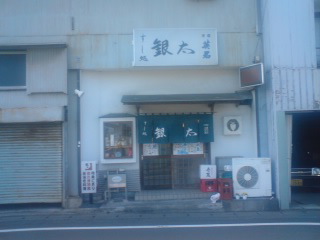
Sushi Restaurant: Ginta

ginta-1

Yesterday, I had the pleasure to introduce a “hidden treasure” to my friends Anselmo and Ticiana Zeri with Ticiana’s moter, Helda, who were on their 6th visit of Japan. Anselmo had found my blogs some time ago as he researched on Japan and had contacted me for more information.
Anselmo then decided it was grand time to visit Shizuoka Prefecture.
It was my pleasure to guide them for two days in and around Shizuoka City.
Yesterday I took them to Ginta, a minuscule Sushi restaurant not far from Yui Harbour famed for its sakura ebi/Cherry shrimps.
To cap it all we are in the middle of the season guaranteeing the best seafood available in this small city.

ginta-21

Now, Mr. Hara’s restaurant is unassuming and can be easily missed. But I can guarantee you you do need to reserve if you venture there at lunch as hordes of tourists and businessmen from all corners of Japan make a point tocome just to savour the region’s specialties.

There are indeed many possibilities, and a very good, amost ridiculous prices.
We decided to sample the 3,000 yen sakura ebi full course:

ginta-3

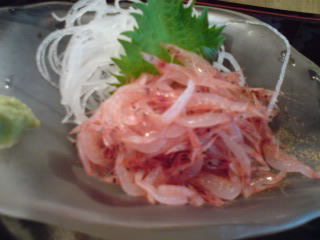
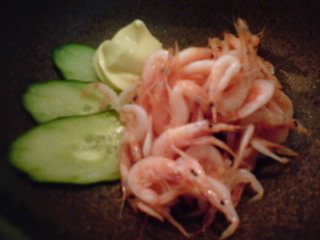
Raw Sakura Ebi, caught in the very morning in Suruga Bay.
Mr. Hara demostrated us how to recognize fresh Sakura Ebi. Take a few between two fingers. They should slip easily away!

ginta-4

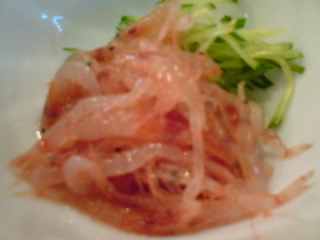
Boiled sakura Ebi salad. Great with Eikun, the local sake available in Ginta!

ginta-5

Sakura Ebi lightly pickled in rice vinegar.

ginta-6

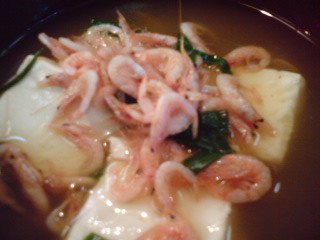
Sakura Ebi in “Suimono/clear hot soup” style with tofu.

ginta-11

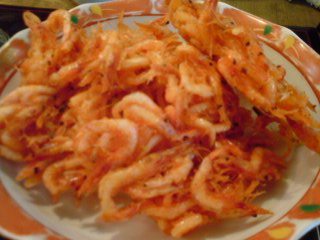
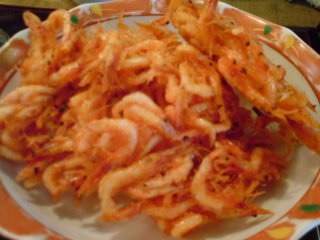
Sakura Ebi Kakiage/Sakura Ebi Tempura. Extremely generous portions.

ginta-7

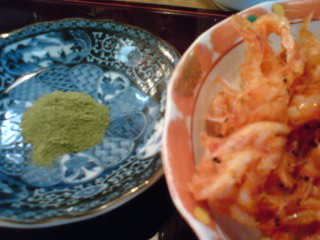
The Kakiage is served with salt and matcha tea mixture. Perfect with tempura! We hust ate them with our fingers!

ginta-8

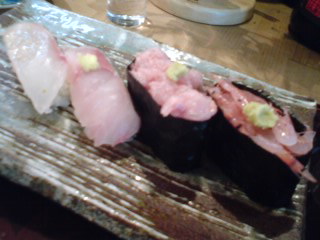
Sushi set (part of the full-course!):
Tai/Seabream sushi served with its deep-fried scales between the fish slice and rhe rice.
Aji/Horesemackerel-Saurel with a dash of fresh grated ginger.
Kawahagi/Filefish with its flesh chopped in tartare style with its fresh liver in gunkan manner topped with a dash of fresh grated wasabi. A rare morsel indeed!
Sakura Ebi in gunkan manner topped with a dash of fresh grated wasabi.
Mr. Hara advised us not to dip the sushi directly into the soy sauce, but to “brush” it with a piece of pickled ginger (provided on the same dish) after having dippe it into soy sauce. “That will be just quite enough soy sauce!”, he added.

Actually, once mr. Hara has warmed up to a particular customer, he can become an incredible source of information that even fishmongers at Tsukiji would not be able to equal! I can guarantee you an interesting report next I go there to sample his local fish sushi sets!

ginta-9

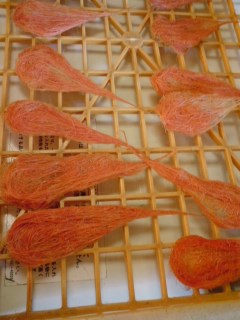
Now, what are these Sakura Ebi-shaped things?
This is another specialty of Yui: People there take the long antenna (three times as long as the body) and dry them in the sun after having “shaped them”. These will be used all year long crushed into powder over a bowl of freshly cooked rice!

Since the Missus gotextremely jealous of our little venture, you can expect a report soon!

GINTA
421-3111 Shizuoka Shi, Shimizu Ku, Yui cho, Imajuku, 165. (get off at Yui Station and walk to your right. Only a few minutes away)
Tel.: 0543-75-3004
Opening hours: 11:00~23:00
Closed on Tuesdays
Reservations on the telephone recommended!

Please check the new postings at:
sake, shochu and sushi

—————————————-
日本語のブログ
—————————————-

French Dessert at Rouge et Piquant: Dessert Blanc

blanc-09a

Service: Excellent and very friendly
Facilities: great washroom, great cleanliness overall
Prices: reasonable, good value
no-smoking-logo!

After I savoured Rouge et Piquant’s Dessert Rouge after such a long time, I just couldn’t help going there again for the second in a week to savour the other beauty called Dessert Blanc/White Dessert!

blanc-09b

Like Dessert Rouge it is a combination of two desserts:
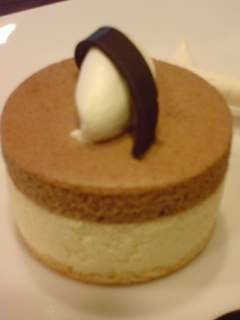
The cake on its own is called “Cafe au Lait” and consists of a thin layer of Genoise short cake first overlaid with Milk and Vanilla Mousse, and then again with Coffee Mousse, the whole artistically topped with some cream and a chocolate ribbon.

blanc-09c

The second part was a feuillantine biscuit cup containing succulent caramel and vanilla ice-creams topped with almonds and another choclate ribbon.
A final note was added with meringue biscuits and chocolate sauce.

Once again, to be savoured with a good coffee!

Don’t forget there are more to savour: Chocolat Assortment: Chocolat mousse and Caramel Ice Cream + Chocolate Sauce. Assortment (800 yen).
I would also recommend the Entremets glaces at 600 yen (Profiterolle or Mille-Feuille).
Also gateau at 500 yen, Ice Cream at 500 yen. Very good teas and coffes (10 varieties).
Take out homemade biscuits (7 kinds). Birthday cakes on order.
Entirely non-smoking place!

Address: 420-0032 Shizuoka Shi, Ryogae-cho, 2-4-29, Aspis Bldg. 2F
Tel. & Fax: 054-2214358
Opening hours: 14:00~24:00
Closed on Mondays
Chef-Owner: Ms. Kanae Tsunogai

Please check the new postings at:
sake, shochu and sushi

—————————————-
日本語のブログ
—————————————-