Tag Archives: フランス料理

Fried Potatoes, the healthier and tastier way!

fried-potatoes

Fried potatoes have been temptying us since the 17th Century when the Belgians first experimented cooking them in oil. At the time, deep-frying, imported by Crusaders from the Middle East, was the only absolutely safe way to cook, especially in the “flat countries” as Belgium and Holland were called at the time, because water was a bed for all kinds of diseases.

Now, eveyone knows that boiled potatoes are healthy, if somewhat bland in taste, whereas fried potatoes are tasty but hideously high in unwanted calories.
Time and again I use a simple method half way which will enable you to enjoy your favourite snack/main dish with a lighter heart (and midriff) and at the same time allow you to serve a savoury dish to your ravenous friends or family! (But don’t overeat them!)

INGREDIENTS
(for 2 to 4, depending whether it is an accompaniment or full dish):

-4 large potatoes
-1 large echalotte/shallot (if unavailable, half a red onion is great!), finely chopped
-3 cloves of garlic, finely chopped
-Bacon (vegan and vegetarians, please skip this but keep in mind you will have to add a little salt)-1 large rasher cut in small pieces (half a cm square or half the size of your little finger nail, cut short!)
-Parmesan/Parmiggiano Cheese (vegans, please skip this or use alternative), freshly grated, 3 large tablespoons.
-Salt (for the potatoes boiling water, otherwise as little as possible, as bacon and cheese will contain enough!)
-Pepper, nutmeg. Foodies who like their food Indian-style may add a little powdered curry mix and chili pepper.
-Olive oil: 2 large tablespoons

RECIPE:

-Boil potatoes in plenty of salted water. If you do not add salt to the water, the potatoes will end up very bland in taste.

-Once the potates are boiled at about 80%, plunge them into cold water. This little trick will prevent them from breaking up later.

-When potatoes are cold enough, peel and cut them in wedges (the size is up to you). If the potatoes are new,leave the skin on.

-In deep enough frying pan dry-fry (no oil added) the chopped bacon until it becomes a nice crisp and dark. Put aside on a small dish. For non-vegan/vegetarians, do not wipe the pan, or you will miss a lot of taste!

-Pour two large tablespoons of olive oil in the same frying pan. That is enough, and the oil will be “sucked in” by the potatoes with the result that the potatoes will not be “greasy”. Use olive oil, extra virgin, as this is best, not only for taste, but for health (the vitamin C contained in olive oil do not disappear even cooked for a long time).

-When potatoes have almost reached the wanted colour, drop in shallots, garlic, fried bacon, pepper, nutmeg (and salt if you absolutely must use some!). Toss-fry until shallots have turned transparent.

-Pour the lot into a serving dish and sprinkle parmesan over it.

Enjoy at once!

Sometimes, simple is best!

RECOMMENDED RELATED SITES:
Bread + Butter, Comestilblog, Greedy Girl, Bouchon For 2, Zoy Zhang, Hungry Neko, Mangantayon, Elinluv Tidbit Corner, Maison de Christina, Chrys Niles, Lexi, Culinary Musings, Eats and Everything, Bite Me New England, Heather Sweet, Warren Bobrow, 5 Star Foodie, Frank Fariello, Oyster Culture, Ramendo, Alchemist Chef, Ochikeron, Mrs. Lavendula, The Gipsy Chef

Please check the new postings at:
sake, shochu and sushi

—————————————-
日本語のブログ
—————————————-

For Vegan and Vegetarians! “Forgotten” Vegetables 21: Chayote

SYNOPSIS:
Organic agriculture and biodiversity have in recent years brought about a rediscovery of many “forgotten” vegetables that people especially in Europe and France conscientiously tried to forget as they reminded them of the privations suffered during WWII. The same people had then to make do with untraditional vegetables because potatoes, carrots and so on were confiscated by occupying forces or their own armies.
With sustainibility and bioagriculture made more important by the deficiencies of modern mass agriculture, those “forgotten” vegetables have suddenly come to the fore for the pleasure of all, and that of course of vegetarians and vegans!

This particular series of postings will introduce these vegetables one by one. I hope they will become useful for a long time to come to all my vegan and vegetarian friends!
1) Scorsonere/Oyster Plant
2)Potimarron
3) Vitelotte
4) Rutabaga
5) Cardon
6) Panais/Parsnips
7) Patisson
8) Topinambour
9) Crosne
10) Cerfeuil Tubereux
11) Poiree
12) Oca
13) Ulluque/Ulluco
14) Tigernuts
15) Capucine tubereuse-Maschua
16) Chataigne de Terre-Great Pignut
17) Yacon

18) Balsamite/Costmary
19) Sikkim Cucumber
20) Tree Spinach

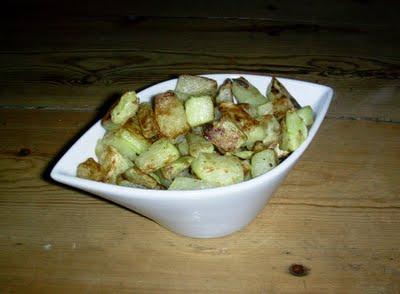
The chayote (Sechium edule), also known as sayote, tayota, choko, chocho, chow-chow, christophene, mirliton, alligator pear, and vegetable pear, Hayatouri/はやとうり (Japanese) is an edible plant that belongs to the gourd family Cucurbitaceae along with melons, cucumbers and squash.

The plant has large leaves that form a canopy over the fruit. The vine is grown on the ground or more commonly on trellises.

Chayote was first domesticated in Mexico, where the fruit is used in both raw and cooked forms. When cooked, chayote is usually handled like summer squash, and it is generally lightly cooked to retain the crisp flavor. Raw chayote may be added to salads or salsas, and it is often marinated with lemon or lime juice. Whether raw or cooked, chayote is a good source of amino acids and vitamin C.

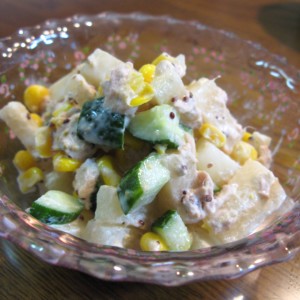
Sauteed Chayote

The tubers of the plant are eaten like potatoes and other root vegetables. In addition, the shoots and leaves can be consumed, and they are often used in salads and stir fries, especially in Asia.

The word for chayote is Spanish, borrowed from the Nahuatl word chayotli. Chayote was one of the many foods introduced to Europe by early explorers, who brought back a wide assortment of botanical samples. The age of conquest also spread the plant south from Mexico, ultimately causing it to be integrated into the cuisine of many other Latin American nations.

Chayote Tatin

Chayote is native to Central America where it is a very important ingredient to the diet. Other warm regions around the globe have been successful in cultivating it as well. Main growing regions are Costa Rica and Veracruz, Mexico. Costa Rican chayotes are predominantly exported to the European Union whereas Veracruz is the main exporter of chayotes to the United States.

France “imports” its chayote, also called Josephines from its islands in the Wets Indies and near Africa (Reunion), although moreand more people grow them in Europe.

THey were introduced inJapan in 1917 and have become increasingly popular as the Japanese like all kinds of gourds. The Japanese eat them pickle, in salads, cooked or in soups.
The shoots are also edible!

RECOMMENDED RELATED SITES
Not-Just-Recipes, Bengal cuisine, Cooking Vegetarian, Frank Fariello, Gluten-free Vegan Family, Meatless MamaFrank Fariello, , Warren Bobrow

Please check the new postings at:
sake, shochu and sushi

—————————————-
日本語のブログ
—————————————-
French Cakes: Bernard Heberle-2009 Anthology

Bernard Heberle is an extremely talented French patissier who after teaching patisserie in Japan for many years, decided to show and market his own creations in Hamamatsu City and Shizuoka Prefecture, rapidly proving he was the undisputed master of French Patisserie to the 4 million souls gracing our Prefecture.

Below is a short anthology of cakes he created during the past year!

4810

4810

4810!
Yes, you read well, this cake’s name is a number!
Can you guess?

In his own words:
“En cette période des Kinmokusei , je te présente ce gâteau bien connu des japonais et peut être leur favori avec les short cake.
Son nom 4810 ( Non , ce n’est pas son prix , seulement l’altitude de notre Mont Blanc )
Celui ci , le notre est une base de meringue au lait avec une crème de marron et une génoise a la vanille , crème pâtissière et crème montée, nous utilisons des marrons italien du Piémont.”

“In the Kinmokusei (fragrant orange-colored olive, the tree of Shizuoka Prefecture. Look below for picture) season, I would like to introduce a cake well known to the Japanese and perhaps their favourite with short cake.
Its name is 4810 (No, it’s not its price, only the height of Mont-Blanc!).
This particular creation rests on a milk meringue, then a marron cream and vanilla genoise. Next a creme patissier and a creme montee.
We use Italian marrons from Piemonte.”

TARTE AUX FIGUES

FIGUES-HEBERLE

Tarte aux Figues/Fig Tart!

In his own words:
“Voici une tarte de saison , la combinaison de figue et de framboise sur un fond de pâte sucrée a l’amande régulée par une douce crème pâtissière , un vrai mélange de saveur et de parfum avec une sensation croustillante et mielleuse a la fois.”

“Here is a seasonal tart. The fig and raspberry combination on an almond pâte sucrée is enhanced by a soft crème pâtissière/custard. A true mixture of savours and perfume with a crusty and honey sensation.”

CASSIS EVOLUTION

CASSIS-EVOLUTION

Cassis-Evolution!

In his own words:
“Une nouvelle création … ” Évolution Cassis ”
C’est un gateau a base de mascarpone avec une douceur myrtille au chocolat blanc sur un pain de Genes et une touche de gelée de cassis. Très frais et de saison, les myrtilles sont excellentes cet été , malgré la pluie incessante. ”

“A new creation…”Evolution Cassis”
It is a cake with a mascarpone base qith a sweet blueberry and white chocolate layer on a Genes bread/short cake and a touch of cassis jelly.
Very fresh and seasonal. The blueberries are excellent this summer, in spite of the unceasing rain.”

TISANE

TISANE

“Tisane”, or herb tea infusion.

In his own words:
“Voici un gâteau au nom de ” Tisane ” et pour cause il est a base d’herbe fraîche et plus spécialement de Verveine.
La combinaison Verveine, crème, oeuf, lait et amour se marie très bien surtout en approche de la saison chaude et humide.”

“Here is a caked I called “Tisane” because it is prepared with a fresh herb base, especially Verveine.
The combination of Verveine, cream, egg, milk and love is just perfect as we approach the hot sultry season!”

ELEGANCE

ELEGANCE2

“Elegance”/Elegance

My Good French friend in Hamamatsu City is very busy: His message was very laconic this time. LOL

“Robert
Voici ” Élégance” un gâteau au chocolat , lait et noir 70% avec un biscuit chocolat sans farine…très léger et plein de saveur.
Au plaisir…
Bernard”

“Here is “Elegance”, a chocolate cake, milk, and a 70% black cocolate.
On top of a biscuit. No flour used. Very light and full of flavour”.

He forgot to mention the small macarons!

NOISETTE/HAZELNUT

noisette

“Noisette”, hazlenut

In his own words:
“Voici le gâteau du mois ” Noisette” tout simplement un mélange de chocolat noir et de lait avec une dacquoise aux noisettes torréfiées ainsi que base croustillante le tout surmonte d’une chantilly légèrement chocolatée. Très agréable en bouche , un mélange de saveurs et de texture façon criollo.”

noisette-2 noisette-3

“Here is this month cake, “Noisette/Hazelnut”.
It consists of a simple mixture of milk and black chocolate with a roasted hazelnuts Dacquoise as a crusty base. The whole is topped with slightly chocolate -flavoured Chatilly cream and black chocolate.
Very soft on the tongue. A combination of savours and texture in criollo fashion.

As usual, I doubt I need to add any comment!

TARTE SICILIENNE/SICILIAN TART

tarte-sicilienne

“Tarte sicilienne”/Sicilian Tart

In his own words:
“Voici le gâteau que je te propose ce mois ” Tarte Sicilienne ” qui est une tarte a base de Mascarpone et de pistache avec des Fraises de notre belle région ” 紅ほっぺ” sur un fond de pâte sucrée a la crème d’amande et coulis de fraise. Toute la Sicile dans l’assiette.”

“Here is the cake I would like to propose you this month, Sicilian Tart”, which a tart based on Mascarpone and pistachio with strawberries from our beautiful region called “Behi-Hoppe”/”Red Cheeks” on a bed of pate sucree with almond cream and strawberry coulis/sauce. All Sicilia in the plate!”

Need I comment? LOL

TENDRESSE/TENDERNESS

abondance-tendresse

This particular creation is named “Tendresse” in French, meaning tenderness in English.
In Bernard’s French words:

-“Voici le gâteau que je te propose ce mois ” Tendresse ” qui est un gâteau a base de Fromage blanc et de pâte a bombe , très léger et même ceux qui n’aime pas le fromage y trouverons leurs plaisir. Léger et onctueux décoré avec des macarons a la Framboise.”

-“Here is the cake I would like to introduce your friends to this month. It is called “Tenderness” and is made with a very light combination of Fromage Blanc/White cheese and Pate a bombe/very fine sponge cake variety. Even people who do not like cheese will appreciate it. Light and soft, it is decorated with raspberry macarons”.

I’m ready to take the 30-minute bullet train to Hamamatsu to savour it!

Abondance
Address: Hamamatsu Shi, Sumiyoshi, 2-14-27 (in front of Seirei Hospital)
Tel.: 053-4738400
Fax: 053-4738401
Opening hours: 10:00~20:00. Closed on Tuesdays.
Homepage

RECOMMENDED RELATED SITES:
Bread + Butter, Comestilblog, Greedy Girl, Bouchon For 2, Zoy Zhang, Hungry Neko, Mangantayon, Elinluv Tidbit Corner, Maison de Christina, Chrys Niles, Lexi, Culinary Musings, Eats and Everything, Bite Me New England, Heather Sweet, Warren Bobrow, 5 Star Foodie, Frank Fariello, Oyster Culture, Ramendo, Alchemist Chef, Ochikeron, Mrs. Lavendula, The Gipsy Chef, Dodol-Mochi

——————————–
Please check the new postings at:
sake, shochu and sushi

—————————————-
日本語のブログ
—————————————-

For Vegan and Vegetarians! “Forgotten” Vegetables 20: Chenopodium/Tree Spinach

SYNOPSIS:
Organic agriculture and biodiversity have in recent years brought about a rediscovery of many “forgotten” vegetables that people especially in Europe and France conscientiously tried to forget as they reminded them of the privations suffered during WWII. The same people had then to make do with untraditional vegetables because potatoes, carrots and so on were confiscated by occupying forces or their own armies.
With sustainibility and bioagriculture made more important by the deficiencies of modern mass agriculture, those “forgotten” vegetables have suddenly come to the fore for the pleasure of all, and that of course of vegetarians and vegans!

This particular series of postings will introduce these vegetables one by one. I hope they will become useful for a long time to come to all my vegan and vegetarian friends!
1) Scorsonere/Oyster Plant
2)Potimarron
3) Vitelotte
4) Rutabaga
5) Cardon
6) Panais/Parsnips
7) Patisson
8) Topinambour
9) Crosne
10) Cerfeuil Tubereux
11) Poiree
12) Oca
13) Ulluque/Ulluco
14) Tigernuts
15) Capucine tubereuse-Maschua
16) Chataigne de Terre-Great Pignut
17) Yacon

18) Balsamite/Costmary
19) Sikkim Cucumber

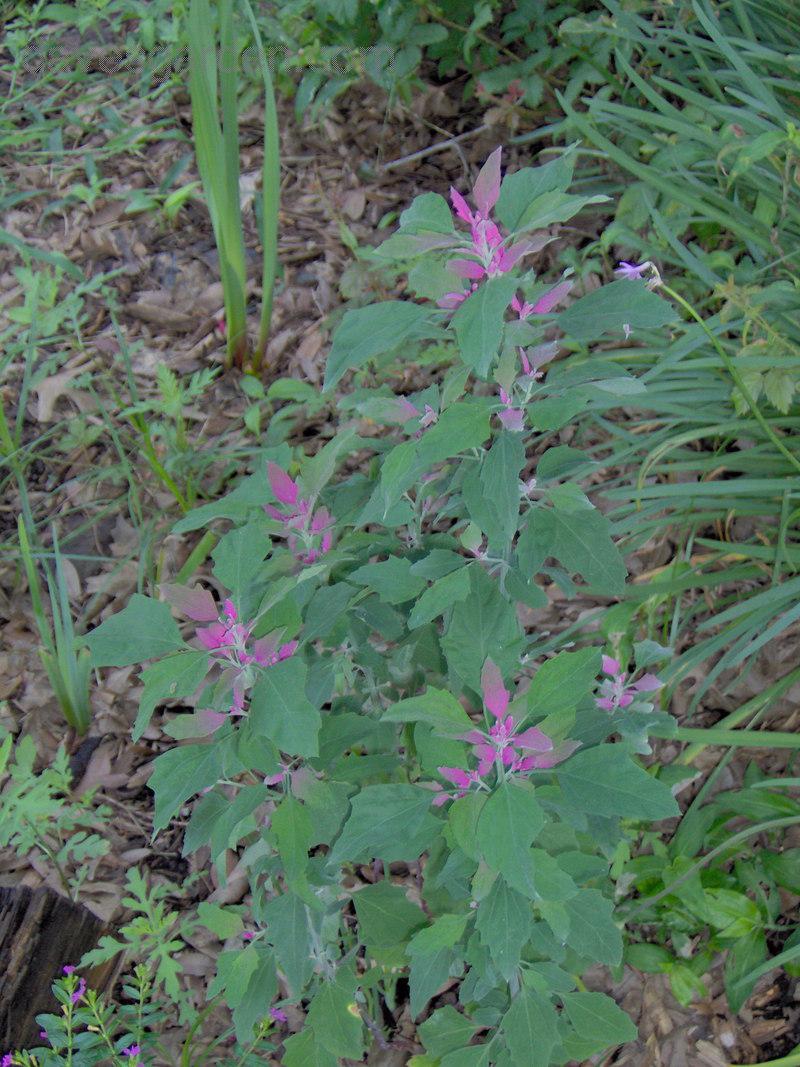
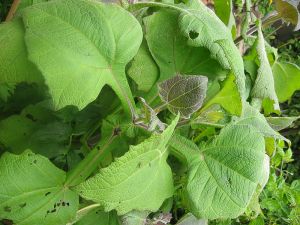
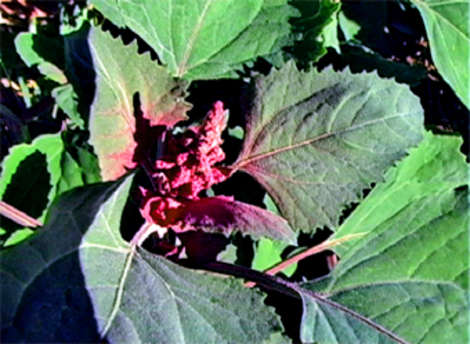
Chenopodium, or more precisely Chenopodium Giganteum , also called Tree Spinach or Magenta Spree, is a plant originally found in Northern and Eastren India, but has been naturalized in France and some other countries.

The leaves and seeds of all members of this genus are more or less edible. However, many of the species in this genus contain saponins, though usually in quantities too small to do any harm. Although toxic, saponins are poorly absorbed by the body and most pass straight through without any problem. They are also broken down to a large extent in the cooking process. Saponins are found in many foods, such as some beans.
The plants also contain some oxalic acid, which in large quantities can lock up some of the nutrients in the food. However, even considering this, they are very nutritious vegetables in reasonable quantities. Cooking the plants will reduce their content of oxalic acid. People with a tendency to rheumatism, arthritis, gout, kidney stones or hyperacidity should take especial caution if including this plant in their diet since it can aggravate their condition.

It is in flower from July to September, and the seeds ripen from August to October. The flowers are hermaphrodite (have both male and female organs) and are pollinated by Wind.
The plant prefers light (sandy), medium (loamy) and heavy (clay) soils. The plant prefers acid, neutral and basic (alkaline) soils. It cannot grow in the shade. It requires moist soil.

Edible Parts: Leaves; Seed.

Leaves can be cooked. Of excellent quality, they are a spinach substitute. The raw leaves should only be eaten in small.
Seed can also be cooked. Ground into a powder and used with wheat or other cereals in making bread etc. The seed is small and fiddly, about 1.5mm in diameter. It should be soaked in water overnight and thoroughly rinsed before it is used in order to remove any saponins.

An easily grown plant, succeeding in most soils but disliking shade. It prefers a moderately fertile soil.
The tree spinach is sometimes cultivated for its edible leaves. There are some named varieties like ‘Magentaspreen’, which is a vigorous plant growing 1.5 metres tall. It has large leaves, the new growth is a brilliant magenta colour. Tastiest when young, the leaves are eaten raw or cooked like spinach. A warm climate is required in order to ripen the seed.

Try them in salads for a taste of “wilderness”!

RECOMMENDED RELATED SITES
Not-Just-Recipes, Bengal cuisine, Cooking Vegetarian, Frank Fariello, Gluten-free Vegan Family, Meatless MamaFrank Fariello, , Warren Bobrow

Please check the new postings at:
sake, shochu and sushi

—————————————-
日本語のブログ
—————————————-

For Vegan and Vegetarians! “Forgotten” Vegetables 19: Concombre Apple Sikkim/Sikkim Cucumber

SYNOPSIS:
Organic agriculture and biodiversity have in recent years brought about a rediscovery of many “forgotten” vegetables that people especially in Europe and France conscientiously tried to forget as they reminded them of the privations suffered during WWII. The same people had then to make do with untraditional vegetables because potatoes, carrots and so on were confiscated by occupying forces or their own armies.
With sustainibility and bioagriculture made more important by the deficiencies of modern mass agriculture, those “forgotten” vegetables have suddenly come to the fore for the pleasure of all, and that of course of vegetarians and vegans!

This particular series of postings will introduce these vegetables one by one. I hope they will become useful for a long time to come to all my vegan and vegetarian friends!
1)
Scorsonere/Oyster Plant
2)Potimarron
3) Vitelotte
4) Rutabaga
5) Cardon
6) Panais/Parsnips
7) Patisson
8) Topinambour
9) Crosne
10) Cerfeuil Tubereux
11) Poiree
12) Oca
13) Ulluque/Ulluco
14) Tigernuts
15) Capucine tubereuse-Maschua
16) Chataigne de Terre-Great Pignut
17) Yacon

18) Balsamite/Costmary

Did you know that all cucumbers originated in the wild in India?
Well, I didn’t know until I did some rearch on that particular variety!
Large genetic varieties of cucumber have been observed in different parts of India. It has been cultivated for at least 3,000 years in Western Asia, and was probably introduced to other parts of Europe by the Romans. Records of cucumber cultivation appear in France in the 9th century, England in the 14th century, and in North America by the mid-16th century.

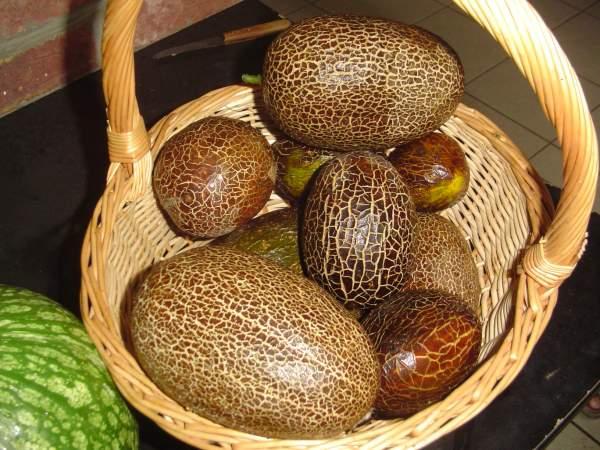
Sikkim Cucumber is not an hybrid, but an ancient variety which grows in Sikkim State in India.
Protected by a hard skin, it can easily stored safely for months!
It is comparatively small, never reaching more that 10 cm/4 inches.
Its skin makes for a beautiful design and a popular ornamental plant in Europe.

But it is edible. Its taste is soft and void of acidity.
It can be eaten raw or cooked.
It certainly seems very populat inthe Indian Himalayas.
It can actually be prepared in as many dishes as usual green cucumbers.

RECOMMENDED RELATED SITES
Not-Just-Recipes, Bengal cuisine, Cooking Vegetarian, Frank Fariello, Gluten-free Vegan Family, Meatless MamaFrank Fariello, , Warren Bobrow

Please check the new postings at:
sake, shochu and sushi

—————————————-
日本語のブログ
—————————————-

For Vegan and Vegetarians! “Forgotten” Vegetables 18: Balsamite/Balsamita/Costmary

Courtesy of Jean-Luc Muselle

SYNOPSIS:
Organic agriculture and biodiversity have in recent years brought about a rediscovery of many “forgotten” vegetables that people especially in Europe and France conscientiously tried to forget as they reminded them of the privations suffered during WWII. The same people had then to make do with untraditional vegetables because potatoes, carrots and so on were confiscated by occupying forces or their own armies.
With sustainibility and bioagriculture made more important by the deficiencies of modern mass agriculture, those “forgotten” vegetables have suddenly come to the fore for the pleasure of all, and that of course of vegetarians and vegans!

This particular series of postings will introduce these vegetables one by one. I hope they will become useful for a long time to come to all my vegan and vegetarian friends!
1) Scorsonere/Oyster Plant
2)Potimarron
3) Vitelotte
4) Rutabaga
5) Cardon
6) Panais/Parsnips
7) Patisson
8) Topinambour
9) Crosne
10) Cerfeuil Tubereux
11) Poiree
12) Oca
13) Ulluque/Ulluco
14) Tigernuts
15) Capucine tubereuse-Maschua
16) Chataigne de Terre-Great Pignut
17) Yacon

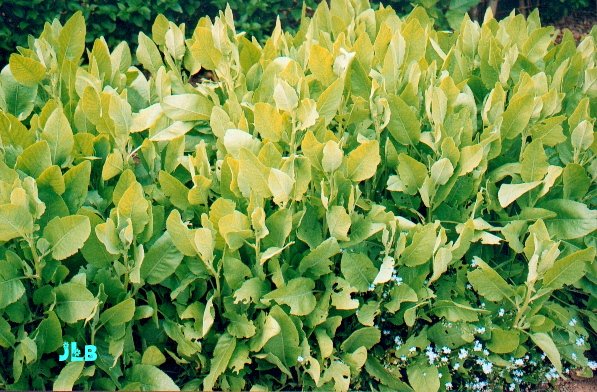
Balsamite (French) or Costmary (English) is an aromatic plant that has been cultivated for a long time as an ornamental and medicinal plant.

Its Latin name is Balsamita major Desf. (synonym : Tanacetum balsamita L. subsp. balsamita).

It is known under many names: Grande balsamite, menthe-coq, menthe de Notre Dame, tanaisie des jardins, baume-coq, Chartreuse, (French), Balsamkraut (German), costmary (English), erba-amara balsamica, erba buona (Italian)

It has been grown for many centuries for its pleasant, slightly medicinal or balsamic smell. It was used in medieval times as a place marker in bibles.
Moreover, the plant is known from ancient herbals and was widely grown in Elizabethan knot gardens.

It is a strong plant, quite tall, 1,2 metres/4 feet giving out a pleasant aroma similar to mint with beautiful yellow flowers.

It originated in Western Asia and the Caucasus. It strives in temperate climates and has been succefully grown in Europe, North Africa and North America.

The leaves, slightly sour, can be used to season salads and liqueurs.
Good Beer and Country Boys will be gld to hear that a long time ago, they were used to contribute aroma to ale beer in England!

Liqueur fans, try this:
Macerate 9 leaves with 9 pieces of sugar in fruit alcohol for 2 or 3 months!

RECOMMENDED RELATED SITES
Not-Just-Recipes, Bengal cuisine, Cooking Vegetarian, Frank Fariello, Gluten-free Vegan Family, Meatless MamaFrank Fariello, , Warren Bobrow

Please check the new postings at:
sake, shochu and sushi

—————————————-
日本語のブログ
—————————————-

Gastronomic Destinations: New Caledonia (’09/09-3)

096
Ilot des Canards/Duck-canard Islet

New Caledonia ofers many escapes within short distances.
One of mine (and the Missus’) is a small islnad only 15 minutes away by boat from Noumea called Ilot (or Ile) des canards/Ducks Islet.
if you have your own boat (a yacht wouldn’t be able to find deep enough water to stop there) wind sail board or kayak you could reach the place quickly enough.
For pedestrians, go to Colleen Excursions (Tel.: 28-33-58) in Anse Vata Bay where you can book a boat across the lagoon for 1,000 Pacific Francs (return ticket)/12 US $.

072

The sland is worthe the vist (daytime only) for many reasons:
Originally copmpletely desert, a French-japanese couple obtained the license to develop it.
Not ony did they build a restarant wih seats and parasols there, they also planted trees and plants form New caledonia, thus ceating a new environment while protecting and furthering native nature.
The birds have come back and even “fight off” tourists away from their nests!

060
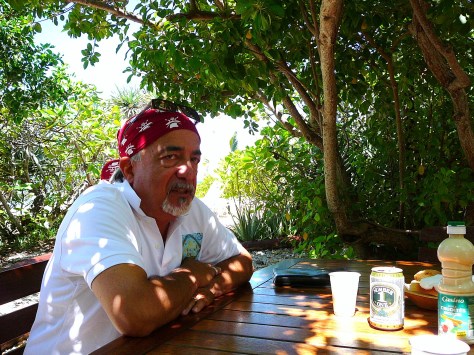
Enjoying local beer on an empty stomach…

The restaurant offers healthy and plentiful fare in a great natuaral enironment away but still within a short distance of civilization.

068
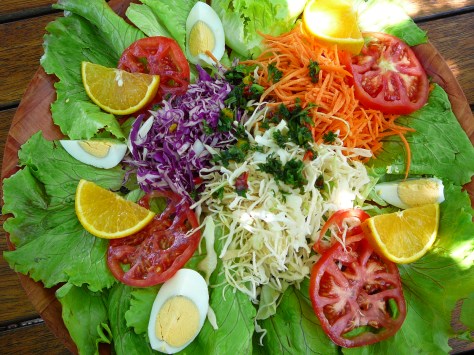
Salade de Crudites/Vegetables Salad

067
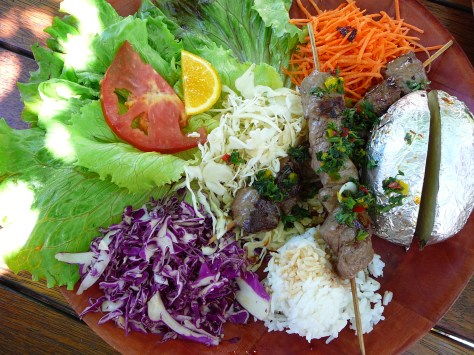
Venison Grill Salad

095

The staff are all recruited from the locals who are very warm and friendly.
One can rent cahairs and parasols (bring your own parasol if you don’t want to spend the money as it can be pretty hot!)

A great day off away from the crowd (that is, in the off sason!)

ILOT CANARD, PLAGE LOISIRS
Tel.: 46-92-84
(Call to check day off)
Credit cards not accepted

RECOMMENDED RELATED SITES:
Our Adventures in Japan
Warren Bobrow
Wild River Review
Bread + Butter
5 Star Foodie
Frank Fariello
Mangantayon
Hapabento
Elinluv Tidbit Corner
Think Twice

Please check the new postings at:
sake, shochu and sushi

—————————————-
日本語のブログ
—————————————-

Gastronomic Destinations: New Caledonia (‘09/09-2)

004
Ile des canards seen from Noumea, Anse Vata Bay

new caledonia is our regular destination when when we find the the time to escape from Japan for a short vacance.
being blessed with sun, sea and great food, be it French or “ethnic” of all kinds, it also offers some of the best natural water in the Pacific Ocean!

I’m not tired of repeating it, a benediction for beer Brewers and beer lovers!

029

There are three distinct microbreweries in New Caledonia:
The first one, 3 Brasseurs, is actually a branch of a great microbrewery in France, but it uses only local water and thus can be considered a true New Caledonian mkicrobrewery!
It not only offers a range of four different beers, all made from pure malt and hops, unpasteurized and unfiltered:
Blonde (lager), Ambree (red ale), Scotch (porter) and Blanche (weizen)
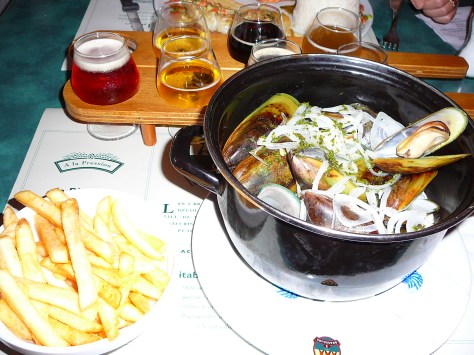
sampling their tasting set is simply a must!

039
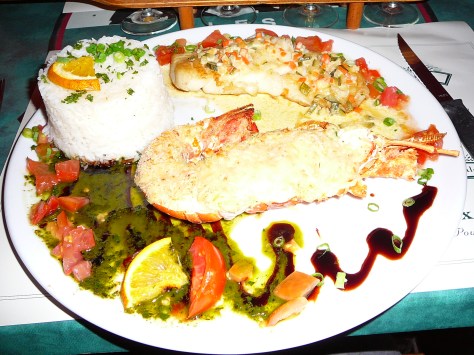
New Caledonia lobsters!

But they also include a restaurant upstairs where you can eat all typical Alsatian Cuisine, Southern French Cuisine, and other typical French specialties:

041

Mussles and fried potatoes, which is a belgian specialty actually!

On the first floor, you can either enjoy a drink at the pub or on a terrace.
Check their special band music nights!

3 Brasseurs
Centre Commercial de la Baie des Citrons, Noumea, Nouvelle Caledonie
Tel.: (687)241510

RECOMMENDED RELATED SITES:
Our Adventures in Japan
Warren Bobrow
Wild River Review
Bread + Butter
5 Star Foodie
Frank Fariello
Mangantayon
Hapabento
Elinluv Tidbit Corner
Think Twice

Please check the new postings at:
sake, shochu and sushi

—————————————-
日本語のブログ
—————————————-

Gastronomic Destinations: New Caledonia (’09/09-1)

078
View of Noumea from Ile des Canards

Travelling to New Caledonia can easily become a thirsty venture!
Even in “Spring” (September), temperatures can uickly soar over 25 degrees in the shade, meaning at least 10 more in the sun!

024
Number 1 Beer and havannah Beer at Le Fun Beach

New Caledonia is not only blessed with sun, sea and great food, but it also offers some of the best natural water in the Pacific Ocean!
No wonder this island has been settled for millennia as the water is slowly filtered through rocks before to gush out at the feet of pretty high (over 2,000 metres in some cases) for such a small island!
A benediction for beer Brewers and beer lovers!

025
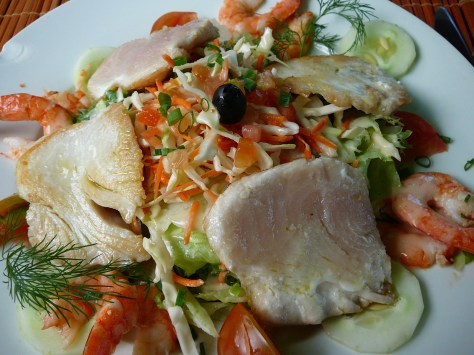
Tuna Salad at le Fun Beach

026
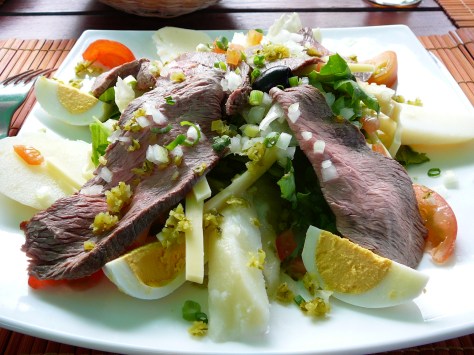
Roast Beef salad at Le Fun Beach.

There are many restaurants in Noumearemisniscent of Southern France. Actually the Caucasian population is mainly from Southern France and Corsica.
Food in such restaurants is very healthy although a missing a little spice. Sauces and vinaigrettes are light in particular.
There are exceptions I will mention in my next posting!

LE FUN BEACH
Promenade R. Laroque, Noumea, New caledonia/Nouvelle Caledonie
Tel: 263132
Credit cards OK
Great View on Anse vata Beach and Bay
Lunch and Dinner

RECOMMENDED RELATED SITES:
Warren Bobrow
Wild River Review
Bread + Butter
5 Star Foodie
Frank Fariello
Mangantayon
Hapabento
Elinluv Tidbit Corner
Think Twice

Please check the new postings at:
sake, shochu and sushi

—————————————-
日本語のブログ
—————————————-

Karasumi/Botarga/Boutargue Season in Shizuoka!

karasumi.gif
(Courtesy of Shizuoka Shimbun Daily)

Karasumi, known as “boutargue” in French, or as “botarga” in Italian, is the natrally dried/preserved roe pouches of the mullet.
It is quite an expensive morsel in Japanese cuisine as well as in Europe (that is, the real one!).

Numazu City, one of the main fishing harbors in Shizuoka Prefecture, is quite renown for its karasumi.
The season for catching bora/鯔, or mullet in English, has begun and fishermen have just started drying their roe pouches/karasumi/カラスミ under the Autumn sun in this comparatively rainless time of the year.
It is grim and painstaking businees as the the roe pouches have to be carefully cleaned, got rid of any blood vesels, and sprinkled with the right quantity of salt.

karasumi2.jpg

They will be served thinly cut as they are in Japanese restaurants, or used in Italian and French restaurants, especially with pasta.

This yearly catch is slowly dwindling due to high demand, so brace yourselves when you open your purse!

Note: beware of imported specimens, especially from “Asia”!

RECOMMENDED RELATED SITES:
Warren Bobrow
Bread + Butter
5 Star Foodie
Frank Fariello
Elinluv Tidbit Corner
Tokyo Terrace
Maison de Christina
Chrys Niles
Comestilblog
Greedy Girl
Bouchon For 2

Please check the new postings at:
sake, shochu and sushi

—————————————-
日本語のブログ
—————————————-

For Vegan and Vegetarians! “Forgotten” Vegetables 17: Yacon

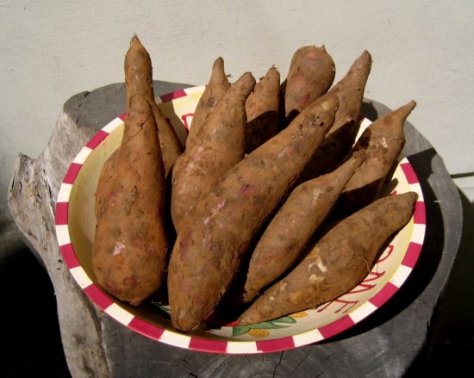
YACON-1

SYNOPSIS:
Organic agriculture and biodiversity have in recent years brought about a rediscovery of many “forgotten” vegetables that people especially in Europe and France conscientiously tried to forget as they reminded them of the privations suffered during WWII. The same people had then to make do with untraditional vegetables because potatoes, carrots and so on were confiscated by occupying forces or their own armies.
With sustainibility and bioagriculture made more important by the deficiencies of modern mass agriculture, those “forgotten” vegetables have suddenly come to the fore for the pleasure of all, and that of course of vegetarians and vegans!

This particular series of postings will introduce these vegetables one by one. I hope they will become useful for a long time to come to all my vegan and vegetarian friends!
1) Scorsonere/Oyster Plant
2)Potimarron
3) Vitelotte
4) Rutabaga
5) Cardon
6) Panais/Parsnips
7) Patisson
8) Topinambour
9) Crosne
10) Cerfeuil Tubereux
11) Poiree
12) Oca
13) Ulluque/Ulluco
14) Tigernuts
15) Capucine tubereuse-Maschua
16) Chataigne de Terre-Great Pignut

Yacon is another example of a forgotten vegetables rapidly getting popular in Japan, where it is very cheap!

The Yacón is a perennial plant grown in the Andes of Perú for its crisp, sweet-tasting tubers. The texture and flavour have been described as a cross between a fresh apple and watermelon which is why it is sometimes referred to as the apple of the earth. The tuber is composed mostly of water and fructo-oligosaccharides. It has recently been introduced into farmer’s markets and natural food stores in the US.

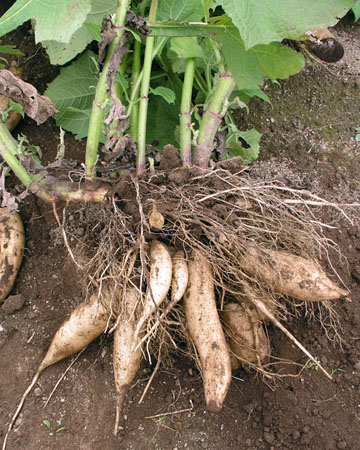
YACON-2

Although sometimes confused with jicama, yacón is actually a close relative of the sunflower and Jerusalem artichoke. The plants produce propagation roots and storage tubers. Propagation roots grow just under the soil surface and produce new growing points that will become next year’s aerial parts. These roots resemble Jerusalem artichokes. Storage tubers are large and edible.

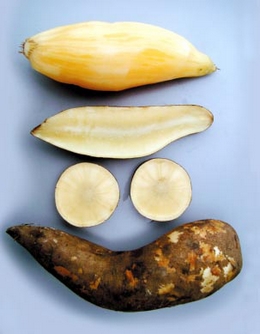
YACON-3

These edible tubers contain inulin, an indigestible sugar, which means that although they have a sweet flavour, the tubers contain fewer calories than would be expected.

Yacón plants can grow to over 2 meters in height and produce small, yellow inconspicuous flowers at the end of the growing season. Unlike many other root vegetables domesticated by the Indigenous Peoples of the Andes (olluco, oca), the yacón is not photoperiod sensitive, and can produce a commercial yield in the tropics.

YACON-LEAVES

Yacon Leaves

Yacón provides for two nutritional products the yacón syrup and yacón tea. Both products are popular among diabetic people and dieters who consume these products because of its low sugar properties.

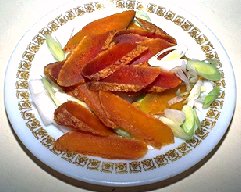
YACON-SALAD

Japanese Yakon Salad

Yacón can easily be grown in home gardens in climates with only gentle frosts. It grows well in southern Australia, Tasmania and New Zealand, where the climate is mild and the growing season long. It has recently been introduced to the Philippines, and is now widely available in markets.

Propagation roots with growing points can be planted in a well-dug bed in early spring, near the time of the last expected frost. While aerial parts are damaged by frost, the roots are not harmed unless they freeze solid. Yacón is a vigorous grower much like Jerusalem artichokes. The plants grow best with fertilization.

After the first few frosts the tops will die and the plants are ready for harvest. It is generally best to leave some in the ground for propagating the following spring. Alternatively, the propagating roots can be kept in the refrigerator or buried away from frost until spring. While usable-sized tubers develop fairly early, they taste much sweeter after some frost.

YACON-NARAZUKE

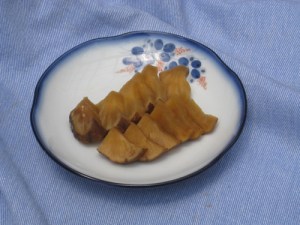
One reason why Yacon is fast becoming popular in Japan is that it is easy to pickle in “Narazuke” Style (see above picture),

YACON-DRIED-SLICES

and as dried slices, making for a great snack all year round!

RECOMMENDED RELATED SITES
Not-Just-Recipes
Bengal cuisine
Cooking Vegetarian
Frank Fariello
Gluten-free Vegan Family
Meatless Mama

Please check the new postings at:
sake, shochu and sushi

—————————————-
日本語のブログ
—————————————-

For Vegan and Vegetarians! “Forgotten” Vegetables 16: Chataigne de Terre-Great Pignut

CHATAIGNE-DE-TERRE
(Courtesy: Jean-Luc de Belgique)

SYNOPSIS:
Organic agriculture and biodiversity have in recent years brought about a rediscovery of many “forgotten” vegetables that people especially in Europe and France conscientiously tried to forget as they reminded them of the privations suffered during WWII. The same people had then to make do with untraditional vegetables because potatoes, carrots and so on were confiscated by occupying forces or their own armies.
With sustainibility and bioagriculture made more important by the deficiencies of modern mass agriculture, those “forgotten” vegetables have suddenly come to the fore for the pleasure of all, and that of course of vegetarians and vegans!

This particular series of postings will introduce these vegetables one by one. I hope they will become useful for a long time to come to all my vegan and vegetarian friends!
1) Scorsonere/Oyster Plant
2)Potimarron
3) Vitelotte
4) Rutabaga
5) Cardon
6) Panais/Parsnips
7) Patisson
8) Topinambour
9) Crosne
10) Cerfeuil Tubereux
11) Poiree
12) Oca
13) Ulluque/Ulluco
14) Tigernuts
15) Capucine tubereuse-Maschua

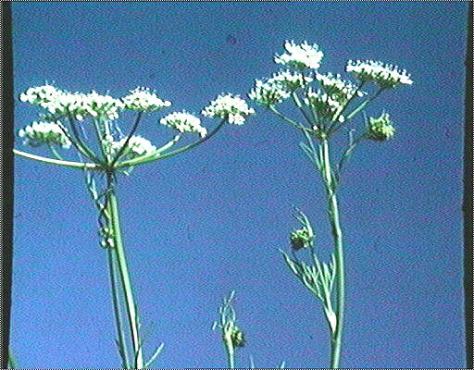
The Chataigne de Terre (Earth Chestnut in French) or Bunium bulbocastanum in latin is a truly rare vegetable, even in Europe where gardeners, more than farmers, grow it in France and Belgium notably.

Its other names include: terre noix, marron de terre, gland de terre, moinson (French), Erdkastanie (German) ; bulbo castaño (Spanish) ; bulbocastano comune (Portuguese) great pignut (English) and aardkastanje (Dutch).

CHATAIGNE-DE-TERRE.1jpg

It is an ombrelliferea and is also cultivated as a decoration garden plant.

The plant, wit comparatively few leaves can reach a height of 30~70 cm (1~2 feet).
It blossoms in Autumn with beautiful white flowers.
After seeds have been formed, the arial part of the plant will dry out.
It is then than one can find many tuber-like (they are not true tubers) nodules coming out of the roots when the whole plant is pulled out the earth.

These can be eaten raw after being washed in clear cold running water.
They have a distinctive chestnut taste and are greatly appreciated as a snack (for aperitif!)

They also become an ingredient for the German Liqueur called Kummel!

RECOMMENDED RELATED SITES
Not-Just-Recipes
Bengal cuisine
Cooking Vegetarian
Frank Fariello
Gluten-free Vegan Family
Meatless Mama

Please check the new postings at:
sake, shochu and sushi

—————————————-
日本語のブログ
—————————————-

For Vegan and Vegetarians! “Forgotten” Vegetables 15: Capucine tubereuse-Maschua

capucine-tubereuse2

SYNOPSIS:
Organic agriculture and biodiversity have in recent years brought about a rediscovery of many “forgotten” vegetables that people especially in Europe and France conscientiously tried to forget as they reminded them of the privations suffered during WWII. The same people had then to make do with untraditional vegetables because potatoes, carrots and so on were confiscated by occupying forces or their own armies.
With sustainibility and bioagriculture made more important by the deficiencies of modern mass agriculture, those “forgotten” vegetables have suddenly come to the fore for the pleasure of all, and that of course of vegetarians and vegans!

This particular series of postings will introduce these vegetables one by one. I hope they will become useful for a long time to come to all my vegan and vegetarian friends!
1) Scorsonere/Oyster Plant
2)Potimarron
3) Vitelotte
4) Rutabaga
5) Cardon
6) Panais/Parsnips
7) Patisson
8) Topinambour
9) Crosne
10) Cerfeuil Tubereux
11) Poiree
12) Oca
13) Ulluque/Ulluco
14) Tigernuts

The Capucine tubereuse (French), Maschua (Inca) or Tropaeolum tuberosum (Latin) is a very old tuber originally grown on the high plateaux of Peru and around Titicaca Lake.

2m high, it is mainly used for its flowers as a decorative plant.
It blooms from July to Autumn. The seeds are formed at the same time.

capucine-tubereuse

It was already grown and eaten by the pre-Incas 5.500 years BC.
It gives out fairly good yields.

Maschua has recently become popular in France and Belgium for its tubers.
They can be eaten like potatoes.
Its peppery taste (it contains mustard oils) is not always appreciated.
This peppery taste disappears upon freezing or long boiling.
The taste is best when the tubers are harvested after the first frosts.
In Bolivia and Peru the tubers are also eaten with molasses and frozen as a dessert.

The young leaves can be eaten as a green vegetable, either raw or cooked.
The flowers can be eaten raw and have a sweet taste ending up on a peppery note.

RECOMMENDED RELATED SITES
Not-Just-Recipes
Bengal cuisine
Cooking Vegetarian
Frank Fariello
Gluten-free Vegan Family

Please check the new postings at:
sake, shochu and sushi

—————————————-
日本語のブログ
—————————————-

For Vegan and Vegetarians! “Forgotten” Vegetables 14: Tigernuts, Amande de Terre

AMANDE-DE-TERRE-1a

SYNOPSIS:
Organic agriculture and biodiversity have in recent years brought about a rediscovery of many “forgotten” vegetables that people especially in Europe and France conscientiously tried to forget as they reminded them of the privations suffered during WWII. The same people had then to make do with untraditional vegetables because potatoes, carrots and so on were confiscated by occupying forces or their own armies.
With sustainibility and bioagriculture made more important by the deficiencies of modern mass agriculture, those “forgotten” vegetables have suddenly come to the fore for the pleasure of all, and that of course of vegetarians and vegans!

This particular series of postings will introduce these vegetables one by one. I hope they will become useful for a long time to come to all my vegan and vegetarian friends!
1) Scorsonere/Oyster Plant
2)Potimarron
3) Vitelotte
4) Rutabaga
5) Cardon
6) Panais/Parsnips
7) Patisson
8) Topinambour
9) Crosne
10) Cerfeuil Tubereux
11) Poiree
12) Oca
13) Ulluque/Ulluco

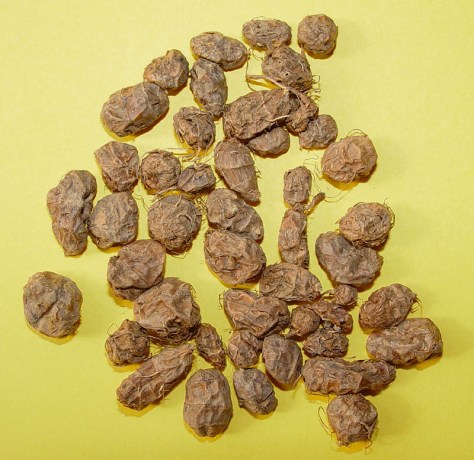
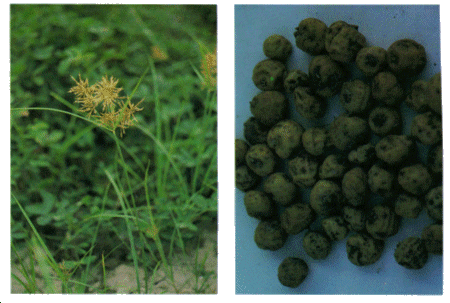
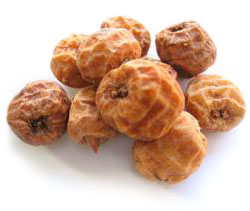
Tigernuts or chufa flatsedge in English, amande de terre (earth almond!), choufa, noix tigrée, souchet comestible in French, Chufa in Sapnish, Zigolo dolce in Italian or Yellow Nutsedge in the US, Cyperus esculentus does have many names!

AMNDE-DE-TERRE-1

Very popular in Spain, the plant is a cousin of the papyrus.
It produces small 2~3 cm tubers/rhyhomes in Autumn.
Once dried thay can be safely kept for years.

AMANDE-DE-TERRE

In Spain they are fermented into a celebrated drink with an almond taste called Hodchata!

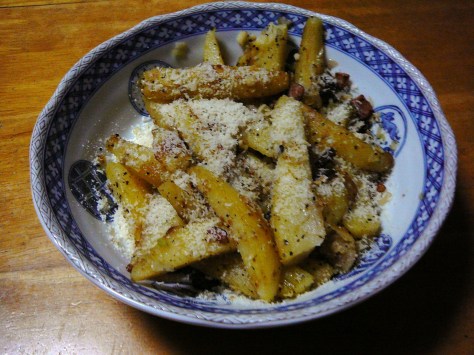
Many people eat them raw as snacks or griilled or in salads with a drink, too!

Before re-planting them April~May, let them in lukewarm water for 48 hours. They need quite some watering, especially during dry seasons.

Harvest are conducted from end of Otober to the beginning of November by pulling out the whole plant.ue vous conserverez au frais.

Le saviez-vous ?
Le souchet sert à préparer une boisson Espagnole appelée “horchata de chufa”. Chufa est son nom en Espagne.

It is also used in place of almonds in cakes.

RECOMMENDED RELATED SITES
Not-Just-Recipes
Bengal cuisine
Cooking Vegetarian
Frank Fariello

Please check the new postings at:
sake, shochu and sushi

—————————————-
日本語のブログ
—————————————-
French Cuisine: Young Cod and Lentils

CABILLAUD-LENTILS

Young cod or “Cabillaud” in French is one of those white-fleshed fish which are so easy to prepare and do not require complicated recipes!

Here is a recipe which will make you sound like an accomplished chef:
Paves de Cabillaud aux Lentilles/Young Cod Steaks and Lentils!

INGREDIENTS: for 6 persons

-6 large pieces of cod fillets, 150 g each
-Puy green lentils: 500 g
-Bacon or Pancetta: 6 very thin slices
-Carrot: 1
-Onion: 1
-Olive oil (EVO): 4 tablespoons
-Xeres vinegar: 1 tablespoon
-Bouquet garni (if unavailable, make your own with fresh of dried rosemary, thyme, sage, etc)
-Salt: to taste
-Black pepper, freshly groungd: to taste

RECIPE:

-Peel the carrot and onion. Slice the onion very thin and cut the carrot into small dices. Drop the sliced onion and carrot dices and lentils into a large pan and cover (a little higher than the whole level) with cold water (containing as little calcium as possible=soft water). Add the bouquet garni. Bring to boil. Set the heat as to simmer the vegetables for 45 minutes.

-10 minutes before the vegetables are cooked fry the bacon slices on a large non-stick frypan until golden. Take excess fat off by laying them on a kitchen paper sheet.
In the same frypan heat a tablespoon of olive oil. Lay the cod on the rypan and fry on high fire for 2 minutes on each side. Turn the heat low. Sprinkle the fish with salt and pepper and let cook for 5 more minutes on a low fire.

-Drain the lentils. Pour them on a serving dish.
Prepare a vinaigrette with salt, pepper, Xeres vinegar and the remaining olive oil. Pour it onto the lentils. Mix. Place the the bacon slices and cod onto the lentils and serve at once.

-If you serve them individually, keep six plates warm. Place each cod fillet on a bed of lentils and a slice of bacon. Sprinkle the fish with a little freshly chopped Italian parsley and just a little olive oil. Place a sprig of Italian parsley on the whole for the fnal touch.

Serve a good Beaujolais with it (not Beaujolais Nouveau, for people’s sake! LOL)

RECOMMENDED RELATED SITES:
Warren Bobrow
Bread + Butter
5 Star Foodie
Frank Fariello
Mangantayon
Elinluv Tidbit Corner

Please check the new postings at:
sake, shochu and sushi

—————————————-
日本語のブログ
—————————————-