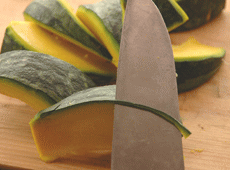
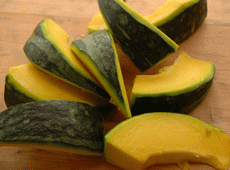
Tag Archives: レシピ

Today’s Lunch Box/Bento (’10/21)

The Missus and I went to this beautiful island called Kume Island off Okinawa main island last week, and we took the opportunity to visit the local supermarkets as these are the best places to learn what the local truly eat at home.
We found a special mix to add to rice when steaming it and it certainly for delicious musubi/rice balls!

The Missus seemed to really enjoy herself as she offered me a pe-tasting of her bento with breakfast! It certainly made for a very tradional and colourful bento again!

For a closer look of the musubi!

As for the garnish, she made tuna patties (secret recipe, sorry! I wasn’t told about it, either!) that she fried and served with lemon slices for extra seasoning and added some lightly fried sweet pimentoes for colour, fibers and vitamins. A feww slices of pickled daikon were also added later.

As for the salad/dessert: potato and vegetables salad, mini-tomatoes and plain (but delicious!) tamagoyaki/Japanese omelette.

Poor me, I will have to wait until next Tuesday till the next bento!

RECOMMENDED RELATED SITES:
Warren Bobrow, Bread + Butter, Zoy Zhang, Hungry Neko, Think Twice, Frank Fariello, Mangantayon, Hapabento, Elinluv Tidbit Corner, Tokyo Terrace, Maison de Christina, Chrys Niles,Lexi, Culinary Musings, Wheeling Gourmet, Comestiblog, Chronicles Of A Curious Cook, Bento Boutique, Tokyo Through The Drinking Glass, Tokyo Foodcast, Urban Sake, Sake World, Palate To Pen, Yellin Yakimono Gallery, Tokyo Terrace, Hilah Cooking, More than a Mount Full, Arkonite Bento

Please check the new postings at:
sake, shochu and sushi

—————————————-
日本語のブログ
—————————————-

12 Things To Know About ‘Indian’ Food Before You Seek It, Cook It & Eat It by Devaki

Namastey!

My new friend, Devaki at Weave A Thousand Flavors has come up with an essay on Indian gastronomy, which I think deserves special attention.
She says it took her 30 years in the making, and knowing so little myself about the culinary splendors of such a vast country/sub-continent, I took the liberty (with my friend’s agreement) to introduce her work for all to know.

In her own words, she is a purist when it comes to food and she worships the concept of ‘authentic’ as the benchmark of what is good especially when dealing with ethnic cuisines. If it’s being done successfully for over 3000 years years then she thinks it deserves that we sit up & listen!

She is still too modest about it when she says that she has no doubt that some of what she says here will have many of us in an uproar. But it can’t be helped as she courageously ponders.

Her hope is that people will view this incredibly vast, almost unfathomable cuisine in a new light. And if the next time when many of us go to a restaurant or decide to cook Indian at home, she hopes that what we have read in her posting will give us a moment of pause and enable us to make much more informed choices.

So here goes:
12 Things To Know About ‘Indian’ Food Before You Seek It, Cook It & Eat It

RECOMMENDED RELATED SITES:
Warren Bobrow, Bread + Butter, Zoy Zhang, Hungry Neko, Think Twice, Frank Fariello, Mangantayon, Hapabento, Elinluv Tidbit Corner, Tokyo Terrace, Maison de Christina, Chrys Niles,Lexi, Culinary Musings, Wheeling Gourmet, Comestiblog, Chronicles Of A Curious Cook, Bento Boutique, Tokyo Through The Drinking Glass, Tokyo Foodcast, Urban Sake, Sake World, Palate To Pen, Yellin Yakimono Gallery, Tokyo Terrace, Hilah Cooking, More than a Mount Full, Arkonite Bento

Please check the new postings at:
sake, shochu and sushi

—————————————-
日本語のブログ
—————————————-

BOOK REVIEW: Breaking Bread In L’Aquila by Maria Filice

When Maria Filice conceived this cookbook remarkable for its beautiful practicality she had love, simplicity and knowledge in mind.

Love for the people living in the L’Aquila Region of Abruzzo, love for her late husband, Paul Piccone, who introduced her to their homey gastronomy, love for her guests past, present and future and love for ample, complete and delicious food.

Simplicity in a book eminently utilitarian for all cooks and chefs, be they absolute beginners trying to please their loved ones or veteran chefs in search of inspiration back to the basics.

Knowledge to be acquired about traditional ingredients, new taste combinations and forgotten wines for perfect pairing with her recipes.

This cookbook ought to be left open at all times on the kitchen table of all Italian food lovers, and all food lovers for that matter.
Preceded by an eye-opening introduction on her entertaining philosophy and the wines of Abruzzo, Maria’s work has been organized along the seven days of the week with a full Italian meal suggestion for everyone of them.
Actually, more than a meal, she is taking her guests along a daily feast from the Antipasti, through Primi Piatti and Seondi Piatti to the Dolci via a detour through a Contorni.

I do not wish to reveal all the secrets of her book, but I cannot help recommend my own biased selection:
-Antipasti: Insalata di Mare e Servita nel Radicchio (Seafood salad in a Radicchio Cup)
-Primi Piatti: Pasta e Lenticchie (Pasta and Lentils)
-Primi Piatti: Minestra di Farro (Spelt Soup)
-Secondi Piatti: Scaloppine al Vino Bianco (Veal Scaloppine in White Wine)
-Secondi Piatti: Pollo Arrosto con Aglio e Rosmarino (Chicken with Rosemary and Garlic)
-Contorni: Fritto Misto di Funghi (Sauteed Mushromms Madley)
-Dolci: Torta di Caffe (Coffee Cake)

I wrote this review at the counter of Il Paladino, one of the very best Italian Restaurants in all Shizuoka Prefecture, Japan. When I mentioned the wines of Montelpuciano to my friend chef, he just went to his cellar to show me a couple of the bottles he had on his wine list (some more expensive of the same name are kept away from the list for special guests!)!
It certainly piqued his curiosity when I told him the reason of my query. Consequently, we went through Maria’s book together all over again at ease (I had chosen a quiet time of the day!) and he was so impressed by the direct approach of the recipes and the accompanying photographs that he requested me to keep the book long enough for him to consult!

Not only this cookbook will help you make your friends and family discover the pleasures of a great regional Italian gastronomy, but the net profits of its sales will be donated to help the victims of devastation caused by the earthquake which recently struck L’Aquila.

For direct purchase consult Maria Filice’s own website at www.telospress.com/foodandfate

Robert-Gilles Martineau

RECOMMENDED RELATED SITES:
Warren Bobrow, Bread + Butter, Zoy Zhang, Hungry Neko, Think Twice, Frank Fariello, Mangantayon, Hapabento, Elinluv Tidbit Corner, Tokyo Terrace, Maison de Christina, Chrys Niles,Lexi, Culinary Musings, Wheeling Gourmet, Comestiblog, Chronicles Of A Curious Cook, Bento Boutique, Tokyo Through The Drinking Glass, Tokyo Foodcast, Urban Sake, Sake World, Palate To Pen, Yellin Yakimono Gallery, Tokyo Terrace, Hilah Cooking, More than a Mount Full, Arkonite Bento

Please check the new postings at:
sake, shochu and sushi

—————————————-
日本語のブログ
—————————————-

Gastronomic Destinations: Okinawa/Kume Island Part 1

Kume Island is a small island located just north west of the bottom tip of Okinawa Island. Not so long ago, only a very few planes landed there and visitors had to stay at minshuku/民宿, the japanese equivalent of Bed & Breakfasts.
Nowadays at least three major hotels welcome tourists coming on daily flights.
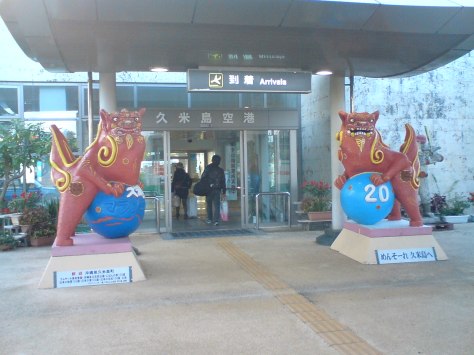
Guardian Lions at Kume Island Airport.

Kume Island Airport is tiny but welcoming. In any case two massive lion guardians are there to fend off all bad spirits!
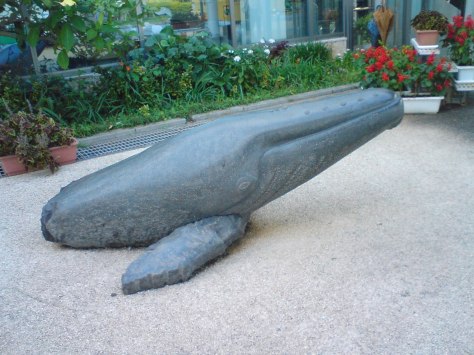
Another statue proves that the island is also a major centre for whale viewing. Actually it is also natural park where sea turtles are protected (but I will talk about that in another part!) and skin divers come from far away to admire the beautiful white sand sea bottoms, corals and abundant marine life.
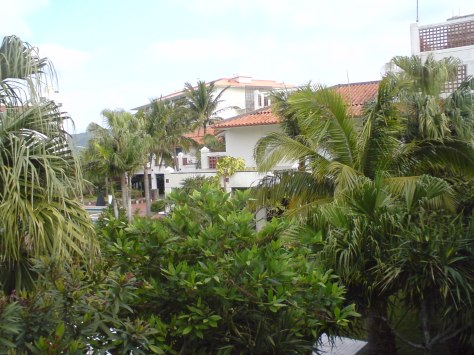
We arrived in the evening after dusk. Incidentally all the above pics were taken later. We stayed at a farily decent hotel called Resort Hotel Kume Island, which boasted all the facilities wished for.

Although the season starts only in April, a large swiiming pool with bar, mini golf, parks for eating outdoors are on hand forthe lazy guests!
As I said we arrived in the evening just after the last limousine bus had departed. Instead we boarded a taxi whose local veteran driver proved a mine of information on the island and especially its nature.
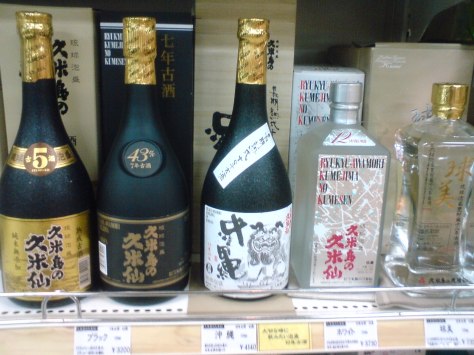
After a quick dinner (all meals were included in the package) we had a look at the souvenir stand for later reference.
There is only one Japanese sake brewery on the min Island and a few shochu distilleries, but the regional drink is fiery spirit distilled from Thai rice and called awamori/泡盛. The minimum alcohol content is 25 degrees proof, but more usually 30 and can go as far as 45 and more!
You can drink it straight, on the rocks or with water.
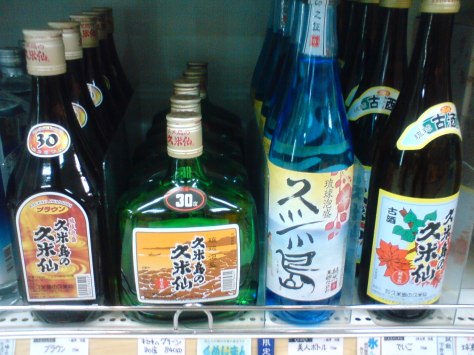
They come in striaght one-year casked spirits or aged up to 18 years and more with consequent prices.
Kume Island is host to two distilleries, Kumeshima Distillery and Yoneshima Distillery for a population of less than 10,000 souls!
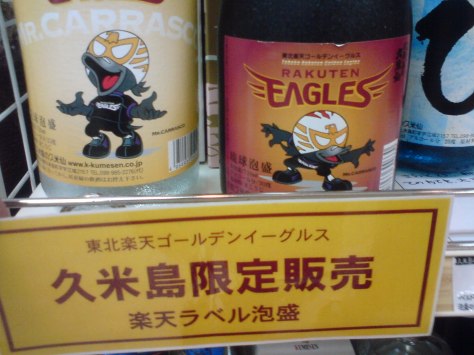
Collectors should be on the look-out as limited labels are sometimes printed like the ones above commemorating the Spring camp visit of the Rakuten Eagles Baseball Team playing in the Japanese Professional Basebll Pacific League (there are 12 professional clubs in two leagues in this country)!

Awamori in ceramic vessels make for beautiful souvenirs back home!

Some of the limited bottles even look like perfume vials (an interesting way to conceal your secret vice? LOL)!

More in old-fashioned, rustic, pottery!

Frankly speaking, the dinner had been a bit light after a three-hour long journey from Tokyo and we were still mightily hungry (and thirsty)!
Luckily enough (it was closed the next day!) an izakaya belonging to the same group owning our hotel stood across the street.
Called Nantoshokurakuen/南島食楽園, it is a welcoming place open from 17:30 to 24:00 (closed on Thursdays) which boasts truly local food.
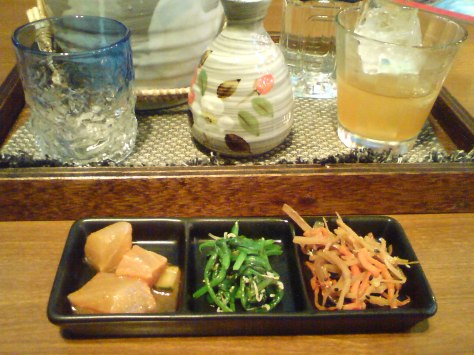
The Missus opted for a couple of glasses of umeshu, but I ordered a small bottle of 3 years-aged Bi Awamori distilled by Kumeshima Distillery. It was served in a local pottery flask with ice and local water.
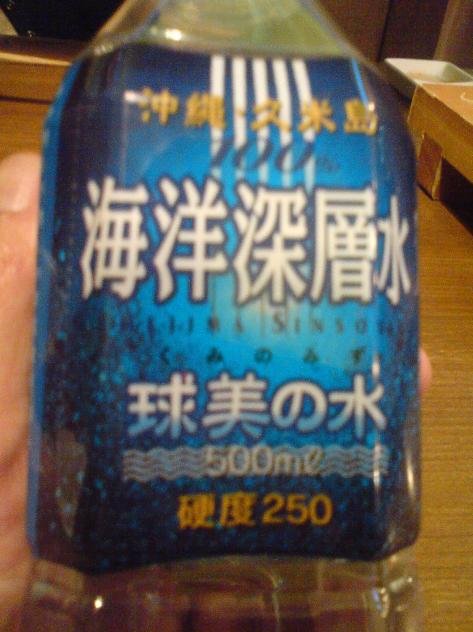
This water is a bit unusual, although typical of Japan. It is water flowing in neighbouring deep sea. It is of the purest kind and needs very little filtering or know because of its very low saline content!
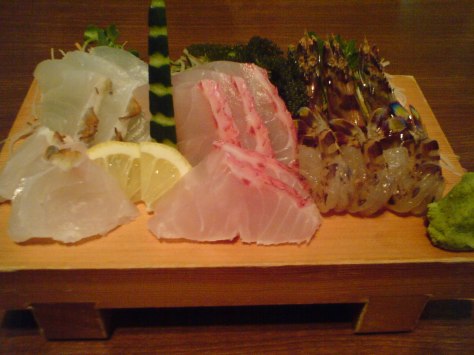
We were in a bit of a fix at which fish or seafood to order for sashimi as the izakaya proposed no less than nine of them all caught along the island shores!

The sashimi on the left (above picture for closer look) is called “irabucha”, a green or brown-skinned snapper variety. A bit crunchy and delicious, it is eaten with its skin.

The fish in the middle is called Akamchi, another variety of snapper caught at 300~400 metre depths. Now this fish is extravagant for its rarity (you wi\on’t find it in Tokyo!) and an absolute delicacy melting in your mouth!
Can you spot the umibudo/sea grapes between the fish and the prawns?

Now, the kuruma ebi/large prawns were also an extravagant morsel. They were still alive and he head and tail moved even untouched!
As for the taste, they were halfway between raw lobster and ama ebi/sweet shrimps!

To ensure we came back to our hotel room unwanting, we ordered two different typically Okinawan foods: Champuru rice noodles as above.
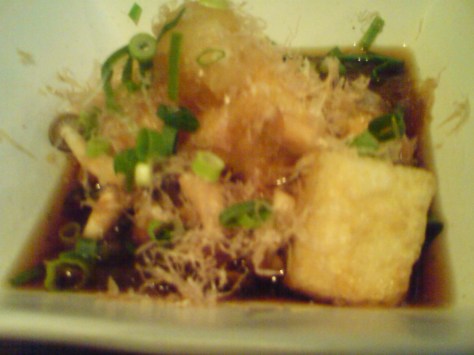
And Agedahi Mizore Shima Dofu made with the local tofuu which is notably firmer than tofu found in other regions of Japan.

If you have the occasion to visit the island know that Kume Island is celebrated for its umibudo/sea grape seaweed, kuruma ebi/large prawns, ogo nori/seaweed, shima kamaboko/fish paste, Kumeshima soba/called soba but actually wheat noodles, miso cookies, awamori spirits, and deep sea pure water!

See you in Part 2 which will relate our second day with a load of pictures. Stay tuned!

RECOMMENDED RELATED SITES:
Warren Bobrow, Bread + Butter, Zoy Zhang, Hungry Neko, Think Twice, Frank Fariello, Mangantayon, Hapabento, Elinluv Tidbit Corner, Tokyo Terrace, Maison de Christina, Chrys Niles,Lexi, Culinary Musings, Wheeling Gourmet, Comestiblog, Chronicles Of A Curious Cook, Bento Boutique, Tokyo Through The Drinking Glass, Tokyo Foodcast, Urban Sake, Sake World, Palate To Pen, Yellin Yakimono Gallery, Tokyo Terrace, Hilah Cooking, More than a Mount Full, Arkonite Bento

Please check the new postings at:
sake, shochu and sushi

—————————————-
日本語のブログ
—————————————-

Today’s Lunch Box/Bento (’10/20)

Finally back to “normal life” after this short but great trip to the other extremity of Japan, namely Kume Island/久米島/ off Okinawa. A few postings and a lot of pictures will soon be featured on this blog!

The Missus used that favourite woven bento box, which was actually containing a bento when we bought it! It proved a bargain in the end!LOL

The “sushi maki” were made with ton toro/豚トロ or very soft pork slices that the Missus deep-fried in tonkatsu style before wrapping them in plain rice steamed with a piece of konbu/seaweed and eolling them into lettuce for great presentation and nutritious balance.

She added soft-boiled egg marinated in a concoction of hers and sprinkled with black sesame seeds. She completed the box with some stir-fried renkon/lotus root slices seasoned with chopped scallions, dry bonito shavings/katsuo bushi and chili pepper mix.

The salad contributed more balance, vitamins, fibers and so forth with beans, celery, tomato, cucumber, lettuce, trevise, walnuts and cheese.

For dessert and more vitamin C, benihoppe/red cheeks strwawberries from Shizuoka. We are almost at the end of their season!

Back to a healthy diet!

RECOMMENDED RELATED SITES:
Warren Bobrow, Bread + Butter, Zoy Zhang, Hungry Neko, Think Twice, Frank Fariello, Mangantayon, Hapabento, Elinluv Tidbit Corner, Tokyo Terrace, Maison de Christina, Chrys Niles,Lexi, Culinary Musings, Wheeling Gourmet, Comestiblog, Chronicles Of A Curious Cook, Bento Boutique, Tokyo Through The Drinking Glass, Tokyo Foodcast, Urban Sake, Sake World, Palate To Pen, Yellin Yakimono Gallery, Tokyo Terrace, Hilah Cooking, More than a Mount Full, Arkonite Bento

Please check the new postings at:
sake, shochu and sushi

—————————————-
日本語のブログ
—————————————-

Vegan Japanese Cuisine: Cauliflower and Lime

Vegansarus and vegan freinds should know by now that Japanese gastronomy is a whole fireld to study for their culinary priorities. Not only it provides ideas for nutritious food but alo elegance!

Cauliflower and Lime!

INGREDIENTS: For 2 people

-Cauliflower: a little less that 3 cups/550 cc, broken into small “branches/flowers”
-Sweet white miso: 1 tablespoon
-Rice vinegar: 1 large tablespoon and a little more
-Mirin/sweet sake: 1/4 teaspoon
-Lime zest: 1 lime
-Sugar: if wished for, as deemed as appropriate
-Water for boiling (with a little sakt)

RECIPE:

-Break the cauliflower into small “branches/flowers” and boil in salted water to the softness/hardness of your choice.

-In a bowl drop the sweet white miso, rice vinegar and mirin/sweet sake and mix. Check taste and rectify with sugar if deemed appropriate. Add thinly cut lime zest and mix.

-Choose a nice vessel and place the boiled cauliflower in it (look at the picture above). Pour the seasoning ver it, taking care of placing the lime zests on top in an artisitic manner (use chopsticks!).
A couple of very thin chives would do well for decoration!

Great with Japanese sake or beer!

RECOMMENDED RELATED SITES:
Warren Bobrow, Bread + Butter, Zoy Zhang, Hungry Neko, Think Twice, Frank Fariello, Mangantayon, Hapabento, Elinluv Tidbit Corner, Tokyo Terrace, Maison de Christina, Chrys Niles,Lexi, Culinary Musings, Wheeling Gourmet, Comestiblog, Chronicles Of A Curious Cook, Tokyo Through The Drinking Glass, Tokyo Foodcast, Urban Sake, Sake World, Palate To Pen, Good Beer & Country Boys, Another Pint, Please!, Yellin Yakimono Gallery, Tokyo Terrace, Hilah Cooking, Vegansarus

Please check the new postings at:
sake, shochu and sushi

—————————————-
日本語のブログ
—————————————-

Wild Blue Fin Tuna Catch Ban: So What?

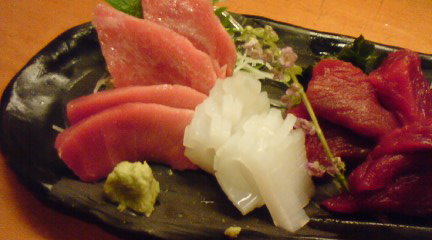
-Bottom left: “honmaguro/本鮪/Kuromaguro/黒鮪”, blue fin tuna from Oma (Aomori Prefecture), chu-toro/semi-fat part.
-Top left: O-toro/belly fat part of same fish
-Bottom centre: “Aori Ika/あおり烏賊, Great Fin Reef Squid from Suruga Bay in Shizuoka Prefecture.
-Bottom right: Akami/lean part from same tuna.
(Picture taken at Sushi Ko, Shizuoka City, Japan)

For all his own research done the old iconoclast geezer once again runs the risk of being lambasted for tackling head on incrasingly poltically incorrect issues…

Attempting to show the larger picture as recently done with whalemeat and suplements certainly struck the wrong chord in some circles, be they faithful friends or avowed enemies.
On the other hand such vital issues as marine and fish stock preservation and replenishement have failed to attract expected comments.

It seems that food is slowly becoming a bone of contention whereas for eons shared meals and drinks were considered the birth and proof of culture in any so-called civilized country or nation.
Moreover, this divisive state of affairs is being further exarcerbated by populist politicians seizing the opportunity for an easy vote gain. Has smoke-belching Arnie ever seen the geese and ducks queueing for more food? Has he ever witnessed the conditions chicken are kept before being served in cartons at KFC diners?
Only very recently a group of politically and religiously-motivated group of vegans have threatened me with a concerted internet attack if I did not mendmy ways immediately (they forgot I can use a spam filtering box…).
Considering personal efforts in featuring regular vegan recipes and information on vegetables and fruits, I was slightly disappoited with the utter lack of tolerance (and civility).
It won’t be mong until a violence-prone activist is arrested for running a bullozer into the the house of a famer who had dared mistreating a cow into giving her milk to make cheese.

japan bashing in all fields has become an increasingly fashionable way to make people forget far more pressing issues.
But the same people are forgetting the resilience and ingenuity of the inhabitants of this island nation. The Japanese kep quiet, bend their backs under the deluge and continue against overwhelming odds to produce arguably the best-balanced diet in this world. After all they are also the longest-living humans on the globe. Many conveniently tend to forget too easily that Japan is one, and probably the only one, of a few countries which can daily provide for all culinary tastes, be they vegan, vegetarian, halal, kosher, or plainly omnivore.

The Japanese also a great grasp of the future.
To cut a long story short, they were the first, and probably the only ones, to research and succeed in raising blue fin tuna from the egg. Such fish are now reaching the weight of 30 kg in Kagoshima Prefecture,and are fast closing to the same figure in Kinki and Tokai Marine Universities. Kagoshima blue fin tuna is already on sale at Parche Supermarket in Shizuoka City!
Businessmen have already registered blue fin tuna rasied at Tokai Marine University under the name of “Shimizu Toro”!

The Japanese don’t feel compelled to impose their views, laws and restrictions in the lands and seas of other nations, but they will be the first to export human-raised blue fin tuna abroad.
Consequently, the ban on wild blue fin tuna will have spawned the perverse result of Japan and importers abroad getting their hands on a new lucrative business!
I can see myself one day guiding rich foreign tourists on a sushi tour of Shizuoka, which not only raises its own blue fin tuna but is also blessed by a sea replete with the same fish!

Now, I totally agree that blue fin tuna catch, and that of any other fish for that matter, should be (have been) strictly regulated, but the present unilateral ban will only bring about two negative outcomes:
-on one hand, what is going to happen to all these fishermen and workers in harbours along the coasts of Spain, France, Italy, Greece, Morocco, Mauritania, Angola and the workers at Hunt’s Point, Boston?
-on the other hand, the same fishermen and workerswill have no other recourse left but but to catch more of the “lesser” tuna species to survive.

The vicious circle has only begun…

Unrelated at may sound, nobody seems to have the guts to question China and her fishermen who kill more than a million (yes, you read well!) sharkes for the sole benefit of cutting off their fins (the rest of the fish is callously thrown back into the sea).

I kept this posting short for the sake of impact, but I will gladly answer any comments as long as they are formulated in a polite, coherent and constructive manner. Otherwise they will be trown to the (remaining) sharks!

RECOMMENDED RELATED SITES:
Warren Bobrow, Bread + Butter, Zoy Zhang, Hungry Neko, Think Twice, Frank Fariello, Mangantayon, Hapabento, Elinluv Tidbit Corner, Tokyo Terrace, Maison de Christina, Chrys Niles,Lexi, Culinary Musings, Wheeling Gourmet, Comestiblog, Chronicles Of A Curious Cook, Tokyo Through The Drinking Glass, Tokyo Foodcast, Urban Sake, Sake World, Palate To Pen, Good Beer & Country Boys, Another Pint, Please!, Yellin Yakimono Gallery, Tokyo Terrace, Hilah Cooking, Vegansarus

Please check the new postings at:
sake, shochu and sushi

—————————————-
日本語のブログ
—————————————-

Vegan Japanese Cuisine: Lotus Root Steaks

This is the third (and not fianl, I hope!) of a series of vegan recipes for such friends as Vegansarus prepared with lotus root or renkon/蓮根 in Japanese. These should be easier and easier to get these days. They do provide a great bite on top of their nutritional value!

By cutting lotus roots into thick slices you can eat them like steaks!

Lotus Root Steaks!

INGREDIENTS: For 2~ paople

-Lotus roots: 2~ large ones
-Olive oil (EV): as appropriate
-Salt: a reasonable quantity
-Freshly ground black pepper: as much as you want!

RECIPE:

-Peel and cut lotues roots into 1 cm-thick slices. make sure of getting rid of any blemish. Wash them in clear cold water and drain thoroughly.

-Pour enough olive oil in frypan. More than less oil is better as it will be sucked in by the lotus root. Place lotus roots on oil. Cover with lid. Cook over a medium fire. Fry both sides of the slices until they have reached a nice brown colour.

-halfway through cooking, when lotus root slices are starting changing colour sprinkle salt and freshly ground black pepper on both sides.

When ready serve as they are, or with some reen leaf vegetables.
A little chili pepper or a final seasoning for people who like their food spicy!
Simple, isn’t it?

Great with Japanese sake or beer!

RECOMMENDED RELATED SITES:
Warren Bobrow, Bread + Butter, Zoy Zhang, Hungry Neko, Think Twice, Frank Fariello, Mangantayon, Hapabento, Elinluv Tidbit Corner, Tokyo Terrace, Maison de Christina, Chrys Niles,Lexi, Culinary Musings, Wheeling Gourmet, Comestiblog, Chronicles Of A Curious Cook, Tokyo Through The Drinking Glass, Tokyo Foodcast, Urban Sake, Sake World, Palate To Pen, Good Beer & Country Boys, Another Pint, Please!, Yellin Yakimono Gallery, Tokyo Terrace, Hilah Cooking, Vegansarus

Please check the new postings at:
sake, shochu and sushi

—————————————-
日本語のブログ
—————————————-

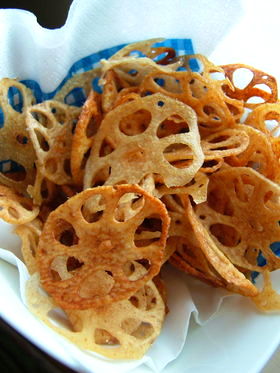
Vegan Japanese Cuisine: Lotus Root Chips

This is the second of a series of vegan recipes for such friends as Vegansarus prepared with lotus root or renkon/蓮根 in Japanese. These should be easier and easier to get these days. They do provide a great bite on top of their nutritional value!

Potatoes are great as chips, aren’t they? Now, lotus roots are too! Moereover, they can be used for striking decoration in salads!

Lotus roots Chips!

INGREDIENTS: For 1 person

-Lotus root: 1~2 medium size
-Oil
-Salt

RECIPE:

-Cut the lotus root root into 2 mm thick slices and wash them lightly in water.

-Drain them thoroughly. Take out all excess water by pacing them between two sheets of kitchen paper.

-Fry them slowly in oil at about 150 degrees Celsius. keep in mind that overfried lotus roots (dark brown to balckish9 become sour and tasteless!

-Scopp them out when they attained the right colour and let them rest on a sheet of kitchen paper to take out excess oil.

-After letting them cool a bit, drop them in a (clean!) vinyl pouch with a little salt and shake them around for an even taste!

Great with Japanese sake or beer!

RECOMMENDED RELATED SITES:
Warren Bobrow, Bread + Butter, Zoy Zhang, Hungry Neko, Think Twice, Frank Fariello, Mangantayon, Hapabento, Elinluv Tidbit Corner, Tokyo Terrace, Maison de Christina, Chrys Niles,Lexi, Culinary Musings, Wheeling Gourmet, Comestiblog, Chronicles Of A Curious Cook, Tokyo Through The Drinking Glass, Tokyo Foodcast, Urban Sake, Sake World, Palate To Pen, Good Beer & Country Boys, Another Pint, Please!, Yellin Yakimono Gallery, Tokyo Terrace, Hilah Cooking, Vegansarus

Please check the new postings at:
sake, shochu and sushi

—————————————-
日本語のブログ
—————————————-

French Cuisine: Sauteed Landes Duck Foie Gras with Madeira Sauce on Truffles Risotto

Service: excellent and very friendly
Facilities: great washroom, great cleanliness overall
Prices: reasonable, good value.
Strong points: Interesting wine list. Great use of local products.
no-smoking-logoentirely non-smoking!

Another reason for visiting Pissenlit on a regular basis is that Chef Tooru Arima is capable of using the most extravagant ingredients and still offer them at a very reasonable price.

This Duck foie gras (how about that, Arnie?LOL) from the Landes area, South Western France) was fried/flambe to perfection. It sounds easy, but the timing is extremely difficult. I should know as I cannot count the times I have failed.
Now the Madeira sauce was in perfect balance with the foie gras, whereas the truffles risotto offered the salted counterpoint to the sweetness of the foie gras and sauce!

Alright, how much? Less than 30 US $!

PISSENLIT
420-0839 Shizuoka City, Aoi Ku, Takajo, 2-3-4
Tel.: 054-270-8768
Fax: 054-627-3868
Business hours: 11:30~14:30; 17:00~22:00
Closed on Tuesdays and Sunday evening
Homepage (Japanese)
Credit Cards OK

RECOMMENDED RELATED SITES:
Warren Bobrow, Bread + Butter, Zoy Zhang, Hungry Neko, Think Twice, Frank Fariello, Mangantayon, Hapabento, Elinluv Tidbit Corner, Tokyo Terrace, Maison de Christina, Chrys Niles,Lexi, Culinary Musings, Wheeling Gourmet, Comestiblog, Chronicles Of A Curious Cook, Tokyo Through The Drinking Glass, Tokyo Foodcast, Urban Sake, Sake World, Palate To Pen, Good Beer & Country Boys, Another Pint, Please!, Yellin Yakimono Gallery, Tokyo Terrace, Hilah Cooking, More than a Mount Full

Please check the new postings at:
sake, shochu and sushi

—————————————-
日本語のブログ
—————————————-

French Cuisine: Landes Duckling and Orange Salad at Pissenlit

Service: excellent and very friendly
Facilities: great washroom, great cleanliness overall
Prices: reasonable, good value.
Strong points: Interesting wine list. Great use of local products.
no-smoking-logoentirely non-smoking!

Tooru Arima is a lucky chef:
He has access to some of the best organic vegetables and fruit all year long in this country.
No wonder he can prepare this succulent salad with duckling from the Landes area in France and cook it to perfection before letting it cool down and cut it thin slices to be served with oranges from Shizuoka. As for the green leaf vegetables inclkuding trefoil, luccolla and others are all organic and from our prefecture.
Customers are lucky, too, aren’t they? LOL

PISSENLIT
420-0839 Shizuoka City, Aoi Ku, Takajo, 2-3-4
Tel.: 054-270-8768
Fax: 054-627-3868
Business hours: 11:30~14:30; 17:00~22:00
Closed on Tuesdays and Sunday evening
Homepage (Japanese)
Credit Cards OK

RECOMMENDED RELATED SITES:
Warren Bobrow, Bread + Butter, Zoy Zhang, Hungry Neko, Think Twice, Frank Fariello, Mangantayon, Hapabento, Elinluv Tidbit Corner, Tokyo Terrace, Maison de Christina, Chrys Niles,Lexi, Culinary Musings, Wheeling Gourmet, Comestiblog, Chronicles Of A Curious Cook, Tokyo Through The Drinking Glass, Tokyo Foodcast, Urban Sake, Sake World, Palate To Pen, Good Beer & Country Boys, Another Pint, Please!, Yellin Yakimono Gallery, Tokyo Terrace, Hilah Cooking, More than a Mount Full

Please check the new postings at:
sake, shochu and sushi

—————————————-
日本語のブログ
—————————————-

French Gastronomy: Mosaic Vegetables Terrine at Pissenlit

Service: excellent and very friendly
Facilities: great washroom, great cleanliness overall
Prices: reasonable, good value.
Strong points: Interesting wine list. Great use of local products.
no-smoking-logoentirely non-smoking!

Tooru Arima has a special love for anything vegetables and is constantly on a quest to serve them in an original manner!

Above is a beautiful example of his imagination.
Served with a red sweet pimento mousse, it makes for the best appetizer in town with a great white wine!

PISSENLIT
420-0839 Shizuoka City, Aoi Ku, Takajo, 2-3-4
Tel.: 054-270-8768
Fax: 054-627-3868
Business hours: 11:30~14:30; 17:00~22:00
Closed on Tuesdays and Sunday evening
Homepage (Japanese)
Credit Cards OK

RECOMMENDED RELATED SITES:
Warren Bobrow, Bread + Butter, Zoy Zhang, Hungry Neko, Think Twice, Frank Fariello, Mangantayon, Hapabento, Elinluv Tidbit Corner, Tokyo Terrace, Maison de Christina, Chrys Niles,Lexi, Culinary Musings, Wheeling Gourmet, Comestiblog, Chronicles Of A Curious Cook, Tokyo Through The Drinking Glass, Tokyo Foodcast, Urban Sake, Sake World, Palate To Pen, Good Beer & Country Boys, Another Pint, Please!, Yellin Yakimono Gallery, Tokyo Terrace, Hilah Cooking, More than a Mount Full

Please check the new postings at:
sake, shochu and sushi

—————————————-
日本語のブログ
—————————————-

Vegan Japanese Cuisine: Sweet & Spicy Lotus Roots

This is the first of a series of vegan recipes for such friends as Vegansarus prepared with lotus root or renkon/蓮根 in Japanese. These should be easier and easier to get these days. They do provide a great bite on top of their nutritional value!

Sweet & Spicy Lotus Roots!

INGREDIENTS: for 2 people

-Lotus root: a 20cm long piece
-Fresh ginger juice: 1 teaspoon
-Soy sauce: 1 tablespoon
-Mirin/Sweet sake: 1 tablespoon
-Rice vinegar: 1 tablespoon
-Cornstarch: as appropriate
-White sesame seeds: as much as you want
-Salad oil (of your choice): 1 tablespoon

RECIPE:

-Slice the lotus roots to the thickness of your preference. A lttle thick will provide a satisfying bite.

-Coat the lotus root slices with cornstarch.

-Fry the lotus root slice in oil until both faces have attained a nice brown colour. let them rest on a sheet of kitchen paper to absorb excess oil.

-In a bowl, prepare the sauce by mixing the fresh ginger juice, soy sauce, mirin/sweet sake, rice vinegar.

-In a clean frypan drop the fried lotus root slices. Heat them again. Pour the sauce on them and fry until they become “sticky”.

-Serve them immediately with some white sesame seeds!

Great with Japanese sake or beer!

RECOMMENDED RELATED SITES:
Warren Bobrow, Bread + Butter, Zoy Zhang, Hungry Neko, Think Twice, Frank Fariello, Mangantayon, Hapabento, Elinluv Tidbit Corner, Tokyo Terrace, Maison de Christina, Chrys Niles,Lexi, Culinary Musings, Wheeling Gourmet, Comestiblog, Chronicles Of A Curious Cook, Tokyo Through The Drinking Glass, Tokyo Foodcast, Urban Sake, Sake World, Palate To Pen, Good Beer & Country Boys, Another Pint, Please!, Yellin Yakimono Gallery, Tokyo Terrace, Hilah Cooking, Vegansarus

Please check the new postings at:
sake, shochu and sushi

—————————————-
日本語のブログ
—————————————-

Vegan Japanese Cuisine: Fried-Stewed Kabocha

I’ve already have introduced a similar basic recipe, but with dashi and and without precise ingredients quantities.
Many people in Japan believe that Kabocha originates from Japan.
Actually it was introduced to Asia a long time ago after it was discovered on the American Continent.
Even the etymology is not Japanese as it refers (apparently, but nothing sure about that!) to the varieties first grown and developped in Cambodia, according to the same Japanese who can’t get enough of them and mostly import them from Tonga, of all places!
Here is a more precise and little different recipe of this vey popular vegetable:

Kabocha no Itame-ni/南瓜の炒め煮/Fried-Stewed Kabocha!
Dedicated to my new friend, Vegansarus!

INGREDIENTS: For 2~4 persons

-Kabocha/Pumpkin: 500 g
-Leeks: 1/2 cup/100 ml/cc (finely chopped)
-Oil (of your choice): 3 tablespoons
-Fresh ginger: 5~6 thin slices (fresh ginger)
-Water: 1 ~ cup/200ml/cc~
-Soy sauce: 2 tablespoons
-Sugar: 1 tablespoon
-Salt: 1/2 teaspoon

RECIPE:

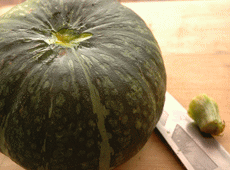
First take the stem end out. It sounds evident, but you will make things hard for you if you skip that simple step!

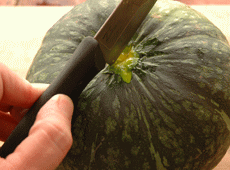
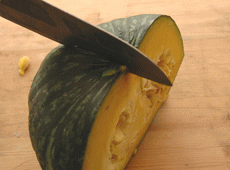
Turn the kabocha over (now you understand why you have taken the stem out?). Cut in half through the middle. Take care not to slip and cut your fingers!

Having cut the kabocha in half, cut it again in half (fourth). The raw kabocha might be hard to cut. There is no need to use brute force. Cut it slowly!

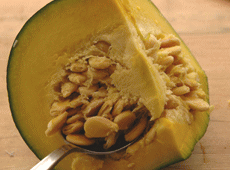
This will make it easy to scoop out (and discard the seeds).

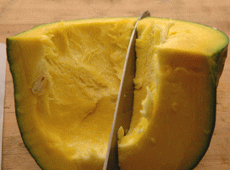
Cut each quarter again across as shown in above picture.

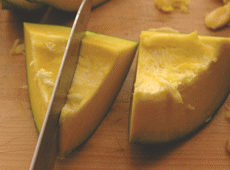
Then cut again as shown in above picture for individual pieces.

The next step is bit of a pain, but absolutely necessary.
Cut away the skin edges as shown in above picture.
Why?
-1) for a more even cooking.
-2) the edges will turn hard and will be diificult to bite through. You might even cut your lips. Believe me!
-3) the kabocha wedges will not break down upon stewing.

The kabocha wedges as they should be before stewing!

In a saucepan drop the oil, leeks and fresh ginger. Fry them for a while, then drop in all the kabocha. Fry for a while on a medium fire.

-Add water, soy sauce, sugar and salt. Lower fire. Cover with lid. Stew for 15 minutes or until the kabocha is soft. The point for better taste is the preliminary frying!

RECOMMENDED RELATED SITES:
Warren Bobrow, Bread + Butter, Zoy Zhang, Hungry Neko, Think Twice, Frank Fariello, Mangantayon, Hapabento, Elinluv Tidbit Corner, Tokyo Terrace, Maison de Christina, Chrys Niles,Lexi, Culinary Musings, Wheeling Gourmet, Comestiblog, Chronicles Of A Curious Cook, Tokyo Through The Drinking Glass, Tokyo Foodcast, Urban Sake, Sake World, Palate To Pen, Good Beer & Country Boys, Another Pint, Please!, Yellin Yakimono Gallery, Tokyo Terrace, Hilah Cooking, Vegansarus

Please check the new postings at:
sake, shochu and sushi

—————————————-
日本語のブログ
—————————————-

Japanese Cuisine: Nankotsu Tsukune

I have already introduced many ways to make “Tsukune”, or chicken patties in yakitori fashion.

Nankotsu/軟骨/ means cartilage or cartilageous parts of the chicken (and other animals) bones. The Japanese eat them as such in yakitori, but they also add great taste to patties. Moreover they are very nutritious, so do make a good use of them if you can get your hands on fresh ones!

INGREDIENTS: For 3~4 people

-Chicken: 200 g (minced)
-Nankotsu/cartilage: 90 g
-Onion: 1/3 of a medium-sized one
-Fresh ginger: a piece of 5×5 cm
-Salt: a pinch
-Black pepper: a pinch
-Cornstarch: 1 tablespoon
-Japanese sake: a little (for boiling wate)
-Water: for boiling
-Soy sauce: 2 tablespoons
-Sugar: 2 tablespoons
-Japanese sake: 1 tablespoon (for seasoning/cooking)
-White sesame seeds: for seasoning before serving
-Leeks: cut to length appropriate for skewers

RECIPE:

-In a food processor drop the minced chicken, onion, ginger, salt and pepper cornstarch. Let turn for a little while. Stop and drop in the cartilages/nankotsu. Turn until the cartilages have been broken into small pieces.

-Make chicken balls either by hand or with two spoons. Boil them in water added with alittle Japanese sake. Scoop balls out once they have started foating on the surface.

-In a small frypan pour the soy sauce, sugar and sake. Fry the chicken balls with pieces of leeks (broccoli is fine, too) in the sauce till they are well coated.

-Skewer the chicken balls and leek as shown on top picture. Grill them in toatser or oven until they attain the right colour and crispiness. Baste them with the remaining sauce half way!

Makes for a great snack withh beer, or a good addition to bento!

RECOMMENDED RELATED SITES:
Warren Bobrow, Bread + Butter, Zoy Zhang, Hungry Neko, Think Twice, Frank Fariello, Mangantayon, Hapabento, Elinluv Tidbit Corner, Tokyo Terrace, Maison de Christina, Chrys Niles,Lexi, Culinary Musings, Wheeling Gourmet, Comestiblog, Chronicles Of A Curious Cook, Tokyo Through The Drinking Glass, Tokyo Foodcast, Urban Sake, Sake World, Palate To Pen, Good Beer & Country Boys, Another Pint, Please!, Yellin Yakimono Gallery, Tokyo Terrace, Hilah Cooking, More than a Mount Full

Please check the new postings at:
sake, shochu and sushi

—————————————-
日本語のブログ
—————————————-