Tag Archives: レシピ

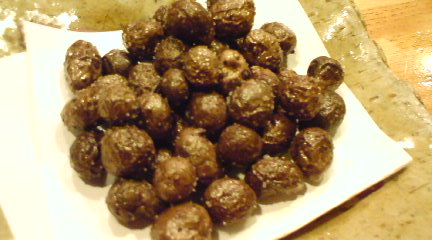
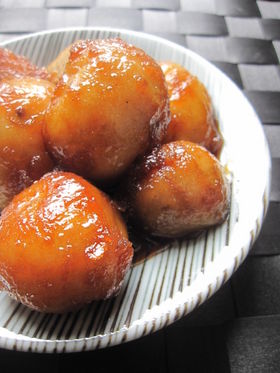
Vegan Japanese Deep-fried Taro/Sato Imo Age

Taro or Sato Imo in Jpaanese, can also for some great and hearty dishes for c\vegans and vegetarians, too!

Hre is a very simple recipe that can be enjoyed by all!
As for the Dashi, or Jpanese soup stock, check HERE for the basic recipe!

INGREDIENTS: For 4 people

-Taro/Sato imo: 16 small
-Dashi: 4 tablespoons
-Mirin/Sweet sake: 4 tablespoons
-Soy sauce: 3 tablespoons
-Sugar: 2 teaspoons
-Oil for deepfrying

RECIPE:

-Clean the taro/sato imo quickly.
Boil them in water for 15 minutes.
Peel them.

-Heat the deep frying oil to 170 degrees Celsius and deep fry the taro/sato imo until they obtain a nice brownish colour.

-In a pan drop dashi, mirin, soy sauce and sugar and heat (and stir) until the sugar has completely dissolved. Transfer the taro/sato imo into the pan and cook for a while in the sauce.

-Simmer until the sauce has reached a thick consistence.
Serve at once.
A few chopped greens would make for a good seasoning.
You may add spices of your liking to the sauce (grated ginger, chilies, etc.).

RECOMMENDED RELATED SITES
Not-Just-Recipes, Bengal cuisine, Cooking Vegetarian, Frank Fariello, Gluten-free Vegan Family, Meatless MamaFrank Fariello, , Warren Bobrow, Wheeling Gourmet, Le Petit Cuisinier, Vegan Epicurean, Miss V’s Vegan Cookbook, Comestiblog, To Cheese or not To Cheese, The Lacquer Spoon, Russell 3

Please check the new postings at:
sake, shochu and sushi

—————————————-
日本語のブログ
—————————————-

Vegan White Miso Soup

As promised, back to my vegan and vegetarian friends to whom I promised this series of dashi-based (for most of them) soups (and other dishes).
Miso is increasingly becoming popular.
Check the miso posting!
And check the dashi posting, too!

Vegan White Miso Soup!

INGREDIENTS: For one person

-Egg-plant/aubergine: 1 half
-Onion: 1/4 (sliced)
-Konbu dashi/seaweed soup stock: 1 cup/ 200cc/ml
-White miso paste: 1 tablespoon
-White leek cut into very fine strips for decoration and finishing taste point

RECIPE:

1-Cut the egg-plant/aubergine into thin slices. Wash in water.

2-Pour some oil in a frypan and fry the egg-plant/aubergines slices until both sides are slightly brown.

3-Pour the konbu dashi into a pan. Add the sliced onion and simmer for a while until onuon are soft enough.

4-Add fried egg-plant/aubergines. Add and mix in white miso paste.

5-Serve in a bowl with chopped white leeks.

NOTE:

The miso contains enough salt, so no need to add any really.
I also add ground sesame seeds before serving.
One can add some sesame oil when frying the egg-plants/aubergines.
Add spices according to preferences.

RECOMMENDED RELATED SITES
Not-Just-Recipes, Bengal cuisine, Cooking Vegetarian, Frank Fariello, Gluten-free Vegan Family, Meatless MamaFrank Fariello, , Warren Bobrow, Wheeling Gourmet, Le Petit Cuisinier, Vegan Epicurean, Miss V’s Vegan Cookbook, Comestiblog, To Cheese or not To Cheese, The Lacquer Spoon, Russell 3

Please check the new postings at:
sake, shochu and sushi

—————————————-
日本語のブログ
—————————————-

Vegan Japanese Dashi/Soup Stock: The Basic Recipe

So many times have I heard my vegan and vegetarian friends complain about the fact that most dashi/soup stock is not done according to their priorities in Japan, making it impossible for them to enjoy food in this country.
Fortunately, this is a big misconception. Vegan dashi exists and is very easy to make or request.
Now, to make sure that the same friends can savour Japanese food, either at home or with friends, here is the basic ans simple recipe!
Please save or copy this recipe for future reference (I have more vegan soup recipes in store for you!)

Vegan Japanese Dashi/Soup Stock

INGREDIENTS: (multiply according to demands. This is the minimum quantity!)

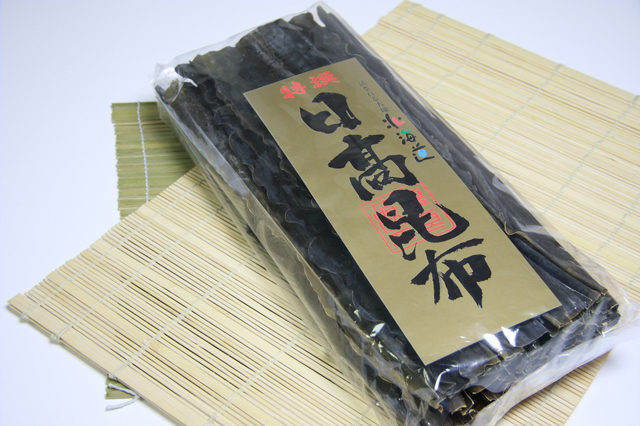
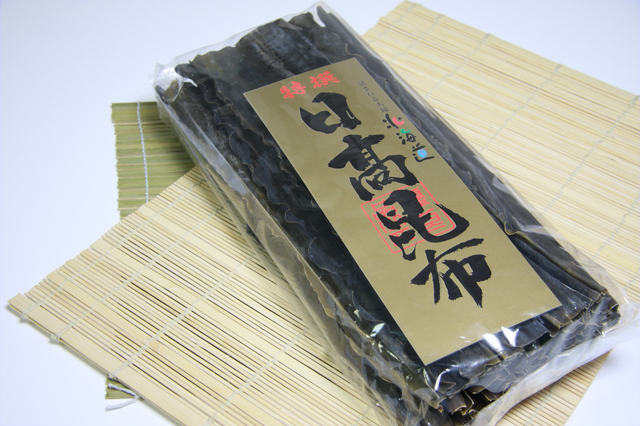
Konbu as sold in Japan

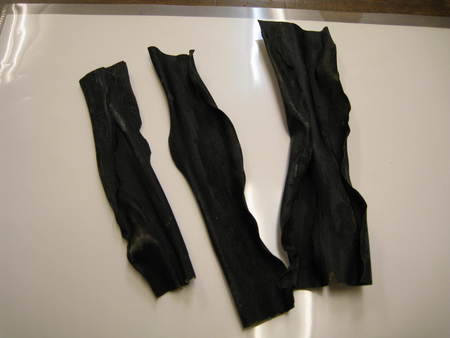
Konbu out of its packaging

-Konbu/dried thick dark seaweed: 5cm×5cm piece (dry)
-Water: 400cc/ml
-Japanese sake: 1 tablespoon (don’t worry, the alcohol will disappear upon heating/cooking!)
-Mirin/sweet sake (same comments as above!): 2 tablespoons
-Soy sauce: 2 and a half tablespoons

RECIPE:

Pour the awter into a large pan. Drop the seaweed into the water.
Switch on the fire.
The moment bubbles appear on the surface of the konbu, the water will start sucking the its essence in.
At that time add soy sauce, sake and mirin.

Taste from time to time to decide when taste suits you best.
Switch fire then and take konbu out.
Let cool completely, pour it inside a bottle. Seal the bottle properly and store inside refrigerator.
Use it as soon as possible.

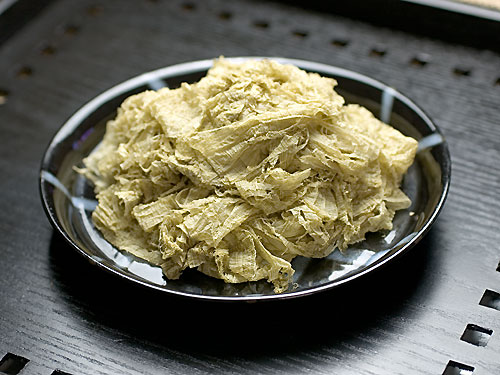
The seaweed doesn’t have to be thrown away. It is edible as it is once cooked!

RECOMMENDED RELATED SITES
Not-Just-Recipes, Bengal cuisine, Cooking Vegetarian, Frank Fariello, Gluten-free Vegan Family, Meatless MamaFrank Fariello, , Warren Bobrow, Wheeling Gourmet, Le Petit Cuisinier, Vegan Epicurean, Miss V’s Vegan Cookbook, Comestiblog, To Cheese or not To Cheese, The Lacquer Spoon, Russell 3

Please check the new postings at:
sake, shochu and sushi

—————————————-
日本語のブログ
—————————————-

Vegan Sushi Recipe Suggestions 2: Daikon

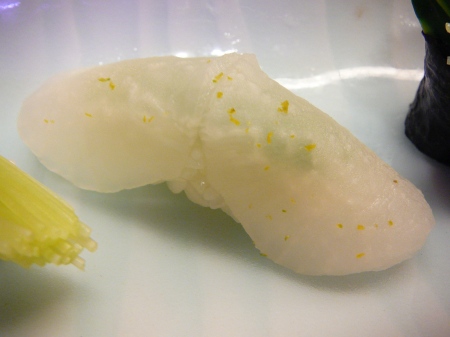
Daikon Nigiri as served at Sushi Ko, Shizuoka City, Japan!

SYNOPSIS:

I already have introduced Vegan and Vegetarian Sushi, but following further requests and questions by my vegan (I’m not!) friends, I decided to contribute a small series of postings to give them more detailed suggestions and ideas!

Now, please check sushi rice recipe HERE to make things more practical!

1) Myoga/Myoga Ginger

————————————

The second vegetable amenable to sushi I would like to introduce is Daikon, or Japanese Radish/Daikon Radish.

Please check DAIKON HERE on Wikipedia!

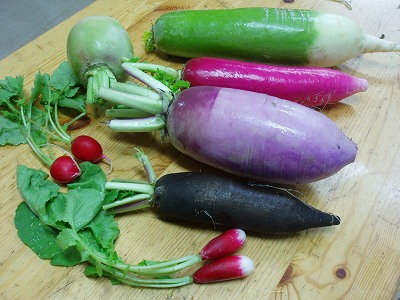
Daikon seems to be known only in its big white shape with a green top.
Actually, not only it is a versatile vegetables, but it does come into many shapes and colors as shown in picture above.

Once cut, look at these beautiful colors.

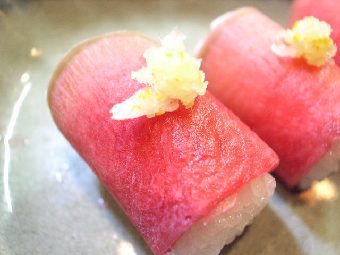
Daikon sushi, especially served as nigiri can be made very simple as in above picture where the daikon was sliced very thin and marinated for a while in lemon added water.

For more sophisticated preparations and presentations browse below!

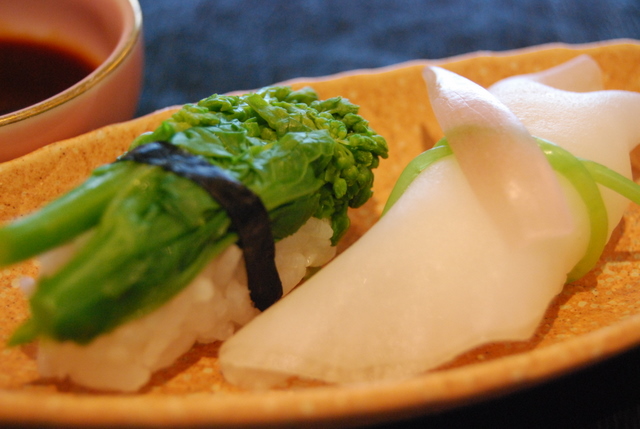
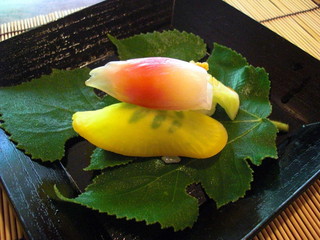
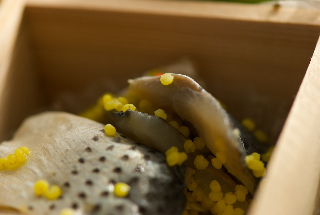
The same as the top picture. The daikon was marinated for a while in yuzu juice and rice vinegar then derved with grated yuzu zest/skin.

Simple but so sophisticated. The other one is rape blossom.

Daikon can be pickled Japanese-style into “takuan/沢庵”, making for great colors and combination!

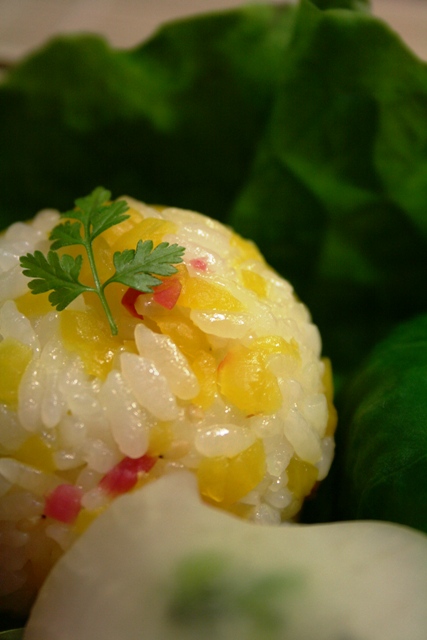
Takuan & Beni Shoga/takuan and red ginger temari sushi!

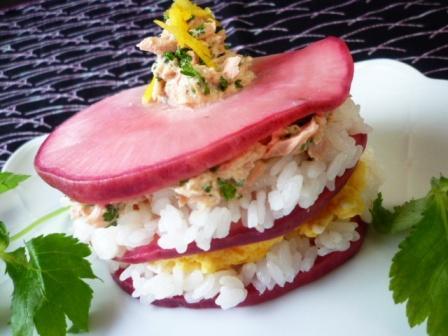
Great color afain with Koushin Daikon/紅芯大根!

The possibilities are infinite. Can you imagine the takuan above on a rice ball. The whole daikon was first pickled then peeled/cut into a sheet, rolled with lettuce and cut across!

And how about a daikon millefeuille sushi for dessert!

RECOMMENDED RELATED SITES
Not-Just-Recipes, Bengal cuisine, Cooking Vegetarian, Frank Fariello, Gluten-free Vegan Family, Meatless MamaFrank Fariello, , Warren Bobrow, Wheeling Gourmet, Le Petit Cuisinier, Vegan Epicurean, Miss V’s Vegan Cookbook, Comestiblog, To Cheese or not To Cheese, The Lacquer Spoon, Russell 3

Please check the new postings at:
sake, shochu and sushi

—————————————-
日本語のブログ
—————————————-

Vegan New Year Sashimi at Yasaitei

January 5th, 2010. Tuesday, isn’t it? Back to the office. Usual break before late evening work. Hungry, but can’t eat too much as dinner will be waiting for me at 9:30 back home.
Only one option: the quick snack at Yasaitei. Becoming too much of a habit….

What would you expect me to order, then?
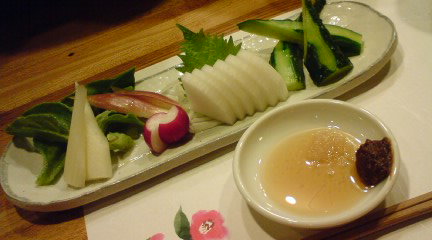
Vegatables sashimi!
Boring, you might say…
Totally agree, but boredom is so tatsy sometimes!

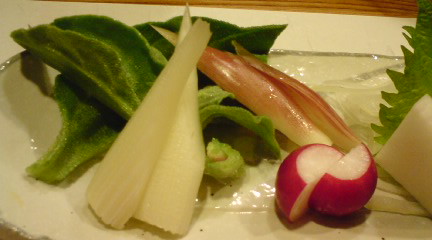
In the front, “the usual stuff” you might say:
Celery (grown in Shizuoka Prefecture), red radihes and myoga ginger sprouts.
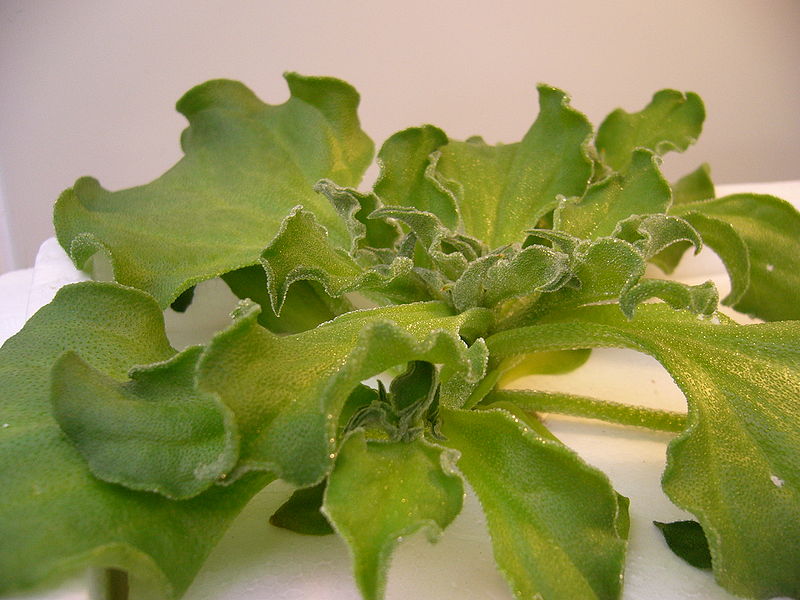
Now, what is that leafy thing on the left in the background?

Common Ice Plant or Crystalline Iceplant? In Japanese? Ice Plant?
The French actually use it in their cuisine under the name of ficoïde glaciale.

Wikipedia will only say that Mesembryanthemum crystallinum is a prostrate succulent plant that is native to Africa, Western Asia and Europe. The plant is covered with large, glistening bladder cells, reflected in its common names of Common Ice Plant, Crystalline Iceplant or Iceplant.
Its leaves are edible, as with other some members of the Aizoaceae family. It is also cultivated for ornamentation (hum!).

And I can tell you they are worth discovering, be vegan, vegetarian or omnivore!

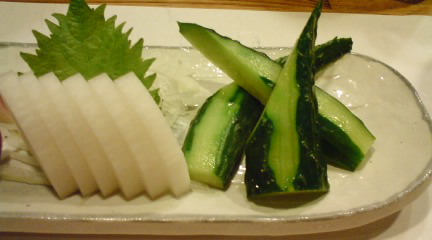
Now, for the second half of the plate: Juicy daikon and crunchy succulent cucumber backed with shiso/perill leaf and sliced winter onions (sweet!)

The dressing was the “usual” sesame oil with rock salt and dark miso.

But I needed a little more (with the second glass of Doman shochu!):
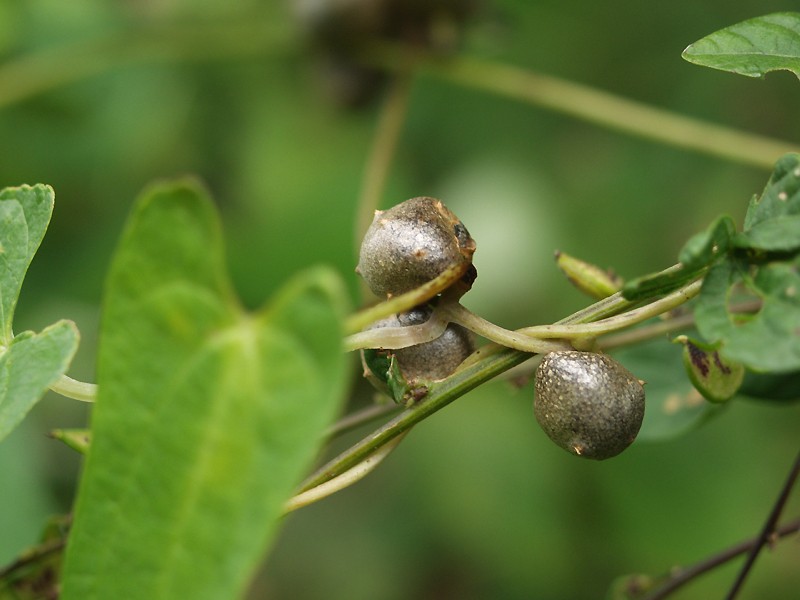
Mukago/零余子!
Now, unfortunately, it might be difficult to find that little thing outside Japan, but note it down on your notebook!

Mukago

A bit difficult to explain. An aerial tuber?
The fact is that it is some kind of fruit/nut/seed (I don’t have a clue here!) produced by yama imo or glutinous yam in Japanese, as one form of natural reproduction.
These mukago are succulent either boiled, or as in this case deep-fried.
Can’t stop eating them once started!

YASAITEI
Shizuoka City, Aoi Ku, Tokiwa-Cho, 1-6-2 Green Heights Wamon 1-C
Tel.: 054-2543277
Business hours: 17:30~22:00
Closed on Sundays
Reservations highly recommended
Seating: 6 at counter + 20 at tables
Set Courses: 3,000, 4,000, 5,000 yen
HOMEPAGE (Japanese)

RECOMMENDED RELATED SITES
Not-Just-Recipes, Bengal cuisine, Cooking Vegetarian, Frank Fariello, Gluten-free Vegan Family, Meatless MamaFrank Fariello, , Warren Bobrow, Wheeling Gourmet, Le Petit Cuisinier, Vegan Epicurean, Miss V’s Vegan Cookbook, Comestiblog, To Cheese or not To Cheese, The Lacquer Spoon, Russell 3

Please check the new postings at:
sake, shochu and sushi

—————————————-
日本語のブログ
—————————————-

Japanese New Year Cuisine/O-Sechi Ryouri

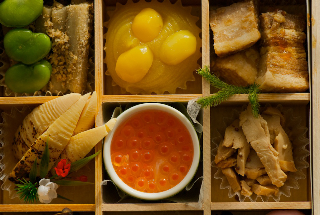
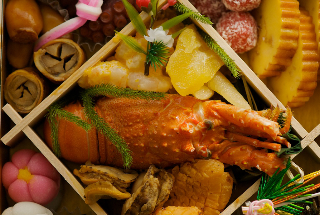
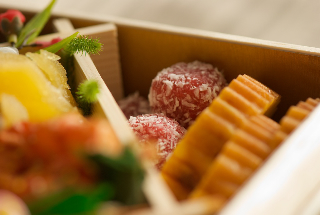
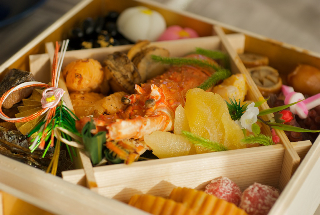
A great friend of mine, who also lives in Shizuoka just sent me pictures of the traditional Japanese New Year Meal he shared with his Missus:
In his own words:

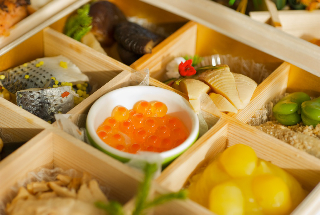
“First meal of 2010. Traditional Japanese food. 45 different items in three boxes, plus sake and special soup. Brunch. Fantastic meal!”

All pictures taken by Marcus Grandon:

Marcus’ first serving!

RECOMMENDED RELATED SITES:
Warren Bobrow, Bread + Butter, Zoy Zhang, Hungry Neko, Think Twice, Frank Fariello, Mangantayon, Hapabento, Elinluv Tidbit Corner, Tokyo Terrace, Maison de Christina, Chrys Niles,Lexi, Culinary Musings, Wheeling Gourmet, Sushi Nomads, Oyster Culture, Ravenous Couple

Please check the new postings at:
sake, shochu and sushi

—————————————-
日本語のブログ
—————————————-

Today’s Lunch Box/Bento (’10/01)

Today’s bento was the first of the year.
The Missus being still on holiday made it in a bit of a hurry as she being bsuy cleaning our place like very Japanese housewife does at the beginning of the year. A good time forme to escape to work! LOL

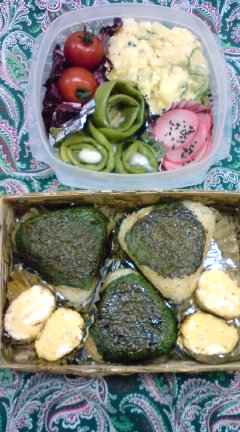
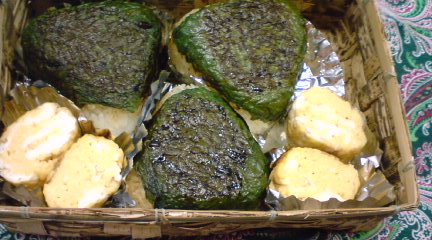
Being conscious of the too many calories I’ve been infgetsing recently she kept my bento to a healthy minimum.: musubi/rice balls, tamagoyaki and salad.

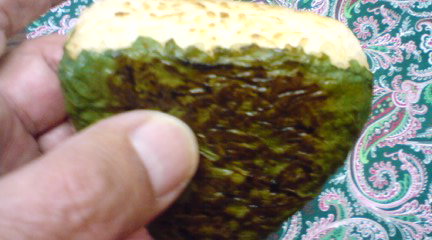
The musubi/rice balls were an interesting concept: She had marinated large egoma leaves (a large and very tasty variety of shiso/perilla) overnght in miso and what else. After steaming the rice, she made triangular rice balls (balls is not the right term, then!), sauteed and then wrapped them inside the leaves. They also contained a honey-sweetened umeboshi/Japanese pickled plum. Very tasty!

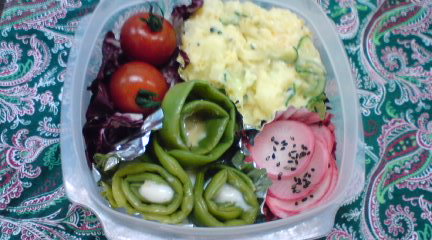
The salad dish was basically made up of leftovers:
Potato, onion, cucumber and tobikko/flying fish roe salad, boiled large green beans she rolled with some dressing in the middle. home-made pickled red daikon with black sesame, and plum tomatoes on trevise cabbage.

Colorful, healthy and tasty! No complaints! LOL

RECOMMENDED RELATED SITES:
Warren Bobrow, Bread + Butter, Zoy Zhang, Hungry Neko, Think Twice, Frank Fariello, Mangantayon, Hapabento, Elinluv Tidbit Corner, Tokyo Terrace, Maison de Christina, Chrys Niles,Lexi, Culinary Musings, Wheeling Gourmet

Please check the new postings at:
sake, shochu and sushi

—————————————-
日本語のブログ
—————————————-

Vegan Sushi Recipe Suggestions 1: Myoga/Myoga Ginger

I already have introduced Vegan and Vegetarian Sushi, but following further requests and questions by my vegan (I’m not!) friends, I decided to contribute a small series of postings to give them more detailed suggestions and ideas!

Now, please check sushi rice recipe HERE to make things more practical!

The first vegetable amenable to sushi I would like to introduce is Myoga, or Myoga Ginger.

Please check Myoga HERE on Wikipedia!

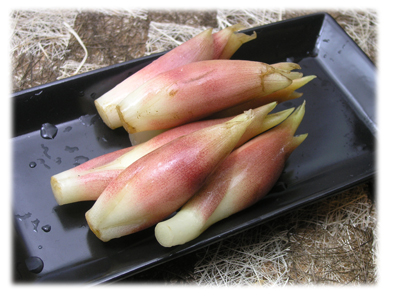
Myoga is a very interesting vegetable as not only the shoots but also the flowers are edible!

The flower in its natural state!

As bought at the market.

Interestingly enough, as Japan makes an enormous consumption of them it has to import a lot from New Zealand and Australia. I’m sure you can buy it at local Asian markets. It could porve an interesting cultivation for some, too!

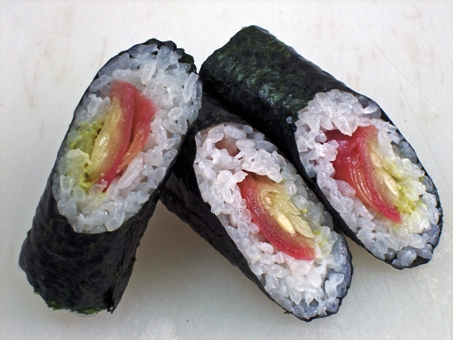
Myoga sushi roll.

Now there are two basic ways of presenting myoga as sushi.
First, as shown on above picture, as a roll.
It doesn’t have to be complicated. Just chop the myoga in strips and fill the roll with it accompanied by some wasabi.

Myoga Sushi nigiri.

The other basic way is present it as sushi nigiri on top of a small ball of sushi rice previously smeared with a little wasabi.

You can prepare the myoga in two basic ways,too:
The first one would would be just to wash it and use it raw.
The second would be to pickle it in rice vinegar and sugar for a while, press it and serve it in both sushi styles as explained above.

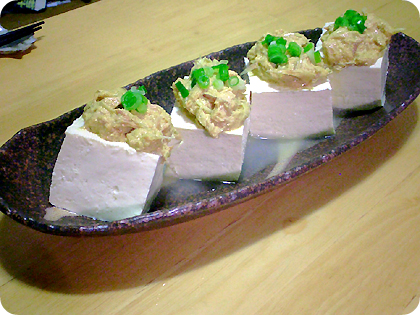
There are other interesting possibilities when you let your imagination go free as in above picture where the rice is replaced with a small cube of tofu and the topping is made with chopped myoga, tofu and wasabi all mixed together!

To further convince you, look at the picture above:
All vegan sushi:
from top down: Cucumber, egg plant/aubergine and myoga. The last are pickled daikon!

RECOMMENDED RELATED SITES
Not-Just-Recipes, Bengal cuisine, Cooking Vegetarian, Frank Fariello, Gluten-free Vegan Family, Meatless MamaFrank Fariello, , Warren Bobrow, Wheeling Gourmet, Le Petit Cuisinier, Vegan Epicurean, Miss V’s Vegan Cookbook, Comestiblog, To Cheese or not To Cheese, The Lacquer Spoon, Russell 3

Please check the new postings at:
sake, shochu and sushi

—————————————-
日本語のブログ
—————————————-

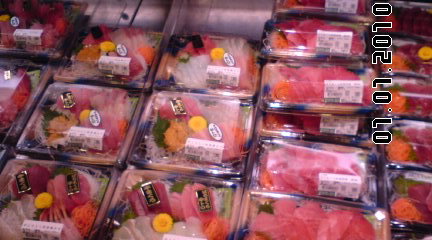
New Year Sashimi Sets in Shizuoka Supermarkets

Tradition has been changed or made with altogether!
From this year, the main supermarkets were oprn on New Year’s Day in Shizuoka.
Economic crisis? Cutthroat competition with “Convenience Stores”?
The result is that you don’t to worry any more about stocking up foood for the long Japanese New Year Holidays!

Not only the Shizutetsu Chain Supermarkets were open, but they had advertized bargains well in advance.
One concerned sashimi.
I just couldn’t ignore it and visited the largest store near my home yesterday afternoon.
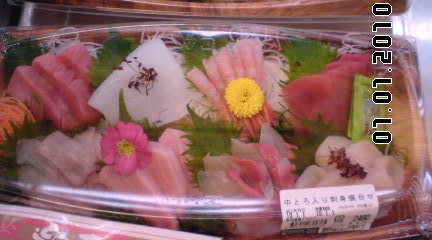
I noticed that I had messed with my mobile phone camera today when I noticed the dates printed on the pics. I never do so, but at least, it will serve as a proof that I reaaly the pics yesterday! LOL

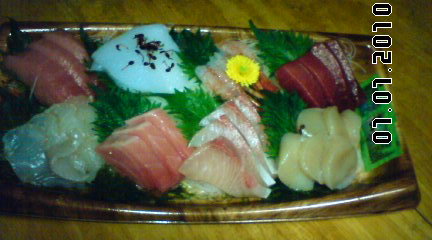
As you can see on the above pic there was plenty to choose from.
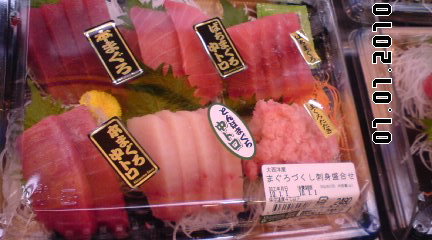
The main particularity was that the tuna was all wild tuna (Shizutetsu has a direct delivery deal with the various harbours in the Prefecture!)

The set above is priced at about 25US$ and included sashimi from 3 different tuna: honmaguro, tonbomaguro and bachimaguro, from akami to chu-toro.

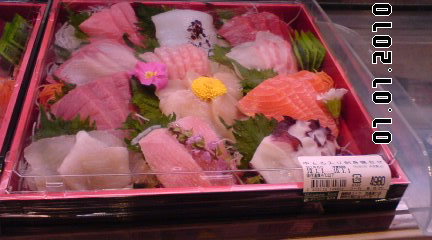
The above set for about 50US$ is a bit extravagant, athough very cheap (dead cheap abroad, I suppose!) and included three types of maguro/tuna, one tai/seabream, one madai/true seabream, one tako/octopus, one hirame/sole, one ika/cuttlefish, one buri/yellowtail, amaebi/sweet shrimps, hotate/scallops and one shake/salmon!

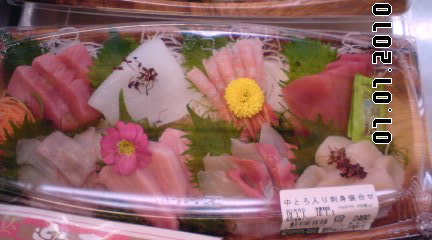
This is the one I chose for both of us (25US$)!

Top from left to right:
Honbomagurao Chutoro, Surumeika/Cuttlefish, Amaebi/Sweet Shrimps and Bachimaguro Chutoro
Bottom from left to right:
Hirame/Sole, Bachimaguro Chutoro, Buri/Yellowtail, and Hotate/ Scallops.

Of course I had Sake from Shizuoka with that lot!

RECOMMENDED RELATED SITES:
Warren Bobrow, Bread + Butter, Zoy Zhang, Hungry Neko, Think Twice, Frank Fariello, Mangantayon, Hapabento, Elinluv Tidbit Corner, Tokyo Terrace, Maison de Christina, Chrys Niles,Lexi, Culinary Musings, Wheeling Gourmet, Sushi Nomads, Oyster Culture, Ravenous Couple

Please check the new postings at:
sake, shochu and sushi

—————————————-
日本語のブログ
—————————————-

Oshizushi/Pressed Sushi Techniques 4: Seared Seabream/Tai no Aburi

SYNOPSIS:

Sushi exists under many forms and guises.
It is not all nigiri and (more ubiquitous) sushi rolls!
Have you ever heard of Oshizushi?

Oshizushi (押し寿司, litterally pressed sushi), is a pressed sushi from the Kansai Region, a favourite and specialty of Osaka.

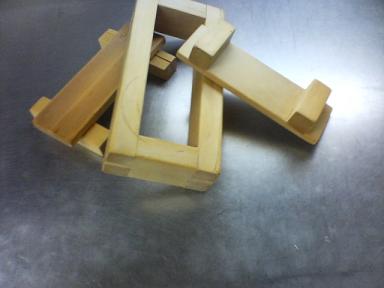
Oshibako unmounted

It is made with the help of a block-shaped piece formed using a wooden mold, called an oshibako/押し箱.
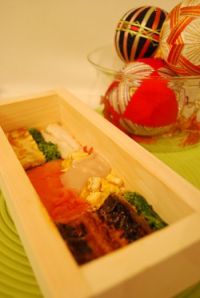
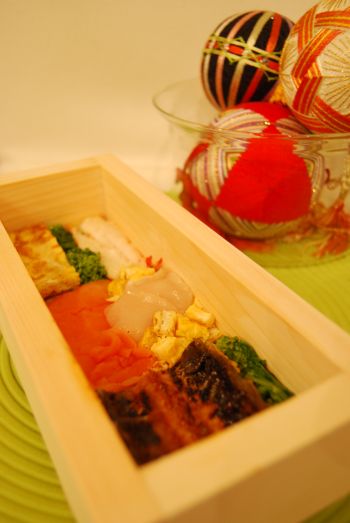
Oshibako lined with toppings

The chef lines the bottom of the oshibako with the toppings, covers them with sushi rice, and then presses the lid of the mold down to create a compact, rectilinear block.
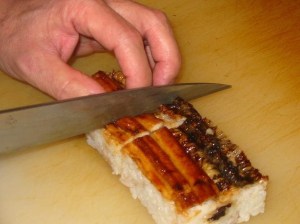
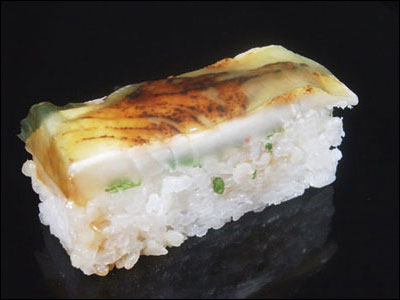
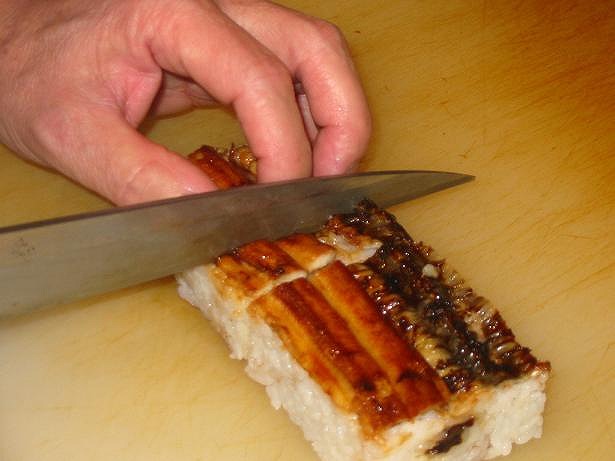
Cutting Grilled Eel Oshizushi

The block is then removed from the mold and then cut into bite-sized pieces.

It is great fun to experiment at home for large parties or the family as you can include almost anything.
Moreover, oshizuhi is easy to transport and include in bento!

The recipes and techniques I’m introducing here are professional, but with a little practice I’m sure you will become a specialist

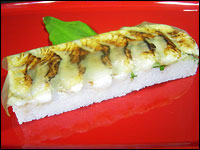
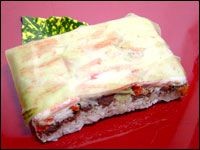
1)Salmon Marinated in Seaweed/Sake Sushi Konbushime, 2) Seared Prime Beef/Gyuniku Aburi, 3) Egg Bearing Snow Crab/Seikogani

———————————-

Seabreams or Snappers come in so many varieties all over thw orld that it becomes quite easy to find and adapt to various cuisines.
The Japanese are extremely fond of it either raw or steamed with rice.
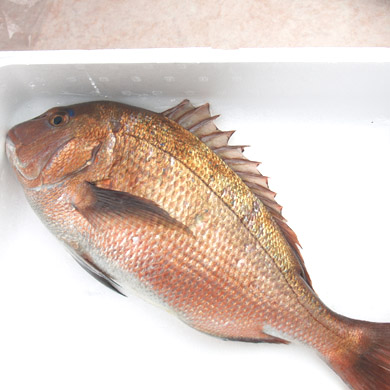
When using it as sashimi or sushi, choose a fresh fis. Look at their eyes and press with fingers. And use your nose!

Madai/真鯛 or “True Seabream”, the most commonly used type of seabream in Japan.

For an extra finishing touch for the taste, use fresh leaves of sansho/山椒 or Japanese pepper (also called ki no me/木の芽).
The English name is Shichuan Pepper, although we are talking of the fresh plant here.

In Japan the dried and powdered leaves of Zanthoxylum sancho are used to make noodle dishes and soups mildly hot and fragrant. The whole fresh leaves, 木の芽 kinome, are used to flavour vegetables, especially bamboo shoots, and to decorate soups. Typically the young shoots are used in this way giving an aromatic lemony flavour to food. They are used to denote spring seasonality in food. The buds, seeds, flowers, and hulls are also used.

Chop some leaves finely enough to use with sushi, but not to fine. Cut them as short as shown in picture.

Soften light seaweed in lukewarm water and spread it over a clean cloth.

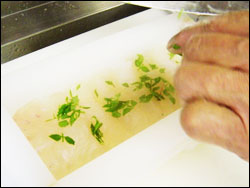
Line the bottom of the oshibako/box with slices of seabream fillet as tightly to each other as possible.
Sprinkle with chopped sansho leaves.
Fill with sushi rice and press.

Unloose oshizushi out of the box.
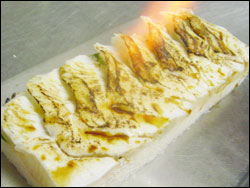
Brush the surface lightly with some soy sauce (I sweeten it a bit by mixing it with a little mirin/sweet sake).
Sear the fish lightly.
Repeat the same process twice more so as to cook only the surface and make it take a nice colour.
This way you will be able to taste the fish in two different ways inside your mouth!

Spread the light seaweed over the top.
Cut to size and serve immediately for maximum enjoyment!

RECOMMENDED RELATED SITES:
Warren Bobrow, Bread + Butter, Zoy Zhang, Hungry Neko, Think Twice, Frank Fariello, Mangantayon, Hapabento, Elinluv Tidbit Corner, Tokyo Terrace, Maison de Christina, Chrys Niles,Lexi, Culinary Musings, Wheeling Gourmet, Sushi Nomads, Oyster Culture, Ravenous Couple

Please check the new postings at:
sake, shochu and sushi

—————————————-
日本語のブログ
—————————————-

Oshizushi/Pressed Sushi Techniques 3: Egg Bearing Snow Crab/Seikogani

SYNOPSIS:

Sushi exists under many forms and guises.
It is not all nigiri and (more ubiquitous) sushi rolls!
Have you ever heard of Oshizushi?

Oshizushi (押し寿司, litterally pressed sushi), is a pressed sushi from the Kansai Region, a favourite and specialty of Osaka.

Oshibako unmounted

It is made with the help of a block-shaped piece formed using a wooden mold, called an oshibako/押し箱.

Oshibako lined with toppings

The chef lines the bottom of the oshibako with the toppings, covers them with sushi rice, and then presses the lid of the mold down to create a compact, rectilinear block.

Cutting Grilled Eel Oshizushi

The block is then removed from the mold and then cut into bite-sized pieces.

It is great fun to experiment at home for large parties or the family as you can include almost anything.
Moreover, oshizuhi is easy to transport and include in bento!

The recipes and techniques I’m introducing here are professional, but with a little practice I’m sure you will become a specialist

1)Salmon Marinated in Seaweed/Sake Sushi Konbushime, 2) Seared Prime Beef/Gyuniku Aburi

———————————-

Egg Bearing Snow Crab/Seikogani

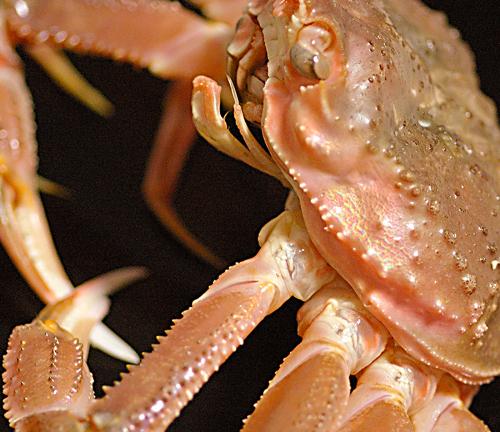
Snow Crab/Zuwagani

Seikogani is the Japanese name for the female Snow Crab or Zuwagani, when she is bearing her eggs.
Contrary to many other kinds of crabs, the female snow crabs, even when bearing eggs, lose little of their food and taste quality with the added advantage of an extra delicacy and taste. On the other hand the main food is found inside the shell instead of the legs and pincers for the males.
Therefore, if you get your hands on such a specimen, do not ignore it, even if they are noticeably smaller than their male counterparts!

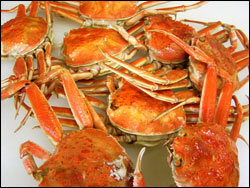
Boiled snow crabs.

The best is actually to combine both male and female into a combination sushi.

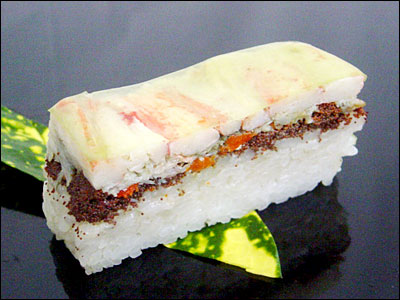
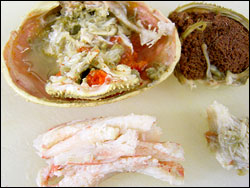
Above are the shells of two snow crabs, the large male one containing white flesh and red brains from both male and female, the smaller female one containing the eggs, and the flesh taken out of the male legs after boiling and cooling.

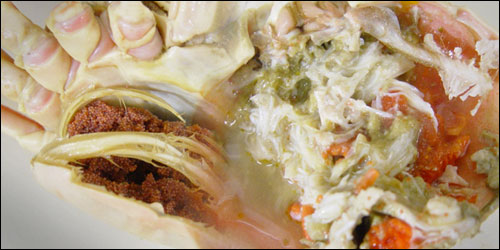
See above picture for better view of the edible morsels: white flesh, red brains (don’t forget these!) and eggs.

As there is a danger of a general crumbling out of the ingredients, line the bottom of the oshibako/box with a good layer of light seaweed first instead of doing it after you have unloose the sushi out ofits box.
Then place legs flesh tightly parallel to each other to form as compact as possible layer. Cover the leg flesh with the eggs and red brains into a pleasing design.
Finally fill with sushi rice and press.

Unloose sushi from its box and cut to size before serving!

RECOMMENDED RELATED SITES:
Warren Bobrow, Bread + Butter, Zoy Zhang, Hungry Neko, Think Twice, Frank Fariello, Mangantayon, Hapabento, Elinluv Tidbit Corner, Tokyo Terrace, Maison de Christina, Chrys Niles,Lexi, Culinary Musings, Wheeling Gourmet, Sushi Nomads, Oyster Culture

Please check the new postings at:
sake, shochu and sushi

—————————————-
日本語のブログ
—————————————-

Oshizushi/Pressed Sushi Techniques 2: Seared Prime Beef/Gyuniku Aburi

SYNOPSIS:

Sushi exists under many forms and guises.
It is not all nigiri and (more ubiquitous) sushi rolls!
Have you ever heard of Oshizushi?

Oshizushi (押し寿司, litterally pressed sushi), is a pressed sushi from the Kansai Region, a favourite and specialty of Osaka.

Oshibako unmounted

It is made with the help of a block-shaped piece formed using a wooden mold, called an oshibako/押し箱.

Oshibako lined with toppings

The chef lines the bottom of the oshibako with the toppings, covers them with sushi rice, and then presses the lid of the mold down to create a compact, rectilinear block.

Cutting Grilled Eel Oshizushi

The block is then removed from the mold and then cut into bite-sized pieces.

It is great fun to experiment at home for large parties or the family as you can include almost anything.
Moreover, oshizuhi is easy to transport and include in bento!

The recipes and techniques I’m introducing here are professional, but with a little practice I’m sure you will become a specialist

1)Salmon Marinated in Seaweed/Sake Sushi Konbushime

———————————-

Japanese prime beef has become a registered trademark all over the world be it from Kobe or other regions.
The present sushi was made with “Kuroge Gyuniku/黒毛牛肉/Black Hair Beef from animals raised to the age of 12 months in Fukui Prefecture.
Do check the origin of your beef!

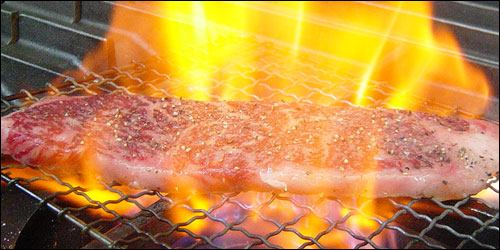
When preparing this slightly extravagant sushi, choose a large slice of prime beef with plenty of “fat veins” as shown on the above picture.
Don’t choose too thick or too thin, either. Think of the proportion of the beef and rice. Bear in mind that the the seared beef will also loose some of its thickness.

Sprinkle the beef with quality ground balck pepper and salt.
Sear it or grill it lightly on both sides quickly.
This process will enhance the sweetness of the meat.

-Slice the meat into bite-sized portions as shown in above picture at a slant after having cut off the fatty extremity.

Lay the bottom of the oshibako/box with slices of beef as shown in above picture in a “staggering” fashion. If you don’t, the slices will slideaway from each other.
Cover with shiso/perilla leaves.
Cover with sushi rice and press.

Soften light seaweed in lukewarm water and spread it over a clean cloth.
Unloose the sushi out of its box.
The beef should be on top.
Spread the light seaweed over the top.
Cut to size and serve immediately for maximum enjoyment!

RECOMMENDED RELATED SITES:
Warren Bobrow, Bread + Butter, Zoy Zhang, Hungry Neko, Think Twice, Frank Fariello, Mangantayon, Hapabento, Elinluv Tidbit Corner, Tokyo Terrace, Maison de Christina, Chrys Niles,Lexi, Culinary Musings, Wheeling Gourmet, Sushi Nomads, Oyster Culture

Please check the new postings at:
sake, shochu and sushi

—————————————-
日本語のブログ
—————————————-

Oshizushi/Pressed Sushi Techniques 1: Salmon Marinated in Seaweed/Sake Sushi Konbushime

Sushi exists under many forms and guises.
It is not all nigiri and (more ubiquitous) sushi rolls!
Have you ever heard of Oshizushi?

Oshizushi (押し寿司, litterally pressed sushi), is a pressed sushi from the Kansai Region, a favourite and specialty of Osaka.

Oshibako unmounted

It is made with the help of a block-shaped piece formed using a wooden mold, called an oshibako/押し箱.

Oshibako lined with toppings

The chef lines the bottom of the oshibako with the toppings, covers them with sushi rice, and then presses the lid of the mold down to create a compact, rectilinear block.

Cutting Grilled Eel Oshizushi

The block is then removed from the mold and then cut into bite-sized pieces.

It is great fun to experiment at home for large parties or the family as you can include almost anything.
Moreover, oshizuhi is easy to transport and include in bento!

The recipes and techniques I’m introducing here are professional, but with a little practice I’m sure you will become a specialist

——————————

Oshizushi/Pressed Sushi Techniques 1: Salmon Marinated in Seaweed/Sake Sushi Konbushime

For sushi rice preparation, check HERE for previous posting!
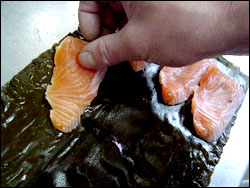
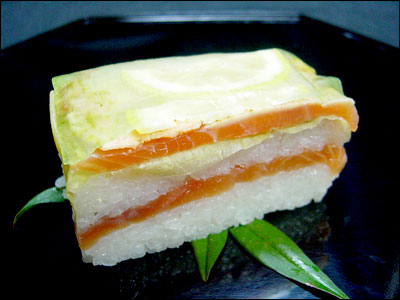
Konbushime/昆布〆means that the fish is “marinated with seaweed.
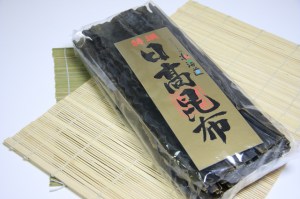
Konbu/Seaweed is now readily available on Japanese and Asian markets all over the world or on the internet.
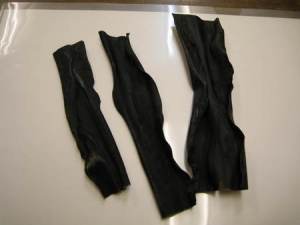
Two types of konbu/seaweed are used:
-Dark/black thick Konbu/Seaweed is bought dry and has to be softened in lukewarm water for a while. That particular step is very easy to learn.
Keep in mind it is edible, although after marination, it should be discarded.
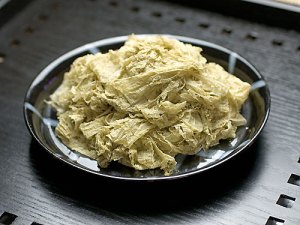
-Thin, light coloured (almost transparent) is used as an ingredient both for taste and the finishing touch. If not available, you may replace it with fine green leaves.
It is called “Kagome Konbu/かごめ昆布”.
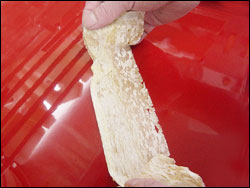
An even better light seaweed is called “Take Kawa Konbu/竹皮昆布/Bamboo Skin Saweed” and is widely used by professionals.

Both light coloured seaweeds have to be softened in lukewarm water, sponged off and spread into thin sheets first. But it is really worth the work!

After having softened the dark konbu, spread it over a clean working table and place the fresh (fresh, please!) salmon slices over one sheet and covering the lot with another sheet.
Wrap it in cellophane paper and leave it in the fridge for at least 30 minutes.
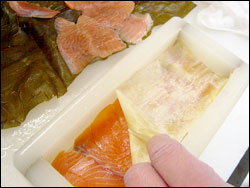
During that time soften light seaweed in lukewarm water and spread it over a clean cloth.

Line the bottom of the oshibako/box with one layer of salmon (no dark seaweed!). Spread light seaweed over the salmon and spread a first layer sushi rice.

Repeat the same operation once more and press.
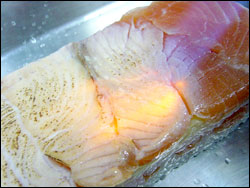
Unloose the sushi out of its box.
The fish should be on top.
Grill the top of the fish lightly with a hand burner just enough to change the colour.
That step will enable to savour two different tastes at the same time!
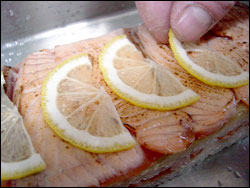
Place very thin slices of lemon (clean organic, please!) on top of the rice.
It will abate the “fishy smell/taste”.
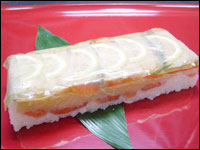
Lay another layer of fine light seaweed over the top.
Cut and serve!

RECOMMENDED RELATED SITES:
Warren Bobrow, Bread + Butter, Zoy Zhang, Hungry Neko, Think Twice, Frank Fariello, Mangantayon, Hapabento, Elinluv Tidbit Corner, Tokyo Terrace, Maison de Christina, Chrys Niles,Lexi, Culinary Musings, Wheeling Gourmet, Sushi Nomads, Oyster Culture

Please check the new postings at:
sake, shochu and sushi

—————————————-
日本語のブログ
—————————————-
Today’s Lunch Box/Bento (’09/80)

This could be very well be the last bento of the year as it will be difficult to fool the Missus into making another one tomorrow as I shall not be working but “escaping to my office”! LOL
As we are going through a slimming phase (BIG business here in Jpaan!), today’s bento bento is definitely on the lean side. I’m not one to complain a I like my bento healthy and tasy!

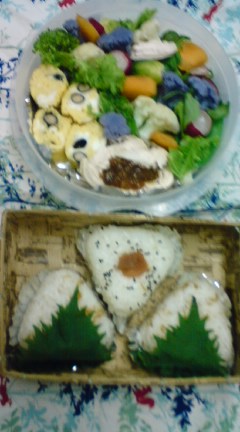
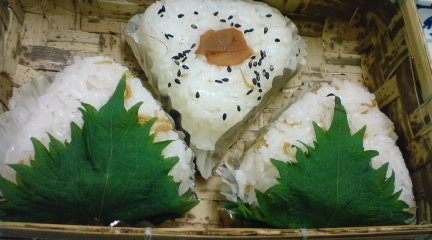
For the rice part, three simple triangular musubi/rice balls made with her new musubi gadget. Freshly steamed this morning one contains a umeboshi/Jpaanese pickled plum and seasoned with black sesame seeds and the other two tiny grilled shirasu/hard moth sardine whiting. The last two are wrapped in shiso/perilla leaves.

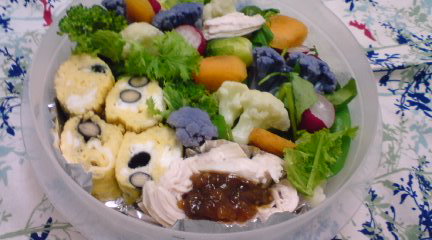
As for the garnish, it certainly was colourful!

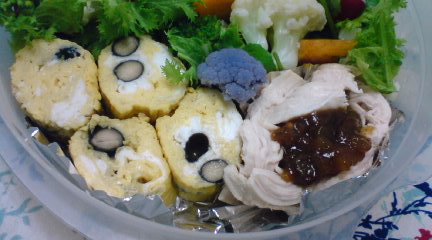
The tamagoyaki/Japanese omelette contained stewed black beans (look at their eyes!), and the home-made chicken ham wa seasoned with English chutney brought to me by Lojol.

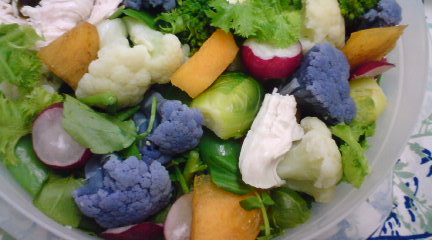
It was laid over a bed of cress and contained cress and wasabi lettuce (not relatied to wasabi), boiled broccoli, white cauliflower and violet (which turned blue!) cauliflower, Brussels sprouts, savoury peas in their pod, more chicken ham, sliced radishes and pieces of jirou kaki/squat persimmon.

The colours would qualify this bento for a health contest!

RECOMMENDED RELATED SITES:
Warren Bobrow, Bread + Butter, Zoy Zhang, Hungry Neko, Think Twice, Frank Fariello, Mangantayon, Hapabento, Elinluv Tidbit Corner, Tokyo Terrace, Maison de Christina, Chrys Niles,Lexi, Culinary Musings, Wheeling Gourmet

Please check the new postings at:
sake, shochu and sushi

—————————————-
日本語のブログ
—————————————-

Today’s Lunch Box/Bento (’09/79)

It has taken a long time, but I’m slowly convincing the Missus to work on her bentoes and take her own photoes for reference (posterity?). It is a battle (“what about my privacy, blah, blah…?), but I’m bent on winning it! LOL

She’s recently bought all kinds of contraptions/artifcts for the kitchen and cooking. Among those she has acquired these boxes to shape musubi/rice balls into perfect tringular shapes forbeeter arrangement.
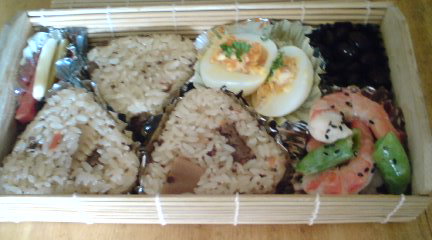
The present musubi are “maze gohan/mixed rice”. The rice was steamed together with “tsukudani/Japanese- style stewed food” made up of bee, bamboo shoots, carrots and others.
She added home-made pickles for vinegary garnish.

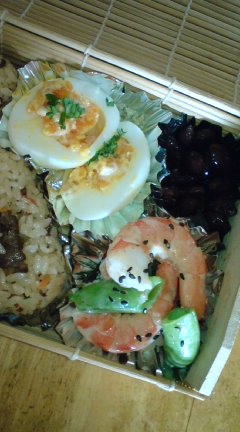
The rest of the garnish included her own style of oeufs mimosa/boiled eggs with their yolks manipulated, shrimps and snack pea pods salad seasoned with black sesame seeds and stewd black beans.

The salad was composed of hand broken lettuce, cress and other greens, plum tomatoes, sliced radishes and black olives, the whole topped with cold marinated mushrooms (done in Greek style with olive oil and spices).

Vey simple dessert of grenadine seasoned compoteed apples.

I think I’m right to egg on the Missus! LOL

RECOMMENDED RELATED SITES:
Warren Bobrow, Bread + Butter, Zoy Zhang, Hungry Neko, Think Twice, Frank Fariello, Mangantayon, Hapabento, Elinluv Tidbit Corner, Tokyo Terrace, Maison de Christina, Chrys Niles,Lexi, Culinary Musings, Wheeling Gourmet

Please check the new postings at:
sake, shochu and sushi

—————————————-
日本語のブログ
—————————————-