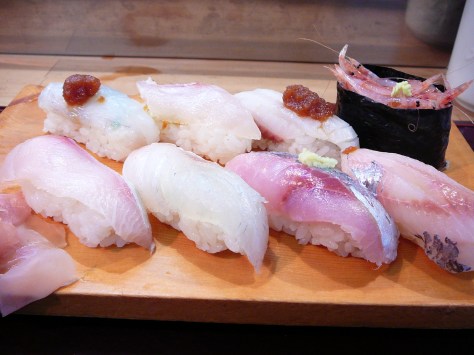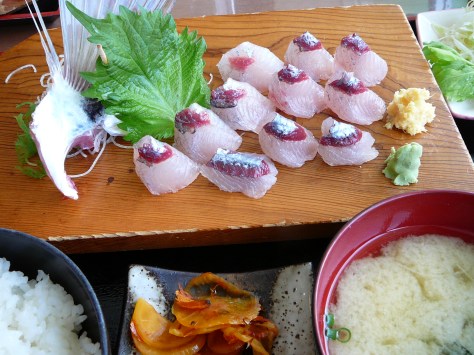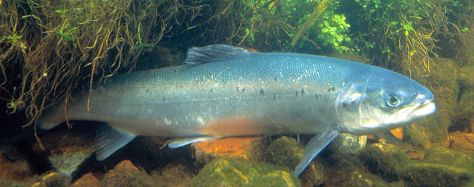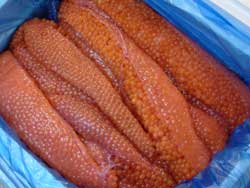
Tag Archives: 刺身

Japanese Seasonal Fish: Katsuo/Bonito

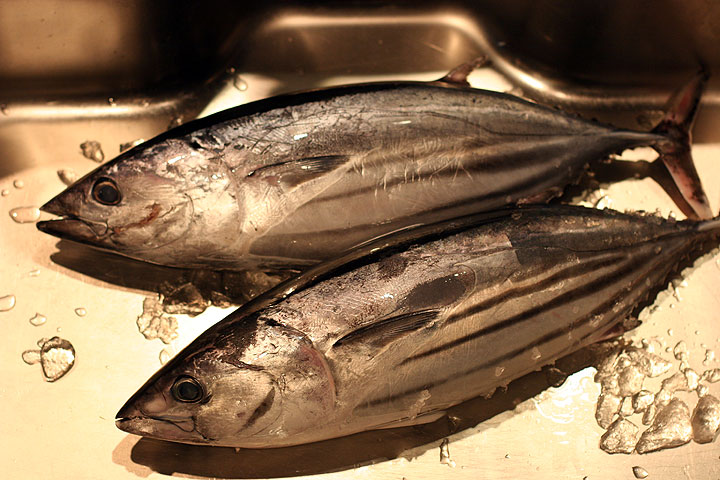
Bonito or “katsuo” in Japanese are extensively caught by fishermen from Numazu, Shimizu, Yaizu and Omaezaki Harbours (all Shizuoka Prefecture). The main fishing areas are Shizuoka, Mie, Kochi & Miyazaki Prefectures.
It is also called “katsu” (Tohoku Region), “Honkatsuo” (Kyushu Island), “Magatsuo” (Shikoku and Kyushu Islands. N.B.: the same name designates another fish in other parts of Japan!), “Suji” (Yamaguchi & Wakayam Pref.).
It appears on the markets early Spring~Autumn as “sho gatsuo” (first bonito in Spring) and “modori gatsuo” (return bonito end of Autumn).
They are traditionally line-caught but nets have been used extensively in recent years.
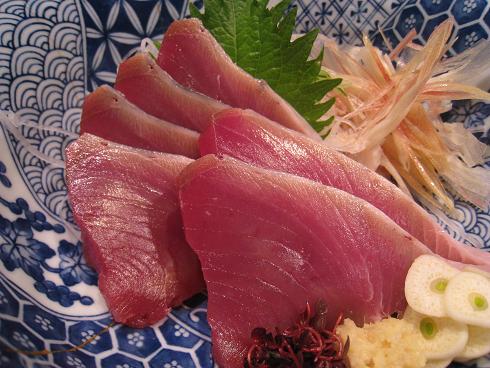
It can be appreciated raw, as sashimi with its skin or without it, preferably served with a saucer of soy sauce (shoyu) mixed with thin slices of fresh garlic, or with wasabi, a touch of lemon and shoyu,
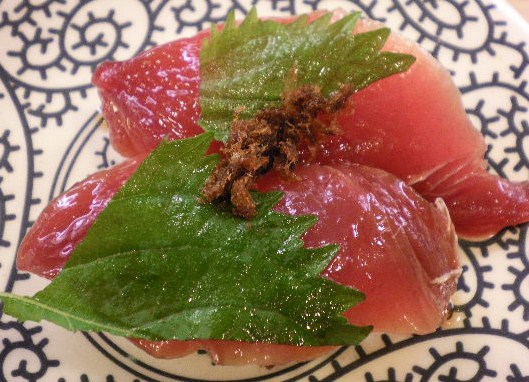
or as nigiri topped with grated fresh ginger a thin slice of garlic, unless you prefer grated fresh ginger with chopped thin leeks.
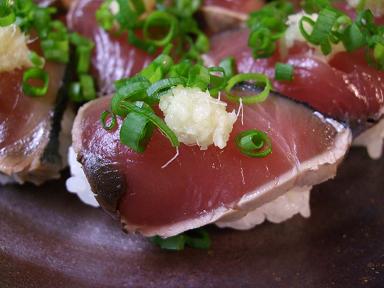
The same is done with lightly grilled/aburi (or tataki) bonito as sushi nigiri.
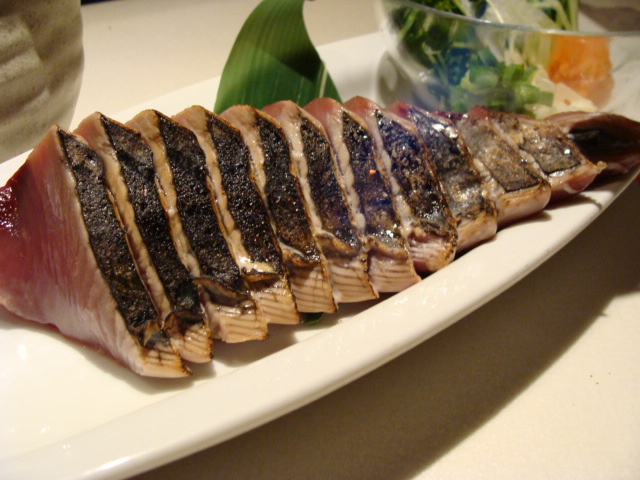
Another very popular way to eat it that will please Europeans and North Americans alike, is “tataki”.
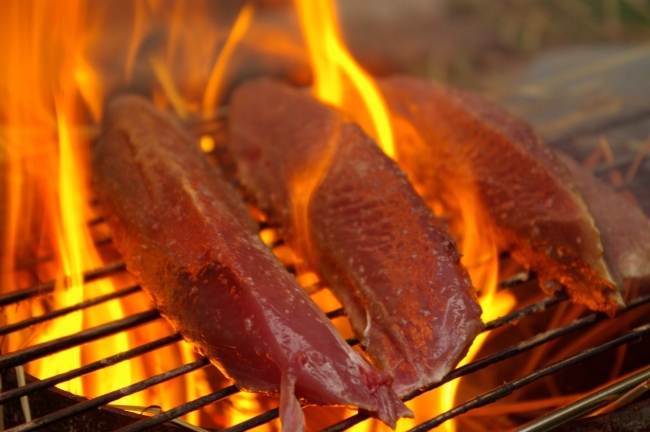
The fish is first seared/grilled over charcoal until it is lightly cooked on the whole outside then plunged into iced water to stop it from cooking any longer. It is then cut into large slices and served with freshly chopped garlic and thin leeks, “shiso” leaves (perilla/beefsteak plant) and wasabi.

Note 1: in restaurants specify whether you want the skin or not when ordering sashimi.

Note 2: the same fish is a staple food in Sri Lanka where it is first smoked and then prepared as soup or curry!
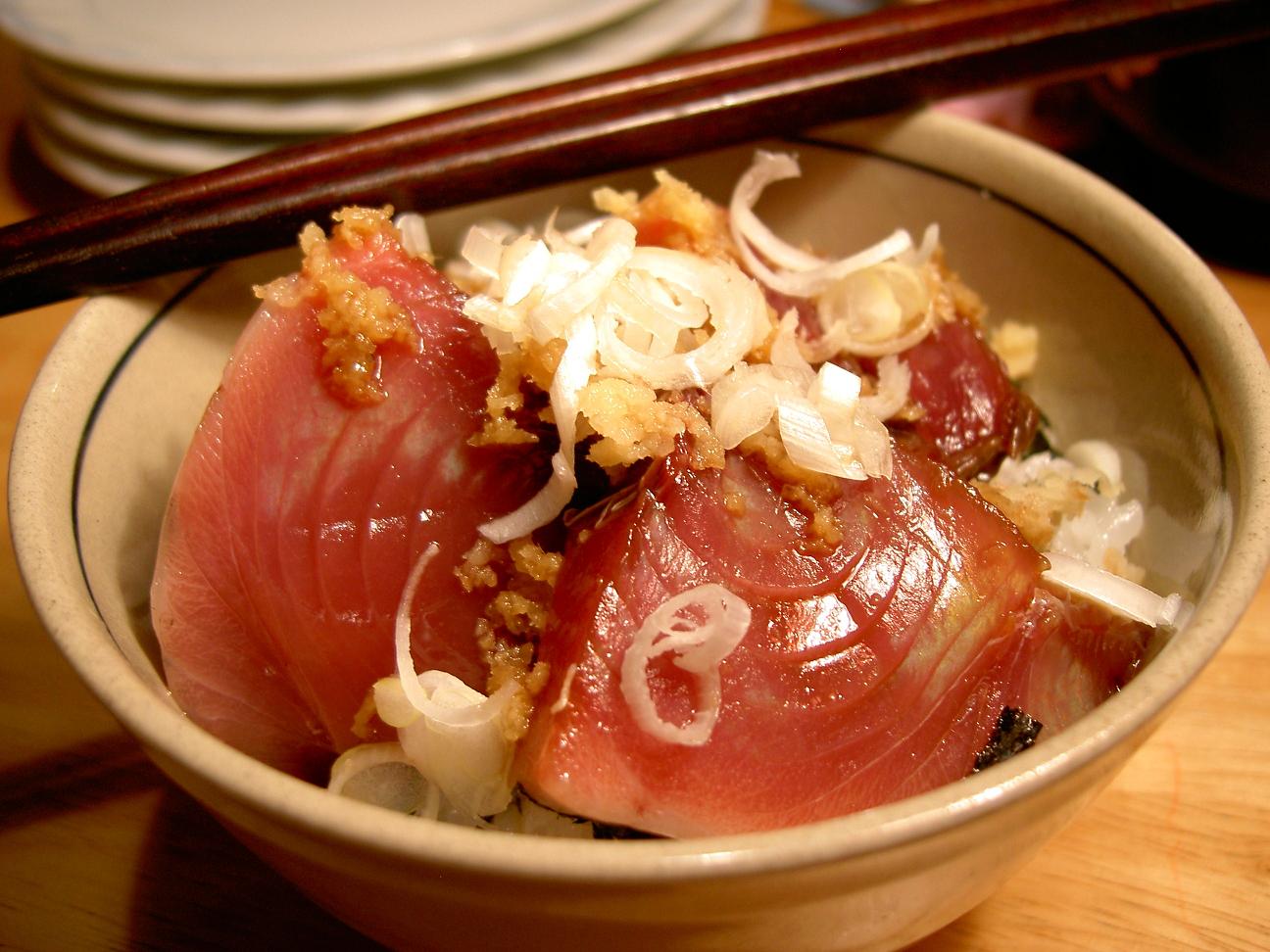
It is one of the most versatile fish in Japan.
It can be appreciated in many ways:
As a simple donburi/on a bowl or rice at home (see above picture),
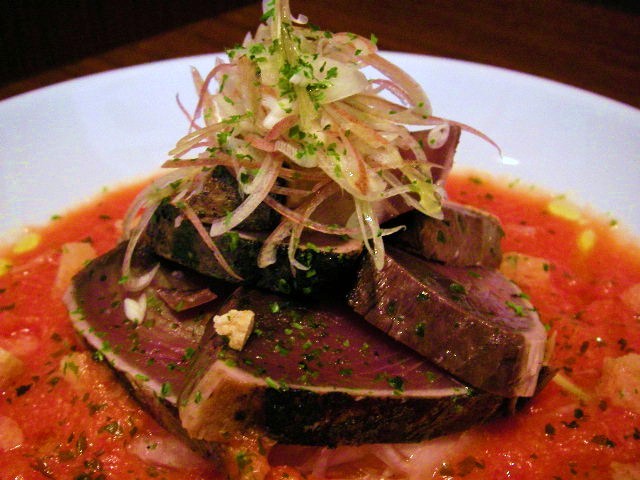
Lightly seared and served as carpaccio,
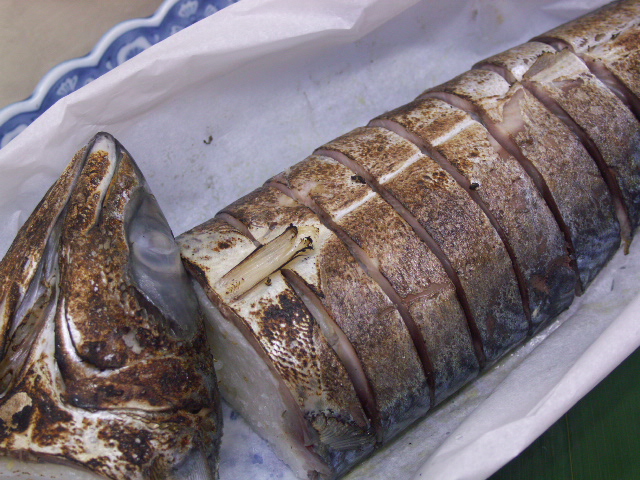
as bogata sushi/whole fish stuffed with sushi rice,
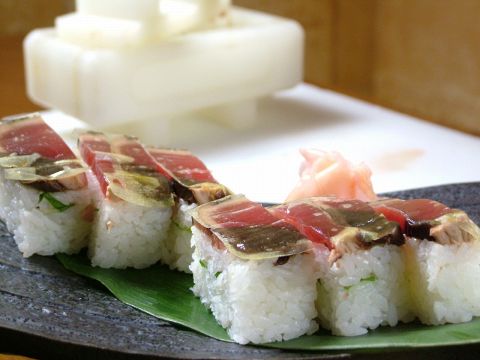
as oshizushi/pressed sushi,
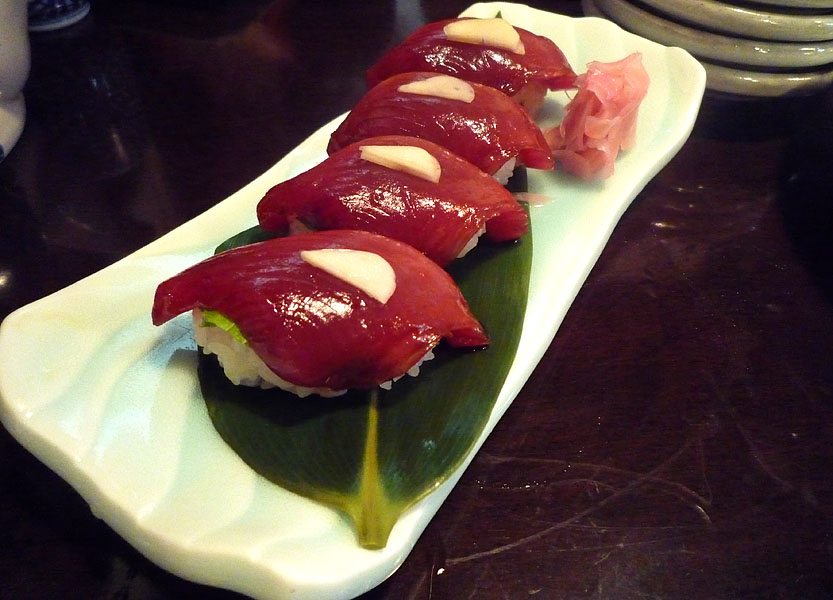
but my favourite is probably as zuke/marinated in soy sauce, mirin, sake, etc. before being served with a slice of garlic!

RECOMMENDED RELATED SITES:
Bread + Butter, Comestilblog, Greedy Girl, Bouchon For 2, Zoy Zhang, Hungry Neko, Mangantayon, Elinluv Tidbit Corner, Maison de Christina, Chrys Niles, Lexi, Culinary Musings, Eats and Everything, Bite Me New England, Heather Sweet, Warren Bobrow, 5 Star Foodie, Frank Fariello, Oyster Culture, Ramendo, Alchemist Chef, Ochikeron, Mrs. Lavendula, The Gipsy Chef, Spirited Miu Flavor, Wheeling Gourmet, Chef de Plunge, Sushi Nomads, Island Vittles

Please check the new postings at:
sake, shochu and sushi,
—————————————-
日本語のブログ
—————————————-

Japanese Seasonal Fish: Hirame/Olive Flounder, Bastard Halibut, Tonguefish, Sole

Hirame/平目

“Hirame” could be translated in many ways depending of your country of origin: Flat Fish, Sole, Turbot (although the latter should define “karei”) and what else. There are many varieties, wild or humanーfed. In Japanese, the names are numerous: Hirame, Shitabirame, Ooguchikarei, Oyanirami, etc.

Actually they can be divided into two main groups:

1)The Olive flounder or Bastard halibut (Paralichthys olivaceus; Japanese: ヒラメ/平目) is a species of large-tooth flounder native to the north-western Pacific Ocean.
It is often referred to as the Japanese flatfish or Korea(n) flatfish (광어) when mentioned in the context of those countries.
It is the most common flatfish species raised in aquaculture in Korea. They are raised in Japan and China as well.

Shitabirame/舌平目

2) Tonguefishes (shitabirame/舌平目in Japanese) are a family, Cynoglossidae, of flatfishes. They are distinguished by the presence of a long hook on the snout overhanging the mouth, and the absence of pectoral fins. Their eyes are both on the left side of their body, which also lacks a pelvic fin.

The best season is Autumn to Winter. They are still available until Spring in Shizuoka Prefecture. Wild ones come from Hokkaido and Aomori. Human-fed ones mainly hail from Oita, Ehime, Mie, and Kagoshima Prefectures.

Hirame Sashimi

The domestic wild catch is around 7600 tonnes a year, while human-fed fish amount to around 7100 tonnes a year. A recent increase has been observed in recent years, though. A lot are imported from Korea through Fukuoka and Shimoseki.
They are found in tropical and subtropical oceans, mainly in shallow waters and estuaries, though a few species found in deep sea floors, and a few in rivers.

Hirame can be enjoyed in many ways:
As sashimi, cut in various thickness, according to the chef’s preference and presented artfully.

It can be enjoyed cut in small dices, as tartare, especially shitabirame/tonguefish with tomato and strawberry!

Of course, hiirame is great as sushi nigiri with all kinds of seasoning I prefer it just seasoned with a little lemon juice or yuzu (if available) and salt (preferably “snow salt” from Okinawa!

The Japanese have a fondness for “engawa”, that is the frilled border along the fillets which are usually thrown away in other countries. The texture is different, almost crunchy.

Hirame is great marinated with konbu/seaweed as konbujime/seaweed marinated.

The same konbujime hirame can be served as oshizushi/pressed sushi topped with more seaweed!

An interesting oshizusshi combination is hirame topped with kabu/turnip and seasoned with yuzu juice and zest!

It is also very popular dried as himono/干物, especially shitabirame/tonguefish.

Naturally the Japanese all kinds of hirame cooked in the French way in a simple and succulent manner as above,

or as a beautiful gratin!

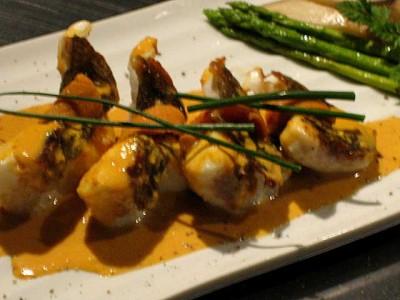
Last, but not least, how about grilled hirame with uni/sea urchin sauce?

RECOMMENDED RELATED SITES:
Bread + Butter, Comestilblog, Greedy Girl, Bouchon For 2, Zoy Zhang, Hungry Neko, Mangantayon, Elinluv Tidbit Corner, Maison de Christina, Chrys Niles, Lexi, Culinary Musings, Eats and Everything, Bite Me New England, Heather Sweet, Warren Bobrow, 5 Star Foodie, Frank Fariello, Oyster Culture, Ramendo, Alchemist Chef, Ochikeron, Mrs. Lavendula, The Gipsy Chef, Spirited Miu Flavor, Wheeling Gourmet, Chef de Plunge, Sushi Nomads, Island Vittles

Please check the new postings at:
sake, shochu and sushi,
—————————————-
日本語のブログ
—————————————-

Sashimi Plate at Sushi Ko, Shizuoka (’10/01/14)

I wrote this posting separately from the one introducing the vegan sushi plate the Missus and I shared at Sushi Ko, Shizuoka, last night so as not to confuse friends with different culinary priorities!
As I explained in the vegan sushi posting, Sushi Ko might not be the most expensive or sophisticated sushi restaurant in our Prefecture but you get the best food at the best price.
It certainly makes for far better value than some vaunted establishments in Tokyo or New York where you pay ridiculous prices for tiny pieces of art in outrageously expensive surroundings!
Moreover, Mr. Oda is one of those very few true chefs who take pleasure in tackling any challenge thrown at him by customers.
Owning a website of his own and knowing I’m more than amenable with his taking pictures of the food I order, we have this great deal of being offered even better presentation!
When it comes to sashimi, Mr. Oda always makes a point to introduce the seasonal fish of the day on a separate board for all to see, meaning that they will not be always available as contrary to the other possible orders written (with their prices!) on small wooden boards hung on the wall above the counter.

There were too many fish to choose from, but the help of Mr. Oda, we chose the following:

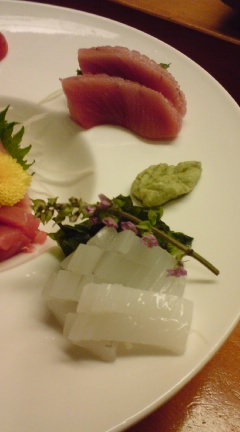
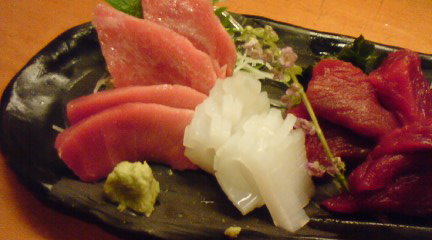
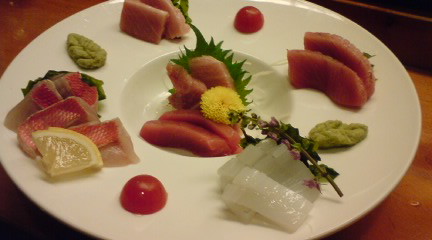
Above: Meji maguro Akami/Lean part.
Bottom: Aori Ika/Bigfin Reef Squid.
Can you see the freshly grated Shizuoka wasabi shaped into a green leaf?

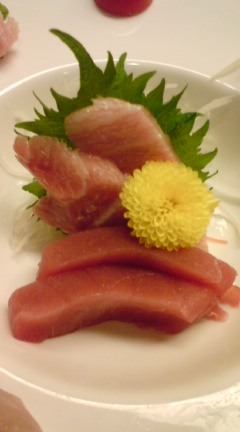
Above: Ooma Honmaguro/Ble Fin Tuna from Ooma in Aomori Prefecture, O-toro
Below: the same, chu-toro.
The chrysanthemum is edible.

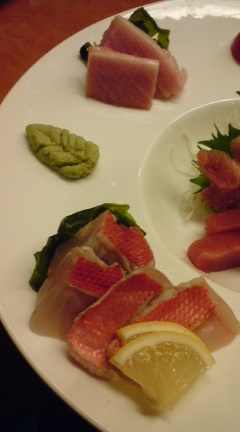
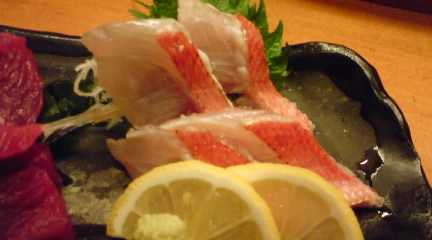
Above: Meji maguro o-toro
Below: Kinmeidai/Seabream/Great Alfonsino from Izu Penisula in Shizuoka Prefecture.

No need to say that all sublime morsels!

Sushi Ko
shizuoka City, Aoi Ku, Ryogae-cho. 2-3-1 (Aoba Koen)
Tel.: 054-2512898
Business Hours: 17:00~25:00. 17:00~23:00 (Sundays)
Closed on Wednesdays
Reservations recommended
Credit cards OK
HOMEPAGE (Japanese)

RECOMMENDED RELATED SITES:
Bread + Butter, Comestilblog, Greedy Girl, Bouchon For 2, Zoy Zhang, Hungry Neko, Mangantayon, Elinluv Tidbit Corner, Maison de Christina, Chrys Niles, Lexi, Culinary Musings, Eats and Everything, Bite Me New England, Heather Sweet, Warren Bobrow, 5 Star Foodie, Frank Fariello, Oyster Culture, Ramendo, Alchemist Chef, Ochikeron, Mrs. Lavendula, The Gipsy Chef, Spirited Miu Flavor, Wheeling Gourmet, Chef de Plunge, Sushi Nomads, Island Vittles

Please check the new postings at:
sake, shochu and sushi,
—————————————-
日本語のブログ
—————————————-

Seasonal Fish: Noresore/Conger Eel Whitebait

noresore4.jpg

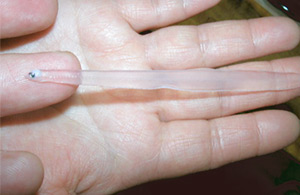
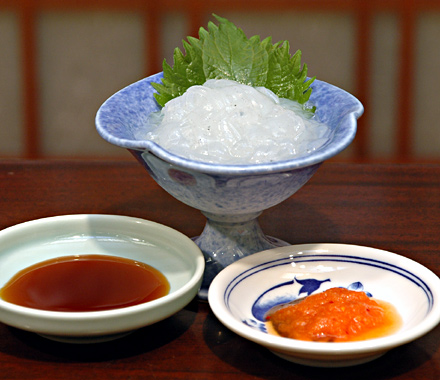
“Noresore” will soon appear at some select fish markets, and as it will be a very short season, you will have to keep your eyes open!
Noresore stands for very young conger eels. They are called different names depending on regions: “Berada” in Okayama Pref., “Tachikurage” in Misaki, “Nagatankurage” in Wakayama Pref.
In Shizuoka, they mainly come from Hamana Lake, a seawater lake west of the Prefecture, famous for its oysters, eels and clams.

5~6cm long, they are practically transparent, save for their eyes. They emit no smell. In our Prefecture they are available only during the first two weeks of March. They are slowly but surely becoming a rarity wherever in Japan, and people come from afar just for the experience!

Before serving them, lightly wash them in clean salted water.
They are great as they are with a little “ponzu or “yuzu” vinegar, a dash of “momijioroshi” (freshly grated daikon and chili pepper) and some chopped thin leeks for a last touch of colour!

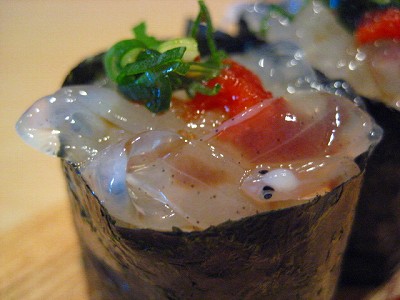
Now as sushi they are sublime as “gunkan”, or a rice ball wrapped in seaweed if you are an expert, with freshly grated ginger and chopped thin leeks again.

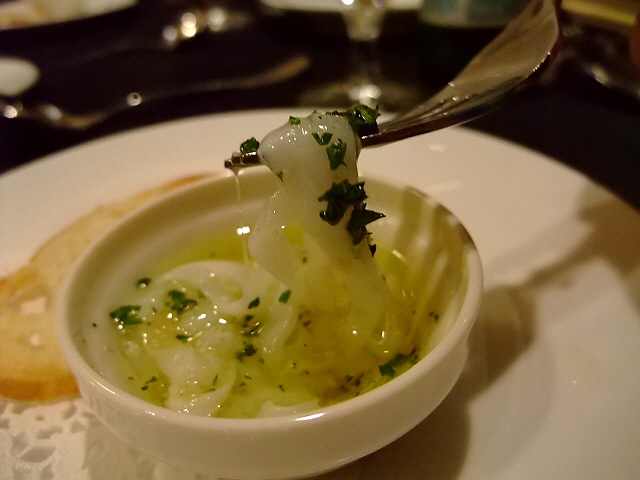
They can even been cooked (very quickly!) in garlic olive oil!

RECOMMENDED RELATED SITES:
Bread + Butter, Comestilblog, Greedy Girl, Bouchon For 2, Zoy Zhang, Hungry Neko, Mangantayon, Elinluv Tidbit Corner, Maison de Christina, Chrys Niles, Lexi, Culinary Musings, Eats and Everything, Bite Me New England, Heather Sweet, Warren Bobrow, 5 Star Foodie, Frank Fariello, Oyster Culture, Ramendo, Alchemist Chef, Ochikeron, Mrs. Lavendula, The Gipsy Chef, Spirited Miu Flavor, Wheeling Gourmet, Chef de Plunge, Sushi Nomads, Island Vittles

Please check the new postings at:
sake, shochu and sushi,
—————————————-
日本語のブログ
—————————————-

Japanese Seasonal Fish: Tai-Madai/Seabream

There are many varieties of Seabream/Snappers/Tai/鯛in Japan:
Batodai, Hanadai, Ishidai, Kinmeidai, Mekkidai, etc., but the most popular variety is called Madai/真鯛, or True Seabream.

Even Madai/True Seabream is called different names depending upon the region: Oodai or Hondai.
The best season streches from Winter to Spring.
It is extensively raised by humans in Ehime, Mie and Saga Prefectures.
Wild specimen are mainly caught off the shores of Nagasaki, Fukuok, Kumamoto, and Yamaguchi Prefectures. Not so many Madai are caught in Shizuoka but other varieties are abundant especially around Izu Penisula.

Human-raised amount to over 80,000 tonnes a year wild ones are caught at a rate inferior to 15,000 tonnes a year.
Imports are relatively and account for only about 6.500 tonnes a year.

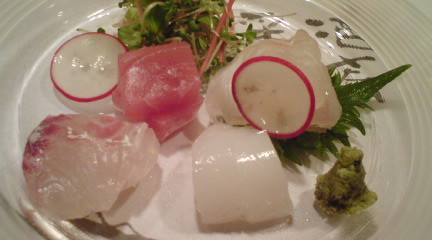
Madai is widely appreciated raw as sashimi in the Japanese style (above),

in carpaccio, Italian-style sashimi!

The Japanese also ove them grilled or steamed.

The Japanese since immemorial times have preserved the raw fish in rice miso, mirin/sweet sake and konbu/seaweed, but this has become quite an expensive morsel these days!

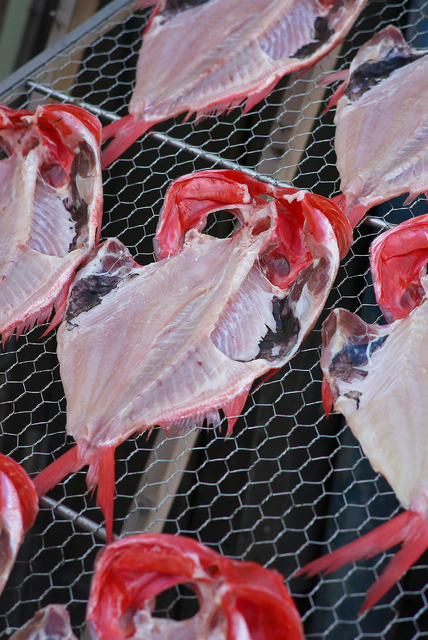
(Only relatively) lesser varieties, like Kinmedai, are appreciated as Himono/naturally dried fish, a specilaty of Shizuoka Prefecture which produces no less half of all naturally dried fish in Japan! Actually they come almost as expensive!

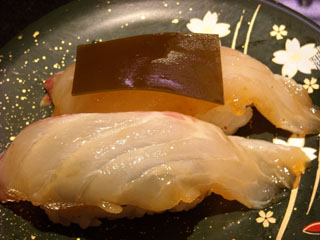
Konbujime/marinated in seaweed nigiri sushi

As sushi, madai (and other seabreams) are very versatile.
You will encounter them, depending on the region as konbujime/marinated in seaweed (above),

simple, straight nigiri sushi,

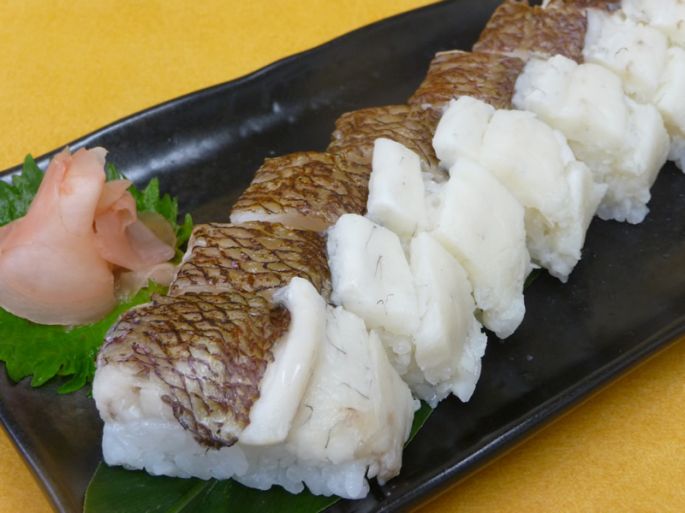
oshizushi/pressed sushi,

or zuke/marinated in ponzu, sake, mirin, etc.,

Seabream certainly looks great as temarizushi/Kyoto-style small round sushi nigiri!

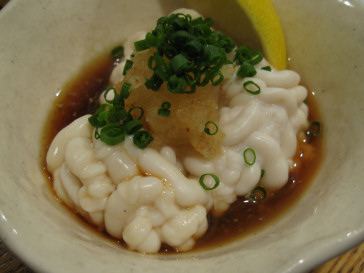
Tai Shirako

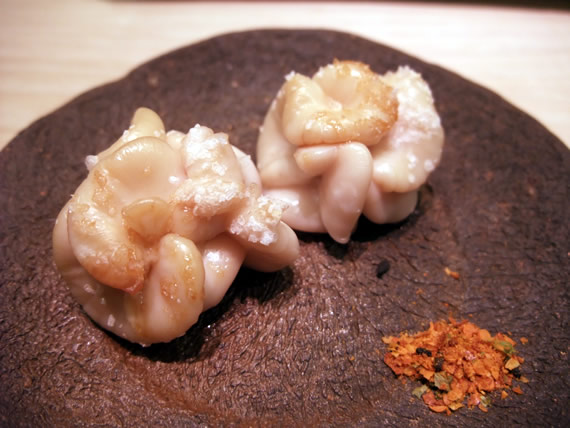
Like tara/cod, their sperm sacs of the male specimens are highly appreciated and even more expensive than those of cods.

You can have served raw/slightly boiled or grilled as above,

meuniere-style as in French or Italian cuisine,

or on gunkan sushi nigiri!

RECOMMENDED RELATED SITES:
Bread + Butter, Comestilblog, Greedy Girl, Bouchon For 2, Zoy Zhang, Hungry Neko, Mangantayon, Elinluv Tidbit Corner, Maison de Christina, Chrys Niles, Lexi, Culinary Musings, Eats and Everything, Bite Me New England, Heather Sweet, Warren Bobrow, 5 Star Foodie, Frank Fariello, Oyster Culture, Ramendo, Alchemist Chef, Ochikeron, Mrs. Lavendula, The Gipsy Chef, Spirited Miu Flavor, Wheeling Gourmet, Chef de Plunge, Sushi Nomads

Please check the new postings at:
sake, shochu and sushi

—————————————-
日本語のブログ
—————————————-

Japanese Seasonal Fish: Tara/Cod

Cod, or “Tara/鱈” in Japanese reads a the “Snow Fish”. Unlike in many countries in Europe and North America, the fish is eaten fresh, raw or cooked in Japan, but practically never salted.
Only the Norwegians can boast a difference as they eat the tongue of the fish as soon as they catch it!

As other fish in Japan, it is called different names: Ibodara, Maidara (Toyama Prefecture), Ara (Nagasaki Prefecture) as far as “Madar” or “True Cod” is concerned.
There are other varieties as is shown below in sushi pictures.

It is mainly caught in the Sea of Okhotsk in Winter.
The average total Cod catch is 437,000 tonnes, 55.000 of which is “True Cod”. Imports average annualy 152,000 tonnes mainly from the US and Russia.

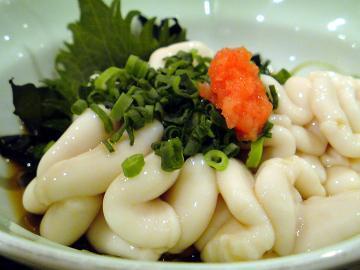
Cod sashimi with its male sperm sacs/Shirako

It makes for great sashimi.

But it is also equally appreciated cooked, especially grilled or in “Nabe/Japanese-style pot au feu”.

Gintara/銀鱈 Cod variety as sushi nigiri.

Higetara/髭鱈 Cod variety as sushi nigiri.

Madara/真鱈 Cod as sushi nigiri.

As shown above, many varieties of tara are greatly appreciated as sushi, especially nigiri.

Shirako/白子, or the sperm sacs of the male fish, is an extremely popular delicay in Japan.
It is either served raw or lightly boiled as in above picture with ponzu, chopped leeks and momijioroshi/grated daikon with chili pepper.

Shirako is also very popular served as sushi in gunkan shape as above.

It becomes another delicacy when grilled.
French and Italian Restaurants in Japan also extensively use it sauteed or in gratin!

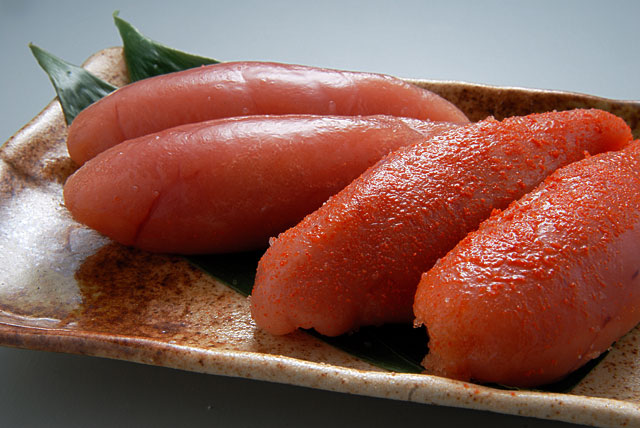
The roe sacs of the femal fish is also a very popular (and expensive) delicacy especially when preserved in chili pepper (as above) and sold as Mentaiko/明太子!

The same roe is also served as “Tarako/鱈子”, especially in the sushi gunkan form!

RECOMMENDED RELATED SITES:
Bread + Butter, Comestilblog, Greedy Girl, Bouchon For 2, Zoy Zhang, Hungry Neko, Mangantayon, Elinluv Tidbit Corner, Maison de Christina, Chrys Niles, Lexi, Culinary Musings, Eats and Everything, Bite Me New England, Heather Sweet, Warren Bobrow, 5 Star Foodie, Frank Fariello, Oyster Culture, Ramendo, Alchemist Chef, Ochikeron, Mrs. Lavendula, The Gipsy Chef, Spirited Miu Flavor, Wheeling Gourmet, Chef de Plunge, Sushi Nomads

Please check the new postings at:
sake, shochu and sushi

—————————————-
日本語のブログ
—————————————-

Sashimi Mini-Plate at Tomii (’10/01/09)

This is the second part of my “Quick fix” last night at Tomii.
I posted this article separately as it will also go to my sushi blog page and Sushi Nomads Website.

All the fish served on this “min sashimi plate” are seasonal (as always at Tomii).

Left top: “Honmaguro Akami”, or lean part of bluefin tuna backed with various sprout vegetables.
Right top: “Hirame” or sole on a leaf of shiso/perilla.
Left bottom: “Tai”, or seabream. In thei case “Madai”, or true seabream.
Right bottom: “Aori Ika”, or bigfin reef squid.
The wasabi is naturally freshly grated wasabi from Shizuoka!

TOMII
Shizuoka City, Aoi Ku, Tokiwa-cho, 1-2-7, Tomii Bldg, 1F
Tel.: 054-274-0666
Business hours: 17:00~22:00
Closed on Sundays
HOMEPAGE (Japanese)

RECOMMENDED RELATED SITES:
Bread + Butter, Comestilblog, Greedy Girl, Bouchon For 2, Zoy Zhang, Hungry Neko, Mangantayon, Elinluv Tidbit Corner, Maison de Christina, Chrys Niles, Lexi, Culinary Musings, Eats and Everything, Bite Me New England, Heather Sweet, Warren Bobrow, 5 Star Foodie, Frank Fariello, Oyster Culture, Ramendo, Alchemist Chef, Ochikeron, Mrs. Lavendula, The Gipsy Chef, Spirited Miu Flavor, Wheeling Gourmet, Chef de Plunge

Please check the new postings at:
sake, shochu and sushi

—————————————-
日本語のブログ
—————————————-

New Year Sashimi Sets in Shizuoka Supermarkets

Tradition has been changed or made with altogether!
From this year, the main supermarkets were oprn on New Year’s Day in Shizuoka.
Economic crisis? Cutthroat competition with “Convenience Stores”?
The result is that you don’t to worry any more about stocking up foood for the long Japanese New Year Holidays!

Not only the Shizutetsu Chain Supermarkets were open, but they had advertized bargains well in advance.
One concerned sashimi.
I just couldn’t ignore it and visited the largest store near my home yesterday afternoon.
I noticed that I had messed with my mobile phone camera today when I noticed the dates printed on the pics. I never do so, but at least, it will serve as a proof that I reaaly the pics yesterday! LOL

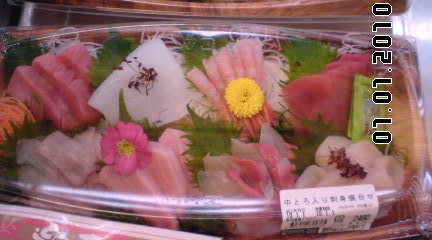
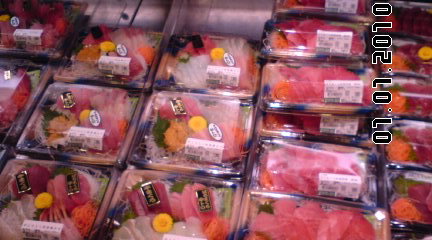
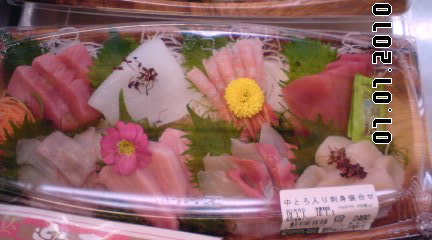
As you can see on the above pic there was plenty to choose from.
The main particularity was that the tuna was all wild tuna (Shizutetsu has a direct delivery deal with the various harbours in the Prefecture!)

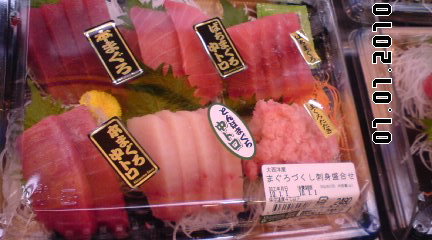
The set above is priced at about 25US$ and included sashimi from 3 different tuna: honmaguro, tonbomaguro and bachimaguro, from akami to chu-toro.

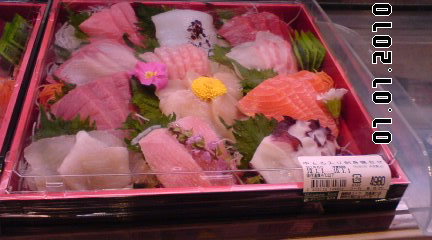
The above set for about 50US$ is a bit extravagant, athough very cheap (dead cheap abroad, I suppose!) and included three types of maguro/tuna, one tai/seabream, one madai/true seabream, one tako/octopus, one hirame/sole, one ika/cuttlefish, one buri/yellowtail, amaebi/sweet shrimps, hotate/scallops and one shake/salmon!

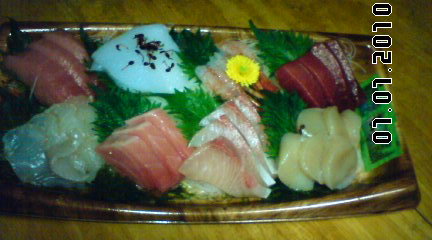
This is the one I chose for both of us (25US$)!

Top from left to right:
Honbomagurao Chutoro, Surumeika/Cuttlefish, Amaebi/Sweet Shrimps and Bachimaguro Chutoro
Bottom from left to right:
Hirame/Sole, Bachimaguro Chutoro, Buri/Yellowtail, and Hotate/ Scallops.

Of course I had Sake from Shizuoka with that lot!

RECOMMENDED RELATED SITES:
Warren Bobrow, Bread + Butter, Zoy Zhang, Hungry Neko, Think Twice, Frank Fariello, Mangantayon, Hapabento, Elinluv Tidbit Corner, Tokyo Terrace, Maison de Christina, Chrys Niles,Lexi, Culinary Musings, Wheeling Gourmet, Sushi Nomads, Oyster Culture, Ravenous Couple

Please check the new postings at:
sake, shochu and sushi

—————————————-
日本語のブログ
—————————————-

Sashimi Mini-Plate for Christmas at Tomii!

The agnostic I am have little to do with Christmas and the New Year, except wishing for great ones to all and sundry.
Actually I worked both on the 24th and 25th (and will on the 26th).
Last night on my way back from University I was really starving (diet consequence as I’m already 5 kg lighter than in September!) and I had to store something into that body of mine.
A quick trip to Tomii was in order.

I managed to keep my hunger in check and asked for a small plate (I mean, a really small one) of sashimi.
Tomii gladly obliged and served me the following (see above picture)*

In thebackground, Kan Buri/寒鰤 or Japanese Amberjack/Five-ray Yellowtail ona bed of leaf spouts and a sprig of shiso/紫蘇 perilla flowers.

In front Honmaguro/本鮪 orBlue Fin Tuna O-toro (Belly fat part) and Akami (lean part) and Hirame/平目 or Sole/Flounder.

The colours of the fish are very reminsicent of Santa Claus, don’t you think? LOL

TOMII
Shizuoka City, Aoi Ku, Tokiwa-cho, 1-2-7, Tomii Bldg, 1F
Tel.: 054-274-0666
Business hours: 17:00~22:00
Closed on Sundays
HOMEPAGE (Japanese)

RECOMMENDED RELATED SITES:
Bread + Butter, Comestilblog, Greedy Girl, Bouchon For 2, Zoy Zhang, Hungry Neko, Mangantayon, Elinluv Tidbit Corner, Maison de Christina, Chrys Niles, Lexi, Culinary Musings, Eats and Everything, Bite Me New England, Heather Sweet, Warren Bobrow, 5 Star Foodie, Frank Fariello, Oyster Culture, Ramendo, Alchemist Chef, Ochikeron, Mrs. Lavendula, The Gipsy Chef, Spirited Miu Flavor, Wheeling Gourmet

Please check the new postings at:
sake, shochu and sushi

—————————————-
日本語のブログ
—————————————-

Shizuoka Sashimi: Kinmedai/Splendid Alfonsino

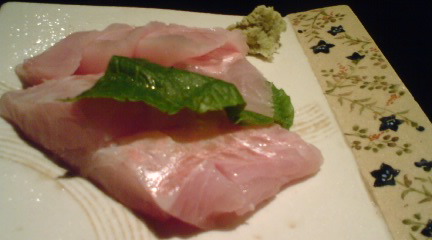
We had this fish yesterday at Uzu Izakaya in Shizuoka City as our second sashimi plate: Kinmedai/金目鯛.

Kinmedai/金目鯛 in Japanese means “Golden Eyes Seabream”.
It is a fish genus common all over the world, but with varying quality level.

This kinmedai was caught off the Izu Peninsula in the Western part of Shizuoka Prefecture.

Izu Peninsula is considered one of the best areas for that particular fish (it has different names in other regions!).

It was served cut in small rectangular pieces with a deep indent in the middle where you can insert the freshly grated wasabi (from along the Abe River in Shizuoka City) for better chopsticks manipulation and utmost appreciation.
The flesh is so tender it almost melts inside your mouth. The taste is sublime for a fish which is not considered as expensive here. (which shows you can enjoy sashimi and sushi at very reasonable prices! Jibe for people spending fortunes in Tokyo and abroad! LOL).
Generally speking fish is readily available and reasonble for all budgets in our Prefecture.

I feel like a lucky b…..d!

UZU
Shizuoka City, Otowa-cho, 3-18
Tel.: 054-249-6262
Business hours: 17:00=23:00
Closed on Mondays and first Tuesday
Reservations recommended
Credit cards OK
HOMEPAGE (Japanese, but have a look at the pics!)

RECOMMENDED RELATED SITES:
Bread + Butter, Comestilblog, Greedy Girl, Bouchon For 2, Zoy Zhang, Hungry Neko, Mangantayon, Elinluv Tidbit Corner, Maison de Christina, Chrys Niles, Lexi, Culinary Musings, Eats and Everything, Bite Me New England, Heather Sweet, Warren Bobrow, 5 Star Foodie, Frank Fariello, Oyster Culture, Ramendo, Alchemist Chef, Ochikeron, Mrs. Lavendula, The Gipsy Chef, Spirited Miu Flavor, Wheeling Gourmet

Please check the new postings at:
sake, shochu and sushi

—————————————-
日本語のブログ
—————————————-

Sushi Restaurant: Sushi Ko (’09/12/10)

When I go for sushi with the Missus, we invariably visit Sushi Ko in Sushi Ko.
I just can’t enumerate all the good reasons for visiting this sushi restaurant.
It is the best deal in town when it comes to quality, freshness, prices and service. Full stop.

We were served ankimo/アンキモ or monkfish liver (I call it Japanese foir gras!) with the first drink.
That helped us consider which sashimi to start with.
Here is what we ordered on that particular day (the fish served is only seasonal at Sushi Ko, so choosing sashimiis a great venture!):

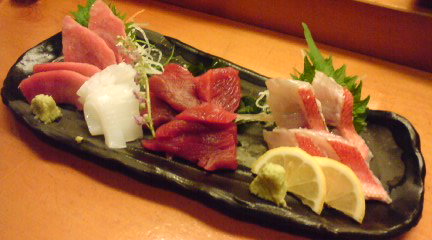
-Bottom left: “honmaguro/本鮪”, blue fin tuna from Oma (Aomori Prefecture), chu-toro/semi-fat part.
-Top left: O-toro/belly fat part of same fish
-Bottom centre: “Aori Ika/あおり烏賊, Great Fin Reef Squid from Suruga Bay in Shizuoka Prefecture.
-Bottom right: Akami/lean part rom same tuna.

Notice the “shiso/紫蘇”, perilla flowers, grated “wasabi/山葵” from Shizuoka and “wakame/若布” seaweed at the back!

“Kinmeidai/金目鯛”, gold eye seabream from Izu penisula in Shizuoka Prefecture resting on a shiso/perilla leaf.

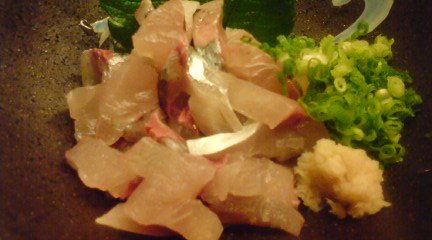
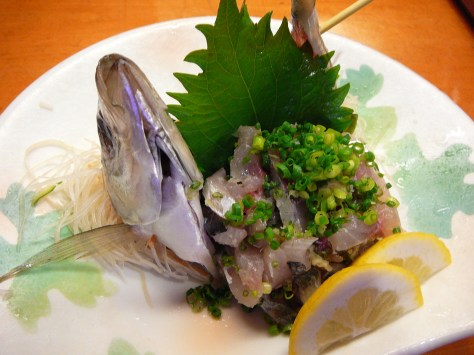
As we were not ready yet for the sushi (rice) we ordered one more sashimi: “aji tataki/鯵たたき”, or saurel/mackerel pike tartare Caught off Shizuoka shores).
Very fresh and enjoyable as you little bits at a time.

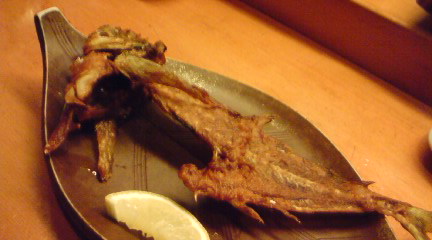
Just to prove how fresh the fish was (it was caught live from the tank), we were served its head and bones dep-fried. This is actually the traditional Japanese way to get their calcium for their bodies!

Sushi is not only superlative at sashimi and sushi, but they also provide a great array of excellent cooked dishes.
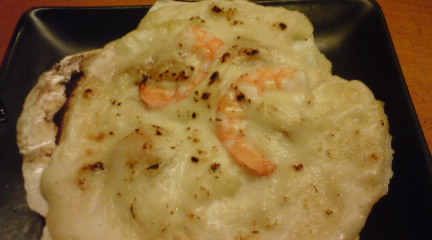
The Missus being ravenous, she couldn’t help asking for the “hotate gratin/帆立グラタン, scallops gratin! French cuisine at a sushi restaurant! Why not!

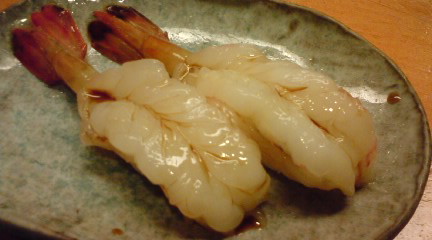
On the other I couldn’t help ogling at the “botan ebi/牡丹蝦, large prawns” from Hokkaido. I opted for them as sushi nigiri. These large prawns are very sweet and are exclusively eaten raw.

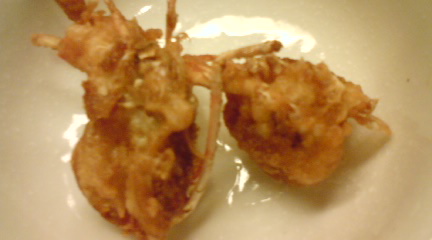
Once again, to prove their freshness, we were served the heads deep-fried!

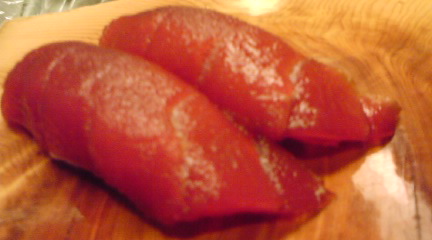
“Maguro Zuke/鮪付け”, marinated tuna is another morsel that we must have. The tuna, akami/lean part usually is marinated for 10~20 minutes in a mixture of soy sauce, sake and mirin (and other “secret” ingredients) before being placed on the shari/rice ball. Almost makes for a dessert.

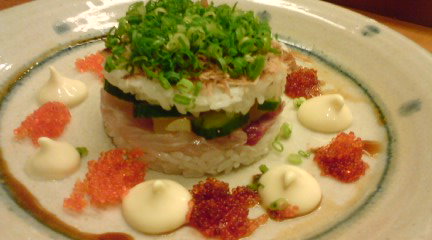
One particular creation by Sushi Ko is their Sushi Millefeuille (another French concept?)
They offer two kinds, one international style, the other Japanese style.
For once, we chose the Japanese style:
“kanpachi/間八” or greater Amberjack, “Kazu no Ko/数の子”, or herring roe and cucumber on the first tier, “Katsuo Bushi/鰹節” or dry bonito shavings and chopped thin leeks, the whole surrounded with dressing and “Tobikko/飛び子” or flying fish roe!

From then it was ordering morsels, one set of two/”nikan-二冠” at a time:
“hotate/帆立”, raw scallops muscle part.

“HIrame/平目”, or sole, served pre-seasoned with a little salt and lemon juice. Perfect as it is. No need for soy sauce!

“Me-negi/芽葱”, or leek sprouts for the vegans!

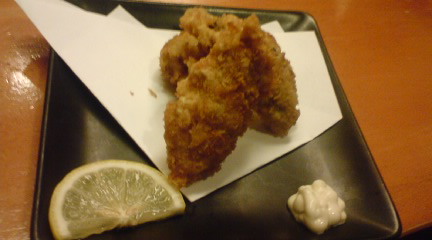
The Missus couldn’t stop and ordered Japanese-style deep-fried oysters!

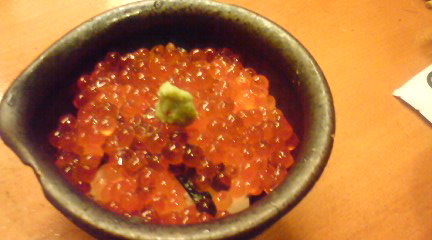
And the ubiquitous “Ikura mini don/いくらミニ丼”, or mini bowl of rice topped with salmon roe and freshly grated wasabi (from Shizuoka, of course!).

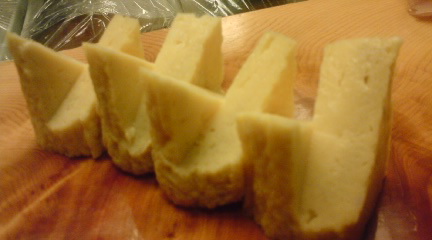
As for me, I will not leave the place without the “Tamagoyaki/卵焼き” or Japanese omellette. Home-made (not all sushi restaurants go through the pain of cooking their own tamagoyaki!”) and artfully cut!

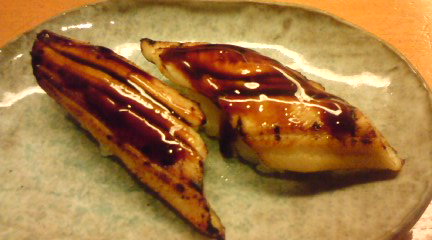
And the extravagant dessert: “Anago/穴子”, conger eel first grilled to a soft texture and topped with tare/sauce (always original at Sushi Ko!)!

We did have a lot of drink, I can assure you, but we remembered what we savoured!
Next time? Very soon, I’m sure!

Sushi Ko
shizuoka City, Aoi Ku, Ryogae-cho. 2-3-1 (Aoba Koen)
Tel.: 054-2512898
Business Hours: 17:00~25:00. 17:00~23:00 (Sundays)
Closed on Wednesdays
Reservations recommended
Credit cards OK
HOMEPAGE (Japanese)

RECOMMENDED RELATED SITES:
Bread + Butter, Comestilblog, Greedy Girl, Bouchon For 2, Zoy Zhang, Hungry Neko, Mangantayon, Elinluv Tidbit Corner, Maison de Christina, Chrys Niles, Lexi, Culinary Musings, Eats and Everything, Bite Me New England, Heather Sweet, Warren Bobrow, 5 Star Foodie, Frank Fariello, Oyster Culture, Ramendo, Alchemist Chef, Ochikeron, Mrs. Lavendula, The Gipsy Chef, Spirited Miu Flavor,
-Sake: Tokyo Through The Drinking Glass, Tokyo Foodcast, Urban Sake, Sake World
-Wine: Palate To Pen
-Beer: Good Beer & Country Boys, Another Pint, Please!
-Japanese Pottery to enjoy your favourite drinks: Yellin Yakimono Gallery

Please check the new postings at:
sake, shochu and sushi

—————————————-
日本語のブログ
—————————————-

Sashimi Plate at Sushi-Ko (’09/12/12)

When I go for sushi with the Missus, we invariably visit Sushi Ko in Sushi Ko.
I just can’t enumerate all the good reasons for visiting this sushi restaurant.
It is the best deal in town when it comes to quality, freshness, prices and service. Full stop.

To cut a long story short (no pun intended) here what we ordered as sashimi to start our meal:

-Bottom left: honmaguro/blue fin tuna from Oma (Aomori Prefecture), chu-toro/semi-fat part.
-Top left: O-toro/belly fat part of same fish
-Bottom rcentre: Aori Ika/Great FinReef Squid from Suruga Bay in Shizuoka Prefecture.
-Bottom right: Akami/lean part rom same tuna.

Notice the shiso/perilla flowers, grated wasabi from Shizuoka and wakame seaweed at the back!

Kinmeidai/gold eye seabream from Izu penisula in Shizuoka Prefecture.

For what we had for the rest of the meal (a large one!) check Shizuoka Sushi Blog!

Sushi Ko
shizuoka City, Aoi Ku, Ryogae-cho. 2-3-1 (Aoba Koen)
Tel.: 054-2512898
Business Hours: 17:00~25:00. 17:00~23:00 (Sundays)
Closed on Wednesdays
Reservations recommended
Credit cards OK
HOMEPAGE (Japanese)

RECOMMENDED RELATED SITES:
Bread + Butter, Comestilblog, Greedy Girl, Bouchon For 2, Zoy Zhang, Hungry Neko, Mangantayon, Elinluv Tidbit Corner, Maison de Christina, Chrys Niles, Lexi, Culinary Musings, Eats and Everything, Bite Me New England, Heather Sweet, Warren Bobrow, 5 Star Foodie, Frank Fariello, Oyster Culture, Ramendo, Alchemist Chef, Ochikeron, Mrs. Lavendula, The Gipsy Chef, Spirited Miu Flavor,
-Sake: Tokyo Through The Drinking Glass, Tokyo Foodcast, Urban Sake, Sake World
-Wine: Palate To Pen
-Beer: Good Beer & Country Boys, Another Pint, Please!
-Japanese Pottery to enjoy your favourite drinks: Yellin Yakimono Gallery

Please check the new postings at:
sake, shochu and sushi

—————————————-
日本語のブログ
—————————————-

Sashimi Plate at Tomii (’09/12/04)

I suppose I do not need to introduce Tomii again as it is my favourite Japanese restaurant in the whole of Shizuoka Prefecture!
To make a long story short, I paid them a visit last night on my way back from university before going home.

I was not that hungry, so I just ordered “o-tsukuri/sashimi plate”.

From left to right:
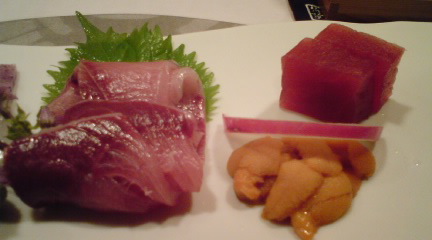
Yellow carrot, Suzuki/black bass, various sprouts, Kyoto ninjin/Kyoto re carrot, Aka Ika/red squid, shiso/perilla flowers and beni shigure daikon/red daikon variety.

For a clsoer view of thefresh vegetables!

From left to right:
Kan buri/Winter yelowtail on shiso/perilla leaf, Uni/seaurchin under a slice beni daikon/red daikon and bachmaguro/tuna variety.

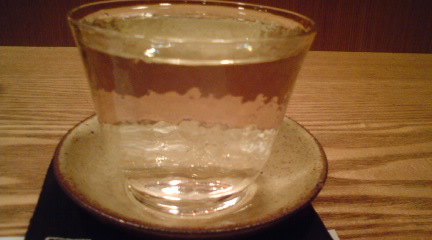
I had sake with all that of course.

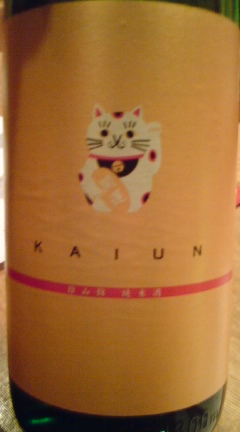
I particularly enjoyed a new brew by Doi Brewery in Kakegawa City:

Doi Brewery: Kaiun Junmai
Rice: Oyamanishiki
Rice milled down to 60%
Alcohol: 15 degrees
Dryness: +4
Acidity: 1.5
Amino acids: 1.2
Bottled in March 2009

Clarity: very clear
Colour: faint golden hue
Aroma: Fresh, discreet, feminine, fruity. Memories of vanilla, banana and pineapple.
Body: velvety
Taste: Soft attack. Well-rounded. Short tail.
Pleasant, fleeting, feminine, sophisticated.
Fruity and dry, but very smooth.
Pineapple, soft citruses
Junmai tingle appears with food with a late appearance by almonds.
Very soft and fleeting finish with more dry almonds.

Overall: Extravagant, sophisiticated, fleetingly feminine are not exaggerated descriptions for this sake, the last created by Master Brewer hase who passed away in 2009.
Now, how would you drink it?
With your love? as an extravagant aperitif? Or on your own away from the bustle of everyday life….

TOMII
Shizuoka City, Aoi Ku, Tokiwa-cho, 1-2-7, Tomii Bldg, 1F
Tel.: 054-274-0666
Business hours: 17:00~22:00
Closed on Sundays
HOMEPAGE (Japanese)

RECOMMENDED RELATED SITES:
Bread + Butter, Comestilblog, Greedy Girl, Bouchon For 2, Zoy Zhang, Hungry Neko, Mangantayon, Elinluv Tidbit Corner, Maison de Christina, Chrys Niles, Lexi, Culinary Musings, Eats and Everything, Bite Me New England, Heather Sweet, Warren Bobrow, 5 Star Foodie, Frank Fariello, Oyster Culture, Ramendo, Alchemist Chef, Ochikeron, Mrs. Lavendula, The Gipsy Chef, Spirited Miu Flavor,
-Sake: Tokyo Through The Drinking Glass, Tokyo Foodcast, Urban Sake, Sake World
-Wine: Palate To Pen
-Beer: Good Beer & Country Boys, Another Pint, Please!
-Japanese Pottery to enjoy your favourite drinks: Yellin Yakimono Gallery

Please check the new postings at:
sake, shochu and sushi

—————————————-
日本語のブログ
—————————————-
Sushi and Sashimi: Eat Local!

009

Saurel pike/Aji from Suruga Bay, Shizuoka Prefecture

Very few people will disagree with the notion that Japan is the ideal place to discover and savour sushi and sashimi in the whole world. Nevertheless, there are a few rules of the thumb to respect even in this gastronomic paradise.
The overriding rule is that you should try and eat only local fish or seafood.
Tsukiji might be considered a sushi paradise by Tokyoites, but the cheap prices enjoyed by tourists cannot conceal the reality: the fish and seafood are “imported” from all over Japan and beyond!
More than often, Edomae (Tokyo) sushi is nothing but a clever way to “dress up” ingredients to lure officionados (and customers) into believing they are eating top quality sushi (with the consequent prices).
Now, if you have the chance and time to explore Japan beyond Tokyo, you will discover an unfathomable treasure trove of gastronomic pleasure and knowledge!
After all, this country is a vast archipelago stretched across greatly different seas and climates, making for a diversity difficult to equal.
So, even if you cannot possibly explore all the shores of this nation, make a point to learn about the food available wherever you choose to stay.
The same goes for residents, not only for their own sake, but for that of their visitors and friends!

018

Sushi set with fish all caught in Suruga Bay, Shizuoka Prefecture

You also ought to do some homework. Sushi chefs worthy of their salt will be only too happy to answer questions to genuinely interested customers and come up with revelations of their own.
As an example to illustrate the need for some basic knowledge, in Hokkaido “oyakodon” is not cooked chicken and omelette on a bowl of rice, but raw salmon and its roe spread on top the same bowl of rice!
Likewise, the same fish will more than often be sold under a myriad of names.
Many morsels will not be found anywhere else as “sakura ebi/cherry shrimps” and fresh”shirasu/sardine whiting” in Shizuoka Prefecture.
Sashimi in most cases has to be perfectly fresh as typified by “kubiore saba” in Yakushima Island where fishermen break the neck (“kubiore”) of mackerels (“saba”) to preserve their quality upon catching. The same fish will be served within a few hours, or less, on the local tables.
On the other hand, tuna sashimi is best consumed after ripening for a few days in a refrigerator.
In Hokkaido, large shrimps, especially “botan ebi” will be served only raw, whereas “kuruma ebi” will be first boiled in other regions.

If you ask for “tataki”, make sure it means the whole fish, especially “aji/mackerel pike” that will be served finely cut as tartare atop the dressed fish.

002

Flying Fish/Tobiuo sashimi from Yakushima Island

On the other hand, sushi follows different rules.
Fish and seafood placed on “donburi” (bowl) are usually of the freshly brought variety but fish served as nigiri is prepared in a different way.
The greatest sushi (and this cannot be done in Tsukiji!) are made with fish which has been gutted and cleaned live within seconds, then dressed into strips/fillets left to mature in a refrigerator on clean cloth/kitchen paper. This can be done only with fish caught locally!
The same obviously goes with shellfish and other marine ceatures: One cannot sample better “uni/sea urchin” away from Hokkaido or sakura ebi from Shizuoka.

Vegan and vegetarians, upon finding a restaurant willing to satisfy their priorities should also ask for food grown locally, a search easier than one might think at first as there are many non-meat eaters in this mainly Budhist country.
The same vegetables will make for the perfect combination when associated with local fish!

RECOMMENDED RELATED SITES:
Warren Bobrow
Wild River Review
Bread + Butter
5 Star Foodie
Frank Fariello
Mangantayon
Hapabento
Elinluv Tidbit Corner
Think Twice

Please check the new postings at:
sake, shochu and sushi

—————————————-
日本語のブログ
—————————————-
Japanese Seasonal Fish: Salmon-Sake

SAKE-1

Salmon is a favourite almost everywhere on the Globe, but it is in Japan that you can enjoy in the most numerous manners!

Like every other fish it has many names according to season and place:
Shirozake/White Salmon, Akiaji or Akizake for Autumn Salmon, Shake in Tokyo.
In Spring it is called Tokishirazu.
I don’t have to tell you there are many, many names for it all over the world!

SAKE-SUJIKO

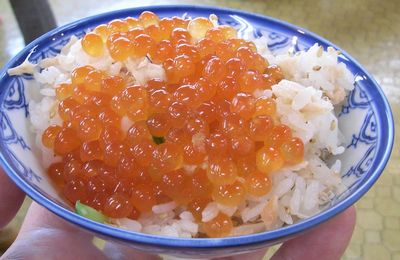
Its roe, before processing, is called Sujiko in Japanese, whereas the salmon roe, once treated, is called Ikura.

SAKE-ROE-SUSHI

Many Japanese appreciate the roe untreated, but more people enjoy it on top of rice as it is with some soy sauce and grated wasabi.

SAKE-SUSHI

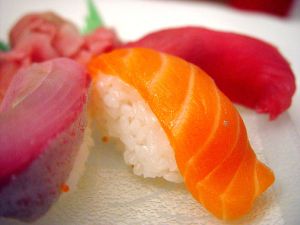
It also makes for some splendid colourful creation on a plate of sushi!

SAKE-SUSHI-2

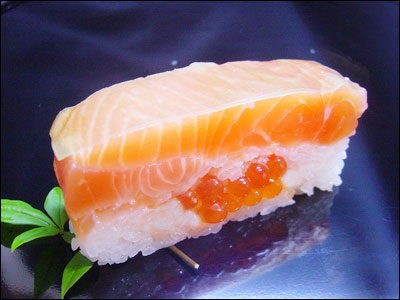
As oshizushi/pressed sushi, it can make some very interesting combinations with the salmon flesh and roe.

SAKE-GOHAN

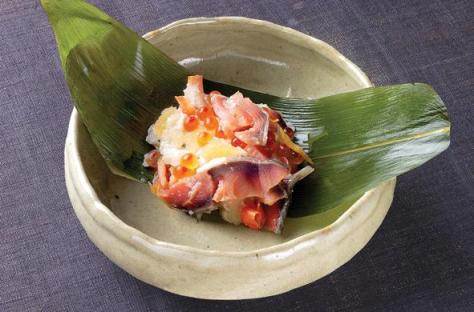
Have you ever tasted Sake Gohan/Salmon Rice?

SAKE-OSHIZUSHI

Slightly smoked the Japanese way, It is extensively used in the making of bentoes!

RECOMMENDED RELATED SITES:
Warren Bobrow
Bread + Butter
5 Star Foodie
Frank Fariello
Mangantayon
Tokyo Foodcast
Tokyo Through The Drinking Glass
Urban sake
Hapabento
Elinluv Tidbit Corner

Please check the new postings at:
sake, shochu and sushi

—————————————-
日本語のブログ
—————————————-