Tag Archives: 美食

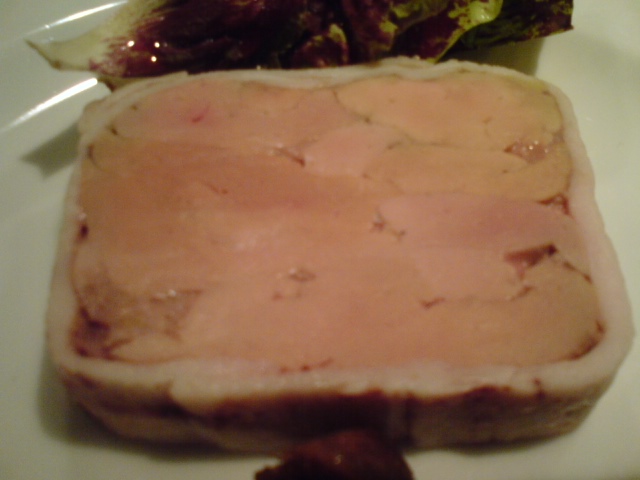
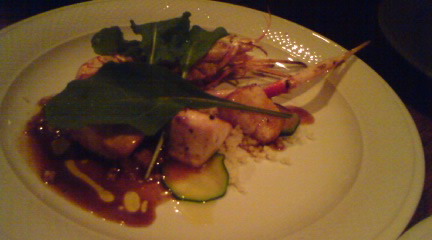
Guinea Fowl White Liver Terrine at Pissenlit

Service: excellent and very friendly
Facilities: great washroom, great cleanliness overall
Prices: reasonable, good value.
Strong points: Interesting wine list. Great use of local products.
no-smoking-logo!

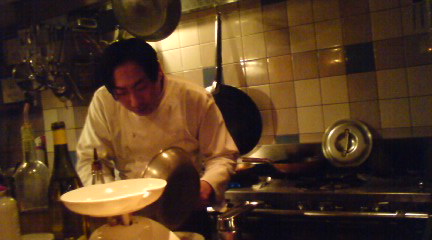
Pissenlit, one of the very best French restaurants in Shizuoka City is rapidly earning a lot of attention, not only because of the supreme quality of all the ingredients Chef Tooru Arima uses, but also because of the originality and concept of many of his creations!

I recently had the fortune to discover and savour a terrine made of the “white liver” of guineal fowls raised in Iwate Prefecture, a region celebrated for its Japanese sake and oysters.
The concept was very similar to foie gras (listen, Arnie!), but lighter and I would dare say, more elegant. The pork fat/lard around it (I d not eat it) preserved the texture and taste to perfection.
Just a little toasted bread, roughly ground black pepper and dry figs made for a simple and perfect complement.

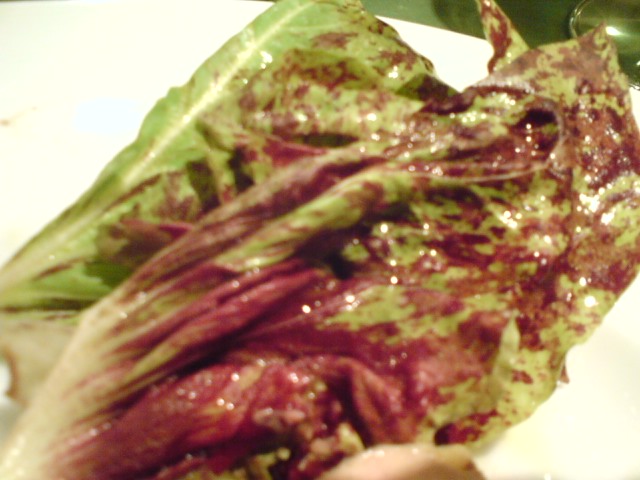
A leaf of Kyoto-grown Italian Funtaretta (chickory) provided for the vital tangy association to the sweetness of the terrine and a healthy dose of Vitamin and fibers!

It just shows you don’t have to go too far to have a taste of France!

PISSENLIT
420-0839 Shizuoka City, Aoi Ku, Takajo, 2-3-4
Tel.: 054-270-8768
Fax: 054-627-3868
Business hours: 11:30~14:30; 17:00~22:00
Closed on Tuesdays and Sunday evening
Homepage (Japanese)
Credit Cards OK

RECOMMENDED RELATED SITES:
Warren Bobrow, Bread + Butter, Zoy Zhang, Hungry Neko, Think Twice, Frank Fariello, Mangantayon, Hapabento, Elinluv Tidbit Corner, Tokyo Terrace, Maison de Christina, Chrys Niles,Lexi, Culinary Musings, Wheeling Gourmet, Social Culinaire, Sushi Nomads, Cook, Eat & Share, Gourmet Fury, 5 Star Foodie

Please check the new postings at:
sake, shochu and sushi

—————————————-
日本語のブログ
—————————————-

Gastronomic Cycling in Shizuoka (6)

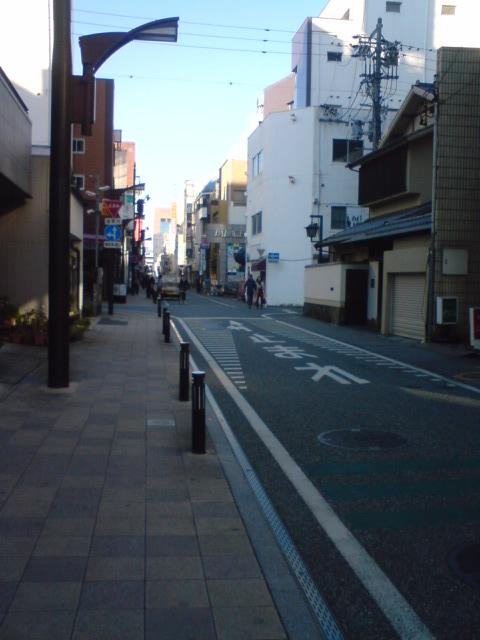
As promised in the last article, I would like to introduce a paallel street to Aoba Koen/Green Leaves Park Street. It is called Genan Street and is actually the real “Shizuoka by night” street where you will discover some of the oldest restaurants in town.
Actually it makes for one of the three main parallel streets at the heart of what I call the “Gastronomic Grid” of Shizuoka City, at least the original one as it was known just after WWII. Now, restaurants of repute are found in all corners of the city.
Next time I will cycle across those three arteries to cover the whole “grid”!
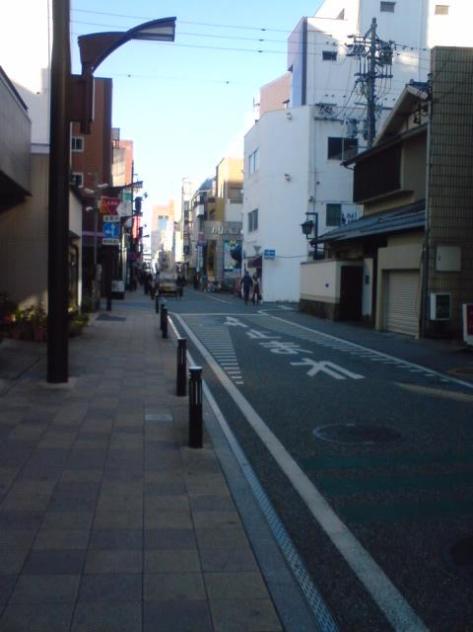
The street itself is nothing much in daytime although it pays to cycle a few times along:
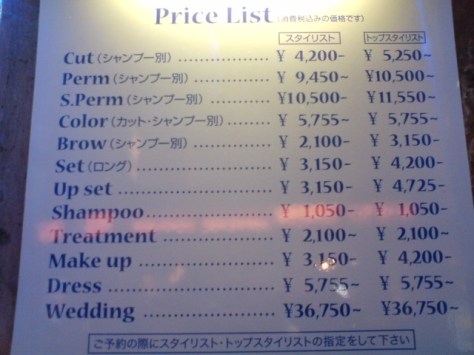
Hairdressers and beauty salons’ boards are always a great source of funny English. “Brow” actually means “Blow”, “Perm” means Premanent” and “S.Perm” (Holy Macaroni!) means “Special Permanent”!
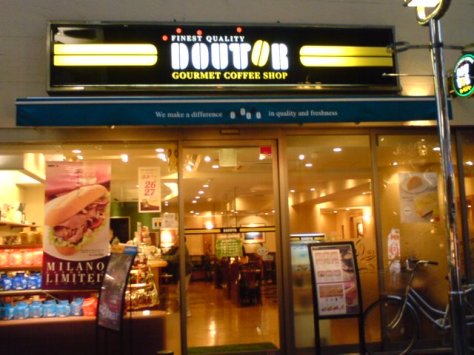
The street starts with the ubiquitous “chain company cafes”,
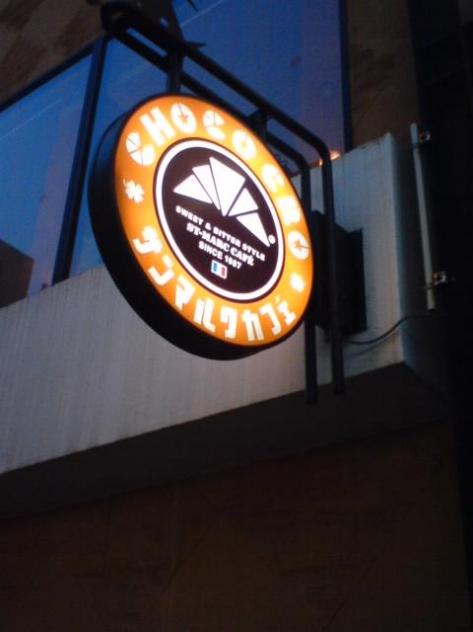
another one,
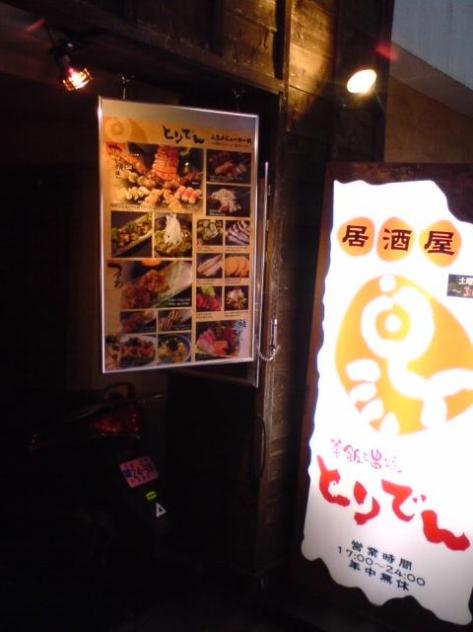
“chain company restaurants” usually the “all you can eat and drink” genre,
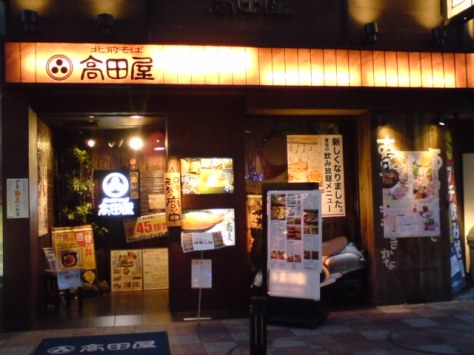
another one,
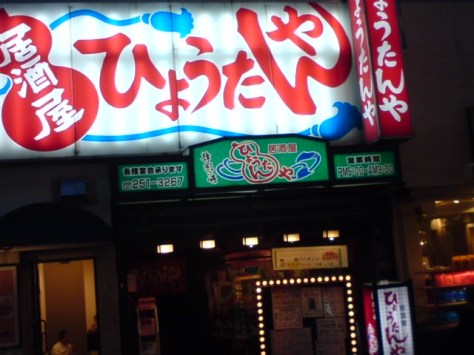
and another one again, but I’m afraid their value solely resides in photography!
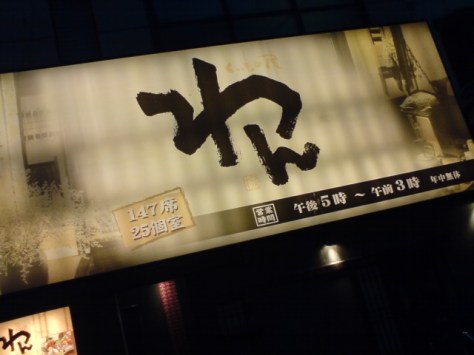
Still more of them!
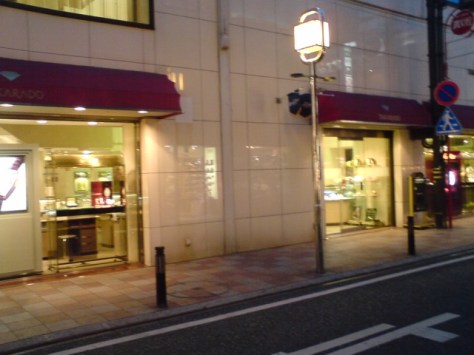
There are other shops such as Takarado, the oldest jewelry store in town.
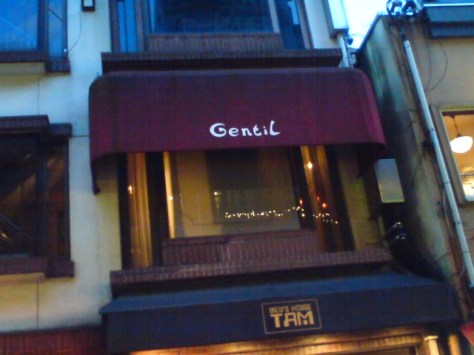
Now, people from all over Japan come to this restaurant!
Gentil is the oldest French restaurant in town and probably in the Prefecture.
They serve the best cheese tray in the Prefecture!
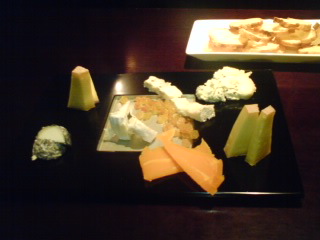
Keiko Kubota, the “chief” of the establishment is the sole Japanese individual holding the title of Grand Chevalier Taste Fromage and chose and served all the cheese at the G8 meeting in Hokkaido!
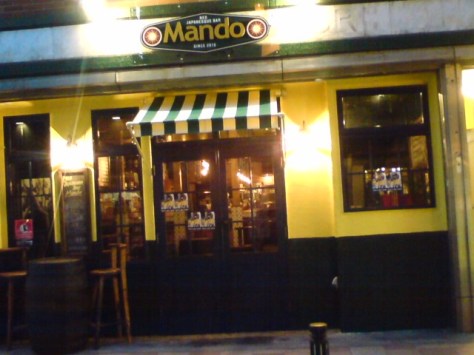
You also have to be on the lookout as all kind of new places are opening for all those that disappear too quickly. Mando will open on March 1st.
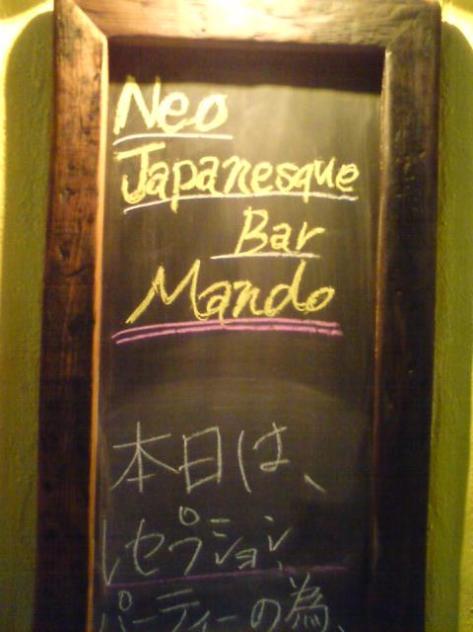
That particular sign for the same establishment is only for pre-opening parties!
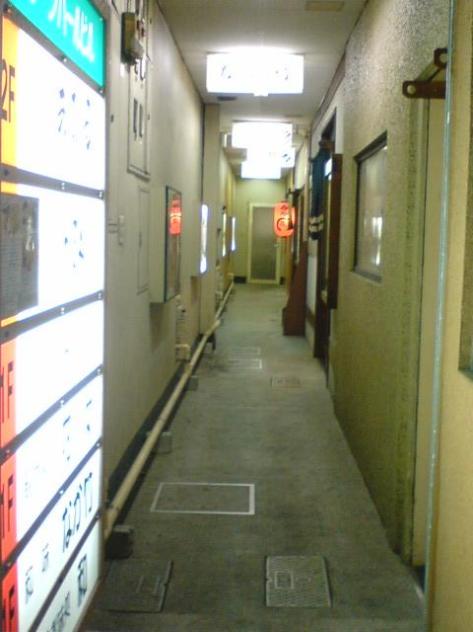
You do have to keep your eyes open for those narrow alleys hiding some beauties. Always look around for those small red lamps!
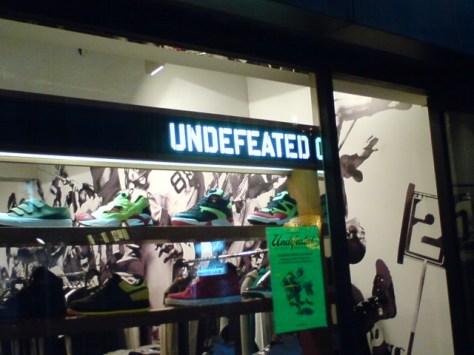
Some shops have quaint names: “Undefeated” for a sport and shoes store?
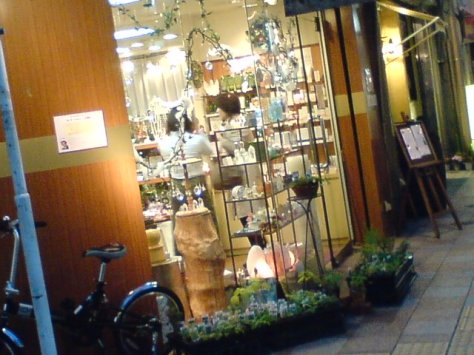
Shops for everybosy and every priority: Herb Boutique!
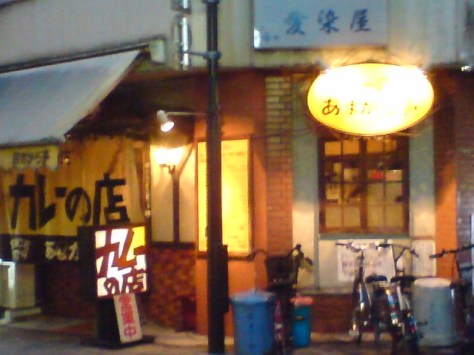
The oldest Curry restaurant (Japanese-style curry) in Shizuoka City (sorry for the fuzzy pic!)!
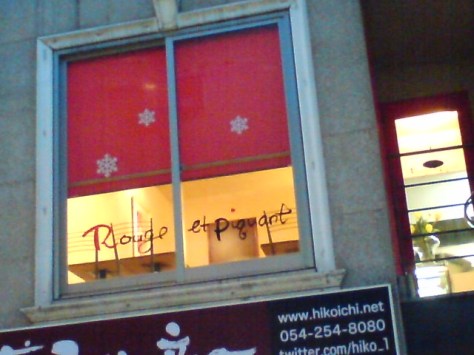
Rouge et Piquant is a rarity as far as cafes and cake shops go! Open from 14:00 to 24:00.

rouge-09-1

Certainly the best cake and coffee offering at this time of the night!
All non-smoking as a bonus!
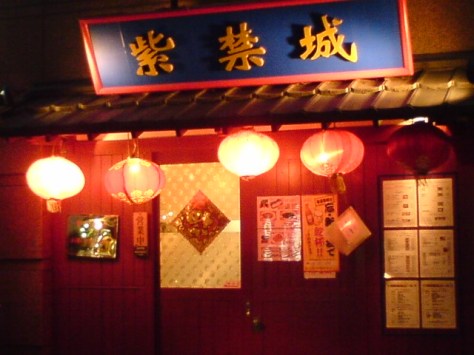
The Chinese are slowly and steadily coming: Shikinjo/Forbidden City. The owners and staff are all from Beijing. This is their second restaurant. Above average.
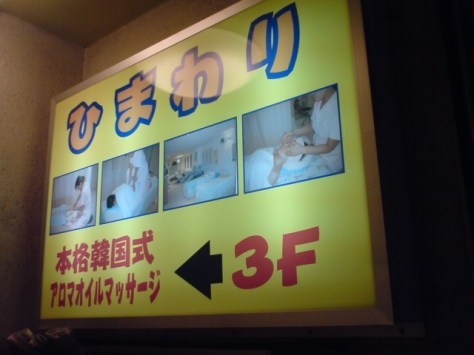
Nothing to do with food, but have you heard about Korean Massage? I haven’t!
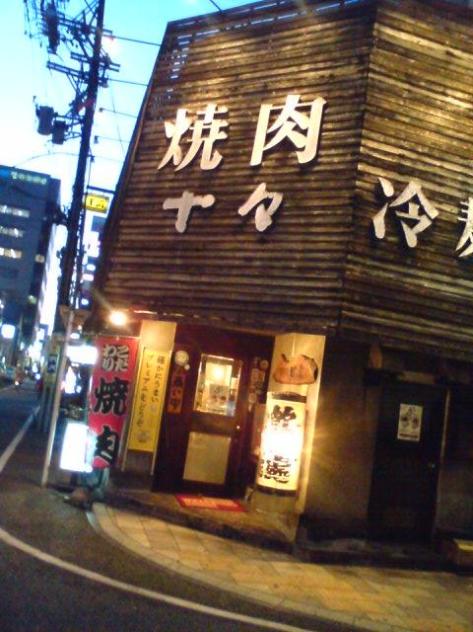
Taking of Korea, Juju isthe oldest Korean Restaurant in Shizuoka City. Good stuff there!
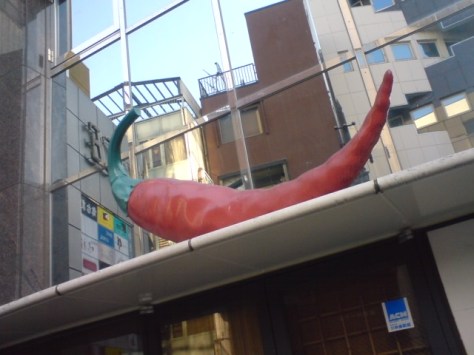
As for this Korean Restaurant, only the sign is worth the effort!
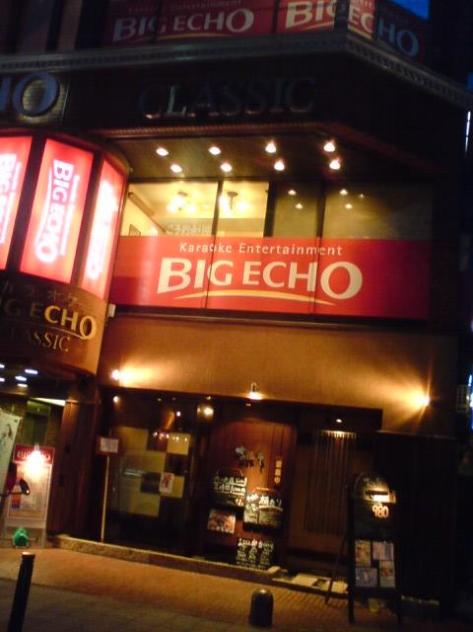
Karaoke was supposedly (at least the term) invented in Japan, right?
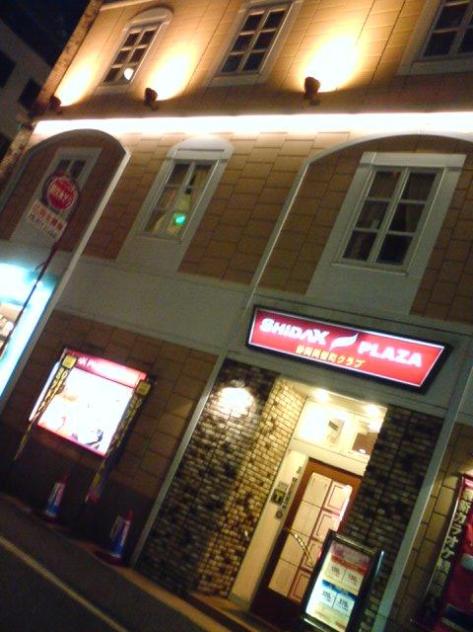
Another one!
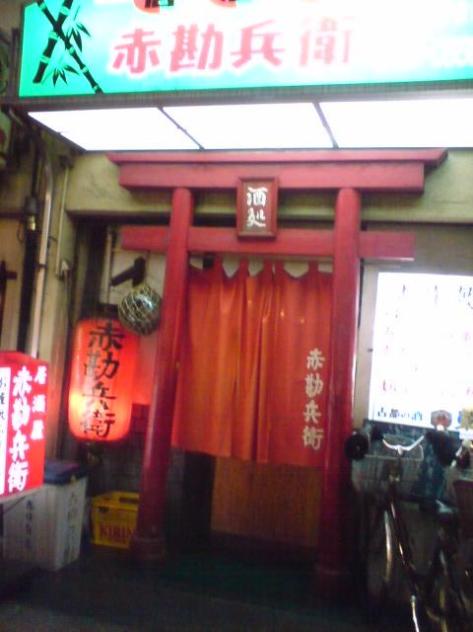
There is no Shinto Shrine in this particular street, but this izakaya might have the right idea!

A novel way to attract customers?
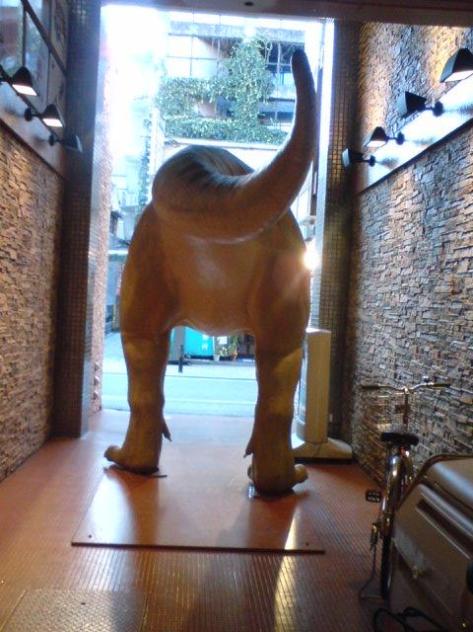
Imposing even from behind.
Must be at 3 metres high. All hollow and palstic-made. Certainly not “Made in China”! I wonder how big the mold was!
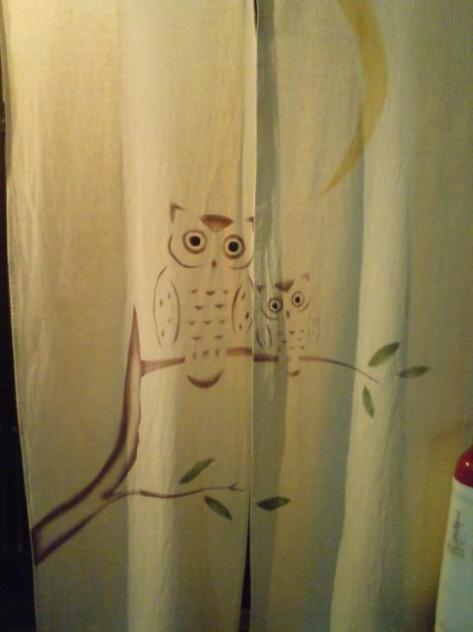
I just love these “noren”/Izakaya curtains!
For night owls!
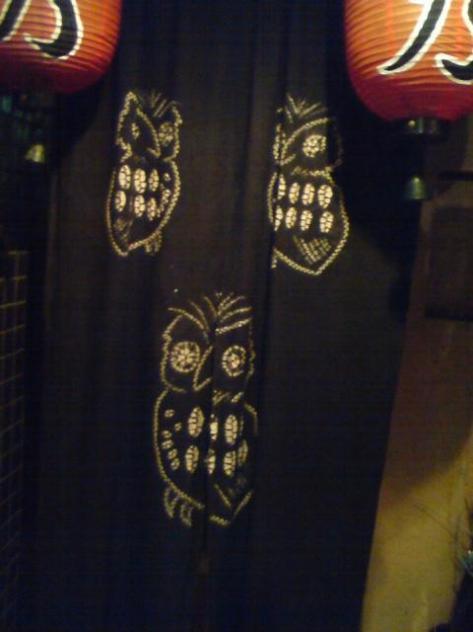
This one too is a beauty!
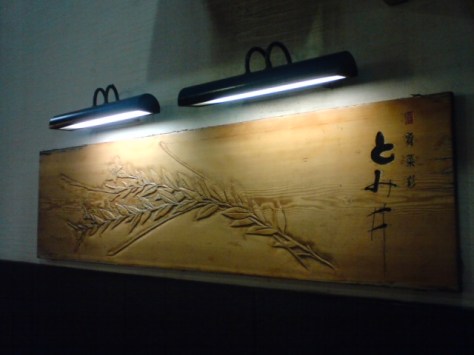
The beautifull all wood sign for Tomii Restaurant and building.
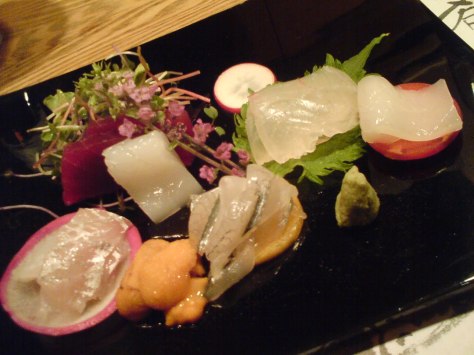
The same building owned by the same family hosts Tomii Japanese Restaurant onthe first floor, my favourite in Shizuoka Ciy,
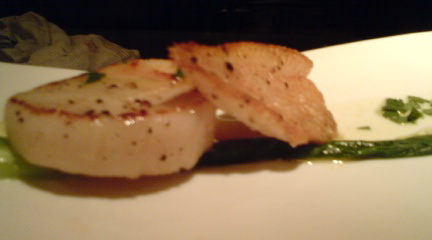
and Aquavite, the best Italian restaurant in Shizuoka!
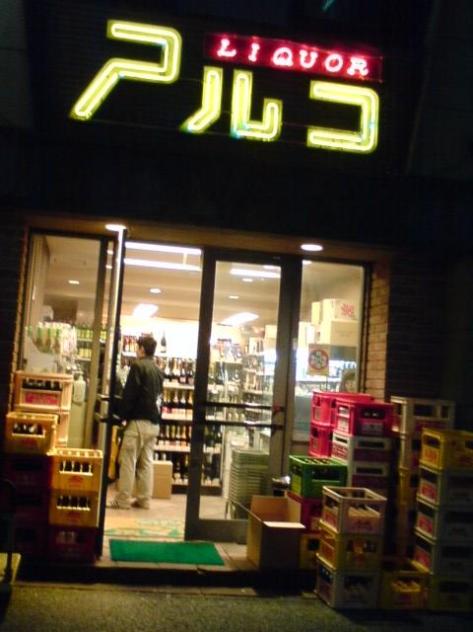
Liquor shops (2) in that particular streets are open until 24:00 whereas other similar shops all close before 21:00 in this city.
The name “Aruco”/アルコ stands for “Alcohol”!
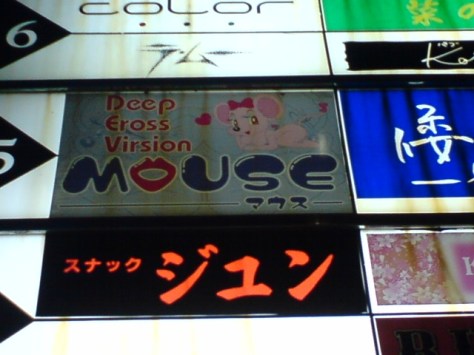
Not many signs in that street, but this one is a beauty for its concept and horror English!
“Deep Eross Virsion Mouse” stands for “Deep Eros/Erotic Vision Mouse”!
Any IT nerd interested?

Fashion boutiques are also open very late!
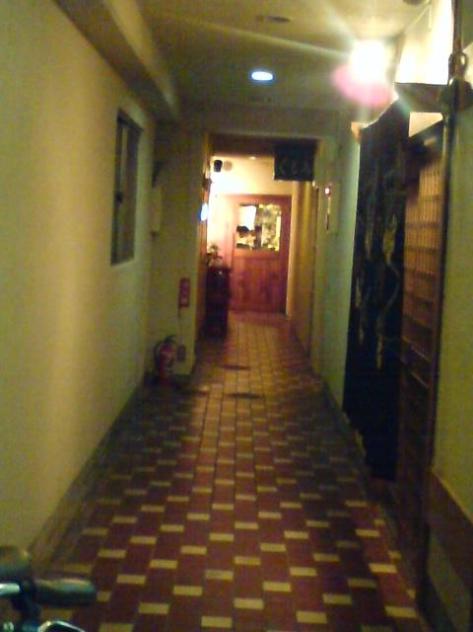
I told you to keep an eye open for those intriguing narrow alleys, didn’t I?
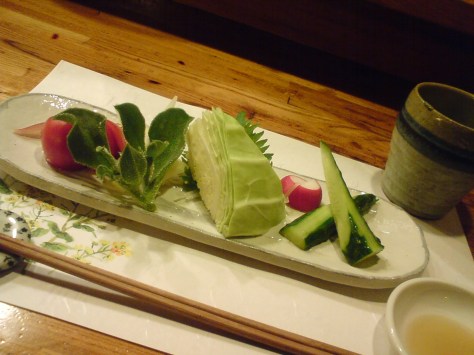
This particular one holds the Shizuoka Vegan and Vegetarian aradise, namely Yasaitei!
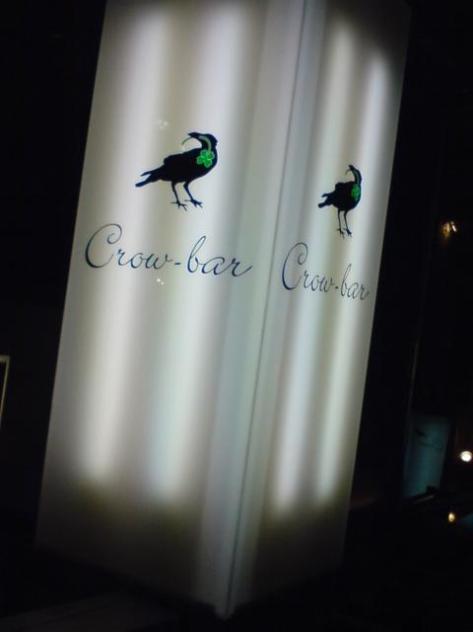
Going back to signs: “Crow Bar”!
Great name for a bar, isn’t it?
I have promised myself to investigate it!
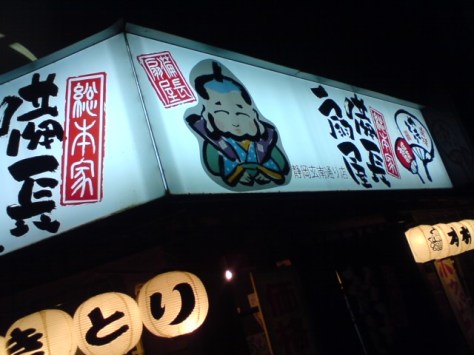
We’ve seen that guy before, haven’t we?
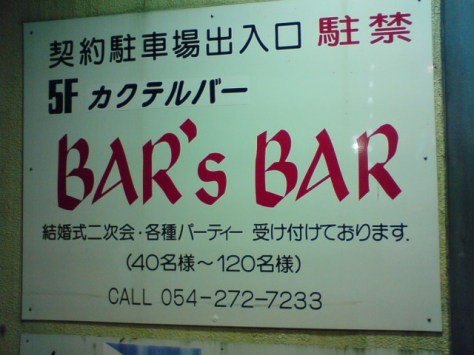
Doppelganger?
Are we supposed to drink twice there?
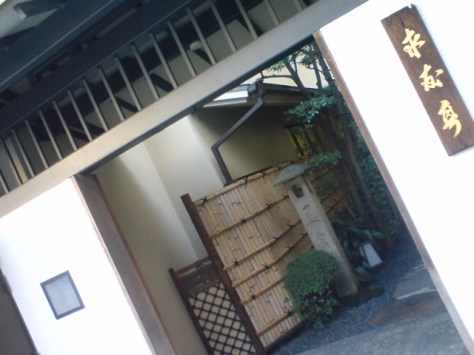
You still can find a very few old traditional restaurants inthis particular street.
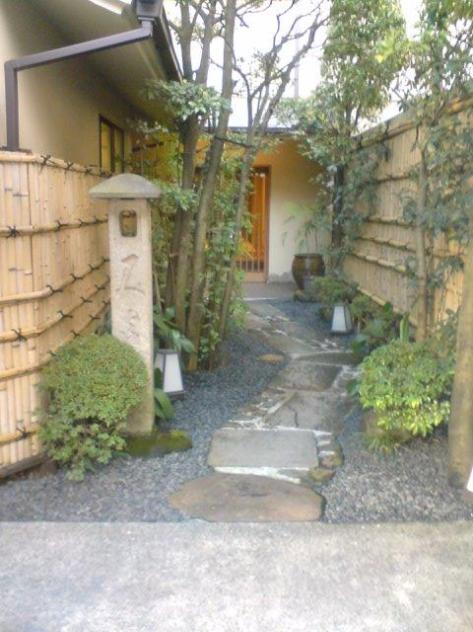
The same place.
Only problem is that it is bleeding epensive and patronized by old rich people! (I’m old, but not rich!LOL)
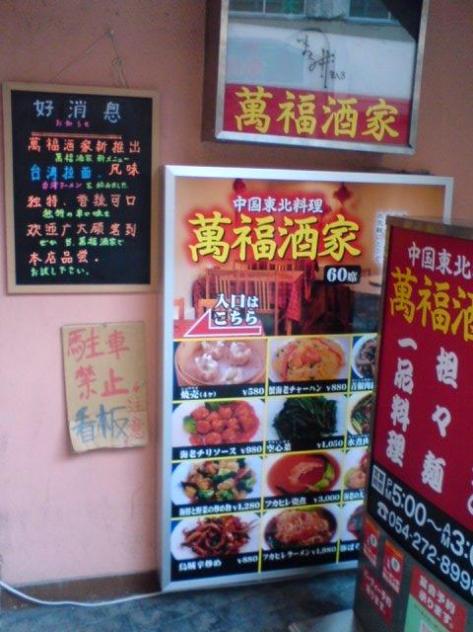
Another new Japanese Restaurant, saying they serve North-East Chinese Gastronomy. Why do they advertize Taiwan ramen, then?
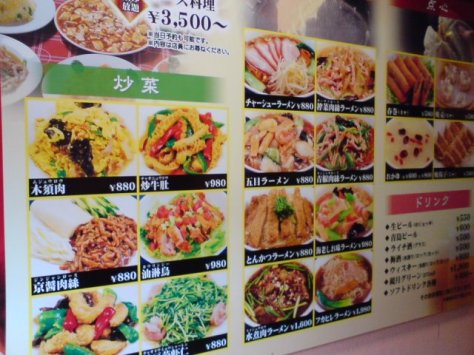
On the other hand their prices are reasonable. Might have to investigate.
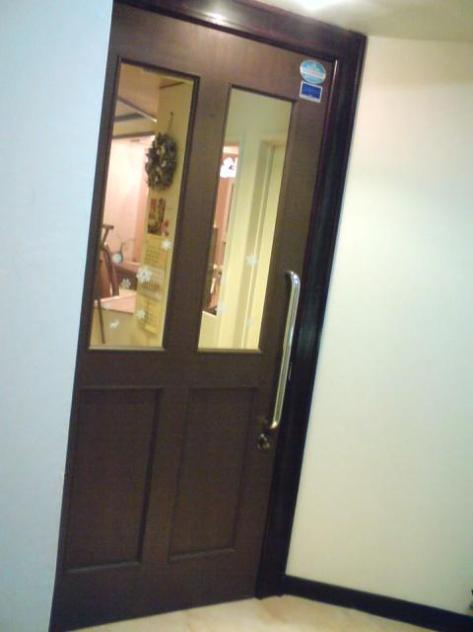
I found this place hidden in the corridor behind the above Chinese restaurant.
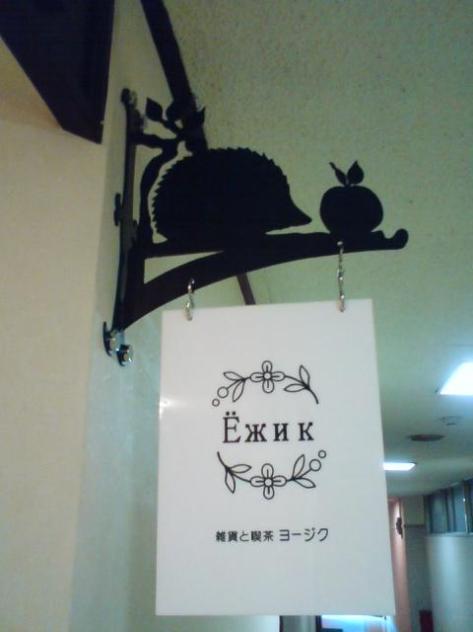
It’s called “Yozhik” in Russian, meaning “Hedgehog”!
I must say I was quite iuntrigued.
It is a beautiful little shop/cafe full of hedgehogs!
I decided to keep that one for a single posting!LOL

RECOMMENDED RELATED SITES:
Bread + Butter, Comestilblog, Greedy Girl, Bouchon For 2, Zoy Zhang, Hungry Neko, Mangantayon, Elinluv Tidbit Corner, Maison de Christina, Chrys Niles, Lexi, Culinary Musings, Eats and Everything, Bite Me New England, Heather Sweet, Warren Bobrow, 5 Star Foodie, Frank Fariello, Oyster Culture, Ramendo, Alchemist Chef, Ochikeron, Mrs. Lavendula, The Gipsy Chef, Spirited Miu Flavor, Wheeling Gourmet, Chef de Plunge, Sushi Nomads, Island Vittles, The French Market Maven, Tokyo Through The Drinking Glas, Palate To Pen, Tokyo Foodcast, Good Beer & Country Boys, Tokyo Terrace, Think Twice, Jefferson’s Table

Please check the new postings at:
sake, shochu and sushi,
—————————————-
日本語のブログ
—————————————-

Food Supplements: The Good, The Bad, & The Ugly

I recently read a very revealing article by L’Express (French Weekly Magazine) on food supplements. It only confirmed some of worries and I decided it might be a good idea to impart what I have come to know.
Now, I realize I’m in for a lot of flak from interested parties, but frankly speaking I don’t care a fig. This is big business here in Japan and probably more in the US and Europe, and so what?
It certainly promises me fun when I will field some queries/complaints! LOL

Some food supplements are definitel useful with some precautions and I call them “The Good”.
Others have never been categorically proven as beneficial to humans and are just a drain on resources and probably the best business of them all. Not dangerous but nearly useless. I call them “The Bad”.
The last category includes some food supplements that are downright dangerous and you are in for some surprises. The merit the name of “The Ugly”!

And a single piece of advice before we embark on the boat of discord: Food supplements shouldn’t be ingested as a “cocktail” but one at a time, and one at a day if feasible. That is unless you want some digestive disorders!

THE GOOD

VITAMINS D

Vitamins D are vital for the health of bones (calcium regulation). A lack of it will result in rachitism in kids and osteoposis in old people.
They also influence on the immune defenses of the human body.
A regular exposure to sun will help the skin to synthethize it, even with only the hands and face exposed to the sun.
People who live a lot outdoors, eat red-fleshed fish such as salmon, mackerel, tuna, sardine, herring or marlin), dairy products or eggs do not need such a food supplement.
But vegetarians and vegans do need them.

OMEGA 3

These are contained in the fat acids called “essential acids” because vital to human life although the human organism is unable to synthesize them.
They are found in red-fleshed fish, but also in rapeseed fplants, walnuts and whole wheat.
They are extremely beneficial to the heart, and brain articulations.
200 mg a day or 1.5 g a week should be enough. Fish oil tablets usually contain 100 to 400 mg. But compared to 1~2 g provided by 100g of mackerel, herring or even tinned sardine, they just don’t compete! 2~3 g of cod oil hold the same!
Vegetarians and vegans, do eat walnuts and other grains!

IRON

A lack of iron entails fatigue and repeptitive infections.
It can spell for a high risk of anemia.
Womn with high flow periods are at a risk as well as vegetarians/vegans, pregnant women and teenge girls.
Endurance sportsmen/women run the same risk.
You need a prescription for such supplementas an excess will result into intoxication.
Now Indian vegetarians have found the solution in dry frains such as lentils and dhal.
Fish, shellfish, some dry vegetables and green vegetables contain iron.
Iron supplement are also offered against fatigue, palpitations, as well as to improve children immune defenses and intellectual performances.

GINSENG

Originally from Asia, America and Siberia, this root is proposed to prevent cancer and treat diabetes.
As for improving sport performances, it is practically insignificant unless you you inject it into the body at very high doses (doping?).
On the other hand it does seem to protect against cancer, especially ovary and pancreas as well as glycemia.

————————————–

THE BAD

CARNITINE

Carnitine is an idispensisble molecule for sportsmen and obese people.
Producers aver that their carnitine supplements would augment usage of lipids with the dual benefit of improved stamina and loss of weight.
Bad luck: neither has been proved.
Even the organism of strict vegetarians produces enough of it!
As for prevention of Alzheimer syndrome and cardiovascular problems, that’s chalatans’ study!

GUARANA

Originally from Amazonia, it is offered to combat fatigue and improve sports performance.
Not better than coffeee! Actually 200 g of guarana contains 80 g of caffeine. If you already drink a lot of tea or coffee it can be only negative on your system: insomnia, palpitations, etc.
Its benefits have never been proven!

CURCUMA

One of the spices found in curry powder mixes.
Offered to prevent Alzheimer syndrome or cancer, to treat hepapatitis C, hypercholesterolemia and to improve memory.
According to producers, it is efficient against Alzheimer syndrome and cancer tumors and others.
As far as cancer is concerend, the potential seems interesting. As for the rest, no exhaustive research has been conducted!

—————————-

THE UGLY

SPIRULINA

This blue algae found in rivers and lakes is cultivated for its proteins (70% of the dried extract).
It is rich in ironand zinc, elements often needed by vegetarians.
Also contains Vitamin B.
On the other it is poor in useful fats.
Anti-aging, slimming and anticholesterol properties are the talk of charlatans. Full stop.
Worde is that it will entail a loss of Vitamin B12 for vegetarians. Spirulina does contain some in great quantity, but it is inactive in the human system. Worse it is noxiou as it prevents the assimilation of human friendly Vitamin B12, which is present in the human system!

SELENIUM

Present in meat, fish, eggs and cereals.
It is offered to cure anti-aging and prevent cancer and heart diseases.
Selenium is indispensible in small quantities. to paly a positive role against oxydizing stress.
Actually a well balanced diet will easily rplace it!
If you ingest more than 900 micrograms (yes, you read well!), nails will break, hair will split and skin will be weakened with consequent neurological alterations.
In animals it has been proven as cancerigenous!

BETA CAROTENE

Present in oranges, carrots and green vegetables.
Offered to cure anti aging and to prepare the skin againts sun exposure.
Once absorbed it becomes a beneficient Vitamin A.
Beta carotene contained in natural food is beneficient, but ineffective or even dangerous in artificial form, especially in supplements which contain far too much.
It is particularly dangerous for smokers who have a better chance to die form lung cancer when absorbing such supplements!
Just keep to the carrots and green vegetables!

RECOMMENDED RELATED SITES:
Warren Bobrow, Bread + Butter, Zoy Zhang, Hungry Neko, Think Twice, Frank Fariello, Mangantayon, Hapabento, Elinluv Tidbit Corner, Tokyo Terrace, Maison de Christina, Chrys Niles,Lexi, Culinary Musings, Wheeling Gourmet, Social Culinaire, Sushi Nomads, Cook, Eat & Share, Gourmet Fury, 5 Star Foodie

Please check the new postings at:
sake, shochu and sushi

—————————————-
日本語のブログ
—————————————-

French Dessert: Banana Moelleux

Bananas are not only great for humans as an easily assimilable source of energy, but is almost a medicinal plant by itself with a proven capacity to combat all kinds of diseases.
It’s only a question of diversifying its culinary approach!
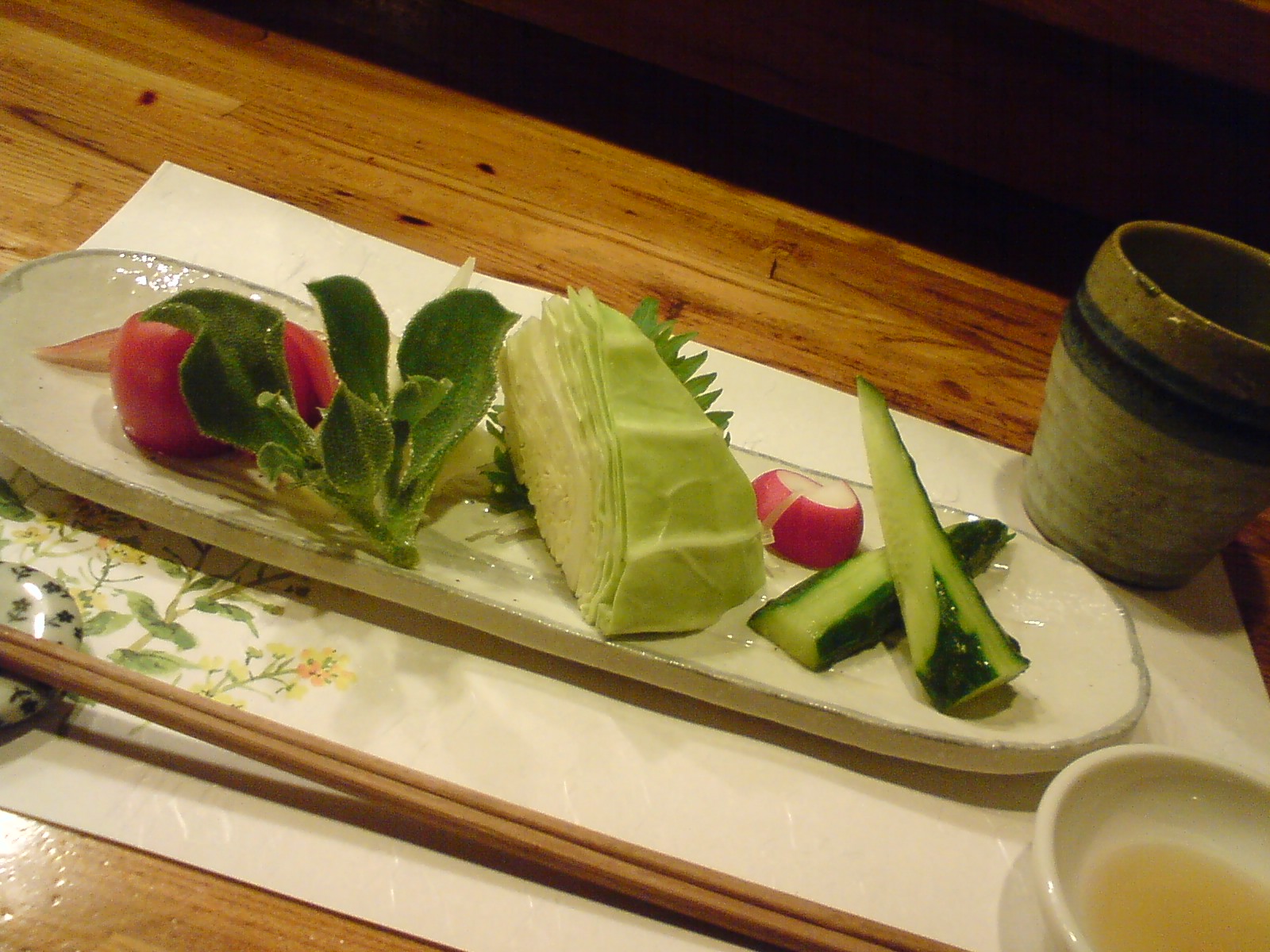
Why don’t you try this simple banana soft cake recipe?

Banana Moelleux (soft cake)!

INGREDIENTS: for 4~6 people

-Flour: 220 g
-Sugar: 200 g
-Butter: 150 g ; a little for the mold
-Bananas: 3 medium sized, ripe
-Eggs: 2
-Yoghurt: 40 cc/ml, well stirred
-Cinnamon: 1/2 teaspoon (half a teaspoon)
-Vanilla essence: a few drops
-Yeast: 1/2 (flat) teaspoon
-Salt: a pinch

RECIPE:

-Melt butter and let cool to lukewarm.

-Pre-heat oven to 180 degrees Celsius.

-Peel bananas and and process them into a very liquid homogeneous puree.

-In a large bowl pour the banana puree. With a hand whisker add and mix one by one in the following order: Yoghurt, eggs (without the shells!LOL), sugar, cinnamon, vanilla essence and salt.

-Add the flour and yeast in small quantities at a time through a sieve to improve the best absorption/mixing. when all flour and yeast have been mixed in, add melted butter and mix.

-Butter the insides of the mold (about 20 cm diameter). Pour in the whole cake mixture. Bake for 45 minutes or until a knife stabbed into the cake comes out smooth and clean.

-Eat cold as it is or with a cream nappage made with cream cheese, mascarpone, sugar, vanilla essence and lemon juice (Do it after the cake has completely cooled down, or even better slightly chilled).


NOTES:

-Follow the order for better quality!

-You may add crushed walnuts or chocolate bits in the cake.

RECOMMENDED RELATED SITES:
Warren Bobrow, Bread + Butter, Zoy Zhang, Hungry Neko, Think Twice, Frank Fariello, Mangantayon, Hapabento, Elinluv Tidbit Corner, Tokyo Terrace, Maison de Christina, Chrys Niles,Lexi, Culinary Musings, Wheeling Gourmet, Social Culinaire, Sushi Nomads, Cook, Eat & Share, Gourmet Fury, 5 Star Foodie

Please check the new postings at:
sake, shochu and sushi

—————————————-
日本語のブログ
—————————————-

French Dessert: Green Tomatoes and Vanilla Tart

Ever thought of using green tomatoes as dessert?
Especially small ones can come as a surprise!

Here is a simple recipe which will please all, adults and kids alike!

Tarte aux Tomates Vertes Vanillees/Green Tomatoes & Vanilla Tart!


INGREDIENTS:
For 6 people

-Pate Brisee/Shortcrust Pastry (sweet/sugared) : Check this easy recipe if you want to make it yourself (In French) 400 g
-Small green tomatoes: 700 g (cut in halves)
-Lemon juice of 2 lemons
-Sugar: 150 g
-Vanilla pods: 2
-Cornstarch: 2 tablespoons
-Butter: 40 g
-Egg white: 1


RECIPE:

-Line the mold with the shortcrust pastry and pre-cook it for 15 minutes in oven at 220 degrees Celsius.
Take the mold out the oven and immediately brush the pastry with egg white to prevent the pastry from drying up.
Put aside.

-Cut the two vanilla pods lengthwise and take out the “heart” and seeds. Mix them delicately with lemon juice.

-In a large frying pan, melt 20 g of butter and fry the tomatoes on a medium fire for 2~3 minutes, taking care not to shake them around too much and damage them. while the tomatoes are cooking, add sugar and cornstarch to the vanilla and lemon juice mix. Mix them in and pour over the tomatoes. Keep frying until the whole becomes translucent. Finally add 20 g of butter and mix quickly.

-Place the tomatoes over the pre-cooked shortcrust pastry and bake in oven at 200 degrees Celsius for 15 minutes.

-Serve with a rose wine.

RECOMMENDED RELATED SITES:
Warren Bobrow, Bread + Butter, Zoy Zhang, Hungry Neko, Think Twice, Frank Fariello, Mangantayon, Hapabento, Elinluv Tidbit Corner, Tokyo Terrace, Maison de Christina, Chrys Niles,Lexi, Culinary Musings, Wheeling Gourmet, Social Culinaire, Sushi Nomads, Cook, Eat & Share, Gourmet Fury, 5 Star Foodie

Please check the new postings at:
sake, shochu and sushi

—————————————-
日本語のブログ
—————————————-

French Cuisine: Tartelettes Cressonieres au Chevre/Cress & Goat Cheese Tarts

This the perfect time of the year as cress is coming onto the markets (at least here in Shizuoka and also in Aichi)! Associated with goat cheese (perfect for cow’s milk/lactose allergics), it makes for almost a complete nutritious meal in itself!

Tartelettes Cressonieres au Chevre/Cress & Goat Cheese Tarts

INGREDIENTS: For 4 people

-Pate feuilletee/Puff pastry: 1 roll -Check this excellent recipe (in French) if you wish to make it yourself!)
-Fresh goat cheese: 200 g
-Eggs: 4
-Cress: a good quantity (up to you actually)
-Fresh Cream: 200 ml/cc
-Butter: 50 g
-Cornstarch: 1 tablespoon
-Curry mix powder: 1 teaspoon (or two saffron sprigs)
-Salt: to taste
-Ground pepper: to taste

RECIPE:

-Cut the stems off the cress. Wash the leaves and drain well. Fry them lightly in a non-stick pan with 30 g of butter for 5 minutes. Pre-heat oven to 200 degrees Celsius. Coat the insides of 4 molds with the remaining butter.

-Unroll the pate feuilletee/puff pastry. Cut out 4 circles and line the molds with them. Puncture the bottom with a fork. divide the cheese into four portions. Line the bottom of the pastry with a equal share of goat cheese (break it into small lumps with your fingers as you drop it in). Lay four equal portions of the cress over the goat cheese.

-Beat the eggs in a bowl. Mix the cornstarch and fresh cream first in a separate bowl. Add the beaten eggs and mix well. Add salt and pepper for taste. Mix. According to your preferences add curry powder or saffron and mix.

-Pour the egg-fresh milk mixture onto the cress and goat cheese. Bake for about 25 minutes.

-Serve lukewarm or hot with a well seasoned salad.

NOTE:

-If you wish to make a sole big tart, you will have to bake it for 10 more minutes.

-Serve it with a dry white wine.

RECOMMENDED RELATED SITES:
Warren Bobrow, Bread + Butter, Zoy Zhang, Hungry Neko, Think Twice, Frank Fariello, Mangantayon, Hapabento, Elinluv Tidbit Corner, Tokyo Terrace, Maison de Christina, Chrys Niles,Lexi, Culinary Musings, Wheeling Gourmet, Social Culinaire, Sushi Nomads, Cook, Eat & Share, Gourmet Fury, 5 Star Foodie

Please check the new postings at:
sake, shochu and sushi

—————————————-
日本語のブログ
—————————————-

French Cuisine: Croustillants a la Feta

Cheese is a staple in most European Cuisines.
Traditional Feta is a Greek cheese that should only include sheep and goat’s milk, although modern feta might also consist of cow’s milk.
As Feta is an aged cheese, commonly produced in blocks, and has a slightly grainy texture, it is easy to cook/use in all kind of pastries.
Here is a simple French-inspired recipe of this Greek delicacy:
Croustillants a la Feta/Feta Croustilla g
nts

INGREDIENTS: For 8 pieces

-Feta: 200 g (try and use real Greek feta!)
-Brick/filo sheets (thin pastry brick or filo/fillo): 4
-Young fresh spinach: 100 g
-Egg: 1
-Butter: 20 g
-Freshly grated Parmegiano: 30 g
-Pine seeds: 40 g
-Oil: 200cc/ml
-White pepper: to taste

RECIPE:

-Clean the spinach in running cold water. Drain them thoroughly and fry them in the butter for 5 minutes on a medium fire.
Dry fry the pine seeds for 3 minutes in an teflon pan.

-In a bowl mash the feta with a fork. Add the egg, parmegiano, spinach and pine seeds. Keep a fine pine seeds for decoration. Mix well and add white pepper.
Do not add salt as the feta is already salted!

-Cut the filo/brick sheets in four portions lengthwise. You should have 16 strips. Place one strip each on another one to form 8 double strips. If the brick is round, fold the thr curving part inside.
Place some feta mixture in one corner of the double strip and fold the rest of the strip over it so as to obtain a triangular-shaped pastry (see above picture).
Repeat with the other 7 double strips.

-Heat the oil in a deep enough pan or deep-fry pan. Deep-fry each the pastry 2 minutes for each side until you obtained a nice dark golden colour.

-Serve them immediately decorated with a few roasted pine seeds.

NOTE:

-Instead of deep-frying them, you can brush the pastries lightly with oil and cook them in the oven (over a baking sheet) for 7~8 minutes at 210 degrees Celsius. Turn them over halfway in that case.

Drink a solid dry white wine with it!

RECOMMENDED RELATED SITES:
Warren Bobrow, Bread + Butter, Zoy Zhang, Hungry Neko, Think Twice, Frank Fariello, Mangantayon, Hapabento, Elinluv Tidbit Corner, Tokyo Terrace, Maison de Christina, Chrys Niles,Lexi, Culinary Musings, Wheeling Gourmet

Please check the new postings at:
sake, shochu and sushi

—————————————-
日本語のブログ
—————————————-

Sashimi Feast at Ekimae Matsuno Sushi

Now, what makes sushi restaurants of so high level in Shizuoka?
Tokyoites will say that they have Tsukiji and that is enough…
Have you ever wondered how fresh fish, shellfish and others are “fresh” there?
“Fresh fish” at all costs has become a very misleading notion.
The fact it is alive and swimming does not mean it is fresh.

All fish must be caught first and depending on their kind have to be either eaten right away or…
For example seabreams should be kept at least a day alive in an aquarium/tub to get them rid of unwanted parasites inside their innards. But at the same time keeping them alive longer will result in a loss of proteins and fat with the consequence of a fast quality decline.
Tuna has to be blooded very precisely first, then frozen. Once thawed and cut it is usually left at least a week for maturing/ripening before reaching the perfect taste.
On the other hand, squids must be dressed and eaten alive (still moving!).
It is a “case by case” (said in English) as explained by the chef at Ekimae Matsuno Sushi in Shizuoka City.
Founded in 1930, the oldest sushi restaurant know what they are talking about!

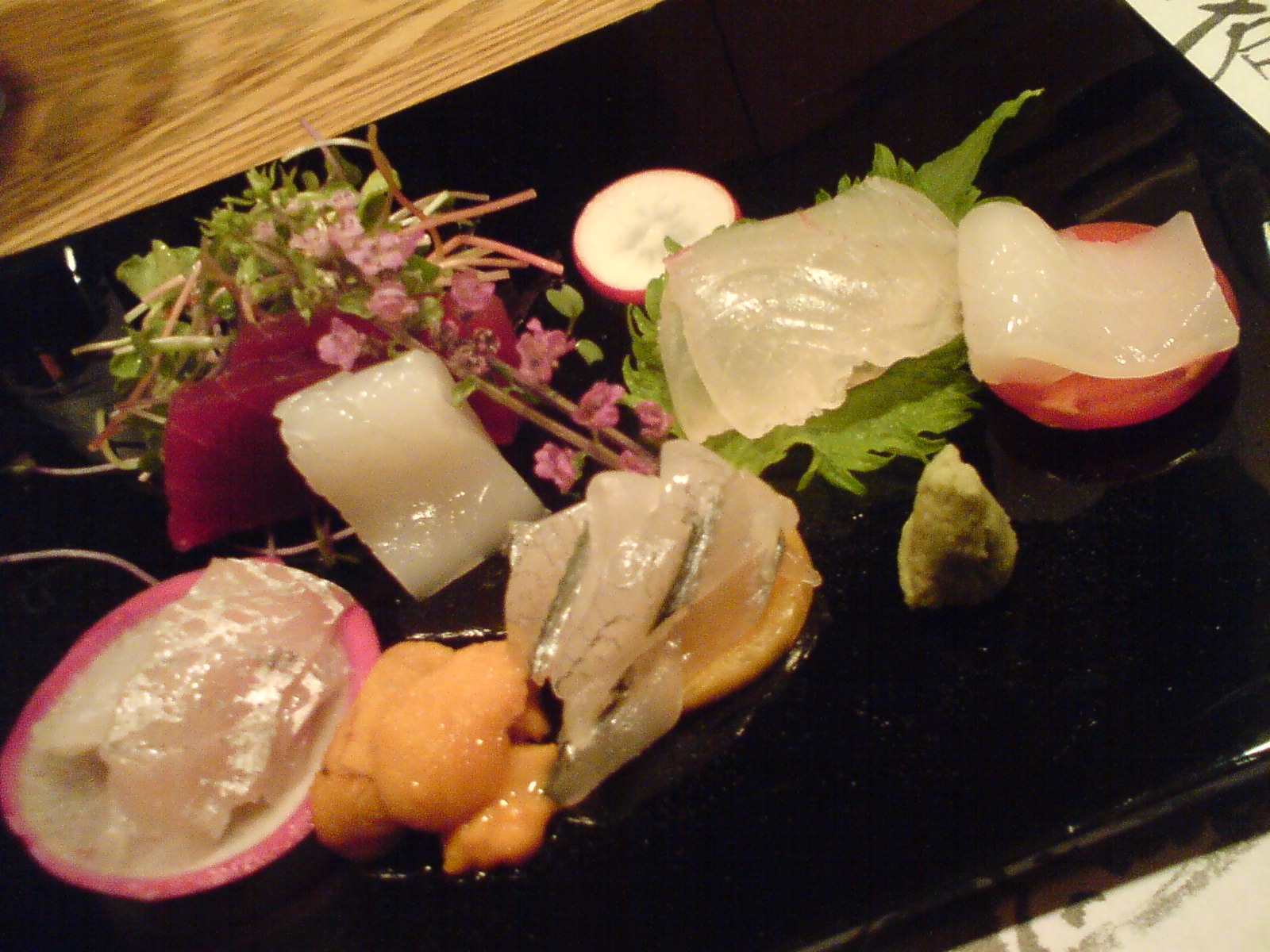
Bachi Maguro/目鉢鮪/Big-eyed Tuna from Ogasawara/Shizuoka Prefecture, Tairagai/玉珧/Pen shell from Aichi Prefecture, Sayori/細魚/Japanese Halfbeak from Suruga Bay/Shizuoka Prefecture

The key to appreciating top-class sashimi at all times and seasons is to savour it locally. Only then will you be sure of its origin and quality.
Naturally you must also discover a trustworthy sushi restaurant and chef. Not very difficult here where the competition is intense!

Tachiuo/太刀魚/Scabbard fish partly seared/aburi/炙り, Aori Ika/障泥烏賊/Bigfin Reef Squid rolled with seaweed/nori/海苔, and Madai/真鯛/Japanese red seabream, red seabream snapper. All from Suruga Bay in Shizuoka Prefecture.

Ekimae matsuno Sushi pride themselves in providing Shizuoka Prefecture fare whenever possible, including Japanese sake (all from Shizuoka Prefecture!), and they make no bones (fish bones!LOL) about that! Shy and reserved, they will quickly warm up to your questions if asked in a gentle enough manner good manners!).

I sudenly felt an urgent longing for more Sayori/細魚/Japanese Halfbeak after having sampled it in the first sashimi set. It is such a great and delicate fish and ripened to perfection as a whole fish inside the refrigerated display window. It canbe manipulated in all kinds of designs.

Sorry for the fuzzy pic. I’m still getting used to the newly discovered possibilities of my old mobile phone camera (up to 2 MB).

Kawahagi no Kimo Ae/カワハギの肝和え/Thread-Sail File Fish sashimi seasoned with its Liver. From Suruga Bay, Shizuoka Prefecture.

Now, here is a fish you must eat as fresh as possible!
Take it out alive (caught the day before maximum) out of the aquarium, dress it quickly, clean the liver, and serve the fish cut either in thin strips or slices with its liver chopped into a dip sauce, or season the cut fish directly (once cut) with its live, and serve it with chopped scallions/thin leeks and grated wasabi!
Ah, I forgot to mention that wasabi is from Shizuoka Prefecture (80% of the total national crop!)! Actually I’m repeating that every time! LOL

The chef had the grace (and pride) of showing me this (small, although reaching more than 20 cm!) Aori Ika/障泥烏賊/Bigfin Reef Squid live and kicking before preparing it for me!

It was still moving (I mean the very strips) under my chopsticks.
The chef gently asked me to taste it first as it is with nothing.
Incredible! Crunchy, not the merest hint of “fishy” taste. An experience!
Then he asked me to try it with a little salt only. Another discovery!

Last, the chef brought an enormous fresh egg yolk in a small crystal bowl and invited me to add a little soy sauce to it before dipping the squid in it. You must try that!

This was lunch and I am not eating much then as a rul these days.
I decided to skip the sushi for another (near) day and asked for tamagoyaki/卵焼き/japanese Omelette as dessert.
It came in two varieties:
the thin slices were eggs mixed with fish paste and the other were plain tamagoyaki fried with shiso.

Now, how much did I pay for all that?
60 US $!
Have I convinced you?

Ekimae Matsuno Sushi/駅前松乃鮨
Shizuoka City, Aoi Ku, Koya Machi, 9-3 (in front of Shizuoka City JR Station, North Side)
Tel.: 054-251-0123
Business hours: 11:00~21:00
Closed on Wednesdays and third Tuesday
HOMEPAGE (Japanese)

RECOMMENDED RELATED SITES:
Bread + Butter, Comestilblog, Greedy Girl, Bouchon For 2, Zoy Zhang, Hungry Neko, Mangantayon, Elinluv Tidbit Corner, Maison de Christina, Chrys Niles, Lexi, Culinary Musings, Eats and Everything, Bite Me New England, Heather Sweet, Warren Bobrow, 5 Star Foodie, Frank Fariello, Oyster Culture, Ramendo, Alchemist Chef, Ochikeron, Mrs. Lavendula, The Gipsy Chef, Spirited Miu Flavor, Wheeling Gourmet, Chef de Plunge, Sushi Nomads, Island Vittles, Jefferson’s Table, Rubber Slippers in Italy, The London Foodie

Please check the new postings at:
sake, shochu and sushi,
—————————————-
日本語のブログ
—————————————-

Shizuoka Oden Festival!

The 2010 Shizuoka Oden Festival kicked off today!
I made a quick visit in-bewteen work to have a quick snack!

Going to the Aoba Koen/Aoba Park Street behind the City Hall, one just could miss it clearly markde as it was giant red lanterns with “ODEN” wrote on them (in Japanese only, mind you!).

Now, choosing one was a bit of a dilemna!
Knowing that the festival would last until Sunday, I decided to wait until a particularly big and troublesome local TV crew left the premises to get some hot food and a glas of local sake!

The great thing about these oden foodstands (they actually were held by regular izakaya in town) is that most of them made an effort to serve local Shizuoka sake.
Above picture shows Masu Ichi Brewery (Shizuoka City), Shidaizumi Brewery (Fujieda City) and Hana no Mai Brewery (Hamamatsu City)!

But the one I had chosen today (I’m planning to go there again during the week-end!) had some unusual sake:
Hana no Mai Brewery (Hamamatsu City), Kumpai Brewery (Shizuoka City) and Kansagawa Brewery (Yui)!

This foodstand had been erected by “Showa Hormone Izakaya, south of Shizuoka JR Station.

All oden were very typical of Shizuoka-Style (almost every region in Japan has its own style) oden.

In Shizuoka, most oden are skewered with a stick for easier consumption.

“Motsu/kind of tripe”, also very popular here!

Pity I couldn’t tay all evening there. The Festival is held between 5 and 7 p.m. for 3 days. I wonder why they choose the colder time of the year. LOL

RECOMMENDED RELATED SITES:
Bread + Butter, Comestilblog, Greedy Girl, Bouchon For 2, Zoy Zhang, Hungry Neko, Mangantayon, Elinluv Tidbit Corner, Maison de Christina, Chrys Niles, Lexi, Culinary Musings, Eats and Everything, Bite Me New England, Heather Sweet, Warren Bobrow, 5 Star Foodie, Frank Fariello, Oyster Culture, Ramendo, Alchemist Chef, Ochikeron, Mrs. Lavendula, The Gipsy Chef, Spirited Miu Flavor, Wheeling Gourmet, Chef de Plunge, Sushi Nomads, Island Vittles, Jefferson’s Table, Rubber Slippers in Italy, The London Foodie

Please check the new postings at:
sake, shochu and sushi,
—————————————-
日本語のブログ
—————————————-

Bryan Baird’s Newsletter (2010/02/12)

Baird Beer & Taproom Events Bulletin
bryan-sayuri.gif

Dear Taproom Friend & Baird Beer Enthusiast:

Winter is a time of hibernation for many species. The Barley Wine style of beer is not one of these. Winter is the season that this big bear of the beer world comes out to play. Baird Ganko Oyaji (”Stubborn Ol’ Man) Barley Wine 2010 is being released from his cellar cave on Saturday, February 13.

Ganko Oyaji Barley Wine 2010 (ABV 10%):

Brewed in July 2009 and packaged upon krausening in August, Ganko Oyaji 2010 sports a grist bill consisting of floor-malted Maris Otter, Munich and Crystal malts and 10% Japanese red (akato) sugar. The starting gravity is high (25.3 Plato), the apparent attenuation is good and thus the alcohol content is potent. 65 BUs of all American hops, and dry-hopping with a combination of Columbus, Centennial and Amarillo, beautifully balance the malt richness. Ganko Oyaji is an ideal after-dinner or before bed restorative. It promises to condition nicely in the bottle and keg for months and years to come.

Ganko Oyaji Barley Wine 2010 will be available on draught at all of our Taproom pubs and other Baird Beer retailing restaurants beginning Saturday, February 13. Bottles (633 ml) can be purchased direct from our brewery E-Shop and through the fine family of Baird Beer retailing liquor shops in Japan beginning the same day.

Vertical tastings for three successive years of Ganko Oyaji (2008 – 2010) are possible at two of our Taprooms: Nakameguro and Numazu Fishmarket. Finally, don’t forget the Big Beer Winter Week celebration now underway at our Nakameguro Taproom. An extraordinary selection of both American and Baird strong ales are being poured and celebrated for an entire week. The special cuisine is terrific too. The event runs through Friday, February 19.

Cheers,

Bryan Baird
Baird Brewing Company
Numazu, Japan
HOMEPAGE


The Japan Blog List

———————————
Must-see tasting websites:
-Sake: Tokyo Through The Drinking Glass, Tokyo Foodcast, Urban Sake, Sake World
-Wine: Palate To Pen, Warren Bobrow, Cellar Tours
-Beer: Good Beer & Country Boys, Another Pint, Please!
-Japanese Pottery to enjoy your favourite drinks: Yellin Yakimono Gallery
——————————–
Please check the new postings at:
sake, shochu and sushi

—————————————-
日本語のブログ
—————————————-

Italian Restaurants: New Team at Aquavite!

Service: Excellent and very friendly
Facilities: great and very large washroom, great cleanliness overall
Prices: reasonable to expensive. Top-class Italian wines. Private room for~8 people.
no-smoking-logo1 Non-smoking at counter!
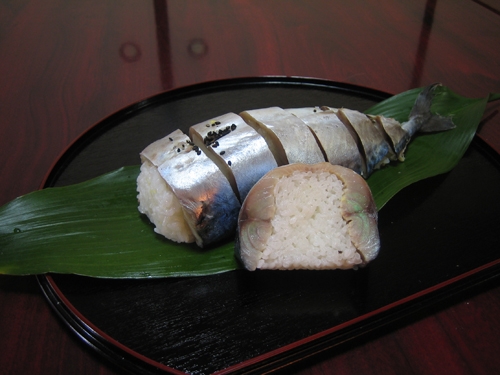
High quality Italian Cuisine is a trademark of Shizuoka City thanks to the extravagant supply of impeachable ingredients both from the nearby sea and the land, which have contributed to an ever-increasing level in all kinds of cuisines. But Italian gastronomy must be the most competitive specialty inthis status-conscious city.

Like in many top restaurants, recruiting first-class staff upon the departure of established chefs to other shores is a constant headache for Aquavite who are justly proud of their rank as the best Italian Restaurant in town and feel responsible for constantly maintaining and improving standards.

The regulars know only too well, and the place being crowded on a Monday evening just proved it was “business as usual”!

The new team in charge of the kitchen is now Chef Kenichi Honda who worked in Roma for two years and holds an Italian Sommelier License,

and his sous-chef Yuhei Kajiyama.

Both are born in Shizuoka City, a marked advantage when it comes to choosing the best local products which for the majority of their creations.
Like the best Japanese chefs they bring another dimension to Italian cuisine with their almost obsessive attention to every detail.

I managed to pay them a quick visit last night to have a chat (a long one as they were very busy!) and a few pics before I visit them for a full dinner and report in the near future.
Please forgive the inferior quality of the pics, but taking them over the counter in minimum time was not easy!LOL

Stir-fried scallop and grilled “Kinki seabream”.

Italian charcuterie!

Beef Roast.

Porcini cream gnocchi.

Extravagant Minestrone!

Mekajiki/Marlin and Scampi on a bed of couscous.

See you next time!

Address: 420-0034 Shizuoka Shi, Tokiwa-cho, 1-2-7, Tomii Bldg. 3F
Tel. & fax: 054-2740777
Opening hours: 11:30~14:00 (on reservations only), 18:00~22:00
Closed on Sundays
Homepage (Japanese)
Credit Cards OK

RECOMMENDED RELATED SITES:
Bread + Butter, Comestilblog, Greedy Girl, Bouchon For 2, Zoy Zhang, Hungry Neko, Mangantayon, Elinluv Tidbit Corner, Maison de Christina, Chrys Niles, Lexi, Culinary Musings, Eats and Everything, Bite Me New England, Heather Sweet, Warren Bobrow, 5 Star Foodie, Frank Fariello, Oyster Culture, Ramendo, Alchemist Chef, Ochikeron, Mrs. Lavendula, The Gipsy Chef, Spirited Miu Flavor, Wheeling Gourmet, Chef de Plunge, Sushi Nomads, Island Vittles, Jefferson’s Table, Rubber Slippers in Italy, The London Foodie

Please check the new postings at:
sake, shochu and sushi,
—————————————-
日本語のブログ
—————————————-

Bryan Baird’s Newsletter (2010/02/08)

Baird Beer & Taproom Events Bulletin
bryan-sayuri.gif

Dear Taproom Friend & Baird Beer Enthusiast:

Today marks the 9th annual release of the first fruited ale ever brewed by Baird Beer: The Carpenter’s Mikan Ale.

The Carpenter’s Mikan Ale 2010 (ABV 6.6%):

The mikans used in this brew are fresh, succulent, and local — harvested on the Heda land and by the hand of our carpenter friend, Nagakura-san. The Baird brewers hand-process the harvested mikans, shaving off the outer skin of the peel and pressing the juice. Both peel shavings and juice are added to the brew at different stages of production. The mikans serve to add depth and complexity to an already sumptuous ale; their role is to complement, not dominate.

In addition to mikans, the 2010 Carpenter’s Mikan Ale incorporates a grain bill including Maris Otter pale ale malt, wheat malt, unmalted wheat, carapils malt and Japanese sudakito sugar. The hopping schedule features cirtrusy Centennial, Cascade and NZ Cascade varieties including dry-hop additions. The combination of mikans and citrus hops provide an exquisitely complex yet balanced fruit character. This year, for the first time, we fermented with our American ale yeast which makes the overall character somewhat crisper and more sprite.

The Carpenter’s Mikan Ale is available both on draught and in bottles (633 ml) at fine Baird Beer retailers throughout Japan. It also can be purchased direct from the brewery (beginning Monday, Feb. 11) via our new online E-shop at http://www.bairdbeer.com.

Speaking of fruited ales, I need to mention Second Strike Apple Ale which is being poured exclusively on draught at our Harajuku Taproom. This brisk and refreshing ale is a collaborative project with the local Harajuku company Alias. The concept and the fresh Nagano prefecture apples were provided by Alias’ own Tajima-san. Stop in for a pint while quantities last.

Nakameguro Taproom 2010 Big Beer Winter Week (Feb. 11 – Feb. 19):

Each winter we use our Taproom as a venue for a week-long celebration of strong and fortifying beers. We call this celebration Big Beer Winter Week. During this week, a collection of strong ales and lagers will be served simultaneously and paired with cuisine designed to complement these robust and warming libations. The Nakameguro Taproom will play host to this year’s Big Beer Winter Week which will kick-off at noon on Thursday, February 11 (Japan national holiday). We are partnering with American craft beer importer Nagano Trading on this year’s event and thus will be offering a full range of American big beers in addition to Baird Beer. The Big Beers on tap will include:

(a) American beers from Nagano Trading (Pint 1,100 yen; Half 800 yen):

Oak-aged Yeti Imperial Stout (Great Divide)
Old Ruffian Barley Wine (Great Divide)
Stone 13th Anniversary Ale (Stone)
Old Man Winter Ale (Southern Tier)
Victory at Sea Imperial Coffee Porter (Ballast Point)
Palate Wrecker Double IPA (Greenflash)
Imperial Smoked Brown Ale (Coronado)

(b) Baird Big Beers (Pint 1,000 yen; Half 700 yen):

Ganko Oyaji Barley Wine 2008
Ganko Oyaji Barley Wine 2009
Ganko Oyaji Barley Wine 2010
West Coast Wheat Wine 2008
West Coast Wheat Wine 2009
Dark Sky Imperial Stout 2008
Imperial Belgian Red Ale
Obatarian Strong English Ale
We have a second round of different American Big Beers ready to go as the first round sells out. Additionally, other strong Baird Beers such as Hatsujozo 2010 Belgian Black Ale, Suruga Bay Imperial IPA and Okini Old Ale will be available.

We will be selling Nakameguro Taproom Big Beer Winter Week drink cards in both pint and half-pint versions. These are pre-paid cards with 10 punches in them (5 for American Big Beers and 5 for Baird Big Beers). The cards are valid for the duration of the event (Feb. 11 through Feb. 19). The cost of the cards are: 10,000 yen (pint card) and 7,000 yen (half), respectively. Upon completion of the card, the cardholder will receive a free American style logo pint glass (compliments of Nagano Trading). Also, we will be awarding free American beer T-shirts to the first ten customers ordering beer on opening day (Thursday, Feb. 11). We open at noon that day so have your beer game-day faces ready at an early hour!

Finally, you will want to bring your appetites as well. Ishikawa-san and the kitchen staff are designing a terrific Big Beer-inpsired event food menu designed to complement and enhance this amazing selection of strong ales.

We look forward to seeing you at Nakameguro.

Cheers,

Bryan Baird
Baird Brewing Company
Numazu, Japan
HOMEPAGE


The Japan Blog List

———————————
Must-see tasting websites:
-Sake: Tokyo Through The Drinking Glass, Tokyo Foodcast, Urban Sake, Sake World
-Wine: Palate To Pen, Warren Bobrow, Cellar Tours
-Beer: Good Beer & Country Boys, Another Pint, Please!
-Japanese Pottery to enjoy your favourite drinks: Yellin Yakimono Gallery
——————————–
Please check the new postings at:
sake, shochu and sushi

—————————————-
日本語のブログ
—————————————-

Japanese Seasonal Fish: Saba/Mackerel

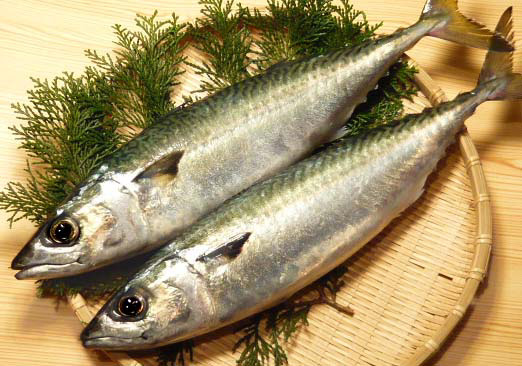
Mackerel or saba is a fish eaten over the whole Northern Hemisphere and does come under many varieties and names.
In Japan it is mainly called “Saba”, “Masaba” or “Sekisaba”.
In this country it is mainly caught off Oita, Saga Prefecture, although quite a few are caught off our coasts, especially off Yaizu.
They feed on plankton mainly.

They are prepared and cooked in many guises. In France, my birthplace, they are steamed and then pickled in white wine and spices before being canned.

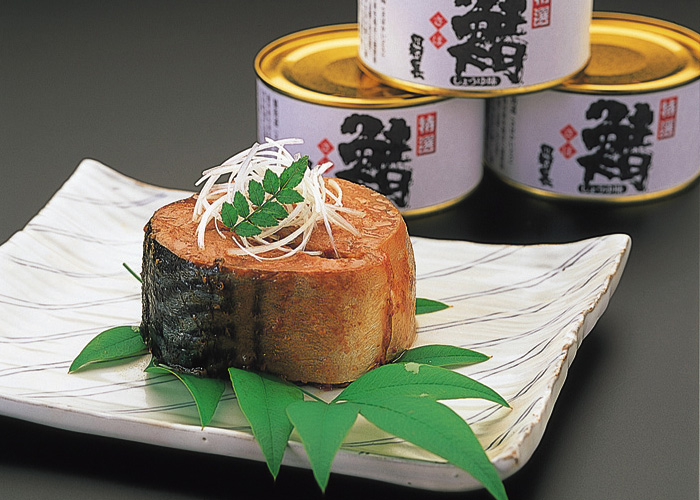
naturally tinned tuna is available in Japan,too!

In Northern Europe they also eaten half raw as smorgasbrod and pickled fish.

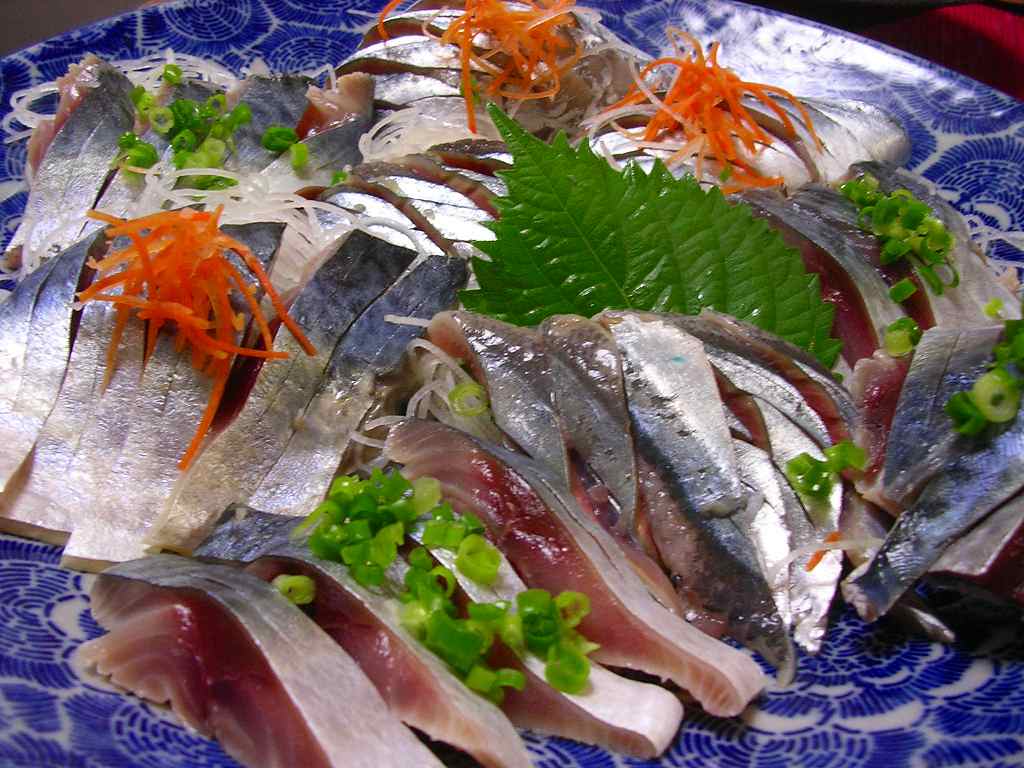
It can be appreciated as sashimi, but it must be absolutely fresh and is best served with grated fresh ginger and lemon.
As far as sushi is concerned, “masaba” variety is best

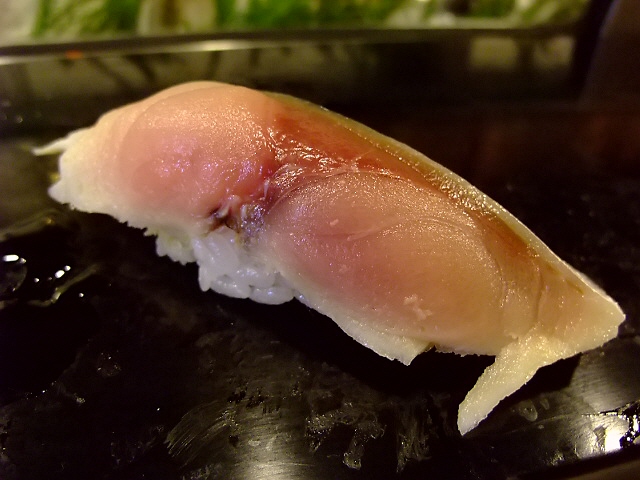
Saba Konbujime nigiri.

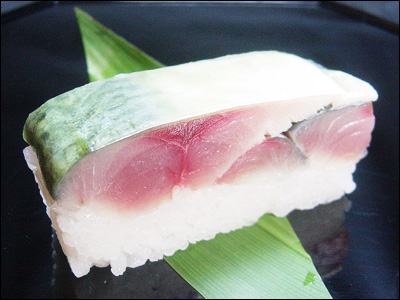
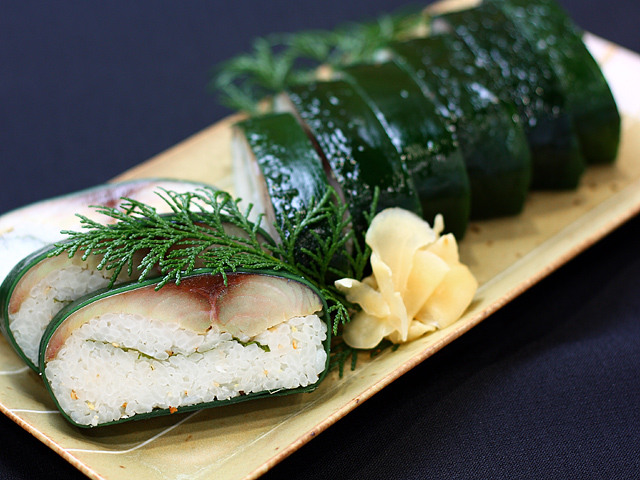
It is especially popular as “oshizushi” (pressed sushi).

Double oshizushi!

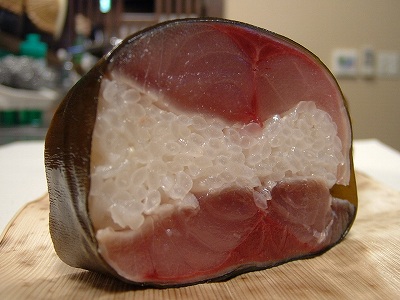
My preference goes for Saba konbujime.

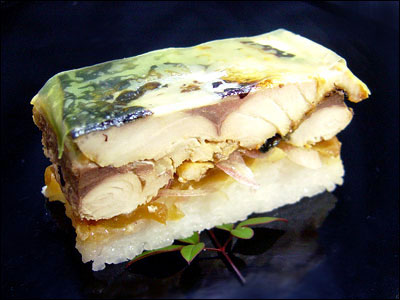
Saba Bogata

The mackerel is kept inside a variety of wet seaweed for an hour or so before put whole on top of a long “bar” of rice, then cut to size.

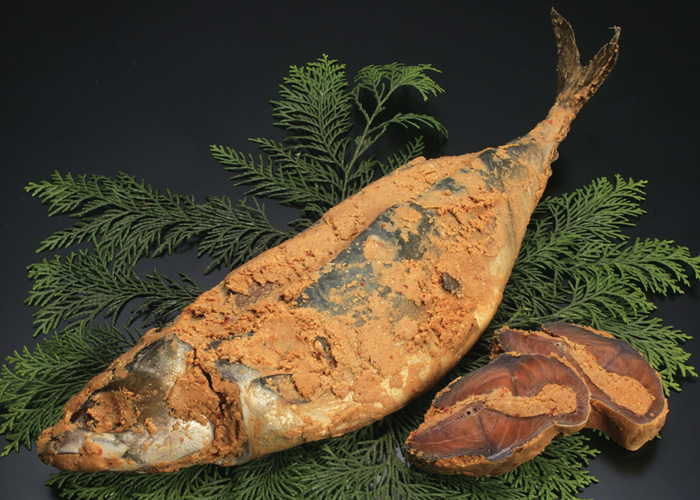
Saba Heshiko Zuke.
Saba/Mackerel has been a staple fish in Japan since immemorial times.
One way to conserve it for better transport away from the shores was “Saba Heshiko zuke”, that is pickled in miso and sake white lees.

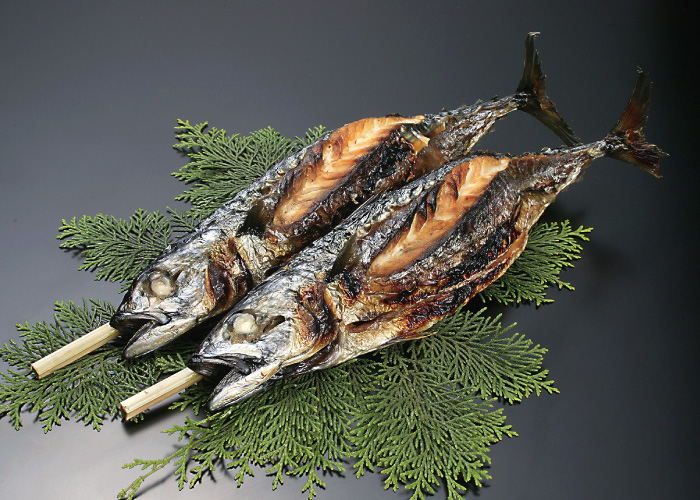
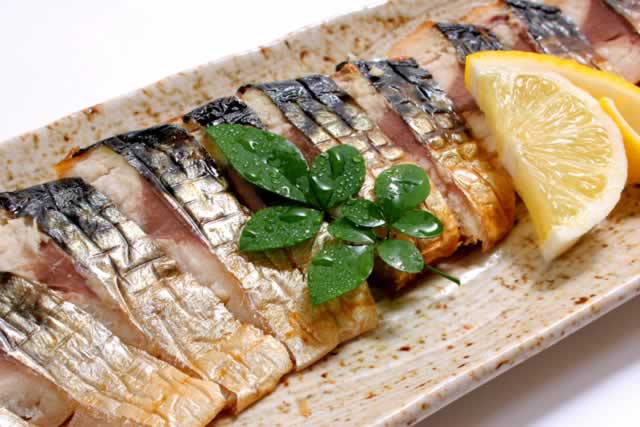
Saba/mackerel is easily grilled, either on the stick as above,

or grilled and served cut in slices.

The same grilled saba can be served as oshizushi/presed sushi!

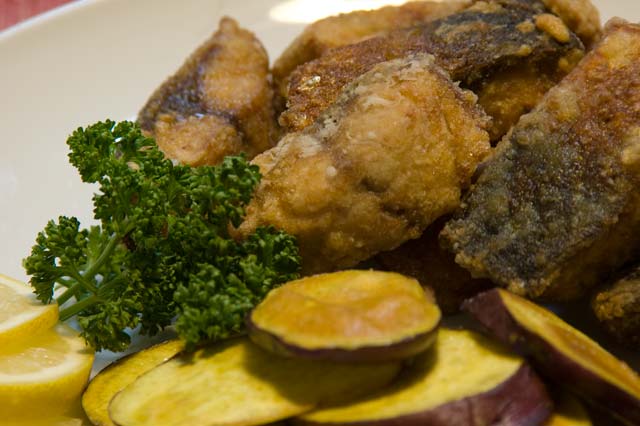
Saba can be also served to a tatsty crispiness by deep-frying it!

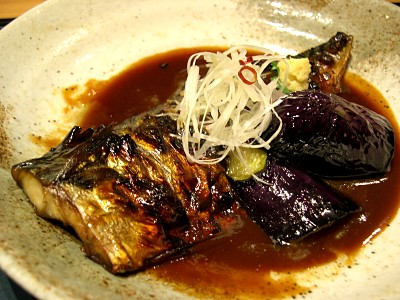
Or simmered the Japanese way with miso, sake, soy sauce, ginger and mirin!

A very versatile fish!

RECOMMENDED RELATED SITES:
Bread + Butter, Comestilblog, Greedy Girl, Bouchon For 2, Zoy Zhang, Hungry Neko, Mangantayon, Elinluv Tidbit Corner, Maison de Christina, Chrys Niles, Lexi, Culinary Musings, Eats and Everything, Bite Me New England, Heather Sweet, Warren Bobrow, 5 Star Foodie, Frank Fariello, Oyster Culture, Ramendo, Alchemist Chef, Ochikeron, Mrs. Lavendula, The Gipsy Chef, Spirited Miu Flavor, Wheeling Gourmet, Chef de Plunge, Sushi Nomads, Island Vittles, Jefferson’s Table, Rubber Slippers in Italy, The London Foodie

Please check the new postings at:
sake, shochu and sushi,
—————————————-
日本語のブログ
—————————————-

Oden: A Shizuoka Delicacy!

Dark Shizuoka Oden

When winter seems bent on holding us company and taking a sadistic pleasure listening to our moans, everything to warm up our bodies is welcome.
The Japanese have come up with the ideal solution: Oden (おでん)!
The beauty of it is that it is sustaining food, quite cheap fare by this country standards and very comforting.

For a closer look!

Oden has a long history. It can be traced back to Edo times when it was called Kanto-daki/関東煮, meaning Kanto region stew. At the time it was mainly made with strong soy sauce and soup stock extracted from a combination of konbu/seaweed, whale meat and beef tendons.
The whalemeat has disappeared but the broth is still made with the same soy sauce, seaweed and beef tendons in the east of Japan.
On the other hand, many contend that Oden was originally what is now commonly called misodengaku or simply dengaku. Take your pick!

Dark Shizuoka Oden again!

It can be found all over the Japanese archipelago all year round (not only in winter!) in many guises and many trends, although it can roughly be divided into three categories:
-Simmered in a light broth most popular in the Kansai Region/Western Japan.
-Served with Miso, notably in the Nagoya area.
-Cooked in a dark soup in the Kanto Region/Eastern Japan.
Many people will argue that each region, or even city, has its own original brand of oden, and they might be right as ingredients greatly vary although the three above methods prevail.
The Japanese are so entrenched in their fondness of oden that regular TV shows extol the virtues of their national comfort food with “talents” recruited in each Prefecture on a single stage!

Even darker Shizuoka Oden!

But wherever you go, look forward to sampling common ingredients:
-Eggs: they are first boiled before being skewered and left in the broth. Actually skewering oden is far from being universal. But the sticks attached to them will certainly help you when choose them out of impossibly dark soup in Shizuoka!
-Potatoes: popular almost everywhere, they are seemingly a favorite of expats.
Now, have you ever wondered how potatoes do not break up being left for ages in hot broth and roughly manipulated around?
The potatoes are first boiled to about 80% and then plunged into ice water or immediately locked in a fridge. Do not be worried when the local odenyasan/oden shop owner opens his/her fridge for more potatoes to add into the broth, but choose them with a nice color when fishing them out!
-Daikon, or Japanese long radish: these are also prepared like potatoes to ensure they do not break.
-Konnyaku: Devil’s Tongue tuber jelly: some odenya will serve it in thick triangular or rectangular pieces or as ito konnyaku/konnyaku vermicelli.
-Tofu or bean curd: it is usually of the harder kind and seared first before plunging them in the broth.

Out of the pot!

Oden is often sold from food carts, and most Japanese convenience stores now have simmering oden pots in winter containing different kinds of oden sold, with single-ingredient varieties as cheap as 50 yen.

You can of course buy any ingredients of your liking, cook them in your preferred broth at home with hot Japanese mustard and some beer or (hot) sake like many do in Japanese households.

As served in Odenya!

But the best way to enjoy oden and discover their varieties is to eat outside with a mind to have a (few) drinks on your own or with special company!

Shizuoka Aoba Koen Oden Alley!

Now Shizuoka Oden has probably become the most famous (maybe notorious?) variety in Japan.
In an era when so-called B-Gourmet, or even C-Gourmet (Japanese expressions!) have become a regular feature on TV and other media, Shizuoka is not following the norms.
Odenya there serve a dark (and even black to visitors from Kansai who favour a light dashi!) broth flavored with beef stock and strong soy sauce. Moreover all ingredients are skewered, that for “true” Shizuoka Oden. Another peculiarity is that they are served with a powdery mixture of dried ground fish (sardine, mackerel or bonito shavings) and aonori (edible seaweed). More often customers will be handed plates and allowed to take out their preferred morsels and spoon out some oden seasoning powder they will liberally sprinkle over their food. On top of this the same customers will add hot Japanese mustard from one of the pots on the table or counter.

Shizuoka Oden Pack

Visitors from other regions might entertain some reservations when witnessing Shizuokans choose with utmost care the oldest pieces, some of them eggs which have become a solid burnt brown on the outside or triangular pieces of fish paste that no one else would be able to recognize as such!

Now, if you have the occasion to stop and visit Shizuoka City (other areas in the prefecture do also have their own peculiar tidbits on offer like beef lungs in Gotenba!), go to Aoba Koen Park Street.
The whole park used to be lined with yatai/food stands serving oden and drinks from as early as 3 o’clock in the afternoon (some still do) until the wee hours of the morning.
But a new hygiene law in the 1960’s forced them into moving inside alleys and corridors between other buildings where the became Aoba Oden Alleys.
They totalled at least 36 shops at the present, all with their specialties and famous characters. Actually an official pamphlet lists more than 80 specialized odenya and more than 300 izakayas serving real Shizuoka Oden!

Shizuoka Oden Festival Poster.

Every year a Shizuoka Oden Festival is held in mid-February in the Aoba Koen and Gofuku-cho area for the pleasure all, adults and children, day or night, Japanese or expats!
The perfect comfort food with superlative Shizuoka Sake!

For people who do not have the time to visit Shizuoka, oden are sold in tins, cans, and bags on the Shizuoka JR Station platforms!

RECOMMENDED RELATED SITES:
Bread + Butter, Comestilblog, Greedy Girl, Bouchon For 2, Zoy Zhang, Hungry Neko, Mangantayon, Elinluv Tidbit Corner, Maison de Christina, Chrys Niles, Lexi, Culinary Musings, Eats and Everything, Bite Me New England, Heather Sweet, Warren Bobrow, 5 Star Foodie, Frank Fariello, Oyster Culture, Ramendo, Alchemist Chef, Ochikeron, Mrs. Lavendula, The Gipsy Chef, Spirited Miu Flavor, Wheeling Gourmet, Chef de Plunge, Sushi Nomads, Island Vittles, Jefferson’s Table, Rubber Slippers in Italy, The London Foodie

Please check the new postings at:
sake, shochu and sushi,
—————————————-
日本語のブログ
—————————————-

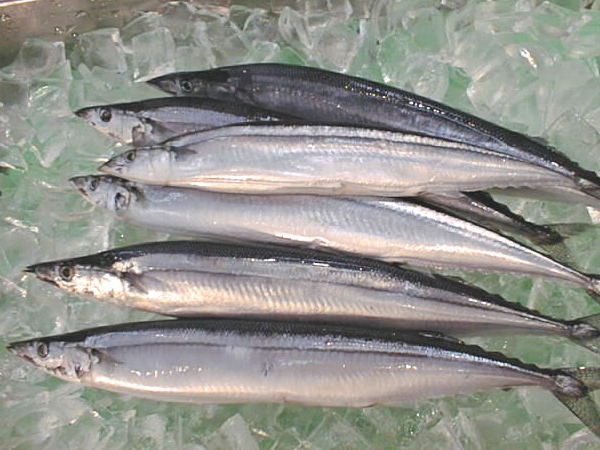
Japanese Seasonal Fish: Sanma/Mackerel Pike

“Sanma” or Mackerel Pike usually comes on our plates with the advent of Autumn, but can be found until mid-winter in Shizuoka Prefecture
Known under other names such “Saira” or “Banjyo”, it is a fish with red meat rich with proteins.
In season, the flesh is fatty and sweet.

Its Japanese name 秋刀魚 means Autumn Sword Fish!

It is mainly caught off the north eastern shores of Japan as the fish swims down from Hokkaido.
But the more south it is caught, the less fat it will contain.
The annual catch exceeds 20,000 tonnes, although breeding is increasingly successful.
If you eat it at a sushi restaurant, you can expect its bones and head served deep-fried.

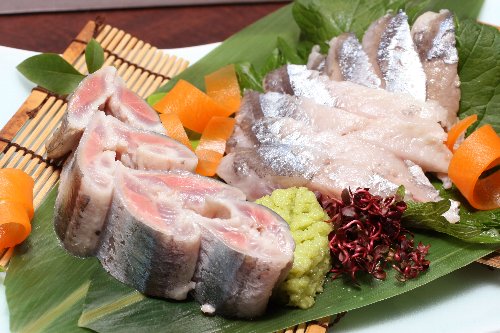
As sashimi it can be enjoyed straight with wasabi and soy sauce.
But as it is a red-flesh fish it beautifully combines with grated ginger, sliced myoga or chopped thin leeks.

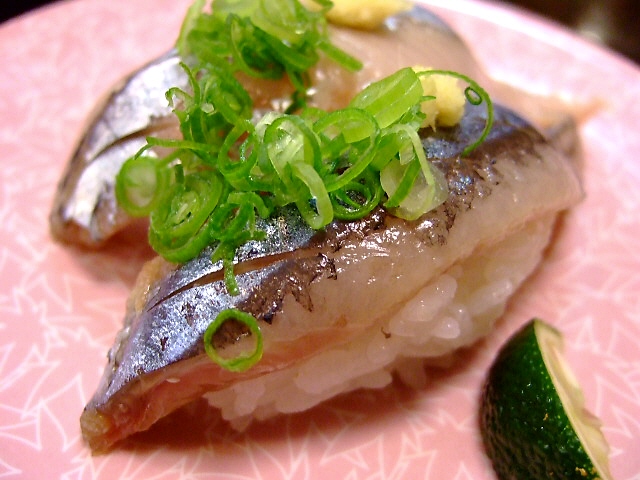
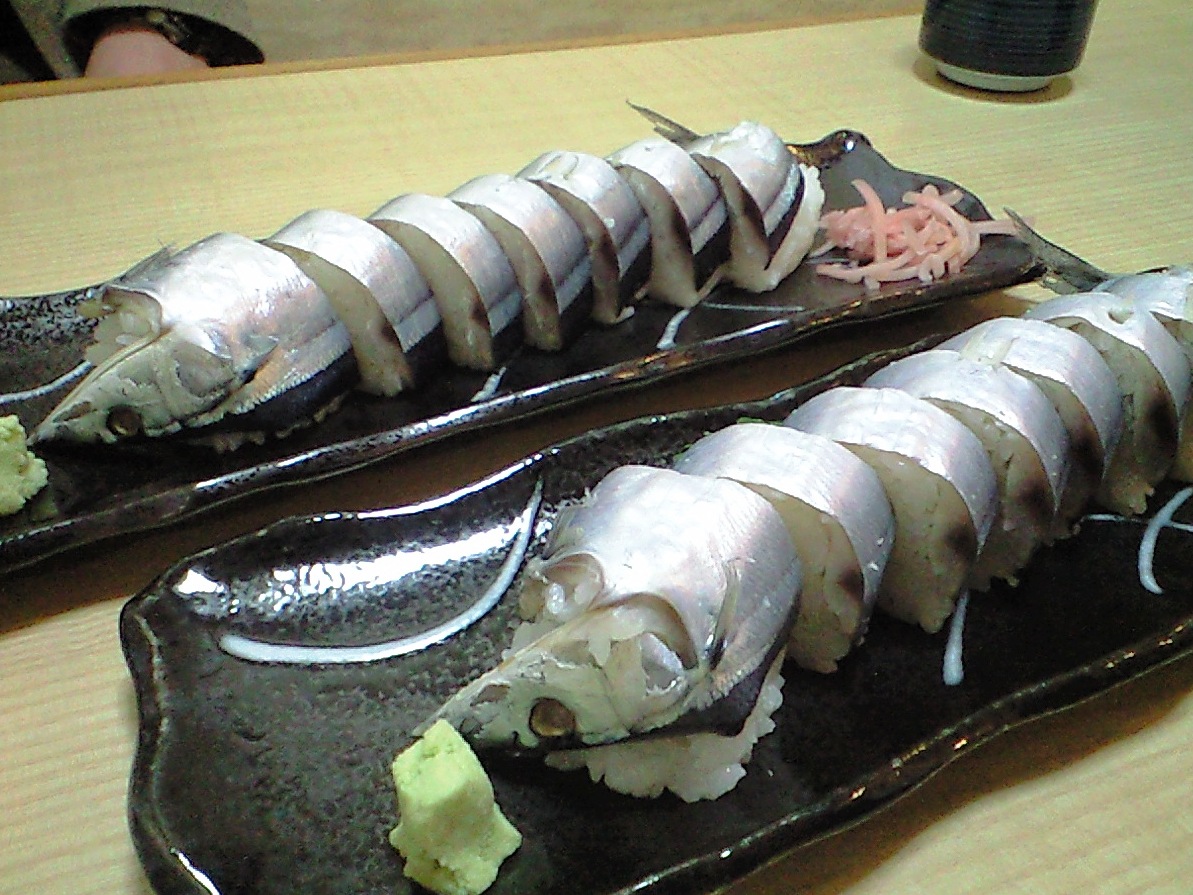
As sushi it does come in many forms and can be pretty spectacular as a single sushi nigiri serving!

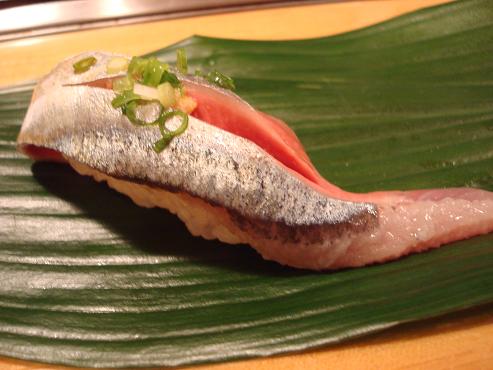
Another sushi nigiri sample!

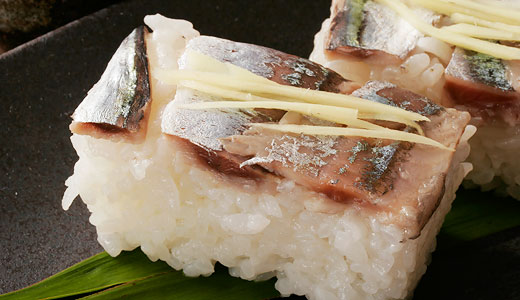
In waetern Japan it is very popular as oshizushi/pressed sushi.

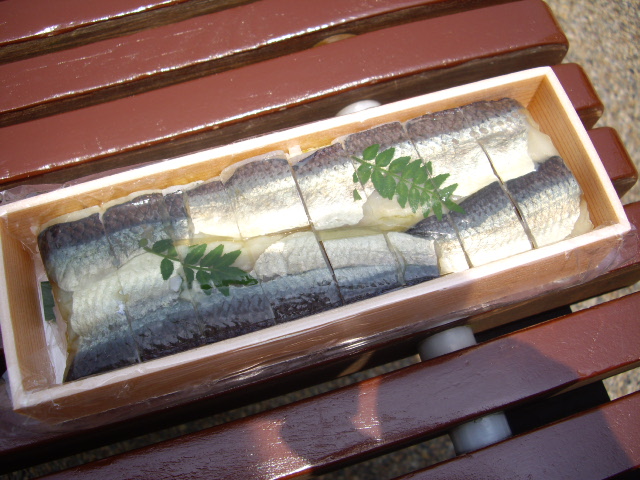
Another popular oshizushi version is “bo-gata/whole fish sushi”!

Bo-gata is often encountered as a sushi bento/lunch box!

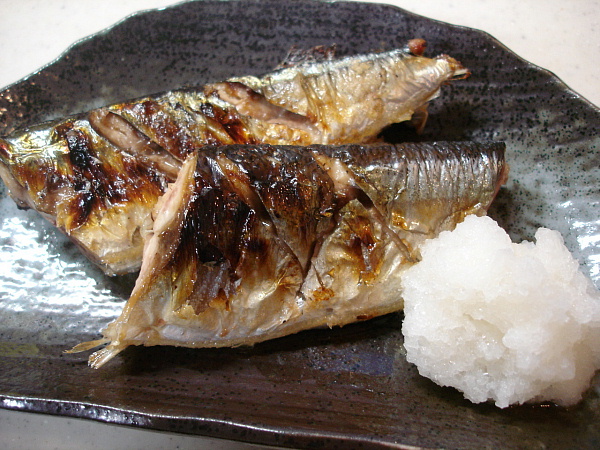
As it is a very rich fish, it can be eaten simply grilled with its skin and grated daikon and lemon.

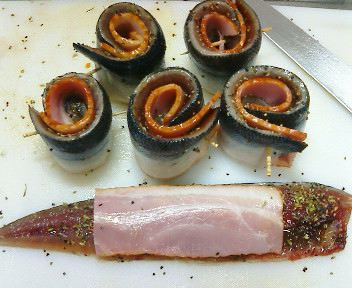
It is easy to manipulate such as the above sanma and bacon roll (later grilled)!

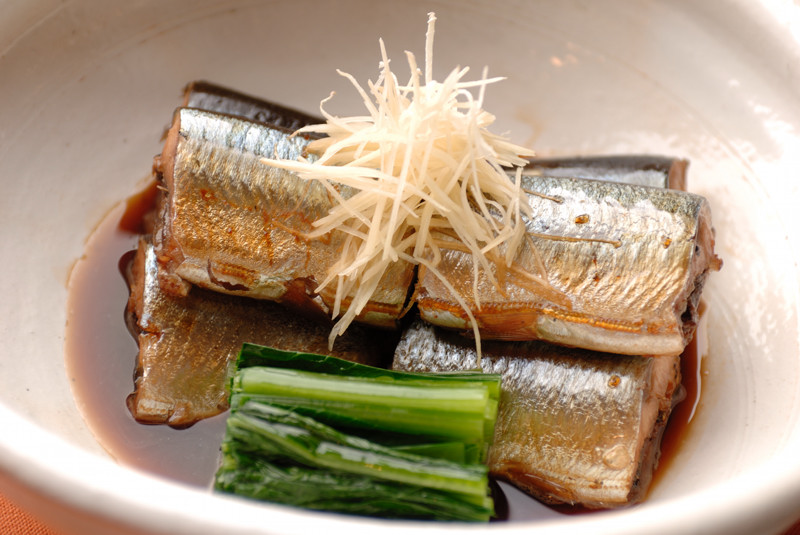
Of course it can be simmered Jpaanese style with soy sauce, mirin, sake and ginger!

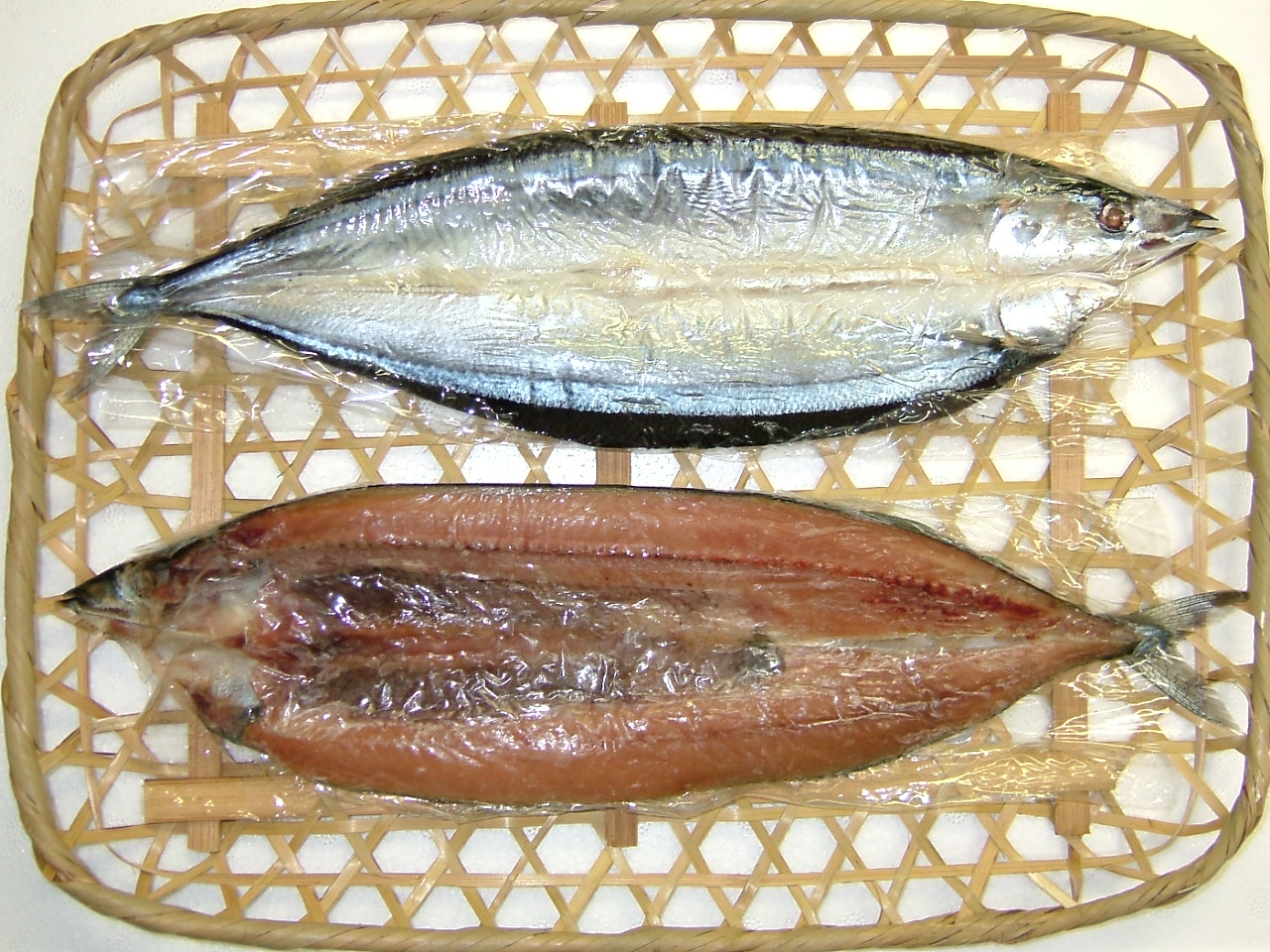
As himono/dried fish it is practical for carrying and grilling later!
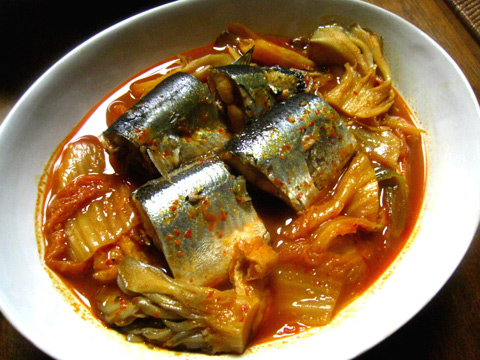
Tinned/canned it is comparatively cheap and can be accomodated in many ways, such as with kimchi!
RECOMMENDED RELATED SITES:
Bread + Butter, Comestilblog, Greedy Girl, Bouchon For 2, Zoy Zhang, Hungry Neko, Mangantayon, Elinluv Tidbit Corner, Maison de Christina, Chrys Niles, Lexi, Culinary Musings, Eats and Everything, Bite Me New England, Heather Sweet, Warren Bobrow, 5 Star Foodie, Frank Fariello, Oyster Culture, Ramendo, Alchemist Chef, Ochikeron, Mrs. Lavendula, The Gipsy Chef, Spirited Miu Flavor, Wheeling Gourmet, Chef de Plunge, Sushi Nomads, Island Vittles, Jefferson’s Table, Rubber Slippers in Italy, The London Foodie

Please check the new postings at:
sake, shochu and sushi,
—————————————-
日本語のブログ
—————————————-