Tag Archives: 美食

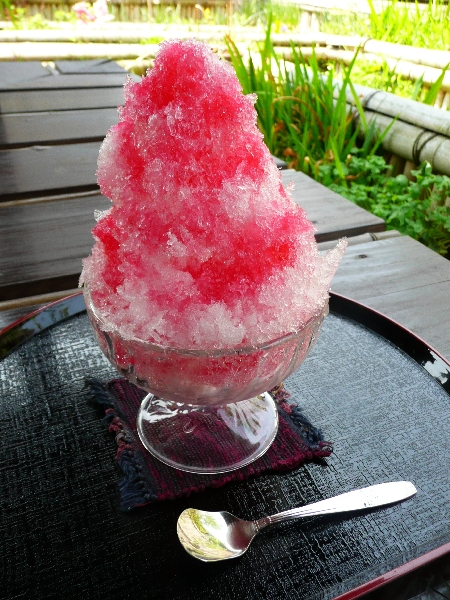
Japanese Dessert: Kakigoori/Shaved Ice with Syrup

KAKEKOORI-1

Kakigōri (かき氷) is a very popular Japanese dessert made from shaved ice flavored with syrup.
It was served for the first time in Kanagawa Prefecture in 1869!
KAKEKOORI-2

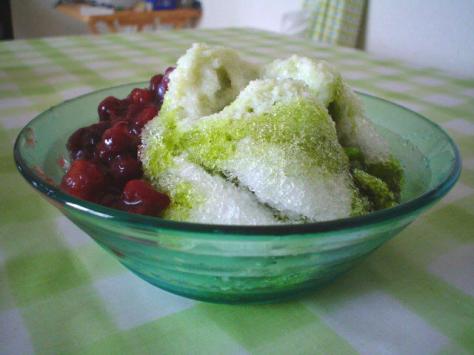
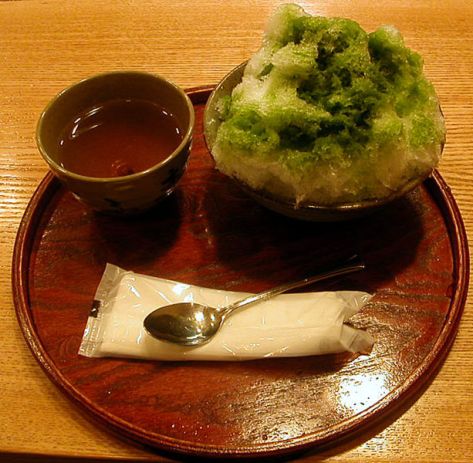
Popular flavors include: strawberry, cherry, lemon, green tea, grape, melon, “blue-Hawaii” sweet plum, and colorless syrup. Some shops provide colorful varieties by using two or more different syrups. To sweeten Kakigōri, condensed milk is often poured on top of it.
KAKEKOORI-3

It is nearly identical to a snow cone but can have a slightly rougher consistency and a spoon is almost always used. The traditional way of making kakigōri involves using a hand cranked machine to spin a block of ice over an ice shaving blade. However, electric ice shavers are most often used, though street vendors can still be seen hand-shaving ice blocks in the summer.

KAKEKOORI-4

In addition to the streets, kakigōri is also sold in festivals, convenience stores, coffee shops, and restaurants. During the hot summer months, kakigōri is sold virtually everywhere in Japan. Some coffee shops serve it with ice cream and sweet bean paste. Convenience stores may also sell it already flavored and packaged similar to ice cream.

KAKEKOORI-5

In other countries in East Asia, similar varieties can be seen.

Halo halo: Filipino shaved ice topped with sweetened beans, nata de coco and ice cream. “Halo-Halo” literally means “mix-mix” in the Tagalog language. Some shops in Japan also sell these sweets.
Bingsu (빙수) Korean shaved ice. The most popular kind is patbingsu. It is topped with sweetened red beans, canned fruits, and soybean powder. Many other varieties can be found throughout the country.
Bàobīng (刨冰) in Mandarin Pinyin or Chhoah-peng (剉冰) in Taiwanese POJ: Taiwanese shaved ice. There are many varieties in Taiwan. Some of them are topped with fresh fruits, fruits syrup and condensed milk. Some of them are topped with sweetened beans, glutinous rice balls and brown sugar syrup, while others will even use seafood. Some vendors use milk ice to make finer shaved ice, and some vendors may sometimes use a hand blade to shave block ice in order to produce rough crushed ice.
Ice kacang: Malaysia and Singapore Shaved ice topped with sweetened syrup of various colours and flavours, condensed and evaporated milk, and sometimes also durian pulp or vanilla ice cream. Beneath the ice sweetened red beans, canned fruit, attap seeds and grass jelly are usually added. Electric ice shavers are often used; though some vendors may use a hand blade to shave the ice in order to produce a rough texture. A variation of this would be Cendol which is shaved ice with sweet green coloured glutinous rice noodles drizzled with palm sugar it is usually accompanied with kidney beans and canned sweetcorn.
Nam Kang Sai: Thai Shaved Ice. In Thailand, this kind of cold dessert is very popular as well. The differences from other countries’ shaved ice is that in the Thai version the toppings (mixings) are in the bottom and the shaved ice is on top. There are between 20-30 varieties of mixings that can be mixed in. Among them are young coconut that have been soaked in coconut milk, black sticky rice, chestnuts,sweetened taro, red beans, sarim (thin strands of cooked flour that is very chewy and slippery) and many more.

Please check the new postings at:
sake, shochu and sushi

—————————————-
日本語のブログ
—————————————-
Japanese Cakes/Wagashi 10: Youkan: Easy Recipe-Mizu Youkan

MIZU-YOKAN-1

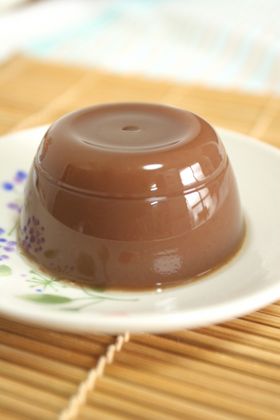
Youkan come in many guises. Here is an easy and ver basic recipe for “Mizu Youkan” that you will be able to adapt into many creations of yours! For vegans, vegetarians and omnivores!

INGREDIENTS:
-Boiled azuki beans: 1 can (430 g)
-Brown sugar: 60 g
-Salt: a pinch
-Agar agar Powder (“kanten” in Japanese): 4 g
-Water: 300 ml + 300 ml

RECIPE:

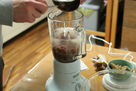
MIZU-YOKAN-2

Blend beans and 300 ml of water until smooth.

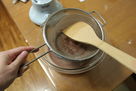
MIZU-YOKAN-3

Pass mixture through fine sieve.

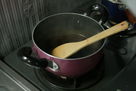
MIZU-YOKAN-4

In 300 ml of water drop agara agar. Bring to boil, stirring at the same time. Then keep stirring vern medium fire for 1 minute.

MIZU-YOKAN-5

Switch off fire. Pour sugar and salt. Mix well. Add bean paste. Mix well.

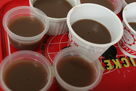
MIZU-YOKAN--6

Pour in recipients of your choice (that is when the fun starts!) and let cool completely. Keep in fridge (not too cold, please). Take out of recipient and serve!

More recipes to come!

Please check the new postings at:
sake, shochu and sushi

—————————————-
日本語のブログ
—————————————-
Japanese Cakes/Wagashi 9: Youkan

YOUKAN-JELLY

Here is another popular type of Japanese Wagashi fit for Vegans and Vegetarians: Youkan!

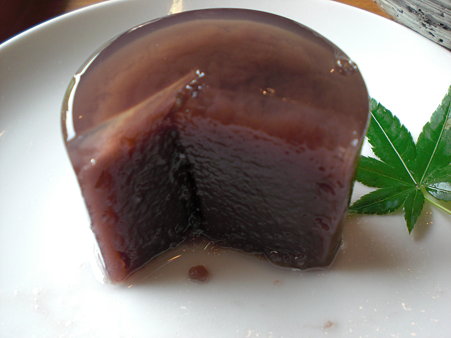
YOUKAN-MIZUYOKAN
Mizu Youkan

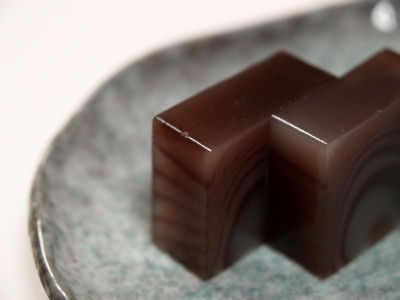
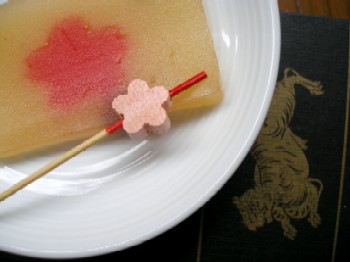
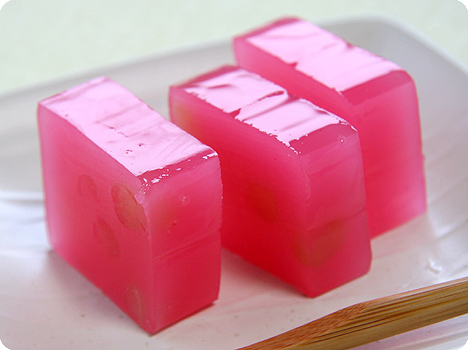
Yōkan (羊羹) is a thick jellied dessert made of red bean paste, agar (寒天/”kanten” in Japanese, and sugar. It is usually sold in a block form, and eaten in slices.

There are two main types: neri yōkan and mizu yōkan. “Mizu” means “water”, and indicates that it is made with more water than usual. Mizu yōkan is often chilled and eaten in summer.
Although most yōkan found in Japan and abroad are typically made with red bean paste, yōkan made from white kidney bean paste (しろあん, 白餡, shiro an in Japanese) are also relatively common. This type of yōkan is milky and translucent with a much milder flavour than that made of red bean paste.

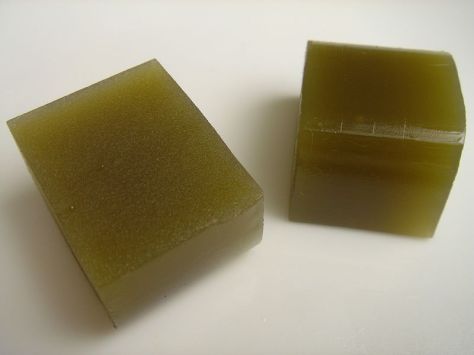
YOUKAN-GREENTEAYOUKAN
Tea Youkan

As such, they can be effectively flavoured and coloured by using green tea powder.

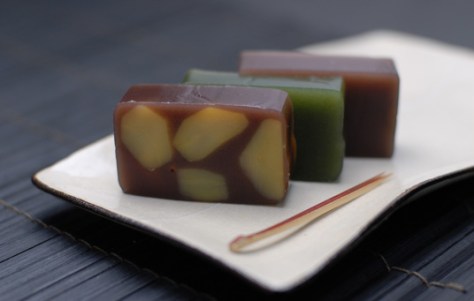
YOUKAN-TRICOLOUR

MizuyōkanYōkan may also contain chopped chestnuts, persimmons, whole sweetened azuki beans, figs, and sweet potato, among other additions. Sugar can be also be substituted with honey, dark brown sugar, or molasses to alter the taste of the yōkan produced. There is also shio yōkan, which uses small amounts of salt as a sweetener.

Other Pictures of Youkan:

YOUKAN-BICOLOUR

YOUKAN-CHERRY

YOUKAN-PINK

I will introduce an easy recipe soon!

Please check the new postings at:
sake, shochu and sushi

—————————————-
日本語のブログ
—————————————-

Crustacean Species 4: Amaebi/Alaskan Pink Shrimp-Pink Shrimp

AMAEBI-1

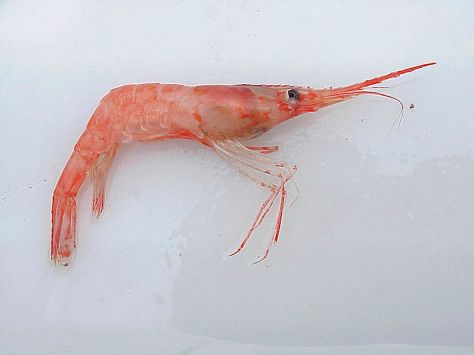
Amaebi (in Japanese) or by its Latin name Pandalus borealis (also called Pandalus eous) is a species of shrimp found in cold parts of the Atlantic and Pacific Oceans. Many different English names are used, with little consensus (deep-water shrimp, cold-water shrimp, northern shrimp, Alaskan pink shrimp, pink shrimp, northern red shrimp, Greenland prawn (UK)). Often the word shrimp is replaced by prawn, albeit incorrectly.

In Japan, it is also known as Hokkoku Akaebi/North Country Red Shrimp, Nanban Ebi or Tongarasahi.

The season in Japan is Winter, although it can be found all year round thanks to large imports from Greenland and Canada. Yearly domestic catch amount to 2,000 tonnes in Hokkaido and 800 tonnes in Ishikawa Prefecture.

It is a species famous for its sexual properties: the shrimps are hermaphroditic. They start out male, but after year or two, their testicles turn to ovaries and they complete their lives as females. However, if there is a predominance of female Pandalus shrimp, the males will delay their transformation. Likewise should there be a shortage of females, the male shrimp will begin their transformation earlier, all for the sake of maintaining balance for procreational purposes.

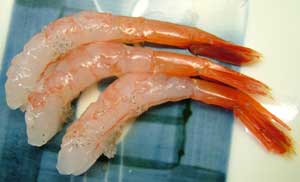
They are called “Ama Ebi/Sweet Shrimp” in Japanese as they will turn very sweet after a couple of days in the refrigerator, whereas they will show no sweetness at all when fresh!

AMAEBI-2

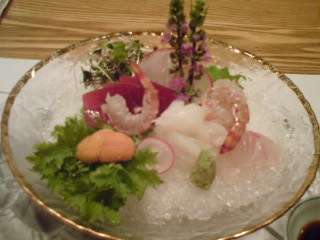
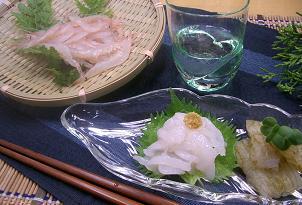
They are great as sashimi on their own, in salads or as part of a larger sashimi plate such as served i Tomii in Shizuoka:

TOMII-09-05-20b

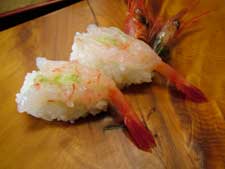
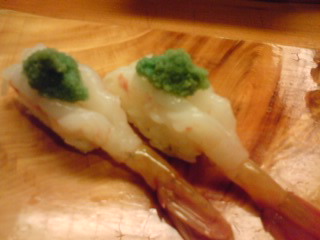
Of course, as sushi, they are a superb morsel!

AMAEBI-3

Please check the new postings at:
sake, shochu and sushi

—————————————-
日本語のブログ
—————————————-

Crustacean Species 3: Shako-Squilla

shako1.jpg

The Squilla or “Shako” (蝦蛄in Japanese) is a delicacy that appears on the sushi bar counters from April to Summer, although different varieties can be found in Hokkaido markets (Otaru City in particular) almost all year round.
You will discover it under names such as “Shaku” and “Gazaebi”.
They are actually caught in almost all Japanese seas, but the best are supposed to originate from Hokkaido.

shako2

Like any crustaceans, they can be eaten in many ways.
The Japanese favour the small kind with a violet back. I had the opportunity to buy some very large specimen in Otaru, and eat them just boiled and served with rice vinegar mixed with a little Japanese mustard, or in salads.
They almost disappeared from Tokyo Bay in the 1960’s but reappeared in the 1970’s. Most fishermen in the Kanto area will place them in boxes themselves to sell them directly at fish markets. The market value can vary wildly, but look for the genuine harbour markets and buy them yourself.

shako3

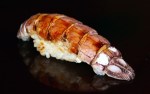
Naturally, they are most popular as nigiri sushi. Customers jokingly ask for “garage” (in English) as “shako” also means (different kanji, of course) “garage”!

Please check the new postings at:
sake, shochu and sushi

—————————————-
日本語のブログ
—————————————-

Crustacean Species 2: Botan Ebi-Large Prawn

botanebi1.jpg

Botanebi/”Botan” Prawn, or “Pandalus nipponesis” for the specialists, is a large prawn found in all seas of Japan at depths varying from 300 to 500 metres. They are caught at 200~300 metres depth in Suruga Bay and along the Western coast of Izu Peninsula In Shizuoka Prefecture. Once abundant, they have become scarce and only small specimens are found, whereas Hokkaido produces up to 20cm-long prawns.

sushiko-08-12-25-31

They are known under different names: “Toyamaebi and Kijiebi”.
It is not a cheap morsel in Sushi bars. But it is interesting to note they are essentially eaten raw as like “Amaebi”. They become very sweet after some time in the refrigerator.

oda-4.jpg

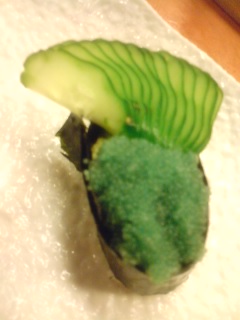
Now, if you are lucky enough to find them fresh with their eggs, ask your chef to dress them as above, or even better, put the eggs on top of a “gunkan nigiri”!

sushiko-08-12-25-5

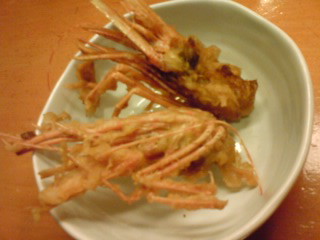
And one more thing, if they are fresh again, don’t forget to ask for the heads deep-fried!

Incidentally, botanebi change sex (gender) with age to end up as big juicy females!

Please check the new postings at:
sake, shochu and sushi

—————————————-
日本語のブログ
—————————————-

Crustacean Species 1: Shiro Ebi-White Shrimp

shiroebi1.jpg

Having obtained more information and species, I decided to restart the Series on Crustaceans for the sake of secure information!

Shiroebi or White Shrimp is not as known as other shrimp/prawn varieties. However, it is a very popular crustacean in Japanese cuisine.
Also known under the the names of “Shiraebi, Hirataebi and Bekkoebi”, it is mainly caught between depths of 40 and 200 metres off the coasts of Toyama Bay on the other side of Japan and Suruga Bay in Shizuoka Prefecture.

shiraebi-22

It is mainlly served as sashimi with some ponzu and grated fresh ginger

shiraebi-3

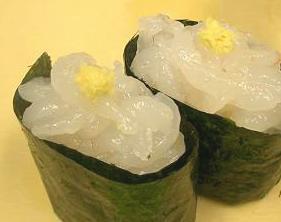
as “gunkan” topped with a dash of grated fresh ginger.

It is possible to serve it as “nigiri”, although one would need large specimen, as the usual length is only 7 cm.
Shiroebi appears on our tables between April and November in many guises:

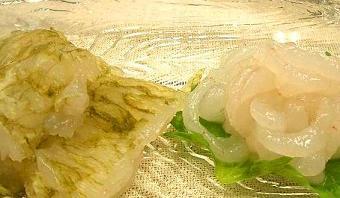
shirebi-4

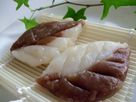
The picture above shows on the right the shiroebi in its natural flesh whereas on the left it has been kept between two sheets of wetted seaweed for a while as “kombu-jime”, another very popular way to prepare all kinds of sashimi/sushi.

White Shrimps also enter in the preparation of a kind of “Tamagoyaki”/Japanese Omelette when they are first processed into a paste and mixed thoroughly with beaten eggs, sieved and then cooked.
The Japanese also love them as soft sembei/rice crackers.

The annual catch has exceeded 600 tonnes in recent years, half of them in Toyama.
They are also exported whole.

Please check the new postings at:
sake, shochu and sushi

—————————————-
日本語のブログ
—————————————-
Japanese Cakes/Wagashi 8: Recipe-Beni Mochi

BENI-MOCHI-1

Here is a simple Japanese Cake/Wagashi Recipe that can be adapted to all shapes by vegans and vegetarians! Beni Mochi.
Beni Mochi, or 紅餅 in Japanese, means “Red Mochi”.

INGREDIENTS: 16 pieces

-Rice flour: 250 g
-White sugar: 80 g
-Water: 100 ml/half a cup (for white mochi)
-Brown sugar (take care in choosing the colour): 80 g
-Water: 100 ml/half a cup (for red mochi)

RECIPE:

BENI-MOCHI-2

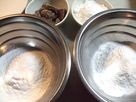
Divide rice flour into two equal parts (125 g) and pour into two different bowls.

BENI-MOCHI-3

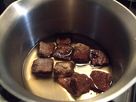
In a deep pan, drop red sugar and add water. Heat over fire until completed melted. Switch off fire. Add rice flour and mix well.
Repeat same procedure with white sugar.

BENI-MOCHI-4

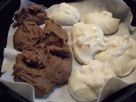
In a steamer, put mochi pastes (take care no to mix them) on a steaming paper and steam for 10 minutes.

BENI-MOCHI--5

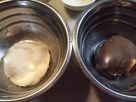
Take out. Let cool. Make two balls and keep in different bowls.

BENI-MOCHI--6

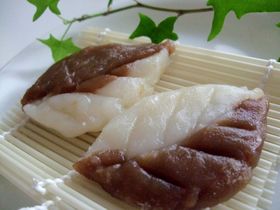
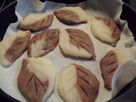
Shape the mochi as above or according to your preference. Put them back inside the steamer on steming paper and steam for 10 more minutes.

BENI-MOCHI--7

Let cool and serve!
Are best enjoyed with Japanese tea, hot or cold!

Please check the new postings at:
sake, shochu and sushi

—————————————-
日本語のブログ
—————————————-

Cuttlefish/Squid Species 5: Hotaru Ika/Firefly Squid-Sparkling Enope Squid

IKA-HOTARUIKA-1

Here we go again with this series called “The Jacques Cousteau” upon suggestion by Jaded Fork and forBread + Butter, and Elin who don’t mind being on a long haul! LOL

Sparkling Enope Squid is a name difficult to remember and the translation of the Japanese name, Hotaru Ika/蛍烏賊 or Firefly Squid, certainly holds a better sound and is more adapted to reality.
It is also known as Matsui Ika in Toyama Prefecture.

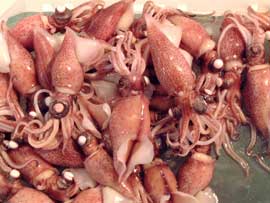
The Sparkling Enope Squid is found in the Western Pacific ocean at depths of 600 to 1200 feet and exhibits bioluminescence. Each tentacle has an organ called a photophore, which produces light. By flashing these lights, the Sparkling Enope Squid can attract small fish to feed upon.

The Sparkling Enope Squid is the only species of cephalopod in which evidence of color vision has been found. While most cephalopods have only one visual pigment, firefly squid have three, along with a double-layered retina. These adaptations for color vision may have evolved to enable firefly squid to distinguish between ambient light and bioluminescence.

The Sparkling Enope Squid measures about 3 inches long at maturity and dies after one year of life.
The Sparkling Enope Squid can also light up its whole body to attract a mate. The mating season of the Sparkling Enope Squid lasts from March to June.

The fishing season lasts from Spring to Summer. The annual catch varies between 4,500 and 6,500 tonnes.

IKA-HOTARUIKA-2

They are very popular boiled as a snack or cooked in soy sauce and sake. You can of course cook them in wine or tomato sauce, European-style.

IKA-HOTARUIKA-3

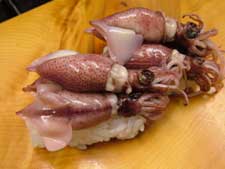
They are very much much appreciated raw and whole as sashimi or lightly boiled as sushi on nigiri!

Please check the new postings at:
sake, shochu and sushi

—————————————-
日本語のブログ
—————————————-

Shellfish species 12: Japanese Ivory Shell-Japanese Babylon Shell/Baigai

BAIGAI-1

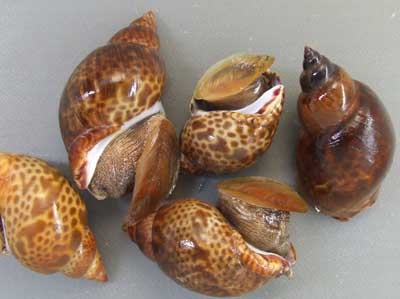
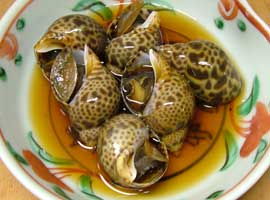
Japanese Ivory Shell/Japanese Babylon Shell are known as Bai, Baigai, Isobai in Japanese.
They are just in season now as we see them over the counters from Spring to Summer.
They used to very common and found all over Japan, but unfortuantely too many have been caught or killed by pollution in recent years.
The biggest specimens are caught off Toyama fairly deep where they can attain 15cm length and weigh as much as 300g.

BAIGAI-2

The most popular way of eating them is to first boil them in water and soy sauce and serve them cold.

BAIGAI-SASHIMI

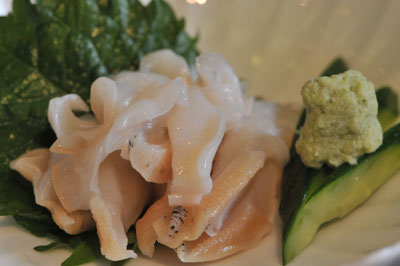
But the Japanese apprecaite them very much raw as sashimi and

BAIGAI-SUSHI

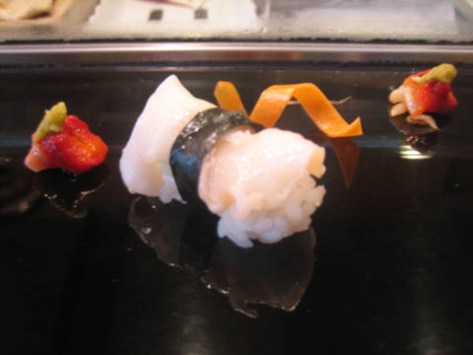
sushi!

There must be a good reason for the Japanese to call them “Kai no Oosama/King of Shelfish”!

Please check the new postings at:
sake, shochu and sushi

—————————————-
日本語のブログ
—————————————-

Vegan/Vegetarian Recipe: Japanese-style String Beans and Tofu

INGEN-DISH-1

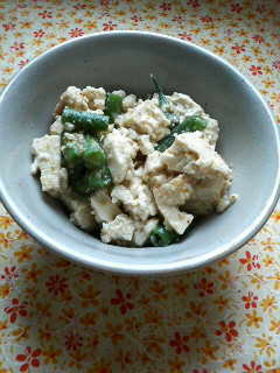
Here is a simple and popular Japanese recipe that can please anyone, vegans, vegetarians and omnivores alike: String Beans and Tofu!

INGREDIENTS: For 2 people
-String Beans, 5~6
-Tofu: half a block
-Miso (of your choice), 1 teaspoon
-Mirin/sweet sake, half a teaspoon
-Sugar, half a teaspoon
-Freshly crushed Sesame seeds (do it in a mortar with pestle)

RECIPE:
-Drain water form tofu and roughly mix with miso, mirin and sugar.
-Peel away strings if any, cut beans into 4cm trunks and boil for 40 seconds. The beans should still be a bit crispy. Drain and let cool.
-Drop beans into tofu. Mix roughly with a spoon, cutting the tofu into small bits as in above pic.
-Sprinkle with sesame powder before serving.

Enjoy!
Naturally, this could be one of a whole plate of vegan/vegetarian snacks.
One can also add lightly boiled carrots. The combinations are endless!

Please check the new postings at:
sake, shochu and sushi

—————————————-
日本語のブログ
—————————————-

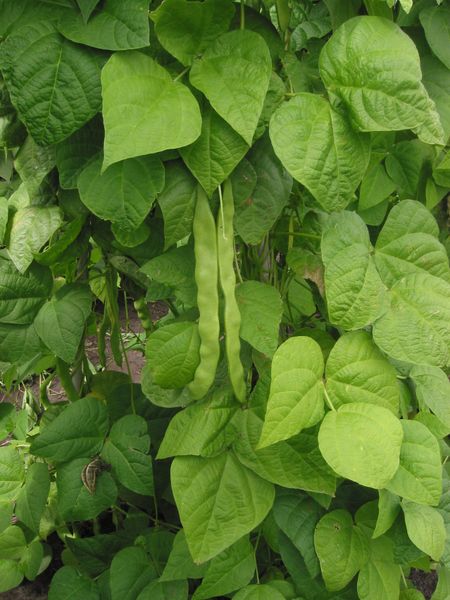
Vegetables Facts and Tips (14): String Beans, French Beans or Common Beans

STRING-BEANS-PLANT

Common beans, when green and immature are either called String Beans or French Beans when they don’t have a string.
When reaching maturity they gave way to all kinds of beans.
They were first discovered in Central and South America in the 16th Century and were later introduced in Europe, then China. The French first planted the beans in Japan in rhe second half of the 19th Century.

90% of the crop is harvested three times a year in Hokkaido Island in Japan.

Ther are two main varieties in this country:

STRING-BEANS-DOJYOINGEN
“Dojyo-Ingen”, also called “Kentucky Wonder”. Slightly soft variety.

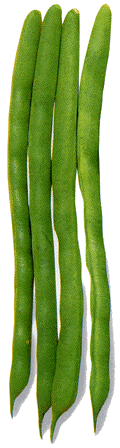
STRING-BEANS-SAABERUINGEN
“Saaber-Ingen”, thinner and rounder than above without strings.

The Japanese usually boil them lightly or just just cut them in trunks about 5 cm long and add them to all kinds of dishes from clear soups to sauteed food.

FACTS:
-Season: June~September
-Main beneficial elements: Protein, Carotene, Vitamin B group, Vitamin C, Calcium, vegetal fibers.
-Eaten with other food high in protein, teir Vitamin C are easily ingested by human bodies.
Cooked with oil, their carotene will be easily assimilated by human bodies.

TIPS:
-Just after boiling drain them and let cool inside a sieve. They will be tastier for it.
-If you have plenty, first boil them before storing them in the refrigerator.
-Peel strings away before cooking.
-Choose firm and straight specimens.

Please check the new postings at:
sake, shochu and sushi

—————————————-
日本語のブログ
—————————————-

Crab Species 4: Japanese Mitten Crab/Mokuzugani

MOKUZUGANI-1

Japanese Mitten Crab or Mokuzugani i Japanese is also called Mokuzou, Zugani, Tsugani or Kegani.
It caught alsmost everywhere in Japan in Autumn and Winter.
In Autumn the females come to lay their eggs at river mouths.
Plenty are found along the Izu Peninsula in Shizuoka Prefecture.
They are caught in boxes baited with fish.

As for food, they can be eaten boiled in soups or crushed with their shell and cooked with miso. They could even be prepared as French bisque.

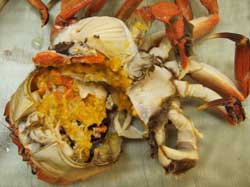
MOKUZUGANI-FEMALE

The female specimens are particularly appreciated for their egg sacs.

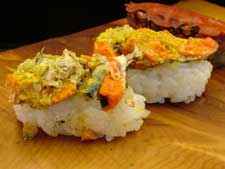
MOKUZUGANI-SUSHI

These boiled egg sacs with the meat make for delicious sushi nigiri or gunkan!

Please check the new postings at:
sake, shochu and sushi

—————————————-
日本語のブログ
—————————————-
LE CAFE-LABO: Classic Cakes (12)-Acapulco

acapulco-1

It had been some time since I checked on that great confectionery institution in Shizuoka City, LE CAFE-LABO, so yesterday afternoon I paid a visit to their shop In Isetan Department Store to find out if they had a new creation on display for my students!

acapulco-2

In fact they did!
The cake is called “Acapulco”.
I refrained buying two of them, otherwise my lady student might miscontrued my intent! LOL

It is very feminine and luscious not only in looks and concept, but also in taste and texture.
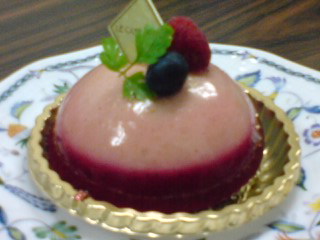
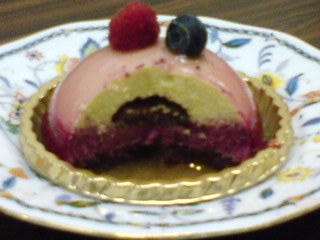
The base is a chocolate joconde short cake with a layer of cassis mousse surmounted with a small chocoate macaron inside. The whole is covered with a “mound” of green apple mousse overlaid with a thin layer of cassis jell.

Perfect for the summer with a cold glass of tea!

LE CAFE-LABO
424-0886 Shizuoka City, Shimizu Ku, Kusanagi, 46
Tel.: 054-3441661
Also available at Isetan Dept. Store, Shizuoka City, Aoi Ku, Shichiken-Cho.

Please check the new postings at:
sake, shochu and sushi

—————————————-
日本語のブログ
—————————————-
Shizuoka Izakaya: UZU (revisited again!)

UZU-09-06-12-e

Service: excellent, easy-going and very friendly
Facilities: great washroom, great cleanliness overall
Prices: very reasonable, good value.
Strong points: Very fresh local ingredients especially organic vegetables extensively used.

I will have to be careful, or UZU Izakaya is bound to become an addiction!
I visited that increasingly popular (need to reserve on Fridays especially!) last Friday for a quick dinner and some Shizuoka sake!

UZU-09-06-12-a

Thye kabocha/pumpkin tofu snack was still there!

UZU-09-06-12-b

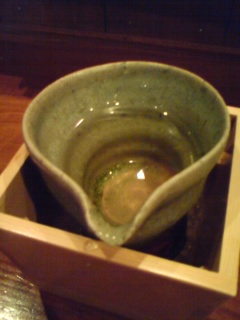
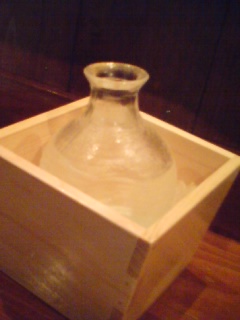
Any sake is served in a different vessel, and you are offered a choice of cup for each sake you savour!

UZU-09-06-12-c

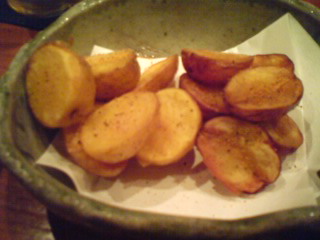
Fried organic new potatoes with their skins!
Uzu specializes in organic vegetables and “shamo” chicken!

UZU-09-06-12-d

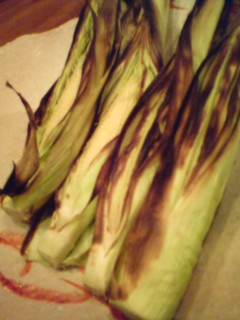
Organic “Young Corn” grilled inside their husks. The “hair” around the corn is edible!

UZU-09-06-12-f

Again, a rare morsel to please vegans and vegetarians:
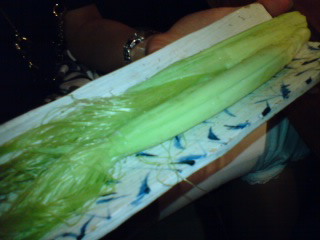
“Young corn” organically grown by Mr. Matsuki in Shibakawa Cho, at the foot of Mount Fuji, served raw! Yes, you head/read right, raw!
These were the only two available that night and I didn’t have to pay for them! Slightly different from the above, they are very tender and sweet. You eat them as they are, no need for “dressing”!

UZU-09-06-12-e

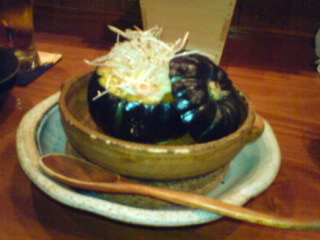
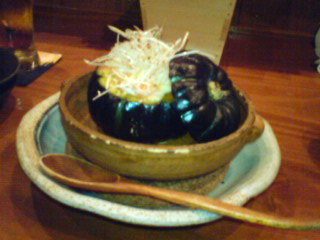
Now, that’s an iteresting morsel: Shamo Chicken Gratin inside a small organic kabocha/pumpkin!
Just small enough not to worry about the calories!

UZU-09-06-12-g

Another bottle of sake!

UZU-09-06-12-h

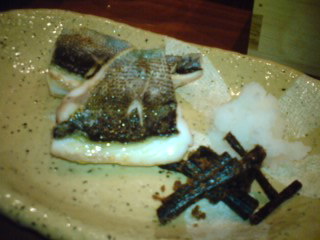
Grilled “Isaki/Chicken Grunt” ( a strange name for a fish!), caught off Shizuoka shores. Elegant!

UZU-09-06-12-i

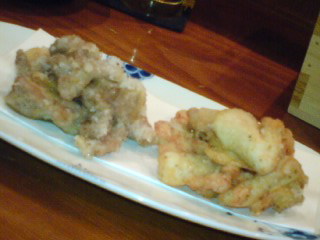
Deep-fried “shamo” chicken thighs and breast fillets!

No need for dessert!

UZU
Shizuoka City, Otowa-cho, 3-18
Tel.: 054-249-6262
Business hours: 17:00=23:00
Closed on Mondays and first Tuesday
Reservations recommended
Credit cards OK

Please check the new postings at:
sake, shochu and sushi

—————————————-
日本語のブログ
—————————————-