Tag Archives: 野菜

Vegetables Facts and Tips (3): Broccoli


The Japan Blog List

Please check the new postings at:
sake, shochu and sushi

—————————————-
日本語のブログ
—————————————-
broccoli-1a

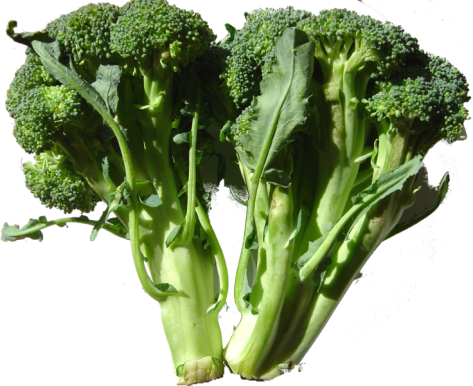
In a recent National Geographic Magazine survey, Broccoli was at the very top when considering nutrients beneficient to humans in our everyday food!

Vegans, Vegetarians and Omnivores, rejoice! Doctors, start moaning!
A cousin of cabbages and cauliflowers, the flowers are the mainly consumed part, but people forget that the stems are great, too (explained later)!

FACTS:
-Season: November to January and March to April in the Northern Hemisphere.
-Main elements:
Carotene, Vitamin C and Vitamin E in very large amounts. Together they combine as an elixir to fight ageing and stress.
Potassium
Iron, which helps increase red blood cells and control cholesterol.
Calcium
Fibers, which help digestion.
Sulforafan which helps fight poisonous intruders.

VARIETIES:
broccoli-2
Italian red broccoli

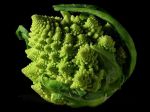
broccoli-romanesco
Broccoli Romanesco, a favourite of mine!
broccoli-colour
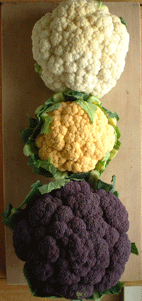
In Japan, a violet variety (bottom) is becoming popular, making for some great combinations with white and yellow cauliflower,
broccoli-dish
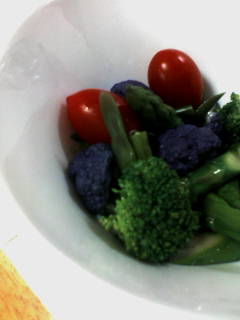
and other dishes!

TIPS:
-As I said above, the stem is not only edible, it is succulent, with a taste between avocadoes and asparaguses! Peel the skin, cut it in any shape you wish and boil it for a while in slightly salted water. let cool and use for salads, stews and gratins!
-Choose specimens with big and dense buds, shiny and fat stems. Check whether the cut at the stem looks fresh!
-After boiling in slightly salted water, plunge into cold water immediately. The colour will not change!
-Preservation: Wrap in wet paper towel, seal it inside a polyester rigid box and keep inside refrigerator’s chilled compartment away from light.
As it will change in contact with natural light, better to cut it, boil it, cool it, seal it inside vinyl pouches and freeze if you have too much of it!
Vegetables Facts and Tips (2): Tomatoes


The Japan Blog List

Please check the new postings at:
sake, shochu and sushi

—————————————-
日本語のブログ
—————————————-

tomato1

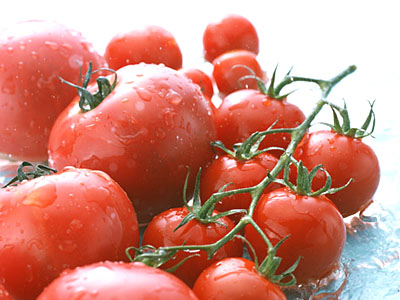
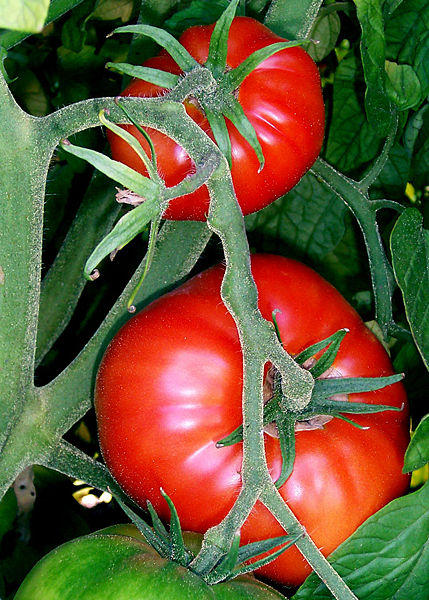
Tomatoes have laid on our tables for so long that we have almost forgotten they came from South America. The Spanish and the Portuguese ignored them. The British studied them. The French brought them to Europe under the name of “Love Apple”, a name still existing in Italy. So it is said,…

tomato-fruit
“Fruit Tomatoes”

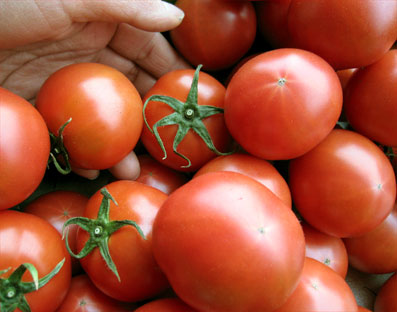
This summer-maturing fruit can be bought all year round with the interesting consequence that tomatoes ripened in winter are sweeter than their summer cousins as they contain less water, earning themselves the name of “fruit tomatoes”, a great oxymoron, if there was one!

Thanks to consumers’ insatiable appetite for novelty, tomatoes are grown into all kinds of size, shape and colour.
Just to cite a few, the following are the most popular in Japan:

tomato-momotaro
“Momotaro Tomatoes”

-Momotaro (after the Japanese “Peach Boy” tale), which becomes “Fruit tomato” in winter.

tomato-midi
“Midi Tomatoes”

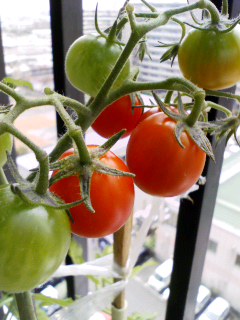
-Midi Tomato (sometimes called “Plum tomatoes”), a larger cousin of the “Mini tomato”, is very sweet and very high in nutrients. Its aroma has a particularly long life.

tomato-italian
“Italian tomatoes”

-Italian Tomato: mainly used for cooking, it may often come in a comparatively elongated shape.
It contains less water and reveals both large amounts of sweetness and acidity, making it very conducive to long cooking with the extra bonus of actually improving in taste upon heating.

tomato-mini
“Mini Tomatoes”

-Mini Tomato: one-bite sized, it is also called “Petit tomato”. It contains twice as many Vitamin C, and it is very rich in beneficient ingredients.

tomato-yellow-mini
“Yellow Mini Tomatoes”

-Yellow Mini Tomato: characteristic for a lot of sweetness and very little acidity. Very handy for children who dislike vegetables!

rubbins
“Ameera Rubbins”

-Ameera Rubbins: with its larger Ammeera tomato, it is grown exclusively (until now, but they are bound to expand beyond our borders!) in Shizuoka Prefecture. They are the sweetest of all, tasting like strawberries, and very firm, making them ideal for decoration, notwithstanding their nutrient value. The smallest variety called “Rubbins” is grown by only two farmers near Iwata City!

tomato-micromini
“Micro Mini Tomatoes”

-Micro Mini Tomatoes: increasingly popular, they are only 8~10 mm and look somewhat like redcurrants. Very tasty with a beautiful acidity, the Japanese use them not only in salads, but also as the final touch on a plate of sashimi!

FACTS:

-Season: All year round
-Main elements: Licopin (Ricopin), Vitamin C, B Vitamins, Potassium, Pectin, Luchin (Ruchin).
Licopin is a carotene variety particularly beneficial in fights against allergies and ageing. The Potassium and Vitamin C and Pectin help control cholesterol in blood.
Luchin reinforces capillary veins and arteries.
Recent researches in Germany and China have proven that tomatoes help control high blood pressure.
Who said that the Italians look healthier than everybody else? LOL

TIPS:

-Choose tomatoes with a deep colour and healthy strong skin!
-Preservation: before storing them into the vegetable compartment of your fridge, wrap themin newspaper or put them inside a vinyl bag, or even better, inside a rigid plastic sealed box.
-Peeling: better than boiling water, direct contact with a flame! Make a very shallow cut near the stem area, firmly stick a fork or thin skewer into the stem area, hold the tomato directly over the gas flame for a few seconds, then plunge it into cold water. Skin should come off very easily.

Vegetables Facts and Tips (1): Potatoes


The Japan Blog List

Please check the new postings at:
sake, shochu and sushi

—————————————-
日本語のブログ
—————————————-

potatoes

This is the first of a series of articles on vegetables, which I hope will help my vegan and vegetarian (I’m not!) friends.
Incidentally、 nothing, pictures included, is copyrighted in my food blogs, so please feel free to use anything!

POTATOES

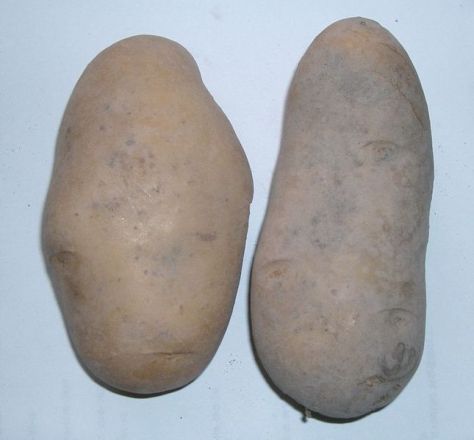
danshaku-potato
“Danshaku”

Potatoes were first introduced to Japan in 1910 by Baron Kawata from Great Britain/Ireland giving the name of “Danshaku/Baron” to the most commonly used potato in Japan, especially in croquettes and salads.

The biggest potato exporters to Japan are China and India, although more and more grown locally.
The varieties found in supermarkets are:

kitaakari-potato
“Kita Akari” used for mashed potatoes and croquettes,

mayqueen-potato
“May Queen” used in stews,

toyoshiro-potato
“Toyoshishiro” used for fried potatoes,

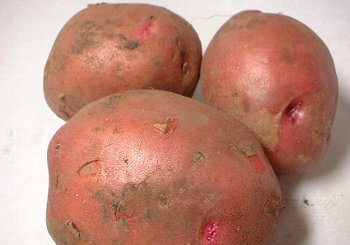
redandespotato
“Red Andes” used for croquettes and Pot au feu,

incanomezame-potato
“Inca No Mezame” used for stews.

Potatoes are available all year round, but are at their peak from February to May when new potatoes can be eaten whole!

FACT CARD:

-Season: All year round
-Main elements: carbohydrates (high energy), Vitamin C1, B1 (thanks to a large amount of natural starch in potatoes, the vitamin C will resist heating!), Potassium
-Preservation: Wrap potatoes inside newspaper and keep them in a dark, well-ventilated place away from the sunlight.

TIPS:

-Choose specimens well-rounded and with healthy skin. Avoid specimens with buds or of greenish colour (risks of diarrhea). Cut out all “dark spots”!
-To avoid a change of colour, wash potatoes in water after peeling or cutting.
-If you want to keep your potatoes for a while after boiling them, plunge them in (change it as many times as necessary) cold water until completely cooled down. They will not break or crumble when used later.
-After boiling cut potatoes, throw away water and keep heating them until they have lost a great part of their moisture. They will attain a crispy enough nature without resorting to deep-frying!

Vegan Farandole for the New Year!


The Japan Blog List

Please check the new postings at:
sake, shochu and sushi

—————————————-
日本語のブログ
—————————————-

p1010612

Last Sunday, not the New Year I must admit, I had to cook dinner for my other half, and I just happened to be litterally submerged with vegetables.
Why not create something vegeterian, or even better, something vegan, at least to justify my omnivorous preferences? I thought.
Well, I came with a simple idea that can expanded at infinitum. It has the merit of making use of very healthy ingredients and help the system take a much needed rest! LOL

farandole-oil-22 farandole-oil-3 farandole-oil-1

I utilized three different oils from three different countries to add a little inernationalization: Olive oil from Italy, Walnut oil from France and Argan oil from Morocco!

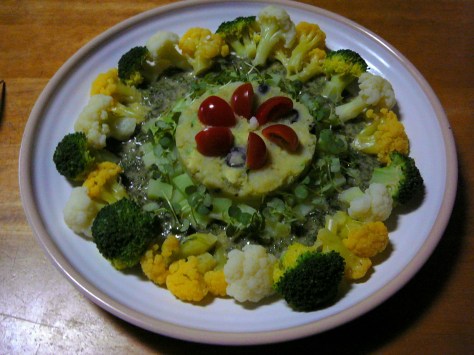
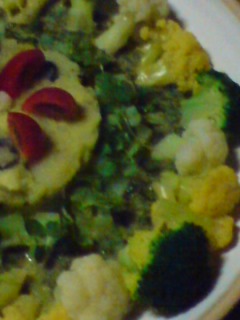
In the centre of the plate I arranged a “circle” of boiled potatoes mixed in “brandade style” with plenty of olive oil, avocado, black olives, lemon juice, a minimum of salt, chopped fresh garlic, pepper, nutmeg, thyme and yuzu chili pepper. Indian friends would probably add plenty more spices.
I surrounded it with a thin crown of boiled diced brocoli stems and shiso/perilla shoots/mini leaves.

farandole-2

I then added plenty of dressing around the lot. The dressing was made with walnut oil, taragon white wine vinegar, soft Dijon mustard (with seeds), lemon juice, a little salt, pepper and a large amount of very finely chopped fresh parsley and basil. It was very consistent and easy to spread without “leaking” everywhere.
Around the whole, I arranged boiled green brocoli, white cauliflower and yellow cauliflower (beautiful and very tasty) all grown in Shizuoka Prefecture.
I decorated the potato core with plum tomato wedges, and sprinkled both the cauliflower(s) and tomatoes with a little dash of argan oil (take it easy with this particular oil as it is particularly fragrant!).

I hope this will give ideas to my vegan and vegetarian friends for the New Year repast! By the way, “Farandole is a dance!

Edamame: Japanese Green Soybeans


The Japan Blog List

Please check the new postings at:
sake, shochu and sushi

—————————————-
日本語のブログ
—————————————-

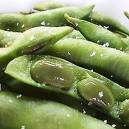
I’ve always been somewhat puzzled to find the word “edamame” in my U.S. (and European) friends’ blogs. This conspicuous vegetable seems to conjure grand images of Japanese gastronomy in spite of its almost base status in this country.

After all, “edamame” (枝豆/branch bean in Japanese) is nothing but green soybeans, a food mass-produced and heavily exported by North American farmers.
Or, is it that the soybean’s image has fallen so low on the other side of the Pacific because some people grow it for bio-ethanol that restaurateurs feel more comfortable with a grand-sounding Japanese name?

Alright, before I get collared for indulging into a cheap rant, let me introduce my own recipe for preparing the “delicacy”:
One does not have to boil it, cool it and serve it sprinkled with salt. This is probably the worst and least healthy way to consume it!
If you can, choose them fresh on the branch(es). This will guarantee they haven’t lost any of their nutrient qualities.
Cut out all the pods and throw away the branches (or re-process them inside your fertilizer box!).
Clean the pods under running water.
Drain water, but do not wipe them dry.
Drop them in an appropriate-sized non-stick pan and hand-rub them in a little coarse salt. The less salt, the better, but enough to season all pods. Experience and personal preferences will tell you how much you need.
Cover pan with a glass lid and switch on fire to medium-low. Cook until water seeps out of the pods. Switch off fire and keep inside covered pan (do not take the lid off!) for a good 5 minutes. By then, they should be sufficiently cooked.
Serve immediately.

In Japan there exists another variety called Kuro Edamame/黒枝豆-Black Edamame.
Actually they are a light brown-green soybean grown in Shizuoka Prefecture and elsewhere. They are definitely tastier and deserve the title of “delicacy”.
The beans out of their pods also make for great addition to salads, artful presentation with meat dishes, and are great mixed inside “nigiri”!

Healthier, tastier fried Potatoes!


The Japan Blog List

Please check the new postings at:
sake, shochu and sushi

—————————————-
日本語のブログ
—————————————-

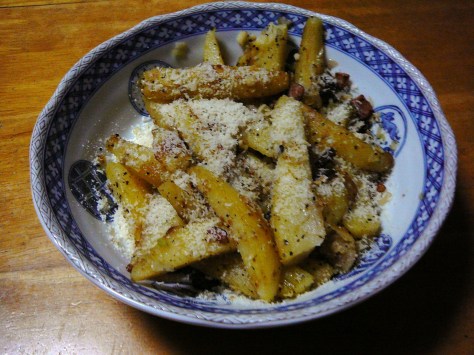
fried-potatoes

Fried potatoes have been temptying us since the 17th Century when the Belgians first experimented cooking them in oil. At the time, deep-frying, imported by Crusaders from the Middle East, was the only absolutely safe way to cook, especially in “flat countries” as Belgium and Holland were called, as water was a bed for all kinds of diseases.
Incidentally, Paris had a good laugh when some time ago a misinformed gentleman proposed than French Fries should be re-named “Freedom Fries” on the White House menus. Sorry, mate, but they are Belgian, not French!

Now, eveyone knows that boiled potatoes are healthy, if somewhat bland in taste, whereas fried potatoes are tasty but hideously high in unwanted calories.
There is a simple method half way which will enable you to enjoy your favourite snack/main dish with a lighter heart (and midriff) and at the same time allow you to serve a savoury dish to your ravenous friends or family! (But don’t overeat them!)

INGREDIENTS
(for 2 to 4, depending whether it is an accompaniment or full dish):
-4 large potatoes
-1 large echalotte/shallot (if unavailable, half a red onion is great!), finely chopped
-3 cloves of garlic, finely chopped
-Bacon (vegan and vegetarians, please skip this keeping in mind you will have to add a little salt)-1 large rasher cut in small pieces (half a cm square or half the size of your little finger nail, cut short!)
-Parmesan/Parmiggiano Cheese (vegans, please skip this or use alternative), freshly grated, 3 large tablespoons.
-Salt (for the potatoes boiling water, otherwise as little as possible, as bacon and cheese will contain enough!)
-Pepper, nutmeg. Foodies who like their food Indian-style may add a little powdered curry mix and chili pepper.
-Olive oil: 2 large tablespoons

RECIPE:
-Boil potatoes in plenty of salted water. If you do not add salt to the water, the potatoes will end up very bland in taste.
-Once the potates are boiled at about 80%, plunge them into cold water. This little trick will prevent them from breaking up later.
-When potatoes are cold enough, peel and cut them in wedges (the size is up to you).
-In deep enough frying pan dry-fry (no oil added) the chopped bacon until it becomes a nice crisp and dark. Put aside on a small dish. For non-vegan/vegetarians, do not wipe the pan, or you will miss a lot of taste!
-Pour two large tablespoons of olive oil in the same frying pan. That is enough, and the oil will be “sucked in” by the potatoes with the result that the potatoes will not be “greasy”. Use olive oil, extra virgin, as this is best, not only for taste, but for health (the vitamin C contained in olive oil do not disappear even cooked for a long time).
-When potatoes have almost reached the wanted colour, drop in shallots, garlic, fried bacon, pepper, nutmeg (and salt if you absolutely must use some!). Toss-fry until shallots have turned transparent.
-Pour the lot into a serving dish and sprinkle parmesan over it.
Enjoy at once!

Sometimes, simple is best!

Sashimi at Tomii: The Epitome of Excellency!


The Japan Blog List

Please check the new postings at:
sake, shochu and sushi

—————————————-
日本語のブログ
—————————————-

tomii-08-12-16a

Many people have been asking me: “How can you afford that?”
Well, I don’t smoke and I don’t drive, either. I can imagine what some people in the Northern part of the US might tell me… and I don’t care!
All that “saved” money goes into good food, good drink, good travel and improved relations with my (better, ok for this time!) half! And nothing for those “poor” doctors out there!

I’ve been a regular customer at Tomii in Shizuoka City for many, many, many reasons. But the one I value most is that everyone at this great Japanese restaurant are willing to talk about, explain and extoll the virtues of their craft. Craft, I said? It is probably nearer to artistry as Melinda, Etsuko and Tim will vouch for me!

Anyway, to write a story short, I just popped at Tomii this evening (yes, I’m writing this just after I came back to “work”), and asked for a sashimi plate (well, this is not the way to ask it: You should say: “O-tsukuri, kudasai!”). I did not need to tell them what to serve me. I wouldn’t even have dared!
On the other hand, they didn’t mind explaining no less than three times to make sure that the old geezer got his stuff right!

tomii-08-12-16b
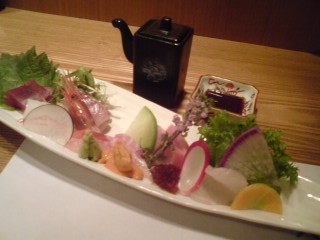
From right to left:
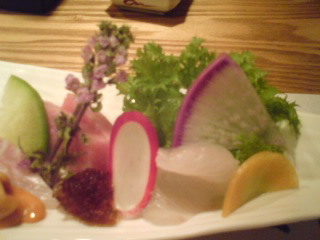
“Kiiro Ninjin”?Yellow Carrot (sashimi is not all about fish, vegetables are rapidly becoming an essential part of the picture!), “Beni Daikon”/Red (“rouge”) Daikon, “Wasabina/not wasabi, but a leaf vegetable with a similar taste!”, “Hirame/Sole”, “Hime Daikon/Princess Daikon”, “Shiso no Hana/Perilla Flowers (edible as Rowena will agree!) on top of “Toro/Tuna Fatty Part) and “Bakudai No Ki no Mi/Impossible to translate”, only that it is an edible part from a tree (sorry, I was not attentive enough!)!

tomii-08-12-16c
From right to left:
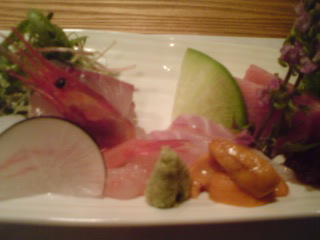
“Uni/Sea Urchin Roe” (in front) with freshly grated “Wasabi/Japanese Horseradish” (let me tell for the umpteenth time that wasabi was first grown in Shizuoka City in the 17th Century and that Shizuoka Prefecture still produces 80% of the world total!), “Ishidai/Ishidai Snapper” just behind, the green daikon is called “Uguisu Daikon/Nightingale Daikon”, “Amaebi/Sweet Shrimp”, and “kanpachi/Japanese Amberjack” just behind!

tomii-08-12-16d
From right to left:
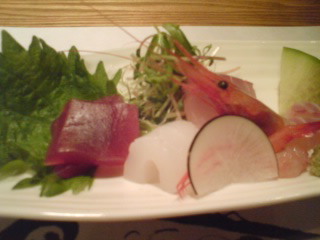
“Kuroi Daikon/Black Daikon”, “Aori Ika/Aori Cuttlefish”, “Akami/Lean Tuna” on a “Shiso no happa/perilla leaf”. To back it up a mixture of seasonal sprouts: “Kushinsai + Soba no Mi (Buckwheat) + Cress (from Shizuoka like most of them) + Kawaire Daikon + Cabbage + Broccoli” (about time you call a local farmer for explanations!)!

Small servings they might look, but I challenge anyone to find better quality!
Now, for people who really want to know it, you will have to fork out at least three times as much in Tokyo, and as far the US and Europe are concerned, you might as well start riding a bicycle like I do!

TOMII
Shizuoka City, Aoi Ku, Tokiwa-cho, 1-2-7, Tomii Bldg, 1F
Tel.: 054-274-0666
Business hours: 17:00~22:00
Closed on Sundays
HOMEPAGE (Japanese)

Vegetables and Seafood Gratin


The Japan Blog List

Please check the new postings at:
sake, shochu and sushi

—————————————-

seafood-gratin1.jpg

Winter has come upon us, even in Japan, and it’s time for hot and hearty food!

Gratins should not be complicated. Restaurants serve them for a good reason. They are easy to prepare and come at a handsome profit the moment you present them in individual portions with a few expensive decorative items. Alright, they certainly look better than in your plate at home, but this is what you pay for!
The key is to be well-organized, so make sure you have everything within hand’s reach!
The recipe below leaves plenty of room for improvisation, even for vegetarians!

Ingredients (for 2~4 people):
-Potatoes: 2, medium-sized, cut in 8
-Cauliflower: a handful of “flowers” cut to size
-Mussles: 1~2 dozens
-Oysters: 12 (without the shells! LOL)
-Crab: a whole, medium-sized, completely dressed (you cannot cook the shell, sorry!), with “miso”/brains on a separate plate. If fresh crab not available, use good quality tinned crab. Strain it carefully first by pressing it in your fist. Water can be used in the white sauce.
-1 large echalotte/shallot, finely chopped. If unavailable use one small violet onion or small sweet onion.
-Garlic: 2 cloves, finely chopped
-Basil: 12 leaves, thinly cut
Noilly Prat or sweet white wine: 50cc (1 quarter cup)
Olive oil
Salt, pepper.

-White sauce:
Milk: 300cc (1 cup and a half)
Butter: 50 g
Flour: 60g (2 full large spoons). This may reduced or increased depending on the consistency you wish to obtain.
Salt, pepper, nutmeg, laurel
Curry paste: 1 spoon (optional. If you like your food spicy, then increase amount)
Finely shredded cheese: to taste

Recipe:

1) Boil cut potatoes and cauliflower beforehand in salted water until “80% cooked”. Strain water and put aside within reach.
2) Wash mussles under cold running water and pull out “roots”. In large deep non-stick frying pan pour about 2 large spoons of olive oil. Heat oil and drop echalotte and garlic inside. As soon as the echalottes (or onion) become transparent, pour in the wine and all the mussles. Cover with glass lid. As soon as the mussles are all open, switch off fire. Take mussles out one by one, shake them over the pan to leave only the meat inside. Take off the meat and leave it inside a small bowl. If they give off “water” in the bowl, throw liquid away.
3) Switch on fire again and keep to medium. Drop oysters inside. Let them cook until they have changed colour. Switch off fire and take them carefully out one by one, and leave them in small bowl. If they give off “water” in the bowl, throw liquid away.
4) Switch on fire again to high and reduce the “soup” left inside the frying pan. Once it has reduced to about 50cc/one quarter cup, strain it into a cup and keep it aside for white sauce.
5) Lightly wipe (do not wash in water!) the frying pan with clean kitchen paper. Drop in some butter. Switch on heat to medium and lightly saute/fry first the cauliflower for a couple of minutes with a little salt and pepper, and put aside. Do the same with potatoes. This will help the vegetables “suck in” the gratin taste.
6) Preheat oven at 180 degrees Celsius (medium high)
7) Drop the butter (50g) into frying pan and let melt. Drop in flour and stir until smooth. Pour in the seafood juices (“soup”) and stir. Once smooth, add milk half by half and keep stirring until it has reached the appropriate consistency. Switch off fire.
First stir in the curry paste, then crab “miso/brains”. Add salt, pepper, nutmeg and laurel to taste. Add crab and basil and stir until you have reached a certain homogeneity.
8) In a large shallow oven dish, place potatoes, cauliflower, mussles and oyters equally (to avoid arguments!). No need to butter the dish beforehand as all ingredients contain enough fat.
Spread white sauce equally over vegetables and seafood. Sprinkle the lot with shredded cheese (the more, the better for those who like their gratin with a dark cheese “topping”!).
Cook in oven for 30 minutes, or until it has reached the appropriate colour (all the ingredients having been cooked, nothing to worry about if you decide to cook it at 250 degrees Celsius to just grill the top).

seafood-gratin2.jpg
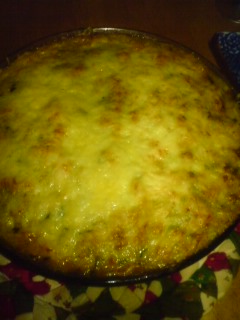
Serve hot and enjoy. Of course, you could cook the gratin in individual dishes, but it is so nice to break the whole and serve it steaming onto the plate. Sorry, the pictures do not do justice to the dish, but then if it is looks you are caring about, you could always ask for it at a restaurant! LOL

Small secret: Cook everything in the same large non-stick frying pan. Wipe it, do not wash it! It will give this extra taste!

More recipes with mussles coming soon!

Hot Asparagus Pudding/Flan chaud d’Asperges

Please check the new postings at:
sake, shochu and sushi

—————————————-
日本語のブログ
—————————————-

asparaflan.jpg

Fresh asparaguses are becoming available all year roun here in Shizuoka Prefecture, a region famous for its Winter-cultivated vegetables.
Here a traditional French recipe for the green ones. It is not as difficult as the title might suggest!
When you choose your asparaguses, check the cut part at the bottom of the stems. The more moisture, the less peeling needed!

Vegans and vegetarians seeking substitutes for milk, butter and eggs should check with Miss V’s excellent suggestions!

INGREDIENTS (4 people):
Green Asparaguses: 1.25 kg
Eggs: 5
Milk: 250cc
Butter: 50g
Trefoil or Italian Parsley (optional): 4 sprigs for decoration
Thyme, laurel & nutmeg (optional & varying to taste)
Salt
White Pepper

RECIPE:

Peel asparaguses from top, cut out the bottom fibery part. Cut the tips and keep them aside.
Cut the stems in 1 cm-thick slices and put them in a pot. pour in milk, salt, white pepper and spices to taste. Let cook for 15 minutes. Take away from fire and transfer to food processor.
Add a few leaves of trefoil or Italian parsley and process to a fine mash.
Preheat oven to 6 (180 degrees Celsius) and put a large dish with water in it to be ready as a bain-marie.
Break the eggs in a large bowl, beat slightly, pour in the asparagus puree and mix.
Butter the inside of 4 small oven dishes (ramequin-style), pour in the mixture and cook in bain-marie for 20 minutes.
During that time put the asparagus tips in a frying pan, add the rest of the butter, 200cc of water, some salt and let cook for 20 minutes stirring from time to time until there is no more liquid left.
When the puddings are cooked, unmold them onto individual plates and decorate with asparagus tips and some trefoil or Italian parsley.
Serve at once.

Shizuoka Agricultural Products: Candy Tomatoes


The Japan Blog List

Please check the new postings at:
sake, shochu and sushi

—————————————-
日本語のブログ
—————————————-

Shizuoka Prefecture, especially its Western half has acquired a national reputation for its great tomatoes, notably plum tomatoes and “Aamera” varieties.

The other day, as I had some time, I decided to have a look at the small supermarket inside Kakegawa City JR Station as it specializes in Shizuoka Prefecture products from sake to vegetables, jams, spices and a lot more.

I discovered a new variety of tomatoes called “Candy Tomatoes” grown by Mr. Fukuda,a grower established in Kakegawa City.
They not only make for great presentation, but they are very firm, tasty and sweet. I had some difficulty to keep some for the Missus as I wanted to eat them at once!
Problem is that the Missus wants me to get some regularly on my way back from University!

Korreshika Dokoro
Kakegawa City Station
Free dial: 0120-471056

Asparaguses Season


The Japan Blog List

Please check the new postings at:
sake, shochu and sushi

—————————————-
日本語のブログ
—————————————-

Although the asparaguses season is almost finished in Shizuoka, we still get plenty from other parts of the country as people here show an insatiable taste for them.
The Japanese and Sizuokaites will practically eat only the green variety although the latter does comprise a host of sub varieties. Here the trend is for large specimens like the ones grown in Shimizu Ku as demonstrated in the picture above sauteed with Chinese XO Sauce by Hana Oto Izakaya in Shizuoka City. A way that surely please the likes of Foodhoe and Bill!

Shizuoka ladies do have their own way to cook them. Everyone down here seem to sautee them and Yasatei, for all their very Japanese character, have opted for the Italian way: Akita Prefecture Asparaguses sauteed in olive oil and parmesan cheese!

Villa D’Est Quisine, on the other hand, seems to have opted for a median method of lightly frying Hokkaido asparaguses with olive oil and lean bacon.

In all cases those large green asparaguses combine a outside crunchy texture breaking easily under the teeth to reveal a tender juicy inside! Something difficult to obtain with overcooked lean samples!

HANA OTO
420-0033 Shizuoka City, Aoi Ku, Ryogae-cho, 3-9, Hoshi Bldg. 1F
Tel.: 054-273-8591
Business hours: 18:00~03:00 (until 05:00 on Fridays and Saturdays)
Closed on Mondays

Yasaitei
Shizuoka City, Aoi Ku, Tokiwa-Cho, 1-6-2 Green Heights Wamon 1-C
Tel.: 054-2543277
Business haours: 17:30~22:00
Closed on Sundays
Reservations highly recommended

Villa d’Est Quisine
420-0839 Shizuoka City, Aoi Ku, Takajo, 3-10-1
Tel.: 054-2514763
Business Hours: 17:00~24:00
Closed on Thursdays

Vegetables Sashimi at Yasaitei


The Japan Blog List

Please check the new postings at:
sake, shochu and sushi

—————————————-
日本語のブログ
—————————————-

As often happens on a long work day, I needed a quick fix around 7 p.m. keeping in mind that I would eat dinner at 9:30 back home.
I have taken the habit in such a dilemna to visit Yasaitei and eat vegetarian food there.
I have already introduced their specialty, “Vegetables Sashimi”. As it changes with the season I know I will eat something fresh and different every time!

Allison and maybe Rowena would jump on that, I’m sure!

From left to right:
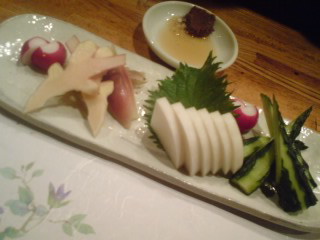
Small red radish, freshly cut ginger root (still thin and just out of the garden with leaves and all), “myoga” leaves (another variety of ginger, thinly sliced daikon on shiso leaf, radish again and Japanese cucumbers (very crunchy and juicy at the same time!)

The seasoning plate contains miso, salt and sesame oil.
A repast for vegetarians and vegans alike! (I’m neither, sorry!)

Yasaitei
Shizuoka City, Aoi Ku, Tokiwa-Cho, 1-6-2 Green Heights Wamon 1-C
Tel.: 054-2543277
Business hours: 17:30~22:00
Closed on Sundays
Reservations highly recommended

Vegetable Sashimi at Yasatei


The Japan Blog List

Please check the new postings at:
sake, shochu and sushi

—————————————

yasai-sashimi1.jpg

It was another one of my quick “evening breaks” this evening, and I just decided to pop up at Yasatei as I knew I would be able to nibble on a great morsel or two.
Now, what I ordered should please vegetarians and vegans alike (I’m neither), but I suspect Simaldeff (because of his weight problems). Allison (she loves her veg) and Lindsay (always keen on Healthy food) would particularly be curious to find out what I ate.

Well, I ordered “yuuki yasai no sashimi”.
Translation: bio vegetables sashimi.

From left to right:
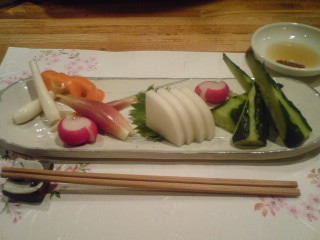
“Eshyaletto/Japanese echalottes”, “daidai piman/soft orange pimento”, “myoga/ginger sprouts”, “aka radisyu/red radishes”, “shiso/perilla”, “daikon/Japanese long radish”, and “kyuuri/cucumber”.
All vegetables, except for the orange soft pimento also have the merit to be grown in Shizoka Prefecture!

yasai-sashimi2.jpg

As for “seasoning”, I was offered “goma abura/sesame oil” from Kyoto (see pic) with salt and miso paste.

Yasaitei
Shizuoka City, Aoi Ku, Tokiwa-Cho, 1-6-2 Green Heights Wamon 1-C
Tel.: 054-2543277
Reservations highly recommended