Tag Archives: 静岡

Fruit Cocktails by Wataru Matsumoto 1: Haaru Lemon

(Courtesy of Yoko Kosugi)

As promised, I’m starting this (hopefully long) series of cocktails concocted by Wataru Matsumoto, owner/bartender at BOTANICAL (Comfort bar) in Shizuoka City.
No worries about copyrights as Mr. Matsumoto is only too happy to share his secrets!

Fruit Cocktail 21: Haaru lemon

Haaru lemon is a Japanese brand of Meyer lemon, a very sweet lemon with an orange skin.

INGREDIENTS:

-Haaru lemon: 1
-Gin (Beefeater): 1 standard measure
-Syrup: 1 dash
-Ice
-Mineral Water

RECIPE:

-Cut out a wedge of the Haaru lemon.

-In a shaker, press the rest of the Haaru lemon and pour the gin and syrup over enough ice.

-Shake well.

-Pour in a long glass over a large cube of ice.

-Fill with mineral water. Stir gently. Add the lemon wedge and serve!

BOTANICAL (Comfort Bar)
420-0082 Shizuoka City, Aoi Ku, Ryogae-cho, 1-6-13, Shade Bldg, 1F
Tel.: 054-221-8686
Opening hours: 17:00~01:00
Closed on Mondays.
Credit Cards OK

RECOMMENDED RELATED WEBSITES:
-Sake: Tokyo Through The Drinking Glass, Tokyo Foodcast, Urban Sake, Sake World
-Wine: Palate To Pen
-Beer: Good Beer & Country Boys, Another Pint, Please!
-Japanese Pottery to enjoy your favourite drinks: Yellin Yakimono Gallery
Warren Bobrow
Tokyo Terrace

————————-
英語を読めれば次のブログを是非ご覧になって下い!
Shizuoka Sake
Shizuoka Shochu
Shizuoka Sushi
Sizuoka Gourmet

Today’s Lunch Box/Bento (’10/26): “Dry Curry” Bento

Today’s bento had to be served into the more practical round tupperware boxes. By “practical” I mean easier to clean as today’s lunch box contained curry and tumeric-coloured rice which would very probably stain the cedar wood boxes. Since the wood is somewhat fragile, one cannot wash it too harshly, hence the plastic boxes!

“Dry Curry” is a Japanese expression. There is nothing dry about the curry! It just means that the curry does come in the usual “soup” or “sauce” fashion. The present curry is more of a keema style with minced porkand beef slowly simmered in all kinds of spices, masala and curry paste until most of the water has evaporated. The Missus cooked it with beans and chick peas for more “bite”.

It is very much reminiscent of the “curry savoury” I saw served so many times in English hotels I worked in during my university years. The difference is that the rice is steamed with tumeric.
The English would slice the boiled egg whereas the Missus prefers (I do, too) to cut/chop it finely and place it in a “valley” made in the middle of the rice. She added the finishing touch with sliced black olives and chopped leaves.

A big salad was added for the Vitamins and fibers: boiled brocoli, hand-torn lettuces, sliced plum tomato, broken walnut and cheese.

And for dessert, ornage from Shizuoka and garapes from Chile!

A very hearty bento I ate with a spoon and fork this time!

RECOMMENDED RELATED SITES:
Warren Bobrow, Bread + Butter, Zoy Zhang, Hungry Neko, Think Twice, Frank Fariello, Mangantayon, Hapabento, Elinluv Tidbit Corner, Tokyo Terrace, Maison de Christina, Chrys Niles,Lexi, Culinary Musings, Wheeling Gourmet, Comestiblog, Chronicles Of A Curious Cook, Bento Boutique, Tokyo Through The Drinking Glass, Tokyo Foodcast, Urban Sake, Sake World, Palate To Pen, Yellin Yakimono Gallery, Tokyo Terrace, Hilah Cooking, More than a Mount Full, Arkonite Bento

Please check the new postings at:
sake, shochu and sushi; Happy Little Bento

—————————————-
日本語のブログ
—————————————-

Yakitori Cutting Techniques 2: Breast

SYNOPSIS:

Looking at my friends Island Vittles and Skewer It! blogs on yakitori I decided to start a series on that worldwide known Japanese specialty that is “Yakitori/焼き鳥/”Grilled Chicken”.
I hope that this series of postings on various basic recipes will help her and all other foodies interested in that simple, healthy and so delicious delicacy!

This particular series will deal with the cutting techniques which should help you make your own yakitori at home!

Yakitori Cutting Techniques 2: Breast:

-If you haven’t obtained the full chicken, choose a good quality chicken breast cut with all its skin. Check that the latter is frim and fresh. Frozen skin will not achieve the best results!

-Looking at the picture above, make a “high cut”by separating the comparatively fat part (left on pic but right in reality) from the more irregular part (right on the pic, but left in reality) because it is the spot where the wing joint is found.

-Cut the wing joint part into 25 mm/1 inch square pieces.
The fat part of the breast could be cut into the same pieces, but it would be a bit of an overkill.
Better would be to grill it whole skin down until the skin has turned crispy. Do not grill on the other side. Doing so the meat will still be half rare inside,making for a “juicy and tender” morsel best enjoyed with some ponzu instead of sauce/tare!
Serve it whole or cut into thin slices.

-Insert the skewer through the pieces with the skin surface always pointing forward for even cooking!

-If you decided after all to do the same with the “fat” part, bear in mind not to overcook it! In that case larger cuts would be better. The trick would be to have all the skin parts facing down and grill them skin down only!

RECOMMENDED RELATED SITES:
Warren Bobrow, Bread + Butter, Zoy Zhang, Hungry Neko, Think Twice, Frank Fariello, Mangantayon, Hapabento, Elinluv Tidbit Corner, Tokyo Terrace, Maison de Christina, Chrys Niles,Lexi, Culinary Musings, Wheeling Gourmet, Comestiblog, Chronicles Of A Curious Cook, Bento Boutique, Tokyo Through The Drinking Glass, Tokyo Foodcast, Urban Sake, Sake World, Palate To Pen, Yellin Yakimono Gallery, Tokyo Terrace, Hilah Cooking, More than a Mount Full, Arkonite Bento. Island Vittles, Skewer It!

Please check the new postings at:
sake, shochu and sushi

—————————————-
日本語のブログ
—————————————-

Cocktail Bar: BOTANICAL (Comfort Bar)


Haaru Lemon Cocktail
(Courtesy of Yoko Kosugi)

Service: very professional and friendly.
Facilities: great washroom, great cleanliness overall.
Prices: reasonable, good value.
Strong points: Fruit cocktails. Cozy and a comfortable, for ladies and gentlemen alike.

After having established a solid reputation as one of the best bartenders in Shizuoka City for quite a few years in a cocktail bar called Yasougin, Wataru Matsumoto decided it was about time to open his own in July 20009 to the pleasure of his customers who just “moved” to his new place called BOTANICAL (Comfort Bar) without batting an eyelid (or eyelash for some).

Contrary to many similar bars, you do not need a guide to take you up dark stairs and through involuted passageways to find it. It stands right along the street behind Isetan Department Store next to a renown ladies fashion shop. One can see the inside through windows, very much in with the new concept to show as much interior as possible to passers-by and eventual customers. No wonder ladies feel comfortable sipping their favourite nectar in peace and quiet with similarly-minded guests.

Even so at night, it is all soft light and soothing background music.
Customers do enjoy casual conversations with unknown (until then) individuals or keep to themselves in a very laid back manner.


Passion Fruit Cocktail

A good dozen guests can sit at the bar or sit at one of the small tables by the window.
Wataru Matsumoto caters for many tastes with his own very precise selection: 30 Scotch Whiskies, 10 Bourbons, 20 Liqueurs and even unknown shochu from Shizuoka Prefecture.
French Mumm Champagne is available by the glass.
But his forte is definitely seasonal fruit cocktails. Just ask what fruit is available and how sour, sweet, flat or petillant you like it and expect a marvel to stand in front of you after a great demonttrations of his art!


“Kinkan” Fruit Cocktail (Kumquat、Cumquat)

I actually plan to run a special series on Mr. Matsumoto fruit cocktail creations as he is more than happy to share his recipes!

Incidentally prices are very reasonable for this type of establishment in Japan. Count 1,800 yen for the first cocktail (with obligatory snack) and 800 yen from the second one. Light food is also available as well as soft drinks, beer and coffee.

A superb place to visit on your own, with a great friend or your special guest”

BOTANICAL (Comfort Bar)
420-0082 Shizuoka City, Aoi Ku, Ryogae-cho, 1-6-13, Shade Bldg, 1F
Tel.: 054-221-8686
Opening hours: 17:00~01:00
Closed on Mondays.
Credit Cards OK

RECOMMENDED RELATED WEBSITES:
-Sake: Tokyo Through The Drinking Glass, Tokyo Foodcast, Urban Sake, Sake World
-Wine: Palate To Pen
-Beer: Good Beer & Country Boys, Another Pint, Please!
-Japanese Pottery to enjoy your favourite drinks: Yellin Yakimono Gallery
Warren Bobrow
Tokyo Terrace

————————-
英語を読めれば次のブログを是非ご覧になって下い!
Shizuoka Sake
Shizuoka Shochu
Shizuoka Sushi
Sizuoka Gourmet

Shizuoka Sake Tasting 3/7: Doi Brewery/Kaiun-Sakura Hana

In spite of the passing away of the nationally famous sake masterbrewer, Mr Hase, his apprentices have taken up the job of continuing producing brews in the greatest Noto tradition (Noto peninsula in Ishikawa Prefecture) at Doi Brewery in Kakaegawa City and helped maintain the highest rank for the pleasure of all.

Kaiun Sakura Hana is a regular feature put out just before the cherry blossom season for which the magnificent Doi Brewery is celebrated for.

There are very few indications as to how the sake is made, but it is a Junmai Ginjo.

Doi Brewery: Kaiun Sakura No Hana

Rice milled down to 50%
Alcohol:15~16 degrees
Bottles in March 2010

Clarity: very clear

Colour: Faint golden hue

Aroma: Fruity and flowery: banana, pineapple, peaches. Strong and extremely pleasant

Body: smooth and solid

Taste: Dryish attack, junmai tingle, shortish tail.
Fruity and complex.
Bananas, dry almonds, later backed up by coffee beans and bitter chocolate and peaches.
Very soft at the back of the mouth.
Holds its own well with food with a drier note.

Overall: A beautiful, very flowery sake to be enjoyed on its own, although it goes well with any food. Best appreciated at room temperature, although many will like it slightly chilled. Feminine in aroma, but more direct in taste!

RECOMMENDED RELATED WEBSITES:
-Sake: Tokyo Through The Drinking Glass, Tokyo Foodcast, Urban Sake, Sake World
-Wine: Palate To Pen
-Beer: Good Beer & Country Boys, Another Pint, Please!
-Japanese Pottery to enjoy your favourite drinks: Yellin Yakimono Gallery
Warren Bobrow
Tokyo Terrace

Bryan Baird’s Newsletter (2010/04/05)

Baird Beer & Taproom Events Bulletin
bryan-sayuri.gif

Three Spring Seasonal Releases

Dear Taproom Friend & Baird Beer Enthusiast:

Although the calendar reads spring, a dreary end-of-winter kind of chilly grey gloom pervades. In the hope of coaxing the spring weather gods out of their slumber, we are releasing today three joyfully bright and sunny spring seasonal beers: Kiwi IPA, Black Velvet Dark Lager and Citrus Wheat Stout.

Kiwi IPA (ABV 7%): Hop agricultural has taken deep root in New Zealand over the past decade. Hop varieties from the kiwi country are, in our experience, quite distinct from those of both Europe and the United States. Kiwi IPA is our attempt to highlight the character of three varieties of New Zealand hops (Motueka, NZ Cascade and NZ Hallertau Aroma). We flavor- aroma- and dry-hop this brisk India Pale Ale exclusively with the aforementioned NZ varieties. The result, we think, is a deliciously complex IPA quite unlike any you have experienced before.
Black Velvet Dark Lager (ABV 5%): This is the Baird interpretation of a German-style Schwarzbier (a dark lager style noted for its smooth roundness and easy drinkability). Black Velvet Dark Lager was brewed way back in summer, 2009 and as the name suggests it drinks from the glass with a silky, velvet-like smoothness. This is a perfect beer with which to kick off an evening of slow and sociable imbibing.
Citrus Wheat Stout (ABV 6.5%): While we love recreating classic world beer styles, we also maintain a reverence for the stylistically irreverent. Citrus Wheat Stout is a prime example of reverentially irreverent brewing. This unusual Stout is wheat (not barley) based, hopped aggressively with citrus flavor varieties (Simcoe, Centennial, Amarillo), and made more potently citrus with additions of freshly squeezed juice and shaved peels of the wonderful Japanese citrus fruit, Daidai. The flavor experience is beyond words — you simply must try it!
Kiwi IPA and Black Velvet Dark Lager are available both in kegs and bottles (633 ml). Citrus Wheat Stout is keg only and quantities are extremely limited.

Finally, congratulations are due to Yokota-san and his wife Kimi for the opening of their terrific new beer pub (Biiru no Yokota) (http://www.beer-yokota.com/) in Shizuoka City (located right across from the city hall building). Yoko-chan, of course, was previously the manager of both our Fishmarket and Nakameguro Taprooms. His wonderful pub offers a great lineup of Baird Beer as well as other well-selected Japan and imported craft beer. Please plan on paying them a visit soon.

Cheers,

Bryan Baird
Baird Brewing Company
Numazu, Japan
HOMEPAGE


The Japan Blog List

———————————
Must-see tasting websites:
-Sake: Tokyo Through The Drinking Glass, Tokyo Foodcast, Urban Sake, Sake World
-Wine: Palate To Pen, Warren Bobrow, Cellar Tours
-Beer: Good Beer & Country Boys, Another Pint, Please!
-Japanese Pottery to enjoy your favourite drinks: Yellin Yakimono Gallery
——————————–
Please check the new postings at:
sake, shochu and sushi

—————————————-
日本語のブログ
—————————————-

Today’s Lunch Box/Bento (’10/25): Rainy Day Bento

After a great Sunday spent playing cricket (and losing a final, tears….), it was a bit of a “cold shower” this morning when we woke up with the rain battering the windows. Well, it’s Spring after all, and we need all that water for the great vegetables grown in this particular region of Japan!

This time the Missus chose the sturdier (and cheaper) cedar wood bento box and tried to include some colours to cheer me up!

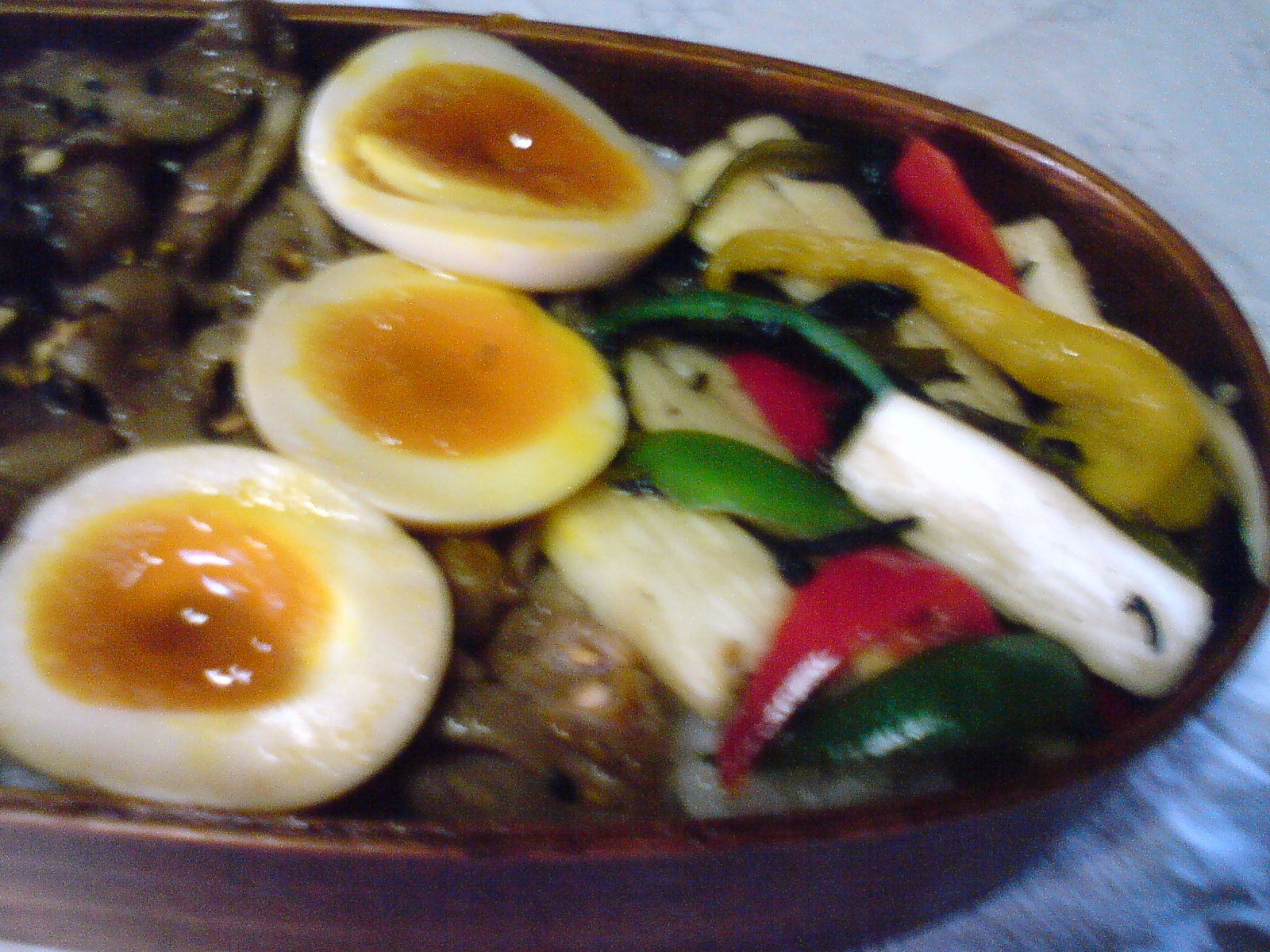
She made a bed of plain steamed rice in the larger box and topped it with thin slices of chicken fired in teriyaki style sauce seasoned with roasted sesame nuts. In the middle she placed marinated soft-boiled eggs of her own fashion and her other specialty: yam/yama imo, hijiki/sweet seaweed, and lightly fried pimento Japanese salad. That for the stamina and vitamins!

For a better view of the eggs and and salad. The pic is a bit fuzzy as it was really dark this morning.

The chicken and the eggs, which prompted the Missus in calling this bento an “oyakodon”, Parent/chicken and Child/egg bento!

And then a dish of salad and dessert for more vitamins and fibers!

Fried shimeji mushrooms, boiled rapeseed/Na no Hana salad with sesame dressing and seeds, home-pickled sweet myoga ginger and boiled Okinawan baby corn!

Shizuoka Plum tomatoes and Chilean grapes for dessert!

The weather forecast is good for tomorrow. Whta’s in store for me then?

RECOMMENDED RELATED SITES:
Warren Bobrow, Bread + Butter, Zoy Zhang, Hungry Neko, Think Twice, Frank Fariello, Mangantayon, Hapabento, Elinluv Tidbit Corner, Tokyo Terrace, Maison de Christina, Chrys Niles,Lexi, Culinary Musings, Wheeling Gourmet, Comestiblog, Chronicles Of A Curious Cook, Bento Boutique, Tokyo Through The Drinking Glass, Tokyo Foodcast, Urban Sake, Sake World, Palate To Pen, Yellin Yakimono Gallery, Tokyo Terrace, Hilah Cooking, More than a Mount Full, Arkonite Bento

Please check the new postings at:
sake, shochu and sushi; Happy Little Bento

—————————————-
日本語のブログ
—————————————-

French Gastronomy: Pigeon at Pissenlit

Service: excellent and very friendly
Facilities: great washroom, great cleanliness overall
Prices: reasonable, good value.
Strong points: Interesting wine list. Great use of local products.
no-smoking-logo!

When I saw the new “noren/entrance curtain” at the entrance of Pissenlit the other day (secret?) I knew it was a lost cause!
I just had to check what was on the menu, which evolves so well with the seasons!

The chef, Mr. Tooru Arima, told me that he had just received pigeon from Ibaraki Prefecture!
-Okay, I’ll go for it!
-It will take some time. How about an hors d’oeuvres first?
-Fine, I leave it to you!

What came was a very unusual combination of North African and Japanese cuisine!
Actually, when you think that Japan imports vast quantities of squid/cuttlefish from North Africa, I shouldn’t have been surprised.
The squid is called “mimi ika/耳烏賊”, meaning squid with “large ears”. It is comparativeley small but with large “ears”.
The dish consisted of a taboule salad with Moroccan couscous and home-marinated, very soft mimi ika squid, and plenty of local trefoil and herbs.
A very sophisticated hors d’oeuvres!

And then the whole pigeon came!
It is prepared in two steps, first a l’etouffee/pan steamed and then roasted before being cut and served with its sauce and vegetables (organic vegetables from Shizuoka).
Cooked to perfection, well roasted and crunchy on the outside and tender and half raw in the middle. Going through many textures in a single bite!

The head has been cut to reveal the brains, a real delicacy if a bit gross!

Now the “stick” is very japanese in concept. It is simply a yakitori made with the liver and heart of the smae pigeon!
Barbarous again, but so delicious!

It was lunch and I had been ravenous. I therefore finished with a small plate of cheese to go with the red wine:
Aged gruyere, Trou du Cru, Crottin Chavignol, Roquefort and Explorateur!

What’s in next? LOL

PISSENLIT
420-0839 Shizuoka City, Aoi Ku, Takajo, 2-3-4
Tel.: 054-270-8768
Fax: 054-627-3868
Business hours: 11:30~14:30; 17:00~22:00
Closed on Tuesdays and Sunday evening
Homepage (Japanese)
Credit Cards OK

RECOMMENDED RELATED SITES:
Warren Bobrow, Bread + Butter, Zoy Zhang, Hungry Neko, Think Twice, Frank Fariello, Mangantayon, Hapabento, Elinluv Tidbit Corner, Tokyo Terrace, Maison de Christina, Chrys Niles,Lexi, Culinary Musings, Wheeling Gourmet, Comestiblog, Chronicles Of A Curious Cook, Bento Boutique, Tokyo Through The Drinking Glass, Tokyo Foodcast, Urban Sake, Sake World, Palate To Pen, Yellin Yakimono Gallery, Tokyo Terrace, Hilah Cooking, More than a Mount Full, Arkonite Bento

Please check the new postings at:
sake, shochu and sushi

—————————————-
日本語のブログ
—————————————-

Yakitori Cutting Techniques 1: Leg

SYNOPSIS:

My friend Island Vittles has decided to start a series on that worldwide known Japanese specialty that is “Yakitori/焼き鳥/”Grilled Chicken”.
I hope that this series of postings on various basic recipes will help her and all other foodies interested in that simple, healthy and so delicious delicacy!

This particular series will deal with the cutting techniques which should help you make your own yakitori at home!

Yakitori Cutting Techniques 1: Leg:

You may of course buy legs separately, but it might prove a great idea to buy a fresh whole chicken and prepare it completely as yakitori for once!
In any case if you have only legs, here how you should go about it!

-Use the legs with their skin on if possible. It makes for so much tastier yakitori!
Separate the meat into upper leg (right) and lower leg (left).
Upper leg meat is more tender than lower leg meat because of tendons.

-Cut upper leg meat into approximately 25 mm/1 inch thick strips.
Do the same with lower leg meat.
Bear in mind that too big is better than too small! Bigger pieces will give out juicer chicken bits!

-Cut upper and lower leg meats strips into 25 mm/inch square pieces.
You may make the lowe leg meat pieces comparatively smaller as they take more time to cook.

-Insert skewers/sticks fromthe “meat end”.
Start from the smaller bits. Stab one lower leg meat piece first and then one upper leg meat piece. Repeat the same sequence.

-Leave plenty of space at the “handle” portion for better handling during the grilling.
Having an upper leg meat piece at the end will make for a greater “bite”!

-Each stick weighs approximately 40 g.

RECOMMENDED RELATED SITES:
Warren Bobrow, Bread + Butter, Zoy Zhang, Hungry Neko, Think Twice, Frank Fariello, Mangantayon, Hapabento, Elinluv Tidbit Corner, Tokyo Terrace, Maison de Christina, Chrys Niles,Lexi, Culinary Musings, Wheeling Gourmet, Comestiblog, Chronicles Of A Curious Cook, Bento Boutique, Tokyo Through The Drinking Glass, Tokyo Foodcast, Urban Sake, Sake World, Palate To Pen, Yellin Yakimono Gallery, Tokyo Terrace, Hilah Cooking, More than a Mount Full, Arkonite Bento. Island Vittles

Please check the new postings at:
sake, shochu and sushi

—————————————-
日本語のブログ
—————————————-

French Cake by Bernard Heberle: Foret Noire

My good friend, Bernard Heberle, the owner/chef of Abondance in Hamamatsu City has just been elected the best patissier in Shizuoka Prefecture (4,000,000 souls) by the biggets Food Blog Community in Japan, namely Tabelog!

He was kind enough to send me his latest creation with the following comments in French:

“Biscuit léger au chocolat surmonté de copeaux de chocolat imbibé de liqueur de griotte sertie d’un moelleux au chocolat blanc et griottine et une mousse au chocolat amer et finition a la crème chantilly vanillée.”

“light chocolate biscuit topped with chocolate flakes imbibed with griotte/cherry liqueur surrounded with a white chocolate moelleux and griottine/cherry, and a sour chocolate mousse and vanilla scented Chantilly cream.”

Hope you understand!
In any case an absolute marvel!

Abondance
Address: Hamamatsu Shi, Sumiyoshi, 2-14-27 (in front of Seirei Hospital)
Tel.: 053-4738400
Fax: 053-4738401
Opening hours: 10:00~20:00. Closed on Tuesdays.
Homepage

RECOMMENDED RELATED SITES:
Warren Bobrow, Bread + Butter, Zoy Zhang, Hungry Neko, Think Twice, Frank Fariello, Mangantayon, Hapabento, Elinluv Tidbit Corner, Tokyo Terrace, Maison de Christina, Chrys Niles,Lexi, Culinary Musings, Wheeling Gourmet, Comestiblog, Chronicles Of A Curious Cook, Bento Boutique, Tokyo Through The Drinking Glass, Tokyo Foodcast, Urban Sake, Sake World, Palate To Pen, Yellin Yakimono Gallery, Tokyo Terrace, Hilah Cooking, More than a Mount Full, Arkonite Bento

Please check the new postings at:
sake, shochu and sushi

—————————————-
日本語のブログ
—————————————-

Yakitori Recipes: Tsukune 6

SYNOPSIS:

My friend Island Vittles has decided to start a series on that worldwide known Japanese specialty that is “Yakitori/焼き鳥/”Grilled Chicken”.
I hope that this series of postings on various basic recipes will help her and all other foodies interested in that simple, healthy and so delicious delicacy!

This is a new recipe for Tsukune, the 6th one!

SAUCE/TARE INGREDIENTS:

-Japanese sake: 1 tablespoon
-Japanese sweet sake/mirin: 1 tablespoon
-White wine: 2 tablespoons
-Light soy sauce: 7 tablespoons
-Thick soy sauce (tamari shoyu): 1/2 teaspoon
-Brown sugar: 7 tablespoons
-Black pepper: as appropriate
-Garlic: 3g (grated)

SAUCE/TARE RECIPE:

-In a small pan, pour the japanese sake, Japanese sweet sake/mirin, and white wine. Cook on a low fire to allow the alcohol disappear.

-Add the soy sauce, thick soy sauce, brown sugar, black pepper and garlic.

-Cook over a strong fire. As soon as bubbles appear, switch off fire.

TSUKUNE INGREDIENTS:

-Chicken breast: 218 g (skin included)
-Chicken leg: 206 g (skin included)
-Salt: 2 g
-Sugar: 1/2 teaspoon
-Soy sauce: 2 teaspoons
-Black pepper: as appropriate
-Egg: 1 large
-Large shiso leaves: 2 (finely choppd)
-Sesame oil: 2 teaspoons

RECIPE:

-Take the skin off all chicken. Cut into small enough pieces and heat in microwave for 1 minute. This will enable you to process it as a food processor cannot work with raw chicken skin. The skin has to go into the recipe for greater taste!

-Frirst drop the skins into the food processor and turn until skin has been cut into fine pieces.
-Drop in the breast meat cut into pieces and turn until the meat turns white.
-Finally drop in the leg meat cut into pieces and turn.

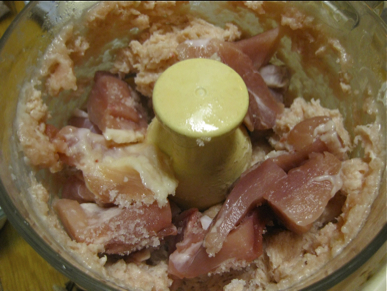
-This is how it should look once processed.
-Transfer the whole minced chicken into a bowl.
-Add the salt, sugar, soy sauce, black pepper, egg, shiso leaves, sesame oil and mix well.

Taht is how it should look before you shape the tsukune!

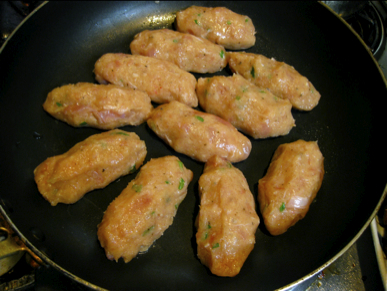
-As the tsukune/patties will be toosoft to skewer, first fry them in a non-stick pan to ensure their outside is solid enough before you pass skewers through them!

-Grill them over a low fire.
Dip (or baste with) the tuskune in sauce/tare at least three times halfway. Everytime turn them over as one side has become dry.

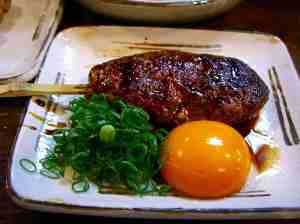
-Serve!
I like them served with a fresh egg yolk for further seasoning!

RECOMMENDED RELATED SITES:
Warren Bobrow, Bread + Butter, Zoy Zhang, Hungry Neko, Think Twice, Frank Fariello, Mangantayon, Hapabento, Elinluv Tidbit Corner, Tokyo Terrace, Maison de Christina, Chrys Niles,Lexi, Culinary Musings, Wheeling Gourmet, Comestiblog, Chronicles Of A Curious Cook, Bento Boutique, Tokyo Through The Drinking Glass, Tokyo Foodcast, Urban Sake, Sake World, Palate To Pen, Yellin Yakimono Gallery, Tokyo Terrace, Hilah Cooking, More than a Mount Full, Arkonite Bento. Island Vittles

Please check the new postings at:
sake, shochu and sushi

—————————————-
日本語のブログ
—————————————-

Yakitori Recipes: Tsukune 1~5

SYNOPSIS:

My friend Island Vittles has decided to start a series on that worldwide known Japanese specialty that is “Yakitori/焼き鳥/”Grilled Chicken”.
I hope that this series of postings on various basic recipes will help her and all other foodies interested in that simple, healthy and so delicious delicacy!

For the sake of continuity, I also decided to re-post the Tsukune Recipes I have published so far for all to refer to before I start publishing new ones.

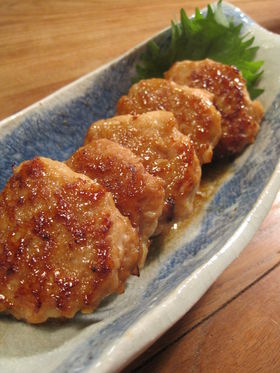
1) Basic recipe
TSUKUNE-RECIPES-1

Apparently, yakitori and especially tsukune are very popular not only in Japan but almost everywhere in the world as they share similarities with many other countries’ specialties! After all a hamburger is nothing less than a big tsukune!LOL

Here is the first of (long) series of simple recipes that I hope will stimulate into you creating more recipes!

Tsukune Recipe 1:

INGREDIENTS: For 4 people

-High quality chicken (breast or thigh): 250 g
-Leek (long narrow one): 1
-Soy sauce + Japanese sake + mirin/sweet sake: 4 tablespoons each
-Honey: 2 teaspoons
-Fresh ginger juice (also available over the counter in Asian stores): 10 ml
-Water: 2 tablespoons
-Cornstarch: 2 tablespoons
-Salad oil: 2 tablespoons

RECIPE:

-Cut chicken and leek into rough pieces and drop them into a food processor. Add one half of the cornstarch, water, soy sauce, sake and mirin each.

-Process well until you obtain a smooth paste. Stop the food processor from time to time to move chicken from the centre with a spatula.

-Make/shape “patties”/tsukune.
Fry in oil on a frypan over a low fire on both side until you obtain a light brown colour (“foxy” in Japanese)

-Pour the rest of the soy sauce, sake, mirin, ginger juice, and cornstarch dissolved in water over the tsukune and cook until the sauce has caramelized.
Serve immediately!

NOTE:
By dividing the seasoning in two halves, the chicken will be thoroughly impregnated with the taste.
make sure you cook over a low fire all the time!
——————————
2) Basic Recipe

TSUKUNE-RECIPES-2-a

Here is the second of (long) series of simple recipes that I hope will stimulate into you creating more recipes!

INGREDIENTS:
-Minced Chicken: 400 g+
-Large shiso/perilla leaves (can be replaced with basil or other green tasty leaves): 15~20
-Salt, pepper: 1 pinc each
-Black sesame: 1 teaspoon
-Grated fresh ginger: 5×5 cm cube
-Japanese Sake: 1 teaspoon
-Cornstarch: 1 tablespoon
-Egg yolk: 1 large

-For seasoning:
Lemon juice
Yuzu koshio/lime and pepper paste

RECIPE:
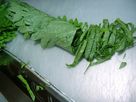
TSUKUNE-RECIPES-2-b

-Chop the leaves fine as shown on above picture.
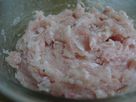
TSUKUNE-RECIPES-2-c

-In a large bowl, drop in the minced chicken, salt, pepper and black sesame seeds. Mix well until it becomes a smooth paste.
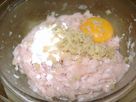
TSUKUNE-RECIPES-2-d

-Add egg yolk, Japanese Sake, Cornstarch and grated ginger.
Mix well.
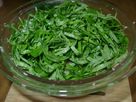
TSUKUNE-RECIPES-2-f

-Add chopped shiso (leaves) and mix well.
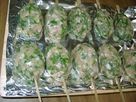
TSUKUNE-RECIPES-2-g

-make tsukune/patties in size of your liking around a wooden stick.

TSUKUNE-RECIPES-2-h

-Pour a little oil in a non-stick frypan and place tsukune as shown on picture.
Start frying.
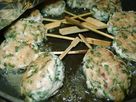
TSUKUNE-RECIPES-2-i

-When one side has reached the right colour, turn over and fry until both sides have reached the proper colour.
You may add a little more Japanese sake for seasoning.
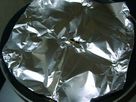
TSUKUNE-RECIPES-2-j

-Cover with large piece of foil paper and stema/fry on a small fire for a while.
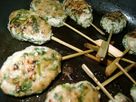
TSUKUNE-RECIPES-2-k

-That’s how the should look when ready!

-Serve a little lemon juice and lime and peppr paste, and plenty of beer!

NOTE:
Naturally, youi may use a sauce of your choice as well, or ponzu, or soy sauce, etc.
———————————-
3) Tofu Tsukune
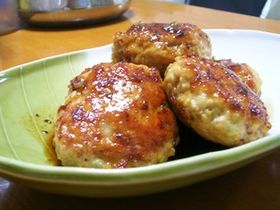
TSUKUNE-TOFU

Here is the third of (long) series of simple recipes that I hope will stimulate into you creating more recipes!
The difference is that this time it is made with tofu as well!

INGREDIENTS: For 2~3 persons

-Tofu: 100 g
-Minced chicen: 300 g
-Onion, finely chopped, 1/2
-Grated fresh ginger, 3~3cm cube
-Egg: 1
-Black pepper: a pinch or two
-Cornstarch: 2 teaspoons
-Soy sauce: 2 tablespoons
-Japanese sake: 2 tablepoons
-Sugar: 2+1/2 tablespoons
-Salad oil

RECIPE:

-In a bowl mix tofu, chicken, onion, ginger, egg, pepper and cornstarch. Make patties/tsukune.

-Pour some oil in a frypan. On medium high fire fry both sides of tsukune until they have reached a nice colour. Add some water. Cover with lid and steam/cook on low fire.

-Mix soy sauce, Japanese sake and sugar in a bowl.

-Take off lid from tsukune. Turn to medium fire. Pour in the sauce and simmer until ready for serving.

NOTE:

Great served wrapped in shiso leaves!
—————————–
4) Large Tsukune
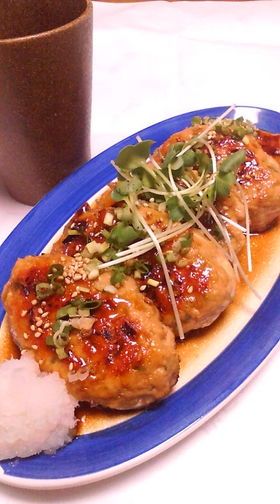
TSUKUNE-RECIPES-3

Here is the fourth of (long) series of simple recipes that I hope will stimulate into you creating more recipes!

INGREDIENTS: For 3~4 persons

-Minced Chicken (breast or thigh): 250 g
-Leek, lon and thin type: 1
-Fresh ginger, grated, to taste
-Soy sauce: 1 tablespoon
-Salt and pepper: a little to taste
-Cornstarch: 1 tablespoon
-Sesame oil: a little to taste
-Yama Imo/Japanese glutinous yam, grated: 2 tablespoons

Tare/Sauce
-Soy sauce: 2 tablespoons
-Mirin/sweet sake: 2 tablespoons
-Water: 1 teaspoon
-Seven spices, to taste

Decoration/presentation:

-Kaiwaredaikon/Daikon sprouts: to taste
-White sesame seeds: to taste
-Grated fresh daikon: to taste

RECIPE:

-Chop leek finely. Grate the ginger. Grate the yama imo.

-In a large bowl drop the the minced chicken, soy sauce, salt & pepper, seame oil and mix quickly by hand.

-Add leek, ginger, yama imo and the cornstarch. Mix well. Let the mixture rest in the fridge for 30 minutes.

-During that time prepare the kaiwaredaikon, freshly grated daikon and sesame sesame seeds.
Prepare the tare/sauce ingredients.

-Fry the tsukune/patties after having shaped them into 3 or 4 equal sized circles with salad oil on both sides over a medium fire until they are a light brown.

-Add 2 tablespoons of water, cover with lid and steam/simmer for a while. Check if tsukune are well cooked with a thin wooden stick.

-Add the tare/sauce ingredients and cook until the tare has “caramelized”.
Serve on a plate with kaiware daikon, grated fresh daikon and white seasme seeds for the final touch.

NOTE:
Do not fry tsukune over a strong fire or they will get hard.
——————————
5) PORK TSUKUNE
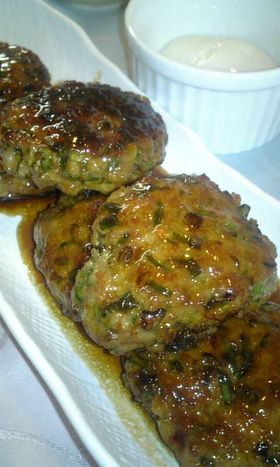
TSUKUNE-PORK

Here is the fourth of (long) series of simple recipes that I hope will stimulate into you creating more recipes!

INGREDIENTS: For 2 persons

-Minced pork: 200 g
-Thin green leeks: 4~5
-Ginger, grated: 1 piece, 5×5 cm
-Japanese sake: 2 tablespoons
-Soy sauce: 3 tablespoons
-Naga imo/glutinous Japanese yam/Chinese yam, grated: 2 tablespoons
-Cornstarch: 1 tablespoon

Tare/Sauce
-Soy sauce: 2~3 tablespoons
-Sugar: 2 teaspoons
-Mirin/sweet sake: 3 tablespoons

-Japanese sake: 2 tablespoons (for steam/fry)
-Onsen Tamago/Japanese-style poached eggs (normal poached eggs are great!)

RECIPE:

-Chop the thin leeks coarsely.
In a bowl mix minced pork, Japanese sake, soy sauce and grated ginger until smooth.

-Add grated Chinese yam and mix until smooth. It will take some time as the yam will tend to separate at first. Add cornstarch and mix until smooth.

-Add chopped leeks and mix well.

-Heat a frypan. Pour in a little oil. Make 6~7 round patties/tsukune by hand or with a mold.
Fry both sides on a medium fire.

-When “eyes” have appeared on both sides, reduce fire to small. Add sake, cover with glass lid and steam fry.

-When you are sure that the tsukune are well cooked, add soy sauce, mirin and sugar and let simmer until sauce has “caramelized” the tsukune.

-Serve with a poached egg in a separate ramequin for each person who will choose either to break it directly over the tsukune or use it as a dip (the former will be probably easier!LOL)

NOTE:
-You can increase the amount of leeks and gingeraccording to your taste.
-You may replace leeks with parsley.
-Any soy sauce is fine, although a sweet variety is recommended. Otherwise you may increase the amount of mirin.

RECOMMENDED RELATED SITES:
Warren Bobrow, Bread + Butter, Zoy Zhang, Hungry Neko, Think Twice, Frank Fariello, Mangantayon, Hapabento, Elinluv Tidbit Corner, Tokyo Terrace, Maison de Christina, Chrys Niles,Lexi, Culinary Musings, Wheeling Gourmet, Comestiblog, Chronicles Of A Curious Cook, Bento Boutique, Tokyo Through The Drinking Glass, Tokyo Foodcast, Urban Sake, Sake World, Palate To Pen, Yellin Yakimono Gallery, Tokyo Terrace, Hilah Cooking, More than a Mount Full, Arkonite Bento. Island Vittles

Please check the new postings at:
sake, shochu and sushi

—————————————-
日本語のブログ
—————————————-

Yakitori: Tsukune-The Basics

TSUKUNE-5
Modern tsukune at Japanese Izakaya

SYNOPSIS:

My friend Island Vittles has decided to start a series on that worldwide known Japanese specialty that is “Yakitori/焼き鳥/”Grilled Chicken”.
I hope that this series of postings on various basic recipes will help her and all other foodies interested in that simple, healthy and so delicious delicacy!

For the sake of continuity, I also decided to re-post Tsukune-The Basics for all to refer to.

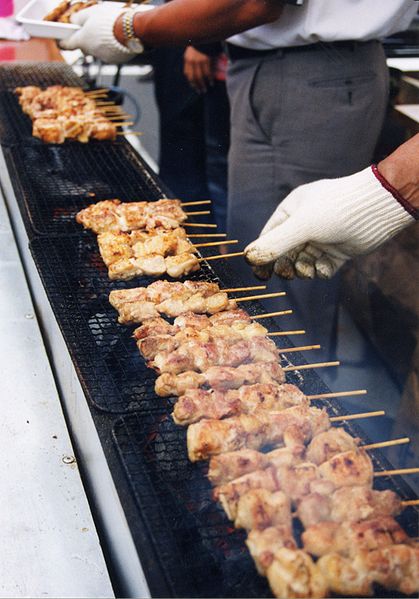
Yakitori is not only all parts of a chicken (or other bird, actually) on sticks or skewers.
One very popular yakitori is “Tsukune”!
Tsukune (つくね) could described as a japanese chicken meatball either on stick or completely separate.

Whereas usual yakitori requires fine products and sauce (and a cooking skills) only, tsukune calls for a real recipe.

TSUKUNE-2
Traditional tsukune serves with egg yolk and chopped leeks.

Traditional tsukune are presented as a single larger sausage-shaped “ball” grilled around a skewer and will be served with some sauce and an egg yolk (either chicken or quail). A good amount of chopped leeks is always welcome.

TSUKUNE-4

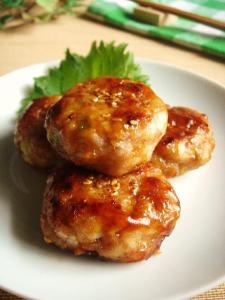
Home-made tsukune will be simpler and served as chicken meat balls with home-made or bought tare/sauce.

TSUKUNE-3

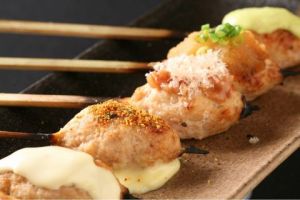
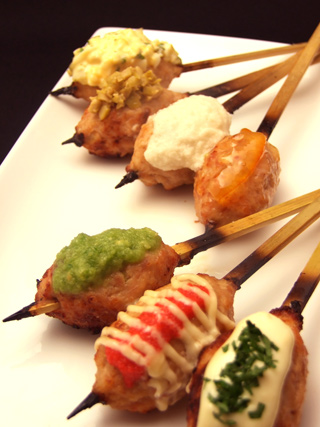
Modern tsukune seem come in many varieties all on the same plate. Actually the toppings are different but the meat balls are the same.

TSUKUNE-1

They certainly look appetizing!
Thay are fine, but as a purist I still prefer the traitional ones!

Next, I will publish a recipe!
You will find out there more ingredients included than in simple chicken balls!

RECOMMENDED RELATED SITES:
Warren Bobrow, Bread + Butter, Zoy Zhang, Hungry Neko, Think Twice, Frank Fariello, Mangantayon, Hapabento, Elinluv Tidbit Corner, Tokyo Terrace, Maison de Christina, Chrys Niles,Lexi, Culinary Musings, Wheeling Gourmet, Comestiblog, Chronicles Of A Curious Cook, Bento Boutique, Tokyo Through The Drinking Glass, Tokyo Foodcast, Urban Sake, Sake World, Palate To Pen, Yellin Yakimono Gallery, Tokyo Terrace, Hilah Cooking, More than a Mount Full, Arkonite Bento. Island Vittles

Please check the new postings at:
sake, shochu and sushi

—————————————-
日本語のブログ
—————————————-

Yakitori Recipes: The Basics

YAKITORI-1

SYNOPSIS:

My friend Island Vittles has decided to start a series on that worldwide known Japanese specialty that is “Yakitori/焼き鳥/”Grilled Chicken”.
I hope that this series of postings on various basic recipes will help her and all other foodies interested in that simple, healthy and so delicious delicacy!

For the sake of continuity, I decided to re-post The Basics for all to refer to.

Yakitori (焼き鳥 やきとり), or fried chicken, is a Japanese type of skewered chicken that is found everywhere in Japan and i many countries abroad.
They are served all year round and have the advantage not only to be tasty but very healthy as meat comes by.

It is made from several bite-sized pieces of chicken meat, or chicken offal, skewered on a bamboo skewer and barbecued, usually over charcoal.

Diners ordering yakitori usually have a choice of having it served with salt (and sometimes lemon juice) or with tare sauce, which is generally made up of mirin, sake, soy sauce and sugar. The sauce is applied to the skewered meat and is grilled until delicately cooked and is served with the tare sauce as a dip.

Ways of serving naturally vary with regions.

YAKITORI-MURORAN

As served in Mururoran, Hokkaido.

YAKITORI-EHIME

As served in Ehime Prefecture, Shikoku Island.

One can order for sets or individually.
In the later case, you would do weel to remember basic names:

YAKITORI-HATSU
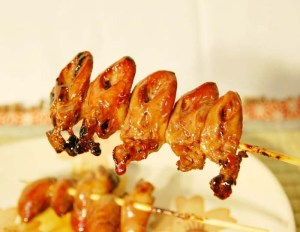
hatsu (ハツ) or kokoro (こころ), chicken heart

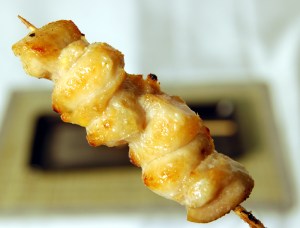
YAKITORI-LIVER
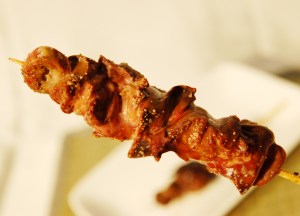
rebā (レバー), liver

YAKITORI-SUNAGIMO
sunagimo (砂肝), or zuri (ずり) chicken gizzard

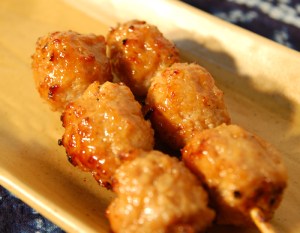
YAKITORI-TSUKUNE
tsukune (つくね), chicken meatballs
Great served with an egg yolk and tare!

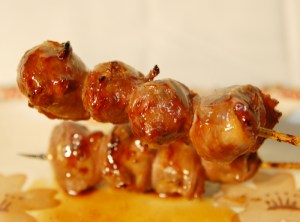
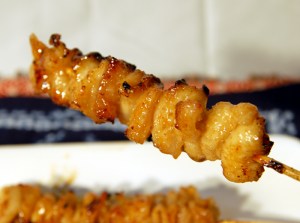
YAKITORI-KAWA
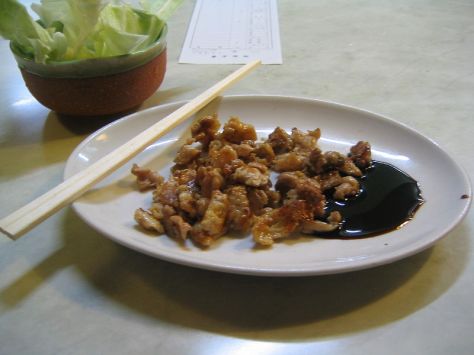
(tori)kawa ((とり)かわ) chicken skin, grilled until crispy

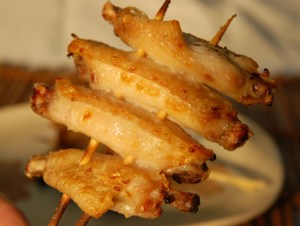
YAKITORI-TABASAKI
tebasaki (手羽先), chicken wing
The same can be ordered whole.

YAKITORI-BONCHIRI
bonjiri (ぼんじり), chicken tail

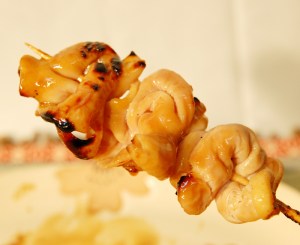
YAKITORI-SHIRO
shiro (シロ), chicken small intestines

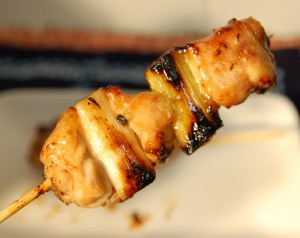
YAKITORI-NEGIMA
ikada (筏) (lit. raft), Japanese scallion, with two skewers to prevent rotation. Also called negima (ネギ間)

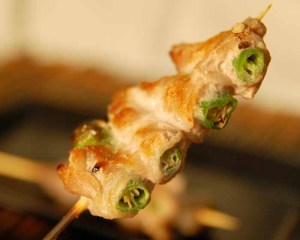
YAKITORI-AOTO
Aoto (青と). Here the leek/scallion is rolled insde the chicken

YAKITORI-KASHIRA
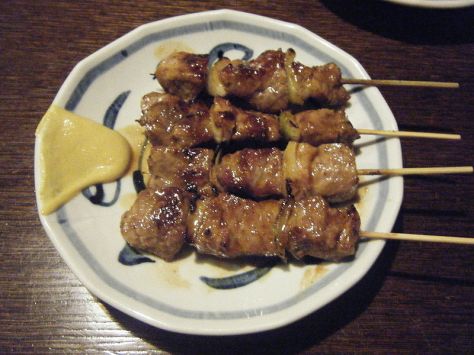
Kashira (かしら) made from the tender par of the breast.

YAKITORI-SESERI
Seseri (せせり) similar to kashira

nankotsu, chicken cartilage
toriniku, Free Range “Chicken of the Earth” (all white meat on skewer)

Common kushiyaki (non-poultry) dishes:

atsuage tofu (厚揚げとうふ, deep-fried tofu)
enoki maki (エノキ巻き, enoki mushrooms wrapped in slices of pork)
pīman (ピーマン, green pepper)
asuparabēkon (アスパラベーコン, asparagus wrapped in bacon)

YAKITORI-BUTABARA
butabara (豚ばら, pork belly)

gyutan (牛タン), ox tongue, sliced thinly

Naturally if you take purely regional specialties in account, there are many more!

RECOMMENDED RELATED SITES:
Warren Bobrow, Bread + Butter, Zoy Zhang, Hungry Neko, Think Twice, Frank Fariello, Mangantayon, Hapabento, Elinluv Tidbit Corner, Tokyo Terrace, Maison de Christina, Chrys Niles,Lexi, Culinary Musings, Wheeling Gourmet, Comestiblog, Chronicles Of A Curious Cook, Bento Boutique, Tokyo Through The Drinking Glass, Tokyo Foodcast, Urban Sake, Sake World, Palate To Pen, Yellin Yakimono Gallery, Tokyo Terrace, Hilah Cooking, More than a Mount Full, Arkonite Bento. Island Vittles

Please check the new postings at:
sake, shochu and sushi

—————————————-
日本語のブログ
—————————————-

Yakitori Recipes: Sauce/Tare 1~3

SYNOPSIS:

My friend Island Vittles has decided to start a series on that worldwide known Japanese specialty that is “Yakitori/焼き鳥/”Grilled Chicken”.
I hope that this series of postings on various basic recipes will help her and all other foodies interested in that simple, healthy and so delicious delicacy!

I’ve already introduced two recipes for Sasami, but I thought it was time I introduced a few easy recipes for “tare” or sauce in Japanese, before I embarked on a long article on cutting techniques to appear soon!

YAKITORI TARE 1:

INGREDIENTS:

-Soy sauce: 130 cc/ml
-Japanese sake: 100 cc/ml
-Sweet Japanese sake/mirin: 100 cc/ml

-Mizuame: 50 g (if unavailable, use corn syrup)

Mizuame (水飴) is a sweetener from Japan which is translated literally to ‘water candy’. A clear, thick, sticky liquid, it is made by converting starch to sugars. Mizuame is added to wagashi to give them a sheen, eaten in ways similar to honey and can be a main ingredient in sweets. Mizuame is produced in a very similar fashion to corn syrup and is very similar in taste.

-Sugar: 30 g
-Garlic: 1 clove (chopped)
-Fresh ginger: 5x5cm piece (Thinly sliced)

RECIPE:

-In a bowl pour the Japanese sake and mirin/sweet Japanese sake and heat to suppress the alcohol.

-Add soy sauce, mizuame (corn syrup), sugar, garlic and ginger and simmer until the mixture “glows”.

-Take the garlic and ginger out. Preserve in a securely closed jar in the fridge.

YAKITORI TARE 2

INGREDIENTS:

-Soy sauce: 50~60 cc/ml
-Sweet Japanese sake/mirin: 50 cc/ml
-Japanese sake: 50 cc/ml
-Sugar: 1 tablespoon

RECIPE:

-Pour everything into a pan and cook over medium fire until reduced to half.

-If you want to preserve it in a securely closed jar in the fridge, better prepare 2~ 4 fold!

YAKITORI TARE 3

INGREDIENTS:

-Japanese sake: 1 tablespoon
-Japanese sweet sake/mirin: 1 tablespoon
-White wine: 2 tablespoons
-Light soy sauce: 7 tablespoons
-Thick soy sauce (tamari shoyu): 1/2 teaspoon
-Brown sugar: 7 tablespoons
-Black pepper: as appropriate
-Garlic: 3g (grated)

RECIPE:

-In a small pan, pour the japanese sake, Japanese sweet sake/mirin, and white wine. Cook on a low fire to allow the alcohol disappear.

-Add the soy sauce, thick soy sauce, brown sugar, black pepper and garlic.

-Cook over a strong fire. As soon as bubbles appear, switch off fire.

RECOMMENDED RELATED SITES:
Warren Bobrow, Bread + Butter, Zoy Zhang, Hungry Neko, Think Twice, Frank Fariello, Mangantayon, Hapabento, Elinluv Tidbit Corner, Tokyo Terrace, Maison de Christina, Chrys Niles,Lexi, Culinary Musings, Wheeling Gourmet, Comestiblog, Chronicles Of A Curious Cook, Bento Boutique, Tokyo Through The Drinking Glass, Tokyo Foodcast, Urban Sake, Sake World, Palate To Pen, Yellin Yakimono Gallery, Tokyo Terrace, Hilah Cooking, More than a Mount Full, Arkonite Bento. Island Vittles

Please check the new postings at:
sake, shochu and sushi

—————————————-
日本語のブログ
—————————————-