Tag Archives: 静岡

Shizuoka Sashimi: Kinmedai/Splendid Alfonsino

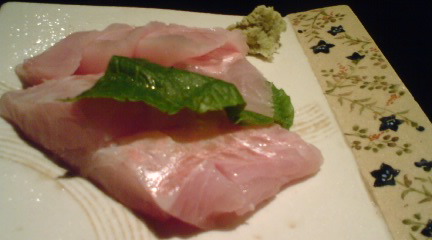
We had this fish yesterday at Uzu Izakaya in Shizuoka City as our second sashimi plate: Kinmedai/金目鯛.

Kinmedai/金目鯛 in Japanese means “Golden Eyes Seabream”.
It is a fish genus common all over the world, but with varying quality level.

This kinmedai was caught off the Izu Peninsula in the Western part of Shizuoka Prefecture.

Izu Peninsula is considered one of the best areas for that particular fish (it has different names in other regions!).

It was served cut in small rectangular pieces with a deep indent in the middle where you can insert the freshly grated wasabi (from along the Abe River in Shizuoka City) for better chopsticks manipulation and utmost appreciation.
The flesh is so tender it almost melts inside your mouth. The taste is sublime for a fish which is not considered as expensive here. (which shows you can enjoy sashimi and sushi at very reasonable prices! Jibe for people spending fortunes in Tokyo and abroad! LOL).
Generally speking fish is readily available and reasonble for all budgets in our Prefecture.

I feel like a lucky b…..d!

UZU
Shizuoka City, Otowa-cho, 3-18
Tel.: 054-249-6262
Business hours: 17:00=23:00
Closed on Mondays and first Tuesday
Reservations recommended
Credit cards OK
HOMEPAGE (Japanese, but have a look at the pics!)

RECOMMENDED RELATED SITES:
Bread + Butter, Comestilblog, Greedy Girl, Bouchon For 2, Zoy Zhang, Hungry Neko, Mangantayon, Elinluv Tidbit Corner, Maison de Christina, Chrys Niles, Lexi, Culinary Musings, Eats and Everything, Bite Me New England, Heather Sweet, Warren Bobrow, 5 Star Foodie, Frank Fariello, Oyster Culture, Ramendo, Alchemist Chef, Ochikeron, Mrs. Lavendula, The Gipsy Chef, Spirited Miu Flavor, Wheeling Gourmet

Please check the new postings at:
sake, shochu and sushi

—————————————-
日本語のブログ
—————————————-

Japanese Cuisine: Stewed Pork in Black Rice Balls

One more dish we had yesterday at Uzu Izakaya in Shizuoka City was a new creation:
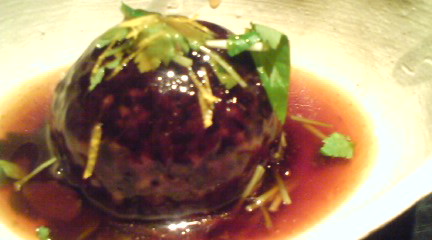
Kakuni Kuro Mai Dango/角煮黒米団子 or Stewed Pork in Black Rice Balls.

It did look a straightforward, but the first bite indicated the complexity of that dish.
Stewed Pork is first made in “Kakuni-style”, which takes quite some time to achieve.
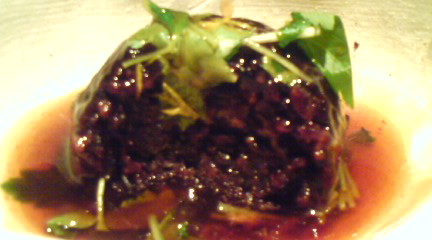
The pork is then cut into tiny pieces and wrapped inside the rice ball.
Now the rice used is black rice. This is a bit of a misnomer a Japanese black rice has nothing to do with the “black rice” (which is not rice) used in Americas and Europe.
Actually it is a dark-red rice variety.
One part of the rice is first steamed into a glutinous paste. More black rice is added to the glutinous paste and the mixture is shaped into a ball with the kakuni inside.
It is steamed again with the result of solid/firm rice grains inside the glutinous rice ball, giving it a satisfying bite enhanced by the pork inside.
The balls (as big as a child fist) are served topped with sweet and sour sauce and fresh trefoil (for taste and colour).
A very satisfying, intriguing dish.

Another treat!

UZU
Shizuoka City, Otowa-cho, 3-18
Tel.: 054-249-6262
Business hours: 17:00=23:00
Closed on Mondays and first Tuesday
Reservations recommended
Credit cards OK
HOMEPAGE (Japanese, but have a look at the pics!)

RECOMMENDED RELATED SITES:
Bread + Butter, Comestilblog, Greedy Girl, Bouchon For 2, Zoy Zhang, Hungry Neko, Mangantayon, Elinluv Tidbit Corner, Maison de Christina, Chrys Niles, Lexi, Culinary Musings, Eats and Everything, Bite Me New England, Heather Sweet, Warren Bobrow, 5 Star Foodie, Frank Fariello, Oyster Culture, Ramendo, Alchemist Chef, Ochikeron, Mrs. Lavendula, The Gipsy Chef, Spirited Miu Flavor, Wheeling Gourmet

Please check the new postings at:
sake, shochu and sushi

—————————————-
日本語のブログ
—————————————-

Japanese Cuisine: Venison Sashimi/Shika Sashimi

Last night, for once the Missus and I quickly agreed to pay a visit to our favourite izakaya, Uzu, in Shizuoka City.
The place is renown all over the Prefecture for serving food prepared with ingredients coming almost exclusively from our Prefecture.
I thought it better to introduce the dishes in separate postings to make it easier for friends to choose which one to read according to their culinary, diet preferences!

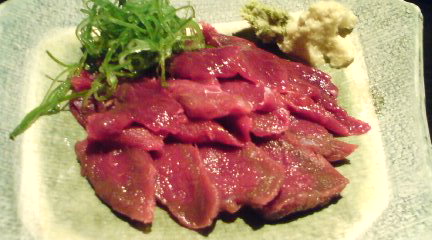
This sashimi/raw meat is venison, that is the meat of a deer.
That particular deer was culled up in the mountains near the Abe River in Umegashima, Shizuoka City. Their number have to be controlled as they tend to overreproduce too quickly to the detriment of the ecological and economic balance of the region.

The sashimi/carpaccio was served with freshly grated wasabi grown along the Abe River, freshly grated garlic and chopped leeks. The soy sauce served with it was of the sweet light kind.

As for the venison, it has a light gamey flavour to it. It was extremely tender and almost sweet,

A treat!

UZU
Shizuoka City, Otowa-cho, 3-18
Tel.: 054-249-6262
Business hours: 17:00=23:00
Closed on Mondays and first Tuesday
Reservations recommended
Credit cards OK
HOMEPAGE (Japanese, but have a look at the pics!)

RECOMMENDED RELATED SITES:
Bread + Butter, Comestilblog, Greedy Girl, Bouchon For 2, Zoy Zhang, Hungry Neko, Mangantayon, Elinluv Tidbit Corner, Maison de Christina, Chrys Niles, Lexi, Culinary Musings, Eats and Everything, Bite Me New England, Heather Sweet, Warren Bobrow, 5 Star Foodie, Frank Fariello, Oyster Culture, Ramendo, Alchemist Chef, Ochikeron, Mrs. Lavendula, The Gipsy Chef, Spirited Miu Flavor, Wheeling Gourmet

Please check the new postings at:
sake, shochu and sushi

—————————————-
日本語のブログ
—————————————-

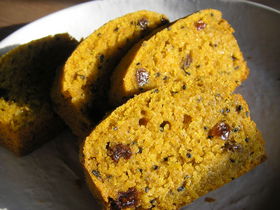
Vegan Soy Milk Carrot Pound Cake

Bazooka Gourmet made the mistake to suggest that I should post a carrot cake recipe (I’m laying it thick, LOL). Well, he’s getting more than he asked for as I found no less than three of them in my notes!

As for the second one, it is a very simple heathy pound cake fit for everyone, vegans included!

Vegan Soy Milk Carrot Pound Cake!

INGREDIENTS:

-Whole wheat flour: 100g
-All-purpose flour: 80g
-Brown sugar: 50 g
-Baking powder: 2 teaspoons
-Cinnamon: 1~2 teaspoons
-Salt: 1/2 teaspoon
-Carrot: 1
-Black sesame seeds: 1 tablespoon
-Raisins: 50 g
-Soy milk: 100 cc
-Olive or Sesame oil: 100 cc

RECIPE:

-Preheat oven to 180 degrees Cesius.
Mix flour and baking powder and sieve.
Grate the carrot.

-Drop all ingredients into a larg bowl and mix.
Mix until the flour lumps have disappeared (important).

-Bake for 35~40 minutes at 180 degrees Celsius.
Check if properly cooking by stabbing pound cake with a thin skewer. It should come out smooth and clean.
Let cool completely.
Could be served as it is or grilled.

NOTES:

-If sesame oil is available, it would be better than olive oil, altough experimentation would be welcome as half of each oil could be interesting indeed.
Salt is necesary to subdue the cloying taste of the brown sugar a little.

Easy again, isn’t it?

RECOMMENDED RELATED SITES:
Bread + Butter, Comestiblog, Greedy Girl, Bouchon For 2, Zoy Zhang, Hungry Neko, Mangantayon, Elinluv Tidbit Corner, Maison de Christina, Chrys Niles, Lexi, Culinary Musings, Eats and Everything, Bite Me New England, Heather Sweet, Warren Bobrow, 5 Star Foodie, Frank Fariello, Oyster Culture, Ramendo, Alchemist Chef, Ochikeron, Mrs. Lavendula, The Gipsy Chef, Dodol-Mochi, Wheeling GourmetLe Petit Cuisinier, Vegan Epicurean, Miss V’s Vegan Cookbook

——————————–
Please check the new postings at:
sake, shochu and sushi

—————————————-
日本語のブログ
—————————————-

Vegetables Facts and Tips 5: Sweet Potatoes (amended & expanded)

satsuma-1

SYNOPSIS:

I started this series (14 articles so far) quite some time ago to help my vegan and vegetarian (I’m not!) friends and omnivores as well because of the obvious health benefits.
Since then, I’ve learned and discovered a lot more information that could not ignored.
Therefore I plan to amend and expand all 14 former articles before I can continue introducing a lot more vegetables!
Incidentally、 nothing, pictures included, is copyrighted in my food blogs, so please feel free to use anything!
1) POTATOES, 2) TOMATOES, 3) BROCCOLI, 4) CARROTS

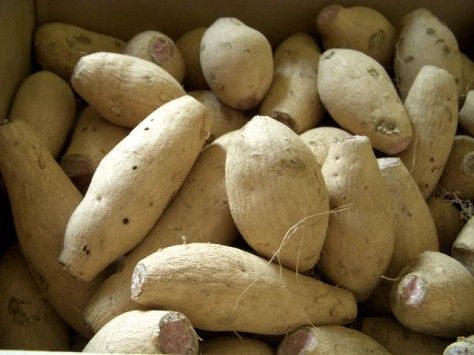
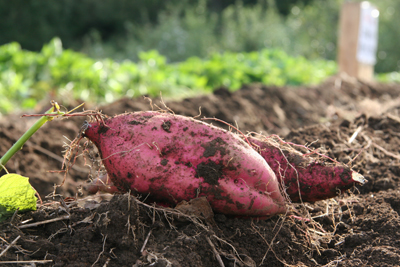
Sweet Potatoes or “Satsuma Imo” were first introduced to Japan in the Ryukyu Islands (Okinawa) in 1604 by the Chinese. It was then introduced in Kyushu in 1609, an area that grows 80% of the total Japanese production.
As rightly pointed out by Comestiblog, sweet potatoes should not be confused with yams or yama imo/山芋 in Japanese.
Sorry for making this basic mistake myself in spite of 33 years in this country!

It has been recognized in this country fおr a long time for both its nutritional and pharmaceutical qualities.
satsumabeni_haruka

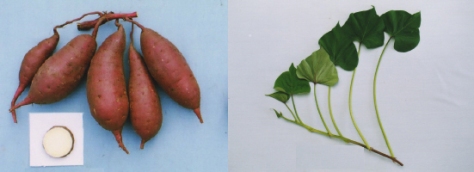
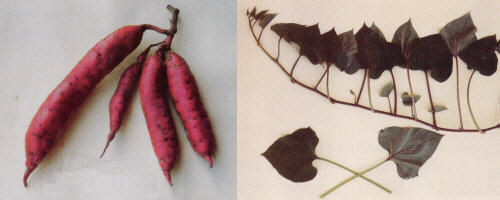
There are over a hundred species in Japan, but the most popular edible ones (not the ones exclusively used for making shochu) have red skins and light yellow flesh.
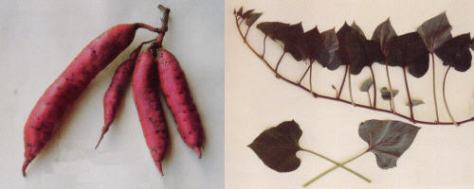
Beni Azuma, mostly eaten in Eastern Japan. Turns very sweet upon cooking.
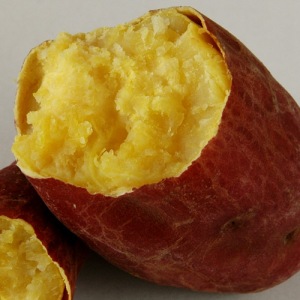
Naruto Kintoki, popular in Western Japan. Considered elegant and sweet.

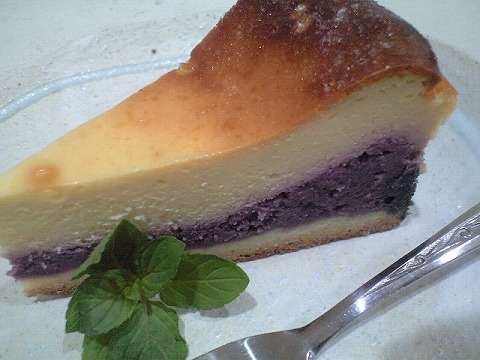
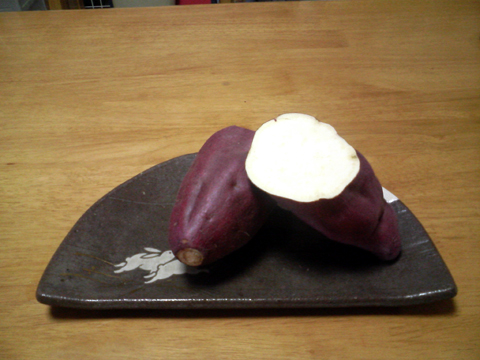
Tosabeni, also attributed “No 14 value (top)”, is very sweet and is a “brand name” sweet potato.

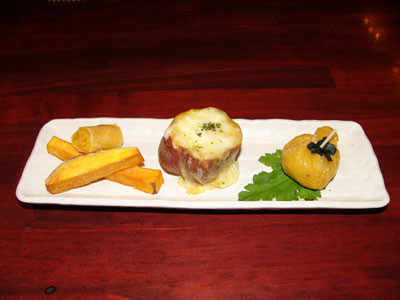
Cheese cake combination with Tosabeni Sweet Potato!
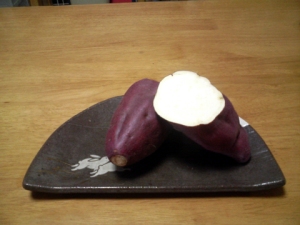
Manamusume, another “No 14 value” brand sweet potato.

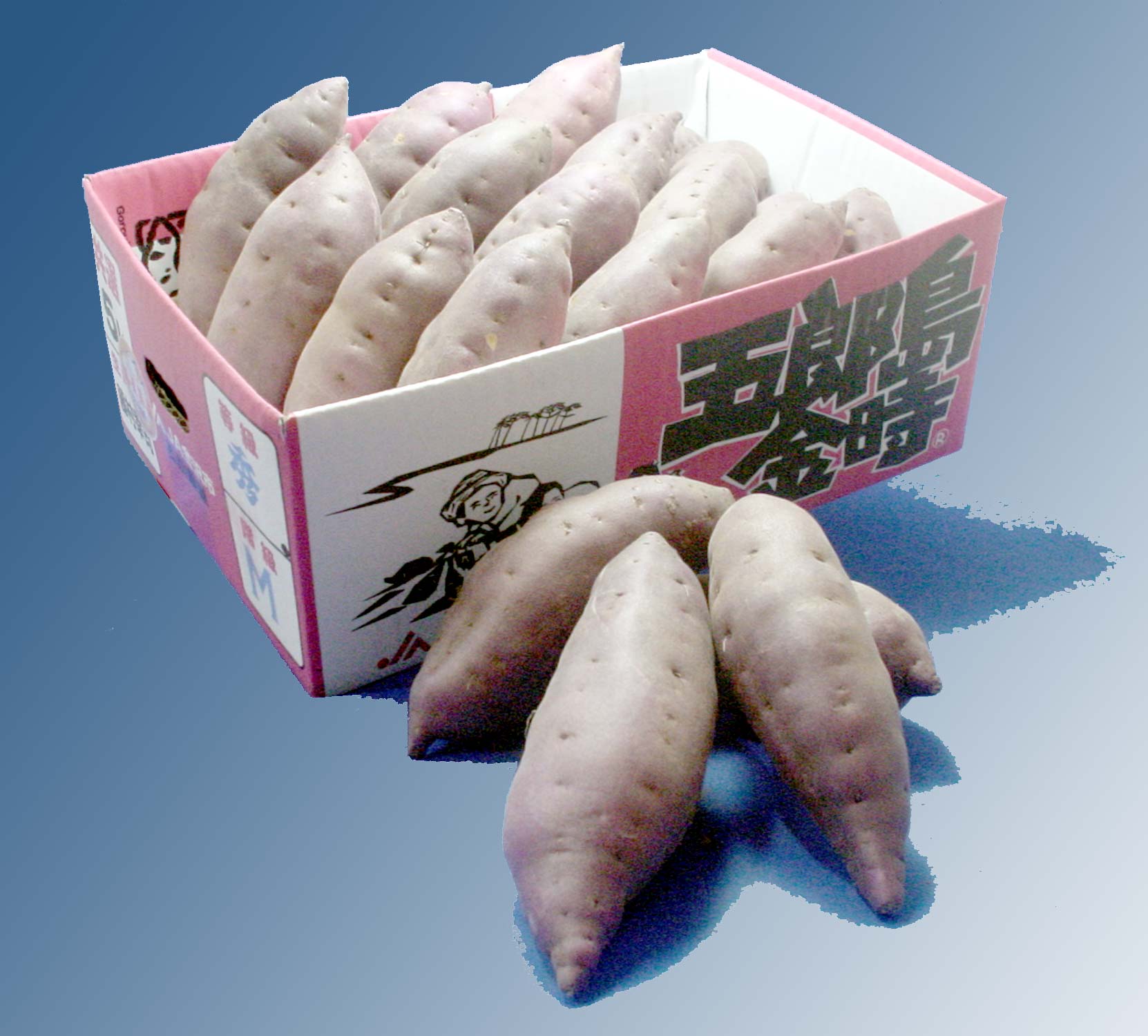
Gorou Shima Kintoki, particularly popular as baked sweet potato.
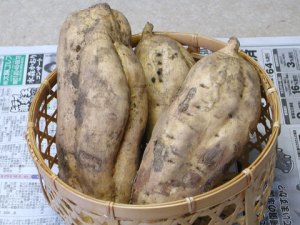
Kogane Sengan, considered as the top shochu sweet potato.
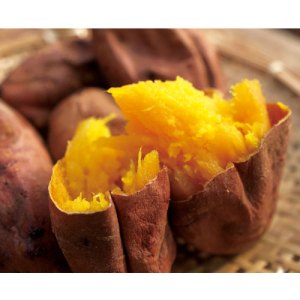
Tanegashima Mukashi Mitsu, a sweet potato with a beautiful orange colour and elegant taste.

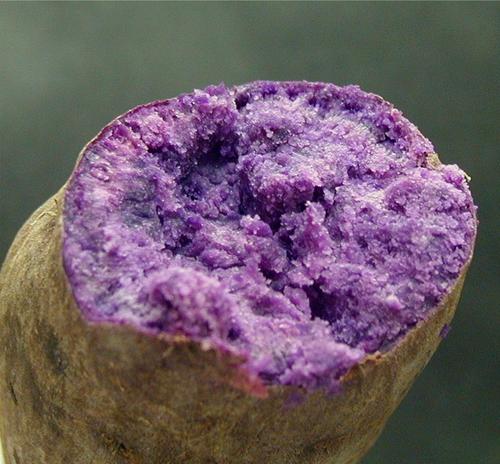
Tanegashima Murasaki Imo, as above, but with a beautiful purple colour.
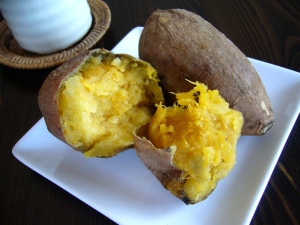
Annou Imo, rich in carotens, with a beautiful orange colour and very sweet.
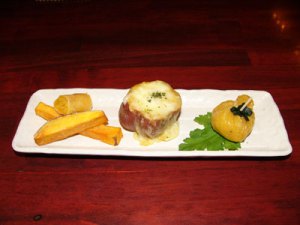
Annou Imo cuisine!
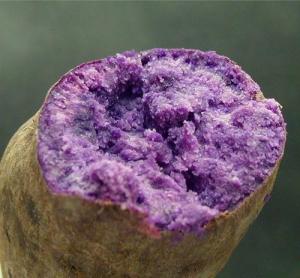
Purple Sweet Road, an interesting name for a sweet tasty hybrid.
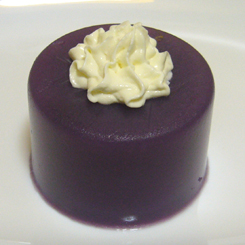
The same as above as hyokan Japanese jelly!
satsumatanegashima

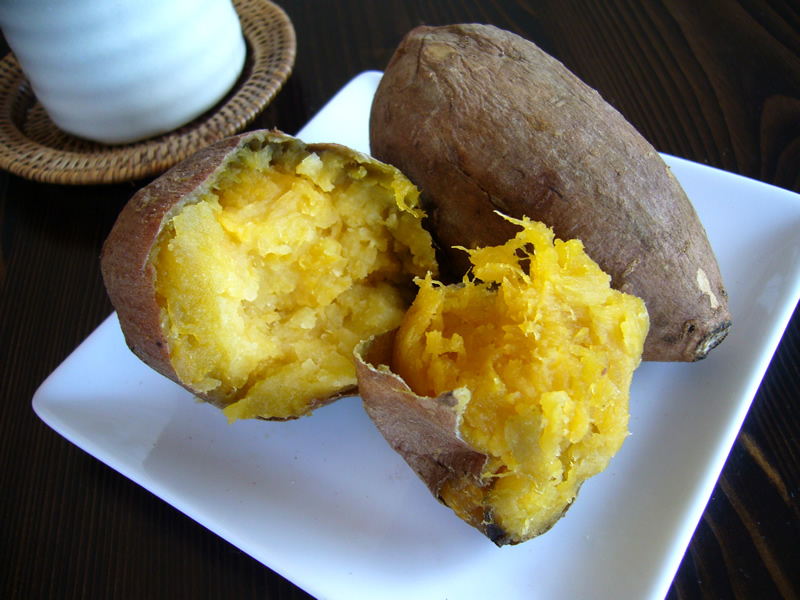
My personal favorite is the “Tanegashima Gold Imo” grown in Taneko Island south of Kyushu. It has the particularity of being red when raw before chaning to a rich golden color when cooked. Among other varieties, the violet yams are getting increasingly popular.

yummy
Tanekoshima yam (deep yellow), “common yam” (light yellow) and Murasaki/Violet yam.

The Missus particularly likes to mix the three above as a cold salad with mayonnaise or cream-based dressing.

FACTS:
-Season: September to November
-Main elements: Carbohydrates, Carotene, Vitamin B, C, E. Potassium, Calcium, Magnesium, vegetal fibers.
-Beneficial to digestion. Good for the skin!
-Lose very little of its beneficial elements even after a long cooking.

TIPS:
-Choose specimens with nice color and a “fat/roundish” aspect!
-Plunge yam in cold water as soon as you have cut them. They will not lose their color!
-Boil, bake or steam long enough before taking skin off. Discard skin!
-Leaves can be eaten!

HEALTH FACTS:

-Combined with burdock root, or shiitake, or carrot, or spinach, helps combat colds, helps enhance skin health, helps combat llung and intestine cancer.
-Combined with devil’s tongue tuber, or hijiki sweet seaweeed, or beansprouts, or apple, helps combat cancer, constipation, obesity, and artery hardening.
-Combined with Judas ear mushroom, or shiitake, or seaweed, or hijiki sweet seaweed, helps lower blood cholesterol, helps combat obesity and diabetes.
-Combined with strawberries, or lemon, or pimentoes, helps combat stress, helps skin rejuvenation and intensifies appetite.

RECOMMENDED RELATED SITES
Not-Just-Recipes, Bengal cuisine, Cooking Vegetarian, Frank Fariello, Gluten-free Vegan Family, Meatless MamaFrank Fariello, , Warren Bobrow, Wheeling Gourmet, Le Petit Cuisinier, Vegan Epicurean, Miss V’s Vegan Cookbook, Comestiblog

Please check the new postings at:
sake, shochu and sushi

—————————————-
日本語のブログ
—————————————-
Non-Wheat Flour Carrot Cupcakes

Bazooka Gourmet made the mistake to suggest that I should post a carrot cake recipe. Well, he’s getting more than he asked for as I found no less than three of them in my notes!

As for the first one, it is dedicated to wheat flour allergics!

Non-Wheat Flour Carrot Cupcakes!

INGREDIENTS: For 6 cupcakes

-Unsalted Butter: 100 g
-Brown sugar: 50 g
-Eggs: 2
-Honey (liquid): 1 tablespoon
-Gated carrots: 100 g
-Rice powder: 130 g
-Baking powder: half a teaspoon

-Egg wites: 2
-Sugar: 50 g

RECIPE:

-Bring butter to room temperature.
-Add brown sugar and mix well, incorparating a much air inside as possible.

-Add eggs and mix well.
Add grated carrot, honey, rice flour and baking powder. Mix well.

-Beat the egg whites with sugar into a solid meringue.
Mix the meringue into the cupcake mixture in two equal steps by folding them in with a spatula.
Pour mixture into cups.
Leave inside the fridge for 30 minutes to allow the rice powder to fully absorb the mixture humidity.

-Bake for 20~25 minutes at 180 degrees Celsius.

Simple, isn’t it?

RECOMMENDED RELATED SITES:
Bread + Butter, Comestilblog, Greedy Girl, Bouchon For 2, Zoy Zhang, Hungry Neko, Mangantayon, Elinluv Tidbit Corner, Maison de Christina, Chrys Niles, Lexi, Culinary Musings, Eats and Everything, Bite Me New England, Heather Sweet, Warren Bobrow, 5 Star Foodie, Frank Fariello, Oyster Culture, Ramendo, Alchemist Chef, Ochikeron, Mrs. Lavendula, The Gipsy Chef, Dodol-Mochi, Wheeling GourmetLe Petit Cuisinier, Vegan Epicurean, Miss V’s Vegan Cookbook

——————————–
Please check the new postings at:
sake, shochu and sushi

—————————————-
日本語のブログ
—————————————-

Today’s Lunch Box/Bento (’09/79)

It has taken a long time, but I’m slowly convincing the Missus to work on her bentoes and take her own photoes for reference (posterity?). It is a battle (“what about my privacy, blah, blah…?), but I’m bent on winning it! LOL

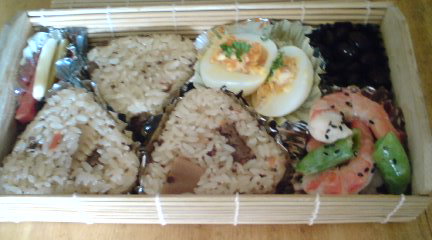
She’s recently bought all kinds of contraptions/artifcts for the kitchen and cooking. Among those she has acquired these boxes to shape musubi/rice balls into perfect tringular shapes forbeeter arrangement.
The present musubi are “maze gohan/mixed rice”. The rice was steamed together with “tsukudani/Japanese- style stewed food” made up of bee, bamboo shoots, carrots and others.
She added home-made pickles for vinegary garnish.

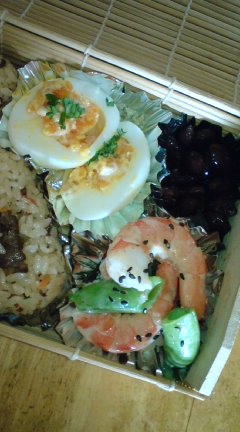
The rest of the garnish included her own style of oeufs mimosa/boiled eggs with their yolks manipulated, shrimps and snack pea pods salad seasoned with black sesame seeds and stewd black beans.

The salad was composed of hand broken lettuce, cress and other greens, plum tomatoes, sliced radishes and black olives, the whole topped with cold marinated mushrooms (done in Greek style with olive oil and spices).

Vey simple dessert of grenadine seasoned compoteed apples.

I think I’m right to egg on the Missus! LOL

RECOMMENDED RELATED SITES:
Warren Bobrow, Bread + Butter, Zoy Zhang, Hungry Neko, Think Twice, Frank Fariello, Mangantayon, Hapabento, Elinluv Tidbit Corner, Tokyo Terrace, Maison de Christina, Chrys Niles,Lexi, Culinary Musings, Wheeling Gourmet

Please check the new postings at:
sake, shochu and sushi

—————————————-
日本語のブログ
—————————————-
Vegetables Facts and Tips 4: Carrots (amended & expanded)

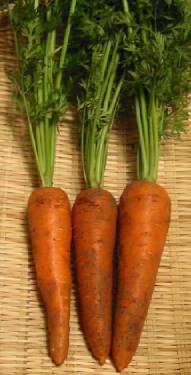
carrot-1

SYNOPSIS:

I started this series (14 articles so far) quite some time ago to help my vegan and vegetarian (I’m not!) friends and omnivores as well because of the obvious health benefits.
Since then, I’ve learned and discovered a lot more information that could not ignored.
Therefore I plan to amend and expand all 14 former articles before I can continue introducing a lot more vegetables!
Incidentally、 nothing, pictures included, is copyrighted in my food blogs, so please feel free to use anything!
1) POTATOES, 2) TOMATOES, 3) BROCCOLI

Carrots are consumed everywhere in the World, raw or cooked in so many manners, including desserts, that you need a whole book to describe all the recipes! And you might have to come up with a special addenda leaflet to introduce all its varieties!

Now, people might have forgotten that this cousin of the spinach orignated from Afghanistan before it was first introduced in China and Europe (by the Dutch) in the 12th Century. Japan had to wait until the 16th Century before the Chinese brought it to the Island of the Rising Sun.

FACTS:

Some time ago carrots were not popular in Japan because of their strong taste characteristics, but the Japanese have come with sweeter and softer varieties:
carrot-kyo
“Kyo-Ninjin”, a variety developed in Kyoto, with a deep dark red colour and very sweet taste.

carrot-gosun
“Go-Sun Ninjin”, the most common in Japan.

carrot-sansu
“San-Sun Ninjin”, a smaller variety of the above.

carrot-daijyo
“Daijyo Ninjin”, a very and thin variety very popular in Japanese restaurants! Great for sticks!

carrot-kinji
“Kinji Ninjin”, probably the most elegant of them all!

carrot-shim-yellow
“Kiiro Ninjin”, beautiful and very sweet!

carrot-mini
“Mini Ninjin”, so much fun!

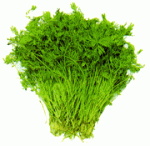
carrot-leaves-vitaminc
Now, do not forget the leaves which contain an enormous amount of Vitamin C!

-Season: May to June, and October to December in the Northern Hemisphere.
-Beneficial elements:
Carotenes
An absolute need for humans. Carotenes are more easily absorbed by the body systems when the carrots are eaten together with oil, dressing or “glace”.
Vitamin A, Beta Caroten, B1, B2, B6, C, Potassium, Calcium (very high!), fibers.

TIPS:

Preservation: Carrots should not be kept inside too cold fridges. Protect them by wrapping them into newspaper “standing up”, or into cellophane paper if they are cut.
Choose specimen with a good constant colour and with a small stem core if you buy them with leaves already cut away.

Important: When you peel them, do so as thinly as possible as the majority of the carotenes lie just under the skin!

HEALTH FACTS:

-Combined with onions, or seaweed, or celery, or tofu, helps combat colds, diabetes and constipation and helps hair regeneration.
-Combined with Chinese cabbage, or Cabbage, or tomato, helps combat cancer, ageing and helps withfaster recovery from illness.
-Combined with seaweed, or burdock root, or bamboo shoot, or devil’s tongue tuber, helps combat constipation, high blood presure and clean digestive system.
-Combined with Broccoli, or pimentoes, or kabocha/pumpkin, helps combat skin colour change and helps with body revitalization.

RECOMMENDED RELATED SITES
Not-Just-Recipes, Bengal cuisine, Cooking Vegetarian, Frank Fariello, Gluten-free Vegan Family, Meatless MamaFrank Fariello, , Warren Bobrow, Wheeling Gourmet, Le Petit Cuisinier, Vegan Epicurean, Miss V’s Vegan Cookbook

Please check the new postings at:
sake, shochu and sushi

—————————————-
日本語のブログ
—————————————-
Today’s Lunch Box/Bento (’09/78)

Today’s bento is typical of a traditional Japanese lunch box in Winter.
As I have to keep the calories in check, the Missus slightly reduced the amount of rice and extra garnishes.
The rice was steamed together with some konbu/seaweed cut in tiny pieces she left mixed into the rice.

Being in a good mood, the Missus took particular care of the colours and design.
She covered half of the rice with fired minced chicken with black seasme seeds and made a “border” with young soy beans in their pods she had cut after slightly boiling them.

Instead of making tamagoyaki/Japanese omelette, she prepared iretamago/sweet Japanese scrambled eggs.

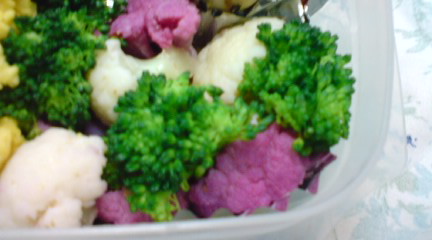
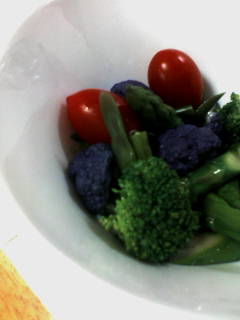
As for the garnish, she fried sato-imo/a variety of Jpanese sweet glutinous tubers with black sesame seeds, home-made pickled Kyoto carrots (deep red carrots), an an assortment of broccoli and cauliflower:

Boiled broccoli, white cauliflower and mauve cauliflower (grown in Shizuoka City!).

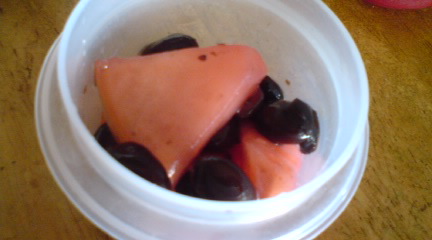
The dessert was kept very simple: grenadine compoted applaes and stewed sweet black beans.

Plenty and tasty, actually!

RECOMMENDED RELATED SITES:
Warren Bobrow, Bread + Butter, Zoy Zhang, Hungry Neko, Think Twice, Frank Fariello, Mangantayon, Hapabento, Elinluv Tidbit Corner, Tokyo Terrace, Maison de Christina, Chrys Niles,Lexi, Culinary Musings, Wheeling Gourmet

Please check the new postings at:
sake, shochu and sushi

—————————————-
日本語のブログ
—————————————-
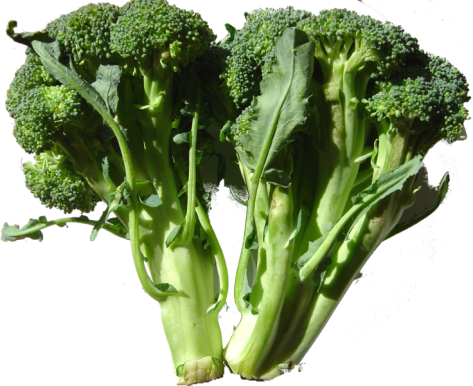
Vegetables Facts and Tips 3: Broccoli (amended & expanded)

broccoli-1a

SYNOPSIS:

I started this series (14 articles so far) quite some time ago to help my vegan and vegetarian (I’m not!) friends and omnivores as well because of the obvious health benefits.
Since then, I’ve learned and discovered a lot more information that could not ignored.
Therefore I plan to amend and expand all 14 former articles before I can continue introducing a lot more vegetables!
Incidentally、 nothing, pictures included, is copyrighted in my food blogs, so please feel free to use anything!
1) POTATOES, 2) TOMATOES

In a recent National Geographic Magazine survey, Broccoli was at the very top when considering nutrients beneficient to humans in our everyday food!

Vegans, Vegetarians and Omnivores, rejoice! Doctors, start moaning!
A cousin of cabbages and cauliflowers, the flowers are the mainly consumed part, but people forget that the stems are great, too (explained later)!

VARIETIES:

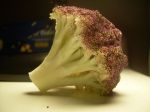
broccoli-2
Italian red broccoli

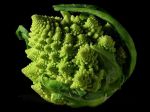
broccoli-romanesco
Broccoli Romanesco, a favourite of mine!

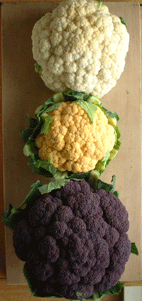
broccoli-colour
In Japan, a violet variety (bottom) is becoming popular, making for some great combinations with white and yellow cauliflower,

broccoli-dish
and other dishes!

FACTS:
-Season: November to January and March to April in the Northern Hemisphere.
-Main elements:
Carotene, Vitamin A, Beta, C and Vitamin E in very large amounts. Together they combine as an elixir to fight ageing and stress.
Potassium
Iron, which helps increase red blood cells and control cholesterol.
Calcium
Fibers, which help digestion.
Sulforafan which helps fight poisonous intruders.

TIPS:
-As I said above, the stem is not only edible, it is succulent, with a taste between avocadoes and asparaguses! Peel the skin, cut it in any shape you wish and boil it for a while in slightly salted water. let cool and use for salads, stews and gratins!
-Choose specimens with big and dense buds, shiny and fat stems. Check whether the cut at the stem looks fresh!
-After boiling in slightly salted water, plunge into cold water immediately. The colour will not change!
-Preservation: Wrap in wet paper towel, seal it inside a polyester rigid box and keep inside refrigerator’s chilled compartment away from light.
As it will change in contact with natural light, better to cut it, boil it, cool it, seal it inside vinyl pouches and freeze if you have too much of it!

HEALTH FACTS:

-Combined with Garlic, or onion, or pimentoes or vinegar, helps activate blood flow, combat high blood pressure, blood vessel rigidity and heart fatigue.
-Combined with red wine (yes!), or tomato, or egg-plant/aubergine, or carrot, helps combat cancer and encourages rejuvenation.
-Combined with tuna (aha!), or sardines, or soy beans, or olive oil, helps combat ageing and blood vessel rigidity.
-Combined with liver, or cockles, or clams, or cauliflower, helps build blood red cells, combat cold extremities, and provides stamina.

RECOMMENDED RELATED SITES
Not-Just-Recipes, Bengal cuisine, Cooking Vegetarian, Frank Fariello, Gluten-free Vegan Family, Meatless MamaFrank Fariello, , Warren Bobrow, Wheeling Gourmet

Please check the new postings at:
sake, shochu and sushi, Le Petit Cuisinier, Vegan Epicurean, Miss V’s Vegan Cookbook

—————————————-
日本語のブログ
—————————————-

Italian Restaurant: Lunch at Il Castagno

Service: Excellent and very friendly
Facilities: clean
Prices: reasonable
Specialty: Central and south Italian-style cuisine. Home-made pasta. Very reasonables prices

I’ve wondered for some time why there were so many good Italian restaurants in our Shizuoka Prefecture.
I believe that they actually share a common trait: an intelligent combination of local products and foreign ingredients!
The other reason is probably the mild climate of our region, the warmest in Japan after Okinawa.

I took advantage of this Sunday being free of any obligations, apart of cooking dinner for my other half to belatedly visit Il Castagno.
It is a very unassuming restaurant/osteria run by three friends, a rarity in Japan where the majority of restaurants are run by couples.
You definitely need to reserve as the low prices attract many customers and there are not so many seats (maximum 15~16).
Service is very friendly and attentive, and questions are answered with extra courtesy.
Have a good look at menu as you are in for some interesting surprises (have you heard of boar raised in Ikawa?)!

This was my first visit and here what I had as one of the lunch courses:

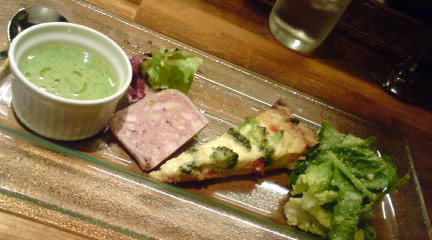
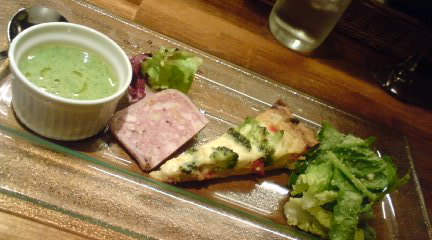
Antipasti Misto: Romaine lettuce, vegetables quiche, pate de campagne and broccoli soup.

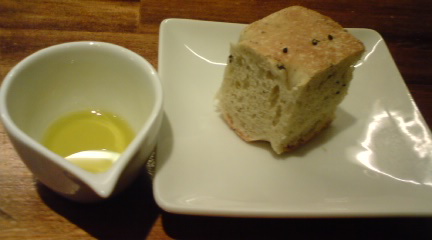
Il Castagno not only make 80% of their own pasta, they bake great focaccia bread!

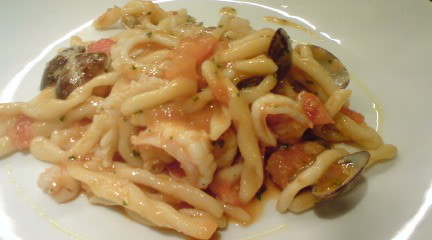
The pasta was very elegant and succulent: home-made trufie short pasta with scallops, cockles, squid, and amaebi sweet shrimps. Marrying Japan and Italy!

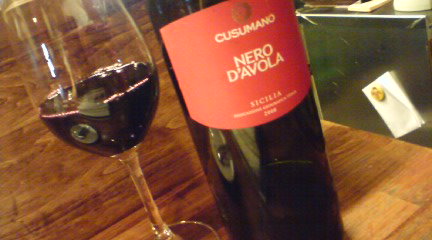
A couple of glasses of Nero d’Avola from Sicilia.
Check their wine list: 14 x white (3,900~6,000 per bottle), 23 x red (3,800~12,000 per bottle), 4 x spumante (3,900~6,000),… and Shizuoka Sake Isojiman (3,300 per bottle, an extravagant one!)!

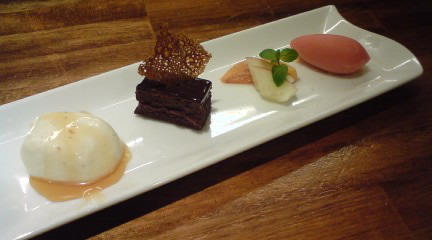
Dolce/dessert set: strawbeery Ice-cream, fruit, chicilate cake and panacotta with acacia honey.

Coffe was included.

IL CASTAGNO
420-0843 Shizuoka Shi, Aoi Ku, Tomoe Cho, 48 (along Kitakaido Street)
Tel. & Fax: 054-247-0709
Business hours: 11:45~14:00, 17:30~21:00
Closed on Mondays and second Tuesdays
Lunch: 1,260 and 1,860 yen
Dinner: 4,000 and 5,000 yen
A la Carte menu and wine list available. Wine by the glass ok
Reservations recommended.
HOMEPAGE (Japanese)

RECOMMENDED RELATED SITES:
Bread + Butter, Comestilblog, Greedy Girl, Bouchon For 2, Zoy Zhang, Hungry Neko, Mangantayon, Elinluv Tidbit Corner, Maison de Christina, Chrys Niles, Lexi, Culinary Musings, Eats and Everything, Bite Me New England, Heather Sweet, Warren Bobrow, 5 Star Foodie, Frank Fariello, Oyster Culture, Ramendo, Alchemist Chef, Ochikeron, Mrs. Lavendula, The Gipsy Chef, Spirited Miu Flavor, Wheeling Gourmet

Please check the new postings at:
sake, shochu and sushi

—————————————-
日本語のブログ
—————————————-
Korean Cuisine: Yakiniku Tare/Korean BBQ Sauce-Basic Recipes

Choris Dow asked me for a recipe to prepare Yakiniku/Korean BBQ Sauce and I’m glad to oblige.
There are many styles, and I hope you will be able to expand on the below suggestions:

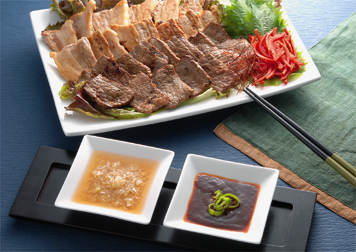
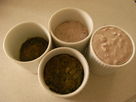
RECIPE 1 (left of above pic) :

-Salt: 4 teaspoons
-Water: 2 tablespoons
-Finely chopped thin leeks: 8 tablespoons
-Sesame oil: 8 tablespoons

Mix well. Can be used at once

RECIPE 2 (Right of above pic):

-Red miso paste: 4 tablespoons
-Gochujang: 4 tablespoons
-Sugar: 2 teaspoons
Sesame oil: 5 tablespoons

Mix well. Can be used at once.

RECIPE 3:

-Soy sauce: 3 tablespoons
-Sugar: 1 tablespoon
-Japanese sake: 1.5 tablespoons
-Grated fresh garlic: 1 tablespoon
-Finely chopped thin leeks: 3 tablespoons
-Ground sesame seeds: 1 teaspoon
-Sesame oil: 1 tablespoon

Let marinate for 20 minutes.

RECIPE 4:

-Soy sauce: 50 ml
-Mirin/Sweet sake: 1 tablespoon
-Sugar: 1 pinch
-Seasme oil: 1 tablespoon
-Chili powder: 1 teaspoon
-Freshly grated ginger: 2 cloves.

Mix well and let marimate a little.

RECIPE 5:

– Soy sauce: 50 ml
-Sugar: half a tablespoon~1 tablespoon
-Japanese sake: 3 tablespoons
-Sesame oil: 3 tablespoons
-Mirin/sweet sake: 2 tablespoons
-Freshly grated garlice: 2~3 cloves
-Finely chopped onion: 1/4
-Black pepper: a pinch

RECOMMENDED RELATED SITES:
Bread + Butter, Comestilblog, Greedy Girl, Bouchon For 2, Zoy Zhang, Hungry Neko, Mangantayon, Elinluv Tidbit Corner, Maison de Christina, Chrys Niles, Lexi, Culinary Musings, Eats and Everything, Bite Me New England, Heather Sweet, Warren Bobrow, 5 Star Foodie, Frank Fariello, Oyster Culture, Ramendo, Alchemist Chef, Ochikeron, Mrs. Lavendula, The Gipsy Chef, Spirited Miu Flavor

Please check the new postings at:
sake, shochu and sushi

—————————————-
日本語のブログ
—————————————-
Pizza at 22 Venty Due

Service: Excellent and very friendly
Facilities: great cleanliness
Prices: reasonable
Specialty: Real Napolitan Pizza baked on wood fire
no-smoking-logo1 Completely Non-smoking!

The Japanese are so avid when it comes to pizzas that they lose all sense of reality and eat anything called so.
It has been a long wait, but at long last, in October 2009 to be exact, someone finally had the courage to make true pizzas in our gastronomy-crazy city of Shizuoka: 22 Venty Due!

Now, absolutely everything is made from scratch the true artisan’s way!
“Simple is best!” Chef Hiroki Nakagawa claims. That might sound like a boast, but he certainly keeps everything to basics. On the other hand, “simple” also means slightly extravagant!
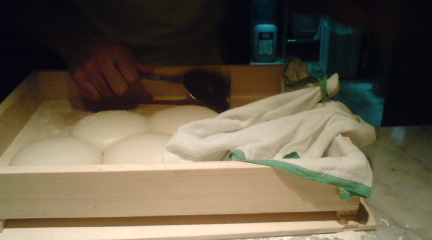
The dough is home-made and double leavened as it should be as it will cook in a minute at the most.

The moment you order, make sure you are ready to eat:
The dough will come out its box, it will be spread in a few seconds. Here come the tomato puree, the peccorino cheese ( a true beauty!), the basil leaves, the seasoning and the olive oil. On the baker’s wooden giant spoon, and…

A few gestures, and the pizza comes out, crusty to a perfection with all its ingredients cooked as they should be!
Why and how?
That is where “simple” becomes extravagant:
the pizza is cooked inside a real wood oven.
All wood is “nara no ki/Japanese oak” delivered all the way from Tottori Prefecture on the other side of Japan!
It takes two hours to bring the oven to the right temperature of 450 degrees Celsius, but then the pizza will come litterally smoking on your plate less than 3 minutes after you have ordered it!

22 Venty Due serves only 3 types of pizza: Margharita, Marinara and Bianca (1,000~1,250 yen), but it is just what you need!
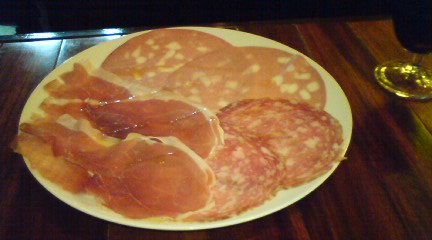
Other side dishes like salami, mortadella, ham, Fritta/fritters can also be ordered with wine by the glass or bottle (about 20 brands).
Hiroki and his wife, Chinatsu, can arrange dinner courses according to budget and preferences. Both of them are actually from Shizuoka and came back home after trips to Italy and working in Tokyo. Welcome back!

Now, why after less than 3 months of existence have all the Shizuoka magazines featured photoes of Hiroki Nakagawa’s pizzas, if I may ask?

Incidentally, smoking is strictly prohibited! Bravo!

22 Venty Due
420-0839 Shizuoka City, Aoi Ku, Takajyo Machi, 3-21-20
Tel & Fax: 054-260-4522
Business hours: 18:00~21:30
Closed on Sundays
Reservations advised.

RECOMMENDED RELATED SITES:
Bread + Butter, Comestilblog, Greedy Girl, Bouchon For 2, Zoy Zhang, Hungry Neko, Mangantayon, Elinluv Tidbit Corner, Maison de Christina, Chrys Niles, Lexi, Culinary Musings, Eats and Everything, Bite Me New England, Heather Sweet, Warren Bobrow, 5 Star Foodie, Frank Fariello, Oyster Culture, Ramendo, Alchemist Chef, Ochikeron, Mrs. Lavendula, The Gipsy Chef, Spirited Miu Flavor

Please check the new postings at:
sake, shochu and sushi

—————————————-
日本語のブログ
—————————————-

Macha & Tofu Tiramisu Cupcake

There is little need to say that cupcakes are universally popular.
Now if you can add or combine macha and tofu into them and come up with a tiramisu concept as a whole you are bound to please a lot of people! LOL

Macha & Tofu Tiramisu Cupcakes!

INGREDIENTS: For cakes

■ Sponge Cake:
-Eggs: 2
-Sugar: 40 g
-Tofu or soy milk: 1 tablespoon
-All-purpose flour: 40 g
-macha: 2 teaspoons (6 g)

■Syrup
◆Sugar: 15g(10g)
◆Water: 2 tablespoons
◆Macha liqueur (if available): 1 teaspoon

■Cheese Cream

-Cream cheese: 200g
-Anko/sweet bean paste powder: 100g
-Tofu or soy milk: 50 cc/ml
-Preserved cherry blossom (for decoration): 15
-Sugar (optional): 20~30 g)

■ Macha powder (for the finishing touch)

RECIPE:

-Soak preserved cherry blossoms in water to soften and then soak water off between two sheets of kitchen paper. Choose the best 6 of them and heat inside the microwave oven for 1 minute to ope/”bloom” them. Keep the rest aside.

-Take cream cheese out of the fridge.
Mix the flour and macha powder.
Line the oven plate with baking paper.

-Preheat oven to 170 degrees Celsius.
-In a bowl beat the eggs and sugar together until mixture whitens.

-Add tofu (or soy milk). Mix in with a spatula. Add macha and flour mix and mix in with the spatula.

-Bake for 15 minutes at 170 degrees Celsius.

-While it is baking, mix all the syrup ingredients in a small bowl.

-Take the sponge cake out of the oven and let it cool down completely.

-With a spatula, mix cream cheese, sweet bean paste powder, tofu and non-heated cherry blossoms. If not sweet enough, mix in more sugar.

-Divide sponge cake into 12 portions to fit inside cups.
-Line each cup with with one portion of sponge cake. Brush plenty of syrup on each.

-Fill with cheese cream up to half. Place one more layer of sponge cake. Brush plenty of syrup on the sponge cake again. Fill up each cup completely with cheese cream.
Leave inside fridge to chill them properly (one hour is enough, or it would harden too much).

-Before serving sprinkle macha powder all the surface and decorate with a cherry blossom.

RECOMMENDED RELATED SITES:
Bread + Butter, Comestilblog, Greedy Girl, Bouchon For 2, Zoy Zhang, Hungry Neko, Mangantayon, Elinluv Tidbit Corner, Maison de Christina, Chrys Niles, Lexi, Culinary Musings, Eats and Everything, Bite Me New England, Heather Sweet, Warren Bobrow, 5 Star Foodie, Frank Fariello, Oyster Culture, Ramendo, Alchemist Chef, Ochikeron, Mrs. Lavendula, The Gipsy Chef, Dodol-Mochi, Wheeling Gourmet

——————————–
Please check the new postings at:
sake, shochu and sushi

—————————————-
日本語のブログ
—————————————-
Duck Breast: Basic Recipe & Presentation

duck-magret.jpg

Small picture, sorry!

Some people make a big story of cooking duck. It is quite simple, actually, especially with a minimum of preparation. It has the other advantage to be open to an infinite array of variations!

The pic above was for one person. As I cooked it for both of us, just imagine that there was another identical plate.
Here is how I proceded:

INGREDIENTS:

-1 large duck breast (can be ordered easily over the Internet)
-Olive oil 3 tablespoons
-Whisky 3 “caps” (I use the bottle cap)
-Port wine (or any sweeet red wine) half a cup (100cc)
-Cold butter 2 large tablespoons
-Salt and pepper to taste

-6 small potatoes cut in “wedges”
-1 large tablespoon of olive oil

-Half a cup (100cc) of green “flageolet” beans (fine green beans)
-1 tablespoon of baby onions (frozen ar fine)
-1 rasher of bacon cut to the size of your largest nail (LOL)
-Salt, pepper, thyme to taste (careful with the salt as I mixed the veg with a little gravy from the duck!)

-Fine greens (small leaves: you can buy them already mixed and packed
-Dressing of your choice (easy on it, or it will spill onto the duck!)

RECIPE:

-Take skin off duck breast and discard. For people who cannot without it, make shallow incisions all over it, sprinkle with a little salt and pepper, brush it lightly and fry it skin facing down for 80% of the cooking time!)

-Sponge off humidity with kitchen paper towel and put it aside.

-Boil potatoes to about “80% cooked” (their core should be still solid), cool immediately under cold water, peel and cut in wedges (not stiks of fries!)

-In small deep pan fry bacon with no oil until the pieces are crispy. Put aside on small plate. Don’t wash the pan. Pour in half a cup (100cc) of water and boil beans. When beans are ready, there should be little water left. Mix in thawed baby onions and bacon. Do Not season yet.
Keep of fire and cover

-Now you will work with two frypans at the same time. Be careful and keep in mind that if the oil becomes too hot, it might ignite, so keep a large towel handy (last time I almost started a fire. Luckily I had the reflex to cover the frypan with the towel. The fire extinguished immediately. NEVER try to extinguish with water as it will explode in your face!).
On your right (unless you are left-handed), pour the oil for the fried potatoes. It does need to be too hot. Throw potatoes in and let fry, shaking them around from time to time. Fry them until they are golden (use a non-stick pan and the results will delight you!)
On your left, heat the oil for the duck. It needs to be quite hot. Place duck breast in middle. Sprinkle salt and pepper all over it according to your preference. Fry both sides for 30 seconds. Turn down the fire to medium and carefully pour in the whisky (not cap by cap but with a small glass you would have filled before hand). Let the whisky ignite and shake the duck breast around until the flames have extinguished. Lower the fire a bit more and cover with lid.
How do you know the duck is cooked. When you press it with a finger, it should pop back easily with a little gravy/juice seeping out. Experience helping your eyes will be enough to judge when the time is right. Do not worry if you find out that some of the middle of the duck breast does not seem cooked enough. Some people like it well cooked while others like it rare. You can always choose the slices according to taste. Purist like it almost raw in its centre, though.
When the breast is cooked, put it on a cutting board. You will cut it at the llast minute.

-Add some of the gravy to the beans and reheat to your preference.

-On two large plates decorate the top third with greens (see pic above). You will add the dressing on top just before serving.

-Pour the Port wine into the frying pan and stir it with the gravy. reduce it on small fire.

-The fried potatoes should be ready by now. While the sauce is reducing, place the potatoes side by side in half a circle. As you will place the duck slices over it, there is no need to season them.

-Once the gravy has reduced enough, mix in the cold butter until smooth. it will prevent the sauce from “separating). Taste and season it if needed.
-Cut the duck breast into thin slices and place them side by side on top of the fried potatoes (see pic)

-With a tablespoon, place beans like on the pic.

-Pour gravy onto the duck slices.

-Sprinkle greens with dressing and serve.
If you are a wine fan, serve this dish with a full bodied red.

VARIATIONS:

I add some some finely cut parsley and basil to the beans at the last time. some finely cut thin leeks sprinkled over the duck slices look good. You can add some red colour with thinly cut tomatoes on both sides of or around the beans.

duckbreast

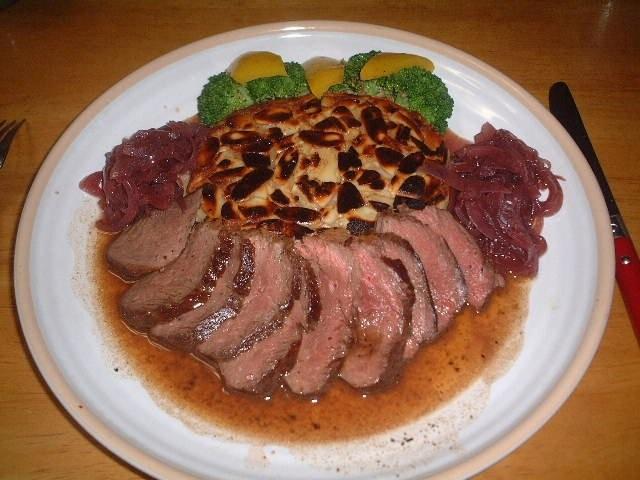
Here is another presentation: Potato Gratin in the middle and onions confit on the sides.
I made the sauce lighter for this particular one!

p1010542

Another one again!
The potato wedges were cooked separately as well as the eringe mushroms slices in the middle with cauliflower first boiled, then sauteed.

Enjoy!

RECOMMENDED RELATED SITES:
Bread + Butter, Comestilblog, Greedy Girl, Bouchon For 2, Zoy Zhang, Hungry Neko, Mangantayon, Elinluv Tidbit Corner, Maison de Christina, Chrys Niles, Lexi, Culinary Musings, Eats and Everything, Bite Me New England, Heather Sweet, Warren Bobrow, 5 Star Foodie, Frank Fariello, Oyster Culture, Ramendo, Alchemist Chef, Ochikeron, Mrs. Lavendula, The Gipsy Chef, Spirited Miu Flavor

Please check the new postings at:
sake, shochu and sushi

—————————————-
日本語のブログ
—————————————-