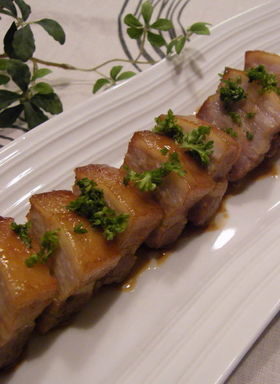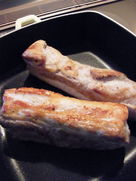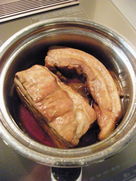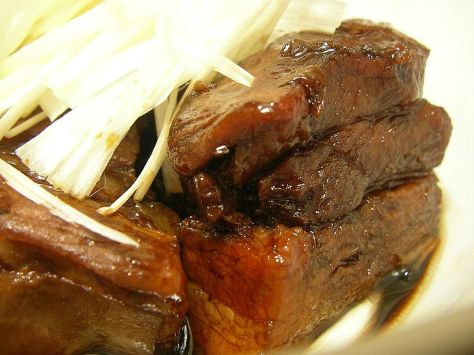
Tag Archives: Japanese Cuisine

Japanese Cuisine: Yakisoba-Basic Recipe

YAKISOBA-RECIPES-1

I introduced the basic knowledge on Yakisoba some tip before my trip to New Caledonia.
here is a very basic and simple recipe you can easily improvise on!

INGREDIENTS: For 1 person

-Yakisoba (yakisoba men/can be bought in individual packs): 1 person portion pack
-Moyashi/soy bean sprouts (fresh if possible/if not canned ones are ok, but drain well): to taste (i like plenty!)
-Thin leeks, cut into 1~2 cm long bits: to taste
-Pork: here is where you can improvise. some poepl like it fatty, others lean. Cut in thin strips. Amount up to your taste.
-Furikake: 1 small pack
-Yakisoba sauce (available in Asian markets, although you can decise your own): to taste (I use a good amount!)
Sauce suggestion: Japanese Sake, Mirin/sweet ake, soy sauce & Worcester sauce: 1 teaspoon each. Add 1 teaspoon of yakisoba sauce to that!

RECIPE:
YAKISOBA-RECIPES-2
-Prepare the moyashi/soy bean sprouts (clean them quickly if they are fresh) and cut thin leeks.
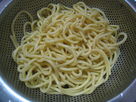
Heat the yakisoba in hot water and drain. This step willmake the yakisoba softer and help them suck the juices in.
YAKISOBA-RECIPES-3
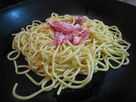
-Pour some oil in a frypan. Fry yakisoba with the pork placed on top in the middle.
YAKISOBA-RECIPES-4
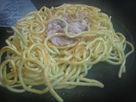
-After having fried the yakisoba for a while, turn the lot over and fry pork with yakisoba on top. Reapeat operation a few times.
YAKISOBA-RECIPES-5
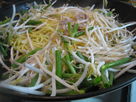
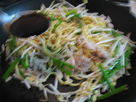
-Add moyashi and thin leeks, salt, pepper and furikake. Fry quickly to taste.
YAKISOBA-RECIPES-6
-Add yakisoba sauce of your liking. Saute until sauce has evened in the yakisoba.

Serve immediately.
You can add pickled ginger and others as a finishing touch.

RECOMMENDED RELATED SITES:
Warren Bobrow
Bread + Butter
5 Star Foodie
Elinluv Tidbit Corner
Think Twice

Please check the new postings at:
sake, shochu and sushi

—————————————-
日本語のブログ
—————————————-
Japanese Seasonal Fish: Shirogisu/Sillago

SILLAGO-SHIROGISU

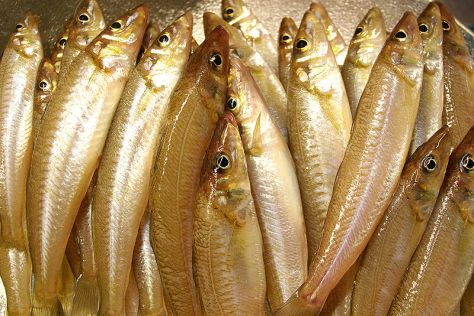
Shirogisu, or Sillago in English probably has as many Japanese names as English names.
The Sillago found along the Japanese shore is also called sillago japonica, Whiting or Smelt-Whiting in english, Shirogisu, Kisu, Magisu and Kisugo in Japanese.

The best specimen in Japan are caught in Fukuoka (Kyushu) and Ehime (Shikoku) prefectures from Spring to Summer.

SILLAGO-SASHIMI
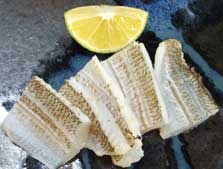
Shirogisu sashimi

The greatest part of the sillago catch comes from Indonesia, Korea, Thailand, China and other Asian countries.
Fortunately, here in Shizuoka, we do catch a sizeable amount in Suruga Bay guaranting fresheness in season.

SILLAGO-SUSHI
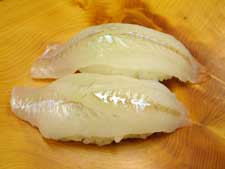
Shirogisu Sushi

If absolutely fresh, shirohisu/sillago makes for an interesting moresl, the more for it as it is quite rare in this form.

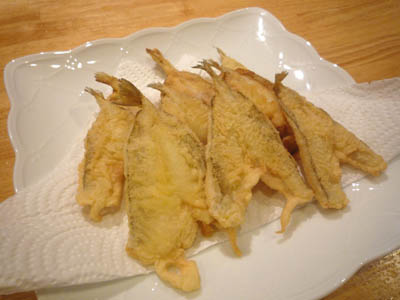
SILLAGO-TEMPURA
Sillago Tempura

The most popular way of savouring it is as tempura or breaded and deep-fried, although the fish taste will vary greatly with freshness!

RECOMMENDED RELATED SITES:
Sushi Nomads
Sushi Tail
Warren Bobrow

Please check the new postings at:
sake, shochu and sushi

—————————————-
日本語のブログ
—————————————-

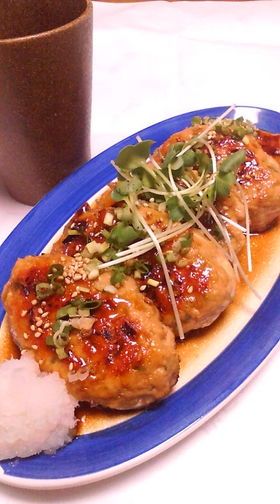
Japanese Cuisine: Yakitori/Tsukune-Recipes 4

TSUKUNE-RECIPES-3

Here is the fourth of (long) series of simple recipes that I hope will stimulate into you creating more recipes!

INGREDIENTS: For 3~4 persons

-Minced Chicken (breast or thigh): 250 g
-Leek, lon and thin type: 1
-Fresh ginger, grated, to taste
-Soy sauce: 1 tablespoon
-Salt and pepper: a little to taste
-Cornstarch: 1 tablespoon
-Sesame oil: a little to taste
-Yama Imo/Japanese glutinous yam, grated: 2 tablespoons

Tare/Sauce
-Soy sauce: 2 tablespoons
-Mirin/sweet sake: 2 tablespoons
-Water: 1 teaspoon
-Seven spices, to taste

Decoration/presentation:

-Kaiwaredaikon/Daikon sprouts: to taste
-White sesame seeds: to taste
-Grated fresh daikon: to taste

RECIPE:

-Chop leek finely. Grate the ginger. Grate the yama imo.

-In a large bowl drop the the minced chicken, soy sauce, salt & pepper, seame oil and mix quickly by hand.

-Add leek, ginger, yama imo and the cornstarch. Mix well. Let the mixture rest in the fridge for 30 minutes.

-During that time prepare the kaiwaredaikon, freshly grated daikon and sesame sesame seeds.
Prepare the tare/sauce ingredients.

-Fry the tsukune/patties after having shaped them into 3 or 4 equal sized circles with salad oil on both sides over a medium fire until they are a light brown.

-Add 2 tablespoons of water, cover with lid and steam/simmer for a while. Check if tsukune are well cooked with a thin wooden stick.

-Add the tare/sauce ingredients and cook until the tare has “caramelized”.
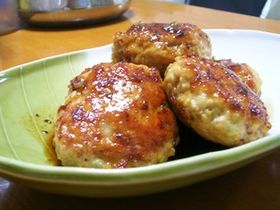
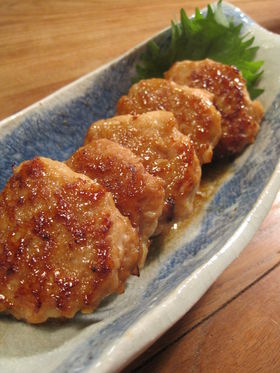
Serve on a plate with kaiware daikon, grated fresh daikon and white seasme seeds for the final touch.

NOTE:
Do not fry tsukune over a strong fire or they will get hard.

RECOMMENDED RELATED SITES:
Warren Bobrow
Bread + Butter
5 Star Foodie
Think Twice

Please check the new postings at:
sake, shochu and sushi

—————————————-
日本語のブログ
—————————————-
Japanese Cuisine: Somen-The Basics

SOMEN-1

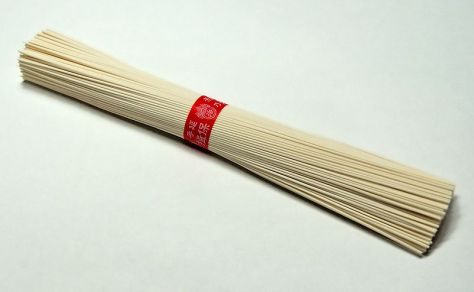
Sōmen (素麺) are very thin, white Japanese noodles made of wheat flour. The noodles are usually served cold and are less than 1.3 mm in diameter. The distinction between sōmen and the next thicker wheat noodles hiyamugi (冷麦), and even thicker Japanese wheat noodles udon (饂飩) is that sōmen is stretched while hiyamugi and udon are cut.

SOMEN-COLD
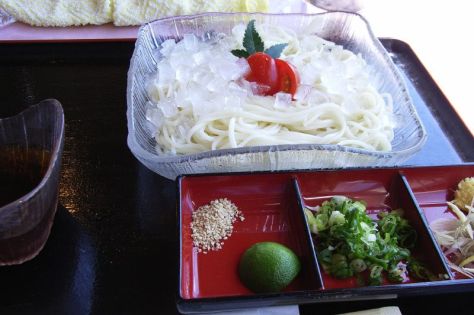
Summer-style cold somen

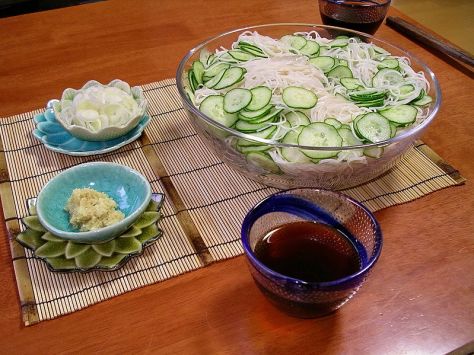
Sōmen are usually served cold with a light flavored dipping sauce or tsuyu. The tsuyu is usually a katsuobushi-based (鰹節/dried bonito shavings) sauce that can be flavored with chopped thin leeks, ginger, or myoga. In the summer, sōmen chilled with ice is a popular meal to help stay cool.

SOMEN-COLD2
Somen Meal Sample

Fish stock can easily be replaced with konu/seaweed stock if you vegetarian or vegan.

SOMEN-NAGASHI
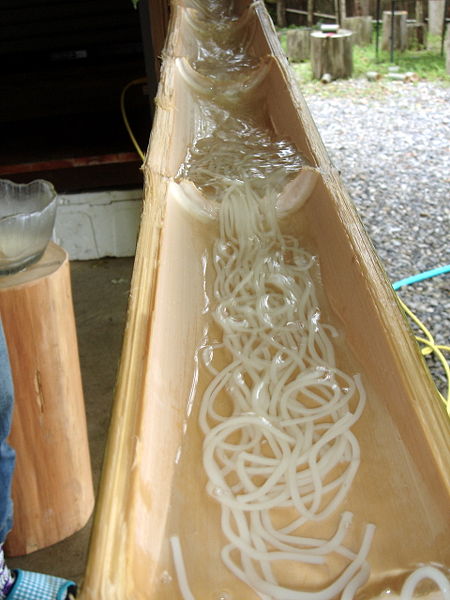
Nagashi Somen flowing down a bamboo pipe.

Some restaurants offer “nagashi sōmen” (流しそうめん flowing noodles) in the summer. The noodles are placed in a long flume of bamboo across the length of the restaurant. The flume carries clear, ice-cold water. As the sōmen pass by, diners pluck them out with their chopsticks and dip them in tsuyu. Catching the noodles requires a fair amount of dexterity, but the noodles that aren’t caught by the time they get to the end usually aren’t eaten, so diners are pressured to catch as much as they can. A few luxurious establishments put their sōmen in real streams so that diners can enjoy their meal in a beautiful garden setting.

SOMEN-NYUMEN
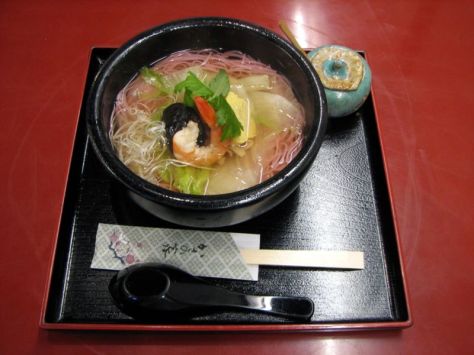
Nyumen

Sōmen served in hot soup is usually called “nyumen” and eaten in the winter, much like soba or udon are.

SOMEN-CHAMPURU
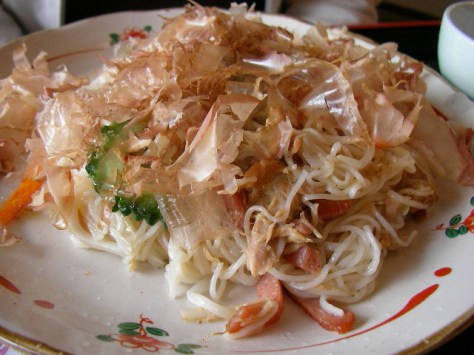
Somen champuru.

In Okinawa, somen champuru are very popular with goya and tofu.

SOMEN-PLAIN
Plain somen

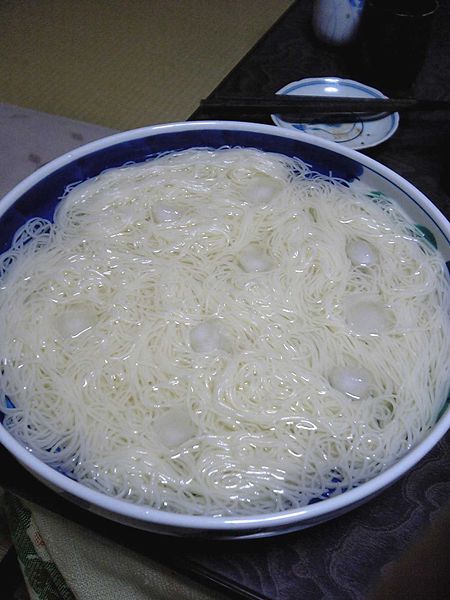
Somen are probably the easiest style of noodles to prepare.
Plain chilled somen witj cold ponzu are such a great snack in summer.

SOMEN-KOREAN

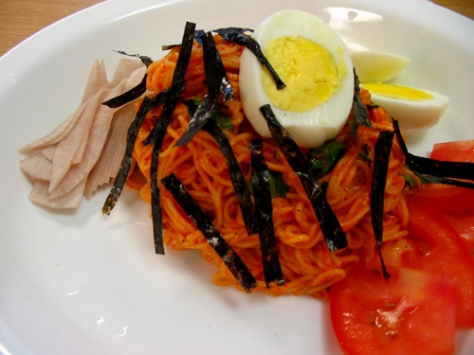
A very similar variety of thin wheat flour noodles are called somyeon in Korea and are used in a dish called bibim guksu.

RECOMMENDED RELATED SITES:
Warren Bobrow
Bread + Butter
5 Star Foodie
Think Twice

Please check the new postings at:
sake, shochu and sushi

—————————————-
日本語のブログ
—————————————-
Japanese Cuisine: Yakisoba-The Basics

YAKISOBA-1

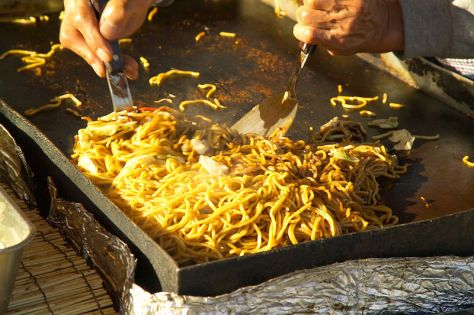
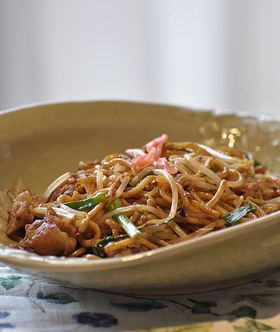
Yakisoba (焼きそば), literally “fried noodles”, is a dish often sold at festivals in Japan, but originates in China. The dish was derived by the Chinese from the traditional chow mein, but has been more heavily integrated into Japanese cuisine like ramen. Even though soba (Japanese Noodles made from buckwheat) is part of the word, yakisoba noodles are not made from buckwheat, but are similar to ramen noodles and made from wheat flour.

Yakisoba usually refers to sōsu yakisoba/ソース焼きそば, flavored with yakisoba sauce.

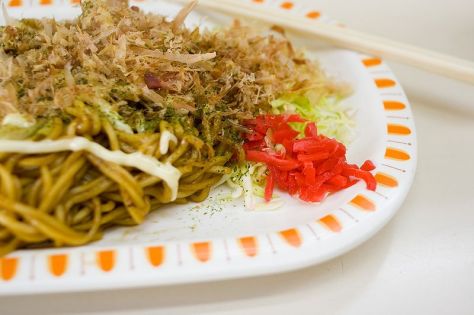
It is prepared by stir-frying ramen-style noodles with bite-sized pork, vegetables (usually cabbage, onions or carrots) and flavoured with yakisoba sauce, salt and pepper. It is served with a multitude of garnishes, such as aonori/青海苔 (seaweed powder), beni shoga/紅生姜 (shredded pickled ginger), katsuobushi/鰹節 (fish flakes), and Japanese mayonnaise.

YAKISOBA-4
Family style yakisoba

Yakisoba is most familiarly served on a plate either as a main dish or a side dish.

YAKISOBA-3-PAN
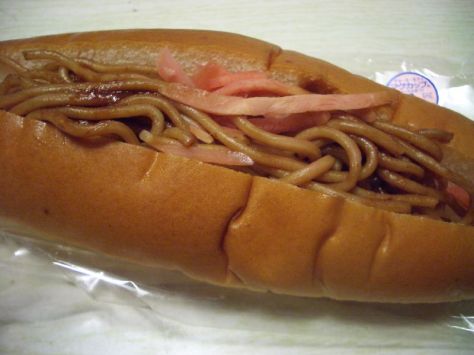
“Yakisoba Pan/Yakisoba Bun)

Another popular way to prepare and serve yakisoba in Japan is to pile the noodles into a bun sliced down the middle in the style of a hot dog, and garnish the top with mayonnaise and shreds of pickled ginger. Called yakisoba-pan, pan meaning bread, it is commonly available at local matsuri (Japanese festivals) or konbini (convenience stores).

Sometimes, Japanese white Udon is used as a replacement of Chinese style Soba and called Yakiudon. This variation was started in Kitakyushu in Fukuoka Prefecture.

Yakisoba is served widely across military bases around the world, and daily at Camp Hansen, a Marine Corps base in Okinawa, Japan, and weekly at Kunsan AB, an airbase in the Republic of Korea. It has become a favored dish among the U.S. Military across the world.

Other Yakisoba varieties:

YAKISOBA-5-GOMOKU
“Gomoku Yakisoba”

As said above, all kinds of garnish are used for Yakisoba.
The most popular way to add such garnish is called Gomoku Yakisoba/五目焼きそば/5 garnishes yakisoba, as the number “5” is a particular good number in Japan.

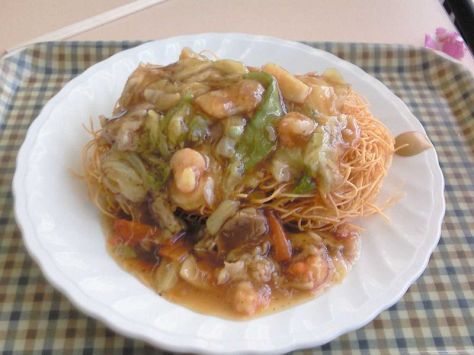
YAKISOBA-2-KATAYAKISOBA
“Katayakisoba”

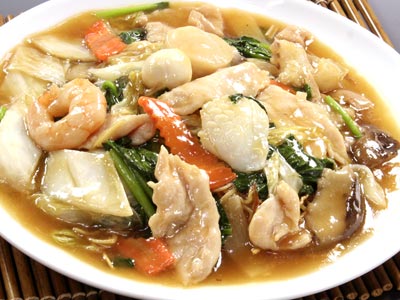
Katayakisoba/堅焼きそば means that the soba hard, either deep-fried or instant. It makes for a cruchylayer of soba under soft garnish and sweet and sour sauce!

—————————————-
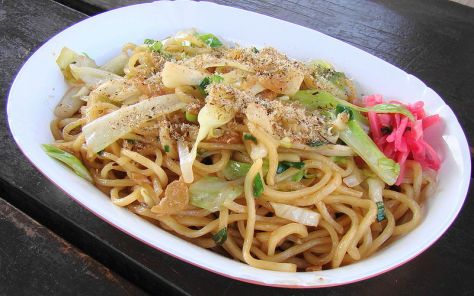
FUJINOMIYA YAKISOBA

YAKISOBA-8-FUJINOMIYA

In Fujinomiya City, at the foot of Mount Fuji in Shizuoka Prefecture, they make a slightly different kind of Yakisoba which has been awarded its own name patent!

The noodles used in the recipe are thicker than in the rest of Japan.
The noodles are fried in anima fat leftover (that is left after cooking the meat!)
Fine bonito shavings or other powder (mackerel, sardine, …) is used as a finishing touch.
Depending on the home or shop, sakura ebi/cherry shrimp, cuttle fish and minced meat are included.

RECOMMENDED RELATED SITES:
Warren Bobrow
Bread + Butter
5 Star Foodie
Think Twice

Please check the new postings at:
sake, shochu and sushi

—————————————-
日本語のブログ
—————————————-
Japanese Cuisine: Yakitori/Tsukune-Recipes 3

TSUKUNE-TOFU

Here is the third of (long) series of simple recipes that I hope will stimulate into you creating more recipes!
The difference is that this time it is made with tofu as well!

INGREDIENTS: For 2~3 persons

-Tofu: 100 g
-Minced chicen: 300 g
-Onion, finely chopped, 1/2
-Grated fresh ginger, 3~3cm cube
-Egg: 1
-Black pepper: a pinch or two
-Cornstarch: 2 teaspoons
-Soy sauce: 2 tablespoons
-Japanese sake: 2 tablepoons
-Sugar: 2+1/2 tablespoons
-Salad oil

RECIPE:

-In a bowl mix tofu, chicken, onion, ginger, egg, pepper and cornstarch. Make patties/tsukune.

-Pour some oil in a frypan. On medium high fire fry both sides of tsukune until they have reached a nice colour. Add some water. Cover with lid and steam/cook on low fire.

-Mix soy sauce, Japanese sake and sugar in a bowl.

-Take off lid from tsukune. Turn to medium fire. Pour in the sauce and simmer until ready for serving.

NOTE:

Great served wrapped in shiso leaves!

Please check the new postings at:
sake, shochu and sushi

—————————————-
日本語のブログ
—————————————-
Japanese Cuisine: Yakitori/Tsukune-Recipes 2

TSUKUNE-RECIPES-2-a

Here is the second of (long) series of simple recipes that I hope will stimulate into you creating more recipes!

INGREDIENTS:
-Minced Chicken: 400 g+
-Large shiso/perilla leaves (can be replaced with basil or other green tasty leaves): 15~20
-Salt, pepper: 1 pinc each
-Black sesame: 1 teaspoon
-Grated fresh ginger: 5×5 cm cube
-Japanese Sake: 1 teaspoon
-Cornstarch: 1 tablespoon
-Egg yolk: 1 large

-For seasoning:
Lemon juice
Yuzu koshio/lime and pepper paste

RECIPE:

TSUKUNE-RECIPES-2-b

-Chop the leaves fine as shown on above picture.

TSUKUNE-RECIPES-2-c

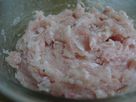
-In a large bowl, drop in the minced chicken, salt, pepper and black sesame seeds. Mix well until it becomes a smooth paste.

TSUKUNE-RECIPES-2-d

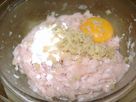
-Add egg yolk, Japanese Sake, Cornstarch and grated ginger.
Mix well.

TSUKUNE-RECIPES-2-f

-Add chopped shiso (leaves9 and mix well.

TSUKUNE-RECIPES-2-g

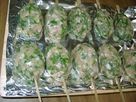
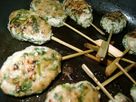
-make tsukune/patties in size of your liking around a wooden stick.

TSUKUNE-RECIPES-2-h

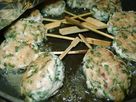
-Pour a little oil in a non-stick frypan and place tsukune as shown on picture.
Start frying.

TSUKUNE-RECIPES-2-i

-When one side has reached the right colour, turn over and fry until both sides have reached the proper colour.
You may add a little more Japanese sake for seasoning.

TSUKUNE-RECIPES-2-j

-Cover with large piece of foil paper and stema/fry on a small fire for a while.

TSUKUNE-RECIPES-2-k

-That’s how the should look when ready!

-Serve a little lemon juice and lime and peppr paste, and plenty of beer!

NOTE:
Naturally, youi may use a sauce of your choice as well, or ponzu, or soy sauce, etc.

Please check the new postings at:
sake, shochu and sushi

—————————————-
日本語のブログ
—————————————-
Japanese Cuisine: Yakitori/Tsukune-Recipes 1

TSUKUNE-RECIPES-1

Apparently, yakitori and especially tsukune are very popular not only in Japan but almost everywhere in the world as they share similarities with many other countries’ specialties! After all a hamburger is nothing less than a big tsukune!LOL

Here is the first of (long) series of simple recipes that I hope will stimulate into you creating more recipes!

Tsukune Recipe 1:

INGREDIENTS: For 4 people

-High quality chicken (breast or thigh): 250 g
-Leek (long narrow one): 1
-Soy sauce + Japanese sake + mirin/sweet sake: 4 tablespoons each
-Honey: 2 teaspoons
-Fresh ginger juice (also available over the counter in Asian stores): 10 ml
-Water: 2 tablespoons
-Cornstarch: 2 tablespoons
-Salad oil: 2 tablespoons

RECIPE:

-Cut chicken and leek into rough pieces and drop them into a food processor. Add one half of the cornstarch, water, soy sauce, sake and mirin each.

-Process well until you obtain a smooth paste. Stop the food processor from time to time to move chicken from the centre with a spatula.

-Make/shape “patties”/tsukune.
Fry in oil on a frypan over a low fire on both side until you obtain a light brown colour (“foxy” in Japanese)

-Pour the rest of the soy sauce, sake, mirin, ginger juice, and cornstarch dissolved in water over the tsukune and cook until the sauce has caramelized.
Serve immediately!

NOTE:
By dividing the seasoning in two halves, the chicken will be thoroughly impregnated with the taste.
make sure you cook over a low fire all the time!

Please check the new postings at:
sake, shochu and sushi

—————————————-
日本語のブログ
—————————————-
Japanese Cuisine: Kakuni-Recipes 3

KAKUNI-RECIPE-3-m

This is the third of a series of recipes for preparing Kakuni.
This particular recipe can be considered as the basic “professional” one, altough it is open to variations as far as spices and presentations are concerned!

INGREDIENTS;

-Large raw pork belly lumps: 1 kg
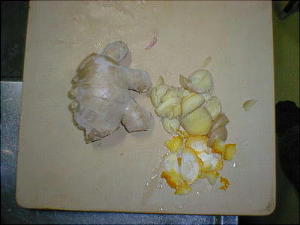
-Fresh ginger, finely chopped, 1~2 tablespoons
-Japanese sake: 2 cups
-Soy sauce: 2 cups
-Sugar: 2 large tablespoons
-Salt: 2 pinches

NOTE:
One can and ought (according to prefences) to add mirin/sweet sake, star anise, lemon zest, green parts of leeks and so on!

RECIPE:

KAKUNI-RECIPE-3-a

-Get everything prepared first!

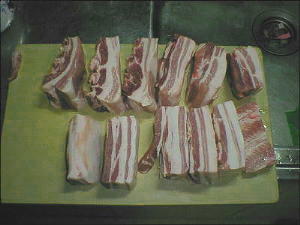
KAKUNI-RECIPE-3-b

-Cut the pork into about 6cm wide slices.

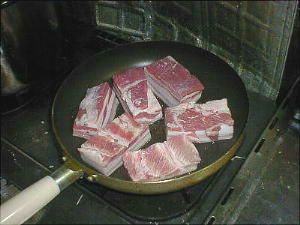
KAKUNI-RECIPE-3-c

-Fry pork on both sides first. This will help the meat suck in the “juices”!

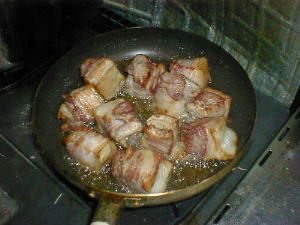
KAKUNI-RECIPE-3-d

-Fry until the colour above is reached.

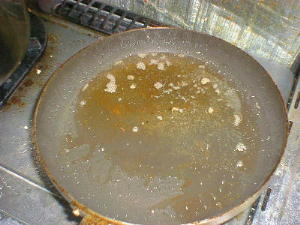
KAKUNI-RECIPE-3-e

-Scoop out the excess fat, taking care not to run it over the meat.
The picture above shows how much fat can scooped out!
If you use a non-stick frypan, there is no need to add oil before frying the pork, meaning less fat to scoop out!

KAKUNI-RECIPE-3-f

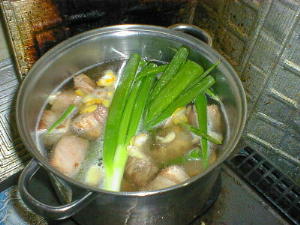
-In a large and deep pan, drop in the meat. Add water just to cover meat. Switch on the fire. You can add water later litle by little to keep it above the meat.
Add ginger, leeks (green part), lemon zest (whole or minced) and star anise.
If you want to make it sweet, add a whole sliced onion!

KAKUNI-RECIPE-3-g

-Make sure that all ingredients are clean. Check that the lemons are not waxed (in that case clean it out!)!

KAKUNI-RECIPE-3-h

-Once brought to a boil, add soy sauce, Japanese sake, mirin/sweet sake and sugar.
Last, add salt (important!).

KAKUNI-RECIPE-3-i

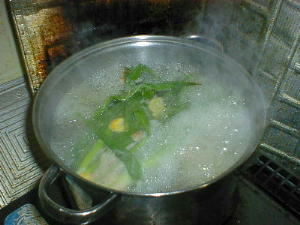
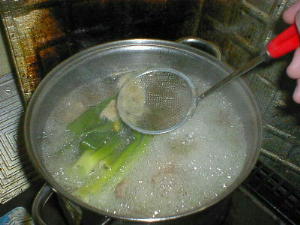
-Lower fire to low and continue scooping out any scum.

KAKUNI-RECIPE-3-j

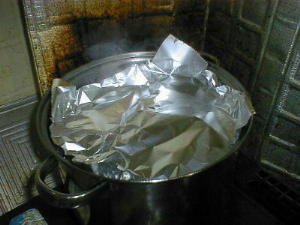
-When no more scum appears, cover with lid or a large piece of foil paper and simmer for a whole hour.
Check from time to time if there is enough soup in the pan. If the soup level goes under that of top of the meat, the taste will become too strong. Add water and Japanese sake until the soup reaches the meat level.

KAKUNI-RECIPE-3-k

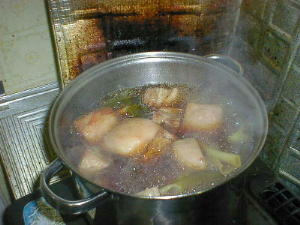
-Above picture shows starting point of the simmering process.

KAKUNI-RECIPE-3-l

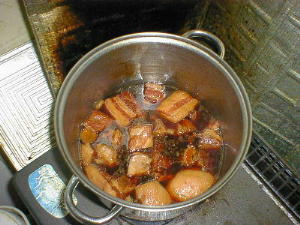
-Above picture shows the finished product inside the deep pan!
Check if the meat is well cooked. A pointed (Japanese-style) chopstick should easily go through the meat all the way.
But this does not mean you can eat it at once.
It is best to switch off the fire, let the cover on, and let it cool completely. Only then, the meat will be fully impregnated with the taste!
It will taste a lot better re-heated before serving it!

Please check the new postings at:
sake, shochu and sushi

—————————————-
日本語のブログ
—————————————-
Vegan Sushi at Sushi Ko (’09/08/31)

SUSHIK-09-08-31-12

On Monday August 31st, my birthday, the Missus invited me to our favourite sushi restaurant in Shizuoka City, namely Sushi Ko!
There are many reasons for Sushi Ko to be our favourite sushi restaurant that I have mentioned many a time before: supreme fish and vegetables (and even meat), great side dishes, including cooked dishes, originality, great service and willingness to tackle customers’ challenges! On top that add a great list of sake, shochu and even wines! As for the icing the prices are more than reasonable and clearly indicated!
Omnivores should check HERE for the full article!

Although neither of us is vegan, mr. Oda and I have this little game every time of a challenge consisting of a plate featuring at least four vegan sushi.
Here is what the chef came with this time:

SUSHIK-09-08-31-13

Himenegi/young thin leeks reminiscent of French ciboulette.

SUSHIK-09-08-31-14

Kaiwaredaikon/Japanese radish sprout, lightly boiled and topped with some umeboshi/Japanese pickled plum.

SUSHIK-09-08-31-15

Betarazuke/daikon lightly pickled in sweet vinegar. In this cases served with a piece of shiso/perilla leaf between the shari/sushi rice and the neta/topping. Some lime skin was grated ontop making for a sweet sophisticated taste!

SUSHIK-09-08-31-16

Mitsuba/Trefoil: the stems and leaves were slightly boiled and sparated, making for a bicolour combination accentuated by finely cut kyuri/cucumber!

Sushi Ko
shizuoka City, Aoi Ku, Ryogae-cho. 2-3-1 (Aoba Koen)
Tel.: 054-2512898
Business Hours: 17:00~25:00. 17:00~23:00 (Sundays)
Closed on Wednesdays
Reservations recommended
Credit cards OK
HOMEPAGE (Japanese)

Please check the new postings at:
sake, shochu and sushi

—————————————-
日本語のブログ
—————————————-
Japanese Cuisine: Kakuni-Recipes 2

KAKUNI-RECIPE-2-a

Here the second of a series of recipes for Kakuni, a bit more sophisticated than the first one, but still very easy!

INGREDIENTS: For 4 people

-Large raw pork belly lumps: 1 kg
-Fresh ginger: choose a root (or part of), about 5cm long and 2 cm thick/Sliced
-Brown sugar: 50 g
-Honey: 50 ml (liquid)
-Japanese sake: 60 ml
-Soy sauce: 120 ml
-Water: 600 ml
-Star anise: 1

RECIPE:

KAKUNI-RECIPE-2-b

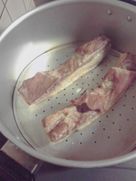
-Steam pork in steamer on a low fire for 2 hours.

KAKUNI-RECIPE-2-c

-Cool down pork completely. This is important as this will help tenderize the meat!
Cut in bite size.
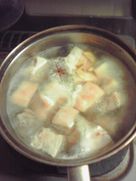
Put all the pork in deep pan. Add water, Japanese sake, sliced ginger, brown sugar and honey.

KAKUNI-RECIPE-2-d

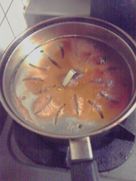
-Add soy sauce and star anise. Simmer on a low fire for 30 minutes. Keep taking out the foam to remove harshness.

KAKUNI-RECIPE-2-e

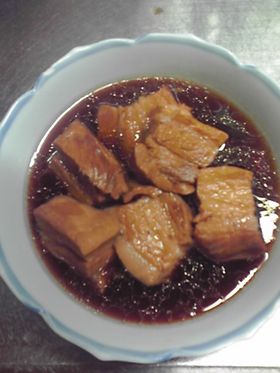
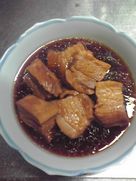
-When ready serve with its juices/soup and strong mustard.

NOTE:
Do not add star anise at once as the taste might become overwhelming for some people.
Of course, this recipe is adapatble.
You may add chili pepper and other spices of your preferences, or even Chinese ingredients!

Please check the new postings at:
sake, shochu and sushi

—————————————-
日本語のブログ
—————————————-
Japanese Cuisine: Kakuni-Recipes 1

KAKUNI-RECIPE-1-a

Here the first of a series of recipes for Kakuni, that is a very basic one!

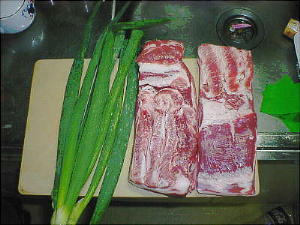
INGREDIENTS: -Large raw pork belly lumps: 1 or 2 (depending on thickness and width)
-Fresh ginger: 1 or 2 pieces (5×5 cm)
-White leek: 1
-Rice vinegar: 50 ml
-Soy sauce: 50 ml
-Sweet sake/mirin: 50 ml
-Honey: 1 tablespoon
-Water: 4–~500 ml

RECIPE:

-Thinly slice the fresh ginger. Cut the leeks into small trunks. Punch holes in the pork with a fork to help “taste going inside”.

KAKUNI-RECIPE-1-b

-Fry pork on a frypan on all sides on a strong fire until all colour has completely changed and fat has changed colour.

KAKUNI-RECIPE-1-c

-In a large pot, drop/pour all ingredients, add por, cover with lid and simmer over low medium fire for 60 minutes.
If meat does not cook as quickle as wanted, raise fire after 30 minutes.
Simer until juices have reduced as low as on pic.

-Cut the pork into large size bites and simmer again for 5 minutes.

-Place on a serving meat cuts on a serveing dis. Pour juices/sauce all over and add some chopped thin leeks.

Please check the new postings at:
sake, shochu and sushi

—————————————-
日本語のブログ
—————————————-
Japanese Cuisine: Kakuni

KAKUNI-1

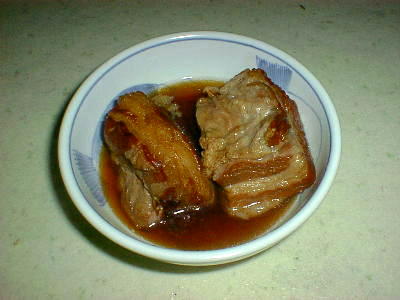
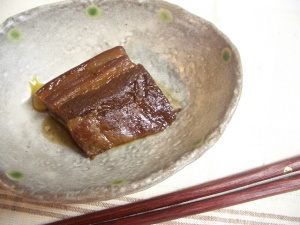
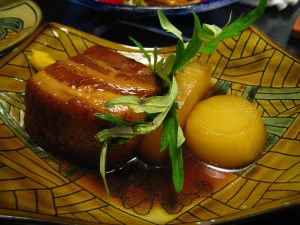
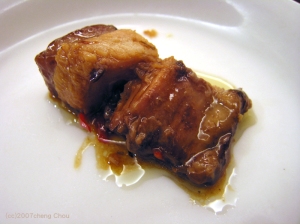
Kakuni (角煮) is a Japanese braised pork dish which literally means “square simmered”.

Kakuni is a meibutsu (名物/famous regional product) of Nagasaki.
Actually this is not a strictly traditional Japanese dish as its most likely Chinese, similar to Dongpo’s pork, though not as heavy in sauce.

KAKUNI-2
Kakuni as served in some restaurants cut and cold

During the Ming Dynasty and Song Dynasty, the main Sino-Japanese trading route existed between Hangzhou and Kyūshū. Many Chinese lived in major Kyūshū port cities, such as Nagasaki and Japanese in Hangzhou. Therefore pork, was popularized in major Kyūshū cities.
These days kakuni is popular all over Japan with very many varieties depending on the region, climate and prevailing tastes.

KAKUNI-RAFTI

Okinawa, probably the region in Japan consuming the largest quantity of pork in Japan has its own recipe called “Rafti”!

PREPARATION:
Kakuni is made of thick cubes of pork belly simmered in dashi, soy sauce, mirin, sugar and sake. By cooking it for a long time over a low temperature the collagen breaks-down into gelatin keeping the meat moist while becoming extremely tender allowing it to be consumed with chopsticks easily. The dish is often served with scallions, daikon and karashi.

Will publish a recipe soon!
——————————————

DONG PO ROU

KAKUNI-DONGPO

For the record, as it is the origin of Kakuni, Dongpo’s pork is a famous Hangzhou dish which is made by pan-frying and then red cooking pork belly. The pork is cut to around 2 inches square in dimensions, consisting of half fat and half lean meat. The mouth feel is oily but not greasy, with the fragrance of wine.

ORIGINS:
Legend has it that while Su Dongpo was banished to Huangzhou, in a life of poverty, he made an improvement of the traditional process. He first braised the pork, added Chinese fermented wine and made red-braised pork, then slowly stewed it on a low heat. This dish was first launched in Huangzhou, then spread to Hangzhou, the capital of the Southern Song Dynasty, flourished, and then became one of Hangzhou’s most famous dishes.

Please check the new postings at:
sake, shochu and sushi

—————————————-
日本語のブログ
—————————————-
Japanese Cuisine: Chazuke

CHAZUKE-1

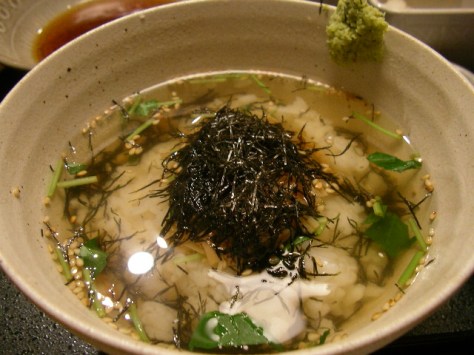
Chazuke (茶漬け, ちゃづけ) or o-chazuke (お茶漬け, from o + cha/tea + tsuke/submerge, marinate) is a simple Japanese dish made by pouring green tea, olong tea, dashi, or hot water over cooked rice roughly on its own or accompanied by all kinds of toppings.
It is very popular in izakaya at the end of the meal, or in homes in the evening making use of the rice steamed in the morning.
As Shizuoka is the largest grower of tea and wasabi in Japan, it is a very common way of eating and seasoning leftover rice here!

It is also known as cha-cha gohan.

Common toppings include tsukemono, umeboshi (both types of pickles), nori (seaweed), furikake, sesame seeds, tarako and mentaiko (salted and marinated Alaska pollock roe), salted salmon, shiokara (pickled seafood) and wasabi.

This dish first became popular in the Heian period, when water was most commonly poured over rice, but beginning in the Edo period, tea was often used instead.

In Kyoto, ochazuke is known as bubuzuke. When a Kyoto native asks if a guest wants to eat bubuzuke, it really means that the person has overstayed and is being politely asked to leave.

Since the 1970s packaged “instant ochazuke”, consisting of freeze-dried toppings and seasonings, have become popular.

Chazuke, for all its humble origins can become a fairly sophisticate dish of its own as shown by a few examples below:

CHAZUKE-2

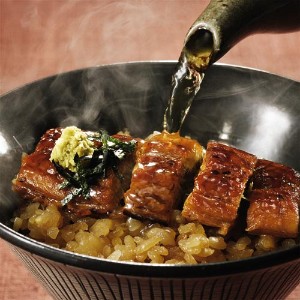
In Shizuoka we pour hot green tea over a bowl of rice and broiled eel!

CHAZUKE-3-TAI

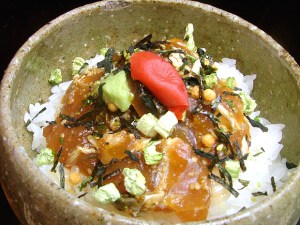
Over Tai/Seabream sashimi!

CHAZUKE-4-SALMON

With salmon, especially in Hokkaido!

CHAZUKE-5-ABURI-MAGURO

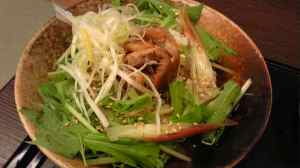
Even more sophisiticated with aburi maguro/seared tuna, and chopped fresh vegetables!

CHAZUKE-6-TONKATSU

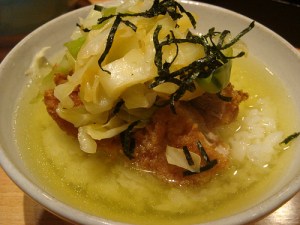
With tonkatsu for the big appetites!

CHAZUKE-7-MUSUBI

With a grilled “musubi” for more rice!

Please check the new postings at:
sake, shochu and sushi

—————————————-
日本語のブログ
—————————————-
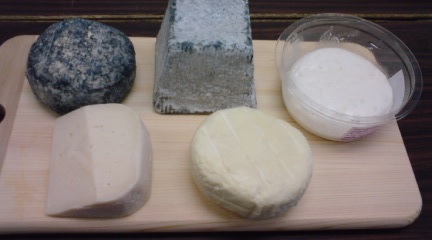
Japanese Cheese: Tokachi Millenium Forest

TOKACHI-CHEESE1

The Japanese have been steadily increasing their own cheese production for the last 10 years or so with some reamarkable results.
Moreover, these cheese have slowly but steadily become available over the whole country at specialised shops and department stores.

TOKACHI-CHEESE2

My last discovery concerns a whole range of goat cheeses created by Fran Fran Farm under the name of Tokachi Millenium Forest Company. The company was founded on September 21st 1996 with the idea of producing local products and promoting the environment.
The cheeses, if somewhat mild in taste, are definitely worth exploring!

Here is what I found about them:

TOKACHI-CHEESE3
http://www.tokachi.com/

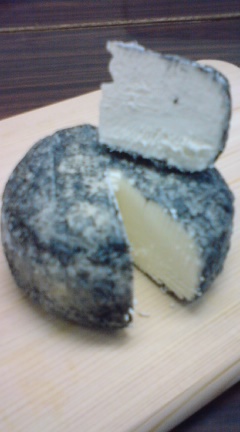
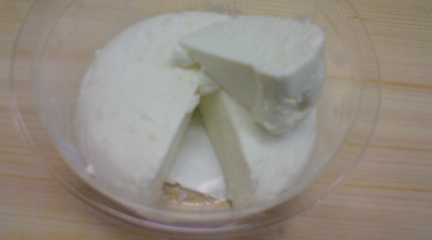
This cheese is inspired by, if not the shape, French Saint-Maure, a fresh goat-cheese type covered with wood ash.
Firm, but easy, it is very mild. To be savoured on its own.
Pasteurized.

TOKACHI-CHEESE4

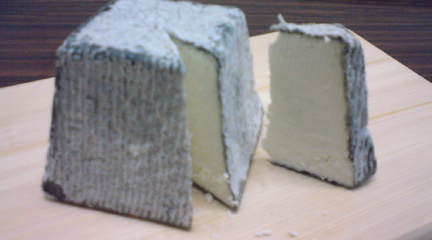
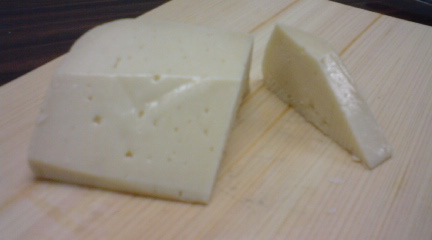
This particular cheese has the shape, colour and texture, and the taste of a French Valencay. Solid but soft on the tongue. Great on its own or with a salad.
Pasteurized.

TOKACHI-CHEESE5

This cheese is semi-hard type, very reminscent of the same produced in Italy.
Stronger taste, but very pleasant. Great on its own or cooked.
Pasteurized.

TOKACHI-CHEESE6

This cheese is reminiscent of a French Santranges before aging dries it up and leaves mold on its surface.
Firm in texture,but soft on the tongue in spite of a pronouced taste.
Would be greated toasted on a salad!
Pasteurized.

TOKACHI-CHEESE7

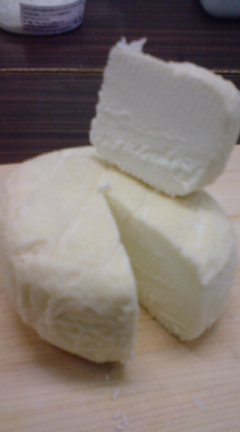
This cheese is the only one made from raw milk in that series.
Very much like a fresh Brousse from Corsica, France. Has already developped a strong taste of its own. If aged properly, coild become a very interesting cheese. To be eaten on its own with a Port!

All these are surprisingly “mature” in taste for Japanese cheese, which shows that cheese in Japan definitely has a future!

Fran Fran Farm
Hokkaido, Kamikawa Gun, Shimizu Cho, Hatainan, 10 sen
Tel.: (81)(0)156-63-3400
HOMEPAGE

Please check the new postings at:
sake, shochu and sushi

—————————————-
日本語のブログ
—————————————-