Tag Archives: Tea

Tea as Food!

fugetsuro-2.jpg

(from top middle, clockwise: Salted Cuttle fish marinated in tea leaves and rice yeast, conger eel pike and urchin in green tea jellied fish broth, tea leaves walnut tofu curd, tuna simmered in green tea with tea leaves dumpling cake, matsutake mushroom cooked in tea leaves)

Tea is mainly known as a drink all over the World in spite of puddings and a limited variety of desserts made with red or green tea.
Shizuoka Prefecture where more than 50% of all green tea in Japan has witnessed some gastronomic research by local chefs of all leanings and events have regularly been organised to share the information and skills.

Fugetsuro is one of the restaurants in Shizuka holding such welcome events:

fugetsuro-1.jpg

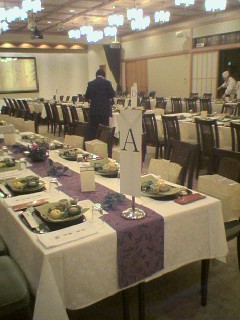
Above is a view of a dinner Mr. Hitoshi Yamada, Master Chef at Fugetsuro was asked to design for some 120 guests with the overriding concept that tea must be included in all dishes.

Including the first dish described above, the menu ran as follows (I let you judge!)
fugetsuro-3.jpg

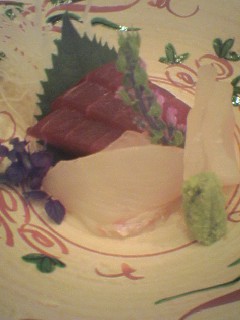
Raw fish assortment: Tuna, seabream, sole, seasoned with fresh tea, edible flowers, salt and soy sauce.

fugetsuro-4.jpg

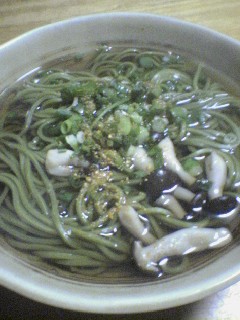
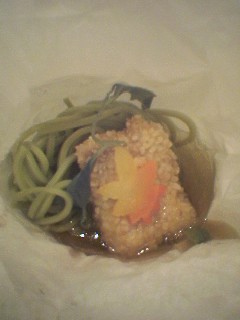
Surugani: tea sob/buckwheat noodles, seabream cooked in whole rice, “kouyou” carrot, tea leaves.

fugetsuro-5.jpg

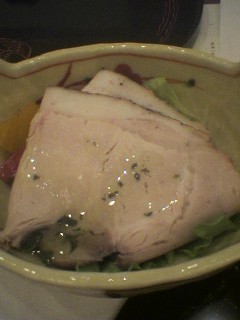
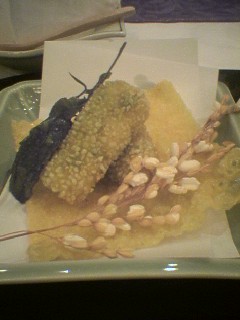
Oven-baked black pork seasoned with tea, five color vegetables, tea sauce.

fugetsuro-6.jpg

Tofu bean curd and whole rice Pouch, deep-fried tea leaves. Seasoned with
“macha” tea salt.

fugetsuro-7.jpg

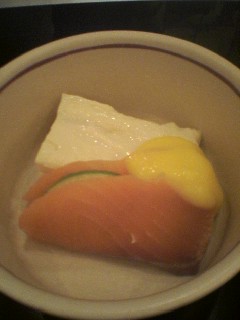
Autumn salmon marinate in seaweed and tea, yuuba/bean curd sheet. Seasoned with golden vinegar.

fugetsuro-8.gif

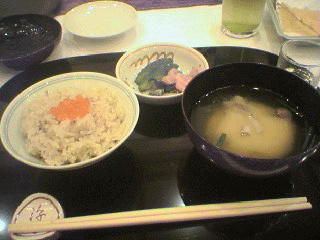
Tea rice, salmon roe, soup.

fugetsuro-9.jpg

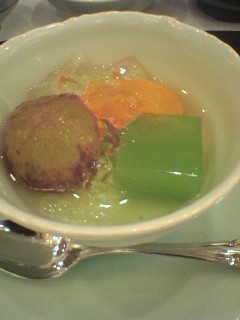
Persimmon, grape, “macha” tea Bavarois, green tea cube jelly.

Fugetsurou
420-0852 Shizuoka City, Aoi Ku, Koya Machi, 11-1
Tel.: 054-2526500
Fax: 054-2528411
Homepage (Japanese)

RECOMMENDED RELATED SITES:
Warren Bobrow
Wild River Review
Bread + Butter
5 Star Foodie
Frank Fariello
Mangantayon
Hapabento
Elinluv Tidbit Corner
Think Twice
Oyster Culture
Tokyo Terrace
Maison de Christina
Chrys Niles
Comestilblog
Greedy Girl
Bouchon For 2

Please check the new postings at:
sake, shochu and sushi

—————————————-
日本語のブログ
—————————————-

The Tea Museum/O Cha No Sato

TEA-MUSEUM-2

Shizuoka Prefecture produces between 45 and 55% of all green tea in Japan depending on the year and official surveys. Moreover, 70% of all tea made in this island finds it way every year at auctions and sales held within the confines of this central Prefecture.

The Tea Museum in Kanaya, Shimada City, would be a sufficient reason to visit this relatively unknown tourist destination, but you could also include it in a grander tour as it stands near Shin Kanaya Station where you could board one of three daily Steam Locomotive trains running up to Senzu Hot Spring resorts along the Oi River and unending tea fields. Another option would be to walk along the Old Tokaido Paved Road through mountain and forest, or along the main road circling its way up over beautiful vistas of the Oi River and its surrounding landscapes.
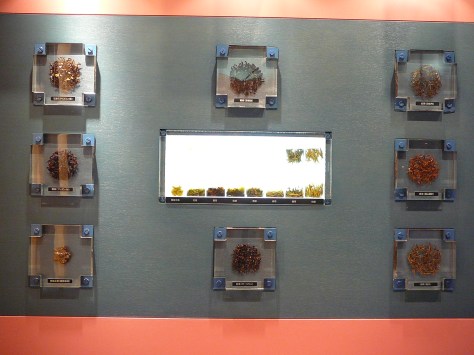
TEA-MUSEUM-3
Tea leaves Exhibit

Serving and drinking a cup of tea is an exchange of hospitality. It is evident that tea is in fact one of the very foundations of Japanese culture.
At The Tea Museum you can learn by experiencing its history and culture hands-on
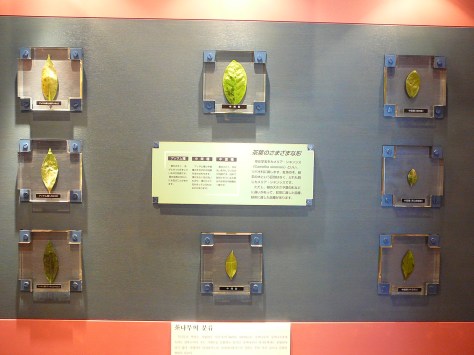
TEA-MUSEUM-4
Tea leaves Exhibit

Tea has its origin in the mountain ranges of Asia. Its culture was developed in China and Japan, and later all over the World. People and environment each play a part in the way tea is enjoyed with amazing variations.
Here in Japan drinking tea takes root very deeply.
However because tea is such a part of our everyday lives we perhaps have come to value it less.
The Tea Museum, therefore, invites everyone to reconsider the original meaning of tea through many exhibits of tea life in the World.
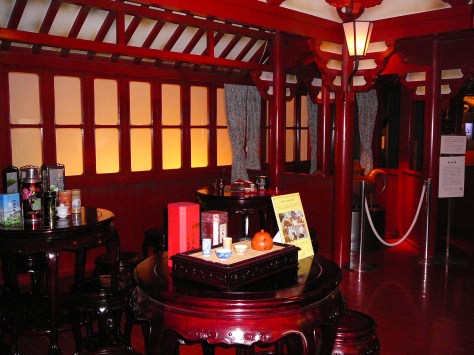
TEA-MUSEUM-5
Huxinting/湖心亭 Tea Room in Shanghai

First, as you enter the small lobby leading to the exhibition rooms, you will be offered a cup of tea from Kanaya and invited to check the ninety varieties of tea from thirty countries displayed inside glass drawers you may open to feel and smell their contents!
Then, as you follow the visit route, you will discover the highly sophisticated ambiance of Chinese Imperial Era inside the reproduction of the famous Huxinting/湖心亭 Tea Room in Shanghai, the simplicity of a typical Tibetan house in Nepal, the great setting from a Turkish Restaurant in Ankara, or the quaint atmosphere of a traditional British household!
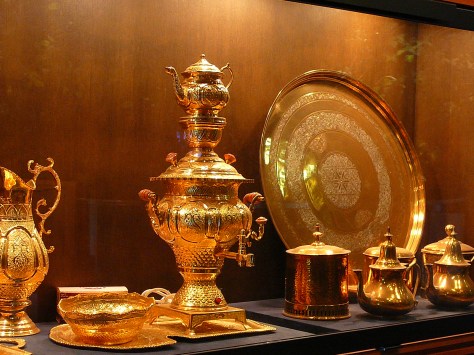
TEA-MUSEUM-6
Samovar and tea utensils from Russia

Other exhibits include a replica of one of the oldest tea trees in the World, from Yuna, China, a scaled down landscape of tea fields, farms and growers in Japan, and the History of Tea in Japan.
TEA-MUSEUM-8
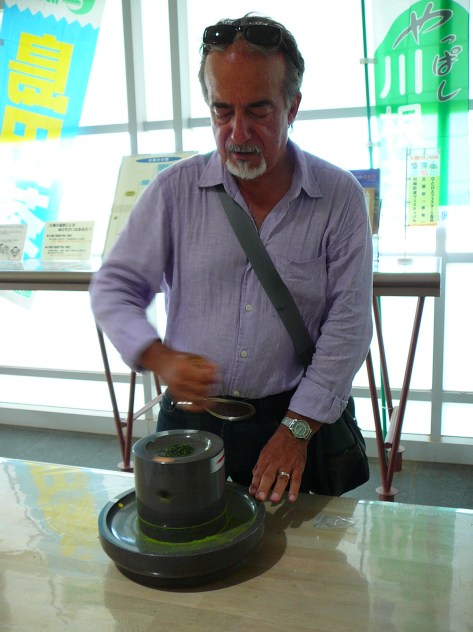
Grinding your own matcha!
Check this site for more information!

Real tea lovers will also be able to sample and grind their own matcha tea in situ!
TEA-MUSEUM-1
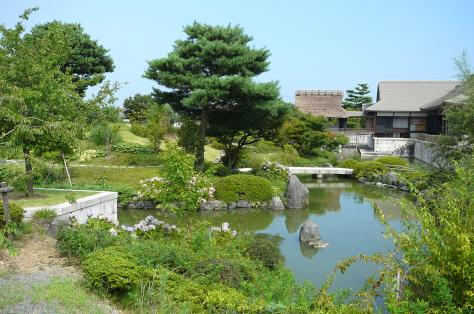
Tea House Garden

Now, the main attraction is the Japanese Tea House/Ocha no Sato-お茶の里!
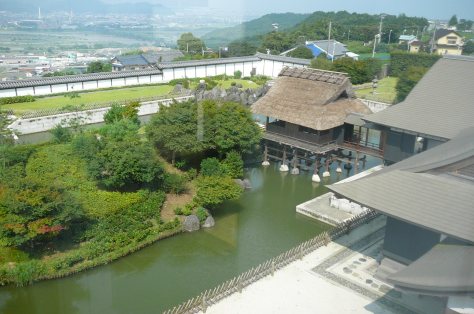
The tea house, tea rooms and extensive garden are reconstructions of original architectural works of Kobori Enshu-小堀遠州 (1579~1647), a renown magistrate and tea master from the early Edo Era.
The east garden of the Sento Palace in Kyoto, the residence of Emperor Gomizunao-o after he abdicated the throne in 1629, has been recreated there.
The Japanese garden is open to visitors free of charge.
Before entering the tea house, walk along the Yatsuhashi-八橋 (eight-wooden plank bridge), enter the house through Kouhoukyo-向峯居, the arbor of the official residence for the Chief Administrative Judge of Fushimi, and visit Taiunkaku-対雲閣, tea room from the Iwashimizu-hachimangu Temple and Rinsuitei-臨水亭, tea room of the official residence of the Chief Administrative Judge of Fushimi.
TEA-MUSEUM-7
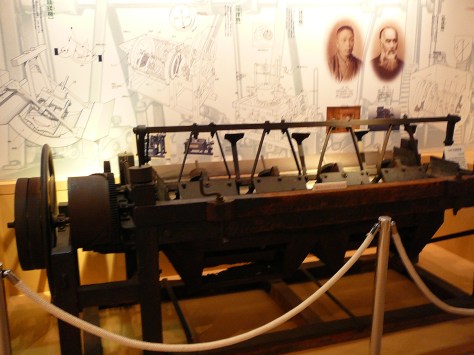
Tea History in Japan

Before leaving the Tea Museum pay a visit to the small but very interesting library if you can read Japanese, the Yume Ichiba Shop to purchase local products and souvenirs or Restaurant Moegi for a well-earned refreshment!

Access:
Train: 5 minutes by bus or taxi from Kanaya Station on the JR Tokaido Line.
Car: 10 minutes by car from Sagara/Makinohara I.C. on Tomei Expressway
Or 15 minutes from Ojiro I.C. Bypass

Museum visitor’s regular exhibition fee: 600 yen per adult. Cheaper for students, groups and disabled people.
Service hours: 9:00 a.m.~5:00 p.m.
Museum and Teahouse visitor fee: 1,00 yen per adult. Cheaper for students, groups and disabled people.
Service hours: 9:30 a.m.~4:00 p.m.

The teahouse only admission is 500 yen per person (no discount)

Address: The Tea Musuem/Ocanosato, 3053-2, Kanaya, Shimada Shi, Shizuoka Ken, 428-0022 Japan
Tel: (81)0547-46-5588
Fax: (81)0547-46-5577
Closed every Tuesday (the following day when Tuesday is a National Holiday), December 29th~January 3rd.
Parking: free of charge for 9 large buses and 90 cars.

HOMEPAGE

Please check the new postings at:
sake, shochu and sushi

—————————————-
日本語のブログ
—————————————-
Japanese Vegan Udon, Dried Shiitake and Konbu Salad

SHIITAKE-UDON-UMEBOSHI-SALAD-1

I’ve been looking around me recently for ideas so as to help my vegan and vegetarian friends with new ideas. Here is a simple one I just found for a healthy and tasty salad:
Japanese Vegan Udon, Shiitake and Umeboshi Salad!

INGREDIENTS: For one dish

-Udon: 1 pack of boiled udon ready for use
-Dried Shiitake Mushrooms: 4
-Konbu/seaweeed
-Salad Oil: 3 large tablespoons
-Soy sauce: 50 ml
-Mirin/sweet sake: 50 ml
-Real mineral water: 100 ml
-Cucumber, lettuce, mini tomatoes: as per taste

RECIPE:
SHIITAKE-UDON-UMEBOSHI-SALAD-2
-In a pan, drop cut dried shiitake, cho@@ed konbu/seaeed and oil. Fry gently.

-On a low fire add soy sauce and mirin.

SHIITAKE-UDON-UMEBOSHI-SALAD-3
-When you are satisfied that the shiitake are soft enough, drop the whole into mixer,nlender. Add water and process unti you obatin a sauce like in the picture.

-Boil udon quickly. Cool them under running clear water. Drain throuroughly and place on a dish.

-Arrange lettuce, cucumber on top of udon as on the picture, showing up enough of the udon.

SHIITAKE-UDON-UMEBOSHI-SALAD-4
-pour the sauce on top and decorate with mini tomatoes.

Enjoy!

Please check the new postings at:
sake, shochu and sushi

—————————————-
日本語のブログ
—————————————-
Japanese Vegan Treat: Cha Soba/Tea Soba

cha-soba1.jpg

Shizuoka Prefecture is celebrated for its green tea all the World.
It grows no less than 50% of the national crop.
Vegetarians (and vegans!), rejoice!
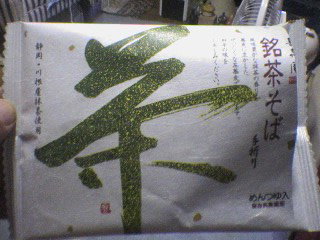
A company called Ikejima Foods in Hamakita Ku, Hamamatsu City has come up with Tea Buckwheat Noodles/Cha-soba! (or Tya Soba)!
Tea comes from the Kawane area which produces some of the best tea in the Prefecture.
The noodles contain no preservatives, and neither the noodles, nor the tsuyu/soup contains any animal extracts whatsoever (no milk or egg products).
One pack contains enough for 4 small or 2 medium portions.

cha-soba2.jpg

As for cooking, here are simple instructions:
Cold Noodles style:
Dilute tsuyu/soup in 100 ml of clean water.
In one big pan heat 2 litres of water. Bring to boiling point. Drop in noodles. Lower fire to small. Stir with long chopsticks. The noodles are ready when they readily come to the surface. Wash them rapidly under running cold water inside a “zaru”/small basket or inside a bowl full of cold water until noodles are cool enough. Drain water and place on a flat dish over a bamboo net if possible. Eat noodles by dipping them in tsuyu/soup to which you can add freshly cut raw leeks and wasabi (or any spices you fancy!)

Hot noodles style:
Dilute tsuyu/soup into 230 ml of hot water.
Cook noodles as for cold style. Drain and drop into bowl full of tsuyu/soup. Add vegetables, freshly cut raw leeks and spices to taste.

“Meicha Soba”
Ikejima Foods
Hamamatsu City, Hamakita Ku, Terajima, 2351
Tel.: 053-587-1025


The Japan Blog List

Please check the new postings at:
sake, shochu and sushi

—————————————-
日本語のブログ
—————————————-
Japanese Cheese: Hokkaido Raw Milk Cheeses Plate

hok-cheese-2

There is a very welcome competition in Shizuoka City when it comes to cheese, both from Japan and abroad, because of the awareness created by Keiko Kubota at Gentil.
Now, I have the luck to be very friendly with the owner of Nagashima Liqueur Shop in Shizuoka City who spent a long time studying in France. As a wine lover, he is very fond of cheese and retails a few very well-chosen ones in his shop.

These days he is introducing a series of delicious raw milk (unusual in Japan till recently) from Hokkaido.
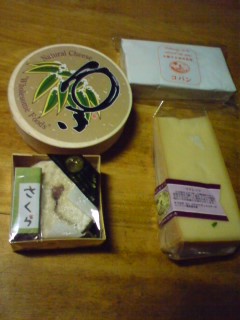
Last night I had the pleasure to taste them at home at last:

hok-cheese-1

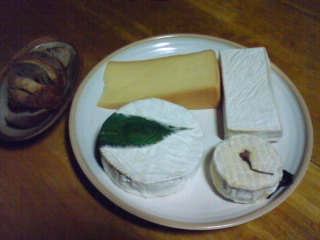
Top left: Sasa no Yuki
Top right: Koban
Bottom Left: Sakura
Bottom right: Raclette

hok-cheese-4

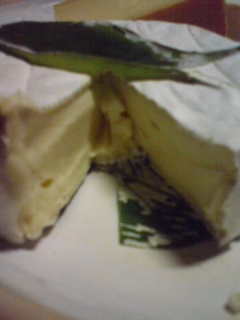
Sasa no Yuki means Bamboo Grass Snow. Such short ban\mboo grass are found everywhere in Japan and have been used for eons to wrap food. A bamboo grass is “wrapped” around the cheese reminiscent of the French Feuille de Dreux Cheese.
Mild Camembert type, very easy to eat on some great toasted bread!
It is the size of a Camembert, 250g and like all these cheeses is exclusively made form Cow’s raw milk with the addtion of a little salt.
All four cheeses can aged at home.

hok-cheese-5

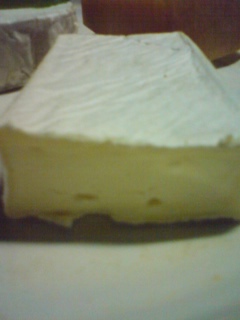
Koban is another soft type cheese reminiscent of Pave and Camembert in France. Very mild and easy on the palate.
Weight: 150 g

hok-cheese-3

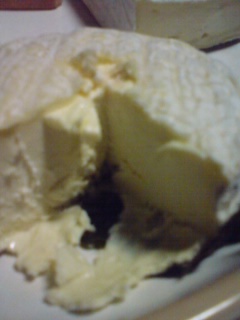
Sakura/Cherry Blossom is considered as the best Japanese creation when it comes to cheese. It received prizes all over the World, especially Germany, and was served at the last G8 Meeting in Hokkaido!
Weight: 90g
Served with a cherry blossom pickled in salt.
Reminiscent of Saint-Marcellin, but slightly milder, it is extremely elegant and complex.
Can be matured at will!
A discovery!

hok-cheese-6

Raclette. made in the same way as Swiss and French Raclette, it is milder and great heated and flowing on brea, as a Fondue, as it is or toatsed on muffins!
It had been matured for 3 months.
Won the Best Japanese Cheese Contest in 1998.
Weight: 200g per cut.

Nagashima Saketen
Address:
420 Shizuoka City, Aoi Ku,Ryuunan, 1-12-7
Tel.: 054-2459260
Fax: 054-2459252
(Japanese Blog)

————————-
Please check the new postings at:
sake, shochu and sushi

—————————————-
日本語のブログ
—————————————-
Green Tea: New Green Tea being harvested and sold in Shizuoka Prefecture!

tea-shimbun
(Courtesy of Shizuoka Shimbun)

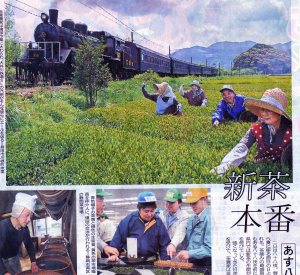
Shizuoka Prefecture produces 50% of all green tea grown in Japan.
“Shinsha”/New Tea is being harvested in earnest and sold after a long wait!

Picture above shows tea being handpicked in Kawane, Shimada City, home of some of the best green tea in Jaapn, along the railway line used by the Oikawa Steam Locomotive, one of the very few left in Japan!

Tea is being dry-roasted (picture left bottom) , and auctioned (picture right bottom) in Shizuoka City.

————————-
Please check the new postings at:
sake, shochu and sushi

—————————————-
日本語のブログ
—————————————-
New Green Tea Season opened in Shizuoka!

shinsha-1

The new green tea season has just opened in Shizuoka Prefecture!
Our Prefecture produces more than half of all green tea harvested in Japan and is the leader not only in quantity but also in quality!

If you happen to stop at Shizuoka JR Railway Station, keep an eye open!

shinsha-2

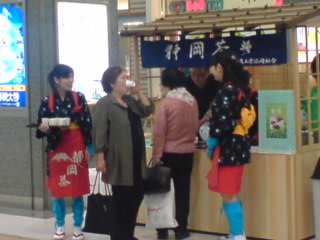
The MOTOYAMA Tea Growers Association is offering a free tasting of their new tea to all and sundries!
New tea is called “Shinsha” (New Tea) or “Ichiban cha” (First Tea) in Japanese.
A great occasion to make acquaintance with Japanese Nationla Beverage!

————————-
Please check the new postings at:
sake, shochu and sushi

—————————————-
日本語のブログ
—————————————-
Tea Buckwheat Noodles: “Tya-soba”


The Japan Blog List

Please check the new postings at:
sake, shochu and sushi

—————————————-
日本語のブログ
—————————————-
cha-soba1.jpg

Shizuoka Prefecture is celebrated for its green tea all the World.
Vegeterians (and vegans!), rejoice! A company called Ikejima Foods in Hamakita Ku, Hamamatsu City has come up with Tea Buckwheat Noodles/Tya-soba!.
Tea comes from the Kawane area which produces some of the best tea in the Prefecture.
The noodles contain no preservatives and neither the noodles, nor the tsuyu/soup contains any animal extracts whatsoever (no milk or egg products).
One pack contains enough for 4 small or 2 medium portions.

cha-soba2.jpg

As for cooking, here are simple instructions:
Cold Noodles style:
Dilute tsuyu/soup in 100 ml of clean water.
In one big pan heat 2 litres of water. Bring to boiling point. Drop in noodles. Lower fire to samll. Stir with long chopsticks. The noodles are ready when they readily come to the surface. Wash them rapidly under running cold water inside a “zaru”/small basket or inside a bowl full of cold water until noodles are cool enough. Drain water and place on a flat dish over a bamboo net if possible. Eat noodles by dipping them in tsuyu/soup to which you can add freshly cut raw leeks and wasabi (or any spices you fancy!)

Hot noodles style:
Dilute tsuyu/soup into 230 ml of hot water.
Cook noodles as for cold style. Drain and drop into bowl full of tsuyu/soup. Add vegetables, freshly cut raw leeks and spices to taste.

“Meicha Soba”
Ikejima Foods
Hamamatsu City, Hamakita Ku, Terajima, 2351
Tel.: 053-587-1025

Tea for food: Fugetsuro

Please check the new postings at:
sake, shochu and sushi

—————————————-
日本語のブログ
—————————————-
fugetsuro-2.jpg
(from top middle, clockwise: Salted Cuttle fish marinated in tea leaves and rice yeast, Conger eel pike and urchin in green tea jellied fish broth, Tea leaves walnut tofu curd, Tuna simmered in green tea with tea leaves dumpling cake, Matutake mushroom cooked in tea leaves)

On Thursday, November 1st was held a Tea Dinner Party at Fugetsuro Restaurant, Shizuoka City, as part of the events organized for the World Tea Festival.
Apart of the usual personalities, that food was the main interest.
“Tea for food” was the them a opposed to “tea as drink”.
fugetsuro-1.jpg
Mr. Hitoshi Yamada, Master Chef at Fugetsuro was asked to design a dinner for some 120 guests including tea in all dishes.

Including the first dish described above, the menu ran as follows (I let you judge!)
fugetsuro-3.jpg
(Raw fish assortment: Tuna, seabream, sole, seasoned with fresh tea, edible flowers, salt and soy sauce)

fugetsuro-4.jpg
(Surugani: tea sob/buckwheat noodles, seabream cooked in whole rice, “kouyou” carrot, tea leaves)

fugetsuro-5.jpg
(Oven-baked black pork seasoned with tea, five color vegetables, tea sauce)

fugetsuro-6.jpg
(Tofu bean curd and whole rice Pouch, deep-fried tea leaves. Seasoned with “macha” tea salt)

fugetsuro-7.jpg
(Autumn salmon marinate in seaweed and tea, yuuba/bean curd sheet. Seasoned with golden vinegar)

fugetsuro-8.gif
(Tea rice, salmon roe, soup)

fugetsuro-9.jpg
(Persimmon, grape, “macha” tea Bavarois,green tea cube jelly)

Fugetsurou
420-0852 Shizuoka City, Aoi Ku, Koya Machi, 11-1
Tel.: 054-2526500
Fax: 054-2528411
Homepage (Japanese)