Tag Archives: Vegan

Sushi Rice: The Recipe

015
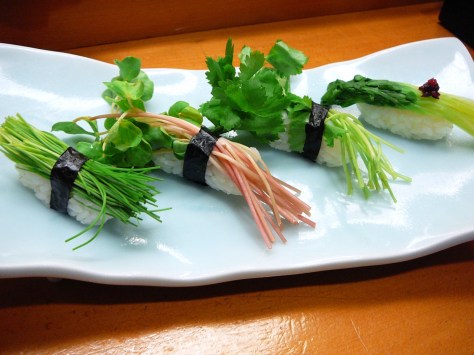
Vegan Sushi at Sushi Ko, Shizuoka City

I’ve been asked for some time about the secrets of making sushi rice, or “shari/シャリ in Japanese, but actually there are no real secrets, only a method.
The following recipe is professional and involves a large volume. Think of a sushi party before preparing it. There are simpler versions (the Missus is particularly good at it!) and I’ll be glad to reply to enquiries!
The advantage of this recipe is that it will fit the needs of vegans, vegetarians and omnivores alike. It is also open to a lot of variations. Read the notes at the end!

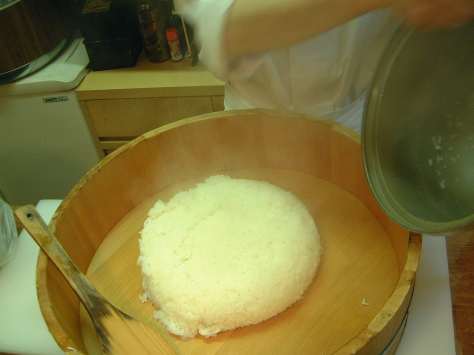
-Check the pics for the tools you will need, or their subsitutes.
-I do not explain the rice steaming itself. I assume you Know how to steam rice.
Note: a simple trick to add taste to your rice: steam with a piece of konbu/昆布/seaweed!

INGREDIENTS:

-Rice: 3 “go”/540 cc/2.7 cups. A “go” is a traditional measure in Japan: 180 cc.

Sushi Stock (about 120 cc/0.6 cup):
-White sugar: 55 g
-Salt: 18 g
-Rice vinegar: 82 cc/0.82 cup
Mix all above ingredients until dissolved and keep ready.

RECIPE:
SUSHI-RICE-1

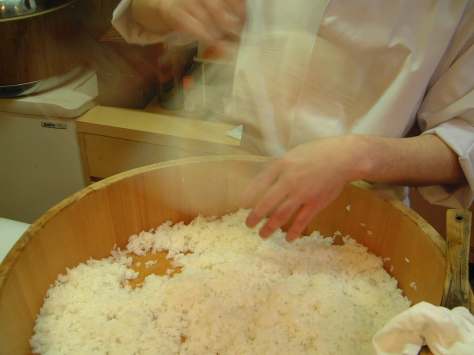
Steam the rice to slightly harder than usual. Drop inside wooden sushi bowl/飯台/handai (keep in mind to humidify the bowl with clean water before using!)
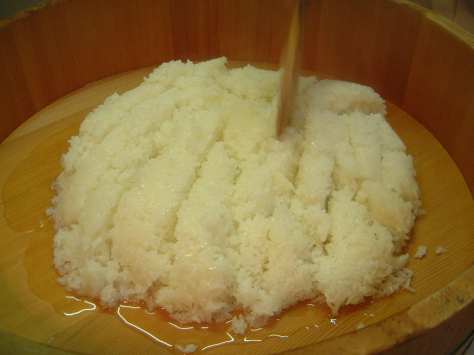
SUSHI-RICE-2

While the rice is still hot (important!) pour sushi stock all over it.
A technique is to hold the wooden rice spoon/しゃもじ/hamoji over the rice and pour the stock onto it for better uniformity.
“Cut” through rice with wooden sushi spoon/shamoji.
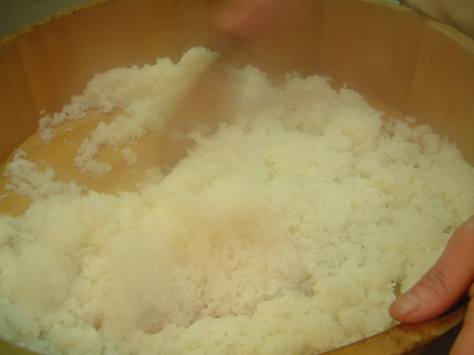
SUSHI-RICE-3

After having made “cuts” through the rice, mix quickly (this is probably the most important step!). As the stock will flow down, mix from bottom to top, scooping the rice and flipping it over.
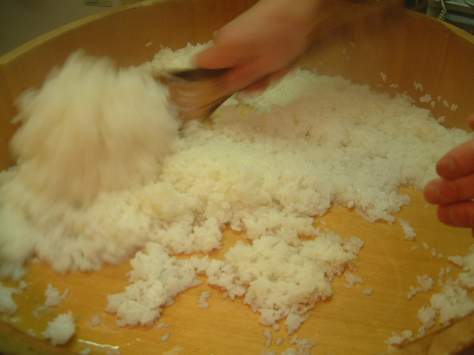
SUSHI-RICE-4

Scoop rice and drop it on top and “cut” through.
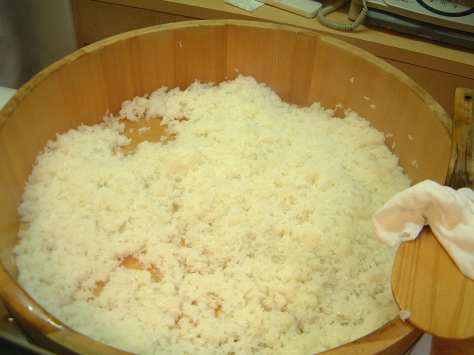
SUSHI-RICE-5

When mixing the rice, bear in mind that overmixing will result into sticky rice. Just “cut” through and mix. It should take only a minute. Next spread the rice and cool it with a hand held traditional fan/うちわ/uchiwa for 10 seconds.
SUSHI-RICE-6

By cooling the rice with a fan/uchiwa, it will allow for an even expansion of the vinegar. Turn rice over once more and fan it for 10 more seconds.
If you use the rice at once, it will get sticky. Leave it covered with a humid and clean cloth for a couple of hours.
Don’t forget to clean the wooden bowl with clean water after usage!

NOTES:
-The type and brand of rice, vinegar, sugar and salt will all play into the taste. Investigate and experiment!
Depending upon the region, sushi rice will taste vastly different in Japan.
In Tokyo, it will taste almost sour, while it will appear sweet here in Shizuoka.
You may use brown sugar instead of white sugar for a different colour.
But it will be easier to make a mistake in taste balance!
The same if you want to introduce a little soy sauce in the stock!

Please check the new postings at:
sake, shochu and sushi

—————————————-
日本語のブログ
—————————————-
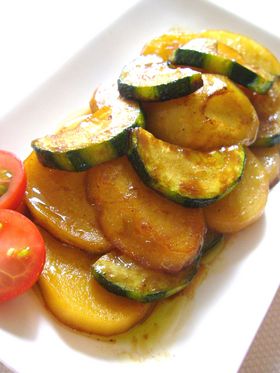
Zucchini and Potato in Soy Sauce Marinade

ZUCCHINI-POTATO-SALAD-1

As Lojol rightly said, zucchini is a very versatile vegetable that can be paired with all kinds of other ingredients.
Here is a simple recipe to illustrate:
Zucchini and Potato Soy Sauce Marinade!

INGREDIENTS: For 3~4 people
-Zucchini: 1 medium large, 200 g
-Potatoes: 2 small, 200 g
-Olive Oil (for frying)
-Salt and pepper: a little to taste
-EV Olive Oil: 1 large tablespoon
-Soy sauce: 2 large tablespoons

RECIPE:
ZUCCHINI-POTATO-SALAD-2

-Withe a vegetable peeler, peel small strips of zucchini skin for better pattern.
Cut Zucchini into 8 mm thick slices and again across to create “half moons”.
Peel skin off potatoes, cut in 8 mm thick slices and clean in clear cold water.

-Drain potatoes (don’t wipe them) and put them inside a heat-resistant bow. Cover bowl with cooking cellophane paper. Leave 4~4:30 minutes inside Microwave oven at 500W.

-Pour soy sauce and EV oil in another bowl and mix well with an electic whisk.

-Heat olive oil in a frying pan and fry zucchini over a fairly fire.

-When the zucchini has aattained a satisfying color on both sides, add potatoes. Fry for 1~2 minutes. Add a little salt (not much needed there) and asome pepper ( a little more might be welcome.
Mix and drop everything into the soy sauce-olive oil marinade while it is still hot.

-Turn over for time to time until it has completely cooled down.

-Serve with a few small tomato slices for better colour presentation!

Please check the new postings at:
sake, shochu and sushi

—————————————-
日本語のブログ
—————————————-
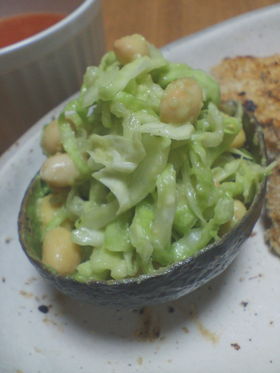
Non-Mayonnaise Avocado and Soy Beans Coleslaw

AVOCADO-CLOESLAW-1

Here is a simple coleslaw recipe that vegans, vegetarians and omnivores alike can enjoy in Summer:
Non-Mayonnaise Avocado and Soy Beans Coleslaw!

INGREDIENTS: For 4 people
-Cabbage: 4~5 leaves
-Onion: half a large one, shredded, washed in cold water and drained before usage
-Avocado: 1 large
-Lemon Juice (or apple vinegar): 1 large Tablespoon
-Soybeans: 100 g. Boiled in water, cooled and drained (if uanavailable, can be replaced with any kinds of beans or chick peas)
-Salt and Pepper: to taste

RECIPE:
Cut the cabbage in vey thin strips (chopped). Drop into a large bowl. add a little salt. Mix and little while.
As explained above, mince onion, washi in clear cold water and drain thoroughly to take off the onion acidity.

AVOCADO-CLOESLAW-2

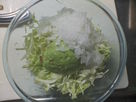
Once the cabbage has become softer, mix with onion, cut avocado and lemon juice. Mix the whole, crushing/mashing the avocado in at the same time.

Once mixed to you liking, add soy beans and check taste. Rectify if necessary.

AVOCADO-CLOESLAW-3

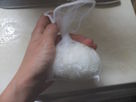
Note: Put chopped onion inside a stocking-style fined netting piece. Keeping it close with your hand, dip it in cold clear water for a while, then take out and press water out. If you do it stongly enough, no need to waste kitchen paper!
Careful about the amount of salt added to the cabbage. Too much and the cabbage will become soggy. If there is too much salt, watch it with clean cold water. The cabbage will taste and feel better if still a little crunchy.
Serve inside a half avocado “skin” (keep some sprinkled with a little lemon juice and securely closed inside a Tuperware box in side the fridge until usage).

Please check the new postings at:
sake, shochu and sushi

—————————————-
日本語のブログ
—————————————-
Avocado and Watermelon Salad

WATERMELON-AVOCADO-SALAD

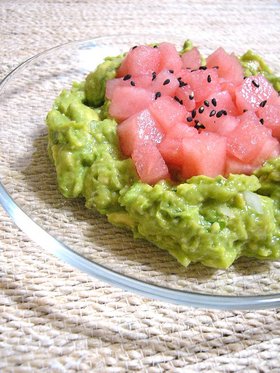
Here is a very simple and basic recipe for a summer snack or starter that should please vegans, vegetarians and omnivores alike: Avocado and watermelon salad!

INGREDIENTS: For 2 ~3 people
-Watermelon flesh without skin or pips/seeds: 50~60 g
-Freshly pressed lemon juice: half a large tablespoon
-Avocado: 1 whole, ripe
-Thinly chopped onion: 1 large tablespoon
-Shiso/perilla leaves: 2~3
-Salt: 1 pinch
-Soy sauce: a little (according to taste)
-Coarsely ground black pepper: a little (according to taste)

RECIPE:
-Cut watermelon in 7~8 mm cubes and sprinkle with lemon juice.
Chop shiso/perilla thinly after having rolled them together.
Take meat out of avocado and mash it.

-In a bowl mix avocado, chopped onion and shiso together. Add salt and soy sauce. Mix well.

-On a plate place avocado mix first. decorate with watermelon. Last sprinkle the coarsely ground black pepper on the watermelon.
Serve.

This still leaves you with plenty of leeway for improvisation and variation!
Enjoy!

Please check the new postings at:
sake, shochu and sushi

—————————————-
日本語のブログ
—————————————-
Tofu Recipe: Tofu and Wakame Seaweed salad

TOFU-WAKAME-SALAD-1

Here is another very easy recipe to help you and the “Tofu Tribe” (Terecita, Elin, Jenn and Jennifer modify and preserve tofu for all kinds of usages!
I’d like to take the opportunity to apologize to Tinako for my past mistake!
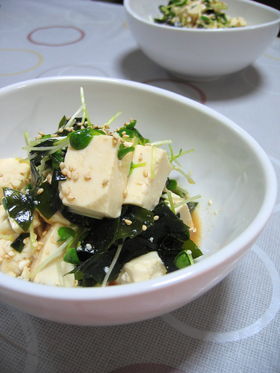
Tofu and Wakame Salad!

INGREDIENTS: For 2~3 people
-Tofu: 300 g
-Salt-preserved wakame: 20 g
If bought dried, let it “come back” in lukewarm water first.
If you are worried about the salt, let them rest in water for a while first and drain.
-Kawaire daikon, or any fresh sprouts available: To taste.
-Ponzu: 2 large tablespoons
-Sesame oil: half a large tablespoon
-White sesame seeds: to taste

RECIPE:
TOFU-WAKAME-SALAD-2

Leave tofu in clean cold water for 30 minutes. Wash and clean wakame seaweed and cut in bite-sized pieces. Cut sprouts in thirds.

TOFU-WAKAME-SALAD-3

In bowl mix seaweed, sprouts, ponzu and sesame oil.

TOFU-WAKAME-SALAD-4

Drain tofu and cut in bite-sized pieces. Mix in.
Place salad in serving bowls and sprinkle white sesame seeds.

Note: You can use either kinu tofu or momen tofu.
You may use green shiso/perilla leaves vinaigrette instead of ponzu.
In summer add cut plum tomatoes.
I personally like to add a little sweet umeboshi/pickled Japanese plums!

Please check the new postings at:
sake, shochu and sushi

—————————————-
日本語のブログ
—————————————-
Shiso/ Perilla Leaves

I felt compelled to answer again questions from foodie friends like Rowena and provide some useful information on “shiso” or perilla/beefsteak plant in a simple posting that I hope will help Japanese food lovers and vegetarians!

First of all, one can grow shiso, be it green or violet, almost anywhere as long as you have plenty of sunshine and water at opportune times (as long as you water it yourself, fine!).
For example, Rowena presently lives in Italy and has successfully grown some from seeds I sent her.

Seeds should be planted in March/ April in the Northen atmosphere, although until June would be fine in Japan and south east Asia. The hotter the prevailing climate, the earlier it should be done. Prepare some moist vegetables-growing soil and make small shallow holes on top at a comfortable distance from each other. drop 2 or 3 seeds in each hole. Cover with more soil and spread a newspar sheet over the lot. Keep in shade. Once the first shoots have come out, take newspaper out and expose to sun all day long. Water morning and evening at the base of the stems, not on the leaves (or they would “burn”!).


By August (or earlier) to September the shiso will start flowering!
These flowers, if picked early enough, are edible!

(Pic taken at Tomii)
Reputable Sushi and Japanese restaurants extensively use them all year round. They make for exquisite decoration and are really tasty!

Now, if you want your own seeds, wait until the flowers and stems turn brown and shake them over a plate. You should get plenty of minuscule seeds for the following year. I checked this very morning with my neighbour, a retired farmer who is looking after his own garden. He said there is little use to keep them indoors in winter unless you want to start a green house business with all the hassles involved! Just collect the seeds and replant! Actually such seeds could become a source of business in Italy and elsewhere!

Now, the leaves can be accomodated in hundred of ways. Pick them up young and tender enough. The Missus keep them in a plastic Tupperware-type box with a sheet of clean kitchen paper imbibed with clean water (put it at the bottom of the box) before storing it in the fridge vegetables compartment.

You can wrap them around nigiri/rice balls instead of nori/seaweed.


(Pic taken at Oddakui)

Make a liberal use of them with sashimi!

They are also great as tempura!
Do not hrow away the small or damaged leaves. Chop them fine and add them to fresh salads or to any stews and ratatouille!

The violet variety is edible of course, although the Japanese do not use for decoration like the green one, except for the flowers.
They usually pickle them for their sake or add them to other pickled vegetables such as cucumber.
They also make juice, sherbet or sauces with them, too.


The Japan Blog List

Please check the new postings at:
sake, shochu and sushi

—————————————-
日本語のブログ
—————————————-
Tofu Recipe: Tofu Shiozuke/Salt-preserved Tofu

TOFU-SALT-1

Here is an easy recipe to help you and the “Tofu Tribe” (Terecita, Elin, Jenn and Jennifer modify and preserve tofu for all kind of usages!
Tofu Shiozuke/Salt-preserved Tofu!

INGREDIENTS:
-Tofu: 1 “cho”/200 g (Kinu or Momen type)
-Salt: 2g

RECIPE:
TOFU-SALT-2

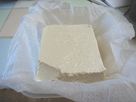
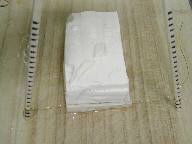
Take tofu block out of its package and put it kitchen working plank. Sprinkle it with 1 g of salt.

TOFU-SALT-3

Cover with a sheet of kitchen paper.

TOFU-SALT-4

Cover the tofu and its kitchen paper with a plastic Tupperware-type box.

TOFU-SALT-5

Turn box and plank over holding them together.

TOFU-SALT-6

Take off plank and sprinkle the tofu bottom face with 1 g of salt.

TOFU-SALT-7

Close paper kitchen over tofu.

TOFU-SALT-8

Close the box and leave inside refrigerator in the evening.

TOFU-SALT-11

Next morning there should be about 20cc of water having seeped through the kitchen paper. Discard water.

TOFU-SALT-12

Wrap again in new clean kitchen paper. Put back into dry Tupperware-type plastic box and close. Put back into fridge until the next morning.
The tofu will have reduced size by half by then.

TOFU-SALT-13

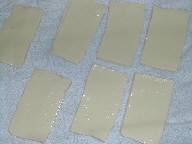
That’s how it would look. Smaller and firmer. More water should have seeped out. Discard it.

USE SAMPLES:

TOFU-SALT-14

On a bowl of freshly steamed rice serve with with thinly sliced raw okra, preserved chrysanthemum leaves. Then pour hot tea on top!

TOFU-SALT-15

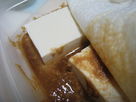
Pickle it with fresh miso for one night and eat it as a snack!

TOFU-SALT-16

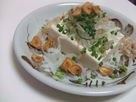
Beautiful in salad with avocado slices!

TOFU-SALT-17

Served with chopped vegetables and garlic chips!

TOFU-SALT-18

Stuffed inside Aburaage with boiled beans then grilled and seasoned with seaweed dashi/stock and ponzu!

Please check the new postings at:
sake, shochu and sushi

—————————————-
日本語のブログ
—————————————-
Oil Varieties

OLIVE-OIL-PRODUCTION
(The Manufacture of Oil drawn and engraved by J Amman in the Sixteenth Century/Wikipedia)

Once again, this morning during my bus ride to work (it’s pouring outside!), I was thinking of my vegan and vegetarian friends and also my omnivore (I’m one of them!) ones. As far as I can recollect, there is little written about oils and I thought I write up a useful posting for all to copy and borrow!

Have you ever wondered how many kinds of oil there are out there?

All right shall we start (and I’m sure to forget some along the way!):

OLIVE OIL
OIL-OLIVES

Now, we all seem to know what olive oile is all about.
But there is only one good type of olive oil: Extra Vrigin Olive Oil! That is what comes out first caused by the natural pressure of all these olives piled upon each other.
The rest is sub-standard, whatever the name.
Back in France (and most probably in may other countries) we have olive oil sommeliers/tasters!
have you ever heard of the expressions: fruitiness, bitterness, pungency, and mouth feel.
And I’m not talking about the olives themselves!
I will not tell and hope I got you hooked!

SWEET ALMOND OIL
OIL-ALMOND

Almond Oil was used as perfume in ancient times.
Light and very fragrant, it is particularly welcome in marinades (raw salmon seasoned with dill or basil) or drizzled over seafood, pasta or fish prior to serving.

ARGAN OIL
OIL-ARGAN

Also called Moroccan Fennel Oil, Argan oil is an oil produced from the kernels of the endemic argan tree, that is valued for its nutritive, cosmetic and numerous medicinal properties. That tree is found only in North Africa.
Bold and wild in taste, it is a favourite of mine. Use it isparingly n salads, couscous and tagines. Works wonders on a beef carpaccio and on goat cheese.

PEANUT and ROASTED PEANUT OIL
OIL-PEANUTS

Peanuts oil is very common, all right, but roasted peanut has a startling flavour. Perfect for salad and cheese dishes. Suited to all warm climate cuisines: Mexican, African, Indonesian.

CANOLA or RAPE SEED OIL
OIL-RAPESEED

The Japanese eat the unopened flowers and young shoots after boiling them.
They reveal a full-bodied in taste with a distinct cabbage flavor. Enhances potato or beet salads. Try it on fresh cottage cheese!

HAZLENUT OIL
OIL-HAZELNUT

Another favourite of mine. I use it extensively in salad dressings.
Hazelnuts are rich in protein and unsaturated fat. Moreover, they contain significant amounts of thiamine and vitamin B6, as well as smaller amounts of other B vitamins.
Suave and lightly aromatic. Great in all types of salads. Replaces butter (vegans, listen!) on all starches, vegetables, fish, pasta, pastries. Adds a festive touch when drizzled on a potato, green bean or carrot dish.

WALNUT OIL
OIL-WALNUT

Another favourite of mine!
In France we make bread, pickles and liqueurs with them!
Walnuts are also an excellent source of omega-3 fatty acids, and have been shown as helpful in lowering cholesterol.
They have a pronounced nutty flavour. Well suited for bitter greens (endives, chicory, dandelion); excellent drizzled on starches. This oil is a good companion to a lightly seasoned fresh cheese. This oil fears heat!

PECAN NUTOIL
OIL-PECAN

Pecans are a good source of protein and unsaturated fats. A diet rich in nuts can lower the risk of gallstones in women. The antioxidants and plant sterols found in pecans reduce high cholesterol by reducing the “bad” LDL cholesterol levels.
It reveals a pronounced nut taste, in between walnut and almond. Good on any type of rice, cold, hot or in a salad.

GRAPE SEED OIL
OIL-GRAPESEED

Grape seed oil is also a preferred cosmetic ingredient for damaged and stressed tissues!
Neutral taste (it is unscented). Perfect for mixing with other more pungent oils; ideal for deep frying. Grape seed contains potent antioxidants such as vitamin E alpha and procyandanians, which contribute to its numerous health benefits.

PINE NUT OIL
PINE-NUT

Pine nut oil has a relatively low smoke point, and is therefore not generally used during cooking. Rather, it is added to foods for “finishing”, to add flavor.
It reveals a very subtle and mild taste. Enhances the flavour of any dish on which it is drizzled. Added in the final moments of cooking, it does wonders with seafood stews, sauces (especially wine) and soups (particularly minestrone).

PISTACHIO OIL
OIL-PISTACHIO

In July 2003, the Food and Drug Administration (FDA) approved the first qualified health claim specific to nuts lowering the risk of heart disease.
Its oil has a very distinct, long-lasting taste. It is not suited to all types of vinegars: balsamic and honey are the best. A vinaigrette composed of this oil, balsamic vinegar, chives and seasoning is superb on an endive and smoked trout (or salmon) salad.

SESAME OIL
OIL-SESAME

In Japan, the best tempura is deep-fried in pure sesame oil only!
Used extensivley all over the World, it has a very strong roasted, nutty flavour. A few drops in a salad or stir fry gives the dish a definite oriental touch.
I use it extensively with tofu, natto and salads!

SOY BEAN OIL
OIL-SOYBEAN

Soy bean oil is mainly used as a bulk cooking oil especially in South Asia and in the Middle East.
The most important point regarding the use of soybeans for human nutrition is the absolute necessity to cook the soybean with “wet” heat in order to destroy the trypsin inhibitors; serine protease inhibitors.
Soybeans are considered by many agencies, including the US Food and Drug Administration, to be a source of complete protein.

MUST-SEE WEBSITE:
1001 HUILES (Engish & French)

Please check the new postings at:
sake, shochu and sushi

—————————————-
日本語のブログ
—————————————-
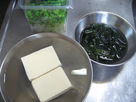
Tofu Recipe: Tips for Easy Snacks

TOFU-OIL

I was thinking of the “Tofu Tribe” (Terecita, Elin, Jenn and Jennifer) when riding the bu to work this morning. No bicycle these days as we are in the midlle of the rainy season!

The day before the Missus had served a quick snack (see pic above) consisting of tofu on which she poured extra virgin olive oil, coarsely ground black pepper and a little salt.
Very simple. Not very artistic, I admit, but the idea was there.

Now, many vegans and vegetarians like their tofu, but are running out of ideas…

How about, for example, creating a plate (use a large one with “compartments” for better effect!) with an assortment of tofu pieces seasoned with different varieties of oils, ground peppers and other spices, finely chopped vegetables such as carrots, cucumbers for good colouring. I love my tofu mounted with chopped shiso/perilla leaves, umeboshi/Japanese pickled plums meat and a dash of ponzu!
And what about natto/fermented beans with chopped shiso leaves and grated fresh ginger?

You could do the same thing with fried tofu, deep-fried tofu and aburaage.
How about a piece of fsh tofu mounted with freshly cut and fried aburaage, wasabi, grated fresh ginger and ponzu?

Endless bliss!

Will be introducing oils in my next posting!

Please check the new postings at:
sake, shochu and sushi

—————————————-
日本語のブログ
—————————————-

Tofu Recipe: Tofu Manju with Ankake Sauce/Tofu Dumplings in Sweet and Sour Sauce

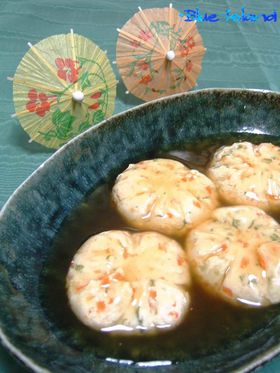
TOFU-MANJU-1
(Courtesy: Blue Island)

Here is another simple tofu recipe dedicated to Elin, all tofu lovers, vegans and vegetarians:
Tofu Manju with Ankake Sauce/Tofu Dumplings in Sweet and Sour Sauce!

INGREDIENTS:
-Tofu (momen tofu style9: 1 “Cho”/200 g
-Carrot: one fifth
-String beans: 2~3
cornstarch: 1 large tablespoon
-salt: a pinch

For sweet and sour sauce:
-Dashi (Konbu dashi/seaweeed stock): half a cup/100 ml
-Soy sauce: half a large tablespoon
-Sugar:2 large tablespoons
-Rice vinegar: 1 large tablespoon
-Cornstarch dissolved in water: to one’s personal liking

RECIPE: For 2 people

TOFU-MANJU-2

Press water out of tofu. Sift it completely. Boil finely cut carrots and string beans until soft enough. Drain all water.

TOFU-MANJU-3

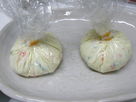
drop tofu and vegetables in a mixing bowl. Mix in cornstarch and salt. Divisde in 4 and make balls. Wrap each individually in cellophane paper. Twist cellophane warap and secure with rubber band or string.
Steam for at least 4 minutes.

Sweet and sour sauce:
Heat dashi stock, soy sauce, rice vinegar and sugar, stirring all the time. Mix in cornstarch dissolved in water.
The sauce is ready.

Serve dumplings on plate and cover them with the sauce!
Enjoy!

Please check the new postings at:
sake, shochu and sushi

—————————————-
日本語のブログ
—————————————-

Vegan/Vegetarian Recipe: Japanese-style String Beans and Tofu

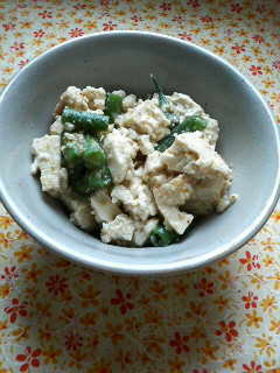
INGEN-DISH-1

Here is a simple and popular Japanese recipe that can please anyone, vegans, vegetarians and omnivores alike: String Beans and Tofu!

INGREDIENTS: For 2 people
-String Beans, 5~6
-Tofu: half a block
-Miso (of your choice), 1 teaspoon
-Mirin/sweet sake, half a teaspoon
-Sugar, half a teaspoon
-Freshly crushed Sesame seeds (do it in a mortar with pestle)

RECIPE:
-Drain water form tofu and roughly mix with miso, mirin and sugar.
-Peel away strings if any, cut beans into 4cm trunks and boil for 40 seconds. The beans should still be a bit crispy. Drain and let cool.
-Drop beans into tofu. Mix roughly with a spoon, cutting the tofu into small bits as in above pic.
-Sprinkle with sesame powder before serving.

Enjoy!
Naturally, this could be one of a whole plate of vegan/vegetarian snacks.
One can also add lightly boiled carrots. The combinations are endless!

Please check the new postings at:
sake, shochu and sushi

—————————————-
日本語のブログ
—————————————-

Vegetables Facts and Tips (14): String Beans, French Beans or Common Beans

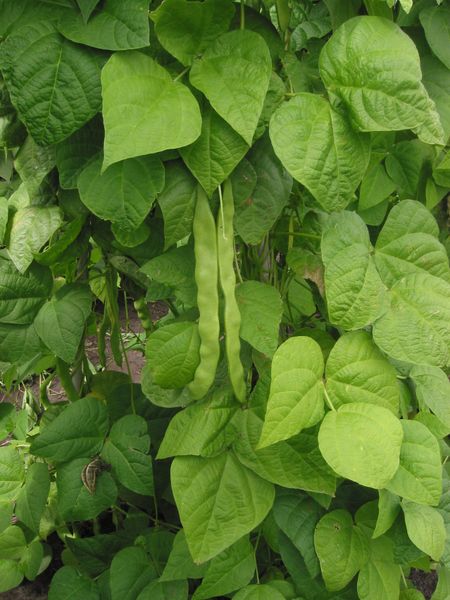
STRING-BEANS-PLANT

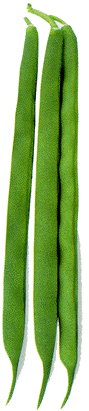
Common beans, when green and immature are either called String Beans or French Beans when they don’t have a string.
When reaching maturity they gave way to all kinds of beans.
They were first discovered in Central and South America in the 16th Century and were later introduced in Europe, then China. The French first planted the beans in Japan in rhe second half of the 19th Century.

90% of the crop is harvested three times a year in Hokkaido Island in Japan.

Ther are two main varieties in this country:

STRING-BEANS-DOJYOINGEN
“Dojyo-Ingen”, also called “Kentucky Wonder”. Slightly soft variety.

STRING-BEANS-SAABERUINGEN
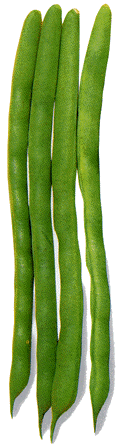
“Saaber-Ingen”, thinner and rounder than above without strings.

The Japanese usually boil them lightly or just just cut them in trunks about 5 cm long and add them to all kinds of dishes from clear soups to sauteed food.

FACTS:
-Season: June~September
-Main beneficial elements: Protein, Carotene, Vitamin B group, Vitamin C, Calcium, vegetal fibers.
-Eaten with other food high in protein, teir Vitamin C are easily ingested by human bodies.
Cooked with oil, their carotene will be easily assimilated by human bodies.

TIPS:
-Just after boiling drain them and let cool inside a sieve. They will be tastier for it.
-If you have plenty, first boil them before storing them in the refrigerator.
-Peel strings away before cooking.
-Choose firm and straight specimens.

Please check the new postings at:
sake, shochu and sushi

—————————————-
日本語のブログ
—————————————-

Tofu Recipe: Aburaage/ Recette de Tofu : Aburaage

ABURAAGE-1
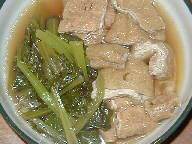
(Aburaage Soup)

Aburaage is basically a deep-fried thin slice of tofu.
It does offer a very versatile option as it can be used as it is, or open as a pouch it becomes the base for inari sushi and many other variations!

Here is a simple recipe:

INGREDIENTS:
Tofu (firm Momen tofu type): 1 large piece/block (Icho in Japanese)
Thick Towel
Cellophane paper
Long wooden disposable chopsticks (wari-bashi)
“Piano string”, or the equivalent
Water drainer
Oil
Oil thermometer (up to 200 degrees Celsius)

RECIPE:

ABURAAGE-2
Make identations or marks on the chopsticks every 5 mm up to the height of the tofu block.

ABURAAGE-3
Tie “piano string” around chopsticks as shown on pic first at 10 mm height (or higher up to 15 mm if you wish), and cut tofu by sliding chopsticks along the cutting table (it should easy, but make sure you cut tofu evenly!)

ABURAAGE-4
Tofu being soft, it is not easy to manipulate.
Later, when you will manipulate it, the best way is to first turn over the whole onto your open palm and have each slice slide away.

ABURAAGE-6
Before manipulating the tofu, first put a 500g weight (anything over a thin wooden plank if you don’t have asushi weight) on top of the tofu for 2 hours to get as much water off as possible.
Transfer slices onto thick towel and leave them there for an hour.

ABURAAGE-7
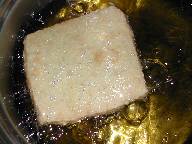
First frying step: fry tofu slice at 130 degrees Celsius (make sure to keep the temperature constant!) for 6 minutes. This will allow for a uniform heating.

ABURAAGE-8
Second frying step: bring oil temperature to 160 degrees Celsius.
If tofu contains too much water or if you fry in a single step, it will fail to achieve the right shape and quality.

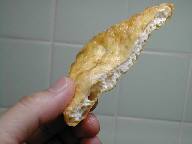
ABURAAGE-9
Aburaage will usually be a bit hard upon frying.

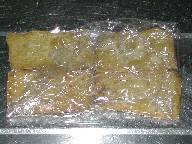
ABURAAGE-10
To make it soft, wrap it in cellophane paper and and heat inside electric oven. As soon as water comes out of aburaage inside the cellopahne paper, take the whole out and unwrap aburaage.

ABURAAGE-11
The aburaage should be soft by then.

ABURAAGE-12
Check if the aburaage needs a second frying (according to your liking).
if you fry it at 130 degrees, it will reduce as the one on the right in the picture.
If you fry it at 160 degrees you will obtain an aburaage like the left one on the picture (longer one).

ABURAAGE-13
To properly open it, cut in half, and then cut inside to form a pouch!

Recette de Tofu frit : Aburaage

ABURAAGE-1
(Soupe de Aburaage )

L’aburaage est un une fine tranche de tofu que l’on fait frire. C’est une met assez polyvalent, car il peut être dégusté tel quel (recouvert de sauce soja, et de gingembre en le faisant un peu griller par exemple), en soupe, ou alors devenir l’enveloppe d’inari sushi.

Je vous donne une recette simple mais il en existe bien d’autres, notamment on peut jouer sur l’épaisseur du tofu frit.

:

INGREDIENTS:
Tofu (type momen) :  1 bloc (Icho en japonais)

Une serviette épaisse
Du film célophane
Des baguettes longues (wari-bashi)
Une corde de piano, ou quelque chose équivalent
Un égouttoir
De l’huile
Et un thermomètre qui peut monter jusqu’à 200 degrés.

RECETTE:

ABURAAGE-2

Faire des marques tous les 5mm le long de la hauteur du bloc (Cela représente la future hauteur découpée). Vous pouvez aussi enrouler la corde de piano le long des baquettes que vous aurez aussi marquées tous les 5 millimètres.

ABURAAGE-3

Enrouler la corde de piano comme ci-dessus le long des baguettes. Commencez à partir de 10mm en haut, voire 15 si vous voulez et coupez le tofu en faisant glisser les baguette le long de la planche à découper. Ce n’est pas compliqué mais soyez sûr d’être bien droits.

ABURAAGE-4

Le tofu même quand il est en bloc n’est pas facile à manipuler, alors les tranches, je vous laisse imaginer. L’idéal est quand vous le manipuler de toujours saisir ses tranches dans l’intégralité de la paume de votre main.

ABURAAGE-6

Avant de commencer, mettez un poids de 500g sur le tofu, de quoi faire pression pour en évacuer l’eau. Cela prendra deux heures. Ensuite posez-le sur une serviette pour extraire encore plus d’eau.

ABURAAGE-7

Première friture : Il faut le chauffer à 130 degrés, et que cette température ne varie pas pendant 6 minutes. L’uniformité de la cuisson est indispensable.

ABURAAGE-8
Deuxième friture: On monte à 160 degrés. Si vous avez trop d’eau dans votre tofu, et si vous ne respectez pas les étapes, vous allez le rater.

ABURAAGE-9
L’aburaage est un peu dur une fois la cuisson terminée.

ABURAAGE-10

Pour le rendre plus mou, il faut le mettre dans du papier cellophane et le chauffer au four électrique. Quand l’eau s’échappe de l’aburaage il se ramollira.

ABURAAGE-11
Vous devez obtenir ce résultat.

ABURAAGE-12

Vérifiez si vous avez besoin de faire une deuxième friture, selon votre goût. 130 degrés vous donnerons le résultat de droite sur la photos du dessus, 160 celui de gauche (plus long).

ABURAAGE-13
En général quand vous le coupez en deux, vous voyez si vous avez réussi… ou pas !

Please check the new postings at:
sake, shochu and sushi

—————————————-
日本語のブログ
—————————————-

Tomatoes: Local varieties in Shizuoka

AGRI-TOMATO1

I had my good friend Rich in mind when I set off on my bicycle yesterday morning in the direction of the Abe River in Shizuoka City. This major river is dotted almost all the way up to its source with farmland. Very often, while the men are busy with staple crops like rice,tubers and even peanuts, some housewives grow vegetables and other produce as a “side business” to contribute some cash to their homesteads.
About an hour ride from my place one will find a JA (Japan Agriculture) market called “Agri Road Miwa” associated with 13 such housewives who sell their vegetables, fruit, flowers, tea, honey and home-made cakes on a daily basis, guaranteeing fresh produce everyday.
The only problem is that you must be there when the market opens at 9:30 and fight off the local “o-baasan/grannies”! LOL
Being seasonal produce only, you can expect something new every morning!
I had already picked some great burdock roots, pink potatoes and maountain veggies, when my eyes stopped on some unusual tomatoes.
Interestingly enough. the grannies were more interested in the lettuce and strawberries, so I had enough time to choose the best specimens!

AGRI-TOMATO2

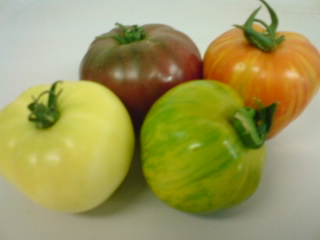
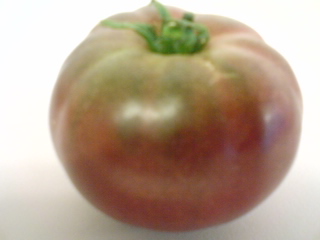
“Black Tomato”. Actually it is a very deep red colour, practically dark blue-violet.

AGRI-TOMATO3

“Orange Tiger”. Beautiful name, isn’t it?

AGRI-TOMATO4

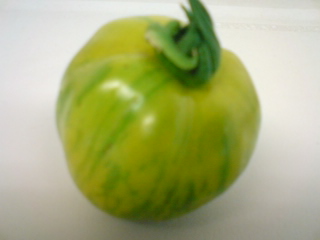
“Green Tiger”. A cousin of the above!

AGRI-TOMATO5

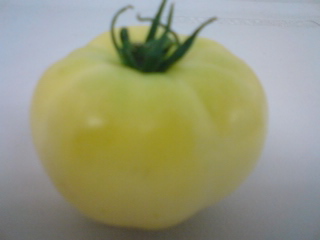
“White Tomato”. Actually more of a mild beige colour.

Bear in mind that all these tomatoes, in spite of their colour, were ripe.
I bought enough for myself and Yasaitei, a favourite local Japanese Izakaya which specializes in vegetables (I just give them away as the prices are simple ridiculous. If Yasaitei can promote these farmers’ products, I’m more than happy!).
Some actually did not reach my office intact (a long rough bicycle ride is not a great idea for shopping!). I just “sampled” them,… I ended up eating all the “damaged” tomatoes! They were sweet and tangy at the same time, firm and juicy, all basically of the same taste. No need for drinking water after that!
I stored the intact tomatoes in the fridge and later brought them to Yasatei. This izakaya is run by ladies only, and it was a discovery for them! No need to say that the tomatoes were immediately displayed for the customers’ pleasure!

Agri Road Miwa
Shizuoka City, Aoi Ku, Abeguchi Shinden, 537-1
TEL:054-296-7878
Business hours: 09:30~15:30 (from 08:30 on Saturdays)
Homepage (Japanese)
Even if you don’t understand Japanese look at their products!

Yasaitei
Shizuoka City, Aoi Ku, Tokiwa-Cho, 1-6-2 Green Heights Wamon 1-C
Tel.: 054-2543277
Business hours: 17:30~22:00
Closed on Sundays
Reservations highly recommended

Please check the new postings at:
sake, shochu and sushi

—————————————-
日本語のブログ
—————————————-

Vegetables Facts and Tips (13): Salicorne

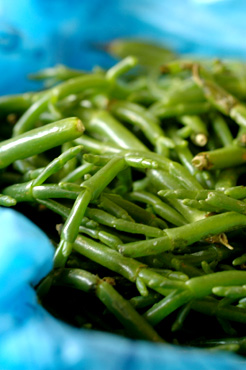
SALICORNE-1

I decided to run this posting on this rare vegetable following a query from my dear friend Jenn.

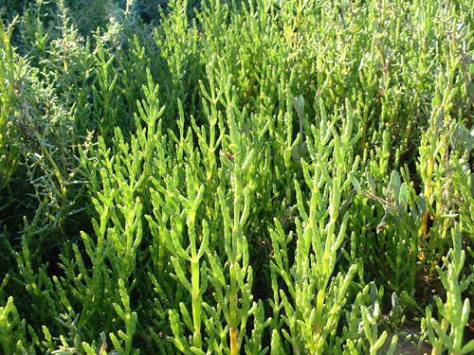
Salicorne has a slightly salty with a fresh, not overpowering, herbal taste. It grows exceptionally well in salt marshes and can sometimes be harvested under wharves. Although salicorne is a weed and does grow by the sea, it does not look like seaweed. It is more like a sprig off a tree with small dark green fleshy branches.
Apparently they are grown or collected in France onlyalong its Westen and Northern shores.

SALICORNE-2

Salicorne has no comfortable English name. Some call it sea asparagus, and it does have a little of the sweet flavour of that vegetable. It is also known as slender glasswort, La salicorne, or criste-marine and perce-pierre in French. Its etymology is actually the Arabic word: “salcoran”. It is also thought to mean salt (sali) horn (corne) in French. So salicorne is how it is usually called in English and French.

It is exported to Canada fresh, pickled or in cans.
Human-grown as opposed to natural salicorne is better suited for cooking as it does not include all kinds of unwanted twigs and other unrelated plants when harvested in the wild.

Vegetarians and vegans can eat it fresh as it is, in salads or as pickles.

SALICORNE-3

Cooking/cuisine suggestion:
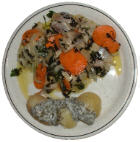
Smoked herring marinated in Salicorne cream:
Place 250 g of smoked herring in a deep oven dish. Cover fish with milk and let marinate for 2 hours. Drain and take moisture out by placing fish on kitchen paper.
Put them back inside the oven dish and cover with whote wine. Let them marinate again for 2 hours.
Drain them and cut the fish acrss into slices 2 or 3 cm thick.
Place te fish slices in a terrine dish, alternating them with thin slices of onion and carrot, a few parsley leaves, a branch of thyme and a leaf of laurel both chopped fine, some pepper and a tablespoon of finely cut wakame/Japanese seaweed. Cover with olive oile and let marinate inside fridge for 4~5 hours.
Take out a dozen sprigs of vinegared salicorne (canned), cut them finaly and mix them into a bowl of fresh cream that one can use later at will.
Place herring, onions and carrots on a dish with a little oil from the marinade.
Serve with hot boiled potatoes!

Please check the new postings at:
sake, shochu and sushi

—————————————-
日本語のブログ
—————————————-