Tag Archives: Vegetarian

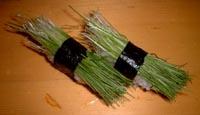
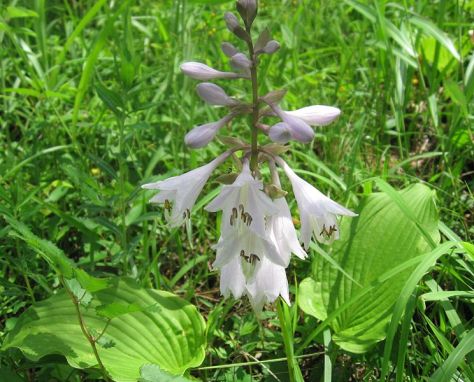
New Vegetable: Urui/Hosta Montana

urui-61

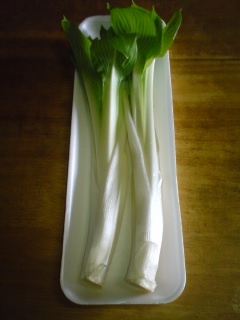
Last Sunday, while visiting my favourite supermarket inside the Shizuoka JR Station in search of unusual vegetables I had the pleasure to re-discover that increasingly popular Japanese vegetable, namely urui.
Its Latin name id Hosta Montana. If someone knows the English name, I would be very grateful to be enlightened!
Now, originally this vegetable was a “sansai/wild vegetable” until it has been successfully grown almost all over Japan.
urui-1

The real name of this mountain plant is Oobagibooshi, too long a name to be marketed, hence the “new” name “urui” for the cultivated species.
At full maturity it can reach imposing height and width.
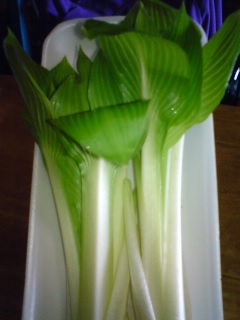
Like asparaguses, it is harvested early before it extends over a foot/30 cm height.
urui-2

The leaves are still small, thin and tender then.
The whole plant, unless cooked as tenpura or fried, needs to be lightly boiled in lightly salted water beforehand.
urui-31

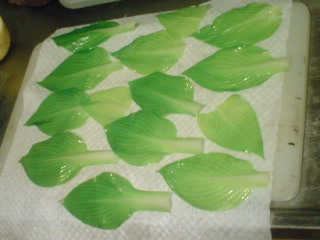
To prepare the plant for the evening snack I had in mind for the Missus (Natasha, Tangled Noodle, do you remember? LOL) I cut the plant into 3 equal lengths and boiled the two bottom ones first as they would take longer. Once boiled to satsifaction I took theme out and cooled them under cold water, cut them lengthwise to thin enough strips and laid them onto a sheet of kitchen paper.
I boiled the leaves just long enough to make them tender, cooled them under cold water and spread them on a sheet of kitchen paper.
fine-ratatouille

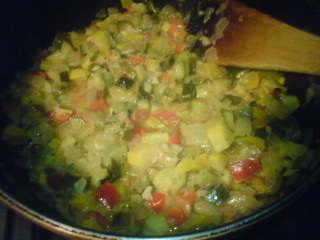
I had cooked a fine ratatouille beforehand, let it cool completely and added a dressing of my making with soft Dijon mustard, tarragon white wine vinegar, walnut oil, pepper and salt.
Now vegan and vegetarian friends should proceed directly to the dish I created as the rest ill not suit them!
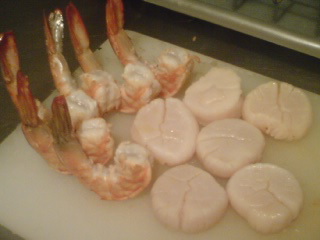
seafood

Next I lightly fried small scallops (after marinating then in lemon juice for a couple of minutes) just enough to keep them almost raw inside and put them aside to cool. I did the same, marinade included with some white shrimps.
Note: to attain their “standing shape” is very easy. First “peel” them leaving the tail ends for better “handling”, make a shallow cut along their back, take out the innards and fry just enough to cok both sides to a nice color and keep them almost hlf raw inside. This way they will be firm but extremely tender.
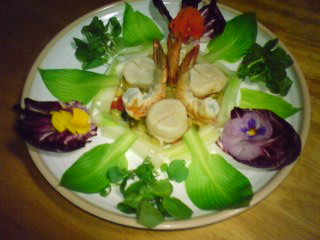
snack

As for the dish itself, vegan and vegetarian friends can forget the seafood and replace it with more ratatouille and edible flowers for example.
I built an “enclosure” with the cut urui stem, filled it with ratatouille. I placed the seafood geomatrically above the ratatouille. Around it I alternately placed urui leaves, trevise with edible flowers and watercress.
I made a point to take a pic before we sprinkled the lot with dressing (I leave the choice to you!)
Great with a Blanquette de Limoux sparkling wine!

Please check the new postings at:
sake, shochu and sushi

—————————————-
日本語のブログ
—————————————-
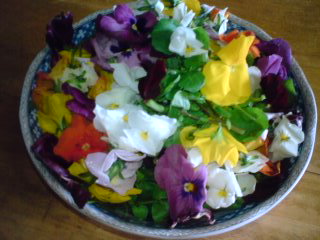
Vegetables Facts and Tips (7): Edible Flowers

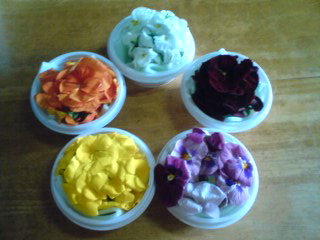
flowers-8
(5 edible flowers and water cress salad)

Yesterday, while I was shopping at the big supermarket at the Shizuoka JR Station I was reminded of a recent post by Natasha at 5 Star Foodie when I noticed edible flowers on sale.
Edible flowers have been on the Japanese markets for quite a few years already.
They tend to first appear in late winter, although it is only a question of time when they will be sold all year long!

flowers-1

flowers-2

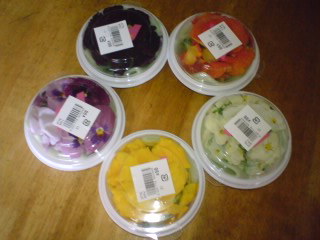
They come in very cheap, at 98 yen a small box (1 US$), but they ought to be used as early as possible.
Aichi Prefecture, our neighbour Prefecture seems to have become the largest growing area in Japan.
Thai, Indian and Persian citizens, as far as I know, have been using flowers in food for quite some time. The Japanese have served mini-chrysanthemum and perilla flowers since immemorial times.

flowers-3 flowers-4 flowers-5 flowers-6 flowers-71

Most edible flowers are of the pansy, snapdragon, primura and so on varieties.
Do you recognize some of them above?

Now, the great news is that they contain an enormous amount of Vitamin A carotene:
1,100 to 9,400 micrograms per 100 grams as compared to 390 micrograms for tomatoes, 720 micrograms for broccoli and 3,100 micrograms for spinach.
as well as Vitamin C:
230 t0 650 mg per 100 grams as compared to 20 mg for tomatoes, 100 mg for spinach and 160 mg for broccoli!
The Japanes will use them either in flower or vegetable salads or on cakes.

One small advice for caution: don’t overeat them as they have purgative powers!

Please check the new postings at:
sake, shochu and sushi

—————————————-
日本語のブログ
—————————————-
Vegan/vegetarian Japanese Dressing: Gomadare/Sesame Dressing

fig-sesame

Following a few queries about gomadare/sesame dressing I (and the Missus) use a lot, I felt a little information and a simple recipe would come in useful.

Gomadare is a great tasty dressing that can be used indifferently with cold dishes as a normal dressing, or in and with hot food, especially nabe/Japanese pot-au-feu, shabu-shabu and any meat or veg actually.
The problem that the gomadare sold over the counter is not vegan, or even vegetarian for that matter (it usually contains egg white and I don’t know what!)

Now, here is a simple recipe that will add that little zest and “consistency” to your favourite food:
Ingredients (for about 2 people):
white sesame seeds: 2 large tablespoons
soy milk: 4 large tablespoons
miso: 1 teaspoon
soy sauce: a little (up to taste)
sugar: a little
ground white sesame: a little

First ground together with a pestle the white sesame seeds, soy milk and miso until it has attained a nice smooth consistency.
If have difficulty mixing it, heat it a little.
Add soy sauce, sugar and ground white sesame to taste.
A little experimentation will work wonders.

Tip: my favourite dish is to peel ripe figs (see pic), cut them in quarters and pour a generous amount of gomadare over it!

Enjoy!

Please check the new postings at:
sake, shochu and sushi

—————————————-
日本語のブログ
—————————————-
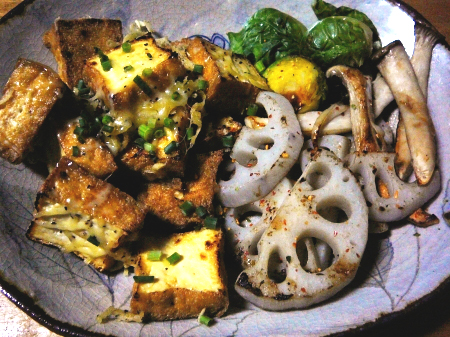
Vegetarian Japanese Cuisine: Fried Tofu and Vegetables

fried-tofu-vegetables
Pic kindly upgraded by Jay Gustafson!

The other night, the Missus thought that some healthy food was in order, that is as much for herself as for me, what with her drinking wine and me savouring my Japanese sake!

She used already deep-fried tofu cubes called “nama-age” bought at the nearby supermarket, cut them to bite-size, saute them on a non-stick frypan as they were (no need for oil) with a liberal amount of pizza cheese and served them with a good measure of freshly chopped thin leeks. All the while on another pan she fried slightly boiled renkon/lotus roots slices with eringi mushrooms cut lengthwise and half-cut Brussels sprouts with some olive oil, a litle salt, pepper and a spicy seasoning mix.
Once ready she added themhot on the same plate.

So simple and tasty!

Please check the new postings at:
sake, shochu and sushi

—————————————-
日本語のブログ
—————————————-

Vegan and Vegetarian Ultimate Drink: Japanese Sake!


The Japan Blog List

Please check the new postings at:
sake, shochu and sushi

—————————————-
日本語のブログ
—————————————-

virtual-bar1

I’m persuaded many vegans and vegetarians all over the World like their drinks!
The fact is that they may some reservations as whether their drink qualify as far as their culinary priorities prevail.
For example, do you know that many wines (don’t misunderstand me, I love me my wine!) are still filtered in the traditional way with egg whites?

On the other hand, (good/unfortunately there is not so good, too…) Japanese sake is exclusively made with rice, pure water and vegetal yeast. That is all! Sometimes, brewers will use lactic acid to help with preservation, but it is also of vegetal origin.
Some brewers (not many, only 13 of them in the whole of Japan) like Aoshima Brewery in Fujieda City, Shizuoka Prefecture will go as far as making organic sake with rice grown organically!

The (simplified) process of making sake is as follows:

-Rice millage/polishing: the rice will be milled down carefully as the starches are concentrated in the middle of the grain contrarily to edible rice. The more the rice is polished, the higher quality of the sake.
-Washing and soaking: the rice is washed and then soaked in pure water.
-Steaming: the rice is then steamed and left to cool on large pieces of absolutely clean cloth.
-Production of koji/malted rice: some rice is malted with Aspergillus oryzae mold
-Yeast starter: malted rice, regular steamed rice and pure water are mixed in a vat to which is added a culture of pure yeast cells. The latter is one the main ingredients which will differentiate all sake in taste, aroma and other characteristics. The wole is called “moto” or “origin/root” of the sake.
-Moromi and sandan shikomi: moromi is is the “moto” transferred to a larger vat where rice, malted rice and pure water are added. This is done in three steps, “sandan shikomi”, for a gradual and even process.
This is left to ferment for eighteen to thirty-two days.This step will also define the characteristics of the sake.
-Pressing: it is done in many ways, depending on the quality of the sake
-Filtering: The brewer will choose to filter it or not through various processes.
-Pasteurization: Most sake is pasteurized as “nama”/unpasteurized sake has to be kept at low temperature, making it very difficult to export. A pity, as this is “true sake”!
-At this time, pure water may be added to the “genshu” (unaltered sake) to lower the alcohol content, and also pure rice acohol for a different type of sake.

(Simplified) List of Sake types:

-Futsushu/”normal sake”: made with rice milled/polished down to 80% (that is, 20% will be polished off). Can be rotgut or incredibly good sake depending on millage, equipment and ingredients.
-Junmai/”pure rice”: made with rice milled to 70% or lower. No alcohol was added.
-Junmai Ginjo: made with rice milled down to 60% or lower. No alcohol wa added.
-Junmai Daiginjo: made from rice milled down to 50% or lower. No alcohol was added.
-Honjozo: made with rice milled to 70% or lower. Alcohol was added.
-Ginjo: made with rice milled to 60% or lower. Alcohol was added.
-Daiginjo: made with rice milled to 50% or lower. Alcohol was added.

In the case of Shizuoka Prefecture, futsushu is usually made from rice milled down to 70~65%, junmai and honjozo, 60 t0 50%, junami Ginjo and ginjo, 50~40%, junmai daiginjo and daiginjo, 40~…%.

Tere are other intermediary “appelations” such as Tokubetsu (special) Junmai and Tokubetsu Honjozo, Yamahai, etc…

“Nama” means “unpasteurized, “genshu”, unaltered sake, “muroka”, unfiltered, as for most commonly used added indications.

Incidentally, sake powder resulting from polishing will be used for Japanese-style cakes or animal feed depending on quality. “Sake kasu”/white lees which are left after pressing and filtering are used to make “amazake”, “Sake kasu nabe”, pickles and so on!

For a thorough study of Japanese sake, read John Gautner’s website or buy his books. John is the universally recognized non-japanese authority on Sake!

Must-see sake blogs:
-If you live in the Us, and particularly New York, visit Timothy Sullivan’s blog!
-If you live in Tokyo or Japan visit Melinda Joe and Etsuko Nakamura‘s blogs!
-If you want to know ALL about one region’s sake and sake breweries, visit Shizuoka Sake!

Cheers, Kampai!

Tofu Recipes (1): Fried Namaage with Cheese and Ponzu


The Japan Blog List

Please check the new postings at:
sake, shochu and sushi

—————————————-
日本語のブログ
—————————————-
toofu-recipe-1

This is I hope the first installment of a long series of simple recipes with tofu. Some will be vegan and vegetarian, some vegetarian like this one, others for omnivores!

tofu-kinds-21

This particular one is one one of the Missus’ favorites.
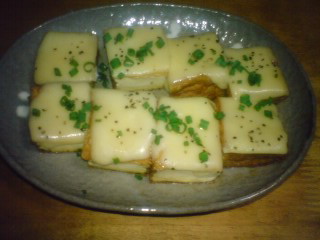
She uses on full “namaage tofu”, tofu that was deep-fried whole and that you can buy either fresh at a Japanese market or packaged.

She cuts the tofu in equal-sized bite pieces about 1 cm thick and fry them in a non-stick pan. No real need for any oil as what is contained in the surface of the tofu will be sufficient.
The point is that she fries them only on side. While they cook she lay a thin piece of mild/processed cheese over each tofu piece, add some black pepper, and cover with a glass lid. When the cheese has nicely melted over the tofu, she takes off the lid, sprinkles the whole with ponzu and fries for another minute. She serves on a dish with the sauce and liberally sprinkles the lot with chopped thin leeks!

Great snack with Japanese sake or beer!

Vegan Farandole for the New Year!


The Japan Blog List

Please check the new postings at:
sake, shochu and sushi

—————————————-
日本語のブログ
—————————————-
p1010612

Last Sunday, not the New Year I must admit, I had to cook dinner for my other half, and I just happened to be litterally submerged with vegetables.
Why not create something vegeterian, or even better, something vegan, at least to justify my omnivorous preferences? I thought.
Well, I came with a simple idea that can expanded at infinitum. It has the merit of making use of very healthy ingredients and help the system take a much needed rest! LOL

farandole-oil-22 farandole-oil-3 farandole-oil-1

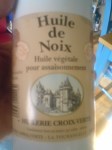
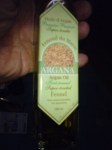
I utilized three different oils from three different countries to add a little inernationalization: Olive oil from Italy, Walnut oil from France and Argan oil from Morocco!

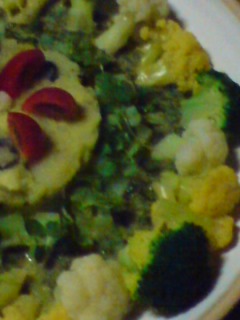
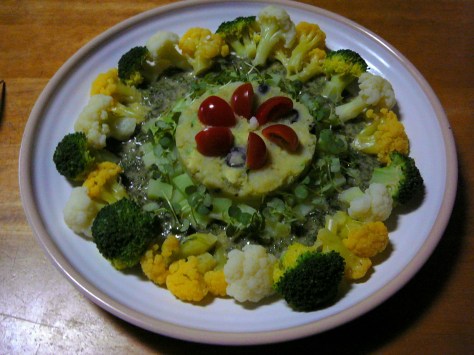
In the centre of the plate I arranged a “circle” of boiled potatoes mixed in “brandade style” with plenty of olive oil, avocado, black olives, lemon juice, a minimum of salt, chopped fresh garlic, pepper, nutmeg, thyme and yuzu chili pepper. Indian friends would probably add plenty more spices.
I surrounded it with a thin crown of boiled diced brocoli stems and shiso/perilla shoots/mini leaves.

farandole-2

I then added plenty of dressing around the lot. The dressing was made with walnut oil, taragon white wine vinegar, soft Dijon mustard (with seeds), lemon juice, a little salt, pepper and a large amount of very finely chopped fresh parsley and basil. It was very consistent and easy to spread without “leaking” everywhere.
Around the whole, I arranged boiled green brocoli, white cauliflower and yellow cauliflower (beautiful and very tasty) all grown in Shizuoka Prefecture.
I decorated the potato core with plum tomato wedges, and sprinkled both the cauliflower(s) and tomatoes with a little dash of argan oil (take it easy with this particular oil as it is particularly fragrant!).

I hope this will give ideas to my vegan and vegetarian friends for the New Year repast! By the way, “Farandole is a dance!

Edamame: Japanese Green Soybeans


The Japan Blog List

Please check the new postings at:
sake, shochu and sushi

—————————————-
日本語のブログ
—————————————-
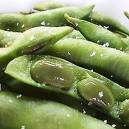
I’ve always been somewhat puzzled to find the word “edamame” in my U.S. (and European) friends’ blogs. This conspicuous vegetable seems to conjure grand images of Japanese gastronomy in spite of its almost base status in this country.

After all, “edamame” (枝豆/branch bean in Japanese) is nothing but green soybeans, a food mass-produced and heavily exported by North American farmers.
Or, is it that the soybean’s image has fallen so low on the other side of the Pacific because some people grow it for bio-ethanol that restaurateurs feel more comfortable with a grand-sounding Japanese name?

Alright, before I get collared for indulging into a cheap rant, let me introduce my own recipe for preparing the “delicacy”:
One does not have to boil it, cool it and serve it sprinkled with salt. This is probably the worst and least healthy way to consume it!
If you can, choose them fresh on the branch(es). This will guarantee they haven’t lost any of their nutrient qualities.
Cut out all the pods and throw away the branches (or re-process them inside your fertilizer box!).
Clean the pods under running water.
Drain water, but do not wipe them dry.
Drop them in an appropriate-sized non-stick pan and hand-rub them in a little coarse salt. The less salt, the better, but enough to season all pods. Experience and personal preferences will tell you how much you need.
Cover pan with a glass lid and switch on fire to medium-low. Cook until water seeps out of the pods. Switch off fire and keep inside covered pan (do not take the lid off!) for a good 5 minutes. By then, they should be sufficiently cooked.
Serve immediately.

In Japan there exists another variety called Kuro Edamame/黒枝豆-Black Edamame.
Actually they are a light brown-green soybean grown in Shizuoka Prefecture and elsewhere. They are definitely tastier and deserve the title of “delicacy”.
The beans out of their pods also make for great addition to salads, artful presentation with meat dishes, and are great mixed inside “nigiri”!

Healthier, tastier fried Potatoes!


The Japan Blog List

Please check the new postings at:
sake, shochu and sushi

—————————————-
日本語のブログ
—————————————-

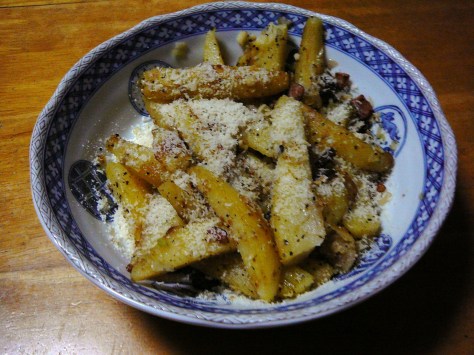
fried-potatoes

Fried potatoes have been temptying us since the 17th Century when the Belgians first experimented cooking them in oil. At the time, deep-frying, imported by Crusaders from the Middle East, was the only absolutely safe way to cook, especially in “flat countries” as Belgium and Holland were called, as water was a bed for all kinds of diseases.
Incidentally, Paris had a good laugh when some time ago a misinformed gentleman proposed than French Fries should be re-named “Freedom Fries” on the White House menus. Sorry, mate, but they are Belgian, not French!

Now, eveyone knows that boiled potatoes are healthy, if somewhat bland in taste, whereas fried potatoes are tasty but hideously high in unwanted calories.
There is a simple method half way which will enable you to enjoy your favourite snack/main dish with a lighter heart (and midriff) and at the same time allow you to serve a savoury dish to your ravenous friends or family! (But don’t overeat them!)

INGREDIENTS
(for 2 to 4, depending whether it is an accompaniment or full dish):
-4 large potatoes
-1 large echalotte/shallot (if unavailable, half a red onion is great!), finely chopped
-3 cloves of garlic, finely chopped
-Bacon (vegan and vegetarians, please skip this keeping in mind you will have to add a little salt)-1 large rasher cut in small pieces (half a cm square or half the size of your little finger nail, cut short!)
-Parmesan/Parmiggiano Cheese (vegans, please skip this or use alternative), freshly grated, 3 large tablespoons.
-Salt (for the potatoes boiling water, otherwise as little as possible, as bacon and cheese will contain enough!)
-Pepper, nutmeg. Foodies who like their food Indian-style may add a little powdered curry mix and chili pepper.
-Olive oil: 2 large tablespoons

RECIPE:
-Boil potatoes in plenty of salted water. If you do not add salt to the water, the potatoes will end up very bland in taste.
-Once the potates are boiled at about 80%, plunge them into cold water. This little trick will prevent them from breaking up later.
-When potatoes are cold enough, peel and cut them in wedges (the size is up to you).
-In deep enough frying pan dry-fry (no oil added) the chopped bacon until it becomes a nice crisp and dark. Put aside on a small dish. For non-vegan/vegetarians, do not wipe the pan, or you will miss a lot of taste!
-Pour two large tablespoons of olive oil in the same frying pan. That is enough, and the oil will be “sucked in” by the potatoes with the result that the potatoes will not be “greasy”. Use olive oil, extra virgin, as this is best, not only for taste, but for health (the vitamin C contained in olive oil do not disappear even cooked for a long time).
-When potatoes have almost reached the wanted colour, drop in shallots, garlic, fried bacon, pepper, nutmeg (and salt if you absolutely must use some!). Toss-fry until shallots have turned transparent.
-Pour the lot into a serving dish and sprinkle parmesan over it.
Enjoy at once!

Sometimes, simple is best!

Hot Asparagus Pudding/Flan chaud d’Asperges

Please check the new postings at:
sake, shochu and sushi

—————————————-
日本語のブログ
—————————————-
asparaflan.jpg

Fresh asparaguses are becoming available all year roun here in Shizuoka Prefecture, a region famous for its Winter-cultivated vegetables.
Here a traditional French recipe for the green ones. It is not as difficult as the title might suggest!
When you choose your asparaguses, check the cut part at the bottom of the stems. The more moisture, the less peeling needed!

Vegans and vegetarians seeking substitutes for milk, butter and eggs should check with Miss V’s excellent suggestions!

INGREDIENTS (4 people):
Green Asparaguses: 1.25 kg
Eggs: 5
Milk: 250cc
Butter: 50g
Trefoil or Italian Parsley (optional): 4 sprigs for decoration
Thyme, laurel & nutmeg (optional & varying to taste)
Salt
White Pepper

RECIPE:

Peel asparaguses from top, cut out the bottom fibery part. Cut the tips and keep them aside.
Cut the stems in 1 cm-thick slices and put them in a pot. pour in milk, salt, white pepper and spices to taste. Let cook for 15 minutes. Take away from fire and transfer to food processor.
Add a few leaves of trefoil or Italian parsley and process to a fine mash.
Preheat oven to 6 (180 degrees Celsius) and put a large dish with water in it to be ready as a bain-marie.
Break the eggs in a large bowl, beat slightly, pour in the asparagus puree and mix.
Butter the inside of 4 small oven dishes (ramequin-style), pour in the mixture and cook in bain-marie for 20 minutes.
During that time put the asparagus tips in a frying pan, add the rest of the butter, 200cc of water, some salt and let cook for 20 minutes stirring from time to time until there is no more liquid left.
When the puddings are cooked, unmold them onto individual plates and decorate with asparagus tips and some trefoil or Italian parsley.
Serve at once.

Cheese Souffle

Please check the new postings at:
sake, shochu and sushi

—————————————-
日本語のブログ
—————————————-

cheesesouffle.jpg

When you mention the word “Souffle”, the first reaction you get is: “Too difficult”. It is actually dead easy, and I can tell you that some restaurants make an enormous profit from them!
And it is great food for vegetarians, too!

Ingredients (4 people):
Eggs: 4
Flour: 50g
Butter: 50g
Milk: 300cc
Shredded cheese: 100g
Salt
White Pepper
Nutmeg
Thyme
Laurel

Recipe:

Preheat oven to 180 degrees Celsius.
Butter well the inside of a (possibly round) deep oven dish (about 18cm x 8cm). This will help the souffle rise and prevent it fom sticking.

Separate egg yolks from egg whites.
In a large bowl add a little salt to whites and beat until solid.

On a small fire, prepare a Bechamel sauce (white sauce):
Melt butter completely, pour in flour and mix well with spatula until smooth. Pour in milk and mix well (diffferent people have different techniques, but I found that the best technique is to mix half of the milk little by little first, then pour in the rest and use a whisker to make a smooth sauce). Add salt, pepper and spices. Keep stirring gently.

Once the sauce has thickened to the point of almost solid, take off the fire (or switch off the fire).
Mix in the egg yolks with a spatula until colour is even. Then do the same with the cheese little by little until mixture comes smooth off the spatula.

Check that the whites have not gone back to liquid (That happened to me quite a few times, so make sure to check! In such a case, just beat them again. They will go back to a satisfactory state quite fast.). Mix in half first as delicately as possible with a spatula (not a whisker, or you will break the air bubbles in the whites and the souffle will not rise!). Then do the same with the second half. Pour in the mixture in the dish and put in the oven to bake for 45 minutes (although that depends with every oven). To check whether the souffle is properly cooked, insert a thin wooden stick or knife deep into the souffle. It should come out smooth.

Before serving, make sure that everybody is at the table before serving. ” The guests wait for a Souffle, a Souffle does not wait for the guests!”

NOTES:1) This souffle can be cooked in individual dishes. In that case the cooking time shall be about 30~35 minutes.
2) Instead of cheese you could use tinned tuna (2 x cans), or fresh spinach (one bunch; boil it a couple of minutes in salted water first, then drain thouroughly, and mince it as thinly as possible), or crab (add a little brandy and mix beforehand), or thin short narrow strips of ham, or even ham & cheese. The variations are endless.

Vegan & Vegetarian Sushi

Please check the new postings at:
sake, shochu and sushi

—————————————-
日本語のブログ
—————————————-
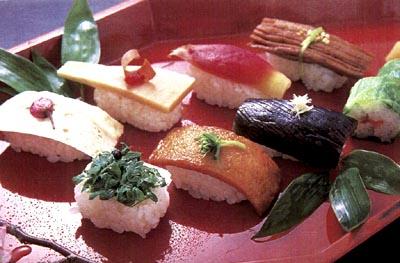
iroha-2.jpg
(from top to bottom and left to right: Konnyaku/Devil’s Tongue Tuber, Celery marinated in Amazu/sweet vinegar and pickled Japanese plums, Shiro negi/White leek, Na no Hana/Rape Blossoms, Gobo/Burdock roots, Satsuma Imo/Sweet yams, Daikon/Long Japanese radish)

Whenever I can convince there is Japanese food fit for Vegans and Vegetarians (I’m neither!), I make a point of posting articles that might help friends with different culinary priorities!

There is vegan and vegetarian sushi in Japan and elsewhere!
As a proof have a good look at the picture and explanations above. The pic was taken at Iroha Sushi, a small but extremely renown sushi restaurant in Iwata City, an area celebrated for its vegetables!

vegan-sushi1
Kyoto is a renown place for Vegan & Vegetarian Sushi!
From right to left, top to bottom:, Yuuba (tofu sheets), Takenoko (Bamboo shoots), Myoga (myoga ginger), Zenmai (Spring vegetable variety), Ki no mi (Spring vegetables), Awafu (grilled tofu sheets), Kamo Nasu (kamo egg-plant), Hakusai Maki (Chinese cabbage).
Print a copy of this pic, show it to your local Sushi Restaurant and challenge him/her into preparing your favorite tidbits!

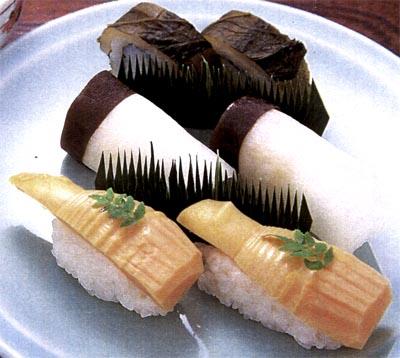
vegan-sushi2
From bottom to top: Takenoko (boiled bamboo shoots topped with a sprig of sansho/Japanese pepper plant)), Kabu Tsukemono (pickled turnip), Sugiku no Ha Maki (sugiku Chrysanthemum leaves)
And what about these? Not only tasty but fulfilling!

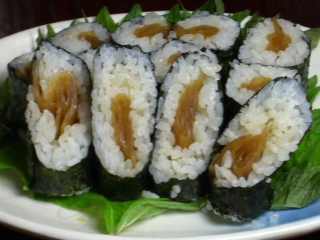
efbd8befbd81efbd8defbd90efbd99efbd8fefbd95efbd8daki
“Kanpyou maki”/dry gourd shavings: here is one that any sushi restaurant will serve you!

vegan-sushi3
That small one is my personal favourite: “menegi”/thin leeks sprouts!

I promise I’ll keep searching!

Simple Recipes: Potato Pizza

Please check the new postings at:
sake, shochu and sushi

—————————————-
日本語のブログ
—————————————-

potato-pizza.jpg

Have you ever wondered how to make a pizza when you do not have the bread dough or the ready-made bread? Have you ever thought that for once you could bypass the bread and it its soggy appearance as soon as it has cooled down/

The solution is cheap, easy to prepare, tasty (I can hear the fried potato addicts lick their lips in anticipation…) and open to infinite variations!

Now, how do you prepare that?

For the pizza above, I used 3 large potatoes (enough for 4 persons). If you plan to make a very large one, say use 5 or 6 potatoes, but the it will become pretty thick. Better experiment first!

Peel the potatoes and shred them as thin as possible. Wash them under running water, drain them thoroughly and take as much moisture off in cloth or kitchen paper towel. Put them in a large bowl and add salt, pepper according to your need. I always add a generous amount of nutmeg. Mix well.
In a large non-stick frying pan of the size wanted for the pizza, pour two tablespoons of olive oil and heat sufficiently. Put all the potatoes in the frying pan and spread them evenly. Press the whole upper surface with a spoon, spatula or flat piece of metal to help potatoes to adhere quickly. Fry on middle fire until the potatoes have become translucent on the whole upper surface. Check how cooked the lower surface then. Wait until it has become a deep brown colour. Only then, should you be able to turn it over without breaking it. When both sides have cooked to a crispy dark brown colour slide onto an oven plate covered with baking paper. Let it cool a bit.
Preheat the oven to 180 degrees Celsius.
As for the garnish, it is entirely up to your imagination!
Usually I first brush the “potato bread” with tomato ketchup or puree and Thai sweet chili sauce. Then I had bacon (raw or fried/skip them if you are vegetarian!), thin slices of onion or Belgian shallots, at least three types of thinly slices pimentoes and plenty of cheese.
As for the one in the picture above, I utilized left overs of that particular day:
bacon fried to a crisp, smoked salmon marinated in Thai sweet chili sauce, previously sauteed mushrooms and pimento slices, the whole with a generous helping of grated cheese, some seasoning and fresh herbs, including basil and Italian flat parsley.

Enjoy!

Wasabi: Japanese Horseradish


The Japan Blog List

Please check the new postings at:
sake, shochu and sushi

—————————————-
日本語のブログ
—————————————-
wasabi-harvest.jpg

As winter is approaching again I felt compelled to write again in this Shizuoka Gourmet Blog an article I had written some time ago in Shizuoka Sushi Blog.
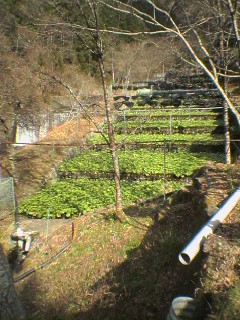
Wasabi harvest will soon start in earnest in Shizuoka City, Aoi Ku, Utougi (along the Abe River), the birthplace of wasabi (c. 1600) as shown in picture above.
They will soon appear on the markets and Internet all over the country. A sizeable amount is also directly exported to South Korea and theU.S.
—————-
Wasabi: Japanese green horseradish

wasabi.jpg

Did you know that wasabi originated from Shizuoka City?
Around 1600, farmers in Utougi District, some 33 km from Shizuoka JR STation along the Abe River, first started experimenting with the culture of that particular plant, which they already knew as a wild vegetable used for pickling. At the time they were only processing the stems, leaves and flowers.

wasabiplant.jpg

This is still a very popular kind of pickles in Shizuoka where they are sold in season.
In 1604, Tokugawa Ieyasu, who had just moved to Sumpu (presently Shizuoka City), grew extremely fond of the grated root and helped spread its use all over the country. Its present culture has expanded outside our Prefecture, especially in Nagano, but Shizuoka still produces the best In Utougi and in the Amagi Range in Izu Peninsula (80% of the total Japanese production!).
The above-ground part of the plant is also used for making delicious “wasabi zuke” with “sake kasu” (Sake white lees). You can imagine why Shizuoka products are of so high quality when you realize what “sake kasu” is being used!
wasabizuke.jpg
In my own biased opinion, the best “wasabi zuke” is made by Tamaruya Company in Shizuoka City.
tamuraya-haneda.jpg
Above picture was taken in Haneda Airport where the Company has its own stand!

Now, if you want to buy and serve your own “wasabi”, which I would recommend to any real Japanese cuisine amateur, you will need a wasabi grater.
wasabigrater.jpg
If you want to visit Utougi, where you will find a soba restaurant and other shops as well as the possibility of trekking and festivals watching in April and October, either go by car (55 minutes) or take a bus (bus platform 7 at Shizuoka JR Station/75 minutes). The trip along along the Abe River is worth it with all the changing landscapes!
utouki.jpg wasabi.jpg

Now, you might not know it, but thinly sliced wasabi root is not as strong as grated wasabi. In Shizuoka, as it is not that expensive, try and ask your favourite sushi chef to cut it in very thin strips and roll as it is in a “maki”. It’s called “bakudan maki” (the real one, not the buster made with grated wasabi!). A favourite of mine!

Note: Wasabi is proper food for vegans!

Vegetarian & Vegan Cuisine: “Mukashi Mushi Pan”/Old-Fashioned Steamed Bread


The Japan Blog List

Please check the new postings at:
sake, shochu and sushi

—————————————-
日本語のブログ
—————————————-

Although I’m neither a vegetarian or vegan, I make a point to introduce anything I discover here which might help friends out!

Fukasawa Foods in Shibakawa Cho at the foot of Mount Fuji produces all year round an incredible array of soba/buckwheat noodles, udon/wheat flour noodles, ice-creams, cakes and I don’t know what else.

Now, all their food is organic. No artificial fertilizers are used for whatever they grow or buy, and no additives or preservatives are used in any of their product, which means all have to be properly stored and eaten quickly.

Vegans will be happy to know they use tofu instead of any dairy product.

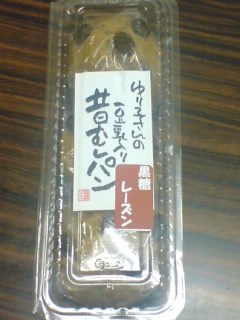
This particular cake called “Mukashi Mushi Pan” or Old-Fashioned Steamed Bread was made with wheat flour, tofu, brown sugar, raisins, salt, vegetable oil.
That is all!

One cake could have easily been held inside your palm, but it was very fulfilling and delicious!
They have other varieties made with pumpkin and other vegetables.

Fukasawa Foods
Fuji Gun, Shibakawa Cho, Naibo, 3895-8
Tel.: 0544-65-0143
Closed on Tuesdays
HOMEPAGE (Japanese)