Category Archives: Gastronomy

Amagi Shamo Chicken Farm in Izu City: Toshiyaki Horie

Toshiyaki Horie (extreme right) with his father and employee

Shizuoka is probably more famous for its high quality chicken outside than inside the Prefecture, but the locals are beginning to realize what kind of treasure they have been sitting on all that time!
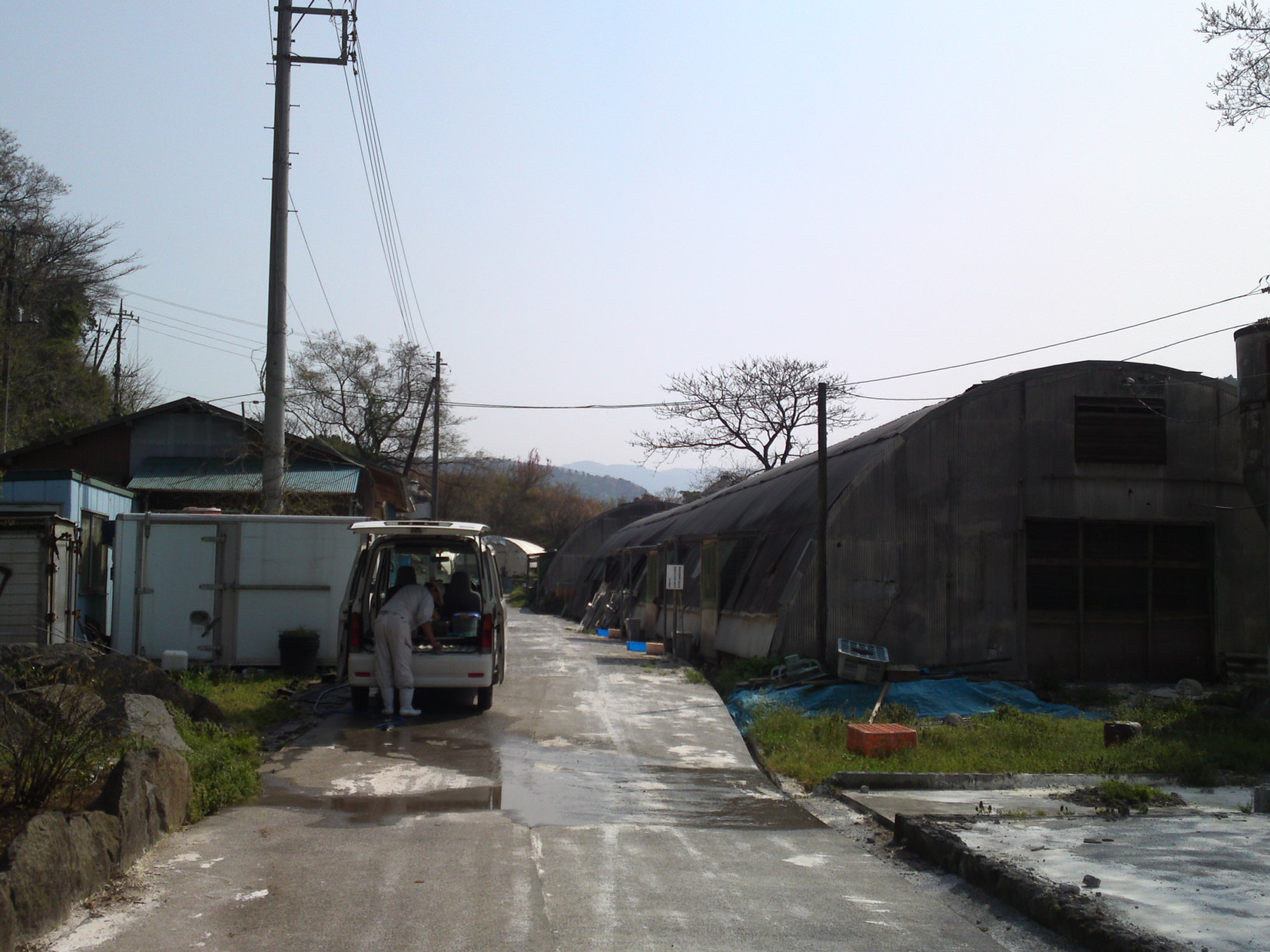
The reason that Shizuoka people don’t know much about their avian treasures is that such high quality chicken has to be raised away from the cities, in altitude and in close contact with the nature for rigorous hygienic conditions.

We conducted the interview before paying a visit to the chickens inside a visitors room Toshiyaki had been himself where I discovered his hobby: drum/taiko/太鼓 making!

Third-generation farmer Toshiyaki (33) made all these by hand from scratch. Playing the drums is a good past time that keeps him fit for a work that requires constant attention!

Ventilators for the summer.

Toshiyaki’s father started raising shamo/軍鶏 chicken, originally a species from Thailand, 23 years ago.
Whereas their chickens are labeled Amagi (from Amagi Plateau) Shamo, they are a species derived from the Ikkoku Shamo/一黒軍鶏 raised in the Western part of the Prefecture.
They are raised from just-born chicks sent by Hoshino Chicken Farm in Shimada City.
The main difference with their cousins in the west is that Toshiyaku adds natural food to the usual grain feed such as wasabi leaves (Izu City is the largest producer of wasabi in Japan) and soy milk from a local tofu shop. Their water comes from a river raging down just along the farm. Moreover, the hygiene is strictly maintained with soil between the shacks being cemented over and regularly spread with liquid chalk.
They keep the chickens in four different locations according to their age. Every time they move one age group, all the soil on which the chickens live is moved and renewed entirely. The removed soil will find its way into the natural fertilizer shack to be sold to local farmers.

The chicks will be kept in enclosed areas until 30 days old as they have to be kept warm then.
Incidentally, I had to take the pics without a flash as the chickens must be kept free of any stress!

The feed silo.

They will be moved to another shack until 60 days. They will be inoculated once during that period.
The total number of chickens is around 3,000 at all times, half of them male.
Toshiyaki has also started selling their eggs 3 years ago.

They will be moved to a third shack until 90 days old. Males and females will be separated then. All the chickens will be vaccinated a second time before being moved to their third shack.

The blue container is filled with soy milk.

Female chickens.
They will be culled between 120 and 150 days,
This is hard and very precise work. Except for the taking of their feathers done in a water-filled spinning machine, all has to be done by hand from bleeding (unavoidable or the meat would irremediaby spoiled) to dressing. Their livers and hearts and shirako/白子 are all delicacies that have to be of the uttermost cleanliness. Raw Amagi Shamo sashimi and livers are a delicacy in Shizuoka Prefecture!

The male chickens.

Now, I know at least four restaurants which serve this unique Amagi Shamo Chicken.
Moreover, Toshiyuki takes part in many gastronomic events. Expect a series of articles soon!

HORIE CHICKEN FARM/堀江養鶏
410-3203, Shizuoka Ken, Izu Shi, Yaguma, 296
Tel.: 0558-87-0644
Mobile: 090-7449-5655
Fax: 0558-87-0763
HOMEPAGE (Japanese)

RECOMMENDED RELATED SITES:
Warren Bobrow, Bread + Butter, Zoy Zhang, Hungry Neko, Think Twice, Frank Fariello, Mangantayon, Hapabento, Elinluv Tidbit Corner, Tokyo Terrace, Maison de Christina, Chrys Niles,Lexi, Culinary Musings, Wheeling Gourmet, Comestiblog, Chronicles Of A Curious Cook, Tokyo Through The Drinking Glass, Tokyo Foodcast, Palate To Pen, Yellin Yakimono Gallery, Tokyo Terrace, Hilah Cooking, More than a Mount Full, Arkonite Bento, Happy Little Bento; 5 Star Foodie; Jefferson’s Table; Oyster Culture; Gourmet Fury; Island Vittles; Good Beer & Country Boys; Rubber Slippers In Italy; Color Food daidokoro/Osaka;/a; The Witchy Kitchen; Citron Et Vanille, Lunsj Med Buffet/Estonian Gastronomy (English), Cook, Eat, Play, Repeat, Chrisoscope, Agrigraph, The Agriculture Portal to shizuoka!

Please check the new postings at:
sake, shochu and sushi

French Cuisine: Shizuoka Agricultural Products at Chez Satsukawa!

Service: Very friendly and easy-going, more professional in the “room”.
Facilities: very clean and beautiful washroom!
Prices: Reasonable
Strong points: French food in Izakaya style. Great sake and wines!

Fujio Satsukawa for all his experience is not afraid of new challenges.
Concocting and serving French food independently (our relation started before that!) since 1989, he is re-inventing himself with third restaurant which he had just opened on the 18th of December last year.

The concept obeys to the trends of the day with a combination of French bistro and Japanese Izakaya with a counter and tables in two different areas.

A collection of great vintage labels that a lot of officionados would like to lay their hands on!
It also means that he can offer both quality wines and top-class Shizuoka Sake with French dishes conceived either separately or as part of a course.

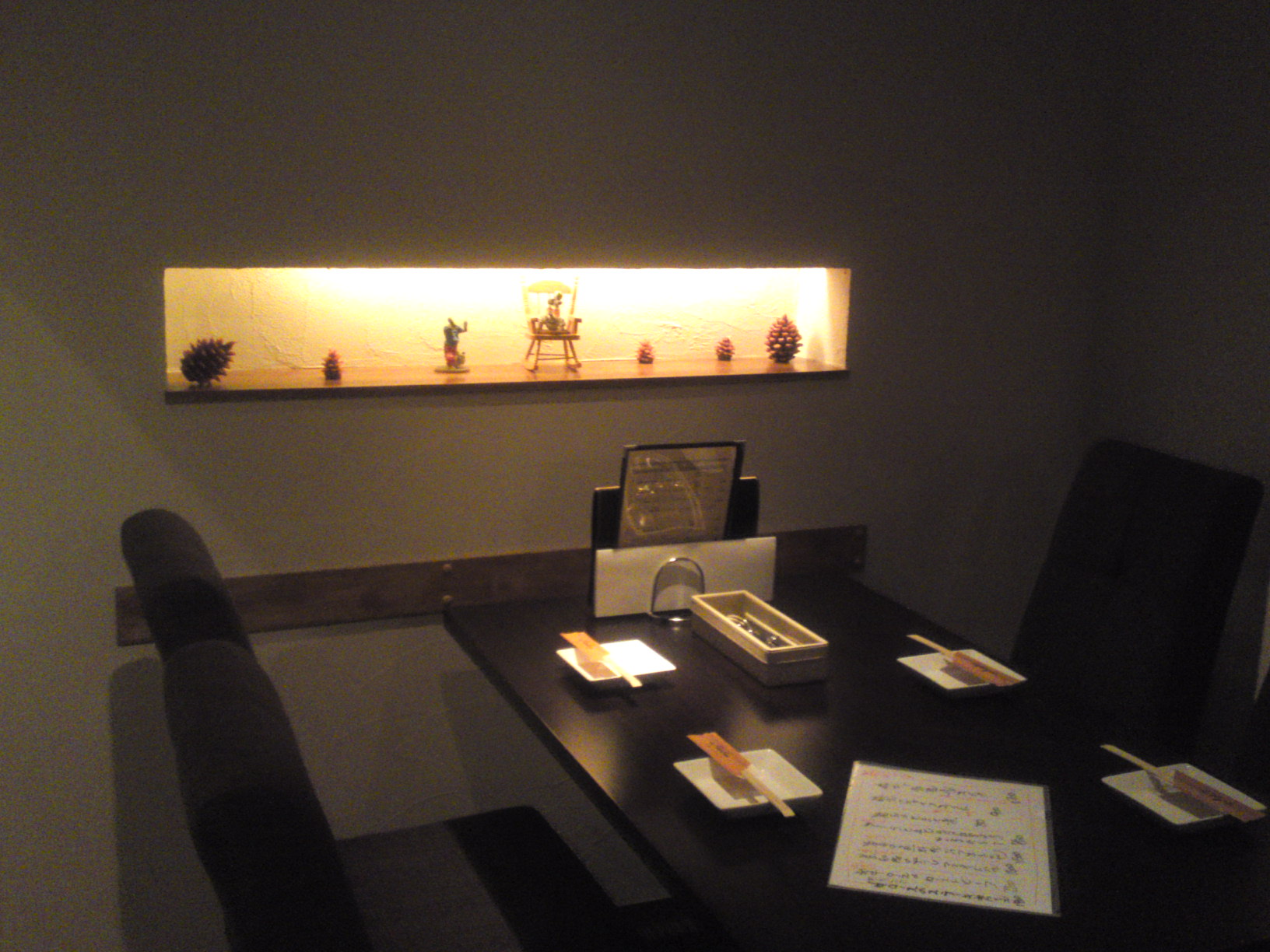
A cozy corner for patrons wishing for more privacy.

French gastronomy in a Japanese atmosphere!

Fujio Satsukawa gives preference to local products whenever possible.

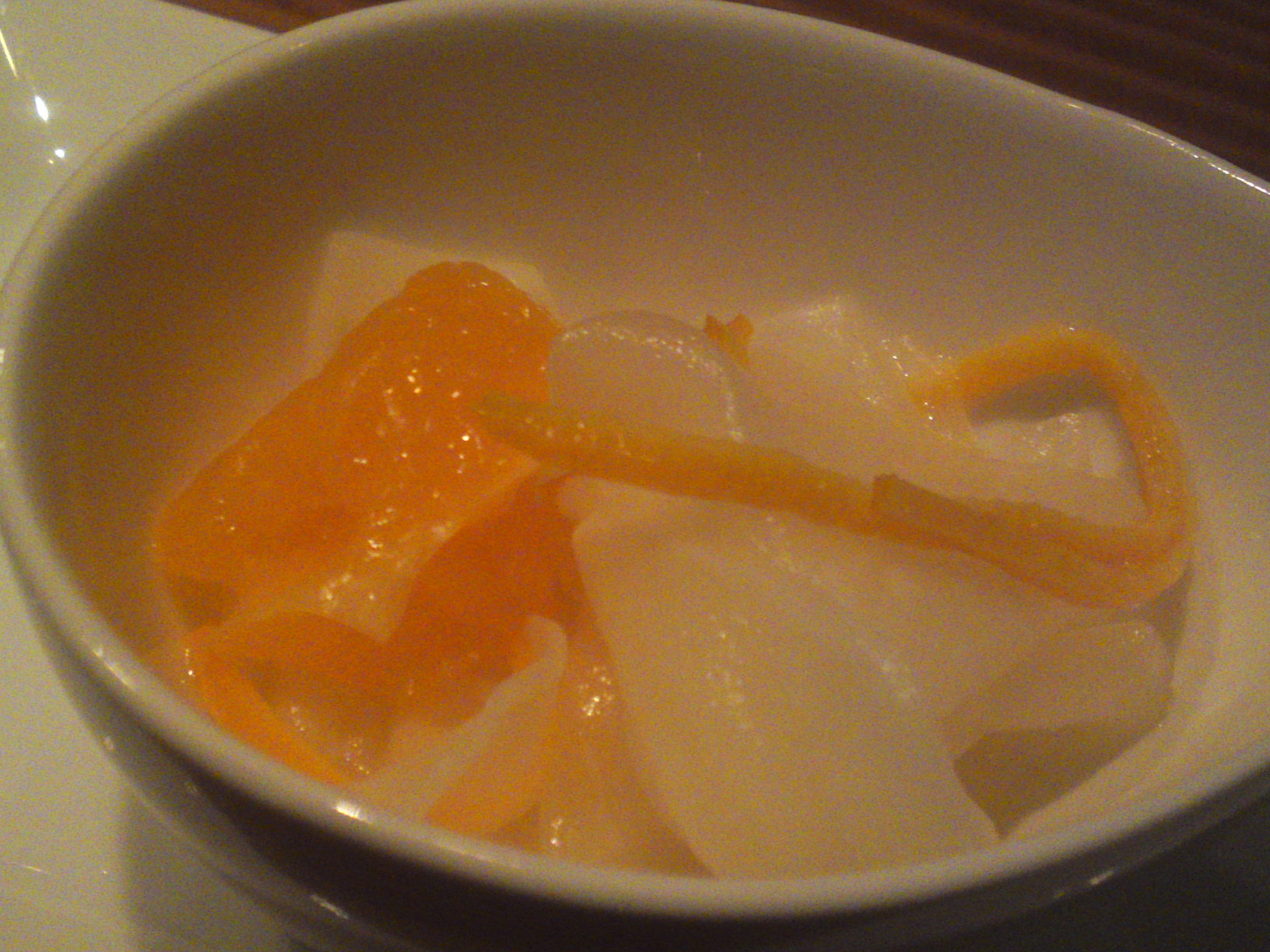
Daikon, orange and pimento marinated in amazu/sweet vinegar.

Open vegetables quiche.

Now meat dishes are truly extravagant (and reasonable priced!): This grilled chicken comes all the way from Mr Aoki’s farm in Fujinomiya City! This chicken variety raised in our Prefecture is called Fuji Tori/富士鶏!

Shizuoka has been developing top-class meat for quit a while and a great part directly goes onto the Tokyo tables.
This pork is called Mangenton/満幻豚 and is raised by only two farmers in the city of Fujinomiya! This particular one was raised by Mr. Kuwahara!

For a closer view. The concept is definitely French although I had Japanese sake with it!

The roasted stuffed eggplant could be served in any restaurant!

Looking forward to start again a long relation!

CHEZ SATSUKAWA
420-0852 Shizuoka City, Aoi Ku, Kooya Machi, 4-9, Matsunaga Kooya Machi Bldg, 2F
Tel.: 054-205-5133
Business hours: 12:00~14:00, 17:00~23:00
Closed on Mondays and Tuesdays
Credit Cards OK

RECOMMENDED RELATED SITES:
Warren Bobrow, Bread + Butter, Zoy Zhang, Hungry Neko, Think Twice, Frank Fariello, Mangantayon, Hapabento, Elinluv Tidbit Corner, Tokyo Terrace, Maison de Christina, Chrys Niles,Lexi, Culinary Musings, Wheeling Gourmet, Comestiblog, Chronicles Of A Curious Cook, Tokyo Through The Drinking Glass, Tokyo Foodcast, Palate To Pen, Yellin Yakimono Gallery, Tokyo Terrace, Hilah Cooking, More than a Mount Full, Arkonite Bento, Happy Little Bento; 5 Star Foodie; Jefferson’s Table; Oyster Culture; Gourmet Fury; Island Vittles; Good Beer & Country Boys; Rubber Slippers In Italy; Color Food daidokoro/Osaka;/a; The Witchy Kitchen; Citron Et Vanille, Lunsj Med Buffet/Estonian Gastronomy (English), Cook, Eat, Play, Repeat, Chrisoscope, Agrigraph, The Agriculture Portal to shizuoka!

Please check the new postings at:
sake, shochu and sushi

Bryan Baird’s Newsletter (2011/04/11)

Baird Beer & Taproom Events Bulletin
bryan-sayuri.gif

Seasonal Release: Pacific Century Citrus IPA

Dear Taproom Friend & Baird Beer Enthusiast:

We brewers of Baird Beer love the citrus character imparted by certain Pacific hop varieties. We also are fortunate to have access to a wide variety of fresh local citrus fruit here in Numazu. We combine this love and this fortune every year in the brewing of a special seasonal beer: Pacific Century Citrus IPA.

New Baird Beer Seasonal Release:
Pacific Century Citrus IPA 2011 (ABV 7%):

In this 2011 version we have raised the bittering units to 75 and augmented our traditional use of daidai fruit with additions of Shizuoka-grown dekopon fruit. These fruit additions combine with several citrus-character hop varieties (Columbus, Motueka and NZ Cascade) to yield an uniquely fruity and refreshing India Pale Ale.

Pacific Century Citrus IPA 2011 is available in limited quantities in both bottles (633 ml) and kegs. Consumers can purchase bottles direct from our brewery online E-Shop (http://bairdbeer.com/en/shop/).

Cheers,

Bryan Baird

Baird Brewing Company
Numazu, Japan
HOMEPAGE


The Japan Blog List

———————————
Must-see tasting websites:
-Sake: Tokyo Through The Drinking Glass, Tokyo Foodcast, Urban Sake, Sake World
-Wine: Palate To Pen, Warren Bobrow, Cellar Tours, Ancient Fire Wines Blog
-Beer: Good Beer & Country Boys, Another Pint, Please!
-Japanese Pottery to enjoy your favourite drinks: Yellin Yakimono Gallery
——————————–
Please check the new postings at:
sake, shochu and sushi

—————————————-
日本語のブログ
—————————————-

French Cuisine: Shizuoka Agricultural Products at Bistro Gawa!

Service: Friendly
Facilities: old but very clean. Very clean washroom!
Prices: very reasonable
Strong points: excellent French cuisine without ostentation. Great local products from the land and the sea
no-smoking-logoentirely non-smoking!

People and restaurants in Mishima City in eastern Shizuoka Prefecture are lucky!
Mishima and the mountains of West Hakone is a paradise for vegetable growers and organic agriculture in general!

Bistro Gawa is located inside an old unpretentious building just near the Mishima Hitokoji Station (Izu Hakone Private Line)

Although it is perched on the second floor you can’t miss it with its very visible menu boards before opening and

and after opening!

Make a point to look at the specialties of the day!
Not that they do not use any artificial taste additive!

Once inside you know what kind of cuisine to expect!
It is a small place with only 12 seats at tables and 6 more at the counter. It is a good idea to call and reserve beforehand.

This was my first visit and as I was due to hold an interview in Shuzenji in the afternoon, I took the opportunity to take my lunch there. Lunch is always a good sign of what level to expect.
Although they accept any order from any menu they propose three different sets for lunch: Petite Palette (650 yen), normal lunch (1580 yen) and La Palette (1880 yen).
I chose the latter with a glass of wine I could choose from 4 different bottles.

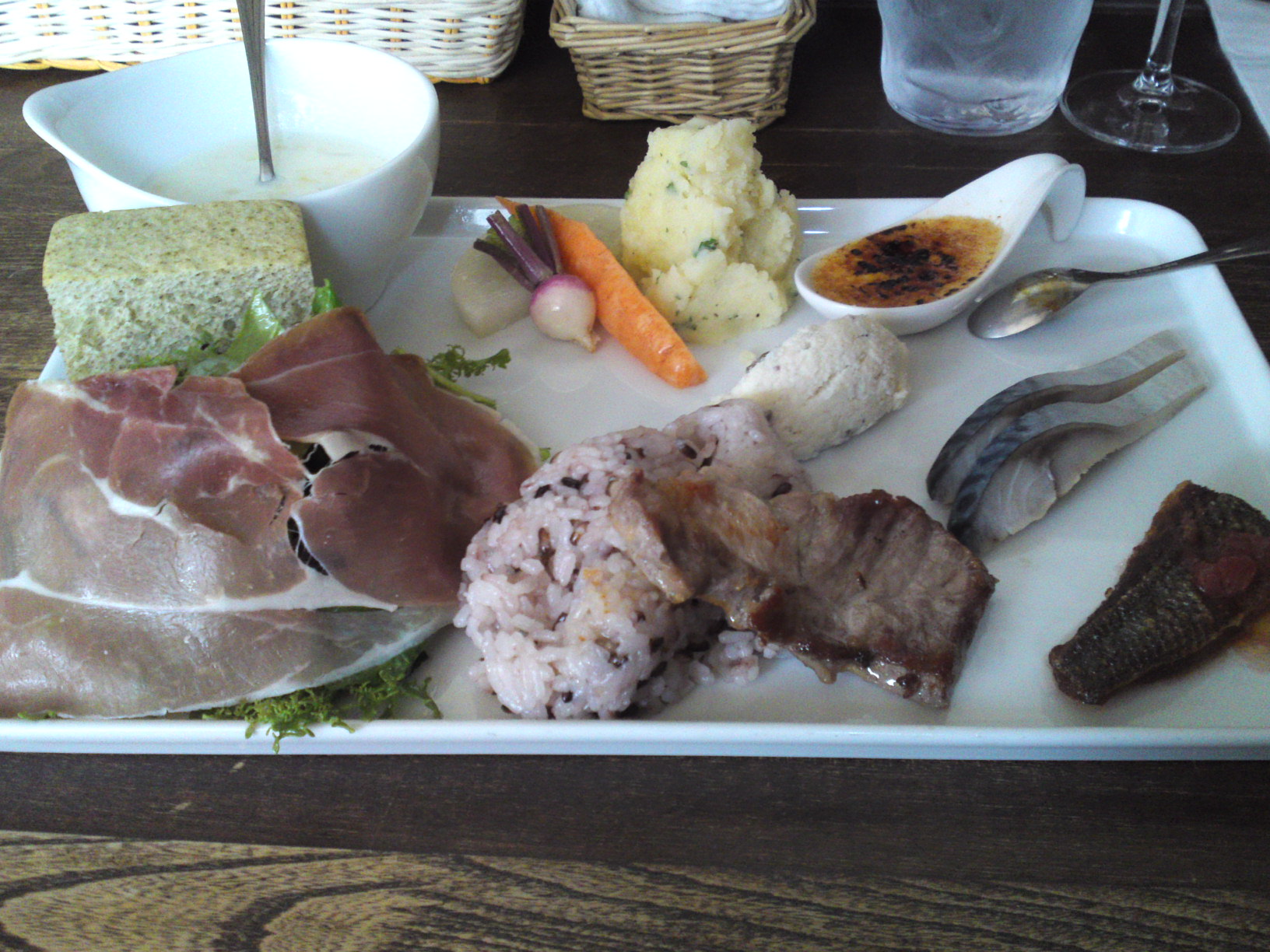
It consisted of Jamon Serrano (Spain) atop a salad of organic greens from Hirokawa Garden and black and white rice in butter with sauteed wabuta (Japanese pork).

Cheese creme Brulee, Medai brandade (a brandade made with a local grouper), marinated mackerel and pan-fried black bass from Suruga Bay.

Non-mayonnaise potato salad and vegetables sticks, all organic from Hirokawa Garden.

Home-baked bread.

Organic Spring cabbage potage.

And the coffee was served with real milk and sugar, a clear indication of better attention in Japan!

This is only a start as there is a good menu to go through and also as I will have to visit Mishima City very regularly in the coming weeks.
See you at dinner next, then!

Bistro Gawa
411-0856, Shizuoka ken, Mishima Shi, Hirokoji Machi, 1-37, 2F
Business hours: 11:30~14:00, 18:00~
Closed on Sunday, Thursday lunch and Saturday dinner
Tel.: 055-972-5040
Cards OK (+5% handling fees)

RECOMMENDED RELATED SITES:
Warren Bobrow, Bread + Butter, Zoy Zhang, Hungry Neko, Think Twice, Frank Fariello, Mangantayon, Hapabento, Elinluv Tidbit Corner, Tokyo Terrace, Maison de Christina, Chrys Niles,Lexi, Culinary Musings, Wheeling Gourmet, Comestiblog, Chronicles Of A Curious Cook, Tokyo Through The Drinking Glass, Tokyo Foodcast, Palate To Pen, Yellin Yakimono Gallery, Tokyo Terrace, Hilah Cooking, More than a Mount Full, Arkonite Bento, Happy Little Bento; 5 Star Foodie; Jefferson’s Table; Oyster Culture; Gourmet Fury; Island Vittles; Good Beer & Country Boys; Rubber Slippers In Italy; Color Food daidokoro/Osaka;/a; The Witchy Kitchen; Citron Et Vanille, Lunsj Med Buffet/Estonian Gastronomy (English), Cook, Eat, Play, Repeat, Chrisoscope, Agrigraph, The Agriculture Portal to shizuoka!

Please check the new postings at:
sake, shochu and sushi

Vietnamese Cuisine: Shizuoka Agricultural Products at Annam

Service: Very friendly and attentive
Equipment: Very clean and beautiful washroom.
Prices: reasonable
Strong points: Authentic Vietnamese cuisine prepared by all-vietnamese staff!
Great use of local products.
Entirely non-smoking!

Owner: Ms. Le Thi Hong Vinh
Chef: Ms. Nguyen Thi Hong Mai

Good authentic Vietnamese Restaurants are only found far and between in Shizuoka Prefecture, but here in Shizuoka City we are lucky enough to have the real (and probably the only one!) article: Annam!

It has become such a reference that they will have to move next June to a better suited location right in the middle of downtown Shizuoka in front of Nakajimaya Grand Hotel where they will find like-minded company.

Their menus offer a great variety and they do make a true effort to use local ingredients, especially vegetables. Shizuoka Prefecture being an agricultural treasure trove, it explains why we are blessed with so many top quality establishments!

Actually, they can devise you an entirely vegetarian (or anything else) repast given enough time in advance. By definition, Vietnamese food is healthy and one ought to sample its authentic form (as opposed to fast food oriented diners) regularly.

Since my work is to make discover restaurants that serve high quality, healthy and local food, it was only a pleasure to visit Annam once again, the more for it that their menus keep pace with the seasons!

As I was having lunch by myself I decided to sample at least three dishes and stay away from the carbohydrates!
My first dish ( a pretty long name in Vietnamese) was Sauteed Seasonal Vegetables.

Pan-fried with just the right amount of seasoning, the local vegetables including delicious Jew’s Ear mushrooms were scrumptious, cooked to perfection to allow you to enjoy their true taste and savors.
They also certainly made for great appetizing colors!

The second dish could have been called a “meat” dish, although the latter has nothing to do those big lumps of greasy meat served elsewhere: Sauteed Herb Beef!

The beef is cut into small enough pieces and wrapped in herbs before being fried.

The herbs will trap the beef juices and make for a really tender and delicious morsel.
It is such pleasure to pick the wrapped pieces one at a time with your chopsticks and have all the savors spread through your palate as you bite into them.

My last dish was Chicken sauteed in Lemon Grass.
A curry note was also added to them for the perfect spicy balance.

Everything was cut into the proper dainty size for maximum enjoyment.
I do agree some rice would have been welcome to top it with, but I said I was here to taste!

But I couldn’t escape a dessert: Violet Sweet Potato “Cie”!
A typical Vietnamese dessert, it is concocted with violet Sweet Potato, coconuts milk and tapioca. Just the right sweetness, and plenty of satisfaction without being overwhelmed.
Make sure you keep some space for one of these desserts!

Looking forward to report again in June!

ANNAM
420-0858 Shizuoka City, Aoi Ku, Tenmacho, 17-9
Tel.: 054-250-2266
Fax: 054-250-2323
Business hours: 11:30~14:00, 17:30~22:00
Closed on Monday (or next day if National Holiday)
HOMEPAGE
Credit Cards OK

NEW ADDRESS FROM JUNE
Shizuoka City, Aoi Ku, Koya machi, 6-6, Mitsuhisa Blg, 2F

RECOMMENDED RELATED SITES:
Warren Bobrow, Bread + Butter, Zoy Zhang, Hungry Neko, Think Twice, Frank Fariello, Mangantayon, Hapabento, Elinluv Tidbit Corner, Tokyo Terrace, Maison de Christina, Chrys Niles,Lexi, Culinary Musings, Wheeling Gourmet, Comestiblog, Chronicles Of A Curious Cook, Tokyo Through The Drinking Glass, Tokyo Foodcast, Palate To Pen, Yellin Yakimono Gallery, Tokyo Terrace, Hilah Cooking, More than a Mount Full, Arkonite Bento, Happy Little Bento; 5 Star Foodie; Jefferson’s Table; Oyster Culture; Gourmet Fury; Island Vittles; Good Beer & Country Boys; Rubber Slippers In Italy; Color Food daidokoro/Osaka;/a; The Witchy Kitchen; Citron Et Vanille, Lunsj Med Buffet/Estonian Gastronomy (English), Cook, Eat, Play, Repeat, Chrisoscope, Agrigraph, The Agriculture Portal to shizuoka!
Please check the new postings at:
sake, shochu and sushi

Shizuoka Sake Tasting: Takashima Brewery-Hakuin Masamune, Fujisan No Hi

The actual and very long name for their sake is:
Takashima Brewery, Hakuin Masamune, Heisei Nijusannen (2011), Fujisan No Hi (Mount Fuji Day), Asashibori (pressed in the morning), Homare Fuji (rice variety), Junmai (no alcohol added), Genshu (no water added), Origarami (natural pressing)!

Takashima Brewery has always been keen to create limited brews for local events and this particular one was not only made with Shizuoka-grown sake rice but also for Mount Fuji Day!

Rice: Homare Fuji 100%
Rice milled down to 60%
Alcohol: 17~18 degrees
Pressed on February 23rd, 2011

Clarity: very clear
Color: Transparent if not stirred as it contains white lees
Aroma: Sweetish, custard, banana. Very pleasant
Body: fluid, light
Taste: Sweetish attack. Complex. Welcome alcohol. Turns dry later.
Lighter but deeper than expected.
Pineapple, macadamia nuts, custard, dry almonds.
Lingers only a little with a very dry note.
Changes little with food. Especially great with fresh vegetables.
Junmai and white lees (sake kasu) very present for some extra impressions.

Overall: A very interesting sake with a more complex taste than expected.
Light enough in spite of its high alcohol content.
A sake that should please true sake lovers in search of unusual brews!

Must-see tasting websites:
-Sake: Tokyo Through The Drinking Glass, Tokyo Foodcast, Urban Sake, Sake World
-Wine: Palate To Pen, Warren Bobrow, Cellar Tours, Ancient Fire Wines Blog
-Beer: Good Beer & Country Boys, Another Pint, Please!
-Japanese Pottery to enjoy your favourite drinks: Yellin Yakimono Gallery
——————————–
Please check the new postings at:
sake, shochu and sushi

—————————————-
日本語のブログ
—————————————-

French Cuisine: Local Shizuoka Land & Sea Products at Pissenlit

Service: excellent and very friendly
Facilities: great washroom, great cleanliness overall
Prices: reasonable, good value.
Strong points: Interesting wine list. Great use of local products.
no-smoking-logoentirely non-smoking!

When one wishes to sample products both from the land and sea of Shizuoka Prefectures, there are many establishments worthwhile to visit, but Pissenlit and Chef Tooru Arima are certainly a top reference among them.

I recently had the opportunity to share lunch there with some friends, so let me describe what we sampled:

Organic carrot (Hirokawa Farm) soup for starter.

Organic spinach quiche and its organic vegetable salad. All organic vegetables used at Pissenlit come from Mr. Hirokawa’s Garden in Mishima (I will soon pay him a visit!)!

Some of my friends opted for the pan-fried suzuki/鱸/black bass caught in Sagara/相良 with its organic vegetables.

For a different view of the vegetables especially!

I personally opted for the fried/baked wild boar (hunted in Shimada City) in wine sauce with its garnish of organic vegetables.

A single will not give you a complete idea of the full dish, so here is one more!

And another one!

No so many explanations this time as I was busy socializing to note down everything, but I will make an extra effort next time!

No dessert?
Yes, but it was the same as in my last report! LOL

PISSENLIT
420-0839 Shizuoka City, Aoi Ku, Takajo, 2-3-4
Tel.: 054-270-8768
Fax: 054-627-3868
Business hours: 11:30~14:30; 17:00~22:00
Closed on Tuesdays and Sunday evening
Homepage (Japanese)
Credit Cards OK

RECOMMENDED RELATED SITES:
Warren Bobrow, Bread + Butter, Zoy Zhang, Hungry Neko, Think Twice, Frank Fariello, Mangantayon, Hapabento, Elinluv Tidbit Corner, Tokyo Terrace, Maison de Christina, Chrys Niles,Lexi, Culinary Musings, Wheeling Gourmet, Comestiblog, Chronicles Of A Curious Cook, Tokyo Through The Drinking Glass, Tokyo Foodcast, Palate To Pen, Yellin Yakimono Gallery, Tokyo Terrace, Hilah Cooking, More than a Mount Full, Arkonite Bento, Happy Little Bento; 5 Star Foodie; Jefferson’s Table; Oyster Culture; Gourmet Fury; Island Vittles; Good Beer & Country Boys; Rubber Slippers In Italy; Color Food daidokoro/Osaka;/a; The Witchy Kitchen; Citron Et Vanille, Lunsj Med Buffet/Estonian Gastronomy (English), Cook, Eat, Play, Repeat, Chrisoscope, Agrigraph, The Agriculture Portal to shizuoka!

Please check the new postings at:
sake, shochu and sushi

Wasabi: A Visit to Its Birthplace in Utogi at Maru Ichi Farm, Shizuoka!

Mr. Yoshihiro Mochizuki望月義弘

The other day I received a phone call from my good friend, Dominique Corby, the Chef/Owner of French Kappo Dominique Corby in Tokyo.
He told me that the French/German ARTE TV Channel was coming to Shizuoka City to make a long report on green tea (Shizuoka produces 45% of all green tea in Japan), wasabi (Shizuoka produces 80% of all organically-grown  wasabi in Japan) and the fishing industry in our Prefecture (they will visit the Fishing Harbor of Yaizu City)!
He wished to enroll my help to “prepare the ground” for the TV crew as I was not only living in Shizuoka City, but knew my wasabi well! He didn’t have to ask twice!
So on Thursday and Friday 12th and 13th, a third Musketeer, Stephane Danton of Ocharaka, a French specialist of green tea in Kanagawa Prefecture who exports green tea from Kawane Honcho in Shizuoka, joined us in a rented car and we left on a grand mission!

Utogi is also the starting point of some great treks!

We did spend the whole previous day following Stephane in tea growing farming homes and communities as the rain just made it impossible to visit the wasabi fields in altitude!
So we left early in the morning on Friday from Shizuoka City in blistering heat.
The ride is not that hard, 18 km along the Abe River and 3 more km up in altitude, what with the beautiful vistas between high steep forested mountains.
We reached Utogi at around 11:00 a.am. where Mr. Yuma Mochizuki was already waiting for us.

One of Mr. Yuma Mochizuki’s wasabi fields.

Mr. Yuma Mochizuki is the 10th generation of a celebrated wasabi growing family.
He presently owns 5 fields dispersed on in the Utogi Mountains, and is trying to buy more land in Fujinomiya City as the demand is growing and that there is simply no space left in Utogi!
Wasabi grows in the wild and its stems and leaves have been consumed as a vegetable and a natural medicinal herb for eons.
It is only in the beginning of the 17th Century that a farmer in Utogi succeeded in growing the root that is so appreciated in the world.
Roots of a small size will develop in the wild after 2 or 3 years, but they are too sour and “green” to be consumed at all. Although its cultivation is purely organic/macrobiotic in Shizuoka Prefecture it does need the help of a human hand.

Mr. Mochizuki first took us to his highest field at almost 1,000 metres (well over 300 feet) to an almost inaccessible locale among trees, steep slopes and up impossibly narrow and slippery “stairs”. But it was certainly worth it, although the TV crew will not have to climb so high.
He then took us (all the time by car as walking was not much of an option what with the heat and the distance between fields) to the field that would appear on TV.

The whole field is covered with a black mesh net to protect it from too much exposure to the sun. These nets are stretched over the field only when it is directly under the path of the sun. Some fields aren’t.
But all fields have to be protected with supplementary solid side nets to keep wild monkeys, wild boars and wild  deer away as they would leave nothing of the stems and leaves!

Wasabi seedlings have to be regularly replanted every one or two years depending upon the variety. There are axtually more than 100 varieties of them. Mr. Mochizuki grows ten of them.
The seedlings above had been replanted only one month ago.

Here is a “view” (from under the nets) of the upper part of that particular field with about one-year old wasabi plants in the background.

After 1 or 2 years the wasabi plant matures to almost one metre in height, root, stems and leaves included. Subsidiary plants will grow from the bottom of the main large root. These will be cut out to be replanted as seedlings.
The large root will be harvested for the wasabi paste. The stems will be pickled in Japanese sake white lees to become “Wasabi Tsuke”, a delicacy one can use to season his/her bowl of freshly steamed rice with or with fish and fish paste. The leaves can be pickled too, although they are eminently edible raw, steamed or cooked. Shizuoka people use them as “vessels” to taste miso paste!

Only pure mountain water flowing at a constant temperature may be used in the culture of wasabi, that is “sawa wasabi” which grown in water as opposed to “hatake wasabi”, of a very inferior variety, usually not grown in Shizuoka Prefecture. Stagnant water is out of question.
Moreover, and this is a little known fact, individual field sections and fields in general do not communicate with each other. Water comes through pipes directly connected to mountain streams to bring water to each field section. It is then diverted to side funnels which prevent any water to go back into another field!
True envirnomental/ecological and organic culture!
Apart of the bed sand and water, nothing else goes into those fields. Full stop!

Although Mr. Mochizuki was very busy preparing the big Festival to be held on Saturday and Sunday with the whole community, he kindly took the time to invite us to his enormous Japanese house (all sitting on tatami there) to share tea and sample his wasabi crop. We had the pleasure to meet his very gentle spouse and the energetic 11th generation Yuma Mochizuki/望月佑真!

Here are the best samples of 3 of the best out of the 10 varieties the Mochizuki family grows. Can you guess which is the best one?…
The one in the middle with the dark stems!

It was actually elected twice “Best wasabi in Japan”!

Now, where do you grate the stem from? The pointed end or the stem end?
Well, this is according to priorities, but usually after chopping the stems away from the root is first grated from the top as it will hotter as you come closer to its pointed extremity. This way you can control the “heat” of the root (or mix the whole later!).

Have you ever seen the cross section of a healthy root?

The traditional way to grate the wasabi root is on a wooden slat covered with shark skin.
Mr. Mochizuki explained this is now done only for the sake of tradition. Sushi and soba chefs will grate (away for the clients’ eyes) on a new and very efficient metal grater (in the background).

Look at that for extravagance!
Mr. Mochizuki was indeed so generous in his demonstration.
The TV crew will have a “field day”! LOL

MARU ICHI NOUEN/丸一置農園
(Yutogi Kodawari Club/有東木こだわり倶楽部)
Director: Yoshihiro Mochizuki/望月義弘
421-2303 Shizuoka Prefecture, Shizuoka City, Aoi Ku, Yutogi, 602
Tel./Fax: (81) (0)54-298-2077
E–mail: wasabiya-maruichi@vivid.ne.jp
Direct mail orders possible

RECOMMENDED RELATED SITES:
Warren Bobrow, Bread + Butter, Zoy Zhang, Hungry Neko, Think Twice, Frank Fariello, Mangantayon, Hapabento, Elinluv Tidbit Corner, Tokyo Terrace, Maison de Christina, Chrys Niles,Lexi, Culinary Musings, Wheeling Gourmet, Comestiblog, Chronicles Of A Curious Cook, Tokyo Through The Drinking Glass, Tokyo Foodcast, Palate To Pen, Yellin Yakimono Gallery, Tokyo Terrace, Hilah Cooking, More than a Mount Full, Arkonite Bento, Happy Little Bento; 5 Star Foodie; Jefferson’s Table; Oyster Culture; Gourmet Fury; Island Vittles; Good Beer & Country Boys; Rubber Slippers In Italy; Color Food daidokoro/Osaka;/a; The Witchy Kitchen; Citron Et Vanille, Lunsj Med Buffet/Estonian Gastronomy (English), Cook, Eat, Play, Repeat, Chrisoscope; Jacqueline Church; The Foodonymph (in Dubai!); Alchemy, Simple Ingredients, magical Food (in Ireland!)

Please check the new postings at:
sake, shochu and sushi

Ramen: Tonkotsu Ramen-Professional Recipe

Here is the “professional Recipe for Tonkotsu Ramen as promised!

INGREDIENTS: (will provide 3.5 litres of soup, enough for quite a few servings!

-Pork bones: 5 (2500 g)
-Water: 13 litres

RECIPE:

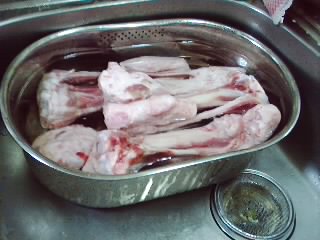
Bring frozen bones to room temperature in plenty of water.
It should take about 2 hours. If you cook frozen bones directly, the blood will solidify and will be very difficult to get rid of.
If you can get fresh bones, skip this step.

Fill a very large cooking pot with water and bring to boil.

Switch off fire as soon as the water boils. Drop in the bones and let cool. This process will help you get rid of the blood and blood vessels easily.

Leave it to cool down for 30~40 minutes.

Drain the water off the bones in a large strainer.
Throw off the water.
Check and take off any blood or blood vessels for the bones.
Don’t forget to clean the pot!
Break all the bones in two with a hammer.

Fill the pot again with clear water and bring to boil.
Drop the bones inside.

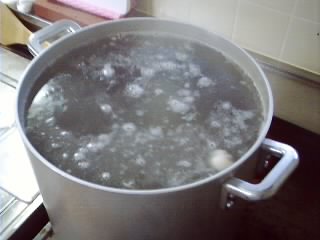
Keep cooking over a strong fire and scoop out foam and unwanted matters coming up on the surface (this should take 20 minutes at the most).
As the bottom might get hooter than near surface, stir with a large ladle from time to time.
If the inside of the pot over the water surface gets clogged with matter or gets dark, switch off fire, clean with a clean cloth and switch fire on again.

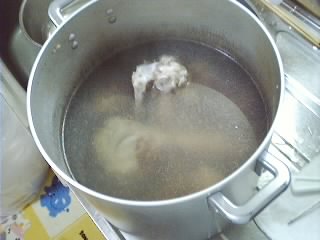
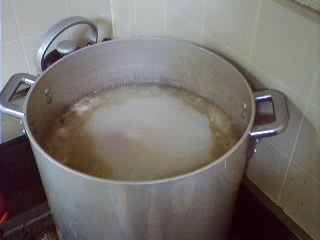
Above picture shows the soup after all unwanted matters have stopped coming up.

Cover with a lid and a weight to prevent steam coming out from under the lid. Keep simmering on a low fire.

That’s how it looks after 1 hour.
Keep cooking.

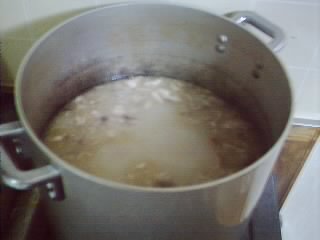
That’s how it looks after 3 hours.

That’s how it looks after 6 hours.

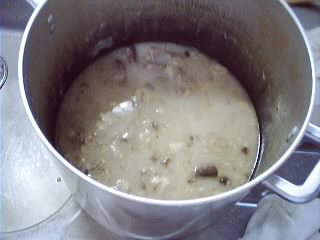
That’s how it looks after 10 hours.

And after 12 hours (start early in the morning!)!

Keep cooking. Remember you are aiming at 3.5 litres of soup.
After 12 hours you may raise the fire to accelerate the cooking.
Keep the lid on!

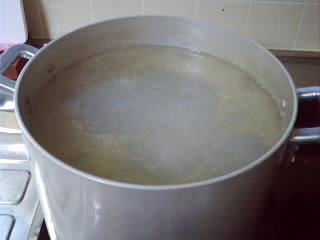
This is what you are looking for!

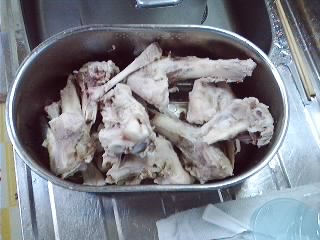
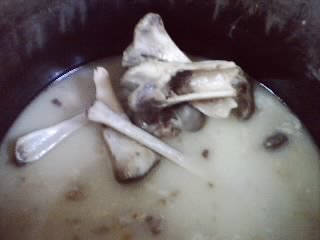
This is how the bones will look after 15 hours of cooking!
Cooked at last!

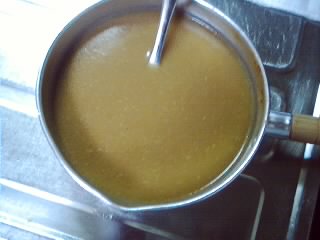
Filter the soup and here you have your tonkotsu base soup ready!
After that it is up to you and your preferences: add miso, tofu, salt, sesame oil, garlic chips and your little secrets!

Now what secret ingredients have I thrown in? LOL

RECOMMENDED RELATED SITES:
Bread + Butter, Comestilblog, Greedy Girl, Bouchon For 2, Zoy Zhang, Hungry Neko, Mangantayon, Elinluv Tidbit Corner, Maison de Christina, Chrys Niles, Lexi, Culinary Musings, Eats and Everything, Bite Me New England, Heather Sweet, Warren Bobrow, 5 Star Foodie, Frank Fariello, Oyster Culture, Ramendo, Alchemist Chef, Ochikeron, Mrs. Lavendula, The Gipsy Chef

Please check the new postings at:
sake, shochu and sushi

—————————————-
日本語のブログ
—————————————-