Category Archives: Uncategorized

Today’s Lunch Box/Bento (’10/01)

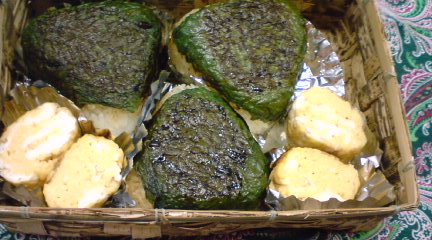
Today’s bento was the first of the year.
The Missus being still on holiday made it in a bit of a hurry as she being bsuy cleaning our place like very Japanese housewife does at the beginning of the year. A good time forme to escape to work! LOL

Being conscious of the too many calories I’ve been infgetsing recently she kept my bento to a healthy minimum.: musubi/rice balls, tamagoyaki and salad.

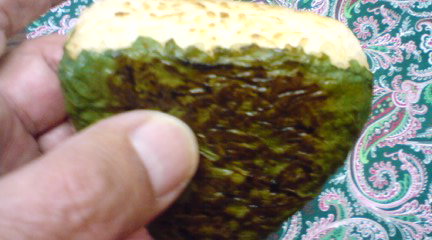
The musubi/rice balls were an interesting concept: She had marinated large egoma leaves (a large and very tasty variety of shiso/perilla) overnght in miso and what else. After steaming the rice, she made triangular rice balls (balls is not the right term, then!), sauteed and then wrapped them inside the leaves. They also contained a honey-sweetened umeboshi/Japanese pickled plum. Very tasty!

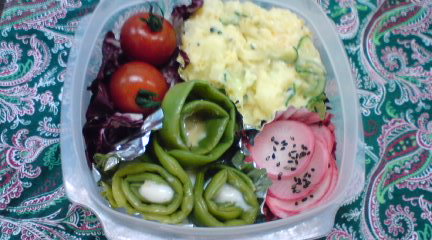
The salad dish was basically made up of leftovers:
Potato, onion, cucumber and tobikko/flying fish roe salad, boiled large green beans she rolled with some dressing in the middle. home-made pickled red daikon with black sesame, and plum tomatoes on trevise cabbage.

Colorful, healthy and tasty! No complaints! LOL

RECOMMENDED RELATED SITES:
Warren Bobrow, Bread + Butter, Zoy Zhang, Hungry Neko, Think Twice, Frank Fariello, Mangantayon, Hapabento, Elinluv Tidbit Corner, Tokyo Terrace, Maison de Christina, Chrys Niles,Lexi, Culinary Musings, Wheeling Gourmet

Please check the new postings at:
sake, shochu and sushi

—————————————-
日本語のブログ
—————————————-

Vegan Sushi Recipe Suggestions 1: Myoga/Myoga Ginger

I already have introduced Vegan and Vegetarian Sushi, but following further requests and questions by my vegan (I’m not!) friends, I decided to contribute a small series of postings to give them more detailed suggestions and ideas!

Now, please check sushi rice recipe HERE to make things more practical!

The first vegetable amenable to sushi I would like to introduce is Myoga, or Myoga Ginger.

Please check Myoga HERE on Wikipedia!

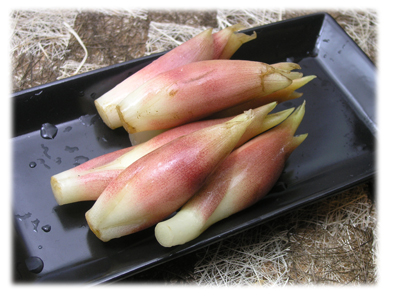
Myoga is a very interesting vegetable as not only the shoots but also the flowers are edible!

The flower in its natural state!

As bought at the market.

Interestingly enough, as Japan makes an enormous consumption of them it has to import a lot from New Zealand and Australia. I’m sure you can buy it at local Asian markets. It could porve an interesting cultivation for some, too!

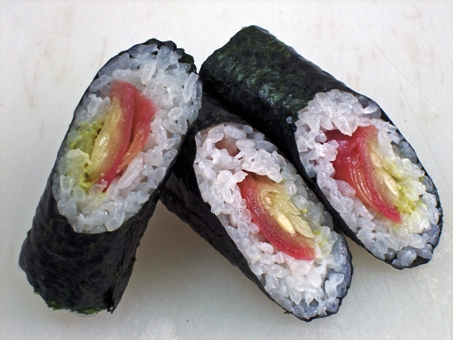
Myoga sushi roll.

Now there are two basic ways of presenting myoga as sushi.
First, as shown on above picture, as a roll.
It doesn’t have to be complicated. Just chop the myoga in strips and fill the roll with it accompanied by some wasabi.

Myoga Sushi nigiri.

The other basic way is present it as sushi nigiri on top of a small ball of sushi rice previously smeared with a little wasabi.

You can prepare the myoga in two basic ways,too:
The first one would would be just to wash it and use it raw.
The second would be to pickle it in rice vinegar and sugar for a while, press it and serve it in both sushi styles as explained above.

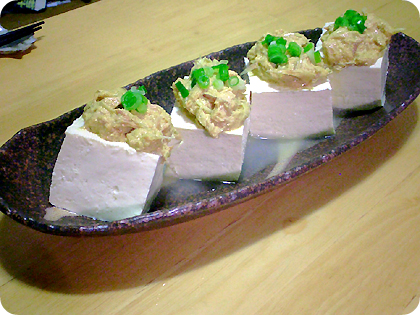
There are other interesting possibilities when you let your imagination go free as in above picture where the rice is replaced with a small cube of tofu and the topping is made with chopped myoga, tofu and wasabi all mixed together!

To further convince you, look at the picture above:
All vegan sushi:
from top down: Cucumber, egg plant/aubergine and myoga. The last are pickled daikon!

RECOMMENDED RELATED SITES
Not-Just-Recipes, Bengal cuisine, Cooking Vegetarian, Frank Fariello, Gluten-free Vegan Family, Meatless MamaFrank Fariello, , Warren Bobrow, Wheeling Gourmet, Le Petit Cuisinier, Vegan Epicurean, Miss V’s Vegan Cookbook, Comestiblog, To Cheese or not To Cheese, The Lacquer Spoon, Russell 3

Please check the new postings at:
sake, shochu and sushi

—————————————-
日本語のブログ
—————————————-

New Year Sashimi Sets in Shizuoka Supermarkets

Tradition has been changed or made with altogether!
From this year, the main supermarkets were oprn on New Year’s Day in Shizuoka.
Economic crisis? Cutthroat competition with “Convenience Stores”?
The result is that you don’t to worry any more about stocking up foood for the long Japanese New Year Holidays!

Not only the Shizutetsu Chain Supermarkets were open, but they had advertized bargains well in advance.
One concerned sashimi.
I just couldn’t ignore it and visited the largest store near my home yesterday afternoon.
I noticed that I had messed with my mobile phone camera today when I noticed the dates printed on the pics. I never do so, but at least, it will serve as a proof that I reaaly the pics yesterday! LOL

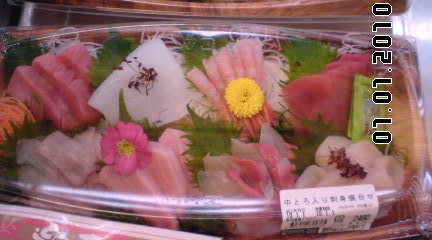
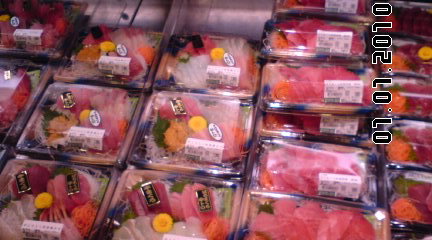
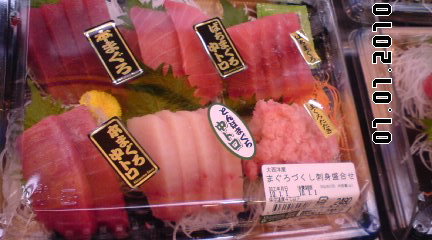
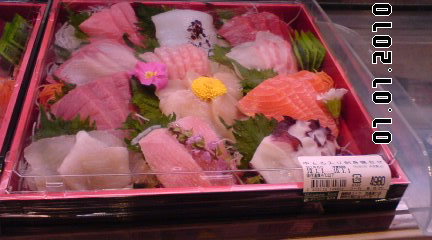
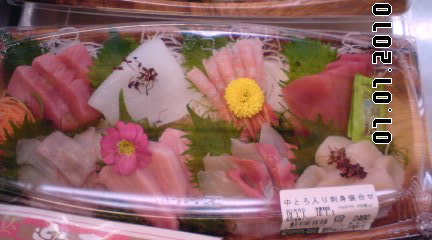
As you can see on the above pic there was plenty to choose from.
The main particularity was that the tuna was all wild tuna (Shizutetsu has a direct delivery deal with the various harbours in the Prefecture!)

The set above is priced at about 25US$ and included sashimi from 3 different tuna: honmaguro, tonbomaguro and bachimaguro, from akami to chu-toro.

The above set for about 50US$ is a bit extravagant, athough very cheap (dead cheap abroad, I suppose!) and included three types of maguro/tuna, one tai/seabream, one madai/true seabream, one tako/octopus, one hirame/sole, one ika/cuttlefish, one buri/yellowtail, amaebi/sweet shrimps, hotate/scallops and one shake/salmon!

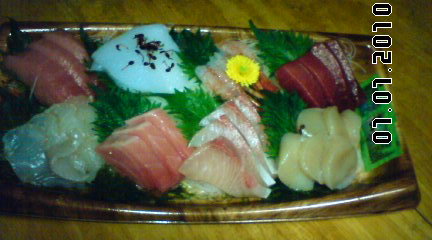
This is the one I chose for both of us (25US$)!

Top from left to right:
Honbomagurao Chutoro, Surumeika/Cuttlefish, Amaebi/Sweet Shrimps and Bachimaguro Chutoro
Bottom from left to right:
Hirame/Sole, Bachimaguro Chutoro, Buri/Yellowtail, and Hotate/ Scallops.

Of course I had Sake from Shizuoka with that lot!

RECOMMENDED RELATED SITES:
Warren Bobrow, Bread + Butter, Zoy Zhang, Hungry Neko, Think Twice, Frank Fariello, Mangantayon, Hapabento, Elinluv Tidbit Corner, Tokyo Terrace, Maison de Christina, Chrys Niles,Lexi, Culinary Musings, Wheeling Gourmet, Sushi Nomads, Oyster Culture, Ravenous Couple

Please check the new postings at:
sake, shochu and sushi

—————————————-
日本語のブログ
—————————————-

Vegan Japanese Pickled Turnips

As i said in my previous posting, for too long, turnips have been considered food for the poor and destitutes.
In France it is also the symbol of a bad play or movie!
Actually they make for great vegetables, cheap and easy to cook!

The Japanese have come with all kinds of ways to prepare them forthe pleasure of vegans, be they Japanese or expats in this country.
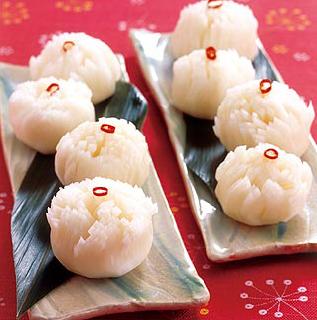
The following recipe is called “Kabu no Kiku Hana Zuke/かぶの菊花漬け or:
Japanese pickled Turnips in the shape of Chrysanthemums!

INGREDIENTS: For 4 people

-Turnips: 8 small
-Sugar: 3 tablespoons

-Rice vinegar: 1/2 Cup/100 cc/ml
-Red Chili pepper (dried, 1 whole)

RECIPE:

-Peel the turnips carefully and take out leaves and their green spot from the top of the vegtables. With a sharp knife make incisions two thirds deep all around the top of the turnips.

-Place the turnips side by side inside a bowl. Cover them completely with salted water. Leave them marinate for 15 minutes to soften them.

-Mix rice vinegar and sugar.
Drain the turnips thoroughly.
Pour the sweet vinegar over the turnips and let marinate for a whole night.

-Take turnips out and press out the vinegar only lightly.
Open and spread the indented parts as to give tem the shape of a looming flower like in the picture.
Top with a small circle of cut chili pepper.

Enjoy as a snack any time of the day or use as a central part of a vegetable salad!

RECOMMENDED RELATED SITES
Not-Just-Recipes, Bengal cuisine, Cooking Vegetarian, Frank Fariello, Gluten-free Vegan Family, Meatless MamaFrank Fariello, , Warren Bobrow, Wheeling Gourmet, Le Petit Cuisinier, Vegan Epicurean, Miss V’s Vegan Cookbook, Comestiblog, To Cheese or not To Cheese, The Lacquer Spoon

Please check the new postings at:
sake, shochu and sushi

—————————————-
日本語のブログ
—————————————-

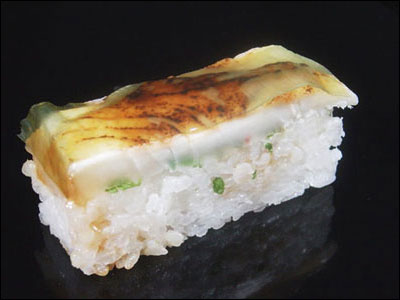
Oshizushi/Pressed Sushi Techniques 4: Seared Seabream/Tai no Aburi

SYNOPSIS:

Sushi exists under many forms and guises.
It is not all nigiri and (more ubiquitous) sushi rolls!
Have you ever heard of Oshizushi?

Oshizushi (押し寿司, litterally pressed sushi), is a pressed sushi from the Kansai Region, a favourite and specialty of Osaka.

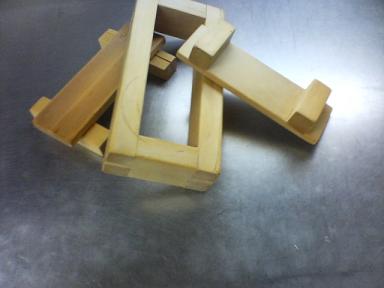
Oshibako unmounted

It is made with the help of a block-shaped piece formed using a wooden mold, called an oshibako/押し箱.
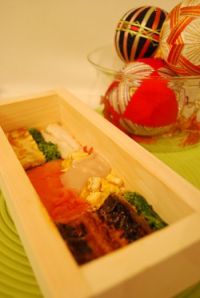
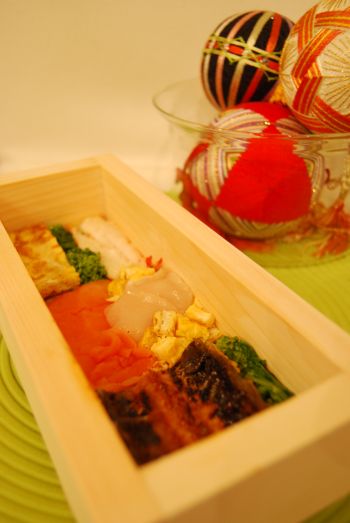
Oshibako lined with toppings

The chef lines the bottom of the oshibako with the toppings, covers them with sushi rice, and then presses the lid of the mold down to create a compact, rectilinear block.
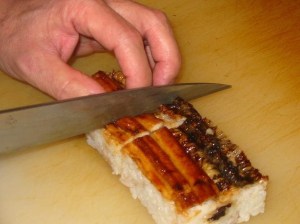
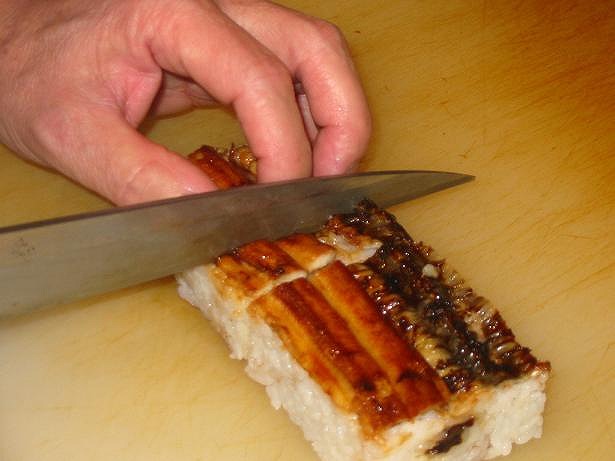
Cutting Grilled Eel Oshizushi

The block is then removed from the mold and then cut into bite-sized pieces.

It is great fun to experiment at home for large parties or the family as you can include almost anything.
Moreover, oshizuhi is easy to transport and include in bento!

The recipes and techniques I’m introducing here are professional, but with a little practice I’m sure you will become a specialist

1)Salmon Marinated in Seaweed/Sake Sushi Konbushime, 2) Seared Prime Beef/Gyuniku Aburi, 3) Egg Bearing Snow Crab/Seikogani

———————————-

Seabreams or Snappers come in so many varieties all over thw orld that it becomes quite easy to find and adapt to various cuisines.
The Japanese are extremely fond of it either raw or steamed with rice.
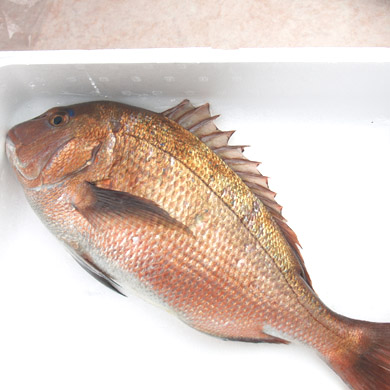
When using it as sashimi or sushi, choose a fresh fis. Look at their eyes and press with fingers. And use your nose!
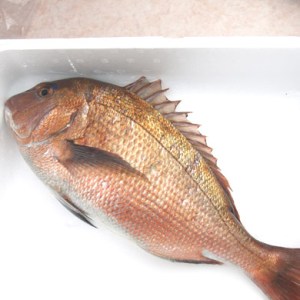
Madai/真鯛 or “True Seabream”, the most commonly used type of seabream in Japan.
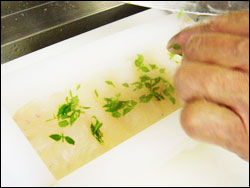
For an extra finishing touch for the taste, use fresh leaves of sansho/山椒 or Japanese pepper (also called ki no me/木の芽).
The English name is Shichuan Pepper, although we are talking of the fresh plant here.
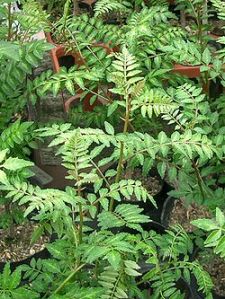
In Japan the dried and powdered leaves of Zanthoxylum sancho are used to make noodle dishes and soups mildly hot and fragrant. The whole fresh leaves, 木の芽 kinome, are used to flavour vegetables, especially bamboo shoots, and to decorate soups. Typically the young shoots are used in this way giving an aromatic lemony flavour to food. They are used to denote spring seasonality in food. The buds, seeds, flowers, and hulls are also used.

Chop some leaves finely enough to use with sushi, but not to fine. Cut them as short as shown in picture.

Soften light seaweed in lukewarm water and spread it over a clean cloth.

Line the bottom of the oshibako/box with slices of seabream fillet as tightly to each other as possible.
Sprinkle with chopped sansho leaves.
Fill with sushi rice and press.
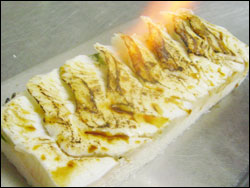
Unloose oshizushi out of the box.
Brush the surface lightly with some soy sauce (I sweeten it a bit by mixing it with a little mirin/sweet sake).
Sear the fish lightly.
Repeat the same process twice more so as to cook only the surface and make it take a nice colour.
This way you will be able to taste the fish in two different ways inside your mouth!
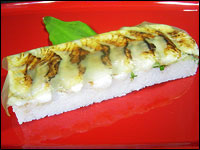
Spread the light seaweed over the top.
Cut to size and serve immediately for maximum enjoyment!

RECOMMENDED RELATED SITES:
Warren Bobrow, Bread + Butter, Zoy Zhang, Hungry Neko, Think Twice, Frank Fariello, Mangantayon, Hapabento, Elinluv Tidbit Corner, Tokyo Terrace, Maison de Christina, Chrys Niles,Lexi, Culinary Musings, Wheeling Gourmet, Sushi Nomads, Oyster Culture, Ravenous Couple

Please check the new postings at:
sake, shochu and sushi

—————————————-
日本語のブログ
—————————————-
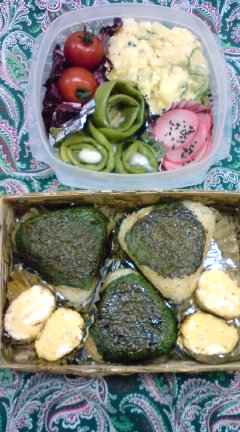
Vegan Japanese Tomato Turnips

For too long, turnips have been considered food for the poor and destitutes.
In France it is also the symbol of a bad play or movie!
Actually they make for great vegetables, cheap and easy to cook!

Here is a very simple recipe with simple cheap ingredients for “poor” vegans.
Great for kids, too!

INGREDIENTS: 1 person?

-Turnips: 2 (organic!)
-Onion: half 1 (organic!)
-Aburaage/fried tofu: 1 (sliced into 5 cm long thin strips)
-Olive oil: for frying
-Tomato juice (organic, please, or makeyour own!): 300 cc/ml
-Salt: 1 teaspoon (can be reduced, especially for kids!)
-Ground black pepper: to taste

RECIPE:

1 Cut turnips into wedges. Slice the onions thin.

2 Pour some olive oil in a fry pan. Fry sliced turnips, onions and aburaage, bearing in mind turnips become soft very quickly.

3 After frying on a medium fire for about 3 minutes, add tomato juice, salt and simmer for about 8 minutes on a low fire.
If and when the turnips are cooked, switch off fire and sprinkle with ground black pepper.

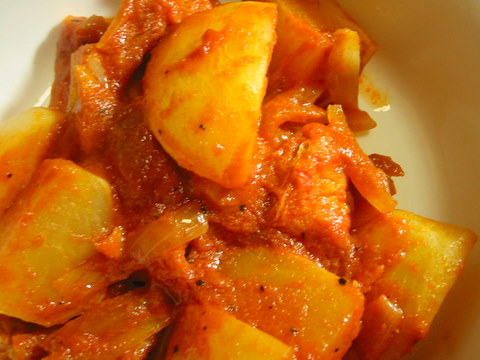
Simple, isn’t it? The point is to stew/simmer the vegetables in tomato juice. Aburaage will provide some bite!

RECOMMENDED RELATED SITES
Not-Just-Recipes, Bengal cuisine, Cooking Vegetarian, Frank Fariello, Gluten-free Vegan Family, Meatless MamaFrank Fariello, , Warren Bobrow, Wheeling Gourmet, Le Petit Cuisinier, Vegan Epicurean, Miss V’s Vegan Cookbook, Comestiblog, To Cheese or not To Cheese, The Lacquer Spoon

Please check the new postings at:
sake, shochu and sushi

—————————————-
日本語のブログ
—————————————-
Oshizushi/Pressed Sushi Techniques 3: Egg Bearing Snow Crab/Seikogani

SYNOPSIS:

Sushi exists under many forms and guises.
It is not all nigiri and (more ubiquitous) sushi rolls!
Have you ever heard of Oshizushi?

Oshizushi (押し寿司, litterally pressed sushi), is a pressed sushi from the Kansai Region, a favourite and specialty of Osaka.

Oshibako unmounted

It is made with the help of a block-shaped piece formed using a wooden mold, called an oshibako/押し箱.

Oshibako lined with toppings

The chef lines the bottom of the oshibako with the toppings, covers them with sushi rice, and then presses the lid of the mold down to create a compact, rectilinear block.

Cutting Grilled Eel Oshizushi

The block is then removed from the mold and then cut into bite-sized pieces.

It is great fun to experiment at home for large parties or the family as you can include almost anything.
Moreover, oshizuhi is easy to transport and include in bento!

The recipes and techniques I’m introducing here are professional, but with a little practice I’m sure you will become a specialist

1)Salmon Marinated in Seaweed/Sake Sushi Konbushime, 2) Seared Prime Beef/Gyuniku Aburi

———————————-

Egg Bearing Snow Crab/Seikogani

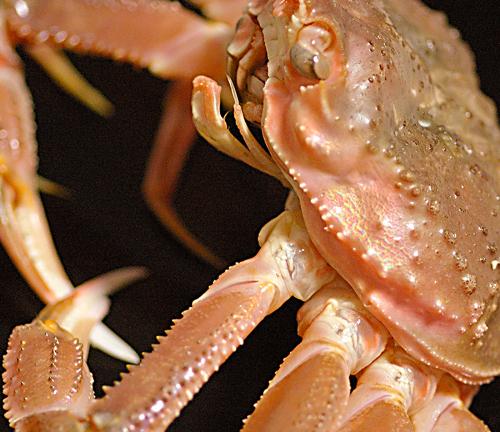
Snow Crab/Zuwagani

Seikogani is the Japanese name for the female Snow Crab or Zuwagani, when she is bearing her eggs.
Contrary to many other kinds of crabs, the female snow crabs, even when bearing eggs, lose little of their food and taste quality with the added advantage of an extra delicacy and taste. On the other hand the main food is found inside the shell instead of the legs and pincers for the males.
Therefore, if you get your hands on such a specimen, do not ignore it, even if they are noticeably smaller than their male counterparts!

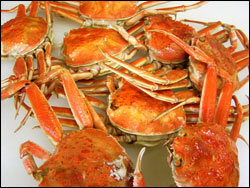
Boiled snow crabs.

The best is actually to combine both male and female into a combination sushi.

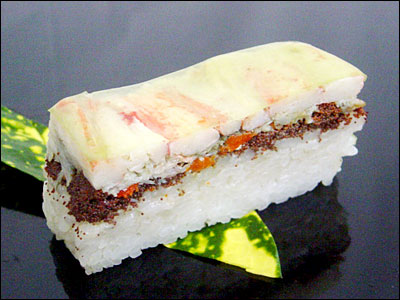
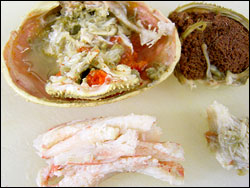
Above are the shells of two snow crabs, the large male one containing white flesh and red brains from both male and female, the smaller female one containing the eggs, and the flesh taken out of the male legs after boiling and cooling.

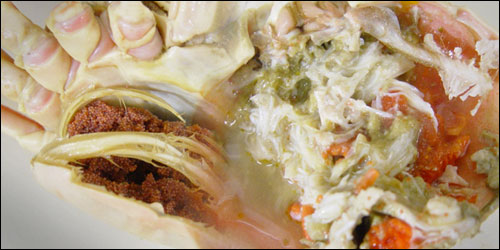
See above picture for better view of the edible morsels: white flesh, red brains (don’t forget these!) and eggs.

As there is a danger of a general crumbling out of the ingredients, line the bottom of the oshibako/box with a good layer of light seaweed first instead of doing it after you have unloose the sushi out ofits box.
Then place legs flesh tightly parallel to each other to form as compact as possible layer. Cover the leg flesh with the eggs and red brains into a pleasing design.
Finally fill with sushi rice and press.

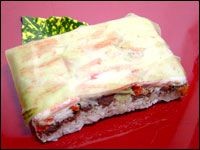
Unloose sushi from its box and cut to size before serving!

RECOMMENDED RELATED SITES:
Warren Bobrow, Bread + Butter, Zoy Zhang, Hungry Neko, Think Twice, Frank Fariello, Mangantayon, Hapabento, Elinluv Tidbit Corner, Tokyo Terrace, Maison de Christina, Chrys Niles,Lexi, Culinary Musings, Wheeling Gourmet, Sushi Nomads, Oyster Culture

Please check the new postings at:
sake, shochu and sushi

—————————————-
日本語のブログ
—————————————-
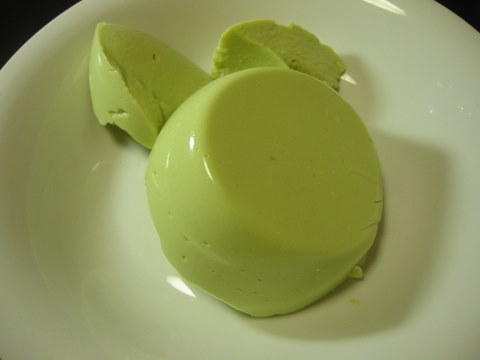
Japanese Vegan Avocado Pudding

The same as for shakes, vegans should not worry about ingredients when making a pudding!

Here is a very simple way to make a healthy appetizer the Japanese way!

Japanese Vegan Avocado Pudding!

INGREDIENTS: For 3~4 people

-Agar agar: 2~4 g (depending how solid you like your pudding!)
-Tofu (kinu/silk tofu): 1 standard portion~400 g
-Avocado: 1 ripe
-Very fine salt, ground white pepper: to taste and according to preferences
-Spices: if preferred

RECIPE:

-Mix the agar agar in a little water.

-In a pan drop the tofu and agar agar. Heat over a medium fire and stir into smooth paste. As soon as the agar agar has dissolved into the tofu. Switch off fire and take away the pan from the fire.

-Drop the tofu inside a food processor. Add the avocado cut into rough pieces and seasoning, and process until smooth.

-Pour the mixture inside lightly oiled molds. Let cool completely and leave inside refrigerator to chill and harden.

Great with wasabi dressing, or ponzu!
If you like your pudding solid, pour it into a rectangular mold and cut it in slices like sashimi!

RECOMMENDED RELATED SITES
Not-Just-Recipes, Bengal cuisine, Cooking Vegetarian, Frank Fariello, Gluten-free Vegan Family, Meatless MamaFrank Fariello, , Warren Bobrow, Wheeling Gourmet, Le Petit Cuisinier, Vegan Epicurean, Miss V’s Vegan Cookbook, Comestiblog, To Cheese or not To Cheese, The Lacquer Spoon

Please check the new postings at:
sake, shochu and sushi

—————————————-
日本語のブログ
—————————————-

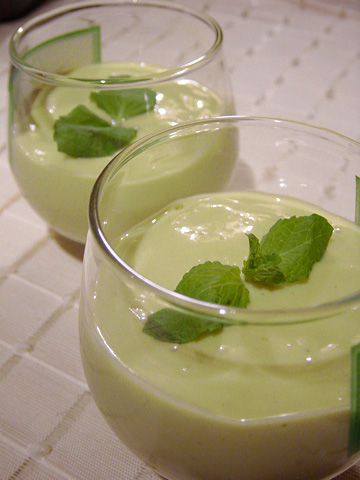
Vegan & Avocado & Banana Shake

I wonder if there is a country where one cannot find some kind of shake!
But, they use ice-cream and dairy products to make them!

Well, there is a simple way to make them vegan!
How about this one:

Vegan & Avocado & Banana Shake!

INGREDIENTS: For 2 people
-Avocado: 1/2 ripe
-Soy milk: 200 cc/ml
-Banana: 1
-Lemon juice: 1 reaspoon
-Honey (liquid): 2 teaspoons
-Mint leaves: for decoration.

RECIPE:

-Leave banana and avacado in refrigeartor long enough to get them really chilled.

-Cut avocado and banana in small enough pieces.

-Put everything into blender and mix well.

-Pour in glasses and serve topped with mint leaves.

How simpler can you make it? LOL

RECOMMENDED RELATED SITES
Not-Just-Recipes, Bengal cuisine, Cooking Vegetarian, Frank Fariello, Gluten-free Vegan Family, Meatless MamaFrank Fariello, , Warren Bobrow, Wheeling Gourmet, Le Petit Cuisinier, Vegan Epicurean, Miss V’s Vegan Cookbook, Comestiblog, To Cheese or not To Cheese, The Lacquer Spoon

Please check the new postings at:
sake, shochu and sushi

—————————————-
日本語のブログ
—————————————-

Oshizushi/Pressed Sushi Techniques 2: Seared Prime Beef/Gyuniku Aburi

SYNOPSIS:

Sushi exists under many forms and guises.
It is not all nigiri and (more ubiquitous) sushi rolls!
Have you ever heard of Oshizushi?

Oshizushi (押し寿司, litterally pressed sushi), is a pressed sushi from the Kansai Region, a favourite and specialty of Osaka.

Oshibako unmounted

It is made with the help of a block-shaped piece formed using a wooden mold, called an oshibako/押し箱.

Oshibako lined with toppings

The chef lines the bottom of the oshibako with the toppings, covers them with sushi rice, and then presses the lid of the mold down to create a compact, rectilinear block.

Cutting Grilled Eel Oshizushi

The block is then removed from the mold and then cut into bite-sized pieces.

It is great fun to experiment at home for large parties or the family as you can include almost anything.
Moreover, oshizuhi is easy to transport and include in bento!

The recipes and techniques I’m introducing here are professional, but with a little practice I’m sure you will become a specialist

1)Salmon Marinated in Seaweed/Sake Sushi Konbushime

———————————-

Japanese prime beef has become a registered trademark all over the world be it from Kobe or other regions.
The present sushi was made with “Kuroge Gyuniku/黒毛牛肉/Black Hair Beef from animals raised to the age of 12 months in Fukui Prefecture.
Do check the origin of your beef!

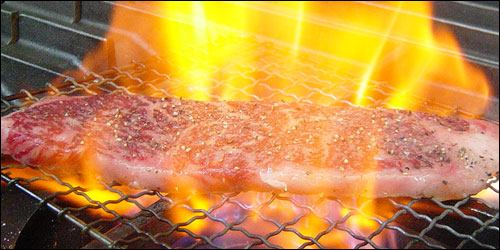
When preparing this slightly extravagant sushi, choose a large slice of prime beef with plenty of “fat veins” as shown on the above picture.
Don’t choose too thick or too thin, either. Think of the proportion of the beef and rice. Bear in mind that the the seared beef will also loose some of its thickness.

Sprinkle the beef with quality ground balck pepper and salt.
Sear it or grill it lightly on both sides quickly.
This process will enhance the sweetness of the meat.

-Slice the meat into bite-sized portions as shown in above picture at a slant after having cut off the fatty extremity.

Lay the bottom of the oshibako/box with slices of beef as shown in above picture in a “staggering” fashion. If you don’t, the slices will slideaway from each other.
Cover with shiso/perilla leaves.
Cover with sushi rice and press.

Soften light seaweed in lukewarm water and spread it over a clean cloth.
Unloose the sushi out of its box.
The beef should be on top.
Spread the light seaweed over the top.
Cut to size and serve immediately for maximum enjoyment!

RECOMMENDED RELATED SITES:
Warren Bobrow, Bread + Butter, Zoy Zhang, Hungry Neko, Think Twice, Frank Fariello, Mangantayon, Hapabento, Elinluv Tidbit Corner, Tokyo Terrace, Maison de Christina, Chrys Niles,Lexi, Culinary Musings, Wheeling Gourmet, Sushi Nomads, Oyster Culture

Please check the new postings at:
sake, shochu and sushi

—————————————-
日本語のブログ
—————————————-
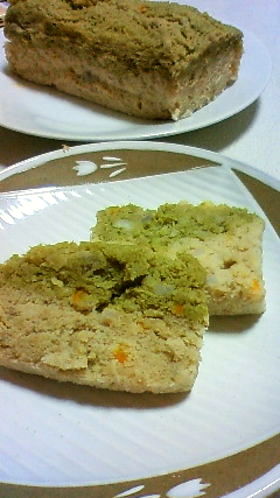
Taro & Macha Steamed Pound Cake

Still in my Taro/Sato Imo mood, aren’t I?
Today I would like to introduce a really simple pound cake recipe which includes taro and macha tea powder!

Taro & Macha Steamed Pound Cake!

INGREDIENTS:

-Taro/Sato imo: 200 g (peeled)
-Egg white: 1
-Sugar: 60 g
-Salt: 1/2 teaspoon
-Egg yolk: 1
-Flour: 2 teaspoons
-Water (as much as needed)
-Macha tea powder: 1/2 teaspoon
-Lime peel/zest: half a lime (finely chopped)

RECIPE:

1-Cut the taro into practical-sized pieces and boil.
Drain them thoroughly and mash into a smooth paste.

2-Beat into solid meringue the egg white, 2/3 of the sugar and the salt.

3-Add the rest (1/3) of the sugar to the mashed taro/sato imo, egg yolk and flour. Mix well. If the mixture proves a bit hard to mix, add water little by little until staifaction.

4-Add the meringue to the taro/satoimo and mix well.

5-Add the finely chopped lime zest and mix.
Pour one half into a pound cake mold lined with kitchen paper.
Add macha tea powder to the rest, mix and pour on top of the bottom layer.

6-Steam over a strong fire for 25 minutes.
Check if cooked properly by stabbing the cake with a thin wooden skewer. It should come out clean. Switch off fire and let cool down completely

Makes for a very light and healthy dessert!

RECOMMENDED RELATED SITES:
Warren Bobrow, Bread + Butter, Zoy Zhang, Hungry Neko, Think Twice, Frank Fariello, Mangantayon, Hapabento, Elinluv Tidbit Corner, Tokyo Terrace, Maison de Christina, Chrys Niles,Lexi, Culinary Musings, Wheeling Gourmet, To Cheese or not To Cheese, The Lacquer Spoon

Please check the new postings at:
sake, shochu and sushi

—————————————-
日本語のブログ
—————————————-

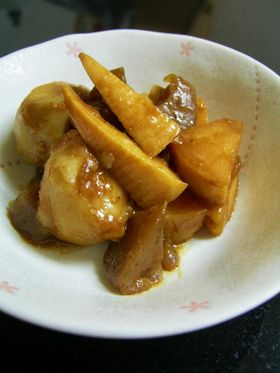
Vegan Japanese Cuisine: Taro & Bamboo Shoots in Sweet and Hot Miso

Not ready yet to give up on those simple and healthy recipes with taro, or sato imo/里芋 as they are called in Japan that should please my vegan and vegetarian friends (omnivore friends, just be a little more patient!)!

This one is called “Taro & Bamboo Shoots in Sweet and Hot Miso/里芋と竹の子の甘辛味噌煮”, or Sato Imo to Take no Ko no Amakara Miso Ni”
It is another very simple dish that should provide food with a filling sensation to vegans.

INGREDIENTS: For 2 people

-Taro/Sato imo: 3~4 middle-sized specimens
-Bamboo shoots: 1 cup (cut to size. Canned Bamboo Shoots are fine)
-Konnyaku/Devil’s Tongur Tuber: 2/3 cup (cut to size. Canned specimen are fine)
-Japanese sake: 1 tablespoon
-Mirin/Sweet sake: 1 tablespoon
-Konbu/seaweed dashi/Soup stock: enough to submerge all ingredients upon cooking
-Salt: a pinch
-Salad oil: 1 tablespoon
-Sweet Miso (red miso base): 1 tablespoon
-Yuzu koshio/Lime & Chili Pepper Paste: to taste

RECIPE:

-Peel taro/sato imo and cut into bite-sized pieces. Cut bamboo shoots in approximately size (if needed). Cut the konnyaku/devil’s tongue tuber in slightly smaller pieces.

-Boil the Taro/sato imo a little beforehand to soften them.

-In a pan drop the half cooked taro/stao imo, bamboo shoots and konnyaku. Pour dashi until dashi until it had submerged everything.
Switch on fire.

-Add sake, mirin and salt and bring to boil. Lower fire to low~medium and simmer/stew until soup/stock has disappeared.

-Once the soup has disappeared, a frying sound will be heard. At that moment add the oil and stir fry the lot.

-Once the oil has coated everything, add the miso and mix gently as the taro will be soft by then.

-Add the yuzu koshio/Lime and chili pepper mix just before serving.

NOTES:

-For variation you may use chopped lime skin/zest or/and hot chili powder

Easy once again!

RECOMMENDED RELATED SITES
Not-Just-Recipes, Bengal cuisine, Cooking Vegetarian, Frank Fariello, Gluten-free Vegan Family, Meatless MamaFrank Fariello, , Warren Bobrow, Wheeling Gourmet, Le Petit Cuisinier, Vegan Epicurean, Miss V’s Vegan Cookbook, Comestiblog, To Cheese or not To Cheese, The Lacquer Spoon

Please check the new postings at:
sake, shochu and sushi

—————————————-
日本語のブログ
—————————————-
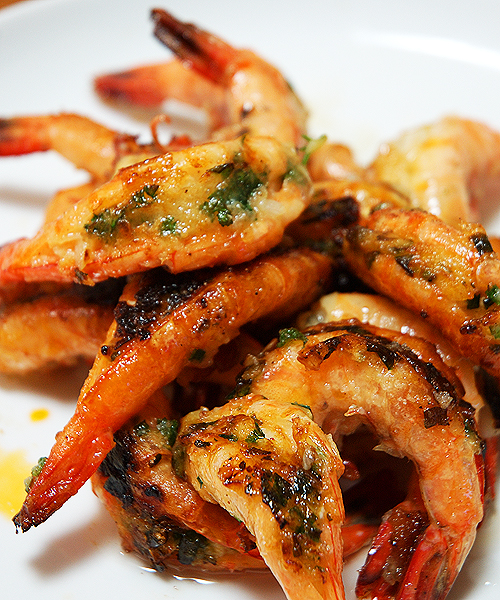
Japanese Cuisine: Sauteed Prawns/Professional Recipe

The Japanese are a bit crazy about prawns, but when you look at the mind-bogling varieties available in this country, no wonder i’m gladly following into their steps.

I have already introduced the basic professional recipe for Japanese-style deep-fried prawns.
Here is another easy-to-follow basic professional recipe for sauteed prawns.
I will skip quantities as this is a general recipe opened to variations.
Incidentally Sauteed Prawns in Jpaanese is Ebi Itame/海老炒め.

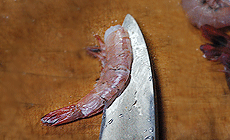
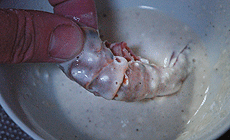
-Wash the prawns. Sponge off the water. Take heads off. Cut the prawns along the back across the shell as deep as one third from the tail to half the thickness by the “head end”.

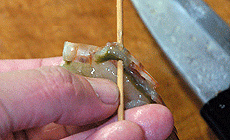
-Get rid of the innrds by inserting a toothpicke under them and pulling upwards. Clean the flesh with some kitchen paper.

-Prepare a light batter with 2 tablespoons of flour, a lttle salt and pepper, and water.
Dip the prawns in it completely, including inside the cut.

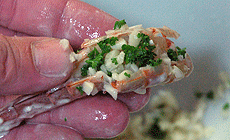
-Prepare a filling with finely chopped garlic and parsley, salt and pepper to taste and some cornstarch (just enough to hold it!).
Fill the slit made along the back of the prawns with it.
The batter you have dipped the prawns will add the necessary zest.

-Pour oil in a fry pan and heat.
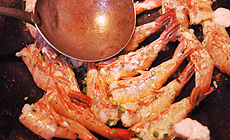
Place the prawns with their indented back down. Press with the ladle long enough to help the heat penetrating the whole prawn.
Turn prawns onto their side and cover with lid.

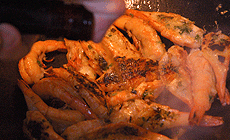
-Once the prawns are 95% cooked, take off lid, pour some japanese sake (or barndy) and stir around once. If you think that your prawns lack a bit of zip, add salt (little, please!), pepper and chili pepper (or other spices) before adding the sake.

-Serve immediately!

RECOMMENDED RELATED SITES:
Warren Bobrow, Bread + Butter, Zoy Zhang, Hungry Neko, Think Twice, Frank Fariello, Mangantayon, Hapabento, Elinluv Tidbit Corner, Tokyo Terrace, Maison de Christina, Chrys Niles,Lexi, Culinary Musings, Wheeling Gourmet, To Cheese or not To Cheese, The Lacquer Spoon

Please check the new postings at:
sake, shochu and sushi

—————————————-
日本語のブログ
—————————————-

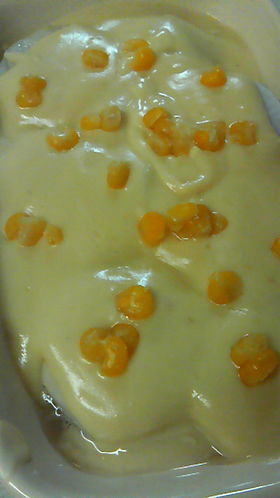
Vegan Japanese Cuisine: Taro & Soy Milk Gratin/Sato Imo & Tonyu Gratin

Still working on a whole bunch of simple and healthy recipes with taro, or sato imo/里芋 as they are called in Japan that should please my vegan and vegetarian friends!

This one is called “Taro & Soy Milk Gratin/里芋と豆乳グラタン”, or Sato Imo & Tonyu Gratin”
It is a very simple dish that should provide food with a filling sensation to vegans. Great for kids, too!

INGREDIENTS: for 1 plate/serving

-Taro/sato imo: 2
-Oil (of your choice): 3 tablespoons
-All-purpose Flour (of your choice):2 tablespoons
-Soy Milk: 1 cup/200 cc/ml
-Sweet white miso paste ( as you like)
-Tinned corn or freshly boiled corn (a you like)
-Panko/breadcrumbs (as you like)

RECIPE:

-Peel the taro/sato imo, cut them in 1 cm thick slices and boil until soft. Drain.

-In a fry pan, heat the oil on a low-middle fire. Add flour and mix well with a spatula. Add soy milk and sweet white miso.

-Keep stirring. The mixture will eventually thicken. Lower the fire and keep stirring well until it has reached the thickness of a white/bechamel sauce for gratins.

-On an oven plate place the taro/sato imo. Pour the gratin sauce all over. Top with corn and breadcrumbs.

-Cook in oven (180 degrees Celsius) until it has attained the colour of your liking!

NOTES:

The picture above was taken before sprinkling the gratin with breadcrumbs.
You can use the same recipe with vegan pasta instead of the taro/sato imo!

RECOMMENDED RELATED SITES
Not-Just-Recipes, Bengal cuisine, Cooking Vegetarian, Frank Fariello, Gluten-free Vegan Family, Meatless MamaFrank Fariello, , Warren Bobrow, Wheeling Gourmet, Le Petit Cuisinier, Vegan Epicurean, Miss V’s Vegan Cookbook, Comestiblog, To Cheese or not To Cheese, The Lacquer Spoon

Please check the new postings at:
sake, shochu and sushi

—————————————-
日本語のブログ
—————————————-

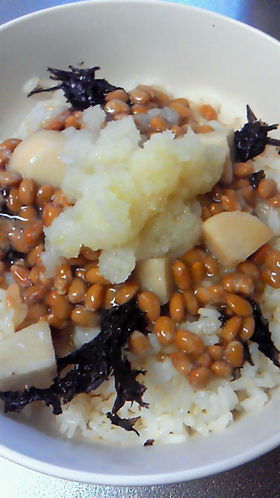
Vegan Japanese Cuisine: Taro, Natto & Grated Daikon/Natto no Tororo Donburi

I’ve found a whole bunch of simple and healthy recipes on taro, or sato imo/里芋 as they are called in Japan that should please my vegan and vegetarian friends!

This one is called “Natto no Tororo Donburi/納豆のとろろ丼”, or Taro, Natto & Grated daikon (on a bowl of rice).
It is a very simple traditional Japanese dish that will provide a very healthy meal to vegans!

INGREDIENTS: For 1 person

-Steamed rice: 1 bowl
-Taro/sato imo: 2
-Soy sauce: 1 tablespoon
-Salt: a little pinch
-Cornstarch: 1 teaspoon
-Natto/Japanese fermented beans: 1 pack
-Grated daikon: 1~2 tablepoons ( you can mix it with a little chili powder or grated wasabi!)
-Seaweed: as much as you want

RECIPE:

-Peel the taro/satoimo and cut them into 1 cm-sided squares

-Boil the taro/satoimo in seaweed dashi stock soup or water, salt and soy sauce until tender enough.

-Mix the cornstarch in the same amount of water and add to taro/satoimo to obtain a smooth soup.

-Add natto and cok for a minute or two. Switch fire.

-Fill a bowl with rice with frshly steamed rice.
Top with seaweed, then pour the the taro/satoimo over rice.
Top with grated daikon.

NOTES:

-Mushrooms, like namakotake or shimeji can be added for more taste to the taro/sato imo.
-As said above adding chili powder to grated daikon is very popular in Japan!

Simple and easy!

RECOMMENDED RELATED SITES
Not-Just-Recipes, Bengal cuisine, Cooking Vegetarian, Frank Fariello, Gluten-free Vegan Family, Meatless MamaFrank Fariello, , Warren Bobrow, Wheeling Gourmet, Le Petit Cuisinier, Vegan Epicurean, Miss V’s Vegan Cookbook, Comestiblog, To Cheese or not To Cheese, The Lacquer Spoon

Please check the new postings at:
sake, shochu and sushi

—————————————-
日本語のブログ
—————————————-