Category Archives: Uncategorized

Japanese Cakes/Wagashi 6: Creation 2/Sakura Mochi

WAGASHI-SAKURA-MOCHI-2

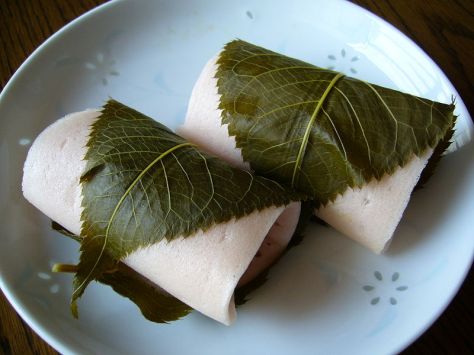
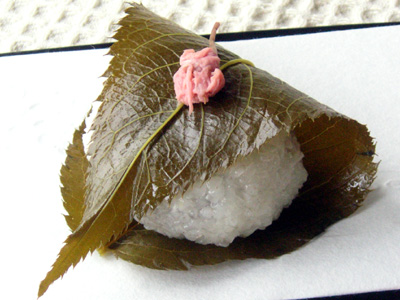
Sakura Mochi (桜餅) is a variety of wagashi, or Japanese confectionery consisting of a sweet pink mochi (rice cake) and red bean paste, covered with a leaf of sakura (cherry blossom).

Sakura Mochi (桜餅) or Cherry Blossom Mochi has been popular all over Japan since the beginning of gastronomy in the Land of the Rising Sun.
The style of Sakura Mochi differs from the regions in Japan.
Basically, the east of Japan such as Tokyo uses shiratama-ko (白玉粉/ rice flour) and the west side such as Kansai uses dōmyōji-ko (道明寺粉/glutinous rice flour) for “batter”.
WAGASHI-SAKURA-MOCHI
Anko is folded inside a mochi sheet and again inside an edible cherry tree leaf.
WAGASHI-SAKURA-MOCHI-3

Here the anko is inside white mochi, then folded in cherry tree leaf and topped with an edible cherry flower.

WAGASHI-SAKURA-MOCHI-4

A smaller, very cute Sakura Mochi: the coloure mochi contains anko and is presented inside an edible cherry tree leaf.

WAGASHI-SAKURA-MOCHI-5

Sakura mochi as sold over the counter in the Kansai/West Japan Region.
They are also called Sakura Dango/Cherry Balls (no comment, please!LOL)

SIMPLE RECIPE
This recipe is for making Western-style sakuramochi. Serves 8.

INGREDIENTS:
3/4 cup glutinous rice flour
1/3 cup sugar
1 cup water
3/4 cup red bean paste
red food coloring (optional)
8 sakura leaves pickled in salted water

PREPARATION:
Wash pickled sakura leaves and dry.
Boil water in a pan.
Mix glutinous flour in the water.
Cover the pan with a lid and leave it for 5 minutes.
Place a wet cloth in a steamer and put the dough on the cloth.
Steam the dough for about 20 minutes over medium heat.
Remove the steamed dough to a bowl.
Mash the dough slightly with a wooden pestle, mixing sugar into the dough.
Dissolve a little bit of red food color in some water.
Add some of the red water in the dough and mix well.
Divide the pink mochi into 8 balls.
Flat each mochi ball by hands and place red bean paste filling on the dough.
Wrap the filling with mochi and rounds by hands.
Wrap each mochi with a sakura leaf.

Please check the new postings at:
sake, shochu and sushi

—————————————-
日本語のブログ
—————————————-

Cuttlefish/Squid Species 3: Aori Ika/Bigfin Reef Squid

IKA-AORIIKA-1

Here we go with this series called “The Jacques Cousteau” upon suggestion by Jaded Fork and forBread + Butter, and Elin who don’t mind being on a long haul! LOL

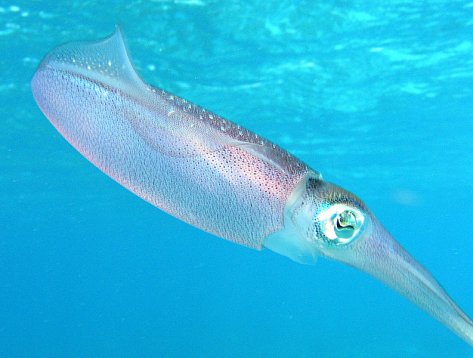
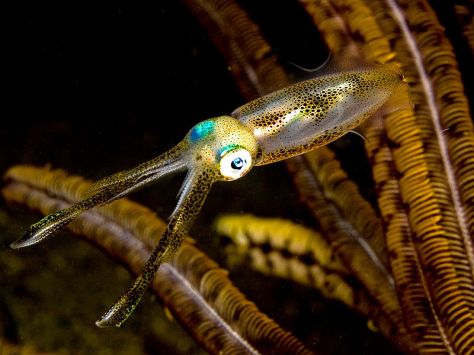
Aori Ika or Bigfin Reef Squid is another extremely popular cuttle fish but in many othere countries.
In French languedoc and Roussillon they call them “piste” and eat them raw marinated in lemon juice, olive oil and spices on top of freshly toasted bread.

IKA-AORIIKA-4
America Aori Ika/Caribbean Reef Squid

Of course they come by various regional names in Japan: Mo Ika, Bashoo Ika, Kutsu Ika, Misu Ika, Shiroi Ika.
They are fairly large as they can attain 40~45 cm length for a weight up to 6 kg.

IKA-AORIIKA-3

Their season is from Summer to early Autumn (just in time for this article!). They are mainly caught in Central and South Japan along the Southern shores.
The catch has never been big (mainly by trawling nets), making them a choice morsel.
They are considered the best cuttlefish as far as sashimi is concerned.
The Japanese often catch them as a hobby to process and sell at local markets.

IKA-AORIIKA-2

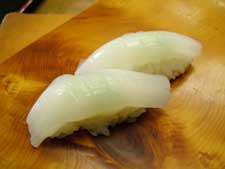
As sushi, especially as nigiri, they are simply top-class!

Please check the new postings at:
sake, shochu and sushi

—————————————-
日本語のブログ
—————————————-
Japanese Cakes/Wagashi 6: Creation 1

WAGASHI-VARIETIES-1

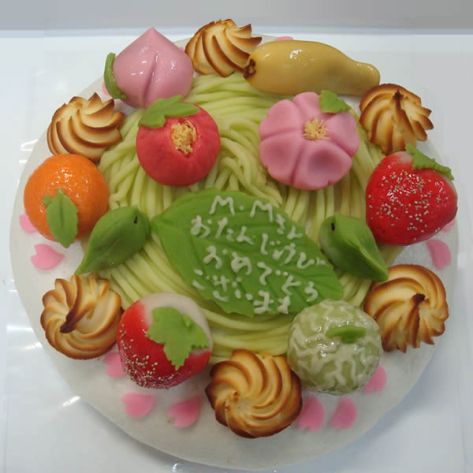
Here is an example of what could be done by a Japanese chef as Wagashi/Japanese Cake!
This particular Birthday Cake creation is the work of Chef Maeda at Kouseido in Osaka City!
Will look around and post other creations whenever I can!

Here is a breakdown of the above:

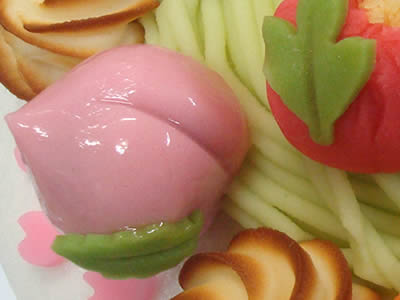
WAGASHI-VARIETIES-MOMO

“Momo”/Peach

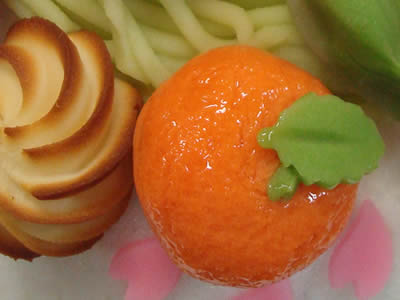
WAGASHI-VARIETIES-MIKAN

“MIkan”/Orange

WAGASHI-VARIETIES-TSUBAKI

“Tsubaki”/Camelia

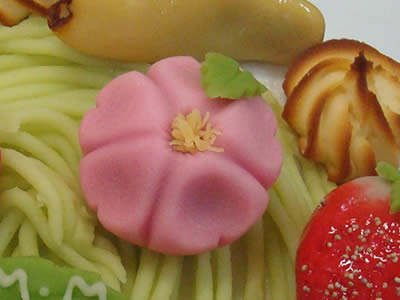
WAGASHI-VARIETIES-SAKURA

“Sakura”/Cherry Blossom

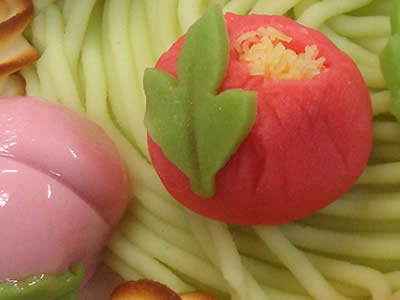
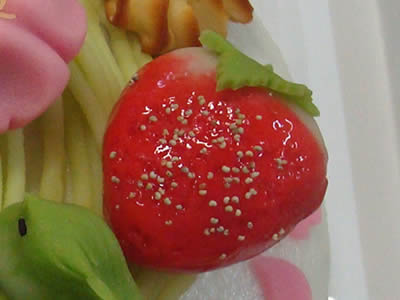
WAGASHI-VARIETIES-ICHIGO

“Ichigo”/Strawberry

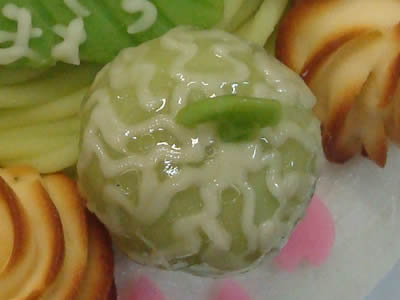
WAGASHI-VARIETIES-MELON

“Meron”/Melon

Please check the new postings at:
sake, shochu and sushi

—————————————-
日本語のブログ
—————————————-
Crab Species 1: Snow Crab/Zuwagani

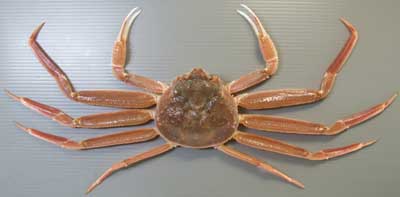
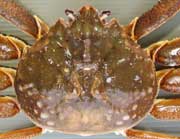
ZUWAGANI-MALE-1
(Male Snow Crab)

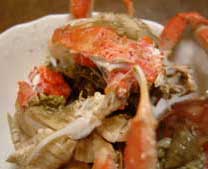
Snow Crabs, or Zuwagani in Japanese are very popular not only in Japan, but also in Russia, Canada and many other countries.

In Japan, they are also known under the following names: Matsubagani, Echizengani and Yoshigani.
The females are also called Seikogani, Megani or Koubakogani.
They are caught mainly in Autumn and Winter.
Their number have decreased in the Japan seas down to a yearly catch of 5,000 tonnes while 60,000 tonnes are imported from Russia and Canada.

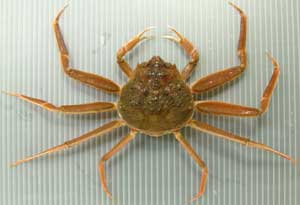
ZUWAGANI-FEMALE-1
(Female snow Crab)

Male and female snow crabs are equally succulent, but the males contain more flesh and are accordingly more expensive.

ZUWAGANI-MALE-2
The “thorns” of a male snow crab are bigger.

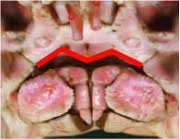
ZUWAGANI-MALE-3
The “teeth” of a male snow crab are triangular in a seesaw shape.
The female “teeth” are in a straight line.

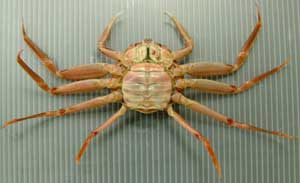
ZUWAGANI-FEMALE-2
The underbelly of a female snow crabis flatish.

ZUWAGANI-FEMALE-3

When buying a female (10 tmes as cheap) snow crab, choose a specimen with as few eggs as possible. Above speciman just has too many!

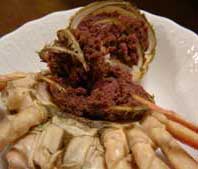
ZUWAGANI-FEMALE-4

A female snow crab should contain plenty of succulent orange egg sacs (the eggs not yet “born”). Otherwise, there is very little reason to buy any!

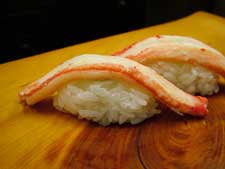
Crabs can be eaten in many ways, even raw, but my favourites are on sushi!

ZUWAGANI-SUSHI

Male Snow crab leg Sushi Nigiri.

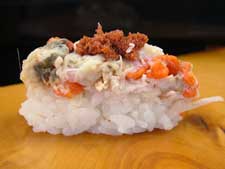
ZUWAGANI-FEMALE-SUSHI

Female snow crab Sushi Nigiri and its egg sacs!

Please check the new postings at:
sake, shochu and sushi

—————————————-
日本語のブログ
—————————————-

Japanese Seasonal Fish: Sawara/Spanish Mackerel

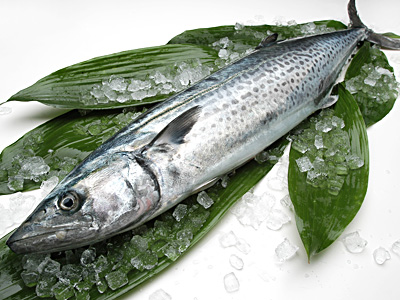
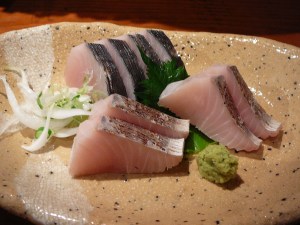
SAWARA-1

Sawara or Spanish Mackerel is considered as the best kind of Mackerel in Japan. Not only it is a big variety, but its comparatively white flesh is succulent in almost any kind of cooking!

It is known under different names such as Sagoshi and Sagochi when young and Yanagi when mature.
It is basically caught by trawling, but can be fished by line. It is, unlike other mackerels, a pretty solitary fish.

It is caught widely around Japan, off Russia, China and Korea.
The total catch has varied in recent years, but thanks to import, including 21.000 tonnes from China, it has become a feature in season from late Autumn to end of Spring.

UZU-2
(Kan-Sawara at Uzu, Shizuoka City)

In Winter, it is called Kan Sawara/寒鰆 (寒stands for cold, 鰆 stands for Sawara/Spring Fish) and is a sought after morsel. In Shizuoka it is sometimes caught then in Sagara bay, and I can tell you it disappears quickly form the table.

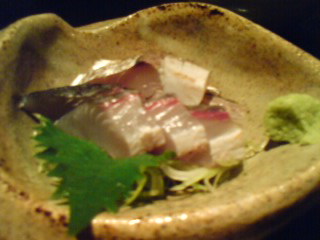
UZU-09-05-29-5
(Sawara at Uzu, Shizuoka City)

Later in Spring, it is just called Sawara and is leaner.

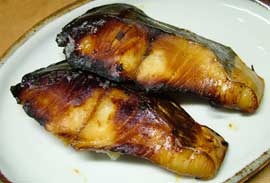
SAWARA-2

It can be cooked in many ways: broiled as above.

SAWARA-4

Or grilled.

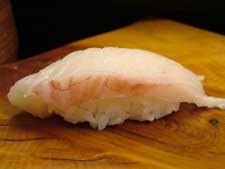
SAWARA-3
(Small pic, sorry!)

Of Course, as sushi nigiri! Especially Kan Sawara!

Please check the new postings at:
sake, shochu and sushi

—————————————-
日本語のブログ
—————————————-

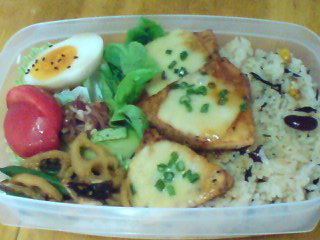
Today’s Lunch Box/Bento (’09/40)

BENTO-09-06-08-a

It was back to classical” bento today!
That is rice topped with all kinds of ingredients!

BENTO-09-06-08-c

For once I managed to steal into the kitchen to take a quick pic of the rice being steamed with the beans!

BENTO-09-06-08-b

It was a pretty voluminous bento as you can see!

BENTO-09-06-08-d

As for the main meat the Missus fried slices of tuna in soy sauce and covered with cheese and chopped thin leeks.

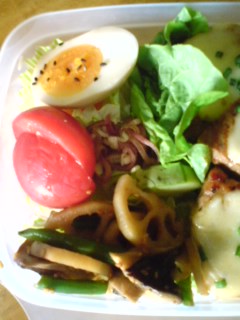
BENTO-09-06-08-e

The rest of the garnish consisted of renkon/lotus roots, shiitake and stringbeans fried together in the same pan as the tuna. She added a fresh plum tomato, boiled egg seasoned with black sesame, home-made piclled mini melons and myoga and lettuce. I probably forget something!

BENTO-09-06-08-f

Chopped veg salad with pieces of lettuce and walnuts and cherries from Yamanashi Prefcture for dessert!

I can guarantee you I was full after that!

Please check the new postings at:
sake, shochu and sushi

—————————————-
日本語のブログ
—————————————-

Food buzz: Help Keep our Community Website Clean!

1-sake

Greetings, everyone!

It seems that the old geezer has more time on his hands than anybody else! LOL
First, let me point out again that I am not a member of the Foodbuzz Team!

Last night, as I was breezing/browsing through the new Foodies I stumbled across a new Member calling itself Acai Berry! Now, that was bad luck for the critters as I had been spammed for a whole month by their ads!

I decided to take the time to go through the last two days’ batch of new members and found a dozen more similar little beasts!
The big giveaway is the bottom line on their Foodbuzz Profile when they don’t have the guts/nerve to advertise their website!
Three were pretty nasty, as two of them had borrowed an avatar/photograph while the third one made no bones about advertising cash card debts repayments!

To cut a story short, I sent a mail to Foodbuzz with a reference to all those unwanted creatures and Foodbuz promptly skewered them and threw them into the BBQ pit!

If you stumble across those blisters yourself, promptly send a mail to editorial@foodbuzz.com and the Team will take care of them!

Cheers and all that!
Robert-Gilles

Japanese Cakes/Wagashi 5: Recipe-Kinako/Roasted Soy Beans Powder

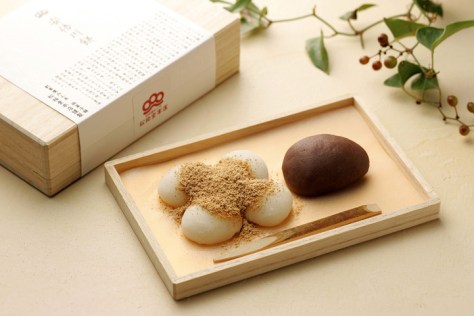
WAGASHI-ABEKAWAMOCHI-2
Abekawa Mochi from Shizuoka, one served pasted inside red sweetmeats/anko and the others with kinako powder.

As promised here is a simple recipe for kinako/黄な粉, roasted soy beans powder, so often used with Japanese cakes/Wagashi!

MOCHI-KINAKO

Kinako (黄粉 or きなこ), also known as soybean flour, is a product commonly used in Japanese cuisine. In order to create the soybean flour, soybeans are toasted and ground into powder. Its flavor is commonly compared to that of peanut butter.

INGREDIENTS:
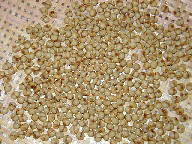
Soy beans: 1 cup (200cc)

RECIPE:

KINAKO-1
Discard beans showing broken skin or with an unusual colour.

KINAKO-2
To make sure of any taking away any humidity, put them inside a clean cloth sack and roll them inside your hands/fingers.

KINAKO-4
Use a pan with as thick a bottom as possible. Roast for 12 minutes above medium fire. Stir around with wooden spatula. The soy beans will emit their smell making small “noises” at the same time.

KINAKO-3
Transfer to a bamboo basket/zaru or a reipient with small holes to cool off.

KINAKO-5
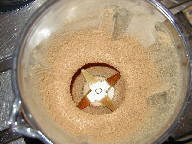
Start slowly processing them inside a food processor/mixer, working 15 seconds at a time, 3 or 4 times. All the beans will probably not be reduced to powder. Transfer powder into earthenware mortar little by little until all the beans are reduced into powder.

KINAKO-6
Make sure you get an even powder by crushing it around with a wooden pestle.

KINAKO-7
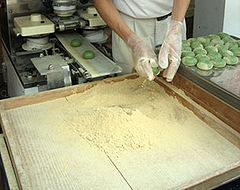
Sieve powder through a fine strainer.

KINAKO-8
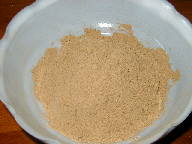
The powder obtained should be fragrant and almost sweet.

You can turn into a drink if you want to!
Milk: 1 glass, kinako, 2 tablespoons, sugar, 1 tablespoon.

Kinako should be eaten as soon as possible!

Please check the new postings at:
sake, shochu and sushi

—————————————-
日本語のブログ
—————————————-

Today’s Lunch Box/Bento (’09/39)

BENTO-09-06-07a

For once, The Nissus madebento with “men/Japanese-Chinese Pasta”!

BENTO-09-06-07b

The principle is to boil “ramen” and strain them through a “zaru/sieve” for them to become “zarumen”.

BENTO-09-06-07c_0001

At the office I piured the two different sauces and chopped thin leeks on the cole “zarumen” before eating them.

BENTO-09-06-07c

As for the garnish, the Missus prepared “Tamagoyaki/Japanese Omelette, “Chicken Kaarage/Japanese style deep-fried chicken” (note the black sesame seeds coating), boiled “ingen mame/string beans”, a large plum tomato and home-made cucumber and myoga pickles.

She didn’t forget the dessert: banana!
Plenty and enough, I can tell you!

Please check the new postings at:
sake, shochu and sushi

—————————————-
日本語のブログ
—————————————-

Cuttlefish/Squid Species 2: Kensaki Ika

IKA-KENSAKI-IKA-1

I decided to dedicate this series called “The Jacques Cousteau” upon suggestion by Jaded Fork and forBread + Butter, and Elin who don’t mind being on a long haul! LOL

“Kensaki Ika/ケンサキ烏賊 goes by the Latin name of Loligo (Photololigo) edulis Hoyle,1885, but that complicated name does not prevent this particular squid to be extremely popular in Japan!

It is of course known under other local names: Ak Ika/Red Squid, especially in Shizuoka, Budo Ika/Grapes Squid, Shiro Ika, Gotou Ika.

They will soon appear in the markets in Summer.
They are mainly caught by line.
They are more and more available live, so great specimens can be easily bought.

They are a very versatile kind of squid as they can be appreciated as sashimi, sushi, simmered, boiled, broiled, dried, and especially as tempura!

IKA-KENSAKI-IKA-2

As for me, it is a bit of a dilemna as I like them both as sushi nigiri and sashimi!

Please check the new postings at:
sake, shochu and sushi

—————————————-
日本語のブログ
—————————————-

Japanese Cakes/Wagashi 4: Recipe-Mochi

WAGASHI-SAKURA-MOCHI
Wagashi/Sakura Mochi

Here is a simple way to make mochi.
Bear in mind that mochi can be eaten fresh as it is especially with wagashi cakes and that it can be mixed with other ingredients for colouring. It can be aslo dried and grilled and also included in soups and other recipes such as mochi pizza!

INGREDIENTS:
Glutinous rice: 3 go (Japanese measure): 540 cc (2.8 cups)
Kinako (to taste)

Notes on kinako and glutinous rice:

MOCHI-KINAKO

Kinako (黄粉 or きなこ), also known as soybean flour, is a product commonly used in Japanese cuisine. In order to create the soybean flour, soybeans are toasted and ground into powder. Its flavor is commonly compared to that of peanut butter.

Kinako, being composed of soybeans, is a healthy topping and flavoring which contains B vitamins and protein. It can also be used as a drink;. For example, warabi mochi is a famous kinako-covered sweet

I will introduce a recipe soon!

MOCHI-TRADITIONAL

Glutinous rice (Oryza sativa var. glutinosa or Oryza glutinosa; also called sticky rice, sweet rice, waxy rice, botan rice, biroin chal, mochi rice, and pearl rice) is a type of short-grained Asian rice that is especially sticky when cooked. It is called glutinous (Latin glūtinōsus) in the sense of being glue-like or sticky and not in the sense of containing gluten; on the other hand, it is called sticky but should not be confused with the other varieties of Asian rice that become sticky to one degree or another when cooked.

RECIPE:

MOCHI-1
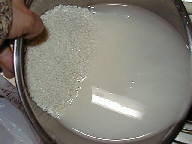
Wash the rice and let it soak in water overnight.

MOCHI-2
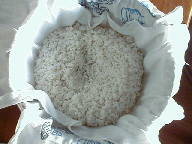
Pour water in steamer. Bring to boil. Set a clean cloth inside. Drain rice. Pour rice inside cloth. Dig a “well” in the middle for better cooking.

MOCHI-3
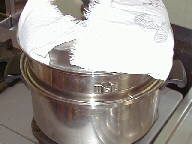
Steam over a medium fire for 20~25 minutes.

MOCHI-4
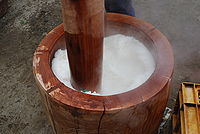
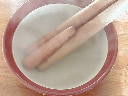
Pour hot water inside pestle bowl and leave the wooden sticks inside water for long enough to have all of them well impregnated with water. Throw water away just before next step. This will insure a better mochi!

MOCHI-5
Check rice for an even cooking. No water should be left or the mochi will be runny. If you make a small quantity, softer rice than usual is better as it will tend to dry faster than a large quantity.

MOCHI-6
Now this is the hard part!
You will need three adults to press hard on the rice with the wooden sticks at the same time to crush the rice completely. It might take as long as 10 minutes.

MOCHI-7
Now that the rice has been softened, One can continue on his own or work in shifts. Pound the rice in the middle 10 times. Turn over the rice from outside to inside and continue always around the clock.
Important: always pound in the middle, never on the sides or you will break the bowl!

MOCHI-8
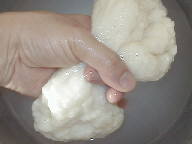
That is how it should look. Make balls by twisting rice out.

MOCHI-9
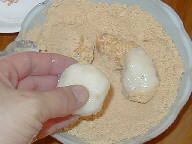
Roll mochi in kinako mixed with sugar to taste. They are ready to be eaten!

MOCHI-10
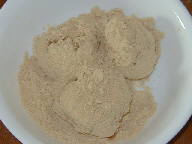
This is how are served in Japan for children (and adults!)

MOCHI-11
If you want to preserve them for a while before eating, roll them in rice powder. Rice powder will come in useful if you want to fashion the mochi into thin sheets or else.

MOCHI-12
That is they look grilled!

Please check the new postings at:
sake, shochu and sushi

—————————————-
日本語のブログ
—————————————-

17th Shida Heiya Bishu Story

SHIDA-09-8
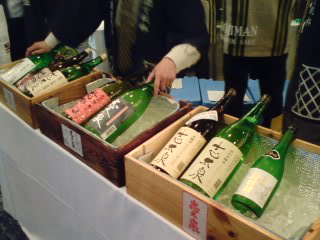
Shidaizumi Brewery Sakes

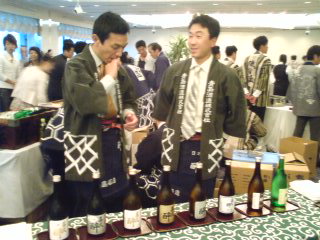
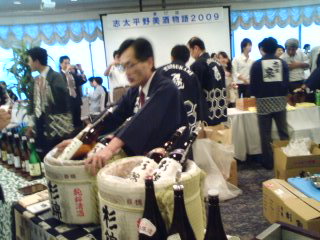
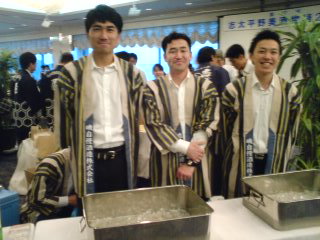
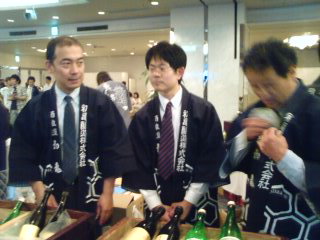
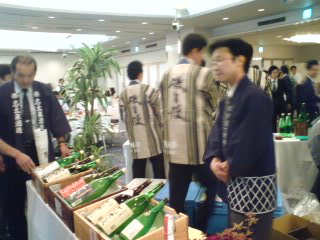
On Wednesday June 3rd, six breweries located in the centre of Shizuoka Prefecture held their 17th Annual Event, Shida Heiya Bishu Story 2009 in Yaizu City at Shofukaku Hotel.

SHIDA-09-1

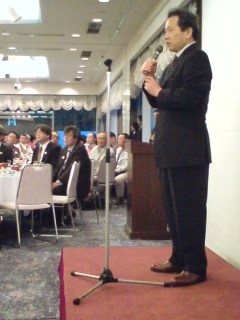
This has become a real event in recent years, for which the 400 seats are sold out months before the event in spite of very few seats reserved for special guests like John Gauntner, the foreign authority on Japanese Sake who has to come all the way from Kamakura.
This time I was spared from making the kampai speech (John took care of that!) and could concentrate on the event on the full, taking my time to say hello to everyone and visit every stand for a hearty taste of some sublime brews!

SHIDA-09-2
Aoshima Brewery (Kikuyoi/Fujieda City)

SHIDA-09-3
Sugii Brewery (Suginishiki/Fujieda City)

SHIDA-09-4
Isojiman Brewery (Yaizu City)

SHIDA-09-5
Oomuraya Brewery (Wakatake/Shimada City)

SHIDA-09-6
Hatsukame Brewery (Okabe Cho)

SHIDA-09-7
Shidaizumi Brewery (Fujieda City)

SHIDA-09-9

Took the time to take a pic of a new brand by Oomuraya Brewery to commemorate the new Mount Fuji-Shizuoka Airport in Shimada City!

SHIDA-09-11

The hotel served us an excellent Japanese meal!

SHIDA-09-12

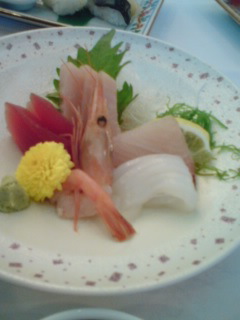
Including Sashimi!

SHIDA-09-13

And Sushi!

Looking forward to participating to next year’s event!
Before that I will make sure to visit all those breweries again!

Must-see tasting websites:
-Sake: Tokyo Through The Drinking Glass, Tokyo Foodcast, Urban Sake, Sake World
-Wine: Palate To Pen
-Beer: Good Beer & Country Boys, Another Pint, Please!
-Japanese Pottery to enjoy your favourite drinks: Yellin Yakimono Gallery

HOMEPAGE (Japanese)
Please check the new postings at:
sake, shochu and sushi

—————————————-
日本語のブログ
—————————————-

Cuttlefish/Squid Species 1: Yari Ika

IKA-YARIKA-1

Cuttlefish or squids are eaten almost all the world as they seem to inhabit the whole planet! They are the favourite food of many big fish such as tuna, whales and birds. Although humans contribute to dwindling stocks, they will never consume the same amount as its natural predators.

The Japanese call them Ika/烏賊, roughly meaning crow shellfish/cephalopods.

This is the start of a long series. I do hope you like them, otherwise you are in for a long haul!LOL

IKA-YARIKA-2

Yari Ika/槍烏賊, or Spear Squid, are also known under the names of sasika, Sayaika, Shyakuhachi, Tsutsuika or Sayanaga.
In Japan they are mainly caught in Winter and Spring off the shores of Aomori, Hokkaido, Ibaragi, Mie, Aichi and Yamaguchi Prefectures.
Females are slightly more rounded thanthe males.
They are either caught with nets or lines.
Their flesh is comparatively thin, but soft and sweet. They are among the most popular in Japan.
The best specimens are the ones caught by line. Buy them live whenever possible.

IKA-YARIKA-3

They can of course be cooked, or eaten as sashimi, but I reckon sushi nigiri is best.
The best sushi restaurants will serve two of them with two different dip soy sauces.

Please check the new postings at:
sake, shochu and sushi

—————————————-
日本語のブログ
—————————————-

French Restaurant: Lunch at Pissenlit (revisited)

PISSENLIT-DESSERT

Service: excellent and very friendly
Facilities: great washroom, great cleanliness overall
Prices: reasonable, good value.
Strong points: Interesting wine list. Great use of local products.
no-smoking-logo!

As promised, here is a short report about the second lunch taken with the Missus. Soryy for the delay, as I had to wait for my other half’s pics!

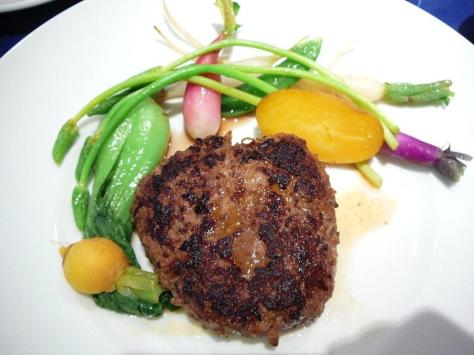
PISSENLIT-HAMBURGER

I will ignore the same offerings as last time and will concentrate on the new dishes:
The Missus, who had not eaten a hamburger for ages, could not resist asking for the Oven-baked Japanese Beef Hamburger and Spring Vegetables!
Apart of the French wild asparaguses, allthe vegetables are organically grown in Shizuoka: 3 differently coloured mini daikon, mini yellow carrot, Chinese zasai and new yellow potato. I did taste the hamburger. It certainly would make a fan of such delicacy if the same quality could be found in the States! Absolutely extravagant and ridiculously cheap!

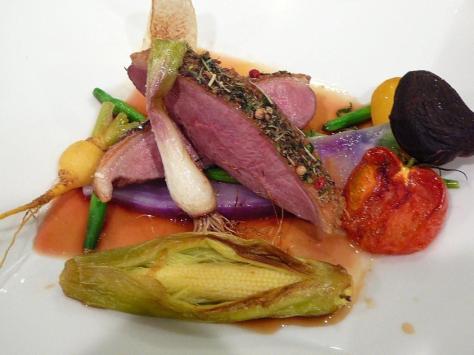
PISSENLIT-DUCK

As for me, I had to order that dish bringing me back to my roots: Herb-roasted Vendee (West of France) Duck with Spring Vegetables!
Note the baby corn that I ate whole, ear included, the violet daikon, lily flower buds, yellow carrot, shiitake, and so on.
The Duck was absolutely perfect, medium-rare as it should be, more tender than a loving woman and the subtle herb mixture combining into another world inside your palate!

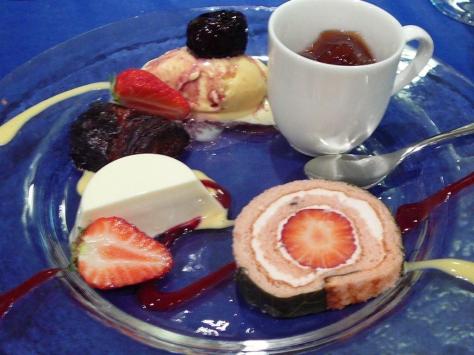
PISSENLIT-DESSERT

Alright, alright, here is the dessert plate (we had to share it, as it is simply too big!LOL)!
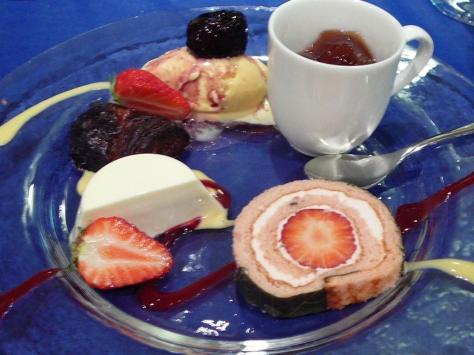
All are home-made (of course, some will say): Vanilla Ice-cream filled with vanilla bits, Black Tea Jelly, Cannelle, Pannacota, Strabeery and Cherry Tree Leaf Roll Cake!

Incidentally, I’m going there again for dinner in two-weeks time!
I’m definitely going to order that Marbled Foie Gras!

PISSENLIT
420-0839 Shizuoka City, Aoi Ku, Takajo, 2-3-4
Tel.: 054-270-8768
Fax: 054-627-3868
Business hours: 11:30~14:30; 17:00~22:00
Closed on Tuesdays and Sunday evening
Homepage (Japanese)

Please check the new postings at:
sake, shochu and sushi

—————————————-
日本語のブログ
—————————————-
Bryan Baird’s Newsletter (2009/13)

Baird Beer & Taproom Events Bulletin 2009 #13
bryan-sayuri.gif

Dear Taproom Friend & Baird Beer Enthusiast:

Beer simply is the most diverse alcoholic beverage on earth. It also is the most sociable. Don’t believe us? We are releasing three more wonderfully varied seasonal beers (Kinshu Domei Double IPA, Dark Wheat Lager, Maris Otter-Saaz Ale) to further strengthen our case. Let us know if you remain unconvinced.

*Kinshu Domei Double IPA (ABV 8.0%):

The grist is entirely base malt (Pilsner, Vienna, Maris Otter and Wheat)
buttressed by a good dosing of Japanese red sugar (akato) in the kettle (sugar, of course, lightens body and dries flavor in beer rather than sweeten it). 80 BUs of American hops add a wonderful bitter character that balances the residual malt sweetness. Dry-hopping with a combination of Simcoe, Horizon and Glacier varieties renders this big IPA spritely aromatic. Available on draught and in 633 ml bottles

*Dark Wheat Lager (ABV 5.0%):

The German Beer Purity Law does not permit the use of malted wheat in lager beers. Fortunately, we are not brewing in Germany. This tawny brown lager is brewed with 4 varieties of malted wheat which contribute a light and bready flavor. The overall character is defined by a rich, velvety smoothness that is punctuated by a clean and firm hop bitterness. This original lager was brewed way back in August, 2007 and has been conditioning in our cold cellar for nearly two years! Available on draught and in 360 ml bottles.

*Maris Otter-Saaz Ale (ABV 5.0%):

Maris Otter is the historically classic barely variety used in English Ale
brewing. We use floor-malted Maris Otter Pale Ale malt in virtually all of our brews. Saaz is the historically classic aroma hop grown in
Czechoslovakia and used in lagers of all sorts — particularly
Bohemian-style pilsners. We brew Maris Otter-Saaz Ale with only these two ingredients (aside, of course, from soft Numazu water and our hardy house ale yeast). We serve it exclusively on hand-pump in Real Ale form. It is beer history in a glass! Available only as Real Ale at our Fishmarket and Nakameguro Taprooms.

Allthree beers will be pouring at out Taprooms and other fine pubs and restaurants in Japan beginning Thursday, June 4. Bottle-conditioned versions of the Double IPA and Dark Wheat Lager will also be available through the finr family of Baird Beer retailing liquor stores in Japan.

Cheers,
Bryan Baird

Baird Brewing Company
Numazu, Japan
HOMEPAGE


The Japan Blog List

———————————
Must-see tasting websites:
-Sake: Tokyo Through The Drinking Glass, Tokyo Foodcast, Urban Sake, Sake World
-Wine: Palate To Pen
-Beer: Good Beer & Country Boys, Another Pint, Please!
-Japanese Pottery to enjoy your favourite drinks: Yellin Yakimono Gallery
——————————–
Please check the new postings at:
sake, shochu and sushi

—————————————-
日本語のブログ
—————————————-