Sashimi at Tomii: The Epitome of Excellency!


The Japan Blog List

Please check the new postings at:
sake, shochu and sushi

—————————————-
日本語のブログ
—————————————-
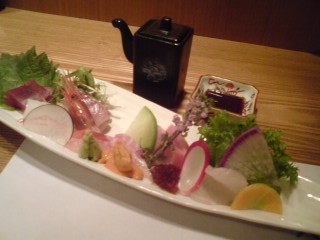
tomii-08-12-16a

Many people have been asking me: “How can you afford that?”
Well, I don’t smoke and I don’t drive, either. I can imagine what some people in the Northern part of the US might tell me… and I don’t care!
All that “saved” money goes into good food, good drink, good travel and improved relations with my (better, ok for this time!) half! And nothing for those “poor” doctors out there!

I’ve been a regular customer at Tomii in Shizuoka City for many, many, many reasons. But the one I value most is that everyone at this great Japanese restaurant are willing to talk about, explain and extoll the virtues of their craft. Craft, I said? It is probably nearer to artistry as Melinda, Etsuko and Tim will vouch for me!

Anyway, to write a story short, I just popped at Tomii this evening (yes, I’m writing this just after I came back to “work”), and asked for a sashimi plate (well, this is not the way to ask it: You should say: “O-tsukuri, kudasai!”). I did not need to tell them what to serve me. I wouldn’t even have dared!
On the other hand, they didn’t mind explaining no less than three times to make sure that the old geezer got his stuff right!
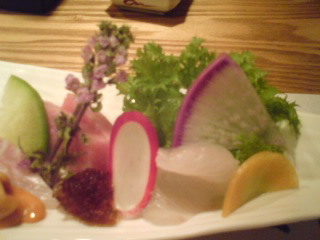
tomii-08-12-16b
From right to left:
“Kiiro Ninjin”?Yellow Carrot (sashimi is not all about fish, vegetables are rapidly becoming an essential part of the picture!), “Beni Daikon”/Red (“rouge”) Daikon, “Wasabina/not wasabi, but a leaf vegetable with a similar taste!”, “Hirame/Sole”, “Hime Daikon/Princess Daikon”, “Shiso no Hana/Perilla Flowers (edible as Rowena will agree!) on top of “Toro/Tuna Fatty Part) and “Bakudai No Ki no Mi/Impossible to translate”, only that it is an edible part from a tree (sorry, I was not attentive enough!)!
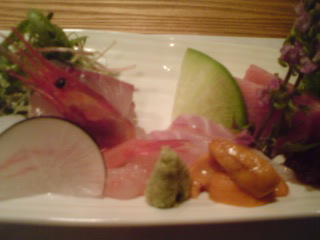
tomii-08-12-16c
From right to left:
“Uni/Sea Urchin Roe” (in front) with freshly grated “Wasabi/Japanese Horseradish” (let me tell for the umpteenth time that wasabi was first grown in Shizuoka City in the 17th Century and that Shizuoka Prefecture still produces 80% of the world total!), “Ishidai/Ishidai Snapper” just behind, the green daikon is called “Uguisu Daikon/Nightingale Daikon”, “Amaebi/Sweet Shrimp”, and “kanpachi/Japanese Amberjack” just behind!
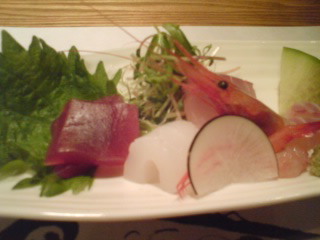
tomii-08-12-16d
From right to left:
“Kuroi Daikon/Black Daikon”, “Aori Ika/Aori Cuttlefish”, “Akami/Lean Tuna” on a “Shiso no happa/perilla leaf”. To back it up a mixture of seasonal sprouts: “Kushinsai + Soba no Mi (Buckwheat) + Cress (from Shizuoka like most of them) + Kawaire Daikon + Cabbage + Broccoli” (about time you call a local farmer for explanations!)!

Small servings they might look, but I challenge anyone to find better quality!
Now, for people who really want to know it, you will have to fork out at least three times as much in Tokyo, and as far the US and Europe are concerned, you might as well start riding a bicycle like I do!

TOMII
Shizuoka City, Aoi Ku, Tokiwa-cho, 1-2-7, Tomii Bldg, 1F
Tel.: 054-274-0666
Business hours: 17:00~22:00
Closed on Sundays
HOMEPAGE (Japanese)
Today’s Lunch Box/Bento (46)


The Japan Blog List

Please check the new postings at:
sake, shochu and sushi

—————————————-
日本語のブログ
—————————————-

bento-2008-12-16-a

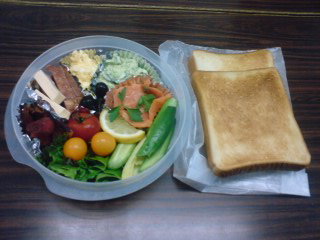
Today’s bento was a “quick fix”. The Missus and I having just come back from a week-end in Yokohama the night before, I was not going to put too much strain on my (whatever) half!

bento-2008-12-16-b1

This time bread had to be toasted “regular” bread bought on the way home.
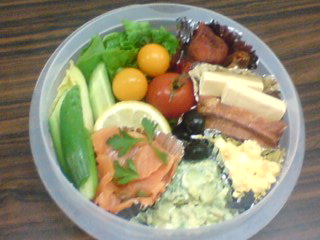
But even so, I must admit that the Missus did her best to come with a well-balanced “open-sandwich” with what was available in the fridge:
(from left centre, clockwise)
Fresh mini-cucumbers on chickory leaves, lettuce leaves, mini-tomatoes, home-made (on the balcony!) dried persimmons for dessert, processed cheese sticks, ham sticks, olives (in the middle), egg salad, avocado salad, smoked salmon with capers and lemon.
Can’t complain., can I?

Taky’s Cake Shop & Cafe


The Japan Blog List

Please check the new postings at:
sake, shochu and sushi

—————————————-
日本語のブログ
—————————————-

takys-1

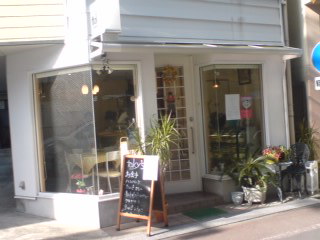
Taky’s in Takajo Machi, Shizuoka City is not your run-of-the-mill shop as it actually combines no less than four functions: Cafe, Confectionery (Cake shop), Restaurant and even Bar.

takys-3

Mr. Takuya Hanai opened his tiny establishment on September 9th, 2007 with a novel view, that is, satisfying customers with different needs at different times of the day.

takys-2

First of all, and most of all, it is a confectionery (cake) shop. The originality is that you just do not know what will be on offer on the day you visit the place! Mr. Hanai prepares cakes according to the season, availability and his whims!

fig-walnut-tart11 marron-tart1 takys1 caramel-poire-1

10 years of experience working in hotels and bakeries certainly shaped his character. In any case expect at least 3 different cakes every day.

As for lunch and dinner, he proposes Japanese-style curry, pasta and sandwiches. Fresh toasted sandwiches take-out orders are welcome! Certainly a rare treat for unhurried guests!

Regulars vary on the time, too, when you will see ladies sitting at counter (6 seats) or at the single table (for 4) at lunch or tea time, and adults at dinner and bar time when you can drink wine, beer and even shochu!

As for me, as Taky’s is conveniently located near my work, I make a lot of poeple happy every week!

TAKY’S
420-0839 Shizuoka City, Aoi Ku, Takajo, 1-11-10
Tel.: 054-255-2829
Opening hours: 11:00~22:00
Closed on Sundays & National Holidays

Robert Yellin Mishima Yakimono Gallery Newsletter: Kansha (Appreciation) from Japan


The Japan Blog List

Please check the new postings at:
sake, shochu and sushi

—————————————-
日本語のブログ
—————————————-

fujioka-tok

Greetings from Mishima,

As 2008 comes to a close we here in Mishima would like to say thank you for visiting our gallery this year; kansha is a good word the Japanese use to express their appreciation and we send our kansha to you.
kido
Last week we concluded our recent Shimura Noriyuki exhibition and it was a lot of fun indeed. Not our usual shibui offerings, yet Shimura is a fine ceramic artist who sparks the imagination and senses, and as Einstein once said imagination is more important than knowledge. Shimura’s works were bought by clients worldwide and kansha to all who visited the exhibition online.
kato-dotaku
If anyone is looking for a year-end gift or something for yourself, until our last day at the gallery–which will be Dec.26th–EMS insured express postage for any item will be on the house, and works in our back pages that have been waiting for a good home we are offering a deal on those, so if anything there interests you please email me at robert@e-yakimono.net (web gallery is of course at www.japanesepottery.com).

Also, this year we have a neat Hokusai Fuji-san calendar to send out as well with anything leaving the gallery.

Next year we will have Iga, Shigaraki and Bizen exhibitions, as well as participating at the Art Fair Tokyo from April 3-5!

In any event, again our deep thanks and kansha; wishing you a very pleasant and relaxing year-end and a very positive 2009, with many days just as you like them.

Namaste from Mishima,
Robert

Robert Yellin Yakimono Gallery

Mussles in Curry Cream Sauce


The Japan Blog List

Please check the new postings at:
sake, shochu and sushi

—————————————-
日本語のブログ
—————————————-

Mussles are ever becoming popular all over the World and become more acaailable, fresh or frozen.
Last Friday night, my usual night out (alone) which had to be postponed because of my numerous commitments the week after, ended in my cooking dinner for the Missus. As soon as I reached Shizuoka JR Station back from University I visited JR Station Parche Big Supermarket in search for fresh oysters. Apparently they were sold out and had to rethink our dinner, when I found some Japanese grown fresh mussles which gave me a good idea.

Incidentally, keep in mind that contrary to oysters, wild mussles should be avoided!

Mussles in Curry Cream Sauce

Ingredients:

-Mussles: 3~4 dozens (wash and brush them first under running water and pull “roots” out)

-Shallot (echalotte): 1, finely chopped
-Garlic: 3~5 cloves, finely chopped
-Ciboulette (very thin chives): a “bunch (see above pic)
-Basil: a “fistful”
-Lean Bacon: a slice, cut into small pieces

-Sour cream: a glass (Half a cup), 120g

-Noilly: a glass (half a cup). If unavailable, any sweet wine will do.

-Curry paste (possibly Garam Masala): 1 large tablespoon
-Olive oil: 2 large tablespoons
-Pepper: to taste.

N.B.: No need for salt as there is already plenty in the bacon and curry paste!

Recipe:

In a deep large deep pan pour the oil and heat over medium fire. Drop in shallots and garlic and fry until shallots turn transparent. Pour in Noilly, curry past and pepper. Mix well. Drop in all the mussles. Cover with a glass lid.
When all the mussles have opened (discard the ones that haven’t later), drop in the sour cream and mix well. Let cook for a minute, then add ciboulette and basil. Stir. Serve at once.

Make sure you have prepared a dish for the dicarded shells. They are more easily eaten with your fingers, so keep a finger bowl or wet towel handy.

Now, you will be left with a lot of good sauce which would be a shame to throw away. Last Friday I prepared spaghetti for my pasta-crazy Missus and mixed them into the sauce with a little olive oil. My personal choice would have been the sauce poured over boiled potatoes (instead of fried potatoes usually served back home). Otherwise it could become the base for a soup. If you find the sauce a bit too strong, mix in some yoghurt.

Bon appetit!

Japanese Food Humor!


The Japan Blog List

Please check the new postings at:
sake, shochu and sushi

—————————————-

one-noodle1
(Sorry, mate!
this might be the best noodle, but you can get only one!)

In Japan, like in many non-English speaking countries (not a general rule, mind you!), one can find some humorous gems when people feel the need to use English for whatever PR purposes!
The above noodle example is a fairly tame one!

junk1
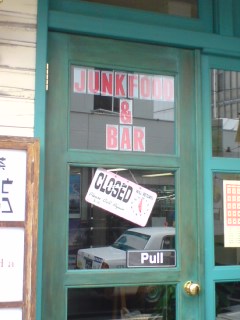
But advertizing “Junk Food” might be going a bit too far!


Too much writing can only take you that far!


This “Marine Choir” is not only strikingly funny, it is a real piece of art!

sushi-eraser.jpg
You might have a hard time using those erasers!

heart-space.gif
Heart Space? No comment!

gargoyle-bar.jpg
That Bar is definitely tempting!


True! This is the name of a bar in Fujieda City!

pick-up.gif
Who’s on the pick up? I wonder, …

atago.gif
Keep your paws off the grub, mate!

smorking.jpg
Not only customers are invited to smoke in this cheap cafe, but English teachers might do some good work there!

sushi-bus-1.jpg
Sushi is very popular in Shizuoka City, even on the buses!

shizuoka-pic02.jpg
Outrageous Recipe?

For more fun, visit Shizuoka Pictures!

Shochu: the way to drink and taste it!/ Parlons de la dégustation du SHOCHU


The Japan Blog List

Please check the new postings at:
sake, shochu and sushi 

Version français ci-dessous !

—————————————-

kampai-shochu.jpg
Kampai!

I’ve been asked a few times already about shochu and how to drink it.
Shochu is distilled spirit as opposed to Japanese sake which is a fremented drink.
Like Japanese sake, shochu, if made in proper clean environment is an alcohol that both vegans and vegetarians can enjoy!
For extensive information on Shochu made in Shizuoka Prefecture (38 found so far by 10 breweries!), check Shizuoka Shochu!

If you use shochu simply as an additive, or to quickly reach an irresponsible inebriety, just skip reading the following!

-Shochu comes in four main varieties: imo/tubers, mugi/wheat-grain, kome/rice and finally in what I call “fancy shochu” (which is not a detrimental term at all!).
The latter includes green tea (the best is from Shizuoka Prefecture), buckwheat and what else.

-So, first decide on the variety. As far as quality is concerned, shochu in Shizuoka Prefecture is only produced by Sake Brewers, which means higher quality and dependability.
-Once you have chosen your baby, first pour a tiny bit inside a normal glass, turn it around until the bouquet (smell) reaches your nostrils (smokers, get out of here!). Taste it at room temperature. It will give you a kick, but you will learn its true character.
-Next, if you are a true shochu lover, fill a large glass with ice (one very large block is best), pour a reasonable quantity of shochu on it, and drink it slowly through (or around) the ice. As the ice slowly melts, the shochu taste will subtly change, giving you an indication, whether you want to drink it straight, on the rocks, or with a certain amount of ice and water, or added with warm water.
-After all, you are in Shizuoka, so why don’t you try the “Shizuoka Hai”. Pour hot or ice-cold Shizuoka green tea, or better, mixed with powdered “macha” tea. You might get hooked!
-The other step is to find what goes best with shochu (as regards your personal taste): ginger ale, oolong tea, soda,… There is no end to it!
Enjoy!
Robert-Gilles

Kampai!

I

Cela fait plusieurs fois que l’mon demande comment boire le shochu, qui est un alcool distillé, contrairement au saké qui lui est fermenté. Tout comme le saké, que l’on appelle plutôt nihonshu, le shochu a bien des qualités, et y compris celles du respect de l’environnement. Jetez un oeil à notre autre blog ici pour plus d’informations (en anglais) sur les variétés de Shizuoka: Shizuoka Shochu! A Shizuoka on a pour l’instant selon mes comptes 38 variétés pour 10 distilleries.

Si vous vous servez du shochu pour cuisiner ou pour vous faire tourner la tête vous pouvez éviter de lire les paragraphes qui suivent !

On a principalement 4 variétés de shochu : Patates/tubercules, blé (mugi), riz (kome) et ensuite ce qu’on pourrait appeler les shochu fantaisie (avec tout le respect et la considération que j’ai pour eux néanmoins ! )

Je pense qu’il faut déjà penser à la variété. Bien que la qualité soit un facteur tout autant essentiel, dans Shizuoka tous les shochus sont fabriqués avec conscience par les distilleries de saké, donc très fiables.


Quand vous aurez choisi votre petit bébé, mettez-le dans un verre et faites le tourner jusqu’à ce que l’odeur pénètre vos narines (évitons de fumer en même temps). Dégustez-le à température ambiante si vous voulez bien faire connaissance avec lui, même si cela devrait vous mettre un coup de fouet.

Si vous êtes un vrai amateur de shochu, remplissez un verre avec de la glace, un gros glaçon est l’idéal, mettez une quantité “raisonnable” de shochu à l’intérieur et buvez-le ainsi. Avec la fonte du glaçon, le goût du shochu se verra aussi modifié ce qui devrait vous donner aussi plus d’informations sur la manière idéale de le déguster (mélange d’eau, plus de glaçons, avec de l’eau chaude, de l’eau pétillante)…


Après tout si vous êtes à Shizuoka, n’hésite pas le Shizuoka Hai, à base d’eau chaude ou froid et de thé vert de Shizuoka ou encore mieux avec du Macha ! Vous pourriez vous laisser prendre 🙂

Enfin il existe plein de manières d’agrémenter son Shochu : Gingembre, thé oolong, soda etc… !

Duck Confit White Sauce Gnocchi


The Japan Blog List

Please check the new postings at:
sake, shochu and sushi

—————————————-

gnocchi.jpg

For once, I took advantage of the Internet to concoct some great and simple food for the Missus the other day.
There is a great company based in Osaka City called Dining Plus Com selling online all kinds of imported foods from France, Italy, Belgium and many other countries at unbeatable prices. Furthermore, whatever you order will reach you within 24 hours or on the requested day. I know that Lojol‘s Missus has heard of it, and being a great cook herself, she will have to satisfy some new requests!

Ingredients (2~4 people):
dining-plus-confit.jpg
(courtesy of Dining Plus Com)
Duck Confit leg: 1
dining-plus-gnocchi.jpg
(Courtesy of Dining Plus Com)
Frozen Gnocchi: 200g
Bacon: 2 large slices, cut in thin strips across.
Mushrooms of your choice: 1 large fistful (frozen mushrooms are fine as they give out a lot of great juices! A good way to use leftovers!), sliced if necessary.
Garlic: 1 clove, chopped in slices
Madeira Wine (or Red Port): 50 cc (a quarter of a cup)
Fresh cream: 200 cc
Sour cream: 1 large tablespoon
Herbs: parsley, dill and sweet basil (of course, it is your choice), a couple of tablespoons finely chopped.
Salt, pepper, nutmeg, thyme, laurel (all powdered). Keep inmind you will need very little salt.

Recipe:
-Heat a large pan of salted water (1 litre). It will have to be brought to boil when the sauce is being made.
-Heat a large deep non-stick frying pan and place Duck Confit leg skin down. Cover with a glass lid. Lower fire to medium and let cook. The duck is already cooked. What you want is to cook the skin to a crispy state.
When satisfied with the cooking switch off fire. DO NOT throw the fat or wash the pan!
When the duck has cooled a bit (try to proceed as hot as possible), shred the duck away from the bone. Try to obtain very thin strips. As for the grilled skin, cut it in thin strips. Discard excess fat sticking to the bone or under the skin. Keep in separate bowl.
-Throw in the sliced garlic in the pan on a medium fire. Once they have reached a brownish colour, carefully take them out and discard them.
-Throw in the bacon strips and fry until crispy. Carefully take them out and put them aside with duck.
-Lower the fire to low medium and throw in the mushrooms. When cooked to satisfaction, take them out carefully and put them aside with duck.
-Turn fire to medium high. Pour in the Madeira wine and stir with a wooden spatula to get it well-mixed with the juices. Pour in the fresh cream and sour cream. Stir until smooth.
-Throw the frozen gnocchi into boiling water. When water boils again, count 1~2 minutes for gnocchi to be ready.
-Add spices to sauce and mix in well. Add duck, bacon and mushrooms. Stir. Only then check if more salt is needed, which I doubt quite some is already included in the duck and bacon.
-When gnocchi are ready, take them out of water, drain them (excess water is not a problem. It can actually be used to lighten the sauce in case you find it too thick) and add them into pan. Stir.
-When ready, pour the lot in a large dish and sprinkle with the chopped herbs. Serve and eat at once.

Little secret: as for many other recipes, use the same pan and DO NOT wash it! You could add some parmiggiano cheese over it, but I would think it a bit heavy.

Bryan Baird’s Newsletter


The Japan Blog List

Please check the new postings at:
sake, shochu and sushi

—————————————-
日本語のブログ
—————————————-

Baird Beer & Taproom Events Bulletin 2008 #24
bryan-sayuri.gif

Dear Taproom Friend & Baird Beer Enthusiast:

The holiday season is upon us. Jubilation is in the air. Jubilation also is in the glass! Yes, Friday, December 12 marks the 2008 debut of a Baird Beer holiday classic — Jubilation Ale. It also marks the release of a specially festive first-time Baird Beer brewed at the request and with the cooperation of the fine liquor store, Nakaya: Autumn Harvest Blueberry Ale.

(1) Jubilation Ale (ABV 7%):

This is our annually crafted holiday season ale. It’s hallmark flavor stems chiefly from the addition of two special ingredients: (1) fully ripened figs candied in Japanese red sugar and (2) cinnamon twigs culled from a Japanese Nikki tree. A sublimely balanced interplay of sweet and spice results. The ruby red hue and the wafting aroma of Japanese nikki warm the heart and furbish the soul.

This year we are unveiling a newly designed label for our Jubilation Ale that, we think, captures the spirit and flavor of this celebratory ale in a very esthetically pleasing way. (Thanks go to our talented and loyal designer, Ms. Eiko Nishida, for her splendid work). Fifty of these 633 ml bottles will be specially gift-wrapped and available for purchase direct from our brewery. The cost is 1,200 yen and limit one per person. To reserve one of these gift bottles, please contact directly either the Fishmarket or Nakameguro Taprooms. Pickup and payment for your reserved bottle can be made at either Taproom beginning Friday, December 19.

Non-gift wrap bottles (633 ml) are available for purchase through the Baird Beer estore as well as through the fine family of Baird Beer retailing liquor stores in Japan. A limited number of 2007 edition, long-maturation bottles (360 ml) of Jubilation Ale also will be available for purchase through these channels. The flavor comparison between the two years is highly interesting. Draught versions of Jubilation Ale 2008 will be pouring from the taps of Baird Beer retailing pubs and restaurants throughout Japan beginning Friday, December 12 (including at our own Fishmarket and Nakameguro Taprooms).

(2) Autumn Harvest Blueberry Ale (ABV 6%):

What do you get when you combine a passionate Isehara beer-retailing liquor store, fresh Kanagawa prefecture blueberries, and a devoted fruit beer craft brewery? Of course, you get a great idea for an interesting beer. Autumn Harvest Blueberry Ale is the final product of that idea. Brewed exclusively with European base malts and Japanese sugar, lightly hopped with English Fuggles, and dosed with loads of hand-crushed Kanagawa blueberries, Autumn Harvest Blueberry Ale is piquant and effervescent — a fruited beer champagne, if you will.

633 ml bottles of this gorgeous elixir are being sold exclusively through the online estore of liquor shop Nakaya (please visit http://www.craftbeers.jp). Draught versions are available for sampling at three locations: (1) Craft Beer Bar in Yokohama, (2) Nakameguro Taproom in Tokyo and (3) Fishmarket Taproom in Numazu.

Finally, please mark your calendar for upcoming events at the Nakameguro and Fishmarket Taprooms.

Nakameguro Taproom:

*Wednesday, December 24 (hosting a Christmas Eve celebration that includes a special menu and an appeal to all the loveless and forlorn — 500 yen pints for all those who visit by themselves. Christmas Eve in Japan is not just for the love birds!).

*Wednesday, December 31 (hosting a New Year’s Eve countdown party that features all-you-can-drink Baird Beer and an all-you-can-eat light buffet for only 5,000 yen per person. Party begins at 7:00 pm).

Fishmarket Taproom:

*Tuesday (National Holiday) December 23 – Thursday, December 25 (hosting a three-day Christmas celebration that features a special Christmas food menu, a vertical draught tasting of Jubilation Ale 2007 and Jubilation Ale 2008, and 500 yen pint servings of Jubilation Ale for the entire 3 days).

Wednesday, December 31 (hosting a New Year’s Eve countdown party that features our traditional an all-you-can-eat Mexican buffet for only 1,000 yen per person and 500 yen Baird Beer pints. Buffet begins at 5:00 pm and ends at 10:00 pm. 500 yen pints run through the entire evening).

Cheers!
Bryan Baird

Baird Brewing Company
Numazu, Japan
HOMEPAGE

Japanese seasonal Fish: Saba/Mackerel


The Japan Blog List

Please check the new postings at:
sake, shochu and sushi

—————————————-

saba1.jpg

Mackerel or saba, not to be confused with sanma/mackerel pike, is a fish eaten over the whole Northern Hemisphere and does come under many varieties and names.
In Japan it is mainly called “Saba”, “Masaba” or “Sekisaba”.
“Saba” is written 鯖 in Japanese, that is a combination of kanji characters for “fish” and “blue”!
Here, it is mainly caught off Oita, Saga Prefecture (Kyushu), although quite a few are caught off our coasts. They feed on plankton mainly.
saba-yaizu.jpg
(mackerel catch in Yaizu Harbour)
They are prepared and cooked in many guises.
In France, my birthplace, they are steamed and then pickled in white wine and spices. In Northern Europe they are also eaten half raw as smorgasbrod and pickled fish.
It can be appreciated as sashimi, but it must be absolutely fresh and is best served with grated fresh ginger and lemon:
saba2.jpg
As far as sushi is concerned, “masaba” variety is best:
saba3.jpg
It is especially popular as “oshizushi” (pressed sushi).
My preference goes for konbu zume saba. the mackerel is kept inside a variety of wet seaweed for an hour or so before put whole on top of a long “bar” of rice, then cut to size:
saba-sushi.jpg
(picture taken at Tomii estaurant, Shizuoka City)

Foodbuzz made more secure!


The Japan Blog List

Please check the new postings at:
sake, shochu and sushi

—————————————-

1-sake

Some of you may have noticed in recent days that things at our favourite site were slightly off-target. There are many reasons for that:
About two weeks ago Foodbuzz faced a nasty concerted attack by spammers attempting to impose their nefarious sales (incidentally, if you discover a “member” whos name includes the word “buy”, inform the site immediately!). There will always be people bent on thievery and scams. It is my personal pleasure to announce that they were swiftly erased into oblivion on (off) the spot. Thank you so much, Shannon!
Last night (in Japan), the site went off line for a few minutes to allow a complete overhaul. Some “My Profile” features had found themselves overloaded through well-intentioned utilization making the access to personal websites through Foodbuzz impossible (Liz, be my witness!). The problem was corrected last night along with a general beefing-up of log-in safety nets. Moreover, a host of new features were added for our convenience.

I have witnessed the rise of the Internet since its inception and I can guarantee there are unsung heroes over there bleeding, sweating and weeping day and night to ensure that we all (humble) beggars enjoy our next banquet in complete serenity! Dorian and mates, thank you heaps!

Therefore, I would like to ask you all to indulge this old geezeer and raise your glass (of Champagne, wine, beer, sake, or mineral water) in a big toast of thanks!
Kampai, cheers, prosit, sante, salute, namaste,…!

Japanese seasonal Fish: Sanma/Mackerel Pike


The Japan Blog List

Please check the new postings at:
sake, shochu and sushi

—————————————-

“Sanma” or Mackerel Pike has come on our plates with the advent of Autumn and will stay with us until almost end of the year.
Known under other names such “Saira” or “Banjyo”, it is a fish with red meat rich with proteins.
In Japanese, 秋刀魚, it means “Autumn Sword Fish”!
In season, the flesh is fatty and sweet and ought to be sampled as sashimi served with grated fresh ginger and thinly cut leeks:

(Pic taken at Tonami, Shizuoka City. Notice the shiso/perilla flowers)
It is mainly caught off the north eastern shores of Japan as the fish swim down from Hokkaido.
But the more south it is caught, the less fat it will contain.
The annual catch exceeds 20,000 tonnes, although breeding is increasingly successful.
Incidentally for all the fish consumed in this country, Japan is the World leader when it comes to marine research and stock renewal develoment!
If you eat it at a good place such as Tonami in Shizuoka, you will be served its with its bones and head deep-fried.
Of course, as a sushi it is a morsel to savour!

Today’s Lunch Box/Bento (46)


The Japan Blog List

Please check the new postings at:
sake, shochu and sushi

—————————————-

bento-2008-12-09a

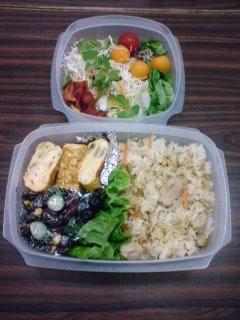
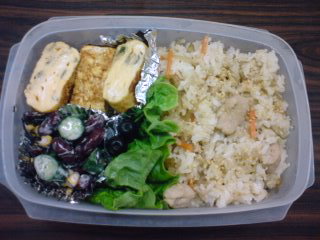
Yesterday’s bento was a very traditional Japanese one with the exception of the salad!

bento-2008-12-09b

The rice part was “maze gohan/mixed rice”, that is it contained chunks of chicken, bits of “gobo/burdock roots”, carrot and fresh ginger, the whole seasoned with “shiro goma/white (actually light brown) sesame.

The “tamagoyaki/Japanese omelette” contained chopped “shiso/perilla leaves/ (Rowena, next time you make an omelette, think about it!).
Plenty of lettuce was provided to wrap the tamagoyaki in.
A salad of azuki beans, baby cucumber, corn and “hijiki/sweetened seaweed” and a few olives completed the dish.

bento-2008-12-09c

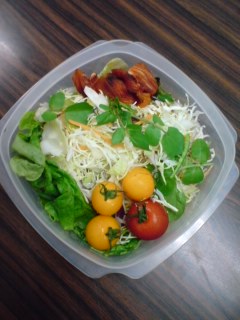
As for the salad (seasoned later with dressing I keep at work), it consisted of fresh Shizuoka cress, mini tomatoes, more lettuce and pieces of chickory on a bed of finely chopped vegetables.
The little orange bits you see were my dessert: home-dried “kaki/persimmon”!

Vegetables and Seafood Gratin


The Japan Blog List

Please check the new postings at:
sake, shochu and sushi

—————————————-

seafood-gratin1.jpg

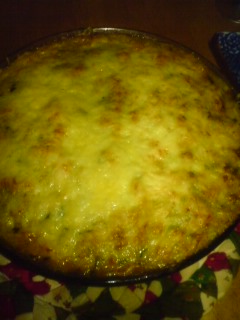
Winter has come upon us, even in Japan, and it’s time for hot and hearty food!

Gratins should not be complicated. Restaurants serve them for a good reason. They are easy to prepare and come at a handsome profit the moment you present them in individual portions with a few expensive decorative items. Alright, they certainly look better than in your plate at home, but this is what you pay for!
The key is to be well-organized, so make sure you have everything within hand’s reach!
The recipe below leaves plenty of room for improvisation, even for vegetarians!

Ingredients (for 2~4 people):
-Potatoes: 2, medium-sized, cut in 8
-Cauliflower: a handful of “flowers” cut to size
-Mussles: 1~2 dozens
-Oysters: 12 (without the shells! LOL)
-Crab: a whole, medium-sized, completely dressed (you cannot cook the shell, sorry!), with “miso”/brains on a separate plate. If fresh crab not available, use good quality tinned crab. Strain it carefully first by pressing it in your fist. Water can be used in the white sauce.
-1 large echalotte/shallot, finely chopped. If unavailable use one small violet onion or small sweet onion.
-Garlic: 2 cloves, finely chopped
-Basil: 12 leaves, thinly cut
Noilly Prat or sweet white wine: 50cc (1 quarter cup)
Olive oil
Salt, pepper.

-White sauce:
Milk: 300cc (1 cup and a half)
Butter: 50 g
Flour: 60g (2 full large spoons). This may reduced or increased depending on the consistency you wish to obtain.
Salt, pepper, nutmeg, laurel
Curry paste: 1 spoon (optional. If you like your food spicy, then increase amount)
Finely shredded cheese: to taste

Recipe:

1) Boil cut potatoes and cauliflower beforehand in salted water until “80% cooked”. Strain water and put aside within reach.
2) Wash mussles under cold running water and pull out “roots”. In large deep non-stick frying pan pour about 2 large spoons of olive oil. Heat oil and drop echalotte and garlic inside. As soon as the echalottes (or onion) become transparent, pour in the wine and all the mussles. Cover with glass lid. As soon as the mussles are all open, switch off fire. Take mussles out one by one, shake them over the pan to leave only the meat inside. Take off the meat and leave it inside a small bowl. If they give off “water” in the bowl, throw liquid away.
3) Switch on fire again and keep to medium. Drop oysters inside. Let them cook until they have changed colour. Switch off fire and take them carefully out one by one, and leave them in small bowl. If they give off “water” in the bowl, throw liquid away.
4) Switch on fire again to high and reduce the “soup” left inside the frying pan. Once it has reduced to about 50cc/one quarter cup, strain it into a cup and keep it aside for white sauce.
5) Lightly wipe (do not wash in water!) the frying pan with clean kitchen paper. Drop in some butter. Switch on heat to medium and lightly saute/fry first the cauliflower for a couple of minutes with a little salt and pepper, and put aside. Do the same with potatoes. This will help the vegetables “suck in” the gratin taste.
6) Preheat oven at 180 degrees Celsius (medium high)
7) Drop the butter (50g) into frying pan and let melt. Drop in flour and stir until smooth. Pour in the seafood juices (“soup”) and stir. Once smooth, add milk half by half and keep stirring until it has reached the appropriate consistency. Switch off fire.
First stir in the curry paste, then crab “miso/brains”. Add salt, pepper, nutmeg and laurel to taste. Add crab and basil and stir until you have reached a certain homogeneity.
8) In a large shallow oven dish, place potatoes, cauliflower, mussles and oyters equally (to avoid arguments!). No need to butter the dish beforehand as all ingredients contain enough fat.
Spread white sauce equally over vegetables and seafood. Sprinkle the lot with shredded cheese (the more, the better for those who like their gratin with a dark cheese “topping”!).
Cook in oven for 30 minutes, or until it has reached the appropriate colour (all the ingredients having been cooked, nothing to worry about if you decide to cook it at 250 degrees Celsius to just grill the top).

seafood-gratin2.jpg
Serve hot and enjoy. Of course, you could cook the gratin in individual dishes, but it is so nice to break the whole and serve it steaming onto the plate. Sorry, the pictures do not do justice to the dish, but then if it is looks you are caring about, you could always ask for it at a restaurant! LOL

Small secret: Cook everything in the same large non-stick frying pan. Wipe it, do not wash it! It will give this extra taste!

More recipes with mussles coming soon!

Eel Species

Please check the new postings at:
sake, shochu and sushi

—————————————-
日本語のブログ
—————————————-

Here is another fish, second only to tuna, so popular in Japan!

Anago/Conger Eel
anago1.jpg

Anago or Conger Eel, a favourite all over Japan, does come in many varieties, some edible, some not.

The most popular conger eel in Japan is “Maanago” (“True Conger Eel”).
It is also called “Anago”, “Hakarime” and “Hamo” (although this particular kind should be treated separately)
Summer is the best season, although they are available all year round in Sushi restaurants.
They are mainly caught in Tokyo Bay, Jyowata Bay and Seto Sea.
anago3.jpg
Most Japanese appreciate them first boiled in broth then cooked on a grill over charcoal fire and then dipped in “tare/Japanese grill sauce”.
anago4.jpg anago5.jpg
As for nigiri, they come in many guises: topped with “tare” (sauce) or just with a light brush of shoyu (see above pics)
anago6.jpg anago7.jpg
Or a bit on the crispy side, or on the very soft and melting one (see above pics)
It basically depends on the chef’s skills and preferences.
anago2-tempura.jpg
One should not forget they also taste great as tempura, including the bones, a particular favourite of mine!

Samples with bright skin transaprent flesh are the best.
Imports from China and Korea have increased recently, although Japan is starting putting strong regulations to protect the species.
As for Shizuoka Prefecture, we do have access to fresh fish. Select your sushi restaurant accordingly!
———————————
Unagi/Common Eel

Unagi or common eel is fish which made Hamanako/Hamana Lake famous in western Shizuoka Prefecture.
As summer approaches, the Japanese are looking forward to eat the delicacy as it is supposed to revitalize your body on very hot days.
Also called “Kayoko”, “Subera” or “Aobai”, it is farmed mainly in Shizuoka, Aichi and Gifu Prefectures.
It is only in the Edo Period that the Japanese starting it after they realized it could not be eaten raw as opposed to anago/conger eel or hamo/pike conger eel (coming soon!).
Japan presently produces more than 24,000 tonnes and still imports 14,000 tonnes whole and 71,000 tonnes cooked, most of it from China.

It is quite popular as nigiri in any part of Japan.

But the Japanese are simply crazy about “kabayaki”, which requires to grill and baste the fish at the same time, a fairly tedious process. It is a bit of an acquired taste as the connoisseurs eat the skin, which a bit oily to my liking.
In Hamamtsu, it is possible to eat the real wild fish in a very few restaurants, but you will know the difference when the bill comes!